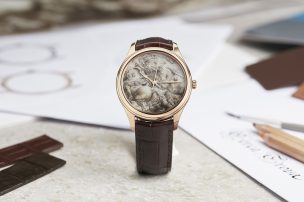
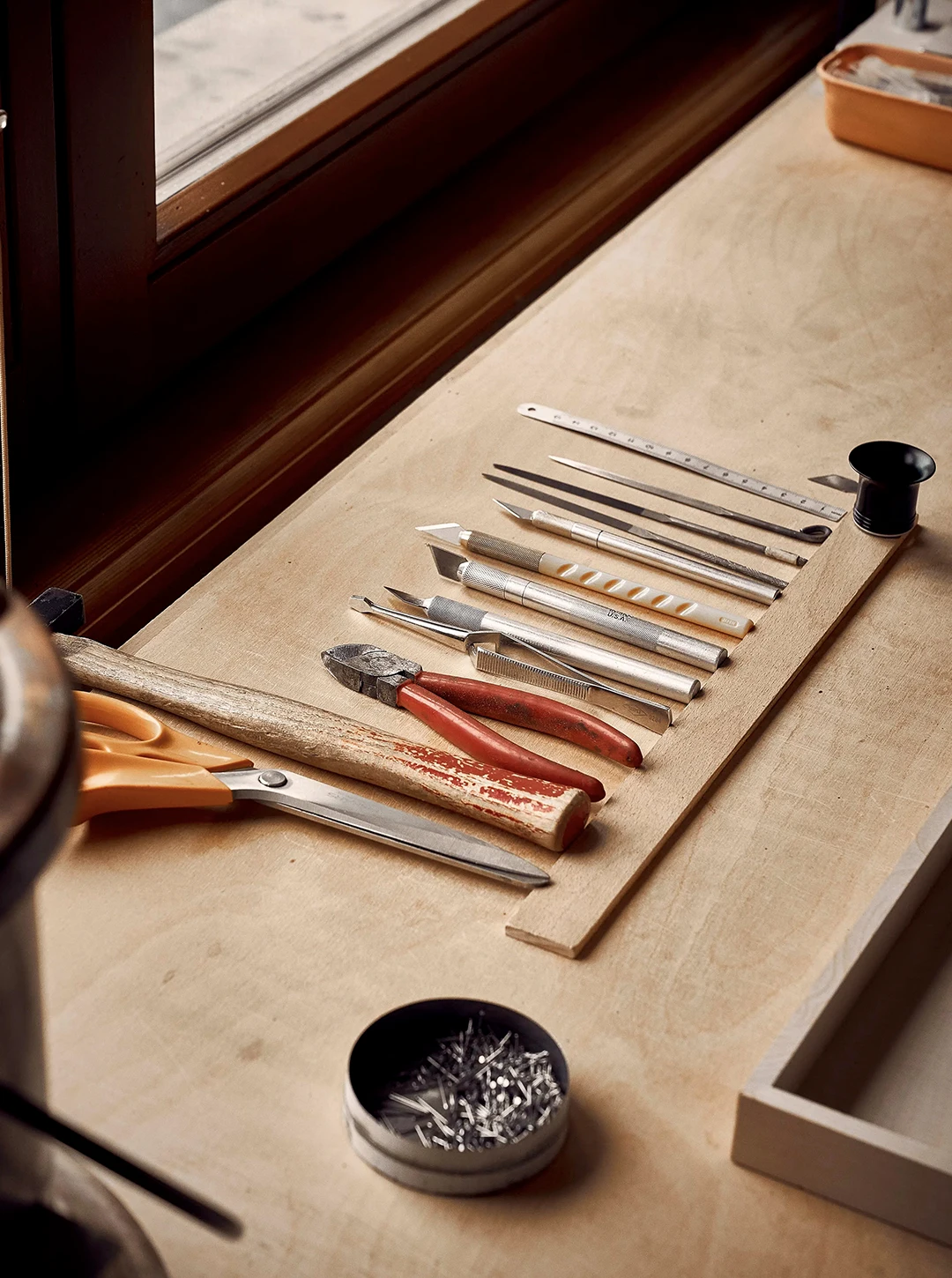

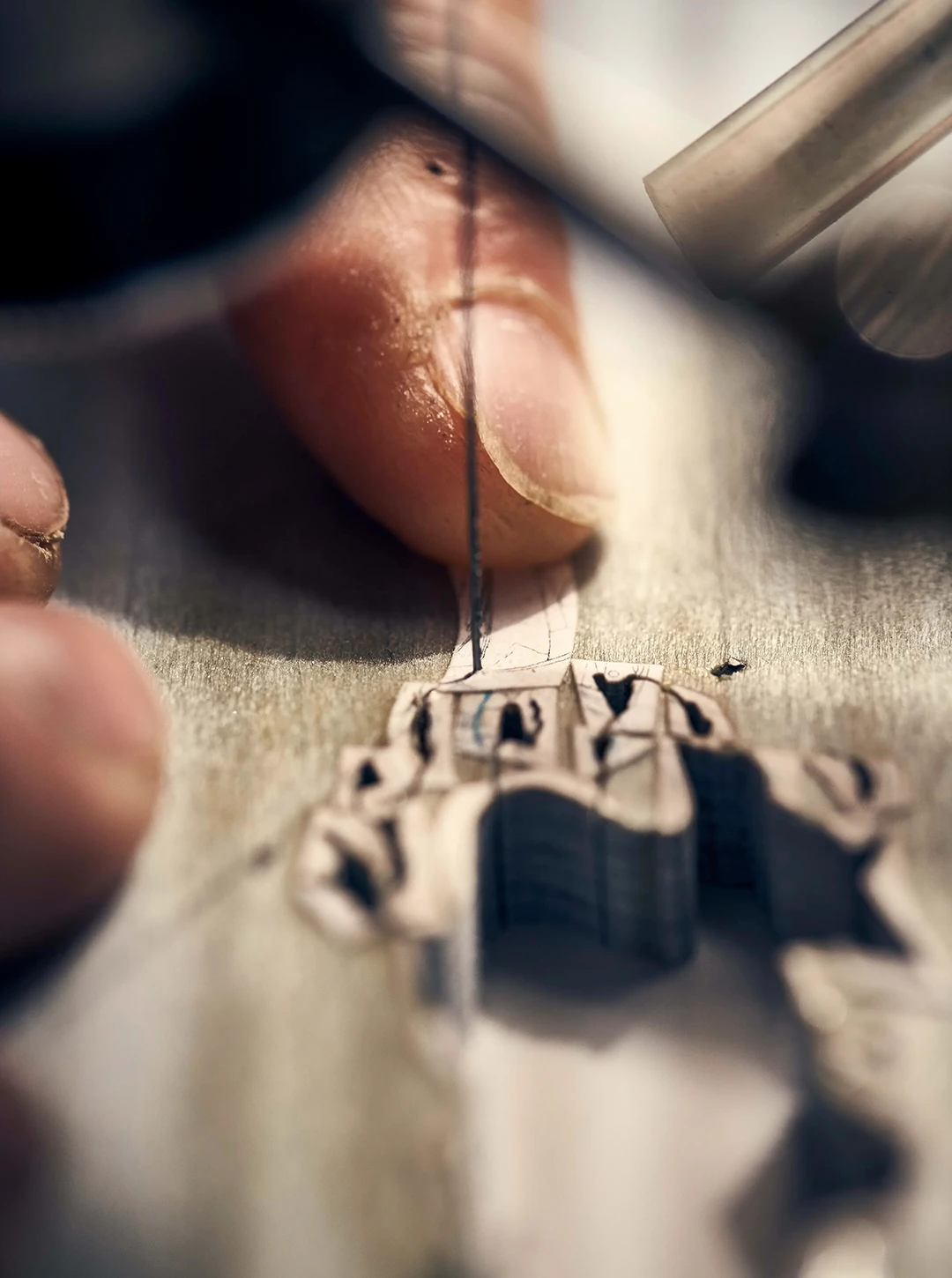
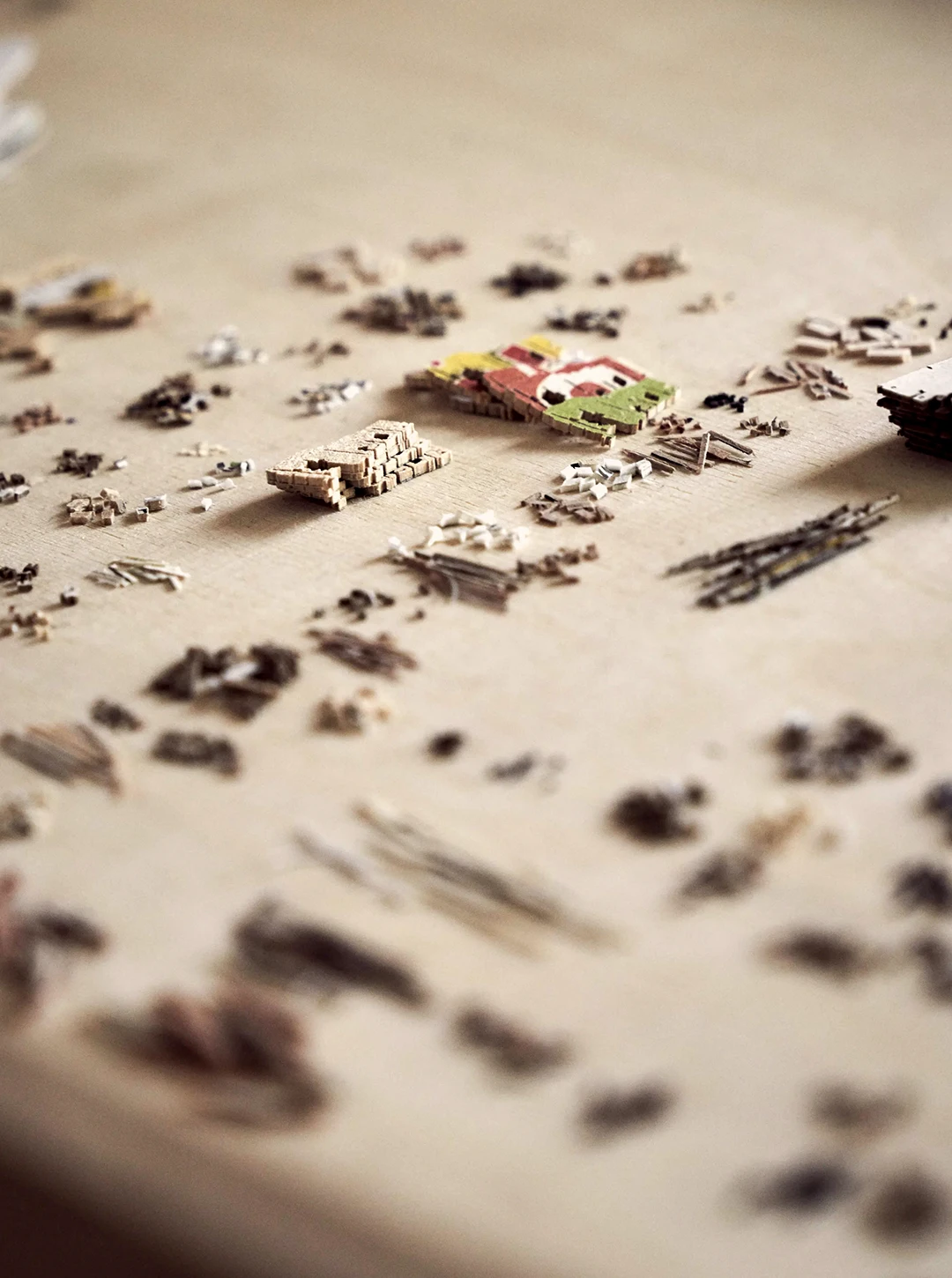
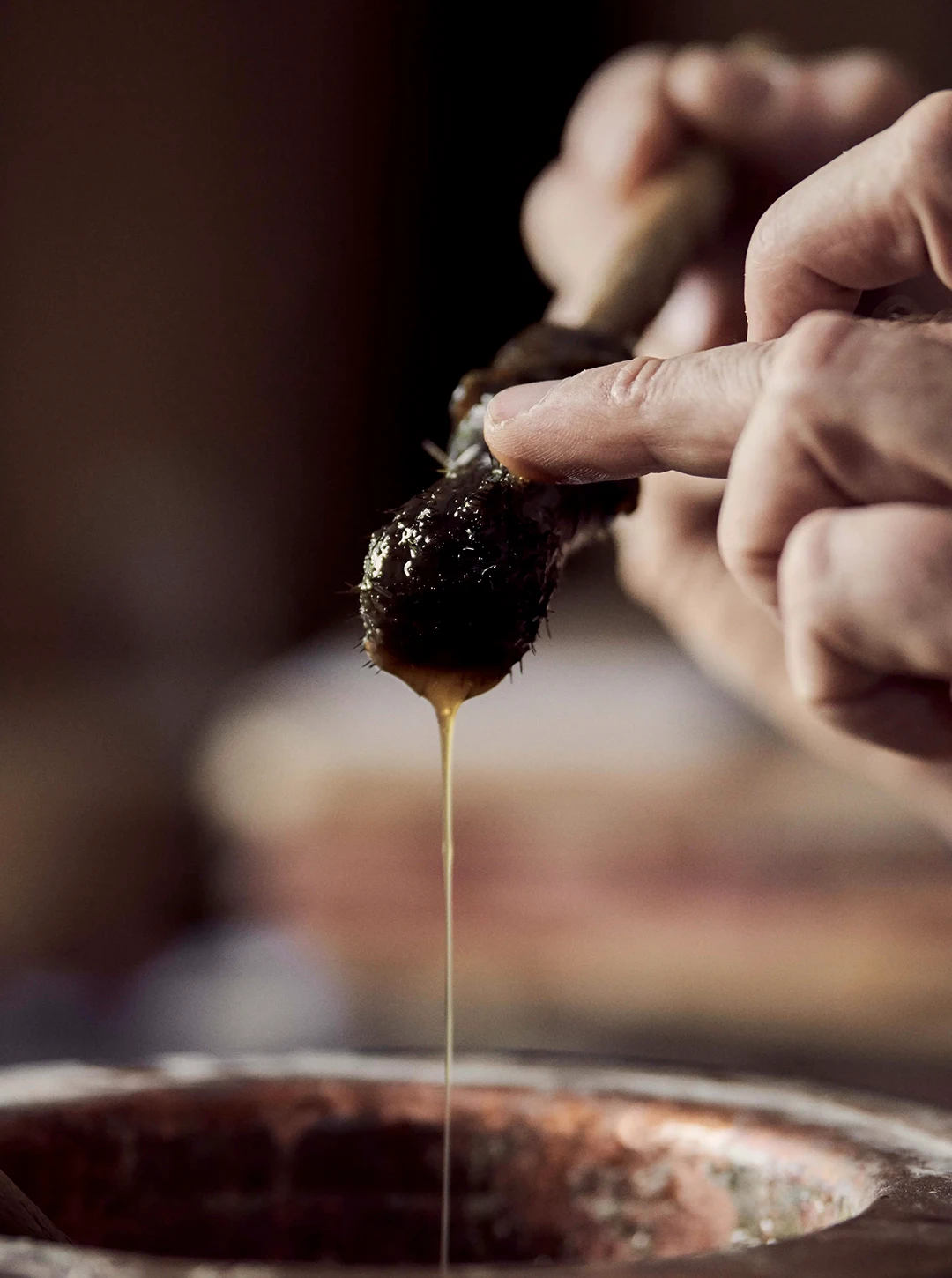

With the Alpine Eagle 41 XP TimeForArt Edition, created for the third edition of TimeForArt, Chopard focuses on sculptural relief engraving in precious metal.

Patek Philippe’s Watch Art Grand Exhibition offers unique insights into the history and identity of the manufacture. However, it is also a showcase, and such an event naturally includes a Rare Handcrafts collection created especially for Italian clients.
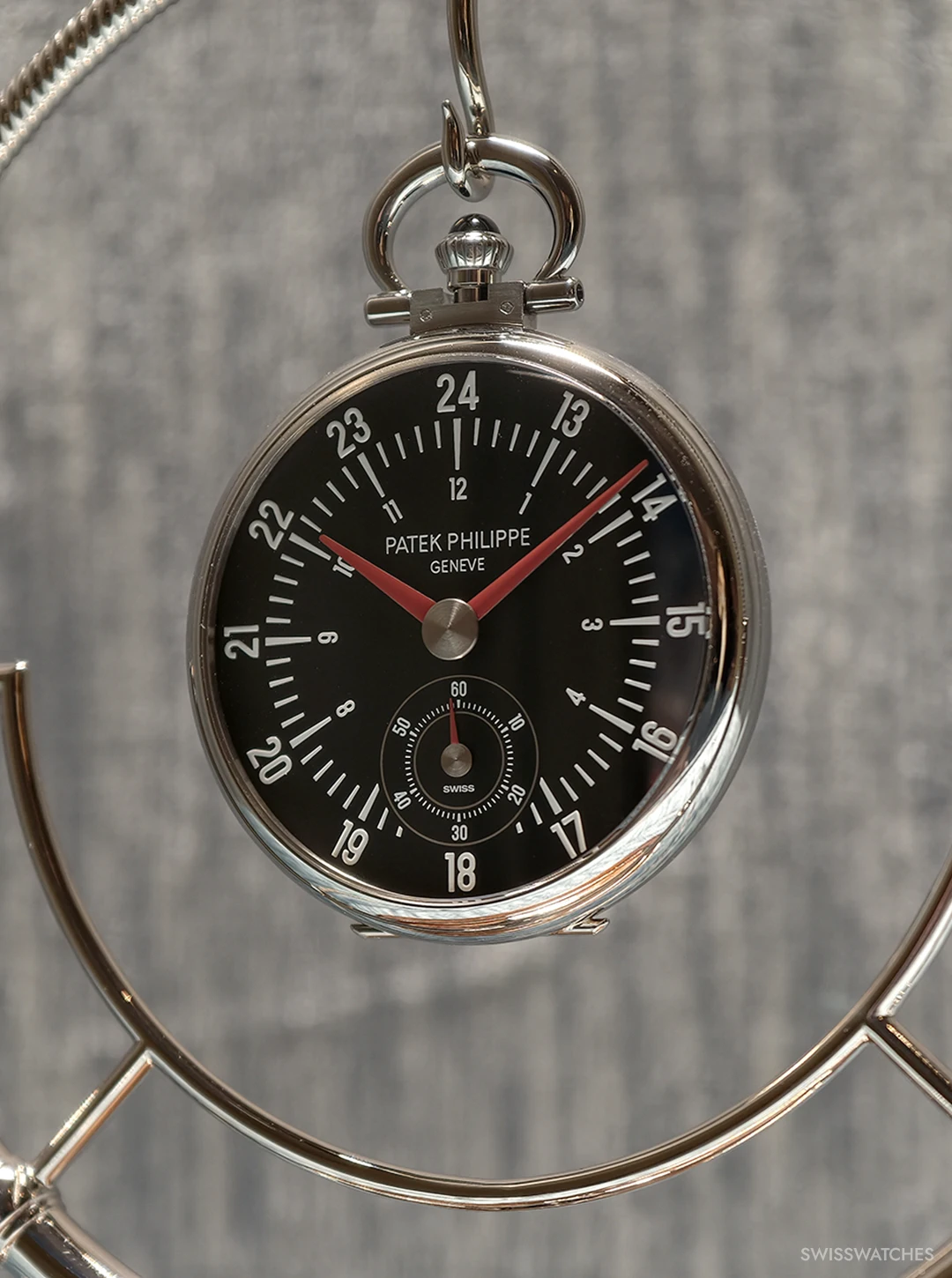
Wristwatches, pocket watches and table clocks pay tribute to Milan, the venue for the exhibition, its culture and Italy as a total work of art – that destination so many travellers long to visit. Thierry Stern is visibly proud of the achievements of his company and the artisans involved. He explains that in the 1980s, his father had nearly 90 dome-shaped watches in stock; nevertheless, he continued to have these models – which were difficult to sell at the time – produced in order to nurture and preserve the craftsmanship required to make them.
When you consider that annual production currently stands at between twelve and 14 pieces, you get an idea of the effort involved in the manufacturing process – and today, demand for the Rare Handcrafts models is much higher.
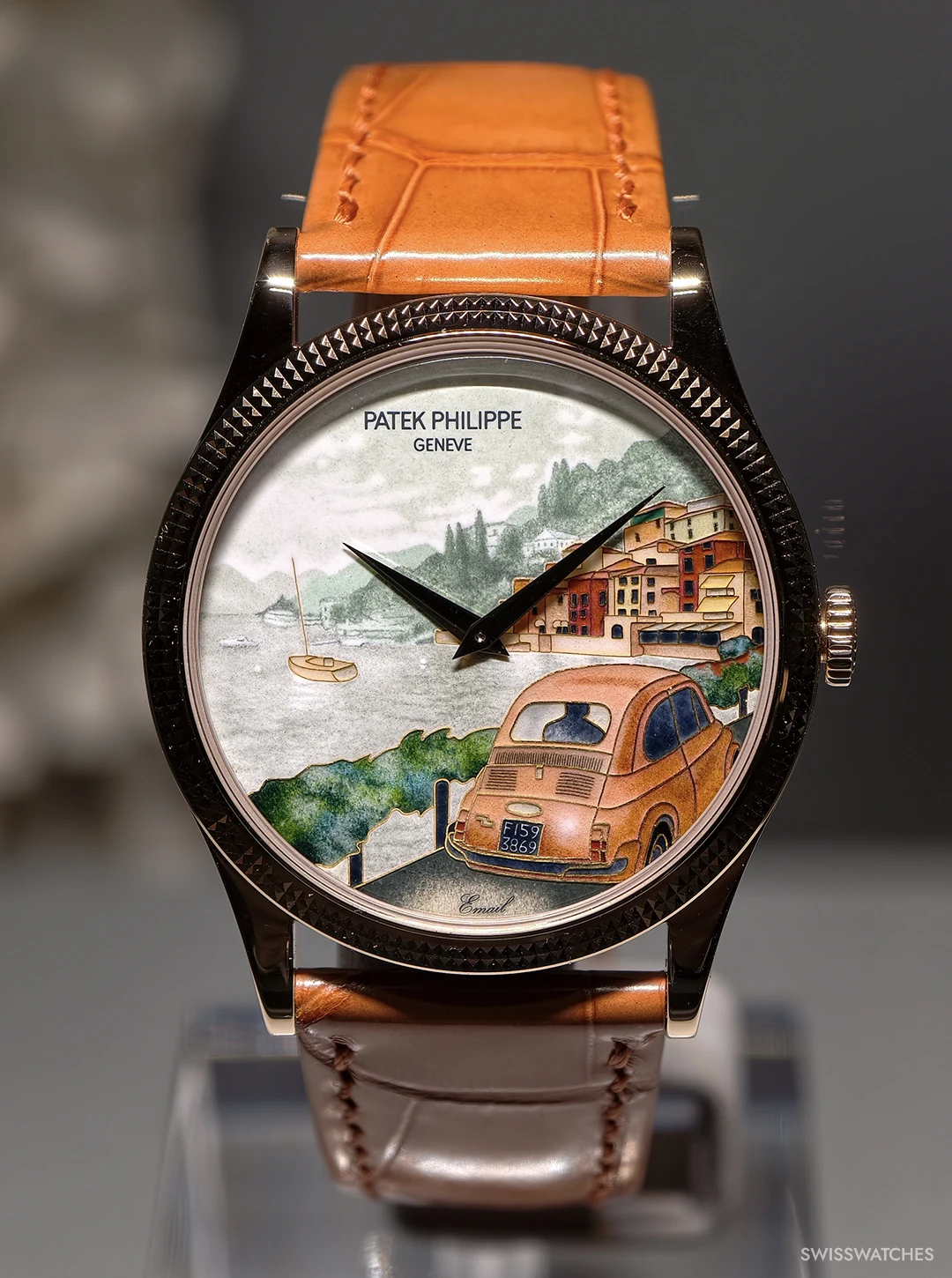
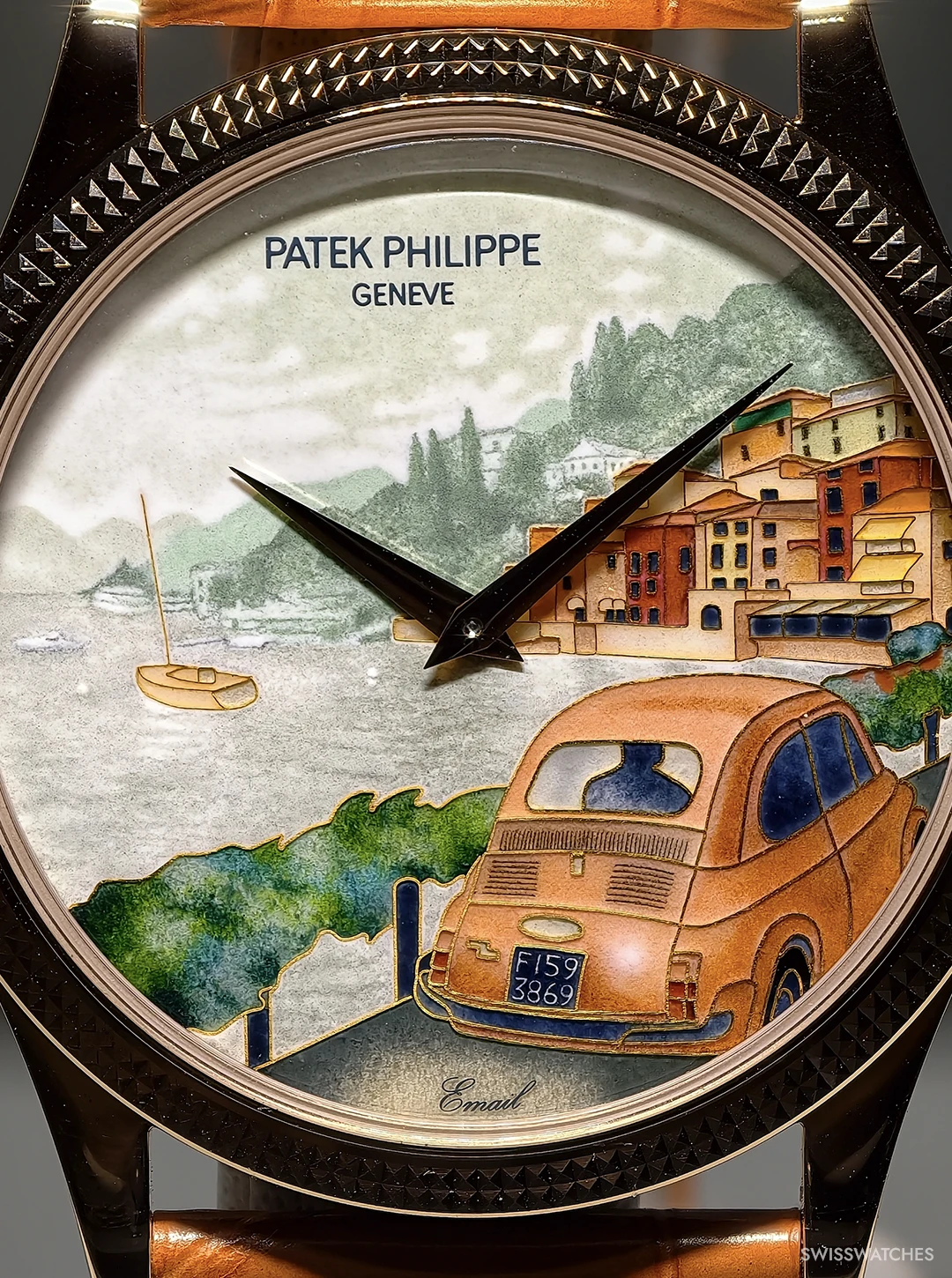
Stern offers the following explanation for this development: “When my father was crafting these beautiful pocket watches, he devoted himself to fine painting. It might have been a Rembrandt, for example. We always reproduced the works of famous painters. Suzanne Rohr was in charge of this, and later Anita Porchet joined us, who was just starting out on her career at the time. Today, however, we have to offer something new. Take the Fiat 500, for example, which we have here on the dial: a car on a beautiful piece of enamel? My father would never have done anything like that! But people love it. So I’ve taken some risks.
But the biggest risk I took was undoubtedly a Formula 1-themed watch a good two years ago. The bezel was set with baguette-cut rubies and diamonds, and the dial featured a racing car. I reckon my father would have given me a good telling-off for that. But it worked. You have to add something new without abandoning tradition. You do it for your father, for your son, for your mother, for your daughter. For me, this balance is very important. We come from Geneva. We are Calvinists. But we should be open-minded. That’s why my father sent me away from Switzerland when I was young – so that I could learn precisely that.”
Today, Patek Philippe is by far the largest manufacturer of timepieces finished with such artisanal craftsmanship, and wood marquetry, enamelling, guilloché work and gem-setting are once again significantly more popular amongst those starting out in the profession. Stern: “Why? Because they see that a brand like Patek Philippe creates exciting, creative things. They say to themselves: “I like that. I play the guitar, for example – could I design a guitar too?” And we reply: “Yes, why not?” That’s very important to me. When I work with craftspeople, I always try to find out what they like. Does someone like birds? Great. Perhaps the first commission they receive will be to depict a bird. Because I know they’ll devote themselves to this task with passion.”
A look at the latest models is therefore a glimpse into the soul of the manufactory, into the spirit of the times – and a journey through Italy.
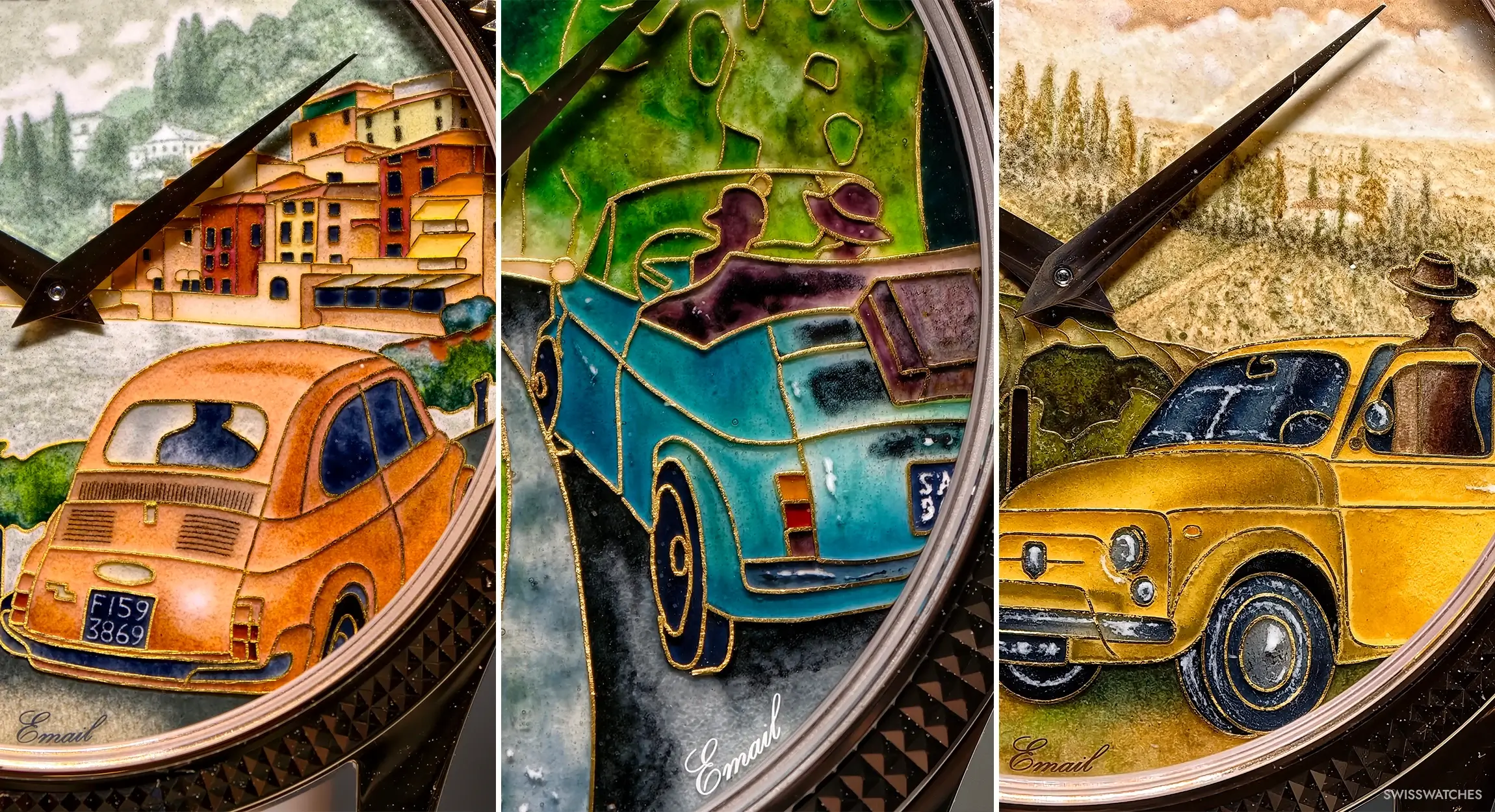
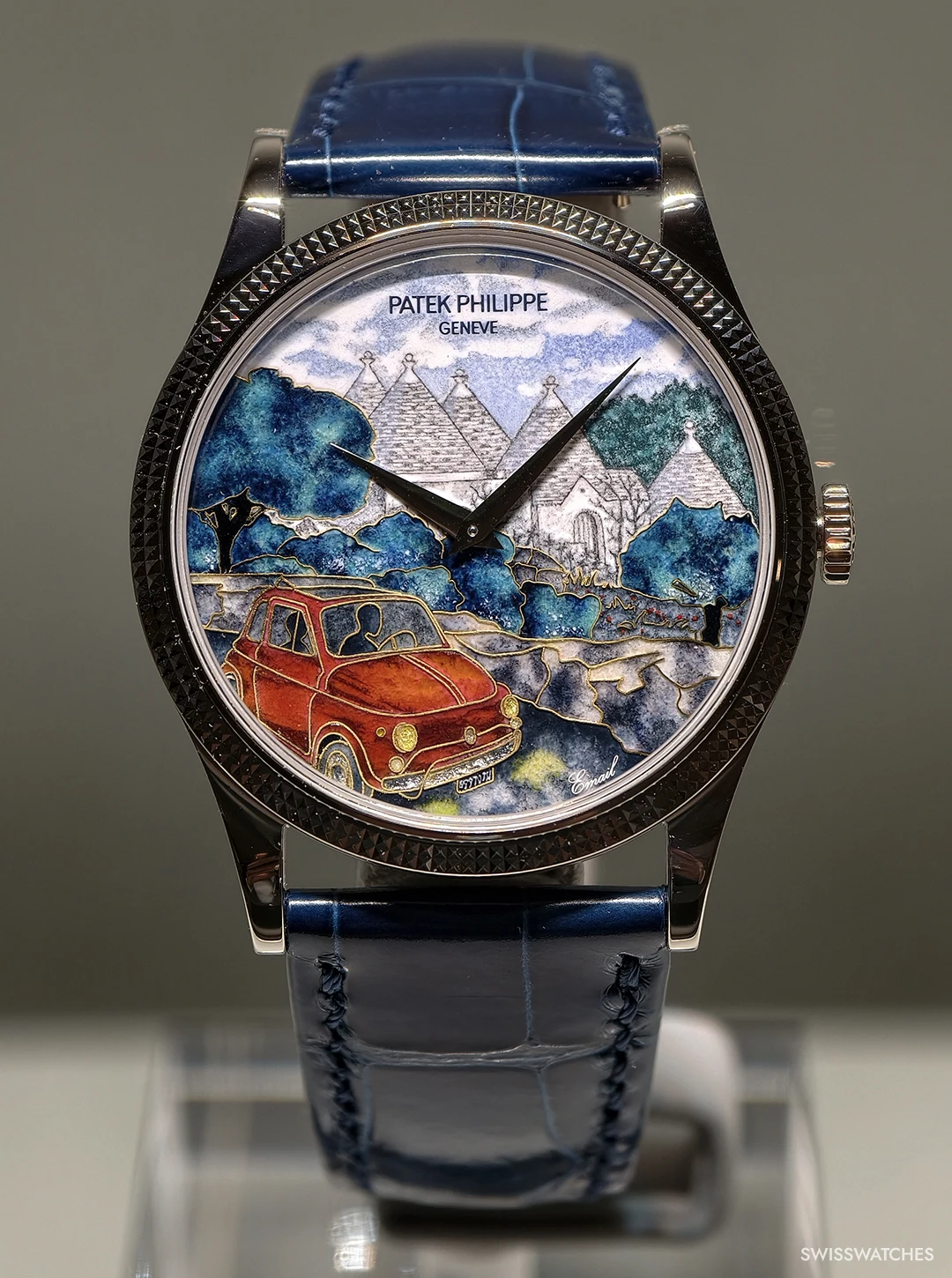
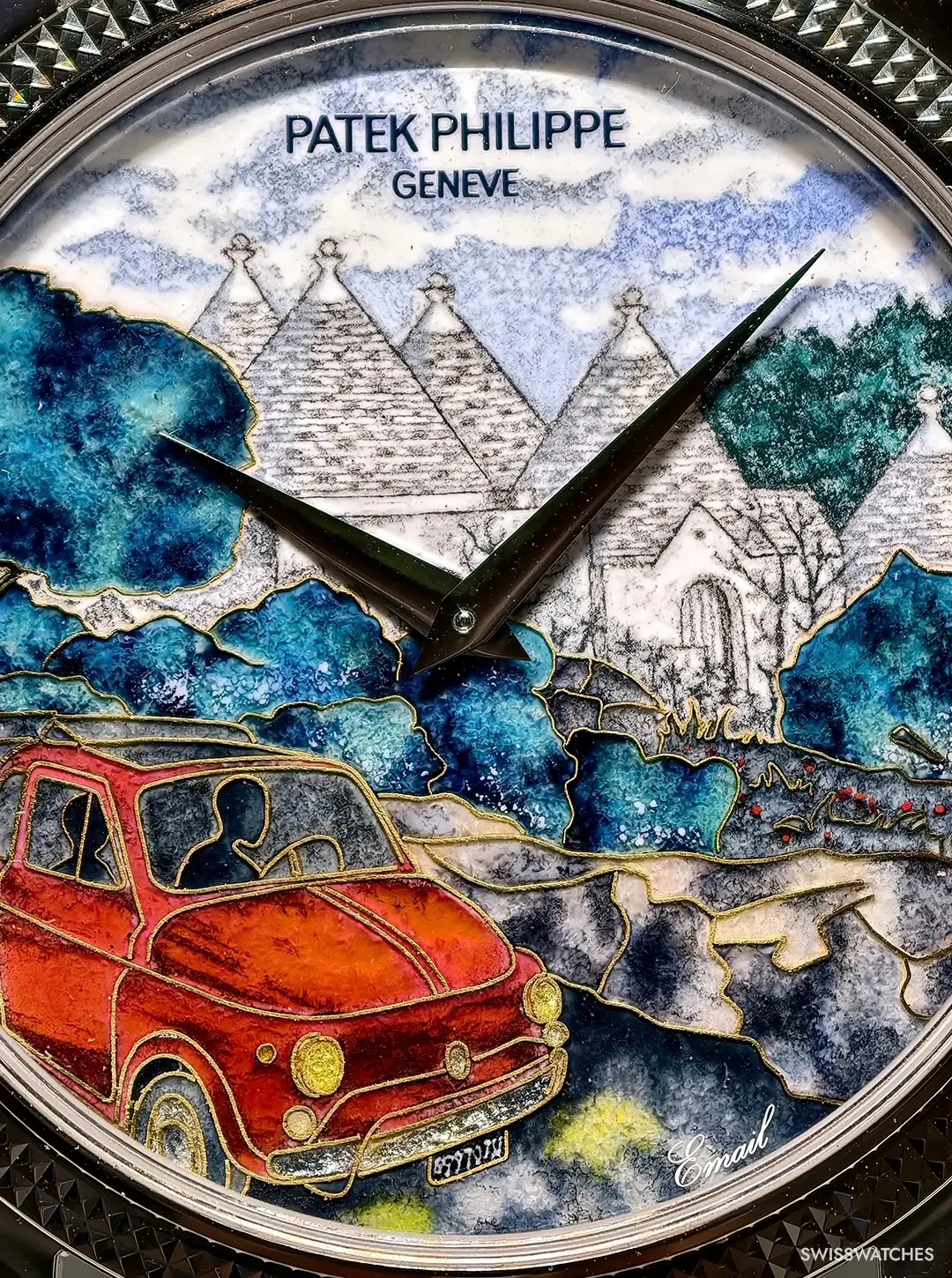
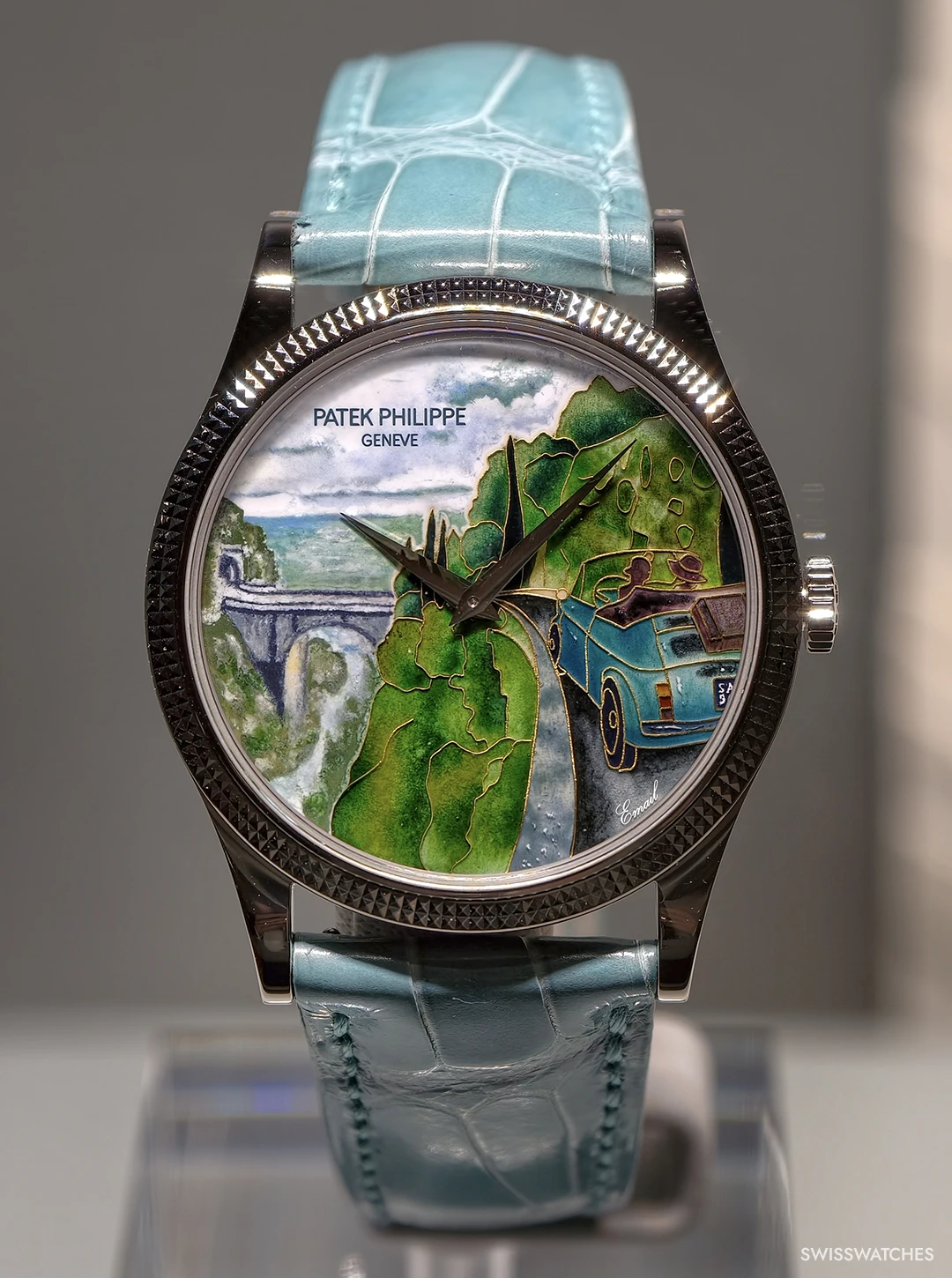
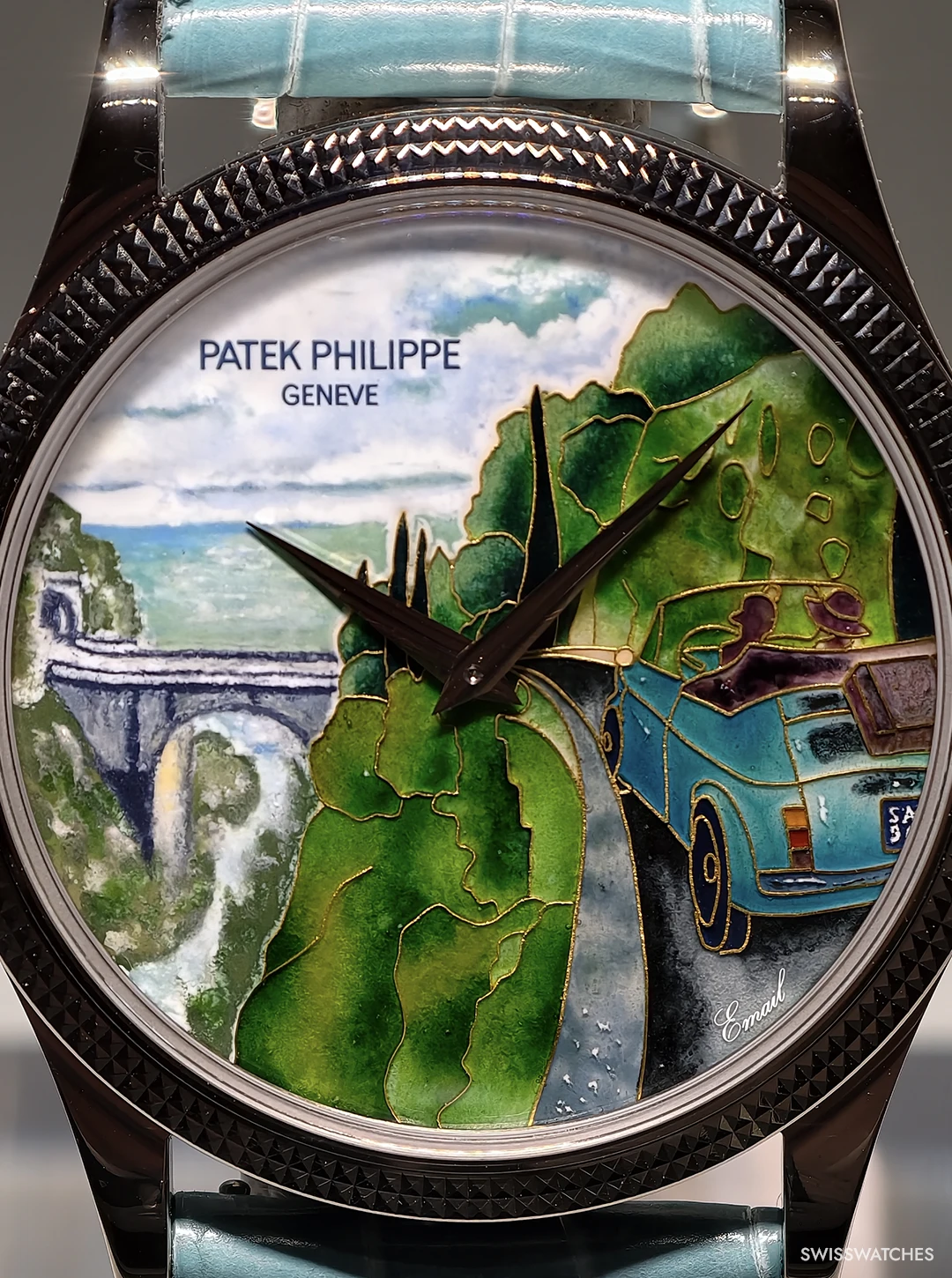
The Rare Handcrafts models for the Milan exhibition are inspired by Tuscany and Sicily, taking us to the Amalfi Coast as well as the major cities of Milan, Florence and Rome. The Fiat 500 mentioned by Thierry Stern – which, according to him, his father Philippe would never, ever have chosen as a dial motif – features in no fewer than four models – each limited to six pieces, and each with its own unique charm. Reference 5177G-054 is intended to represent a road trip to Apulia.
It is the white-gold sister model to the 5177G-053, which bears the name ‘Amalfi Eskapade’ and features a Fiat convertible. Both are Calatrava models featuring cloisonné enamel and miniature painting. The dial, featuring a red Fiat 500, incorporates 47 centimetres of wafer-thin gold wire, which defines the outlines of the car and the landscape for the enamel work and separates the various sections. With a total of 28 transparent, opalescent and opaque shades, the light and shadow take on a vivid, three-dimensional quality, allowing the viewer to lose themselves in the motif and the watch.
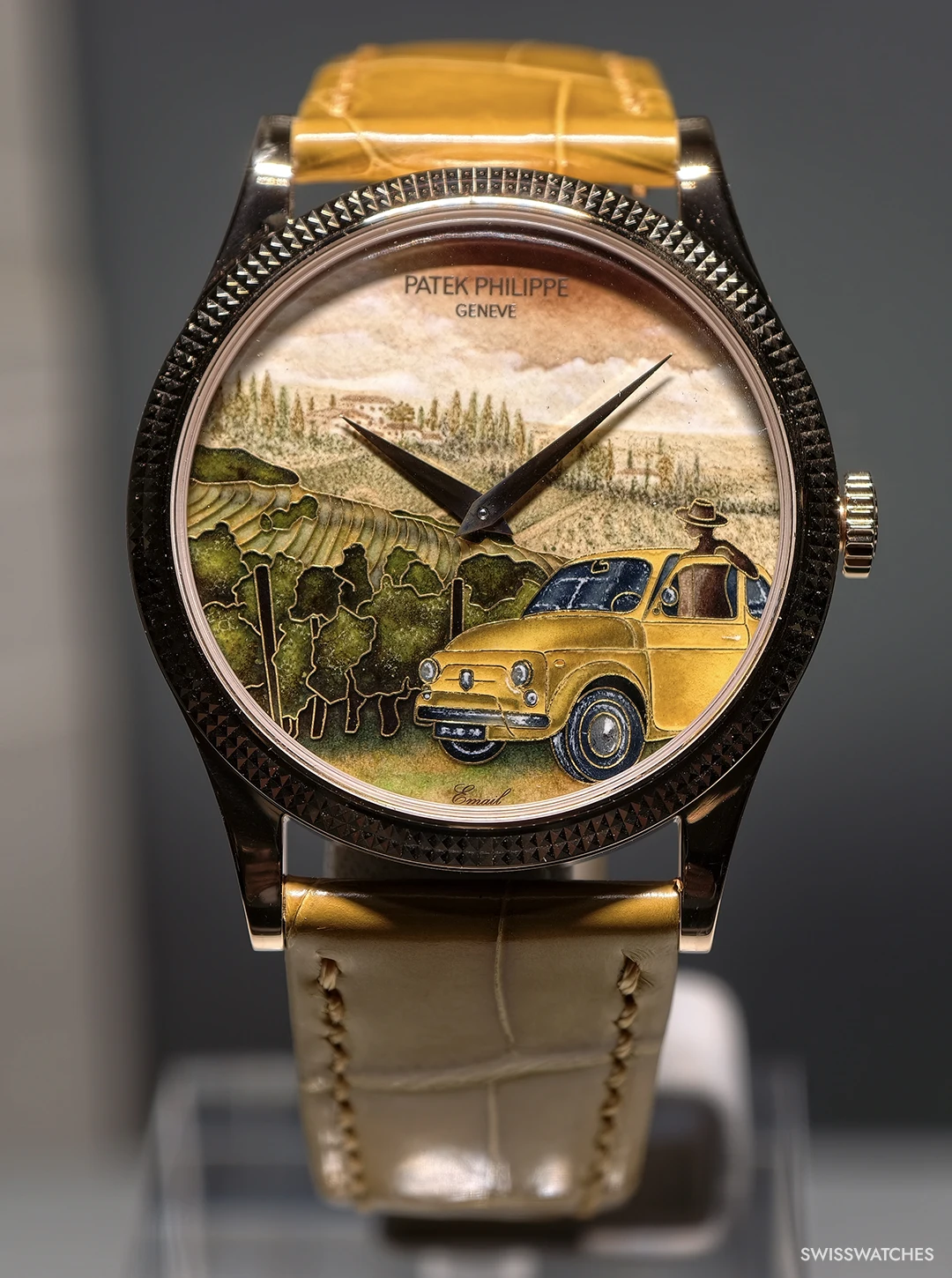
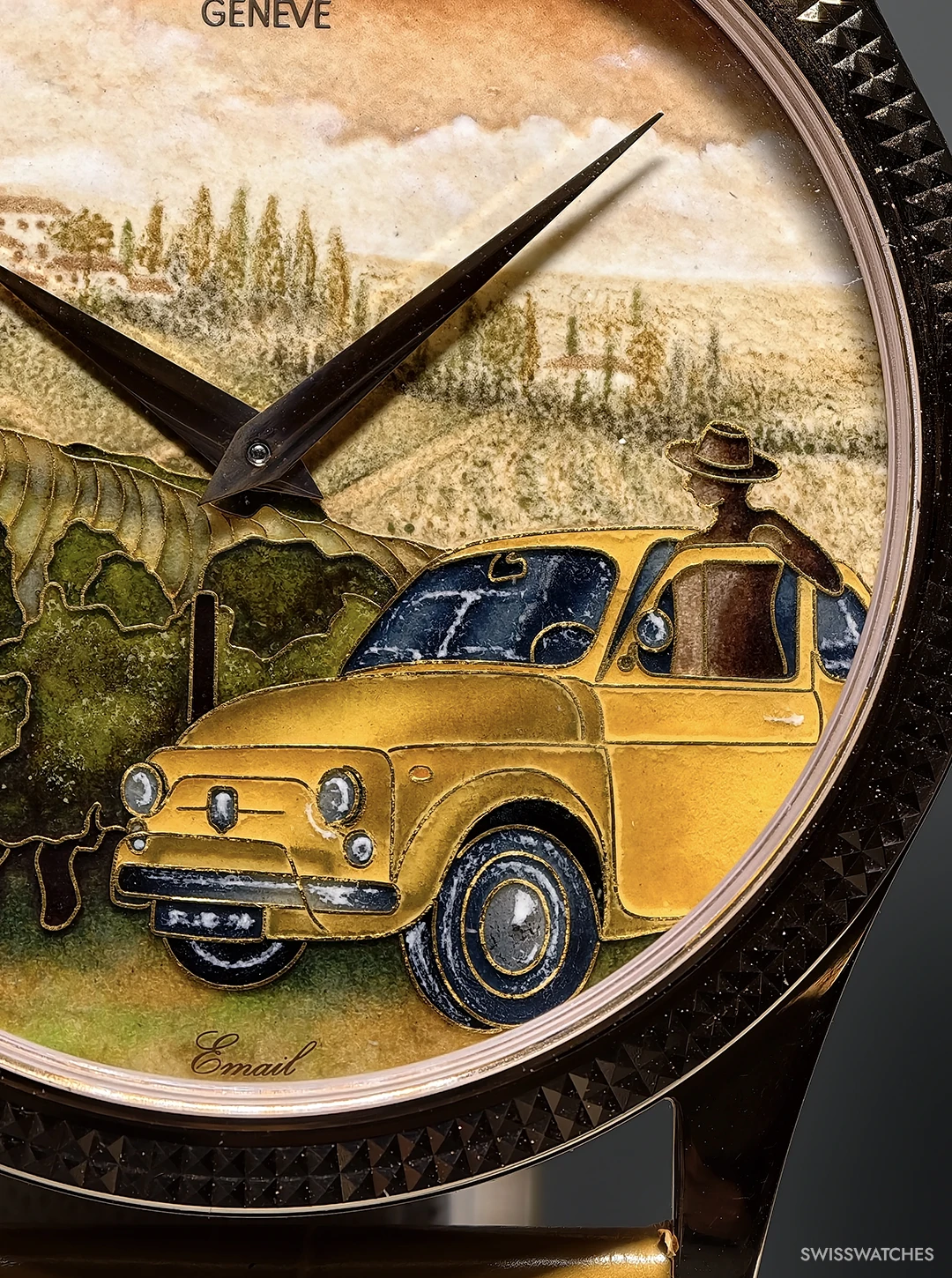
Whilst the Apulian motif, with its shades of blue, is comparatively understated, the rose-gold model 5177R-010, named ‘Stopover in Chianti’, is far more colourful. Alongside the famous Fiat, which this time shines in yellow, the dial features vineyards and cypress trees, whilst the sky at dawn appears red. Each dial in this mini-series – which also comprises six pieces – has been fired eleven times at 820 degrees Celsius.
Reference 5177R-011 depicts the ‘Arrival in Como’, with its vibrantly coloured houses, in this Calatrava quartet. By the time it reaches the lake, the car has turned orange; 40 shades of enamel meet 17 further colours used by the miniature painter. As with all ‘Fiat 500 models’, the bezel, featuring a Clous de Paris pattern, elegantly frames the motif and, through its decoration, draws the eye to the dial. As the saying goes, there’s no accounting for taste, but it is not only because the author of these lines has particularly fond memories of a stay on Lake Como that this variant is his personal favourite.
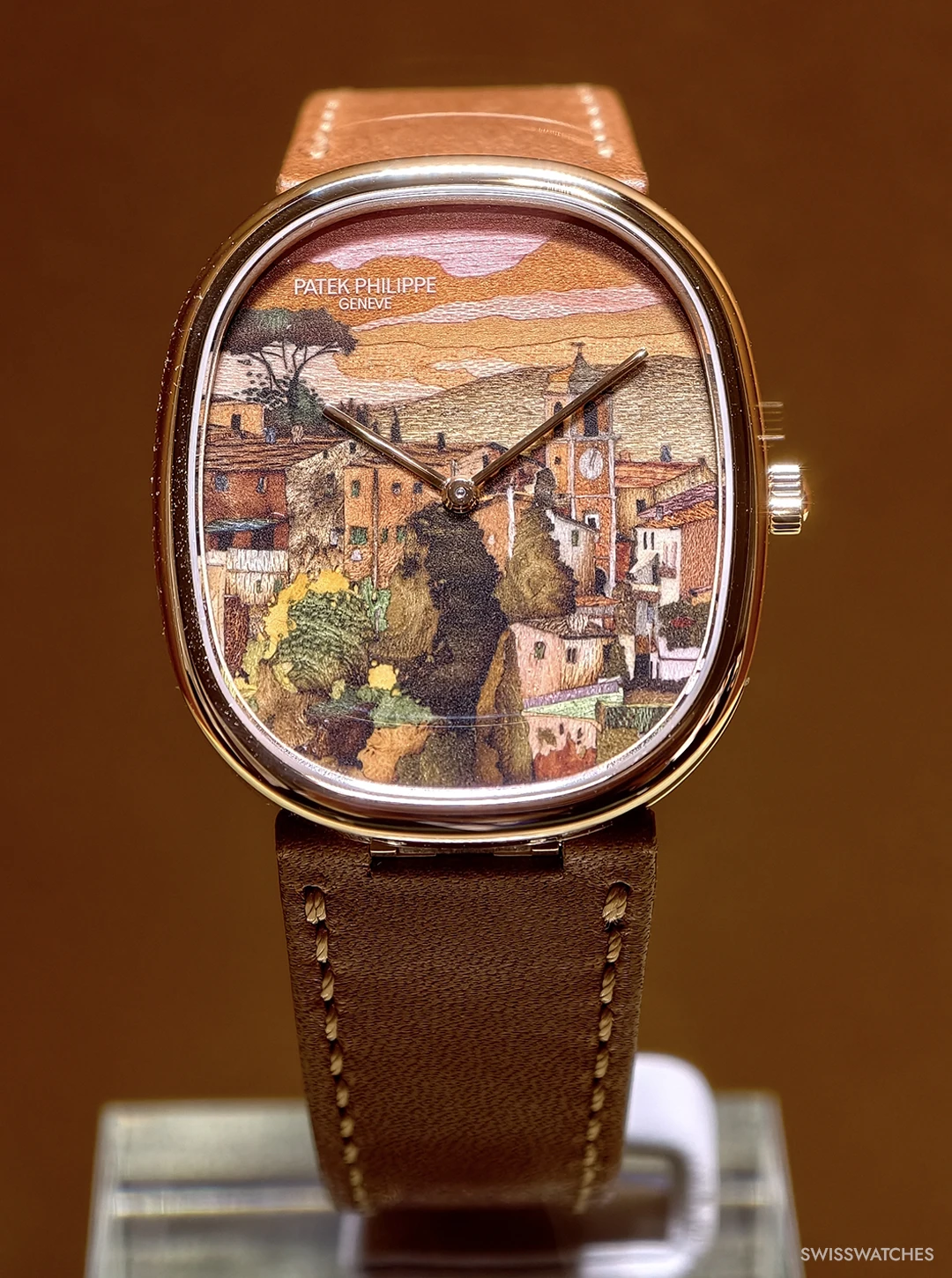
Why bring together one’s own visits to Lake Como in a single piece featuring Rare Handcrafts models? Because these watches are highly individual pieces, and not just because of their limited production runs. Whilst the craftsmanship involved certainly plays a part in which design resonates with each individual, it is ultimately a matter of personal associations, memories and passions. A German collector expressed his enthusiasm for reference 5738/50R-017 accordingly. After all, he’d got married in Tuscany! That’s how quickly a desire for something can arise.
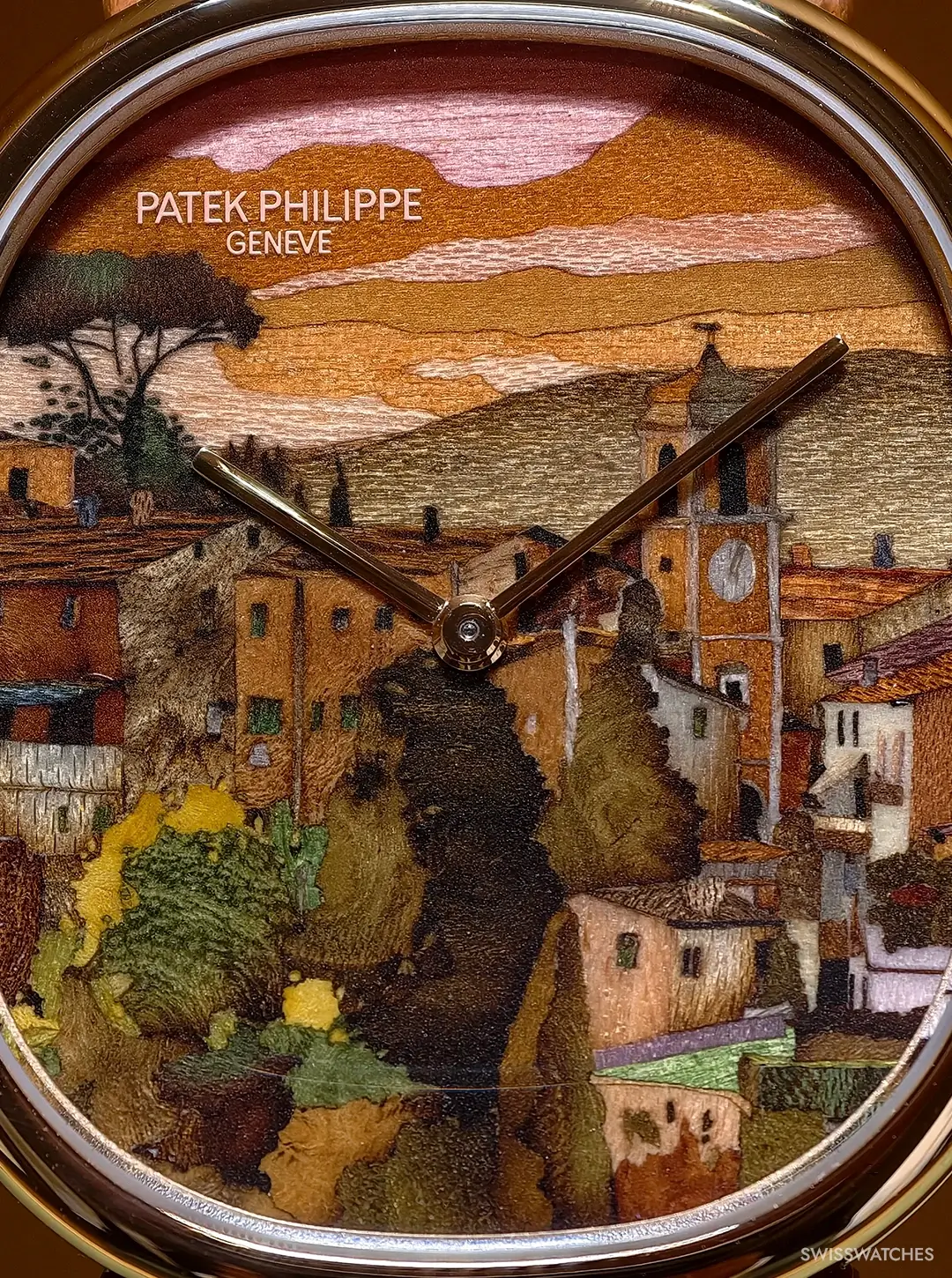
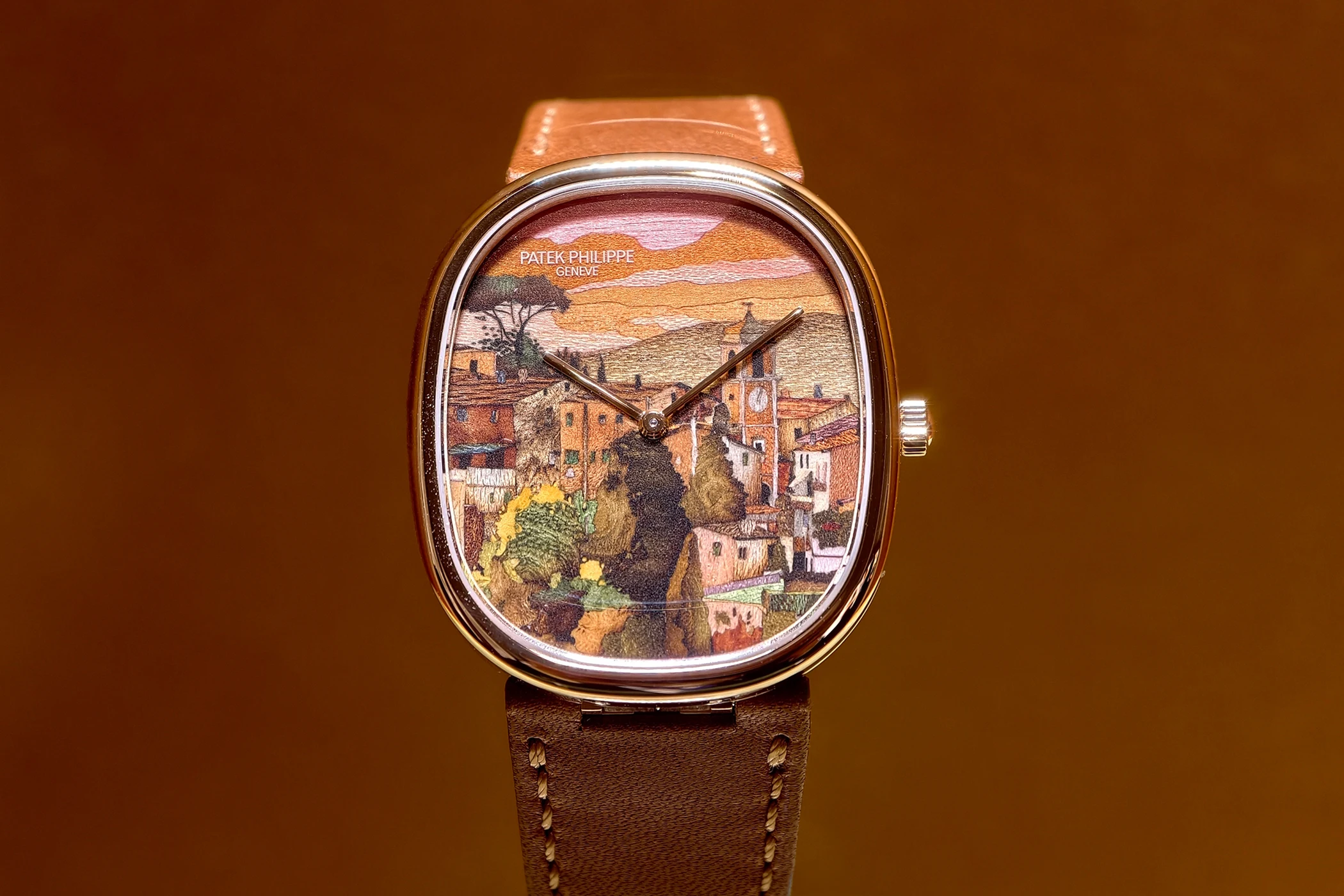
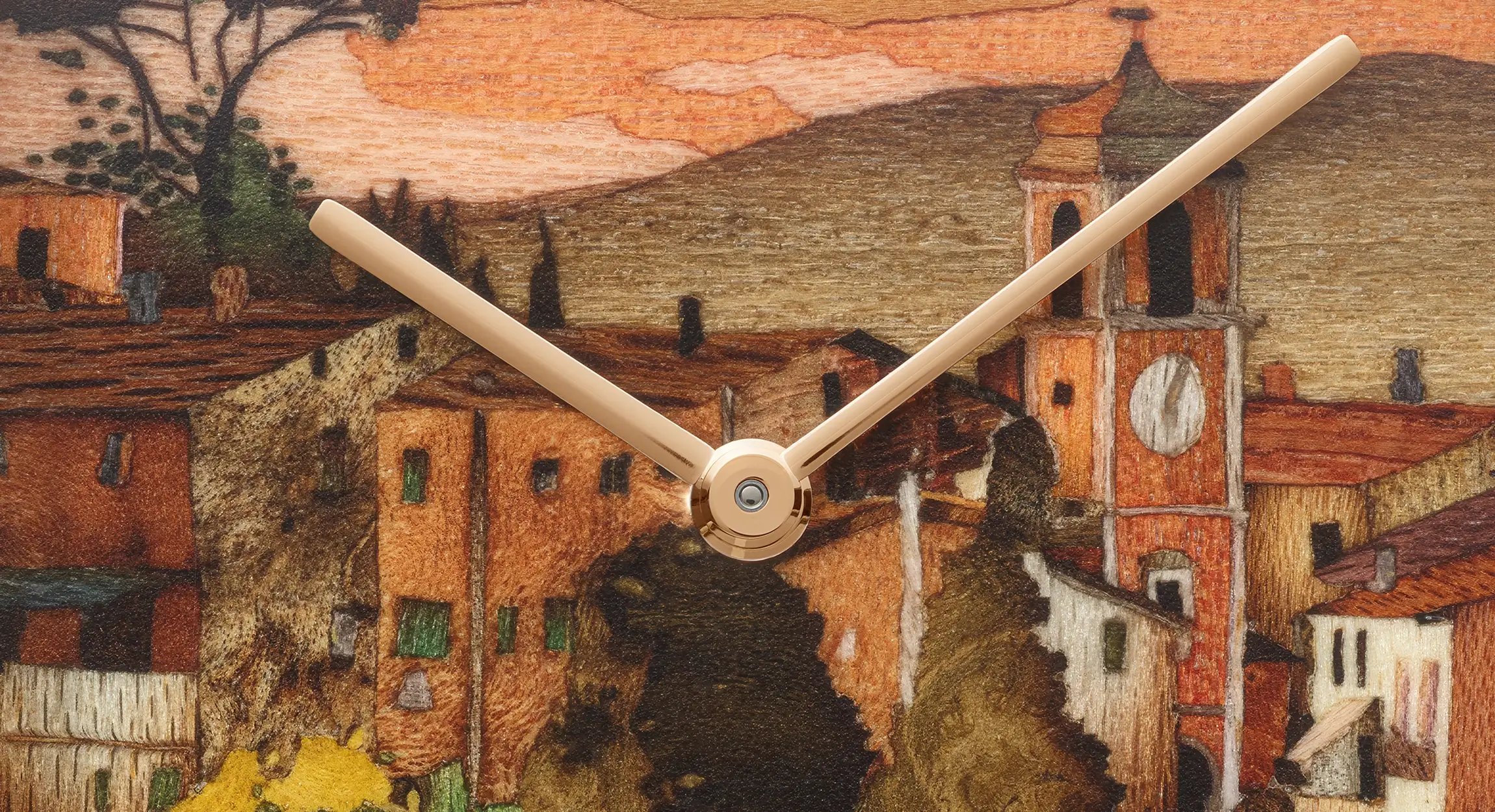
There is no need to describe the beauty of Tuscany any further at this point; a glance at the little village at sunset on this ‘Golden Ellipse’ is enough. It is a masterpiece of wood marquetry, a work of sawing and jigsaw-like precision for the particularly ambitious. At Patek Philippe, a single master craftsman is currently responsible for all designs in this genre, though he now has two apprentices, and Thierry Stern reports in an interview that these two are now producing excellent work themselves. He has only just approved their first pieces. As for exactly which ones these were, and when they will be launched, the President is keeping that under wraps for the time being.
One thing is certain: this Tuscan motif, comprising 203 tiny pieces of veneer and 75 even smaller inlays, is a prime example of craftsmanship that is mastered and celebrated in no other workshop quite as much as by the Stern family.
At Patek Philippe, the manufacture and its products are ultimately always at the heart of everything it does. This is another reason why the Watch Art Grand Exhibition is so important to the company. At the same time, the company does not shy away from acknowledging that, particularly for the Rare Handcrafts models, it draws on the expertise of freelance artists. The most famous of these is Anita Porchet. She is regarded as the world’s finest enamel artist, and, if Thierry Stern is to be believed, she goes the extra mile when working on commissions for Patek Philippe.
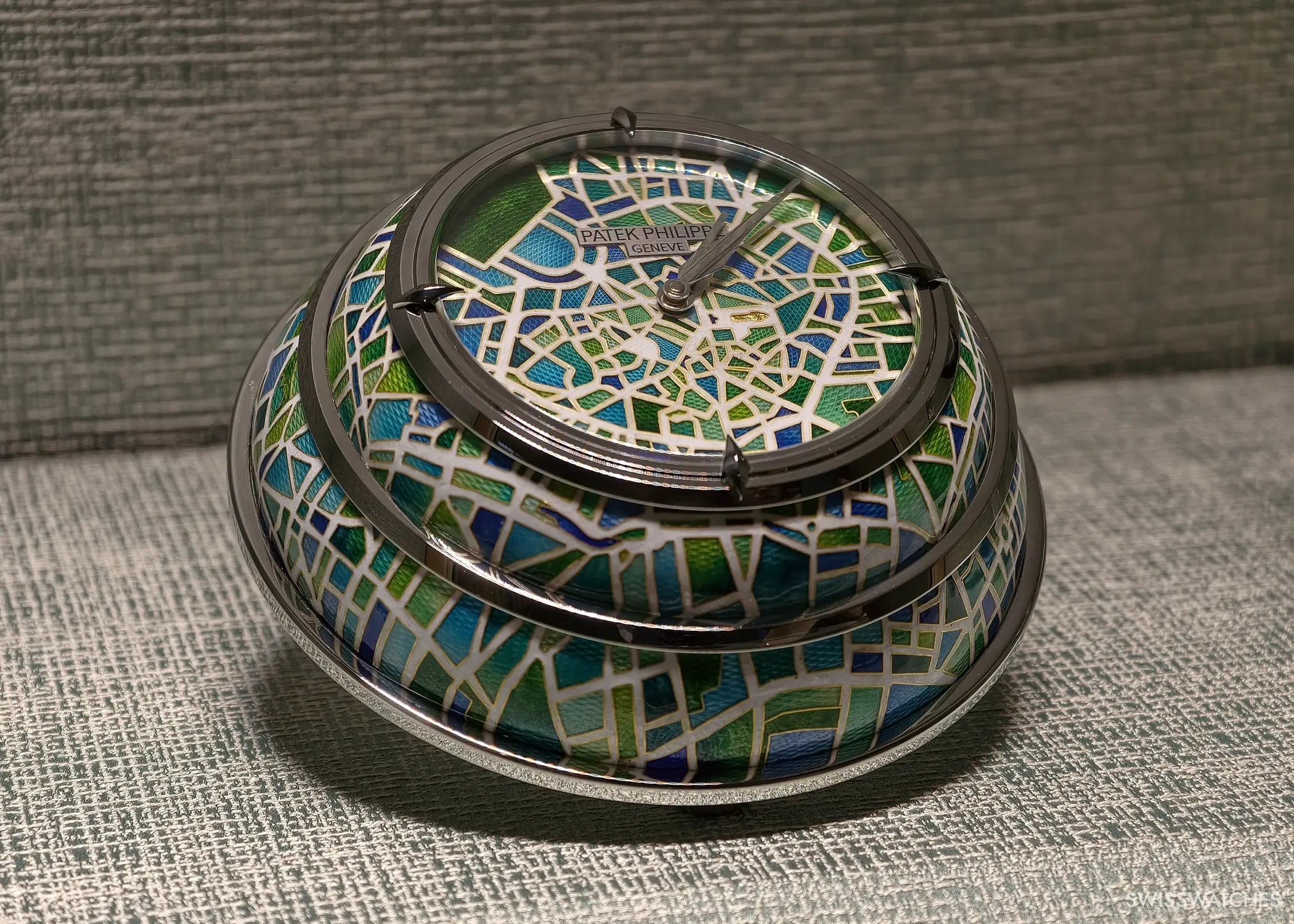
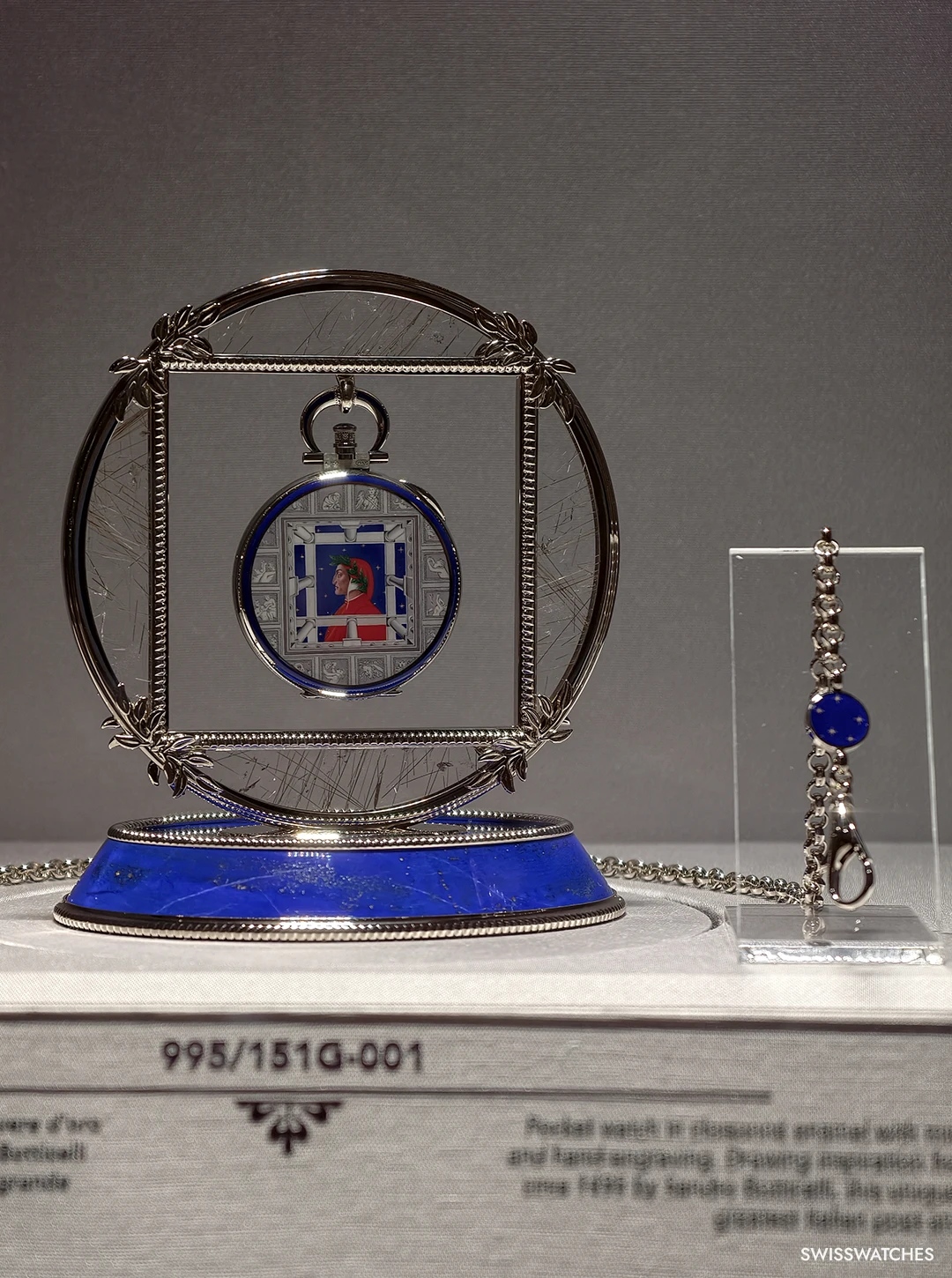
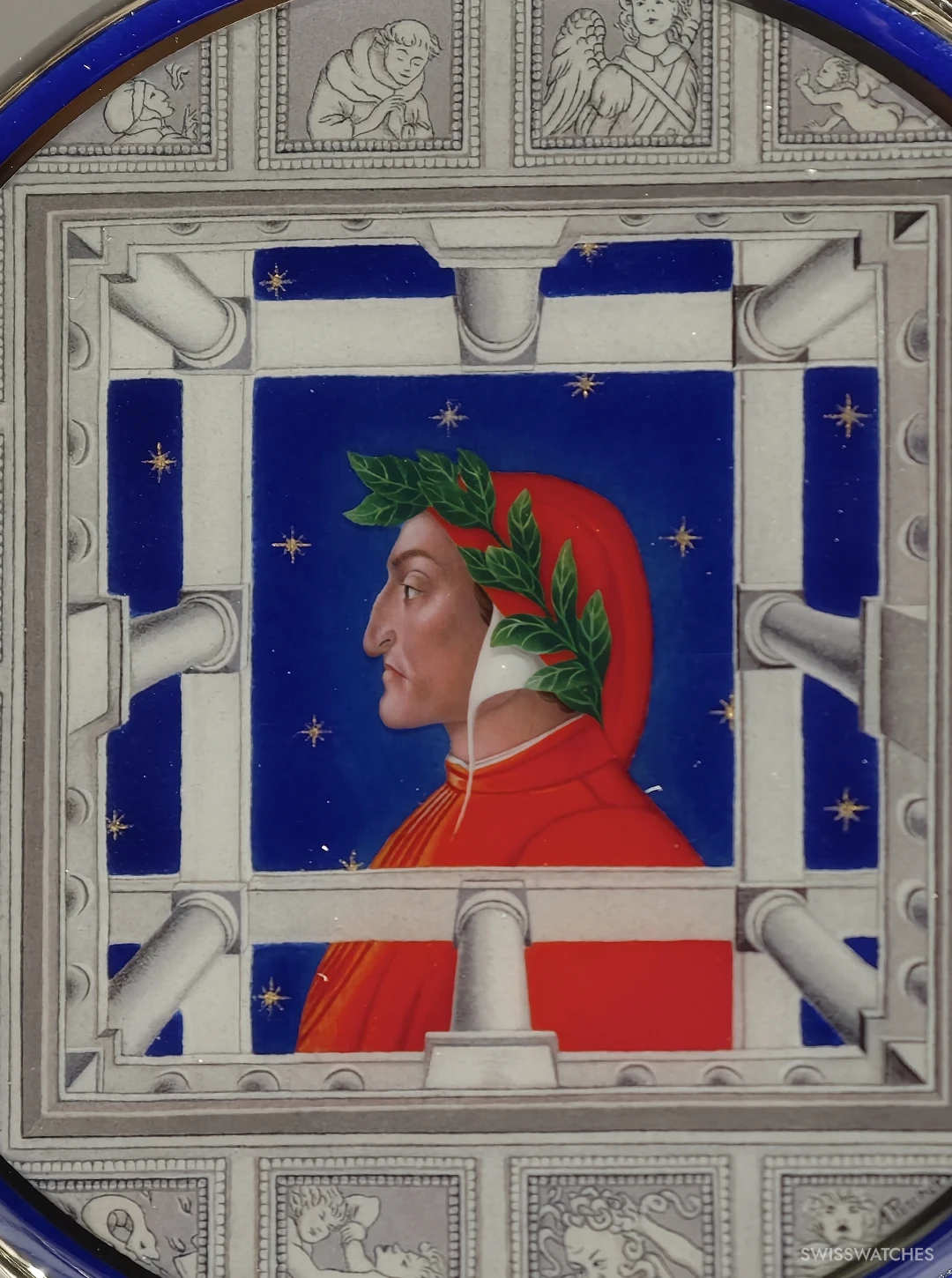
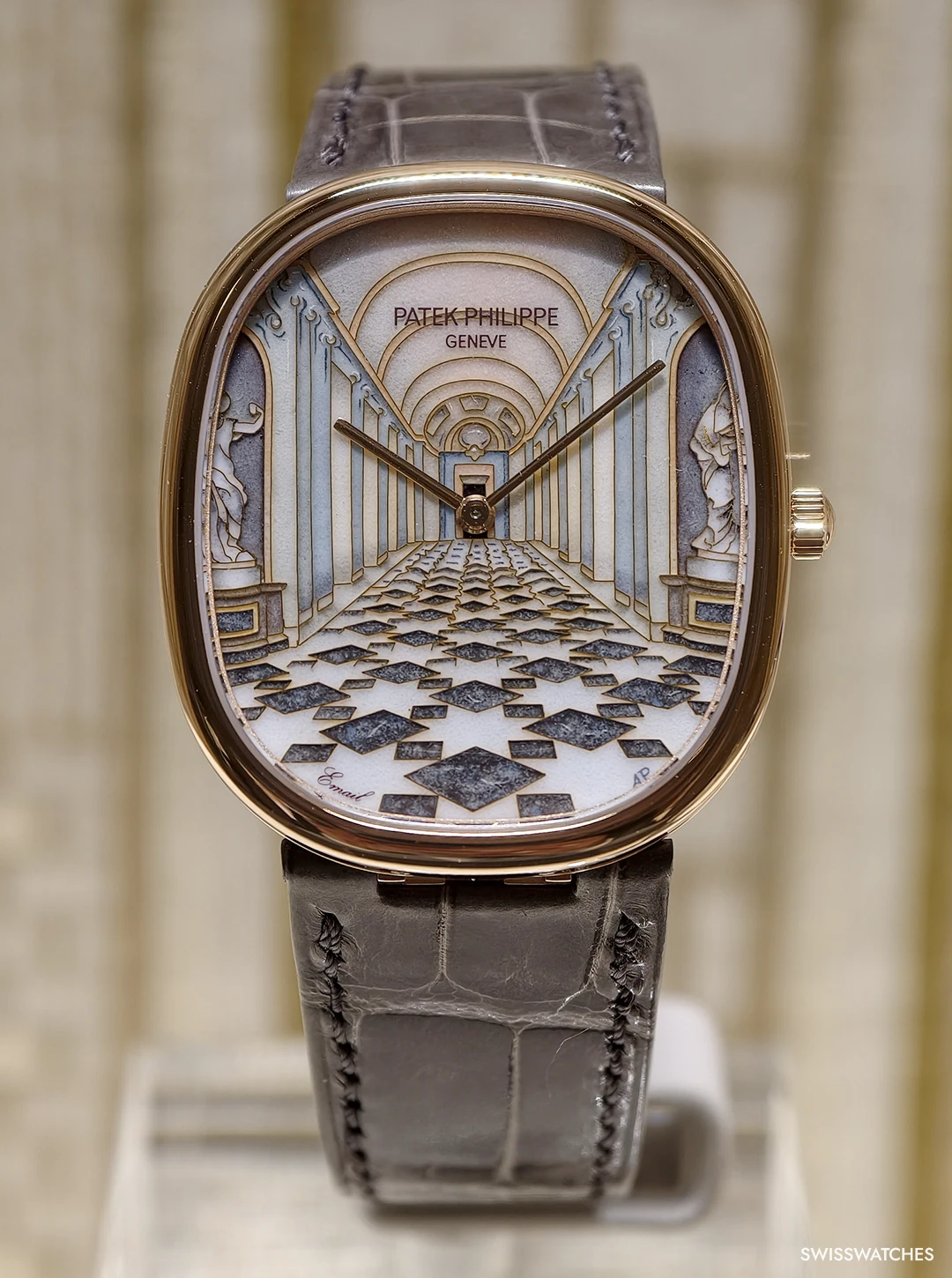
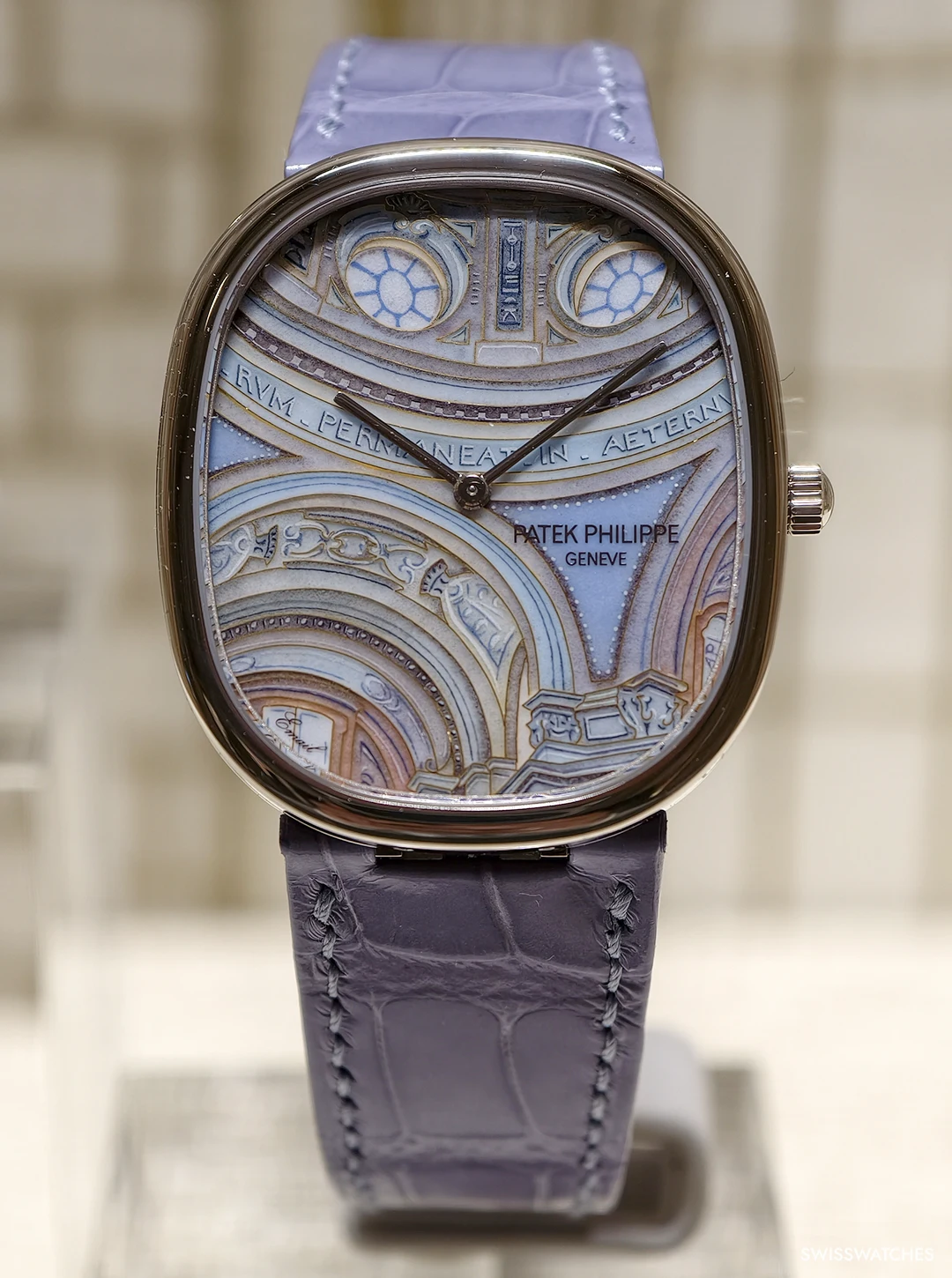
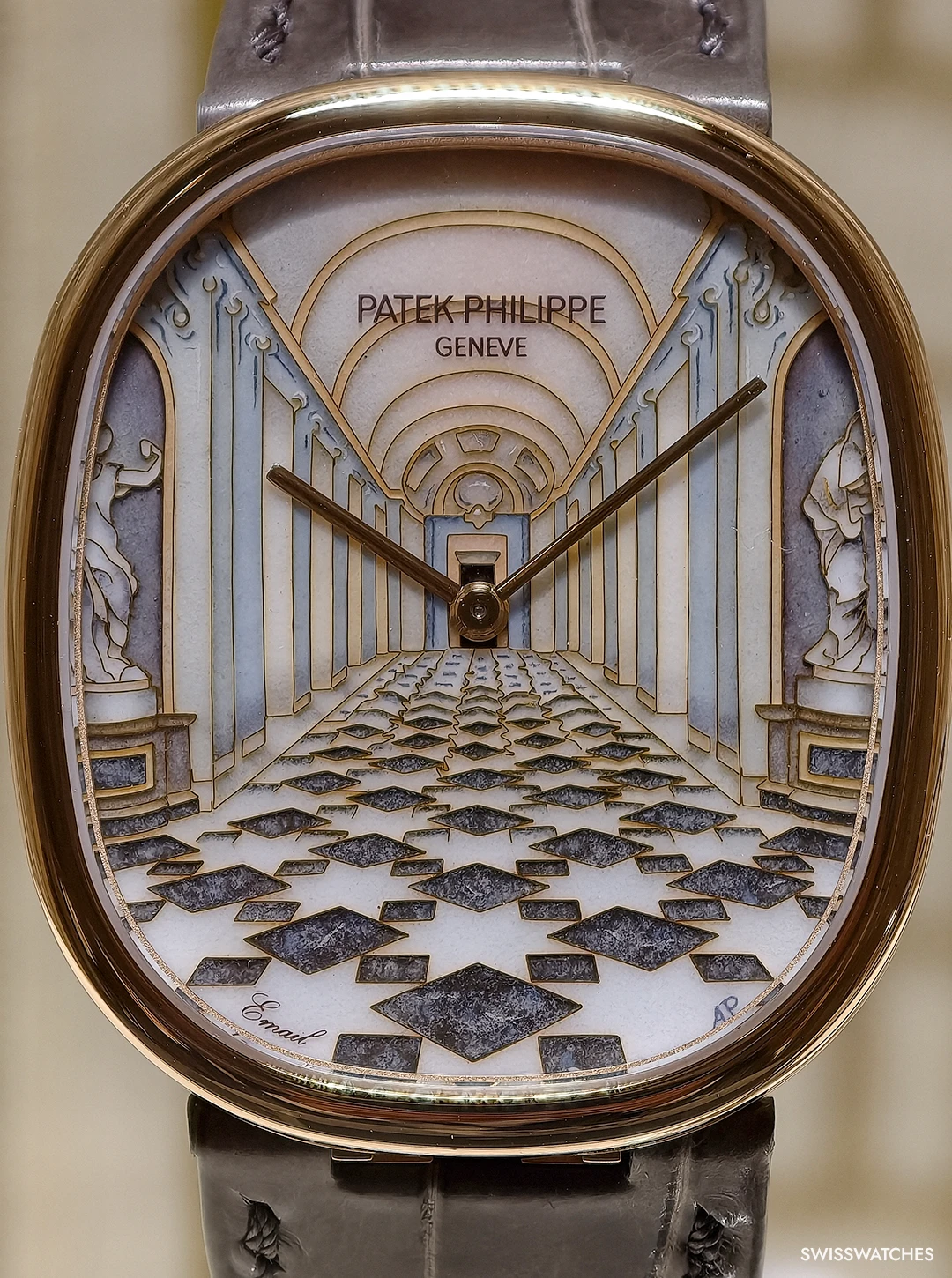
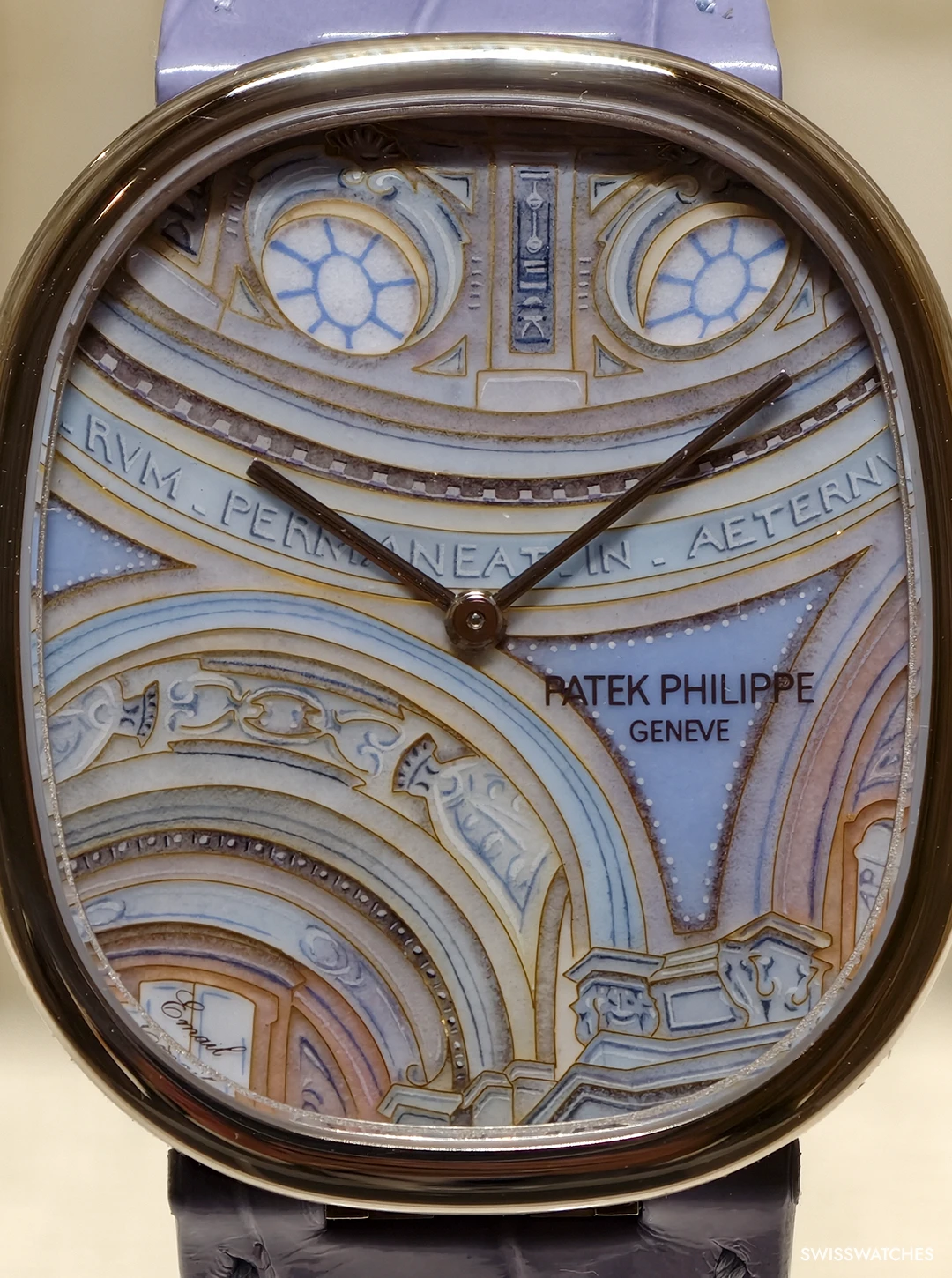
Porchet herself is also part of the exhibition; she is seated at a table right next to her works, which for this exhibition include the two world time watches with minute repeater and a Milanese enamel city map motif on the dial. The Golden Ellipses, featuring the motif of the Grand Gallery at the Royal Palace of Venaria Reale near Turin (reference 5738/50R-027), as well as a Baroque design (reference 5738/50G-050), were also crafted in her studio and are among the visitors’ favourites. Her Dante pocket watch, however, is considered the absolute highlight.
The model is inspired by a 15th-century portrait by the artist Sandro Botticelli. It depicts the Italian poet Dante Alighieri, surrounded by motifs from his Divine Comedy, from Inferno to Paradise.
This one-of-a-kind piece measures 44.1 millimetres in diameter and is priced at around 750,000 euros. Yet no figure can do justice to the craftsmanship embodied in this watch. It is a masterpiece of the cloisonné technique, featuring stars made from gold dust and several layers of transparent enamel, which both protect the motif and bring it into sharper relief. This piece has successfully undergone 25 firing processes.
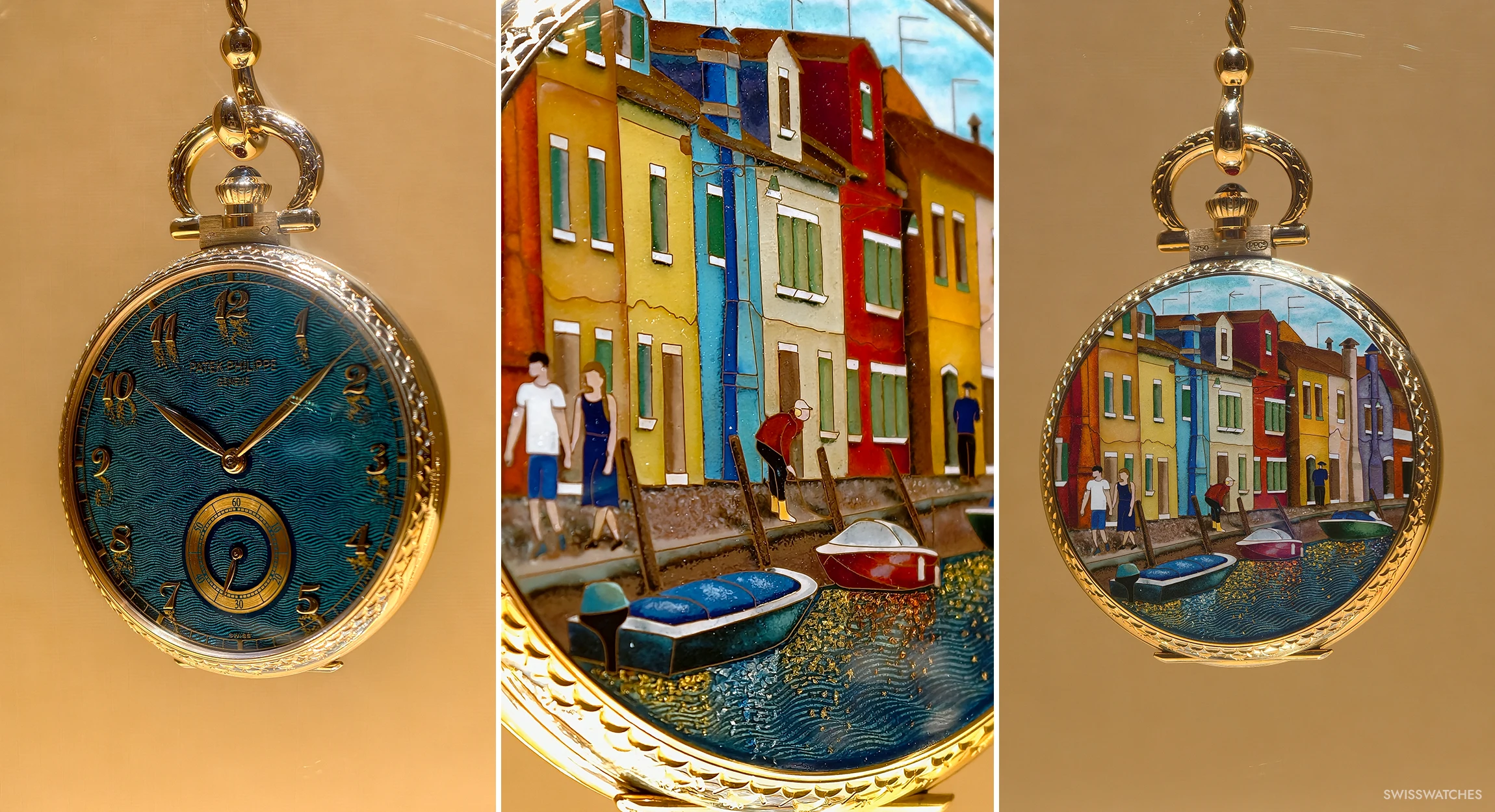
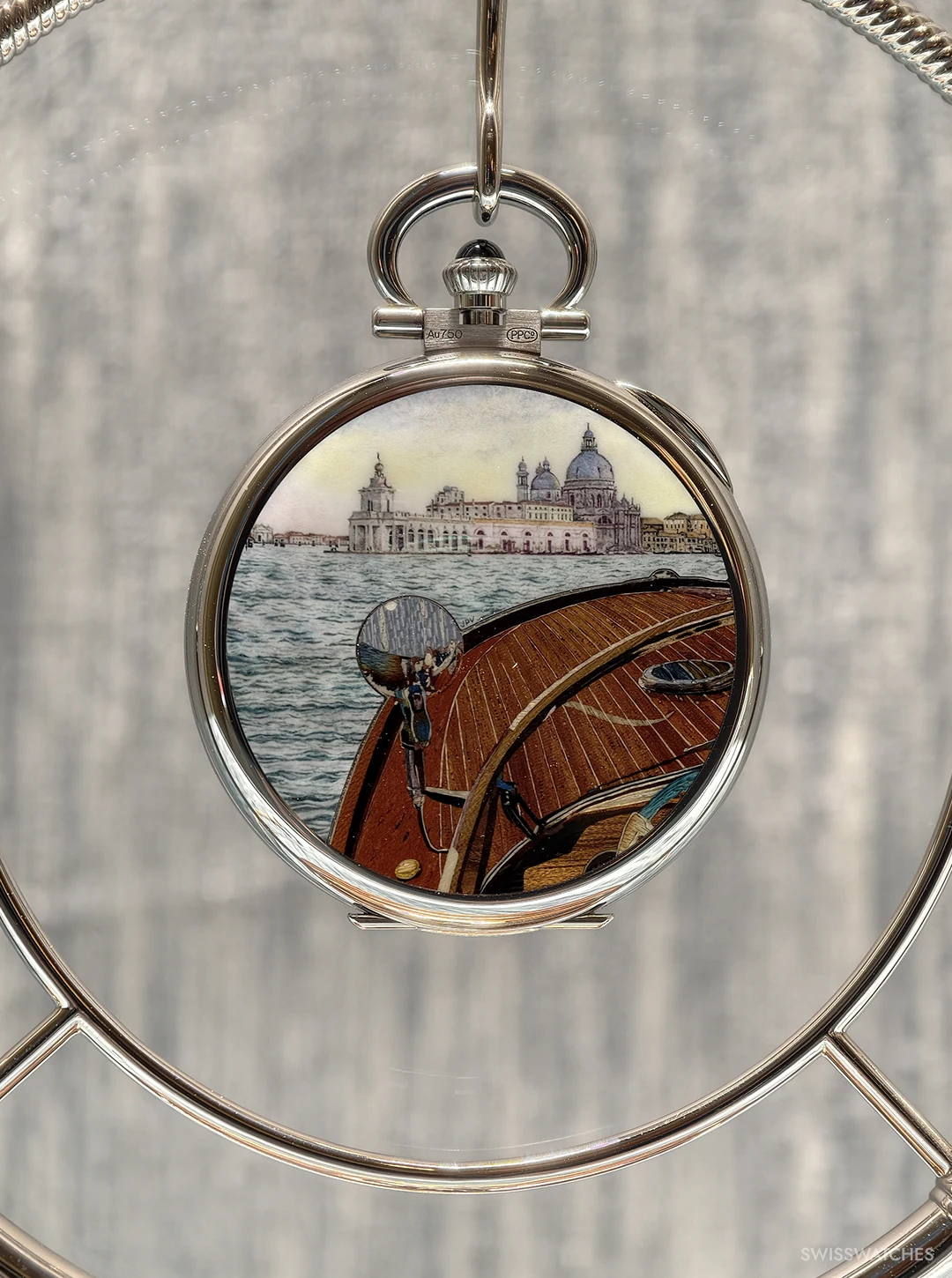
Mosaic patterns, brocade fabrics and lemons, wood-panelled motorboats in Venice, the houses of Burano and the bays of Capri – this collection celebrates Italy in all its beauty and splendour. Sometimes verging on kitsch, but always full of finesse.
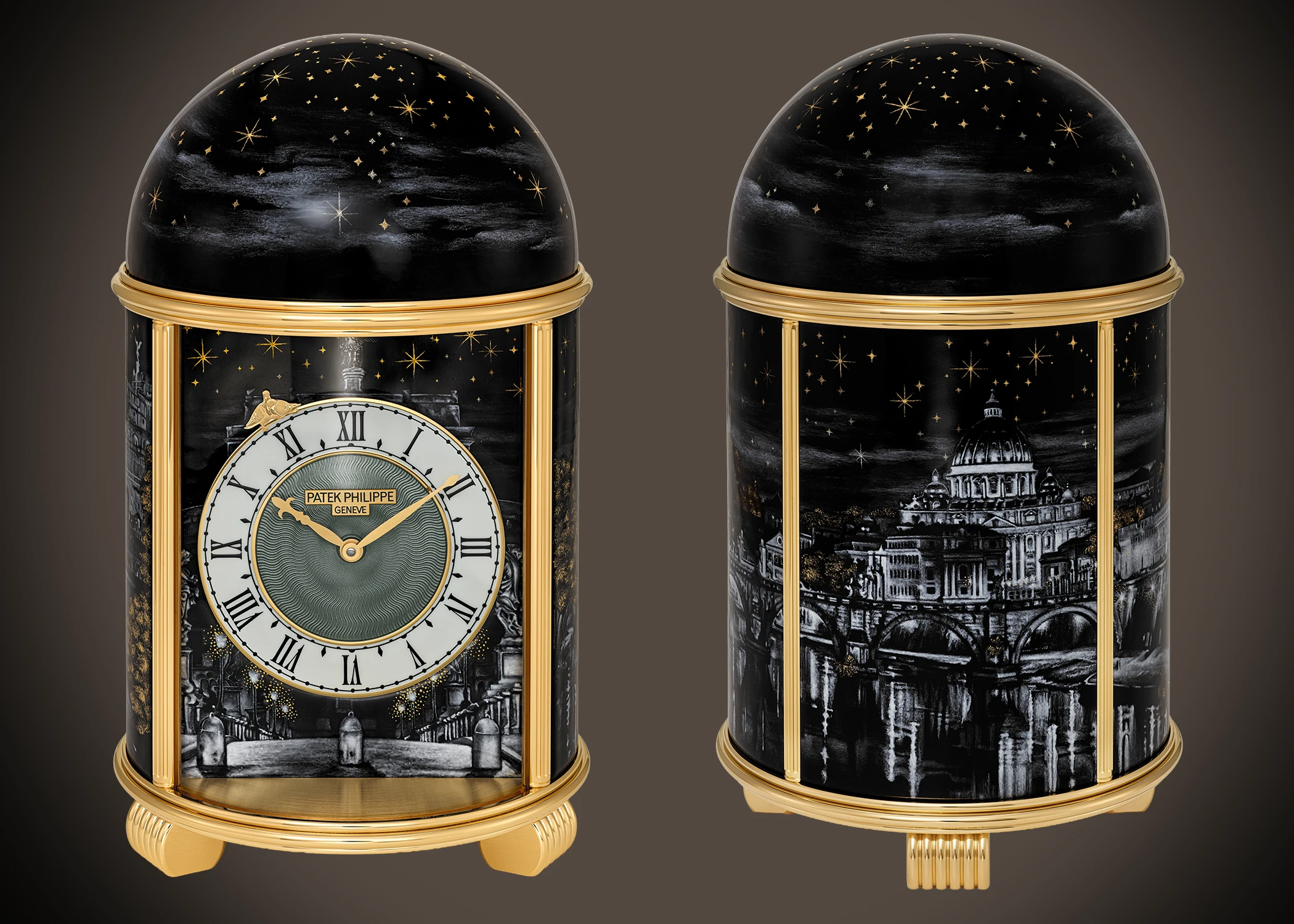
And, of course, it is also the table clocks – once stored by the dozen at Patek Philippe – that now rank amongst the most impressive exhibits. After all, they offer the greatest surface area for the enamellers. Milanese fashion designers could presumably talk endlessly about the brilliance of the colours used, and their depth and lustre. The midnight-black-blue enamel of the ‘Rome by Night’ model is inspired by the capital’s landmarks; it depicts St Peter’s Basilica and the bridge leading to Castel Sant’Angelo. It is a scene fired in grisaille and Blanc de Limoges enamels. ‘Grisaille’ refers to the use of a monochrome colour palette, whilst ‘Blanc de Limoges’ is an opalescent colour used to create shading; in this instance, it is employed to define contours and create soft focus effects, ranging from the starry sky to the magnificent buildings.
This watch is not just a source of pride for the brand’s Italian customers. Patek Philippe is a total work of art with many facets, ranging from jewellery watches through the Nautilus and Aquanaut to minute repeaters. According to Thierry Stern, the Rare Handcrafts models account for just one per cent of turnover – despite their substantial price tags. In the balance sheet, it is little more than a rounding error; were it not there, it would be barely noticeable from a business perspective. Yet the world of watchmaking would be all the more lacklustre and much poorer for it. The manufacture deserves respect for the fact that it is not only capable of nurturing this genre – but actually does so.