Girard-Perregaux and Ferrari: Five rare watches from the archives, from Enzo Ferrari’s Damier to Michael Schumacher’s tourbillon.

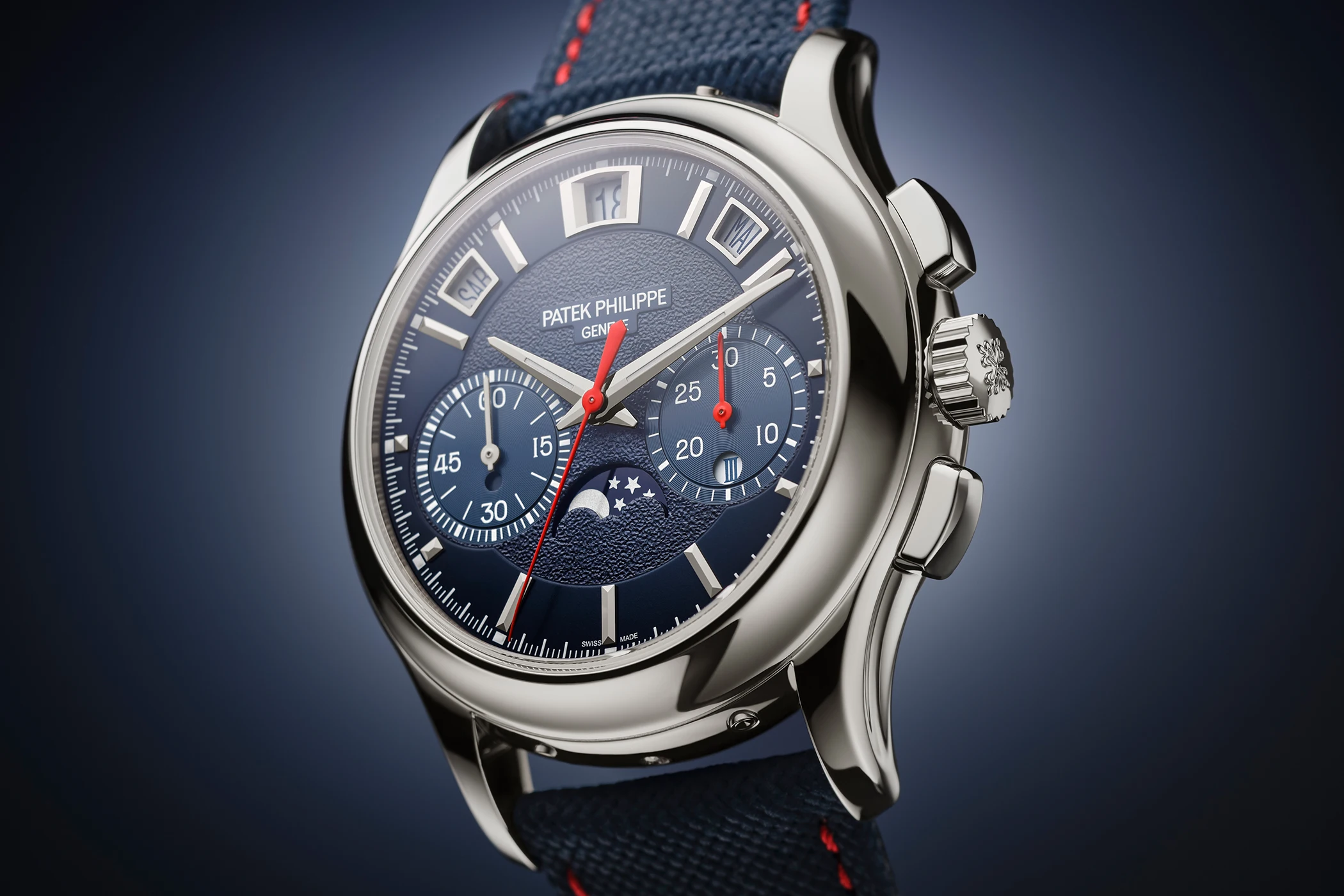
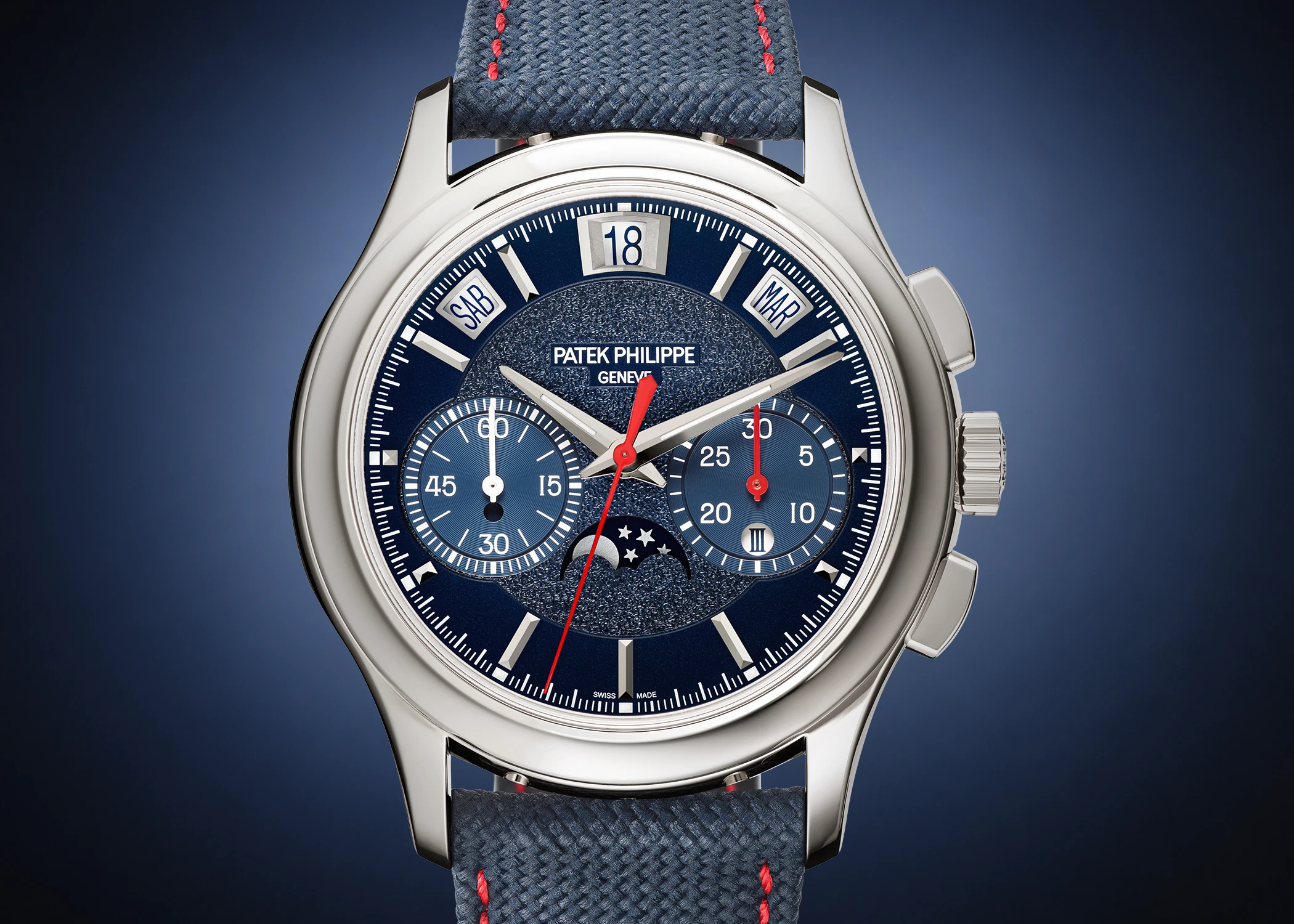
To mark the ‘Watch Art Grand Exhibition Milan 2026’, Patek Philippe has combined its patented hand-wound chronograph calibre CH 29-535 with an instantaneous perpetual calendar in the new reference 5978P-010.
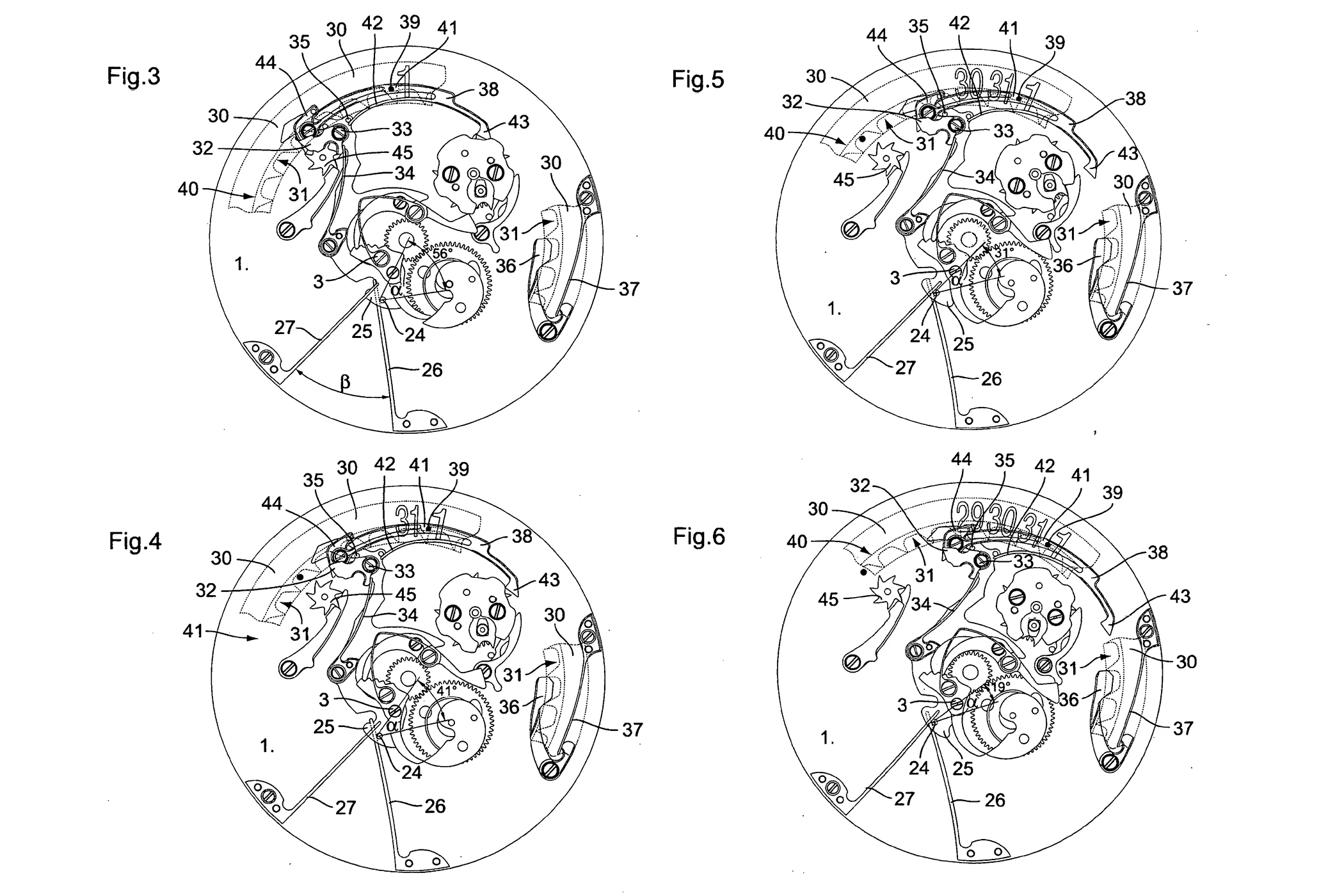
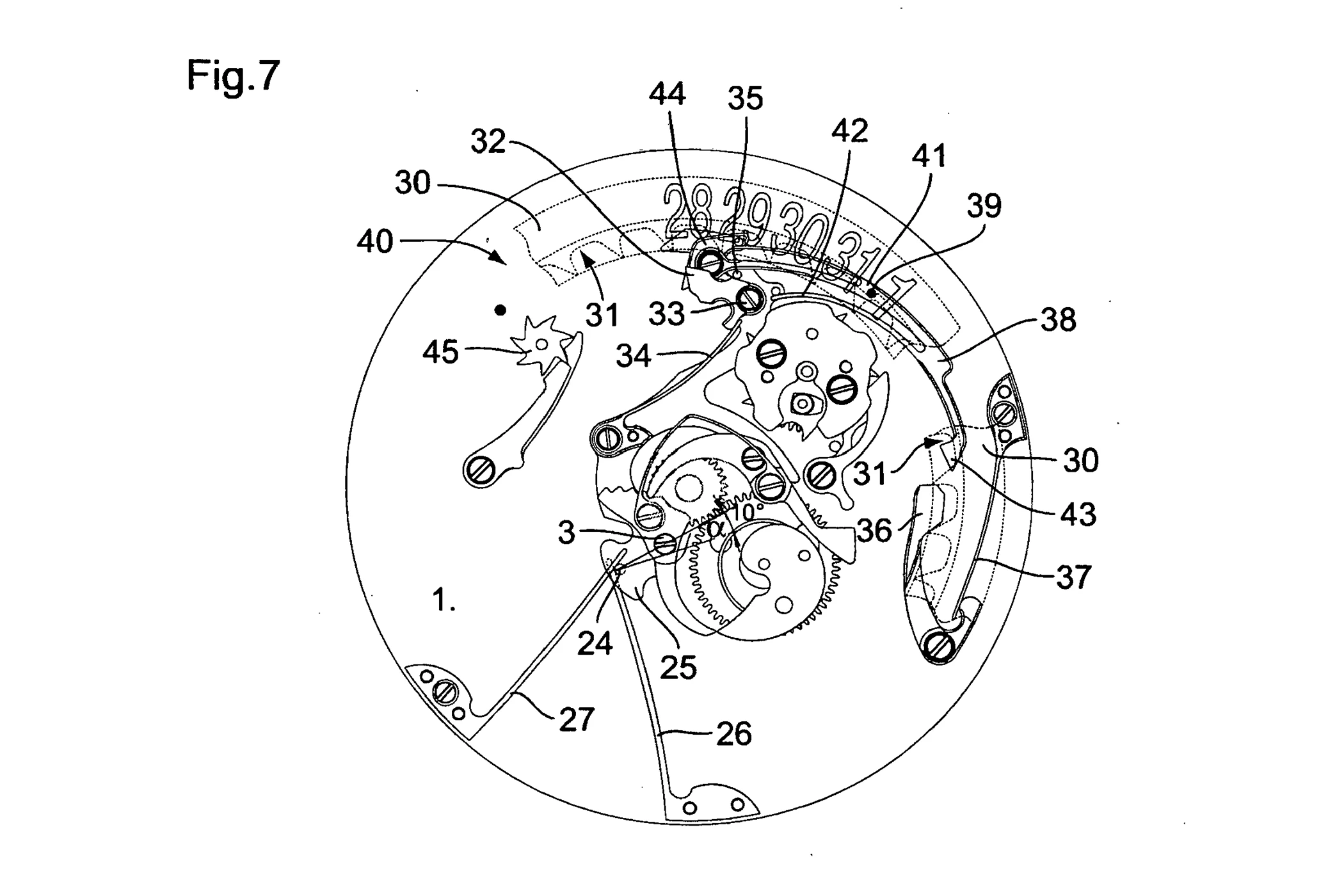
In a new Reference 5978P-010, the manufacture combines its column-wheel chronograph – patented in 2009 – featuring an instantaneous-jump 30-minute counter with an instantaneous-jump perpetual calendar. The physical challenge involved is immense, as instead of light hands, four heavy, numbered calendar discs behind window displays must be set in motion simultaneously at exactly midnight. To ensure that all indicators switch instantly in just 30 milliseconds, Patek Philippe has developed a complex system comprising two independent patents, which precisely meters the required force and releases it in a flash.
Whilst chronographs with a perpetual calendar have been among Patek Philippe’s defining classics since the legendary Reference 1518 from 1941, the new design takes the functioning of the calendar display to a whole new level of micromechanics.
A conventional perpetual calendar usually changes gradually over the course of several hours. With an instantaneous perpetual calendar, however, this change occurs instantly: at exactly midnight, the day of the week, date, month and, where applicable, the leap year indicator all change synchronously within just 30 milliseconds. What appears to the wearer as effortless elegance presents the watch’s construction with enormous physical challenges.
The first challenge concerns the masses to be moved. Whilst traditional calendars use lightweight hands, the 5978P model employs four numbered discs behind windows. The mass of these discs is many times greater than that of the delicate hands. A considerable torque is required to set four of these discs in motion simultaneously in one-thirtieth of a second.
The second problem lies in energy management. The required energy must be continuously drawn from the gear train and stored over a period of hours without affecting the amplitude of the balance wheel and, consequently, the watch’s accuracy. At the moment of the jump, this energy must be released in a flash. Furthermore, depending on the length of the month – whether 28, 29, 30 or 31 days – completely different angles of rotation must be covered. In the event of an uncontrolled surge of power, there would be a risk that the discs might jump forward due to their moment of inertia, or come to a halt halfway through due to a lack of energy.
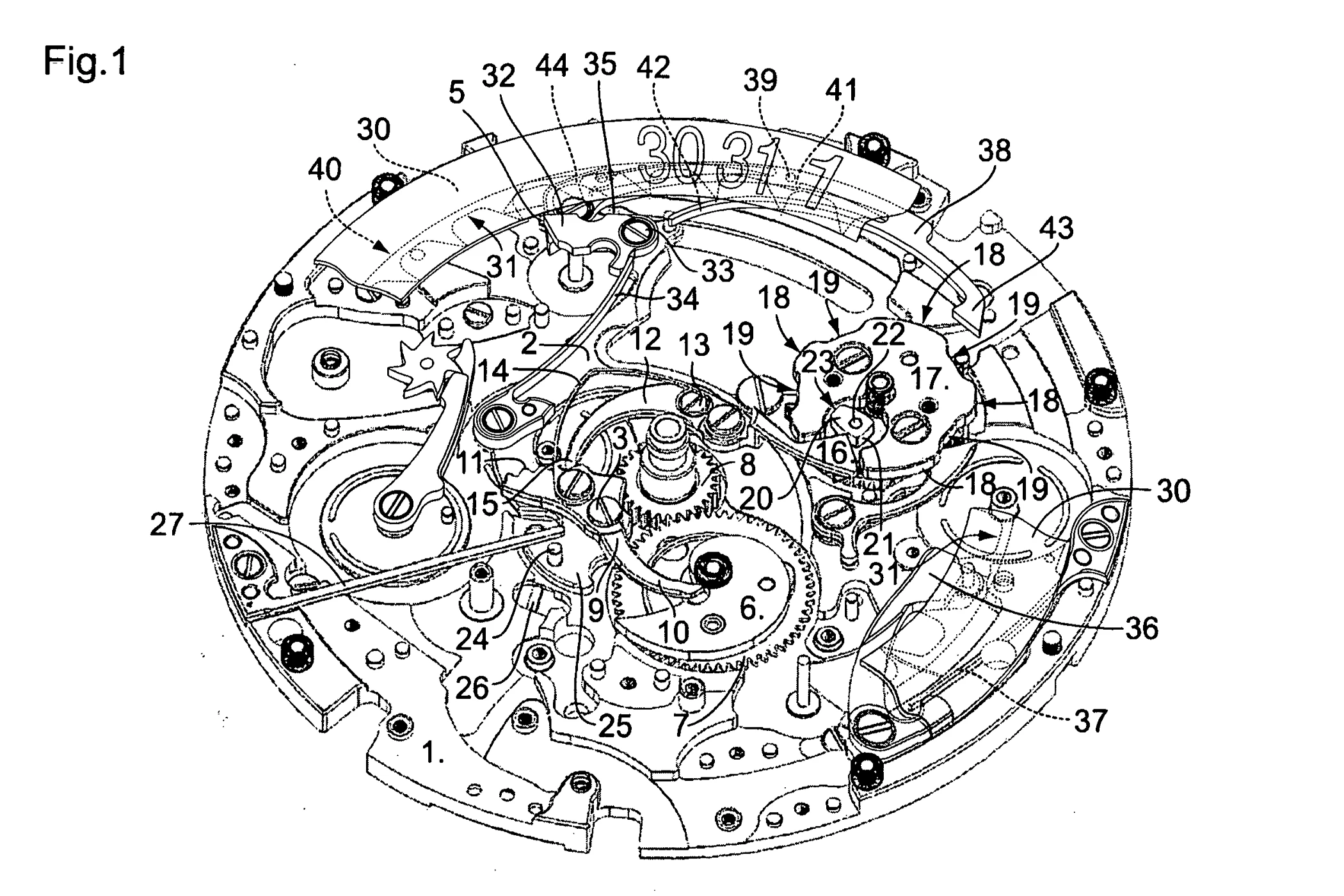
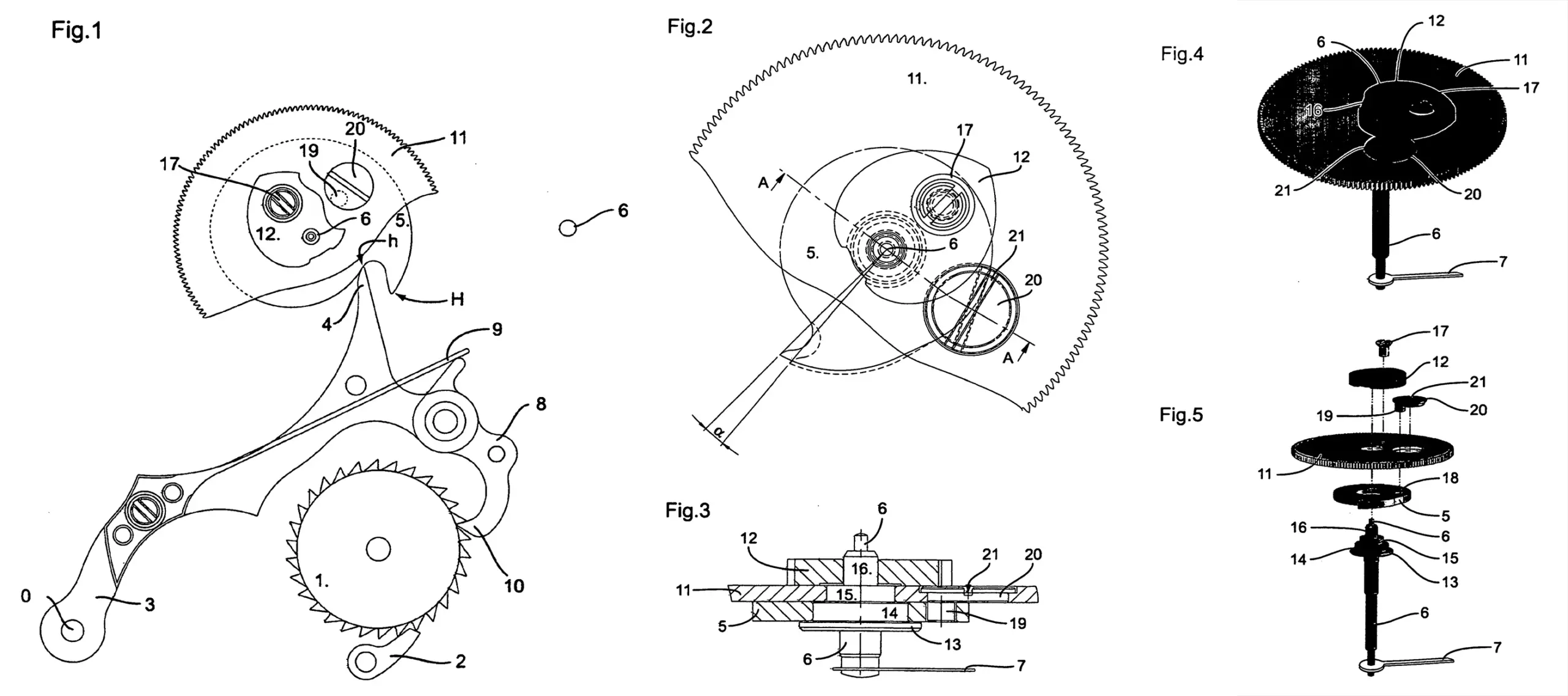
Patek Philippe resolves this energy dilemma using a calendar module based on two new patents. A conventional perpetual calendar utilises a lever system to access a month cam and a four-year programming mechanism for February, in order to correctly account for month lengths of 28, 29, 30 or 31 days. This results in varying ‘leap’ steps for the date mechanism at the end of the month: after the 31st, it advances one step to the 1st; after a month with 30 days, it requires two steps past the 31st; after 29 February, three steps; and after a regular 28 February, four steps at once. In the 5978P reference, these indications are not provided by fine hands, but by comparatively heavy calendar discs behind dial windows, where a slow advance would appear visually imprecise.
Credit © Google Patents
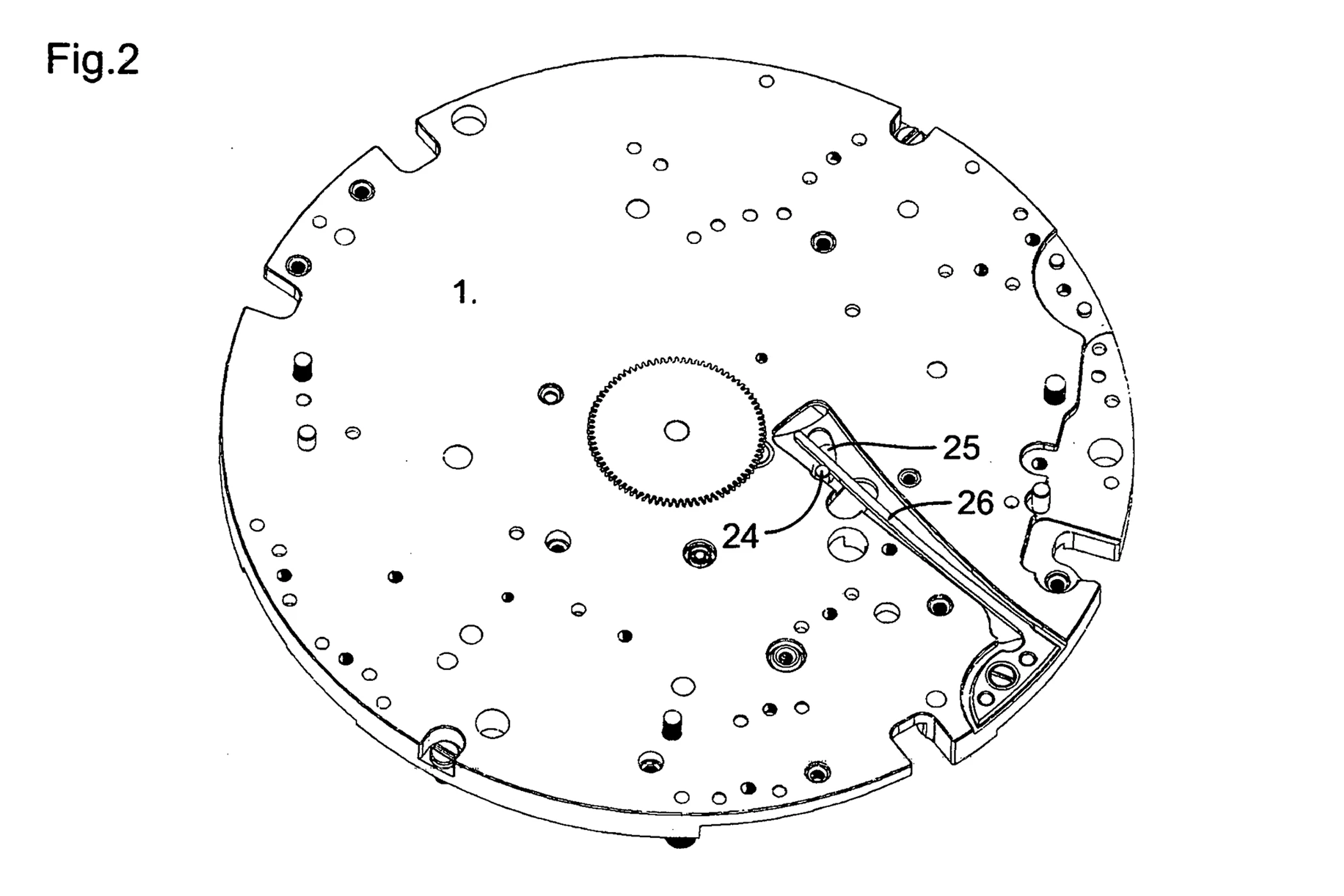
To ensure that the day of the week, date, month and leap year still advance in a controlled manner and virtually simultaneously – the moon phase and day/night indicator are excluded from this advance – Patek Philippe employs a three-part solution: throughout the day, a large calendar lever is gradually wound, thereby storing the necessary energy from the gear train. A switching rocker comprising 15 components transmits this impulse simultaneously to the displays at midnight, whilst two springs acting in opposite directions compensate for the different switching paths. This keeps the applied force constant, preventing both the discs from jamming due to insufficient energy and overshooting due to excess force. The synchronised changeover of the four displays thus takes place in just 30 milliseconds and functions fully even when the power reserve is down to just ten hours.
Credit © Google Patents
In conventional stop-second mechanisms, the minute hand moves slowly and gradually from mark to mark, which can make it difficult to read the time when the minute changes. Patek Philippe resolves this issue using a principle patented as early as 2009 for the Calibre CH 29-535 PS: a continuously rotating worm gear is mounted on the shaft of the central chronograph seconds hand. Over the course of 60 seconds, this cam lifts a rocker arm, which drops from its highest point at the exact moment the chronograph hand passes the zero mark. A pawl advances the minute counter wheel by one tooth at precisely that moment. The minute hand therefore does not move sluggishly, but jumps sharply to the next mark, perfectly synchronised with the second hand’s passage through zero.
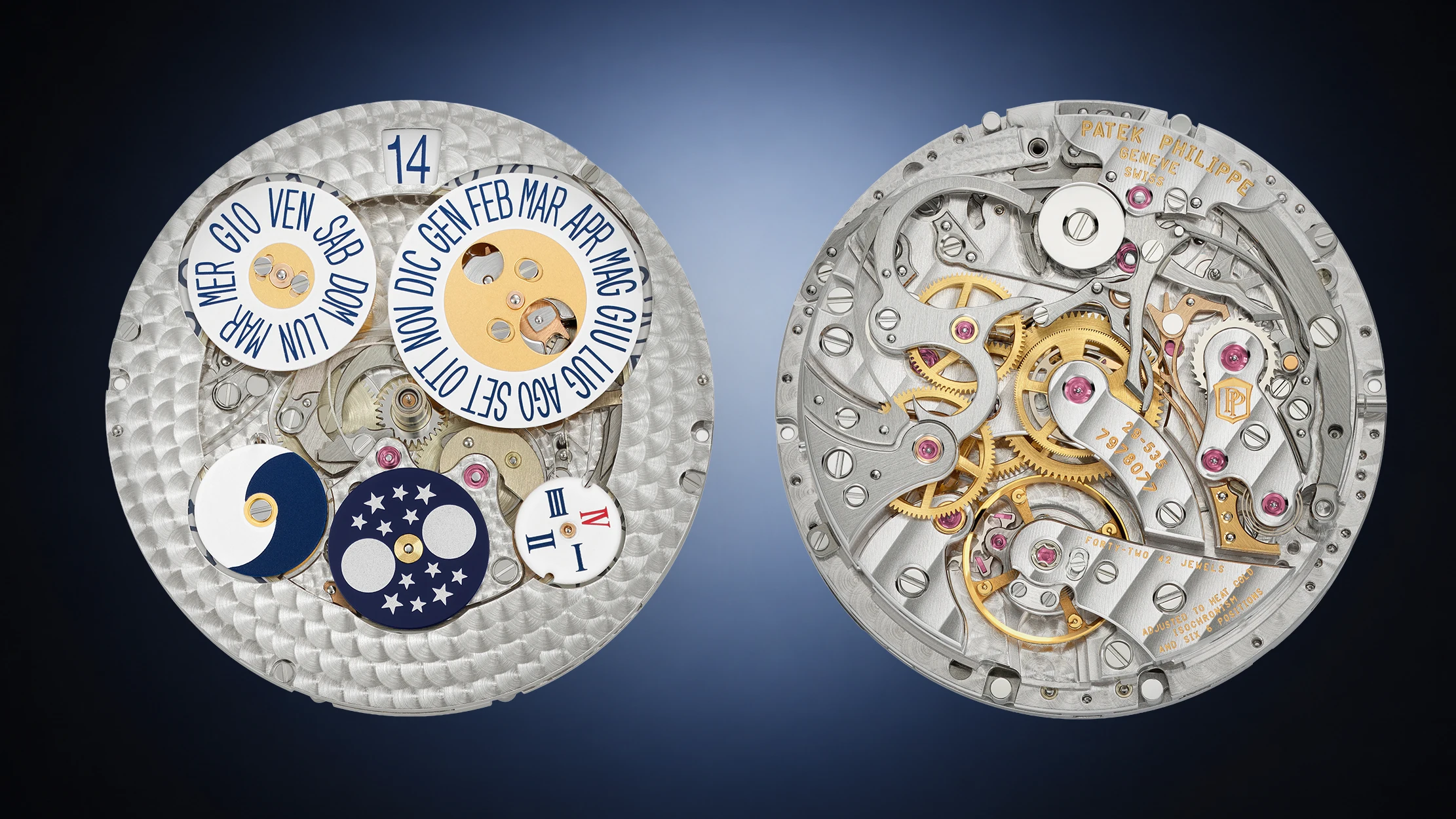
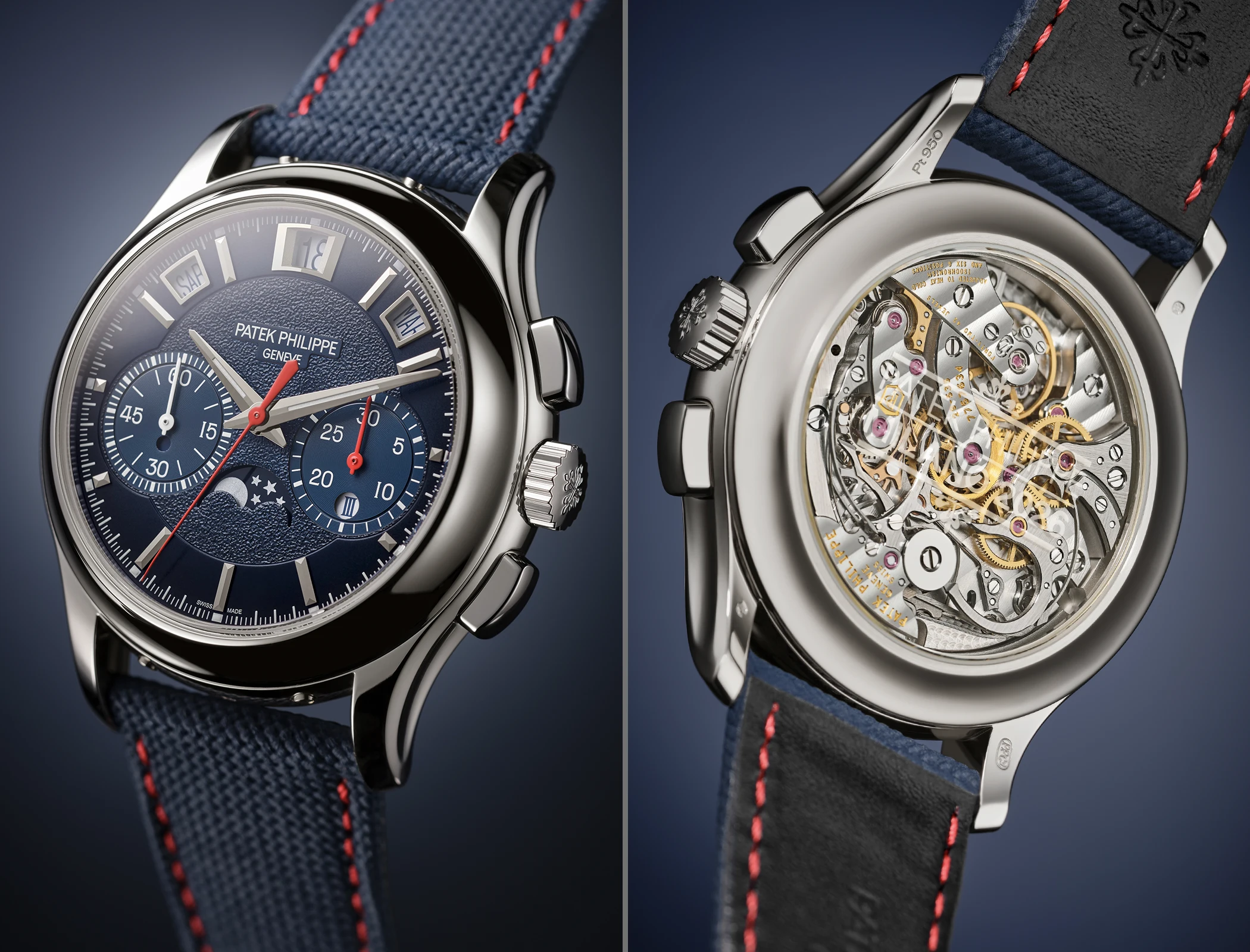
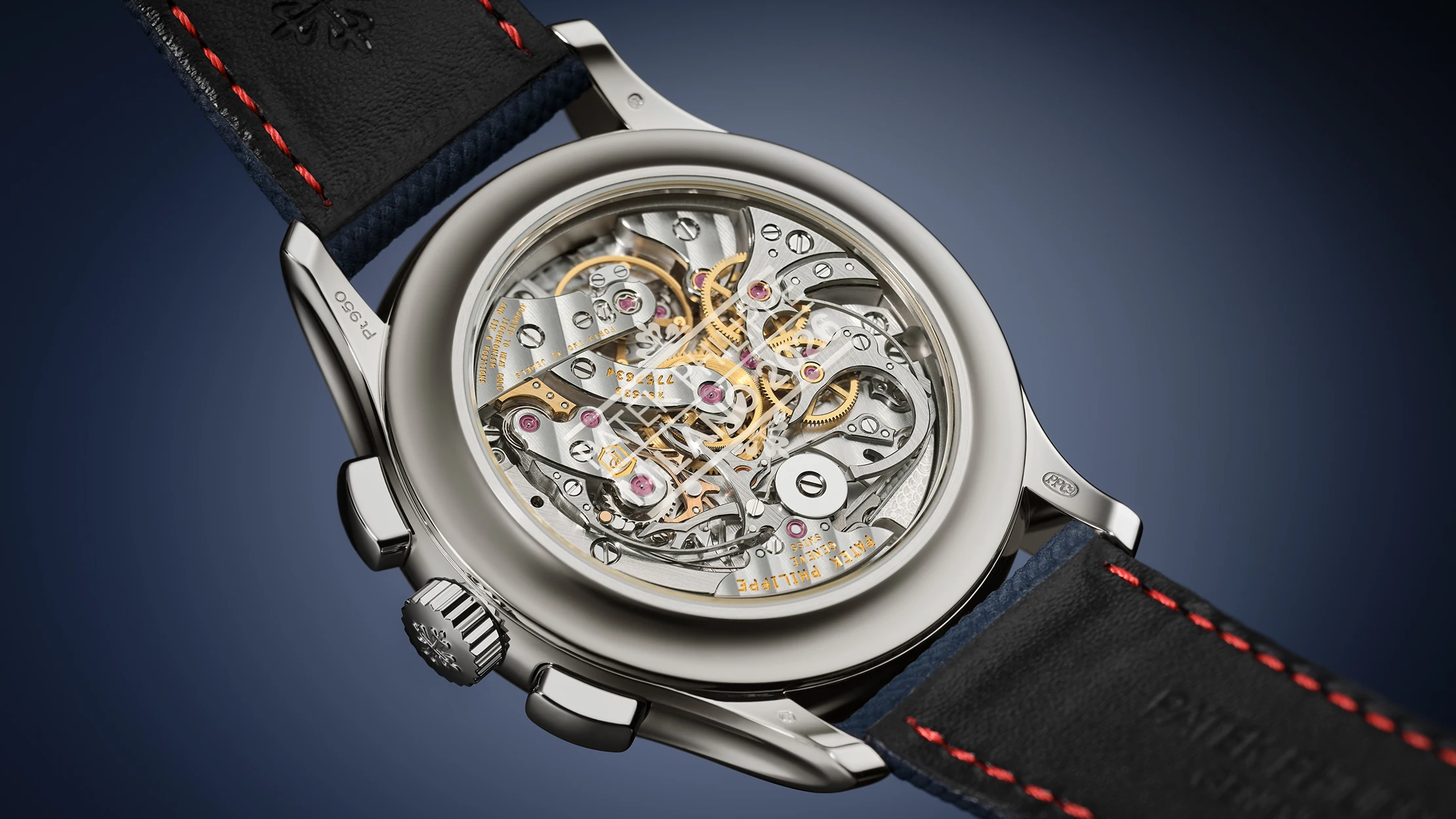
In terms of space and energy, the chronograph and calendar share the same barrel; functionally, however, they are strictly separate: on the side with the sapphire crystal caseback, the classic chronograph architecture operates with a column wheel, horizontal gear coupling and patented tooth profiles; on the dial side lies the mechanism for calendar programming. The new QI calibre requires a net total of 44 additional components (500 instead of 456 individual parts) and is 1.1 mm taller (from 7.0 mm to 8.1 mm). Understandably, this is also reflected in the case design – the 5978P now measures 42 mm in diameter and 14.45 mm in total height.
A glance at the competition shows just how rare and technically challenging this particular combination actually is. The classic combination of a chronograph and a perpetual calendar is certainly regarded as a flagship feature by several established manufacturers – prominent examples include A. Lange & Söhne with the Datograph Perpetual or the 1815 Rattrapante Perpetual Calendar, as well as IWC with the Ingenieur or the Portugieser Perpetual Calendar Chronograph. However, when it comes to displaying the calendar, these models largely rely on classic crawling hand displays or do not switch all indications fully synchronised in a fraction of a second.
The combination of a chronograph and a fully instantaneous window mechanism is extremely rare. Whilst IWC does offer chronographs with large, jumping disc displays for the date and month in its Digital Date-Month models, these are based on automatic movements and the chronograph minute hand does not jump instantaneously. A. Lange & Söhne, on the other hand, has mastered the instantaneous jumping of all calendar displays – as seen, for example, in the Richard Lange Perpetual Calendar ‘Terraluna’ – though without the chronograph function.
Patek Philippe has previously produced chronographs with an instantaneous perpetual calendar, first in 2008 in the Grande Complication, reference 5207, then in 2011 in the Triple Complication, ref. 5208, and in 2023 in the Quadruple Complication, ref. 5308. With the Reference 5978P, Patek Philippe has now combined both instant-jump mechanisms for the first time in a purely hand-wound column-wheel chronograph as a ‘pure’ double complication.
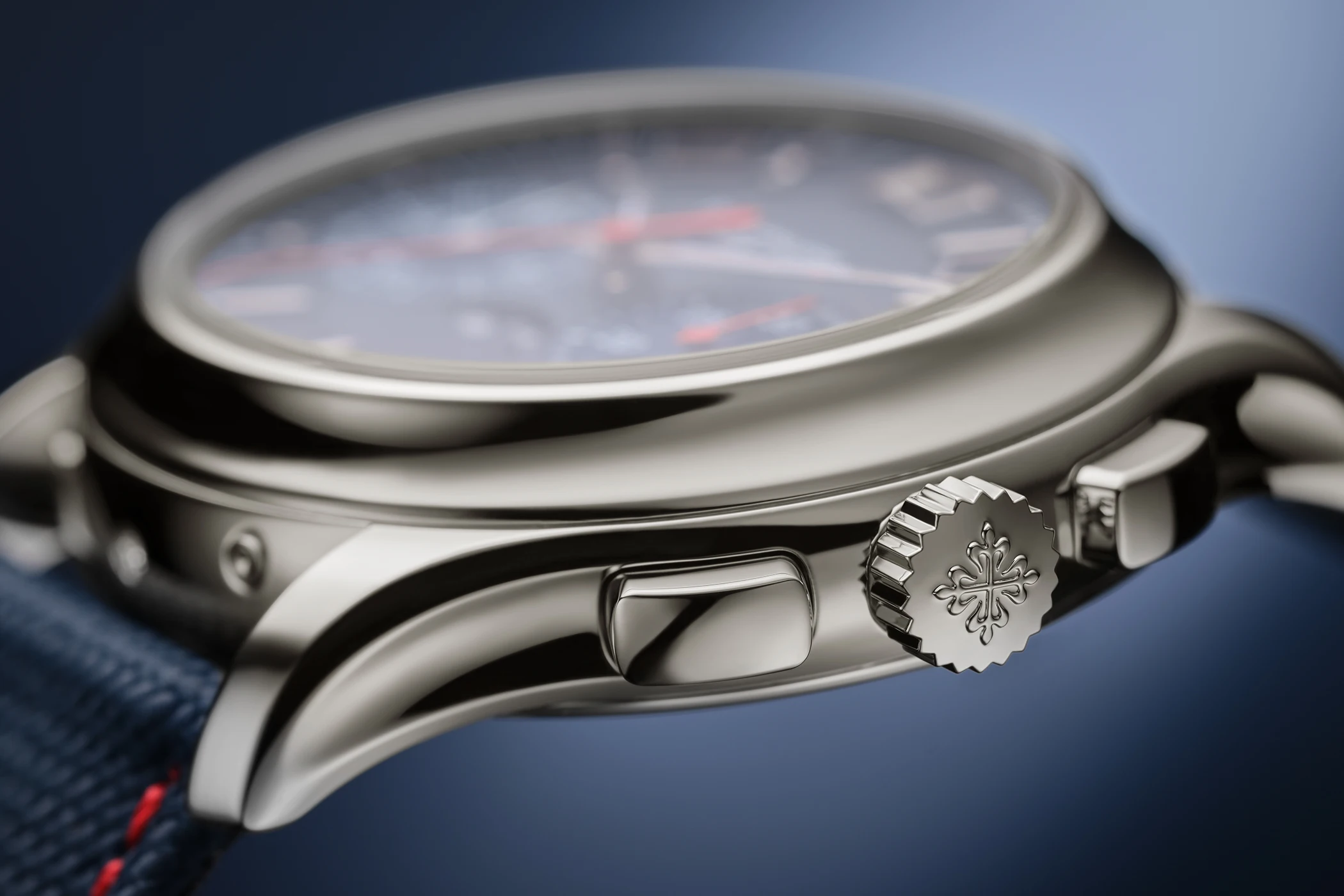
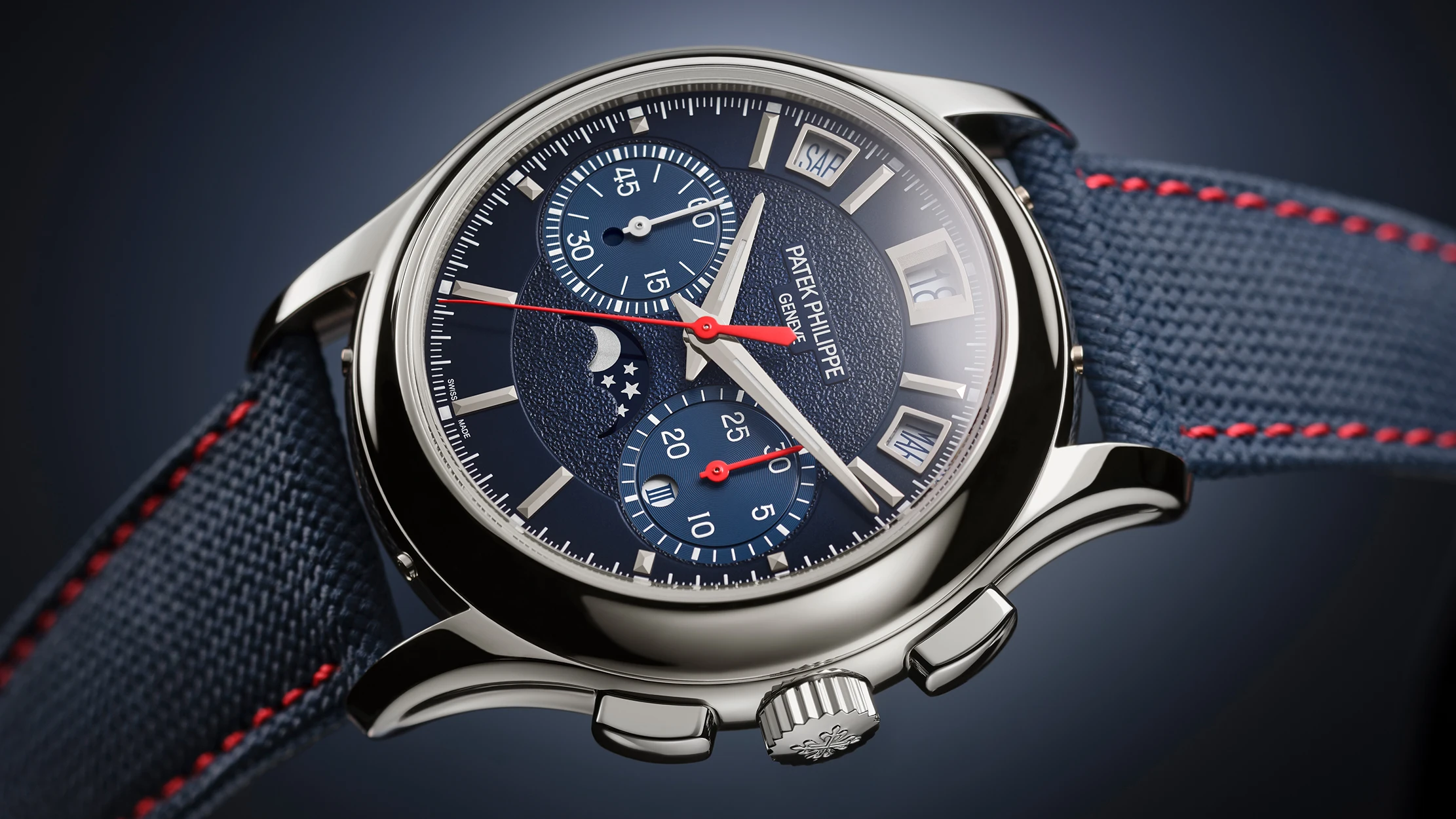
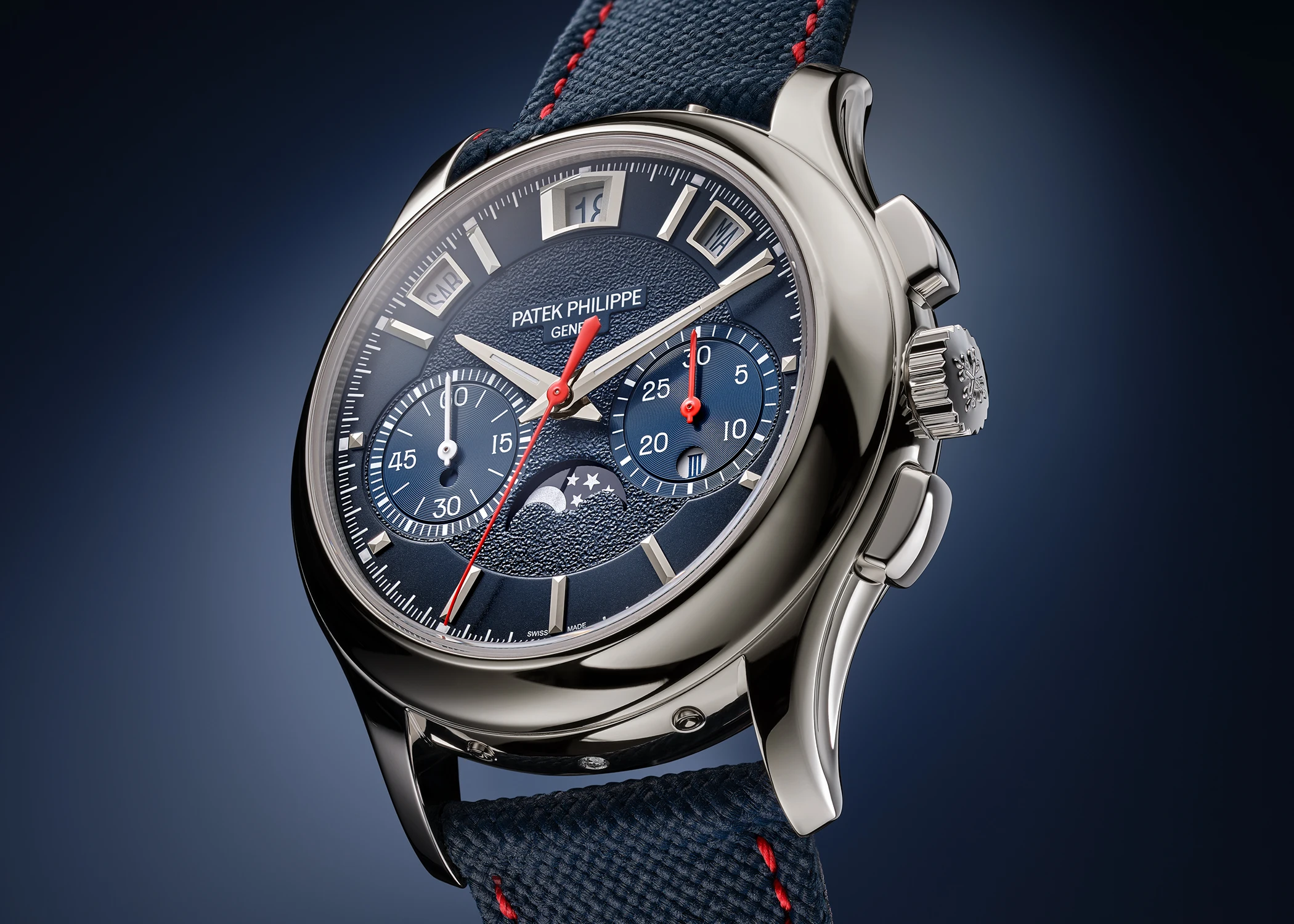
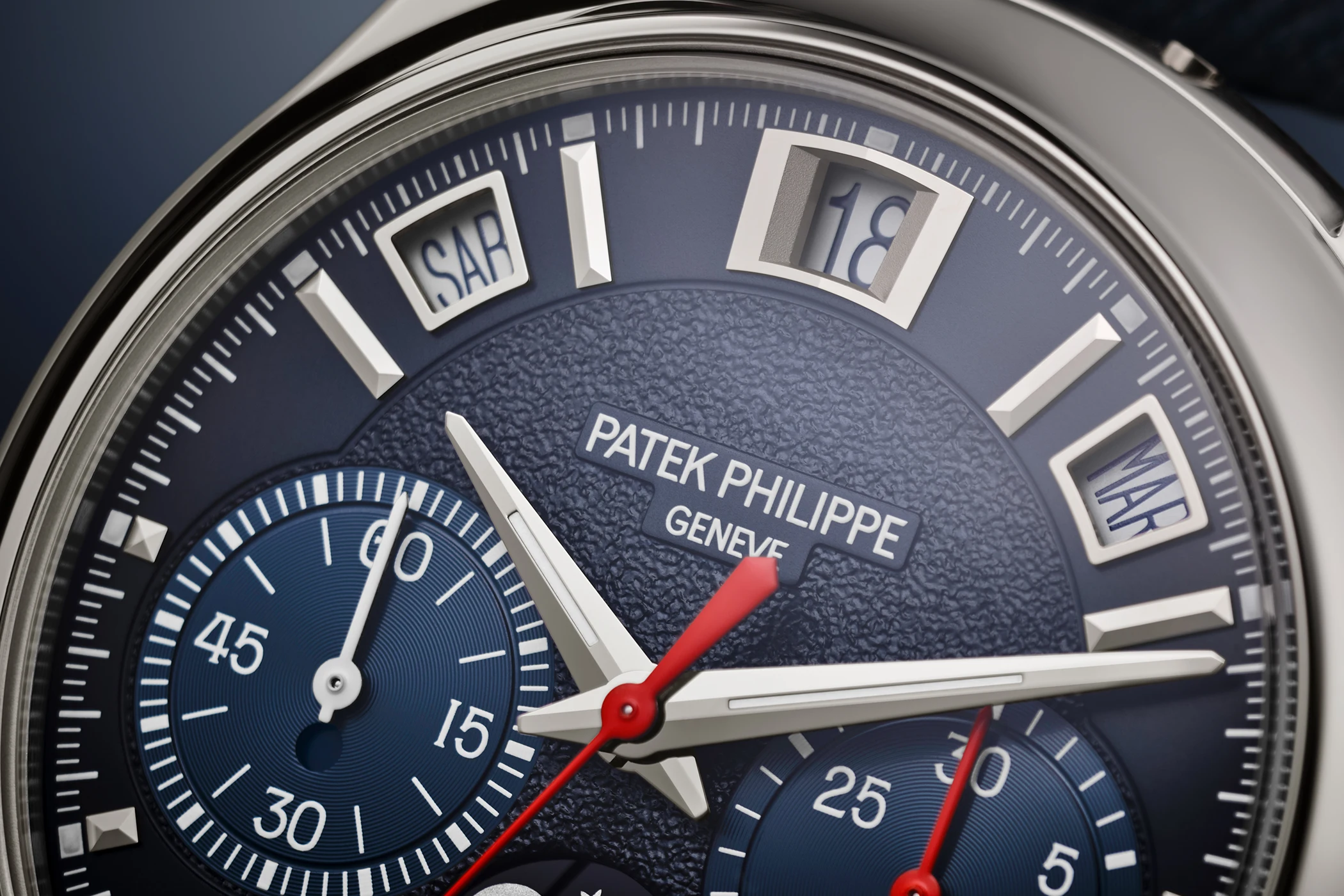
The polished platinum case of the 5978P-010 measures 42 mm in diameter and features a concave bezel, openwork lugs and a brilliant-cut diamond set at 6 o’clock. The navy blue dial, with a sunburst finish and a black gradient, is structured in several levels: it features a slightly recessed centre and blued sub-dials at 3 and 9 o’clock, on which red-lacquered hands for the chronograph functions are highlighted. At the top edge of the dial, three windows arranged in an arc display the calendar information in Italian, complemented by white gold frames, a moon phase at 6 o’clock and two round indicators for day/night and the leap year cycle. The watch is worn on a navy blue composite strap with a textile texture, a platinum folding clasp and red stitching, the three-coloured ends of which subtly echo the Italian flag.
This limited edition of 120 units is intended exclusively for the Italian market.