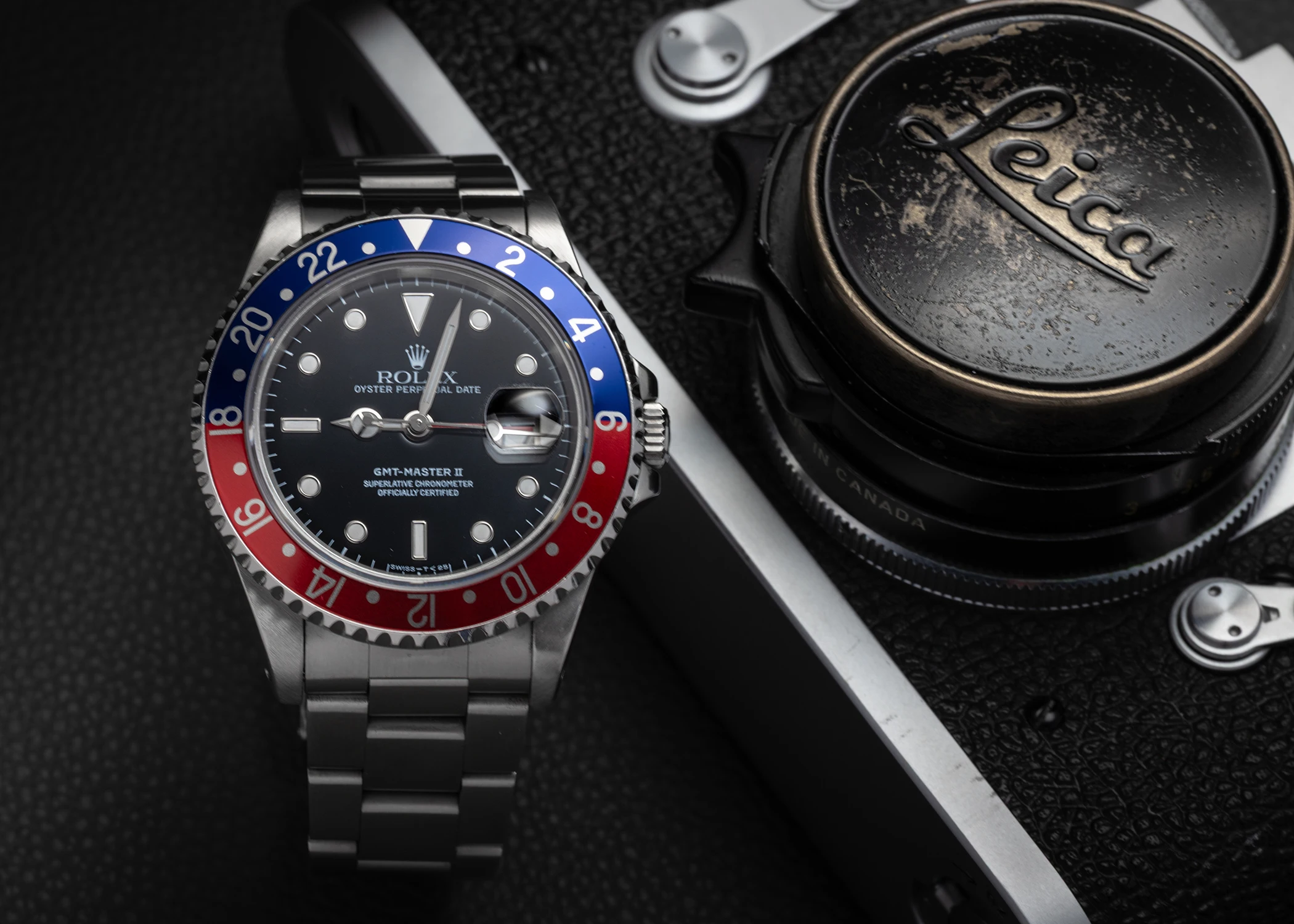
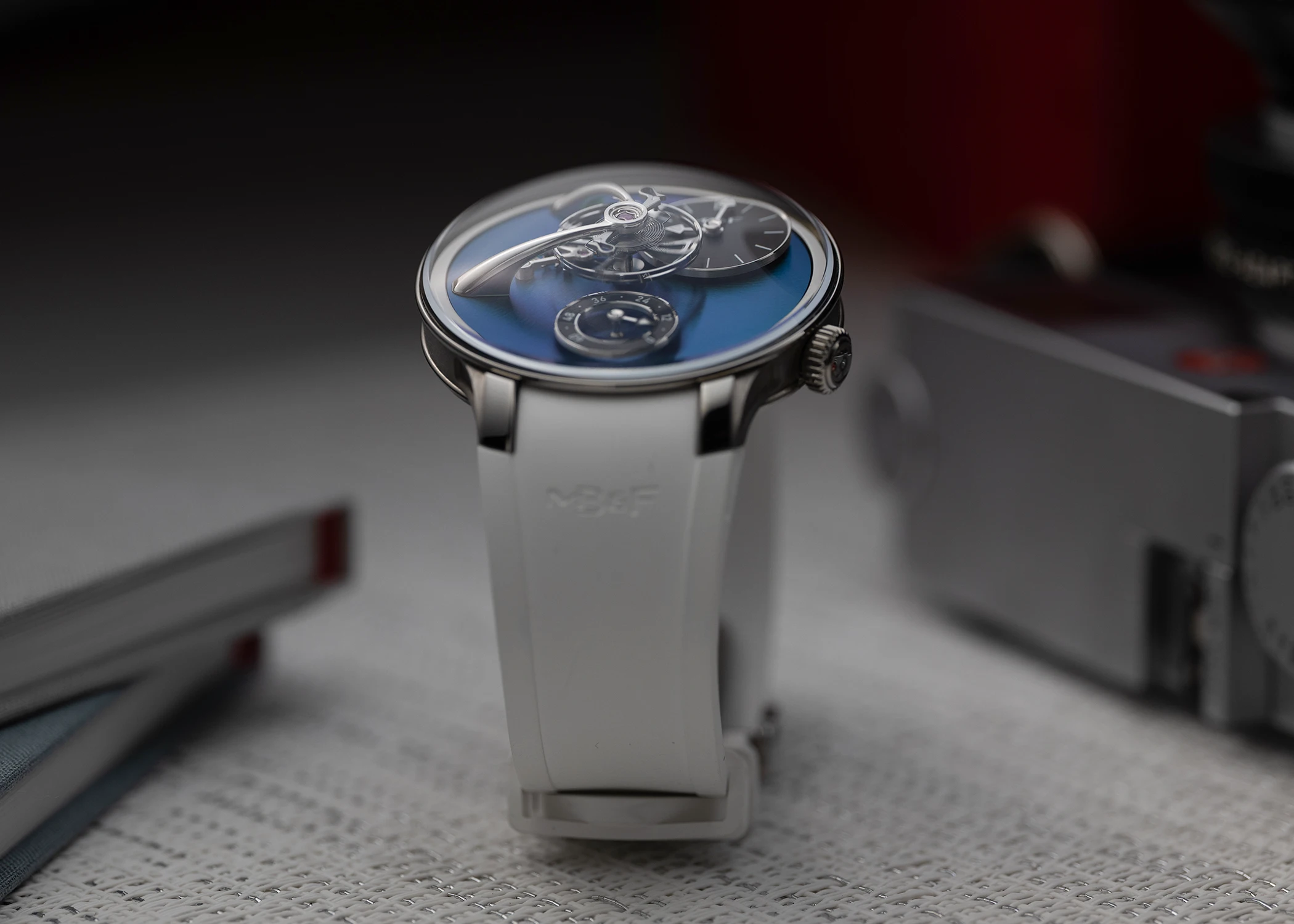
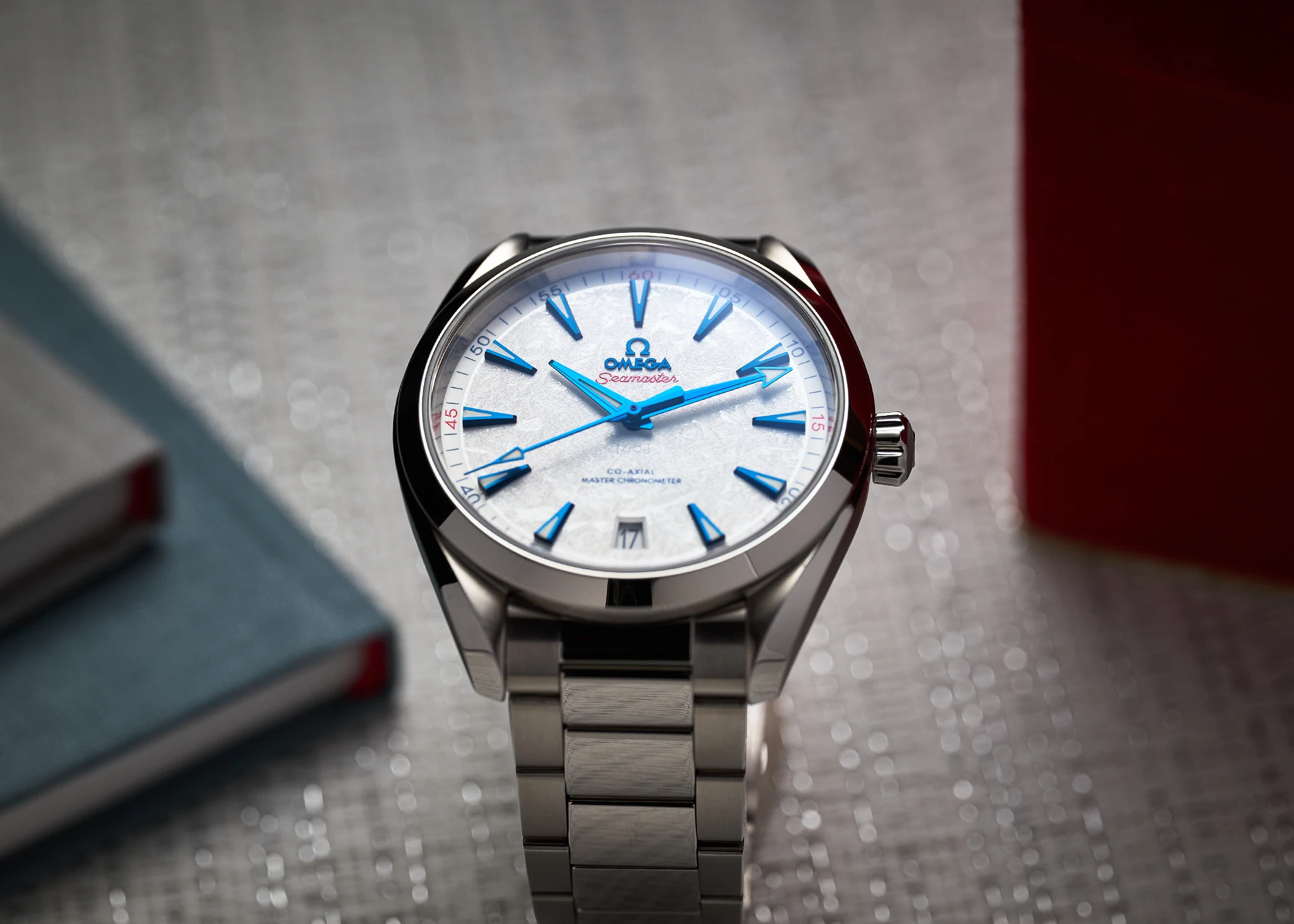
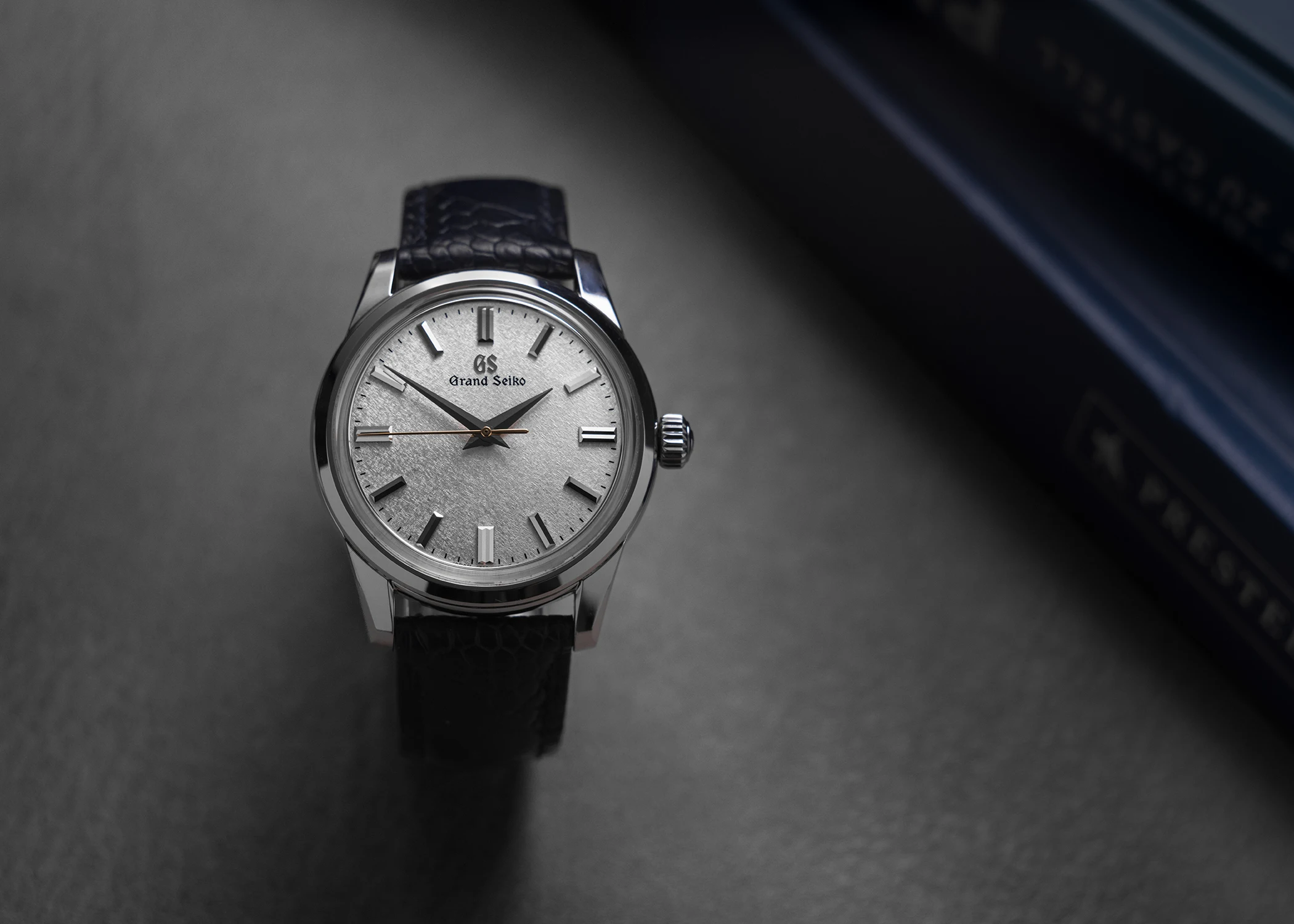



A tour of the new exhibition at the Patek Philippe Museum to mark its 25th anniversary, which can be visited in Geneva until 31 October 2027.
At the first Watch Photography Masterclass hosted by Swisswatches and Leica, 19 watch lovers from our community learnt how to stage their own timepieces like professionals. They were guided by the international photographer and Leica ambassador Kristian Dowling. Nine participants share their pictures here and tell the very personal story behind their watch.
The watch in the photograph reads ten past ten. Of course, says the professional. Kristian Dowling opens his talk with exactly this convention, one that everyone in the industry knows and hardly anyone questions. ‘The position of the hands frames the brand logo, the hands are evenly distributed across the dial, and almost incidentally a subtle smile appears.’ Dowling says, and smiles.
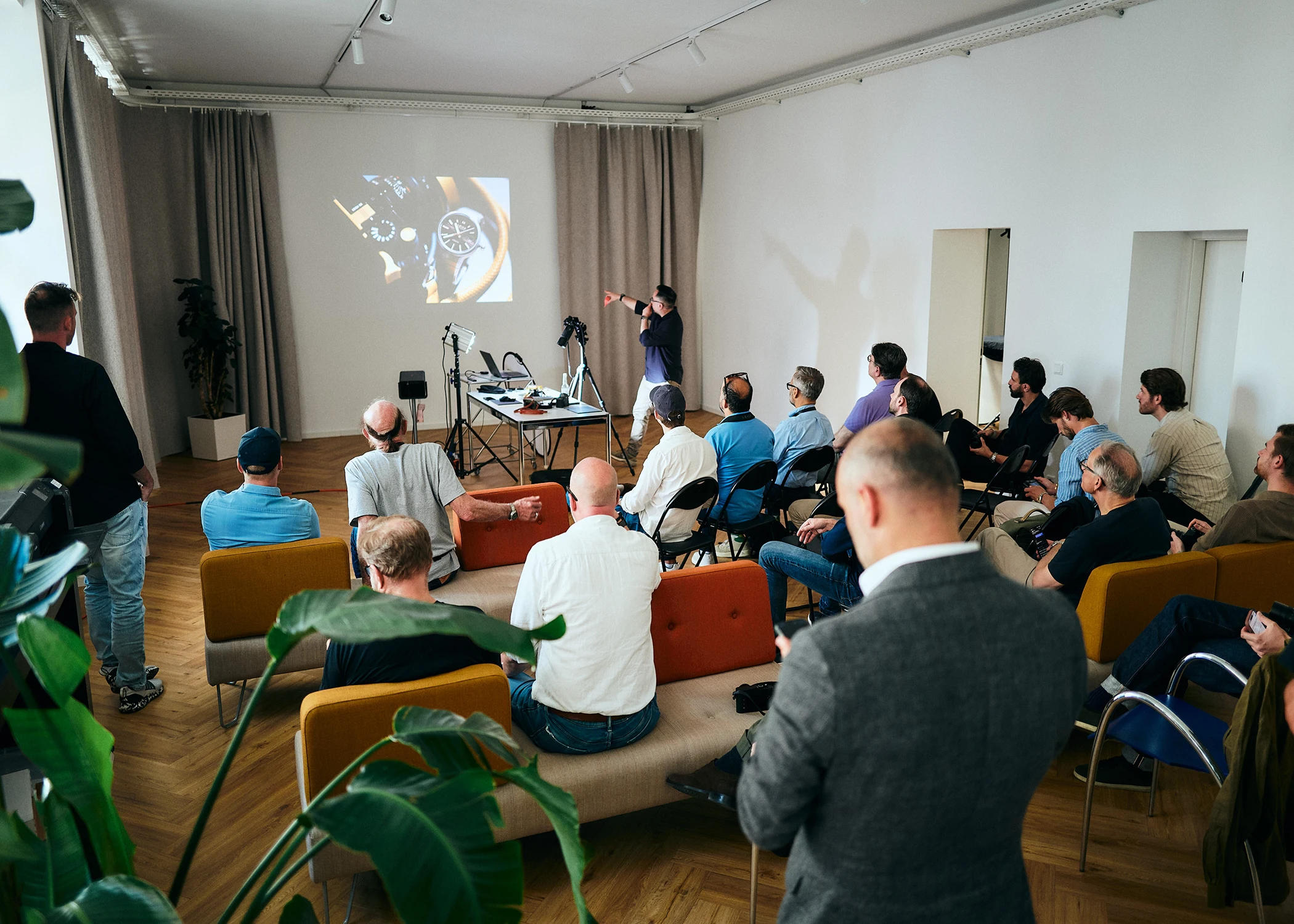
For decades, 10:10 has been more or less the industry standard of watch photography, and anyone who breaks it should know why. This time of day now even has its own holiday: since 2025, World Watch Day has been celebrated around the globe on 10 October – the day of the watch – most recently just a few days ago, for the second time. It was launched by a non-profit association whose founding members include the Fondation de la Haute Horlogerie, the Grand Prix d’Horlogerie de Genève and the Horological Society of New York.
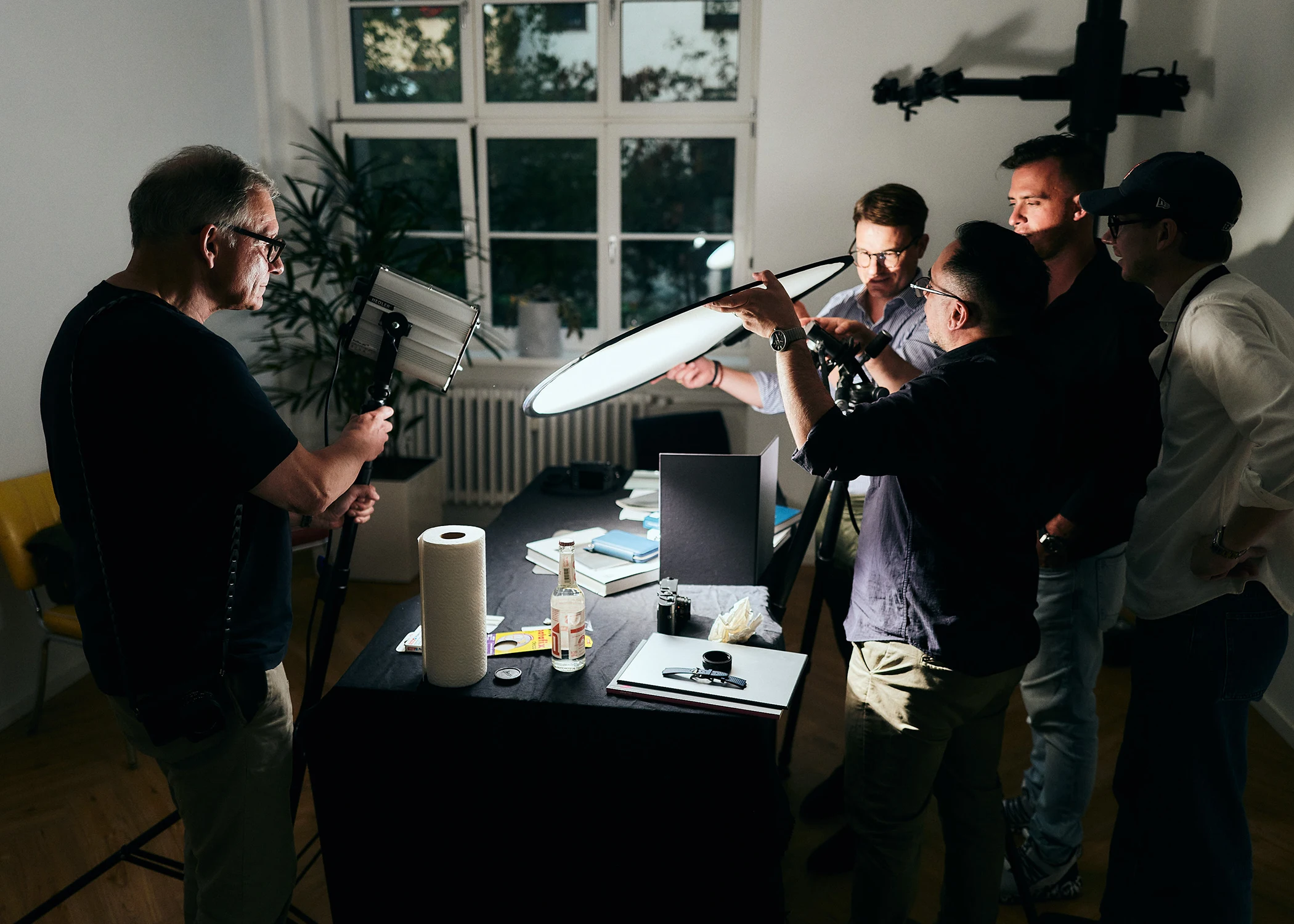
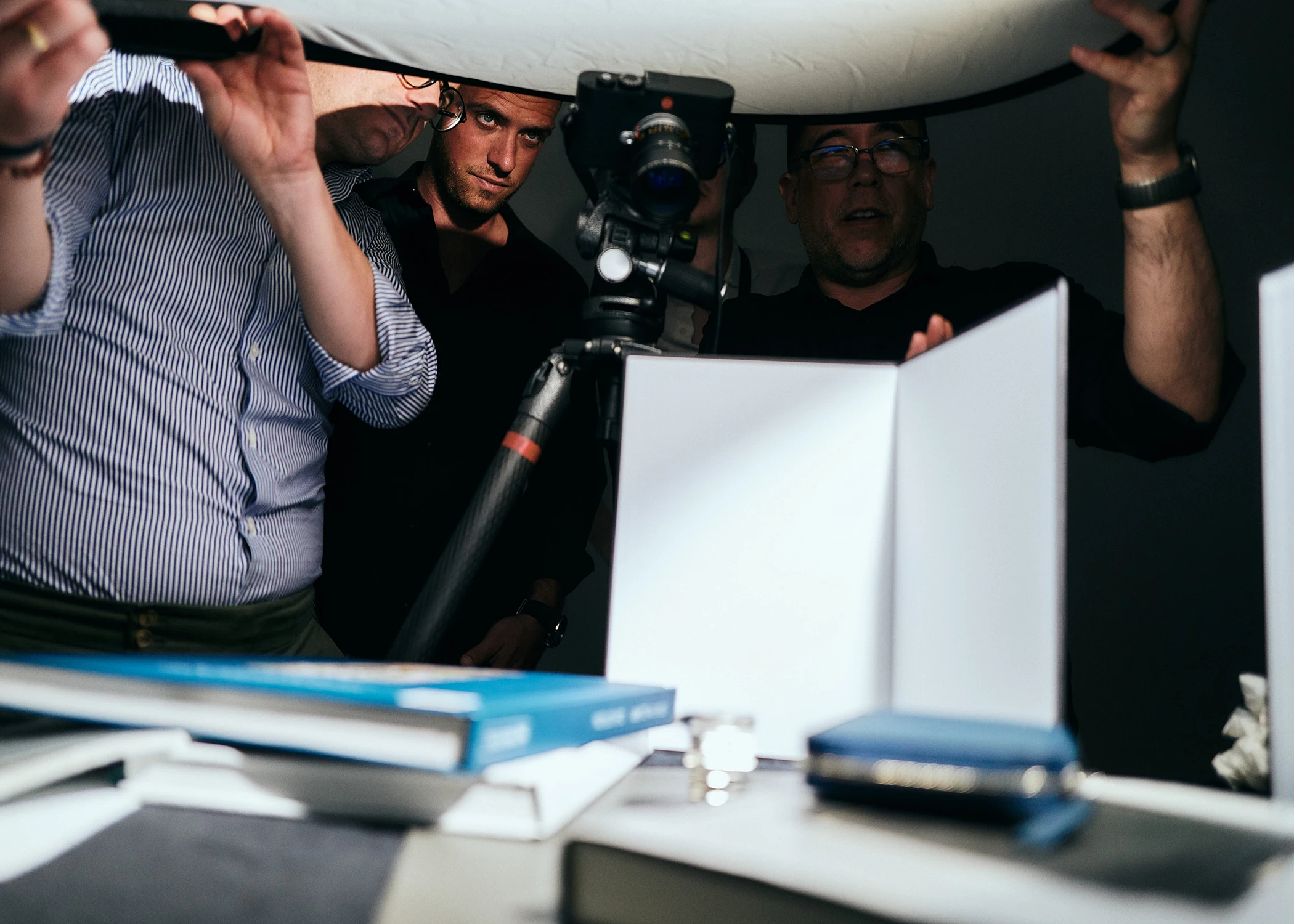
But back to our event in Munich. Dowling knows more than details like these. He is a true professional and knows exactly what he is talking about. Looking back on a 24-year career, he has photographed the Beijing Olympics, the Cannes Film Festival, New York Fashion Week and the MTV Awards, and accompanied Katy Perry on a world tour. For more than two decades he has passed on his knowledge to thousands of photographers in workshops. At Leica Camera and its watchmaking subsidiary Ernst Leitz Werkstätten, he was most recently responsible for global content strategy as Content and Community Manager. His credo: the image should be resolved as fully as possible in camera and refined through considered editing, rather than assembled from multiple exposures – a view the Swisswatches team wholeheartedly shares. And in watch photography, too, it is the moment that counts and makes a picture exciting.
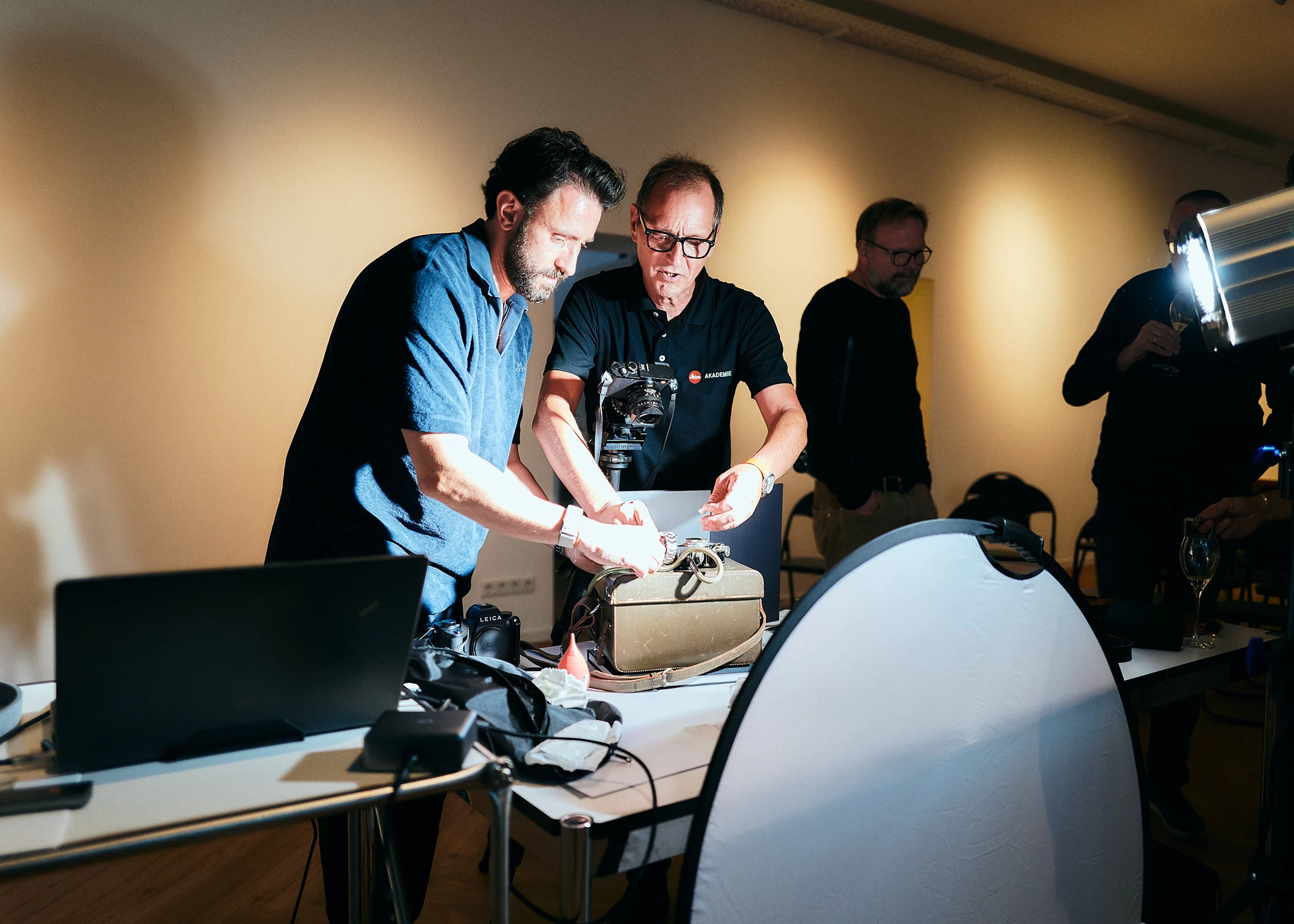
For Dowling, watch photography begins with people. ‘A watch can hold something of the person who wears it: memories, milestones, aspirations and a sense of identity,’ he says. Through his portraits he wants to capture both the character of the watch and the story behind that connection, ‘creating a photograph in which its owner recognises something of themselves’. He approaches each watch with the same care and curiosity he once brought to photographing Hollywood celebrities, studying everything from the brushing and finishing of the case to the texture of the dial, and observing how each surface responds to light. ‘I give shadows the same consideration as highlights; every reflection, every edge and every shadow has an intentional place in the picture.’
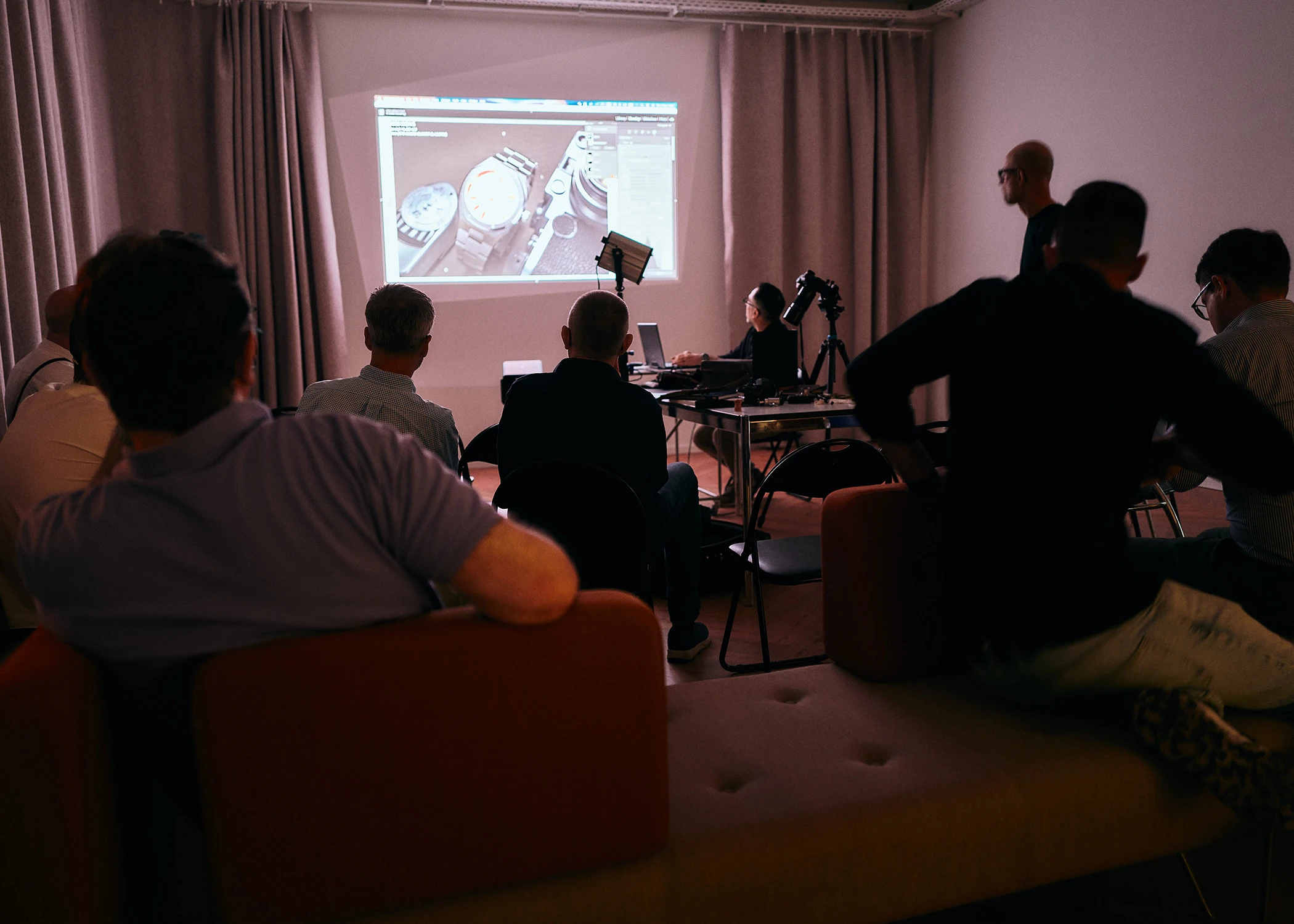
The process is often eighty per cent preparation and planning and twenty per cent shooting, yet the finished photograph should feel natural, even when the lighting has been carefully constructed. As a Leica photographer, Dowling feels bound to the tradition of documenting real people, moments and stories. ‘In an industry increasingly moving towards AI-generated imagery, preserving the honesty of the photograph matters deeply to me,’ he says. ‘I want the result to honour the watch as it exists, while expressing the emotion and personal meaning it carries.’
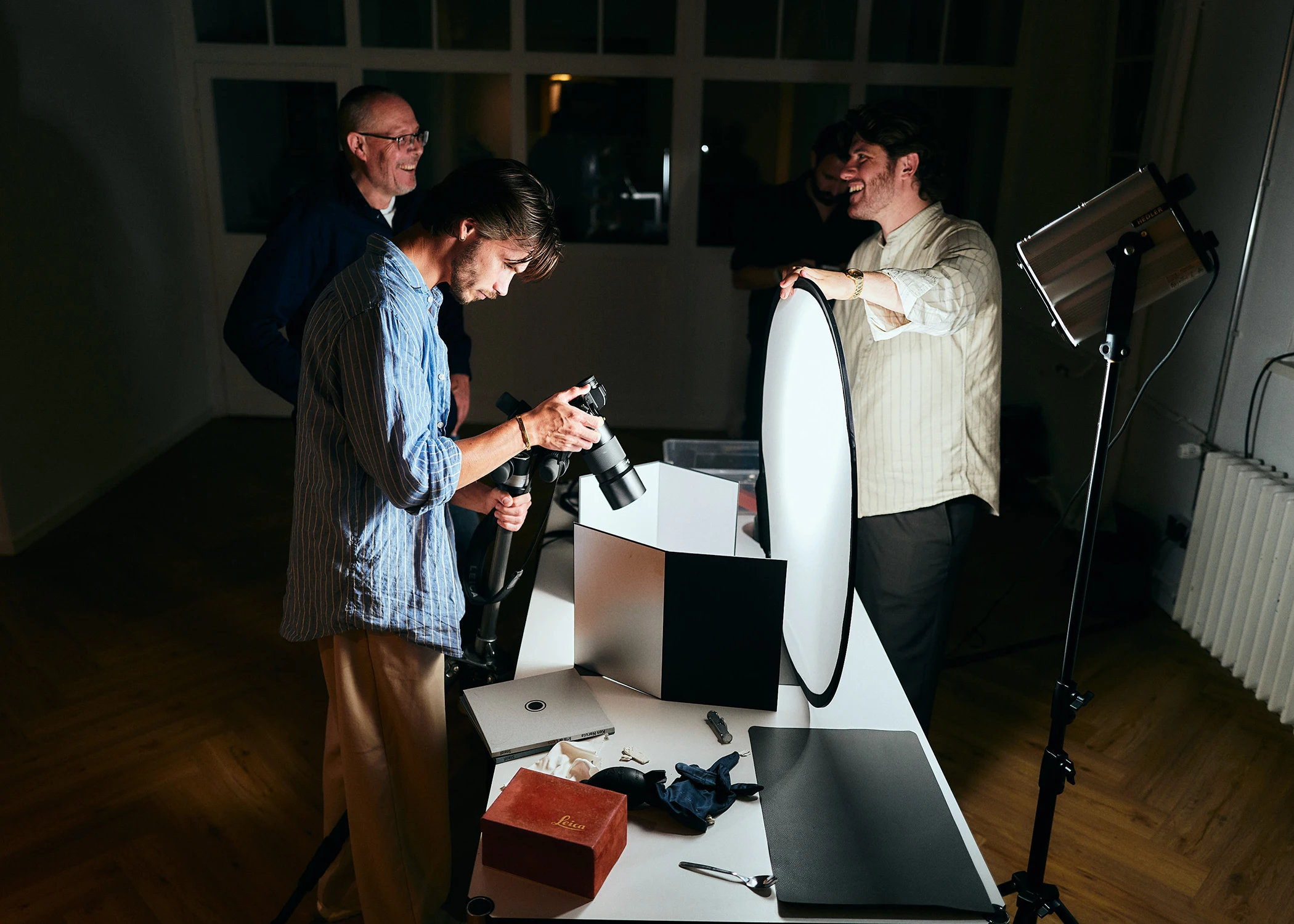
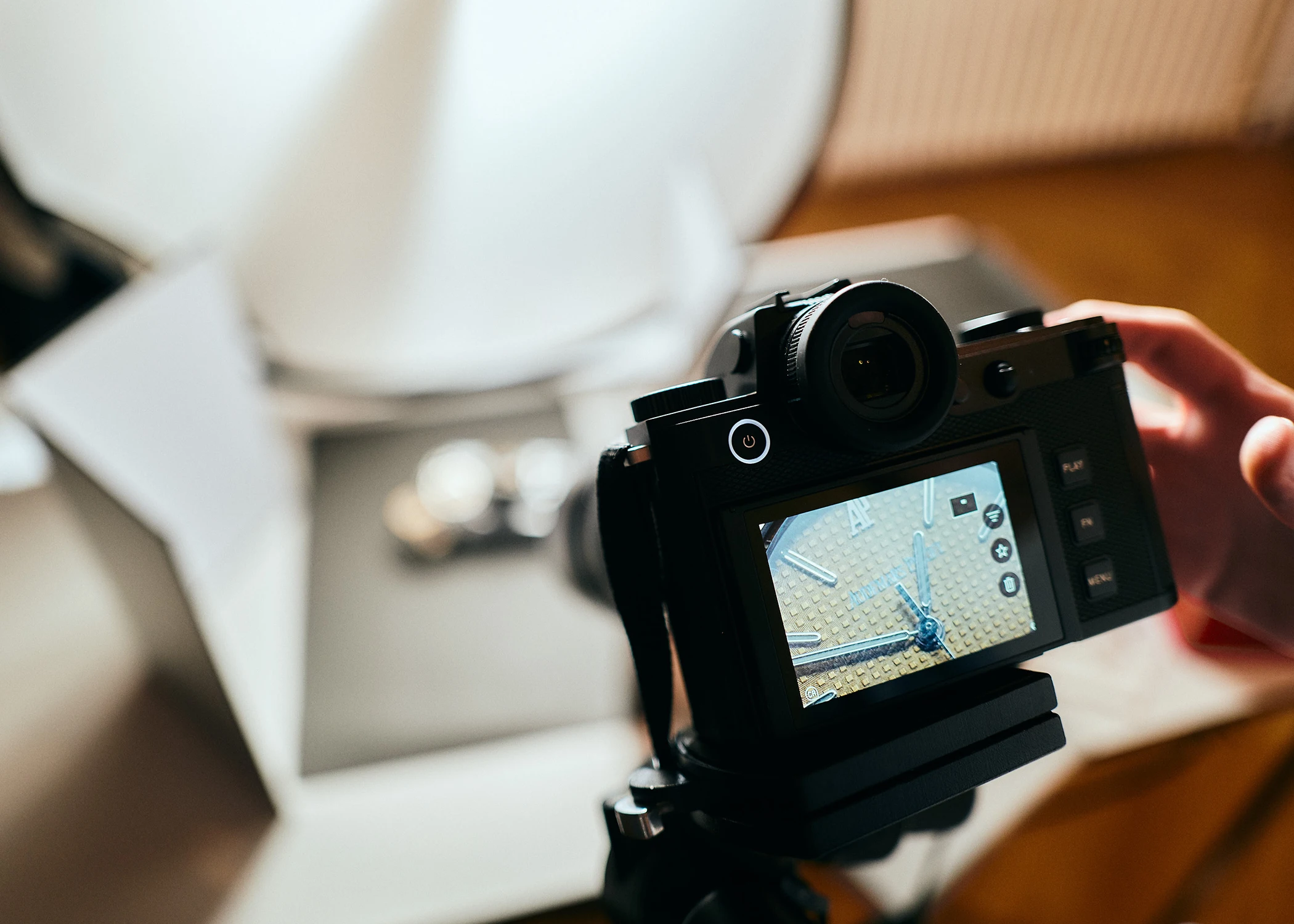
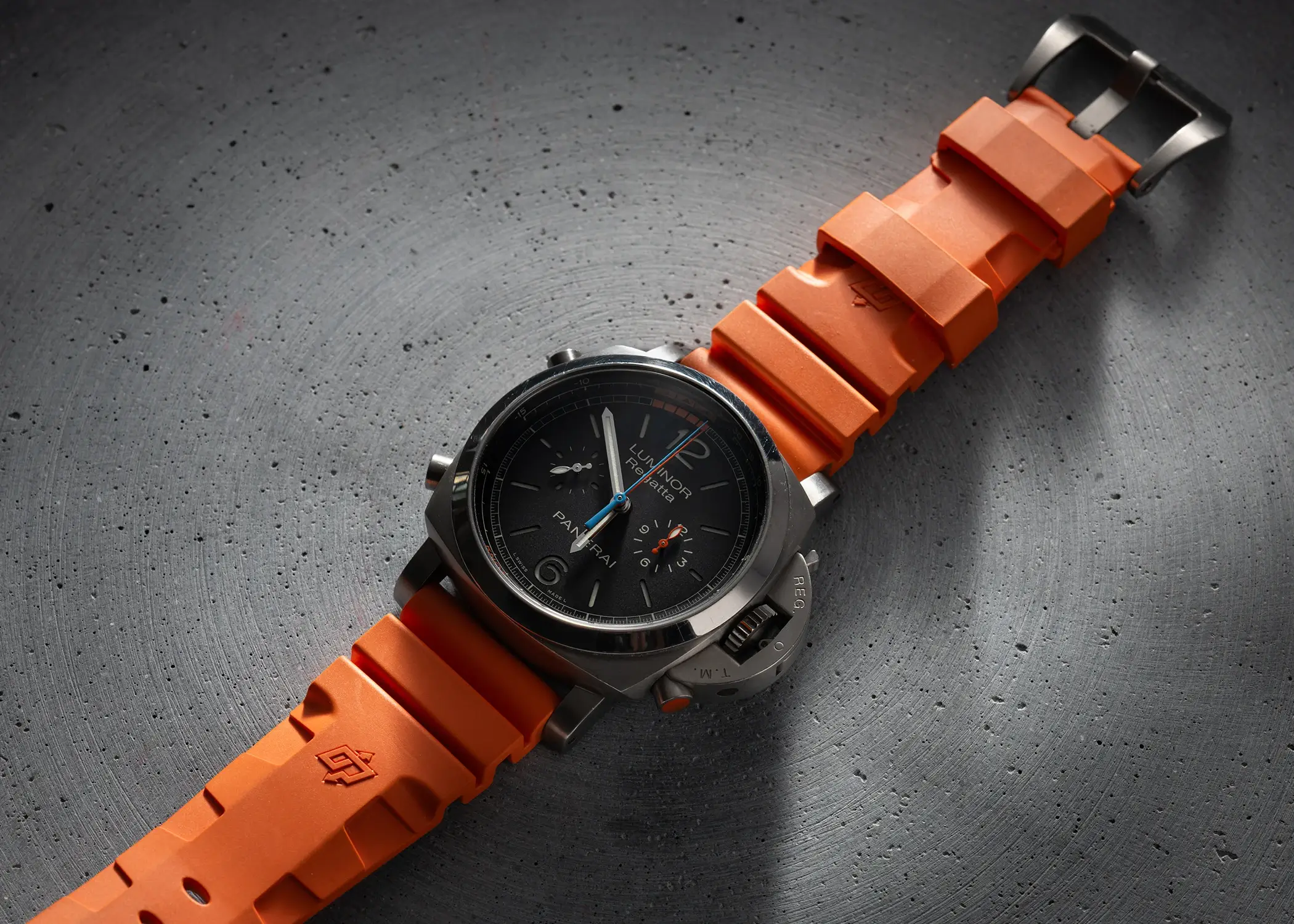
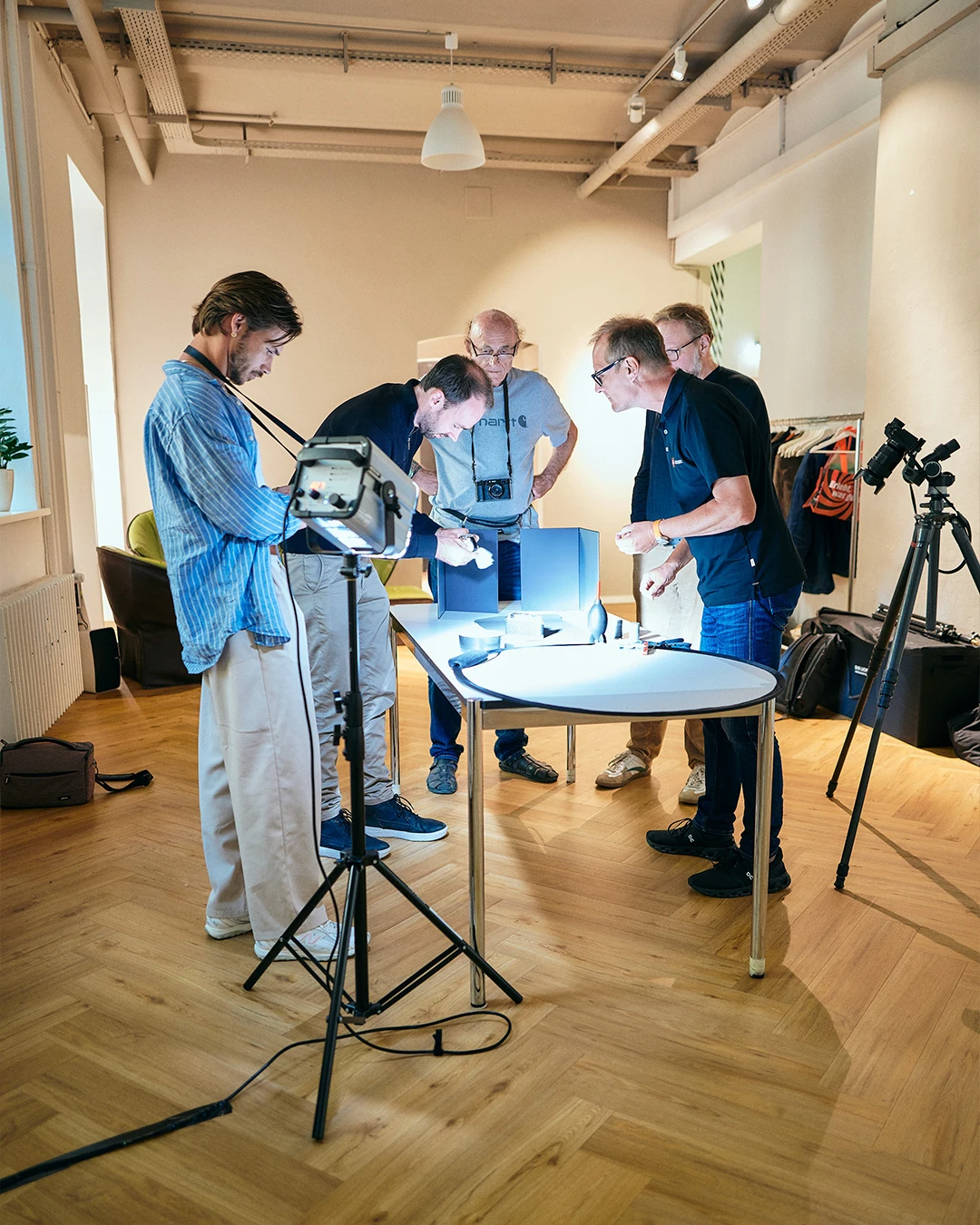
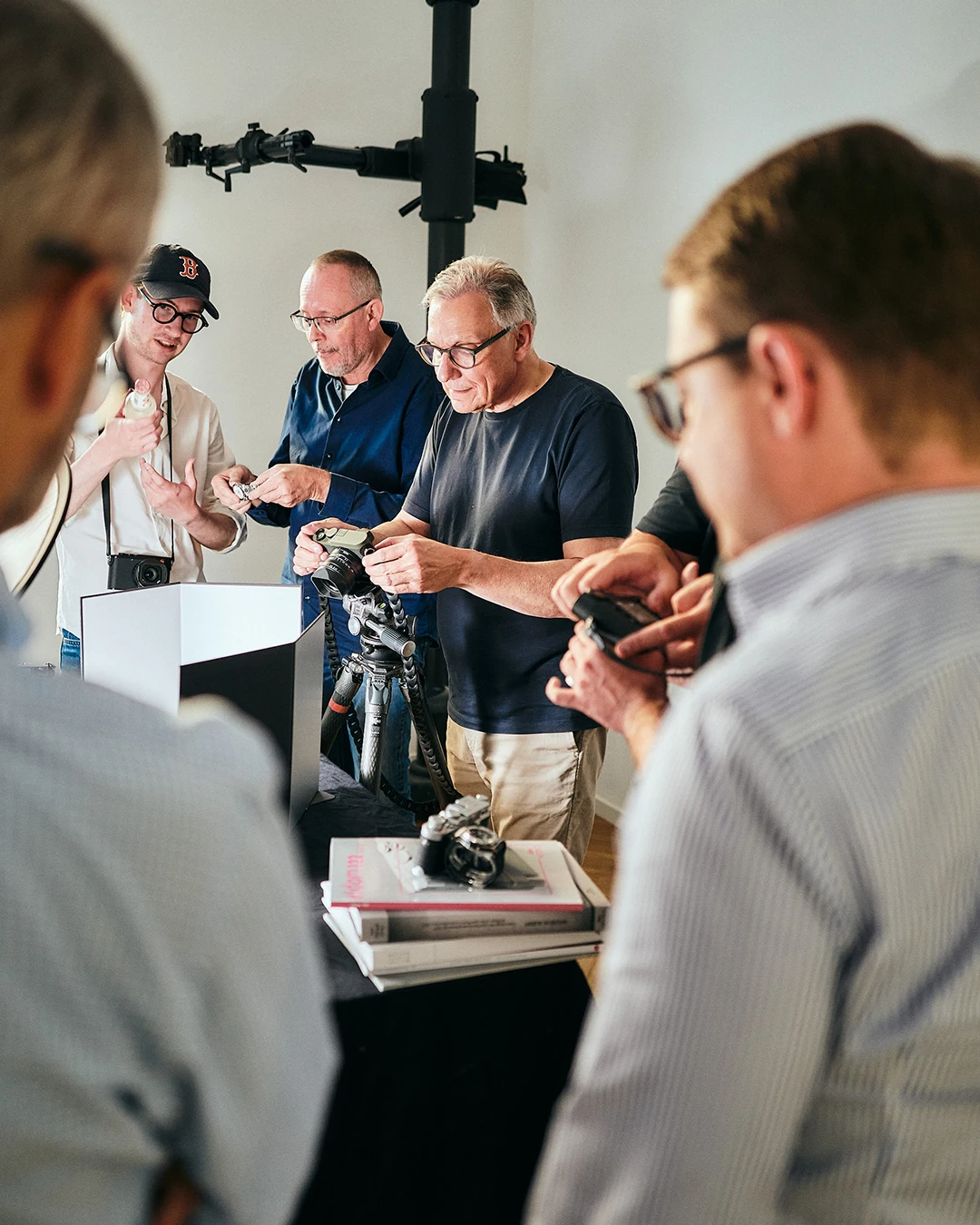
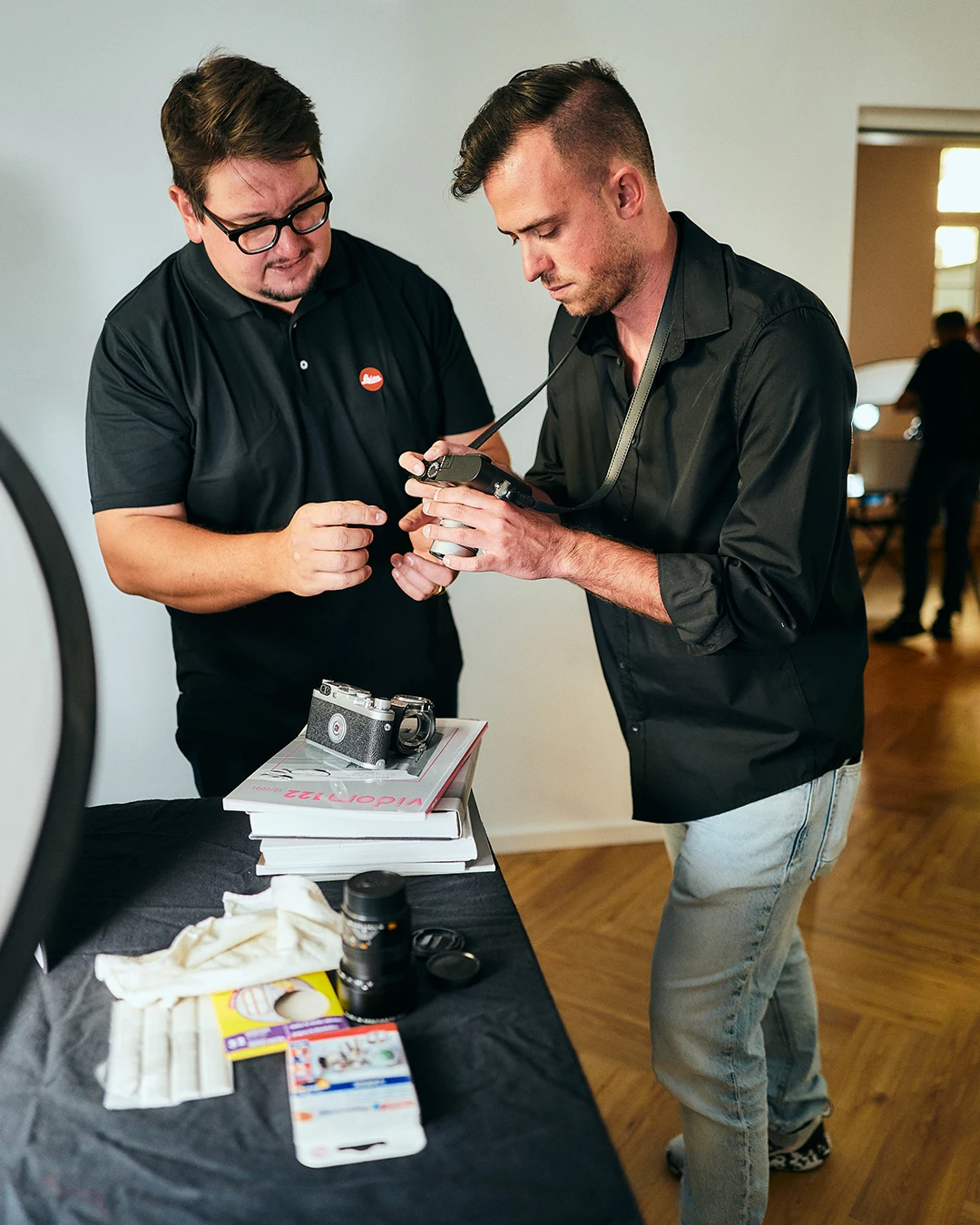
On 17 September, LUMO Studio in Munich was transformed into a photo lab for an afternoon and an evening. Nineteen participants brought their own watches, from Patek Philippe to Formex, from a vintage Navitimer to a Reverso. What they took home, alongside a wealth of know-how, was a print of a successful picture.
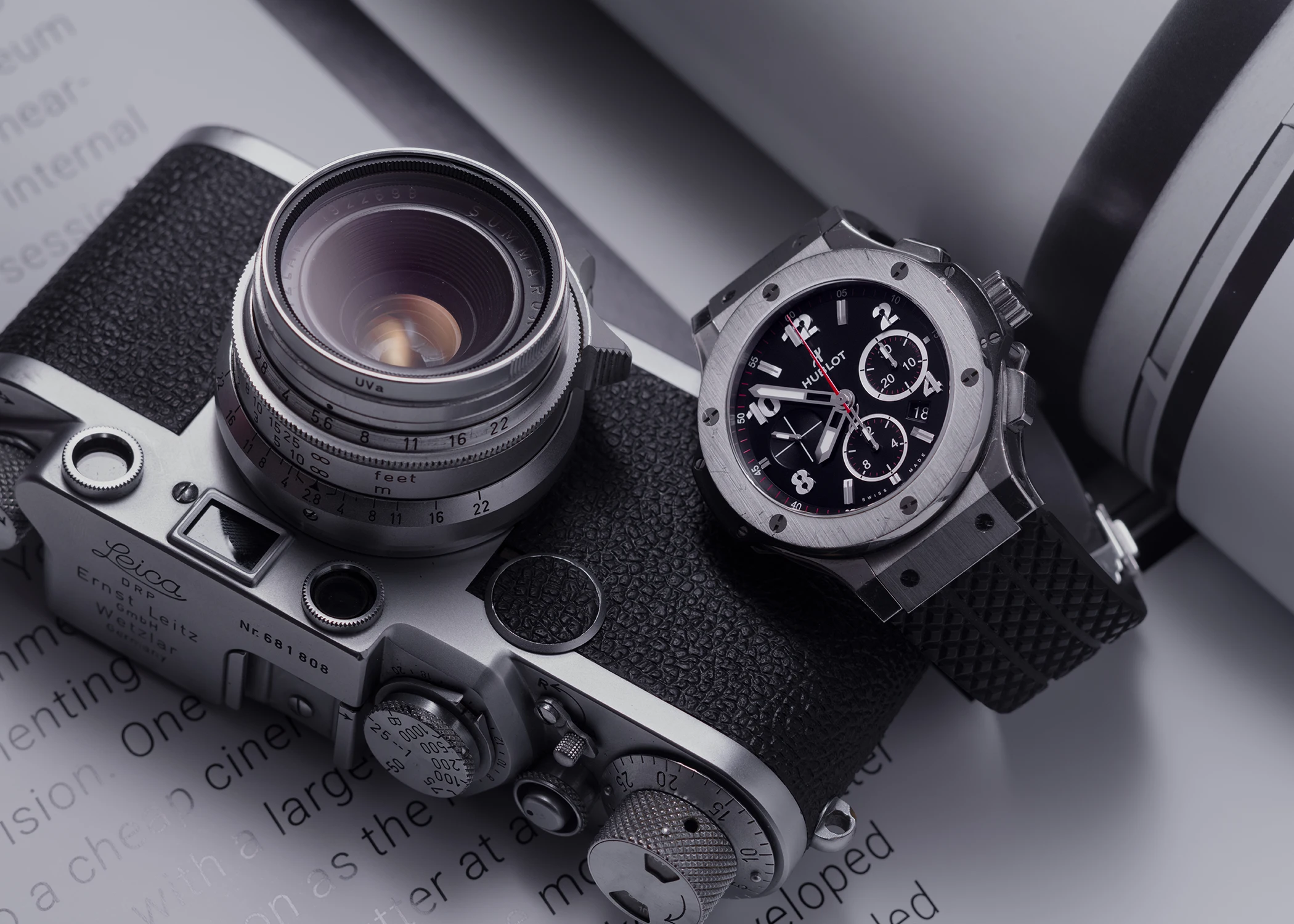
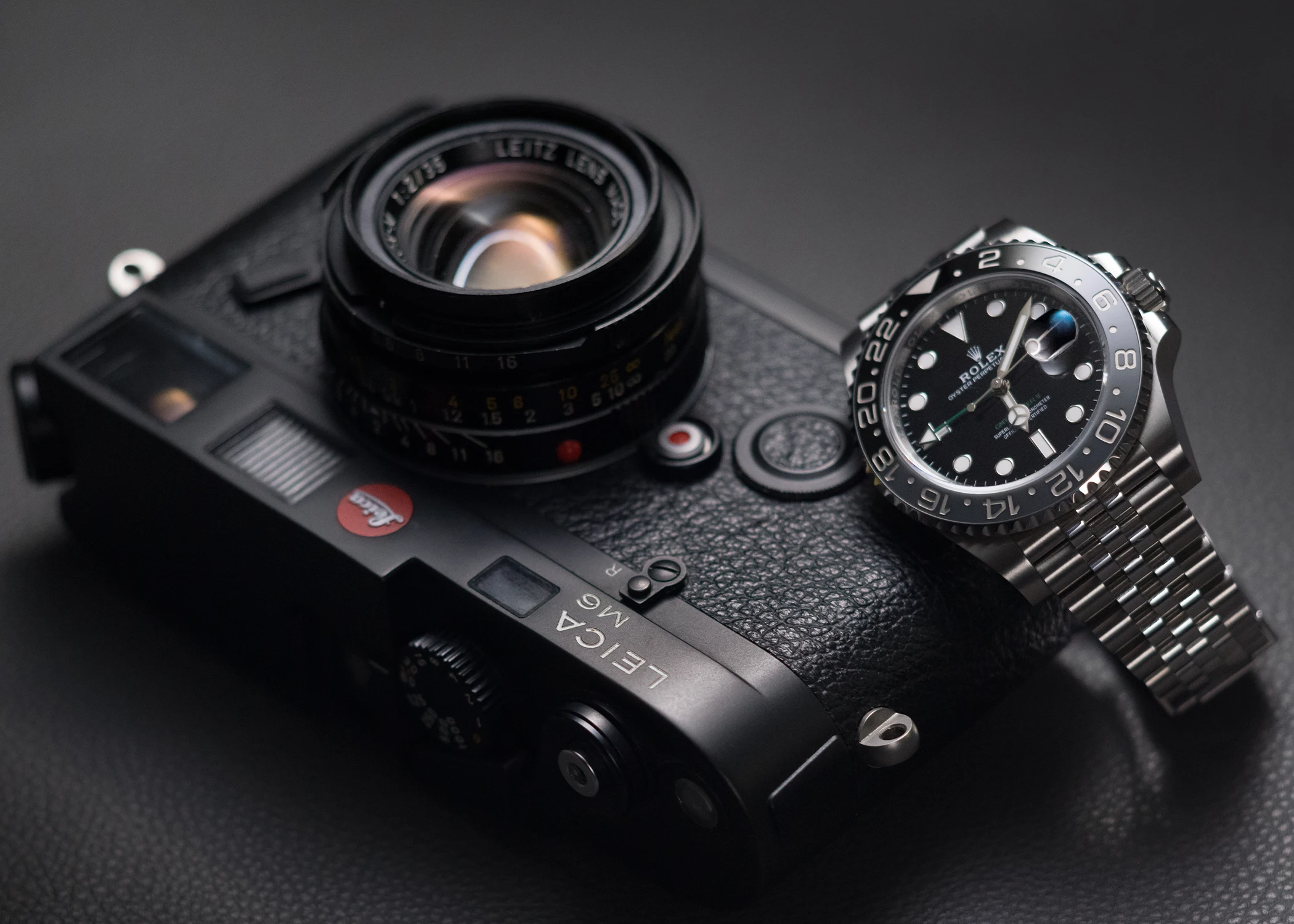
All photographs were taken exclusively with Leica cameras, provided by the manufacturer for the evening. Centre stage was the new Leica M EV1, the first M camera with an integrated electronic viewfinder instead of the classic rangefinder. Its full-frame sensor has a resolution of 60 megapixels, and a focus aid shows the plane of focus directly in the viewfinder. In the macro world of a watch, where millimetres decide between sharpness and blur, this is a great advantage: you see what the picture will show before you release the shutter, yet you still focus by hand, just as M photographers have done since 1954.
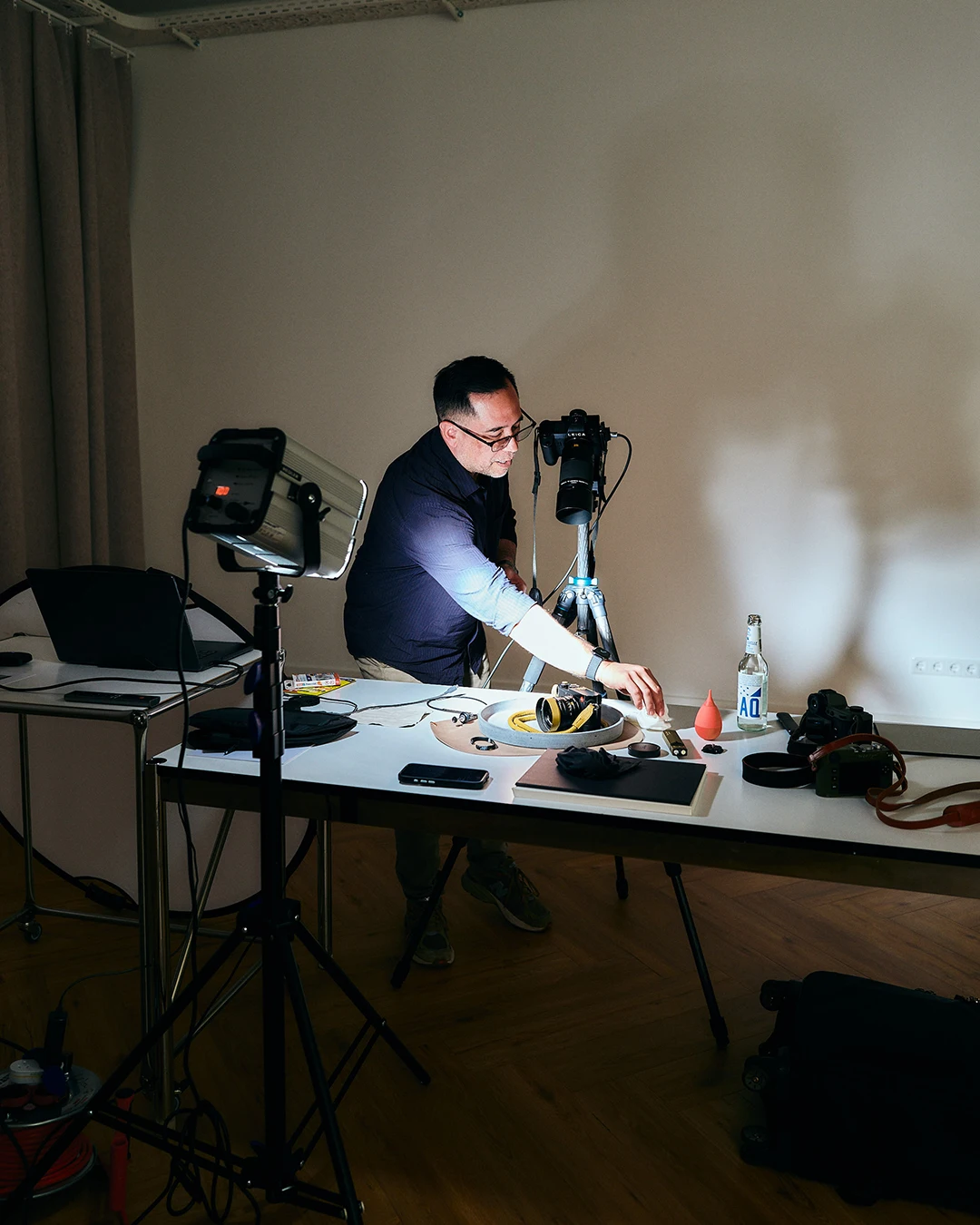
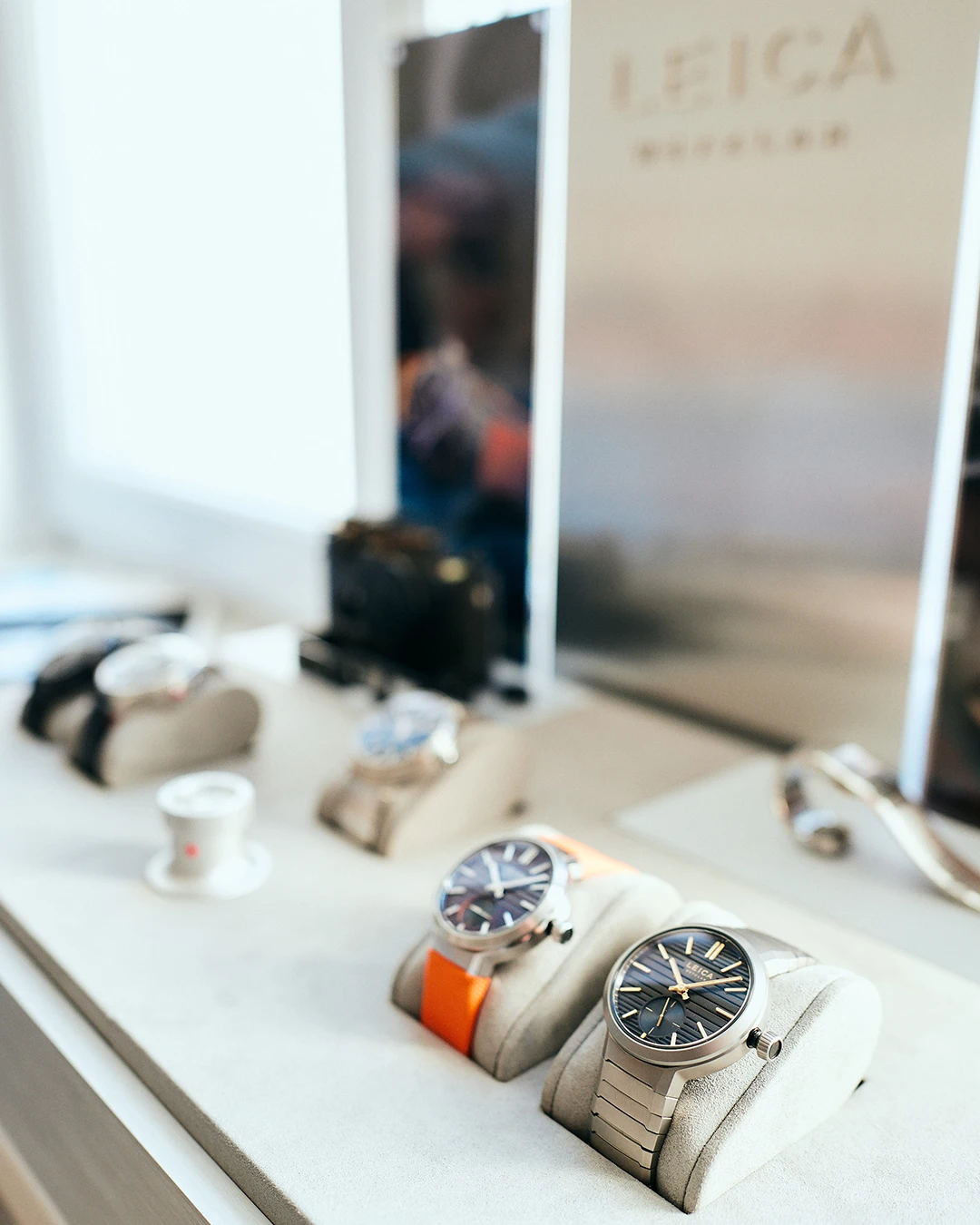
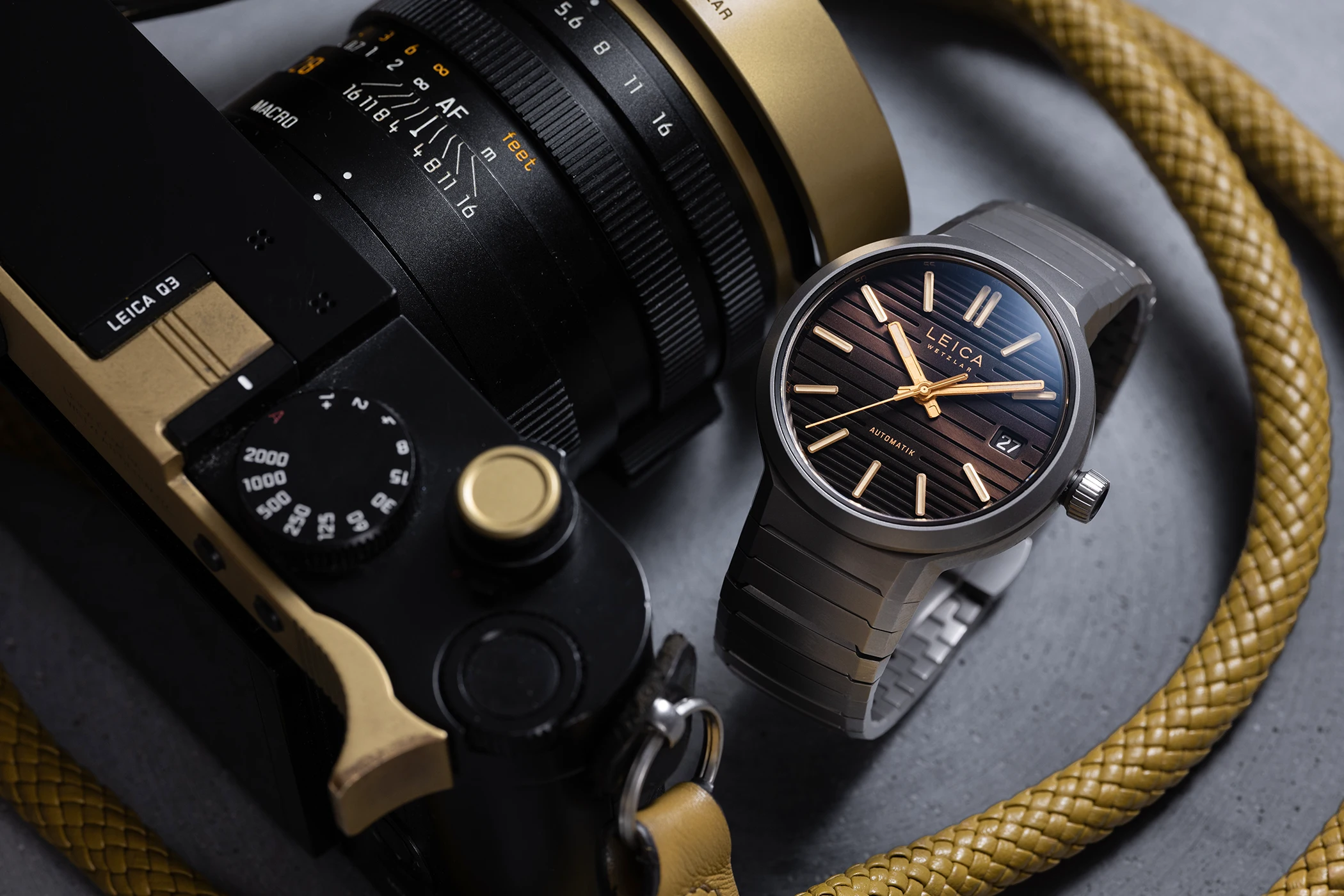
The compact cameras of the Q family were also available, among them the Q3 43 with its fast APO-Summicron 43 mm prime lens. Those who wished could also work with the Leica SL mirrorless system camera, whose interchangeable lenses make it particularly suited to macro and detail shots. The effect was clear: several participants now want to use their own Leicas more often again, and another has been considering an M EV1 or a Q ever since that evening.
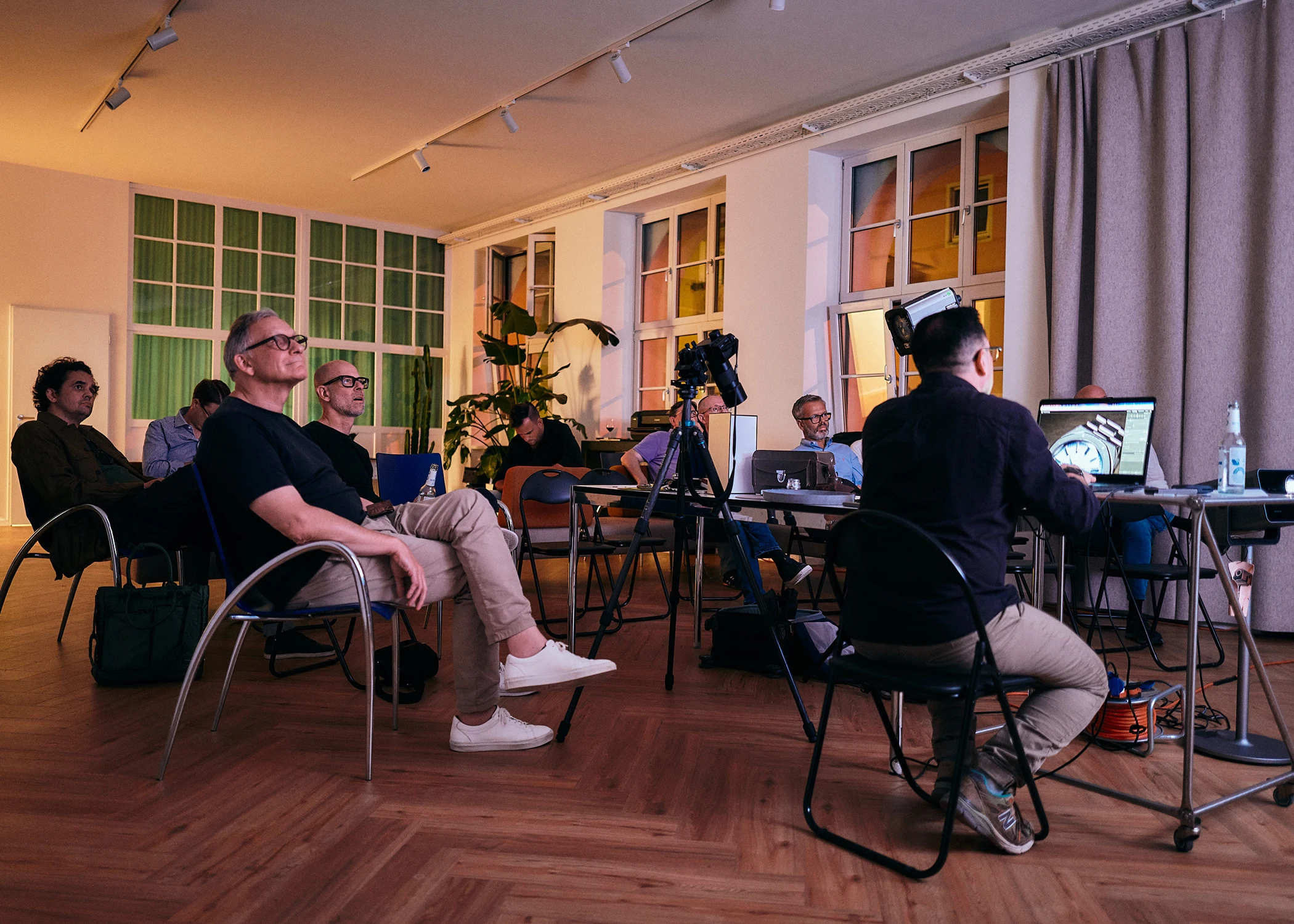
For everyone interested in watch photography, we have summarised a few tips from Dowling’s teaching here. If you are interested in our workshops, you can register without obligation on our Masterclass page.
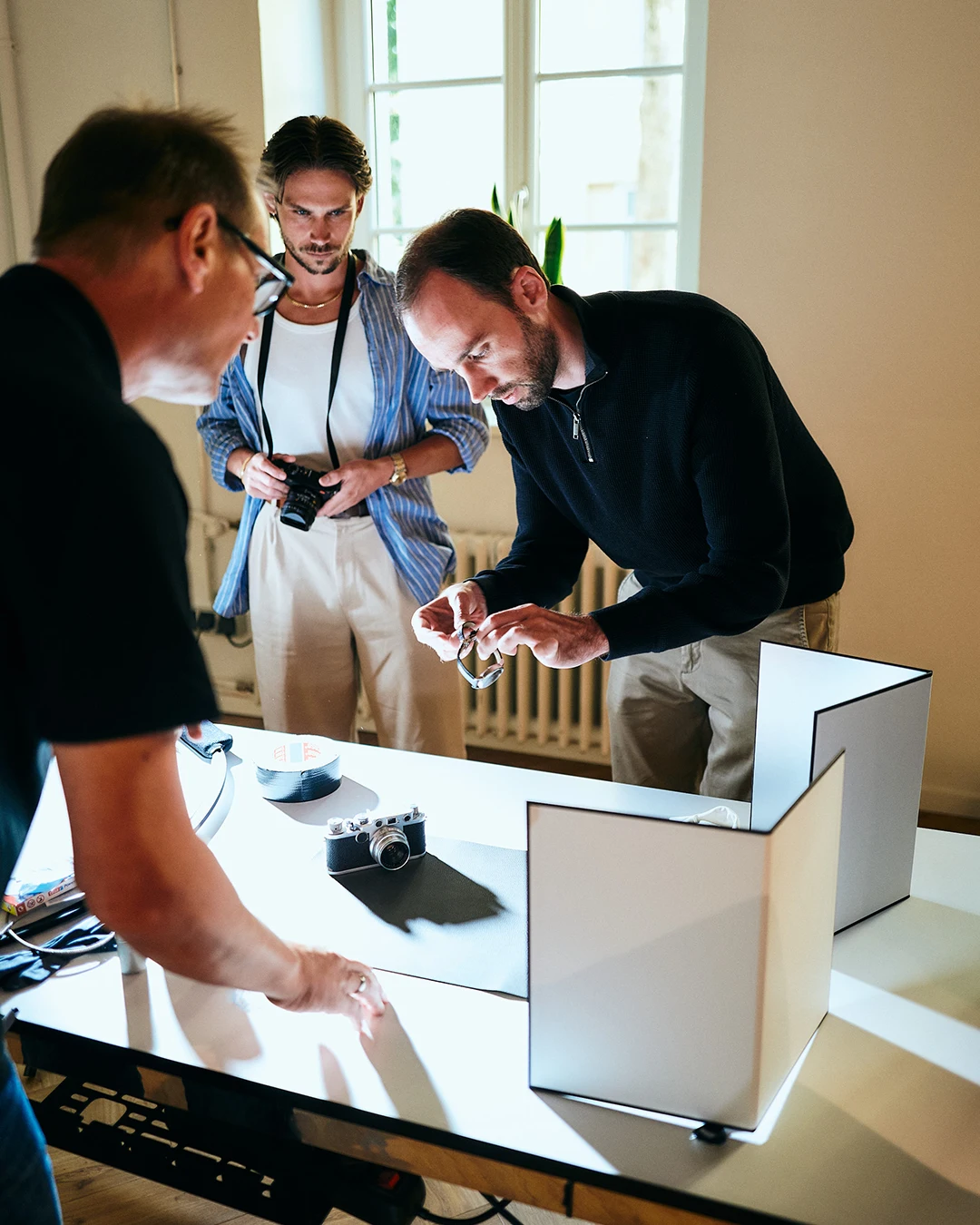
The most important sentence of his masterclass sounds almost banal, but it is anything but: move the light, move the subject or move yourself. Each of these three options changes the angle of light, the shadows and the reflections. If you work with available light, you bring the watch into the light. If you work with artificial light, you set key light, side light and back light deliberately and fill the shadows with a reflector.
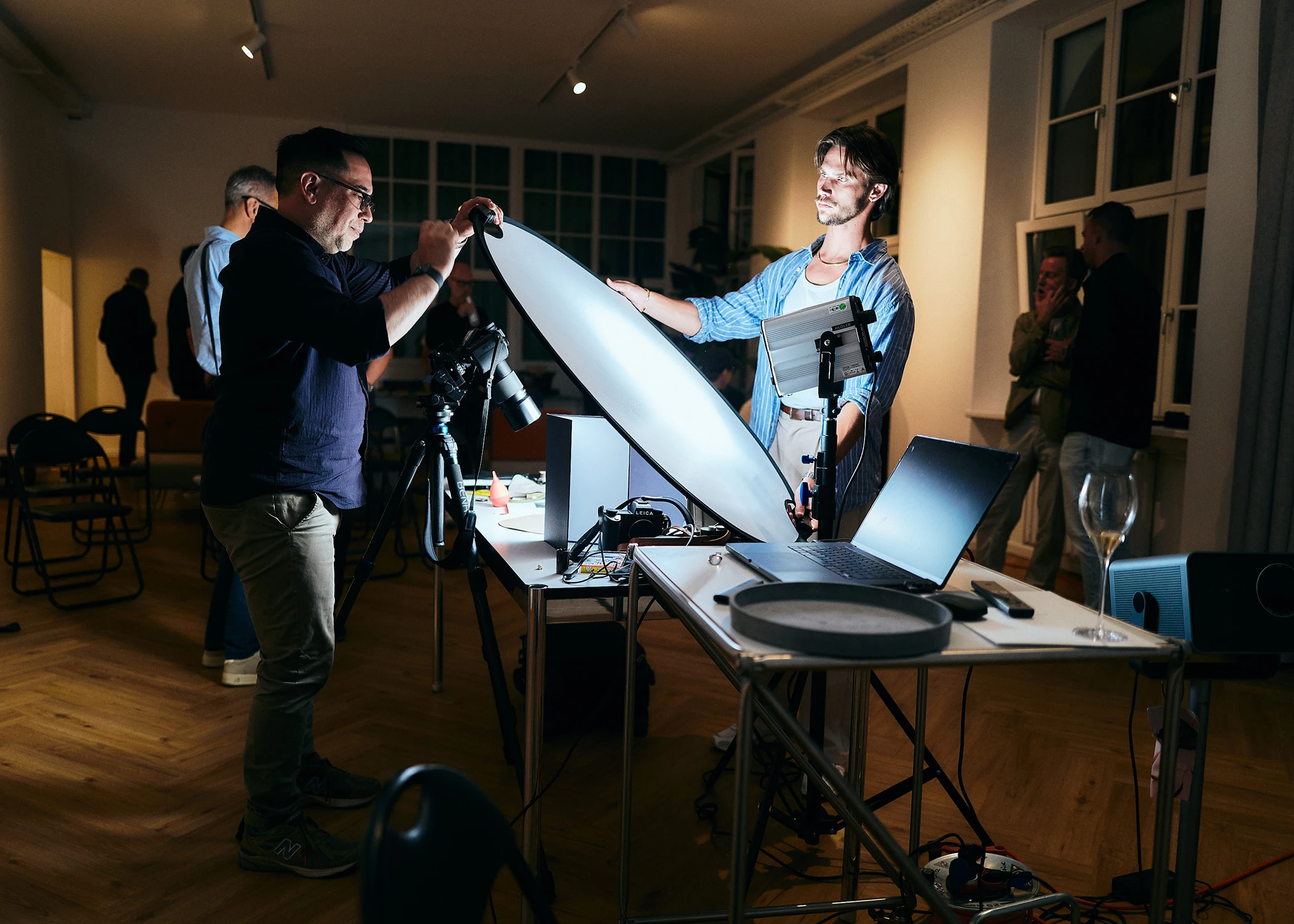
The second tool is focus, and this is where things become considerably more demanding. The aperture guides the eye. At f/2.8, everything except the dial dissolves into blur; at f/16, everything from the hour markers to the strap is pin-sharp. Dowling shows the same watch at six aperture settings and makes visible how much this single decision changes what the image says. The closer the camera moves to the watch, the shallower the depth of field becomes. Handheld, he recommends at least 1/200 second; on a tripod you can go down to 1/30 second.
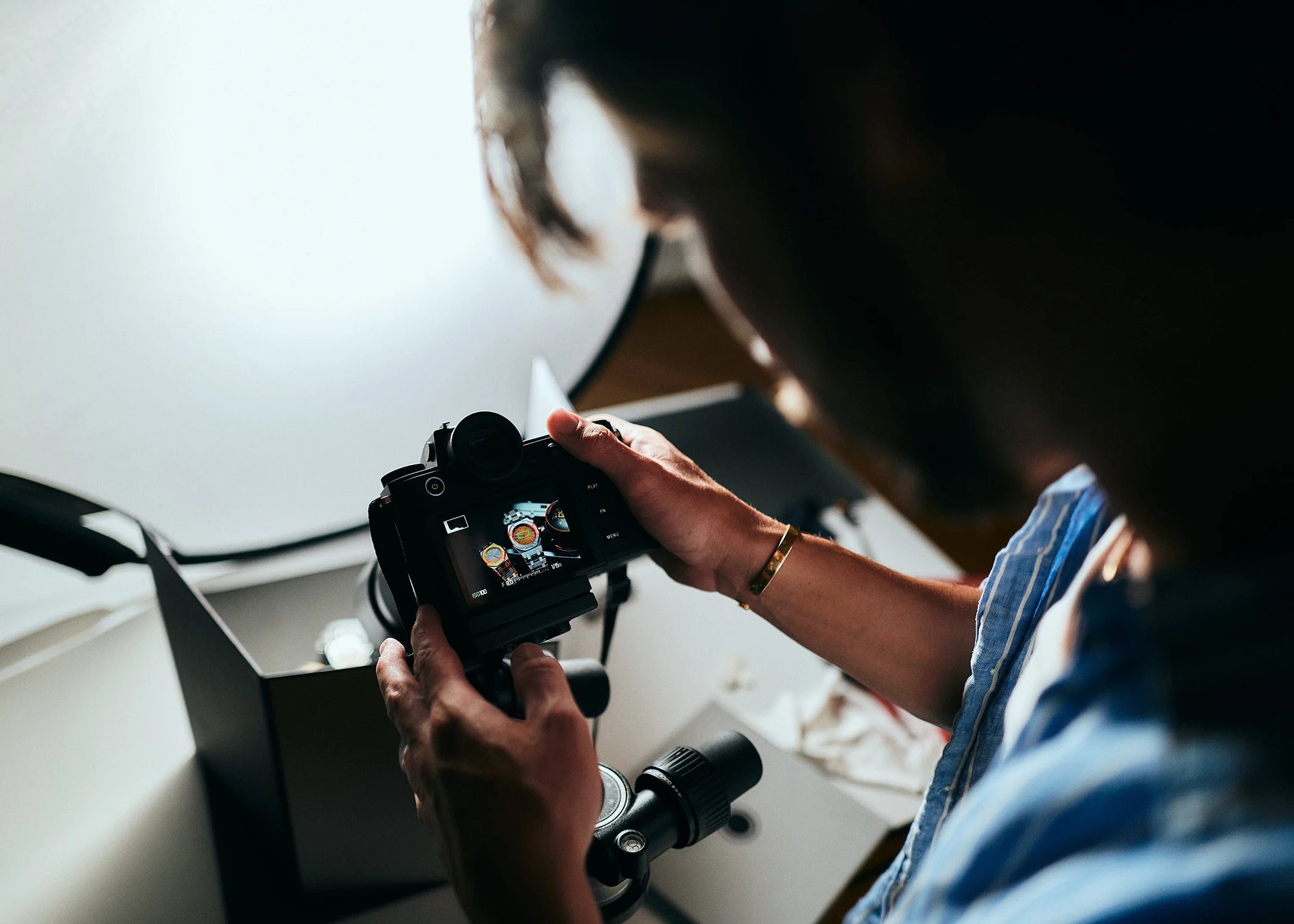
Then come the rules you only notice when they are broken. The hands must not cover the logo, date or sub-dials. The watch is wound so that the power reserve is right and the seconds hand is running. The dial stands upright and never upside down. The crystal is cleaned with a microfibre cloth and a blower, because a fingerprint can hardly be rescued in post-production. Editorial images leave room for text. Props should suit the story of the watch, and violence or negativity has no place in the picture. Then there are very practical tips: shoot on soft surfaces, secure the watch with modelling putty and only handle it with gloves.
Dowling sets out his goal for the workshop clearly: ‘My goal is for everyone to leave with techniques they understand, a process they can put into practice and the foundations to develop their own photographic style.’ The approach, he says, is simple, accessible and enjoyable, requiring thoughtful preparation without the elaborate commercial set-up often associated with high-end watch photography. ‘Just as a family portrait can capture a familiar expression or a shared memory, a watch portrait can express why a particular piece matters to its owner.’ In other words, it is not about lucky shots of the kind a smartphone sometimes produces, but about learning how a collector’s stroke of luck becomes a method.
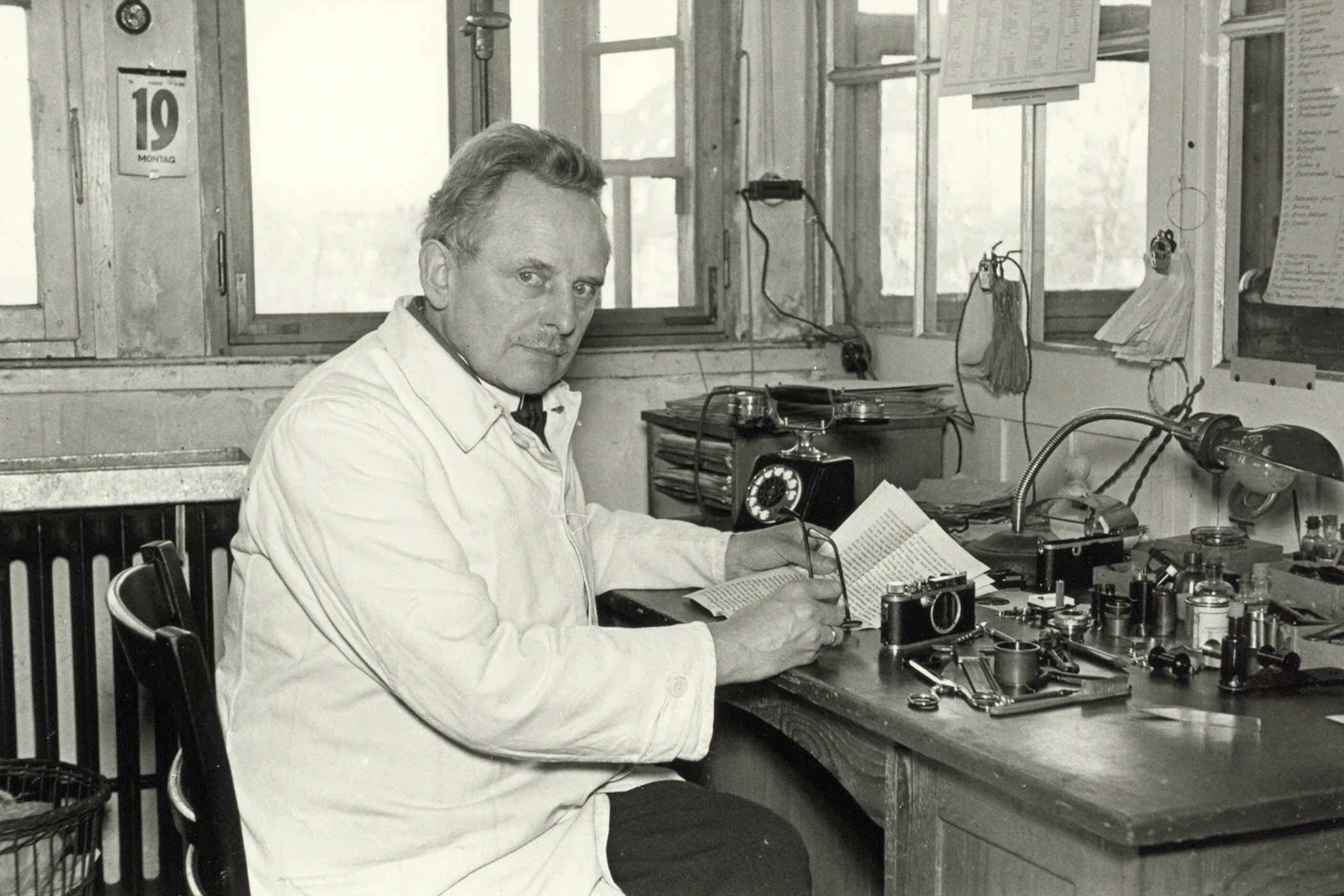
One more small note: it is no coincidence that Leica of all brands is hosting a watch photography masterclass. ‘We started with time’, reads a line in Dowling’s presentation. From 1858 to 1863, company founder Ernst Leitz trained as a watchmaker and precision mechanic. He then worked at Matthäus Hipp’s telegraph and clock factory in Neuchâtel, where he learnt the fundamentals of serial production. In 1864 he joined Carl Kellner’s optical institute in Wetzlar, from which the Ernst Leitz company emerged in 1870. In 1914 Oskar Barnack built the prototype of the Ur-Leica there; the Leica I went on sale in 1925, followed by the legendary M3 in 1954.
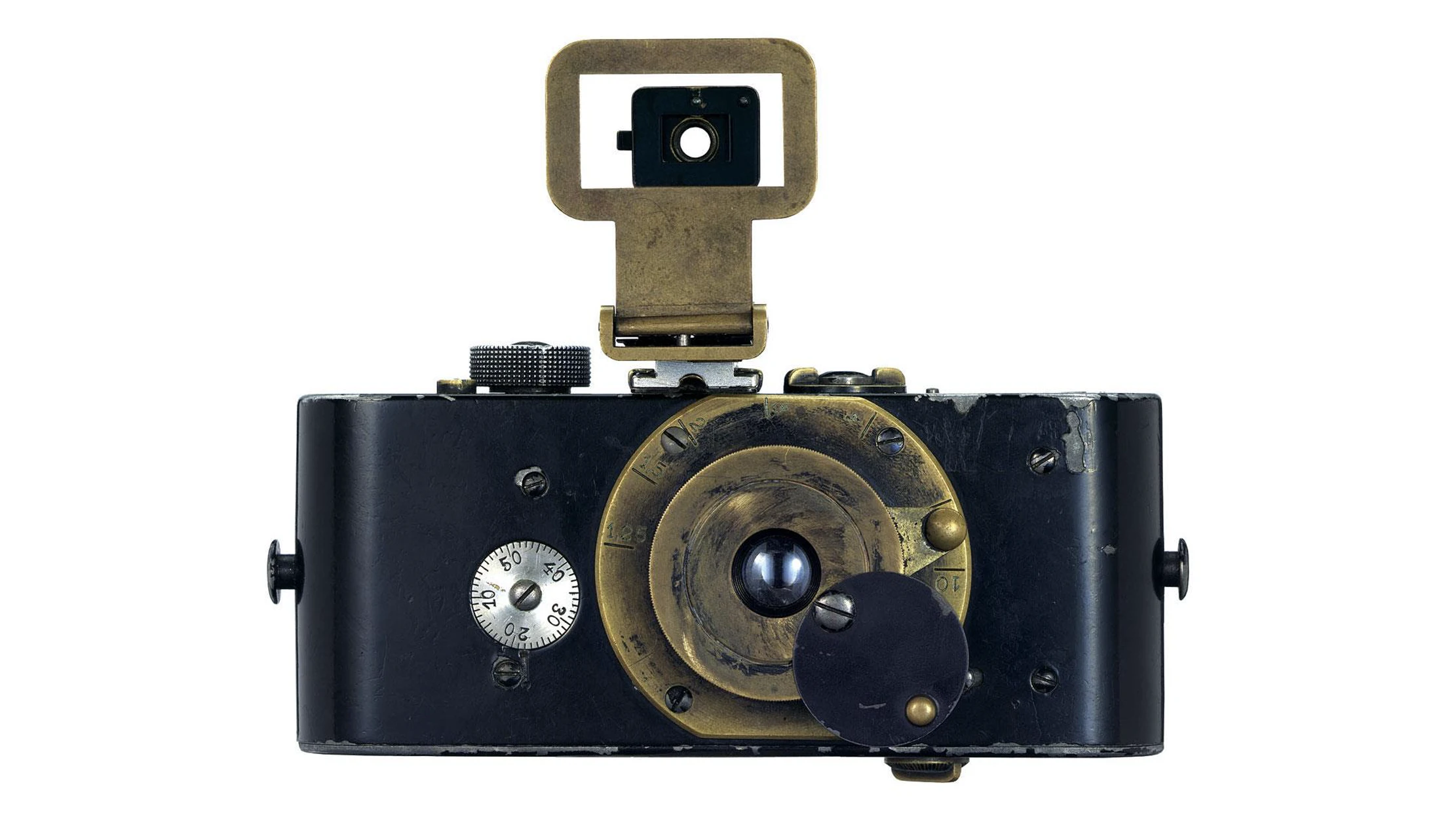
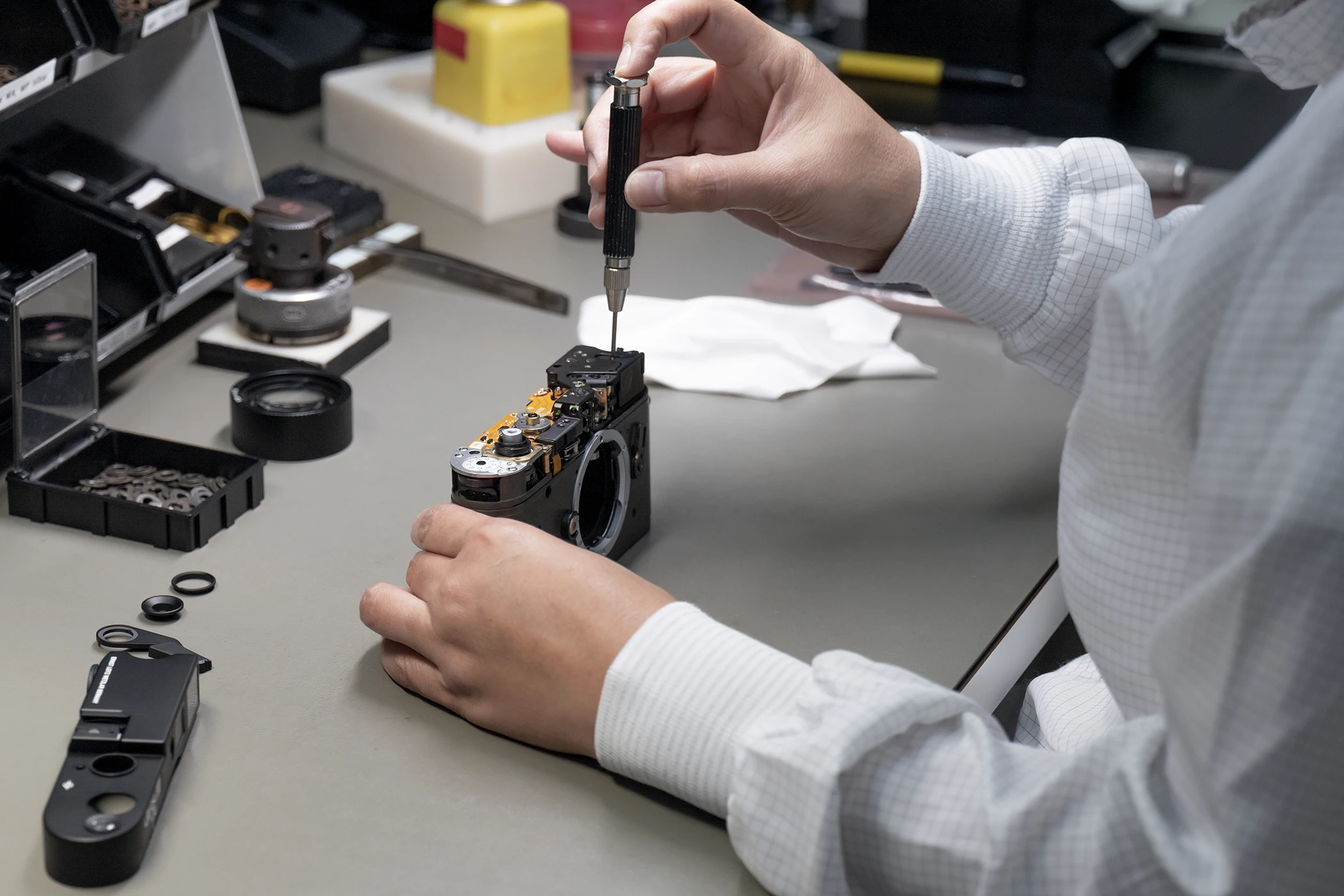
The kinship between a Leica camera and a mechanical watch is technical, too: the heart of a classic Leica is its shutter, a mechanical timing mechanism just like that of a watch. With the shutter-speed dial, the photographer selects the exposure time, and gears tension the cloth focal-plane shutter with its two curtains. The first exposes the sensor or film, the second closes it again, and every picture depends on the precise timing between them. Seen this way, photography is the art of capturing a fraction of a second – or, one might say, of measuring it.
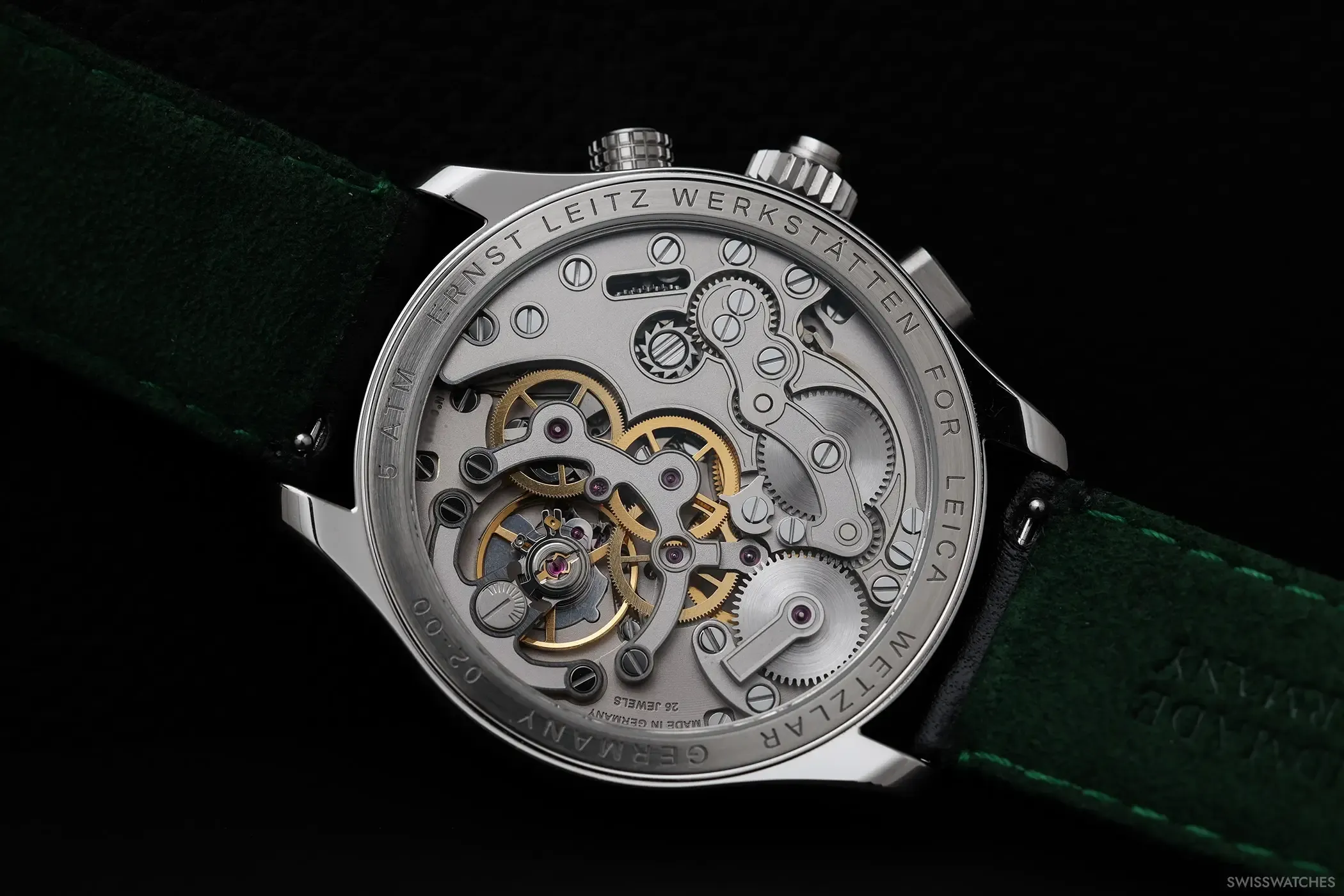
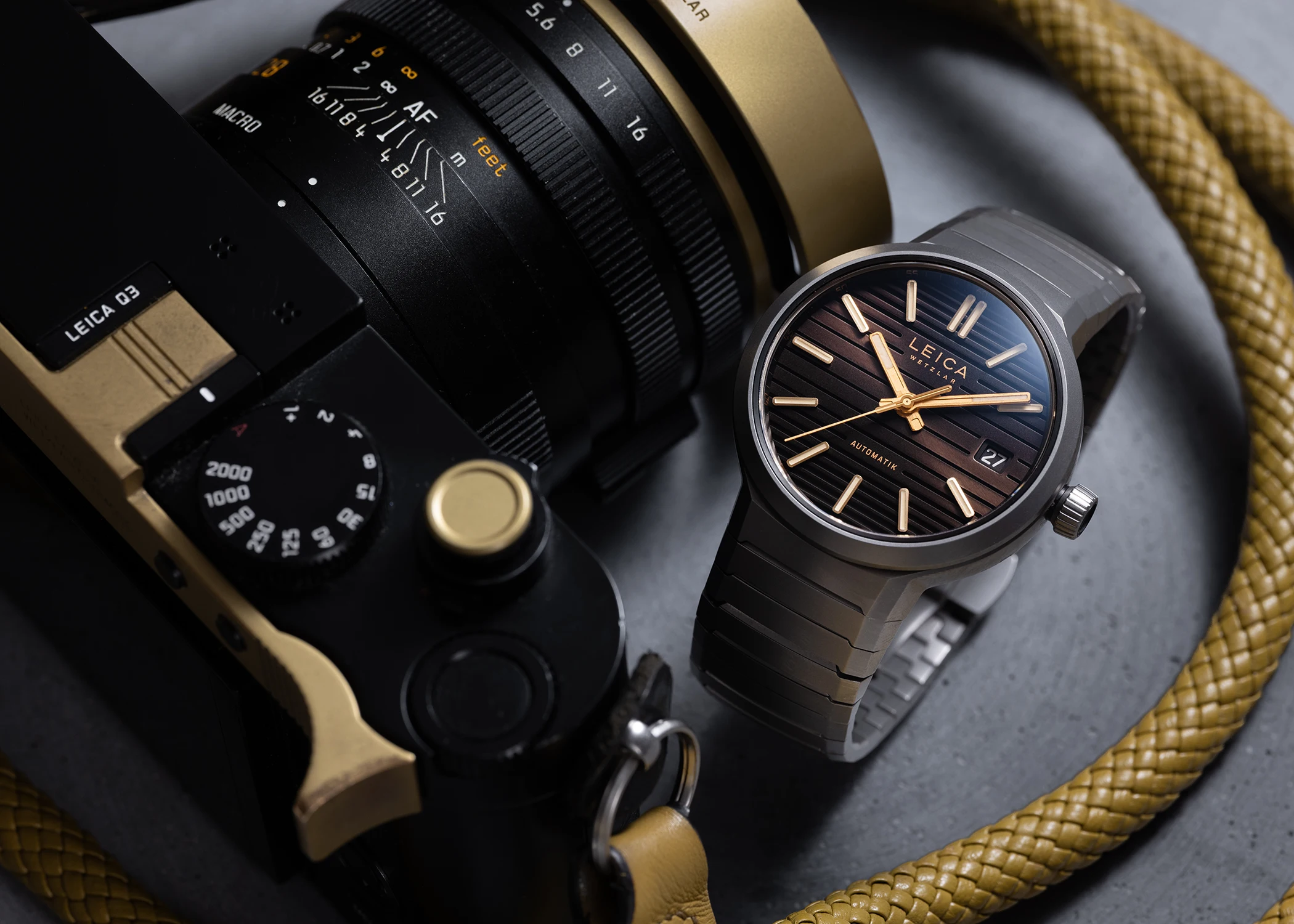
If you are interested in the history of Leica watches and the company’s earlier attempts, you will find much more in our brand portrait. Suffice it to say here: in February 2022 Leica presented its first own watches, the ZM 1 and ZM 2, made in Germany under the umbrella of Ernst Leitz Werkstätten. They are powered by the hand-wound calibres LH-10 and LH-20, which are manufactured by Lehmann Präzision in the Black Forest, as are the cases and dials. The company’s founder, Markus Lehmann, had previously built precision machinery for Leica’s camera production. Their patented push-crown resets the seconds and recalls the shutter release of a Leica. The Monochrom editions followed in April 2023, and in October 2023 the ZM 11, with the automatic calibre LA-3001 developed together with the Swiss specialist Chronode and an interchangeable strap that is as easy to swap as a lens. The latest addition is the ZM 12. Henrik Ekdahl, Managing Director of the lifestyle division and head of Leica Watch, presented the watches in person on the evening.
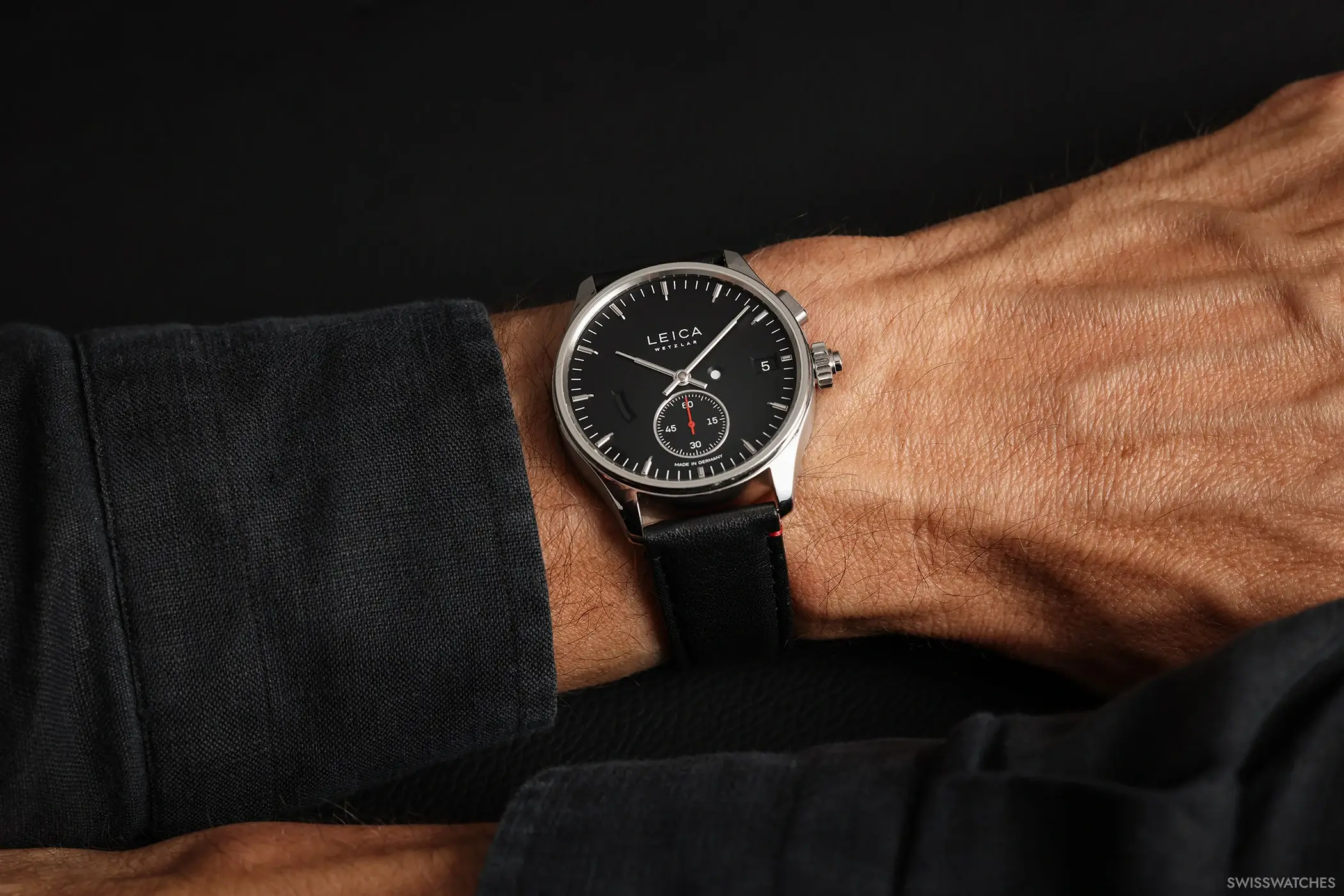
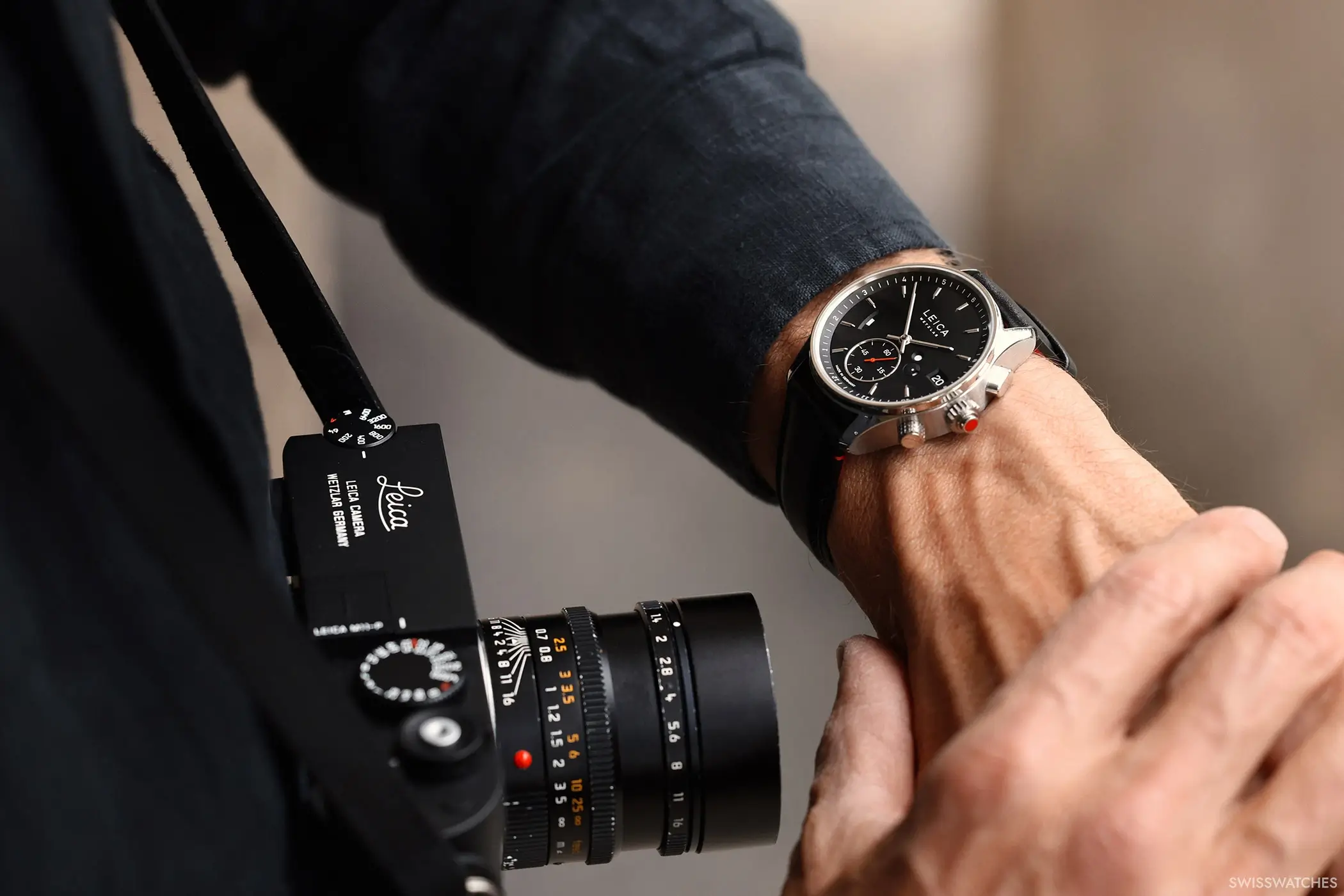
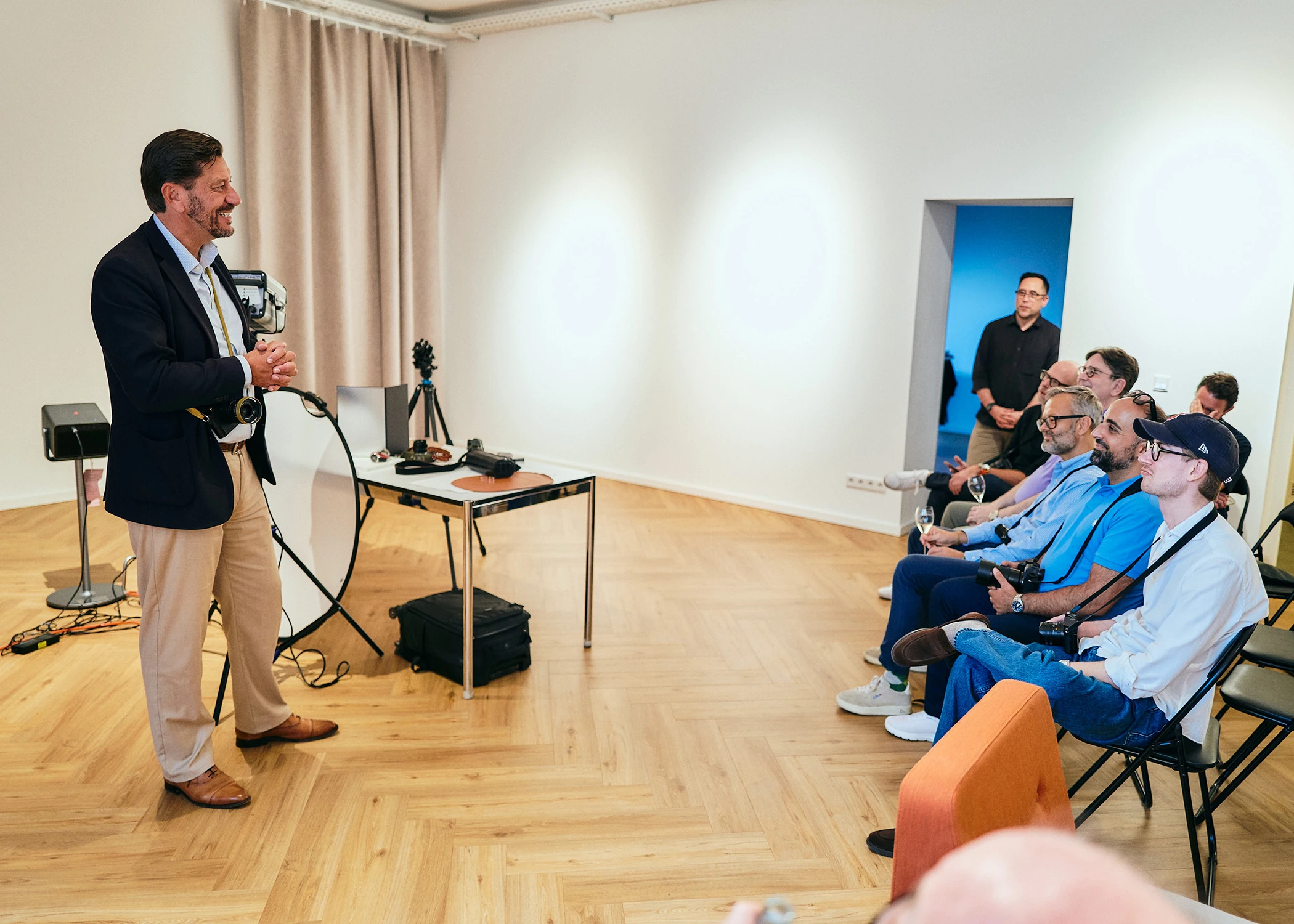
These watches were also available to the participants as subjects, and one guest who had come without a watch of his own promptly photographed a Leica. In a dedicated session, the models could be picked up and tried on. One participant later praised exactly that: you could not only look at the products but experience them.
We were so delighted with the results of the evening that we offered all participants the chance to publish their pictures on Swisswatches. Nine of them accepted and share what their watch means to them. All photographs were taken by the participants themselves, with Leica cameras and under the guidance of Kristian Dowling. At the participants’ request we use first names only; one name has been changed by the editors.
For his 60th birthday in March, Ralf from the district of Starnberg wanted to treat himself to a special watch. He already knew Jaeger-LeCoultre well and owns a Polaris Perpetual Calendar in stainless steel. His dealer, Alexander Pietzner of Chronometrie Pietzner in Munich, drew his attention to a Grande Master Memovox in rose gold from 2002. Unpolished and almost unworn: the first owner had worn it only a handful of times and then kept it in a safe for years.
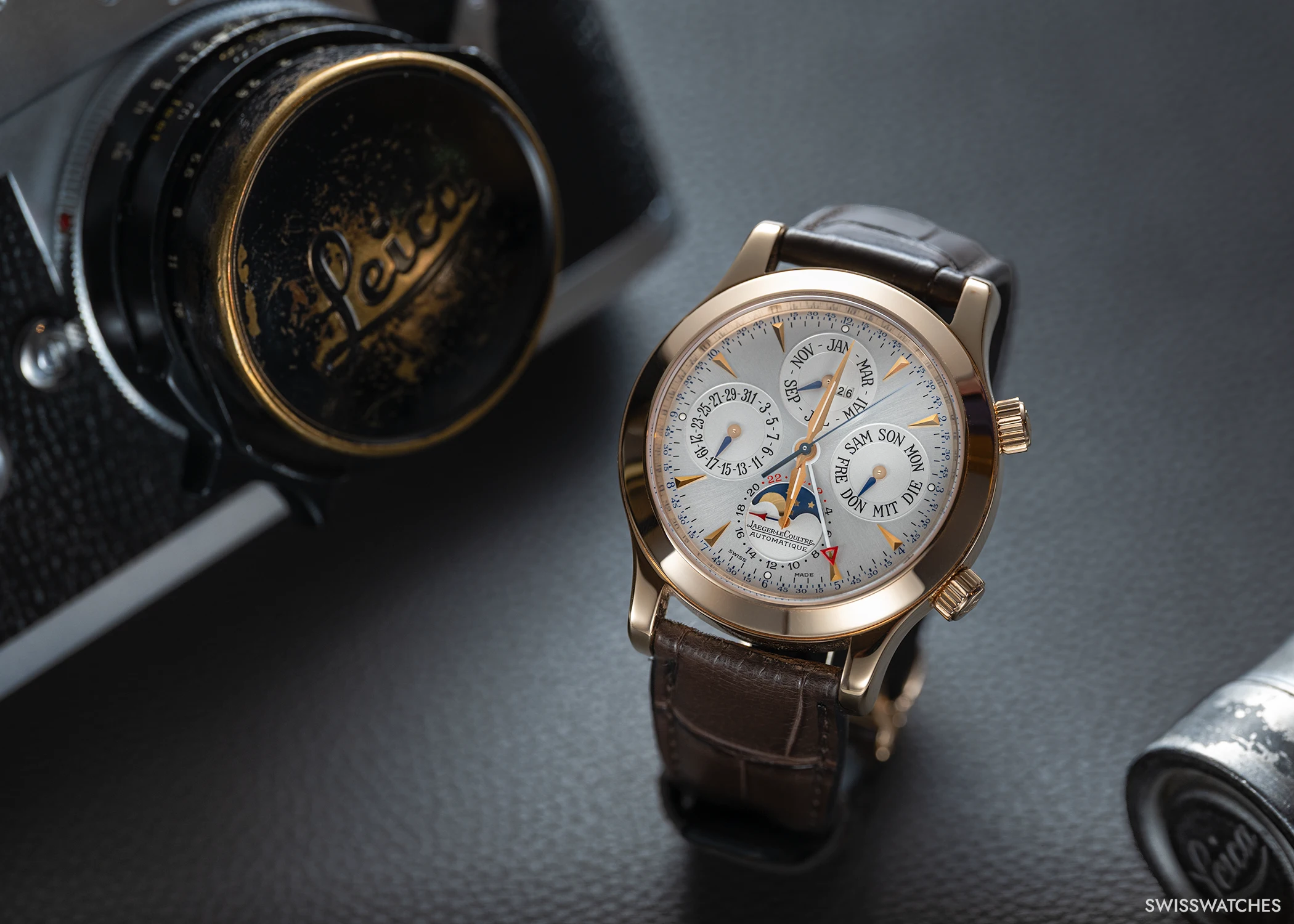
The watch was fully serviced, while the case remained in its original condition. For Ralf it is a double reminder, of his 60th birthday and of the year of his wedding, 2002. For the photograph, he paired it with a lens cap whose colour matches the rose gold almost perfectly. His love of watches began with his grandfather, who collected all kinds of timepieces in a small box. ‘In the rush of everyday life, it is always lovely to look at the calm of a mechanical watch,’ says Ralf.
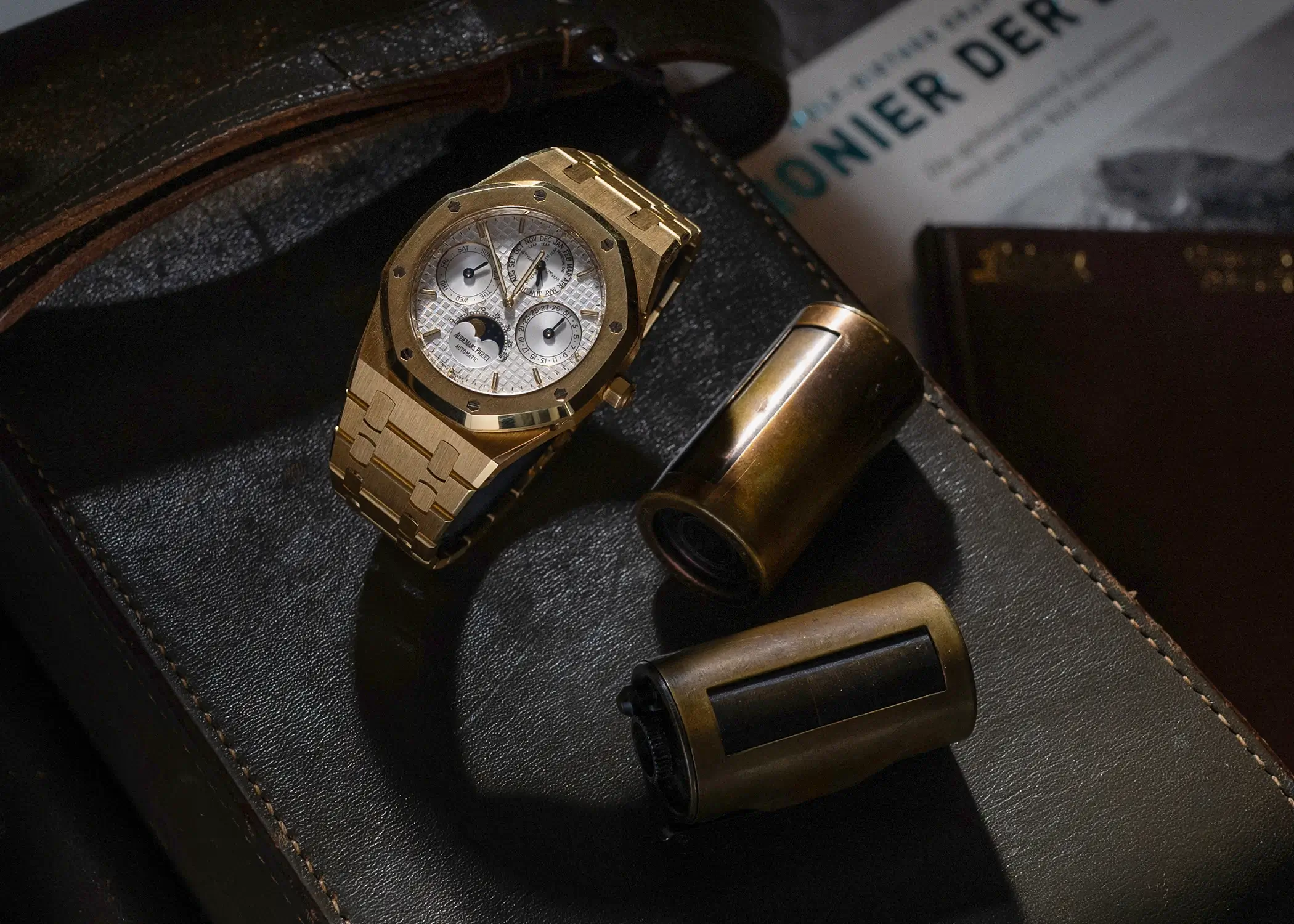
Bastian from Murnau am Staffelsee grew up in a family of goldsmiths and is a goldsmith himself today. Watches have fascinated him since he was about 13. At 19 he lived in Switzerland for several years and, through a series of happy coincidences, acquired his dream watch there, a Royal Oak 4100 ST, which has accompanied him ever since.
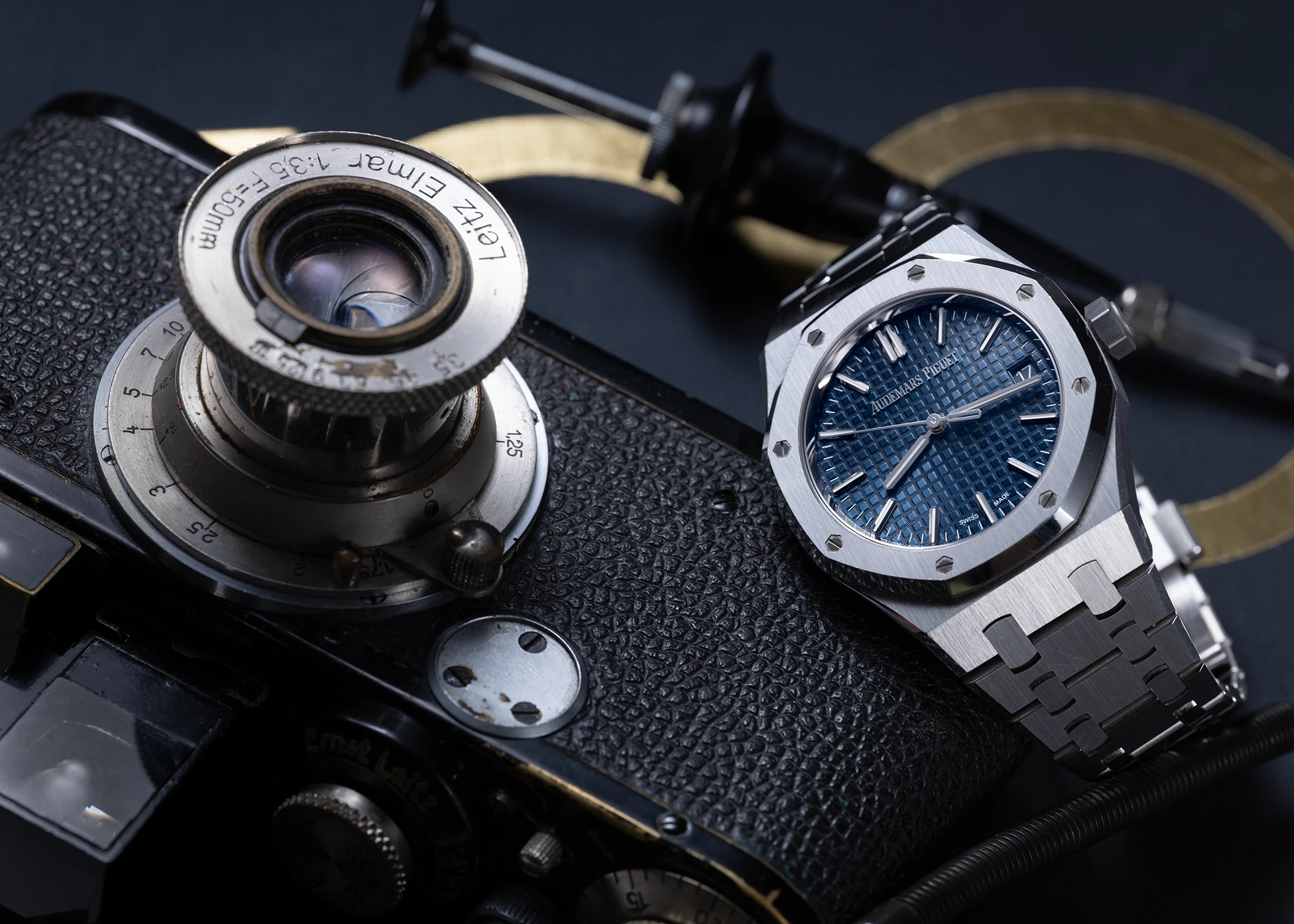
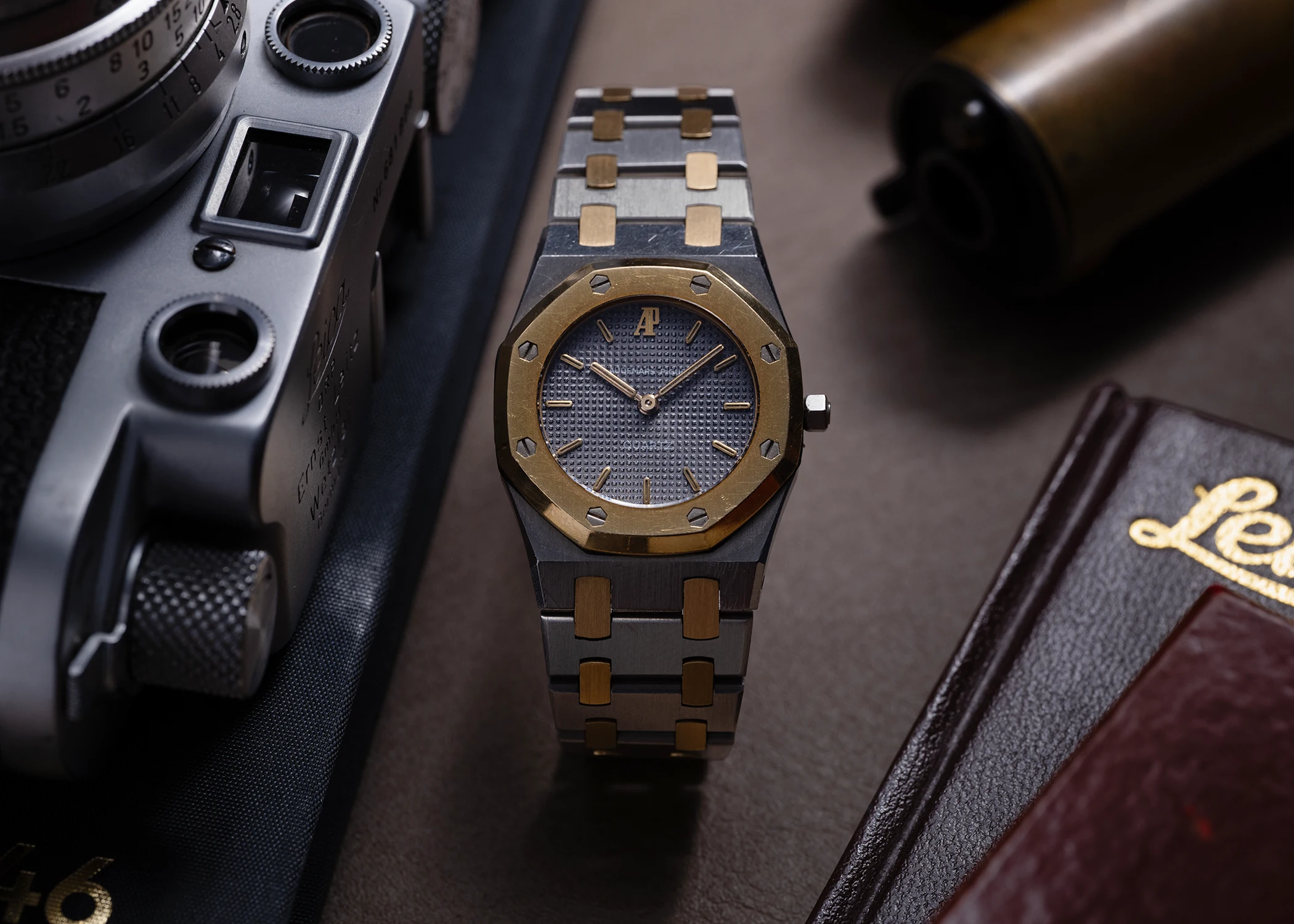
The two-tone Royal Oak 6007SA in his photograph, however, belongs to his girlfriend. He gave it to her so that they could both wear a Royal Oak: partner watches in their very own interpretation. She has long since come to share his passion. ‘This watch connects my passion for watches with the most important person in my life.’ As photography is his second great passion alongside goldsmithing, and there was still no truly beautiful picture of her watch, the masterclass came at exactly the right time.
For many aviation enthusiasts, a Navitimer is the dream – and Karsten from Munich is no exception. Ideally from the era when Breitling still stood for pilots and adventure, but with modern technology inside. His choice fell on a 2011 limited edition, the first Navitimer series with the in-house B01 chronograph calibre. By the time desire, watch and budget finally came together, the series had long since sold out. After some searching, he found one nonetheless.
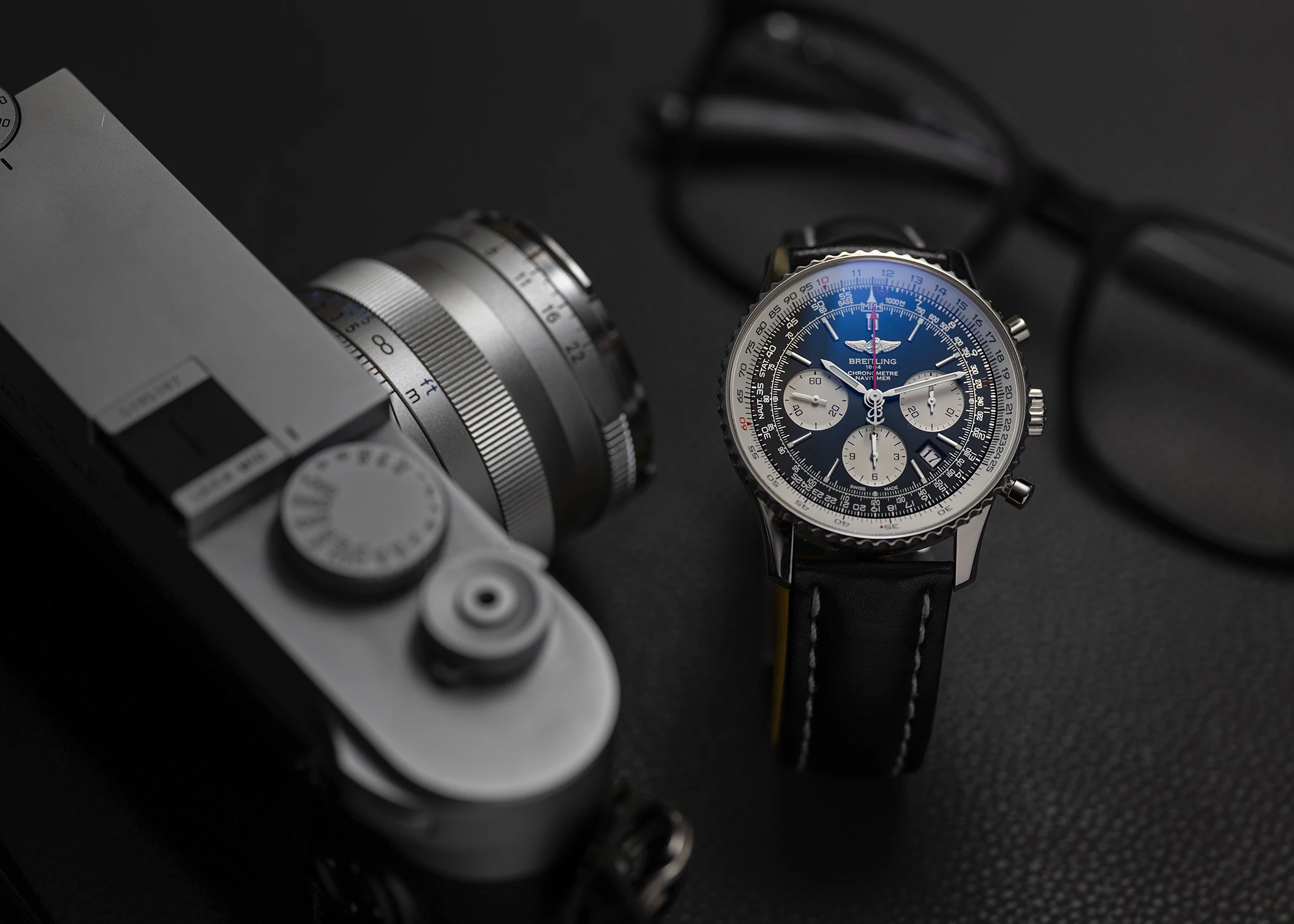
Its special features are the matt black sunray dial made using the ‘par épargne’ technique, the applied Wings logo in white gold and the seconds hand with the Breitling B as a counterweight. Through the sapphire caseback you can see Geneva stripes, the column wheel and polished screw heads. Karsten says: ‘Despite its 43 millimetres, it is comfortable to wear, especially on the black leather strap.’ In the photograph, the watch meets his second passion, photography, embodied by his silver Leica M10. His love of watches began, incidentally, with a Citizen Promaster, a gift from his father.
For Christopher from Lower Bavaria, his Overseas with its blue dial is linked to special encounters, to which Swisswatches contributed a great deal. In August he collected it from the Munich boutique to mark a major life event. Depending on the light, the blue appears deep and vivid or almost black. That is why the dial is at the centre of his picture, which now hangs framed in his office.
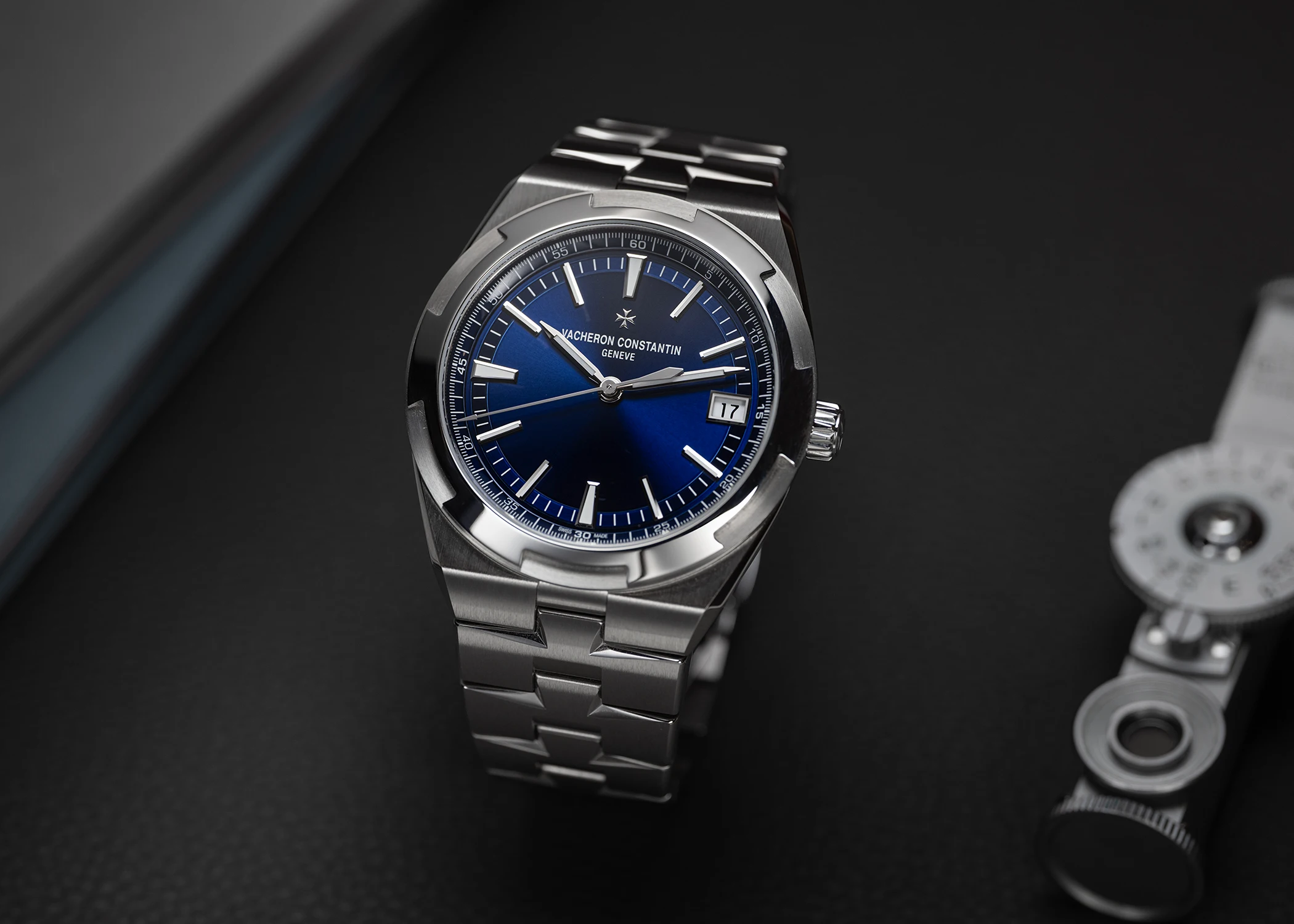
He says: ‘As the grandson of a passionate watchmaker, I learnt early on that every tiny screw counts.’ An inherited Universal Genève links his collection to his family history. Today it ranges from a Patek Philippe Calatrava to a Seiko SKX. ‘What matters to me is a watch’s character, its history and the feeling it conveys.’ Professionally he moves in the digital world; mechanical watches are the analogue counterpoint.
Dirk from Munich only buys a new watch for special occasions. His Patek Philippe 5326G in white gold marks a milestone as an entrepreneur and reminds him of what he has built over almost two decades. When the model was unveiled in 2022, he was taken with it immediately: the grained black dial, the moon phase, the apertures for local and home time. The combination of annual calendar and Travel Time suits someone who travels a great deal. He tried it on several times at the jeweller’s, and each time he liked it a little more. Even so, he waited more than a year.
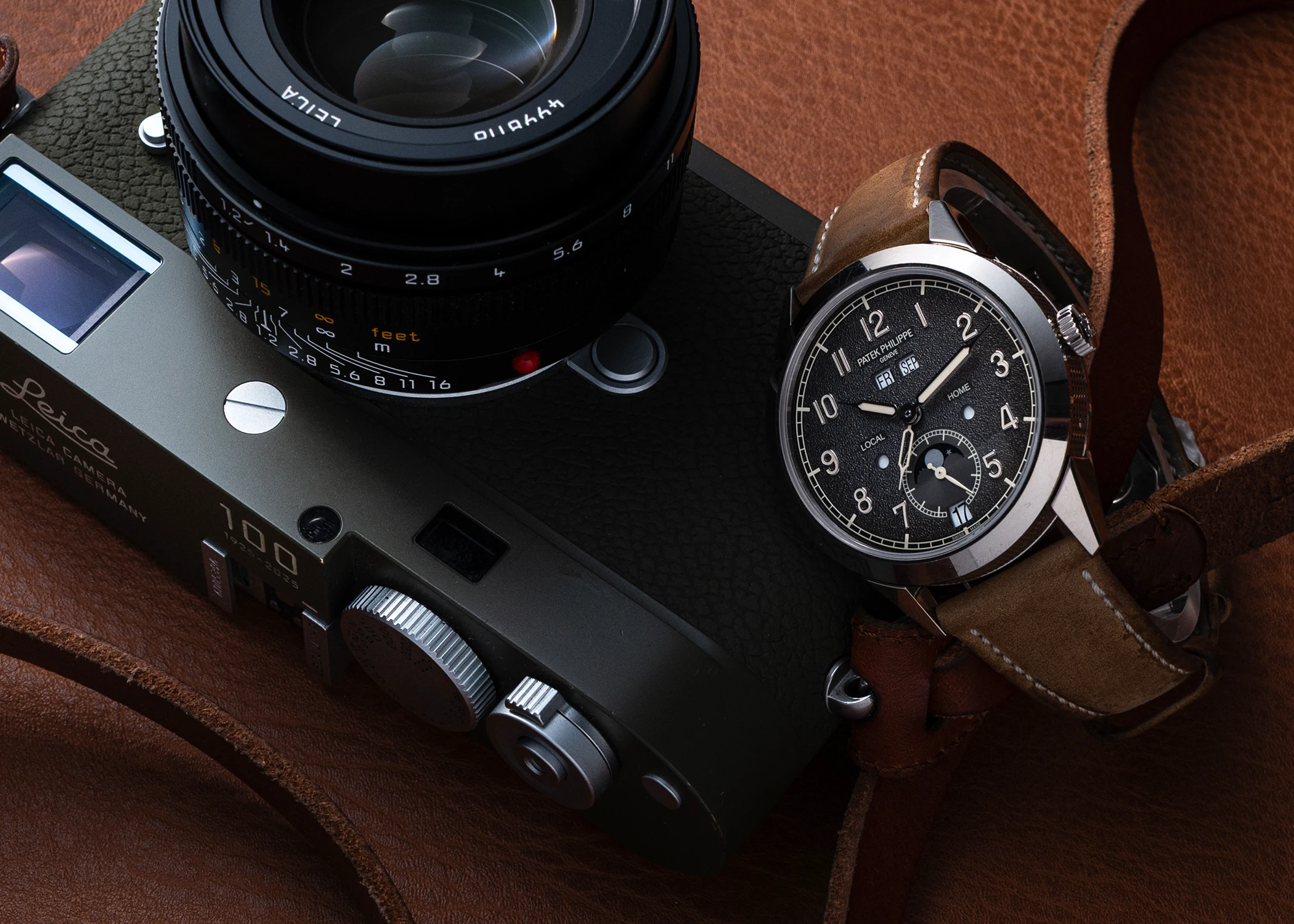
His enthusiasm began almost 30 years ago, sparked by a friend in Los Angeles. With the first money he had earned himself, he bought a TAG Heuer. Since then every watch has been tied to a special event. ‘My everyday life is fast-paced and digital. That is exactly why I appreciate the analogue nature and craftsmanship of mechanical watches.’
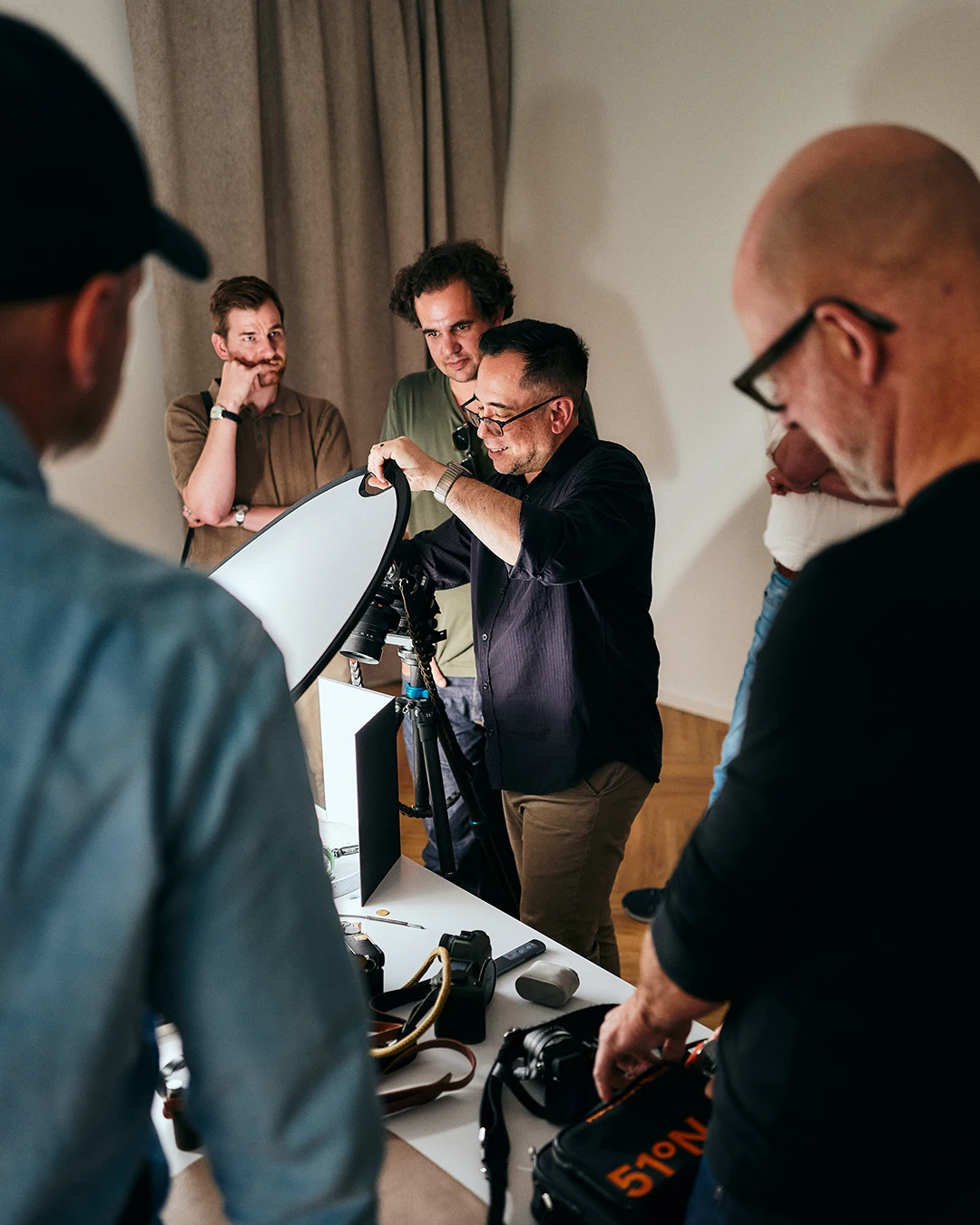
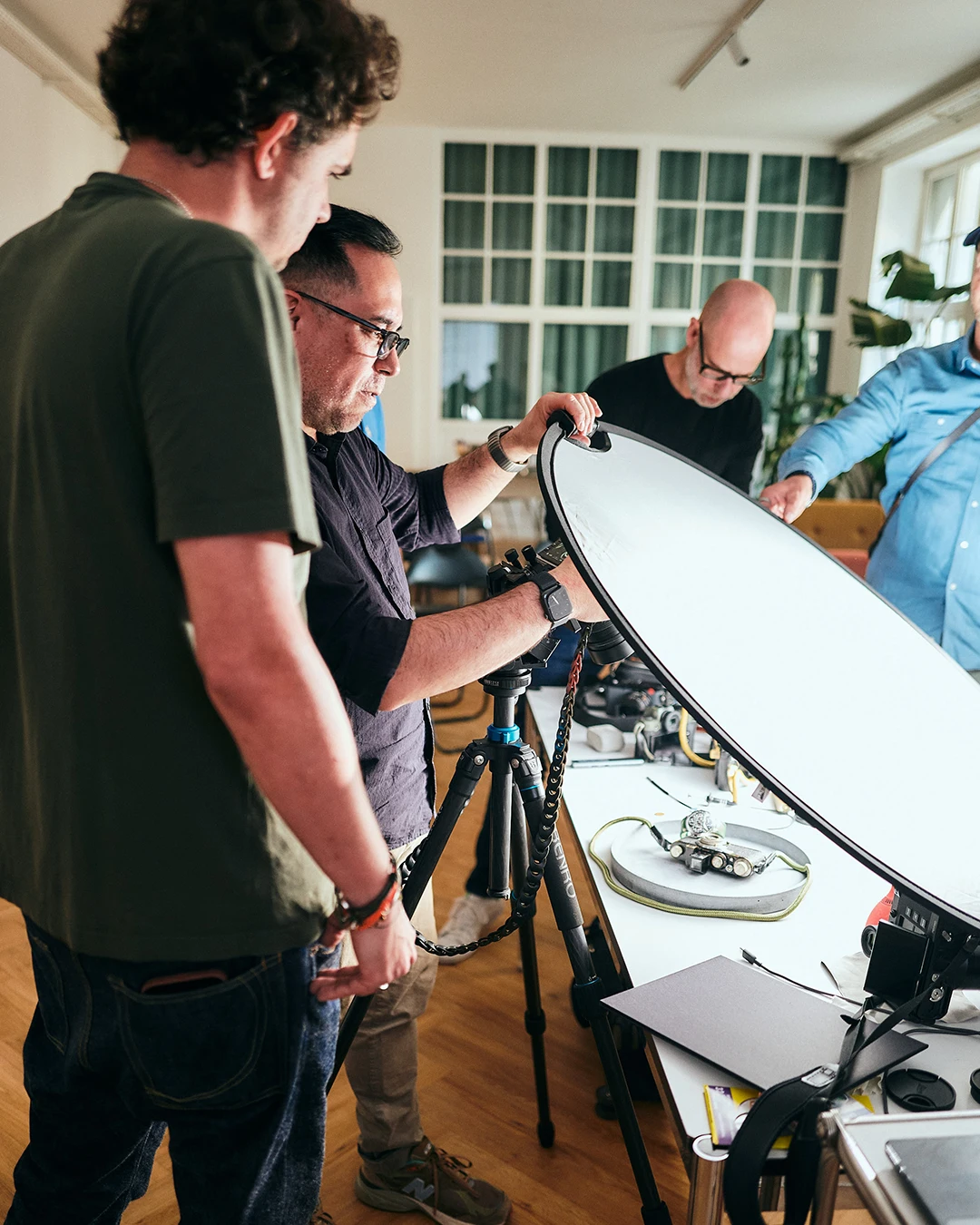
Winfried from Munich has long been fascinated by dials made of natural stone, malachite in particular. He found plenty of vintage models, but none convinced him. Then he discovered the Formex Essence with its case suspension, chronometer certification and good water resistance. The only problem: it was too large for him. When Formex introduced a 39-millimetre version, of which only 100 pieces are available each year, he snapped one up straight away.
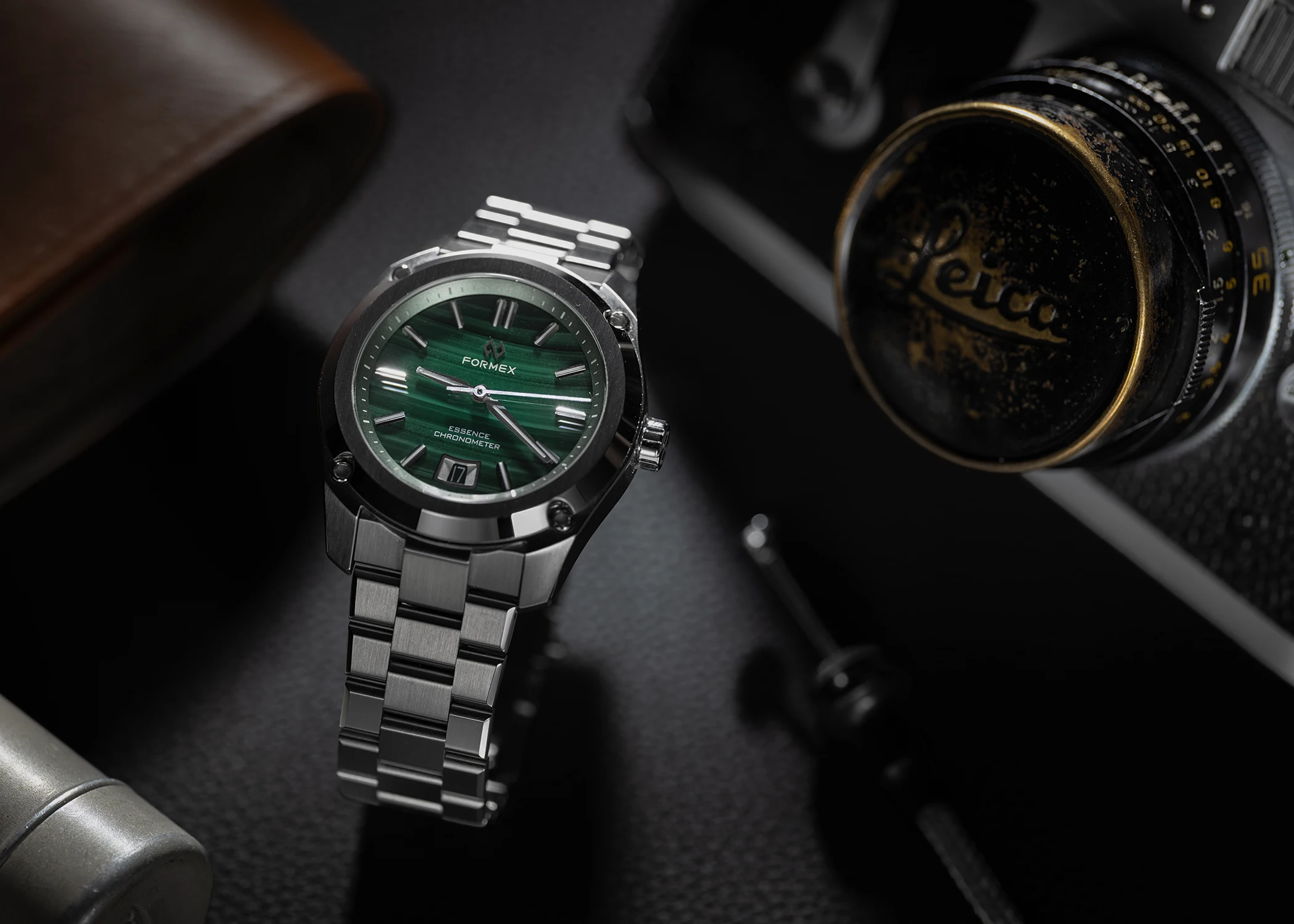
With his picture he wanted to capture the lustre of the horizontal bands of green. He finds it curious: ‘People ask me about the Formex more often than about many better-known watches.’ He still owns his first mechanical watch, a Citizen Automatic he received for his confirmation in the mid-1970s, at a time when everyone wanted quartz. His collecting passion proper began in the late 1990s with a TAG Heuer Carrera 2000 chronograph. He visits Swisswatches almost every day, which naturally honours us.
Ever since he began collecting, Fabian from Stuttgart had wanted a Daytona. With each watch he came a little closer to his goal, and this year the time had come. Because the historical significance of a model matters to him, it had to be a so-called Zenith Daytona – the generation with which the long success story of the Cosmograph Daytona began.
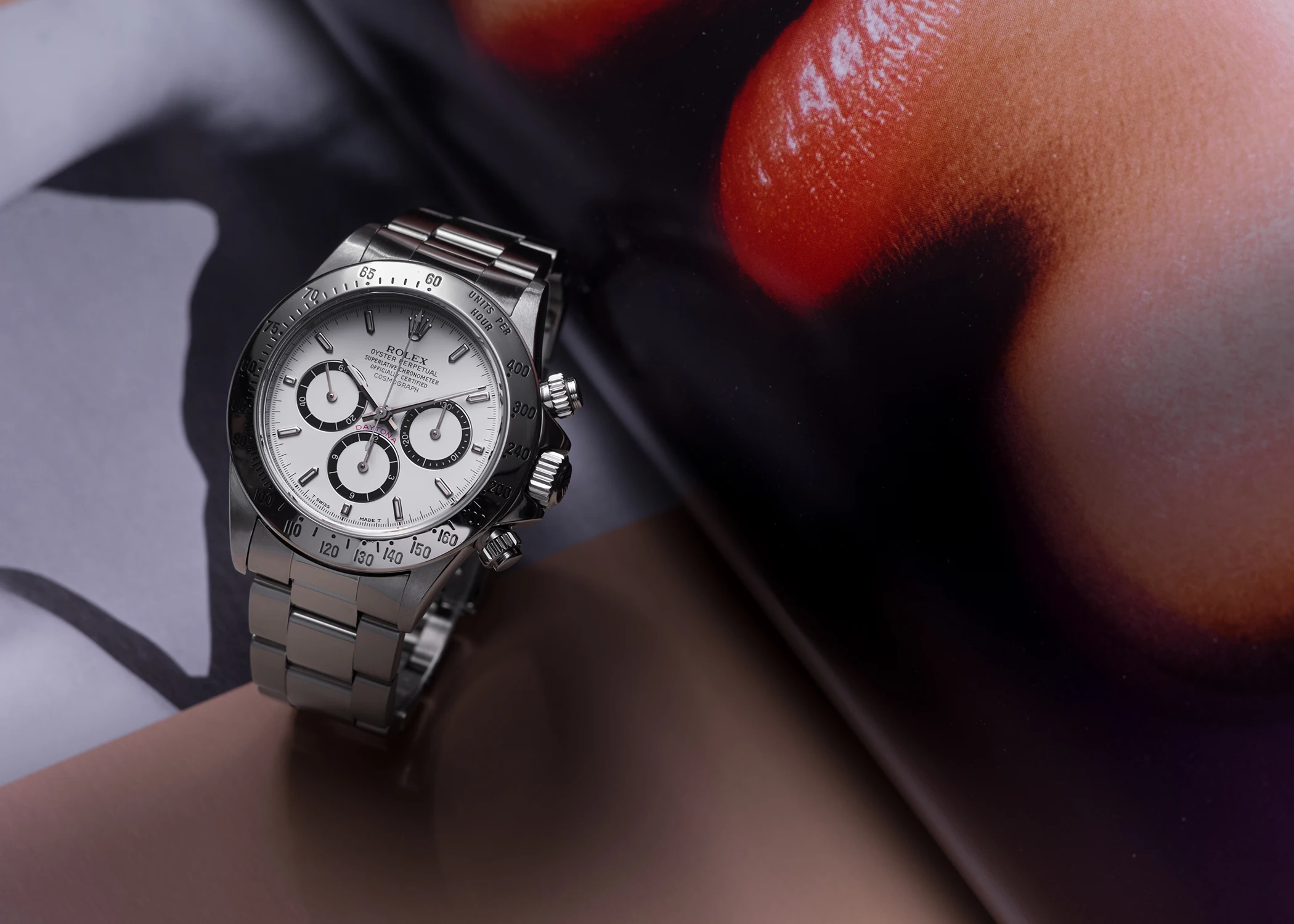
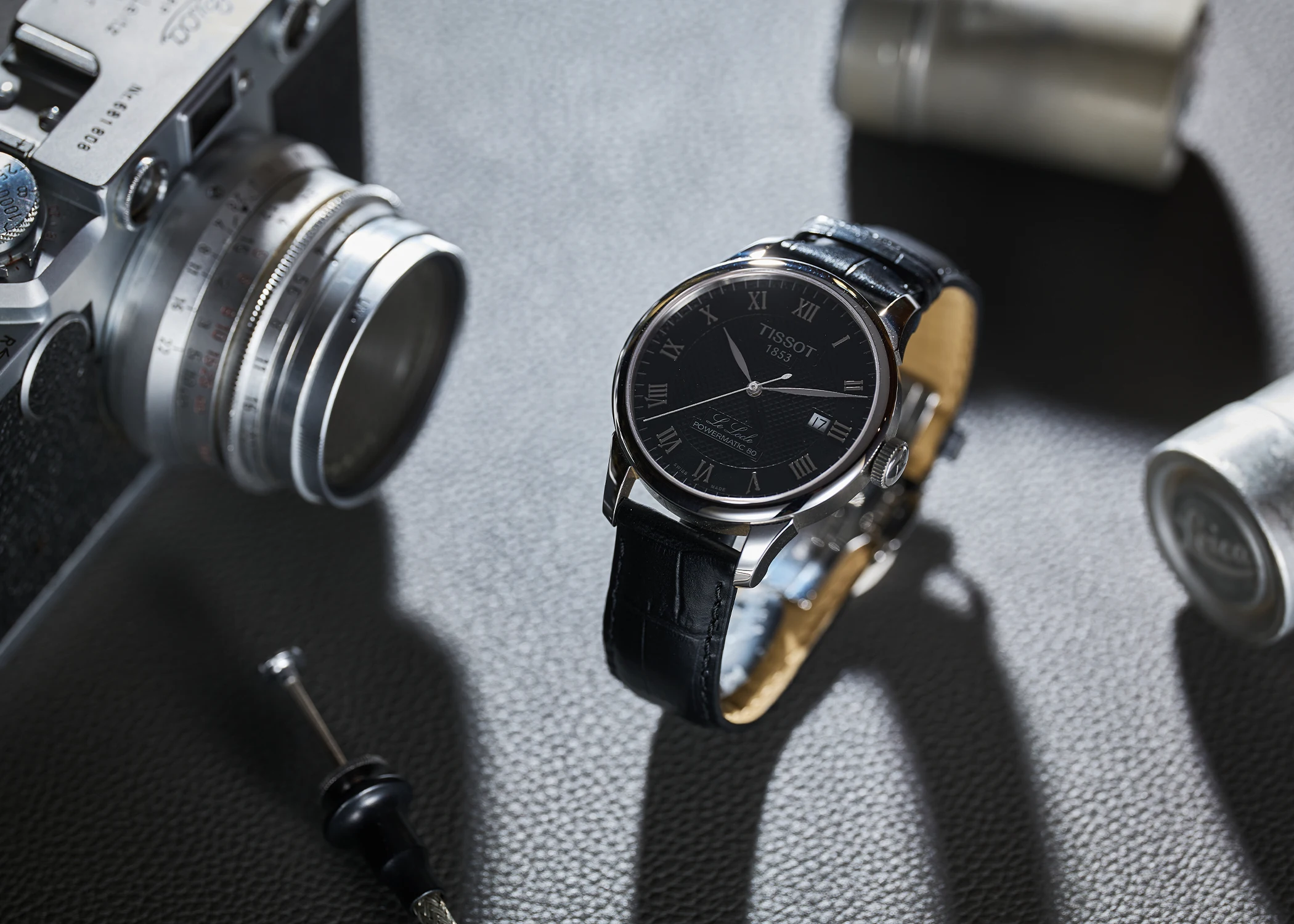
For the photograph he chose a calm, minimalist setting that draws all attention to the details. ‘And it does look good enough to eat, doesn’t it?’ he says. He inherited this enthusiasm for watches from his father, for whom watches were simply part of his personality. For his school-leaving exams he bought himself his first mechanical watch, a Tissot Powermatic 80. Today, however, his particular interest lies in vintage watches.
Sometimes it all begins with a colour. A few years ago, Herbert (name changed by the editors) saw a light-blue Tissot PRX in a shop window, but walked on and forgot about it. Later he came across Ocarat by chance, a French online retailer of jewellery and watches that releases limited special editions with Nivada Grenchen. While searching for the F77, that light blue jumped out at him again on the very first page: the F77 ‘Ice Blue’, limited to 20 pieces.
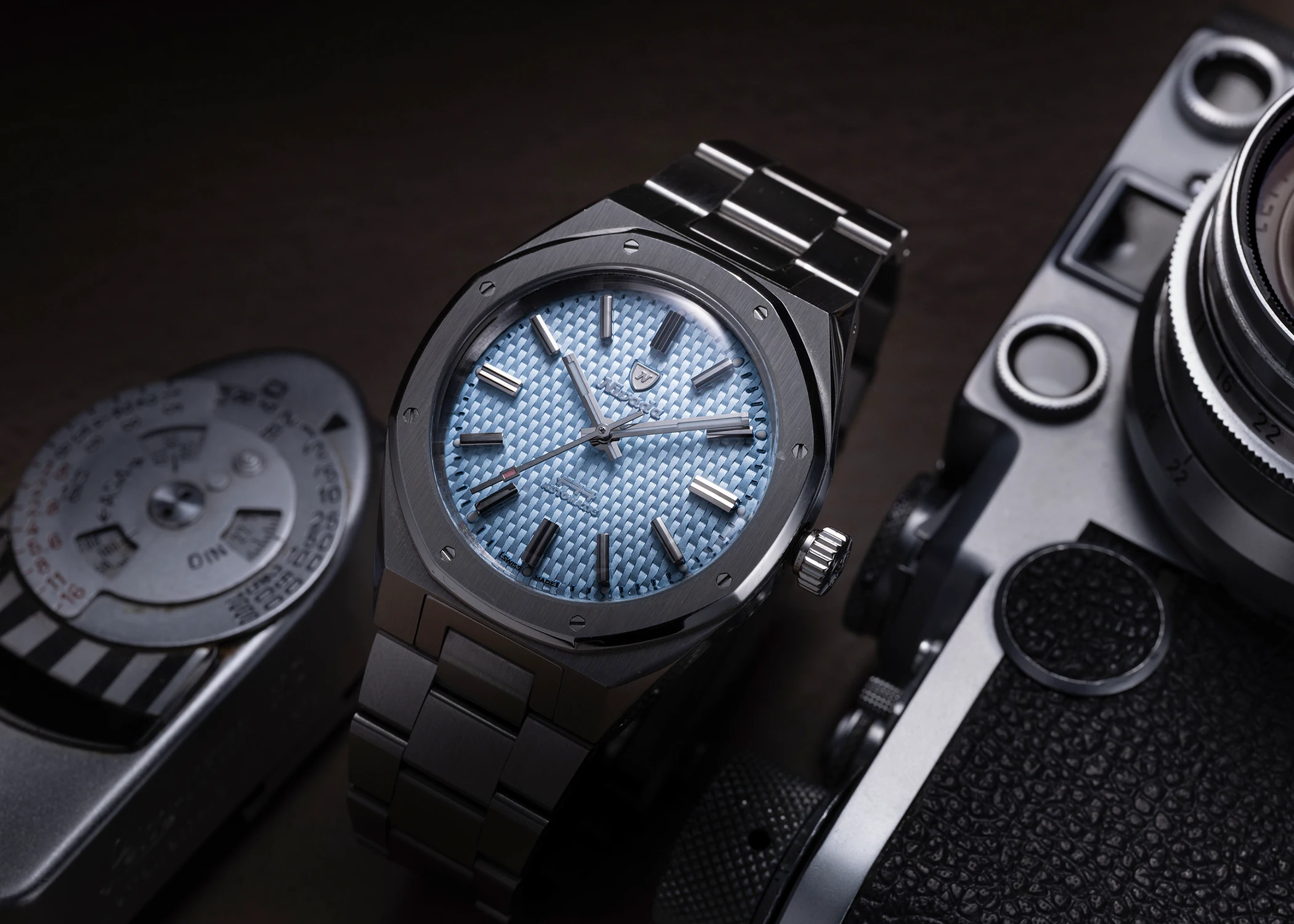
Besides the colour, Herbert is captivated by the three-dimensional, woven ‘tressed dial’. It was precisely this depth that he wanted to capture in his picture. For him it is less about collecting than about wearing. ‘Just opening my watch box gives me pleasure.’ One of his first watches was the Swatch ‘1990’, with a dial designed by Keith Haring in 1989 after the fall of the Berlin Wall: ‘BRDDR – Open 24 Hours’.
Simon from Munich has been fascinated by the Reverso since visiting ‘The Reverso Stories’ exhibition in Singapore. He is drawn to the contrast between its elegant appearance and its original purpose as a sports watch for polo players. He bought his Reverso directly from its first owner, whose initials are still engraved on the back. It is precisely this detail that gives the watch its personality for him.
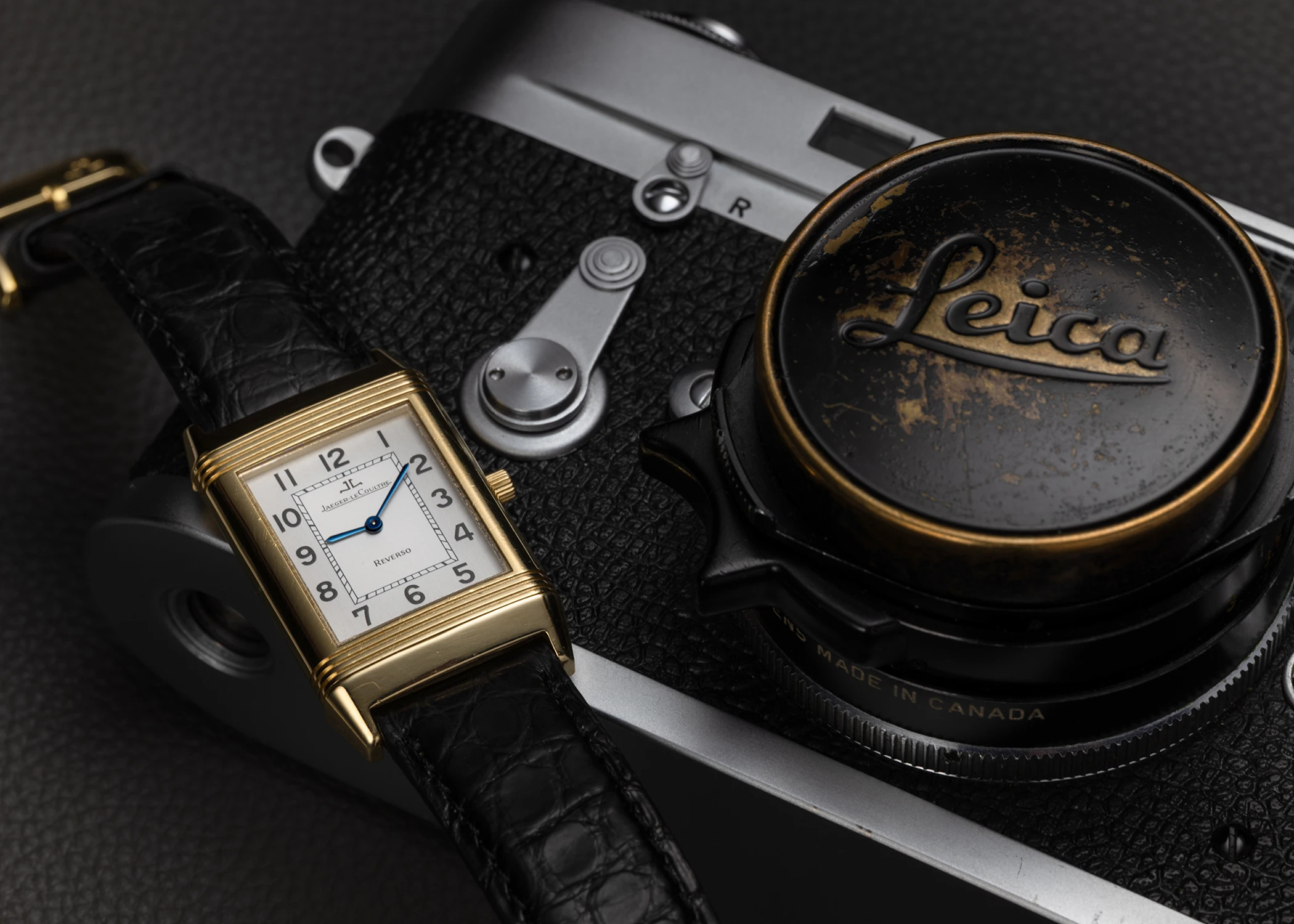
For the photograph he paired it with a Leica whose warm tone is echoed in the gold, together with the black leather strap. He started out with a fashion watch from Kapten & Son, whose leather straps he changed constantly; then came Citizen and Seiko. His first luxury watch was a stainless-steel Cartier Santos Galbée, for which he travelled all the way to Stuttgart. ‘Looking back, that purchase was the real beginning of my passion for collecting.’
Every participant went home with a professionally printed photograph of their watch, with the digital files to follow. Swisswatches and Leica donated the participation fees to HORIZONT e.V., the Munich charity founded in 1997 by actress Jutta Speidel, which offers homeless mothers and their children a temporary home and a place of calm and safety.
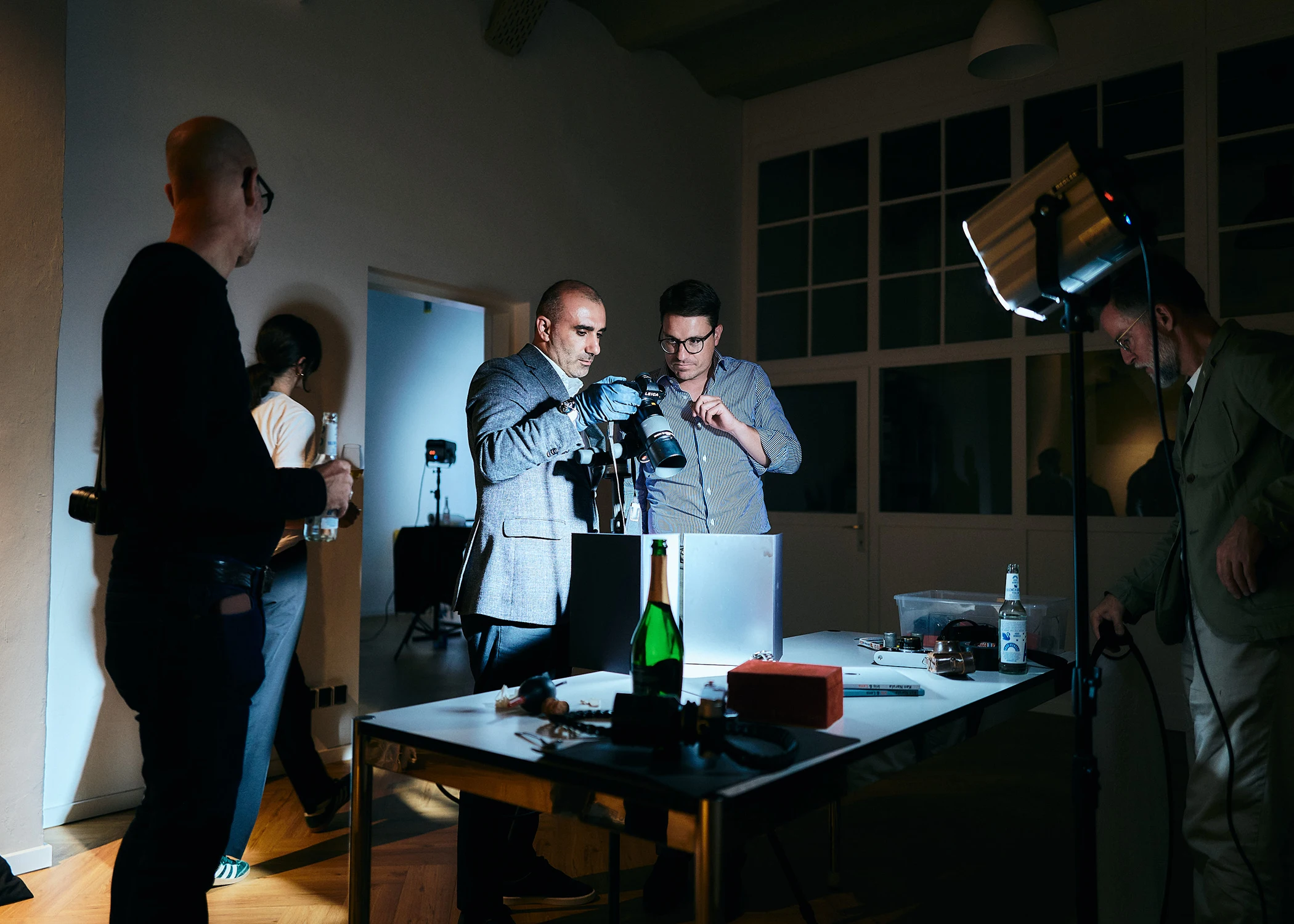
What did we enjoy about our first masterclass? Besides the wonderful atmosphere, it was above all Kristian Dowling who impressed us, a true professional who made time for every single participant until late into the evening. ‘There was enough time to photograph our own watches and to help other participants,’ says Winfried. Together, everyone experimented with light, shadow and reflections.
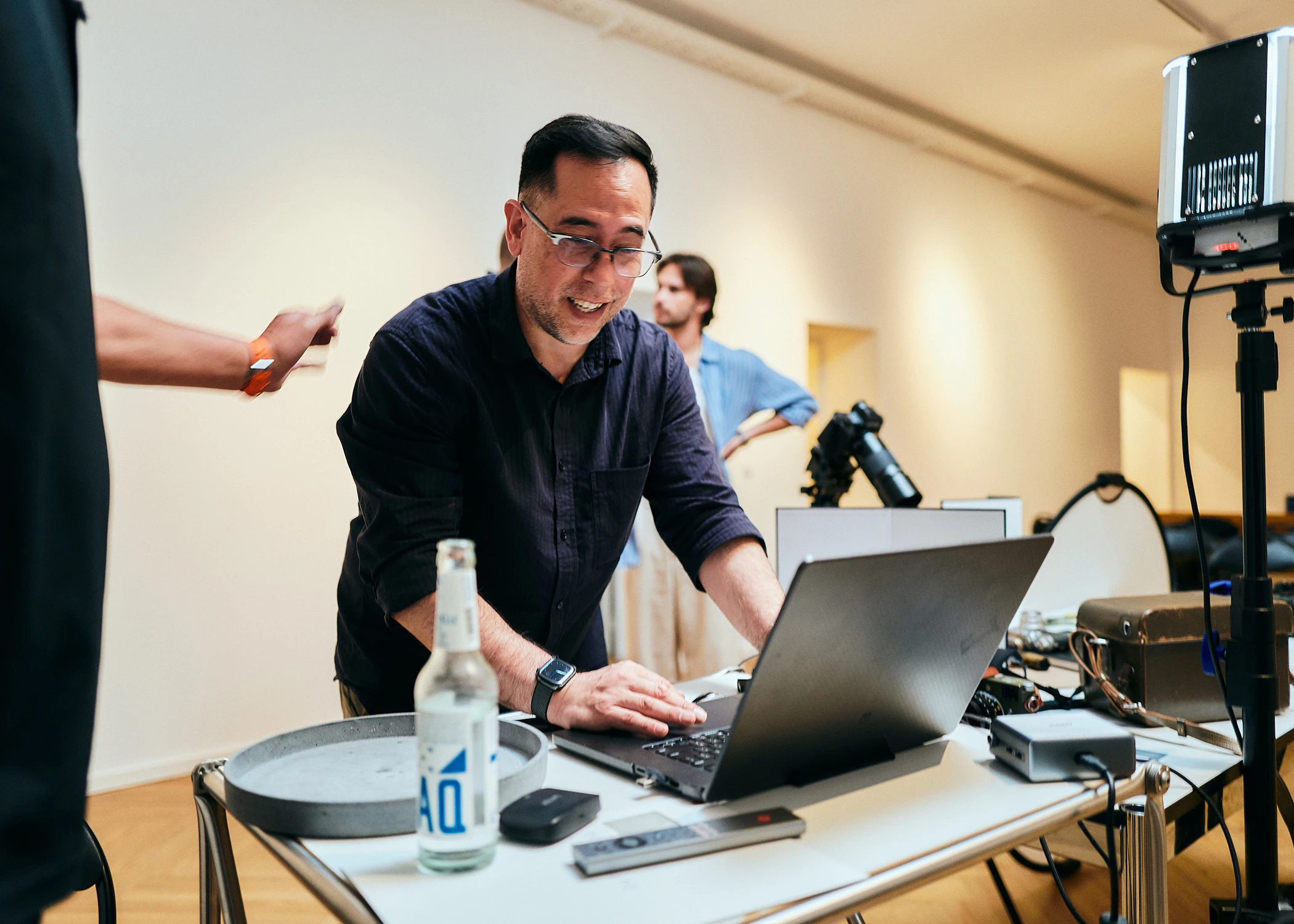
The participants’ wish list for the next Swisswatches × Leica Photography Masterclass is already long: more complex lighting scenarios, more time with the superb Leica cameras, manufacture visits, a trip to Ernst Leitz Werkstätten and, of course, an appetite for rare watches with special complications. We take that as our brief. If you would like to join one of the next Swisswatches photo masterclasses, you can already register your interest for future dates on the Watch Photography Masterclass page.
Enter your email address and we'll send you a link to reset your password.
We have sent a confirmation link to . Open it to activate your account.