
11 minute repeater watches from 2026 by Bulgari, Patek Philippe, Hermès and other manufacturers: technology, sound and prices.
Unlike other complications, the minute repeater is not visible but audible. Incidentally, this applies to all repeater watches, which first developed as hour, quarter-hour and five-minute repeaters from the late 17th century onwards. In this article, you can find out why and how the time came to be audible. Also read our article on the 11 best watches with minute repeaters that have been unveiled so far in 2026.
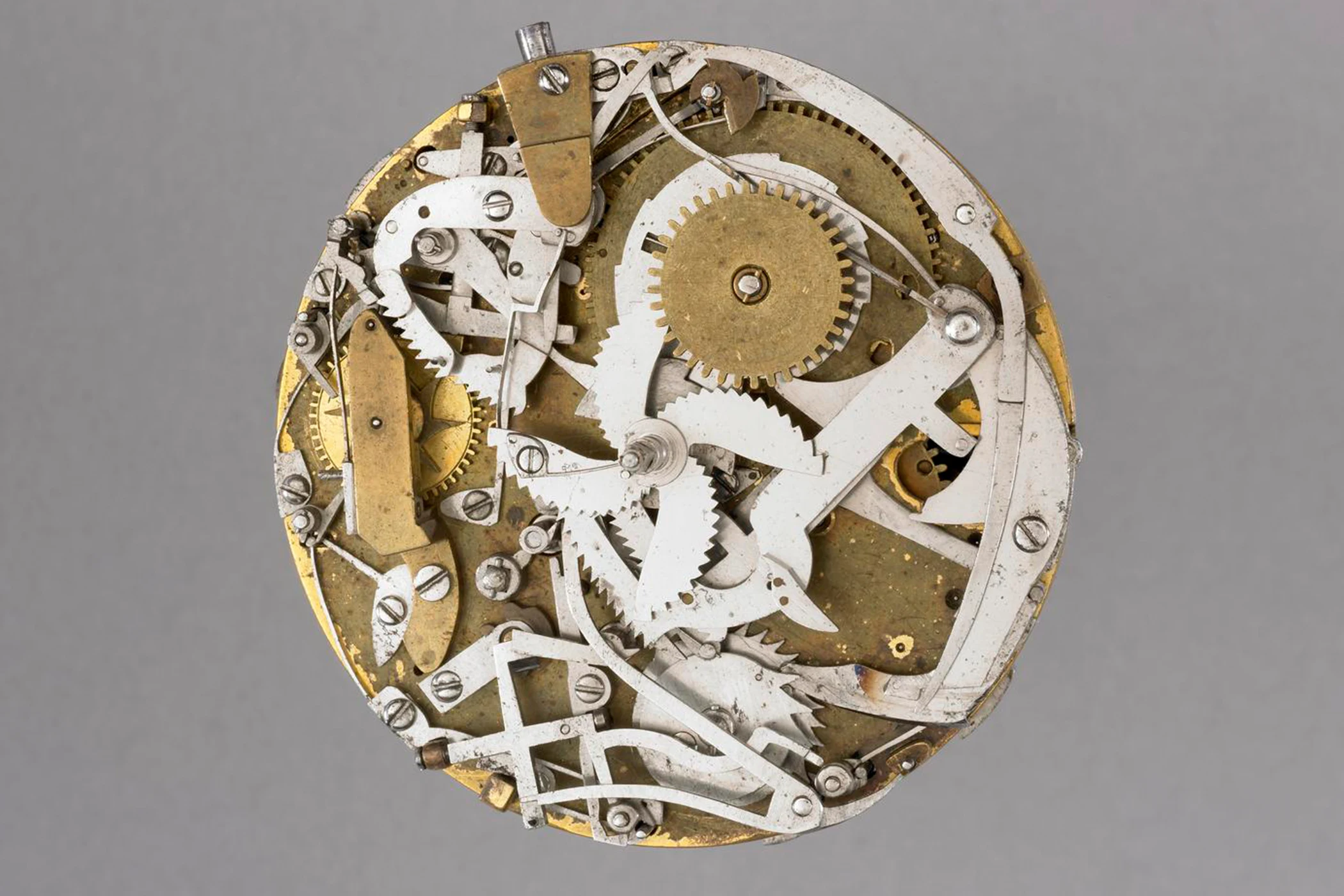
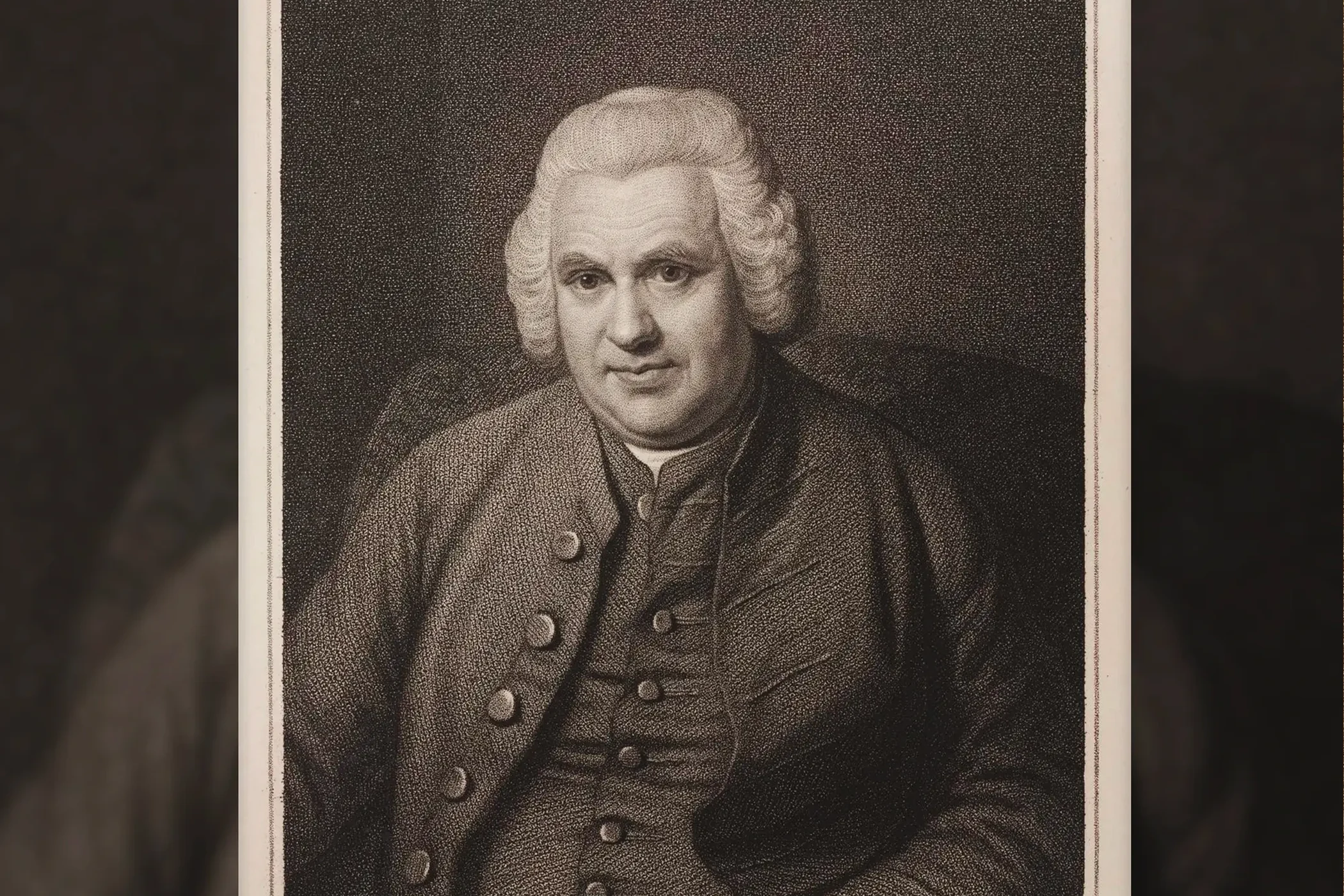
Among the earliest known watches with a minute repeater are examples made around 1710 in the southern German town of Friedberg. Although their makers are unknown, they predate the example made in 1750 by Thomas Mudge – a British watchmaker long regarded as the ‘father’ of such watches – for Ferdinand VI of Spain.
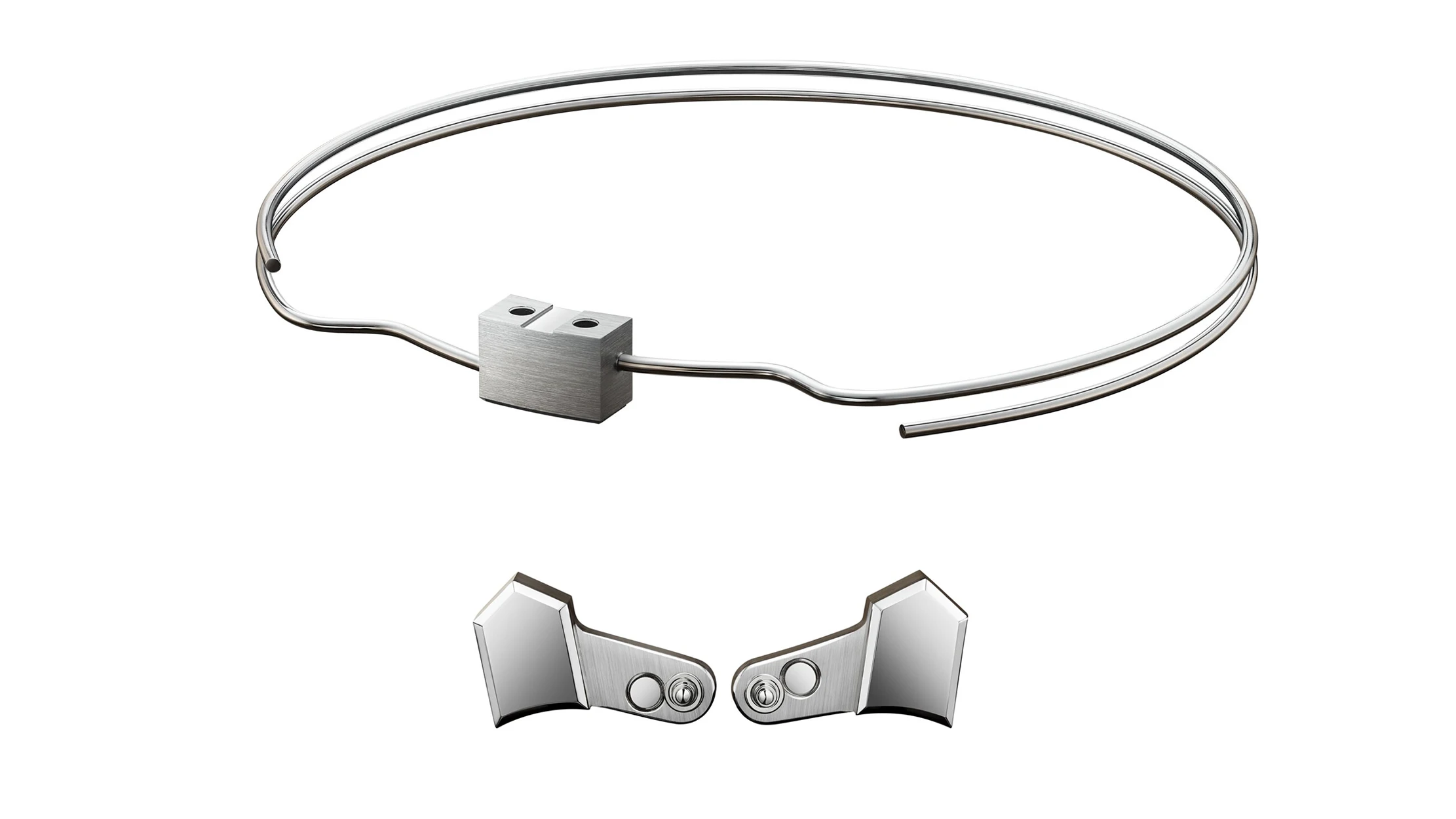
Later, the brilliant engineer and watchmaker Abraham-Louis Breguet made a decisive contribution by replacing the bells used up to that point with tone springs – ring-shaped resonators that were fitted around the movement. The Fondation de la Haute Horlogerie (FHH) dates Breguet’s introduction of tone springs to 1787. The basic principle has remained the same to this day.
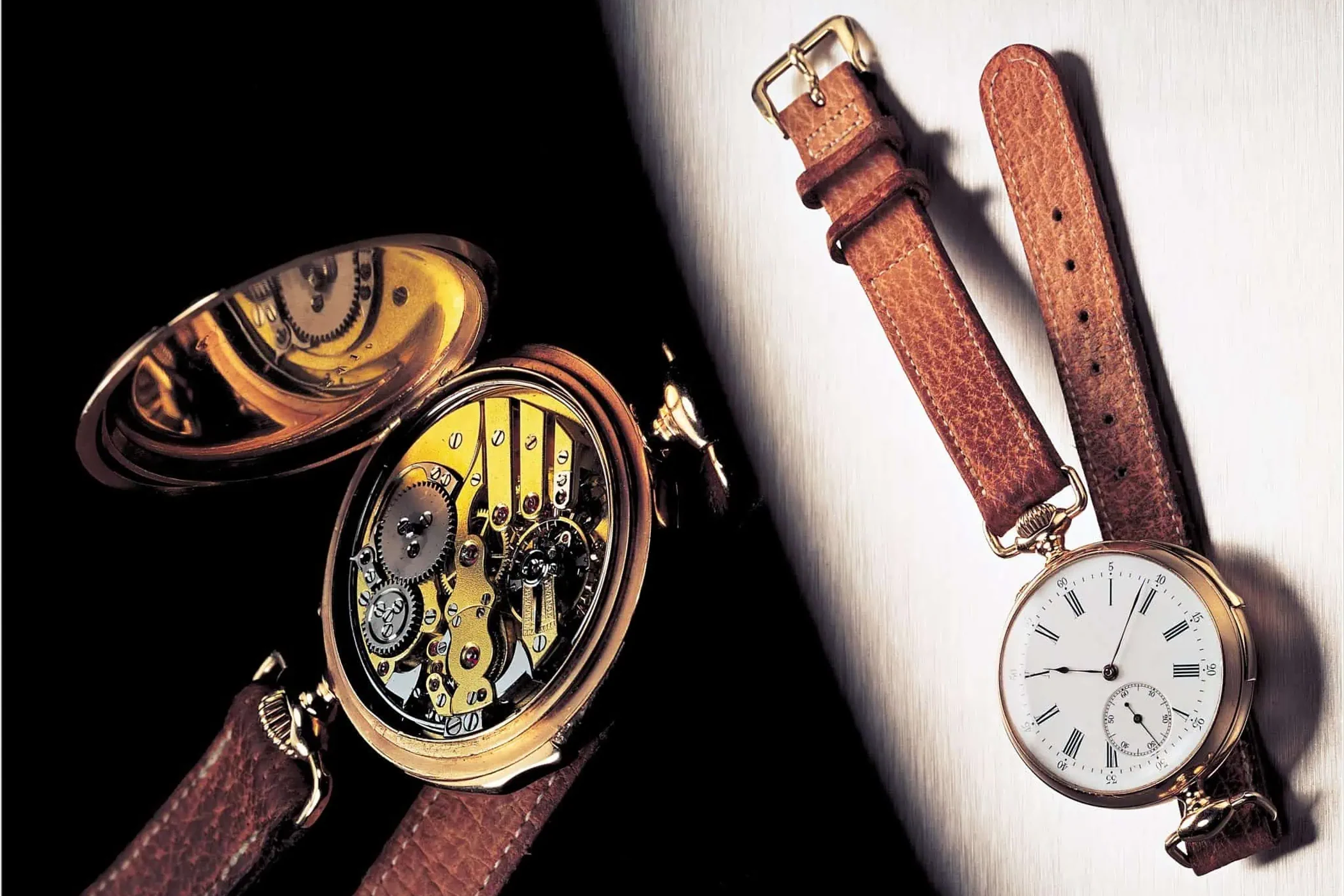
In 1892, Audemars Piguet finally produced one of the first wristwatches with a minute repeater for Louis Brandt & Frère – which later became Omega. The 13-ligne Calibre 2416 is now part of the Omega Museum’s collection.
Admittedly, just like the tourbillon, a repeater watch today serves primarily an emotional purpose. In the days before electrification, however, it also told the time even in the dark. Today, we simply switch on the light and glance at the watch. Or the watch is fitted with luminescent material, which ensures it can be read even in the dark.
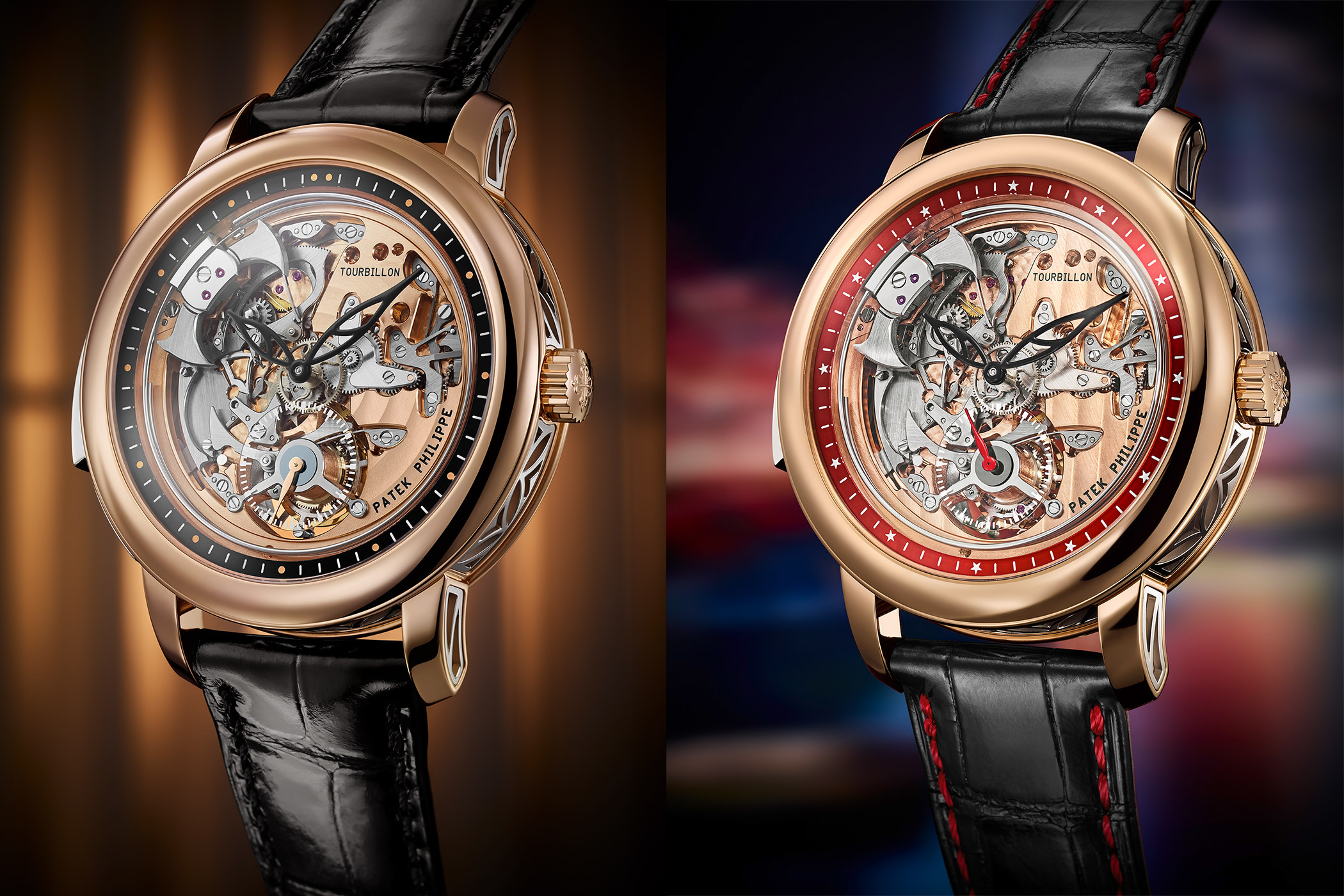
And so, for some, the minute repeater is the sheer pleasure of the superfluous; for others, it is the icing on the cake of mechanical watchmaking; and for passionate collectors, it is the pinnacle of timekeeping. One thing is always present: the fascination of the interplay between mechanics, aesthetics and poetry.
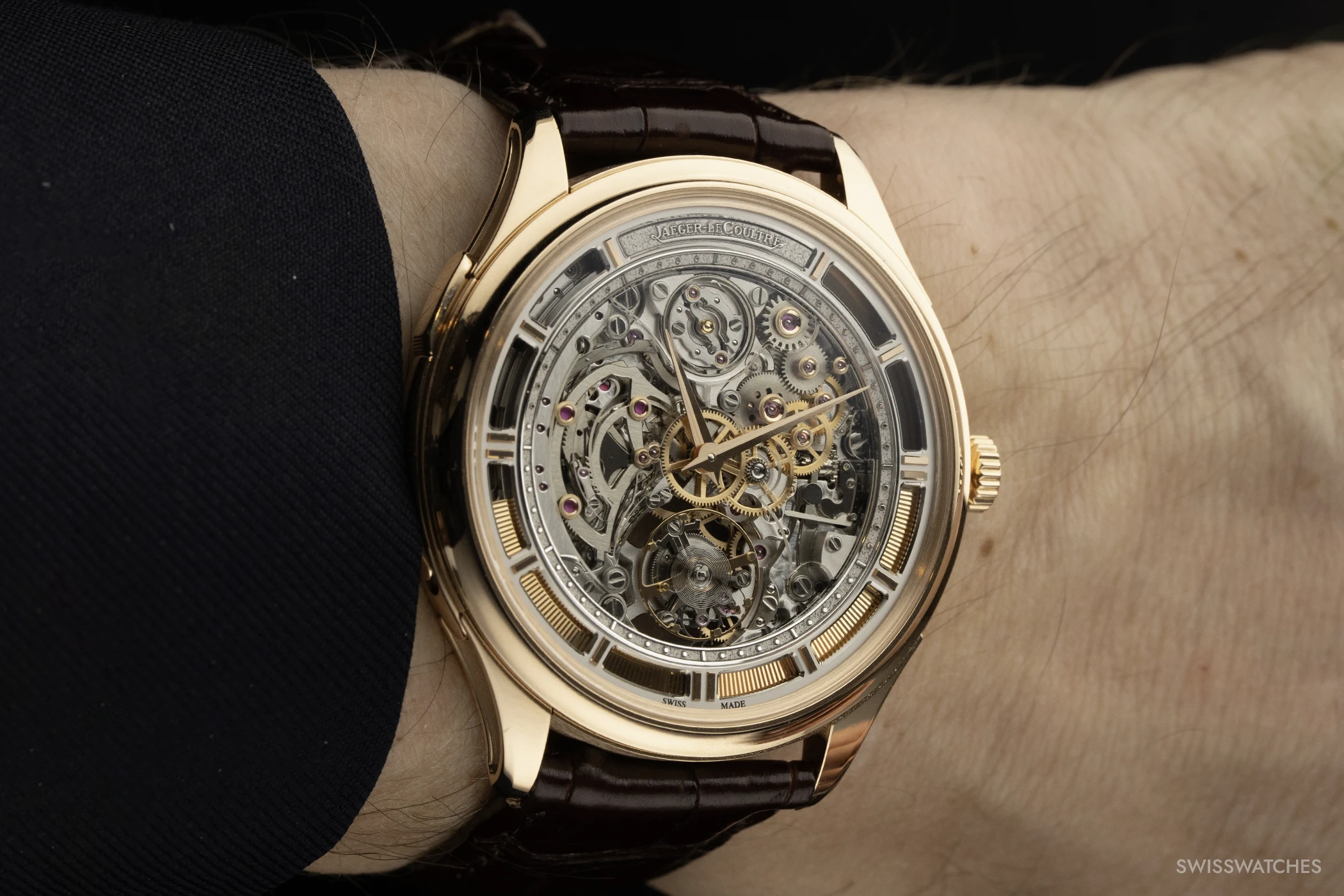
Incidentally, the term ‘repetition’ refers to the fact that the time is repeated acoustically, or ‘repetited’, on demand. This is precisely what sets it apart from other striking watches, such as the Grande or Petite Sonnerie, which chime the time automatically.
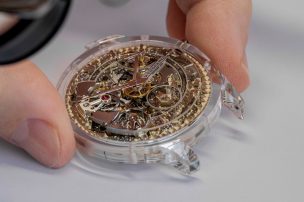
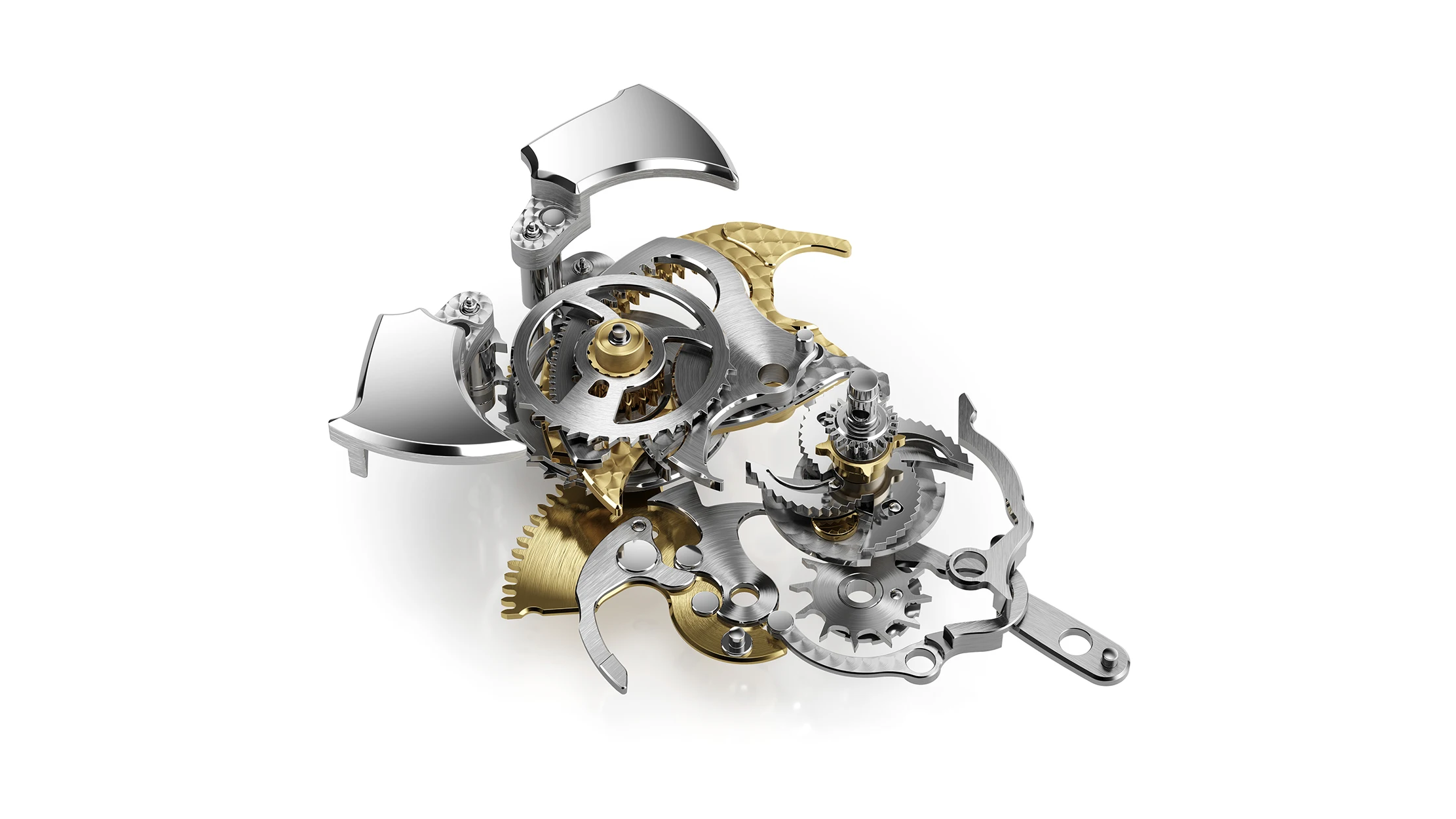
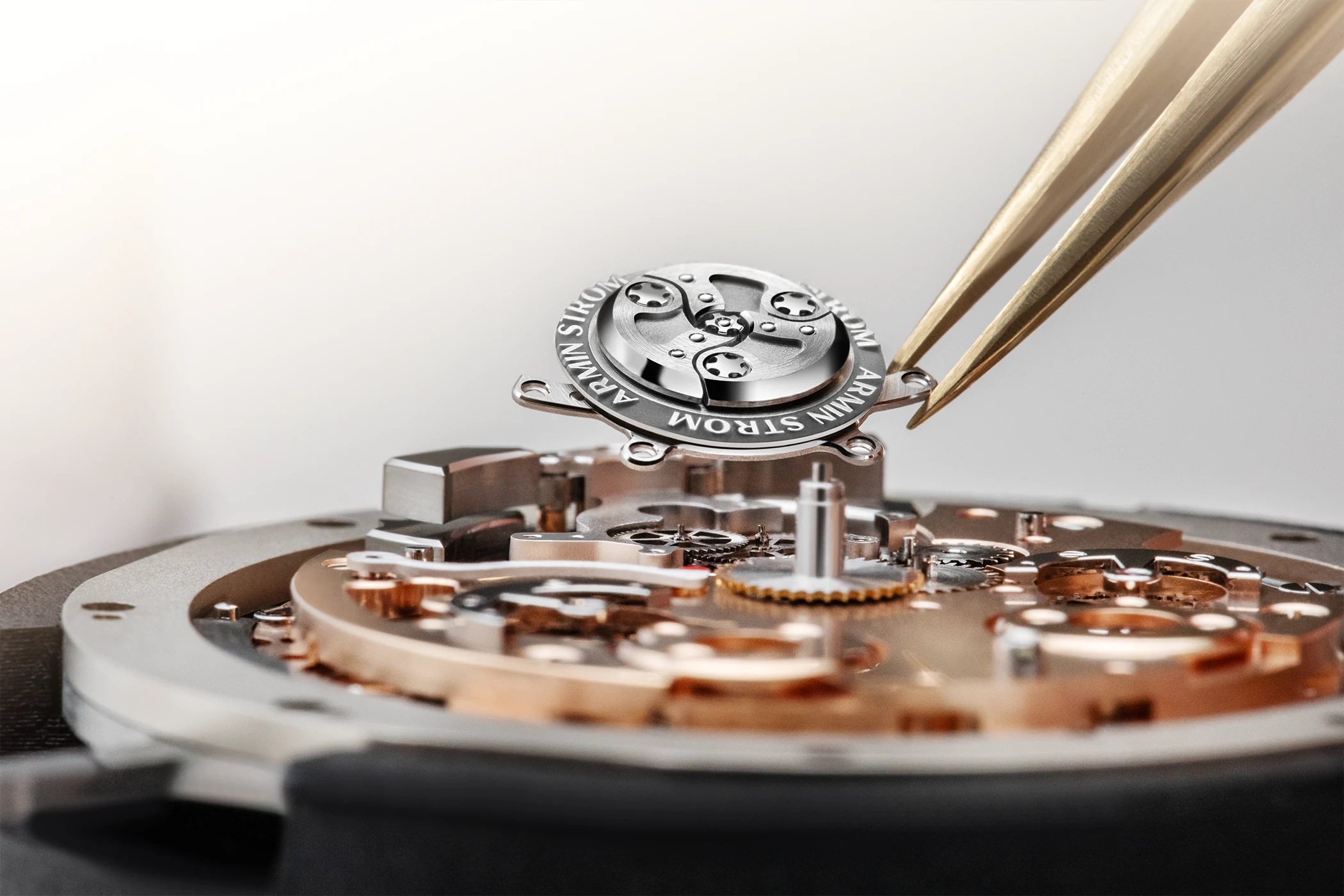
A minute repeater mechanism consists of over a hundred parts. It would take just as many pages to explain how they all work together. We shall limit ourselves here to the basic principles:
First of all, the time must be translated into a sequence of chimes. In a minute repeater, this is achieved using low-pitched chimes for the hours, double chimes for the quarter-hours and high-pitched chimes for the minutes.
The longest sequence of chimes in a classic minute repeater occurs at 12:59: twelve low chimes for the hours, three double chimes for the quarter-hours and 14 high chimes for the minutes. This amounts to 32 individual chimes or 29 chime events.
These are produced by two hammers striking the gongs and causing them to vibrate. This creates the characteristic sound. Minute repeaters with three or four gongs are less common. They produce a more nuanced, melodic sound. A particularly well-known example is the Westminster chime. Such striking mechanisms with three or more gongs are often referred to as a ‘carillon’ – the French word for ‘bell game’.
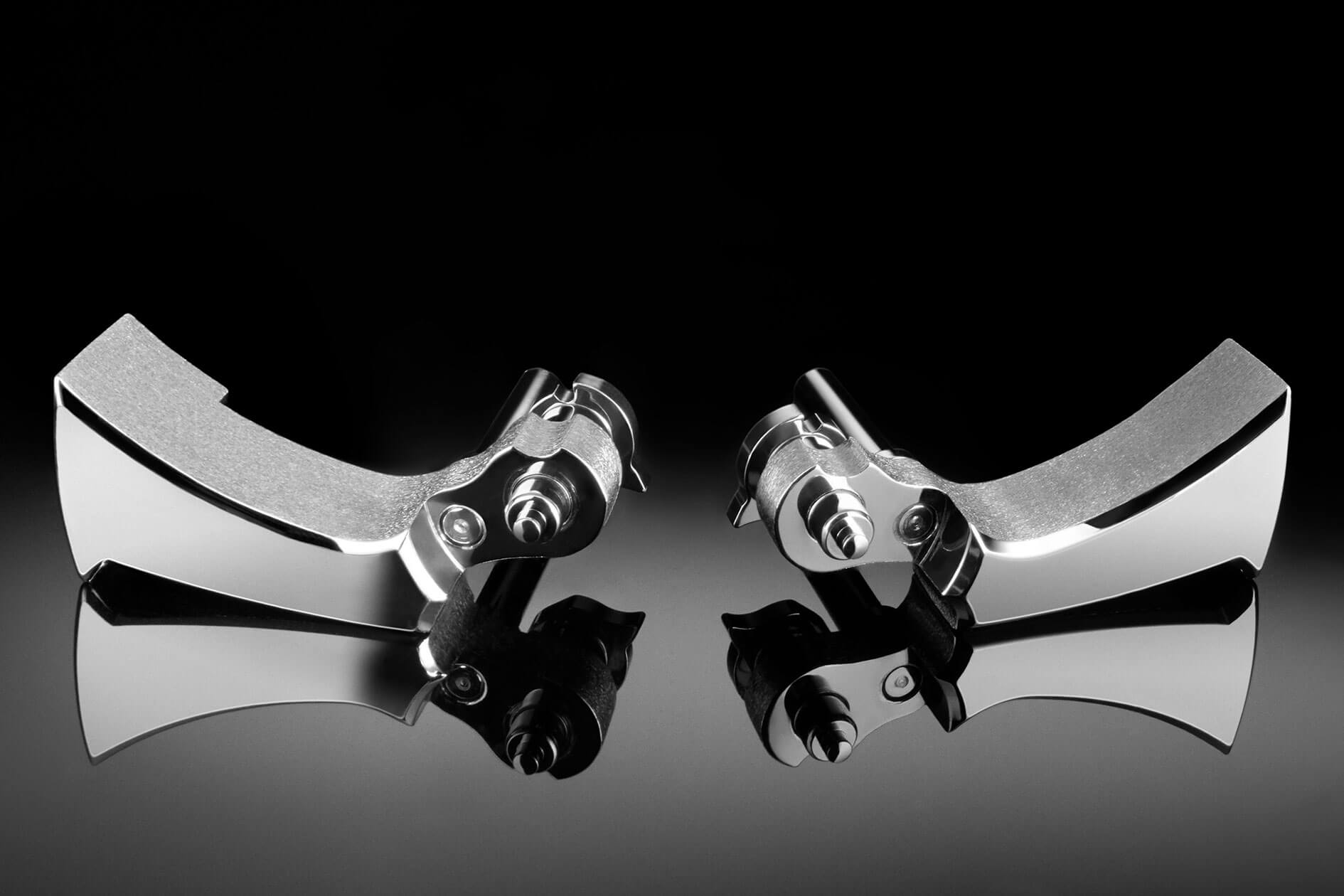
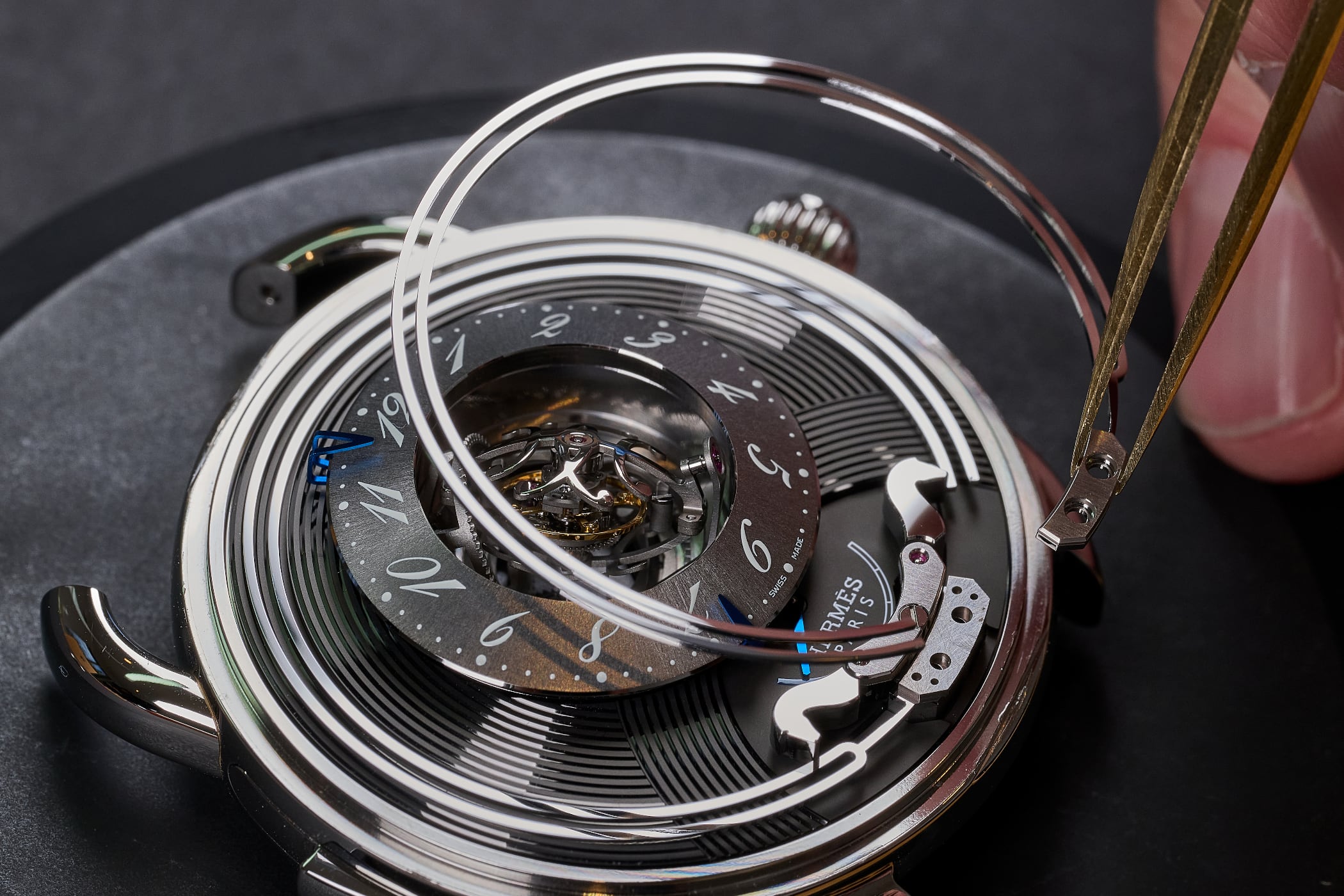
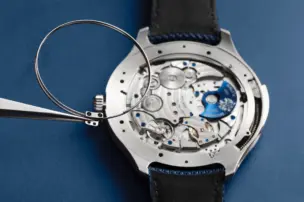
A gong spring – often referred to as a gong or gong spring – is a resonating body, usually made of hardened steel, which is wound round the movement and secured to the movement or the case. As the minute repeater requires a great deal of energy, it usually has its own mainspring.
To enable us to hear the time, the independent striking mechanism is equipped with a kind of sense of touch.
Whilst the slide winds the striking mechanism’s spring, three scanning pins are simultaneously activated to read the information on the hour, quarter-hour and minute scales. The first scale, for the hours, has twelve steps; the second, for the quarter-hours, has four steps. The minute rack is shaped like a four-pointed star, with each point having 14 notches. As soon as the scanning pins engage with the racks, they position the corresponding racks according to the time to be displayed.

Once triggered, these racks actuate the hammers via so-called trigger or collector levers, with the position of the racks determining the number of strikes. The hammers thus receive the corresponding command and strike the relevant tone spring. In this way, they produce exactly the number of tones required to indicate the time.
An ‘all-or-nothing’ mechanism prevents the striking mechanism from starting before the triggering process has been fully completed. This ensures that the clock does not strike an incorrect or incomplete time.
To ensure that the striking mechanism operates at the desired speed, the assembly of the classic minute repeater includes not only its own mainspring and gear train, but also its own regulating unit.
Anyone who has ever been present whilst a piano is being tuned knows that the piano tuner’s ear is crucial. Their well-trained ear is essential for being able to assess the subtle overtones and deviations between the individual notes.
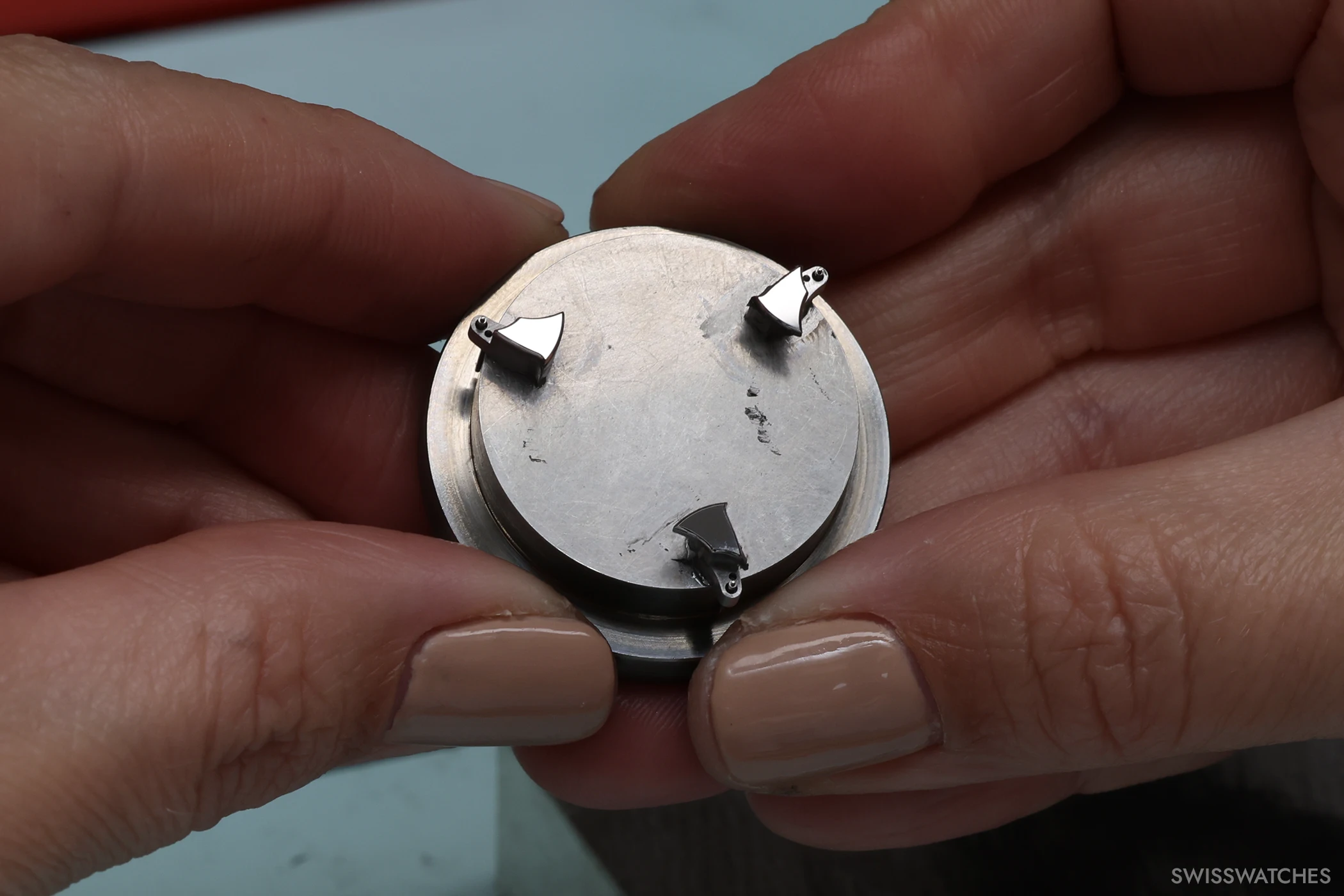
The same applies to a minute repeater. The various tones must harmonise and be clearly audible even in everyday life, with all its ambient noise. As minute repeaters are crafted with a great deal of manual labour, the sound can vary slightly from watch to watch. Although modern measuring instruments are also used, the acoustic fine-tuning of a minute repeater requires not only watchmaking skill but also a trained ear.
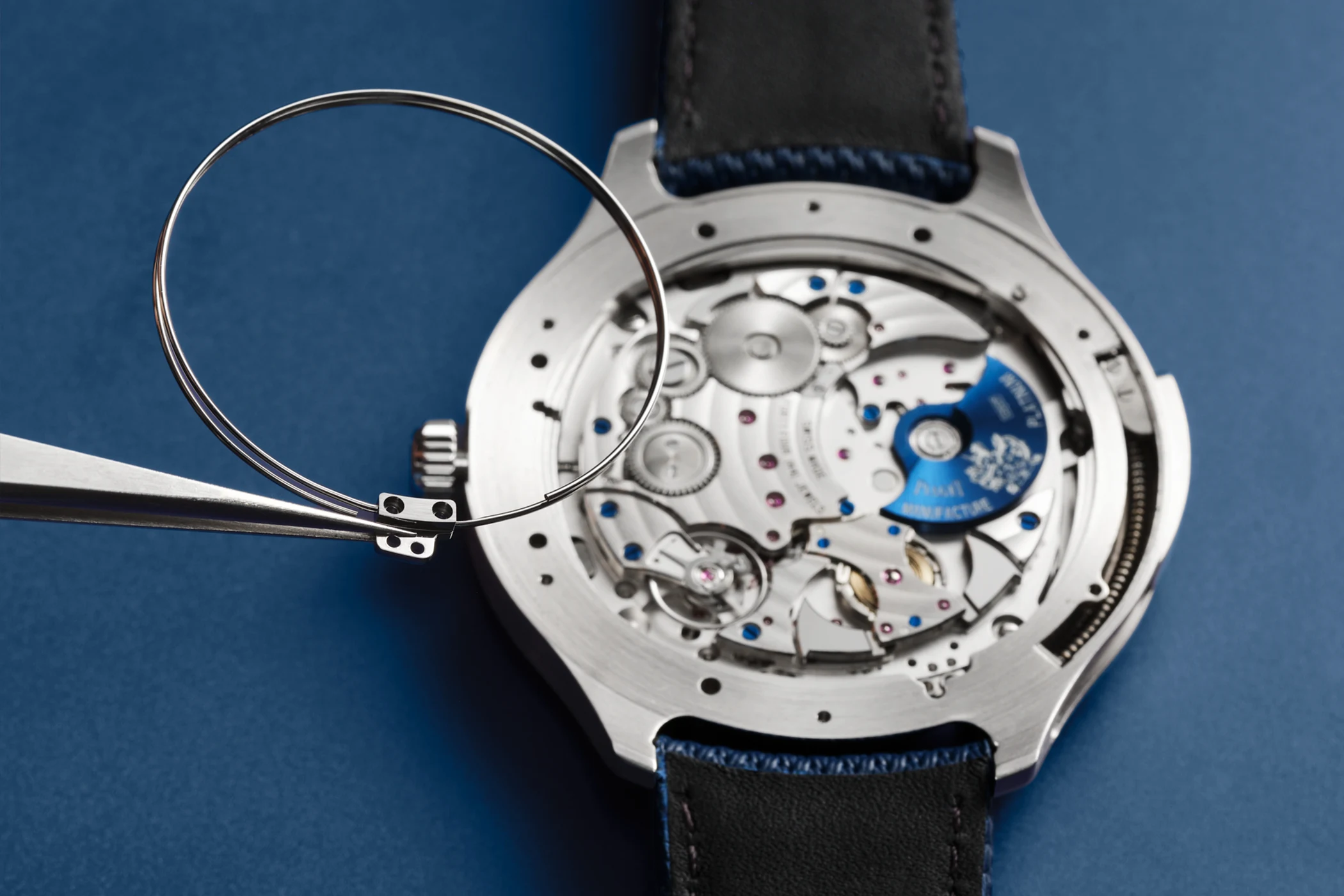
The sound of a minute repeater arises from the interplay of gongs, hammers and the case construction. The pitch is influenced by the length, cross-section and material of the gongs, as well as their tension and geometry, and can be finely adjusted by carefully removing material. The sound production depends on the entire acoustic system comprising the gongs, their mountings, the movement, the case and the air volume. The weight of the hammers, the point of impact and the striking speed, in turn, influence the volume and character of the sound.

Incidentally, at Patek Philippe, no minute repeater leaves the manufacture without first having been thoroughly inspected by President Thierry Stern. Once the watchmakers and acoustics specialists have completed their work, he personally inspects every single minute repeater – a ritual he inherited from his father.