
TAG Heuer Monaco Evergraph with new chronograph mechanism, carbon hairspring, 5 Hz, 70h power reserve and strong magnetic resistance.

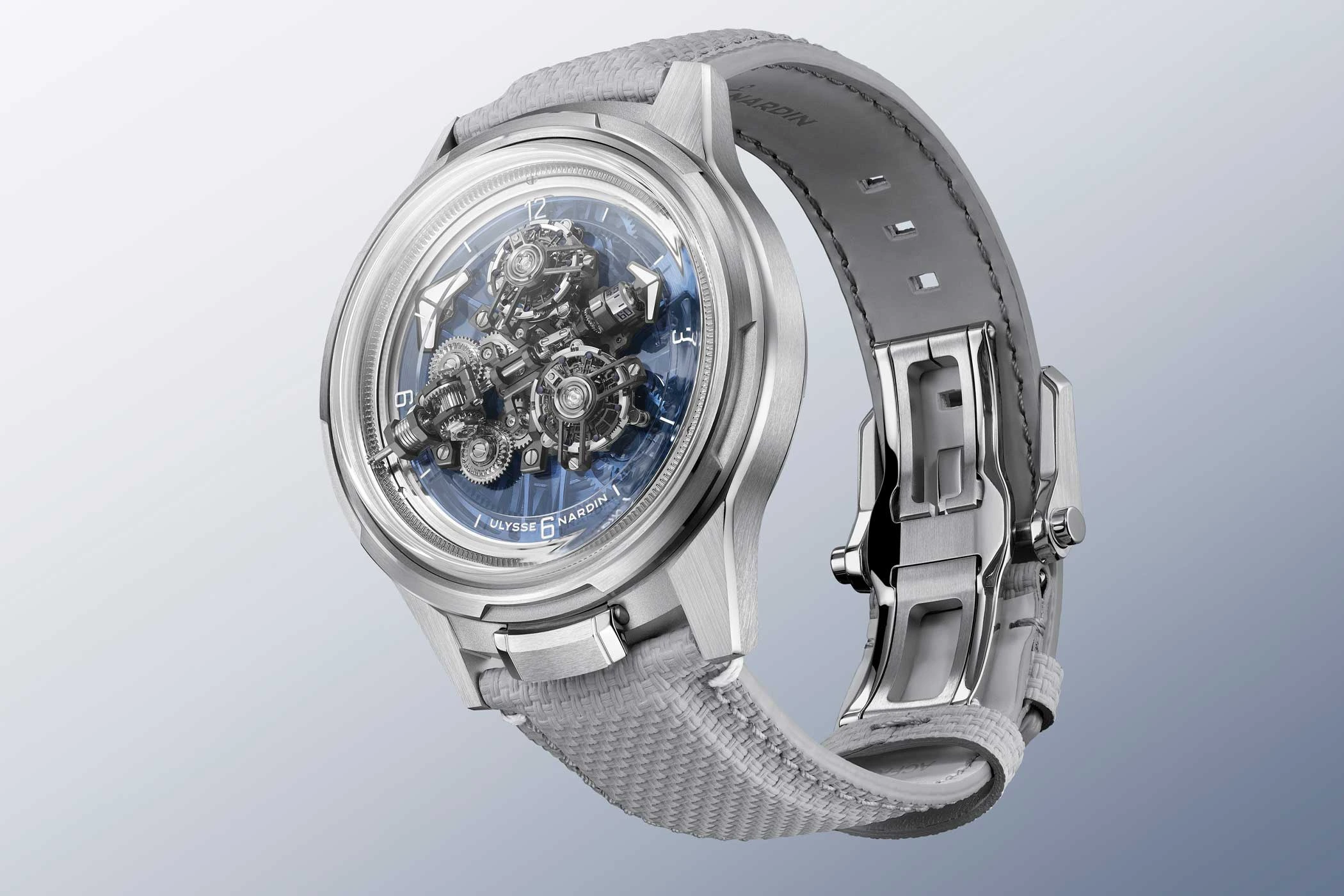
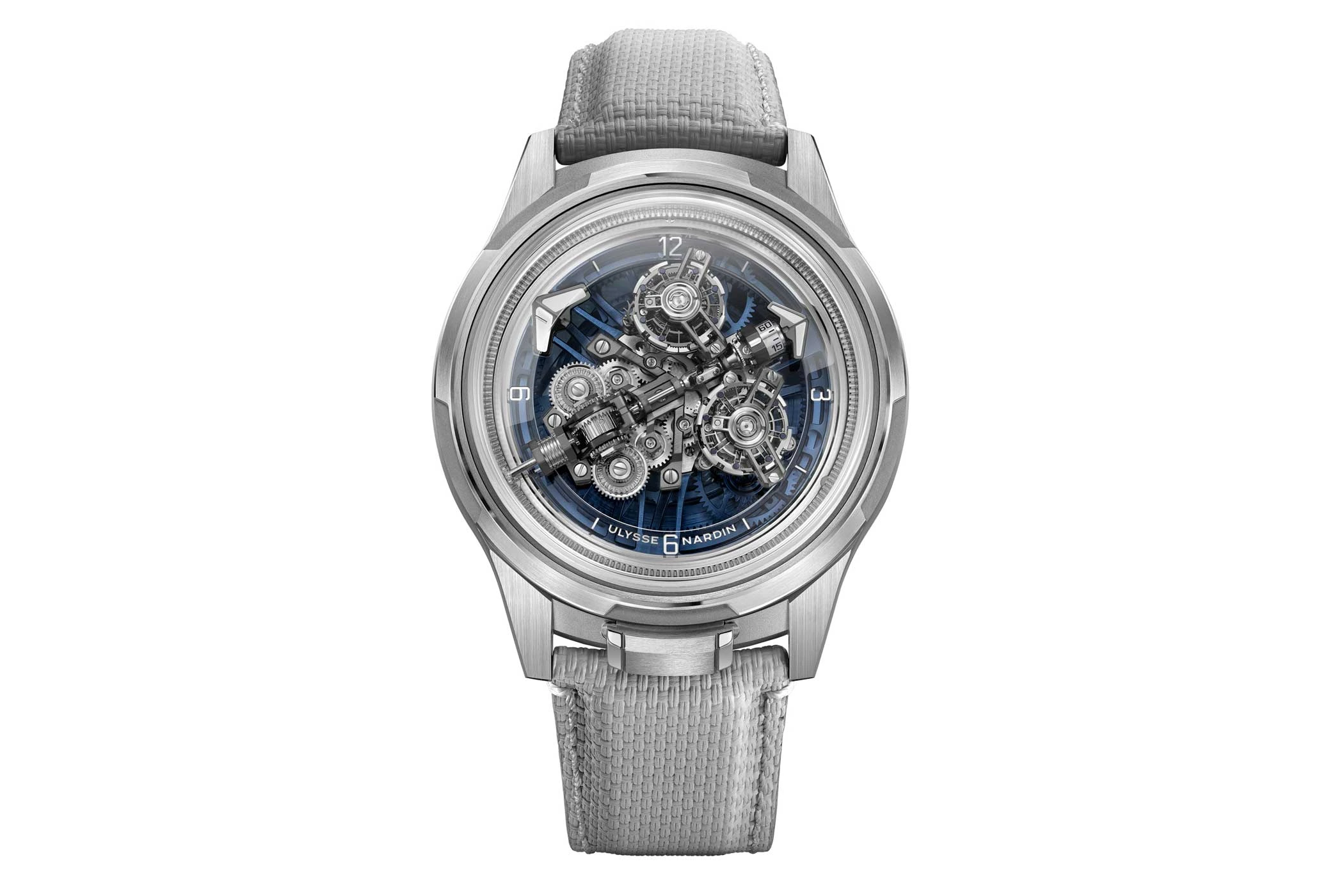
It displays only the time. Yet it accomplishes this single task in the most complex way imaginable. As the most complicated watch of its kind, it represents the pinnacle—so far—of the 25-year history of the Freak: the Super Freak by Ulysse Nardin, featuring a double tourbillon, a white gold case, and a new in-house movement.
Twenty-five years ago, Ulysse Nardin caused a sensation in the industry with the first Freak. It all began with a veritable “Freak Show” held the night before Baselworld in an underground venue, followed by a wave of attention from the global watch community. Looking back, it was likely one of the first timepieces to go viral – long before platforms like Facebook, Instagram, and YouTube existed.
In 2001, with the Freak, Ulysse Nardin not only challenged the traditional, then-conservative watch industry, but also permanently shifted its course. Unconventional watch concepts – whether purely technical or aesthetic in nature – are now considered standard fare for every Swiss manufacturer, at least in the form of special editions. Or they even form the foundation of entire collections.
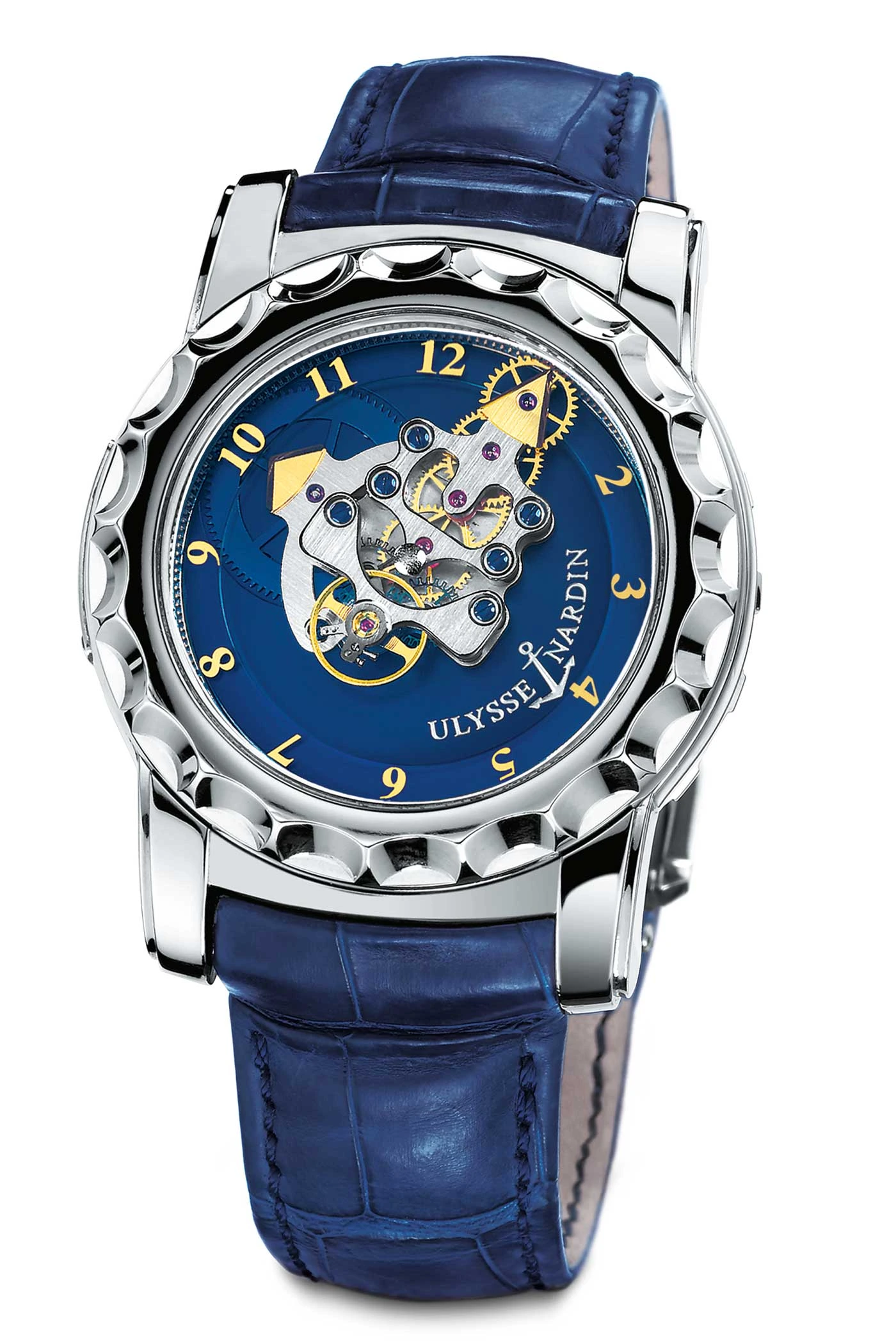
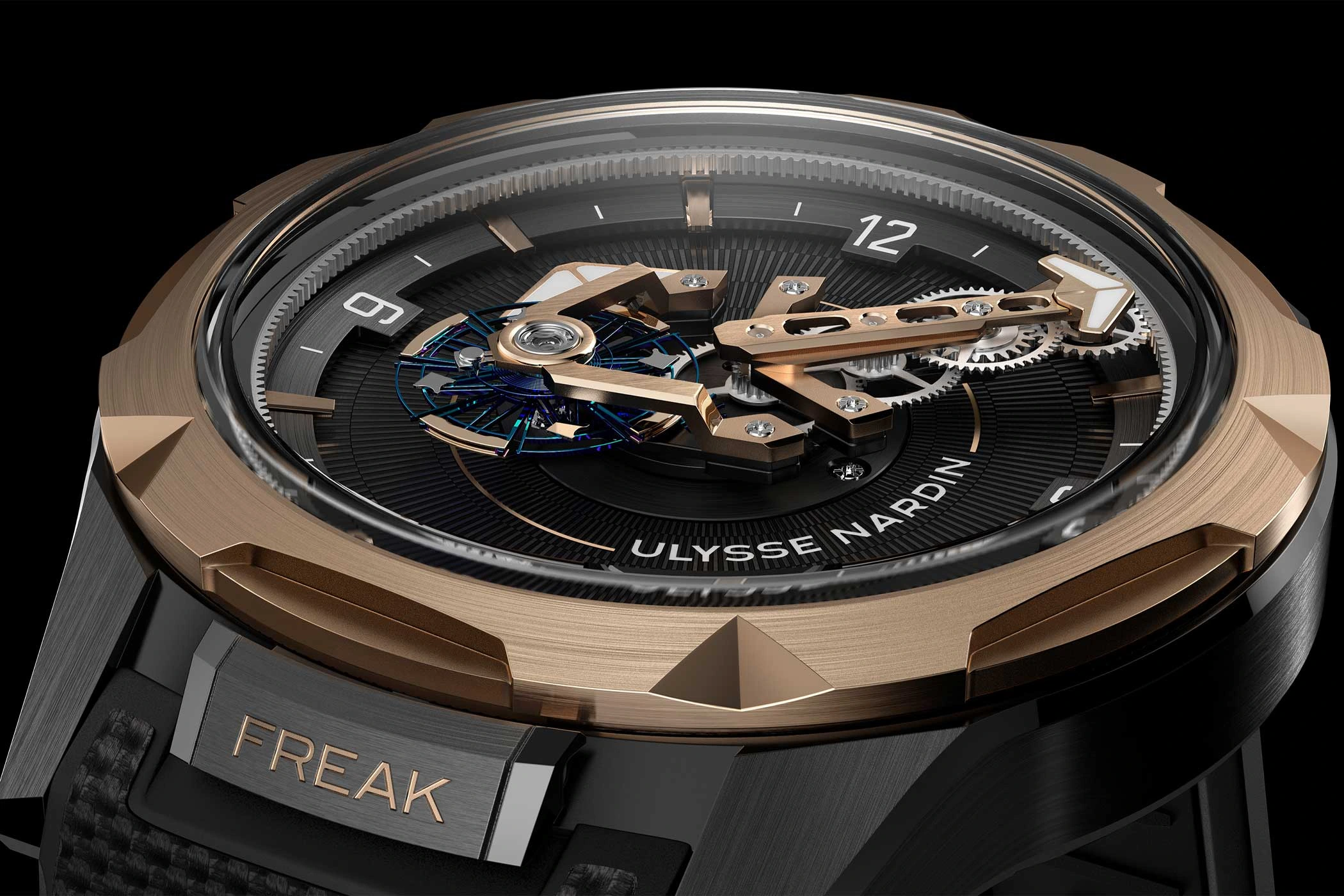
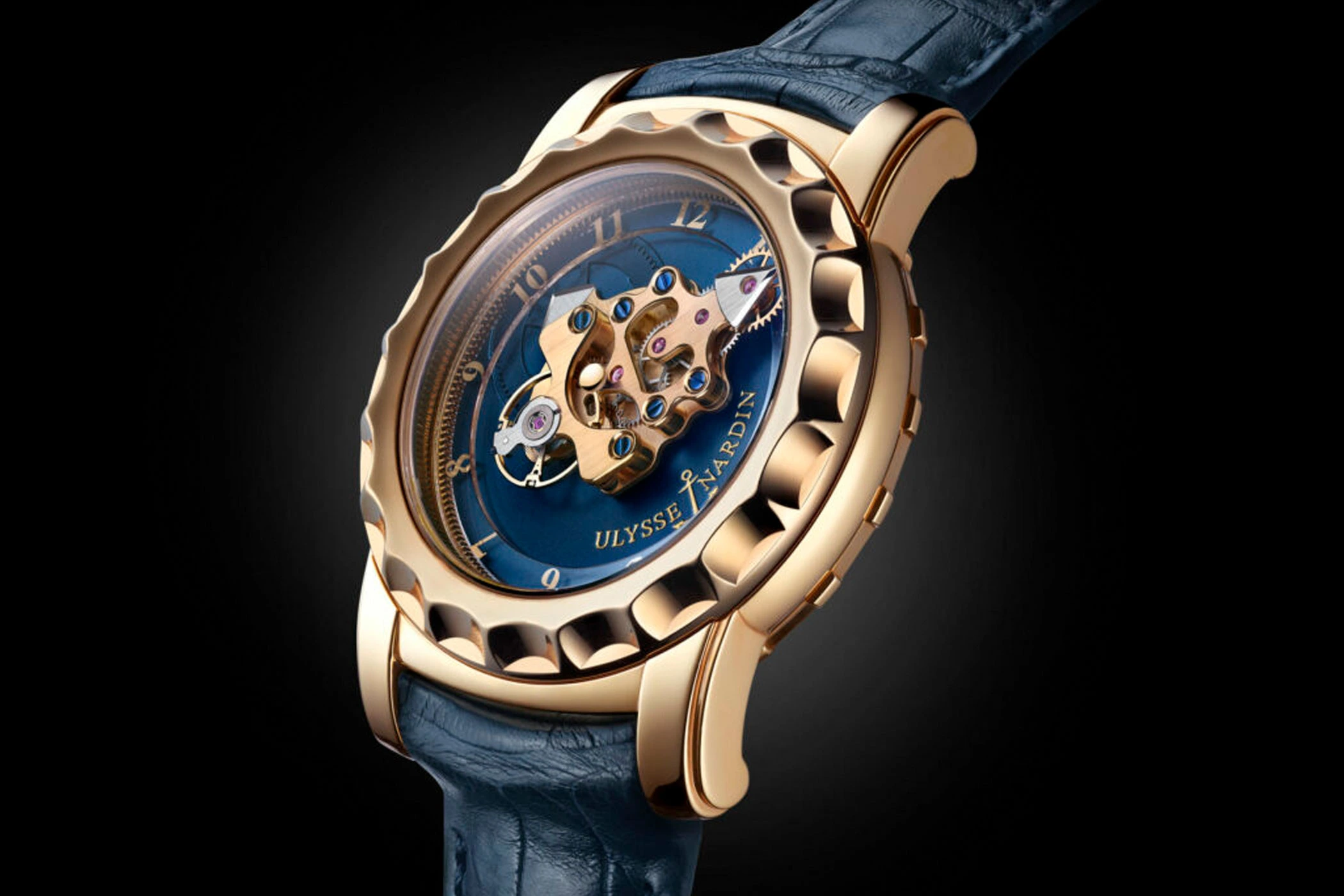
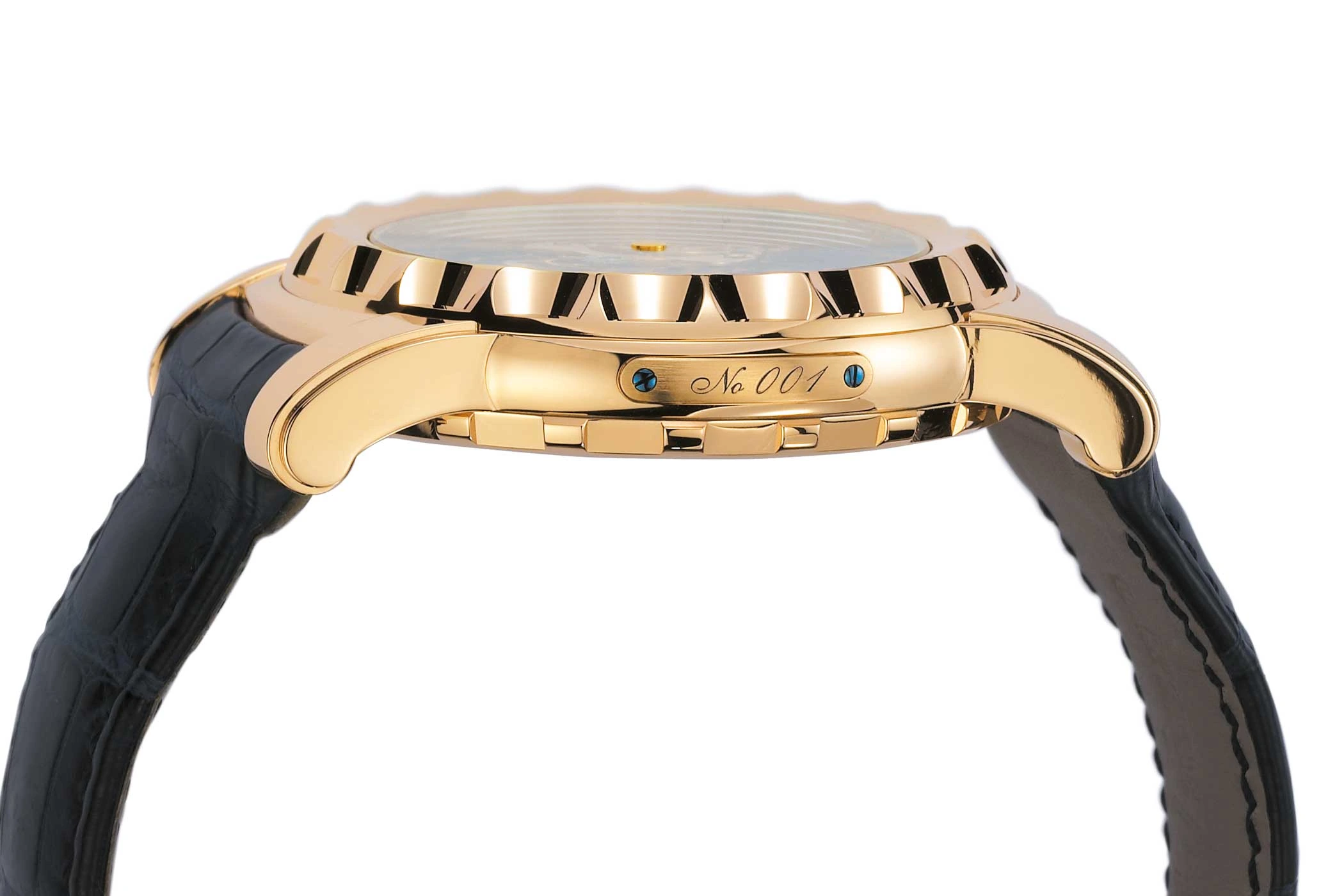
The Freak debuted in 2001 with an unprecedented design: no crown, no dial, no traditional hands. Instead, the movement itself displayed the time. Added to this were silicon components – a first in movement construction. It and all its successors have undoubtedly made the watch landscape more colorful and their creators more daring – and enriched it with 35 patented innovations.
To mark its 25th anniversary, Ulysse Nardin’s Freak is now joined by a truly exceptional new addition: The Super Freak is the result of 25 years of research and development and surpasses all its predecessors – even though it displays only the time.
But of course, not just any old way – rather, more elaborate, more radical, and more modern than ever. At the same time, this unconventional timepiece fits seamlessly into the brand’s 180-year history: from precise marine chronometers to its steadfast commitment to mechanical watchmaking during the quartz crisis, right up to today’s unconventional haute horlogerie in the form of the Super Freak.
The history of the manufactory is inextricably linked to strong personalities. It all began with Ulysse Nardin himself, who founded his workshop in Le Locle in 1846 at the age of just 23. He soon began specializing in marine chronometers – instruments whose precision was essential for navigation at sea. In the 19th and 20th centuries, the company became one of the leading manufacturers of these timepieces.
The numerous chronometer awards are a testament to the quality of these precision instruments – the GPS of their day. By the time classic marine chronometers fell out of favor with the rise of quartz technology, there had been over 4,300 such awards.
Speaking of quartz and crisis: The crisis struck mercilessly starting in the 1970s. As a result, many traditional companies in the industry disappeared, while others turned to battery-powered watches. Ulysse Nardin took a different path. At just the right moment, a figure crucial to the brand’s future stepped onto the scene: Rolf Schnyder took over the company in 1983 after five generations of family ownership.
He deliberately focused on mechanical innovation rather than quartz. Bucking the market trend, he positioned the brand with a clear emphasis on complications, craftsmanship, and mechanical innovation. It was a strategic decision that would prove to be groundbreaking. In this way, the brand carved out its own niche and left the competition centered on quartz technology in the dust.
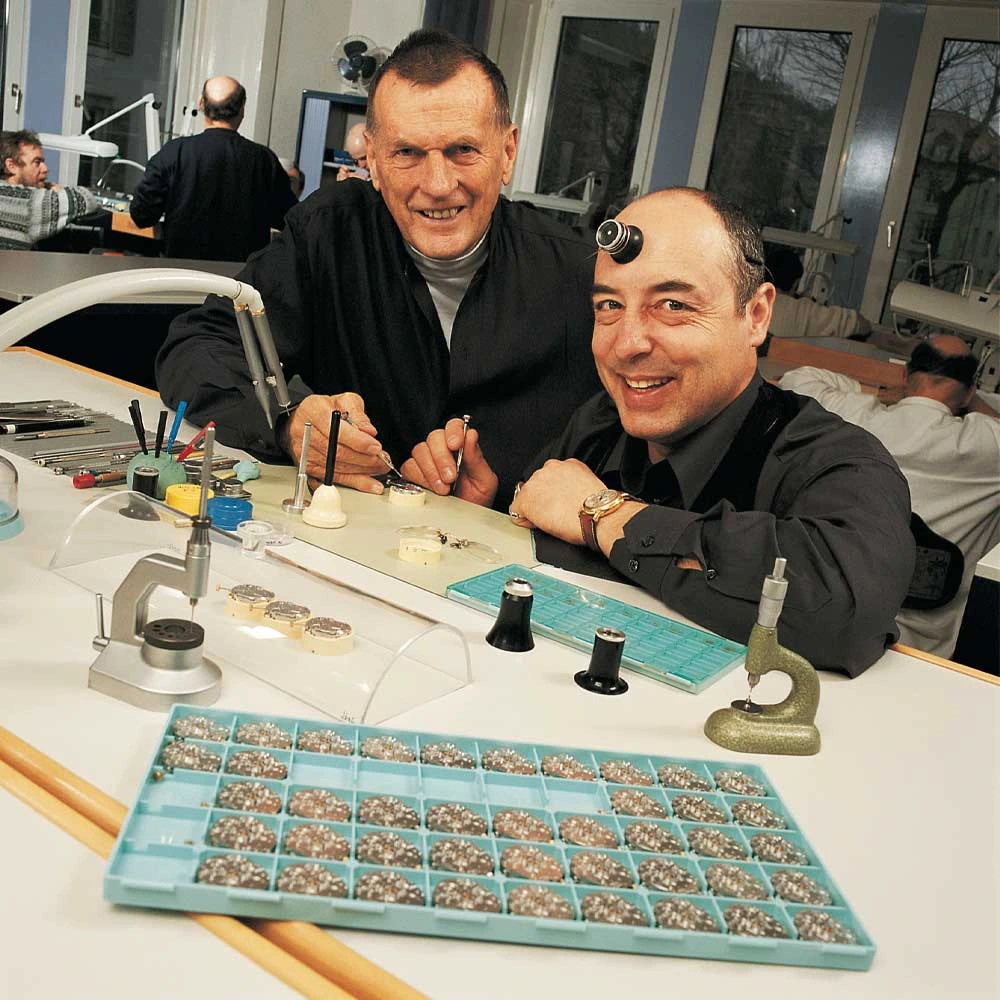
That same year, a future watchmaking legend also crossed paths with Ulysse Nardin: Ludwig Oechslin, one of the most original and influential figures in contemporary watchmaking. He combines natural science, astronomy, and a radically different approach to mechanics. The meeting between Rolf Schnyder and Ludwig Oechslin paved the way for the Freak.
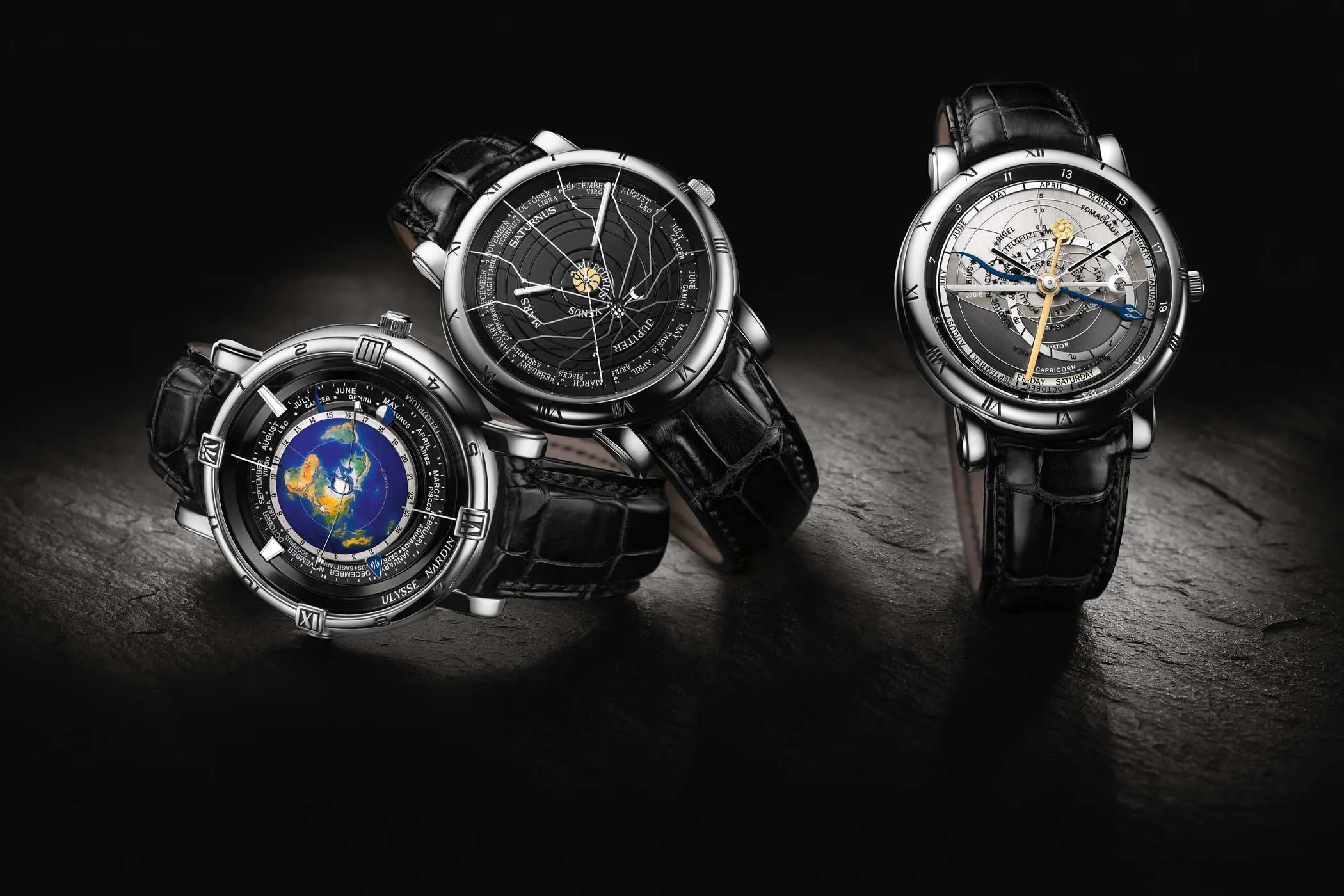
However, the collaboration that would span many years began in 1985 with the Astrolabium Galileo Galilei – a watch featuring 21 astronomical displays that was listed in the Guinness Book of World Records. This was followed by models such as the Planetarium Copernicus, the Tellurium Johannes Kepler, and the Perpetual Ludwig – and then came 1997 and Carole Forestier-Kasapi.
Now known as the “Queen of Complications” and head of movement development at TAG Heuer, she had won a competition in honor of Abraham-Louis Breguet while working as a young watchmaker at Ulysse Nardin. Her winning piece was far ahead of its time and is considered a major source of inspiration for the later Freak.
Forestier-Kasapi’s prototype already lacked a crown, and the movement rotated around a central axis. The watch was set and wound via the bezel. One drawback was its short power reserve of just ten hours.
Ludwig Oechslin took the concept a significant step further, optimized the power supply by relocating the mainspring barrel, refined the rotation principle, and presented a revolutionary idea: the movement should not only rotate but also display the time.
Thus, the barrel – which rotated once every twelve hours – and the rotating disc coupled to it served as the hour indicator, while the rod-shaped mechanism, rotating once per hour, functioned as the minute hand. This was made possible by a planetary gear train with a high gear ratio.
And finally, the problem of the two escape wheels required for Oechslin’s dual escapement was also solved. To function properly, these had to be extremely light. Silicon met all the requirements and thus made its debut as a material in a production watch in the Freak.
In 2001, the moment had finally arrived: The Freak – with no dial, hands, or crown – took Baselworld by storm. The name was originally just a working title for the project—and has stuck to this day.
If we were to list all the details and special features of the Super Freak, the article would be incredibly long. We will therefore limit ourselves to the most important characteristics that make this watch an exceptional timepiece.
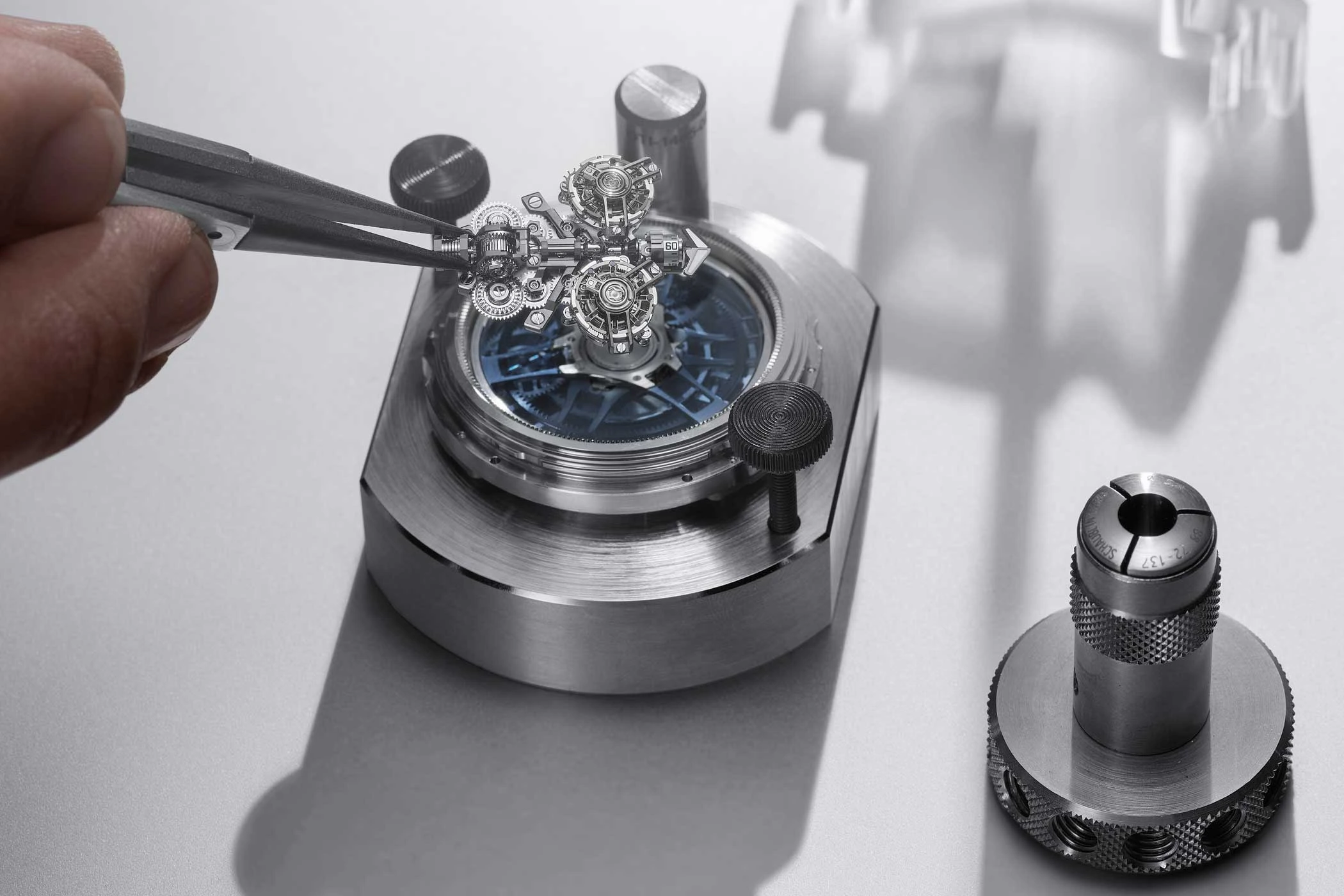
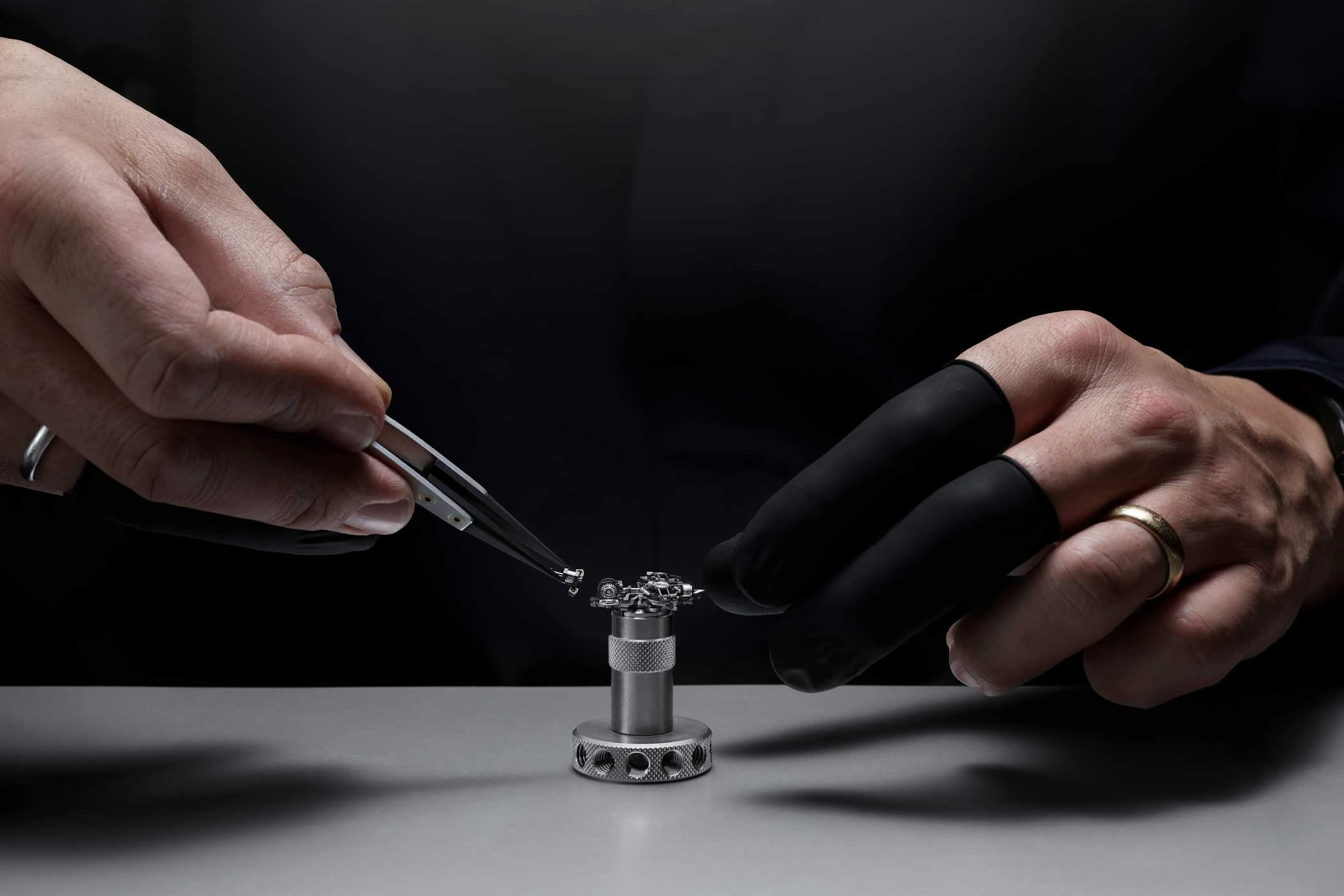
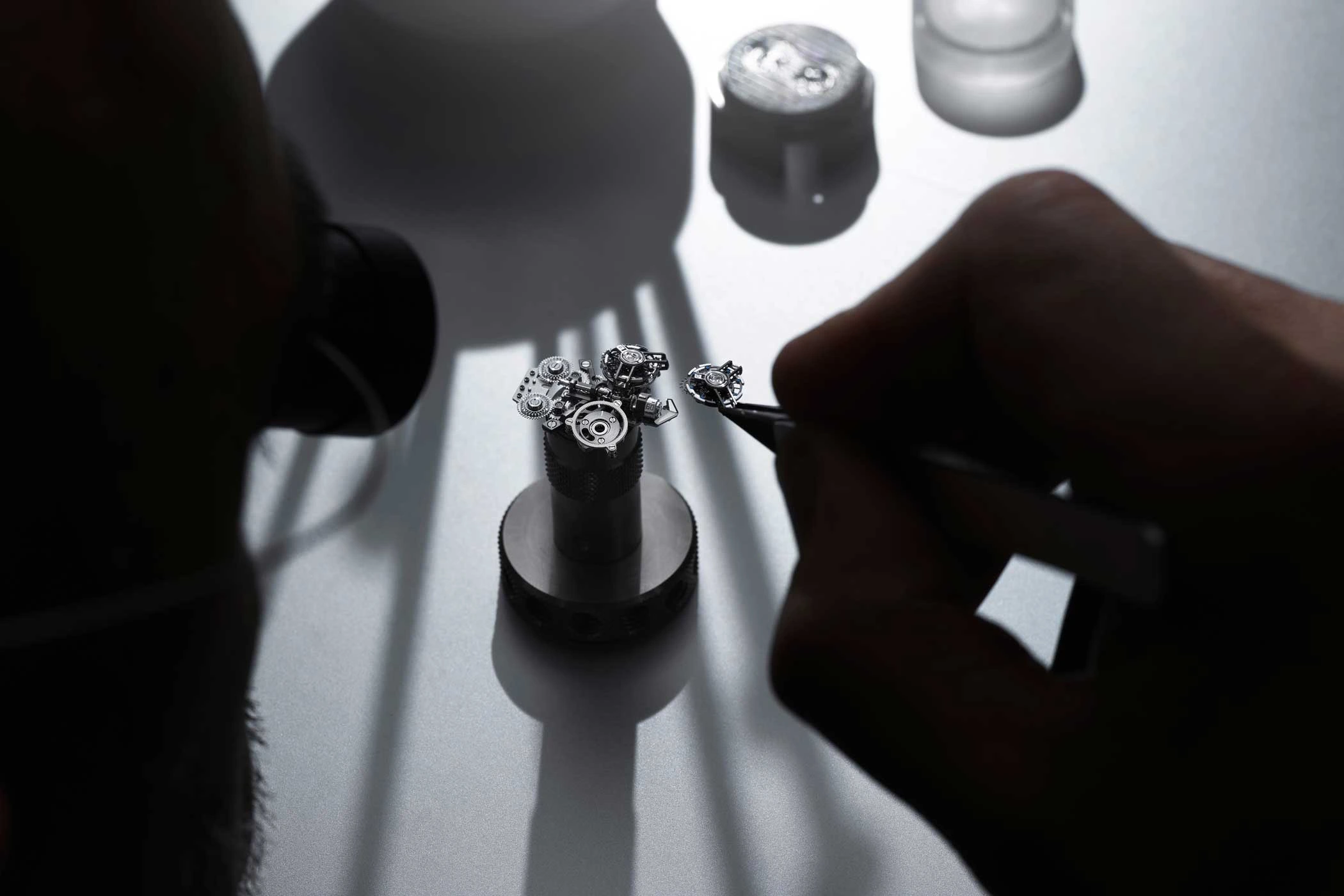
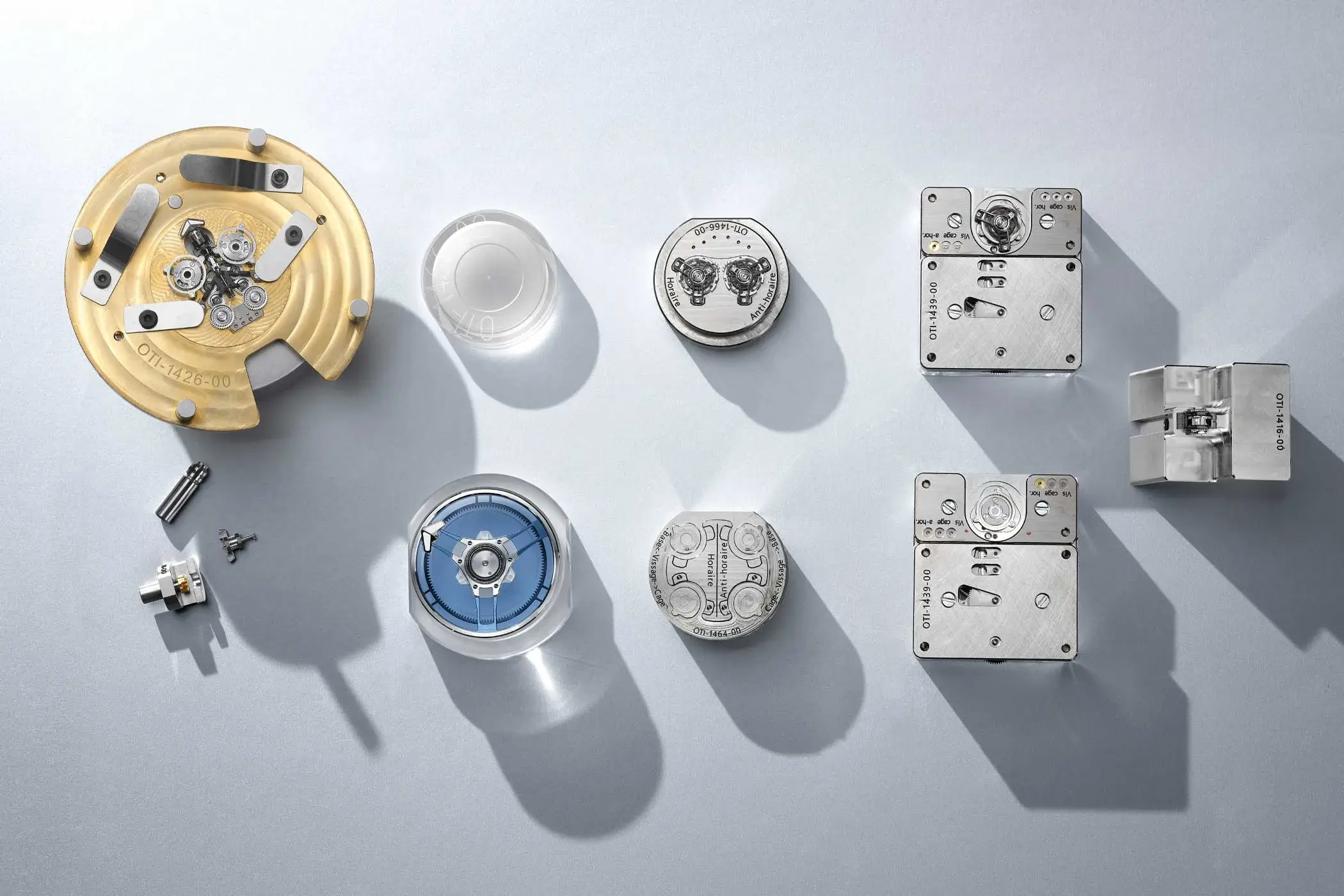
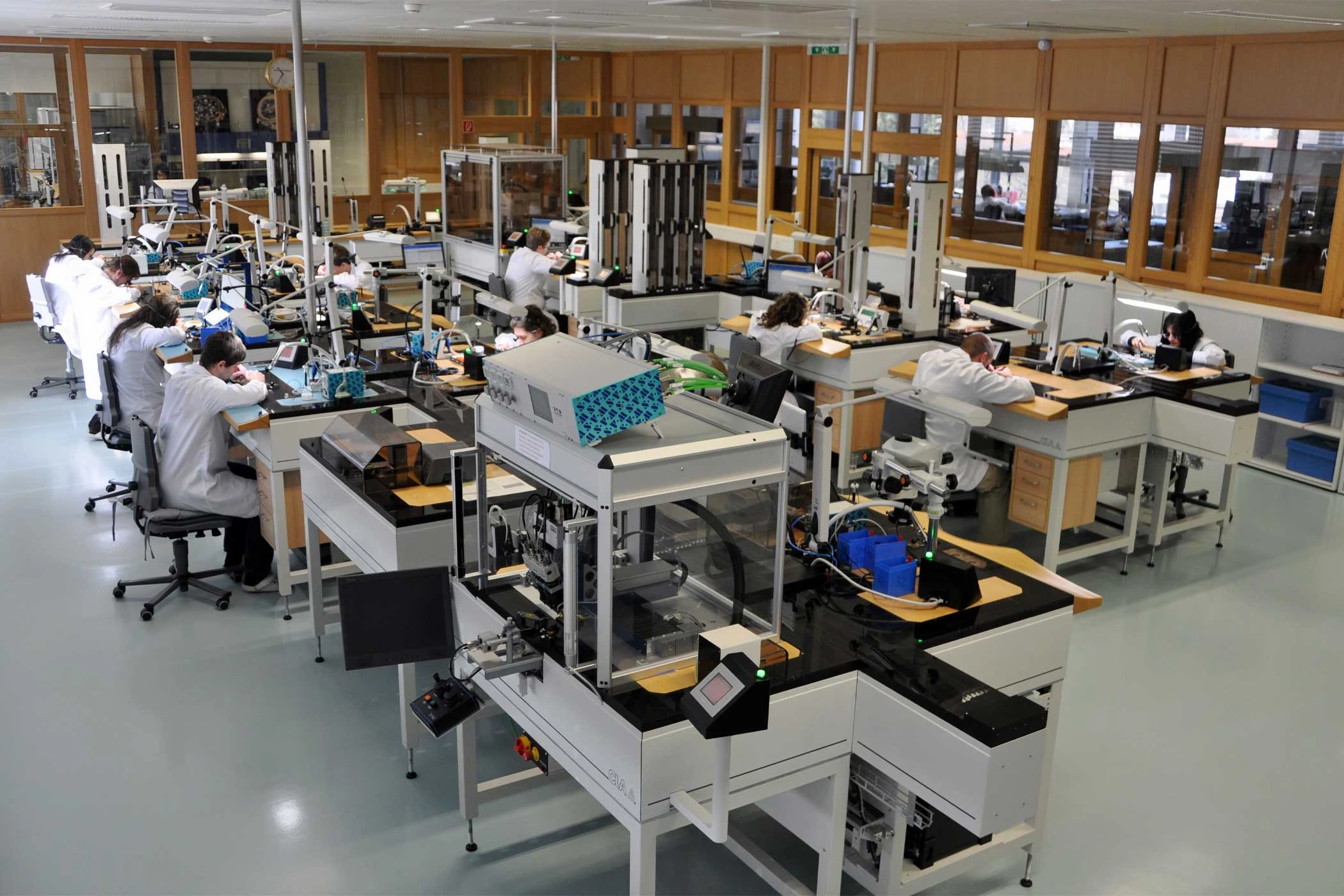
Its assembly takes around 60 hours and is carried out exclusively by five watchmakers specially trained for the Super Freak at Ulysse Nardin’s Haute Horlogerie workshop.
At the heart of the Super Freak lies the in-house automatic caliber UN-252, housed in a white gold case (44 × 16.54 mm) water-resistant to three bar. It took four years of development to ensure the seamless interaction of the 511 components. New features for a Freak in terms of functionality are the double tourbillon and the seconds display.
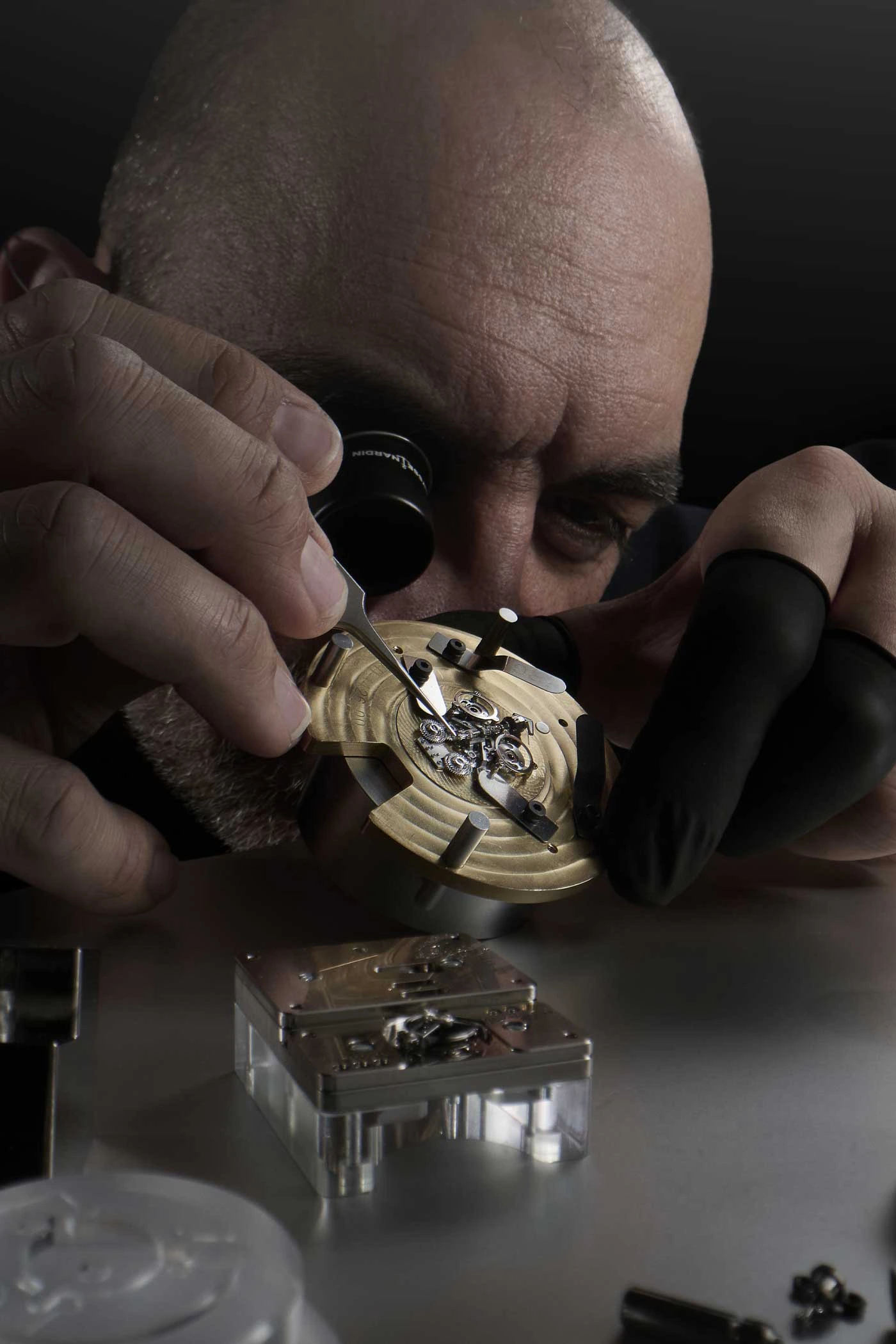
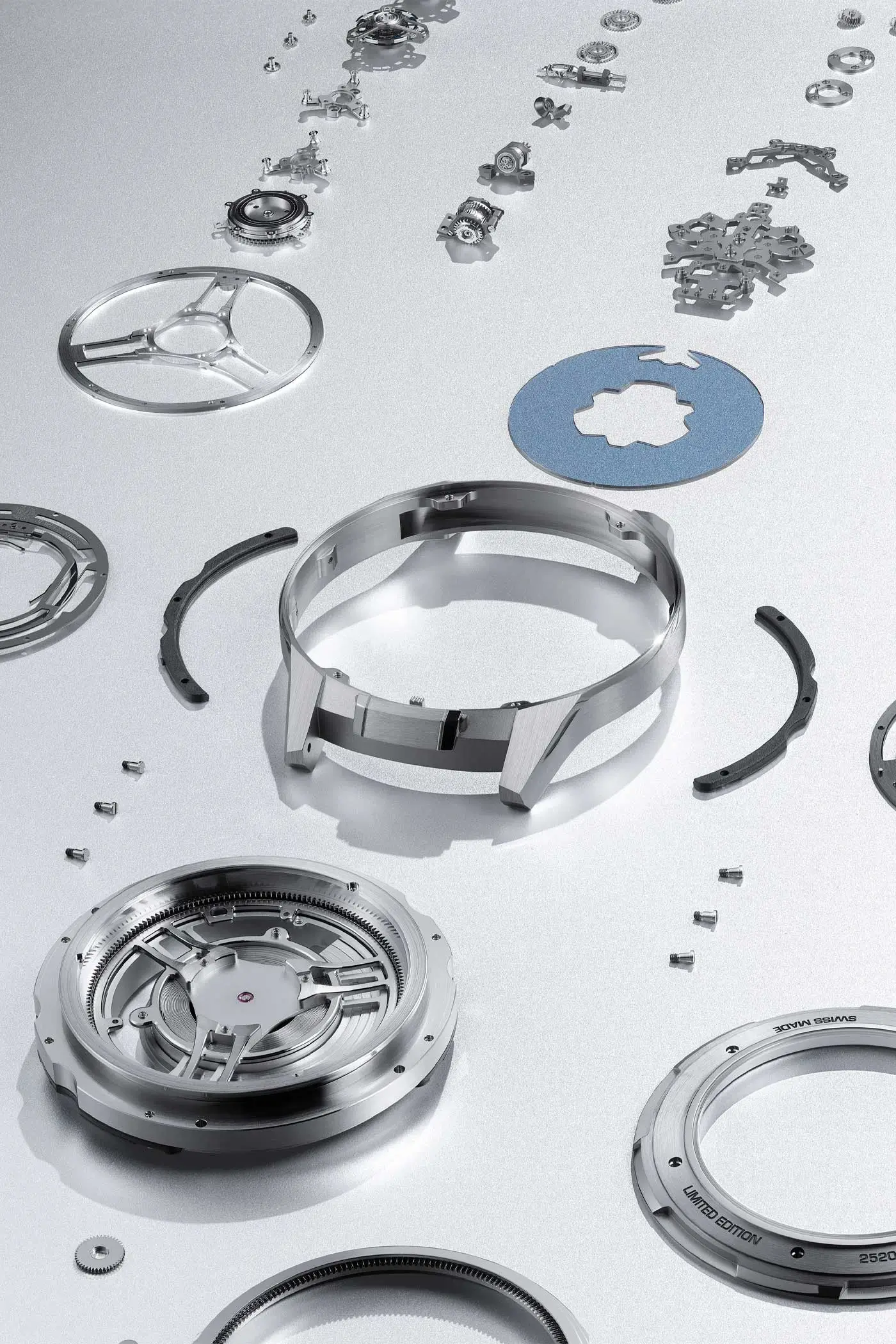
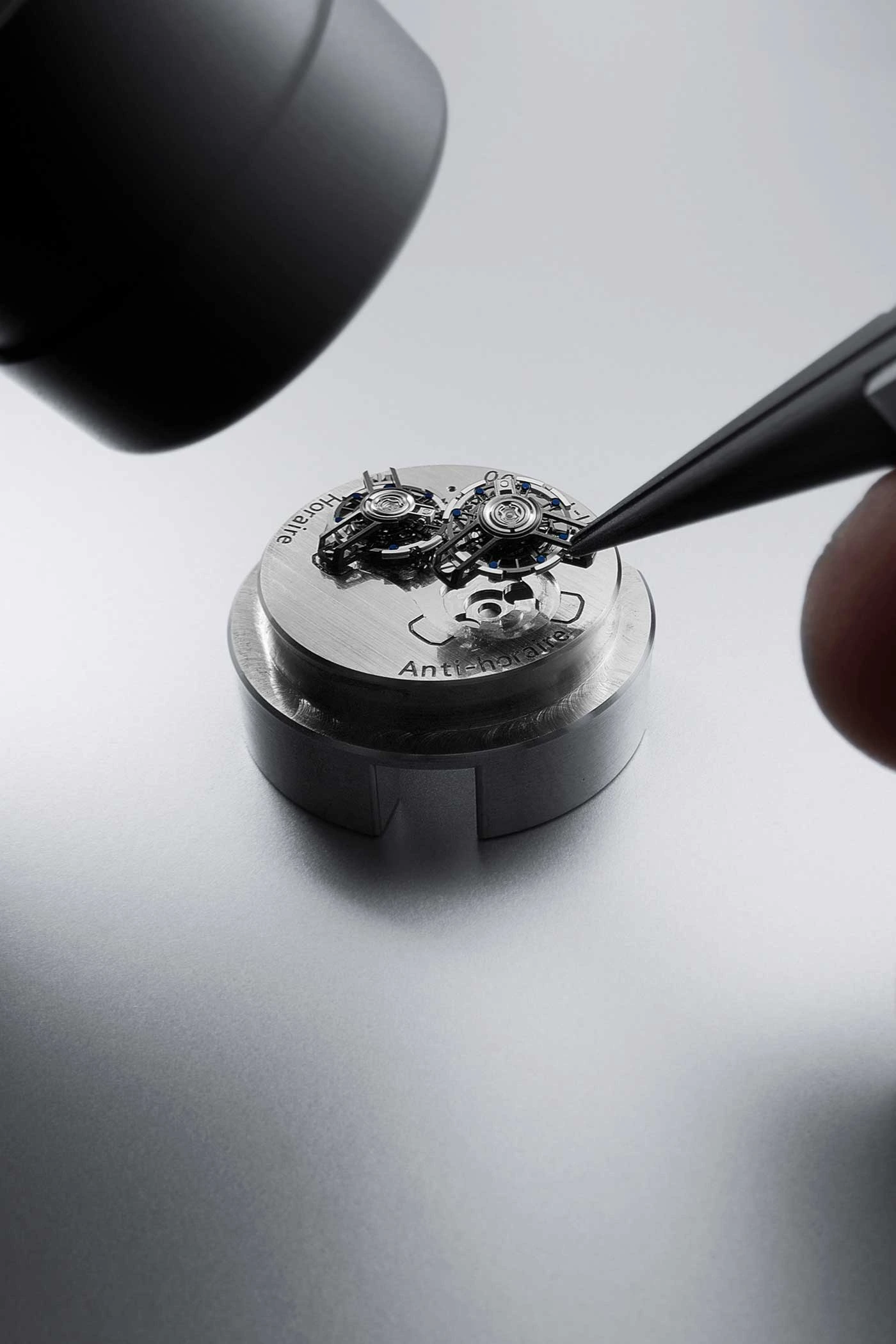
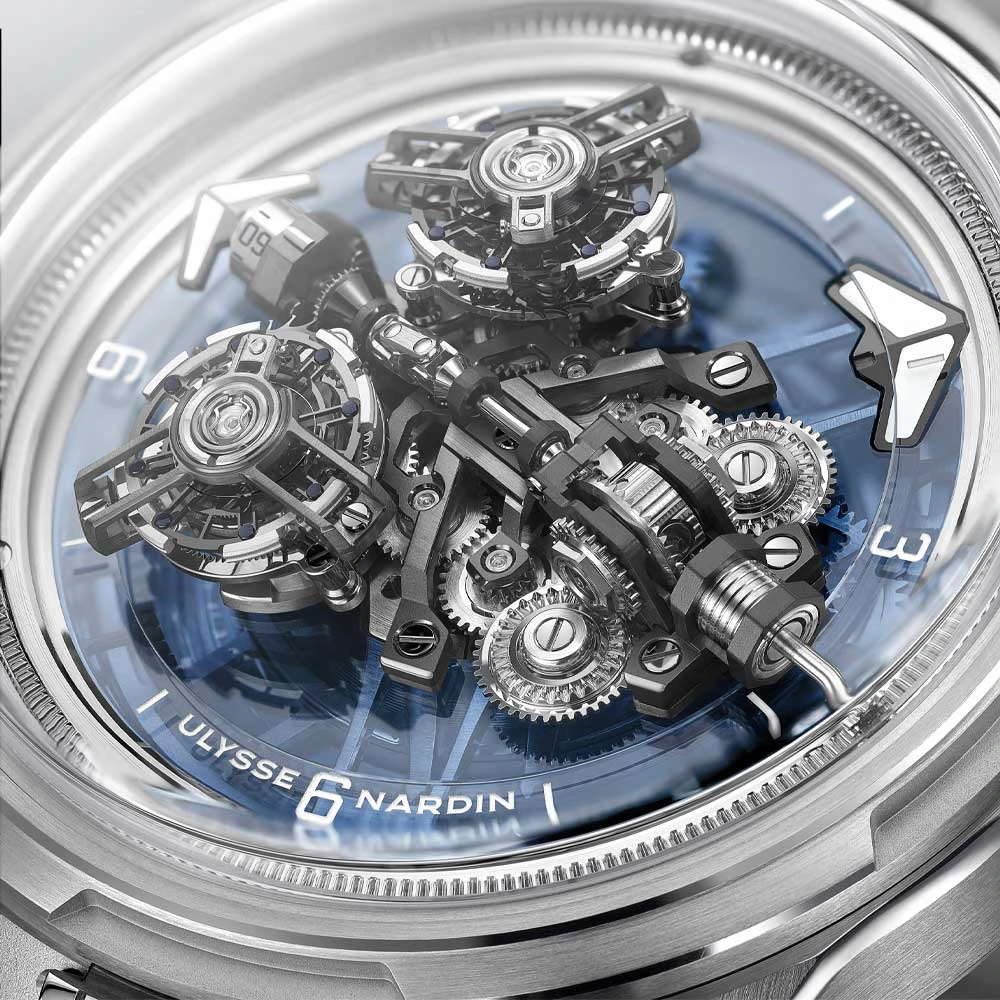
The 3.5-gram minute bridge, which supports two titanium flying tourbillons, comprises 327 components. Each tourbillon is inclined at an angle of ten degrees and rotates once every 60 seconds in opposite directions, while the flying carousel rotates once per hour.
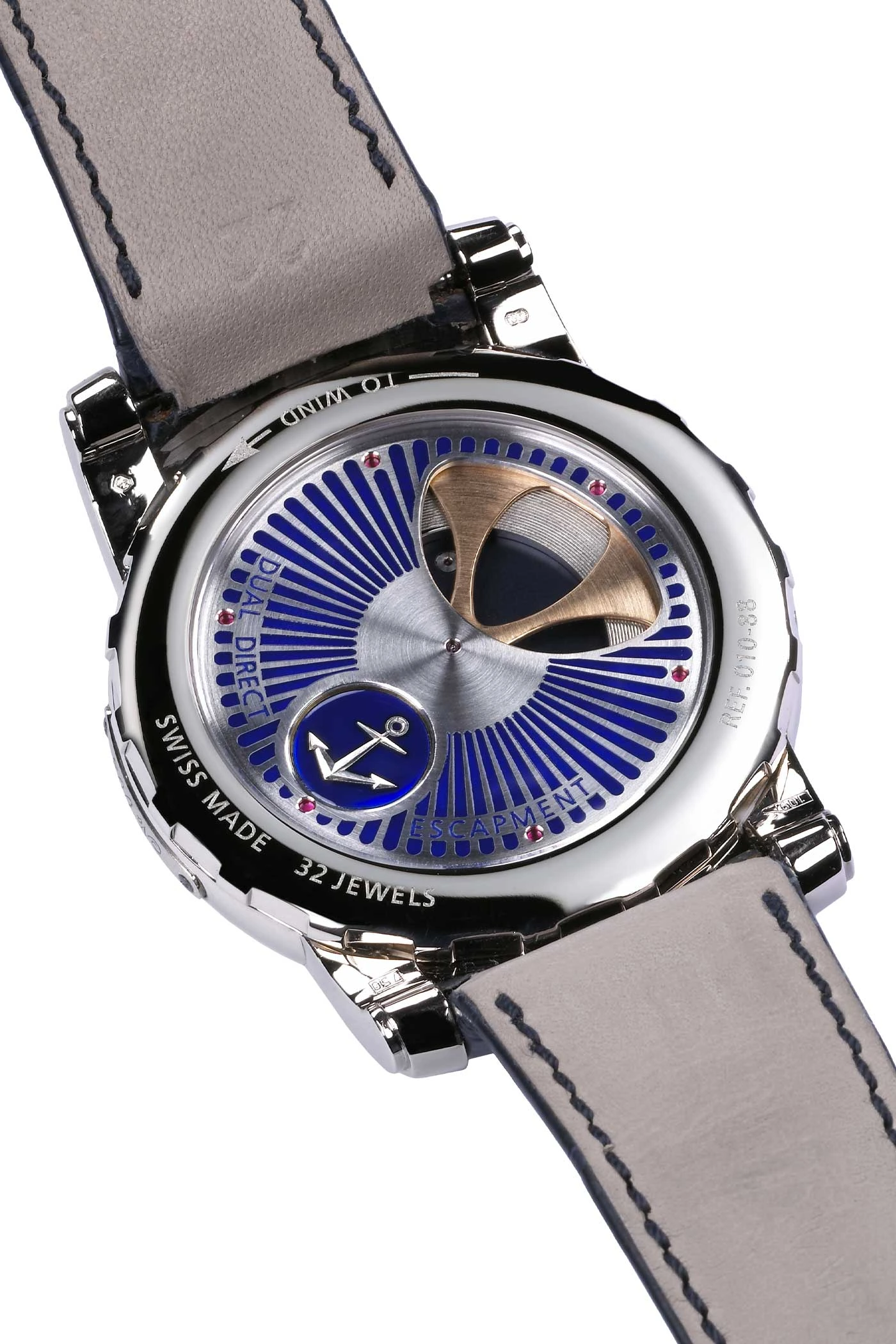
A whopping 498 parts of the UN-252 (97.46%) are movable; only 13 components remain fixed. The Super Freak is set and wound—in typical Freak fashion—via the bezel or the case back.
“From a movement development perspective, one of the biggest challenges was ensuring efficient power transmission for the integration of a seconds display. At the same time, our goal of creating a visually striking watch further increased the complexity, as the bridges had to be constructed on inclined planes to strike a balance between mechanical performance and strong aesthetic expression,” explains Lukas Klee, movement developer for the Super Freak at Ulysse Nardin in La Chaux-de-Fonds.
The Super Freak is the world’s first automatic double tourbillon. Anyone who thinks this has been done before is mistaken. That’s right: in 2019, Zenith unveiled a limited-edition Defy El Primero, produced in a run of ten pieces, featuring two tourbillons and automatic winding.
The Super Freak is the world’s first automatic double tourbiBut there is one key difference: the two tourbillons in the Super Freak are linked via a differential to form a double tourbillon, are powered by a shared mainspring barrel, and work together to regulate the movement.lon. Anyone who thinks this has been done before is mistaken. That’s right: in 2019, Zenith unveiled a limited-edition Defy El Primero, produced in a run of ten pieces, featuring two tourbillons and automatic winding.
In the Zenith, however, one tourbillon regulates the movement, while the other is linked to the chronograph. They are not connected to each other and have separate mainsprings.
Measuring just five millimeters in size, the Super Freak boasts the world’s smallest differential, according to Ulysse Nardin. It consists of 69 components, including eight ceramic ball bearings manufactured with micrometer-level precision.
The differential averages the speeds of the two inclined tourbillons while simultaneously transferring energy to the new patented gimbal system. Without this synchronizing mechanism, differences between the two escapements could cause the watch to run fast or slow.
Im Vergleich zum ersten vertikalen Differenzial mit absteigender Achse in der Freak S von 2022 verfügt das neue Differenzial der Super Freak über eine aufsteigende Achse. Das öffnet das Uhrwerk optisch und lässt das mechanische Schauspiel noch spektakulärer erscheinen.
The differential and the seconds display are positioned on an off-center axis. To ensure seamless power transmission between the two, Ulysse Nardin has developed and patented a gimbal system. It is the world’s smallest, absorbing power from the differential and transmitting it to the cylindrical seconds display.
Gimbal suspensions were originally developed to stabilize ship compasses and keep navigational instruments level. Only recently have they been reinterpreted in modern watchmaking, where they enable the control of complex, moving mechanical mechanisms.
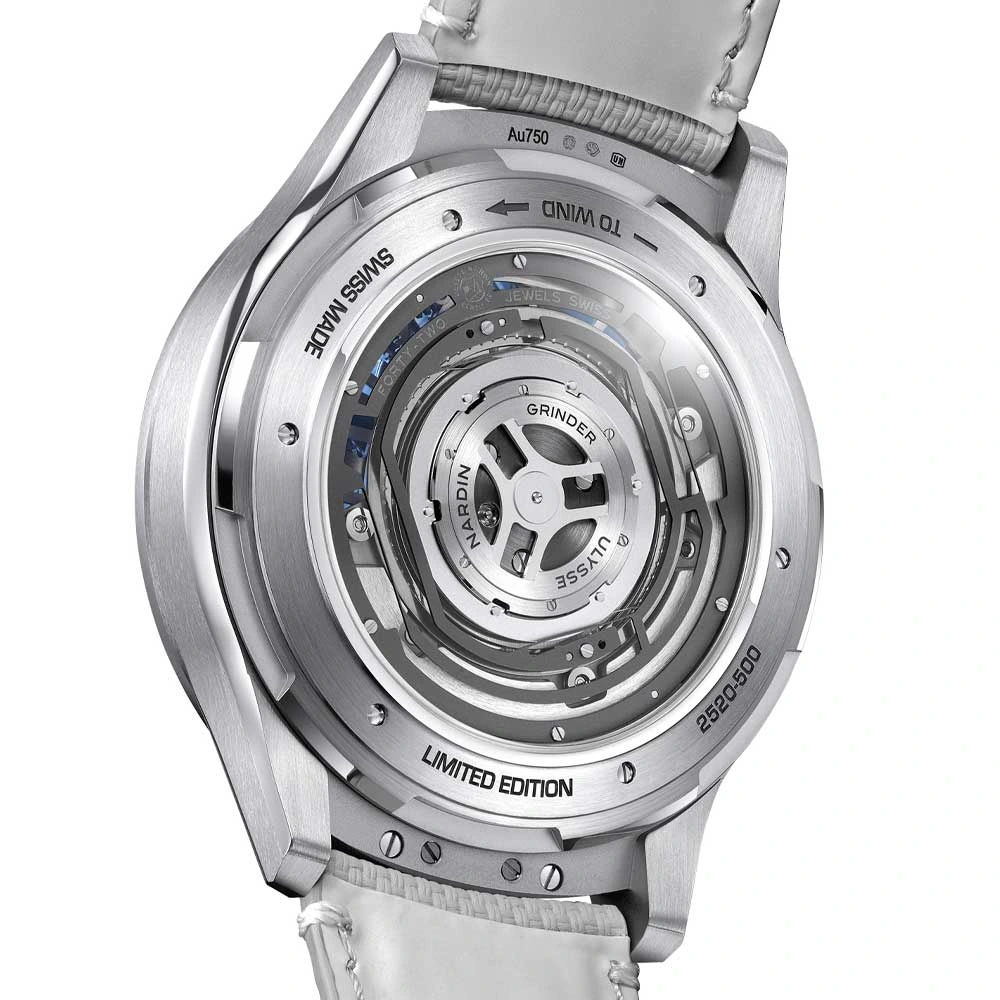
Two tourbillons on a flying carousel require significantly more energy than a conventional winding system can provide. That is why Ulysse Nardin relies on the patented Grinder system, one of the most efficient automatic winding systems in the industry.
The oscillating weight is connected to a frame via four levers, each 0.12 millimeters thick. This doubles the energy generated per unit of angle compared to conventional systems. The Super Freak thus achieves a power reserve of three days.
In 2001, Ulysse Nardin became the first watchmaker to use lightweight, flexible, low-friction, and anti-magnetic silicon in a movement. The Super Freak is equipped with ten silicon components, including two balance wheels, two balance springs, and two escapements made of DIAMonSIL, a diamond-coated silicon architecture patented by Ulysse Nardin in 2007.
The rotating hour disc on the Super Freak is made of Nanosital in transparent blue with hour markers in white Superluminova. Nanosital is a polycrystalline material produced through the controlled crystallization of glass and characterized by exceptional purity.
The rotating hour disc on the Super Freak is made of Nanosital in trWith a specific gravity comparable to that of topaz, sapphire, and ruby, and a hardness that exceeds that of standard glass, the material offers remarkable durability while maintaining its clarity, color, and internal structure.
Despite all the technological innovation, theSuper Freak remains a product of the finest craftsmanship. More than 70 percent of its components are finished by hand. All surfaces are polished and refined using traditional tools and techniques. This is a labor-intensive process that becomes even more complex and demanding due to the use of titanium instead of conventional brass for the movement components to be decorated.
The word “Super” comes from Latin and means “above,” “beyond,” or “in addition to.” One can’t help but wonder if Ulysse Nardin can top that. Perhaps with a Hyper Freak? Or is the Super Freak the crowning achievement of a 25-year era? Incidentally, this model is limited to 50 pieces and costs 342,350 euros.