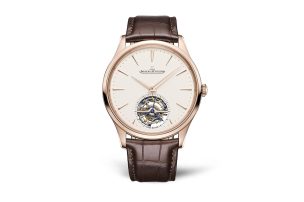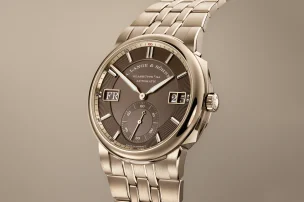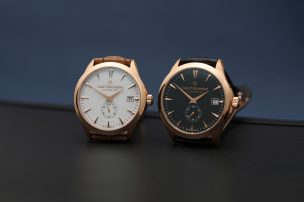
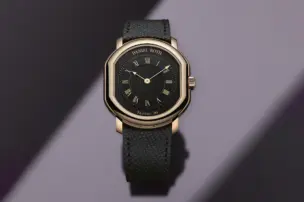
The Daniel Roth Extra Plat Rose Gold Gilt pairs a deep-black gilt dial with hand guilloché, 5N rose gold and the hand-wound DR002 calibre.
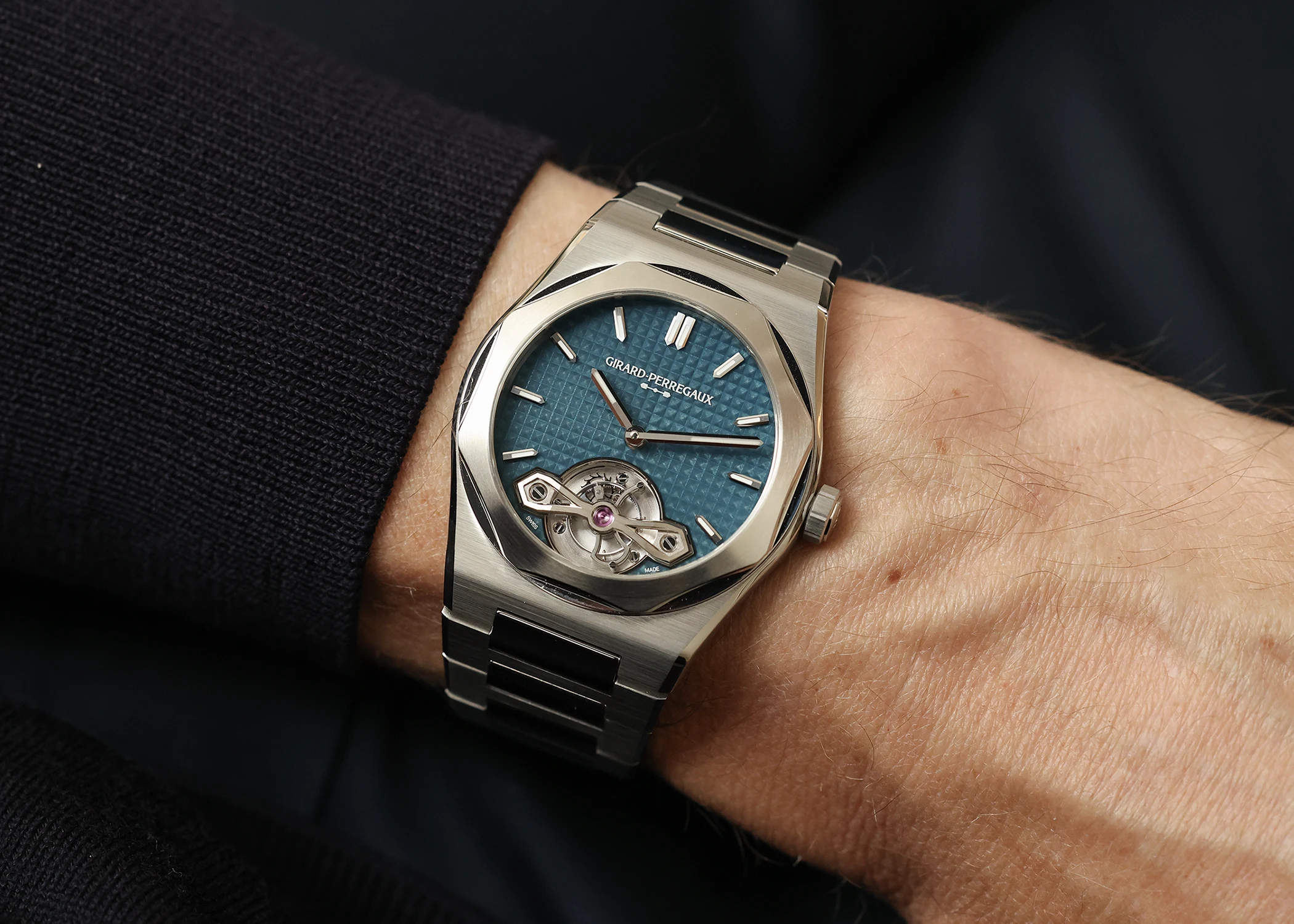
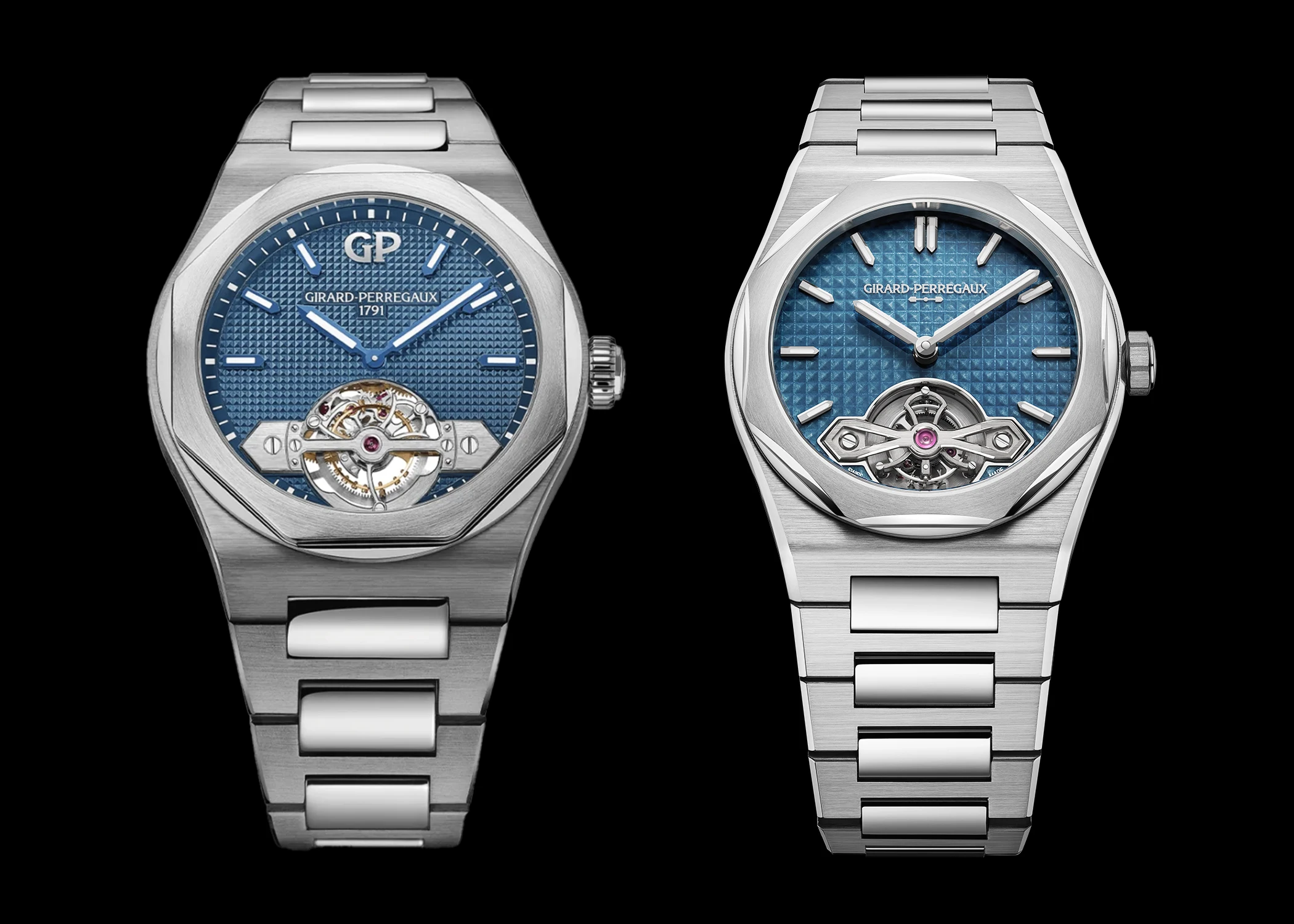
Few constructions are as closely associated with Girard-Perregaux as the tourbillon with three bridges. Developed for the pocket watch in the 19th century, the concept was first miniaturised for a wristwatch in 1991 and was later incorporated into the sporty architecture of the Laureato. With the new Girard-Perregaux Laureato Fifty Tourbillon Micro-Rotor 39 mm, the manufacture now continues this evolution with two new variants. Both reduce the historic Three Bridges concept to a single, modern interpretation of the tourbillon bridge and are powered by the new manufacture calibre GP8410, which combines the tourbillon with automatic winding via a micro-rotor. Following the recently launched Laureato Fifty 39 mm with its in-house Clous de Paris enamel dial, the blue-dial version also represents another enamel execution produced in-house, this time combined with a visible tourbillon.
In this article, we trace how the Three Bridges tourbillon evolved from a historic pocket-watch construction into a defining element of the Laureato – and how Girard-Perregaux is carrying this concept forward in the new models.
The origins of Girard-Perregaux can be traced back to two initially independent companies whose paths would not converge until the beginning of the 20th century. The first of these strands leads to Jean-François Bautte, who was particularly renowned for his ultra-thin watches and established a manufacture in Geneva that brought the various crafts of watchmaking together under one roof – from case production and dial decoration to the manufacture of complete movements. Following his death in 1837, his son Jacques Bautte and son-in-law Jean-Samuel Rossel founded Jean-François Bautte & Cie. that same year, thereby continuing his watchmaking legacy.
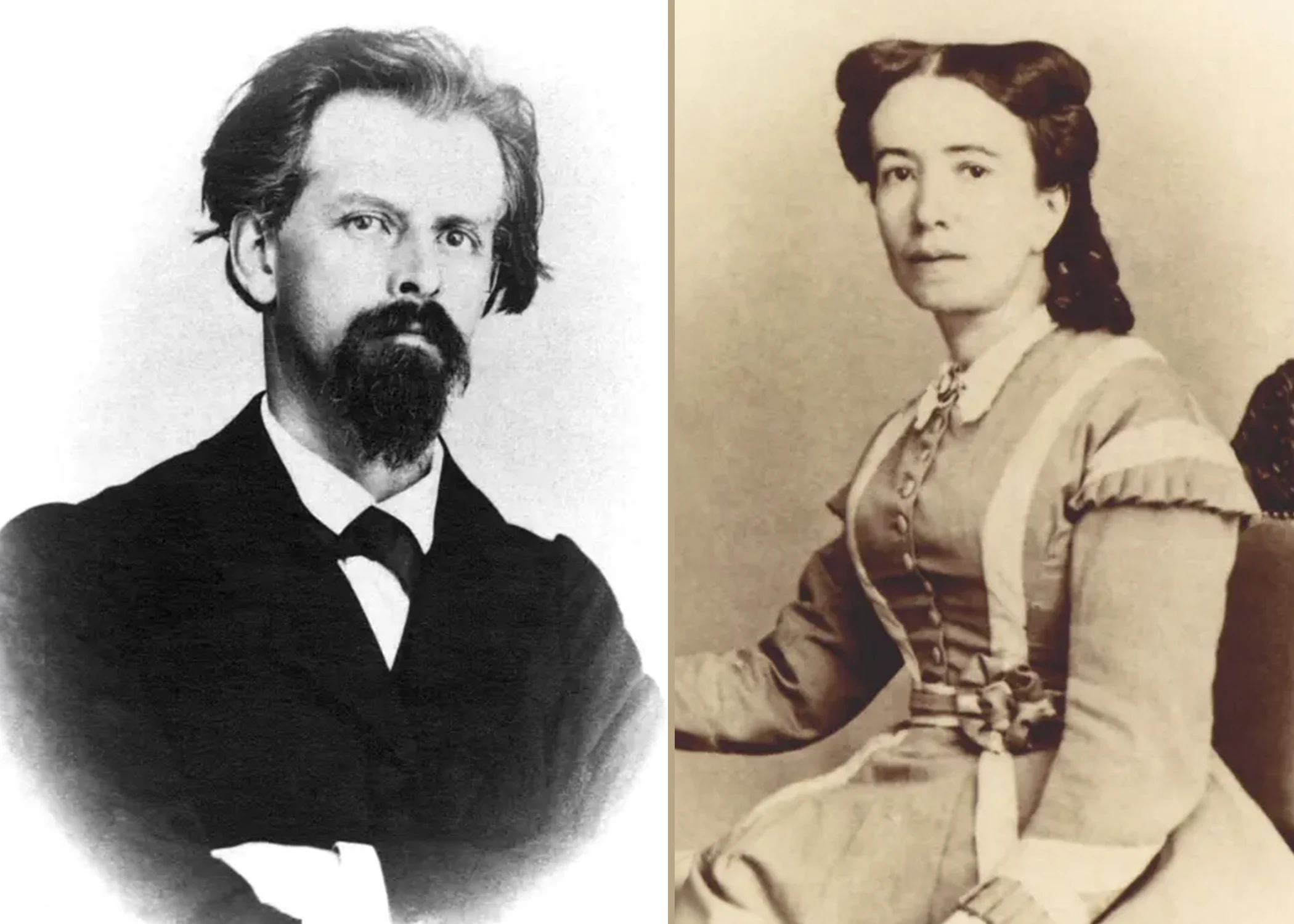
The second strand began in 1852, when Constant Girard founded Girard & Cie. His marriage to Marie Perregaux ultimately brought the two family names together, giving rise to Girard-Perregaux in La Chaux-de-Fonds in 1856. The manufacture soon established an excellent reputation at the chronometer competitions held by the Neuchâtel Observatory and received numerous awards for the precision of its timepieces.
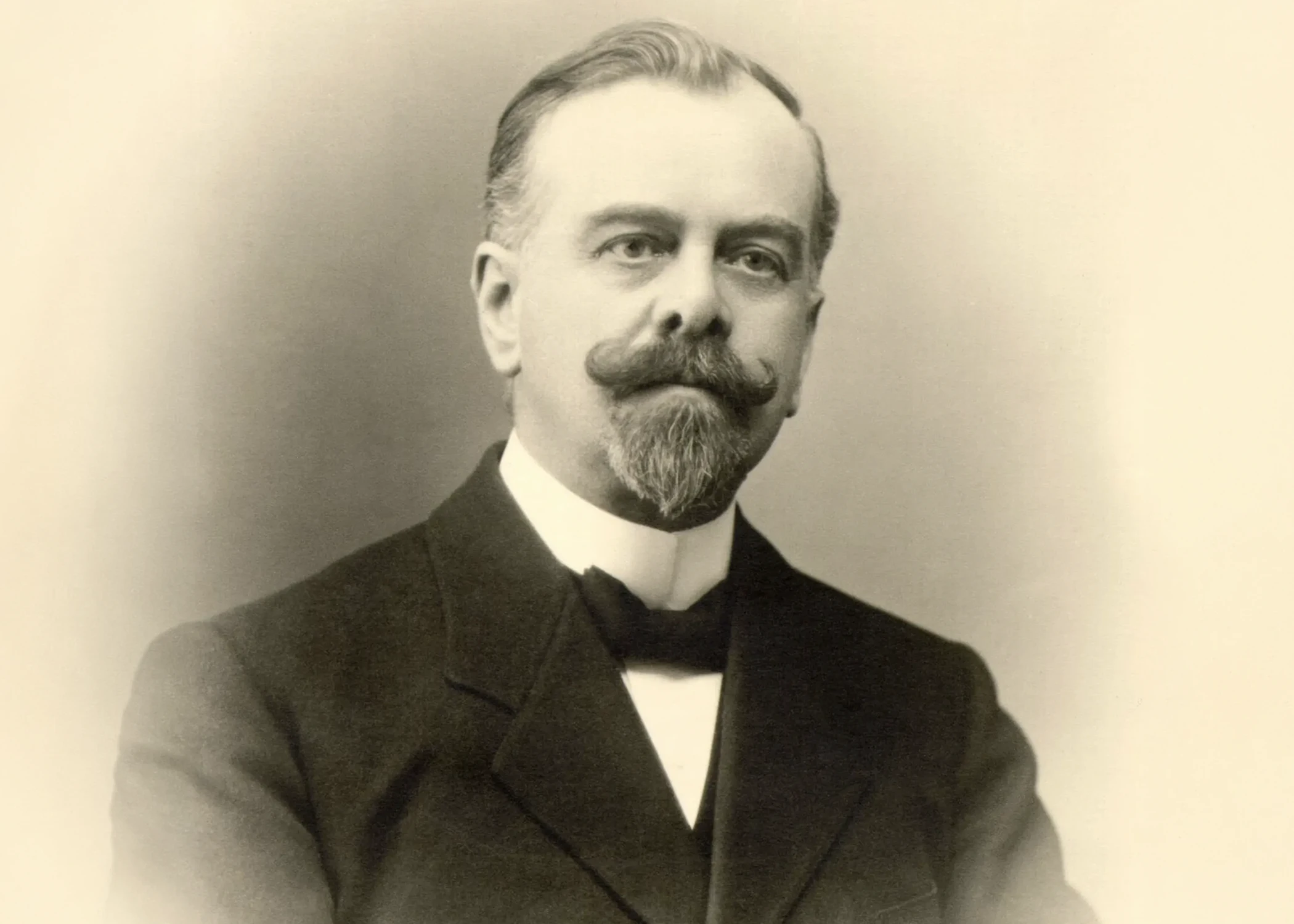
The two company histories were ultimately brought together under Constant Girard-Gallet, who took over the management of Girard-Perregaux from his father, Constant Girard, in 1903. Three years later, in 1906, he acquired Maison Bautte, which had emerged from Jean-François Bautte’s company, and incorporated it into Girard-Perregaux et Cie. This united the two historical lineages from which the Girard-Perregaux manufacture of today emerged.
Constant Girard (1825–1903) had a decisive influence on the identity of Girard-Perregaux as we know it today through the development of the Three Bridges tourbillon, which went on to become one of the manufacture’s most distinctive signatures.
In this context, it is important to note that Girard-Perregaux did not invent the tourbillon itself. The classic principle was developed by Abraham-Louis Breguet around 1795 and patented in 1801: the escapement, balance wheel and hairspring are housed within a rotating cage designed to compensate for positional rate deviations, particularly in pocket watches.
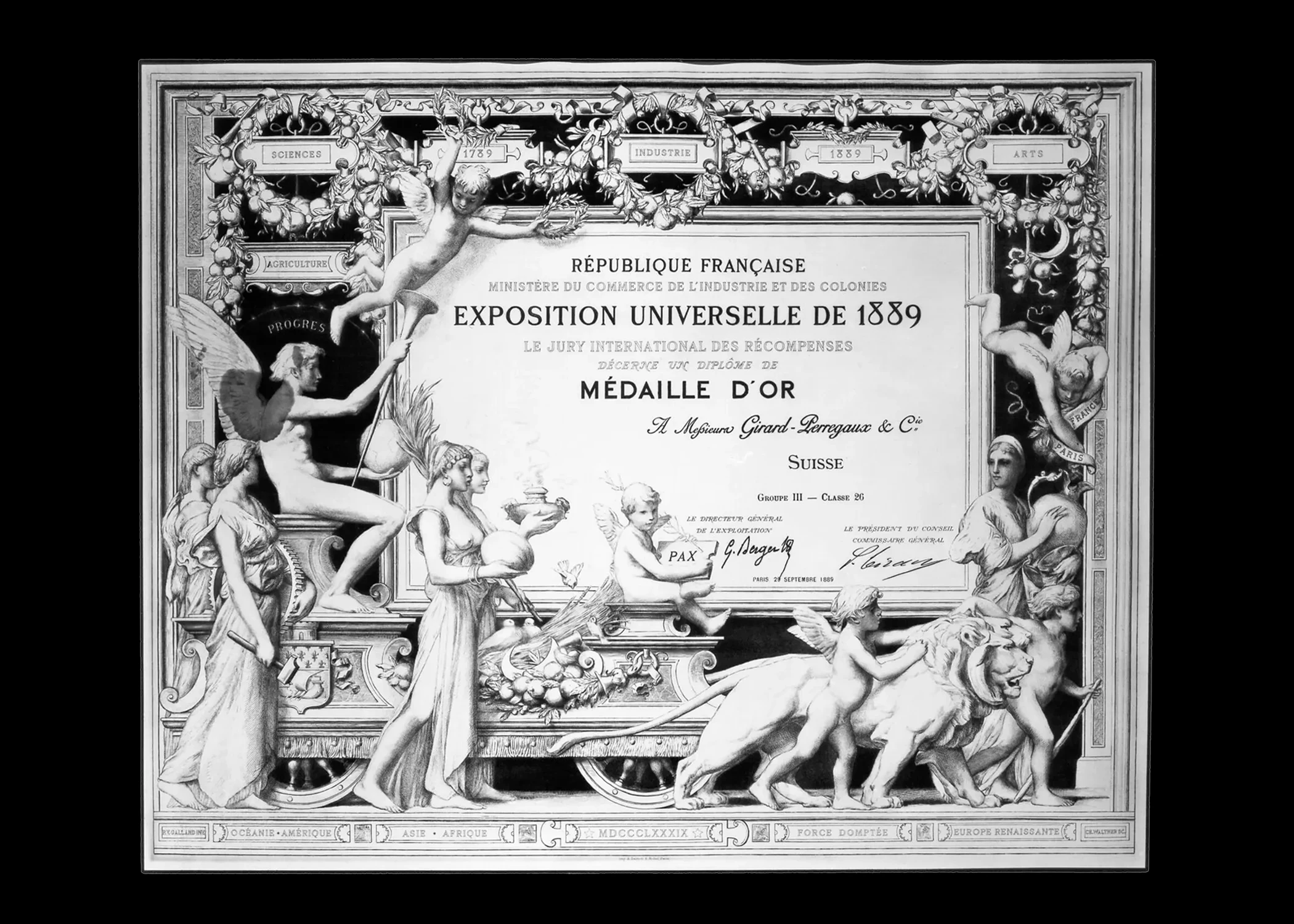
Constant Girard’s achievement lay instead in transforming the architecture of the tourbillon movement itself into a design element. To achieve this, he was already working around 1860 on a pocket watch with a tourbillon movement, which was eventually presented in 1867 both at the Neuchâtel Observatory and at the Paris Universal Exhibition. The result was a tourbillon movement featuring three horizontally arranged, parallel bridges that structured the energy source, transmission system and regulating organ of the pocket watch along a vertical axis.
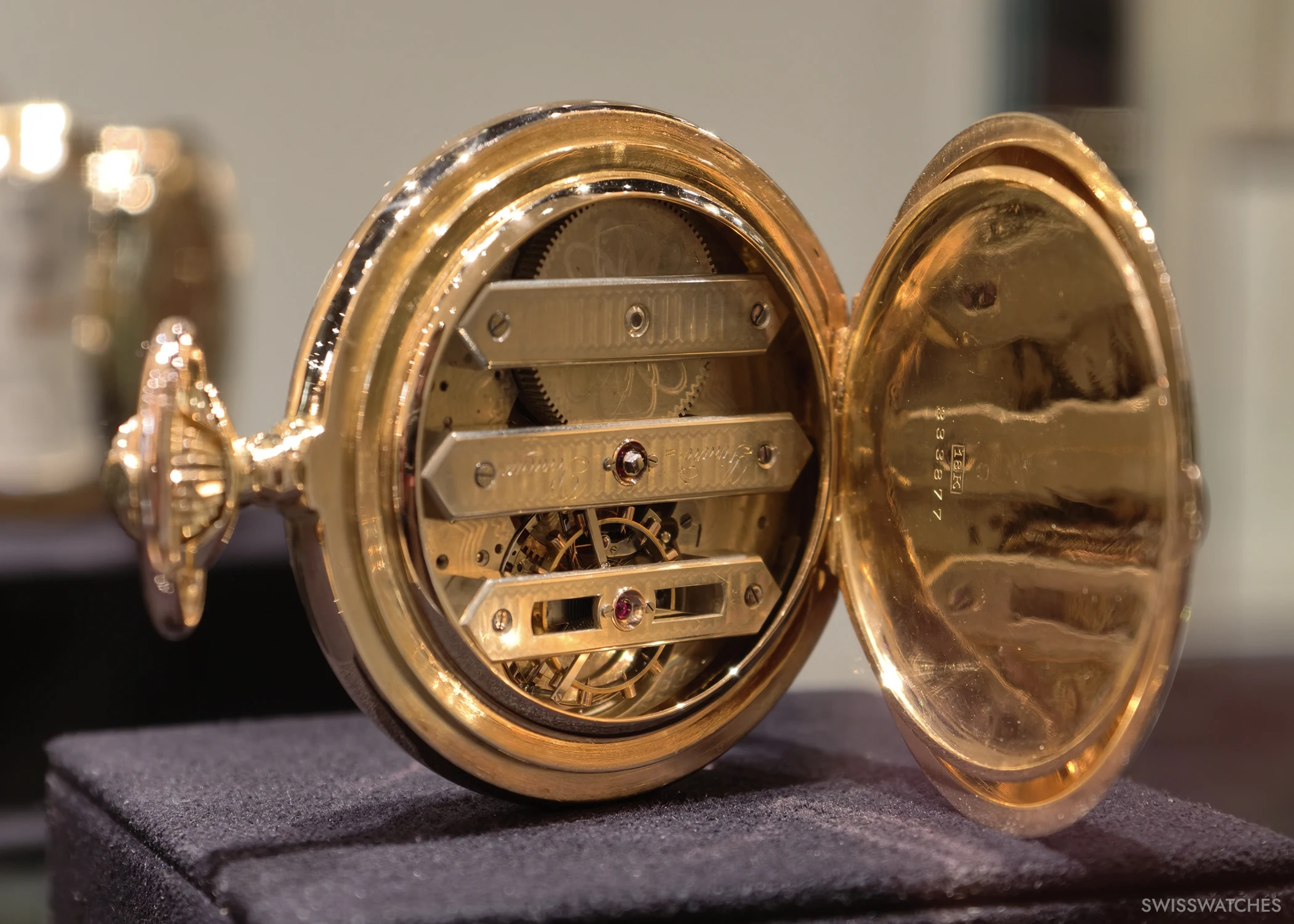
The three bridges initially served a purely structural purpose: they supported and secured the three central assemblies of the tourbillon movement – the upper bridge held the barrel in place, the middle bridge carried the gear train and motion works, and the lower bridge anchored the tourbillon. Yet through their parallel arrangement, they also introduced a visual dimension, turning the movement architecture itself into a symmetrical design element.
According to Girard-Perregaux, this first historic pocket watch, conceived primarily as a chronometer tourbillon and therefore entirely focused on the pursuit of precision, achieved a record result at the Observatory that would remain unbeaten for 17 years. In this watch, the basic concept of three parallel movement bridges was initially realised in the form of comparatively simple metal bars. The slender arrow-shaped design that we now associate with the “Three Bridges”, however, emerged at a later stage in the concept’s development.
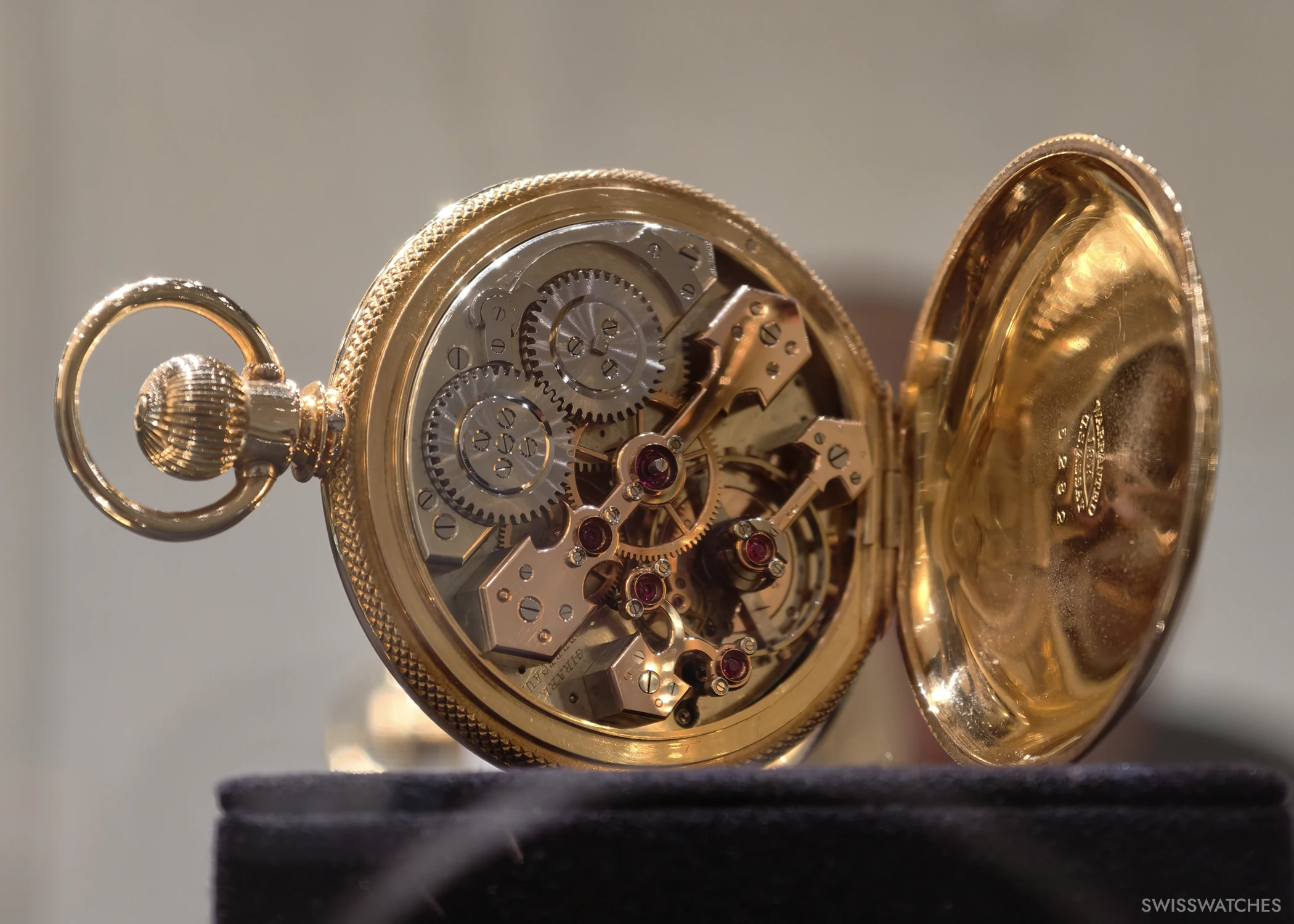
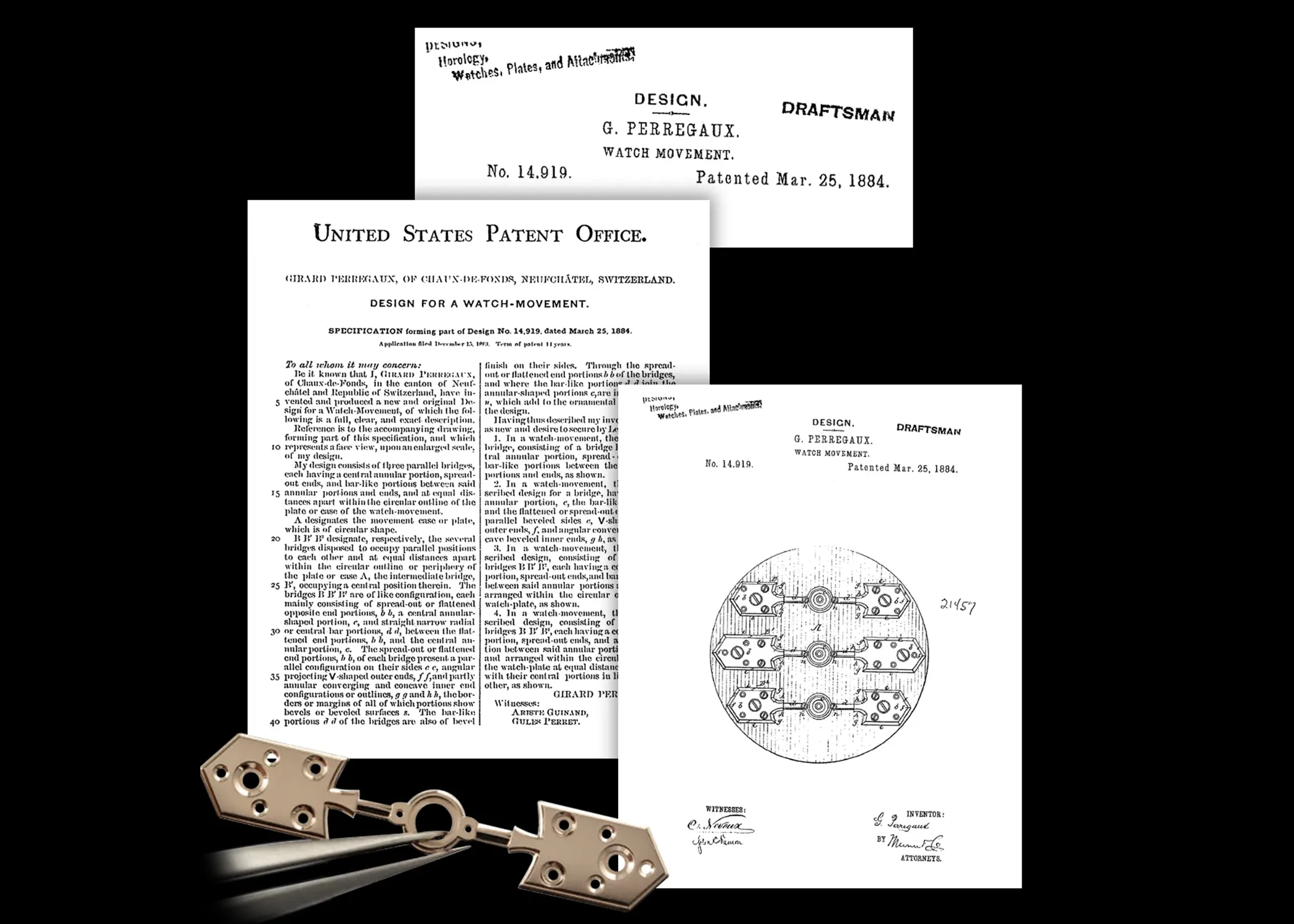
Recognising the potential of his construction, Girard continued to develop the underlying concept over the following years, refining both its technical architecture and its aesthetic execution. His work ultimately culminated in a new version of the movement, whose “Tourbillon with Three Gold Bridges” architecture he protected with US patent No. 14,919 in 1884. Five years later, in 1889, Constant Girard presented the pocket watch whose visual characteristics would continue to shape Girard-Perregaux to this day: La Esmeralda.
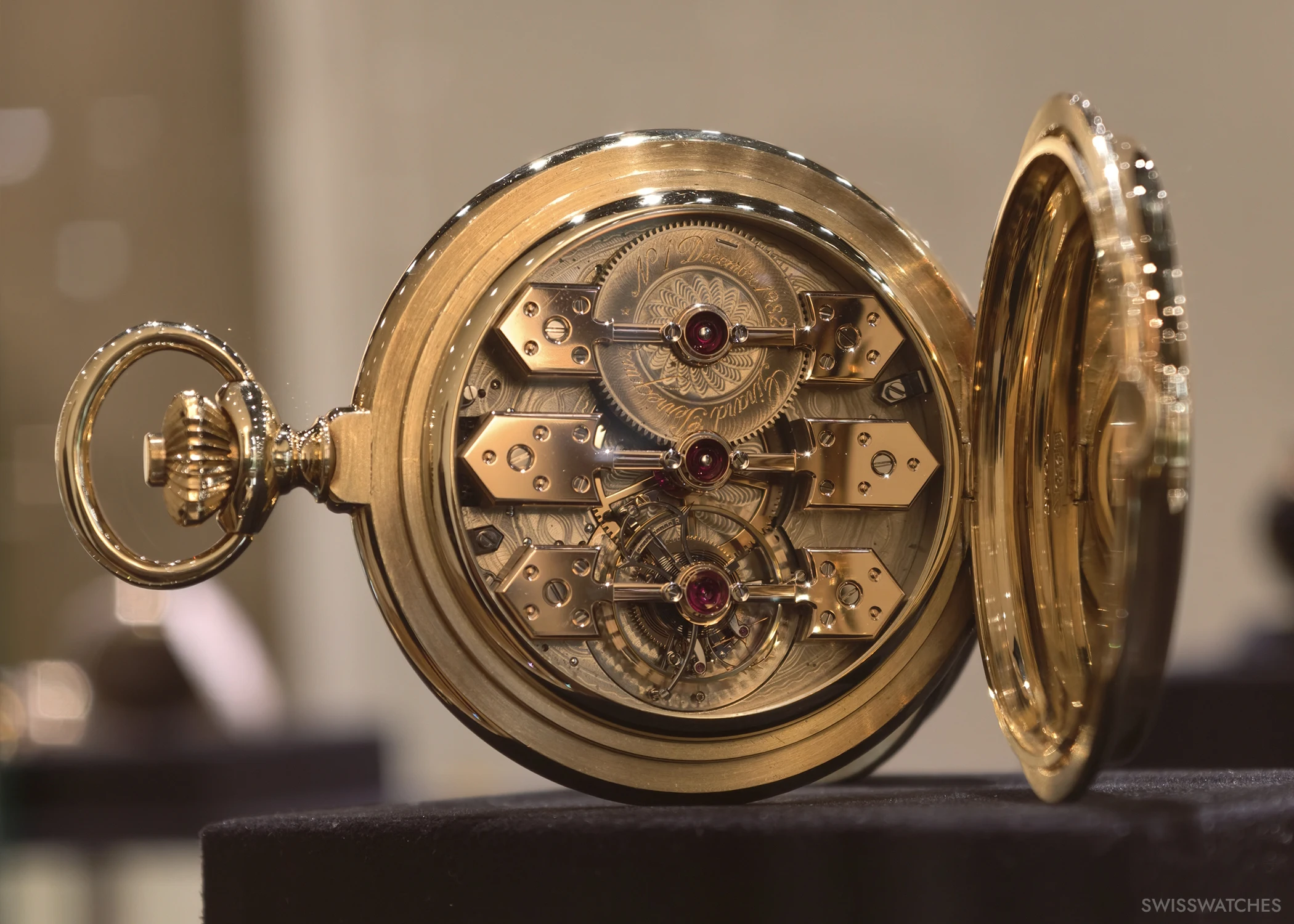
La Esmeralda was housed in an engraved pink-gold pocket-watch case, while its three bridges were now made of gold and shaped into their characteristic arrow-like form. By opening up the centres of the bridges, Girard made them appear more delicate while also providing a clearer view of the mechanism beneath. Alongside its bridge architecture, La Esmeralda also featured a historically distinctive version of the tourbillon cage, whose lyre-like form would likewise go on to become a signature of Girard-Perregaux.
In 1982, as the Swiss watch industry found itself deep in crisis amid the rise of quartz watches, Girard-Perregaux was among the manufacturers that turned back early to traditional mechanical watchmaking. As part of this effort, the manufacture revived its historic tourbillon with three gold bridges, initially in the form of a modern pocket watch. To achieve this, a historic example had already been completely dismantled in 1981 and each individual component analysed, allowing the construction to be recreated in a contemporary series of twenty pieces.
Yet this was only the beginning. Over the following years, Girard-Perregaux worked intensively to miniaturise the Three Bridges construction for the wrist. This was finally achieved in 1991, when the manufacture presented the tourbillon with three gold bridges in wristwatch form for the first time.
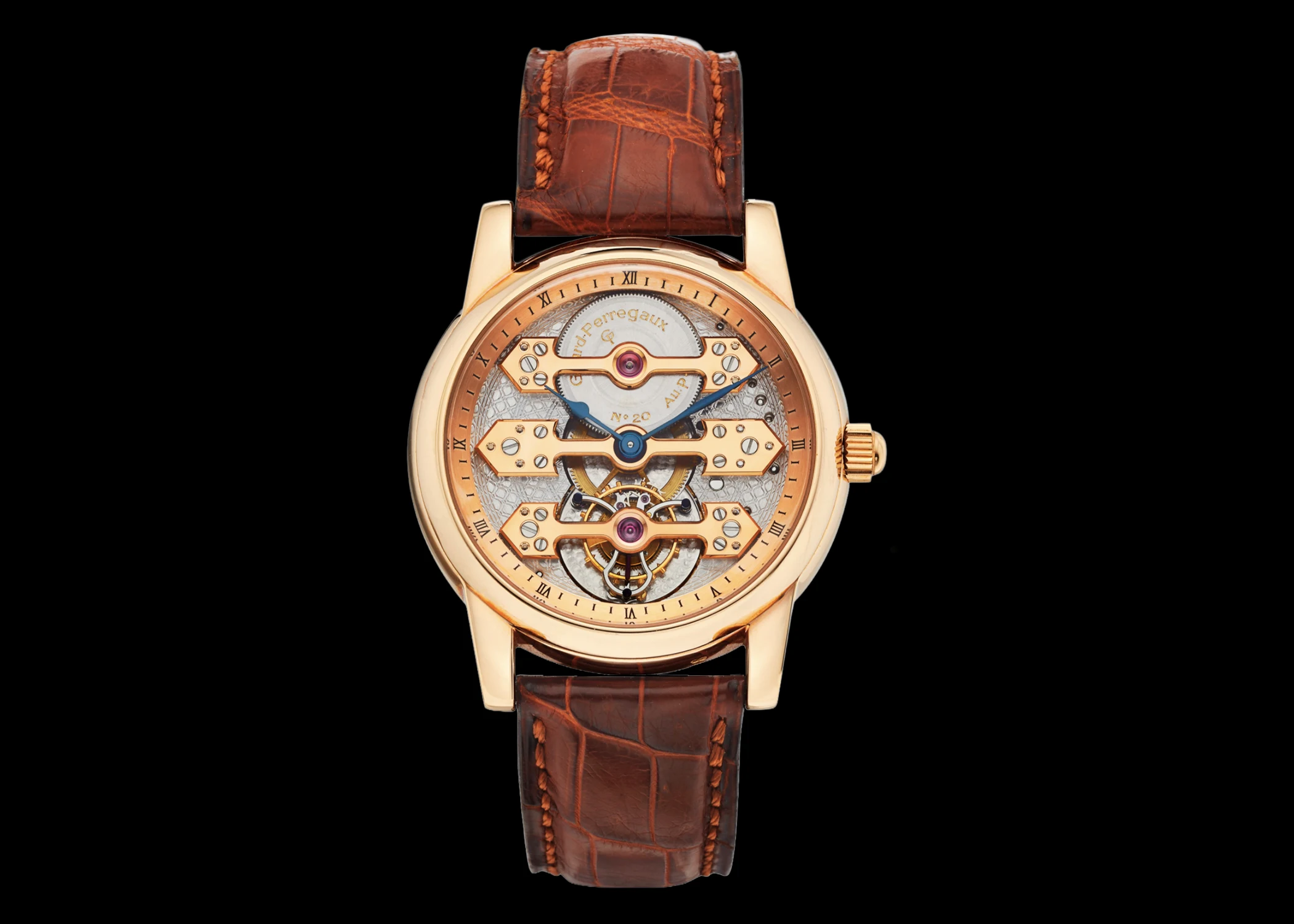
The miniaturisation of the Three Bridges tourbillon for the wrist also laid the foundation for translating the historic construction into a more contemporary design language. The Laureato would play a central role in this process, providing the sporty framework within which Girard-Perregaux would reinterpret the Three Bridges concept in the years that followed.
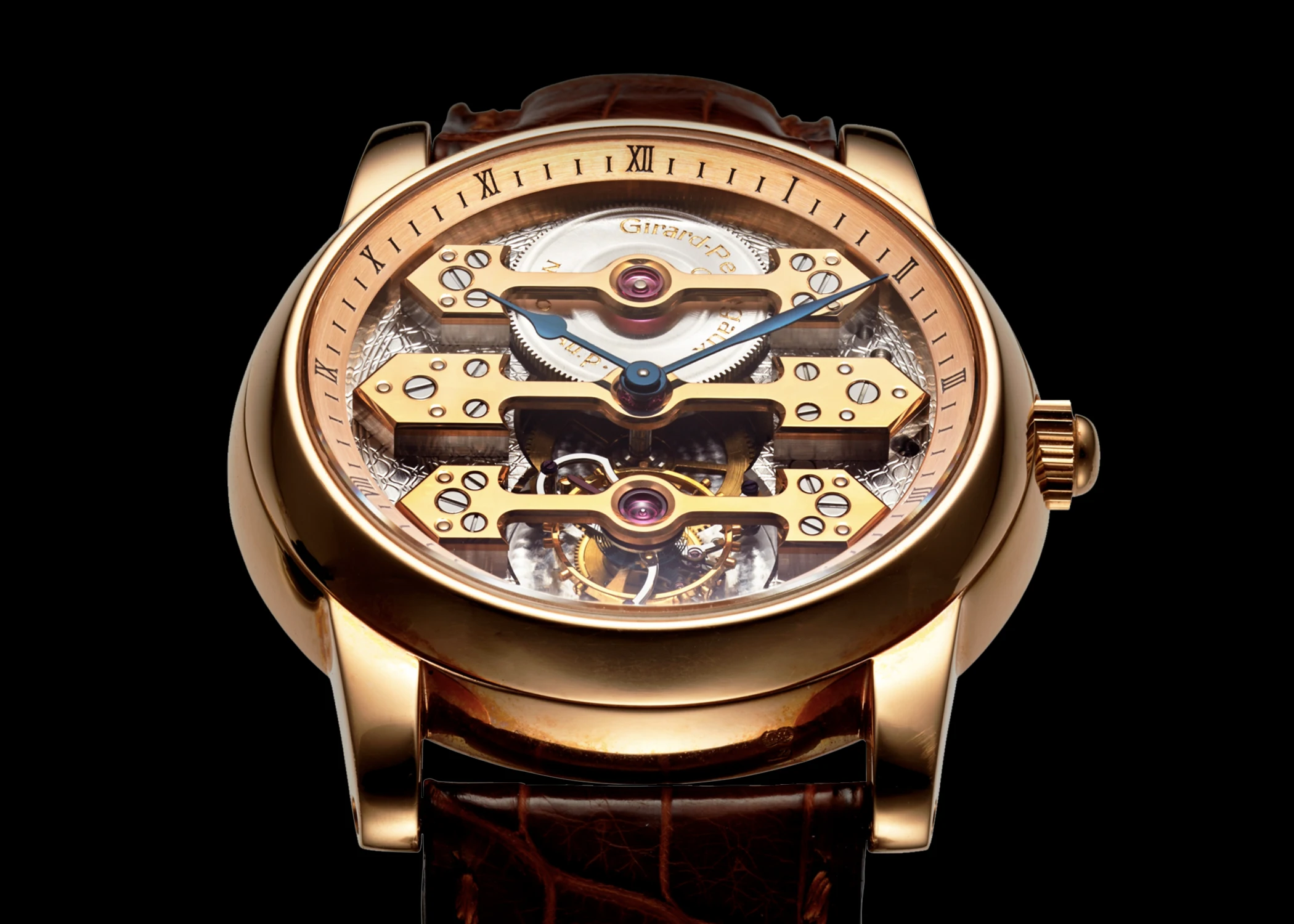
To understand this development, however, we first need to take a brief step back in time – to the origins of the Laureato and the creation of the model in the 1970s.
The Laureato emerged at a time when luxury sports watches in steel with integrated bracelets were beginning to combine robust functionality with the watchmaking prestige of the Vallée de Joux. Audemars Piguet led the way with the Royal Oak, whose combination of an octagonal bezel, tonneau-shaped monobloc case and integrated bracelet marked a turning point in 1972 as the “world’s first luxury sports watch”. Inspired by this concept of the luxury sports watch with an integrated bracelet, the Patek Philippe Nautilus followed in 1976, as did the IWC Schaffhausen Ingenieur SL that same year, while the Vacheron Constantin 222 arrived in 1977.

Launched in 1975, the Laureato fell squarely within this period and distinguished itself from its competitors in two key respects. Firstly, the steel sports watches from Audemars Piguet, Patek Philippe and IWC – with the exception of the Vacheron Constantin 222, which was designed by Jörg Hysek – were all created by designer Gérald Genta. The Laureato, by contrast, was conceived in-house by a designer whose identity has remained anonymous.
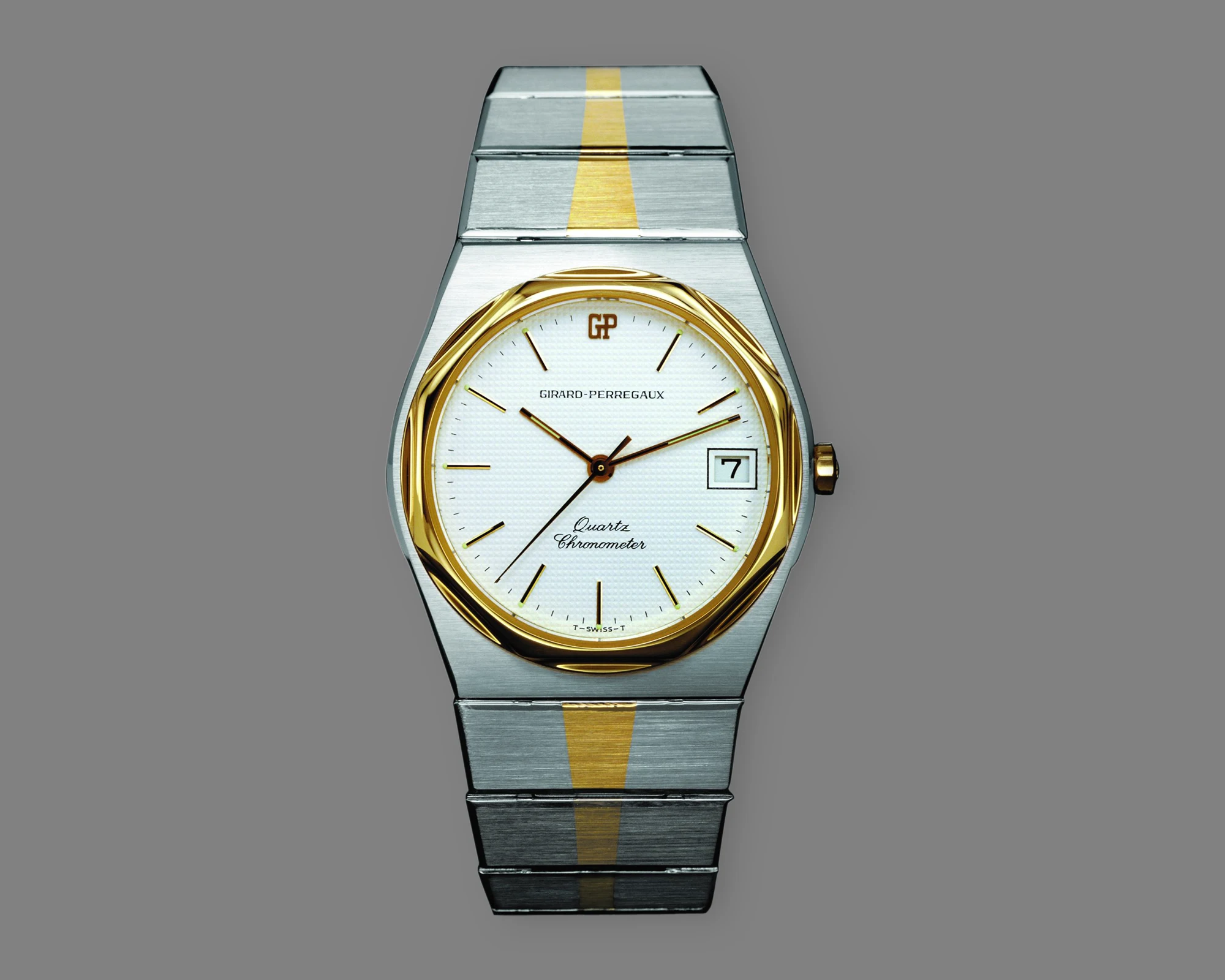
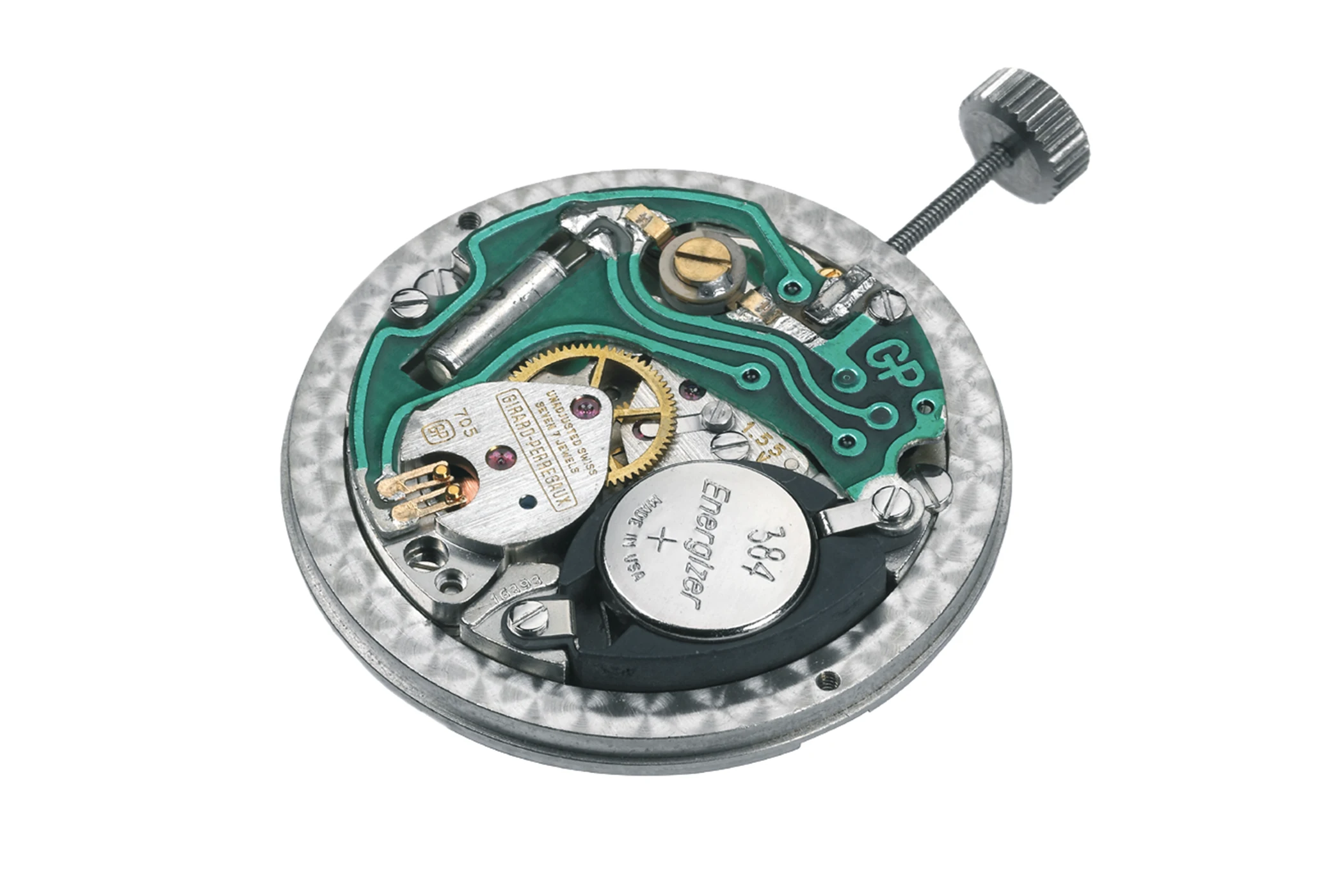
Secondly, at the time of its launch, the Laureato was the first quartz chronometer in the entire Swiss watch industry. The manufacturers of steel watches with integrated bracelets initially relied on base movements that were not produced by the manufactures themselves: Audemars Piguet, for example, initially used movements from LeCoultre, including the ultra-thin calibre 920 for the Royal Oak, while IWC relied on ETA and both Patek Philippe and Vacheron Constantin likewise used LeCoultre movements. The Laureato alone was equipped with an in-house movement, albeit a quartz calibre. This was a further-developed version of the GP350 quartz movement, first introduced in 1971, which oscillated at a frequency of 32,768 Hz and was suitable for series production.
Over the following decades, the Laureato continued to evolve through successive generations, each introduced at intervals of roughly ten years. Through carefully considered changes, these generations brought the model into the modern era while never losing sight of its original architectural identity.
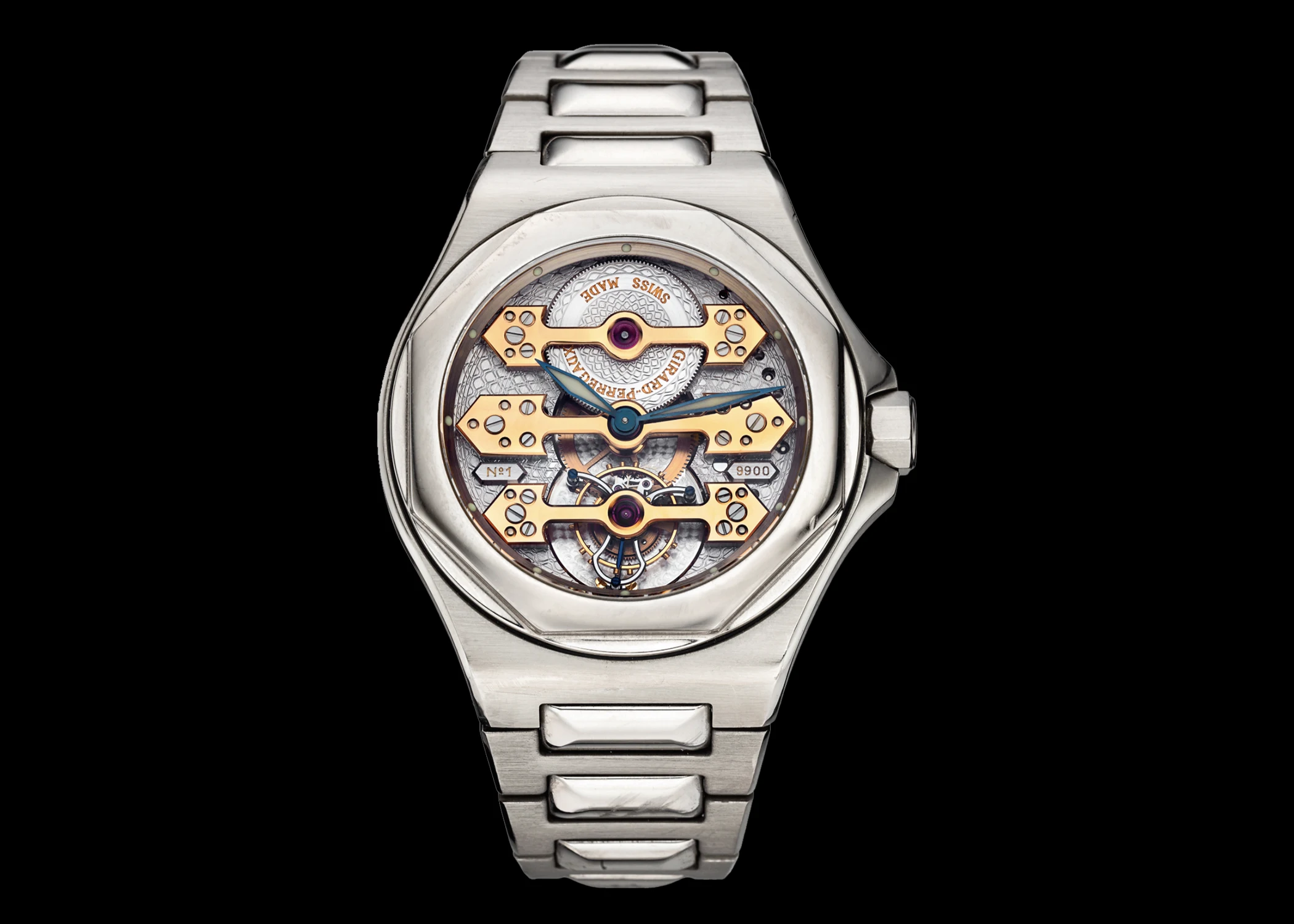
In 1995, the third generation of the Laureato ultimately marked the model’s transition from quartz to mechanical movements, with the notably slim automatic GP3100 calibre. Two years later, the Three Bridges architecture also made its way into the Laureato’s sporty format with Ref. 9907 and its calibre 9900 tourbillon movement, a concept that would be carried forward over the following years in increasingly contemporary forms and materials.
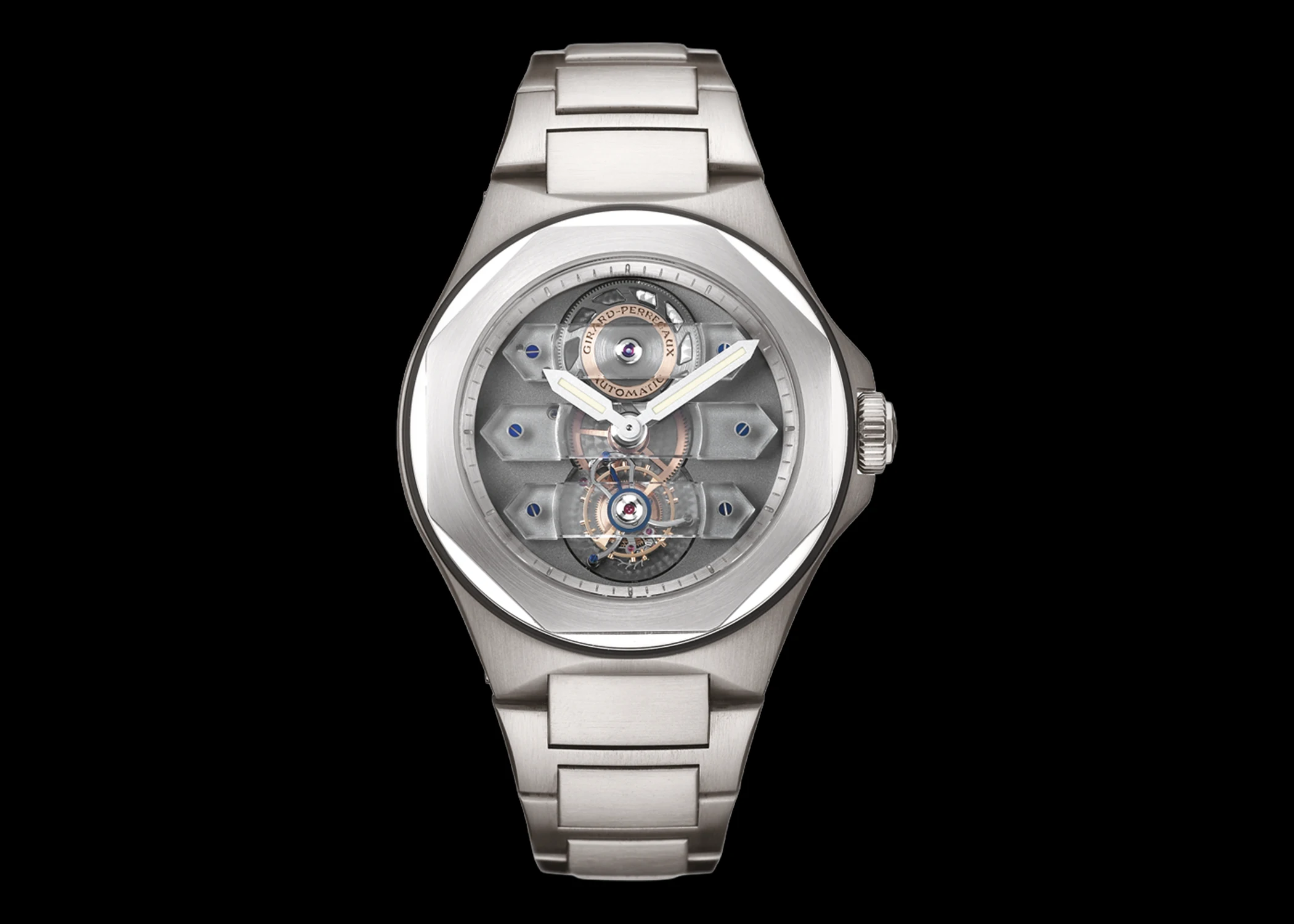
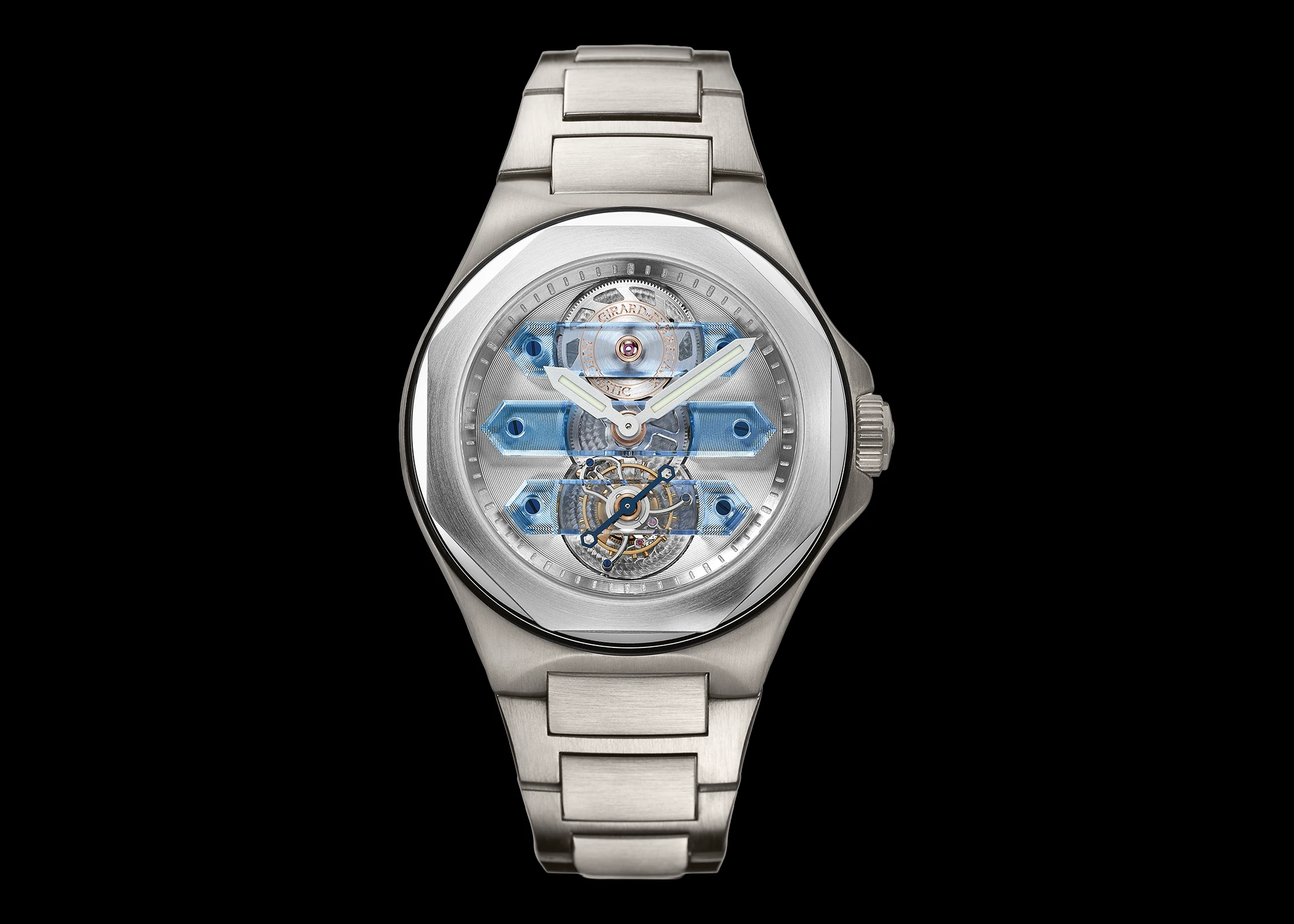
In 2003, the fourth generation of the Laureato followed with more pronounced proportions and a sportier character, while also introducing new interpretations of the Three Bridges construction. In 2006, Girard-Perregaux presented the Laureato Evo3 Tourbillon with three sapphire bridges, a titanium case, a platinum bezel and the automatic calibre GP9600, translating the Three Bridges architecture into a more modern aesthetic. No less contemporary was the Laureato Evo3 Tourbillon launched six years later, in 2012, which combined the GP9600-0004 movement with three transparent blue spinel bridges housed in a 42.6 mm platinum case.
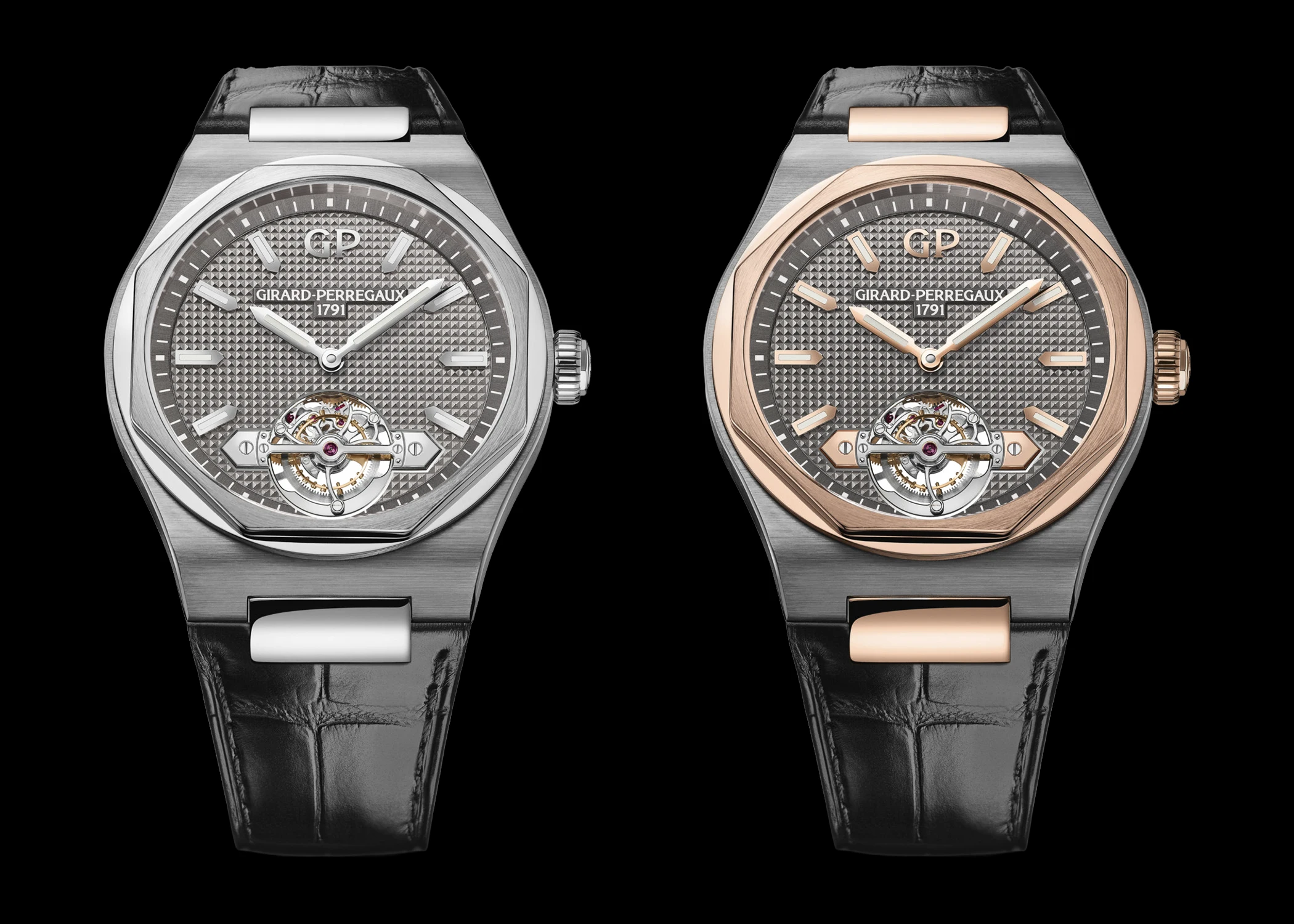
In 2016, the manufacture introduced the fifth generation of the Laureato, which not only offered another contemporary interpretation of the model but also included the first Laureato with a single-bridge tourbillon. Rather than showcasing the entire movement architecture through three parallel bridges, Girard-Perregaux concentrated the concept into a single, horizontally arranged arrow-shaped bridge at 6 o’clock, supporting the lyre-shaped tourbillon cage. This reduced reference to the Three Bridges architecture was integrated into an otherwise closed dial decorated with a Clous de Paris pattern.
The first single-bridge tourbillon to enter the permanent collection appeared in 2017 and featured a substantial 45 mm titanium case. Of particular interest was the calibre GP09510, which was designed, manufactured and decorated entirely at the Girard-Perregaux manufacture in La Chaux-de-Fonds. At the time, it was one of only a small number of tourbillon calibres to feature automatic winding – and one of the very few in which this was achieved by means of a micro-rotor, which was itself crafted from gold.
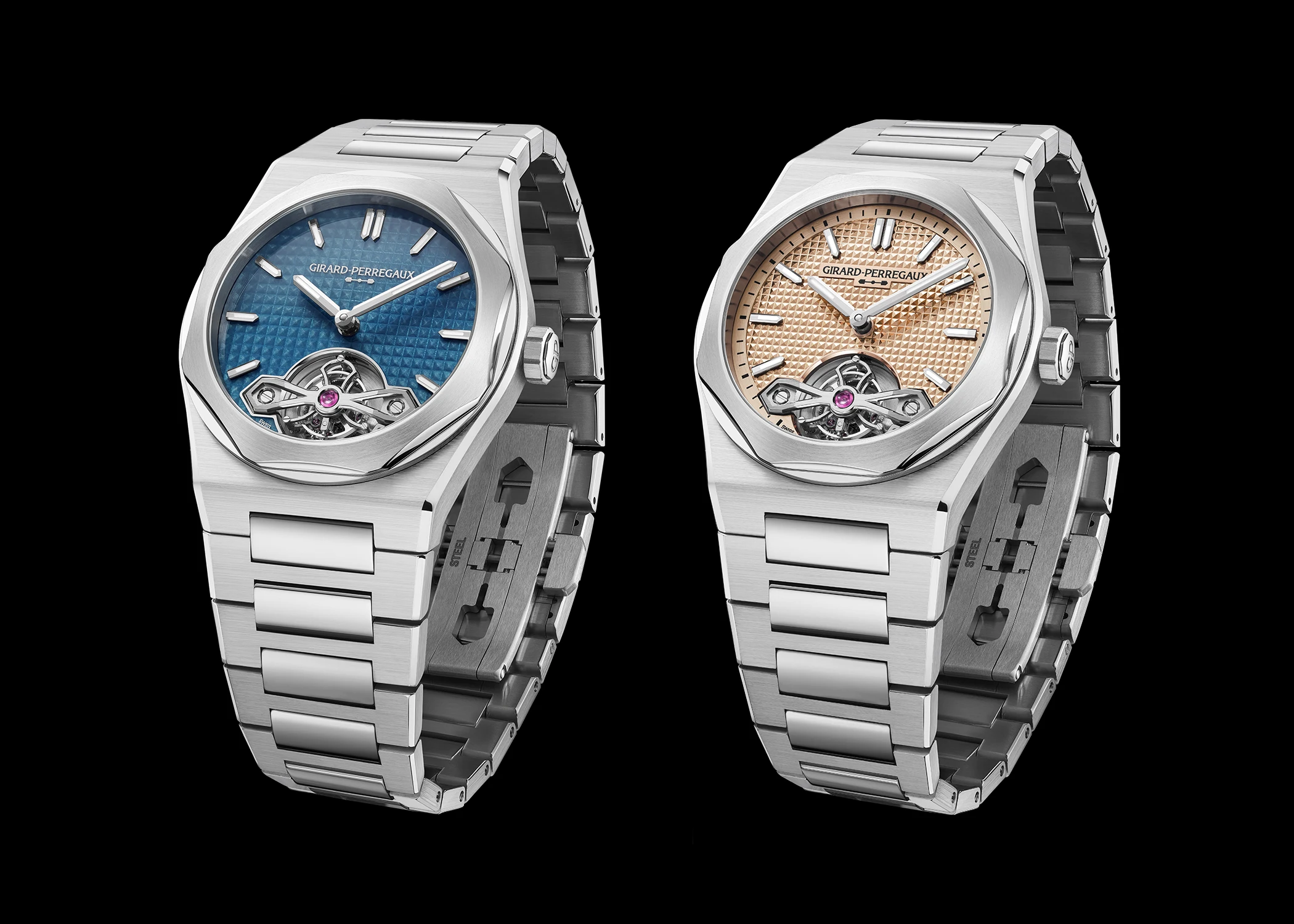
Looking back at the evolution of the Laureato, it becomes clear that the model has been brought into the modern era through carefully considered developments without abandoning the defining characteristics of its past. The new Girard-Perregaux Laureato Fifty Tourbillon 39 mm continues this approach and is available in two versions – one with a white-gold dial finished in blue enamel and the other with a rose-coloured dial crafted from 18-carat gold.
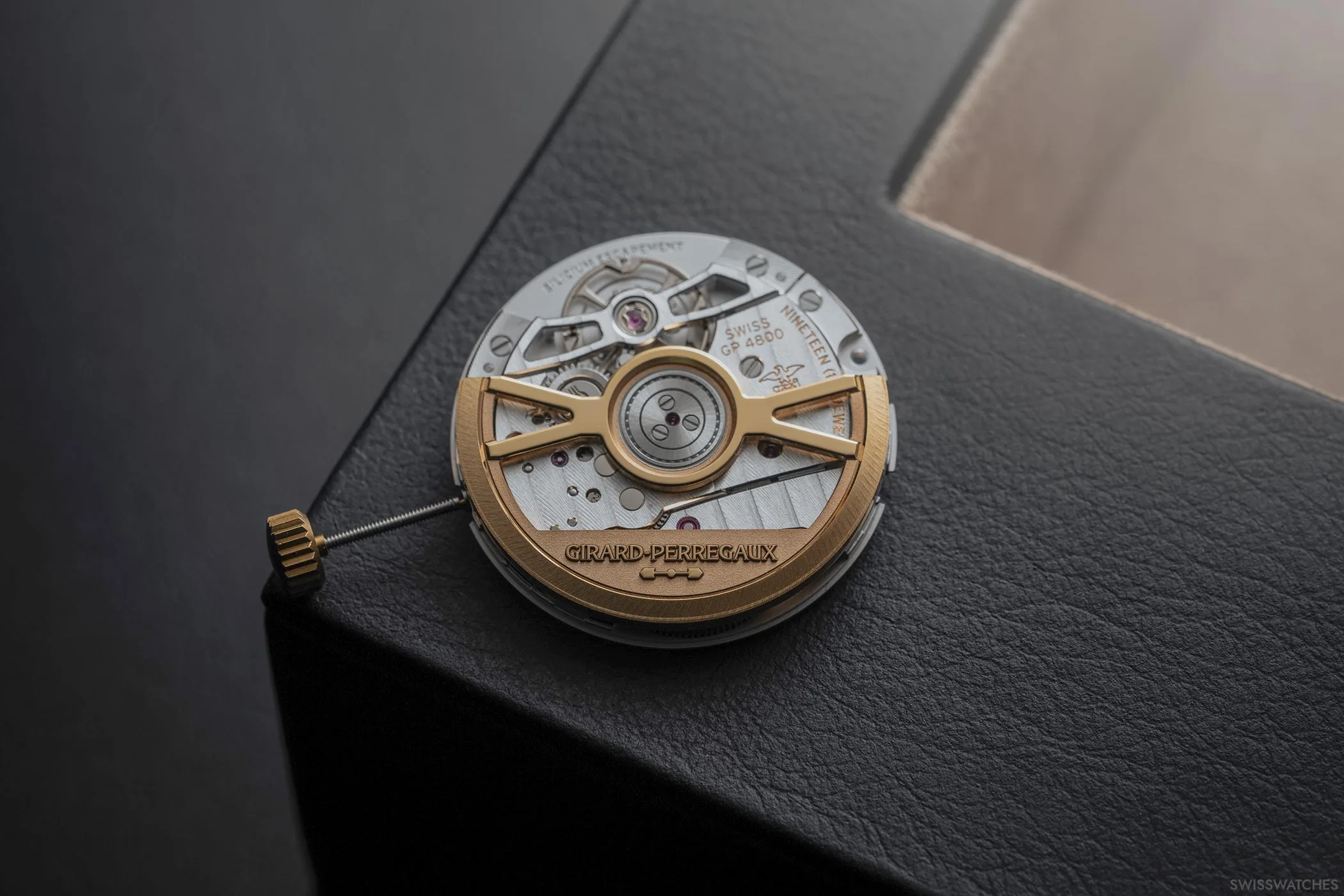
With the new manufacture calibre GP8410-2574, which powers both versions of the new model, Girard-Perregaux is presenting its fourth entirely new movement within the space of twelve months. The first was the automatic GP4800 calibre, introduced in September 2025, with a power reserve of 55 to 60 hours. Featuring a silicon pallet lever and escape wheel as well as a free-sprung regulating system, it brought the movement’s technical specification in line with those of Rolex and Patek Philippe. The extensively skeletonised calibre GP9620, housed in the Laureato Three Gold Bridges limited to 50 pieces, then brought the Three Bridges architecture back to the Laureato once again, structuring the movement around three openworked white-gold bridges.
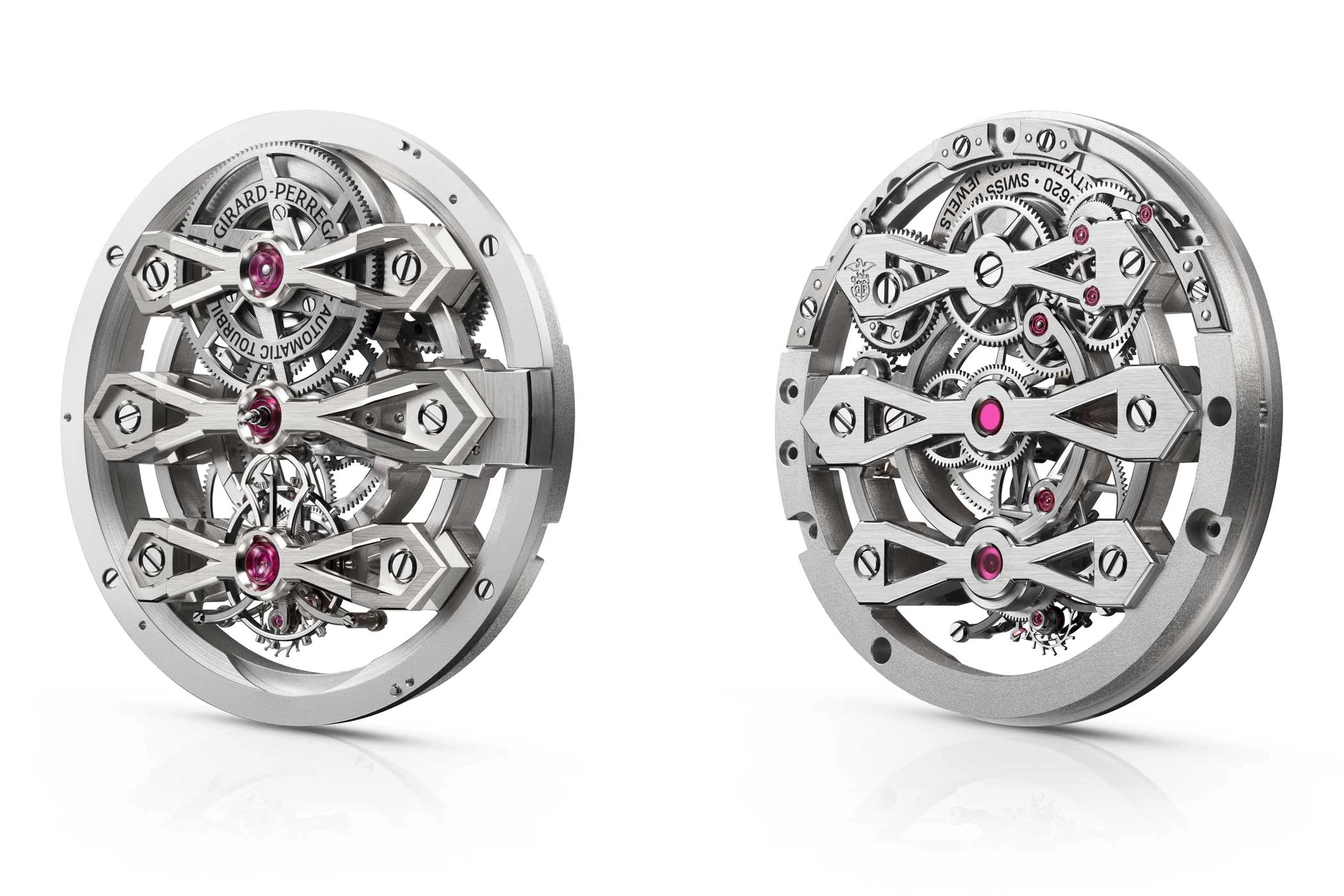
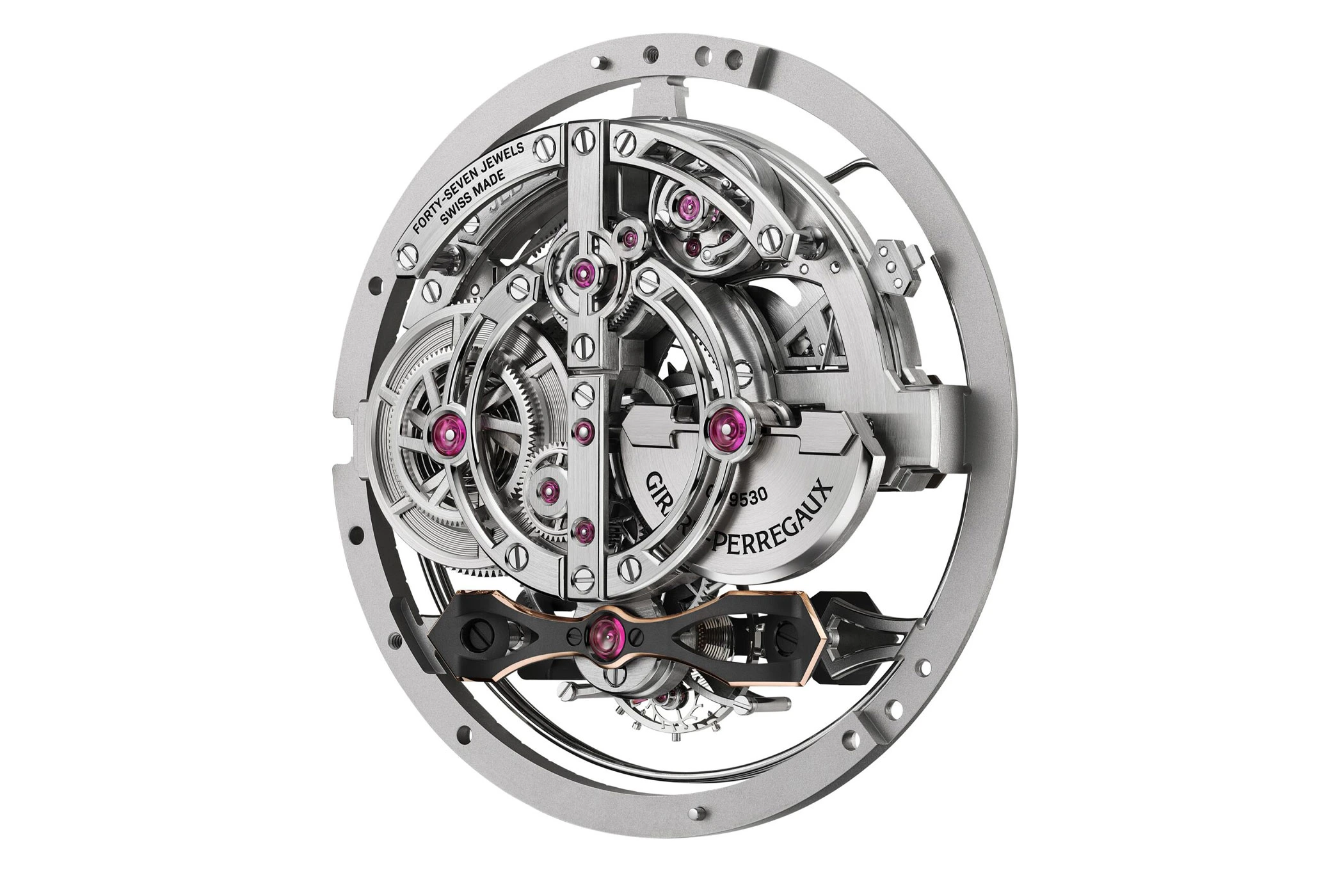
Most recently, in March this year, Girard-Perregaux introduced the manufacture calibre GP9530, which combines a minute repeater, a lyre-shaped tourbillon and automatic winding via a micro-rotor. Comprising 475 components, the calibre required 440 hours of work by a watchmaker for assembly and decoration – equivalent to eleven full working weeks.
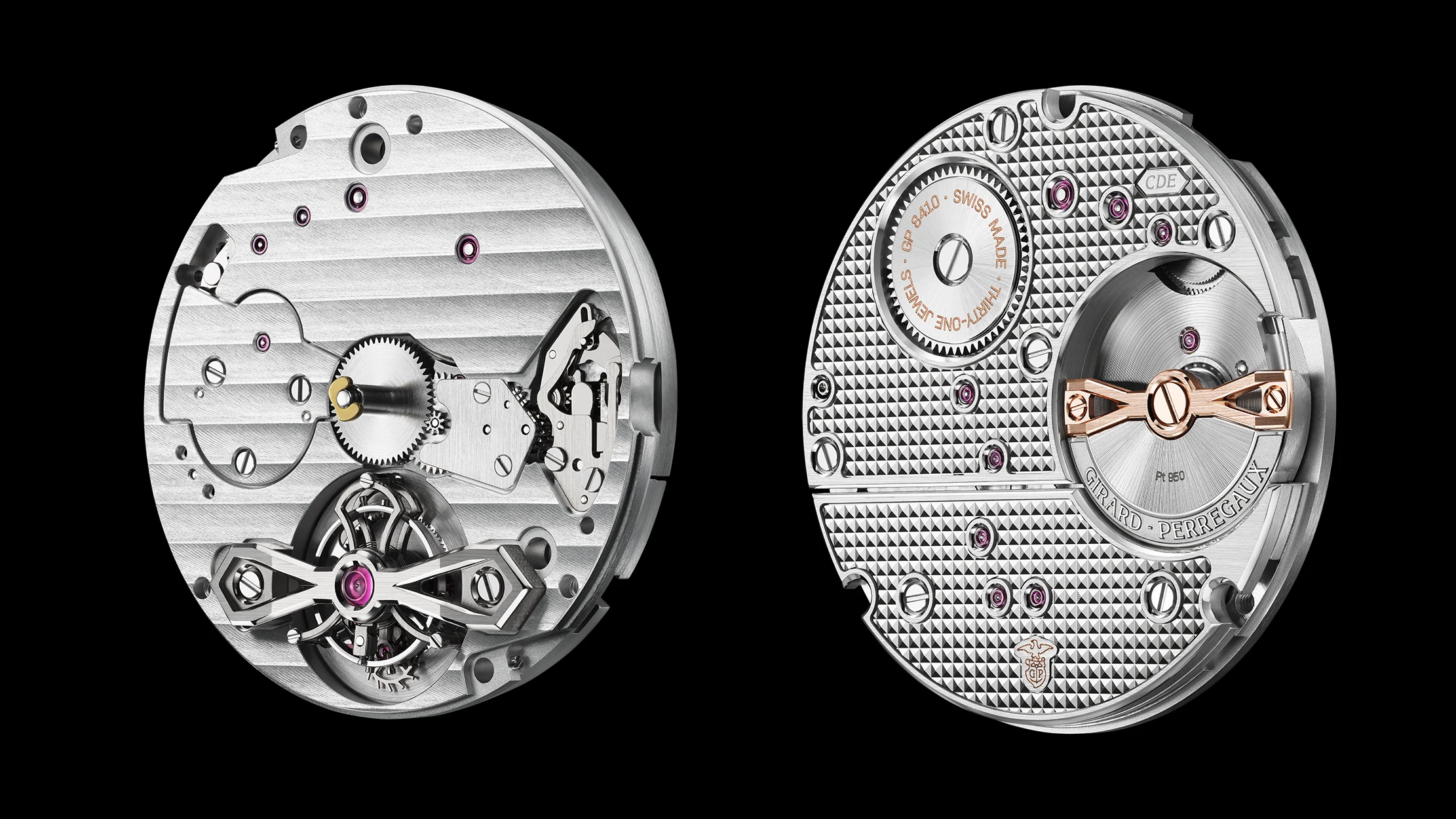
The GP8410-2574 movement now rounds out this series as the fourth calibre, combining a new tourbillon with automatic winding via a micro-rotor incorporating platinum and rose gold. Comprising 207 components, the movement measures 30.40 mm in diameter and 6.10 mm in height and offers a power reserve of 72 hours while operating at a frequency of 21,600 vibrations per hour (3 Hz). Its two large bridges are decorated with a Clous de Paris motif – a pattern of small, closely spaced pyramids – which is echoed on the Laureato’s dial and can be admired through the sapphire crystal caseback. The micro-rotor responsible for automatically winding the tourbillon movement features an oscillating weight in 950 platinum, decorated with a radial sunray finish and held in place by an arrow-shaped bridge in rose gold.
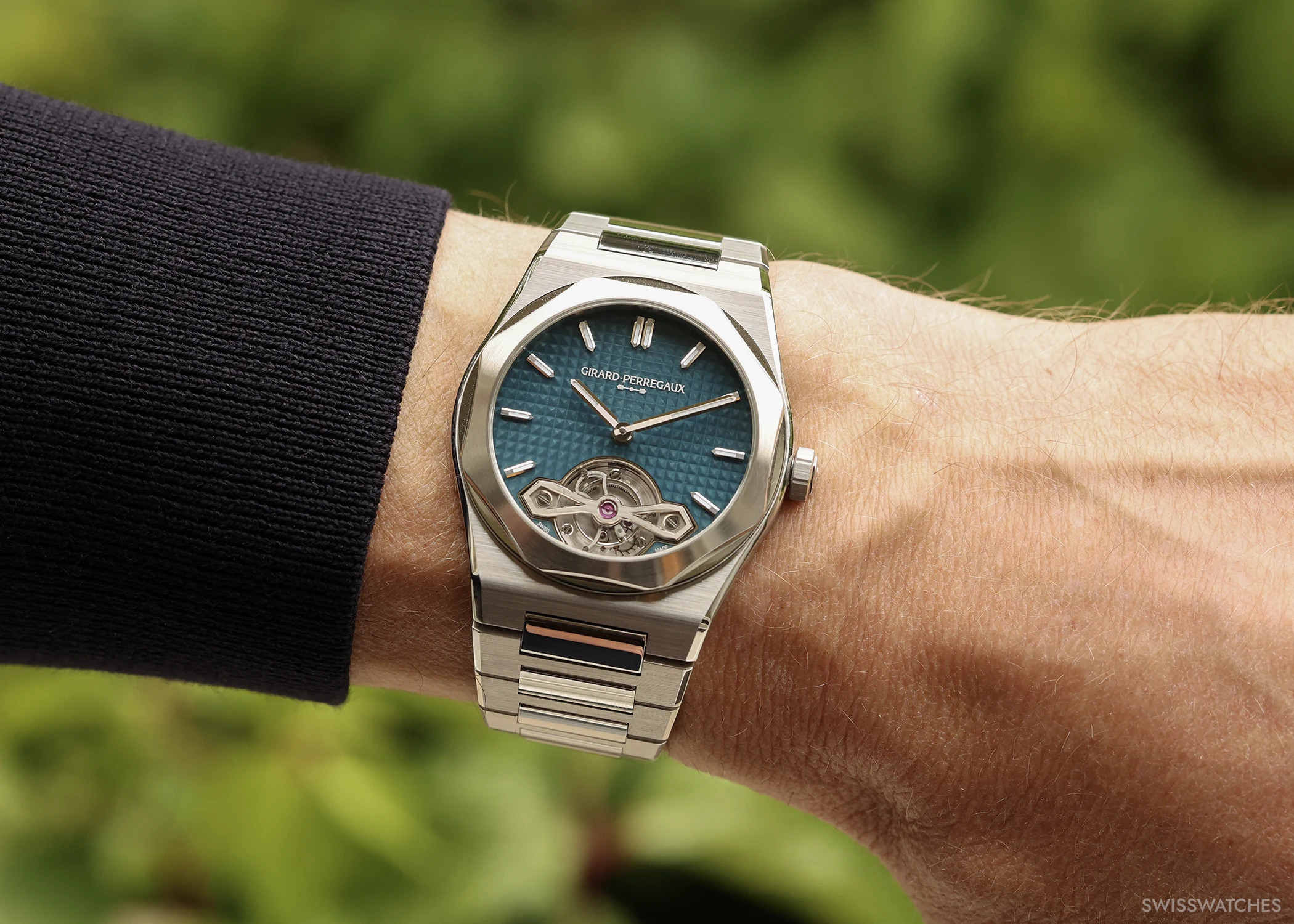
The Girard-Perregaux Laureato Fifty Tourbillon 39 mm is available in two versions, each featuring a different dial, although both are fitted with white-gold hands and hour markers with a luminescent coating. One features a blue fired-enamel dial on a white-gold base, while the other has a rose-coloured dial made from solid 18-carat gold.
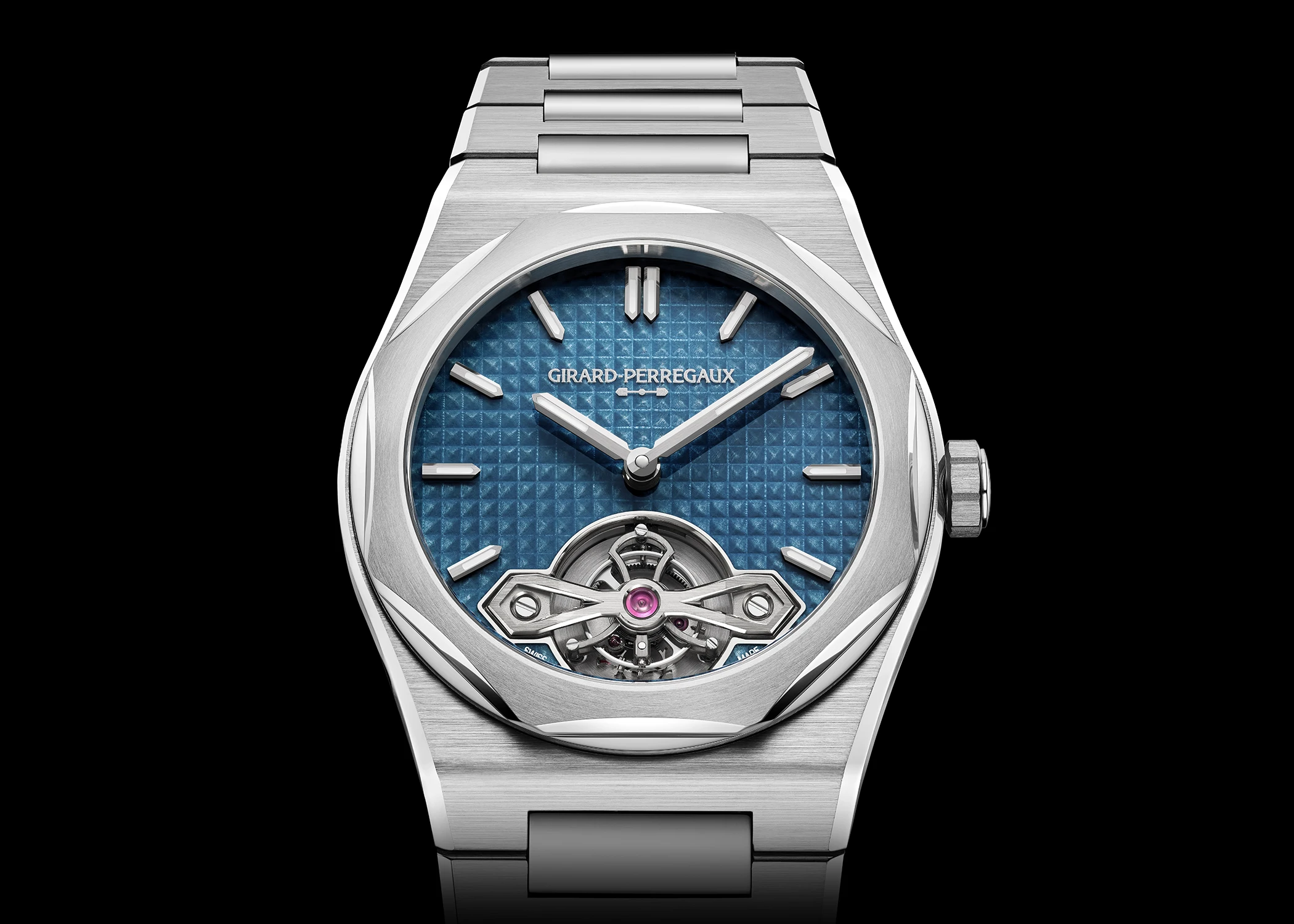
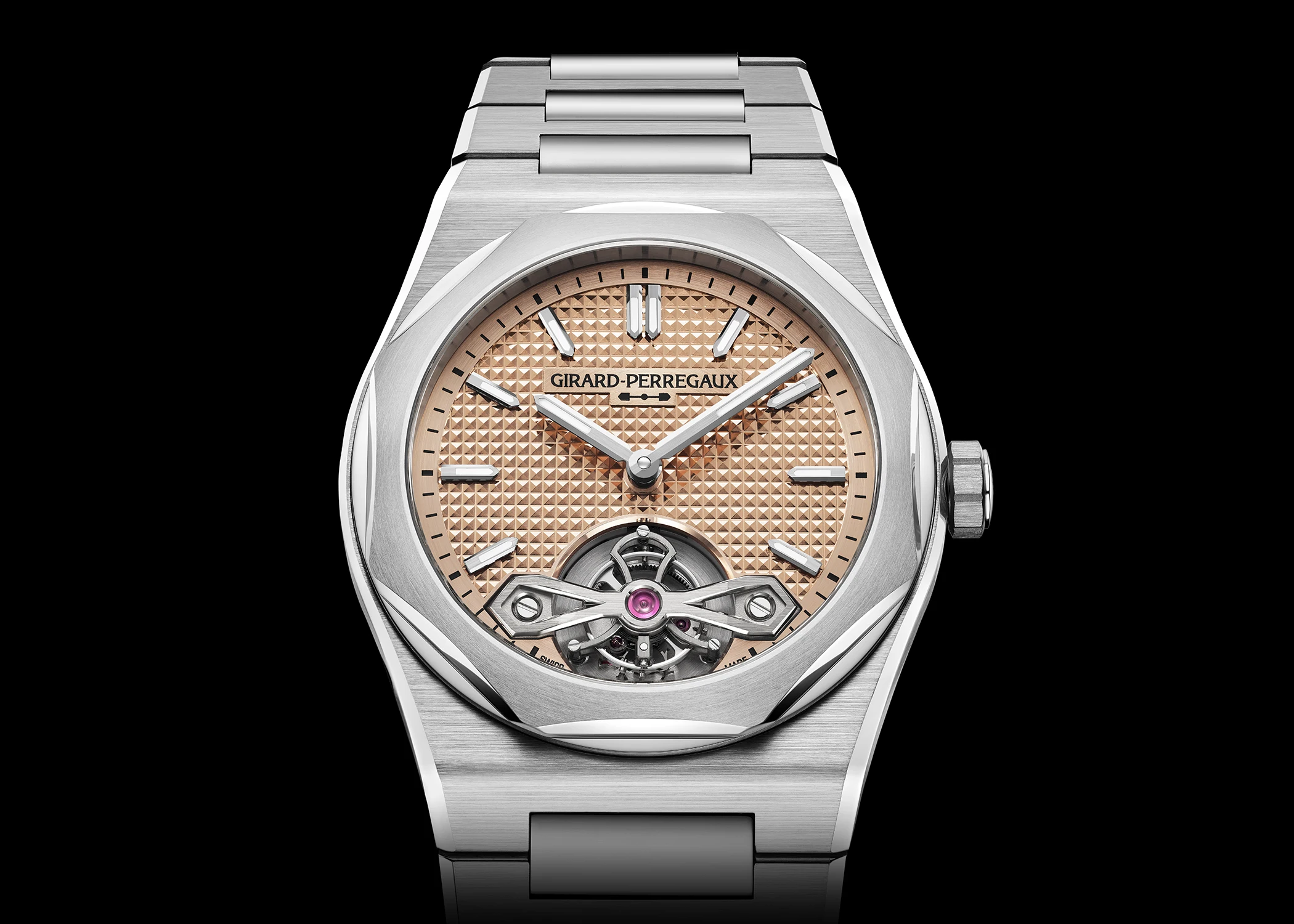
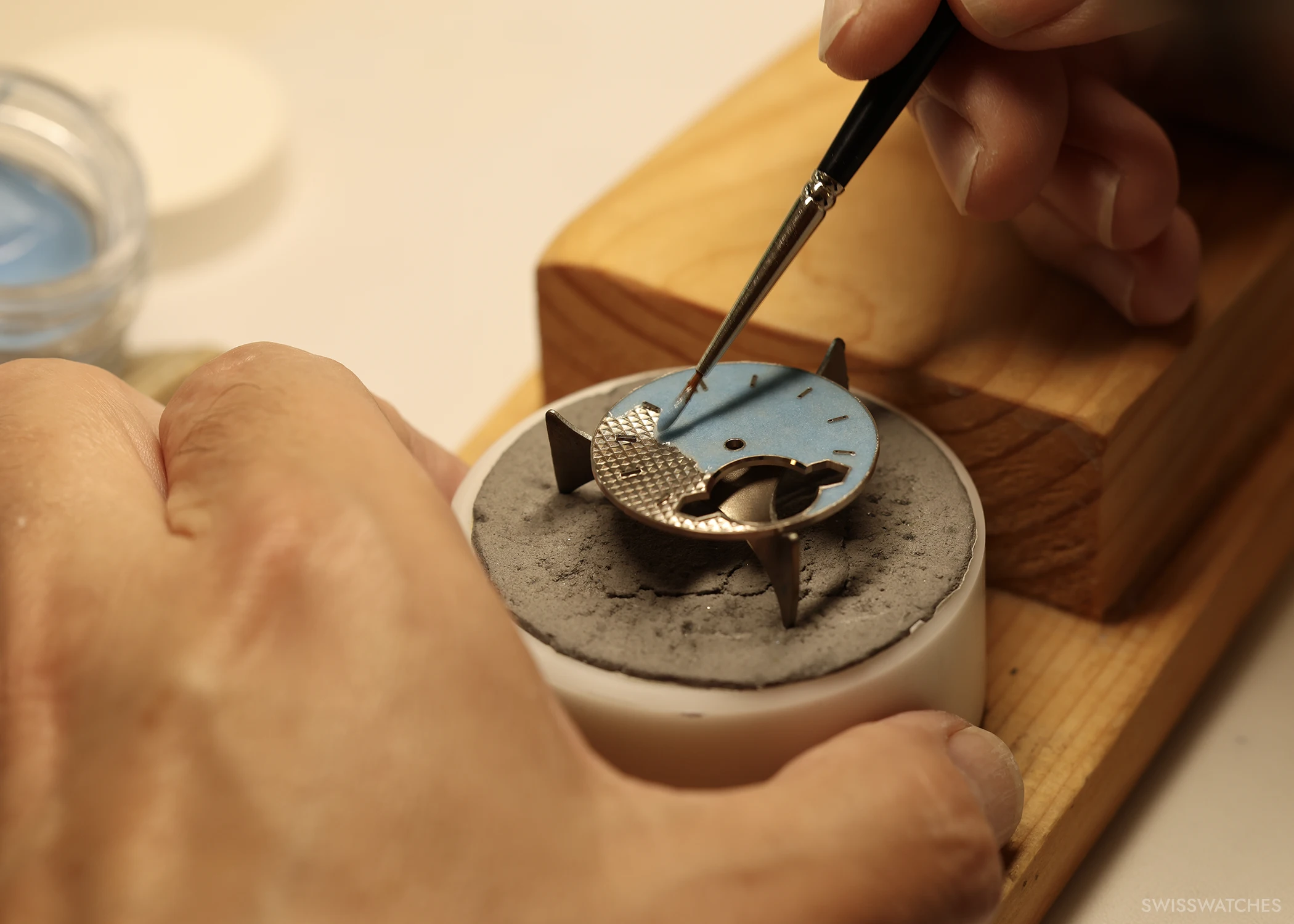
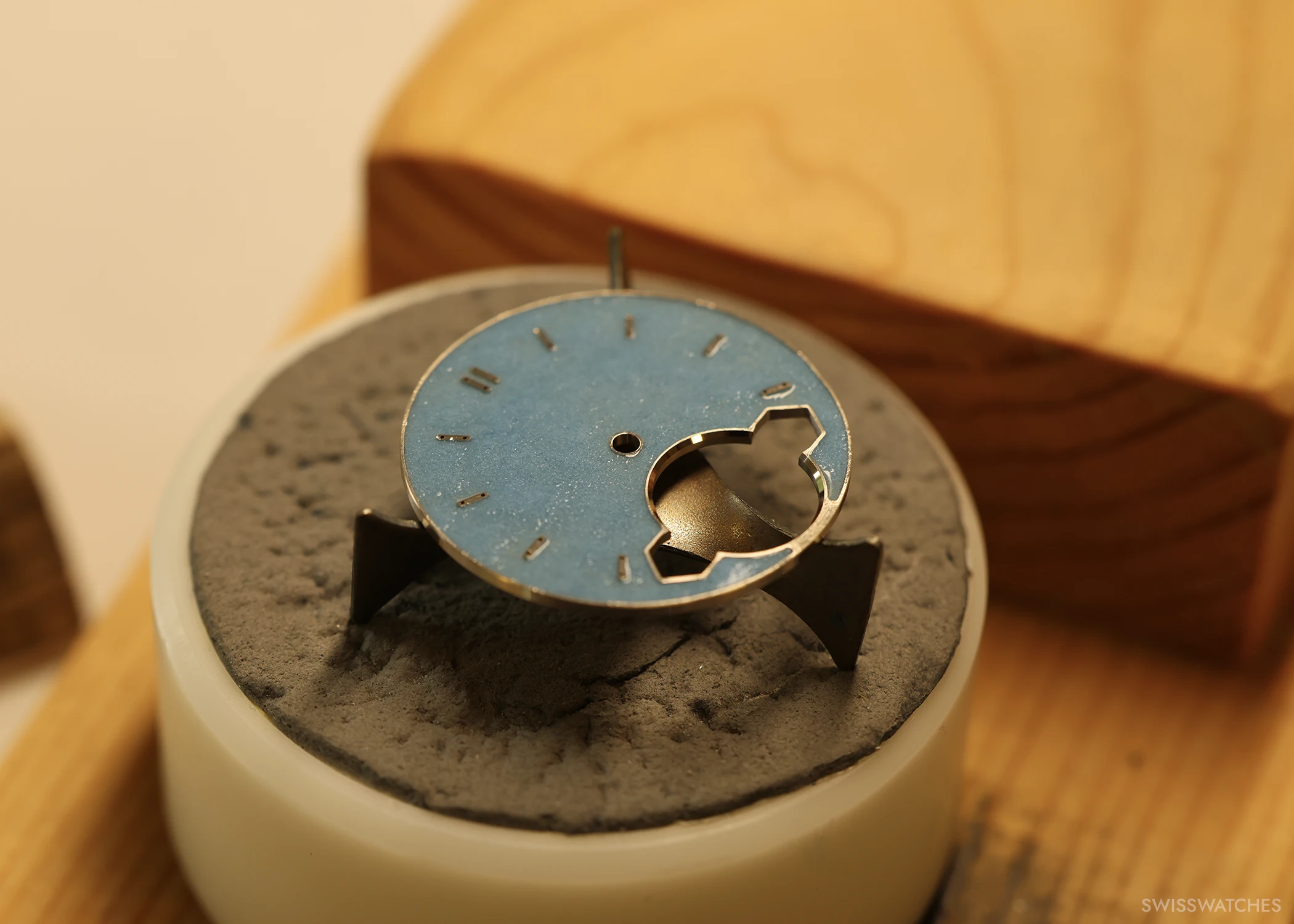
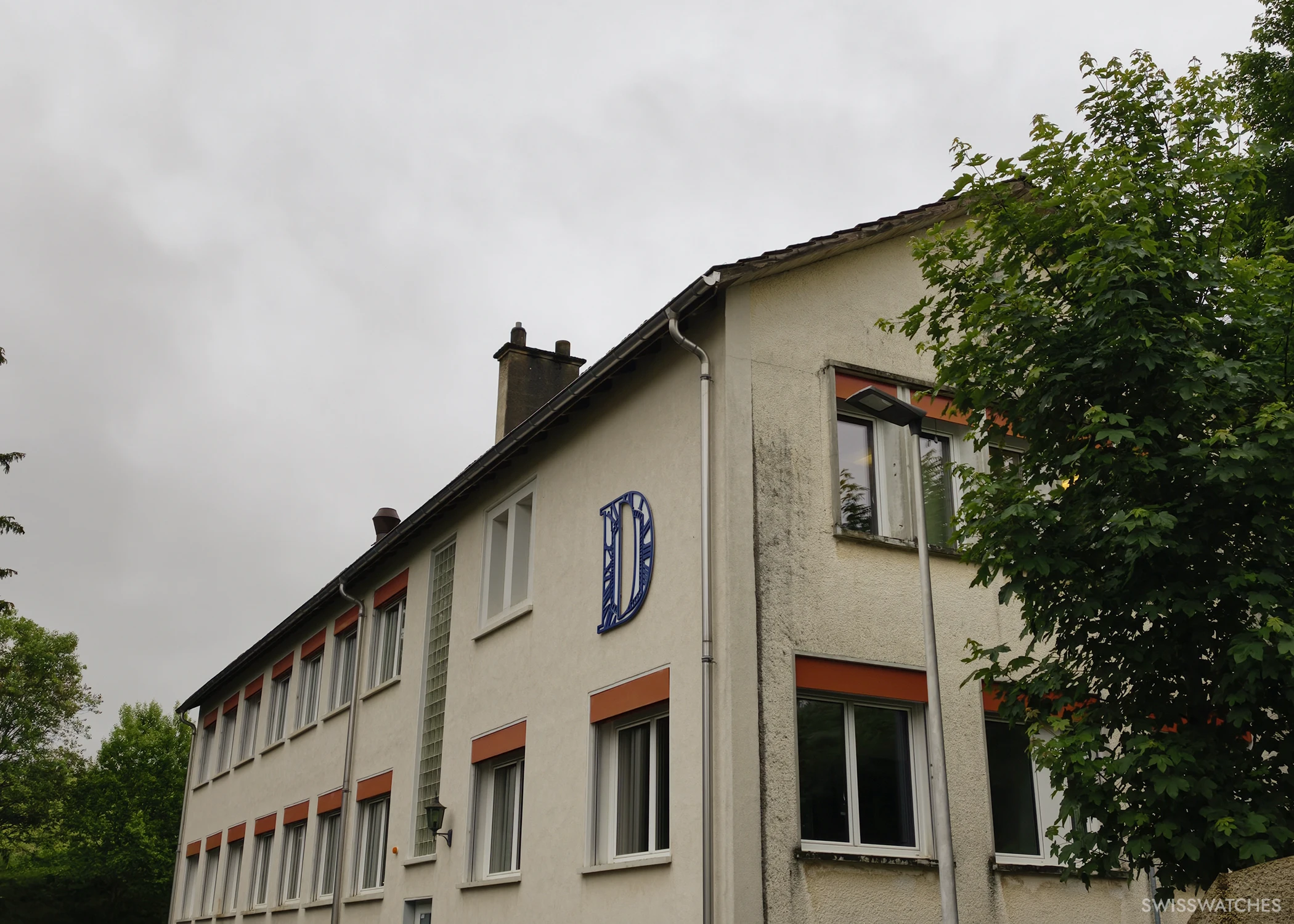
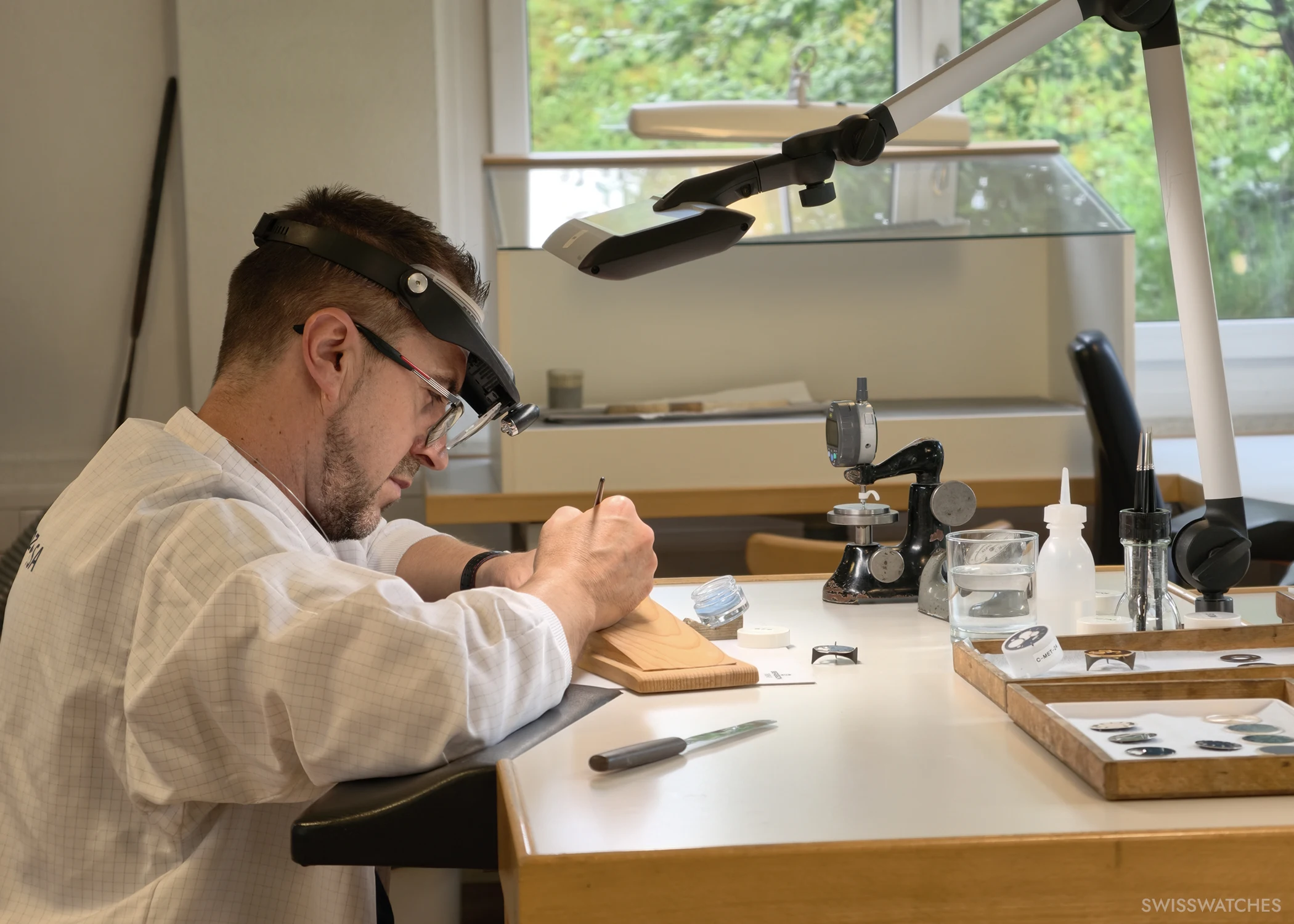
The blue dial is particularly notable because it is produced at Donzé Cadrans, the company’s in-house enamelling workshop in Le Locle. Founded in 1972 by master enameller Francis Donzé, the workshop today belongs to Sowind Group SA, alongside Girard-Perregaux and Ulysse Nardin. Its ateliers continue to practise traditional techniques including the art of grand feu enamelling.
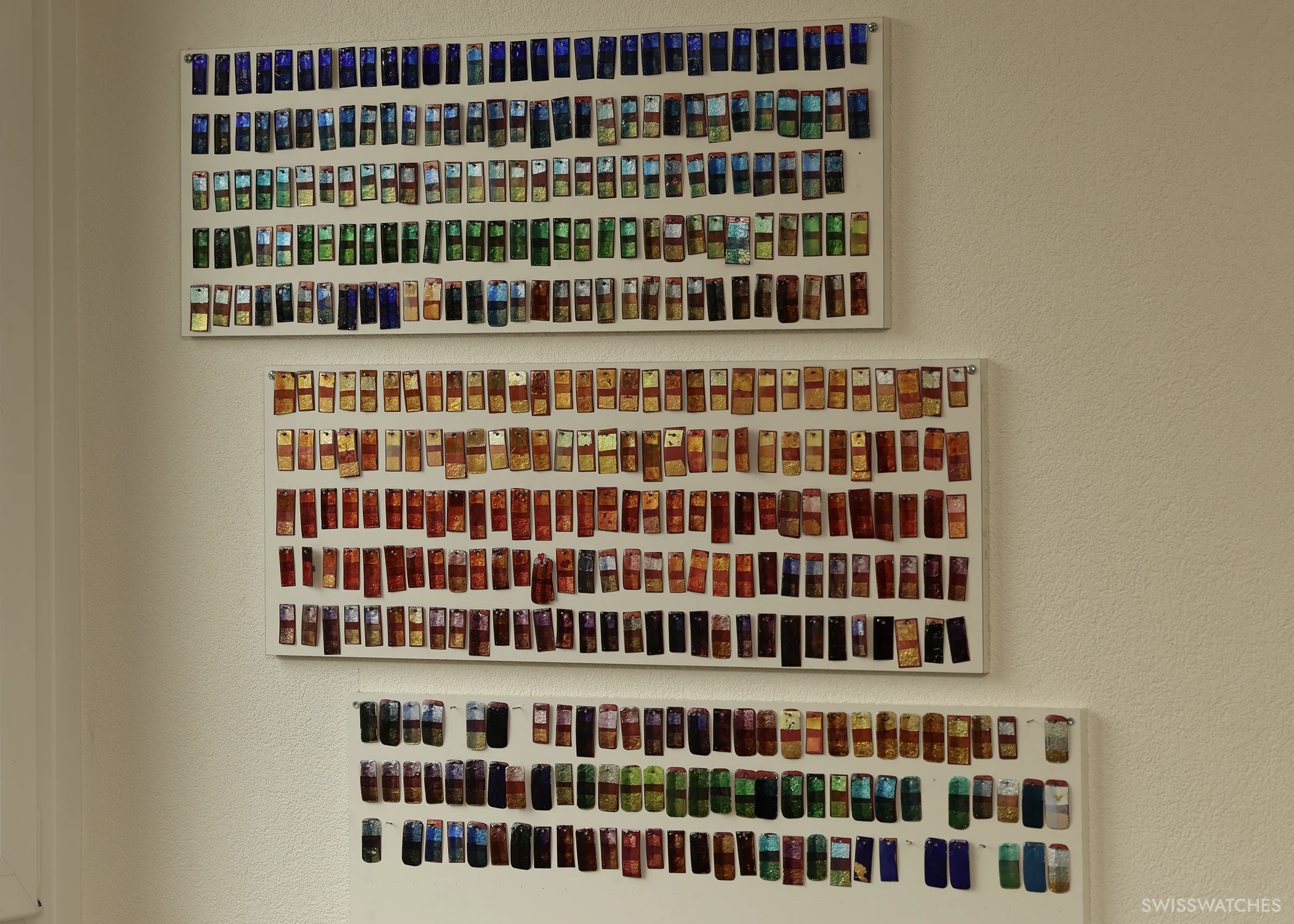

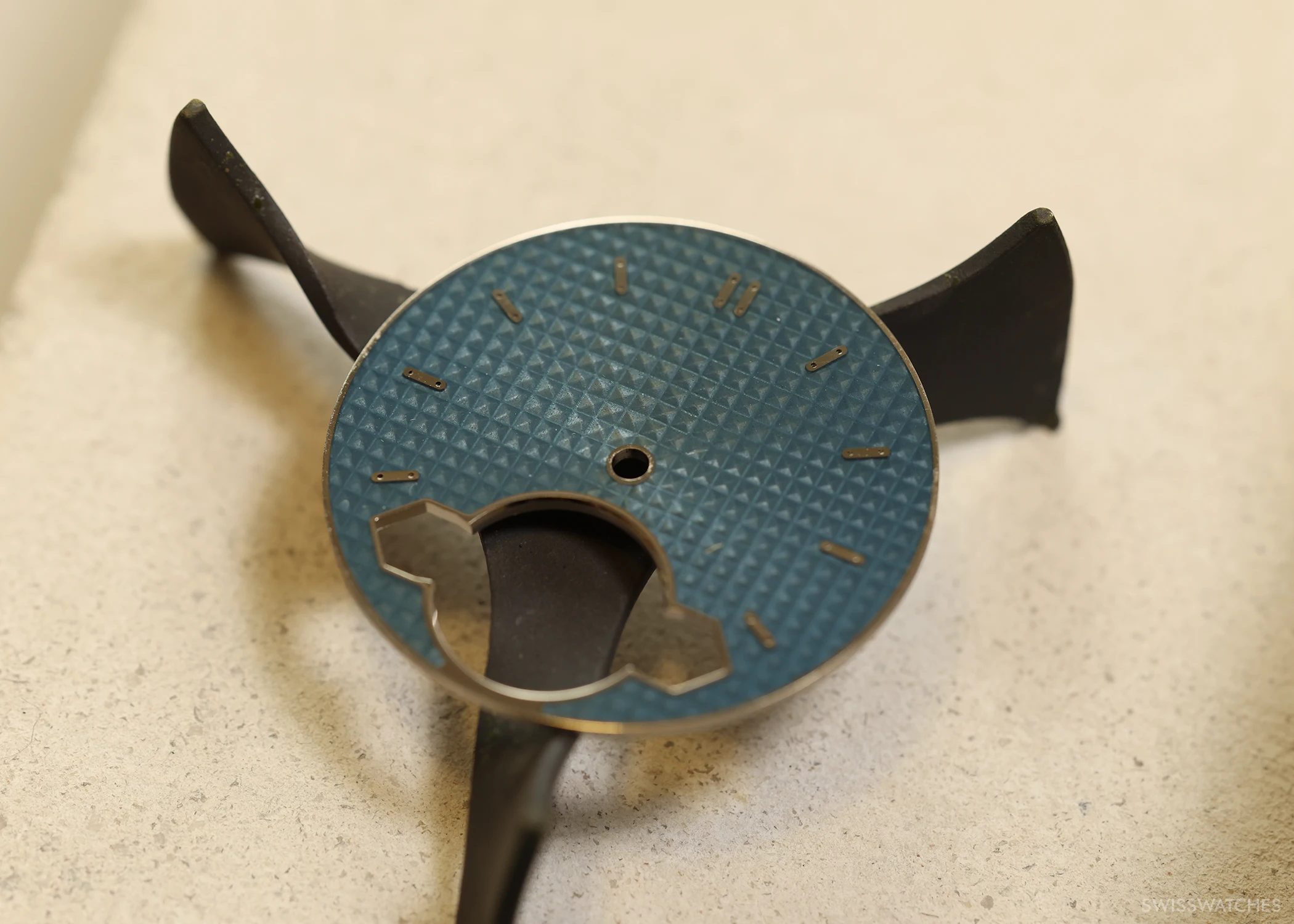
For the blue dial of the new Girard-Perregaux Laureato Fifty Tourbillon 39 mm, a finely sieved mixture of quartz sand, potash and metal oxides is applied to a white-gold plate decorated with a Clous de Paris pattern and featuring cut-outs for the tourbillon opening and bridge. The dial is then fired in a kiln at temperatures of between 800 and 1,200 degrees Celsius. Particular care is required during this process, as even the smallest microcracks or changes in colour can render the piece unusable.
With the new Girard-Perregaux Laureato Fifty Tourbillon 39 mm, the historic principle of the Three Bridges concept is reduced to its most elemental form. In place of the three parallel bridges that structured the entire movement in the historic tourbillons, a single arrow-shaped bridge in white gold remains at 6 o’clock. Compared with its predecessors, it is considerably more angular and more extensively openworked.
From its circular centre, two broad, tapering arms extend towards sharply pointed ends, while triangular cut-outs visually open up the construction and reveal the two fixing screws. Compared with earlier Laureato tourbillons, whose bridges featured softer contours and remained more closely aligned with the historic arrow-shaped forms of the Three Bridges models, the new bridge appears more angular and altogether far more contemporary in its interpretation. This design language also extends to the tourbillon cage itself, whose characteristic lyre shape is defined even more prominently than on previous models.
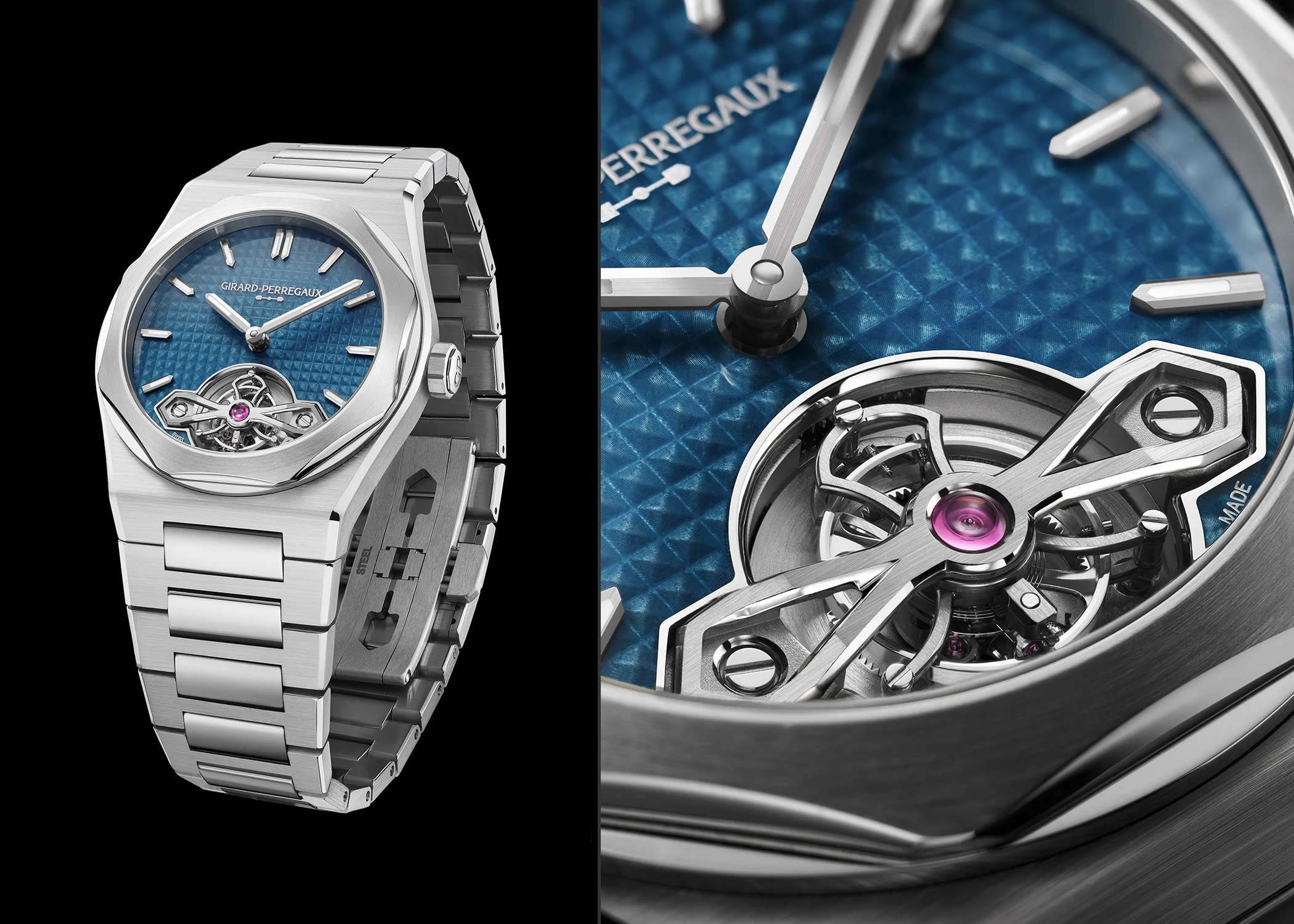
The dial of the Girard-Perregaux Laureato Fifty Tourbillon 39 mm is housed within a compact Laureato stainless-steel case measuring 39 mm in diameter and 10 mm in height, with water resistance to 50 metres. The model’s characteristic octagonal bezel sits atop the flat middle case, its geometry further emphasised by a satin-finished upper surface, polished bevels and the circular ring beneath. The integrated bracelet, fitted with a clasp offering 4 mm of fine adjustment, continues the lines of the case seamlessly.
The blue version is priced at EUR 92,800, while the version with the gold dial costs EUR 97,200.