


Hublot Big Bang Original Soft Touch: Textured rubber encases titanium. Discover the Unico calibre and the All Black and All Red models.

Richard Mille has achieved what no other watch brand has: a rise from nothing to representing the pinnacle of watchmaking within only 25 years, with the watchmaking brand now moving in the same prestigious circles as Audemars Piguet and Patek Philippe.
Richard Mille has shaken up the watch world in design, engineering and materials. Multi-part tonneau cases, skeletonised technical movements, and functional new materials have become as much a hallmark of the brand as usability in complicated watches and small production runs
The brand’s founderwho honed his expertise through years of experience as a manager and director in the watchmaking industry, liked to demonstrate the durability of his watches – once famously, as the legend goes, throwing a tourbillon carrying a six-figure price tag onto the floor and then showing that it carried on running, entirely unaffected.
However, it was ultimately these innovations that earned Richard Mille recognition among both collectors and critics and, above all, breathed new life into the world of haute horlogerie.
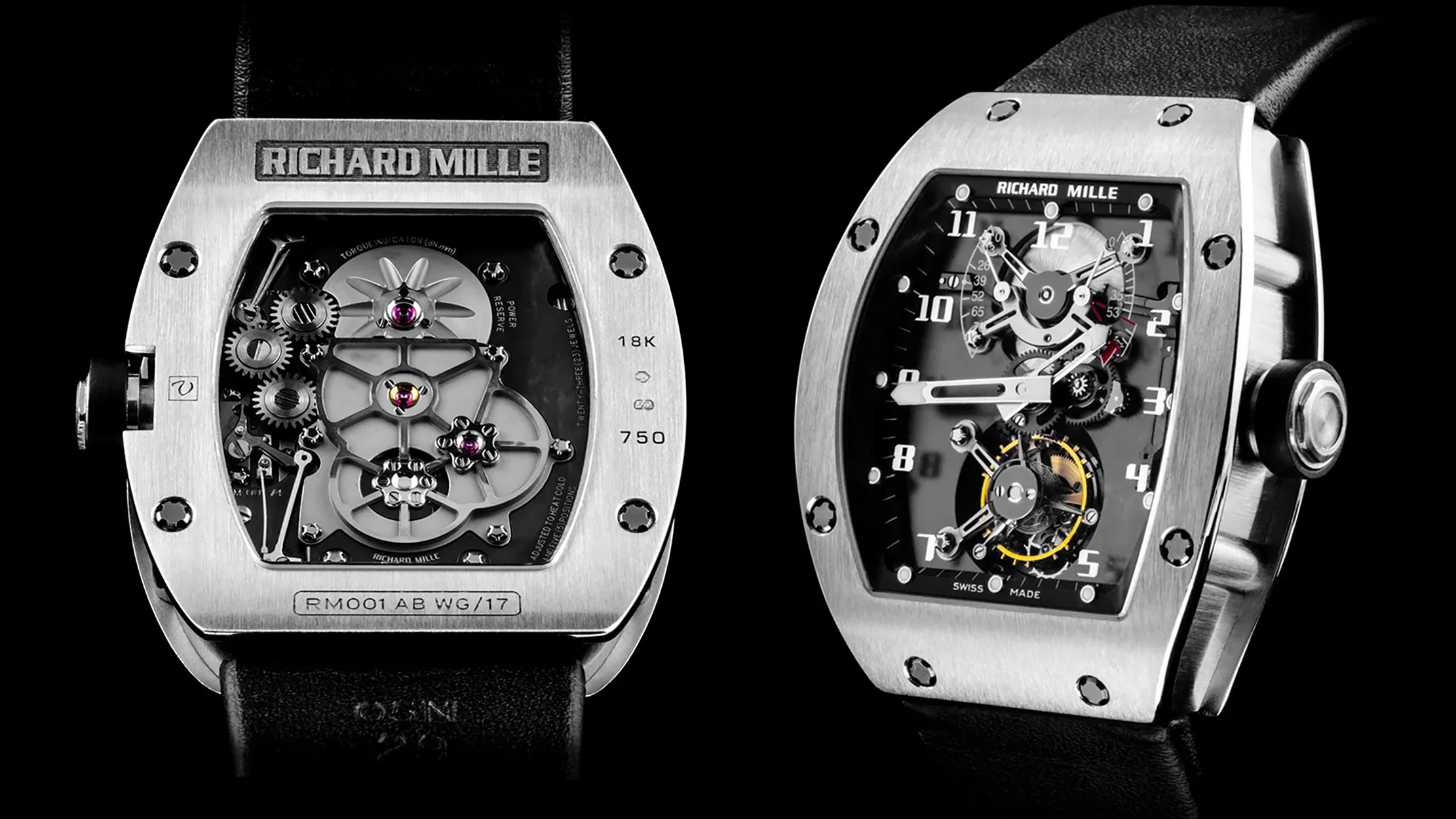
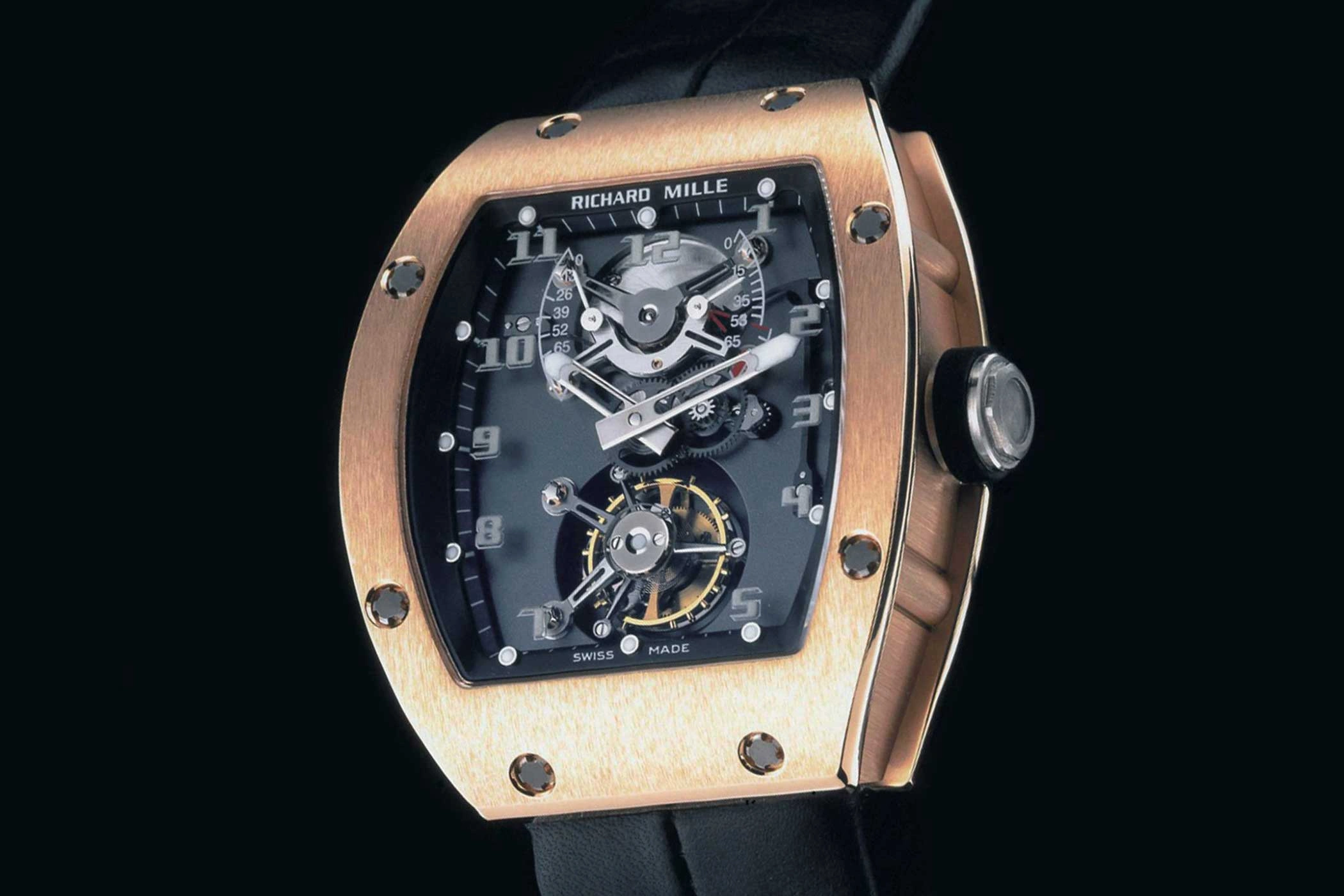
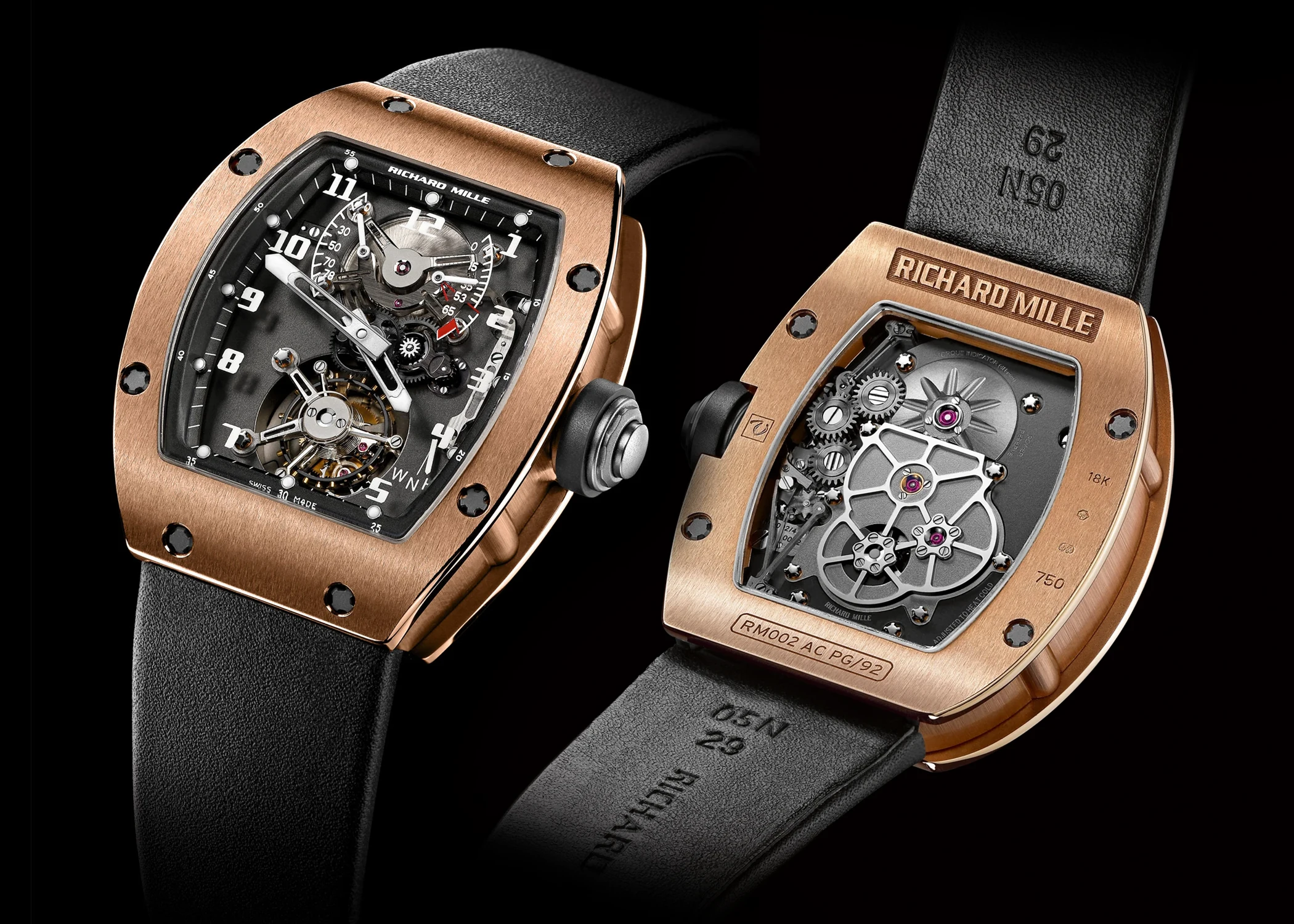
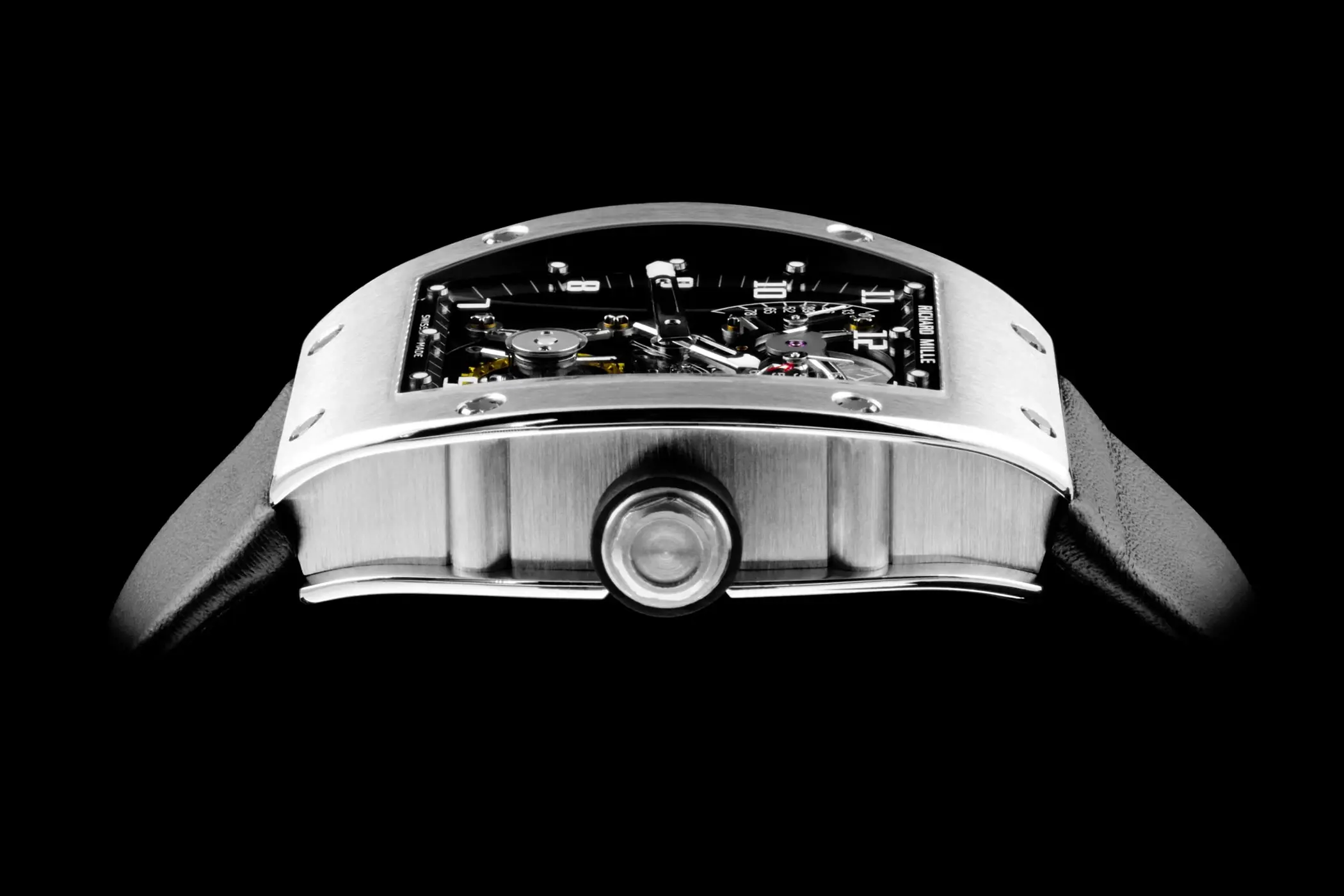
Richard Mille presented his first watch in 2001. The RM 001 established the design that remains typical to this day: a tonneau-shaped case, visible bezel screws and a skeletonised movement. The aim was to create a watch that was comfortable to wear while also being accurate, shock-resistant, durable and light, with its mechanics not hidden away but instead forming an integral part of the watch’s beauty.
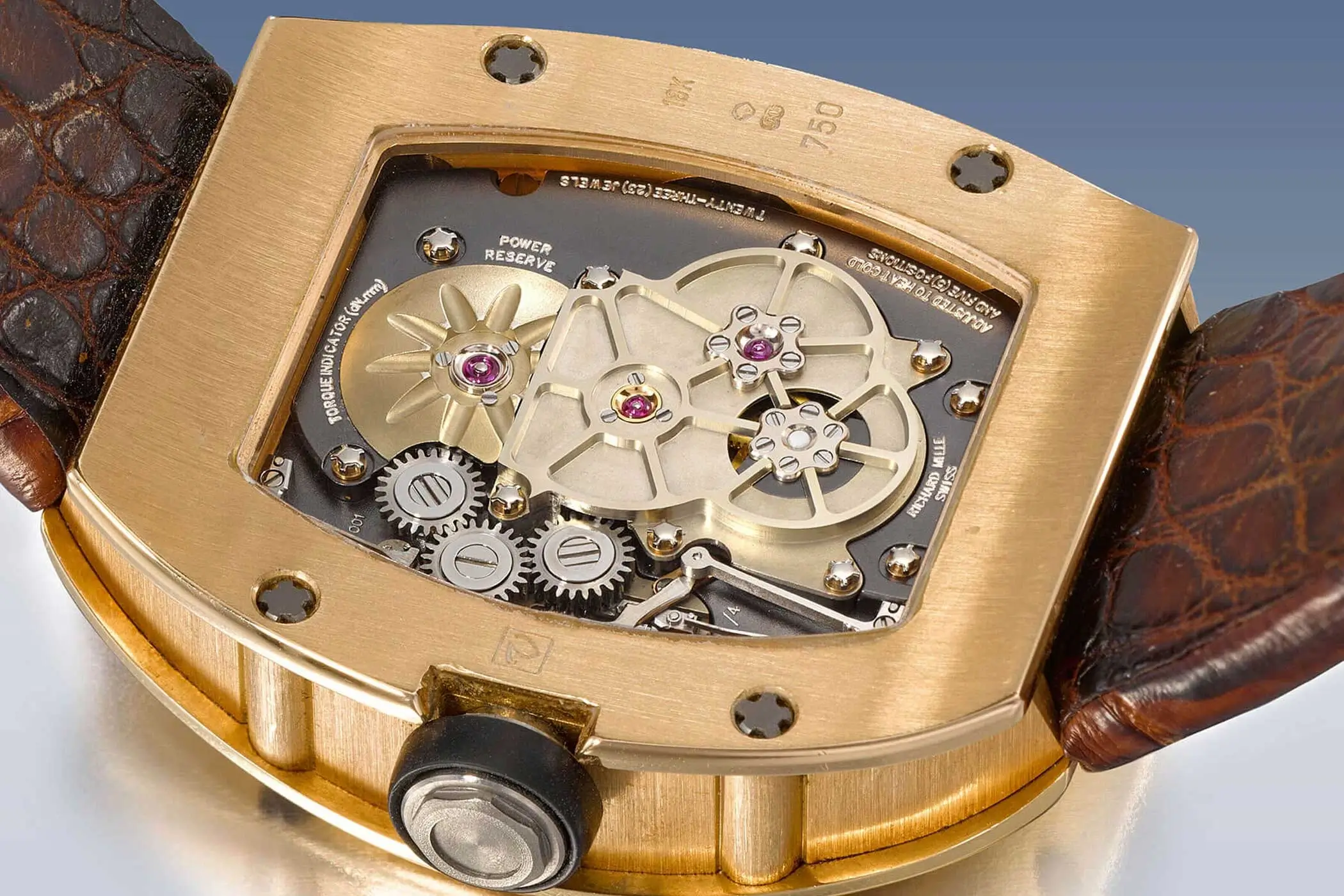
The RM 001 was a tourbillon with a power reserve indicator as well as an additional detail more familiar from motorsport than from watchmaking: a torque indicator. This never-seen-before indicator displays the force the mainspring is currently exerting on the gear train.
This does have a practical benefit; a mainspring delivers considerably more torque when fully wound than it does shortly before running down, and both extremes affect the amplitude of the balance and therefore the rate. Anyone who can read the indicator knows whether the watch is currently operating in the favourable range and can avoid extremes if necessary.
Credit © Christies
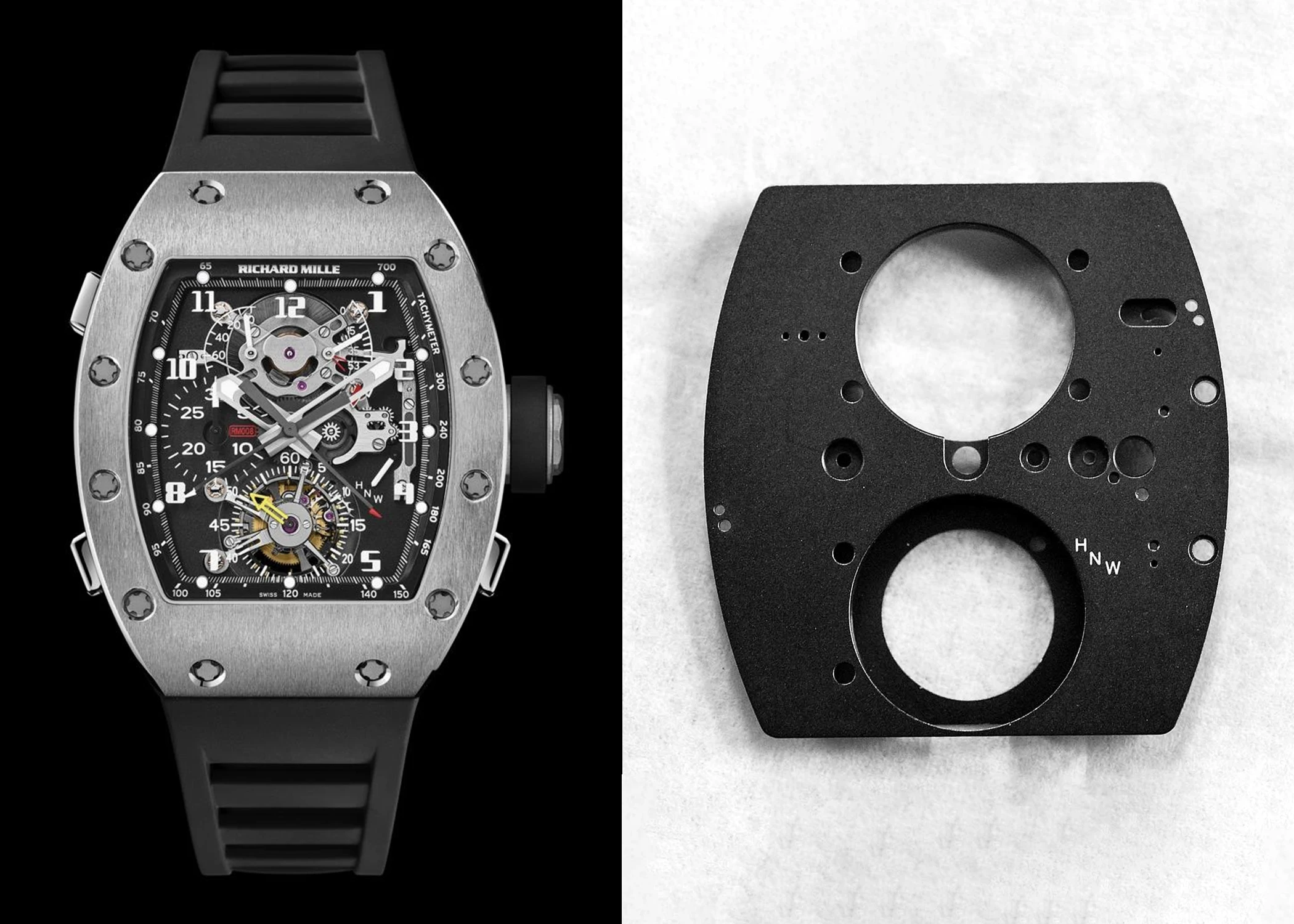
Interestingly, the first 11 prototype movements were initially built on a nickel silver baseplate, a material that was easier to machine but difficult to treat with PVD. Only later did the world’s first titanium baseplate appear in the final six examples of the RM 001. It subsequently became standard at Richard Mille and helped establish the brand’s early reputation for working with unusual materials.
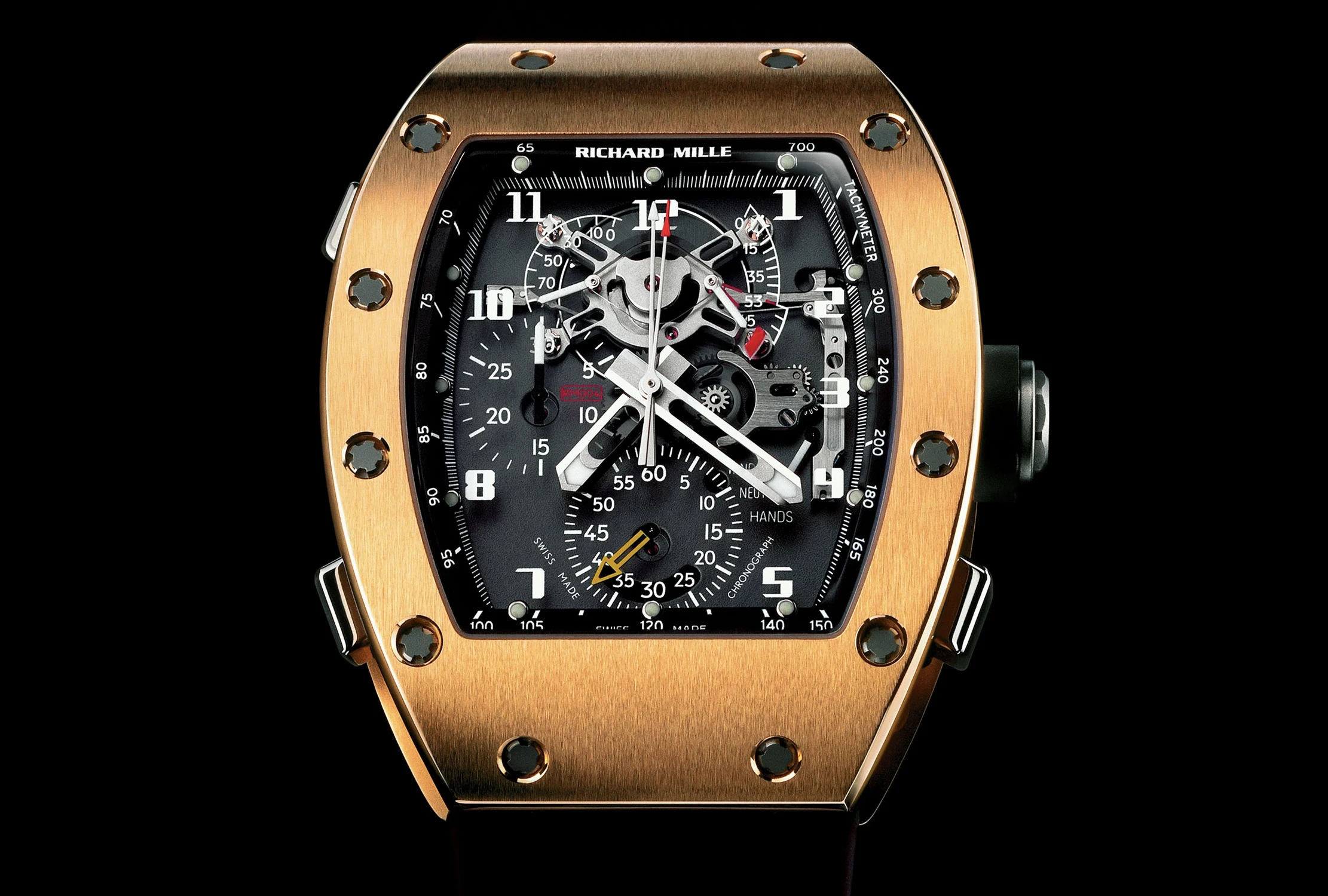
Meanwhile, the RM 002 introduced the innovative function selector. A pusher in the crown switches between winding, neutral and hand-setting, and the selected function is displayed on the dial. This solves the problem presented by conventional crown, with which you often cannot tell which position you are in.
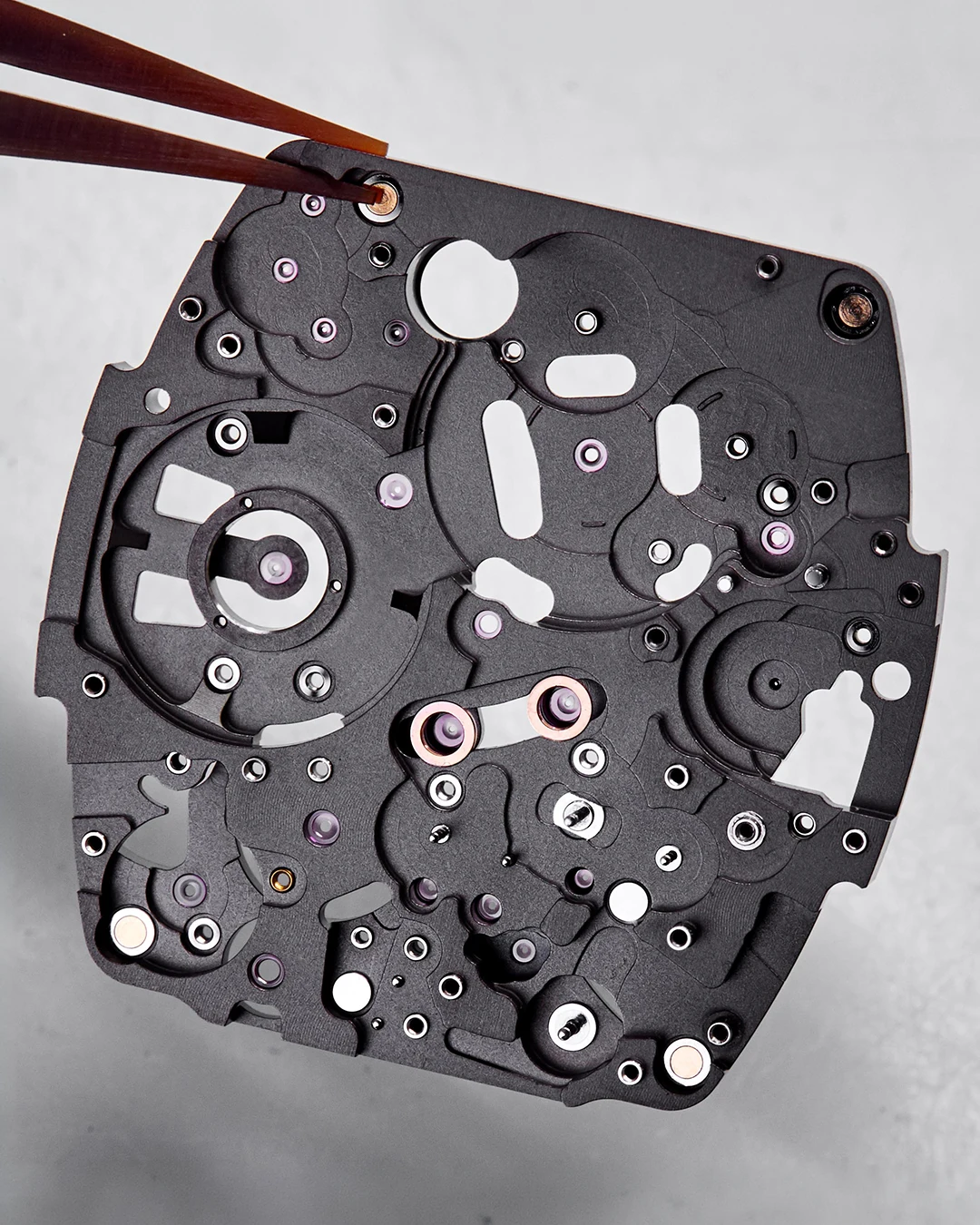
The real break with tradition concerns the component that has been taken for granted since Jean-Antoine Lépine: the baseplate. It is the foundation of every movement, with all components attached to it by means of bridges. Richard Mille has questioned it in three different ways.
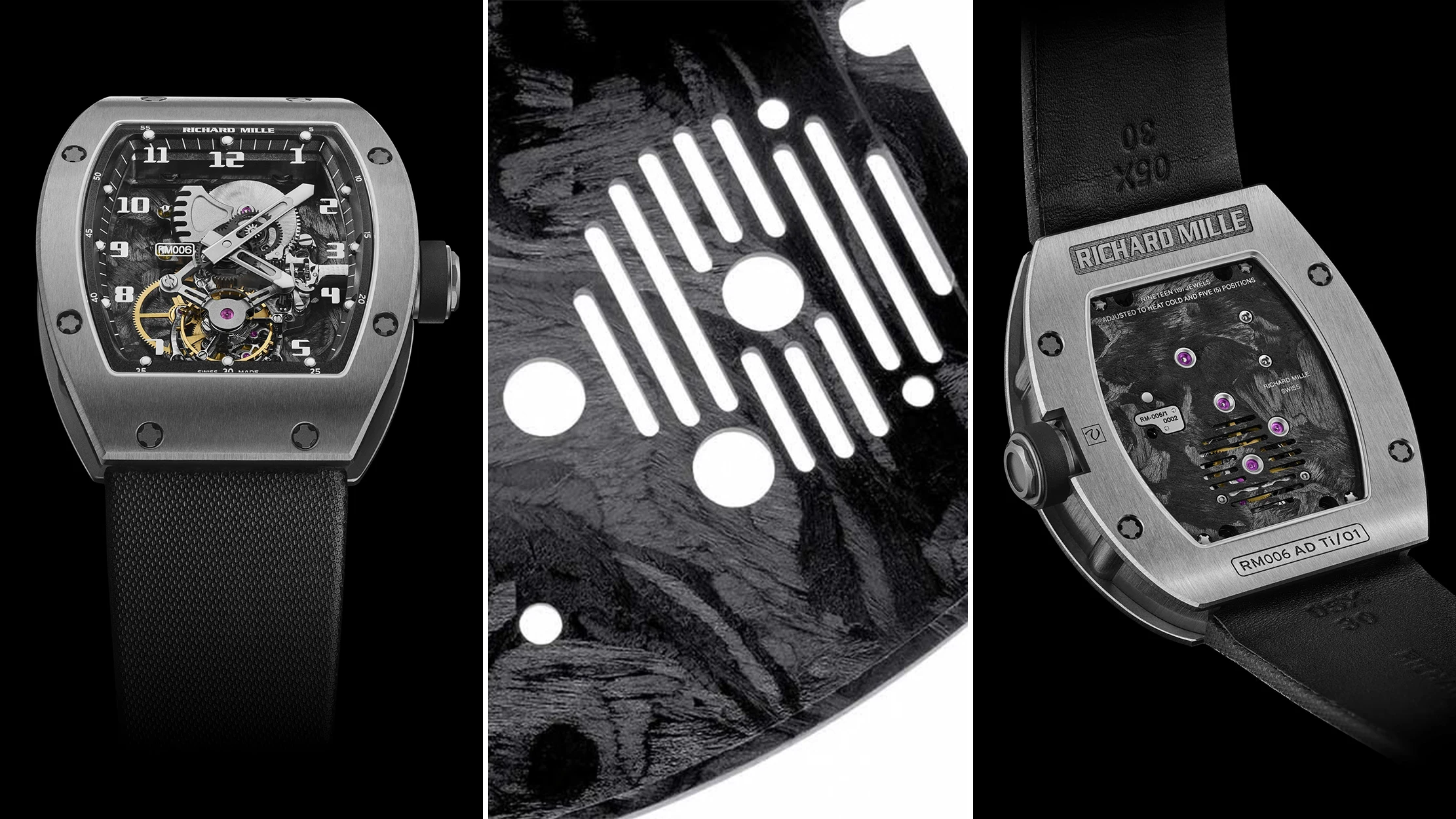
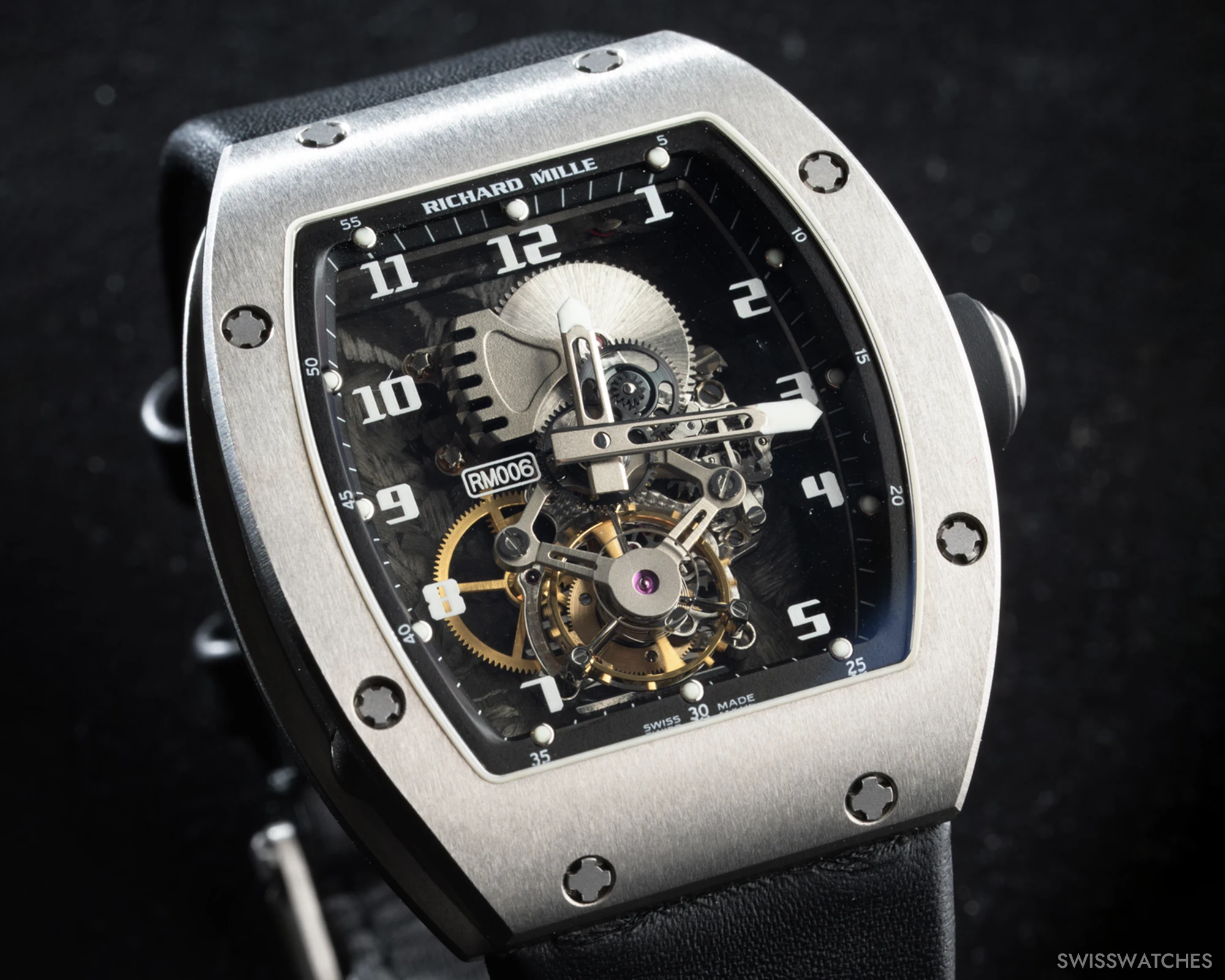
The RM 006 introduced a baseplate made of carbon nanofibre, developed with Formula 1 driver Felipe Massa as its test wearer. The component is considerably lighter than a metal baseplate and immune to magnetic forces. The main challenge with carbon nanofibre, beyond its more complex machining compared with titanium, was that it could be drilled but not threaded, while its composite structure made sharp, thin edges difficult to achieve. Richard Mille overcame these limitations by inserting bushings into the baseplate holes, allowing the screws to engage securely.
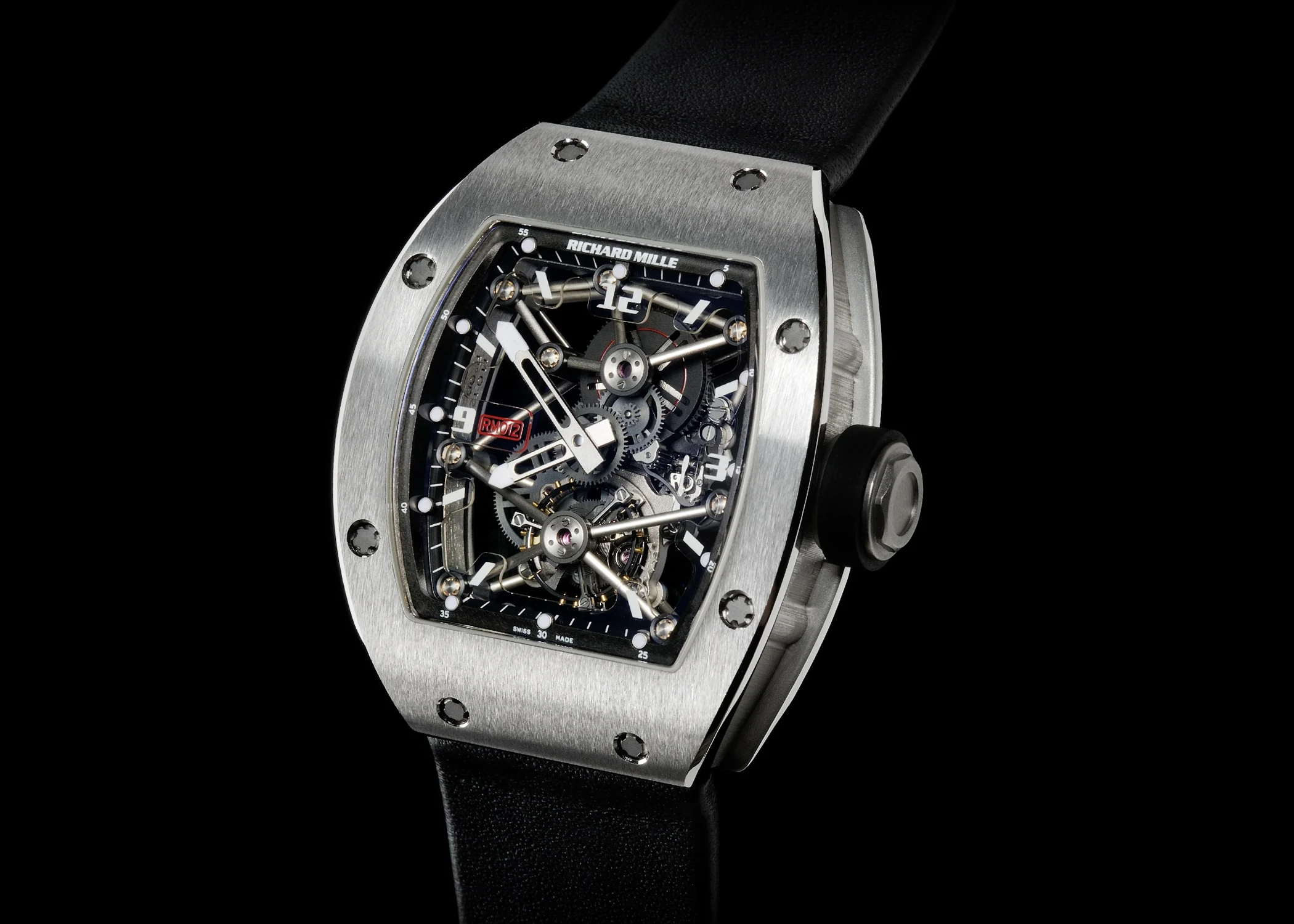
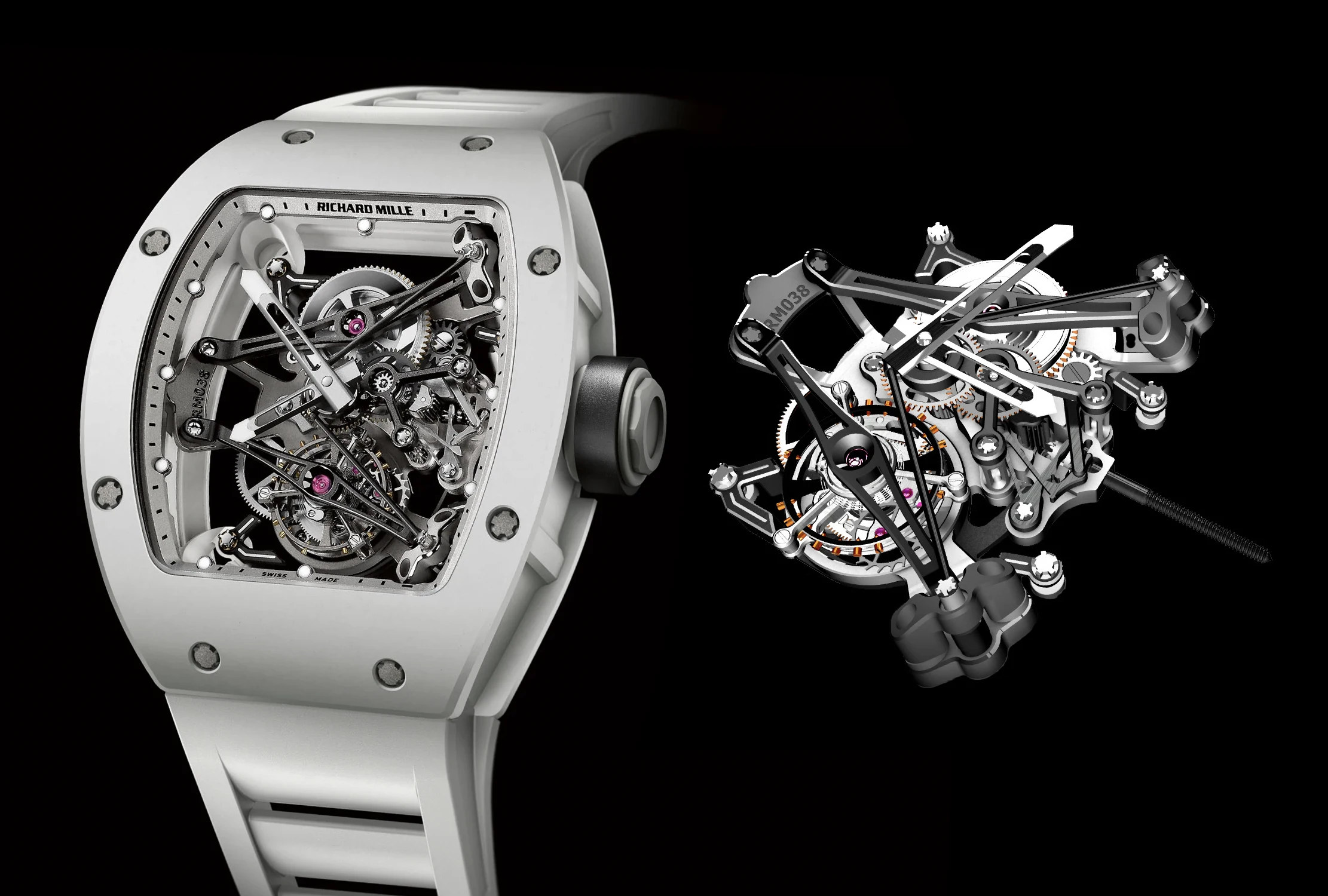
The RM 012 of 2006 took a different route and replaced the baseplate entirely with a three-dimensional framework of thin tubes made of Phynox, a non-magnetic cobalt-chromium alloy. Every wheel and every assembly hangs at the intersection of two to four tubes, with the tourbillon at six o’clock suspended in a cross.
The construction is based on a principle taken from structural and automotive engineering: a network of struts dissipates forces through its geometry rather than through its mass, and is therefore more rigid in terms of torsion at lower weight than a solid surface.
The real complexity lies in the manufacturing process. With a solid baseplate, the geometry of the pivots follows from machining a single workpiece. With a tubular framework, every angle has to be calculated individually and maintained during assembly, with tolerances in the micrometre range. Development took two years and required four prototypes; delivering an RM 012 to its client took months.
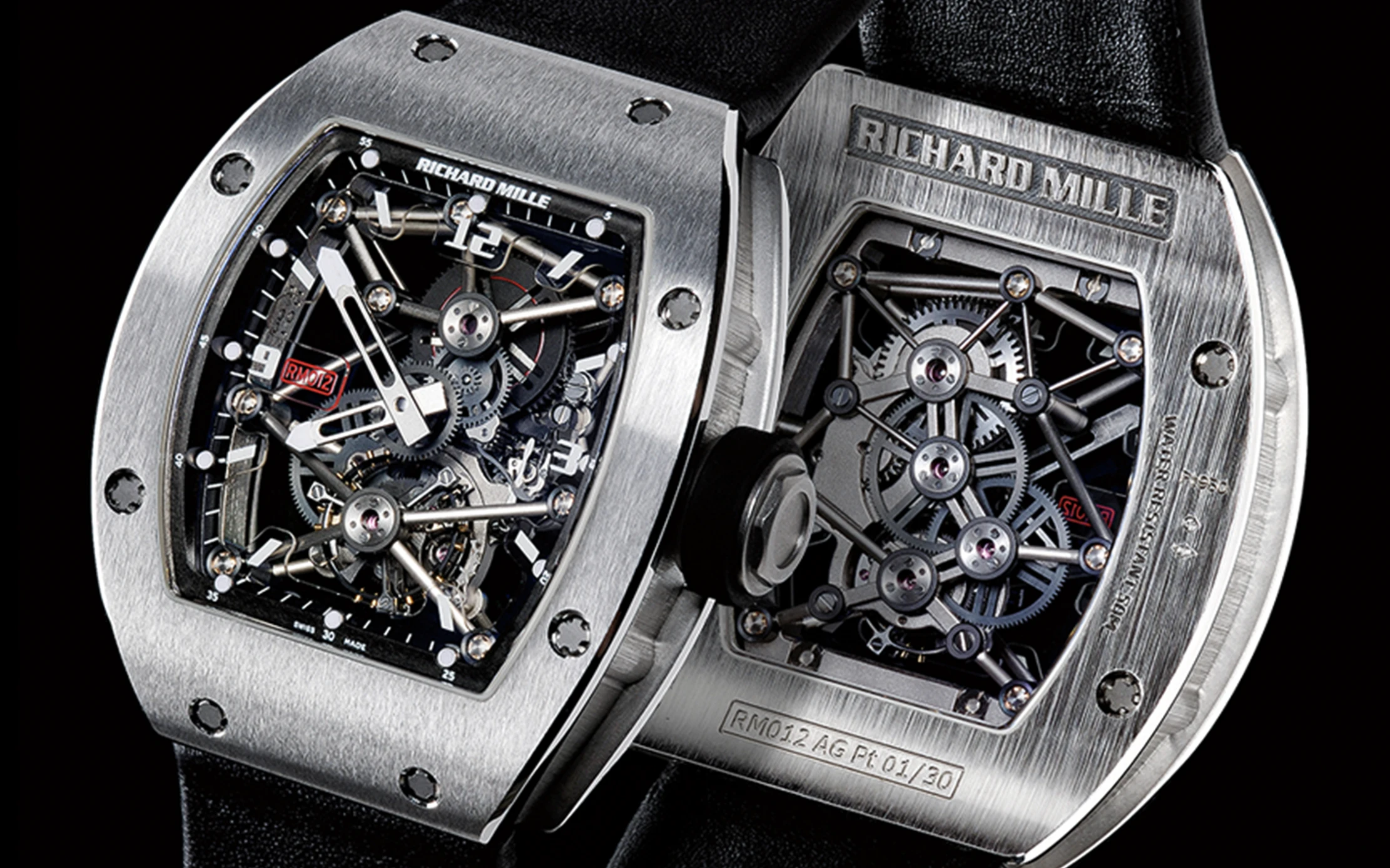
Yet the hard work certainly paid off: at the Grand Prix d’Horlogerie de Genève in 2007, the RM 012 received the Aiguille d’Or.
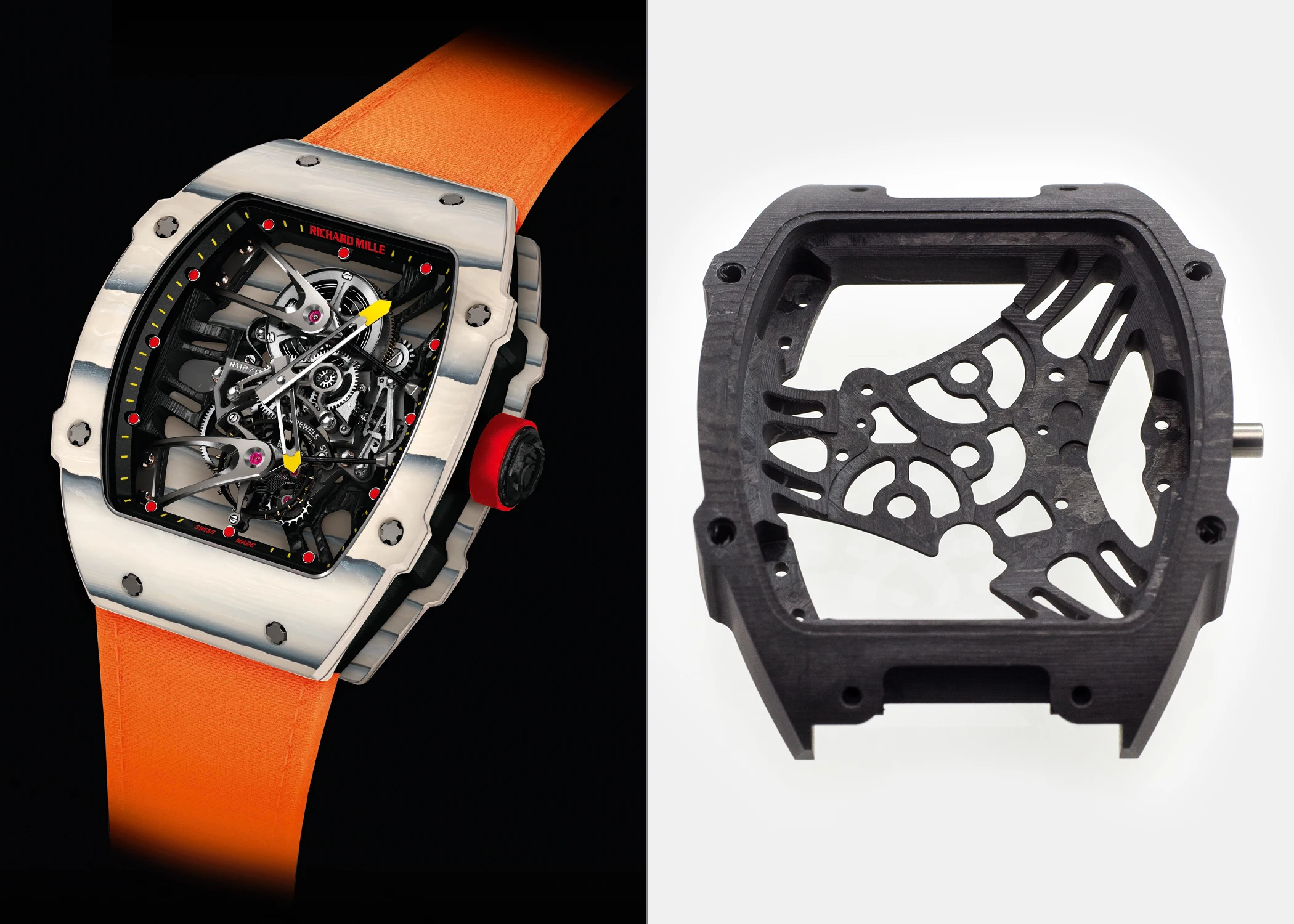
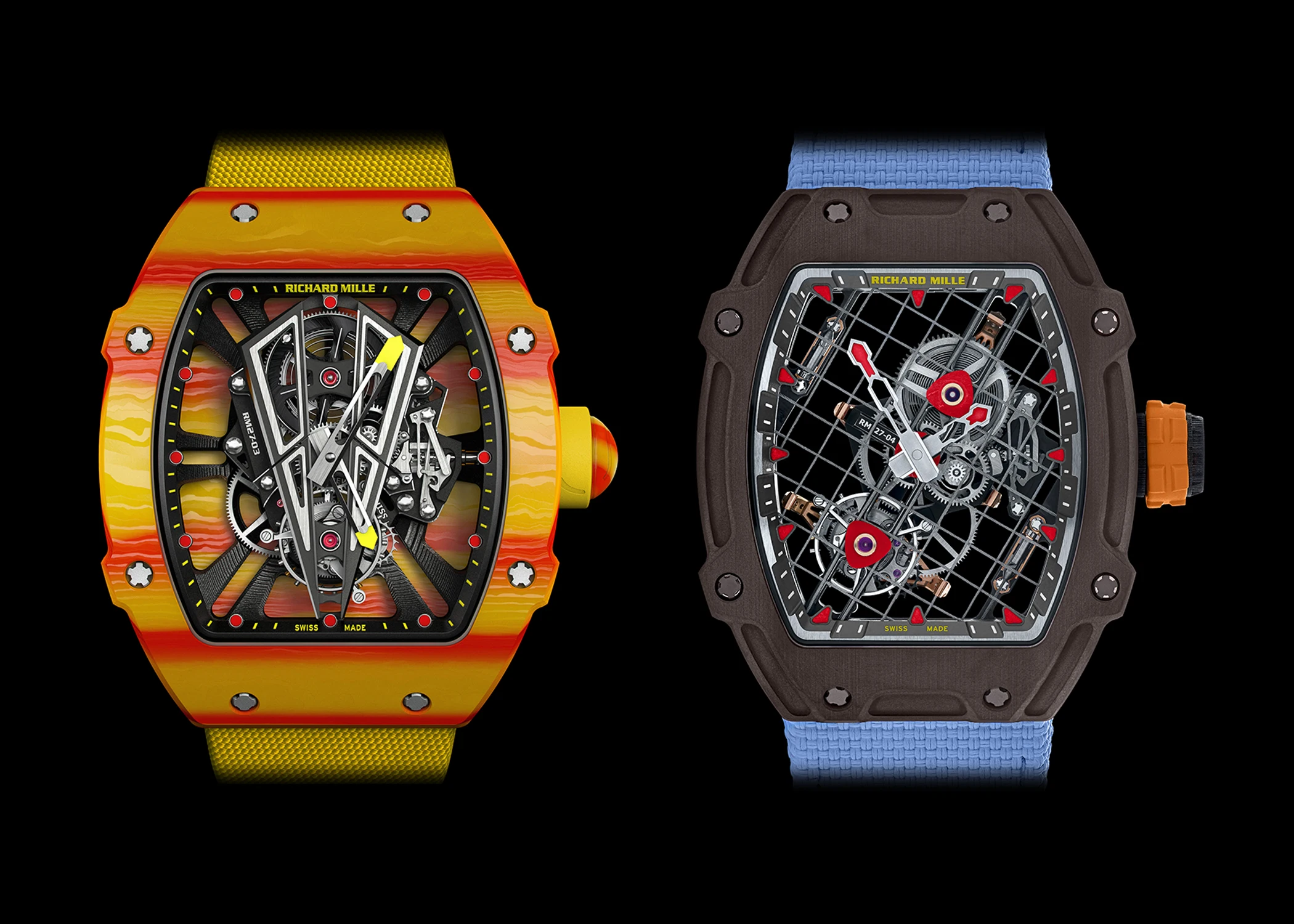
The RM 27-02 of 2015 reversed the principle. Instead of dissolving the baseplate, it merged it with the caseband into a single component. This unibody construction comes from racing car engineering, where a self-supporting structure takes on the roles of both chassis and body. The advantage lies in rigidity: where there is no join between two components, there is no weak point, either. The component, made of Carbon TPT®, also reduces weight.
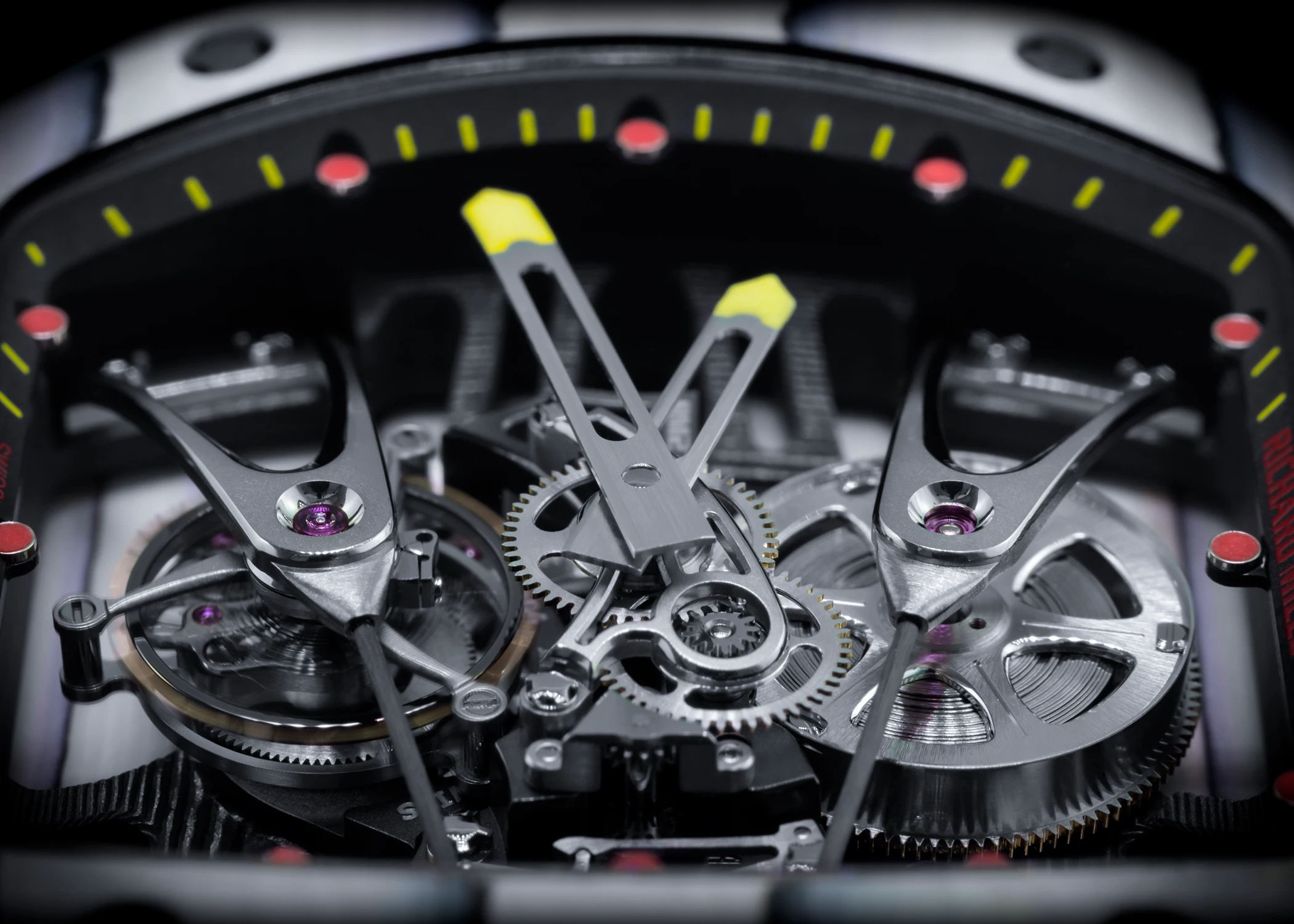
Alongside this, a second line of thinking emerged, this one borrowed from bridge building: if shocks are the problem, why fix the movement rigidly into the case at all?
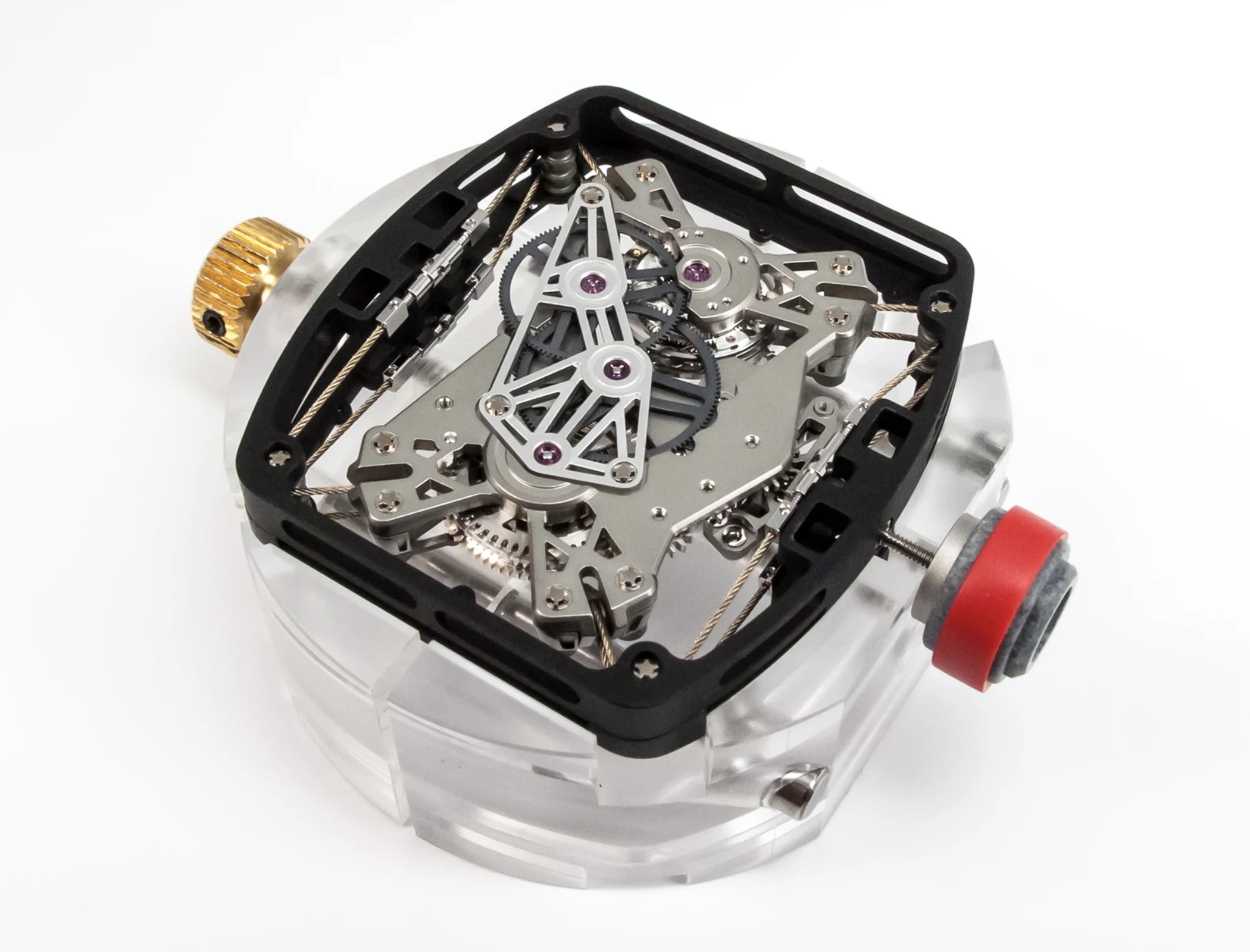
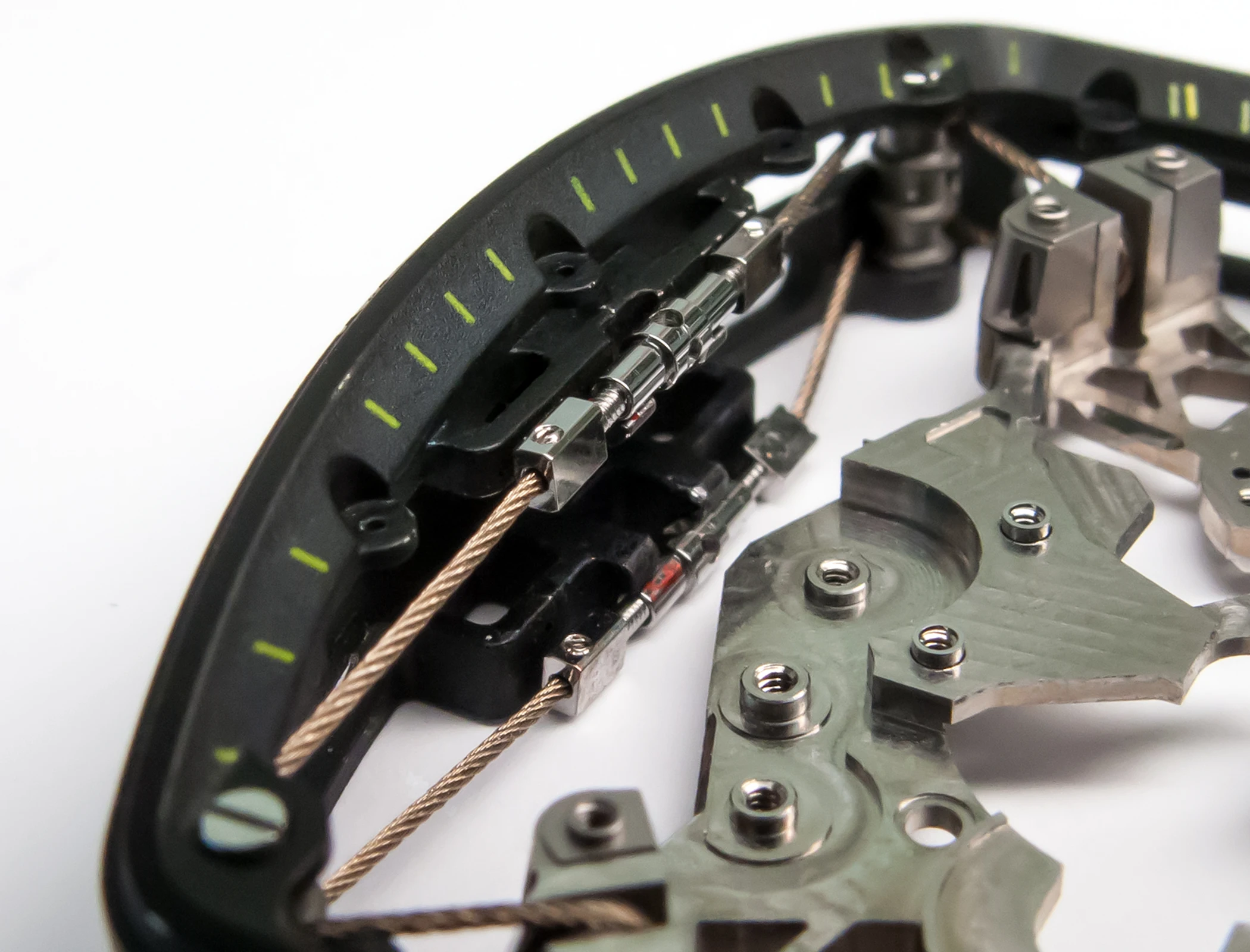
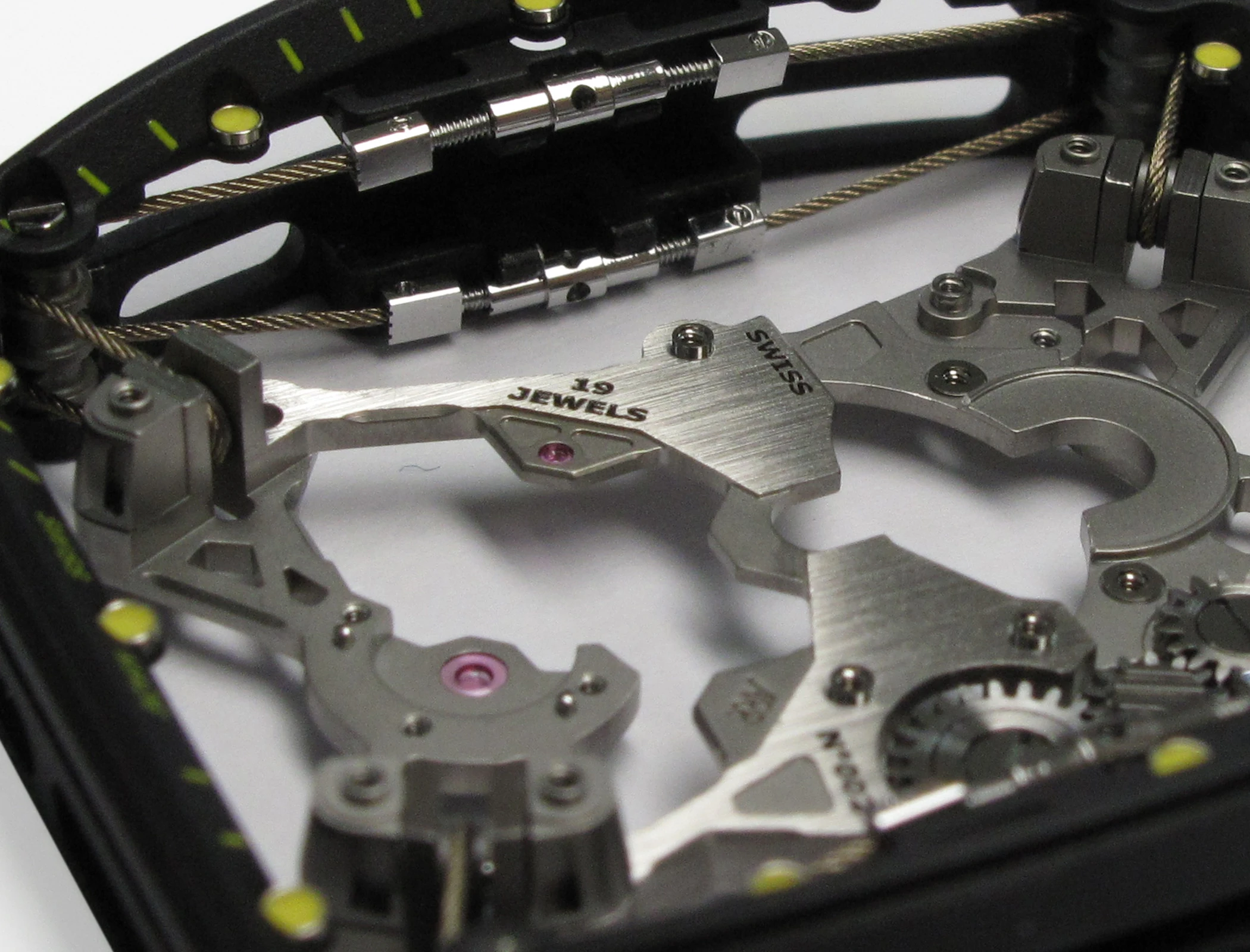
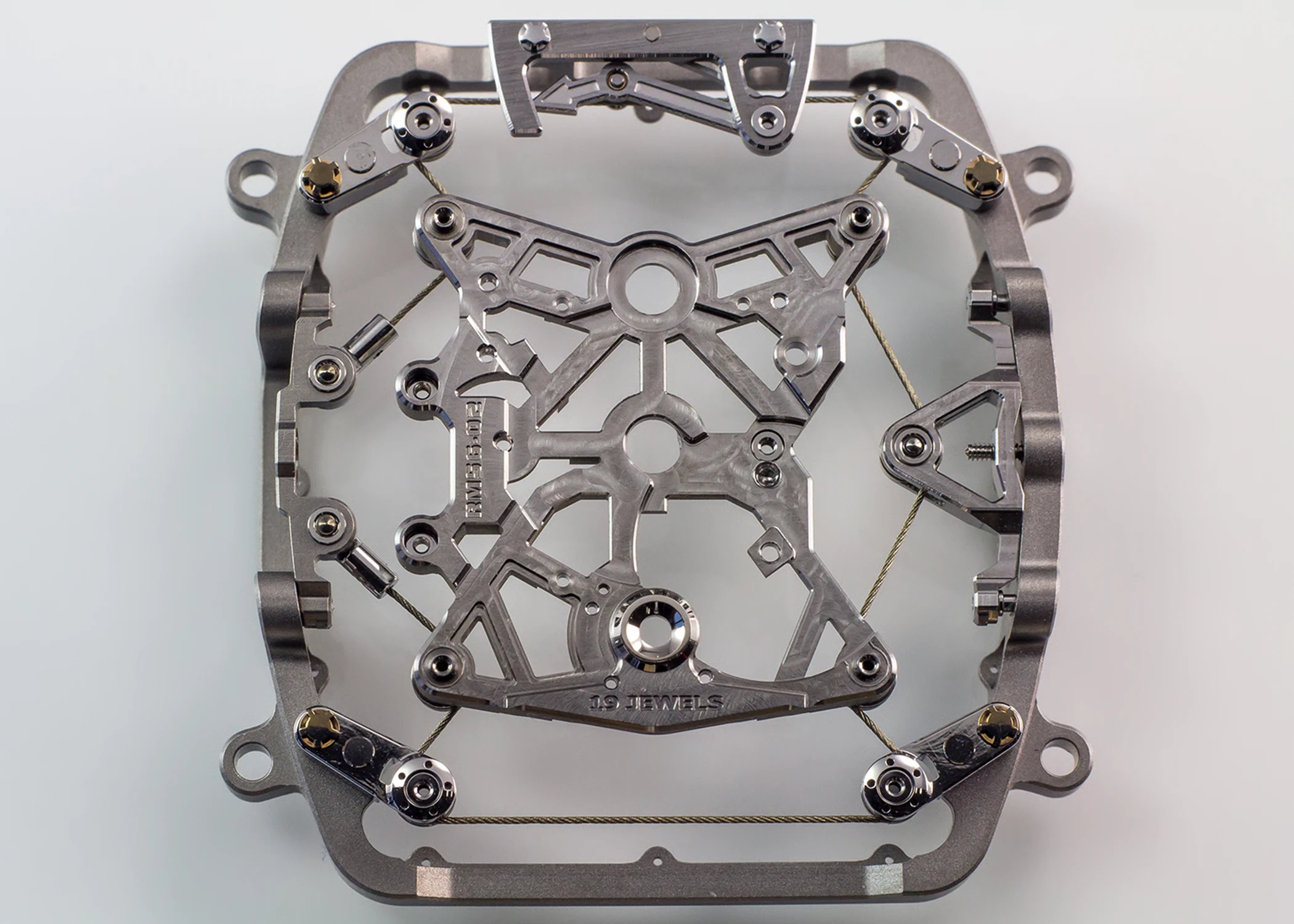
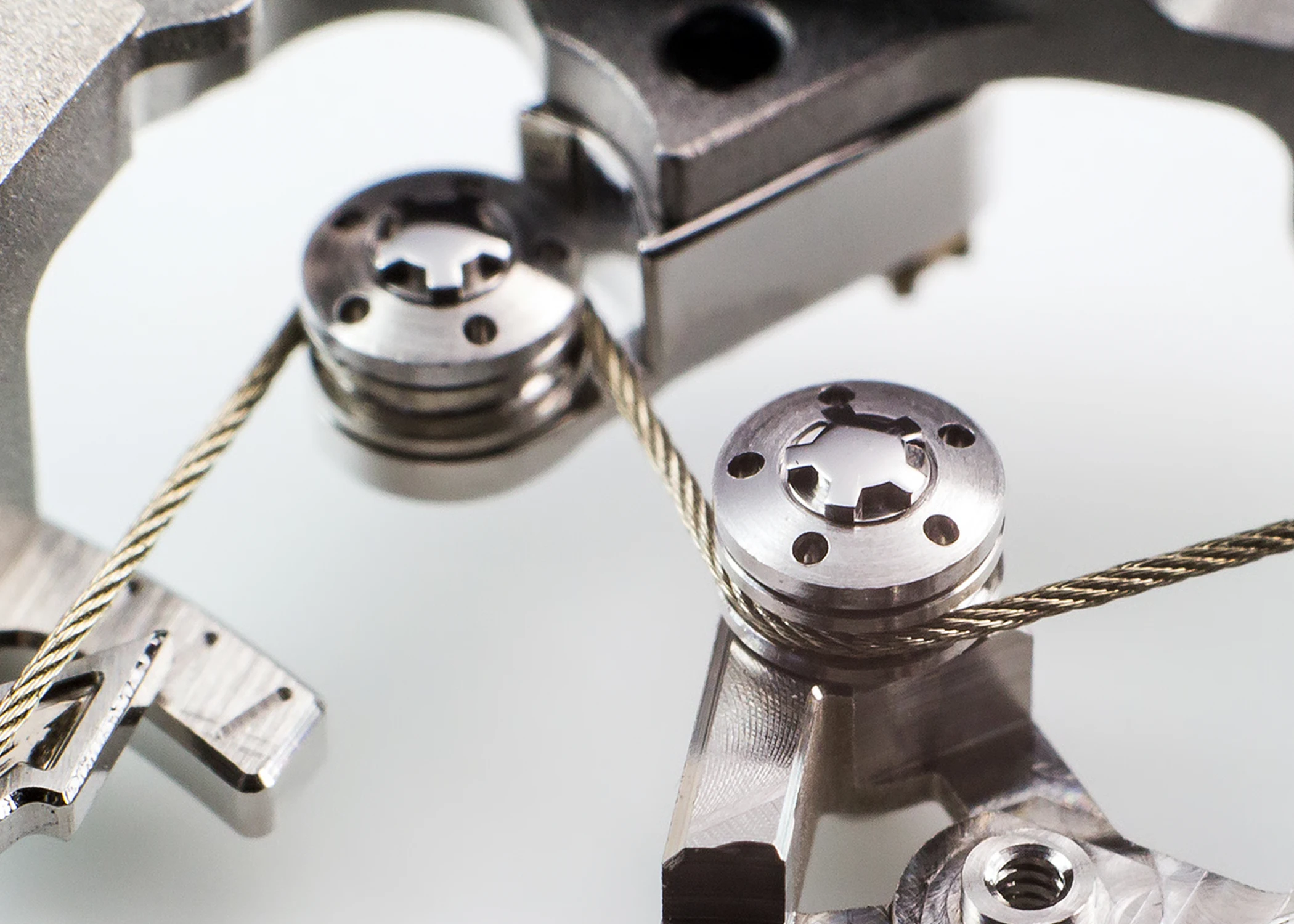
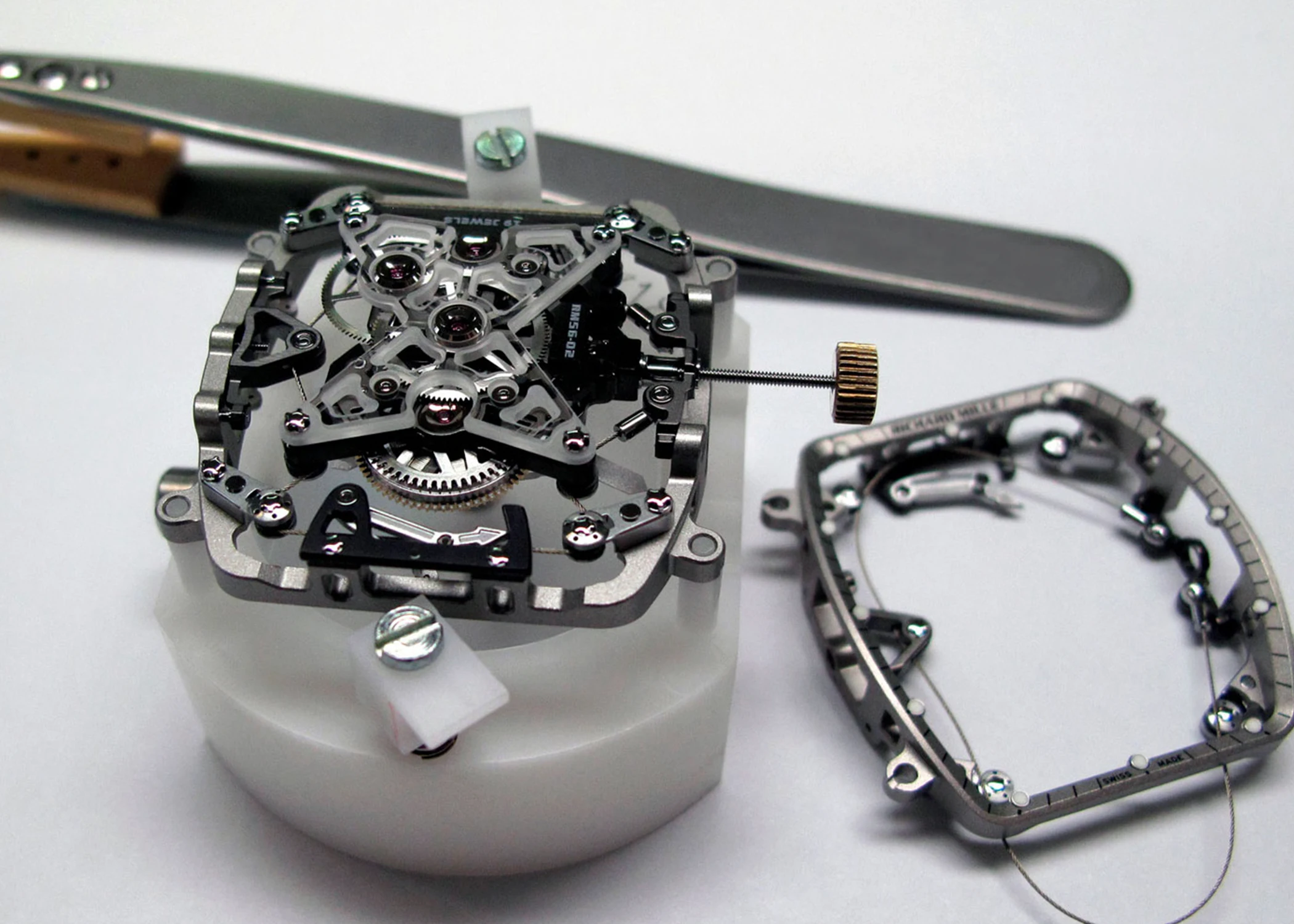
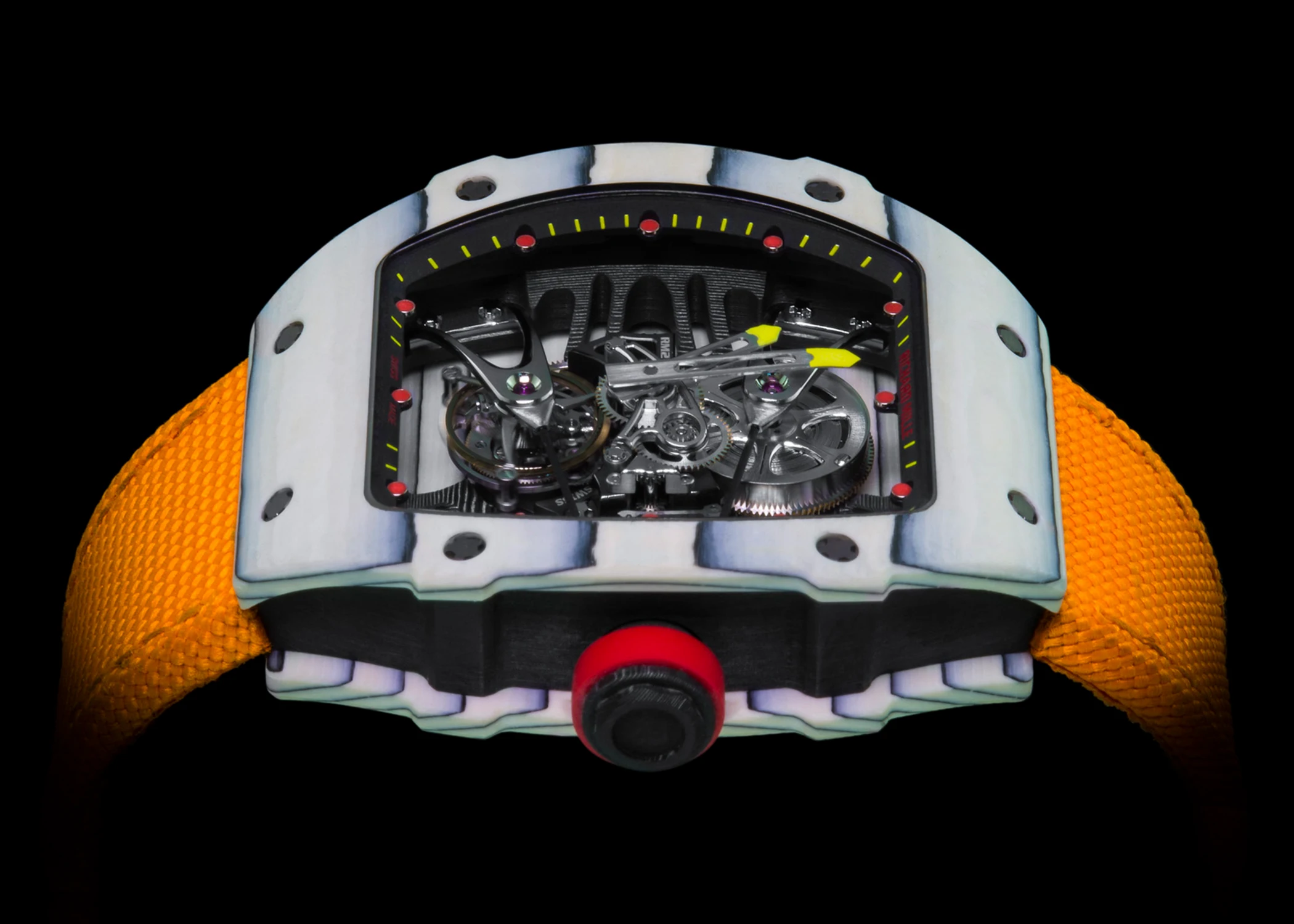
The RM 27-01 of 2013 suspends the movement on four braided steel cables measuring 0.35 millimetres in diameter, tensioned by turnbuckles at the corners of the case. The movement literally floats, and the cables absorb shocks before they reach the mechanism. The watch is therefore able to withstand extreme physical shocks of up to 5,000 g’s.
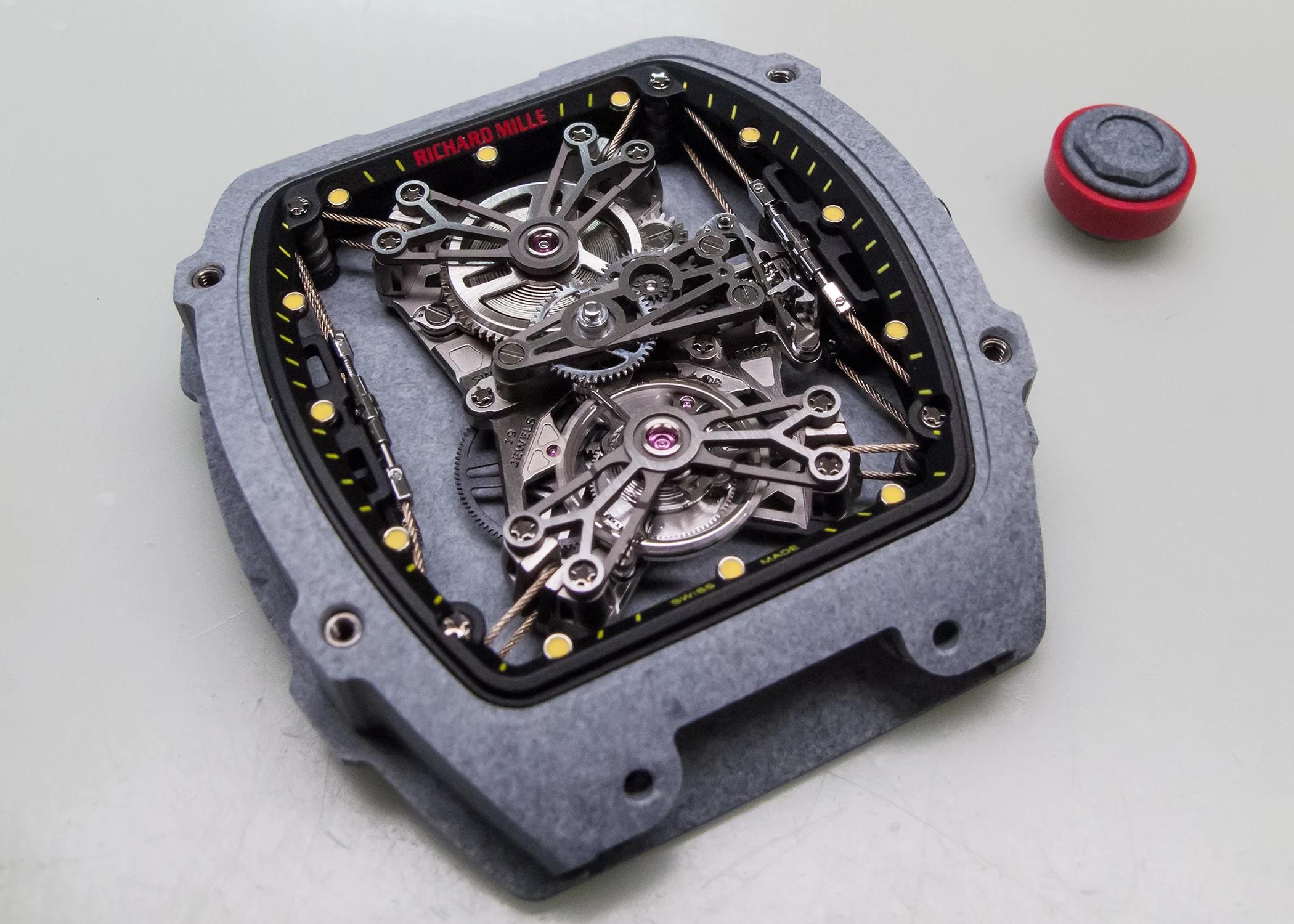
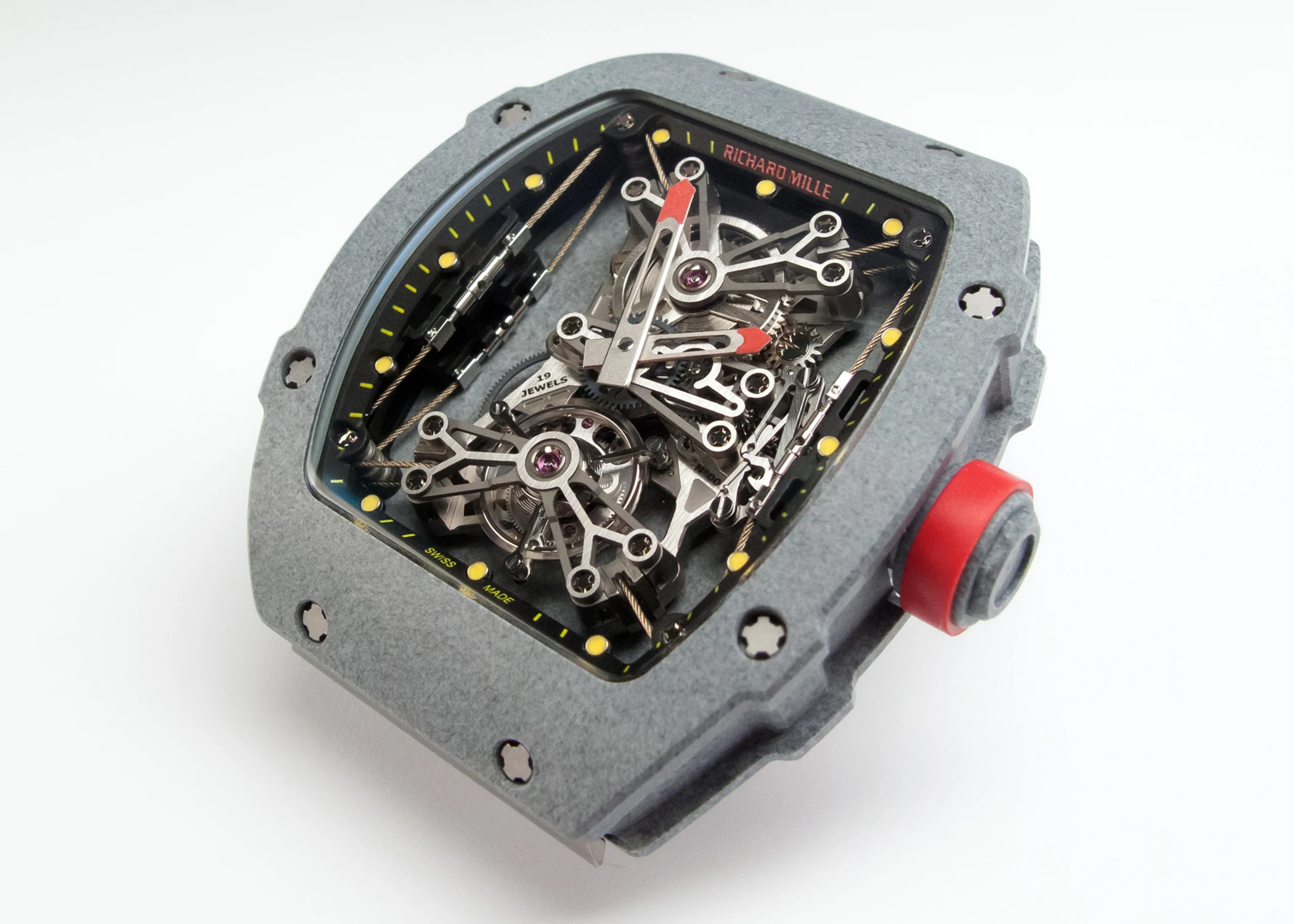
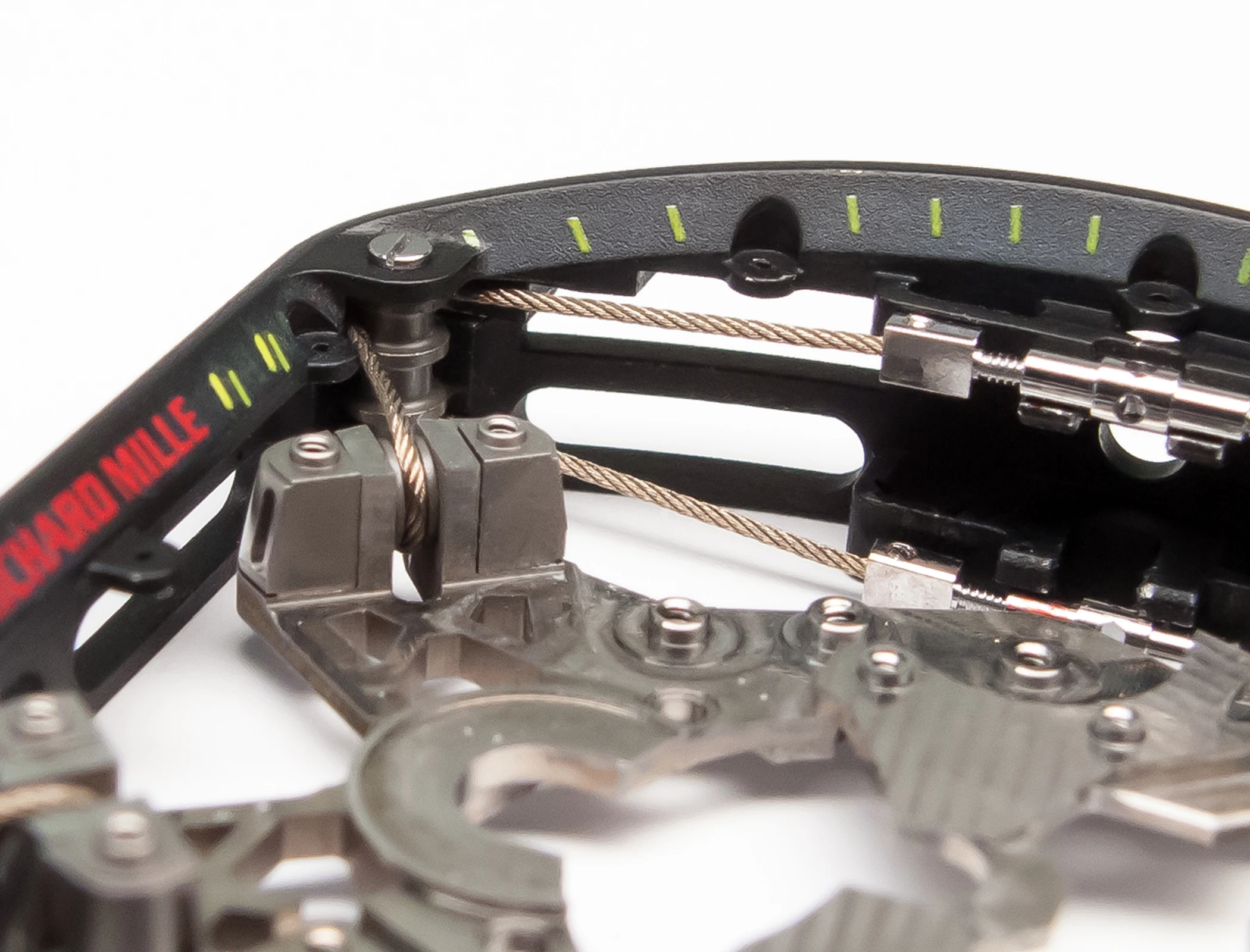
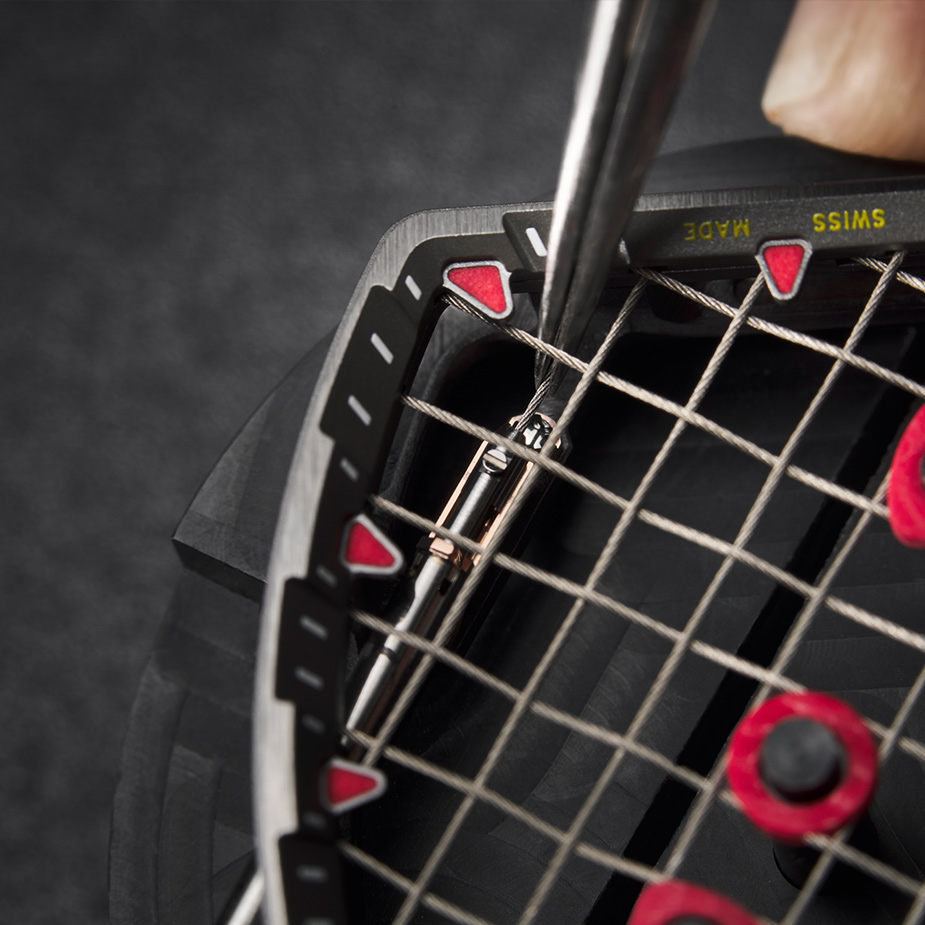
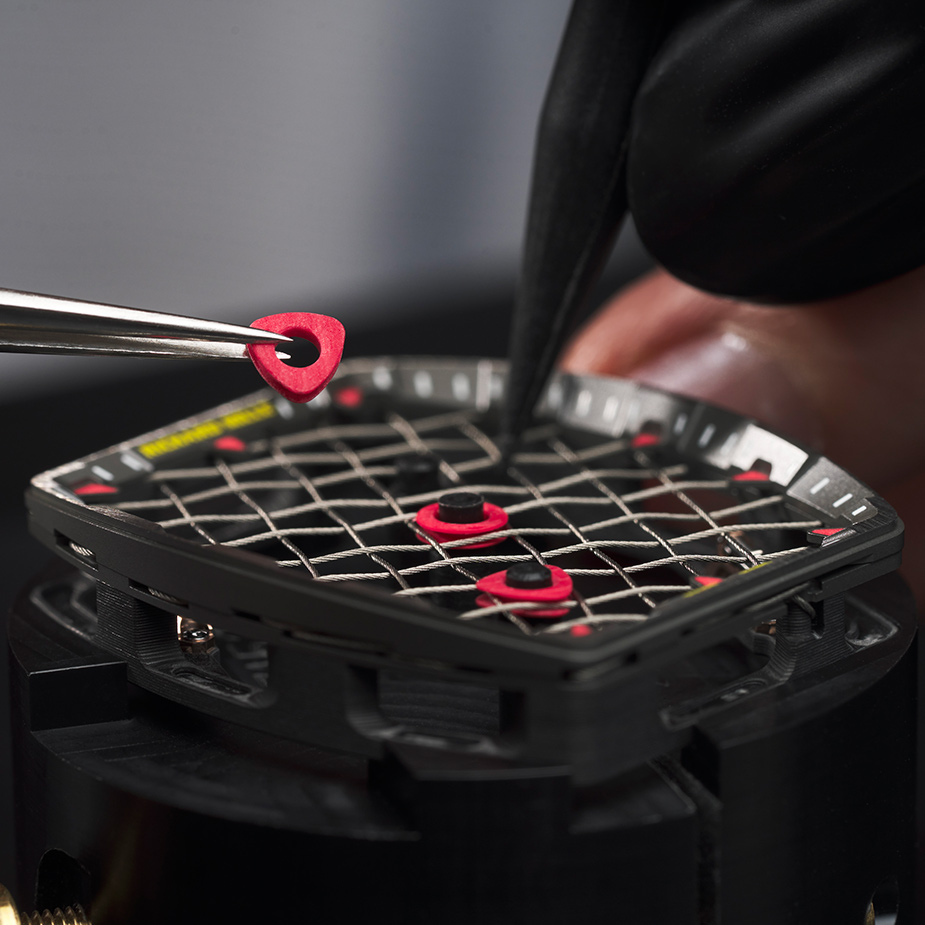
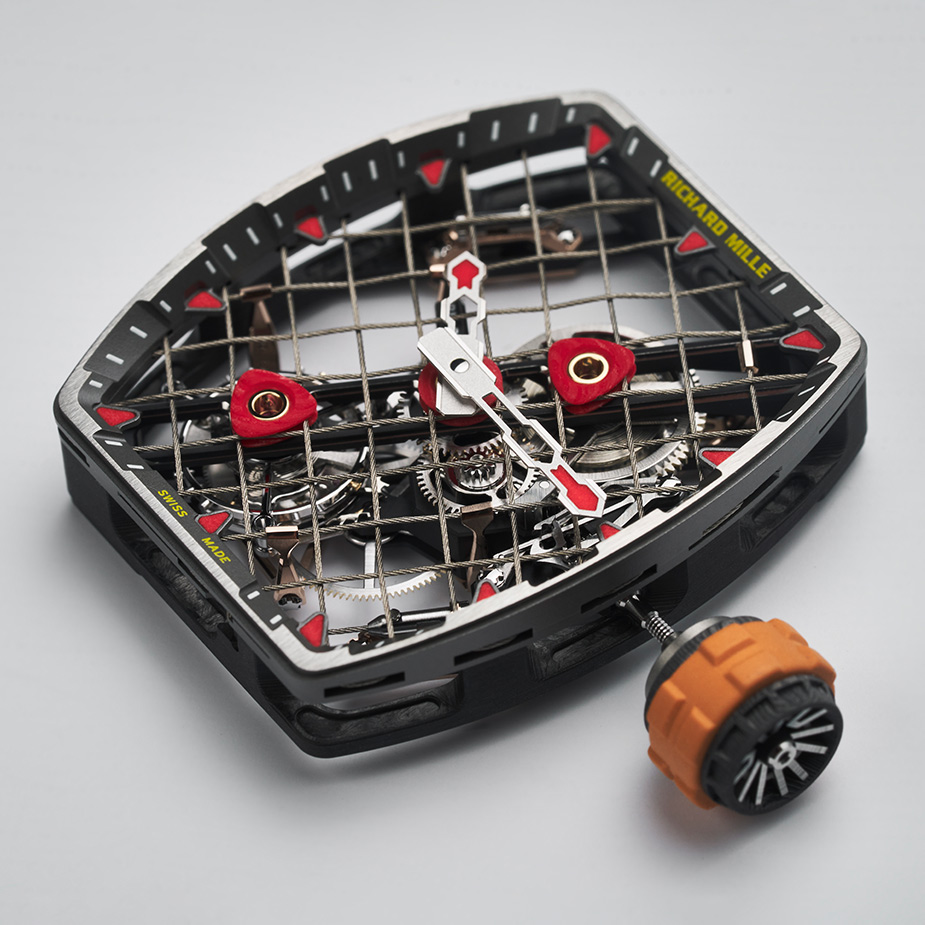
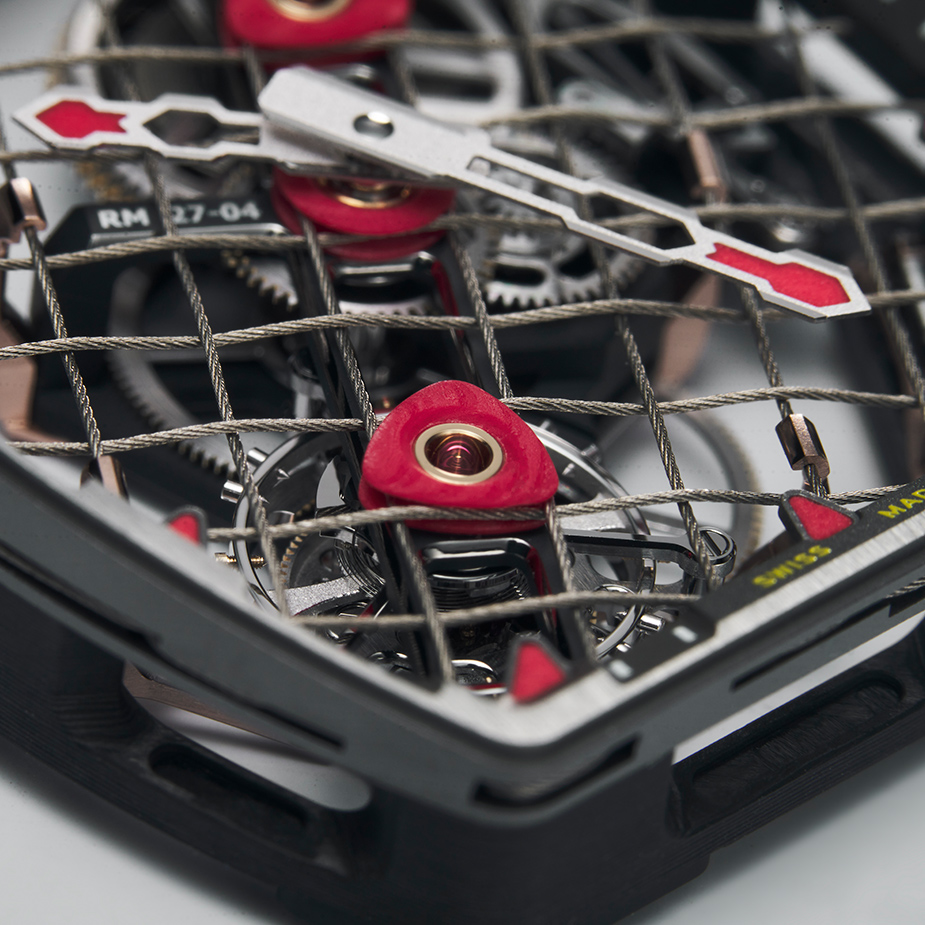
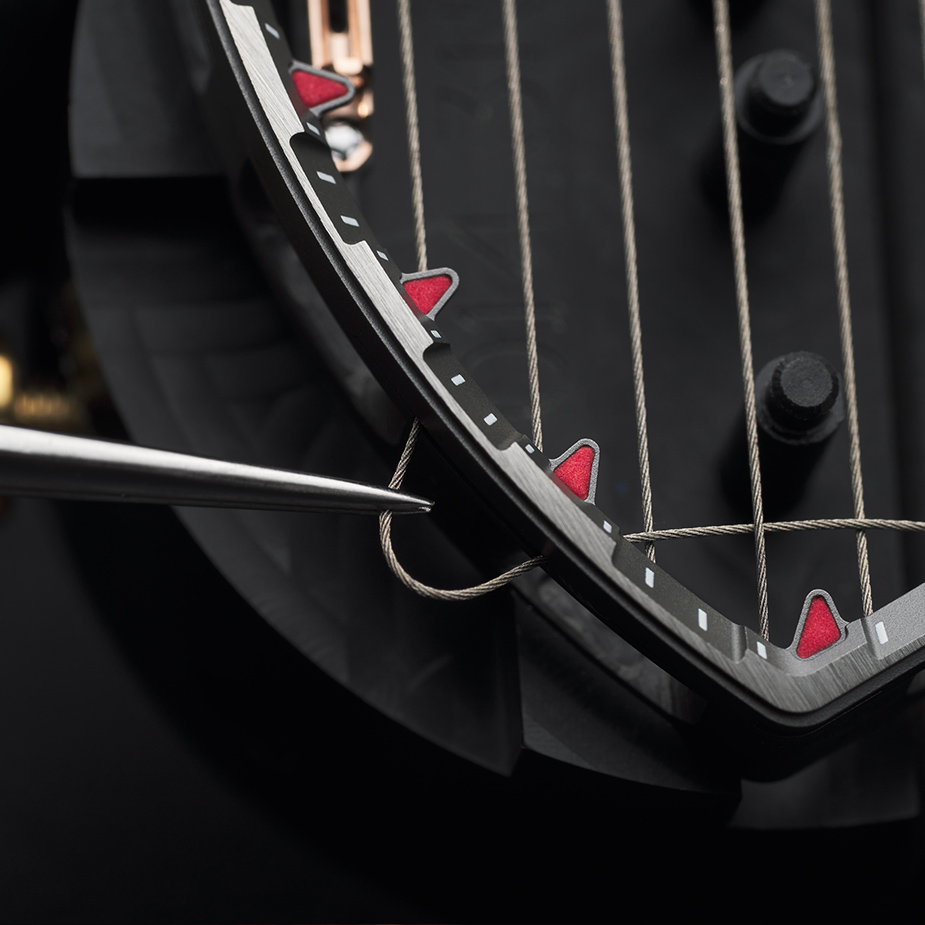
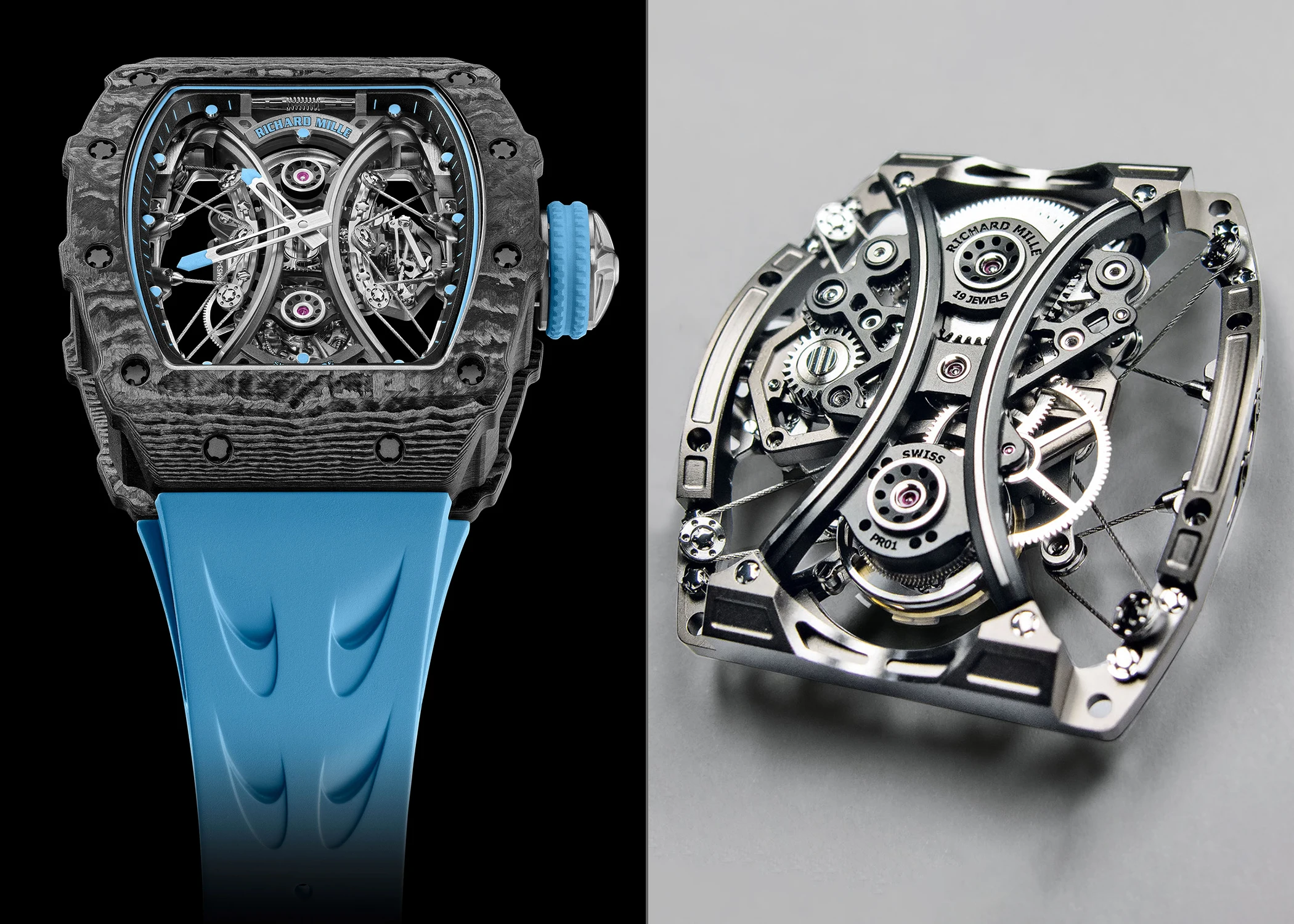
In 2017, the RM 27-03 raised this to 10,000 g’s. In 2020, the RM 27-04 took the principle to its limit: instead of four separate cables, a woven mesh carries the entire movement, produced from a single steel cable measuring 0.27 millimetres in diameter.
The model is the stringing of a tennis racket, which makes sense for a watch built for Rafael Nadal. The cable is anchored to a tensioner at five o’clock, then the main strings and finally the cross strings are woven, with the cable passing 38 times through the hollow grade 5 titanium bezel before terminating in a second tensioner at ten o’clock.
The result: the calibre handles forces of more than 12,000 g’s, while the complete watch weighs a mere 30 grams including the strap.
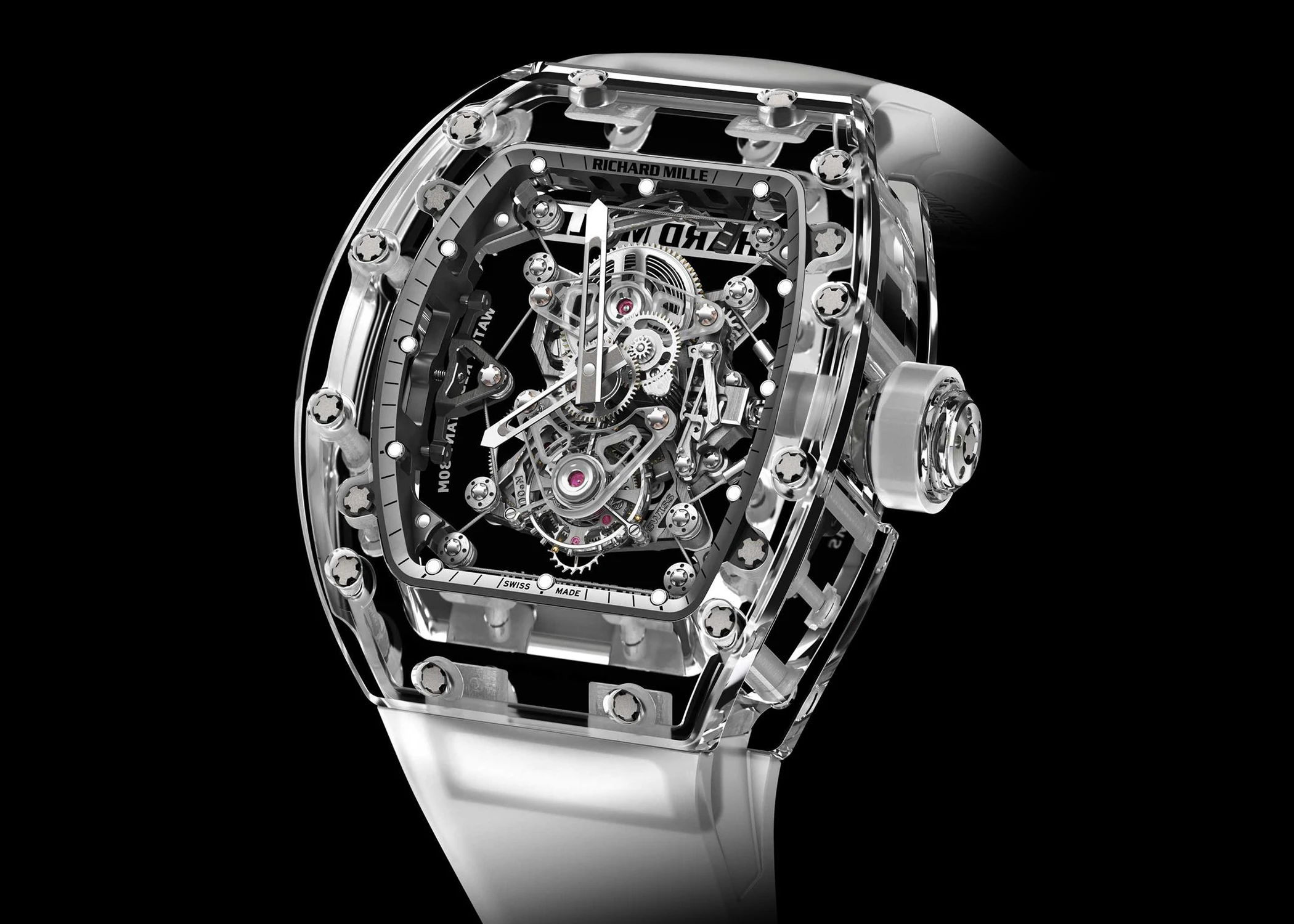
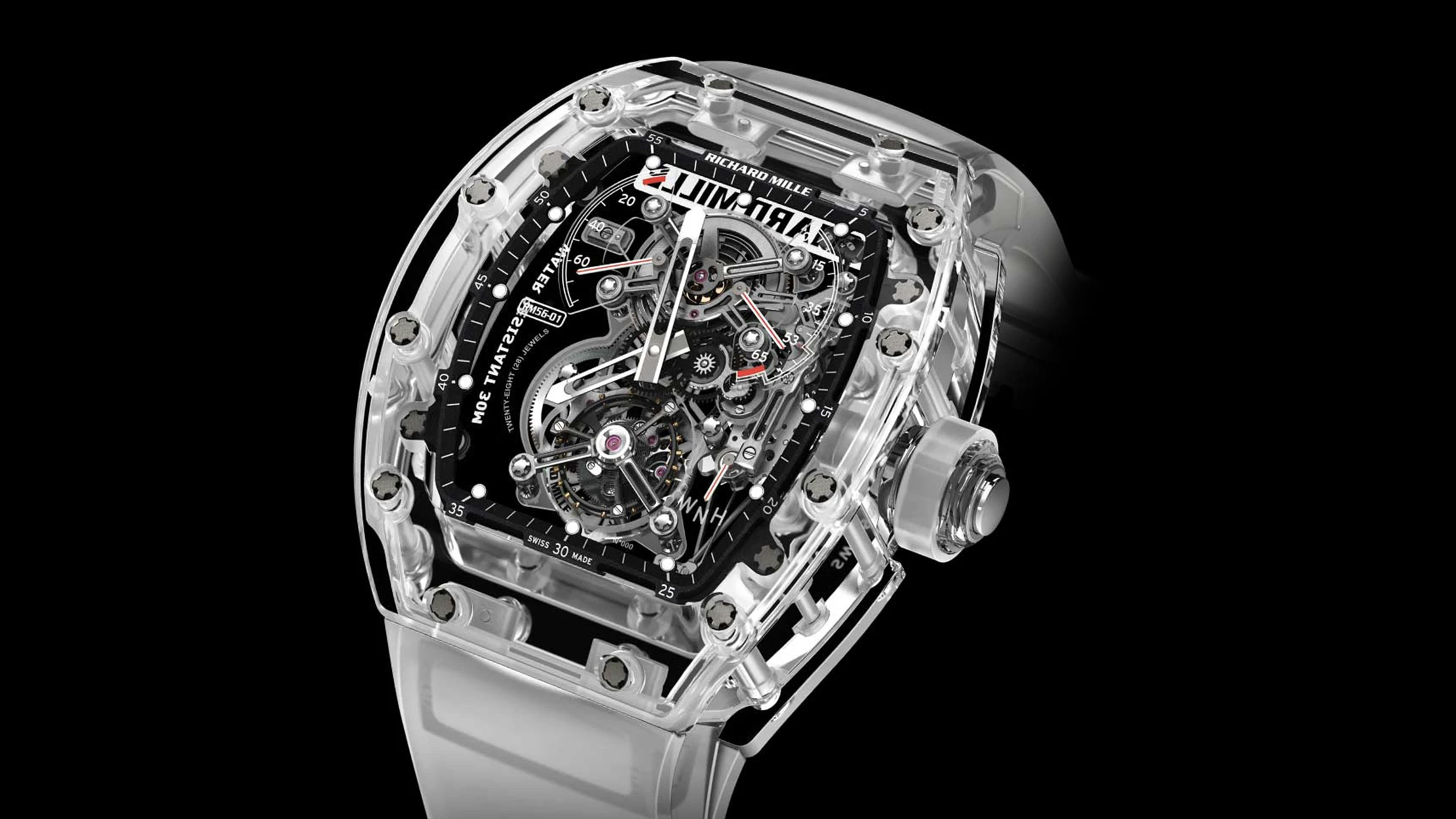
The same suspension technique appears in the RM 56-02, this time in a fully transparent sapphire case, which makes the effect visible. What you see is a movement that appears to be attached to nothing at all.
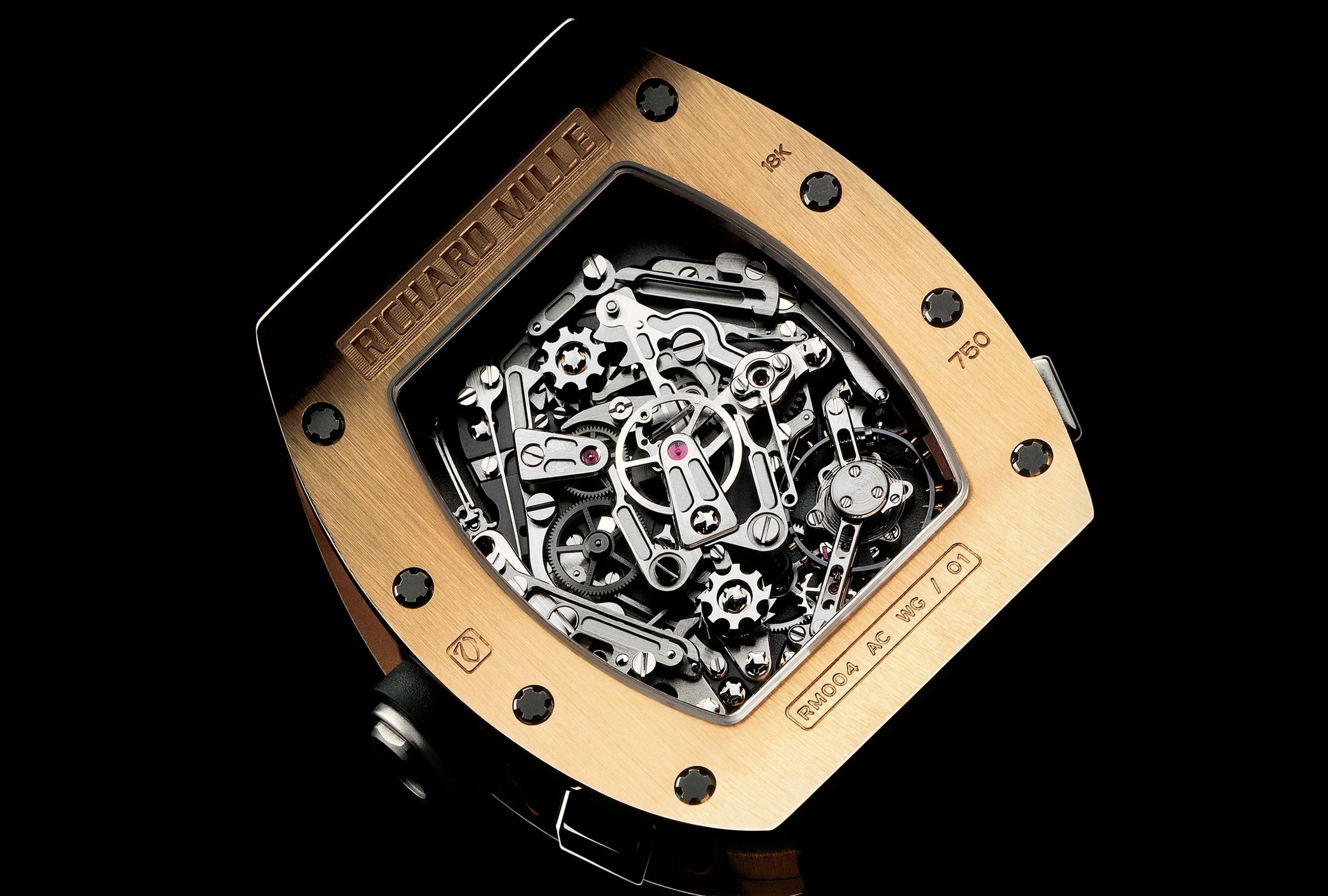
The split-seconds complication counts among the most difficult of all. Two seconds hands run one above the other; at the push of a button, one stops while the other continues. A second push allows the stopped hand to catch up with the running one. This makes it possible to measure intermediate times.
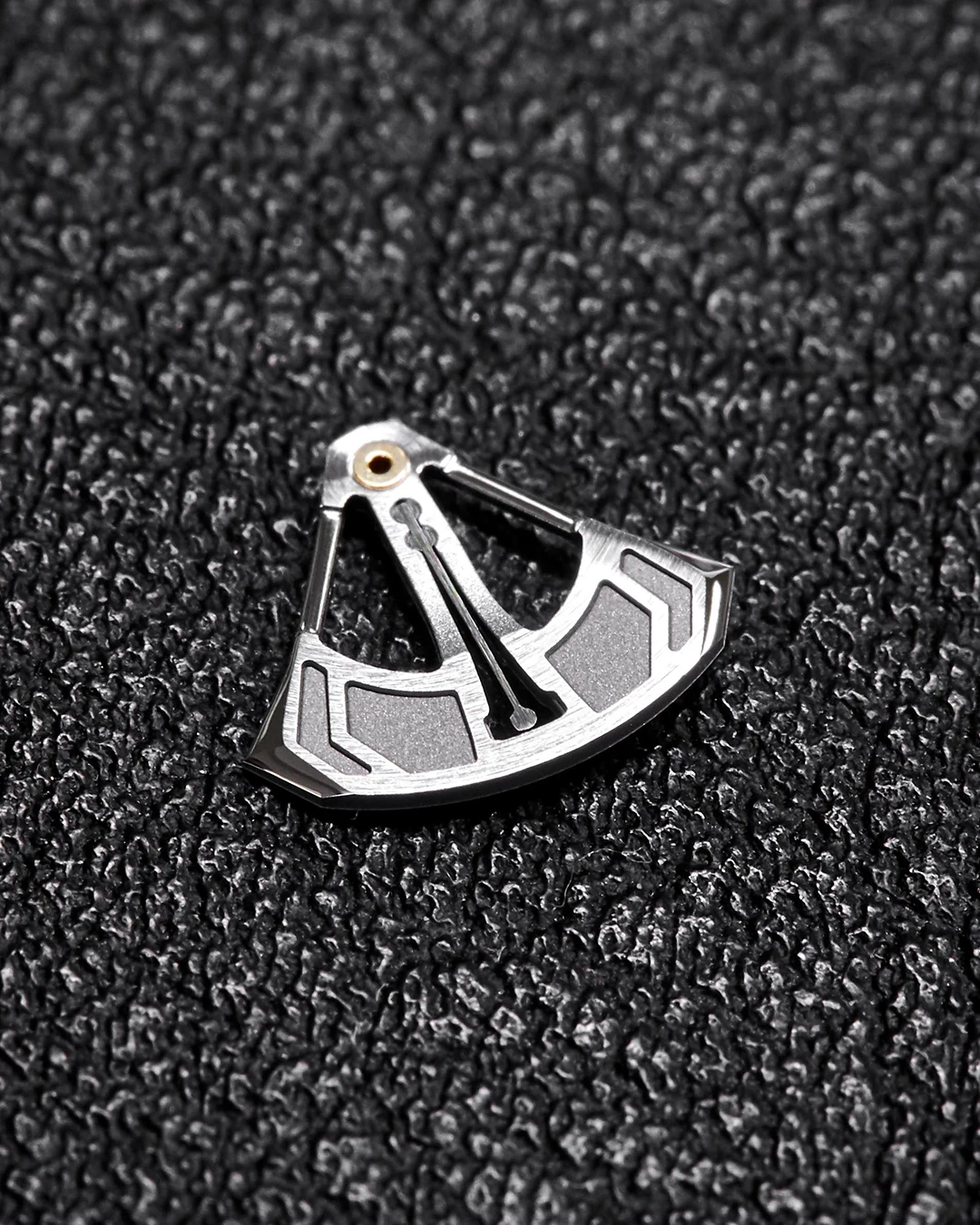
The difficulty lies in stopping. The split-seconds hand is held by a pincer that closes around a wheel. If the two arms of that pincer do not arrive at exactly the same moment, the hand twitches as it stops. Conventionally, the pincer is operated by two separately actuated levers, both of which must be adjusted so that they grip at the same instant. This is a task that depends on the watchmaker’s hand and can drift over time.
In 2003, with the RM 004 and shortly afterwards the RM 008, Richard Mille presented a better solution. The two arms of the pincer are no longer actuated individually but from a single point. They therefore close simultaneously by necessity and grip the split-seconds wheel in one movement. The pincer is also made of lightweight grade 5 titanium, which reduces its inertia when closing.
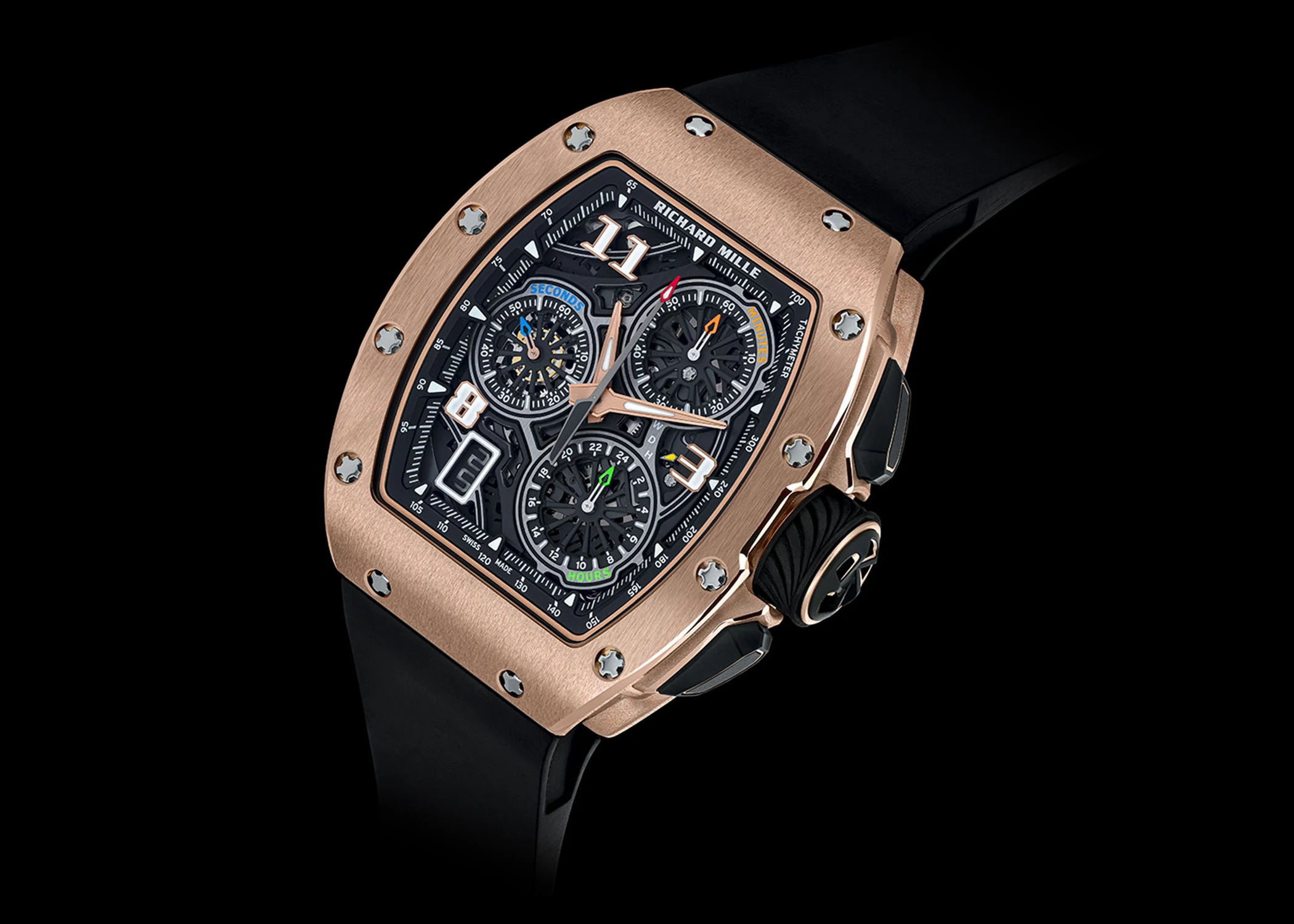
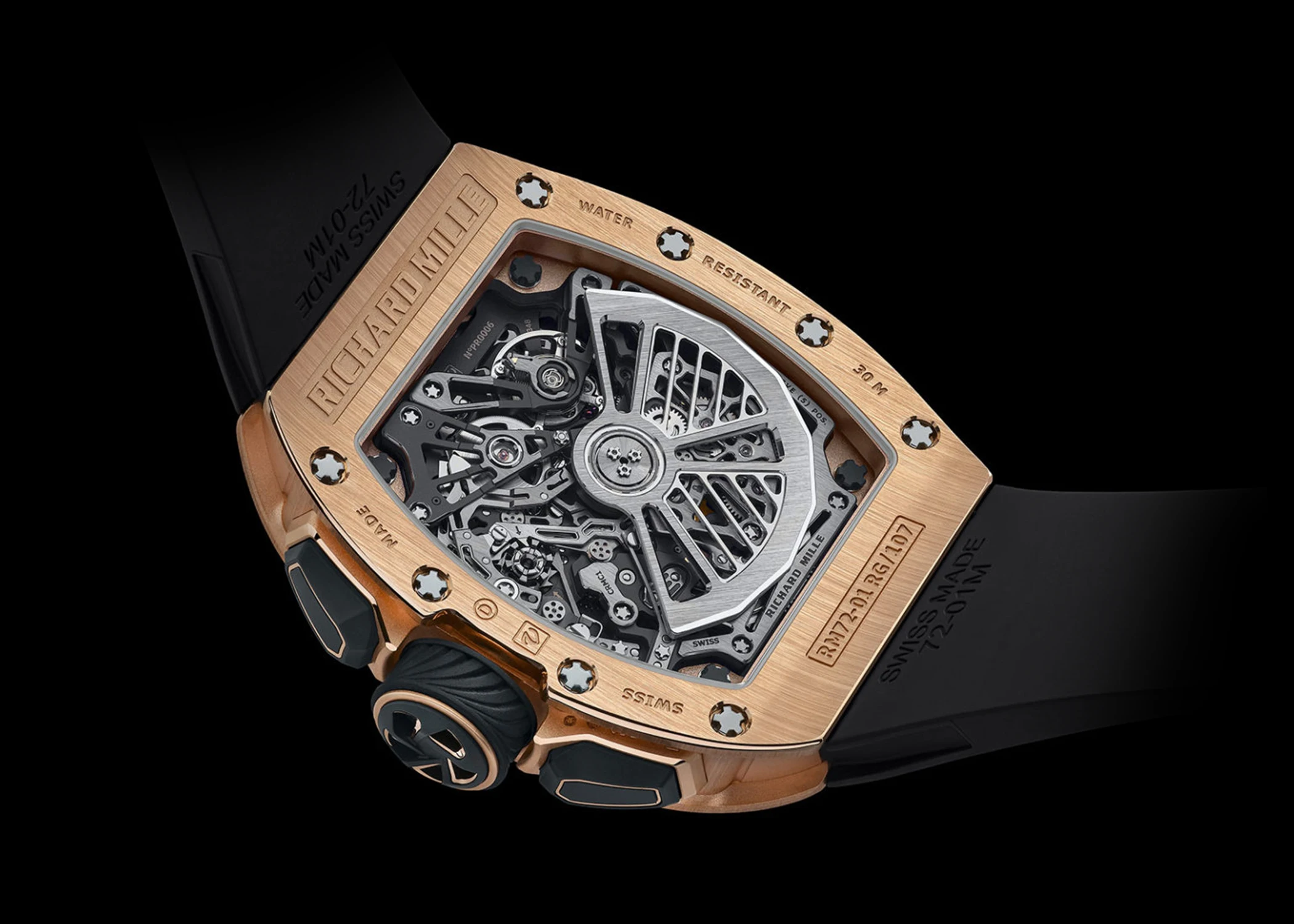
In 2020, Richard Mille presented calibre CRMC1 in the RM 72-01, a chronograph with a patented coupling that differs from the established designs.
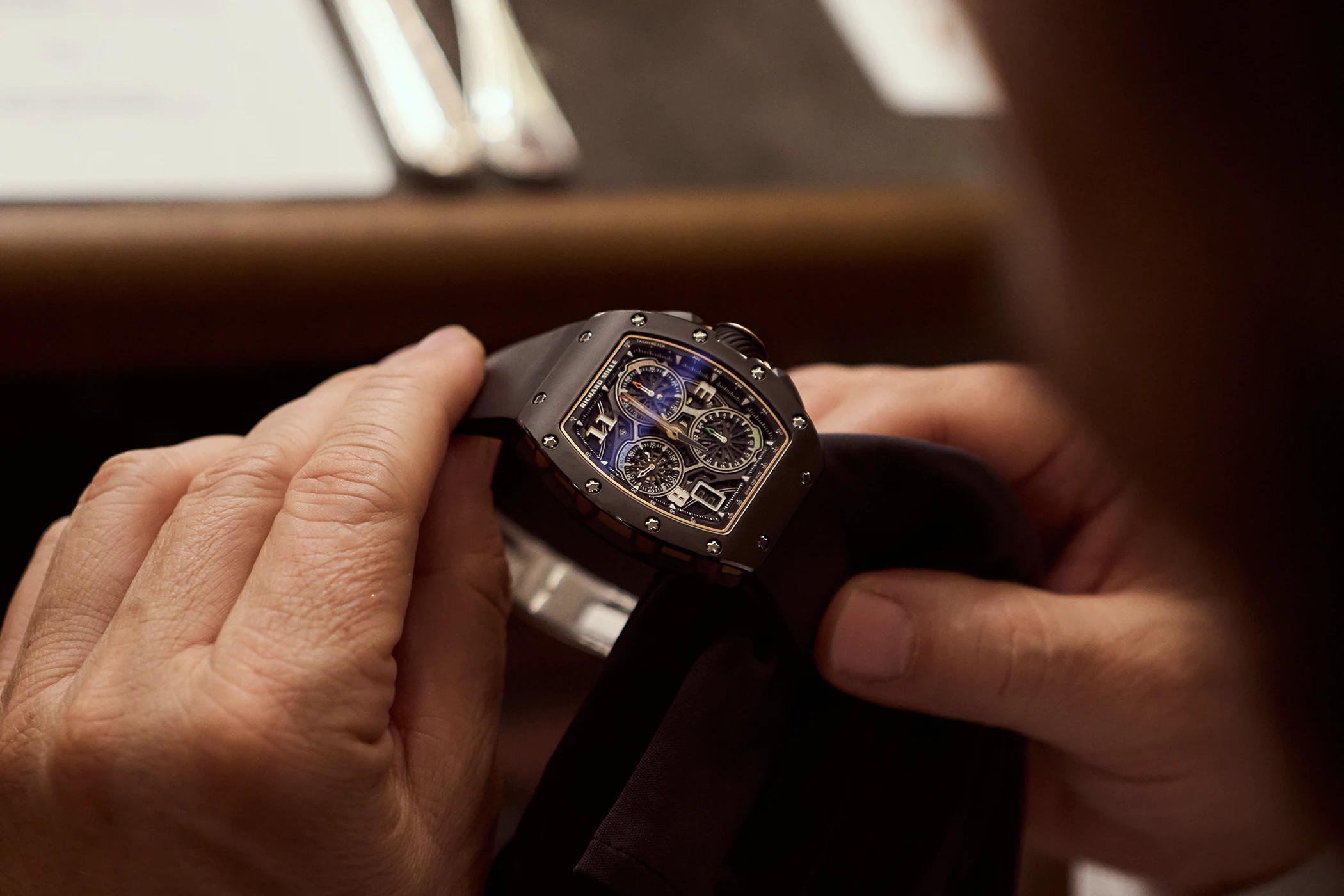
By way of background: in a conventional chronograph, the chronograph seconds are driven from the movement’s fourth wheel by way of a coupling. From there, the force travels via an intermediate wheel or a finger to the minute counter. The problem is that the fourth wheel sits at the end of the gear train and carries the least energy. Any disturbance there has an immediate effect on rate, amplitude and power reserve. This applies regardless of whether the force is transmitted by an oscillating pinion or by a horizontal or vertical clutch.
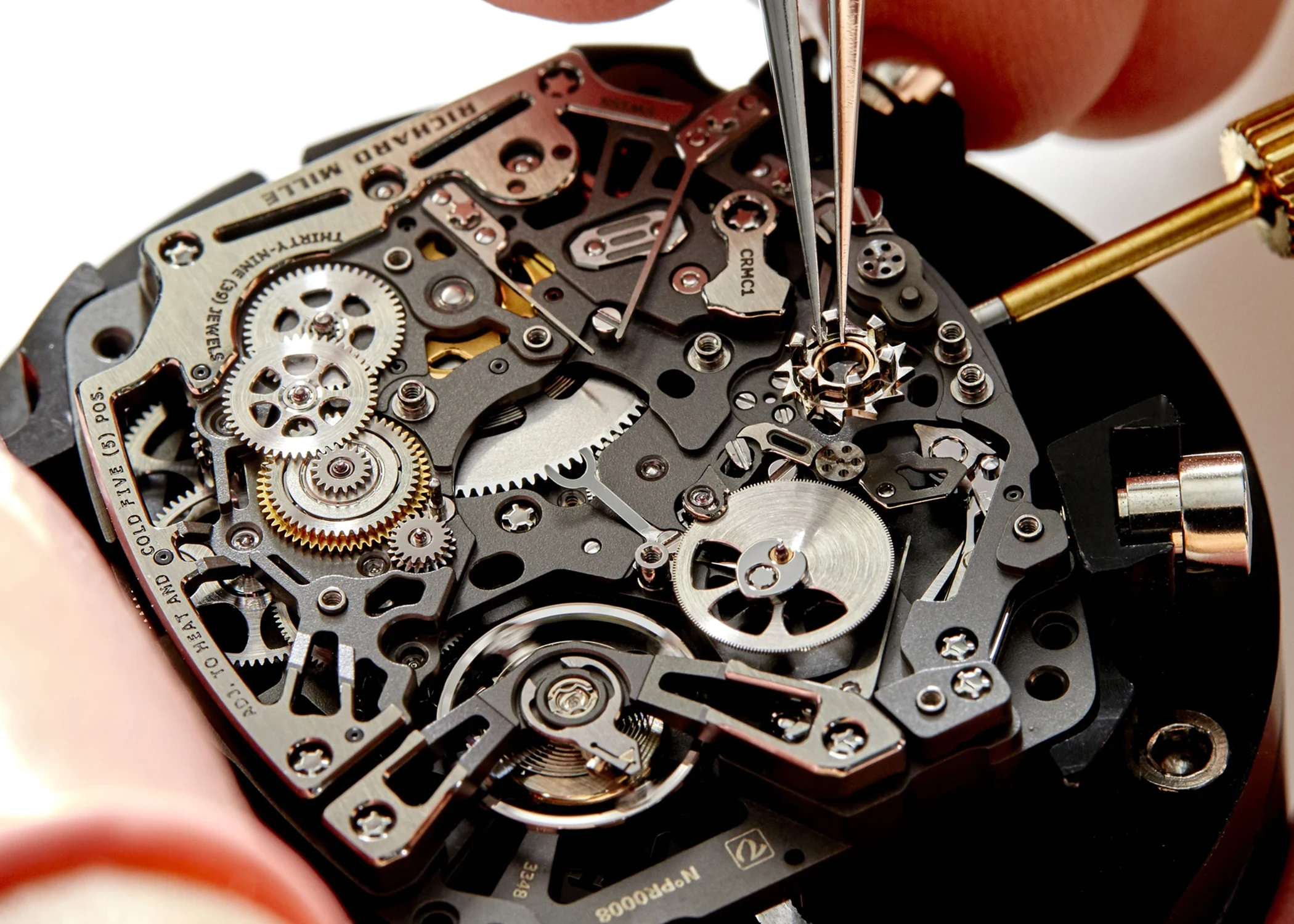
Richard Mille chose a different route. Instead of one oscillating pinion, two of them sit on rockers, one for the seconds and one for the minutes. Both draw their power directly from the barrel rather than from the fourth wheel, controlled by a column wheel with six columns. The torque is therefore distributed across the counters, and the display of hours and minutes is decoupled from the chronograph seconds wheel. In practice, this means that running the chronograph has no particular effect on either accuracy or power reserve.
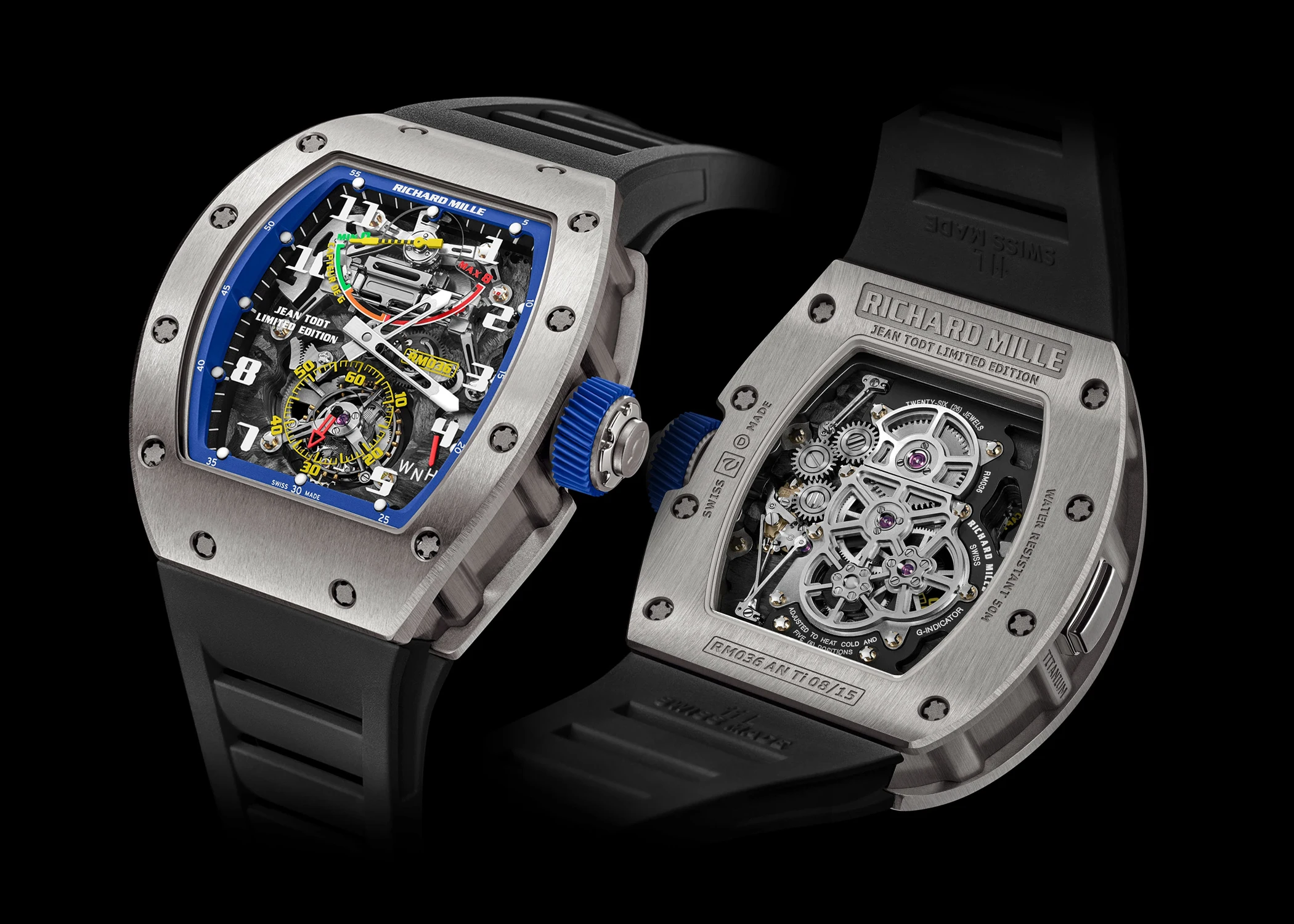
Meanwhile, sitting in a category of its own is the mechanical -sensor, developed and patented by Audemars Piguet Renaud & Papi (Today Audemars Piguet Le Locle) exclusively for Richard Mille and first fitted in the RM 036.
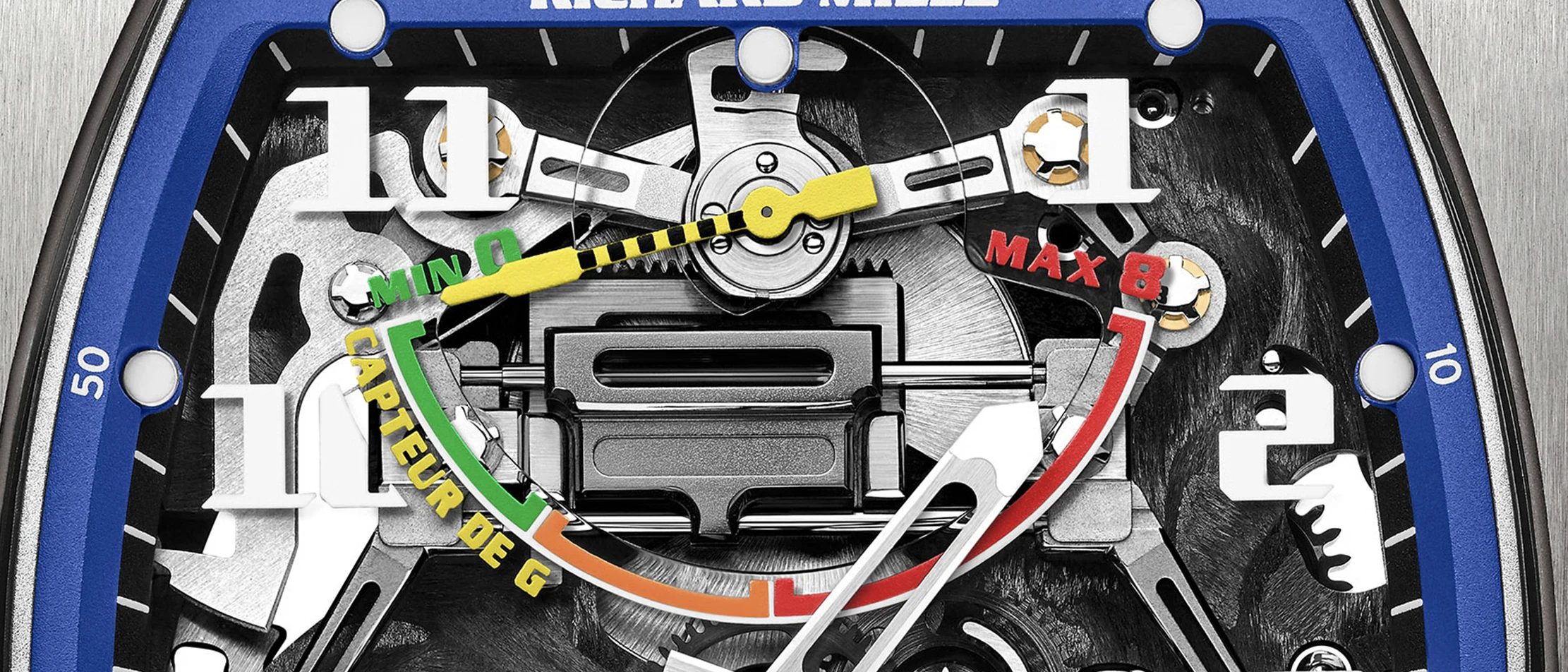
The principle can be described in one sentence: an inertial mass moves under acceleration against a spring force, and that movement is transferred to a hand which retains the maximum value. What makes it demanding is the scale involved. In the RM 38-01 made for golfer Bubba Watson, more than 50 moving parts occupy a space of 17 millimetres. The sensor sits below twelve o’clock and measures up to 20 g; a pusher at nine o’clock resets it.
The sensor works mechanically but operates independently of the movement. For a golfer who wants to know how much force is in his swing, this is a new and genuinely useful function.
An automatic movement intended for a tennis player or a golfer has a problem that never becomes apparent in normal wear: too much energy input. Anyone moving their arm abruptly spins the rotor at a speed the winding system was never designed for. Wear and material fatigue are the consequence.
Richard Mille found two answers to this.
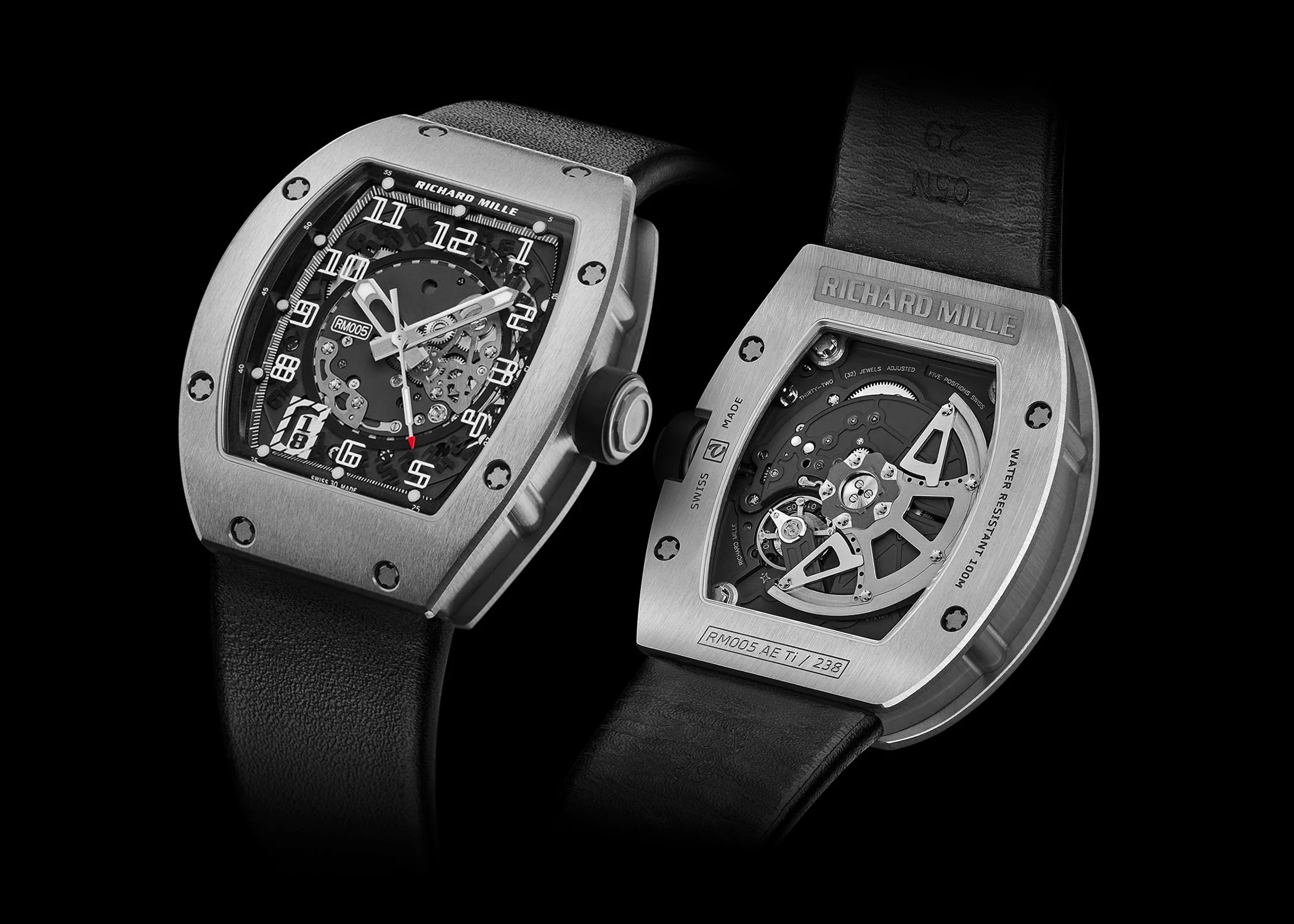
The brand’s first automatic watch, the RM 005 of 2004, already featured a variable-geometry rotor carrying two opposed wings. Their position allows the inertia of the rotor to be matched to the wearer’s activity: someone who plays a lot of sport is given a more sluggish rotor that winds less efficiently and in return protects the system. The rotor is not adjusted automatically; the setting is made by the watchmaker.
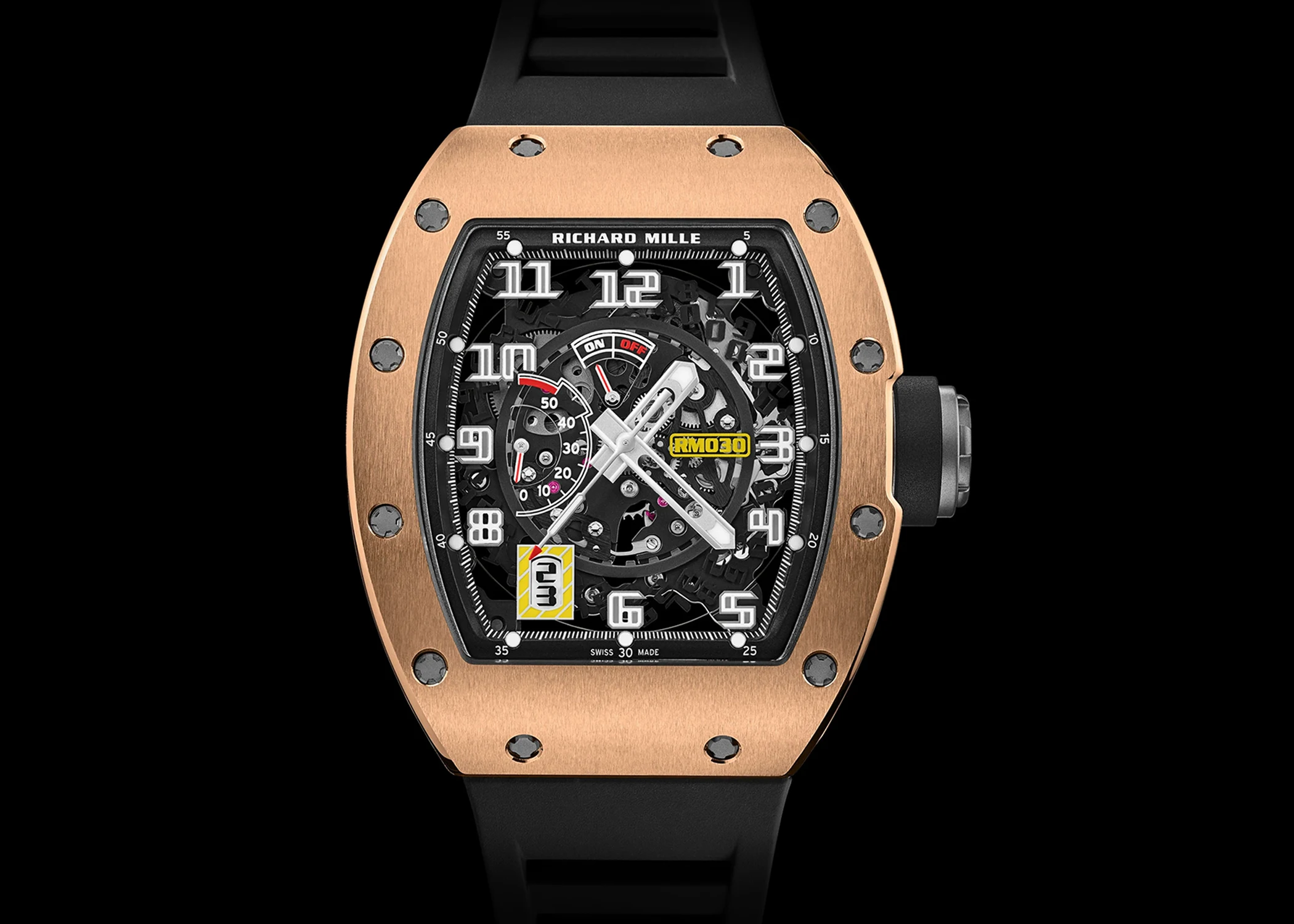
The declutchable variable-geometry rotor of the RM 030 goes a step further and regulates itself. Once the power reserve reaches 50 hours, a purpose-built gear train disconnects the rotor from the barrel. From that point it continues to turn but no longer winds. This prevents wear and also keeps the mainspring within the favourable torque range in which a watch runs most accurately. The thinking is the same as behind the torque indicator of the earliest models, except that the watch now draws the conclusion itself.

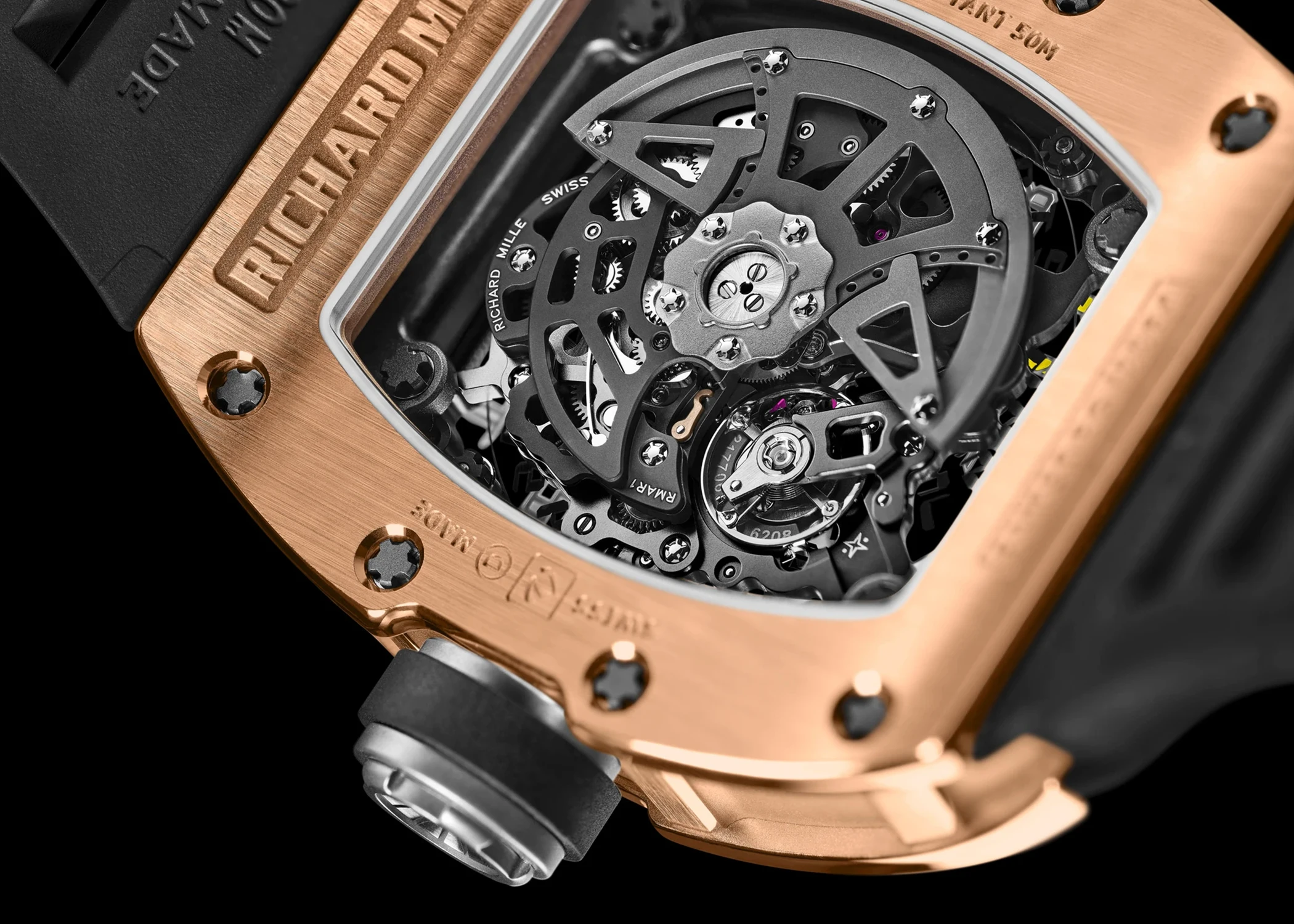
In 2019, in collaboration with Airbus Corporate Jets, Richard Mille presented the RM 62-01, an alarm watch that produces no sound.
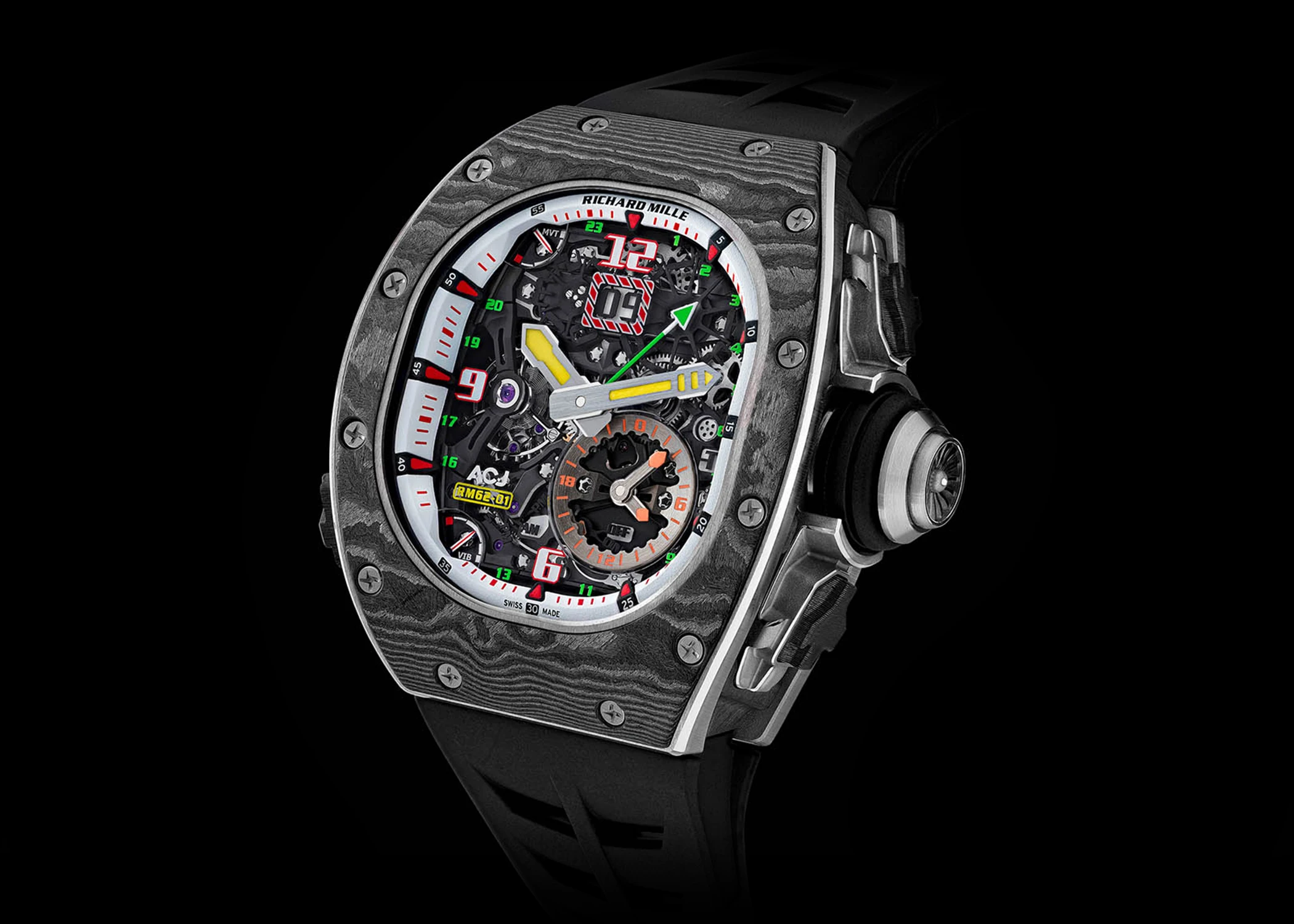
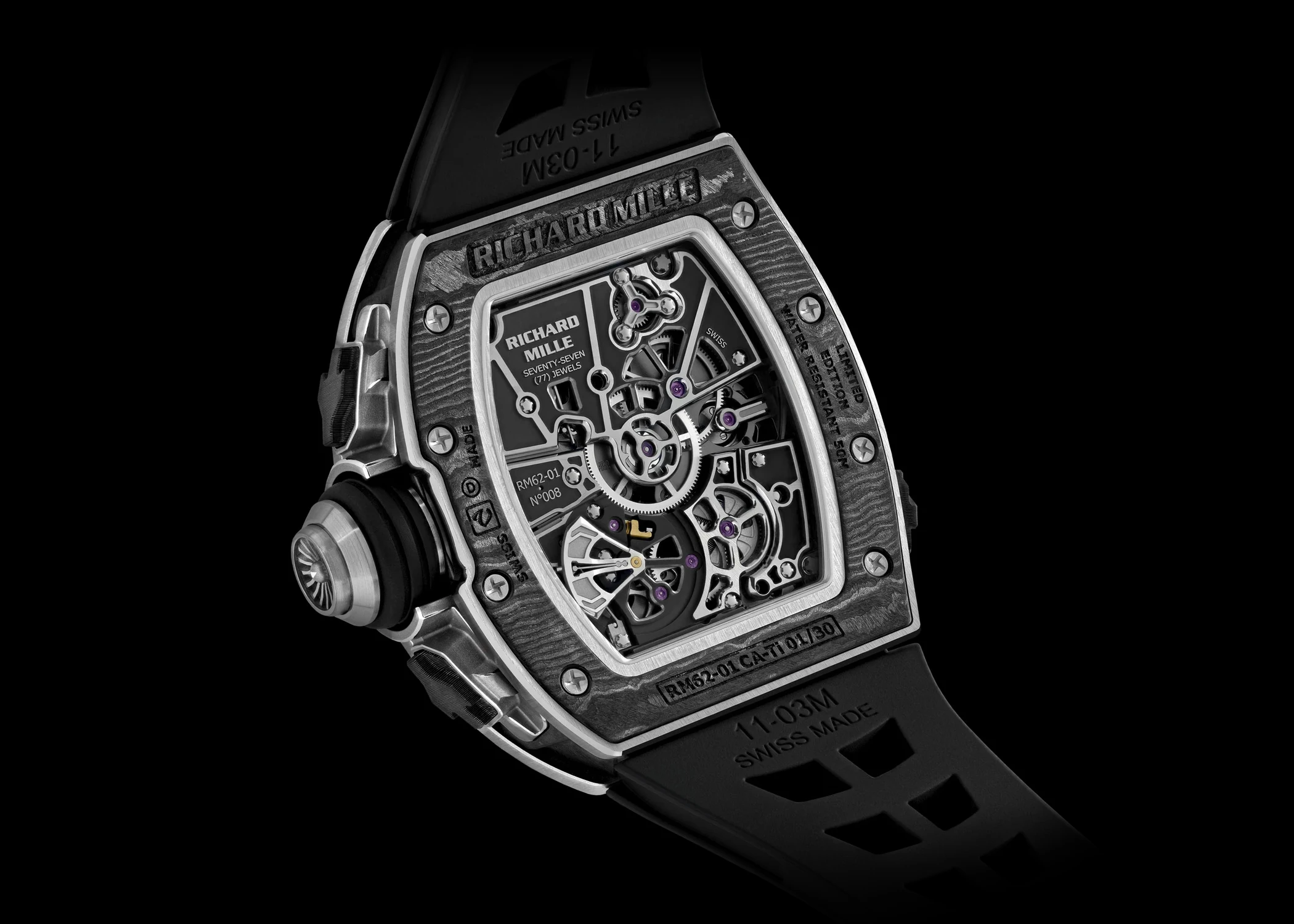
Instead of a hammer striking a gong, a balance-like weight of solid gold is set spinning and causes the watch to vibrate. The model is the vibrating alert of a mobile phone. The wearer feels the signal; nobody else hears it.
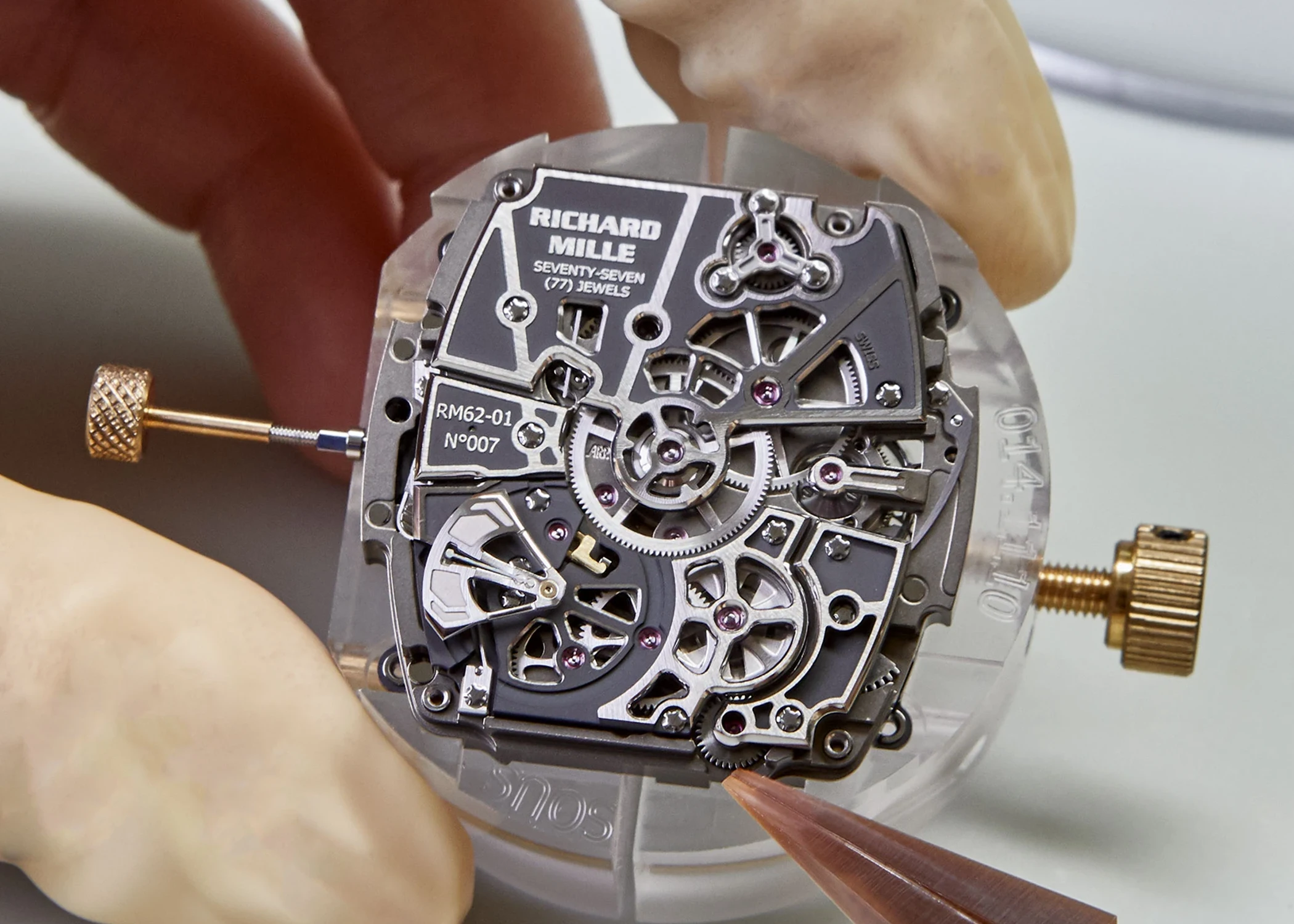
The technical heart of the matter lies in the contradiction that had to be resolved. For more than two decades, Richard Mille has designed movements to keep vibration away from the mechanism. Here, a vibration had to be generated inside the movement without compromising accuracy or fatiguing components. This required five years of development together with Audemars Piguet Renaud & Papi, in part to determine the optimum rotational speed: at the speed chosen, the weight turns around 1,080 times during the twelve seconds of the alarm (5400 rpm)
With 816 components, two barrels, seven hands and eleven indications, the calibre is considered the most complex Richard Mille has built to date.
With the RM 009 of 2005, a material previously reserved for satellites found its way into a watch case: ALUSIC, a compound of aluminium, silicon and carbon. The watch weighed 29 grams without the strap, a record at the time. It was the first application of this material within the field of watchmaking.
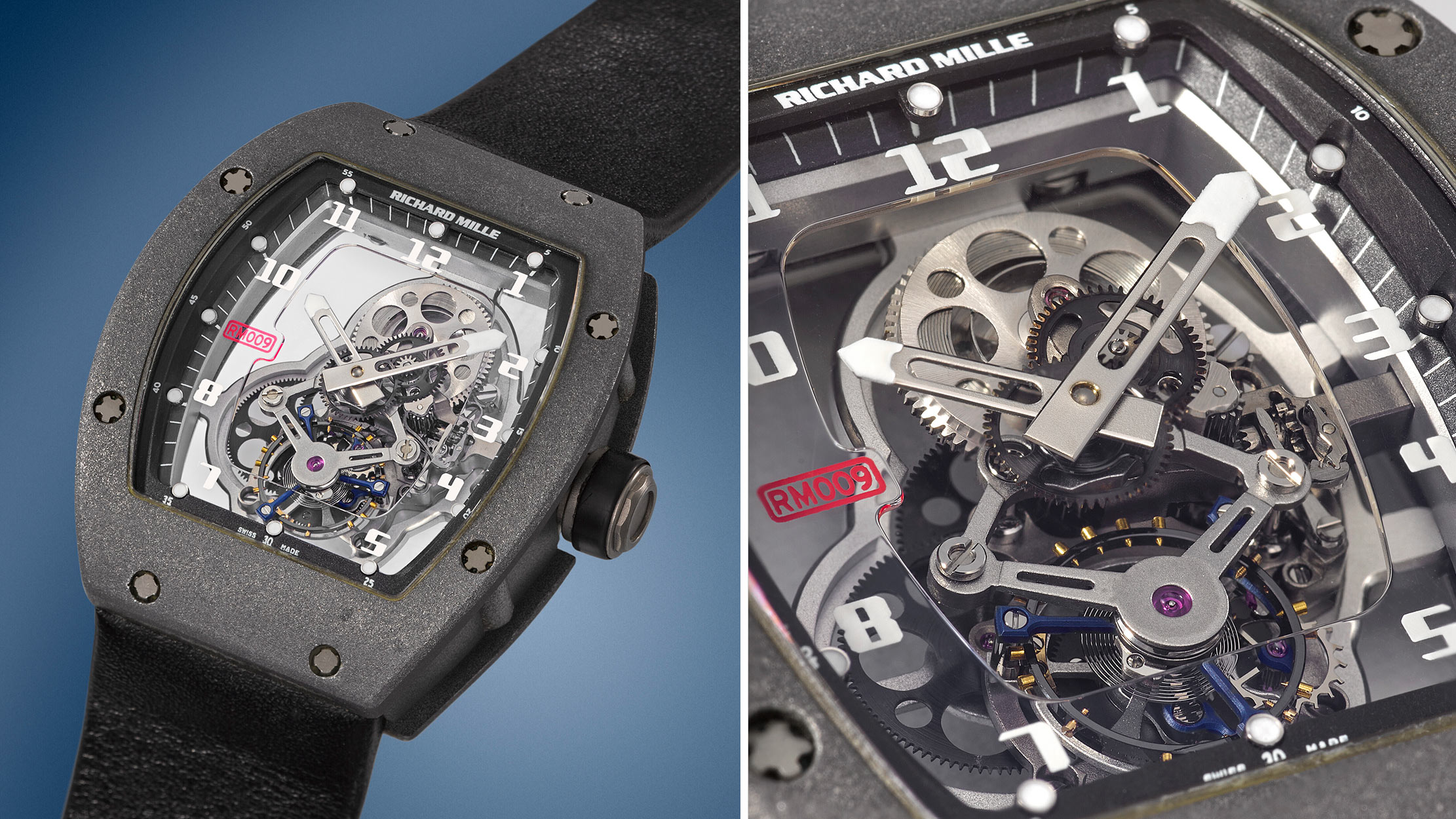
Credit © Christies
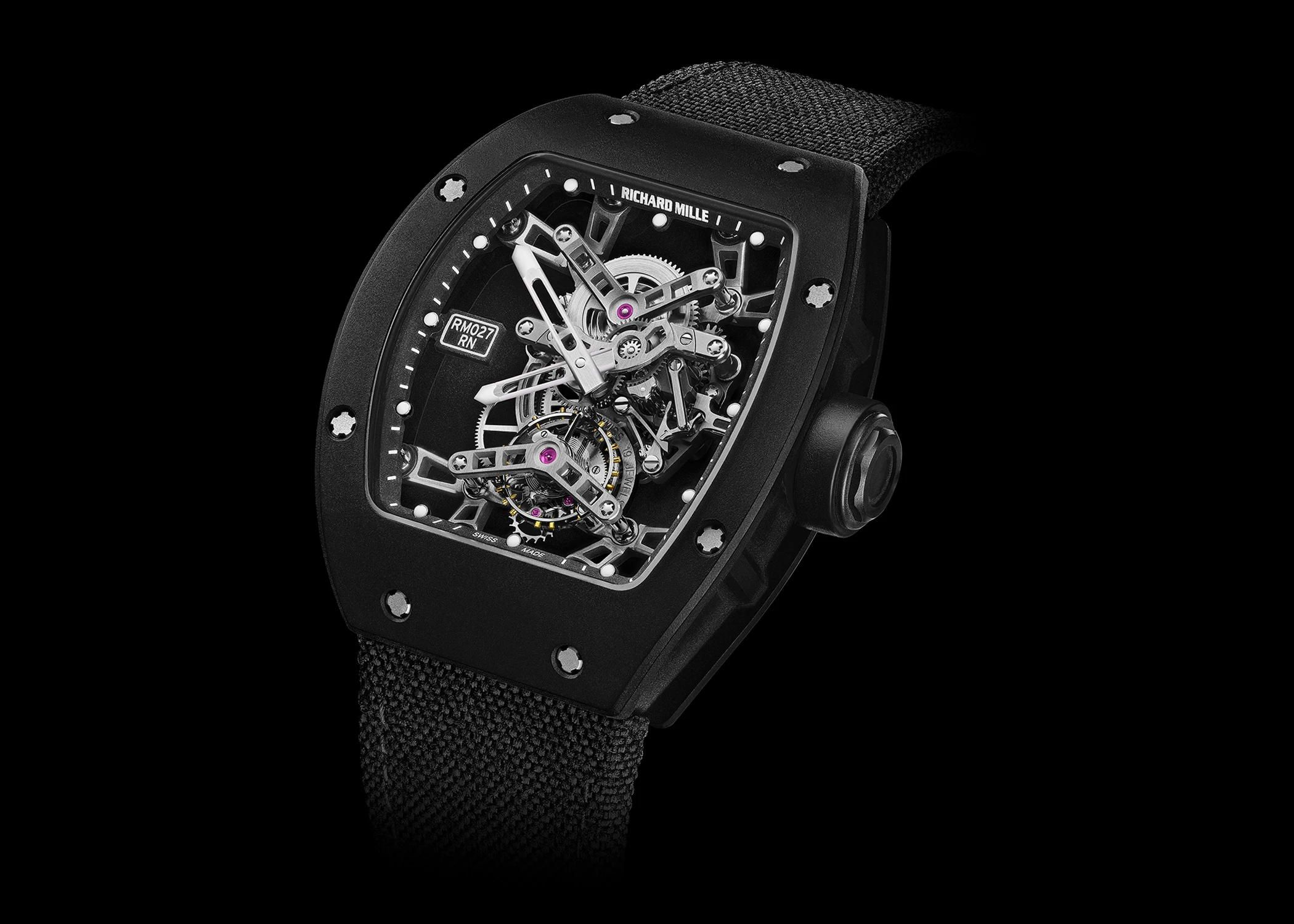
The RM 027 for Rafael Nadal used an aluminium-lithium alloy called LITAL in 2010, which contains copper, magnesium and zirconium among other elements and has a density of 2.55. Lithium is one of the lightest metals there is; the alloy comes from aerospace and is found in the Airbus A380, among other applications.
Combined with titanium for the baseplate and tourbillon cage, this produced a movement weighing 3.83 grams. The complete watch weighed less than 20 grams with the strap, making it the lightest mechanical wristwatch at the time of its launch.
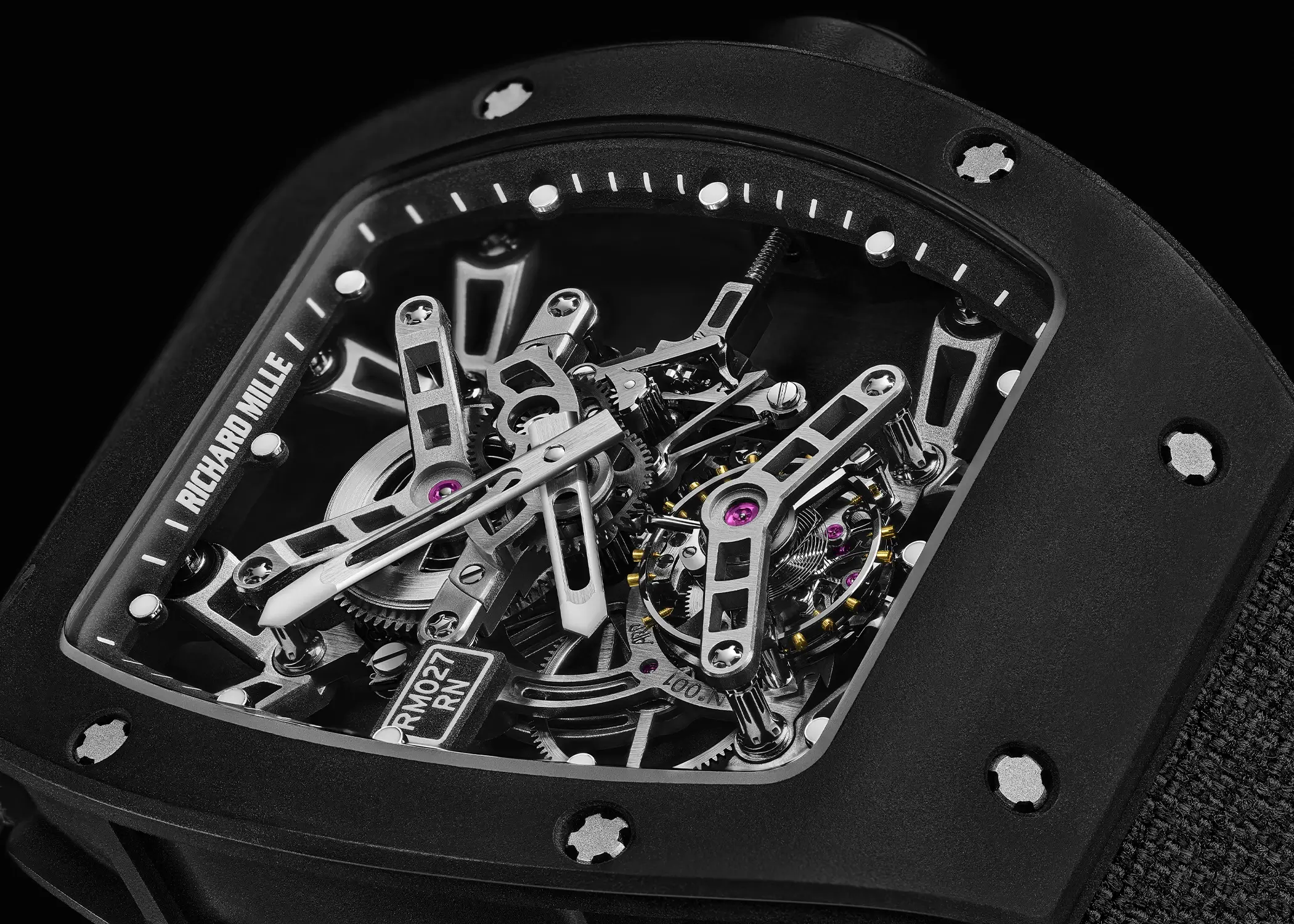
The material that now serves as the brand’s signature arrived by a detour. The supplier North Thin Ply Technology produced composites for racing yachts, including masts. According to Richard Mille’s development team, the first case machined in-house came from one such mast blank.
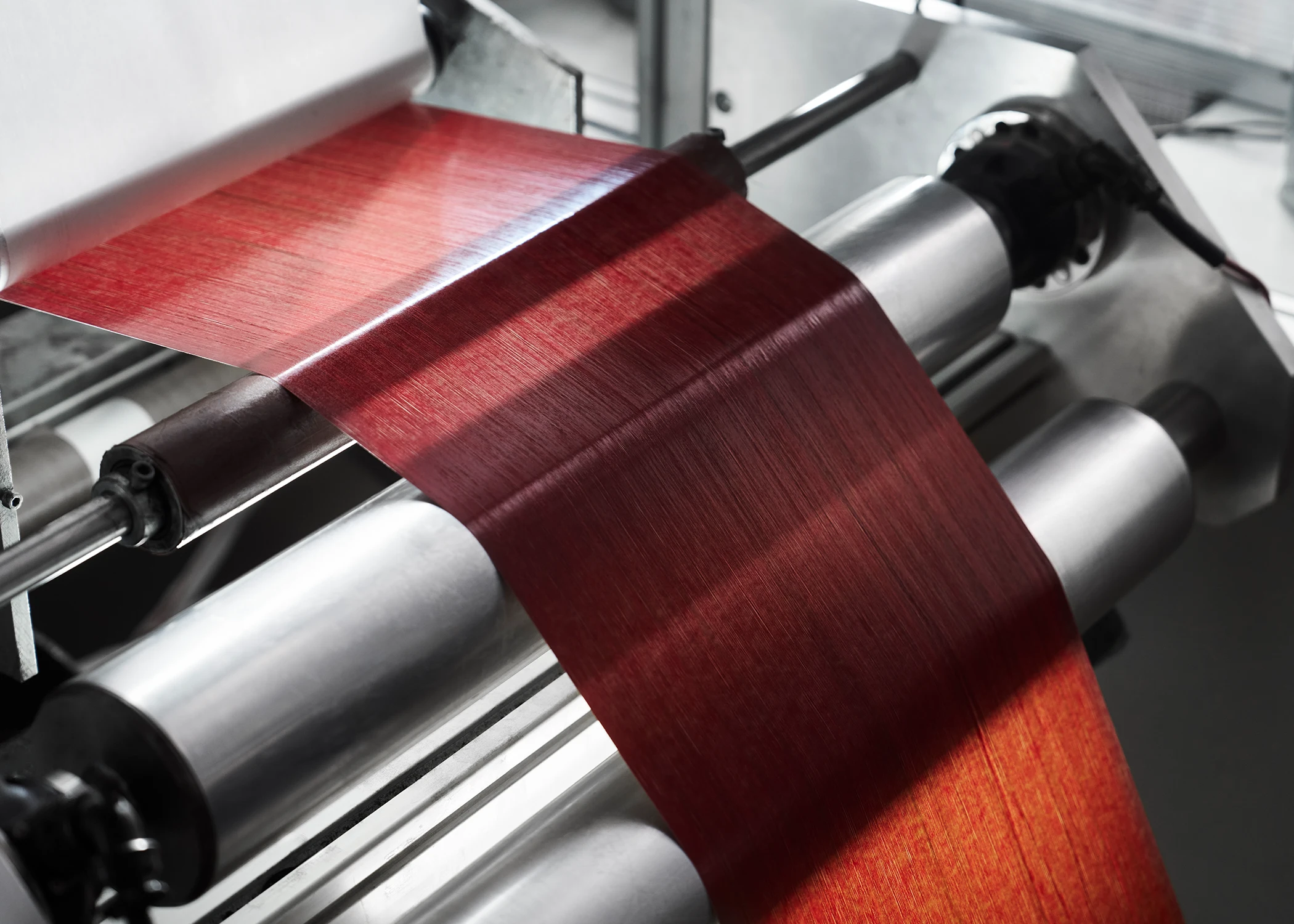
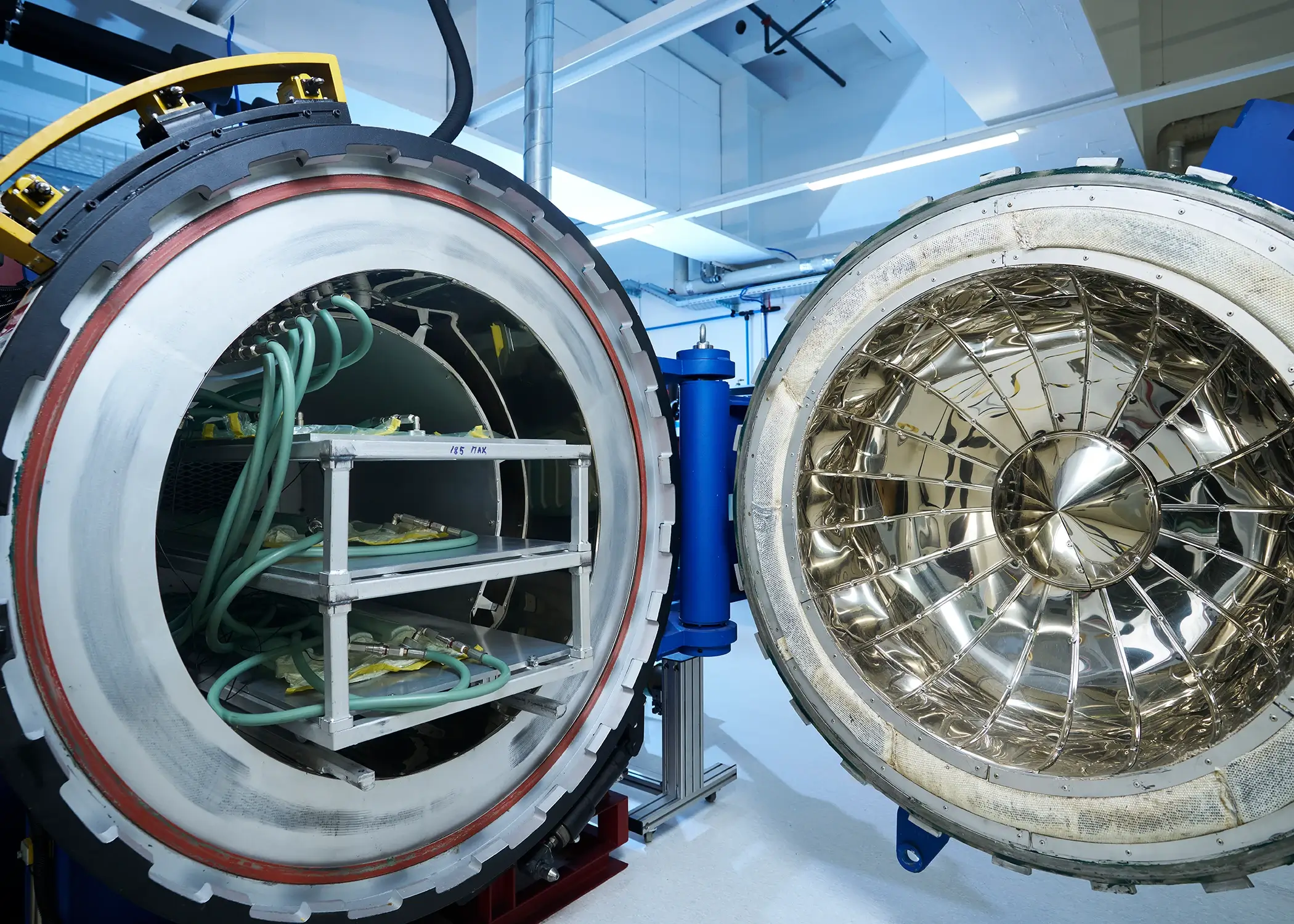
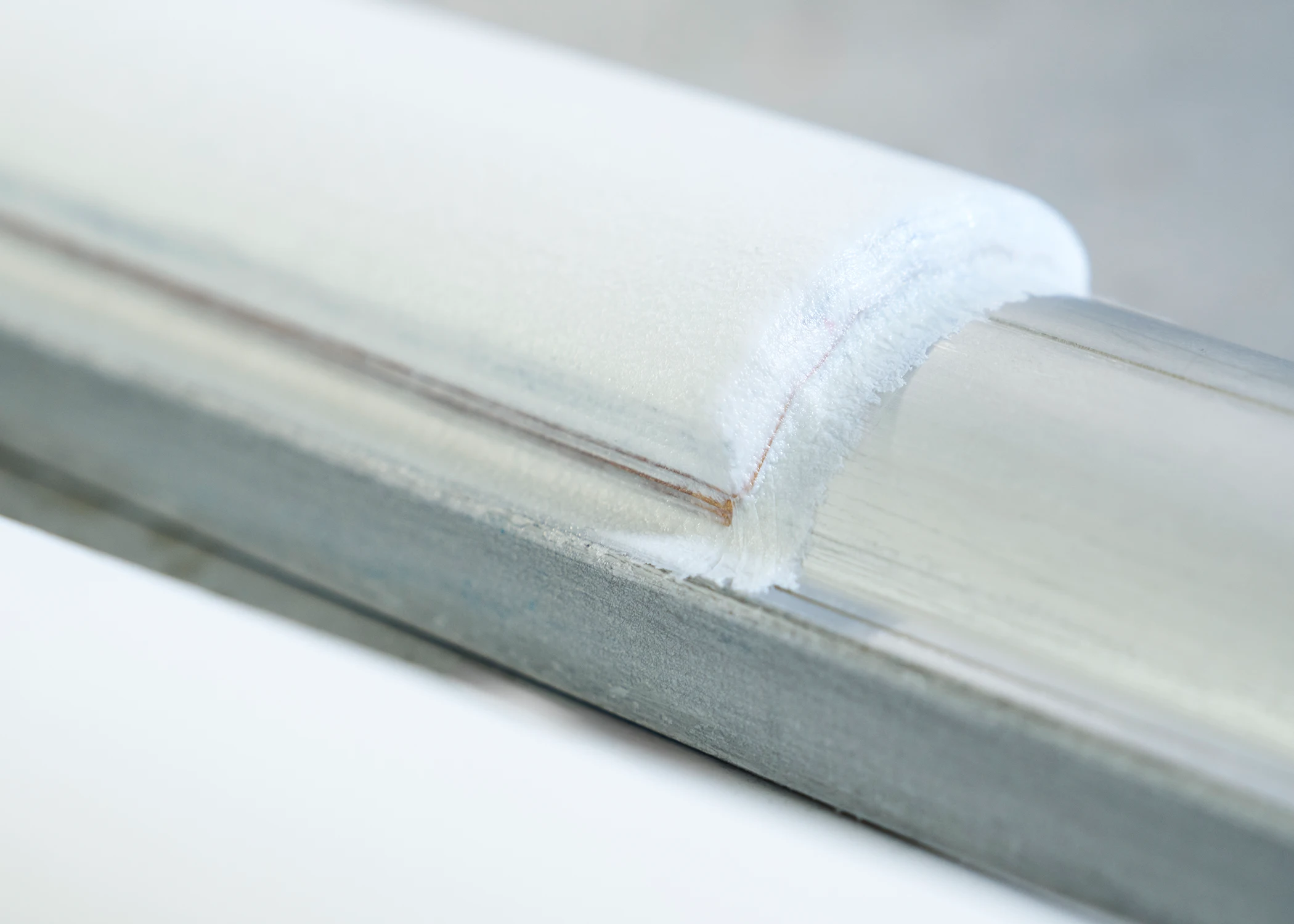
The structure of Carbon TPT®: 600 layers of parallel filaments with a maximum thickness of 30 micrometres, roughly a third of a single human hair. Each layer is rotated 45 degrees relative to the previous one, after which the block is cured at 120 degrees Celsius under six bar of pressure.
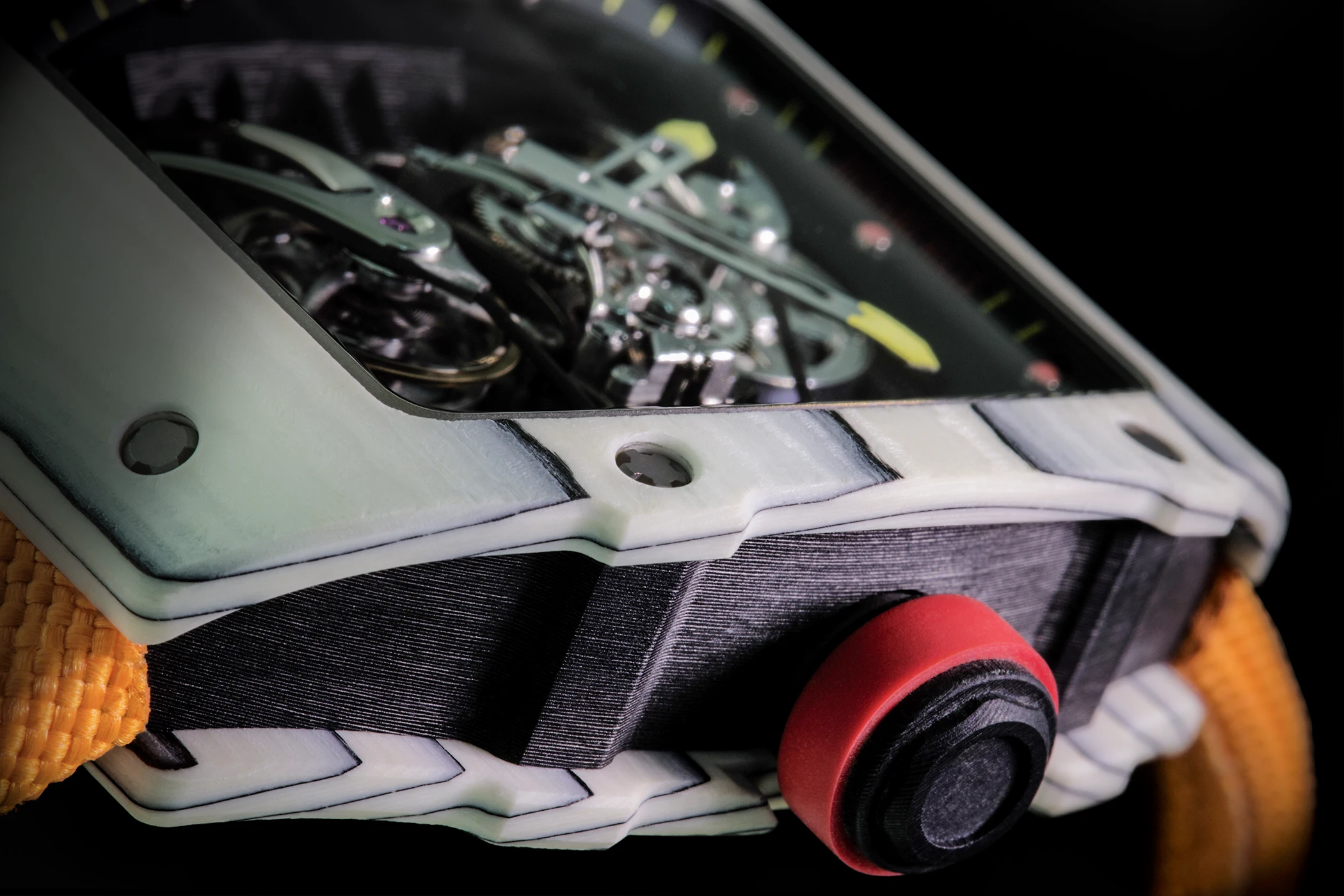
The characteristic grain is a by-product of this process. Because the cut through the block meets each fibre layer at a different angle, no two cases look alike. The structure improves breaking stress by 25 percent and resistance to microcracking by 200 percent, compared with conventional composites.
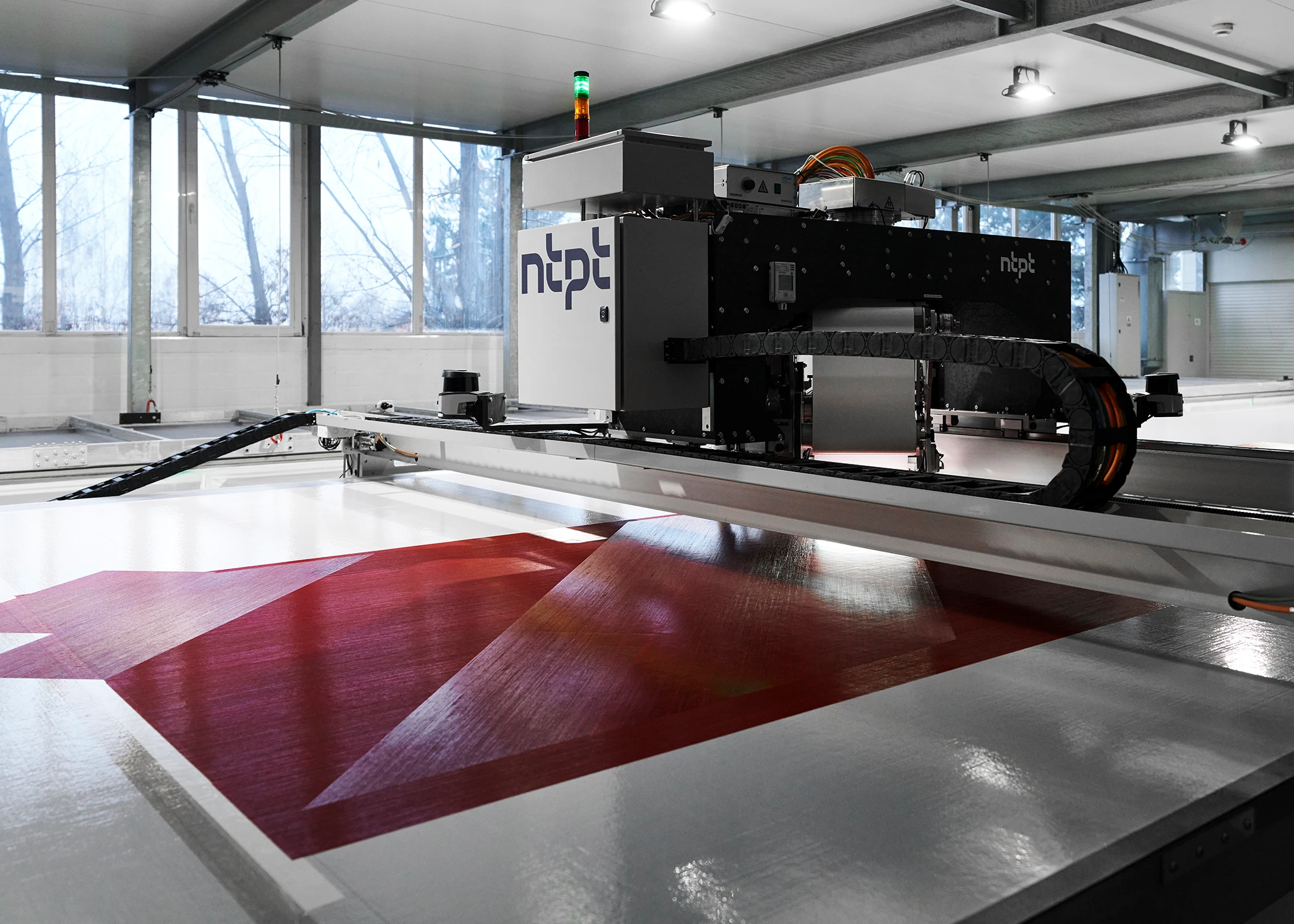
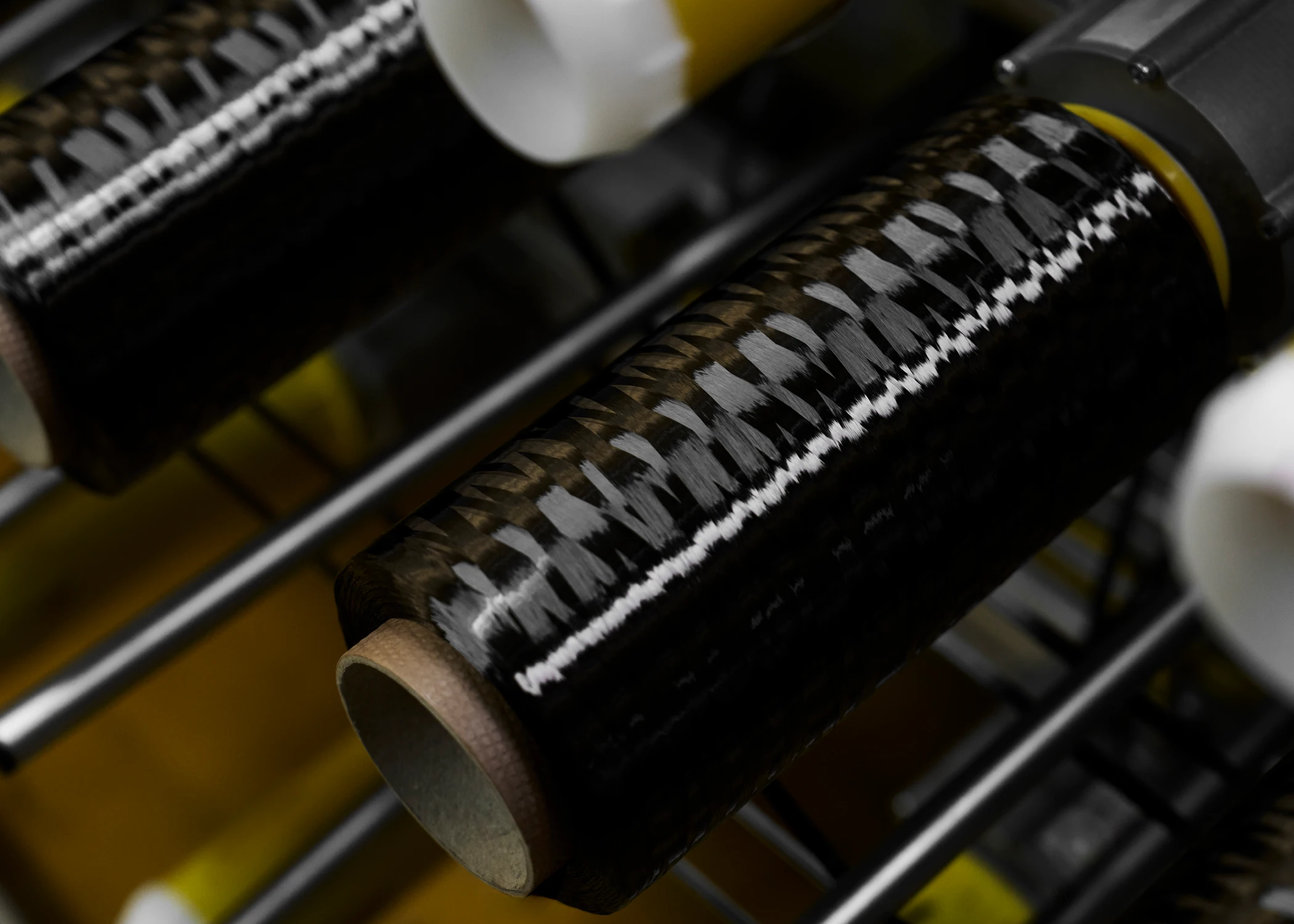
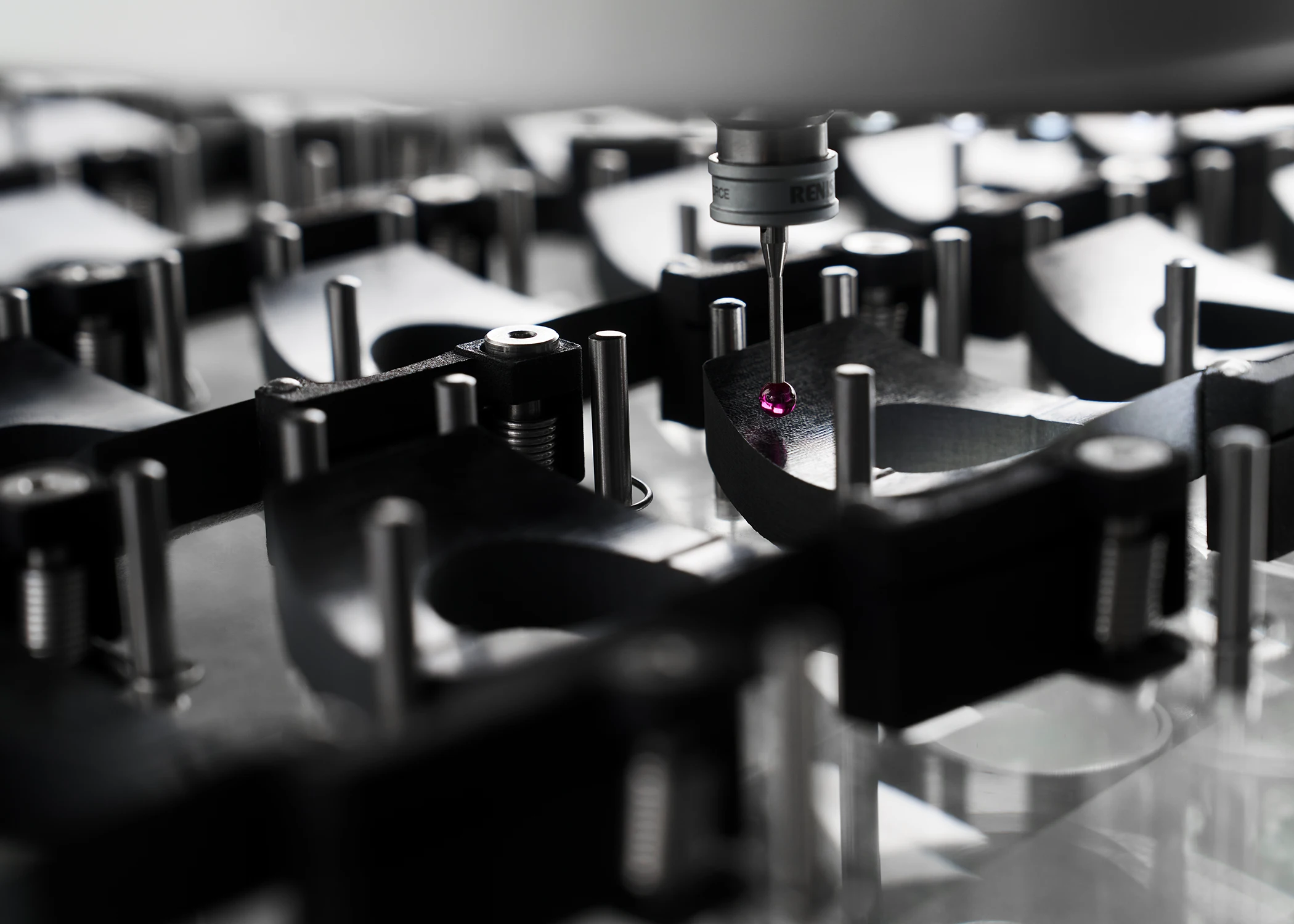
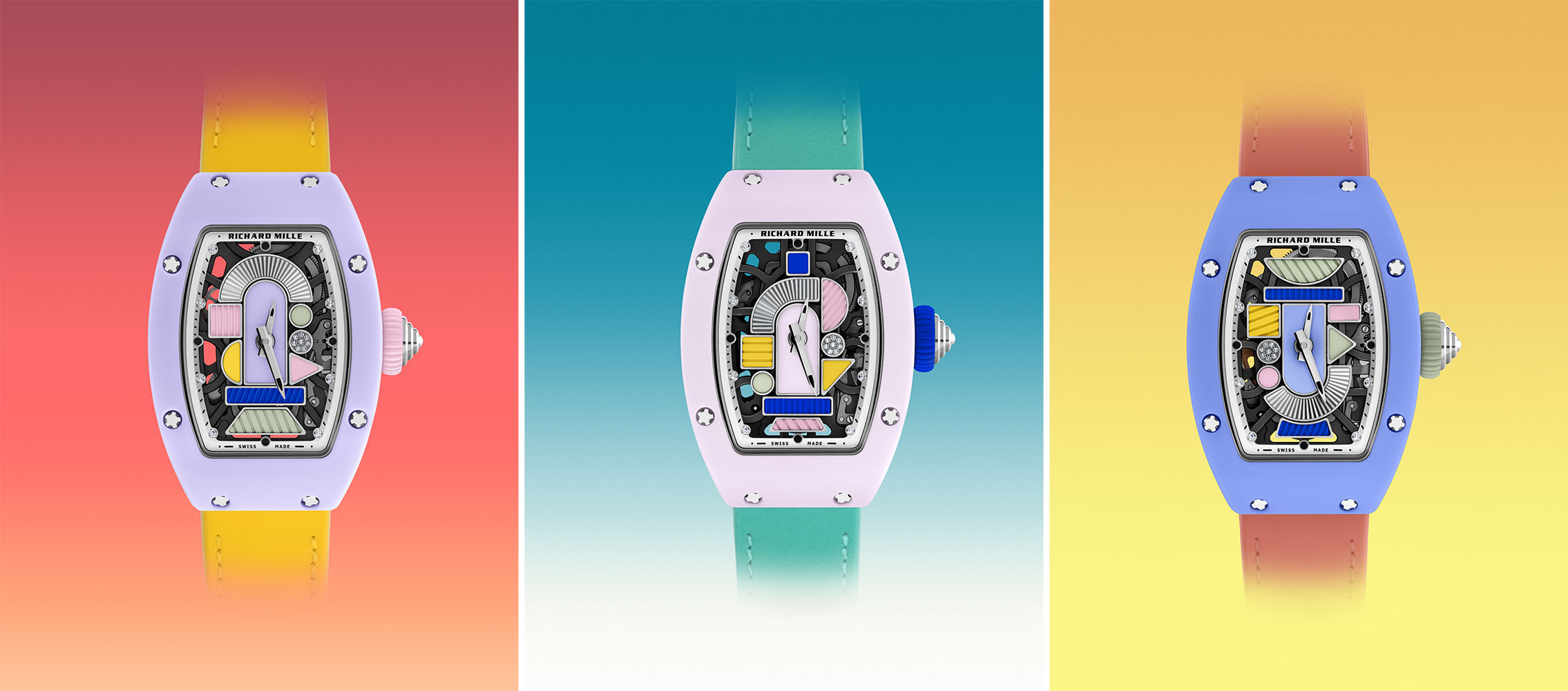
Quartz TPT® follows the same process but replaces the carbon filaments with quartz fibres, which can be coloured.. Richard Mille and NTPT received the JEC Innovation Award for the development in 2016.
A variant for the ladies’ models RM 07-01 and RM 037 places gold leaf of no more than ten micrometres between the fibre layers. Gold is chemically inert, which made bonding it to carbon and quartz the real challenge.
In 2018, a dedicated 300-square-metre production area was created at the NTPT site in Renens exclusively for the production of Richard Mille’s Quartz TPT®, as the process requires a cleanroom environment to protect the material from dust and ensure the highest levels of purity and quality in the final product.
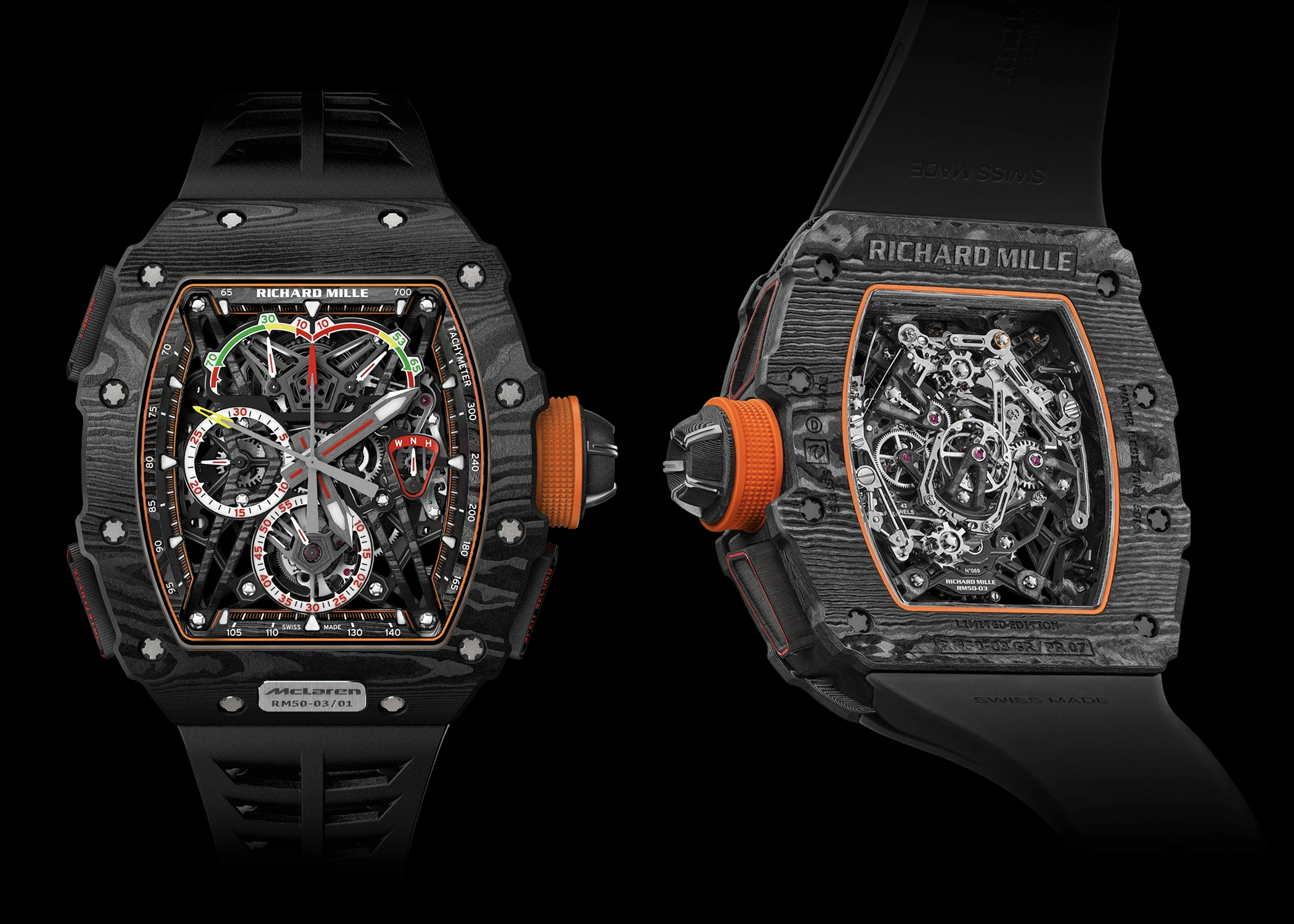
In 2017, the RM 50-03 McLaren F1 introduced a material that has occupied materials science since its isolation by Andre Geim and Konstantin Novoselov, for which the two received the Nobel Prize in Physics in 2010: graphene.
Graph TPT® is essentially Carbon TPT® whose resin matrix has been enriched with graphene. It emerged from a collaboration with the National Graphene Institute at the University of Manchester and McLaren Applied Technologies.
The result was a record: the RM 50-03 weighs 38 grams with the strap, the movement alone seven grams. It is a split-seconds chronograph with tourbillon, one of the more demanding complications in watchmaking. At its launch, it was the lightest mechanical chronograph ever built.
Alongside the composites, Richard Mille works with several ceramics. TZP stands for tetragonal zirconia polycrystal and produces black and colored ceramics with high scratch resistance and low thermal conductivity. ATZ, alumina-toughened zirconia, delivers the same in white.
Cermet is the more interesting case. The name combines ceramic and metal, and that is precisely what it is: a composite of ceramic particles in a metallic matrix. The combination brings together what normally excludes one another, namely the low density of a light metal and the hardness of a ceramic. The material is otherwise used in ballistic protection, in aerospace, and in the brake systems of competition vehicles. At Richard Mille, it is found above all where scratches are most likely to occur: on the bezel.
In 2012 Richard Mille presented the RM 056 and its case machined entirely from sapphire, in three parts, from solid blocks. A first in watchmaking
Sapphire rates 9 on the Mohs scale, directly below diamond. That is precisely what makes machining it so demanding: the tools have to be diamond-tipped, and the material allows for no mistakes, because under excessive load it does not bend but rather shatters. A Richard Mille Sapphire case requires more than 1,000 hours of work (milling and polishing), of which 430 hours go into preliminary shaping and 350 hours into polishing.
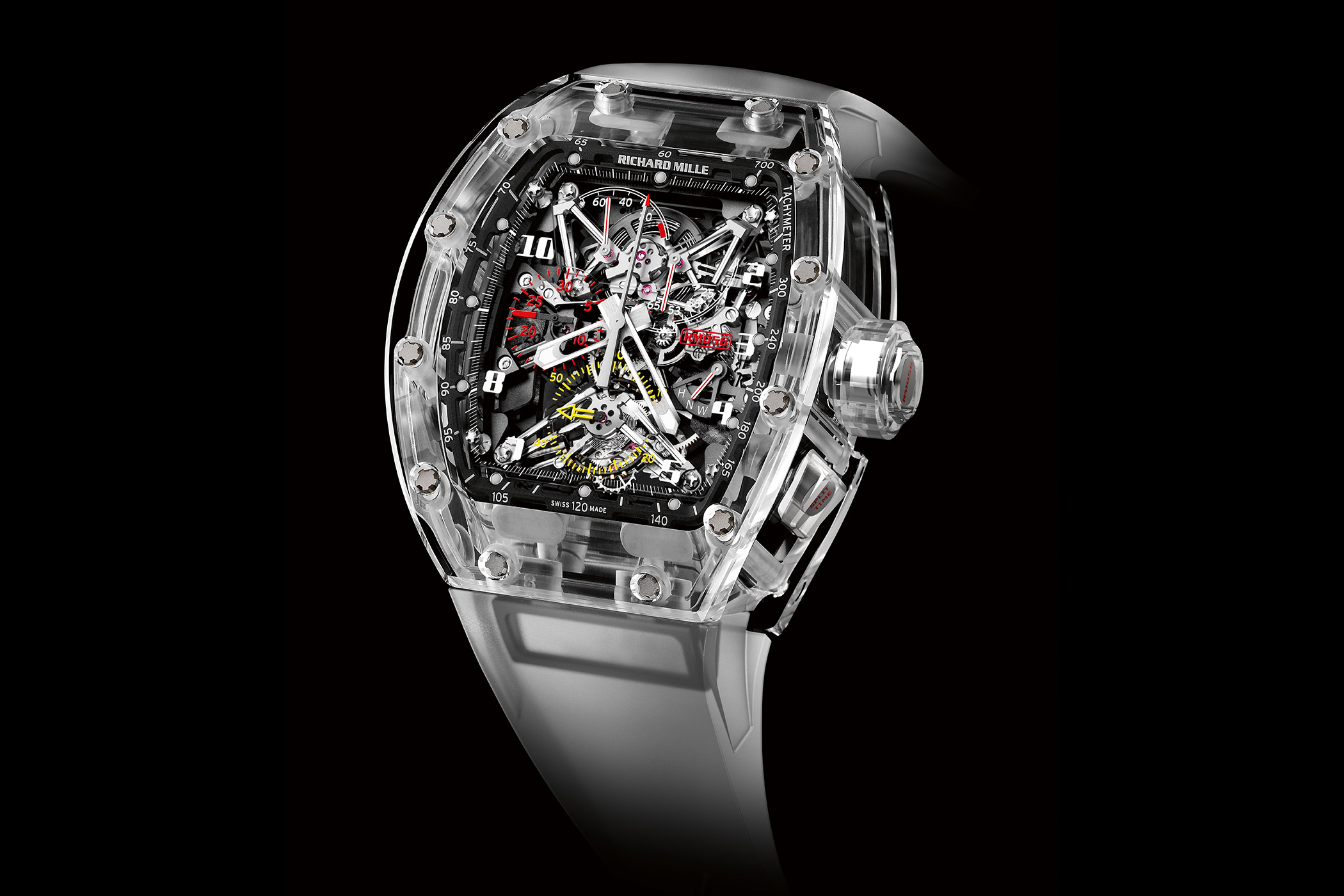
Thanks to its extreme scratch resistance and the view it offers of the mechanism from every angle, the material is well suited to Richard Mille cases.
The RM 56-01 went a step further and produced the baseplate, bridges and one wheel from sapphire as well. A dedicated CNC machine was acquired for the work, and machining a single case runs for 40 days of continuous operation. The sapphire components come from the specialist Stettler in Lyss, Switzerland.
In 2018 came a less spectacular but technically remarkable application of the same material. For the RM 53-01, a watch conceived for the polo player Pablo Mac Donough, the first laminated sapphire crystal in watchmaking was created together with Stettler.
The principle comes from the automotive industry: two sapphire panes are separated and bonded by a thin polyvinyl film. Under a hard impact, from a polo mallet for instance, the crystal does break, but the fragments remain attached to the film. Rather than shattering, it breaks in a safe, controlled way.
For a watch worn on the field of play, this is a genuinely useful innovation. The principle is more than a hundred years old; applying it to sapphire and to watches, however, is new.
In 2022, Richard Mille departed from its own design language. The RM UP-01 Ferrari measures 1.75 millimetres in thickness and was, at its launch, the thinnest mechanical wristwatch in the world. It undercut the Bulgari Octo Finissimo Ultra by 0.05 millimetres, roughly the thickness of a hair.
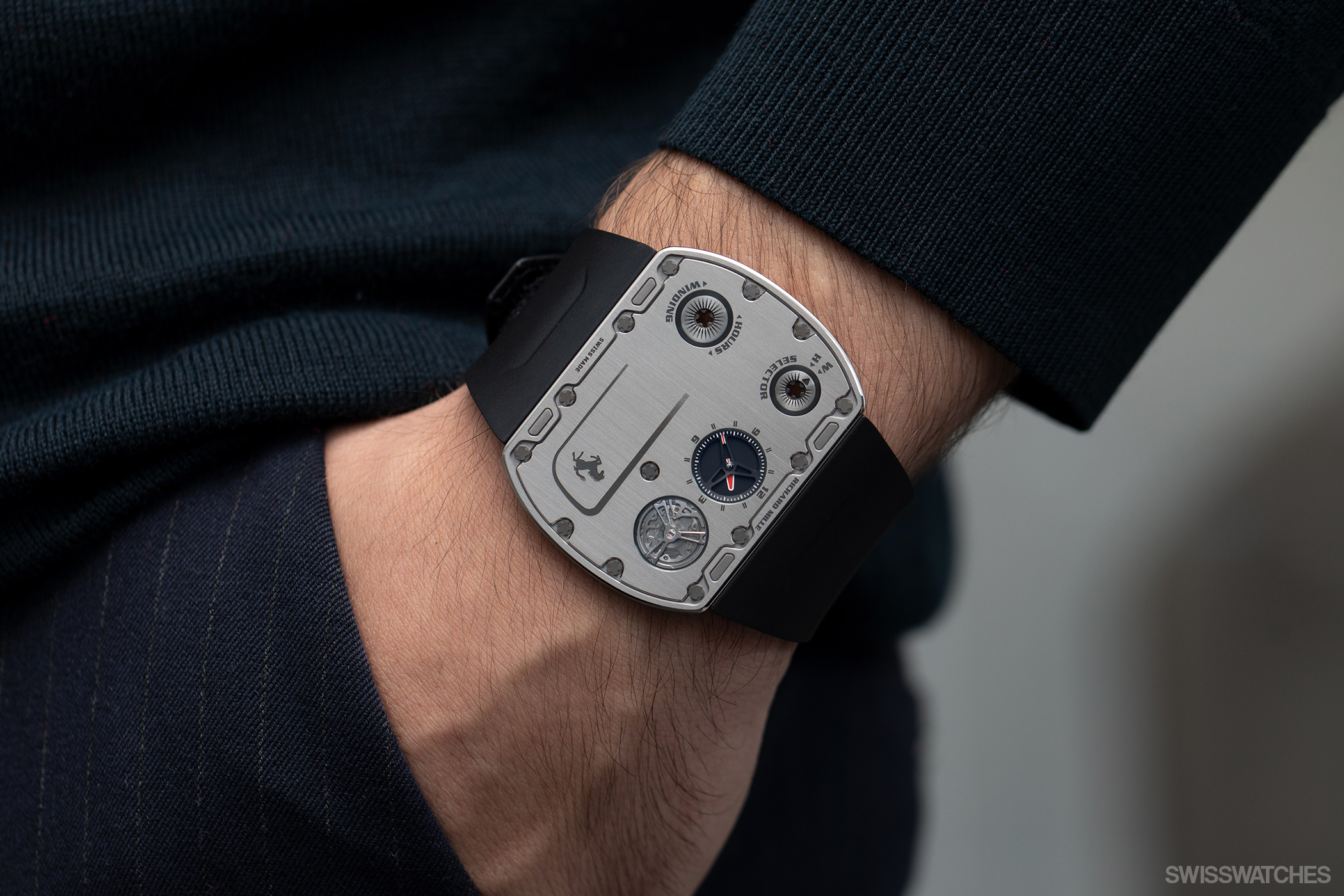
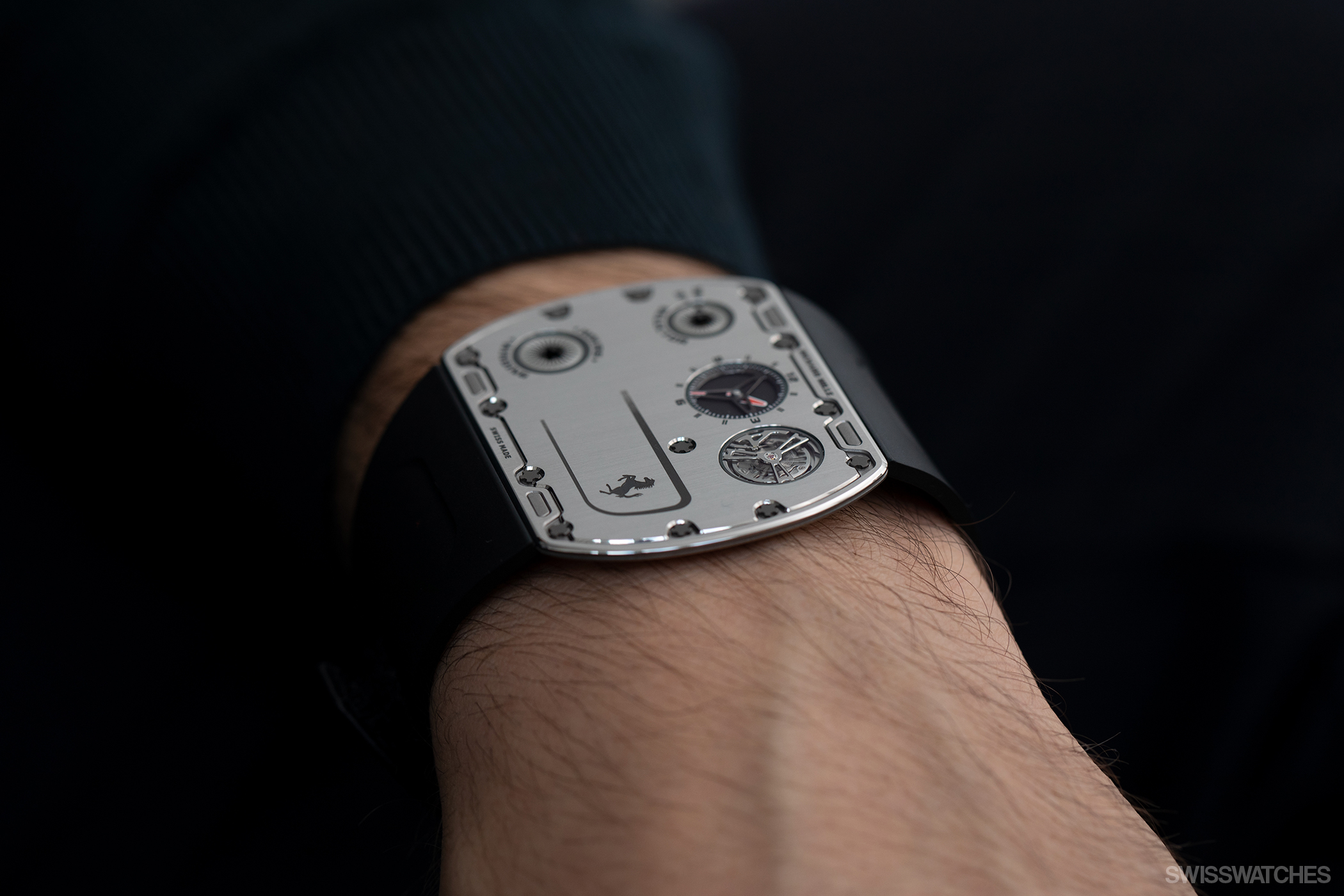
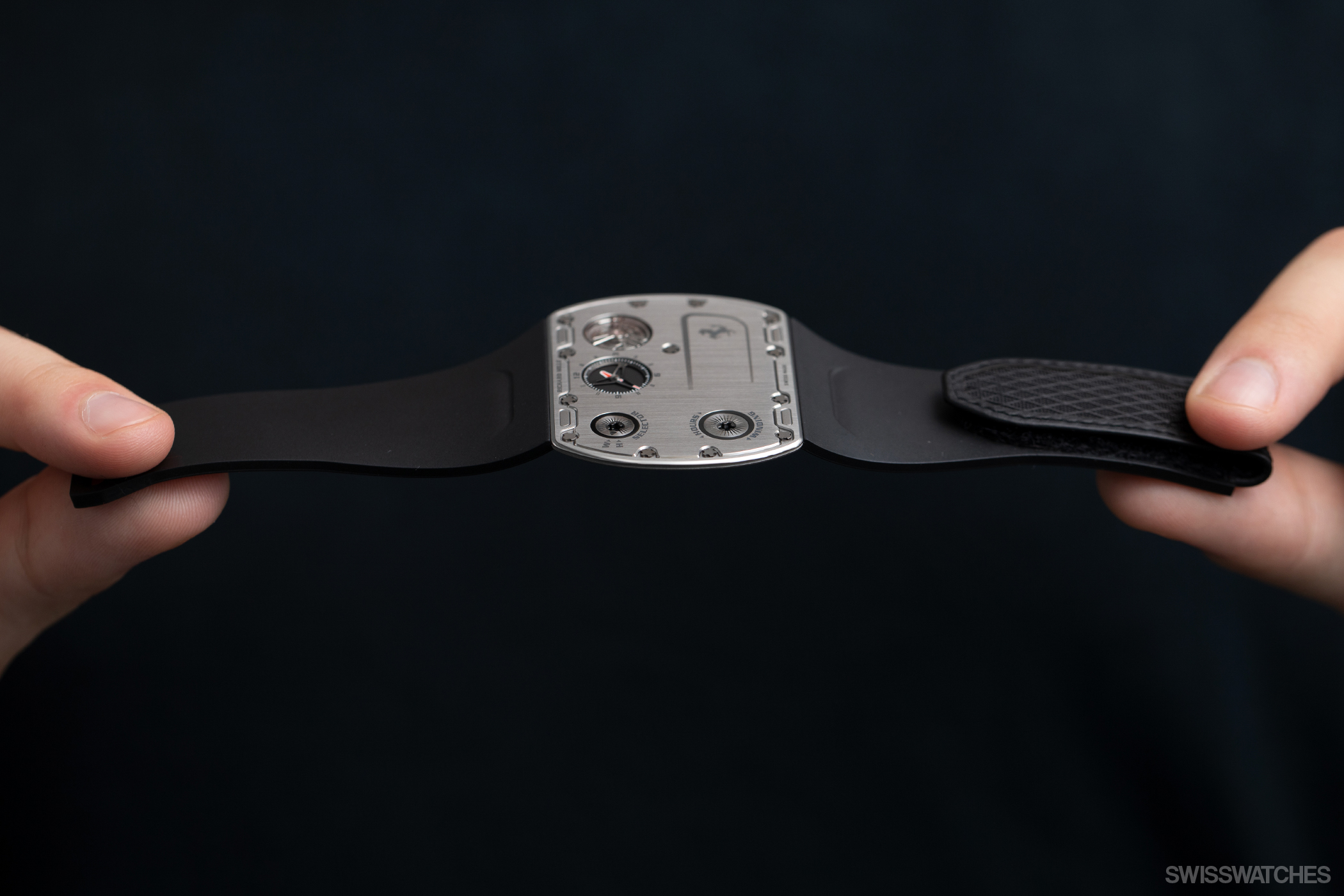
The design approach inverts the usual principle: instead of stacking components on top of one another, the RM UP-01 calibre distributes them across a large area. The brand wanted to return to a traditional architecture, with the movement assembled within the case rather than using the caseback as a baseplate, as is traditionally done in such challenging timepieces.The case measures 51 by 39 millimetres, while the movement is 1.18 millimetres in thickness.
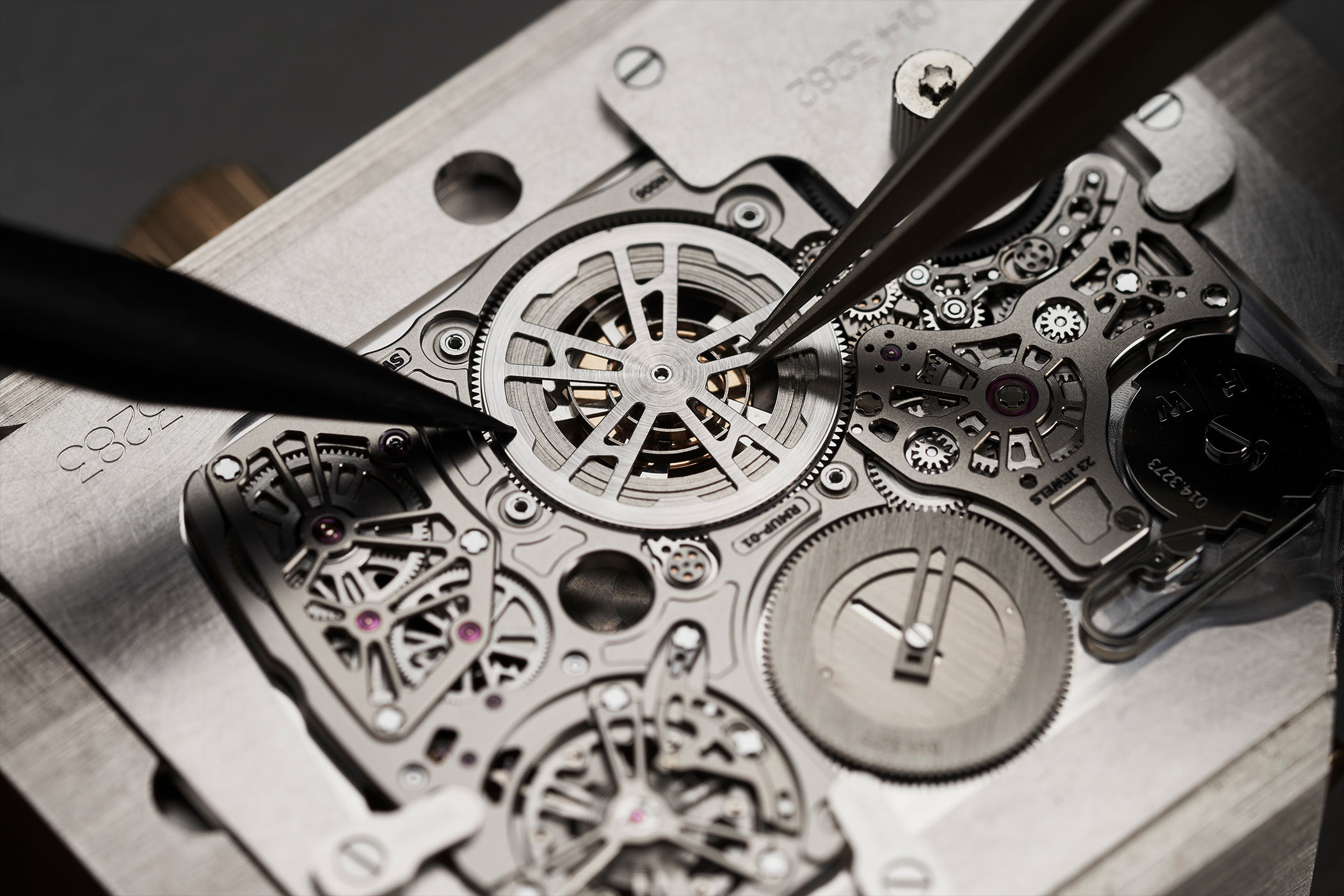
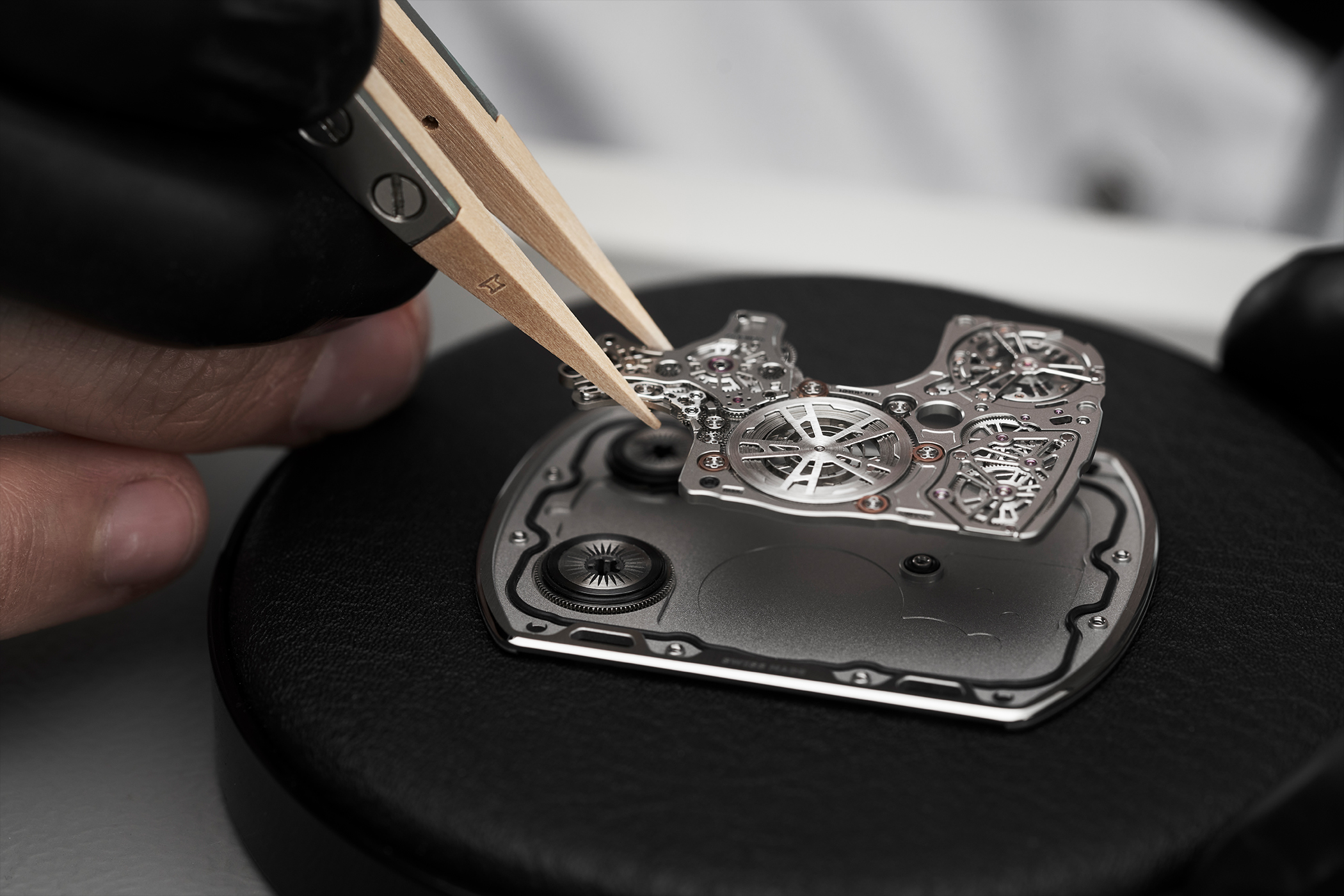
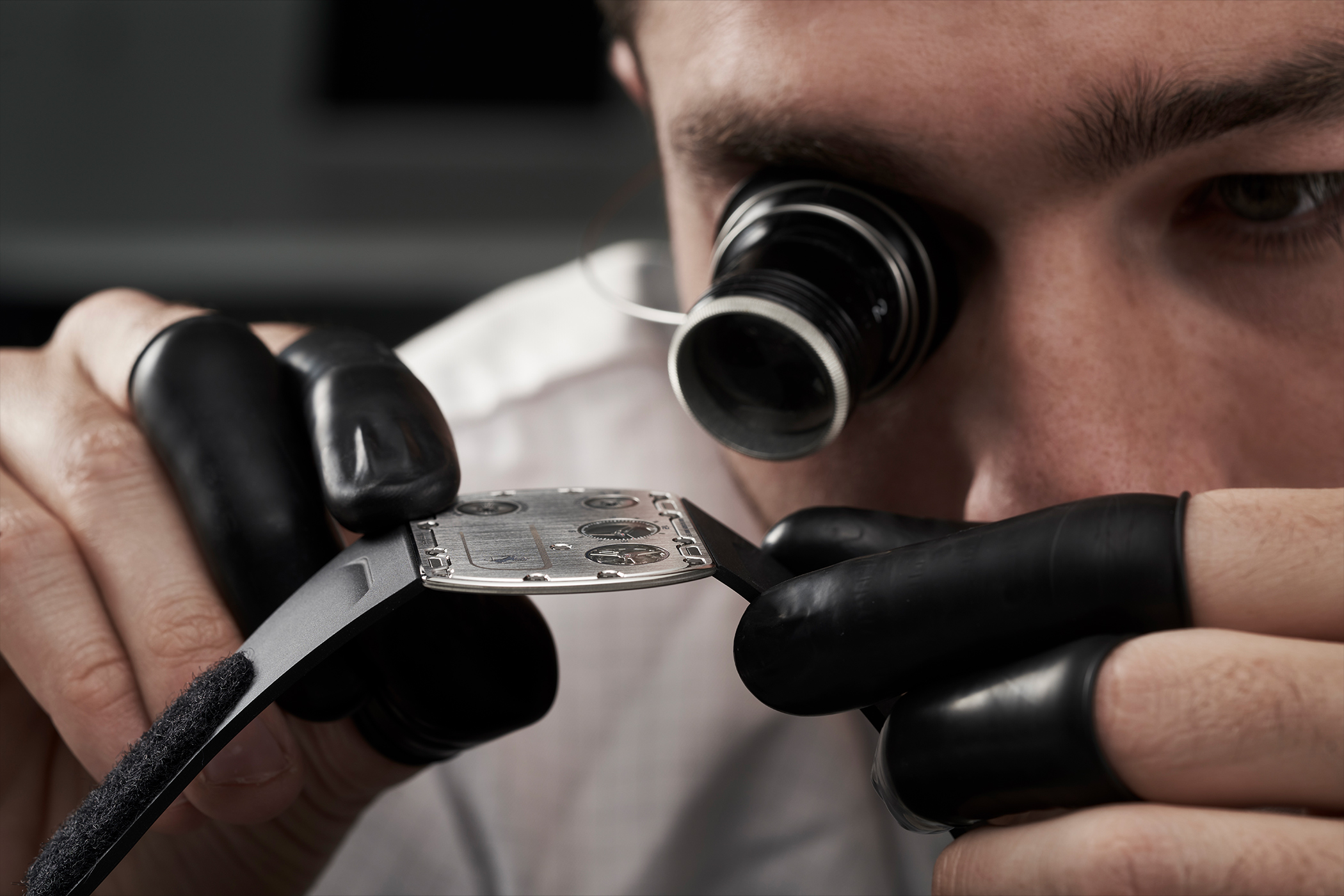
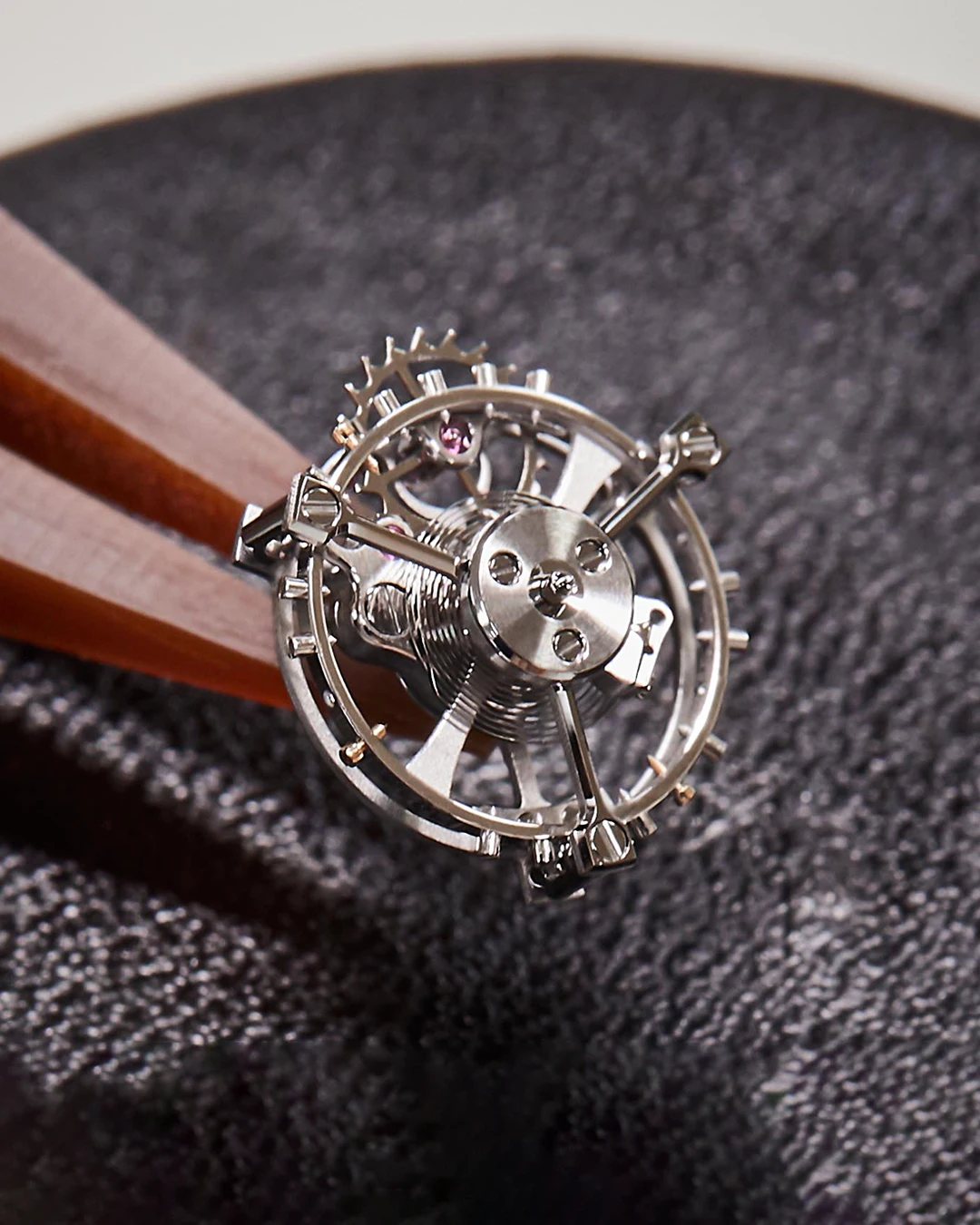
Technically, the most interesting element is the escapement. In a conventional Swiss lever escapement, two components are particularly tall: the safety roller and the guard pin. Both exist to prevent the lever from jumping back. For the RM UP-01, Richard Mille and Audemars Piguet Le Locle, formerly Renaud & Papi, developed a patented flat escapement that performs this function by way of an extended pallet fork with redesigned horns.
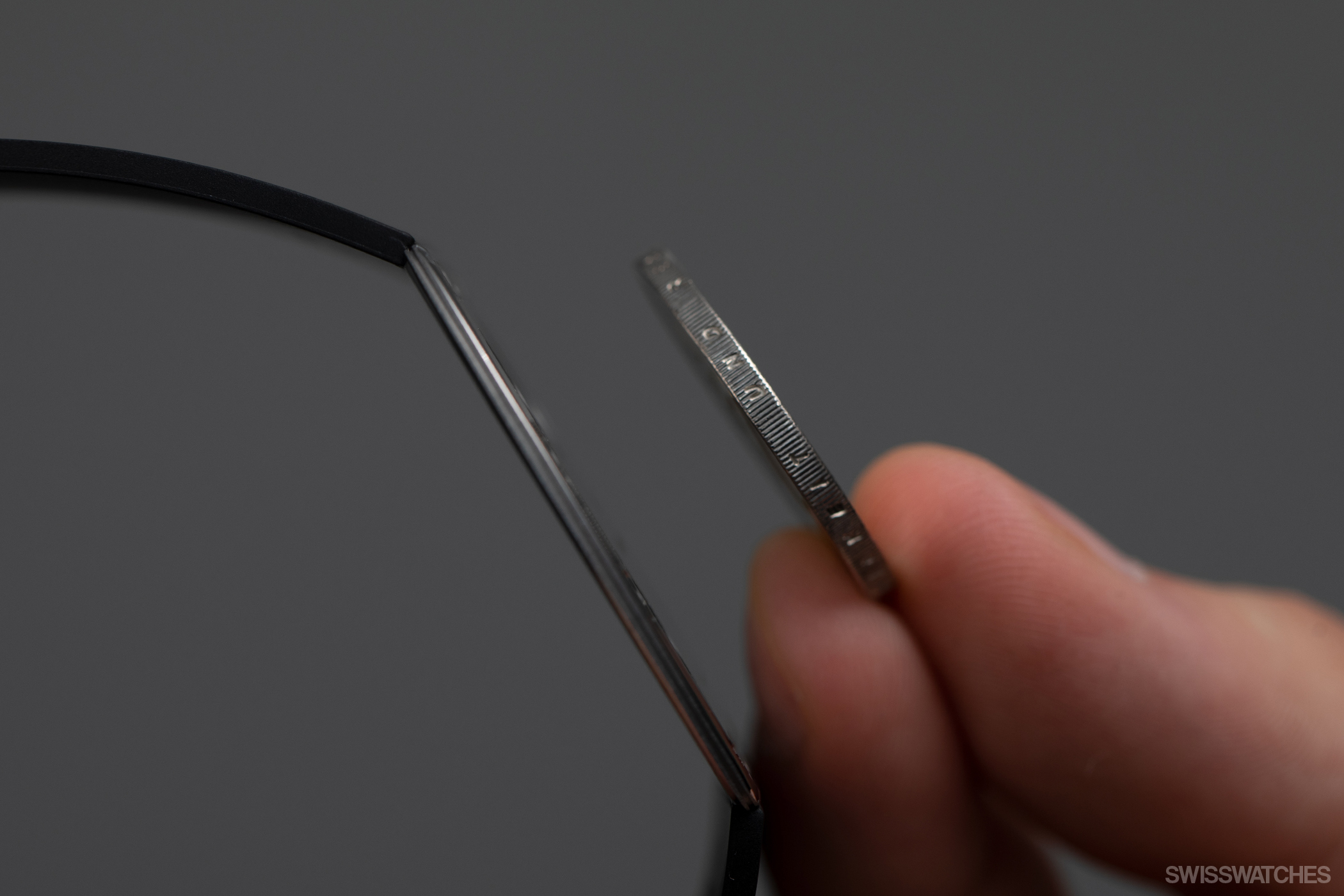
Added to this are a grade 5 titanium balance with six regulating weights, a particularly flat hairspring and the omission of a conventional crown. The power reserve is 45 hours at 4 hertz.
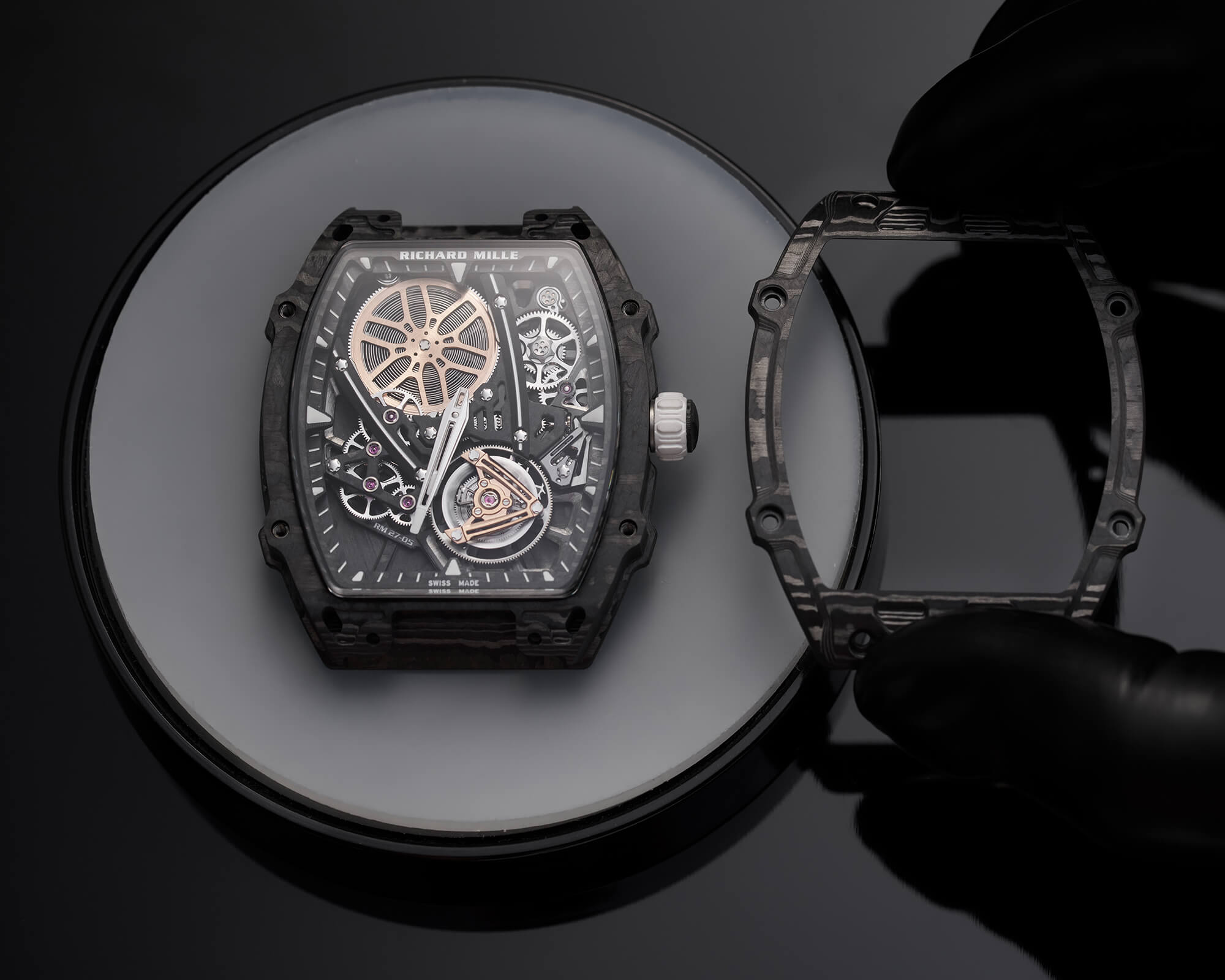
In 2024, the series for Rafael Nadal came to an end. The RM 27-05 weighs 11.5 grams without the strap and withstands accelerations of more than 14,000 g’s. Both are best figures for a hand-wound tourbillon.
The case is made of Carbon TPT B.4, a further development of the familiar Carbon TPT®. The material is the result of five years of development at the Swiss partner North Thin Ply Technology. Two things are new. First the angle: instead of 45 degrees, each layer is now offset by 70 degrees relative to the previous one, which improves the ratio of strength to weight during subsequent machining.
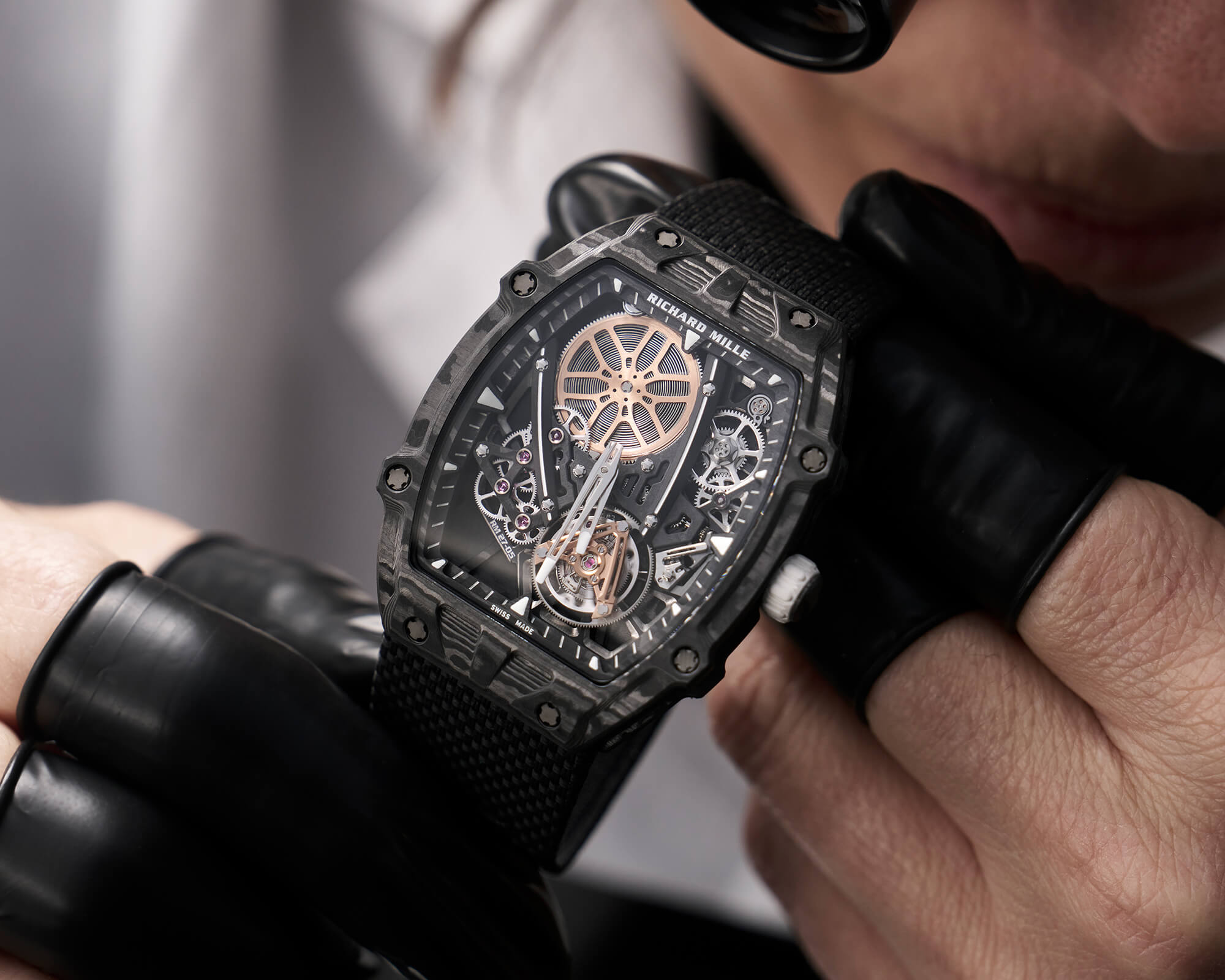
Second, a different resin. The fibres are 15 percent stiffer, the resin 30 per cent more resistant. The material is, however, also four percent denser and therefore heavier. Because the material is stiffer, the parts can be milled thinner without losing rigidity, and the gain in density is more than offset by the reduced wall thickness. Lighter components become possible.
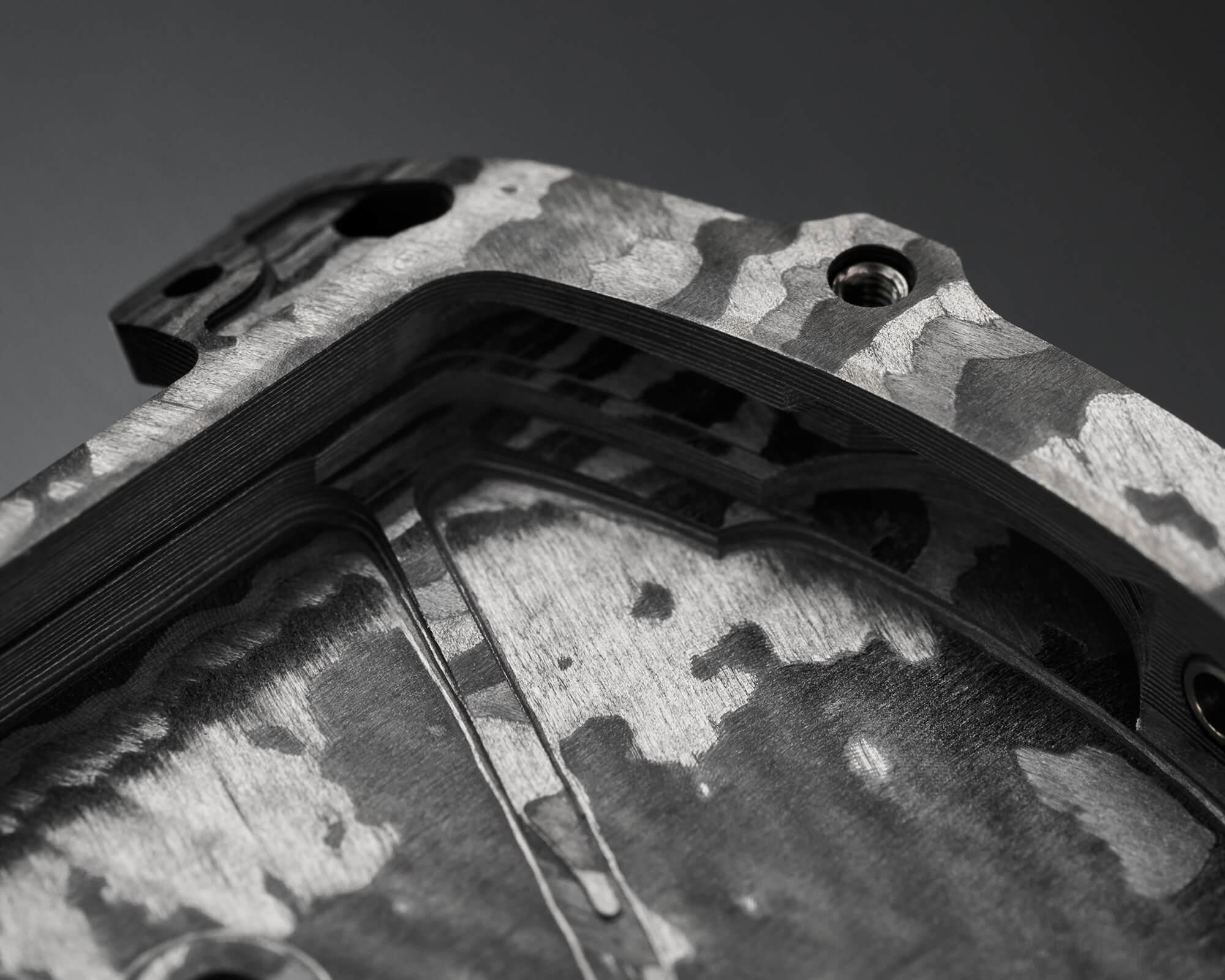
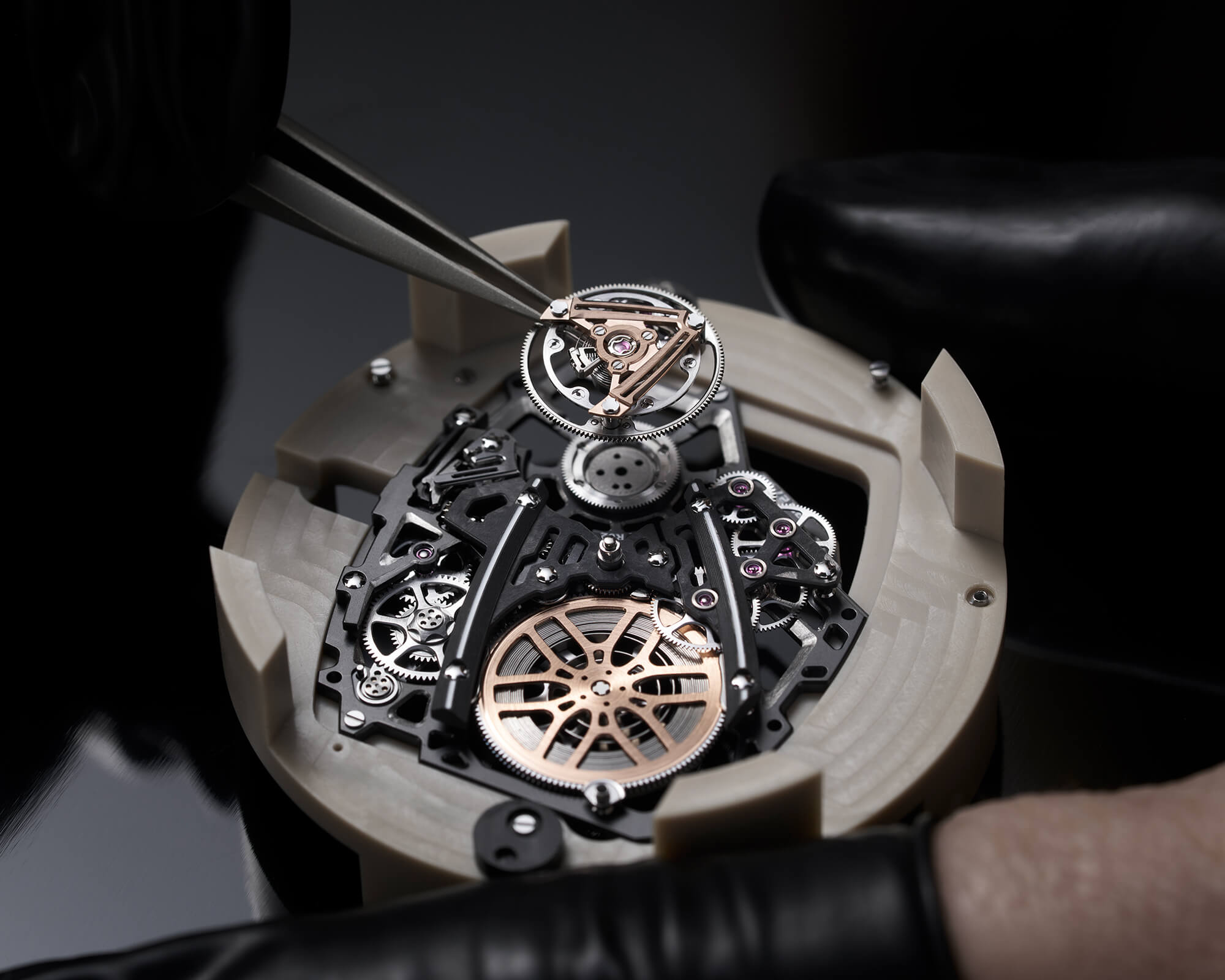
A further change concerns the construction. Richard Mille normally uses a three-part case of caseback, caseband and bezel, held together by spline screws. In the RM 27-05, the caseband and caseback are milled from a single block of Carbon TPT B.4. The movement is fitted into this structure without screws and held in place by the bezel and the flange.
This eliminates not only the screws themselves but also the material a screwed joint requires in wall thickness. The case measures 37.25 by 47.25 millimetres with a height of 7.20 millimetres, making it the most compact of the series. Finally, Richard Mille addressed the movement itself: calibre RM27-05 weighs 3.79 grams, runs at 3 hertz and has a power reserve of 55 hours.
The baseplate is PVD-treated titanium and is skeletonised, including in places nobody sees. The bridges combine grade 5 titanium with Carbon TPT, among them a V-shaped gear train bridge made of the composite. The tourbillon is flying, that is, supported on one side only, without an upper bridge.
Instead of sapphire, the RM 27-05 has a crystal made of PMMA, a polymer, with a scratch-resistant coating. Sapphire is considerably heavier.

Looking back over the 25 years, a consistent logic emerges. Almost every innovation the brand has produced can be traced to the same idea: mass is the real problem when shocks occur, because a heavy component absorbs and transmits more energy under acceleration than a light one.
Everything else follows from that premise. Lighter materials, dissolved structures, suspended movements, merged components. The weight records therefore improve function.
A second line of focus is less visible but no less consistent: the handling of energy. The torque indicator, the declutchable variable-geometry rotor and the chronograph coupling with its double oscillating pinion all address the same question, namely how to keep the force of the mainspring even and within the right range. That is classical watchmaking, simply pursued by other means.
Behind the enormous success of the past 25 years, then, stand not only a novel design and prominent partners, but also hard-won innovations that make the watches more robust, more durable and more accurate.