The best mechanical watches under 5,000 euros: A comprehensive buying guide for beginners, featuring models from Tudor, IWC, Omega & more.

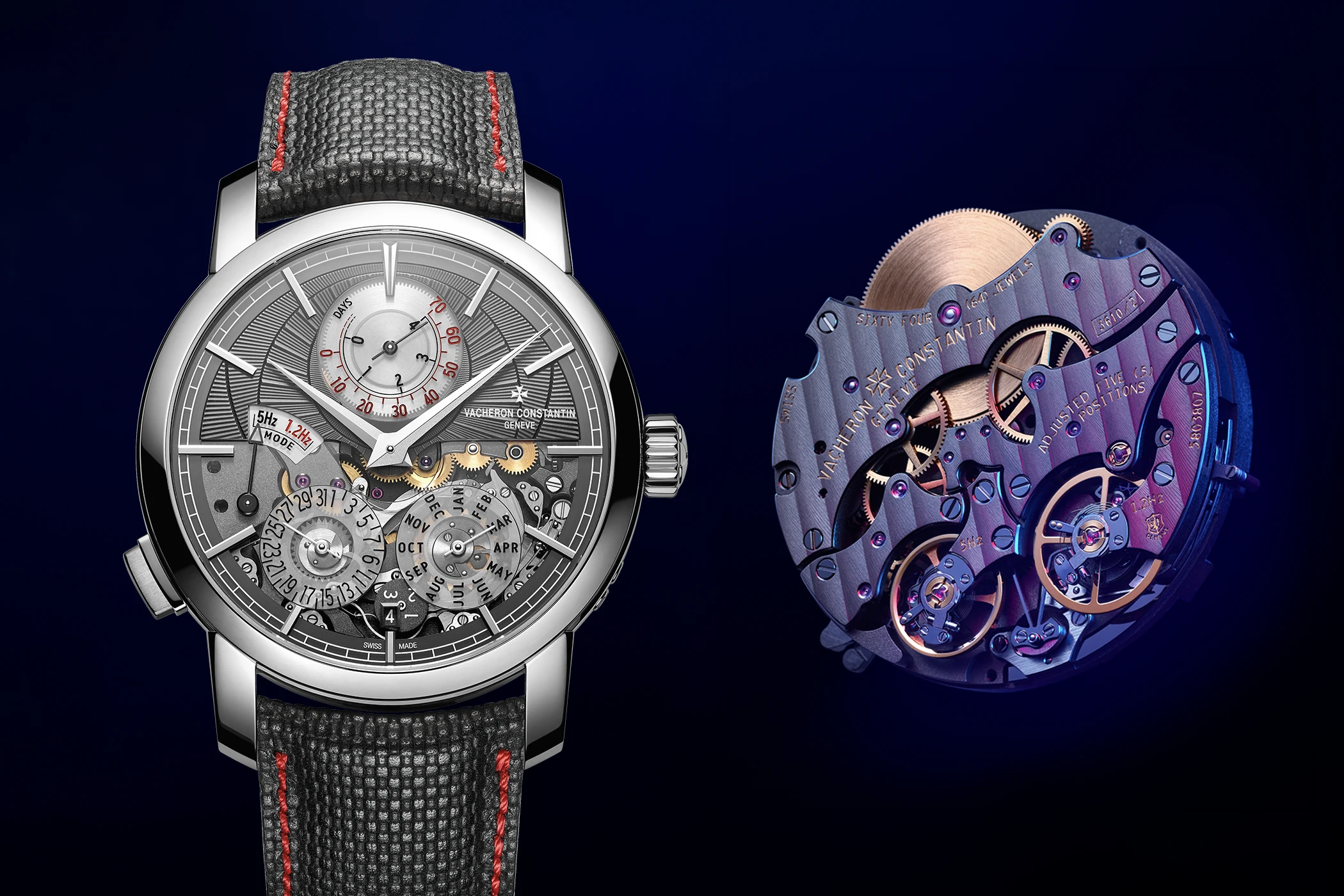
When Vacheron Constantin first launched the Traditionnelle Twin Beat Perpetual Calendar and the Calibre 3610 QP inside it in 2019, the manufacture presented a fundamental technical advancement in movement engineering. As the result of a four-year research and development process, the manufacture created a watch that, through the interaction of two balance wheels within a mechanical movement, significantly reduced the need for manual corrections of the perpetual calendar on the one hand, while ensuring its everyday functionality on the other.
The aim of this construction was as simple as it was ambitious: the perpetual calendar was intended to continue running for a significantly longer period without the watch having to be worn or reset. While the Active Mode, operating at 5 Hz, is designed for daily use on the wrist, the Standby Mode reduces the frequency to 1.2 Hz and extends the power reserve to around 65 days.
Now, seven years later, the manufacture presents the result of a careful further development of the Calibre 3610 QP, with a power reserve extended by five days. In this article, we take a detailed look at what defines the new movement and the watch that houses it.
The perpetual calendar is one of the most mechanically sophisticated complications that the world of mechanical watches has to offer: its cam system makes it possible to take into account the particularities of the Gregorian calendar – namely variable month lengths and leap years – without the need for manual correction by the wearer, and thus to display the correct date until the year 2100.
Despite this sophisticated mechanism, the perpetual calendar is also subject to a fundamental limitation arising from the way a mechanical watch movement works: if the energy stored in the barrel is exhausted, not only does the balance wheel stop, but so too does the calendar mechanism, which then no longer advances the date, month and leap-year indication. When the watch is subsequently wound again, the calendar must be corrected accordingly – and therefore considerably earlier than the calendar correction that would otherwise only become necessary in the year 2100. The power reserve – in other words, the period of time for which the movement continues to run after being fully wound before the mainspring has completely unwound – therefore plays a particularly important role in a perpetual calendar.
With the Traditionnelle Twin Beat Perpetual Calendar presented in 2019, Vacheron Constantin introduced a watch that addressed precisely this issue: with it, the manufacture pursued the aim of increasing the power reserve of a perpetual calendar many times over, thereby significantly reducing the need for manual corrections while at the same time not impairing its precision or functionality.
To make this possible, the manufacture developed a user-controlled dual-frequency system, the so-called “Twin Beat System”, which allows the wearer to switch between two modes by pressing the pusher at 8 o’clock, significantly altering both the frequency and the power reserve of the watch: In Active Mode, the watch runs at 5 Hz, or 36,000 vibrations per hour, and ensures precise timekeeping in everyday use and on the wrist with a power reserve of 4 days. If the wearer switches to the second mode, the “Standby Mode”, by pressing the pusher, the watch runs at just 1.2 Hz, or 8,640 vibrations per hour, meaning that the movement consumes significantly less energy and achieves a power reserve of around 65 days. This mode is therefore intended above all for storing the watch in a stationary position when it is not being worn.
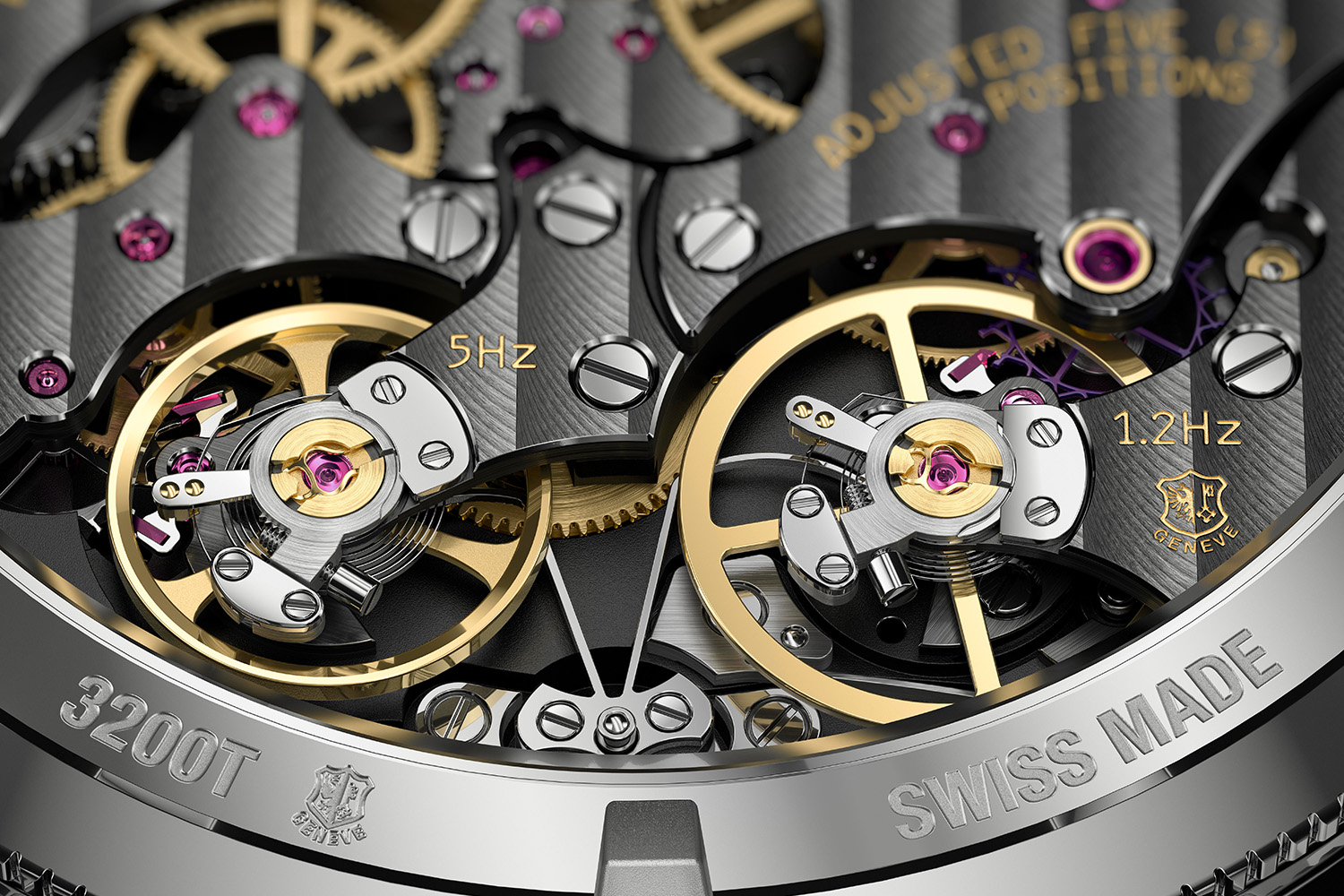
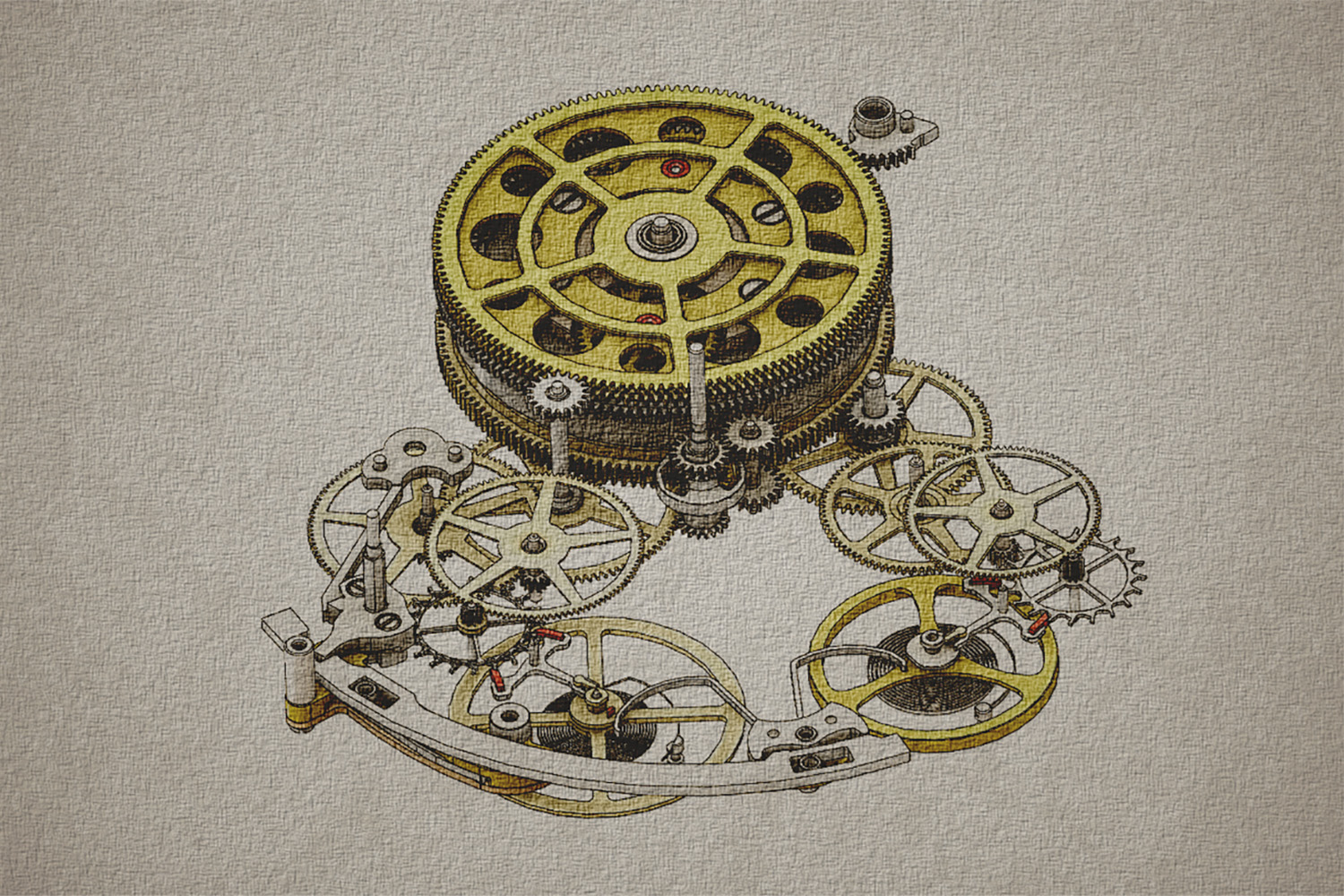
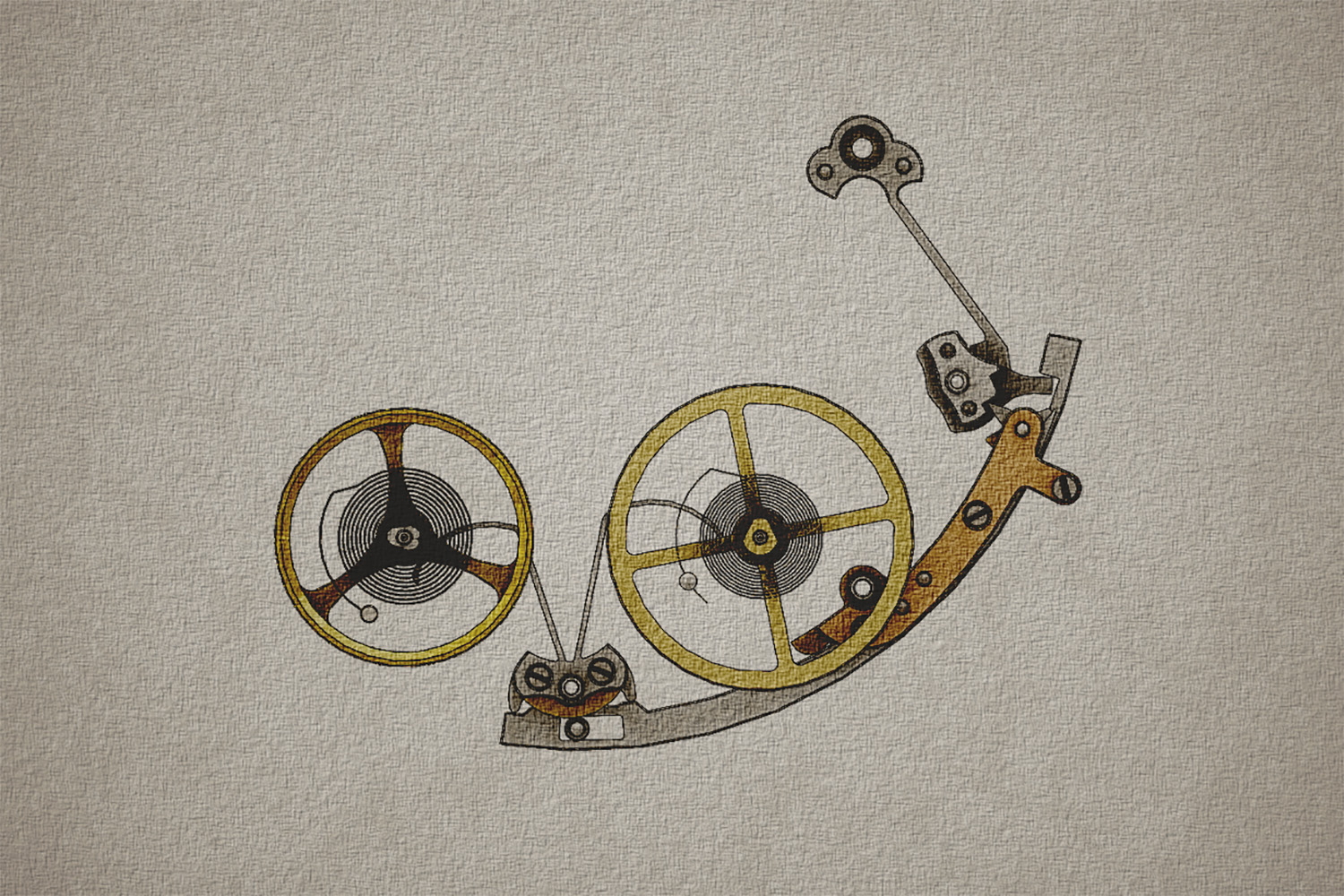
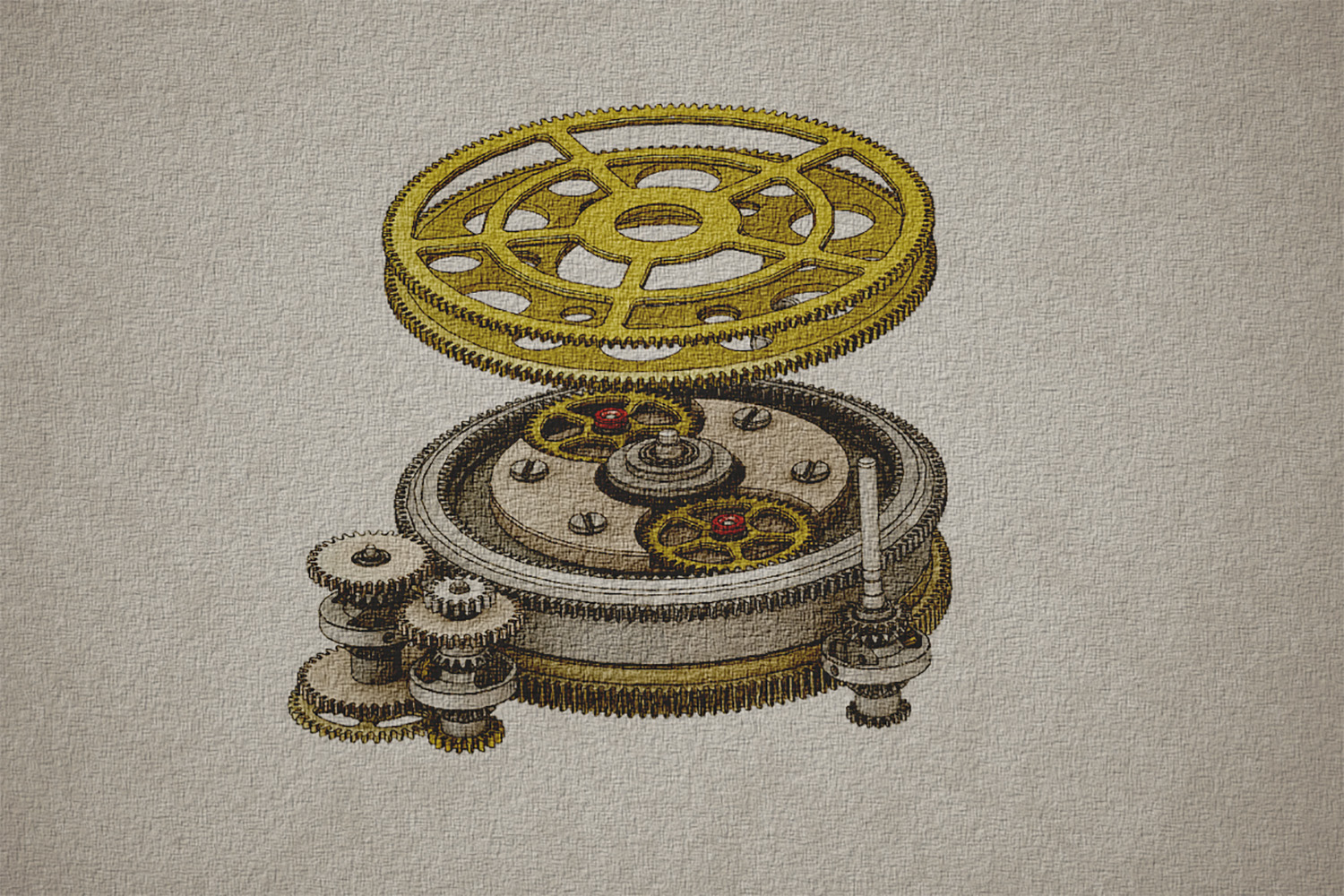
What makes this particularly noteworthy is that the idea behind it is not merely limited to the simple formula that lower speed results in lower energy consumption and thus a longer running time. Rather, with the “Twin Beat System”, the manufacture relies on two different balance wheels, each coupled to an independent gear train and, in turn, supplied with energy by a serially coupled coaxial double barrel.
Whereas most watches with multiple gear trains divide their architecture according to function – for instance, timekeeping on the one hand and the complication on the other – the Traditionnelle Twin Beat Perpetual Calendar allows the wearer to switch completely from the first gear train, which is responsible for the high-frequency “Active Mode”, to the second gear train, which is responsible for the “Standby Mode” and has a gear-train branch specifically designed for minimal consumption – and back again.
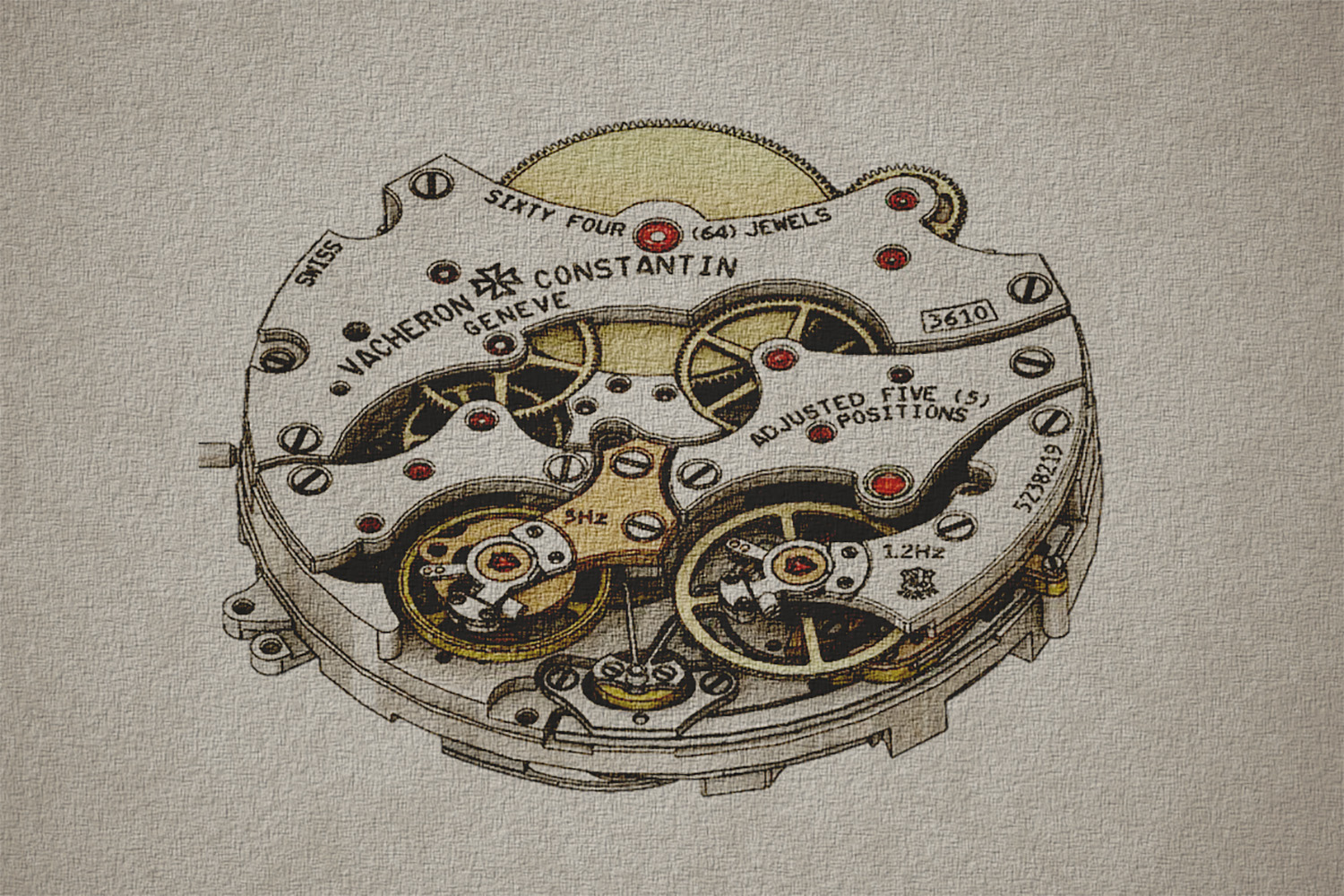
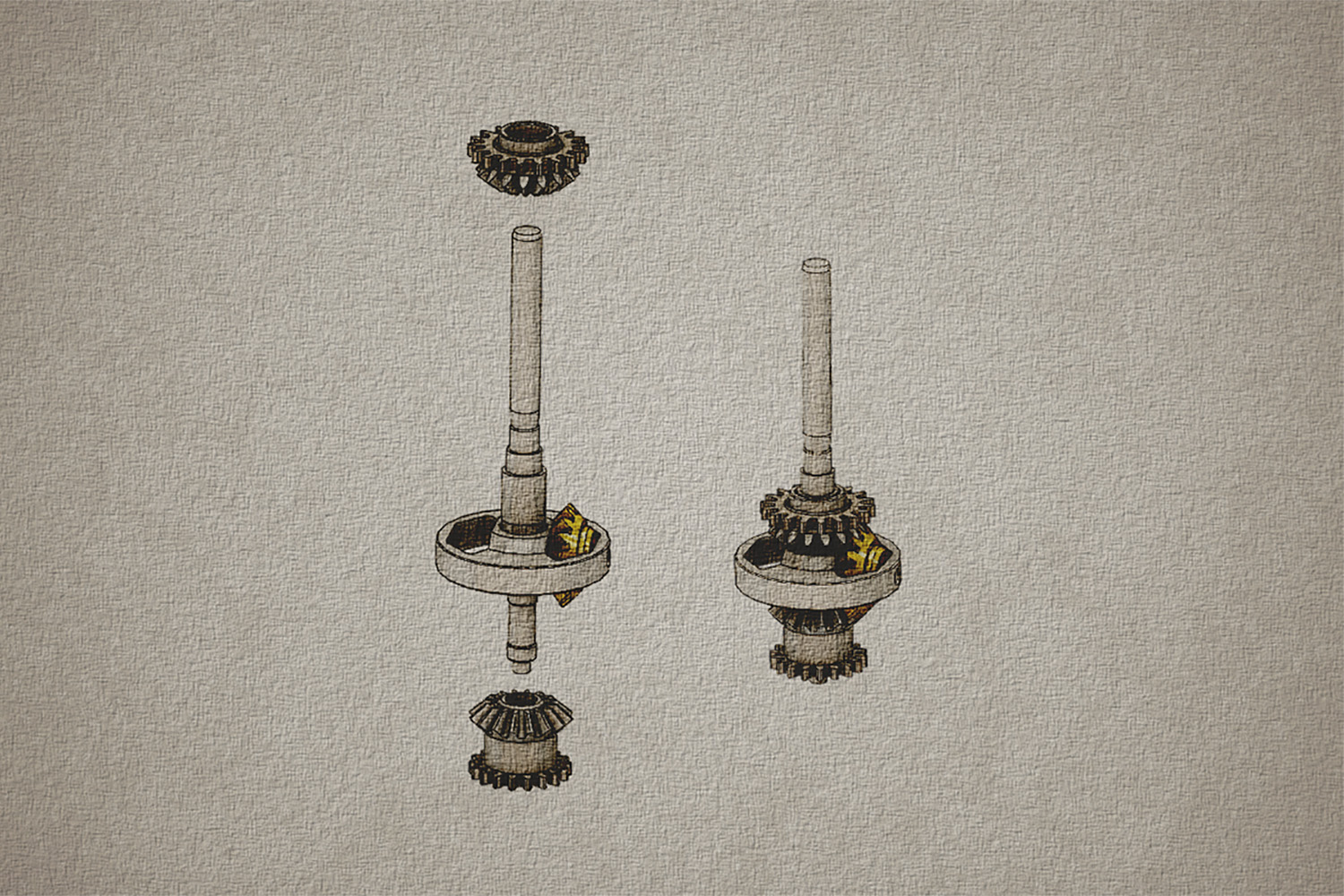
The particular mechanical achievement of the Twin Beat, however, does not simply end with its dual frequency. Beyond this, the special nature of the mechanism lies in the integration of this dual-frequency system into a perpetual calendar without interrupting the flow of power within the calendar mechanism during the switching process. To achieve this, Vacheron integrated two essential mechanical solutions into the movement: on the one hand, differentials act as coupling units to ensure that the perpetual calendar is not attached to a separate calendar mechanism for each mode, but rather to a shared, combined display and calendar level – more on this shortly. The differentials therefore ensure that the system is practically usable as a perpetual calendar.
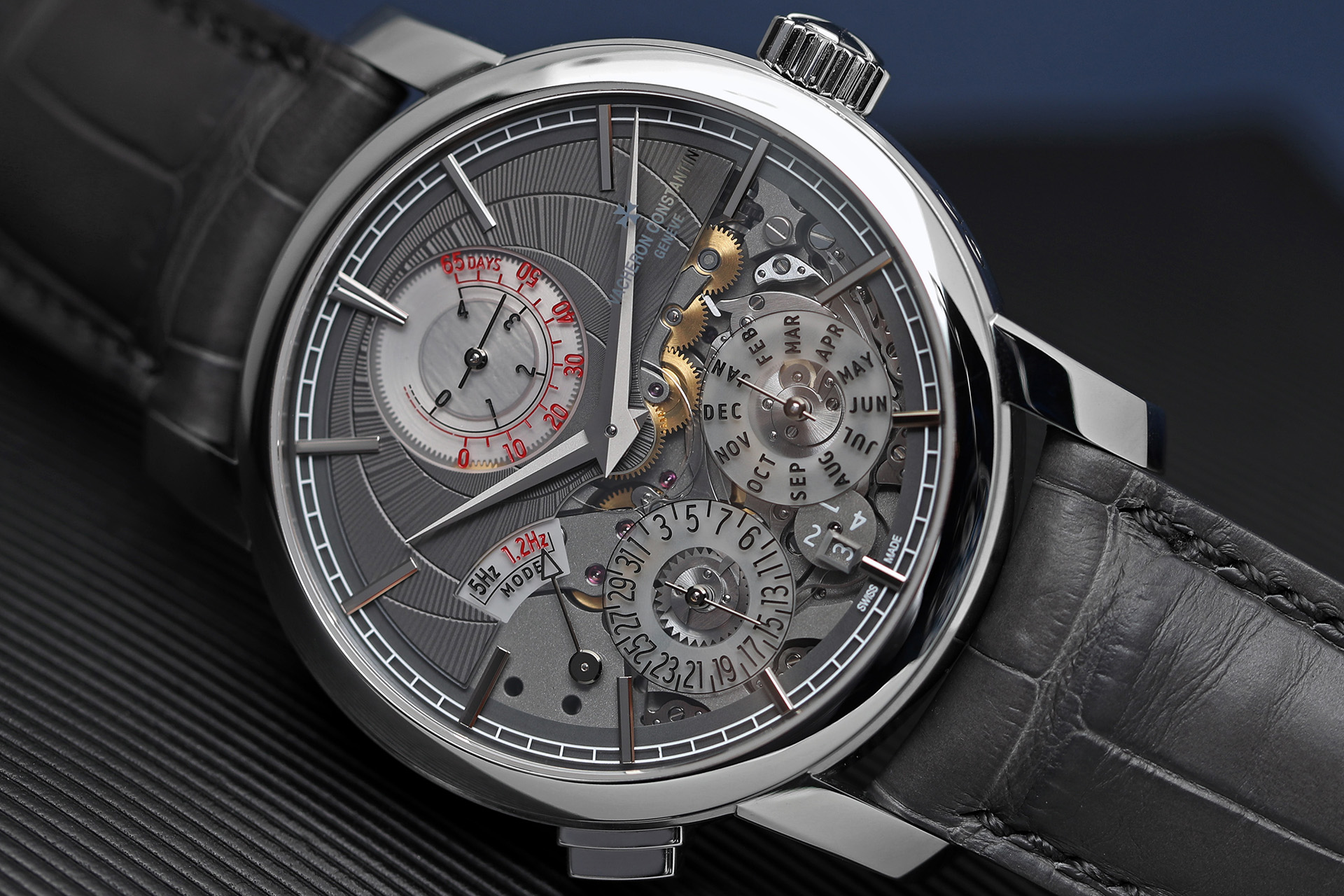
On the other hand, a rocker with spring arms ensures that, when switching between Active and Standby Mode, the first balance wheel running at 5 Hz stops and the larger one running at 1.2 Hz is started within fractions of a second. Thanks to this instantaneous switch, the energy chain of the calendar mechanism does not come to a standstill and there is no interruption to the display of time or calendar information.
The newly presented Traditionnelle Twin Beat Perpetual Calendar now goes one step further: through targeted improvements to the differentials and to the switching of the calendar displays, the 65-day power reserve of the first Traditionnelle Twin Beat Perpetual Calendar has been increased to 70 days. What exactly has changed is what we shall now examine more closely.
With this new model, Vacheron Constantin now presents a careful further development of the Calibre 3610 QP that extends the power reserve by five days to a total of 70 days. Fundamentally, the movement of the new model works according to the same user-controlled dual-frequency system as the Traditionnelle Twin Beat Perpetual Calendar from 2019: each of the two escapements is coupled to its own independent gear train, with both in turn driven by a single coaxial double barrel with serial power transmission. The first gear train, which is responsible for the high-frequency active mode, continues to run at a frequency of 5 Hz, or 36,000 vph, while the second, responsible for the low-frequency rest mode, continues to operate at 1.2 Hz, or 8,640 vibrations per hour.
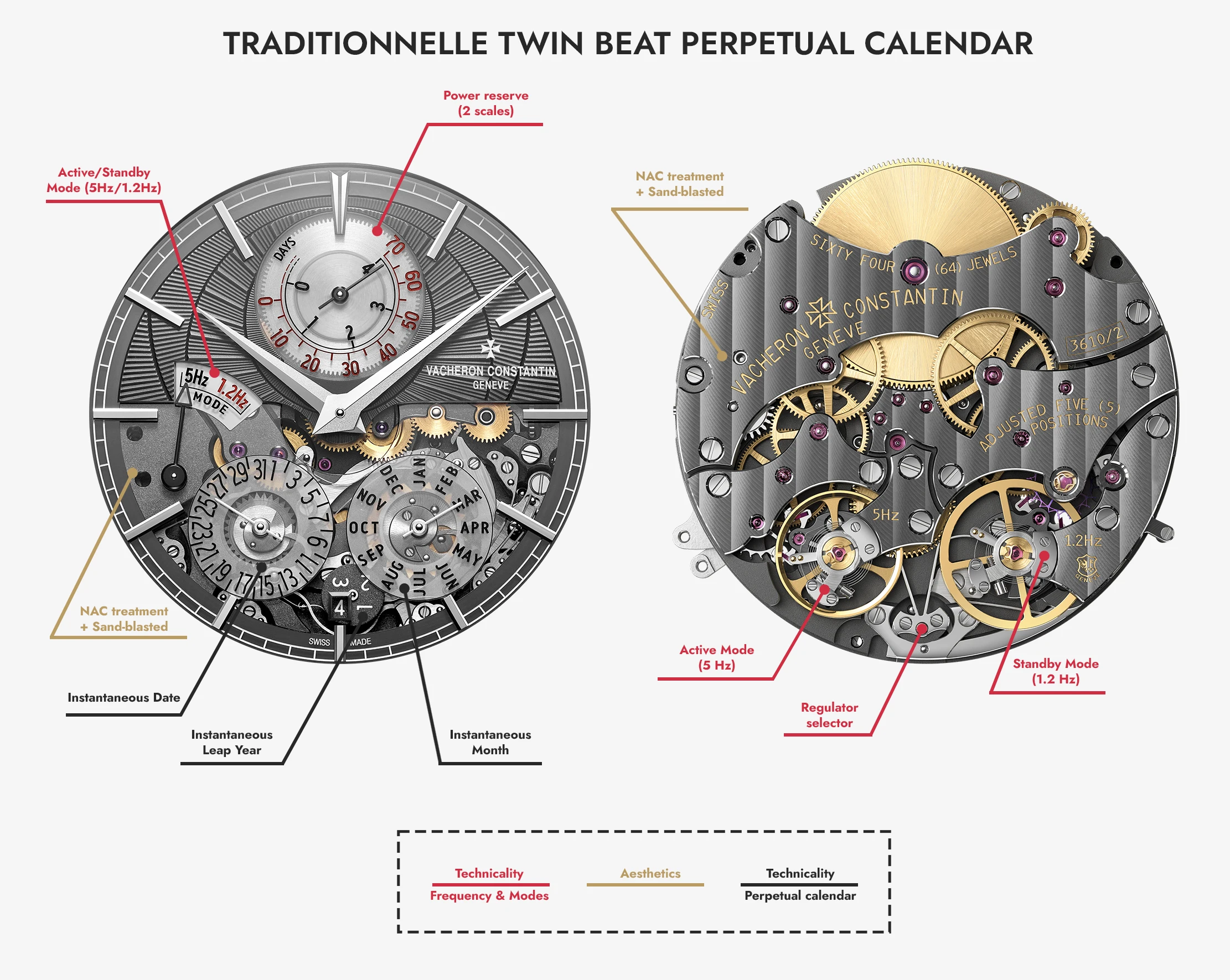
To achieve the five-day increase in power reserve, Vacheron Constantin made changes above all in the area of the three differentials. These are necessary in order to translate the two separate going systems into a shared time display and a shared perpetual calendar.
The first differential ensures that the display of the hours and minutes neither jumps nor stops when switching between the two modes. The problem behind this is that, since the watch has two gear trains – one for 5 Hz and one for 1.2 Hz – the time display must nevertheless continue seamlessly when the switch takes place. Here, the first differential acts as a coupling unit between the two gear trains, compensating for the changeover in such a way that the hours and minutes display remains continuous.
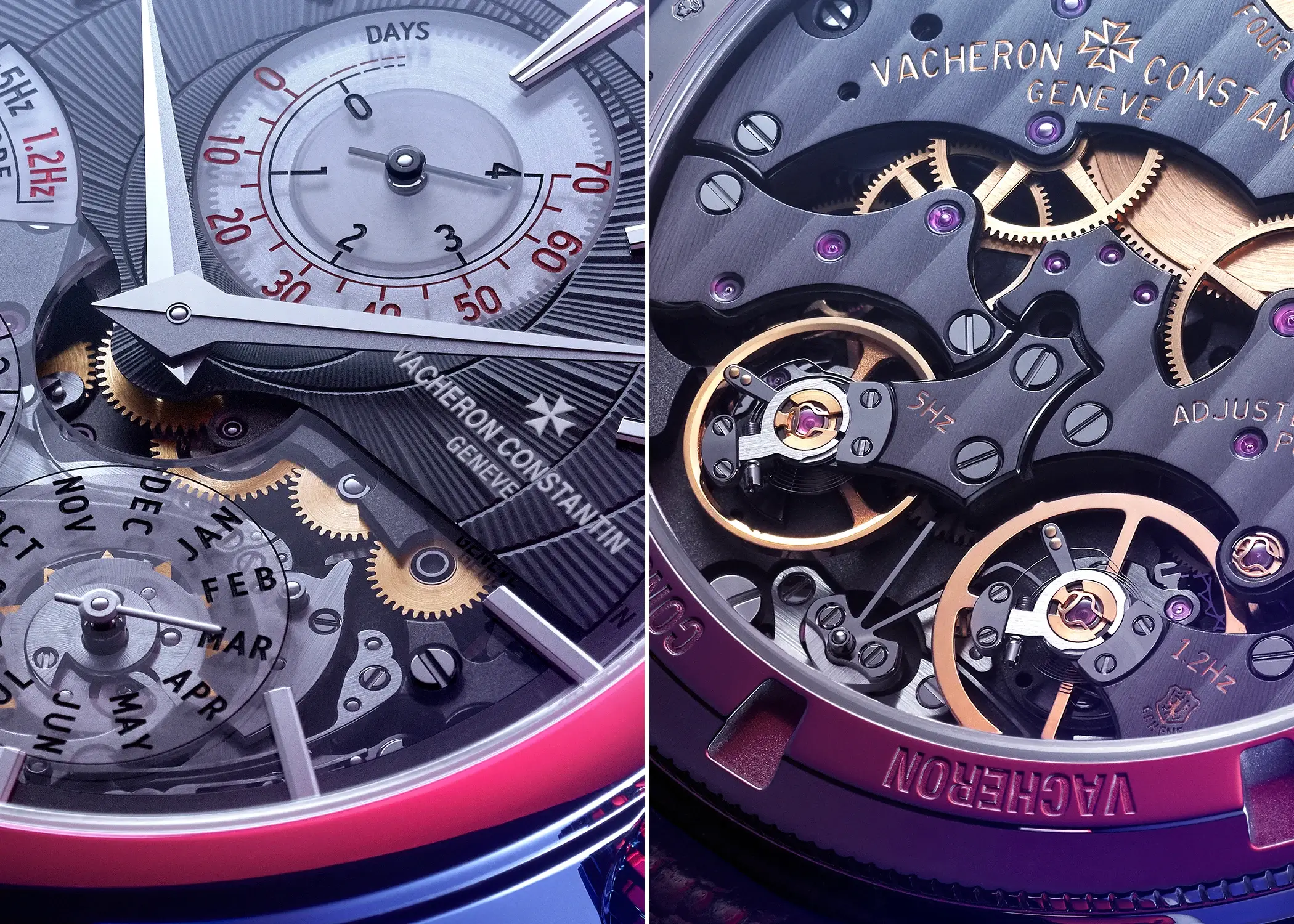
The second differential was designed to divide the energy of the double barrel and direct it exclusively to the 1.2 Hz gear train. This drives the slowly oscillating balance wheel for the rest mode, recognisable by its larger diameter and its extremely fine hairspring, which is just 0.015 mm thick. It is precisely this low frequency that allows the watch, when laid aside, to continue running not for just four days, but for up to 70 days.
The third differential is once again rooted in the dual structure of the movement. Although the watch has two operating modes with very different levels of energy consumption, it displays the remaining energy of the barrel on the dial via a subdial and a hand. The third differential therefore mechanically translates the information from the double barrel and the two consumption logics into a shared display, so that the remaining reserve in the respective mode can be indicated.
In order to further increase the power reserve of the Calibre 3610 QP, research also focused on the instantaneously switching displays for the date, month and leap year of the perpetual calendar, which perform an instantaneous jump at midnight. Such instantaneously switching displays generally affect the amplitude of the balance wheel, as the energy required for the jump has to be released within a very short period of time, which in turn can impair rate accuracy. To counteract this effect and ensure that the calendar cadrature switches reliably even with the reduced torque of the Standby Mode, Vacheron Constantin’s engineers developed a new mechanism with double spring winding.

This patented system is based on a similar principle to that of the first generation of the Traditionnelle Twin Beat: over the course of the day or month, a hairspring located beneath a cam inside a small barrel is gradually tensioned. At the switching moment, a specially designed switching wheel with a toothless sector reaches the switching point. As the regulating toothing is briefly absent at this point, the previously tensioned hairspring can release its stored energy and cause the wheel to jump forward abruptly across the toothless section. This impulsive movement is transferred to the calendar mechanism and triggers the jump of the respective calendar display.
In this way, the load of the jumping displays is decoupled from the active escapement, placing less strain on the balance wheel during the instantaneous change of the date, month or year – a crucial point, since the displays must continue to jump even in the energy-saving Standby Mode. Taken together, according to Vacheron Constantin, this mechanical solution means that the mechanism requires only one quarter of the torque of conventional instantaneously switching systems, with the date change in particular requiring significantly less energy.
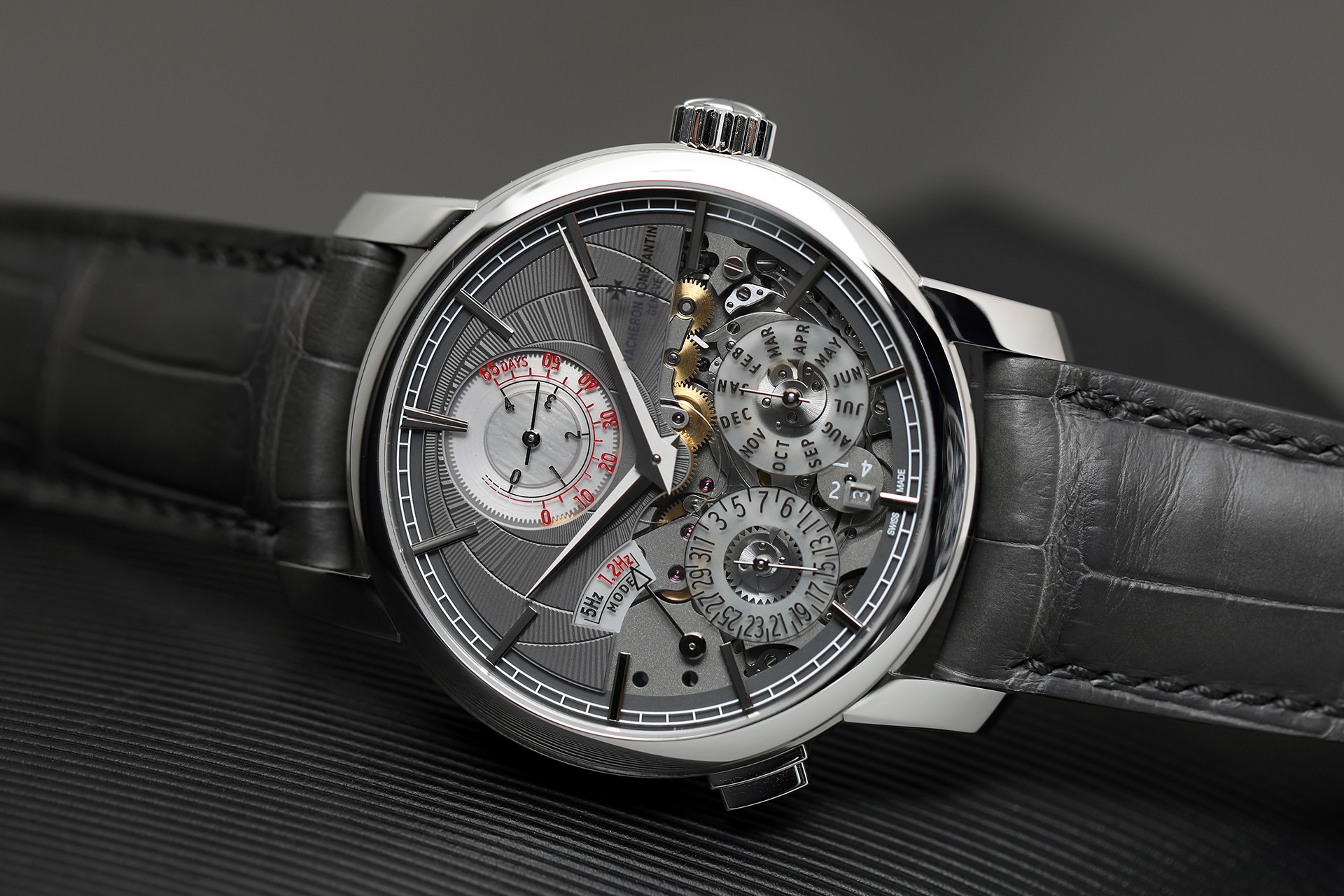
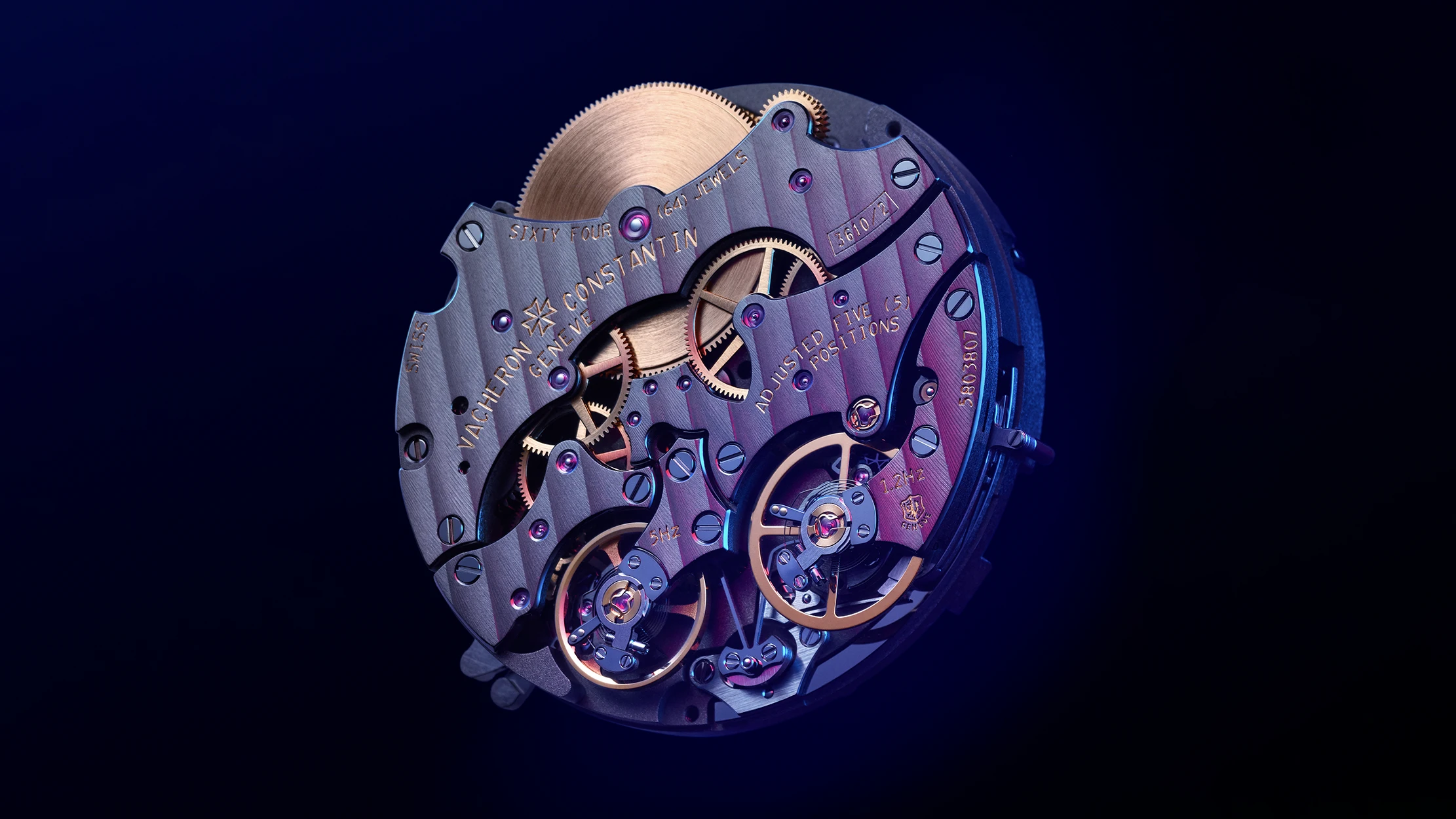
In watchmaking, luxury is above all to be understood as care in the details: the conscious decision in favour of high-quality materials, meticulous finishing and craftsmanship passed down through generations – even where it is not immediately visible at first glance. Nowhere is this more clearly evident than in the Calibre 3610 QP, composed of 480 components and visible both through the sapphire crystal caseback and in the lower part of the dial: here, the fixed components – mainplate and bridges – with their anthracite-grey appearance created by NAC galvanic treatment, form an aesthetic contrast with the yellow-gold moving parts such as the balance wheel and gear train. Beneath the hand-chamfered bridges with Geneva stripes, the mainplate is sandblasted, while the cover of the large barrel has been finished with circular satin-brushing.
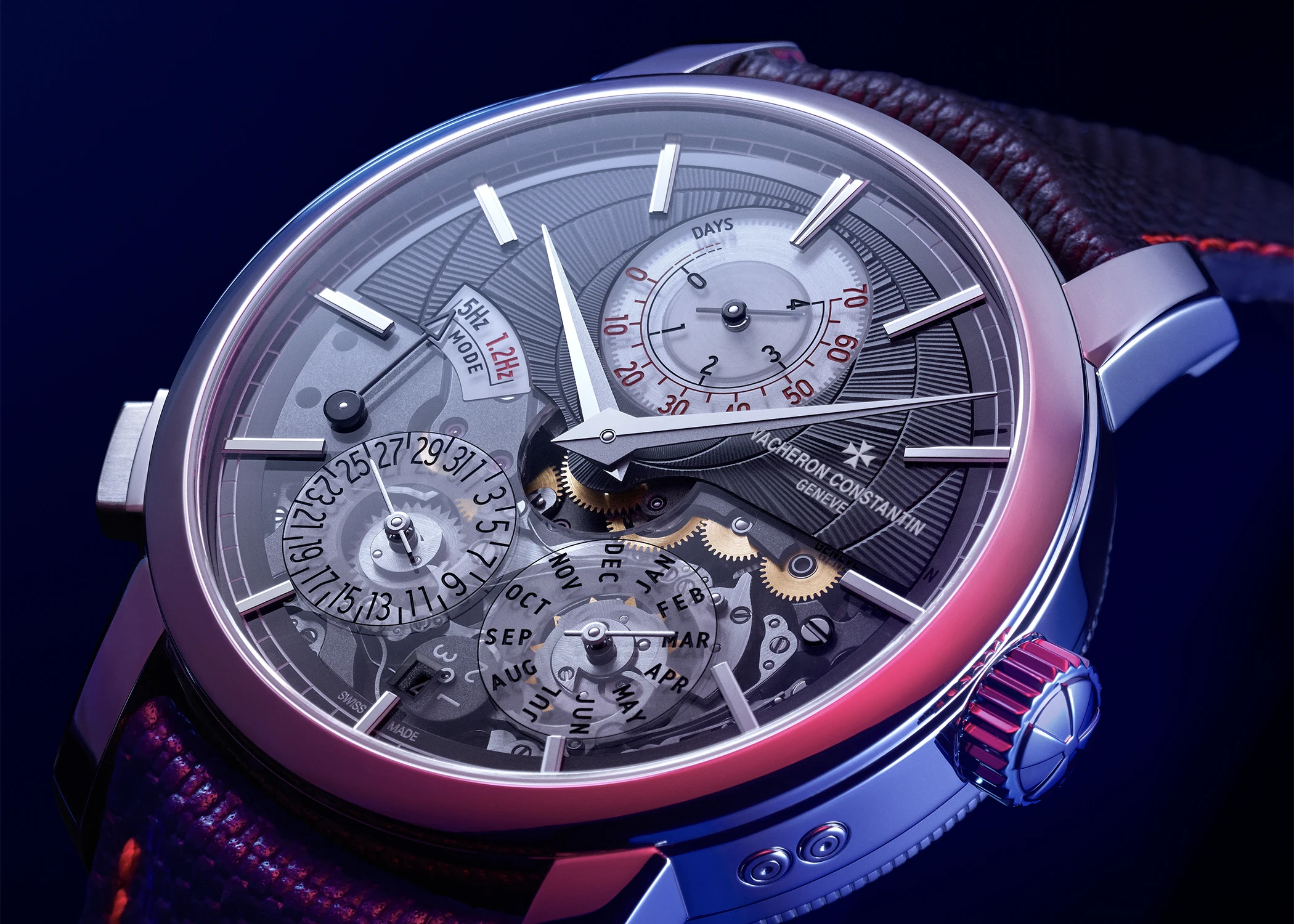
The outer frame and protection for the movement are provided by a case made of 950 platinum, which measures 42 mm in diameter and 12.30 mm in height. In terms of its design, the case presents the typical characteristics of the Traditionnelle collection: the round form, slim bezel and fluted caseback can all be found here as well. Last but not least, the watch is tested for water-resistance to a pressure of 3 bar, or 30 metres.
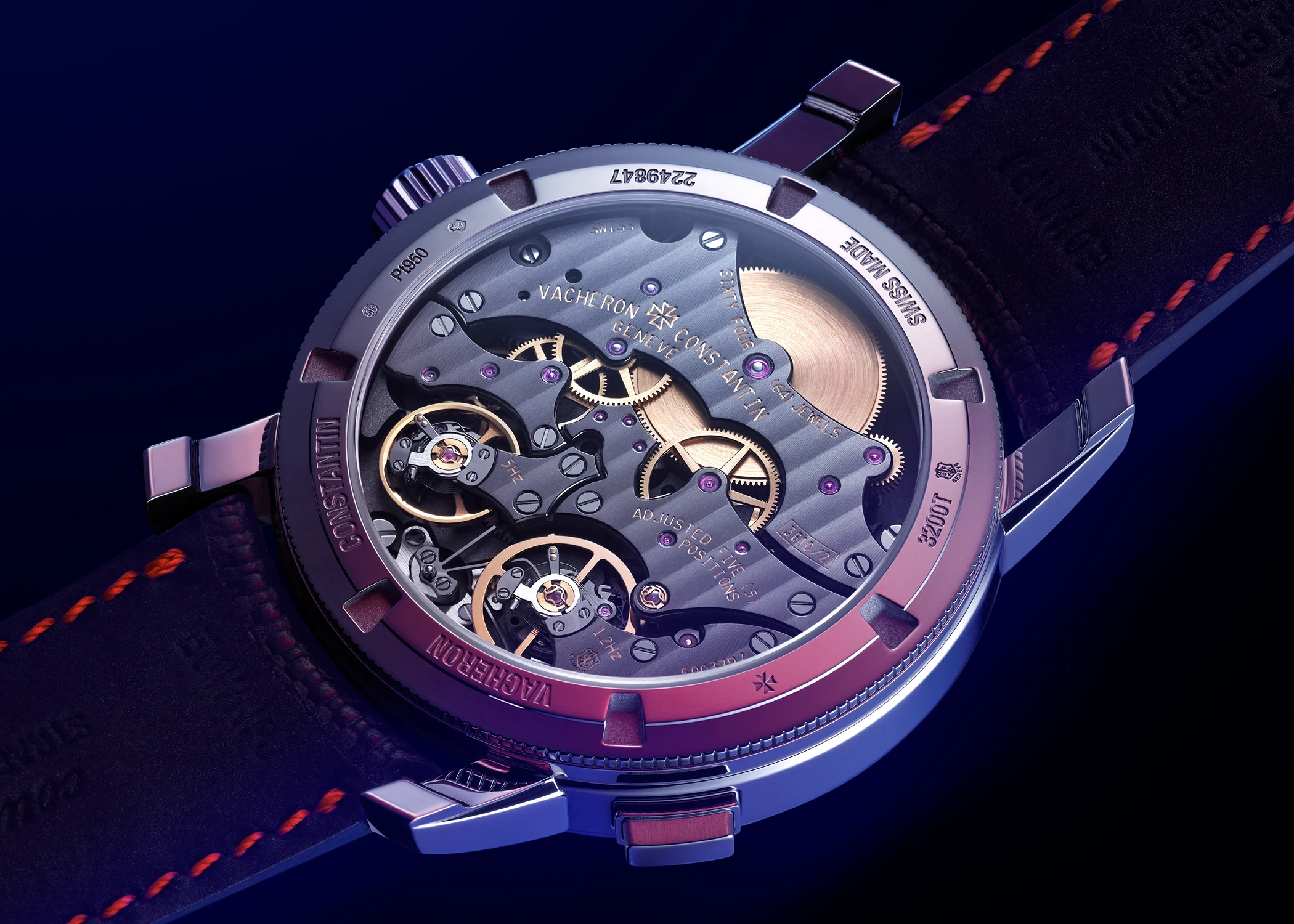
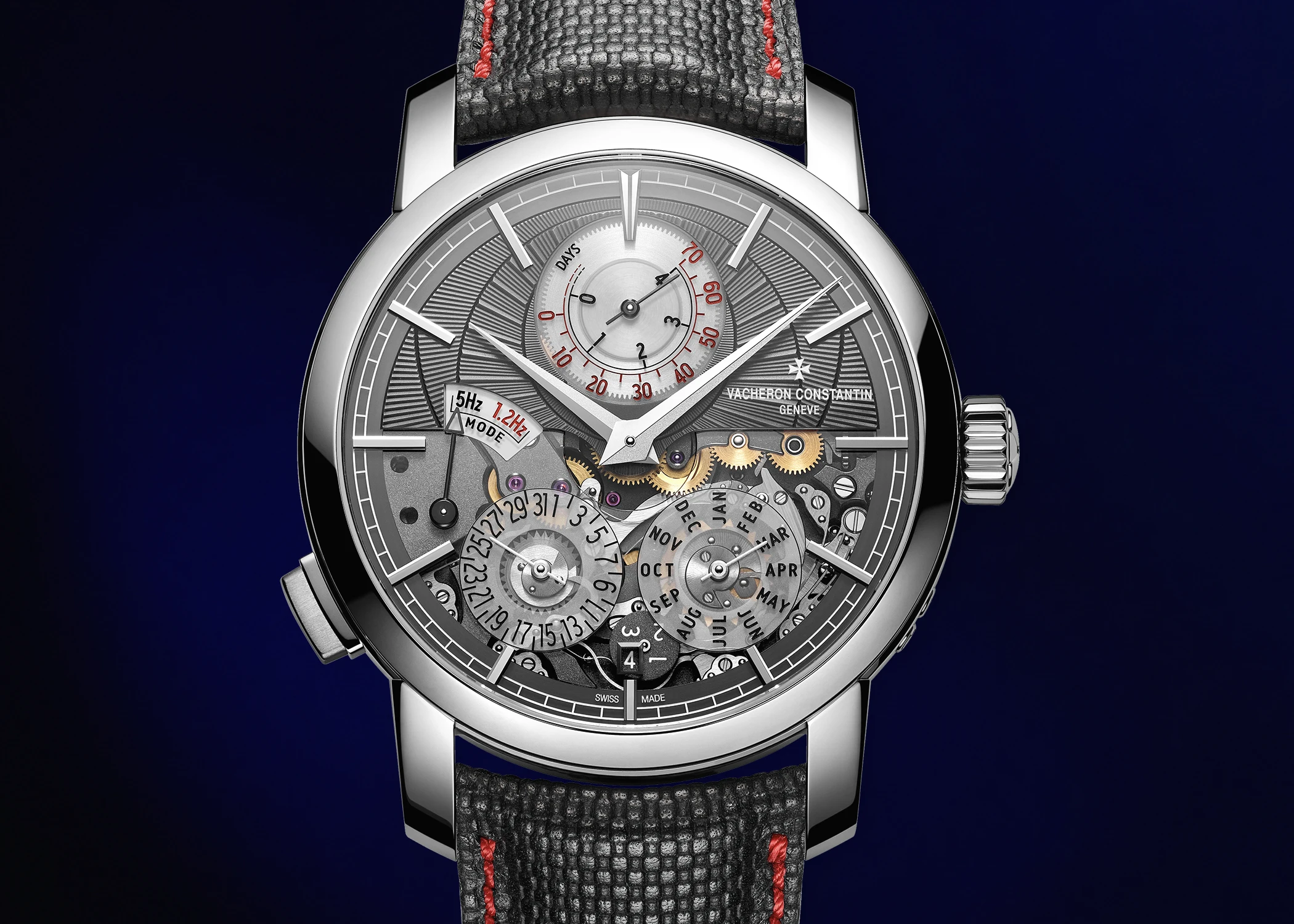
As far as the aesthetics of the dial are concerned, the new Traditionnelle Twin Beat Perpetual Calendar closely follows the division of the 2019 Traditionnelle Twin Beat Perpetual Calendar into two clearly separated areas: the lower section, made of sapphire crystal, reveals the sandblasted mainplate with NAC galvanic treatment, as well as several wheels of the movement. The aesthetic of the upper section is defined by a plate made of 18-carat gold, finished in a slate-grey tone and decorated with hand-crafted radial guilloché. The sapphire crystal dial is adorned with an engraved and colour-filled railway minute track as well as applied white-gold baton hour markers; hours and minutes are indicated by facetted Dauphine hands, also made of white gold.
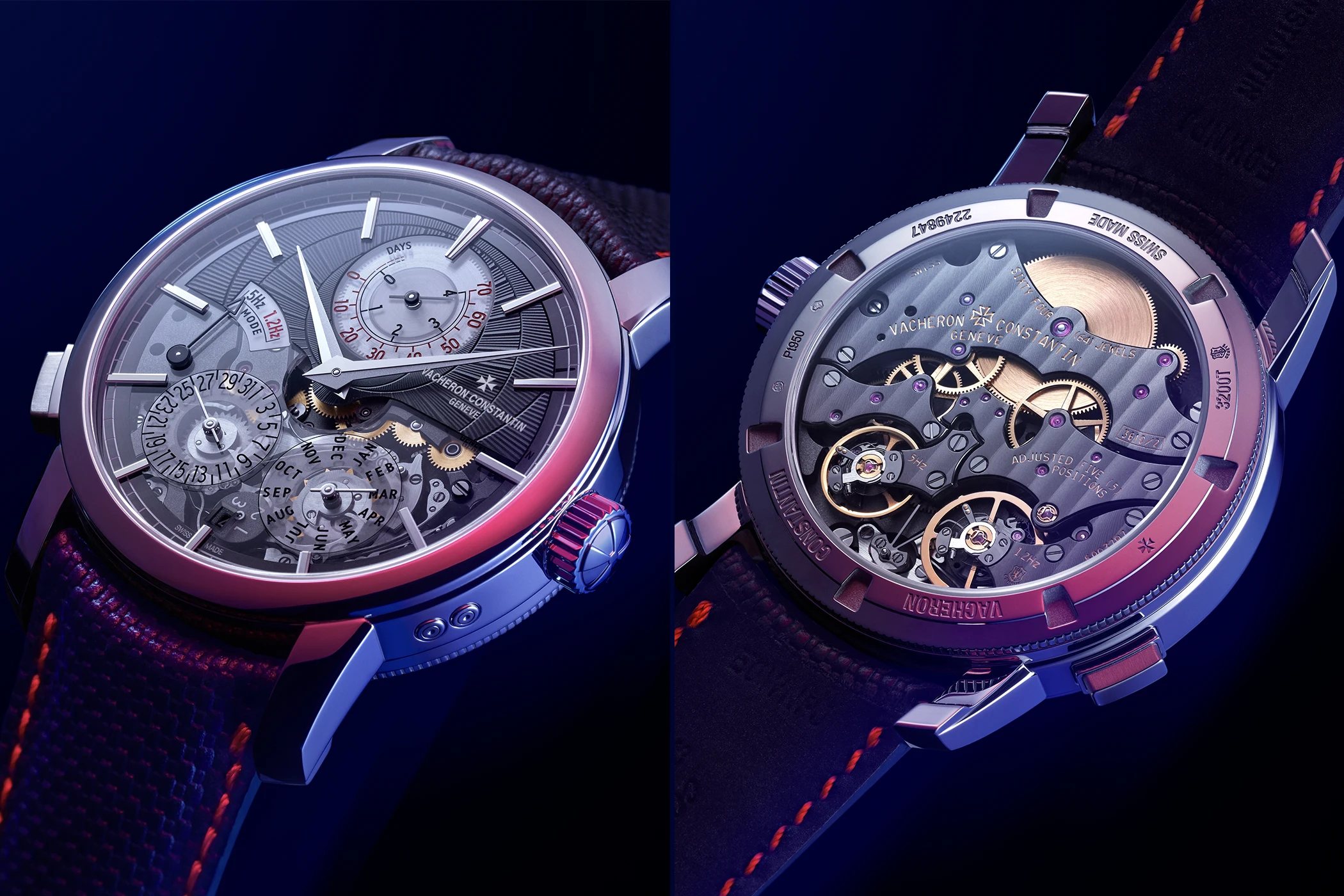
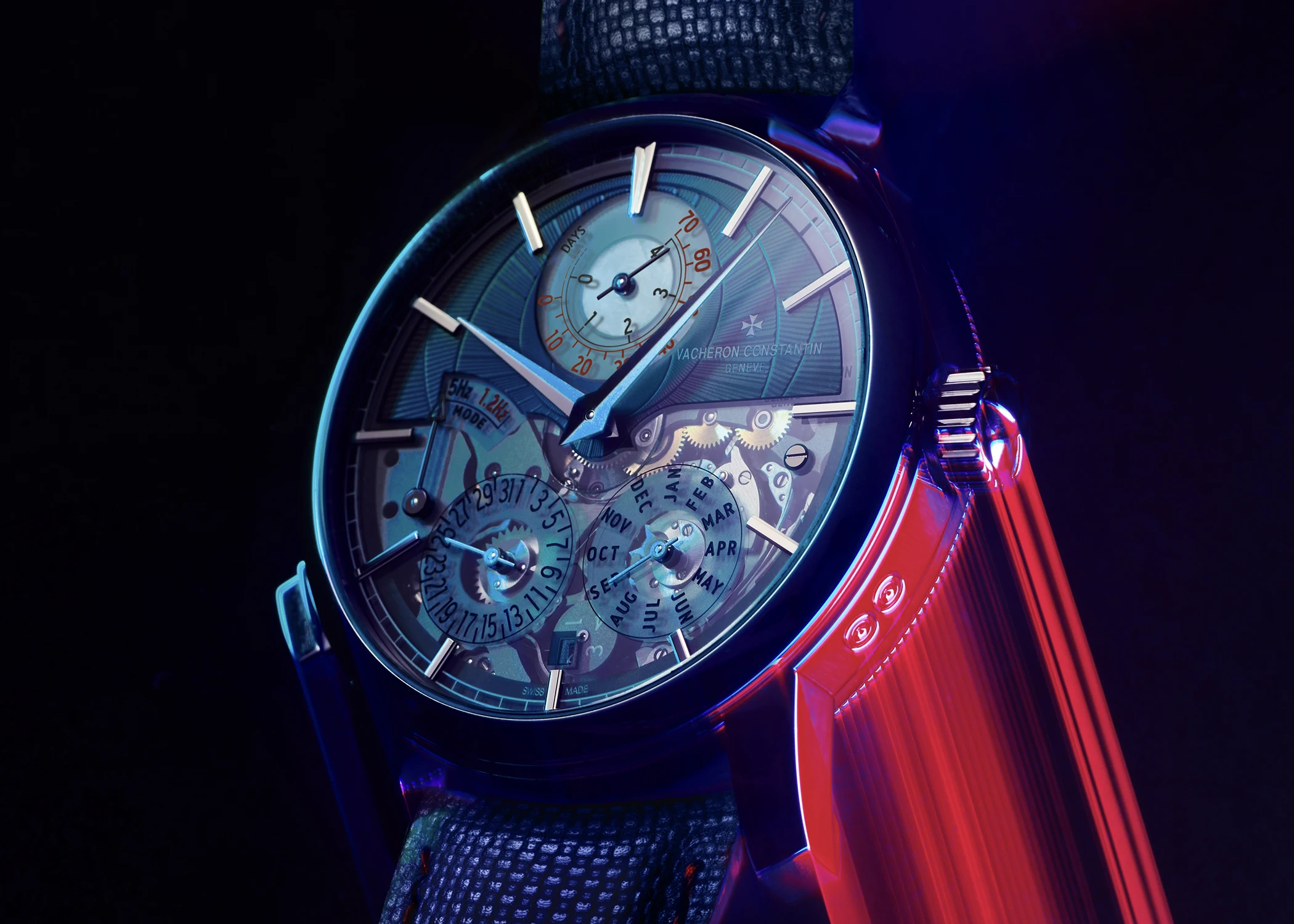
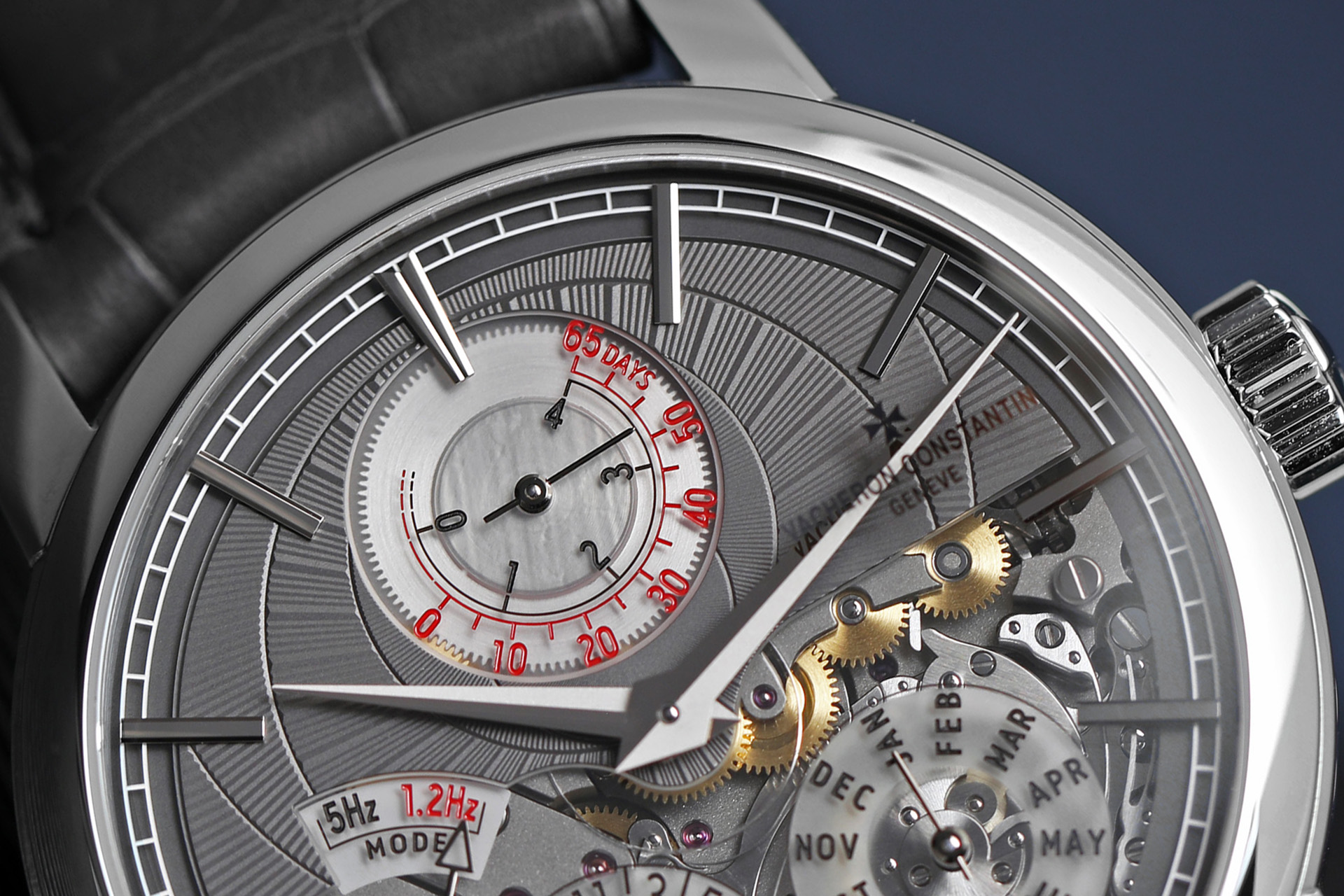
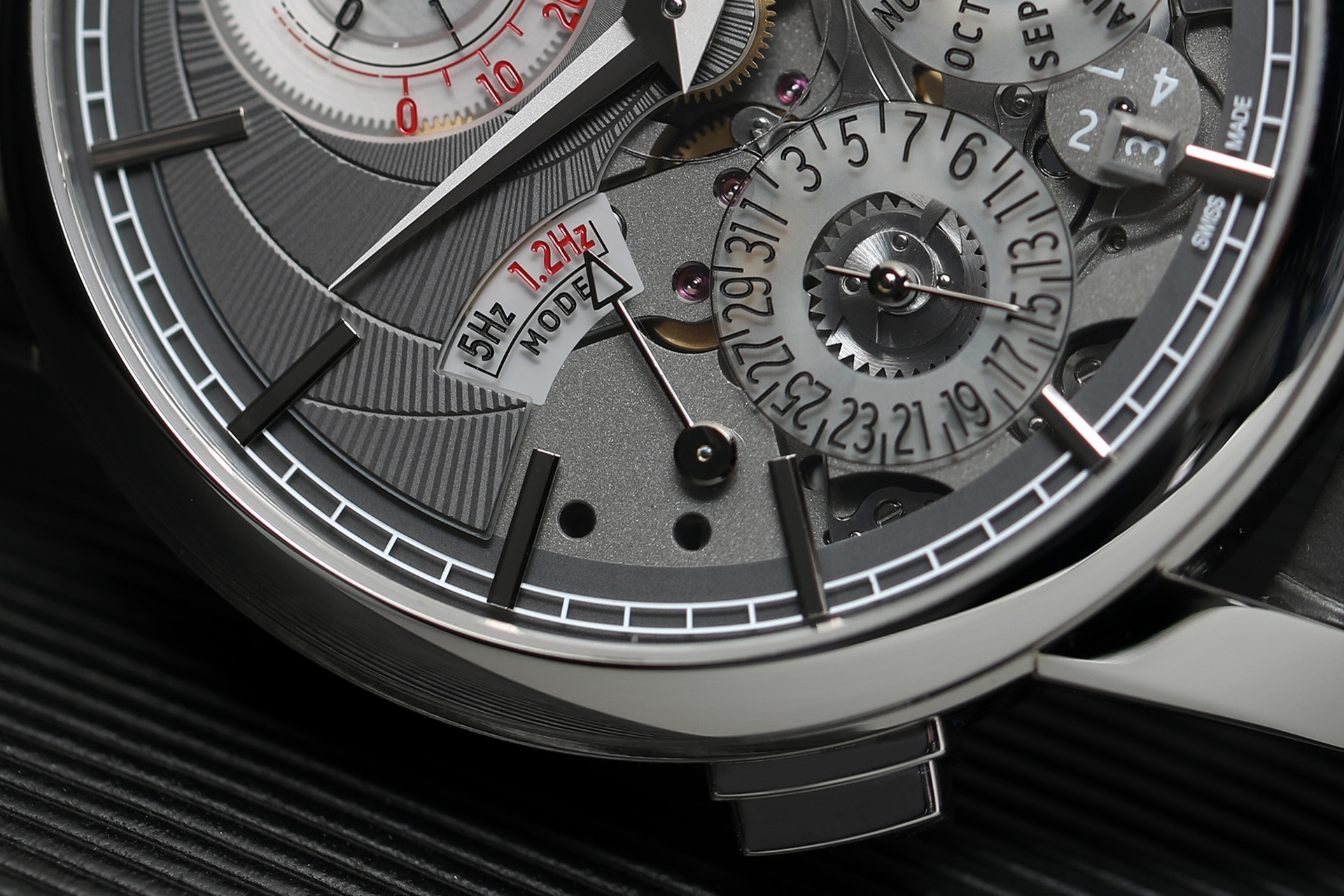
In terms of its display logic, the new model follows the 2019 Traditionnelle Twin Beat Perpetual Calendar. The power-reserve indicator at 12 o’clock continues to work with two scales: black stands for the 4 days in Active Mode, red for the 70 days in Standby Mode. The jumping month display is positioned at 5 o’clock, the jumping leap-year display at 6 o’clock and the jumping date display at 7 o’clock. Between 9 and 10 o’clock sits the Active/Standby mode indicator with the corresponding frequency indications. At the same time, the displays for the power reserve, day of the week and month have been reworked compared with the 2019 version: laser-engraved glass gives them a frosted appearance that clearly sets them apart from the colours of the movement and the guilloché upper half of the dial.