Glashütte Original presents the Senator Chronograph and Navigator: a comparison of two designs, a flyback calibre and a 70-hour power reserve.
A case diameter of 38 millimetres is nothing new for the Omega Speedmaster 38. What is new, however, is the way in which Omega has now so consistently integrated the design features of the Moonwatch into this compact automatic range – thereby demonstrating that the impact of a chronograph extends far beyond its mere diameter.
With a watch, just a few millimetres determine how it looks, who it suits and what it represents. This is particularly true of a mechanical chronograph: the movement, pushers and multiple dials require space, whilst a compact case can very quickly appear too tall or stocky. 38 millimetres is therefore neither simply ‘small’ nor automatically flat and elegant. Equally crucial are the height, lug-to-lug measurement, case shape and the transition from the case to the strap. With seven new models, Omega is therefore primarily refining the profile of the Speedmaster 38. Its diameter remains unchanged; in terms of design, however, it moves closer to the Moonwatch, gaining a cleaner look and a sportier presence in the process.
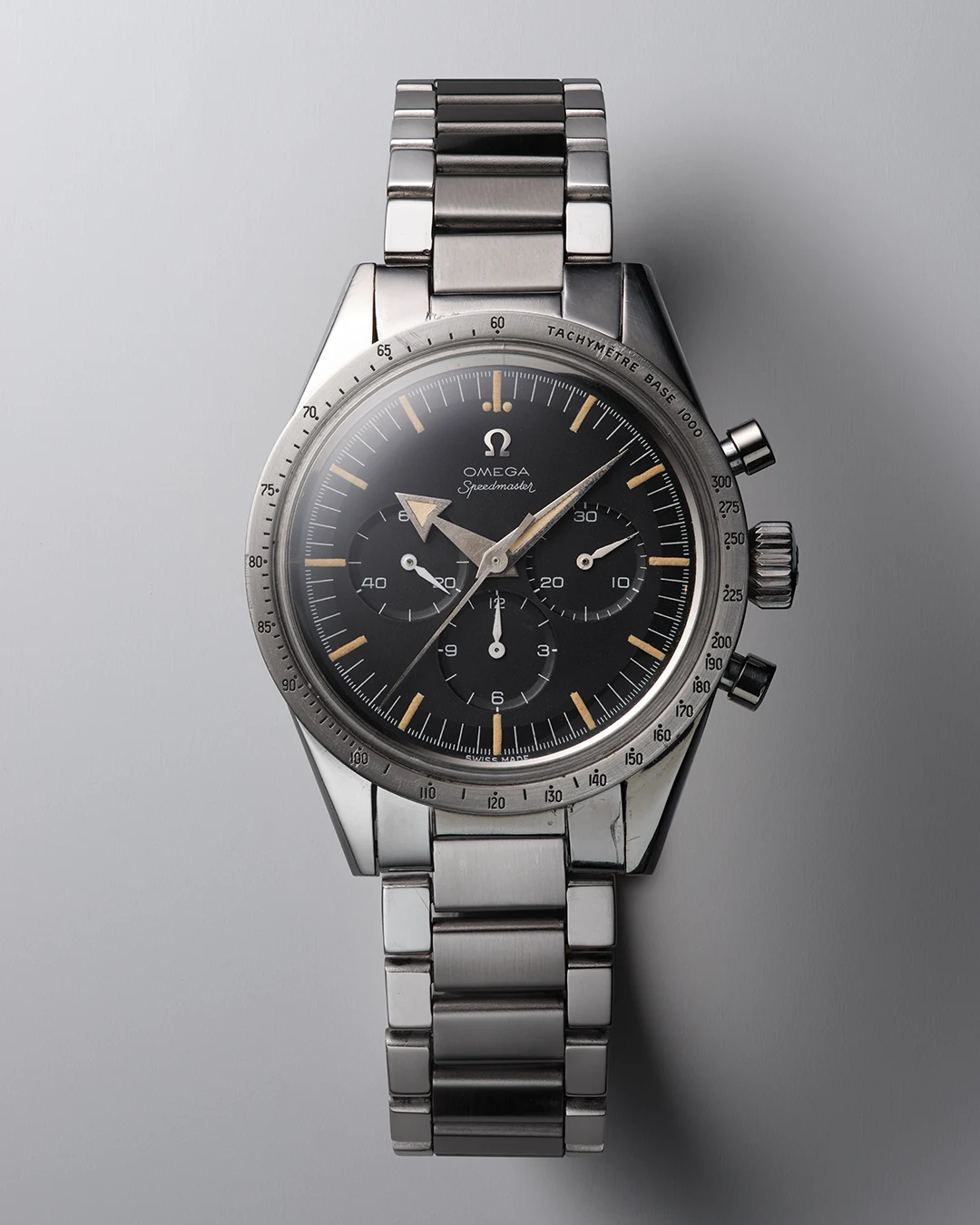
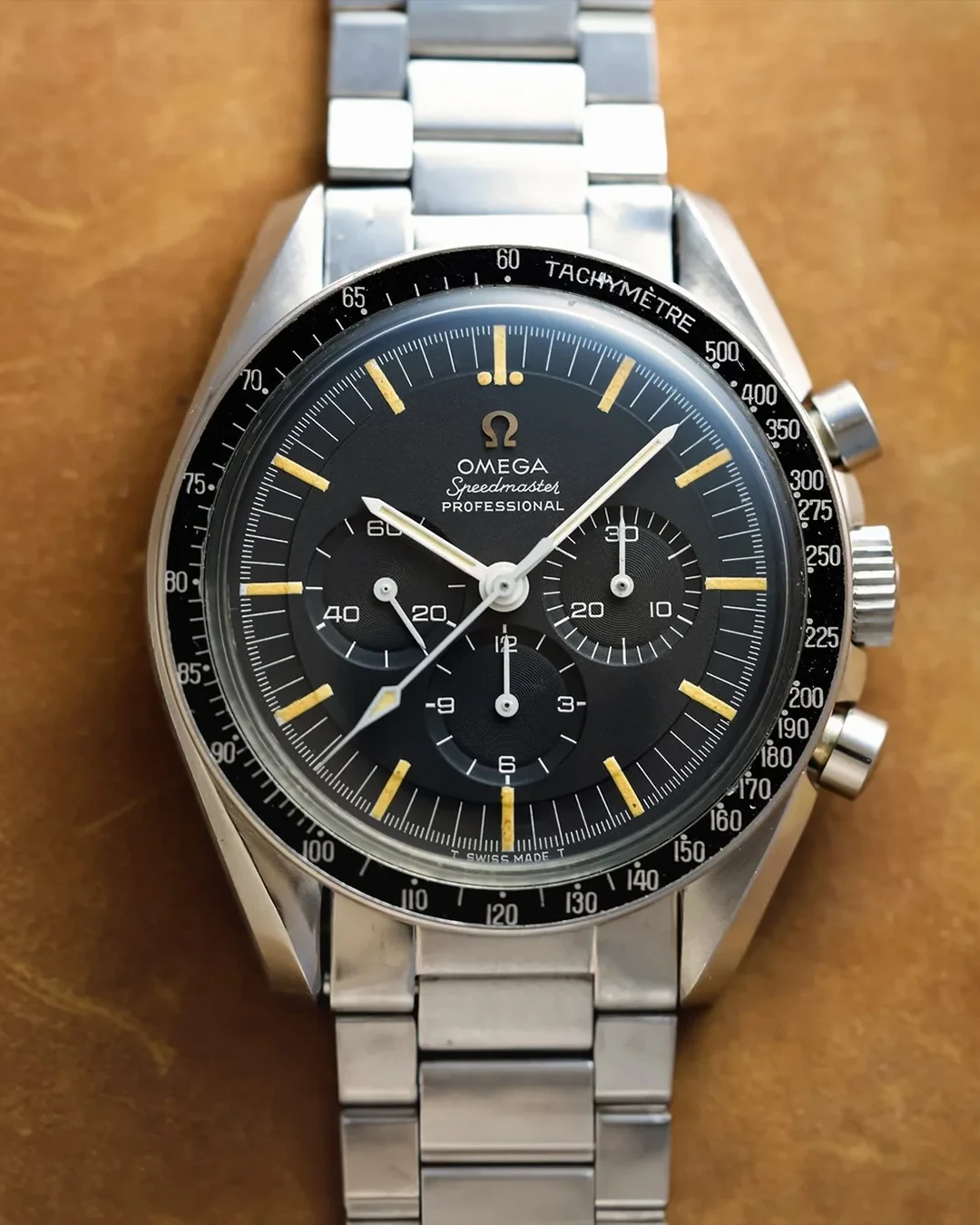
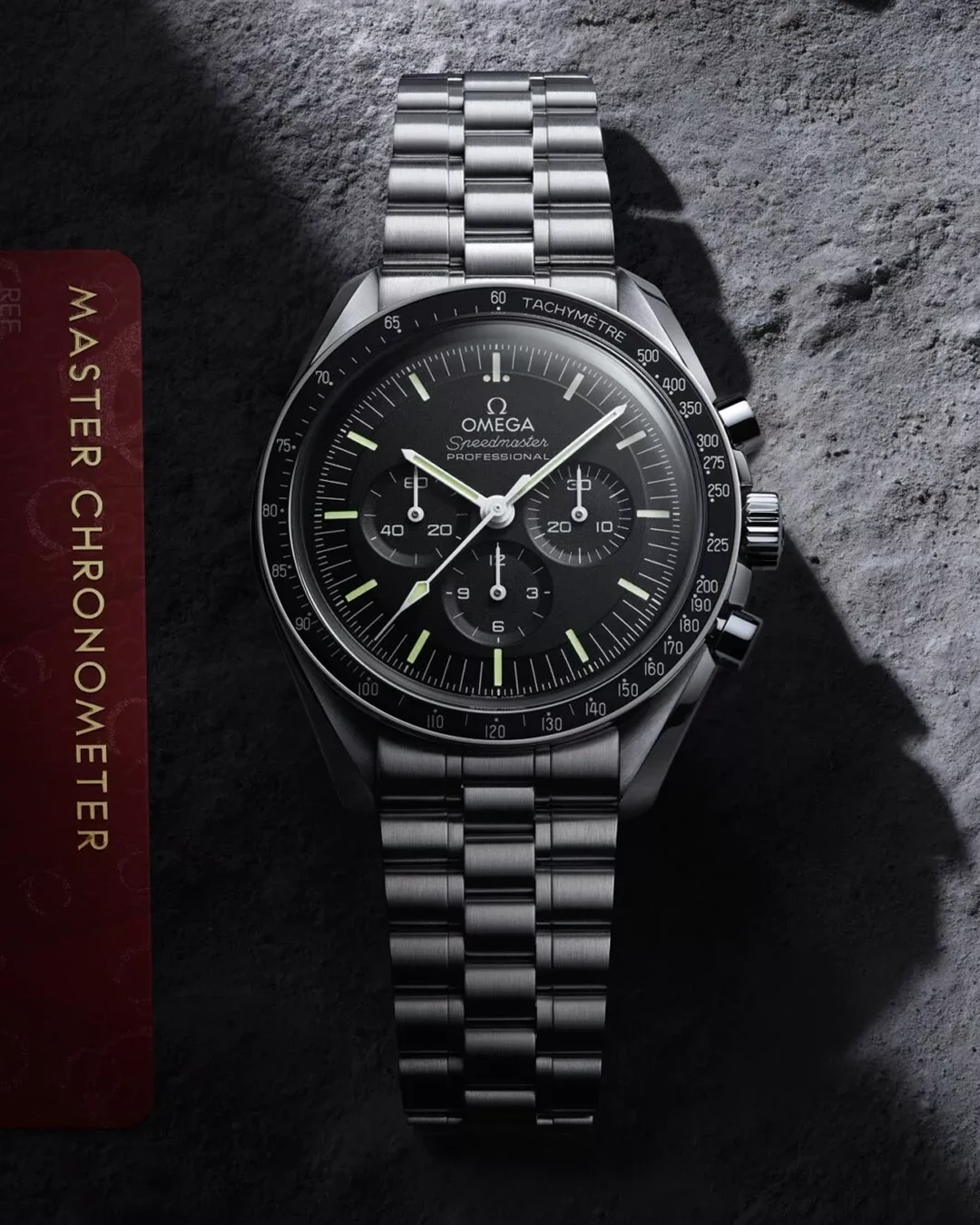
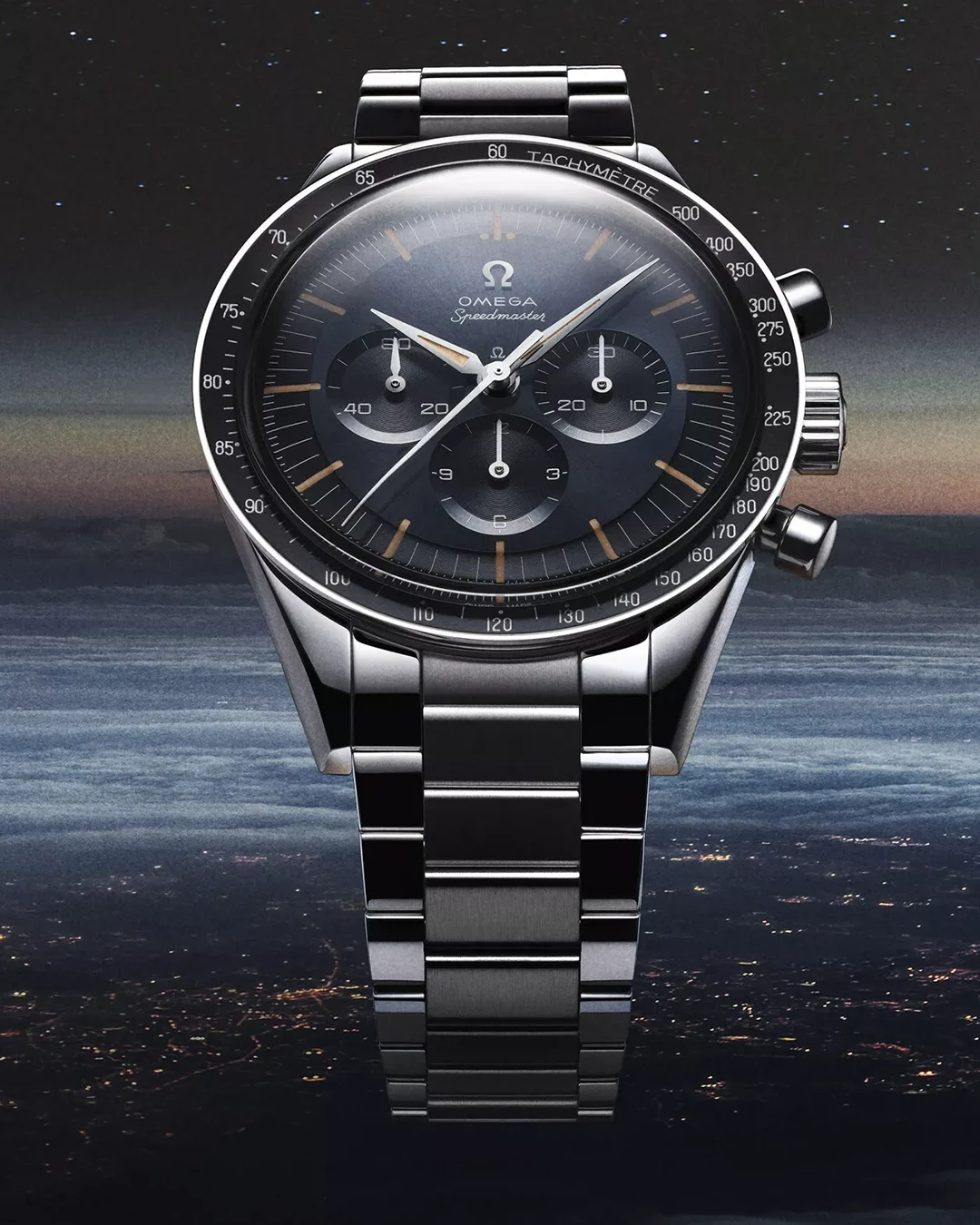
The first Speedmaster, reference CK2915 from 1957, measured around 39 millimetres and featured its tachymeter scale on the bezel for the first time, where it was clearly legible. It was not until the reference 105.012, which offered better protection for the crown and pushers, that the Speedmaster Professional grew to 42 millimetres and acquired the silhouette that would later become inextricably linked with the Moonwatch. In the decades that followed, this size became a visual standard, though not the only legitimate form of the Speedmaster.
Credit © Hairspring / Watchaser
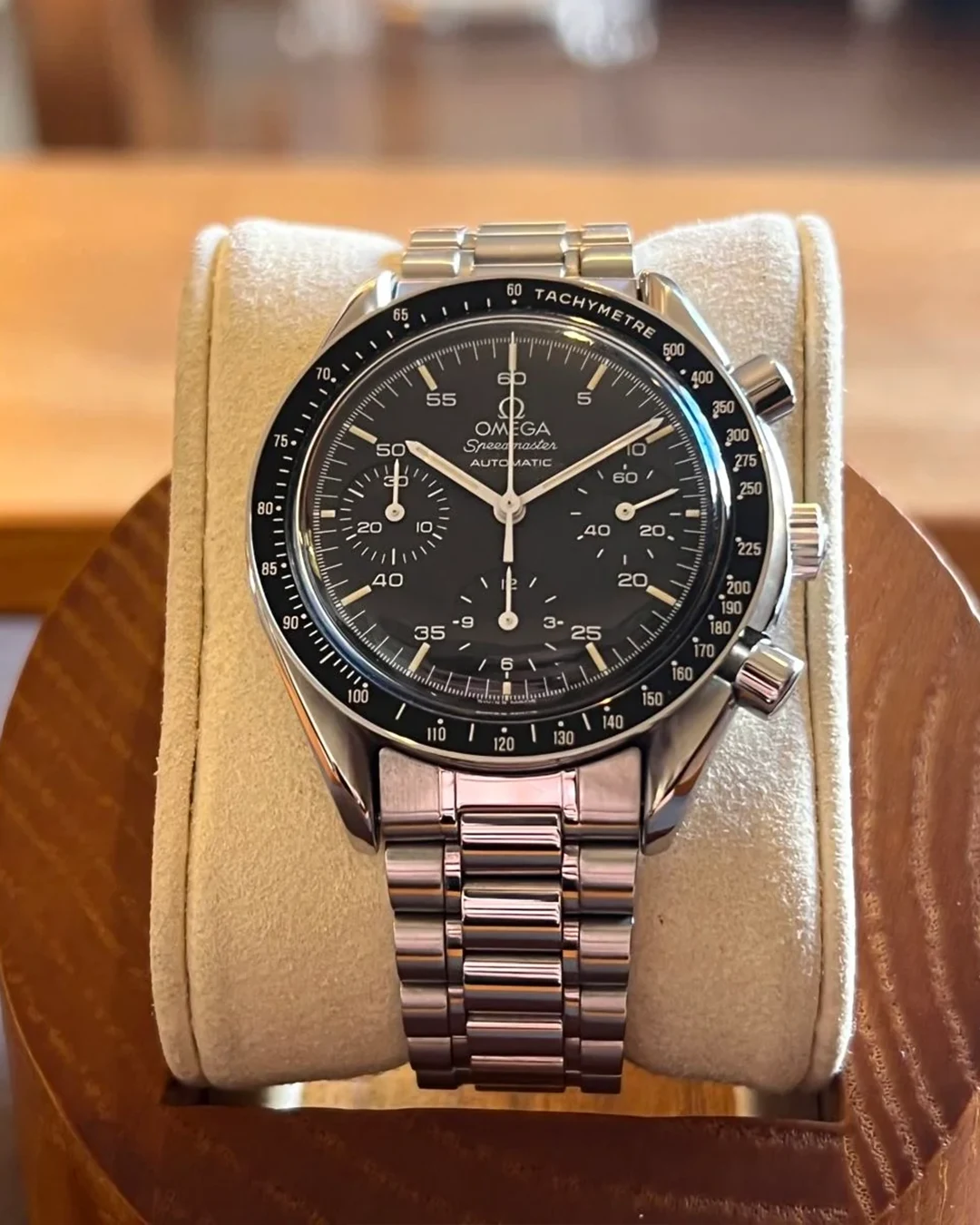
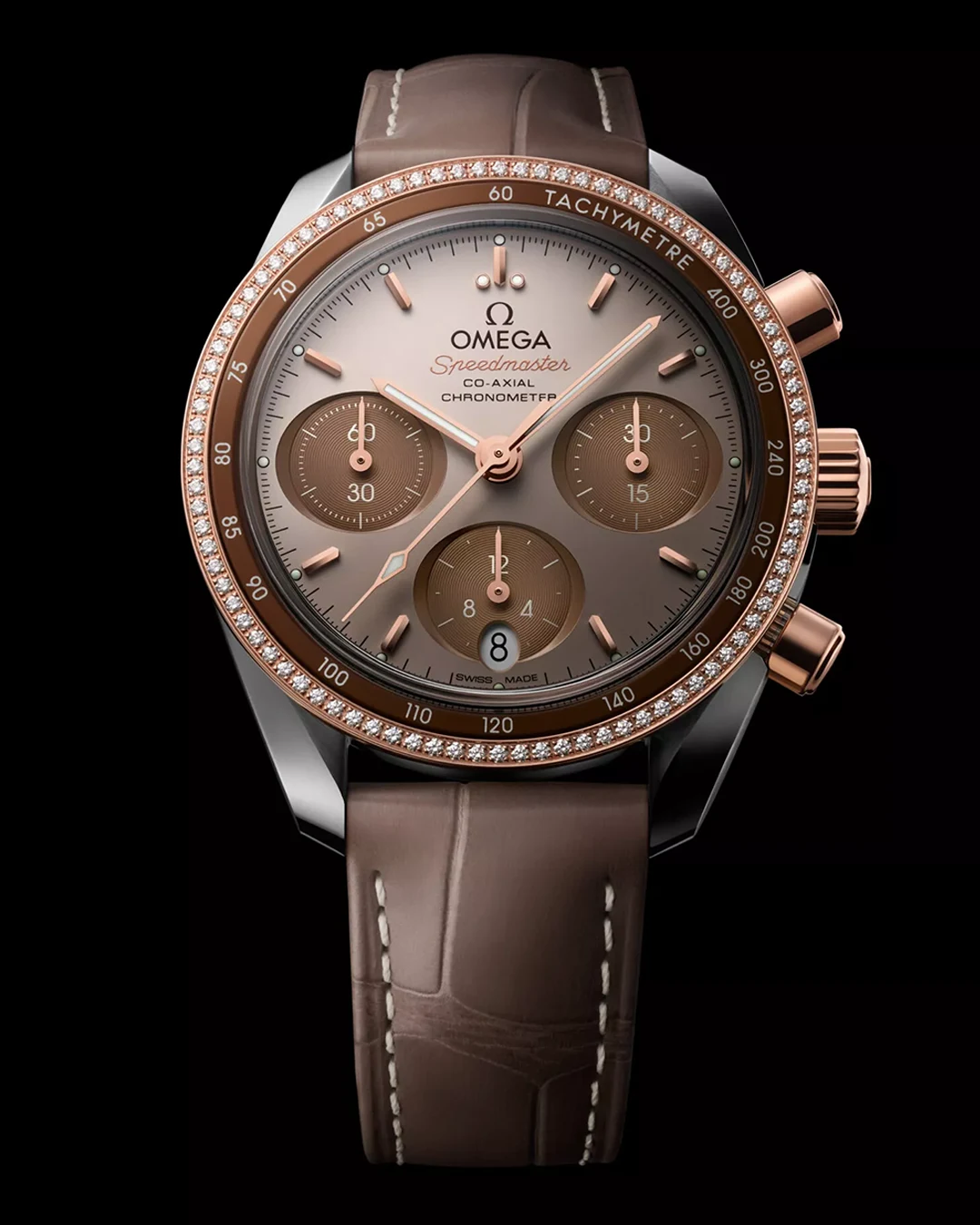
The Speedmaster Automatic, introduced in 1988 and measuring approximately 39 millimetres – usually referred to as the ‘Speedmaster Reduced’ – already featured automatic winding and the Moonwatch aesthetic, tailored for slimmer wrists. This was followed in 2017 by the standalone launch of the Speedmaster 38 collection: its oval sub-dials, coloured variants and jewellery versions deliberately positioned it between a sporty chronograph and an elegant lifestyle watch. Omega’s current range of sizes also extends from the 39.7-millimetre ‘First Omega in Space’ to the 40.85-millimetre Pilot, the 42-millimetre Moonwatch and the 44.25-millimetre ceramic models.
Credit © Zeitauktion
The 38-millimetre version therefore appears less like a scaled-down Speedmaster and more like a return to the proportions with which the model’s history once began.
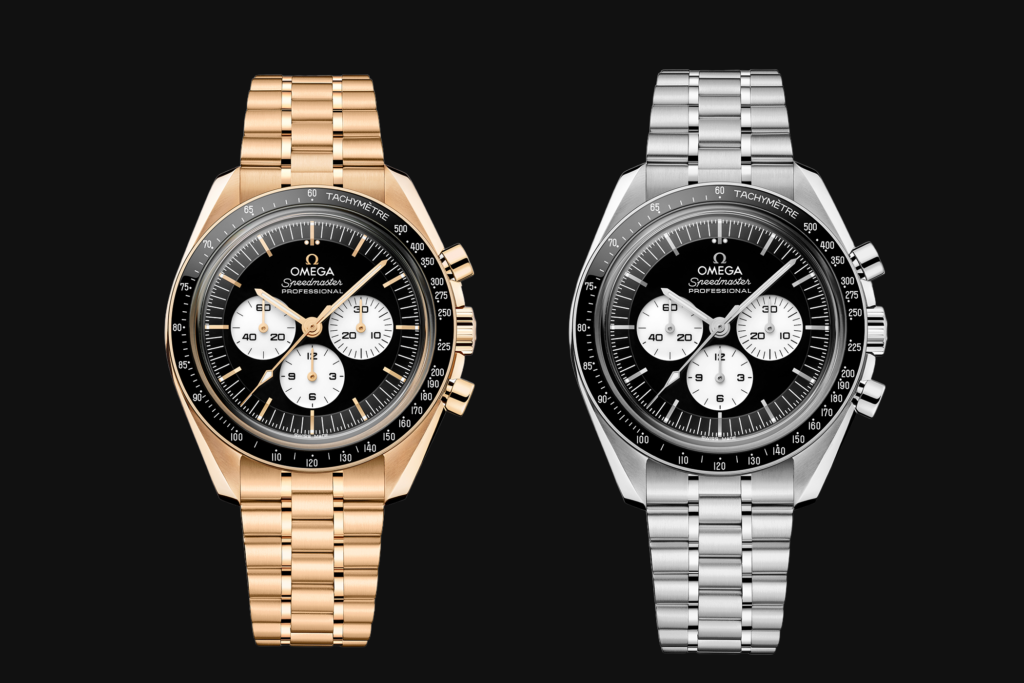
You can find all the details about the latest 42 mm Moonwatch models here in our article.
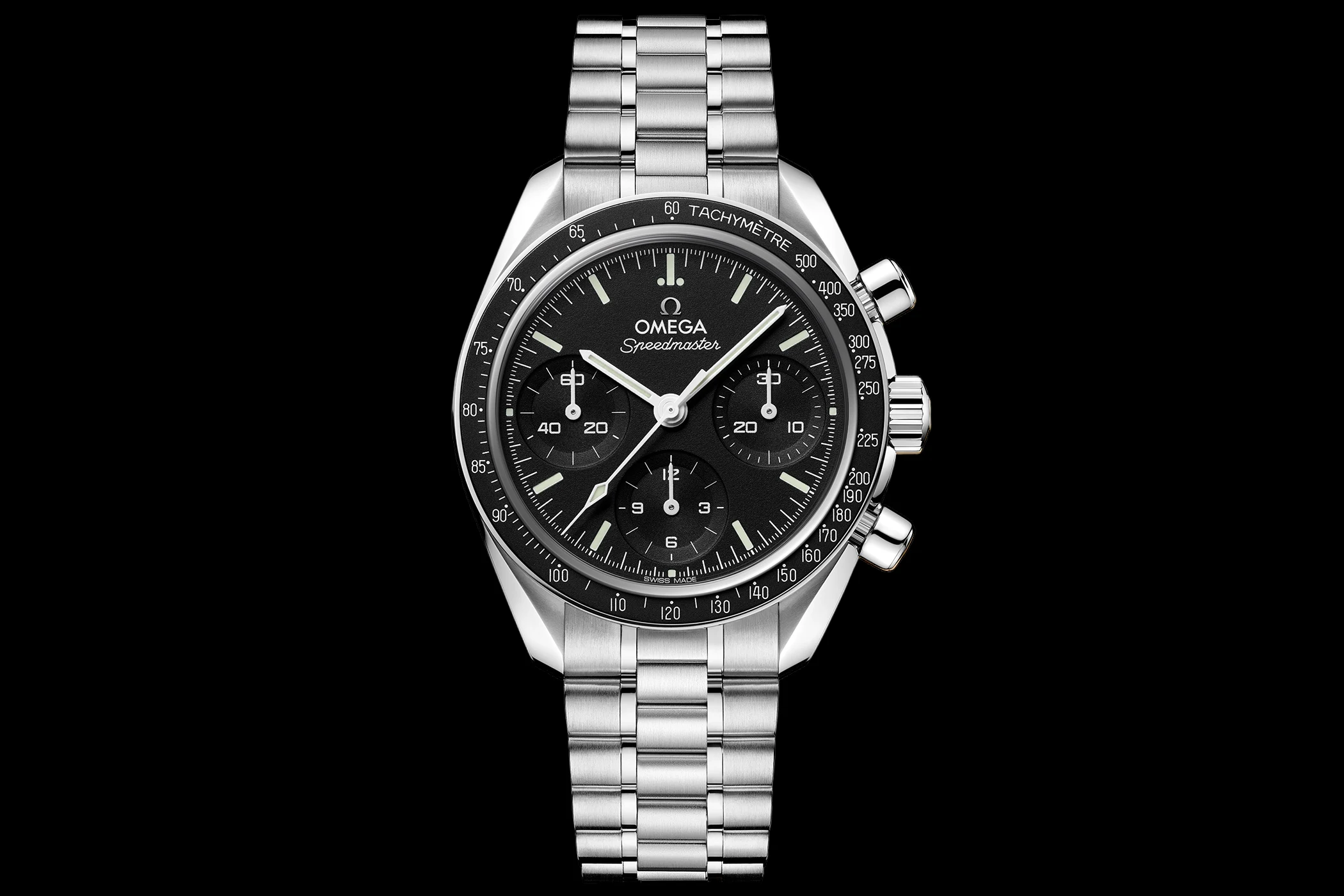
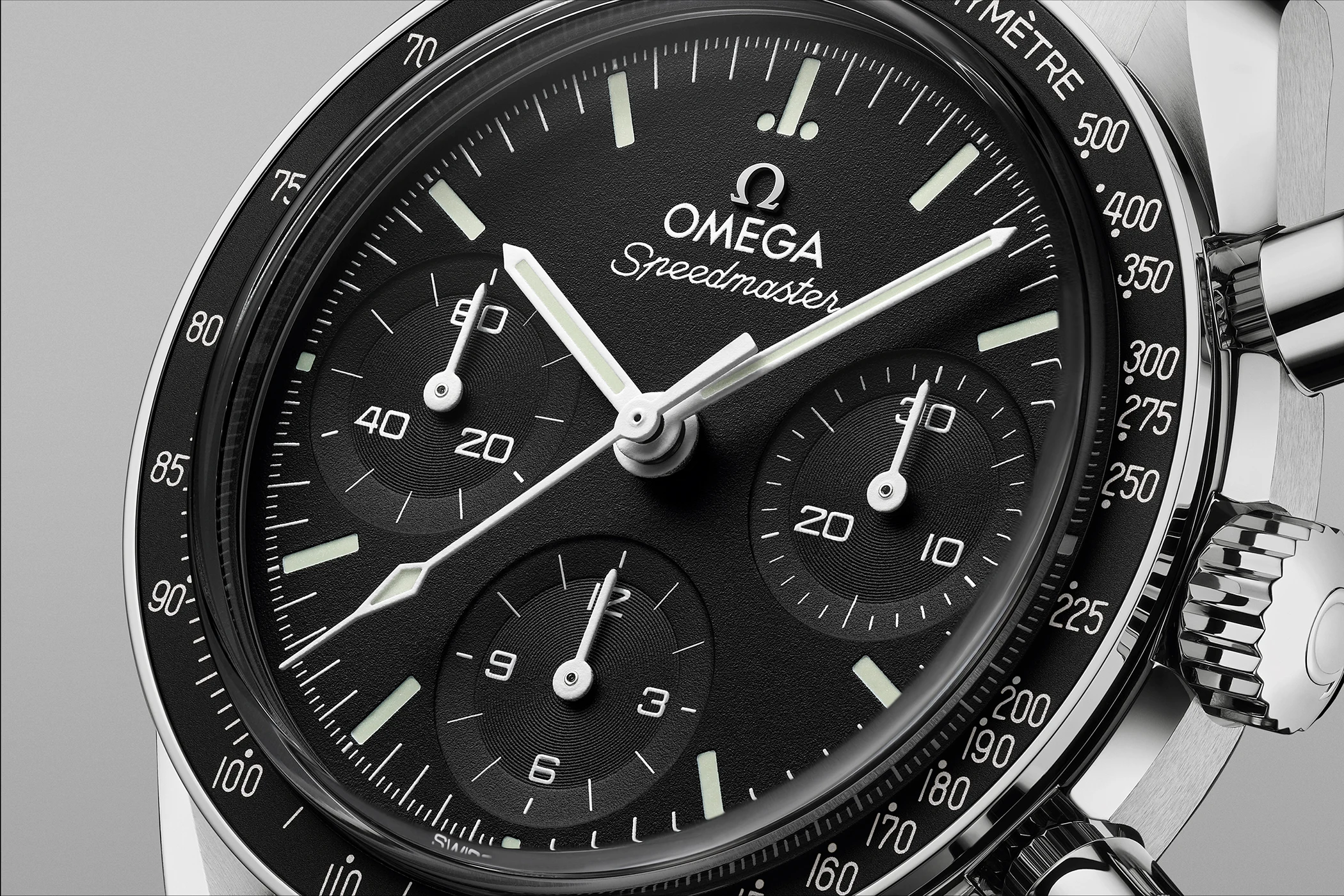
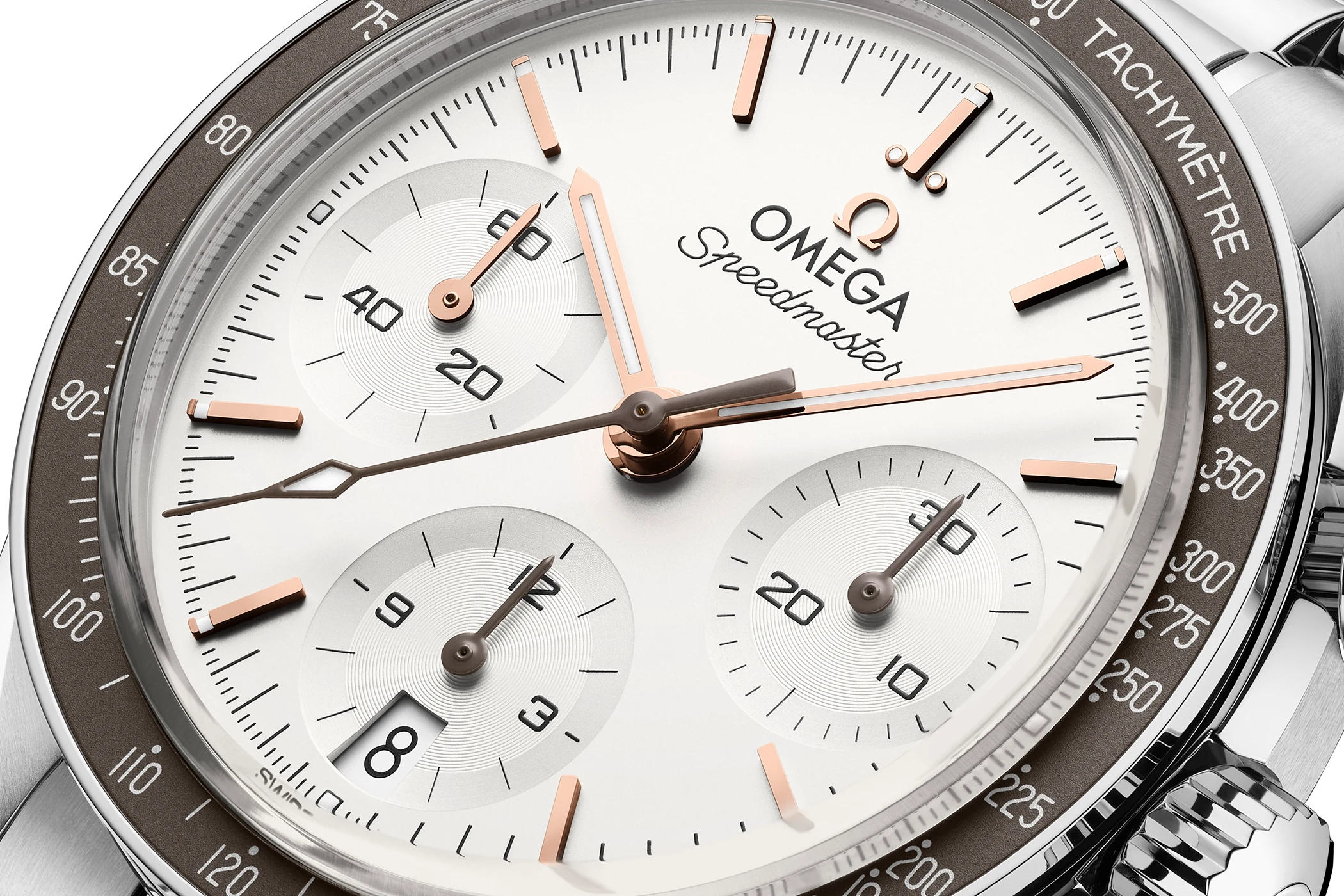
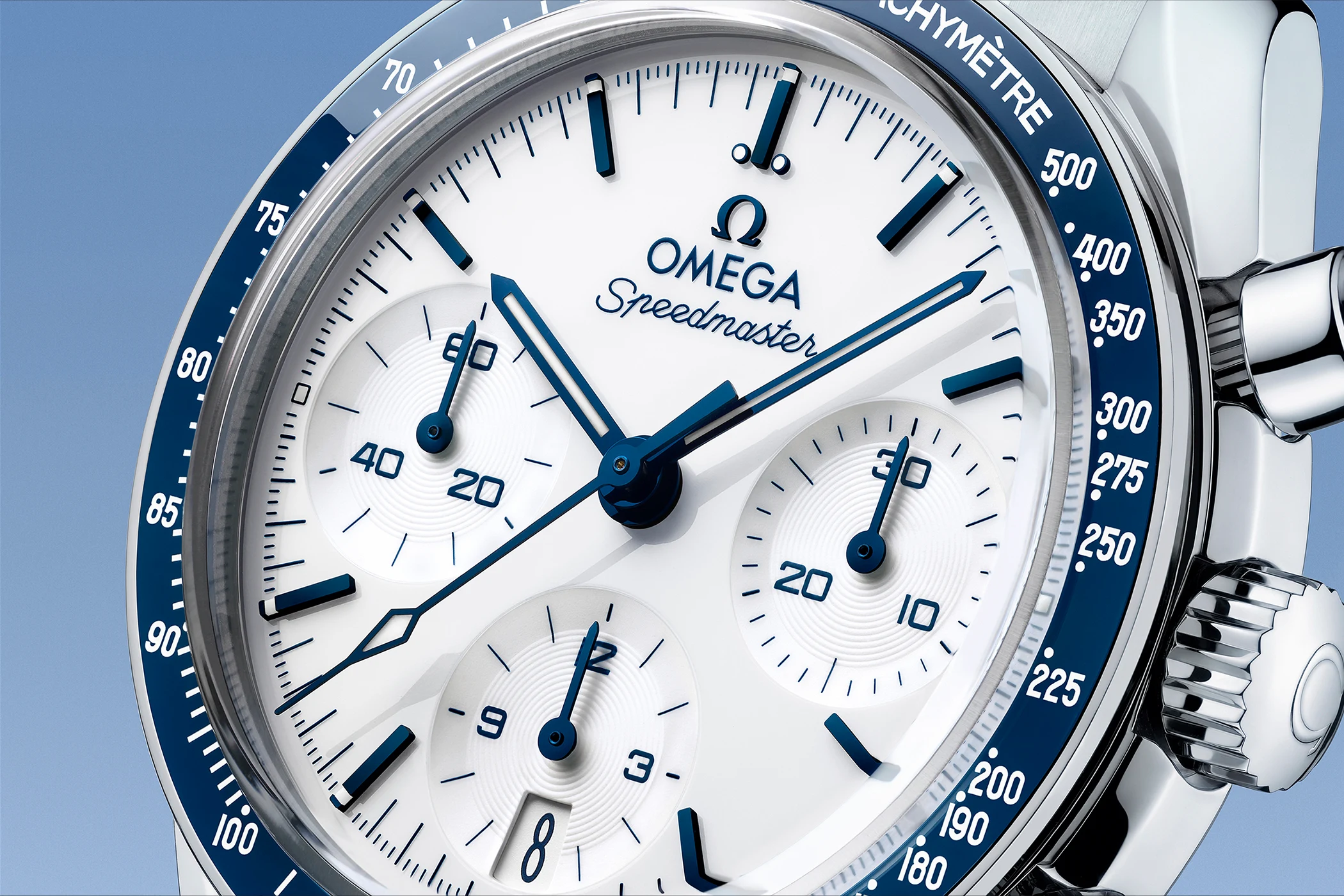
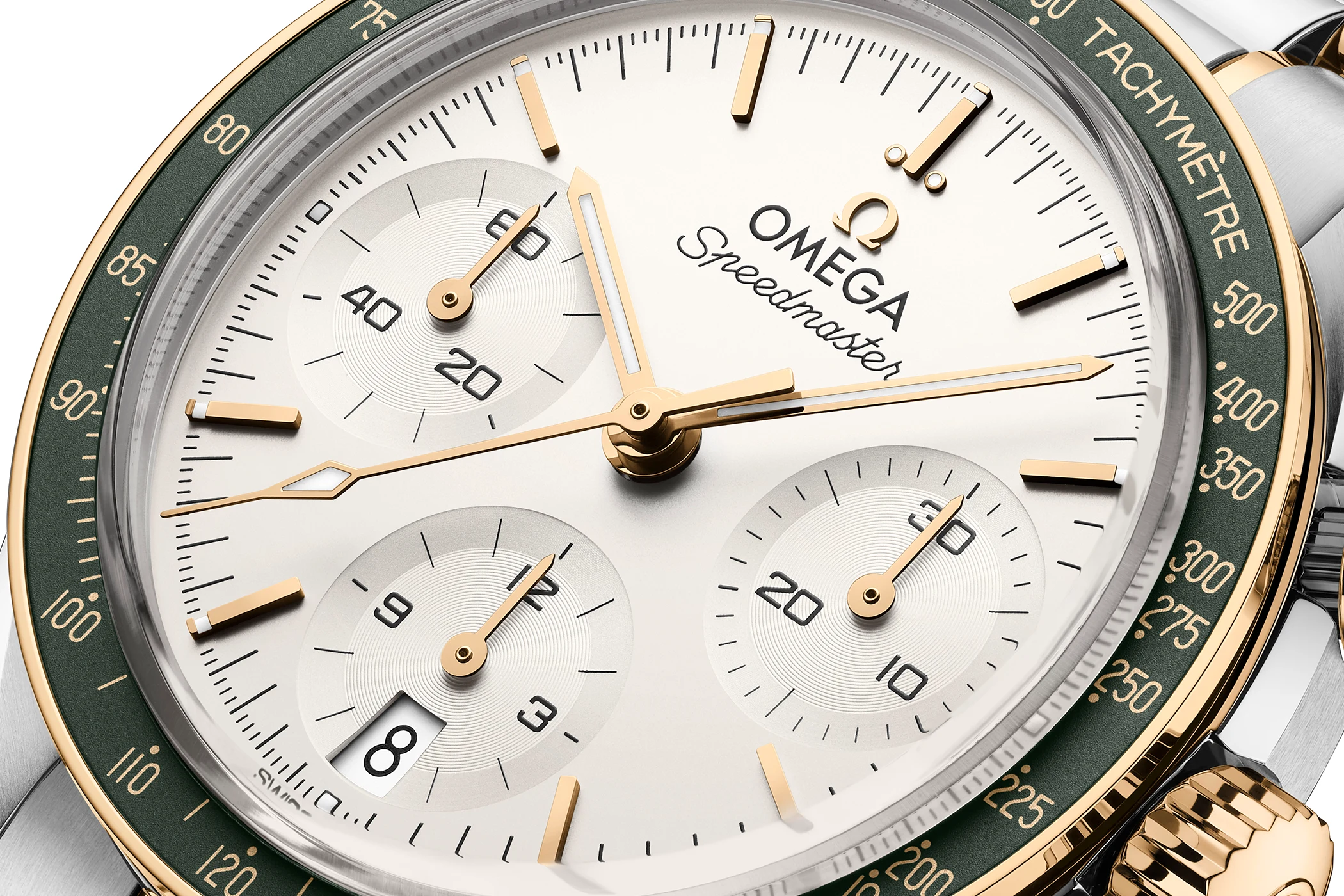
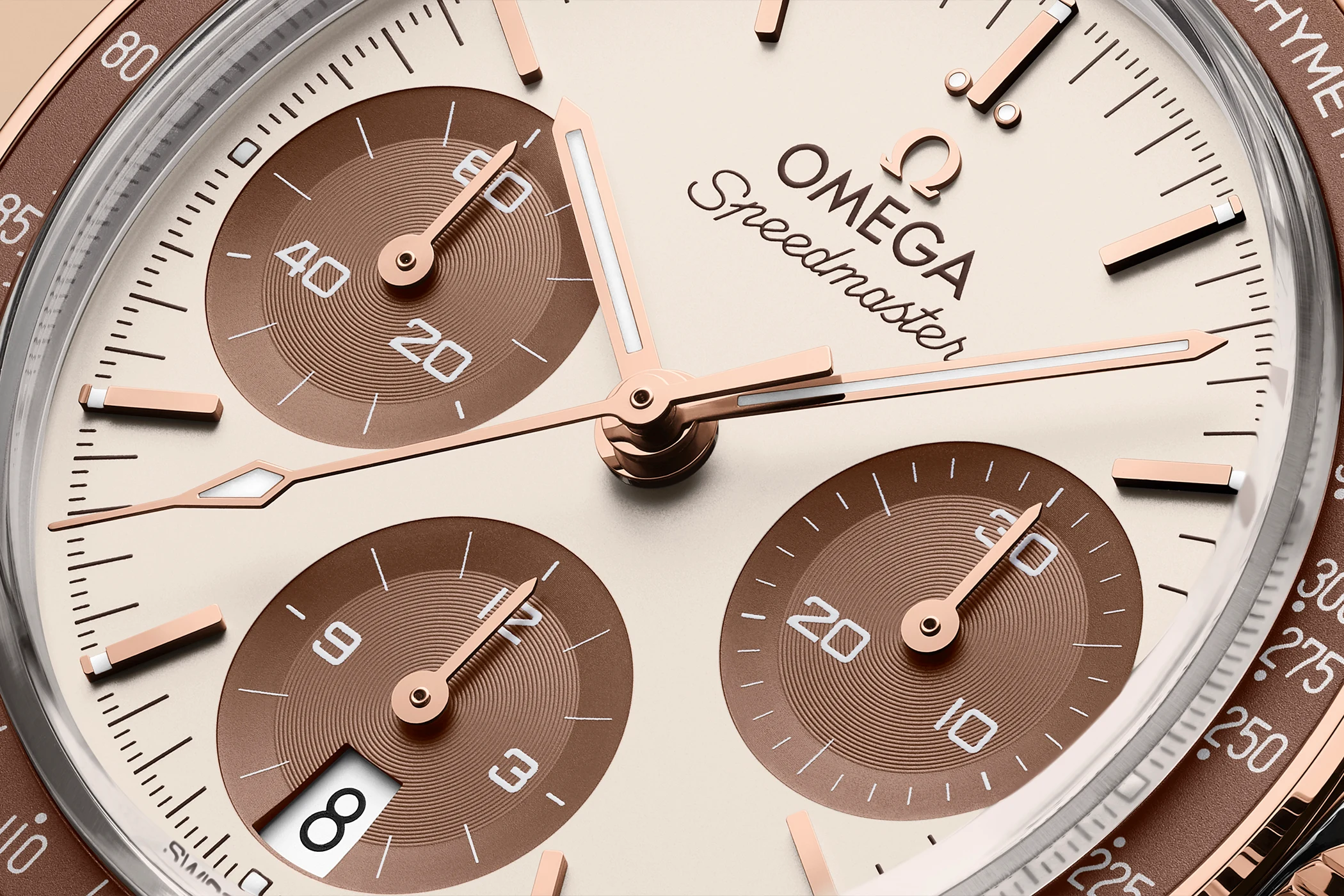
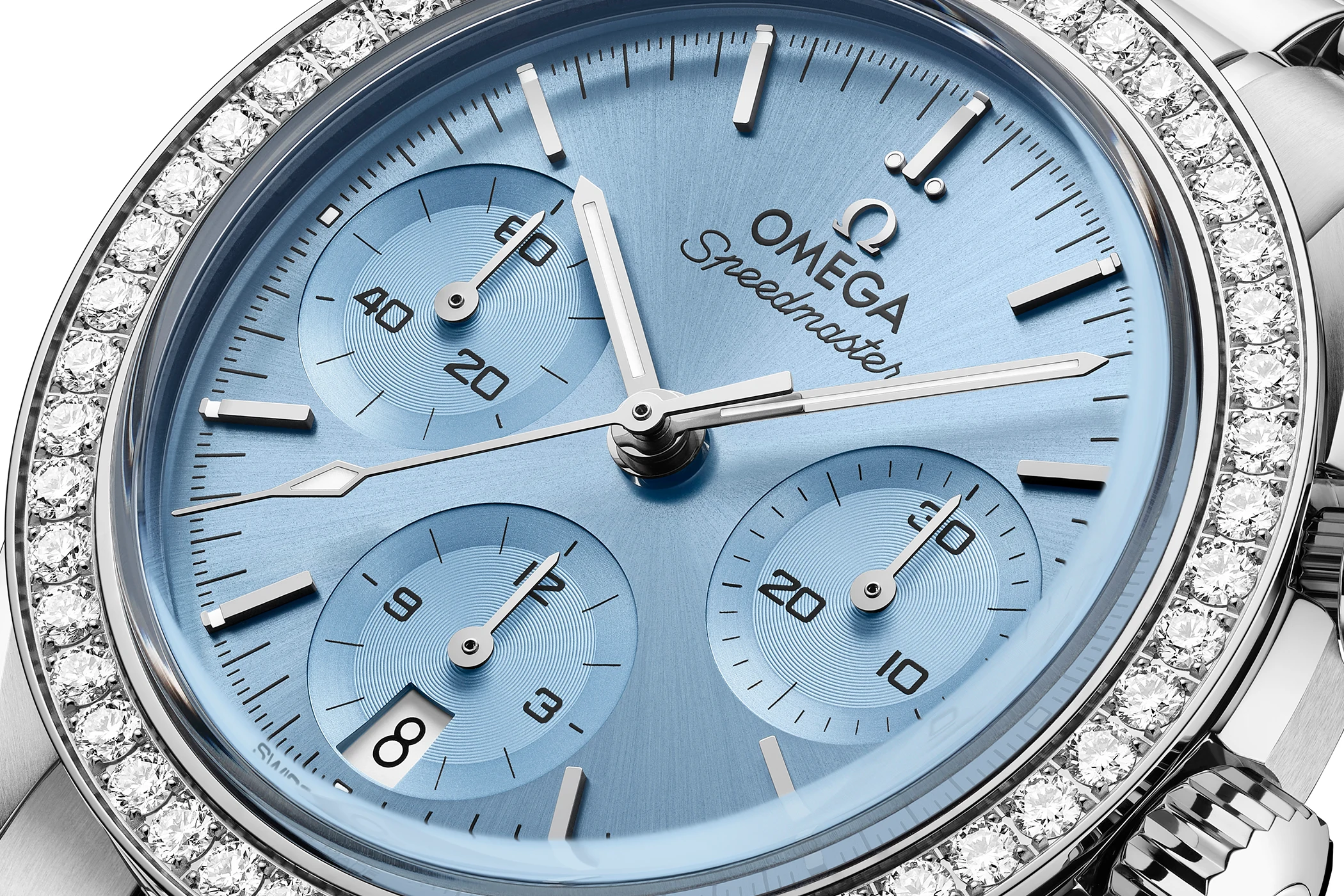
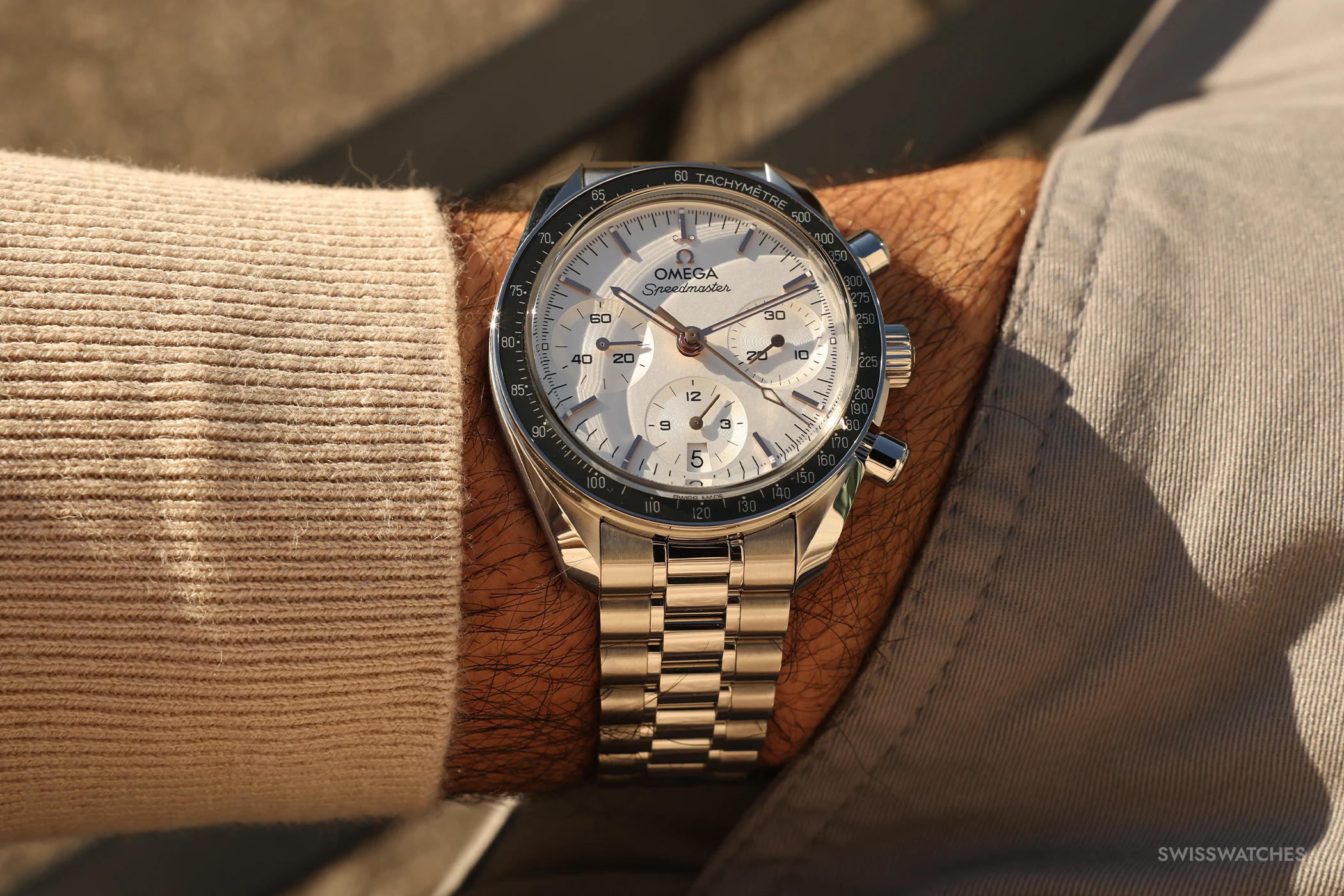
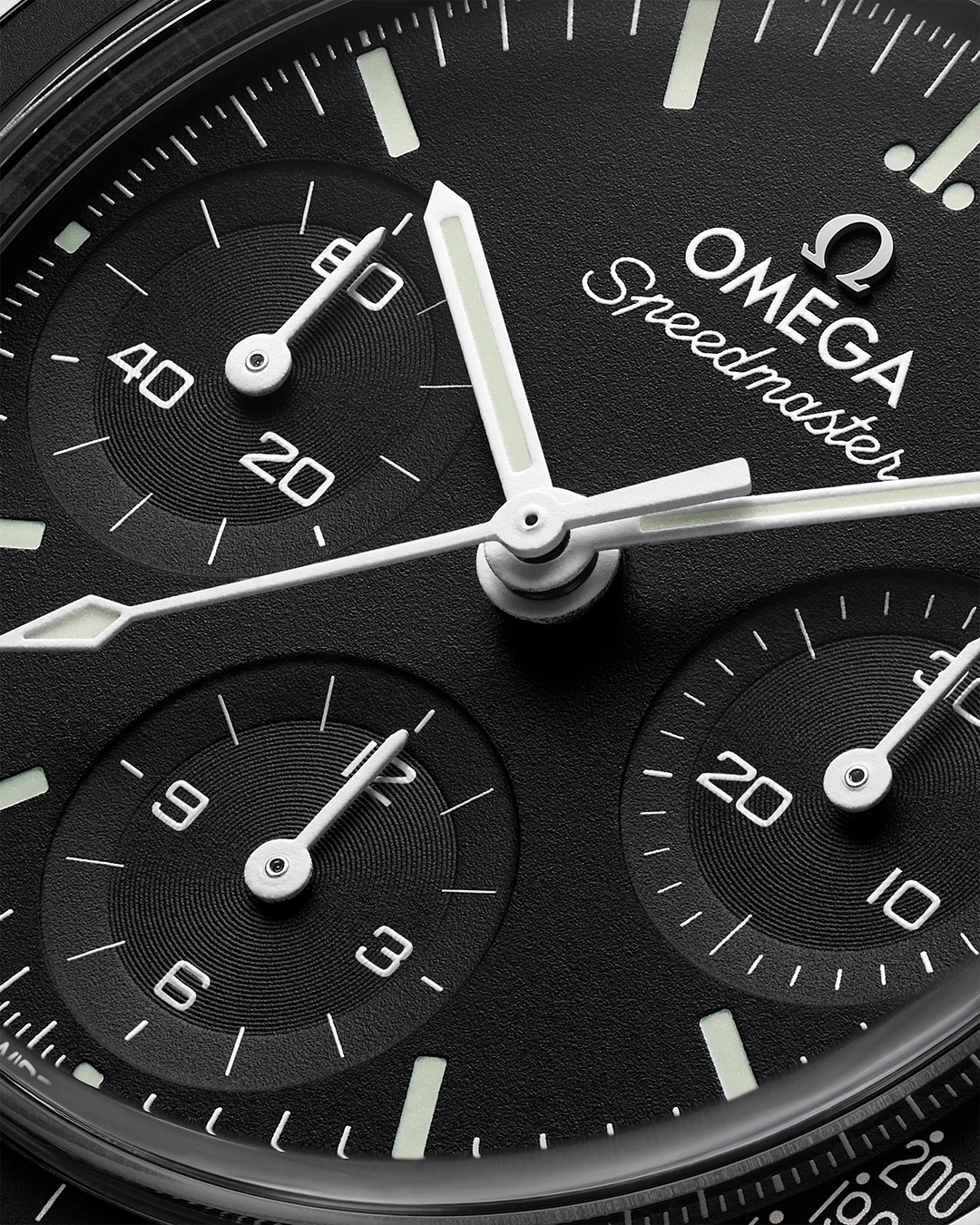
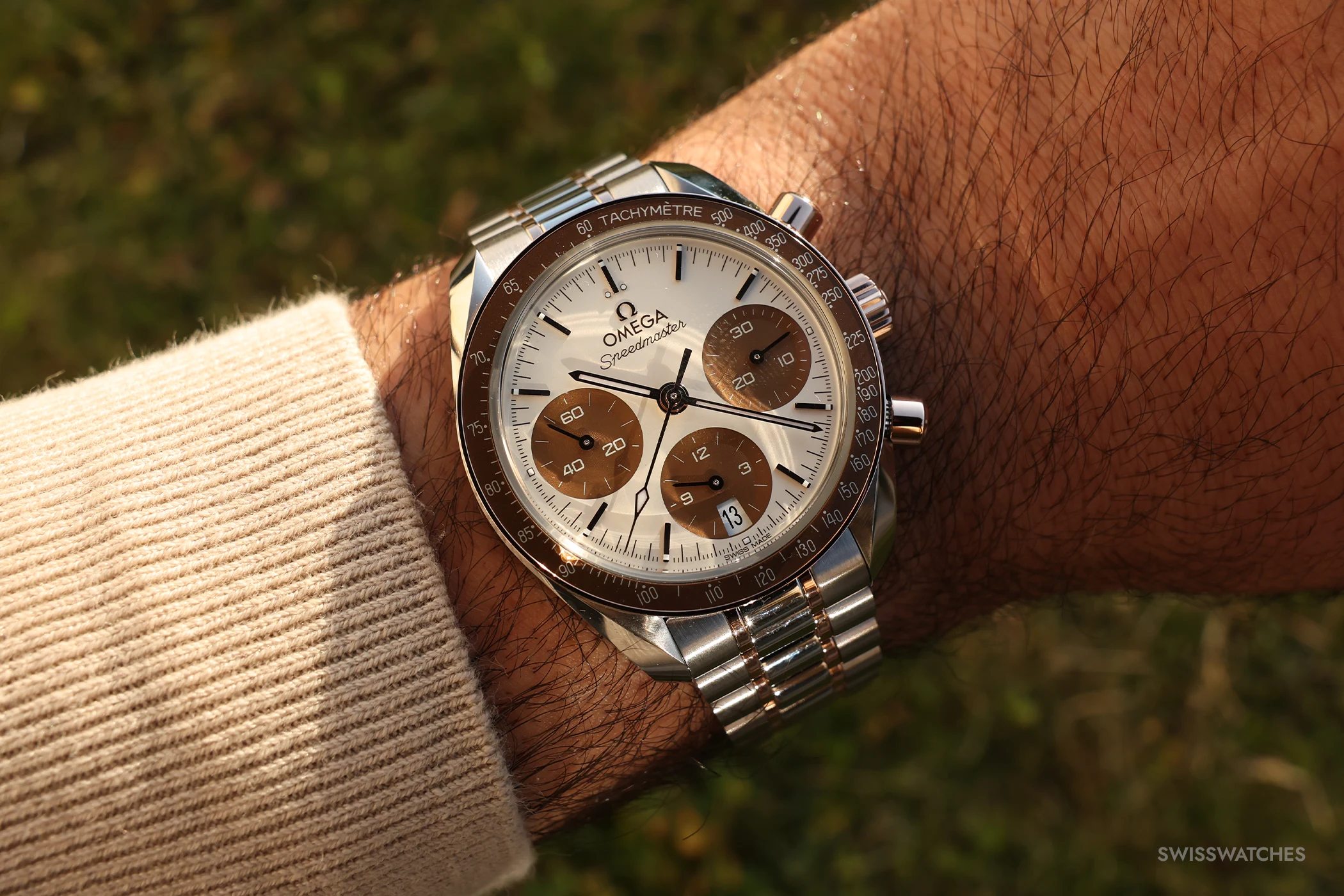
The most significant change is to the dial of the Speedmaster 38: the totalisers, which were previously set into the dial in an oval shape, are now round, whilst Omega has also reduced the amount of lettering. This may sound like a cosmetic change, but it alters the overall perception of the watch: Round counters appear much more uniform on the dial and better suited to its shape; the calmer typography and the extra space created above the hour markers provide a sense of breathing room, whilst the wider bezel lends the watch a more premium feel.
The ‘dot over ninety’ now also appears there: This small marker sits above the 90 on the tachymeter scale, as on early Speedmaster bezels, rather than next to the number, as on later versions. Among collectors, its position therefore originally served as a distinguishing feature of historic references. Omega has incorporated this detail into the Speedmaster 38 as a visible nod to the early Moonwatch models; it has no additional function.
The new five-link metal bracelet on the Omega Speedmaster 38, with its centre links finished in either a polished or brushed finish depending on the reference, also echoes the design language of the current Moonwatch. It is precisely this combination of round sub-dials, a more substantial bezel and a better-integrated visual mass that makes the Speedmaster 38 appear more mature and less ornate.
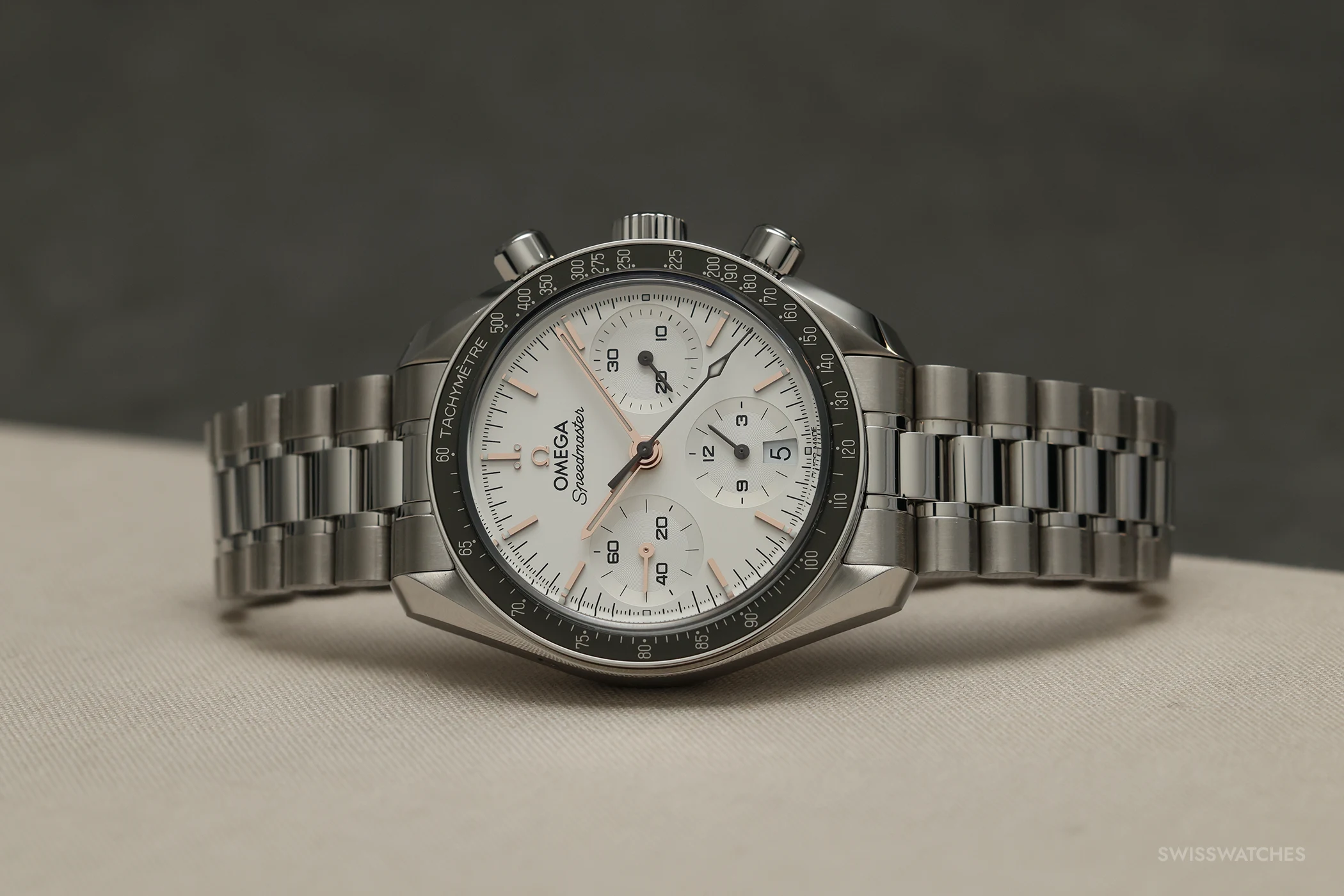
At the heart of this reorientation lies the black steel model: with its lacquered black dial, matching aluminium bezel, white Super-LumiNova and a deliberately date-free design, it comes closer to the look of the classic Moonwatch than any Speedmaster 38 before it. Nevertheless, it is not simply a scaled-down version of the large Speedmaster, as the 38-millimetre case, the different proportions (a quite thick 14.75mm height but at a nice 44.96mm lug-to-lug) and the automatic calibre lend it a character of its own. Accordingly, Omega has fitted it with the Co-Axial calibre 3332, which, amongst the seven new models, is reserved exclusively for this date-less version.
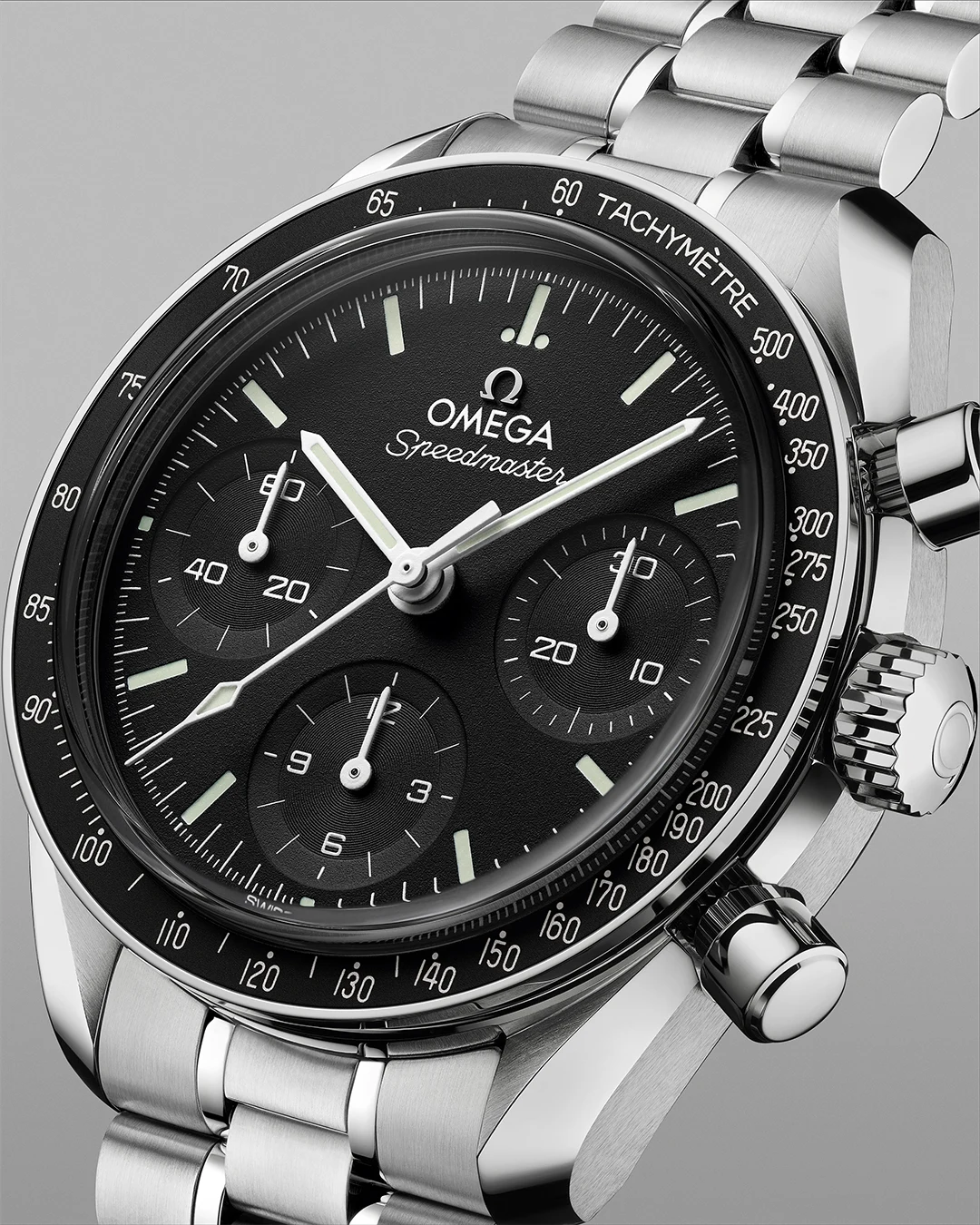
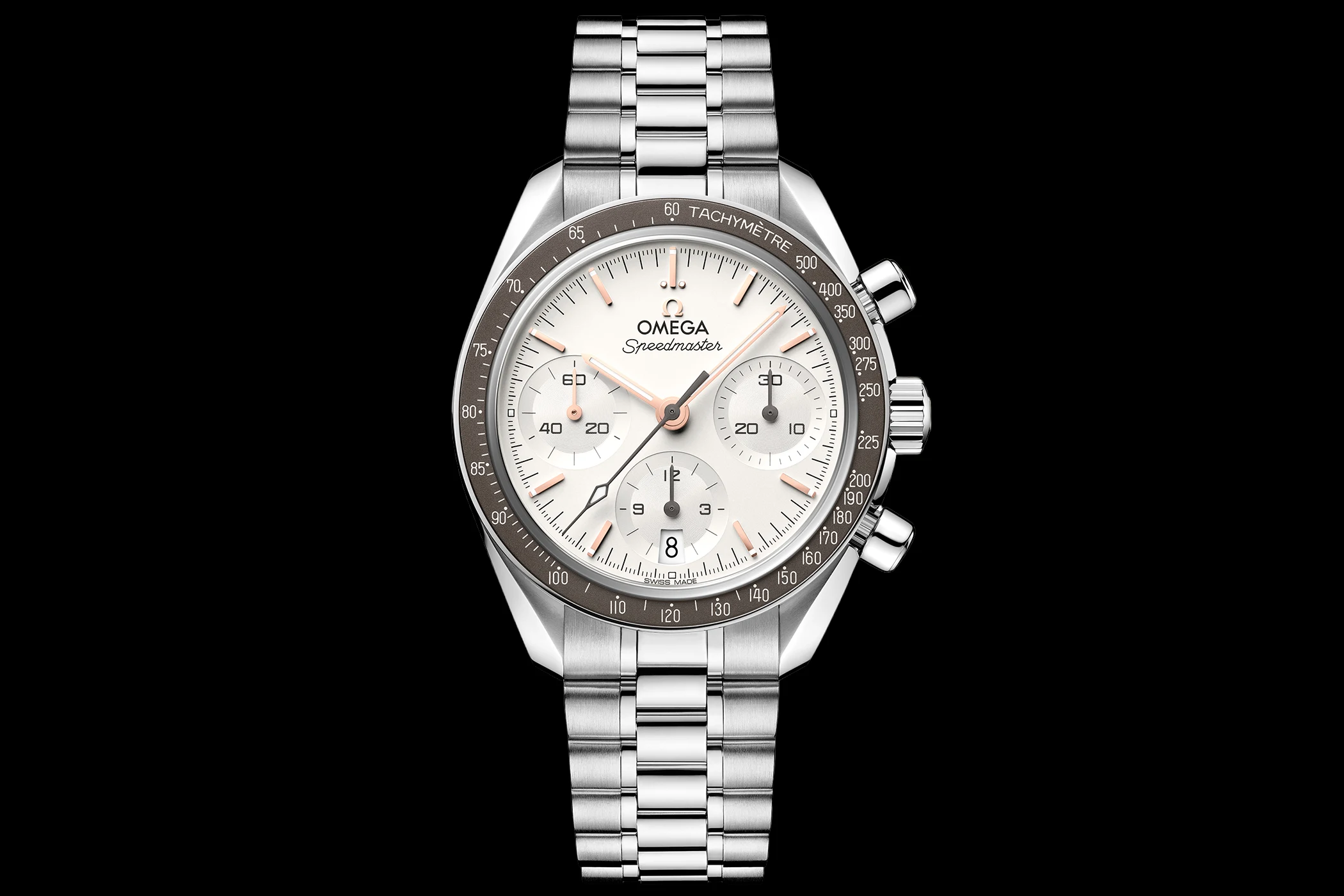
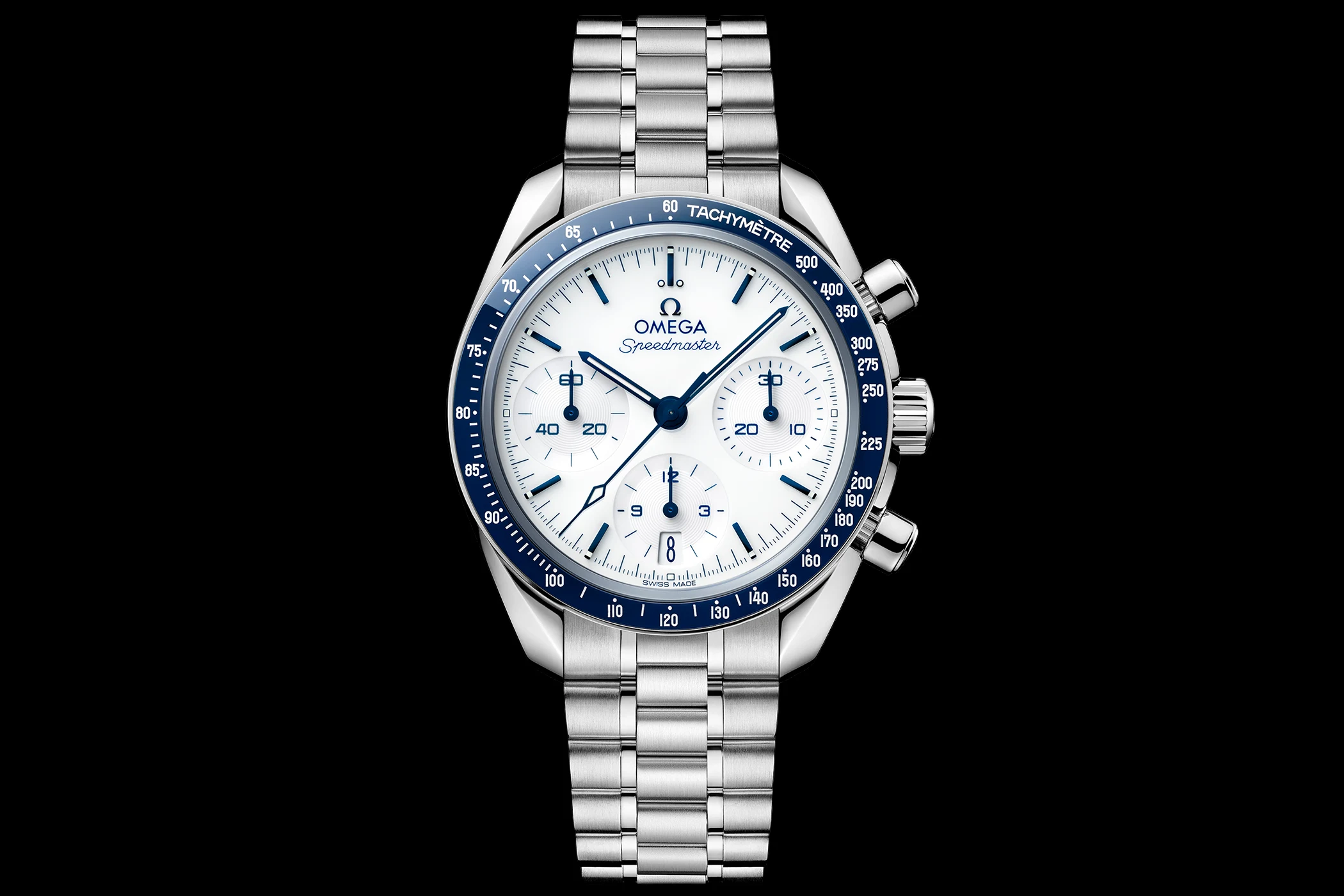
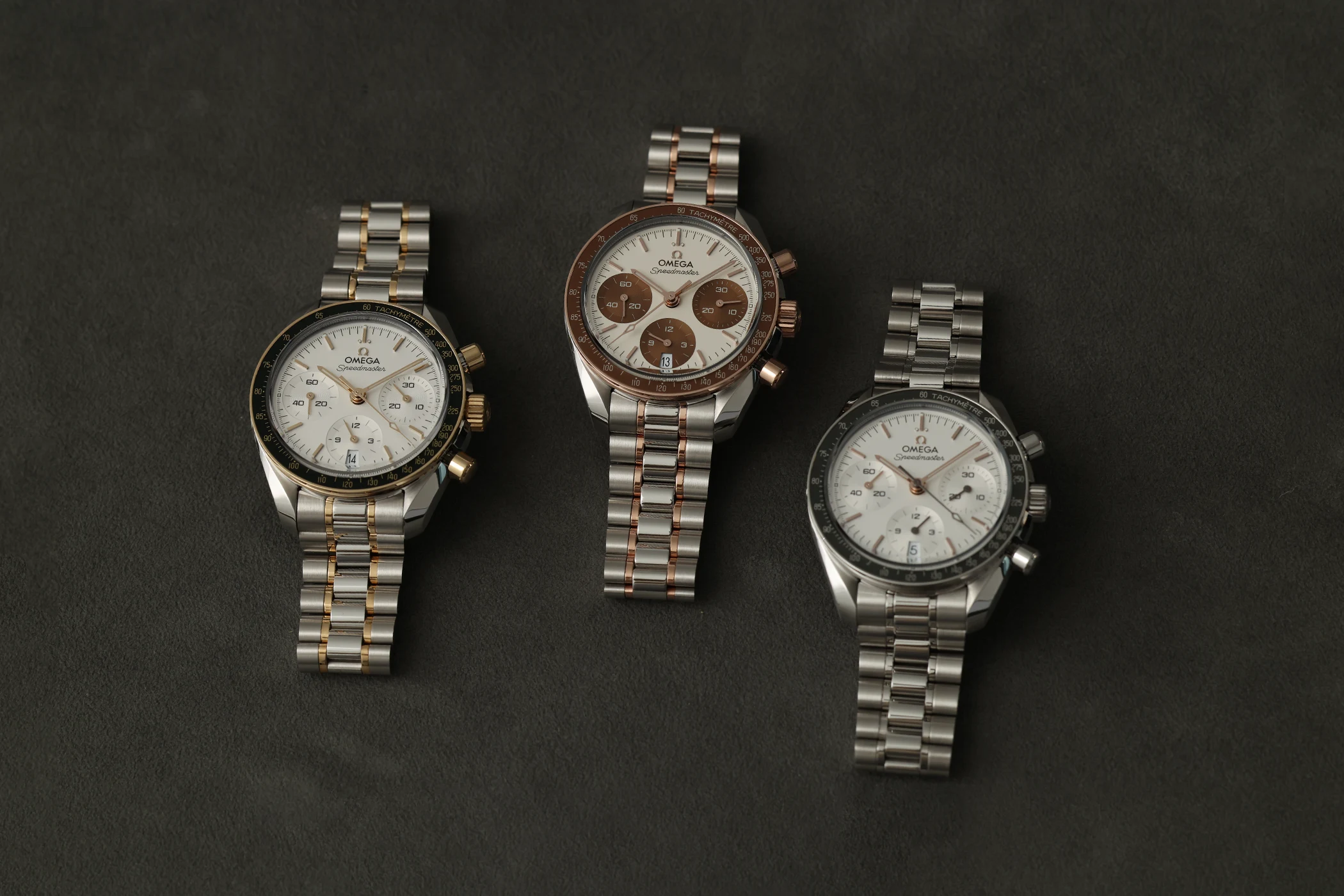
The other two steel models stand out primarily due to their colour scheme. The white-lacquered version combines blue-coated hands and hour markers with a blue ceramic bezel, whose tachymeter scale is made of white enamel. In the silver-coloured version, an opalescent, PVD-coated dial is paired with an aluminium bezel in a warm grey. The hands and hour markers are finished in the shade of Omega’s own patented rose gold, ‘Sedna Gold’, whilst the hands on the subsidiary dials are partly brown and partly Sedna Gold in colour.
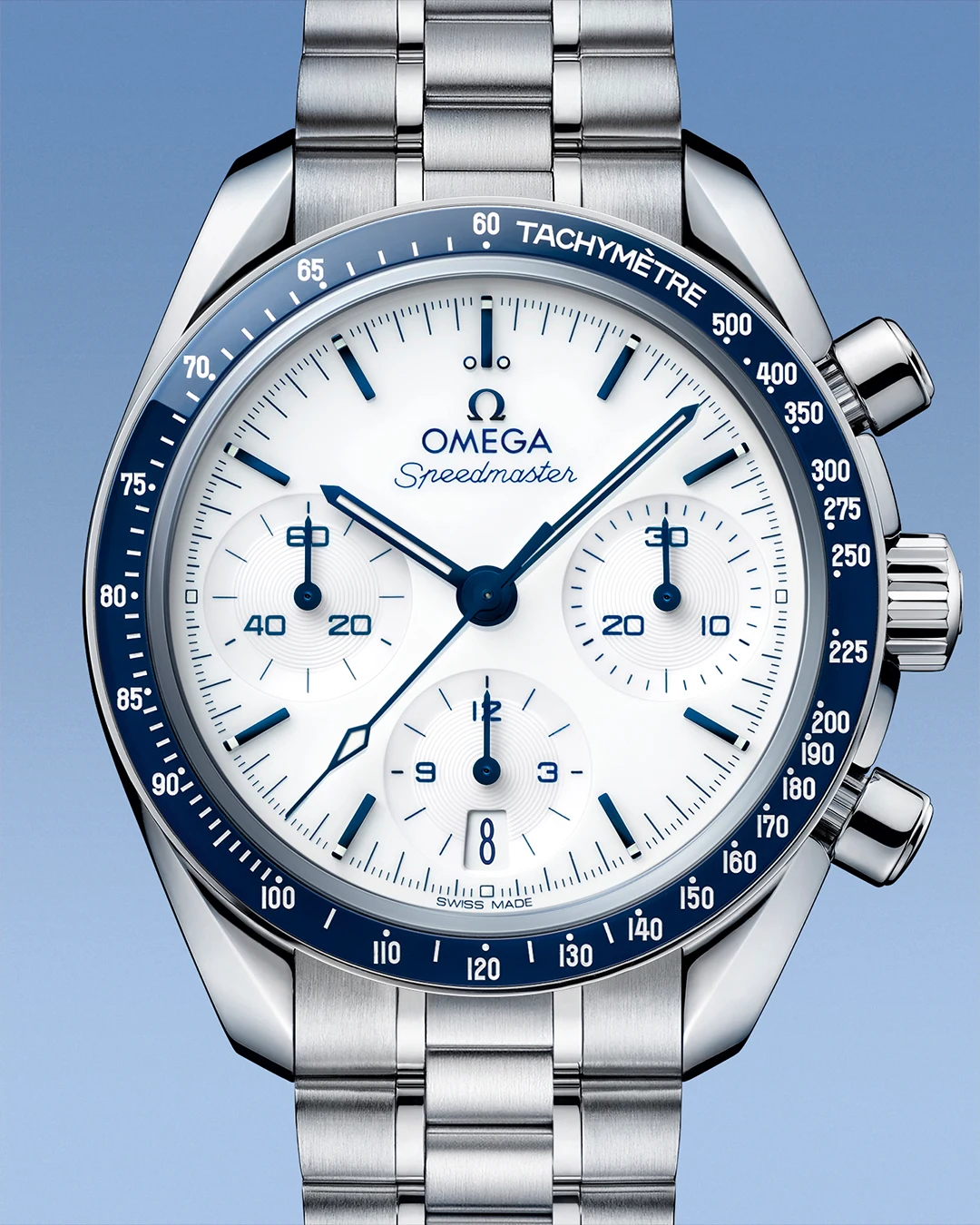
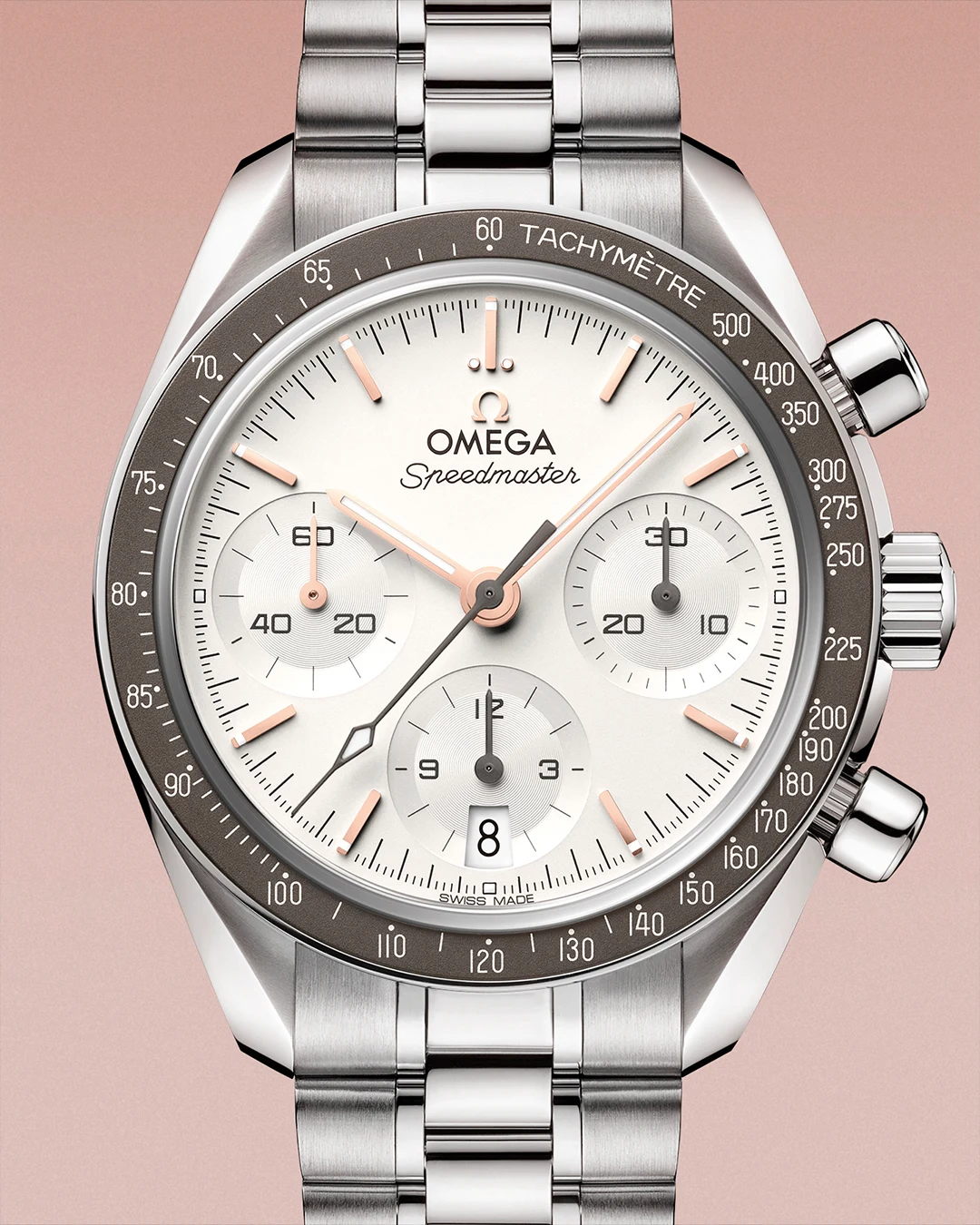
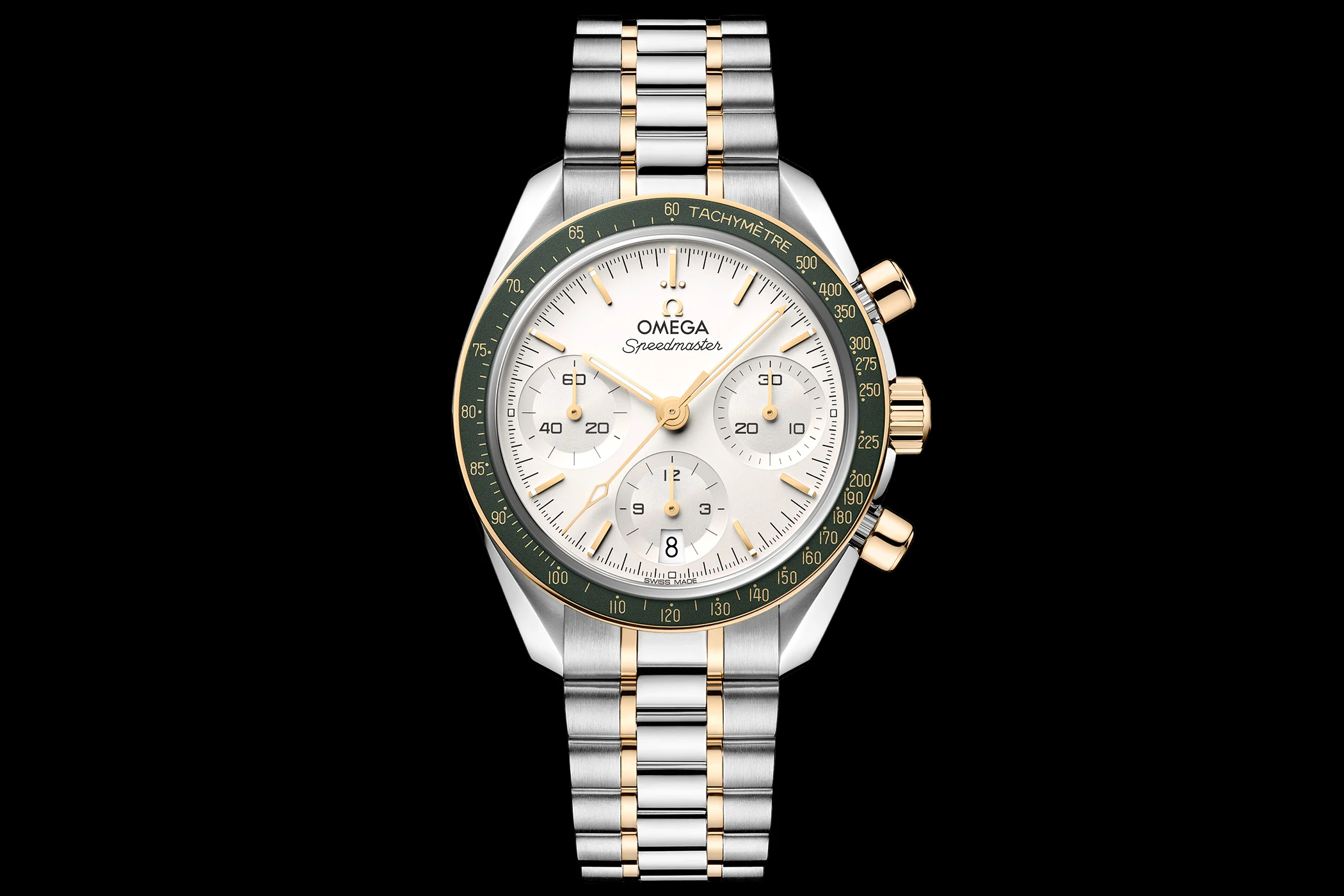
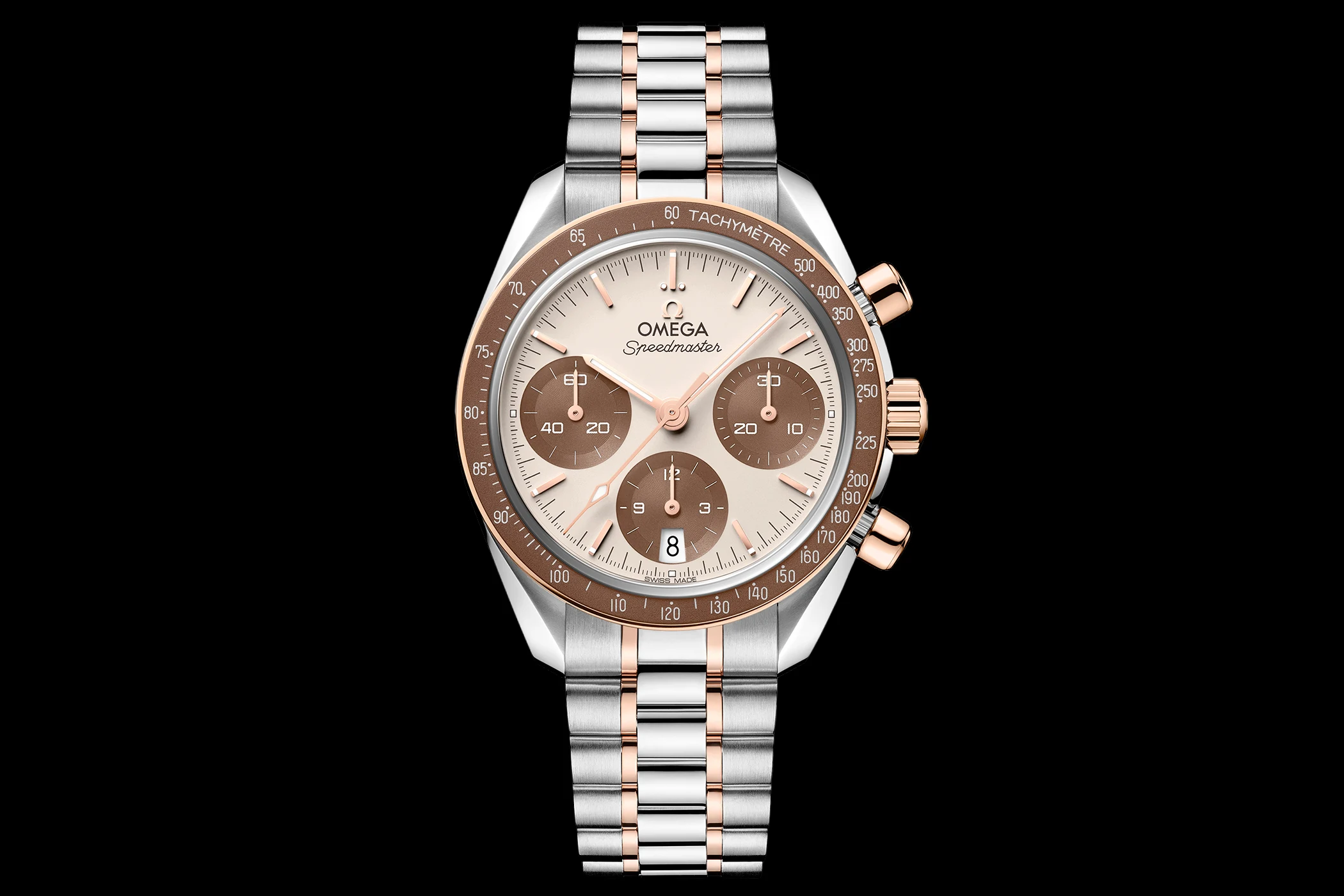
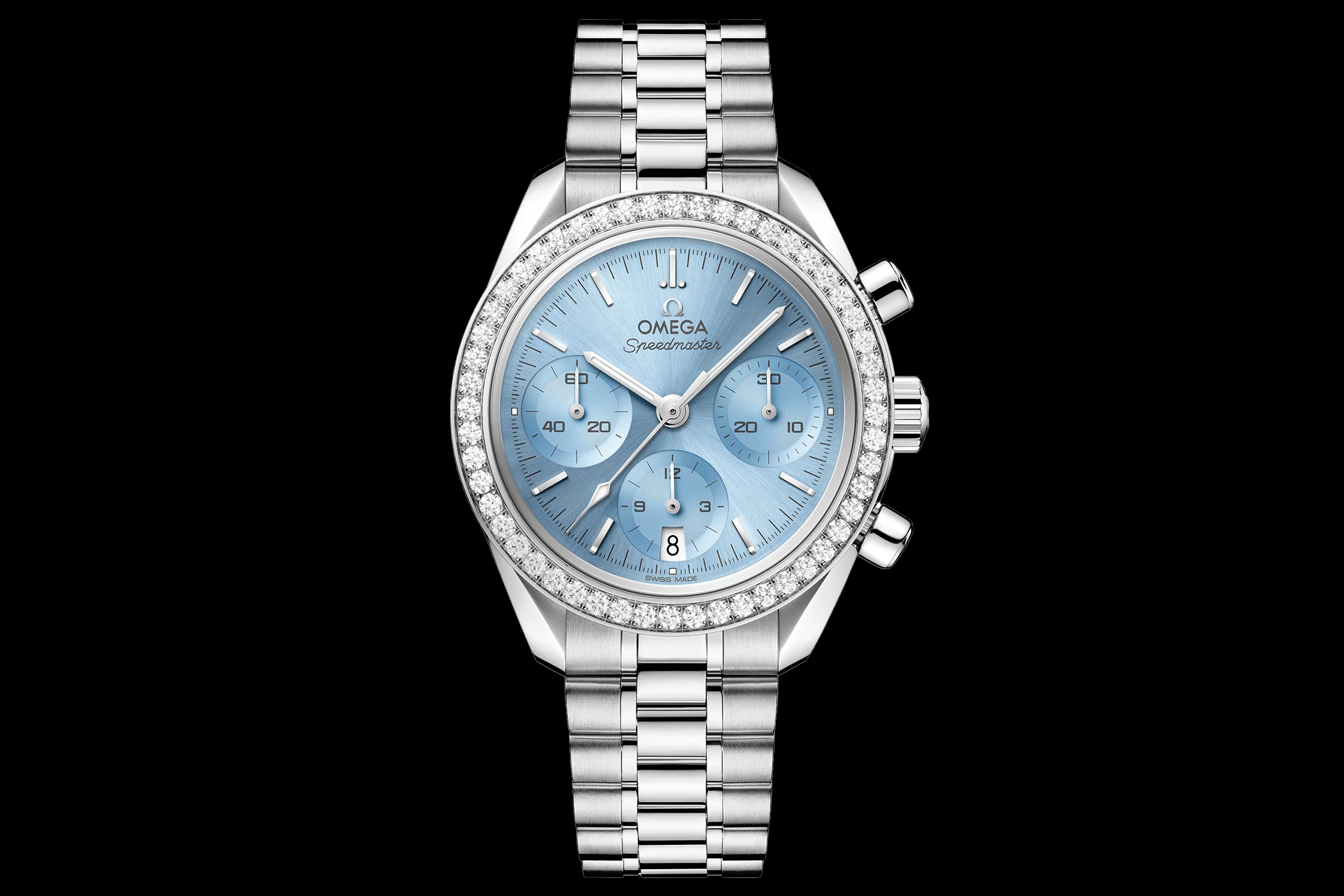
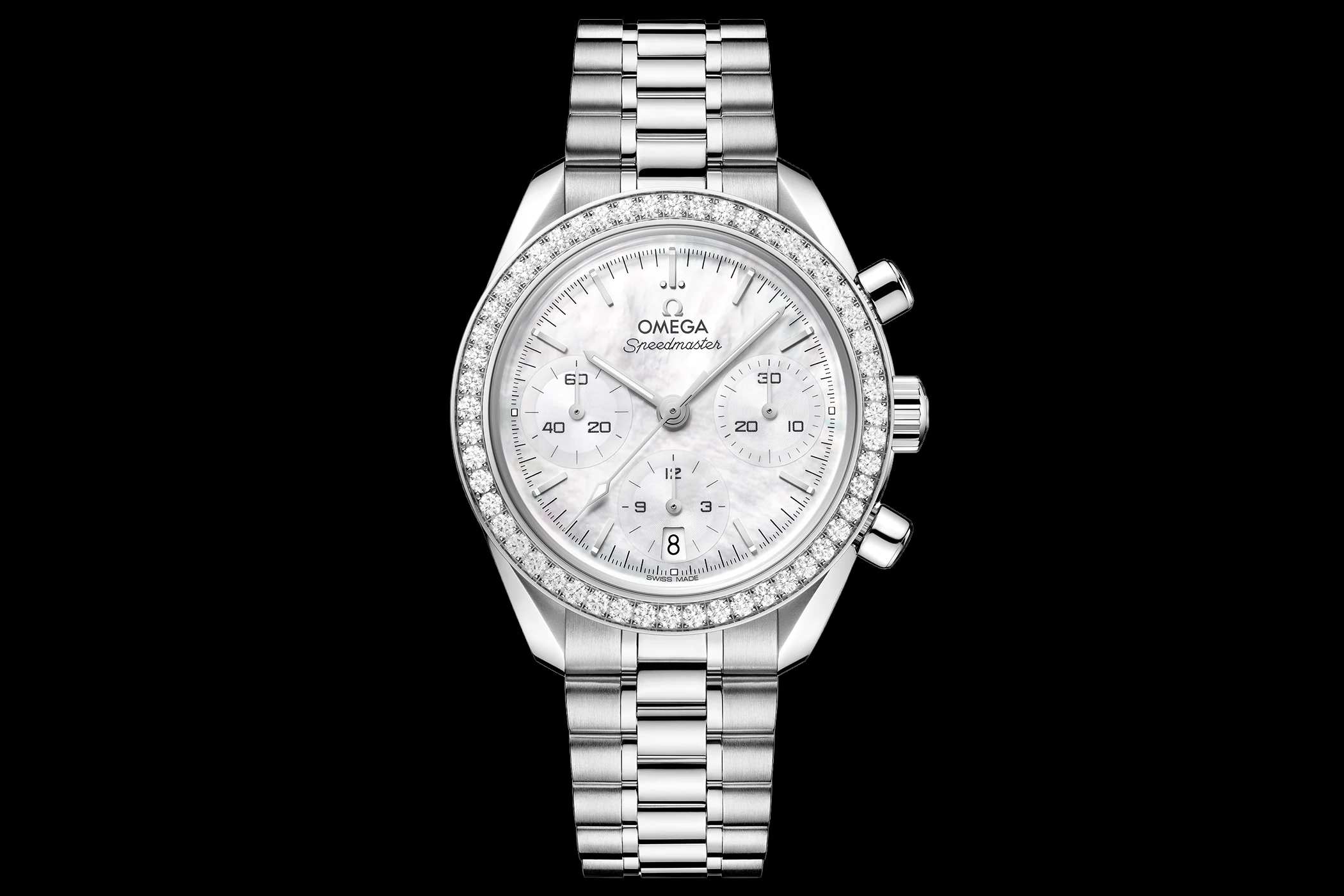
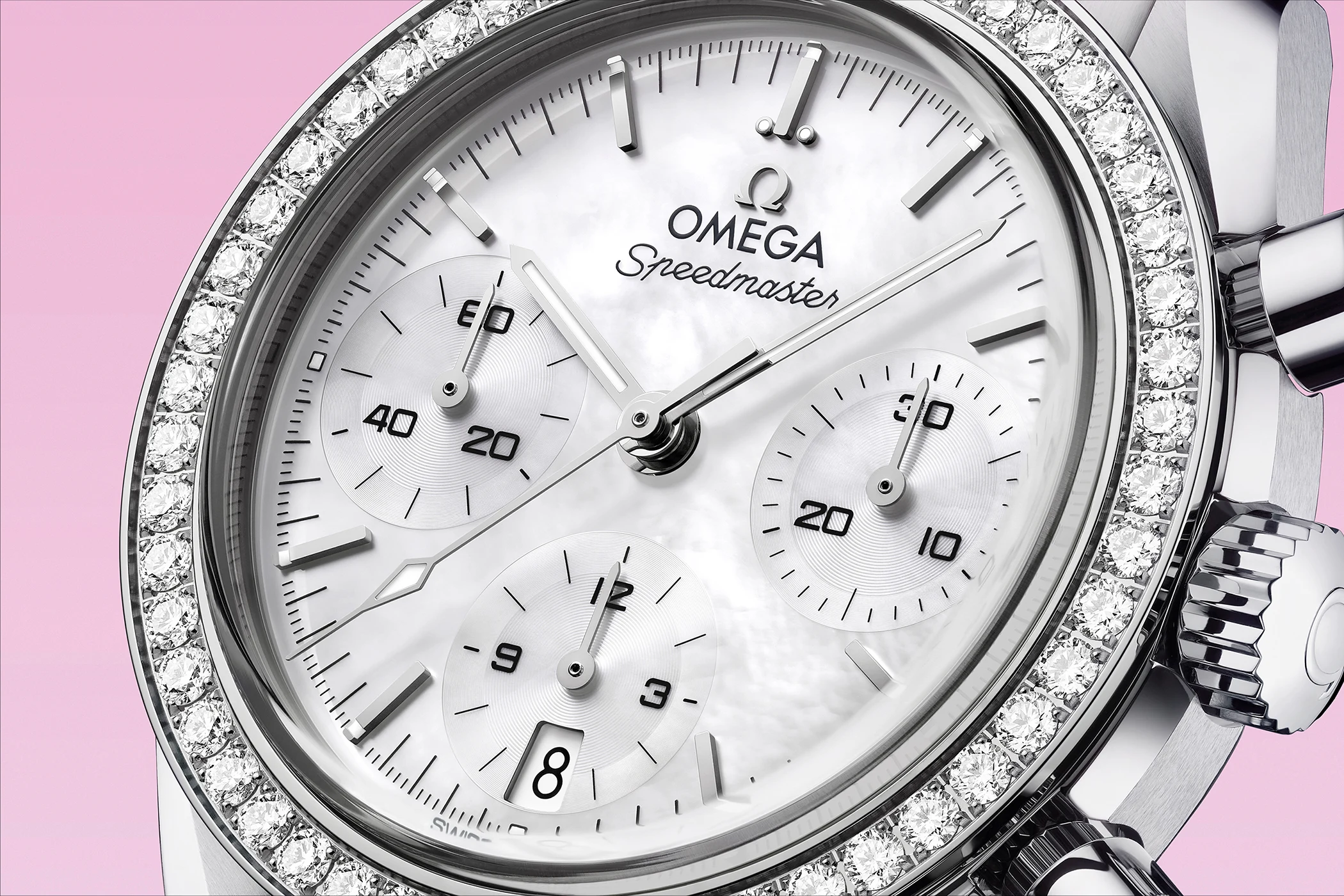
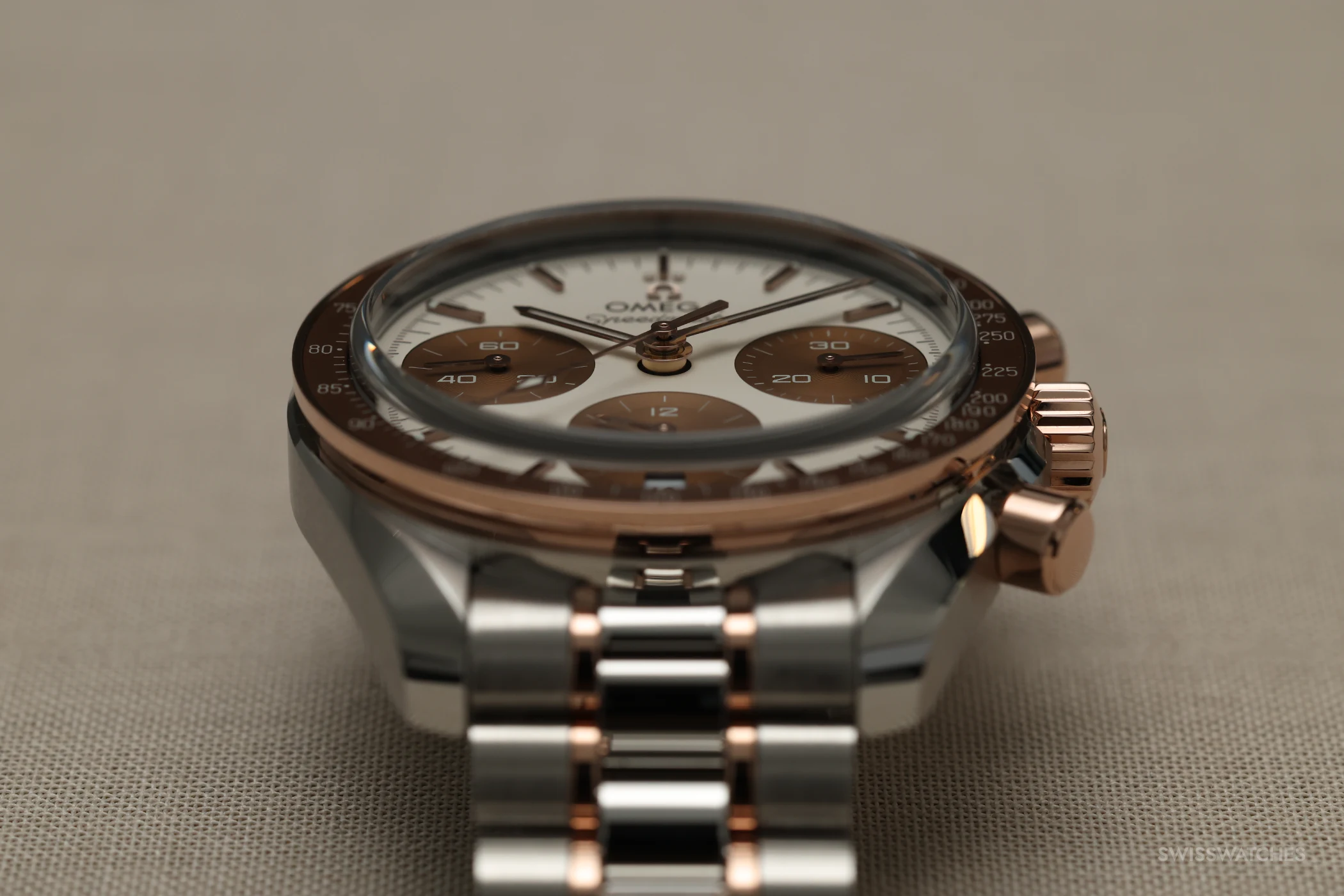
In the four remaining versions of the Omega Speedmaster 38, the functional aspect takes a back seat in favour of stronger contrasts in materials and colours. The first two-tone version combines Moonshine gold with a green aluminium ring, whilst the new ‘Cappuccino’ variant brings together Sedna gold, ivory and brown. There are also two models with diamond-set bezels: one with an ice-blue PVD-coated dial, the other with white mother-of-pearl. Each bezel is set with 52 diamonds (totalling 1.53 carats). The collection thus ranges from the understated black chronograph to significantly more decorative versions.
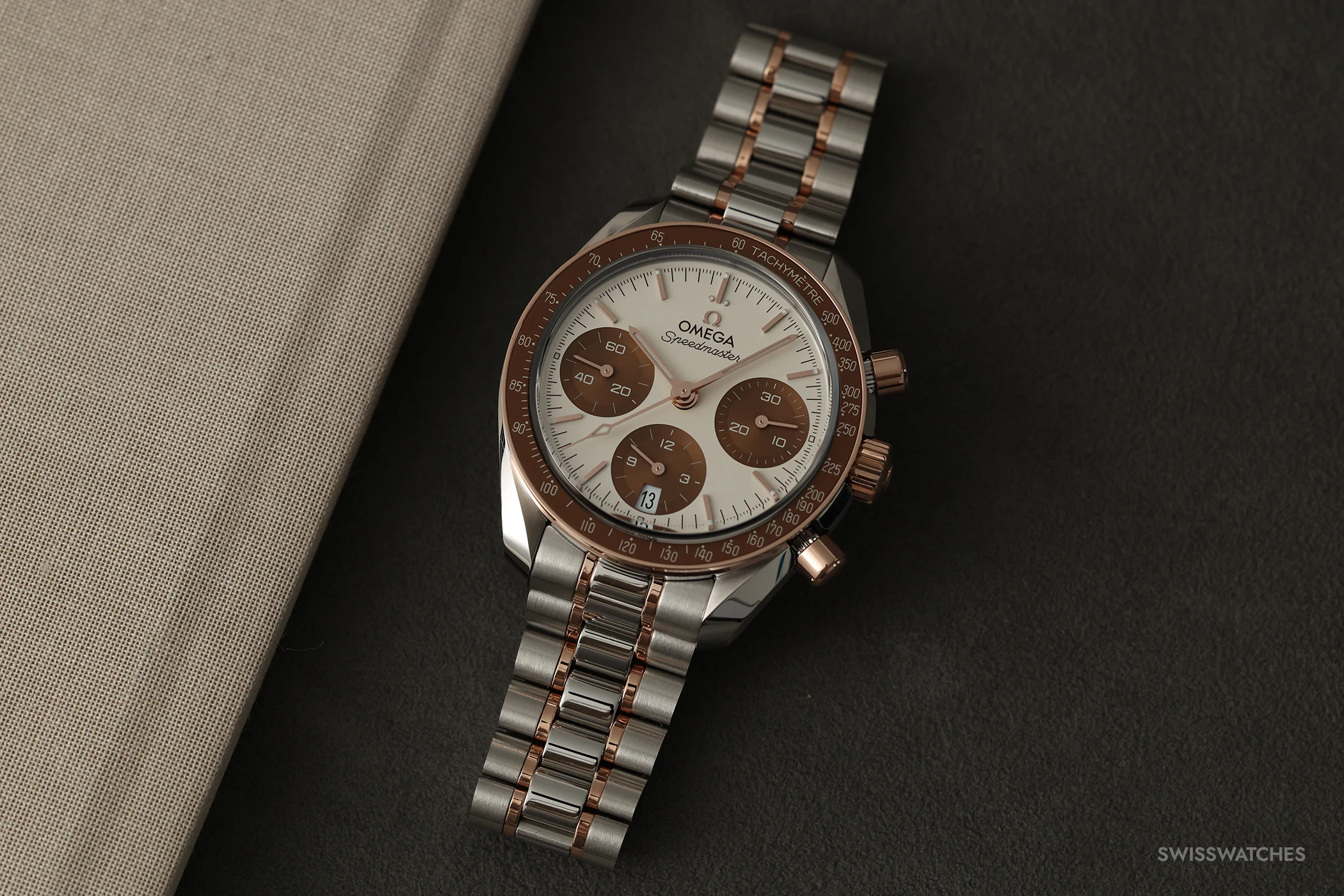
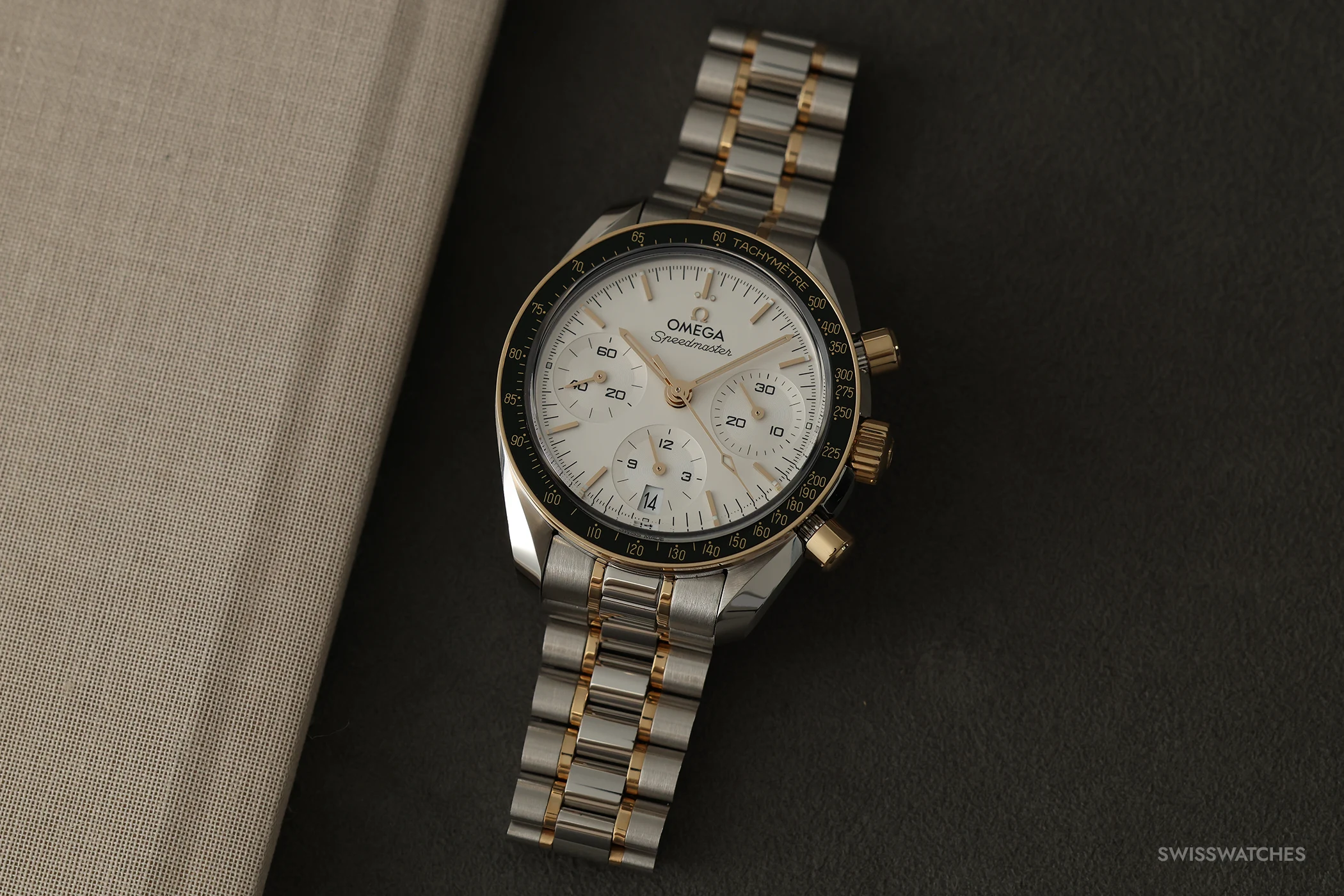
The variety of models broadens the choice, although the designs of the various models differ considerably in some respects. The black model therefore best embodies the newly established link to the Moonwatch.
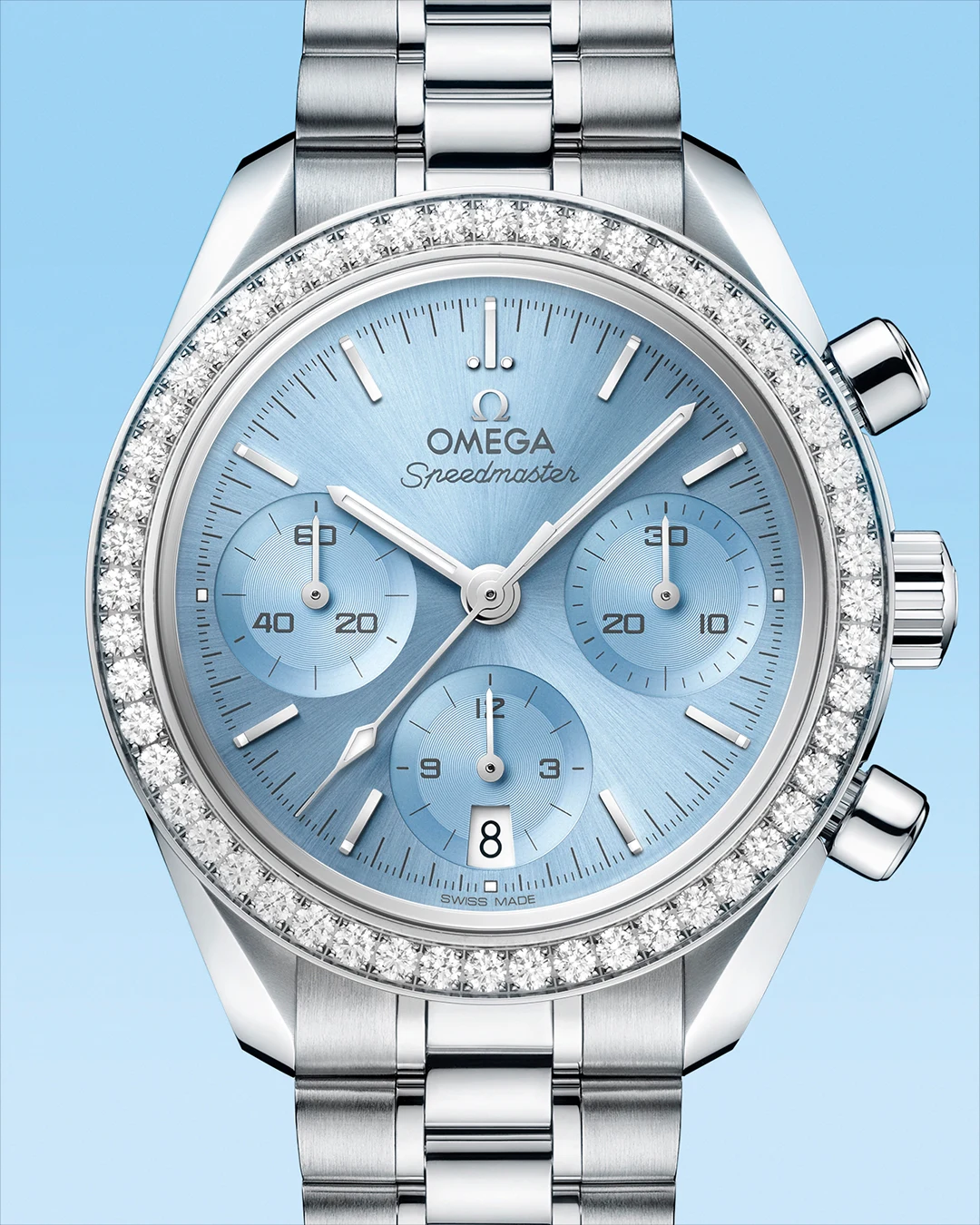
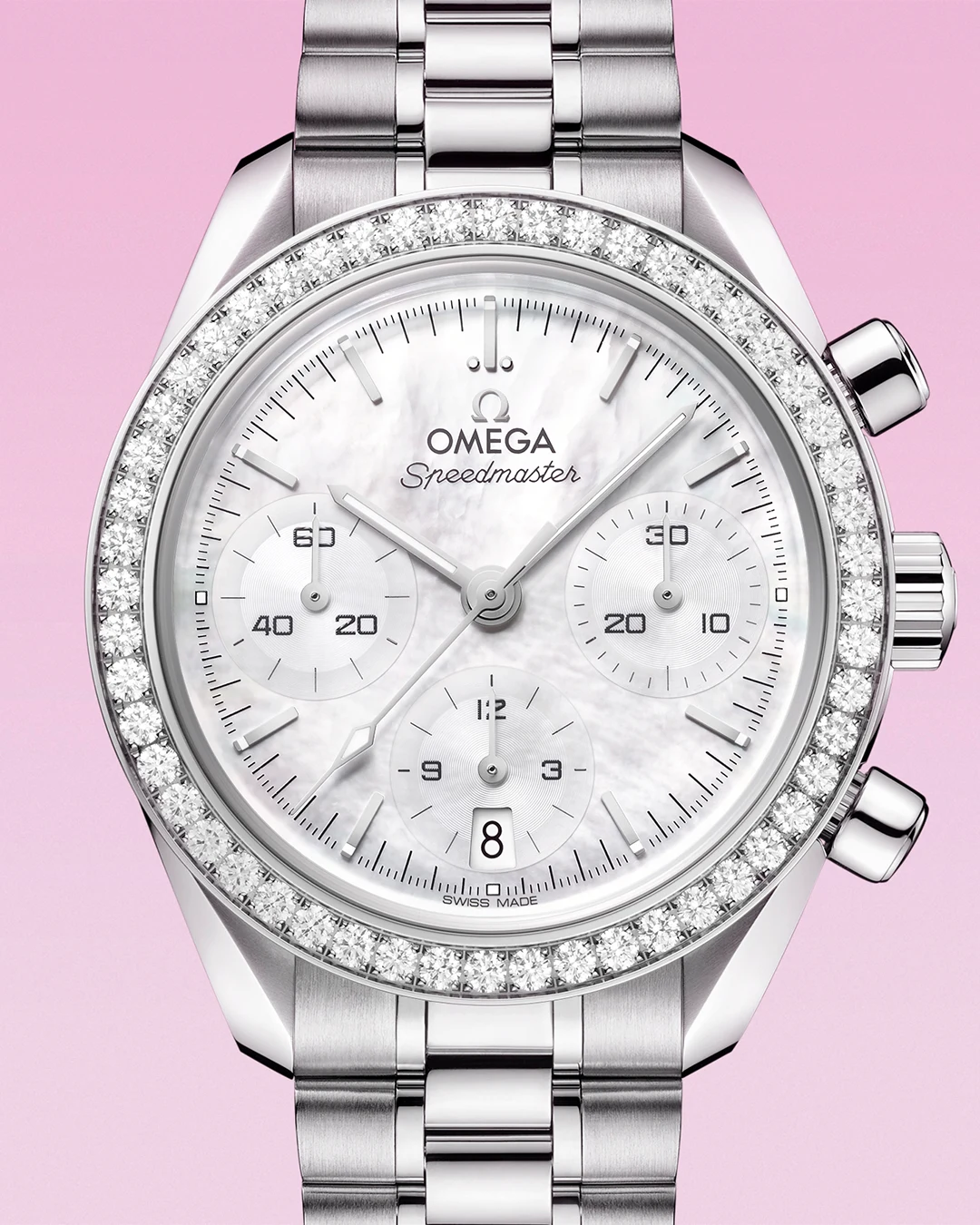
Six of the watches are powered by the well-known Co-Axial Calibre 3330, featuring a date window at the six o’clock position. The Speedmaster 38 runs at 4 hertz, offers a 52-hour power reserve and engages the chronograph’s stop function via a column wheel. With a free-sprung balance, Si14 silicon balance spring, Co-Axial escapement and COSC certification, Omega relies on a tried-and-tested technical package. The Calibre 3330, introduced in 2012, is certified as a chronometer by the COSC, but does not meet the Master Chronometer standard introduced later by Omega and METAS.
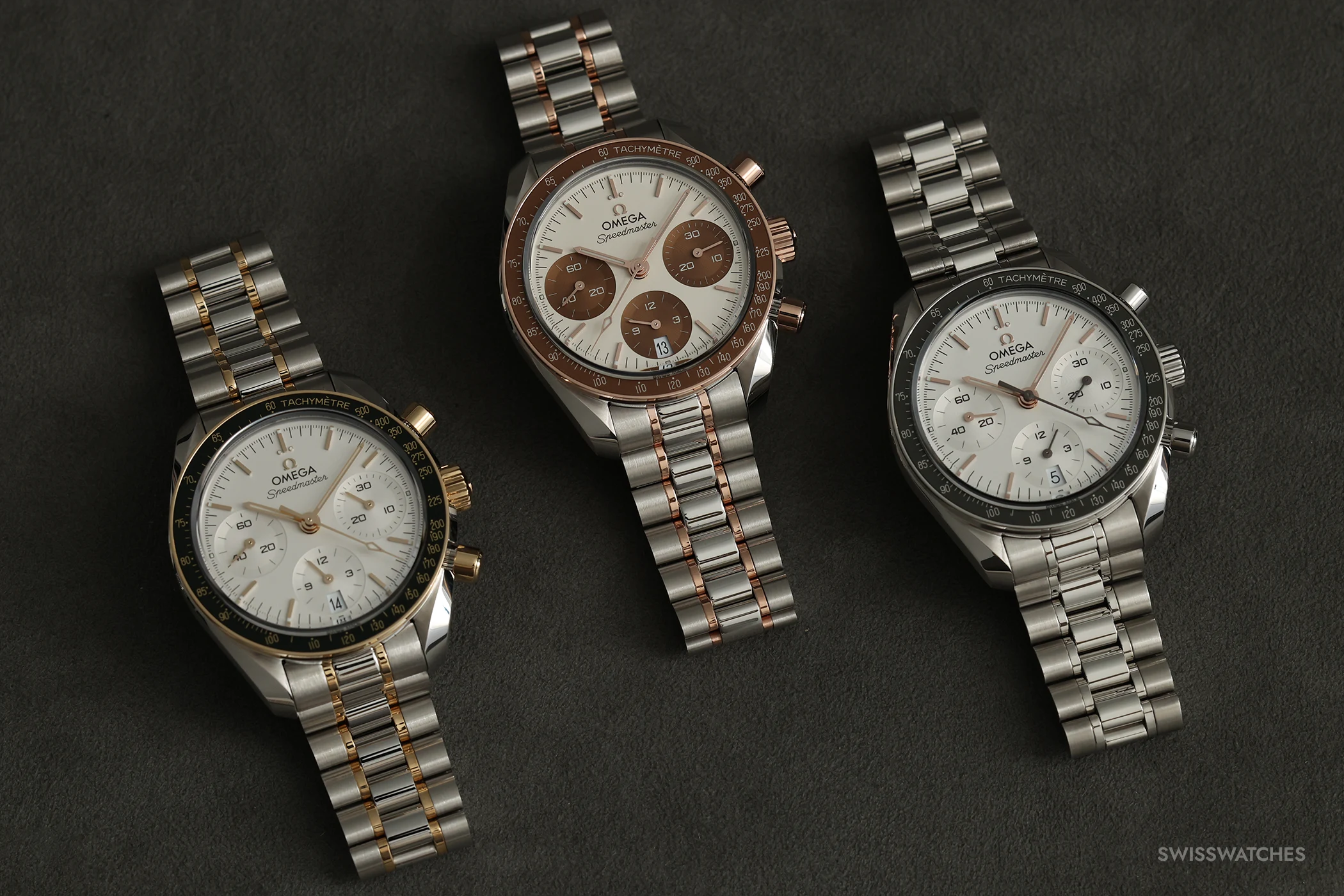
Unlike the six Omega Speedmaster 38 models with a date display, the black version is fitted with the date-less Co-Axial Calibre 3332. Omega has so far left open whether this is merely a date-less variant of the 3330 or a more extensive redesign. Neither the 3332 nor the 3330 has Master Chronometer certification; both calibres retain their COSC certification.
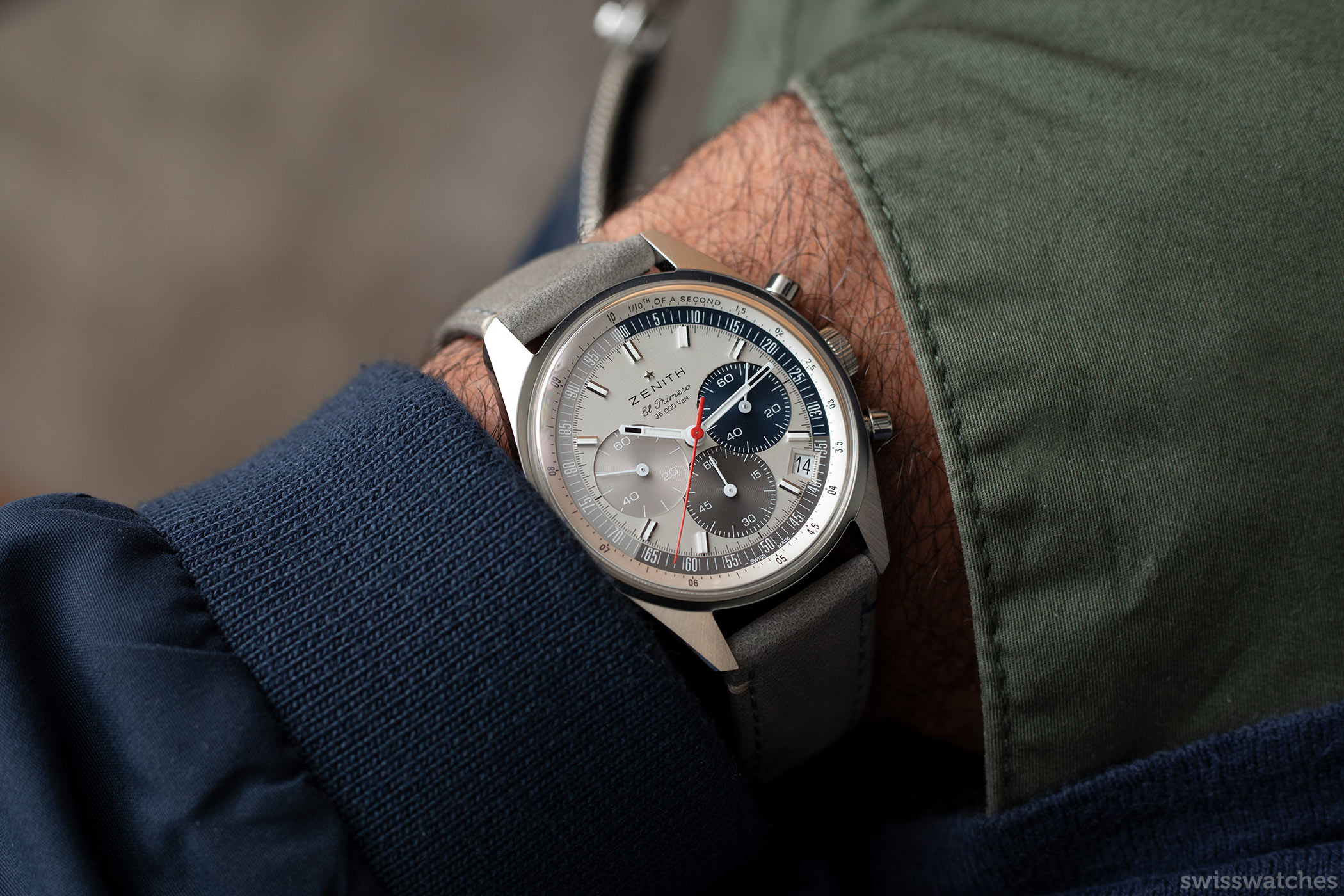
In the small field of compact luxury chronographs, Omega’s Speedmaster 38 faces two alternatives that are not entirely unknown. At 38 millimetres, the Zenith Chronomaster Original remains closely aligned with the 1969 A386. The height is 12.6 mm. Its automatic El Primero 3600 operates at 5 hertz and features a column wheel, displays tenths of a second and offers a 60-hour power reserve; it is water-resistant to 50 metres and the version on a leather strap costs 10,800 euros. Technically, the Zenith appears more progressive and is equally historically coherent; in everyday use, however, Omega offers a sportier overall look with the 100-metre water resistance – previously typical of the Speedmaster 38 – and the metal bracelet.
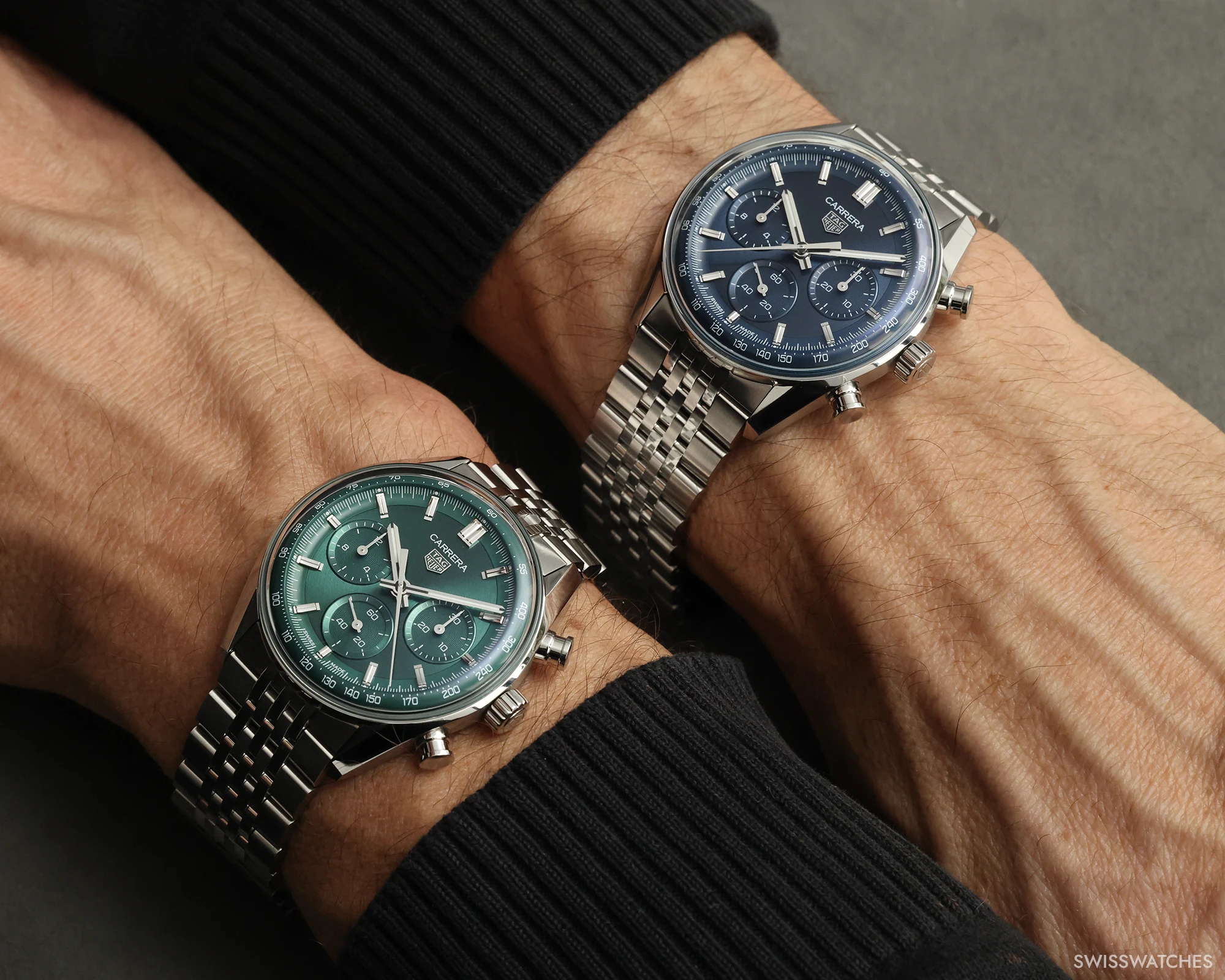
The TAG Heuer Carrera Chronograph Glassbox measures 39 millimetres in diameter and 13.9 millimetres in height, is water-resistant to 100 metres and costs 7,200 euros on a leather strap. Its automatic in-house calibre TH20-00 combines a column wheel and vertical clutch with an 80-hour power reserve, a frequency of 4 hertz and a date display. TAG Heuer thus offers the more modern technical specifications and the more affordable official entry-level model, whilst Omega offers a richer heritage, a wider range of materials and colour options, and, on request, a minimalist design without a date display.
In terms of price, the new Omega Speedmaster 38 starts at 6,300 euros for the black, date-less steel model. The silver-coloured version with a warm grey bezel costs 6,500 euros, whilst the white and blue steel version costs 6,800 euros. Omega is asking €11,300 for each of the two two-tone models – the version in Moonshine gold with a green bezel and the ‘Cappuccino’ version in Sedna gold. The models with diamond-set bezels represent the top end of the collection: the ice-blue version costs 11,900 euros, whilst the version with a white mother-of-pearl dial costs 12,700 euros.
This means that the three steel models are priced below the TAG Heuer Carrera Chronograph Glassbox, which costs 7,500 euros, whilst the two-tone and diamond-set variants, although more expensive than the Zenith Chronomaster Original in stainless steel priced at 10,800 euros, appear comparatively reasonably priced at between 11,300 and 12,700 euros, given the gold alloys and diamond settings used.
For Omega, the revamp of the Speedmaster 38 is far more than just a model update. It opens up the world of the Speedmaster to people who find 42 millimetres too imposing on the wrist or who prefer an automatic calibre for everyday wear. The black model is likely to appeal particularly to traditional Speedmaster fans, as it translates the familiar black-and-white aesthetic and lack of a date display into a more compact, automatic format. At the same time, the Speedmaster 38 remains clearly distinct from the hand-wound Moonwatch thanks to its movement architecture, its colour variants and its distinctive case.
From a design perspective, the new nod to the Moonwatch is therefore a positive development: it lends a previously somewhat indecisive range greater historical credibility than before and gives it a clear focal point. Technically, however, there remains a reservation, as the visibly modernised case continues to be powered predominantly by a tried-and-tested, but not METAS-certified, calibre family. Omega has not, therefore, scaled down the large Moonwatch to 38 millimetres, but has instead adapted the existing Speedmaster 38 to contemporary tastes. The most significant change, however, does not concern the size, but rather the clearer positioning and the concept behind what the Omega Speedmaster 38 aims to be.