Why do brands such as Parmigiani Fleurier, Bulgari and Patek Philippe rely on micro-rotors? A look at their history, design and physical limitations.
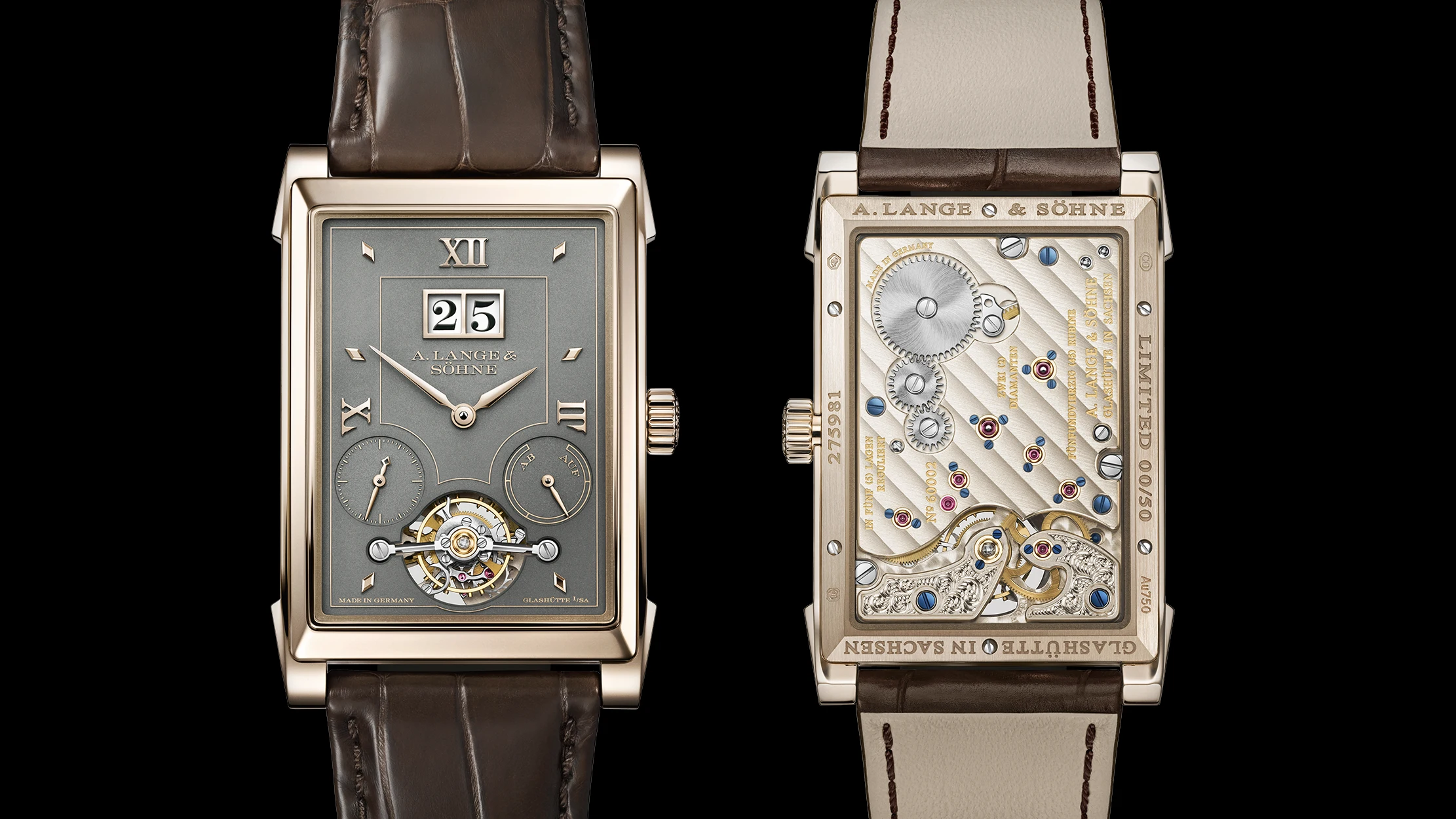
The A. Lange & Söhne Cabaret Tourbillon was the world’s first wristwatch with a stop-seconds mechanism for a tourbillon when it was launched in 2008. After five years, it now returns in Honeygold and in a limited edition of 50 pieces.
Sometimes, progress lies not in motion, but in stillness. This was precisely the horological significance of the Cabaret Tourbillon by A. Lange & Söhne in 2008: for the first time, a tourbillon in a wristwatch could be stopped to the exact second. The model now returns in a version limited to 50 pieces, crafted from Honeygold – with the rectangular architecture of the original Cabaret, a three-part dial and a case made from Honeygold, A. Lange & Söhne’s proprietary gold alloy. In this article, we take a closer look at the tourbillon stop-seconds mechanism, the calibre L042.1 and the defining features of the A. Lange & Söhne Cabaret Tourbillon Honeygold.
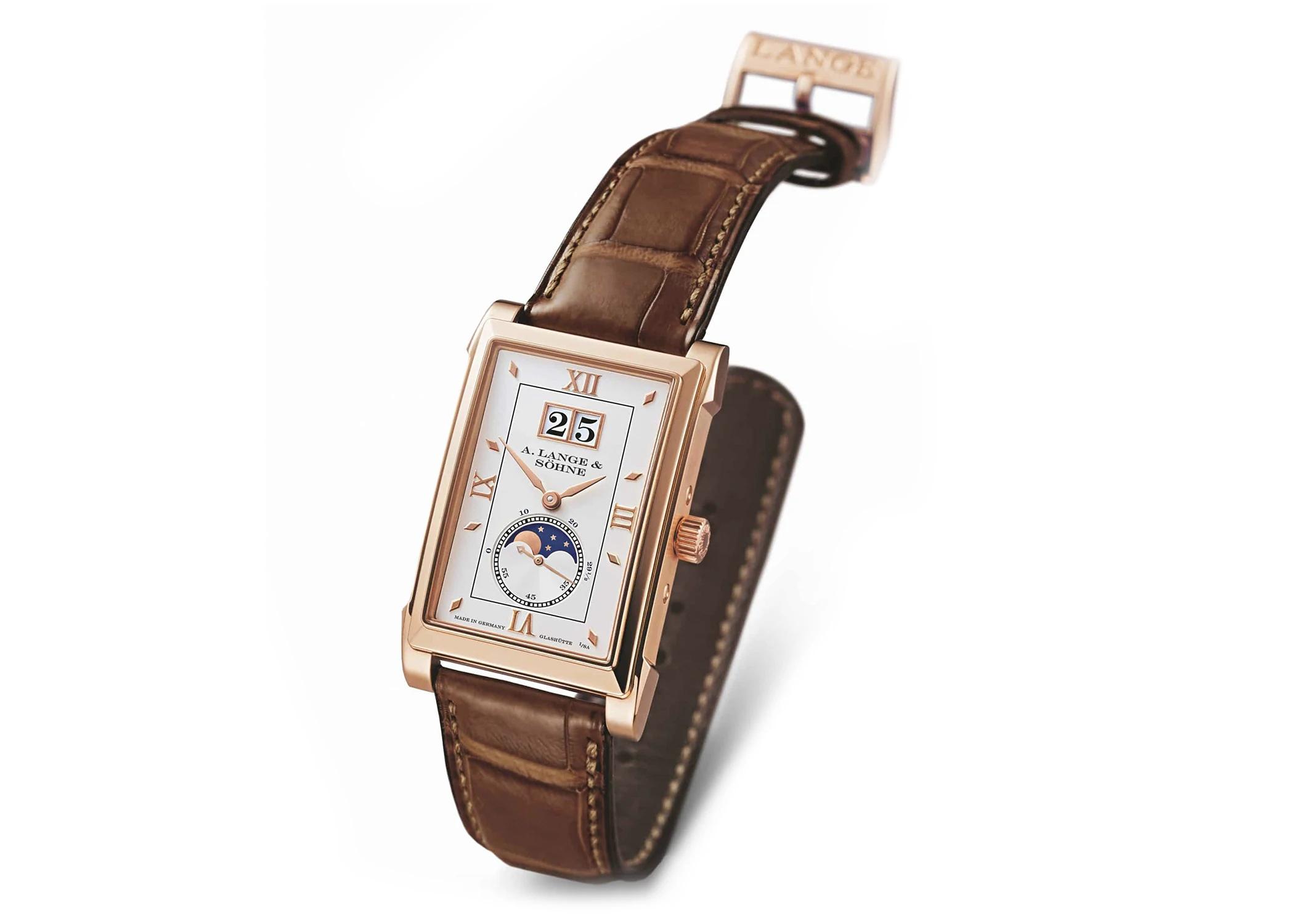
When A. Lange & Söhne introduced the Cabaret in 1997, it could be seen as a genuine exception within the manufacture’s largely round product portfolio: not only was it Lange’s first truly rectangular watch – not to be confused with the Arkade of 1994, which featured more rounded corners – but, with “Cabaret”, it also bore an unusually playful name for a brand shaped by Saxon self-understanding and responsible for putting Glashütte back on the world map of watchmaking.
The model reached the height of its technical significance in 2008, when the manufacture presented the Cabaret Tourbillon, the world’s first watch with a stop-seconds mechanism for the tourbillon. This was of particular horological importance because the mechanism patented by Lange at the time made it possible to stop the tourbillon at any moment – that is, in any oscillation phase of the balance and in any position of the cage – by means of a stop spring. Only then did it become possible to set the time display of the watch to the exact second.
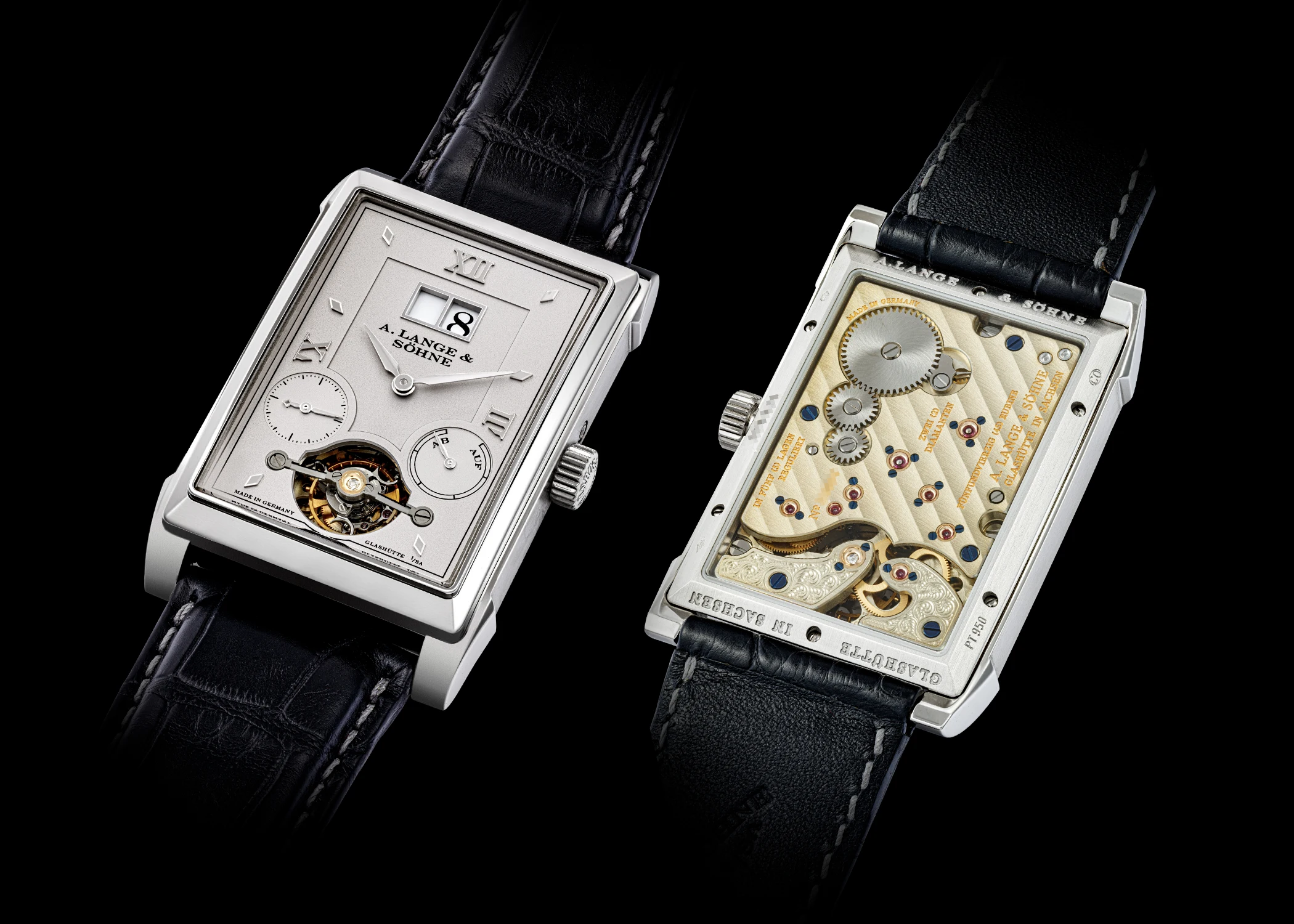
Credit © Christie’s
At first, it may seem surprising that such a tourbillon with a stop-seconds function was only realised in 2008, more than 200 years after the invention of the tourbillon through Abraham-Louis Breguet’s patent application in 1801 – after all, the tourbillon is considered one of watchmaking’s most prestigious mechanisms.
The reason lay in a fundamental horological challenge: mechanically stopping the considerable mass of the entire tourbillon cage from its running position and from within the movement itself. The problem? If the complete tourbillon cage were stopped, the balance would swing to a halt, eventually lose its energy and could only be set in motion again by an external impulse – an unsatisfactory horological solution, and one that was soon discarded.
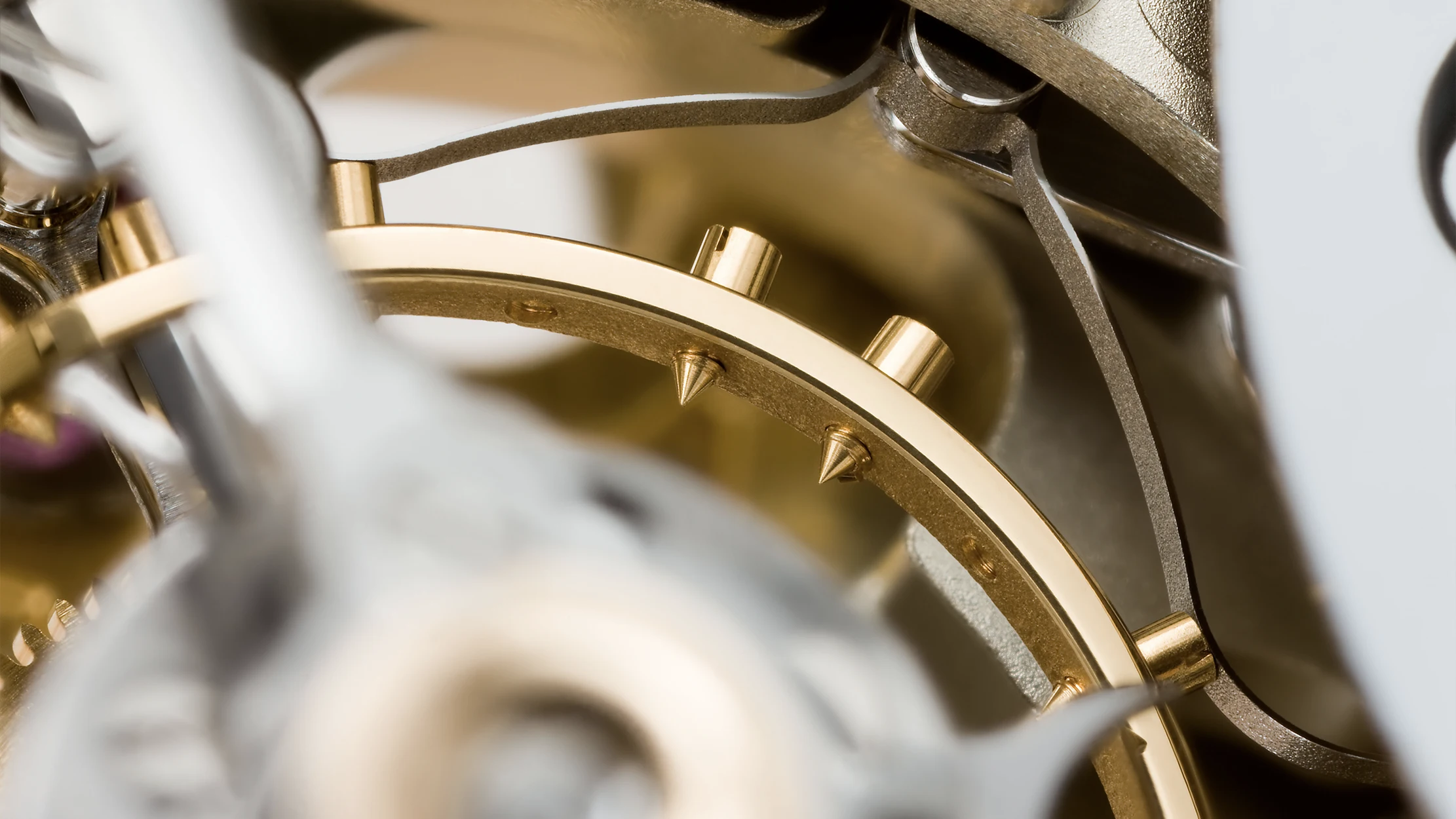
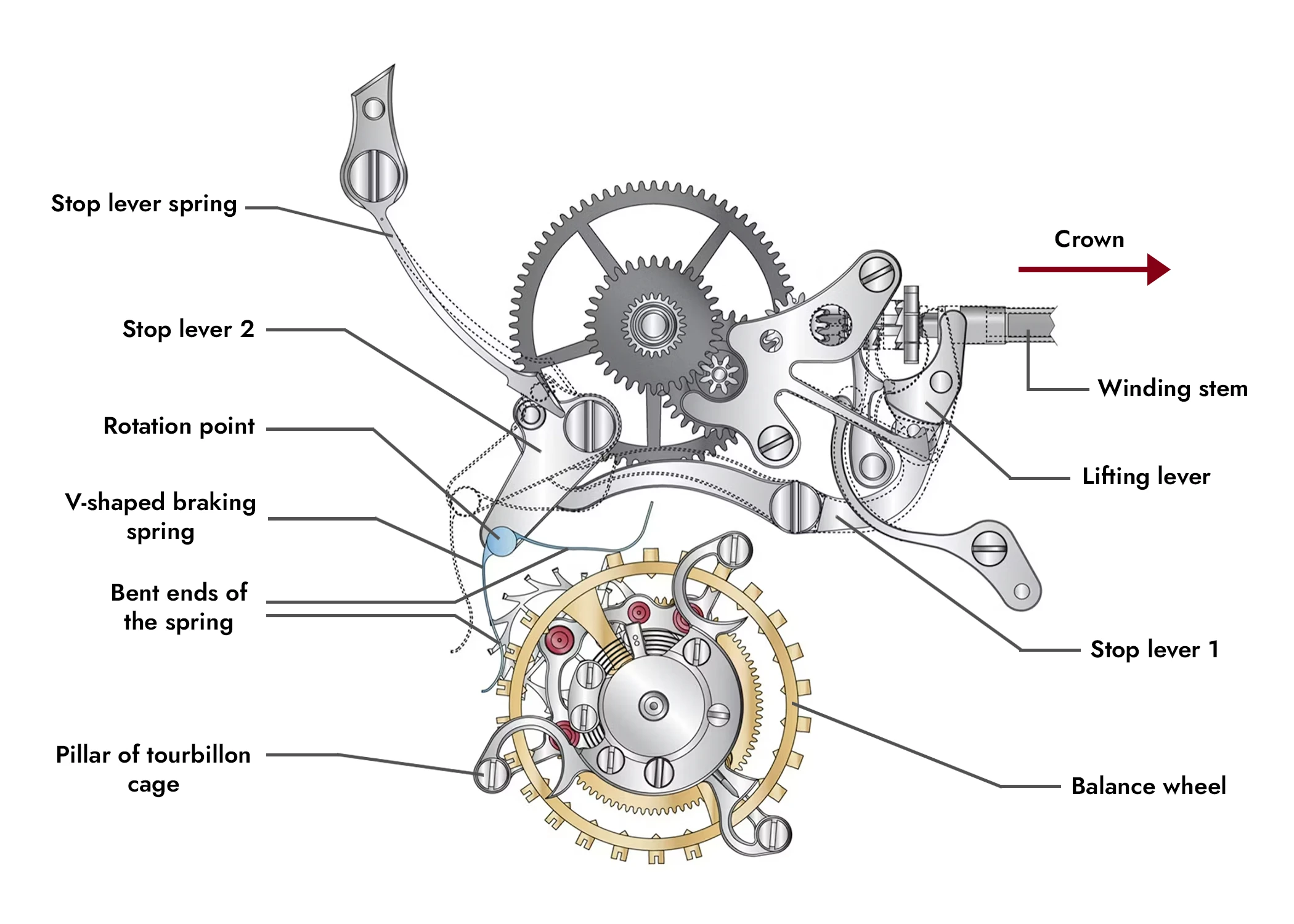
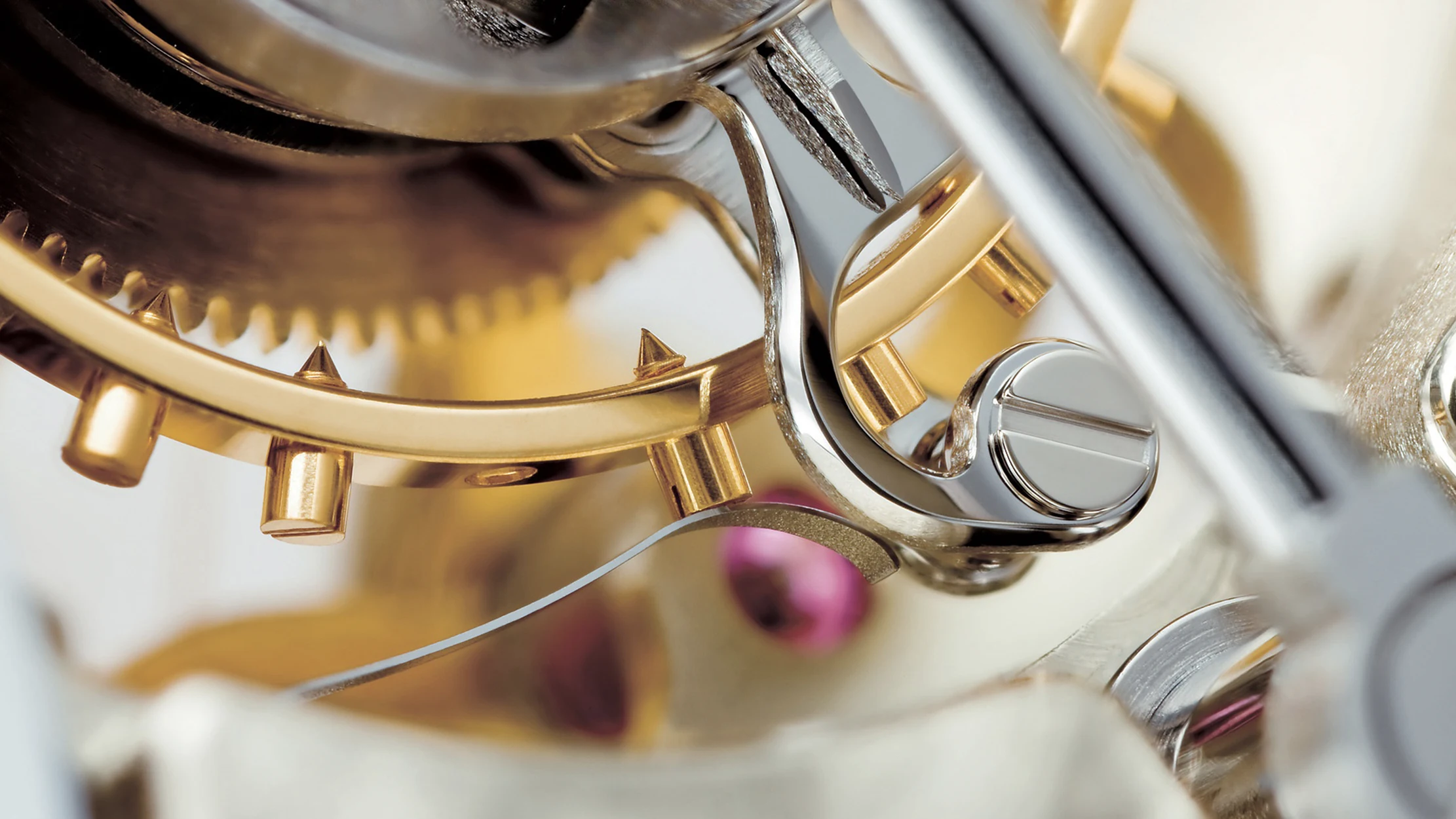
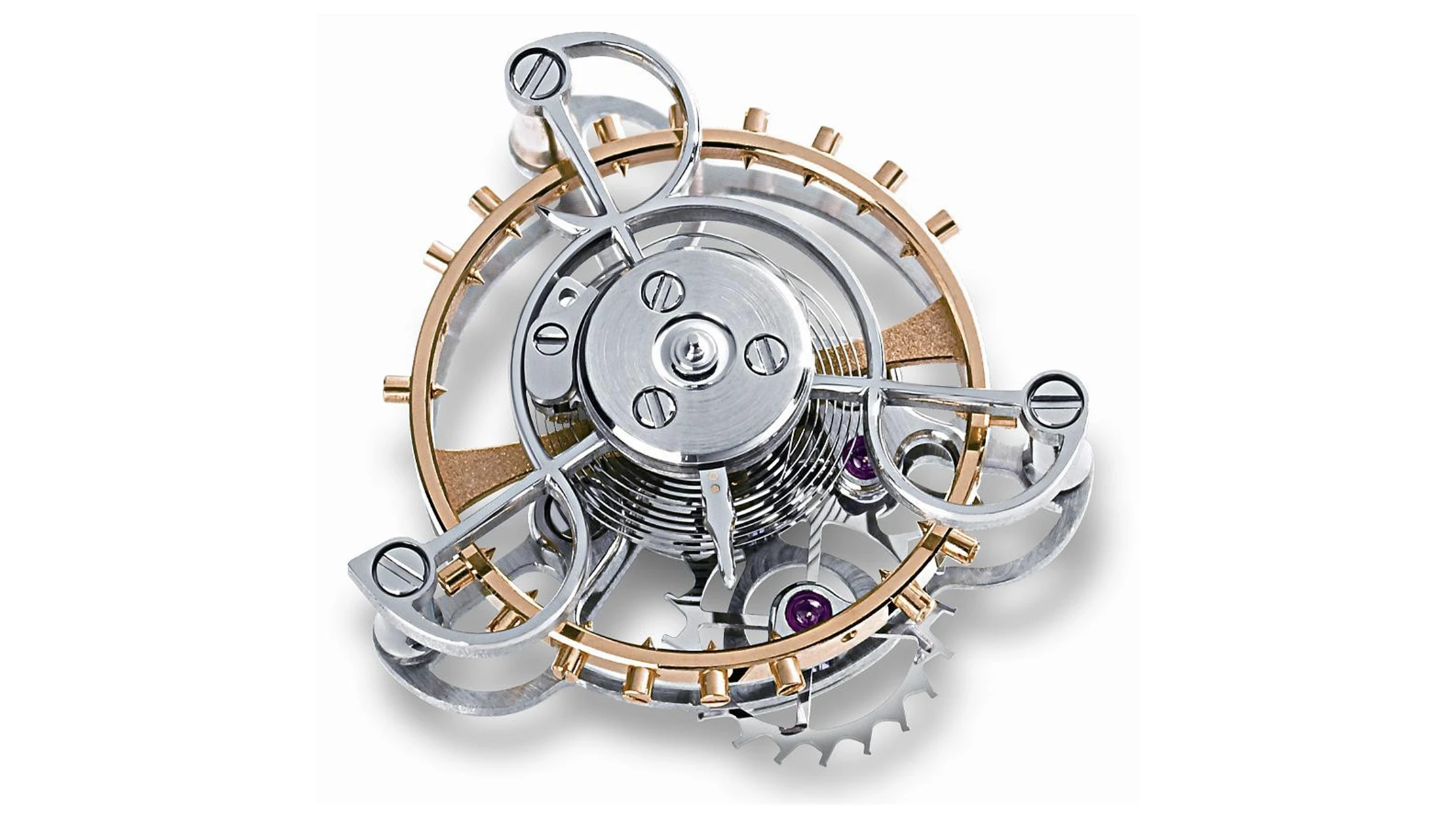
Against this background, only one option remained: in order to preserve the energy of the balance spring at the moment of braking, the balance rotating inside the cage itself had to be slowed directly and without delay. This is precisely where the engineers at A. Lange & Söhne began: they did not stop the tourbillon cage itself, but rather the oscillating balance inside the rotating carriage. To achieve this, the manufacture developed a V-shaped stop spring with two curved spring arms which, when the crown is pulled, is placed onto the outer rim of the balance via a complex lever mechanism, thereby stopping the balance instantaneously.
This lever mechanism works as follows: when the crown is pulled, the winding stem and lever mechanism move the first stop lever out of its resting position. Its spring then releases the second stop lever and guides it towards the balance. Attached to this second lever is the V-shaped stop spring with its two curved ends. Through the controlled movement of the lever, the stop spring is brought into contact with the balance, where it engages under precisely defined force conditions.
However, this gives rise to a further difficulty: roughly every 20 seconds, one arm of the V-shaped stop spring may meet one of the three pillars of the tourbillon cage. The engineers at A. Lange & Söhne solved this problem by mounting the V-shaped steel stop spring on a pivot point on the stop lever, allowing the spring itself to move. In other words, if one of the two arms of the V-shaped stop spring meets a cage pillar, it rests against it, while the second arm pivots around the rotational axis of the stop spring until it comes into contact with the balance rim. In this way, both the balance and the cage can be stopped – regardless of their respective positions.
Stopping the balance directly has one decisive advantage: the balance spring remains tensioned in the balance’s respective position. When the crown is pushed back in after the time has been set and the stop spring releases the balance, this stored restoring energy is usually sufficient to set the oscillation in motion again.
The Cabaret has one of the most distinctive case designs in the Lange portfolio. Alongside typical features such as the satin-finished case middle and the angled, polished lugs, it is above all defined by its unusual bezel: constructed in three stages, it rises first from the satin-finished case middle in the form of a vertical step, followed by an inclined and polished surface, before a sharply defined inner edge frames the dial.
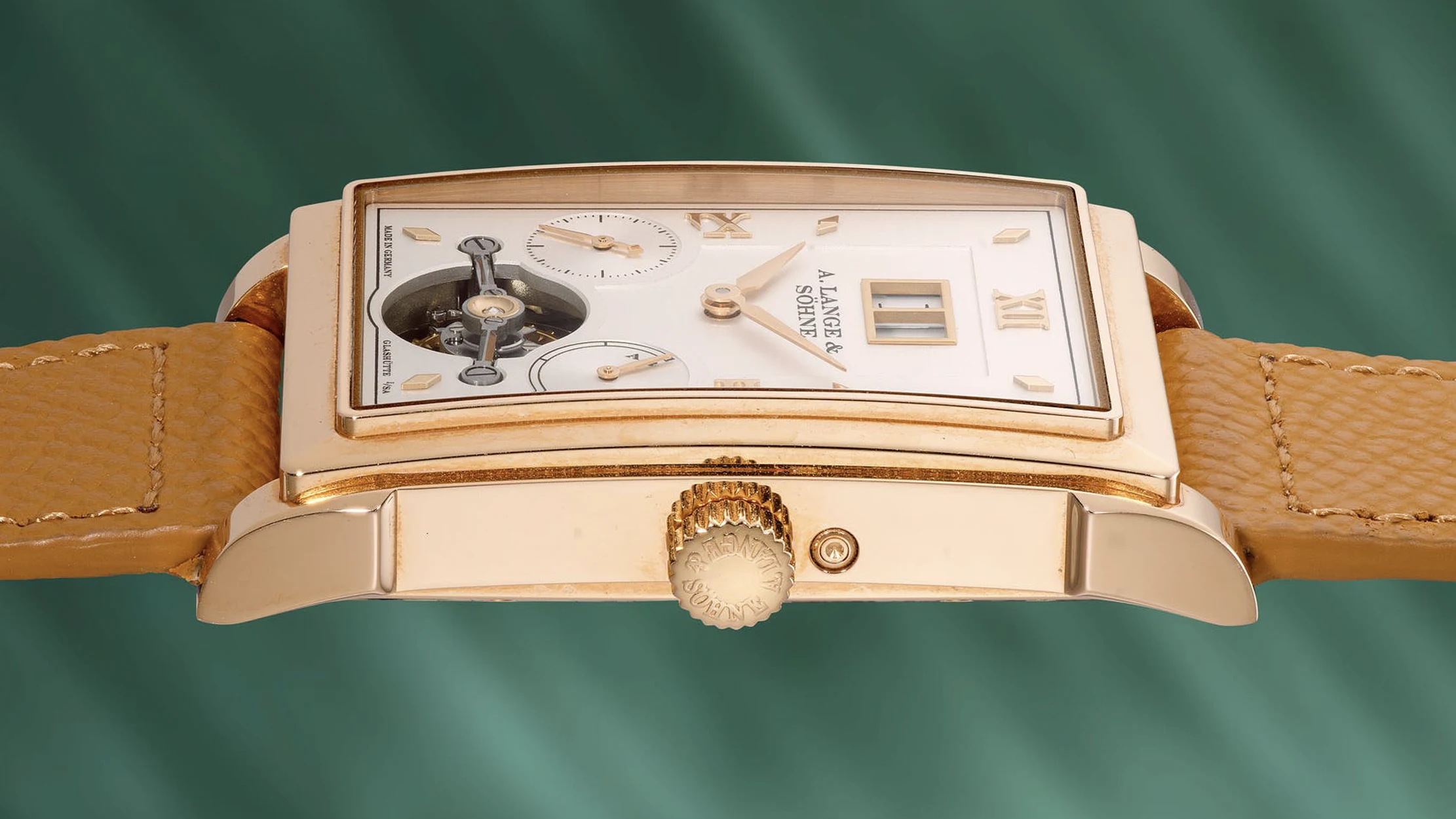
Credit © Phillips
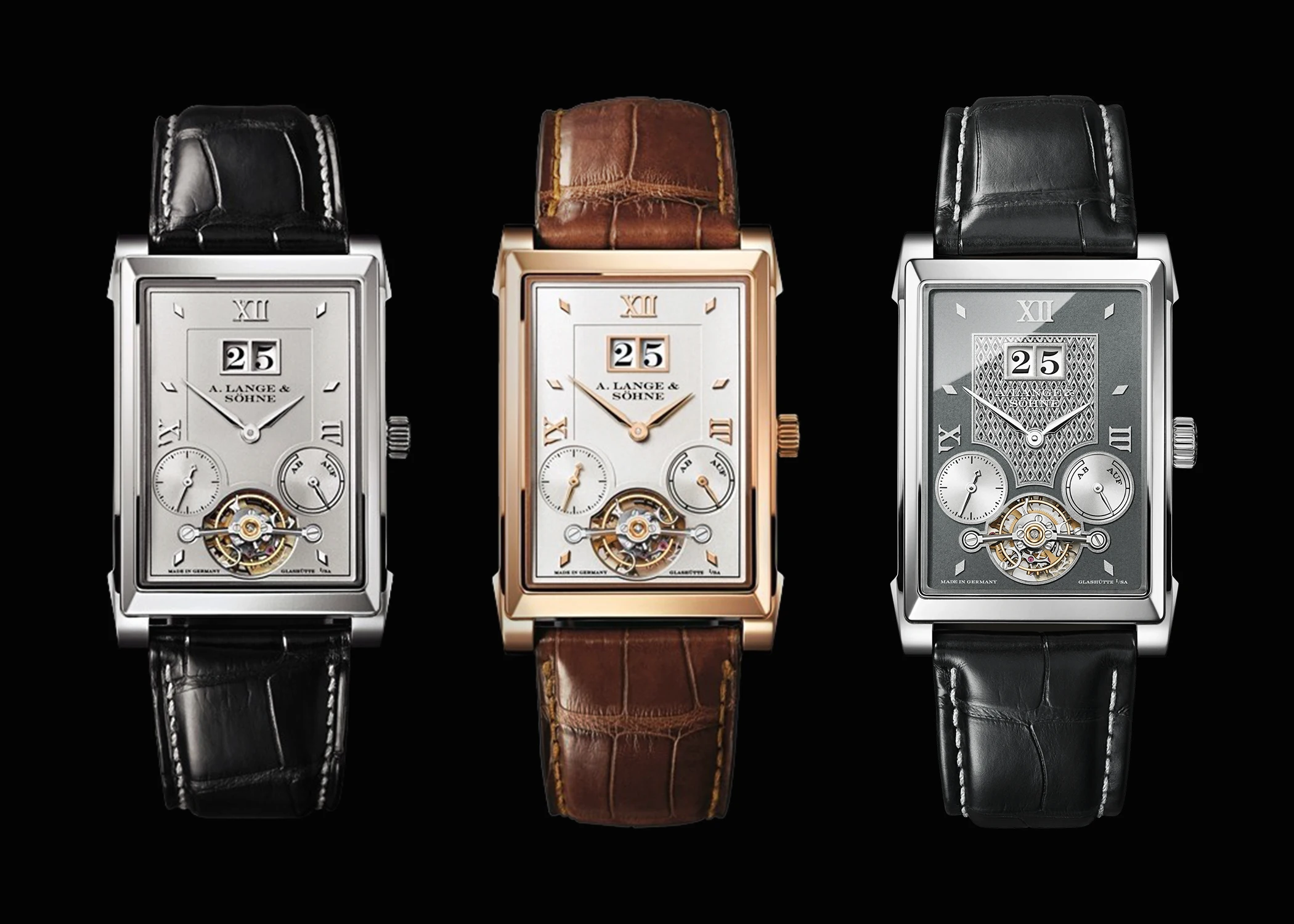
To date, A. Lange & Söhne has produced the Cabaret Tourbillon in three versions: from 2008 onwards, it was made in platinum (ref. 703.025) and pink gold (ref. 703.032), before both versions were eventually discontinued in 2013 following a muted response. In 2021, the model was briefly revived with the Handwerkskunst edition in platinum (ref. 703.048), limited to 30 pieces.
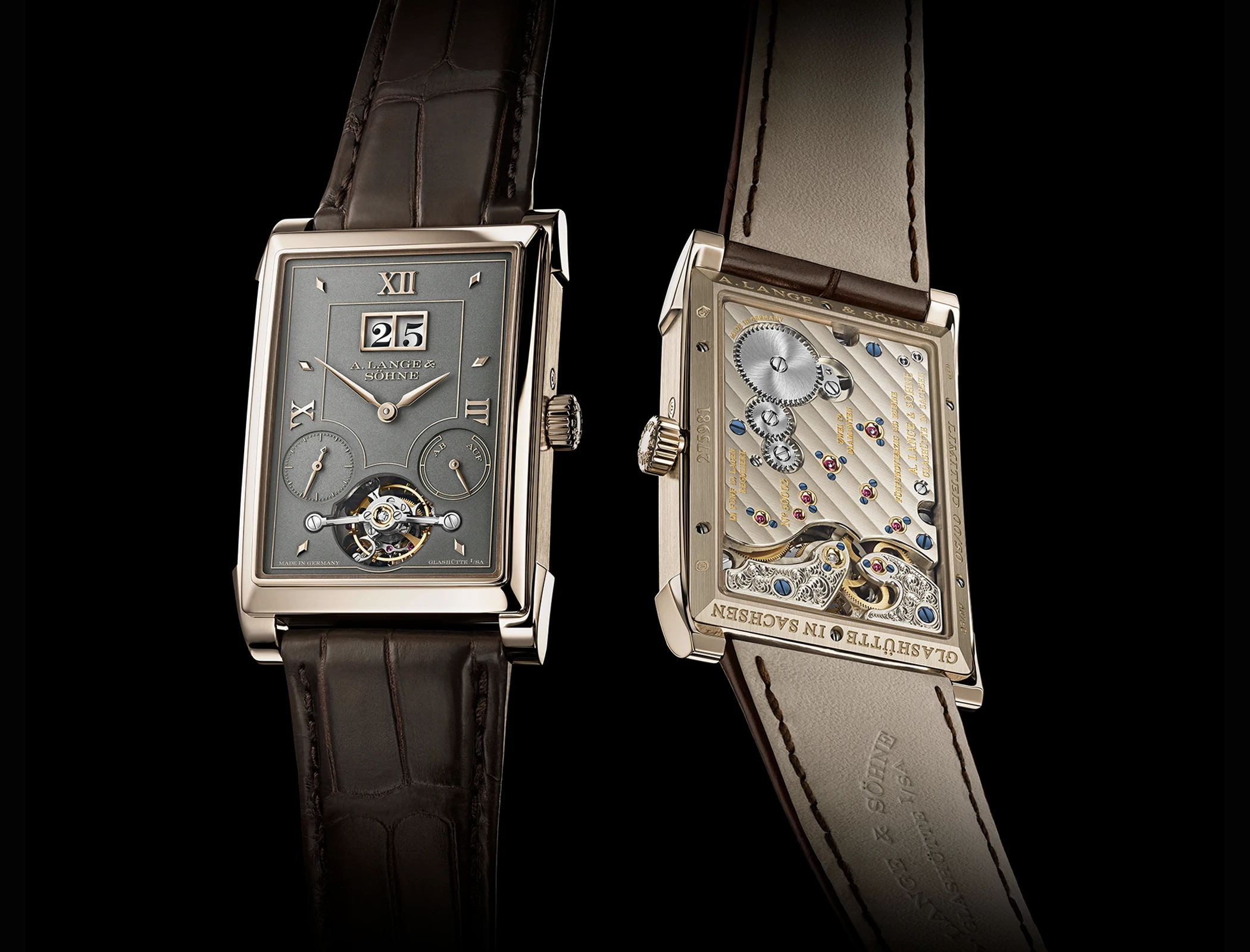
The brand now presents the fourth version of the Cabaret Tourbillon with the ref. 703.050, limited to 50 pieces and made using its patented gold alloy known as Honeygold. The material, whose name derives from its warm hue somewhere between pink and white gold, was first used in 2010 for three timepieces in the anniversary edition “165 Years – Homage to F. A. Lange”. The alloy is distinguished by its particular hardness, which, according to A. Lange & Söhne, is said to exceed that of all other gold alloys. The case dimensions of the new version remain faithful to the proportions of the original Cabaret Tourbillon: the case measures 29.5 mm in width, 39.2 mm in height and 10.3 mm in thickness.
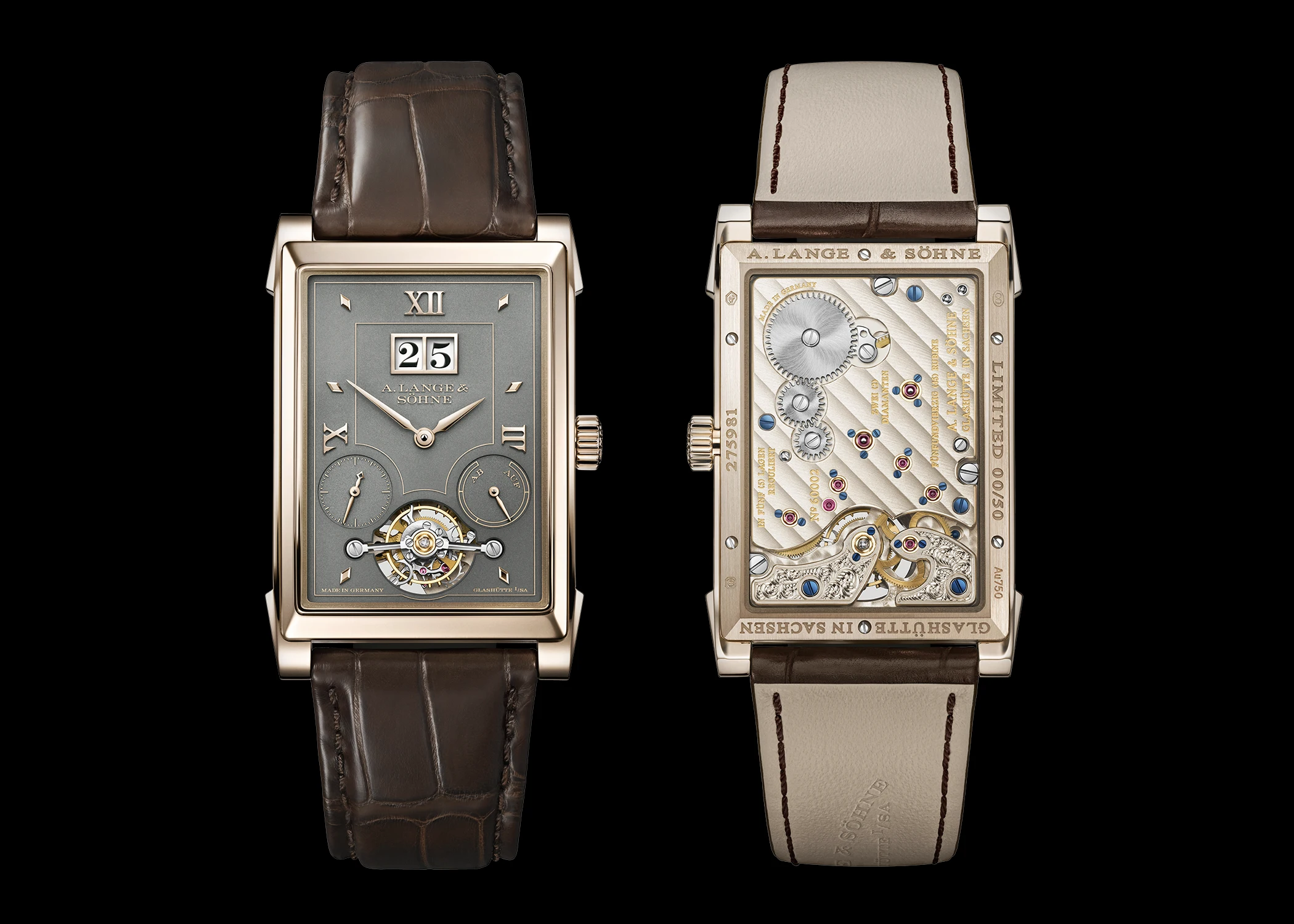
Like the Cabaret Tourbillon Handwerkskunst of 2021, the new version of the Cabaret Tourbillon features a dial made from the same material as the case – in this instance, Honeygold. The layout follows that of the 2008 Cabaret Tourbillon: the outsize date is positioned at 12 o’clock, the UP/DOWN power-reserve indicator at 4 o’clock, the running seconds at 8 o’clock and the tourbillon at 6 o’clock.
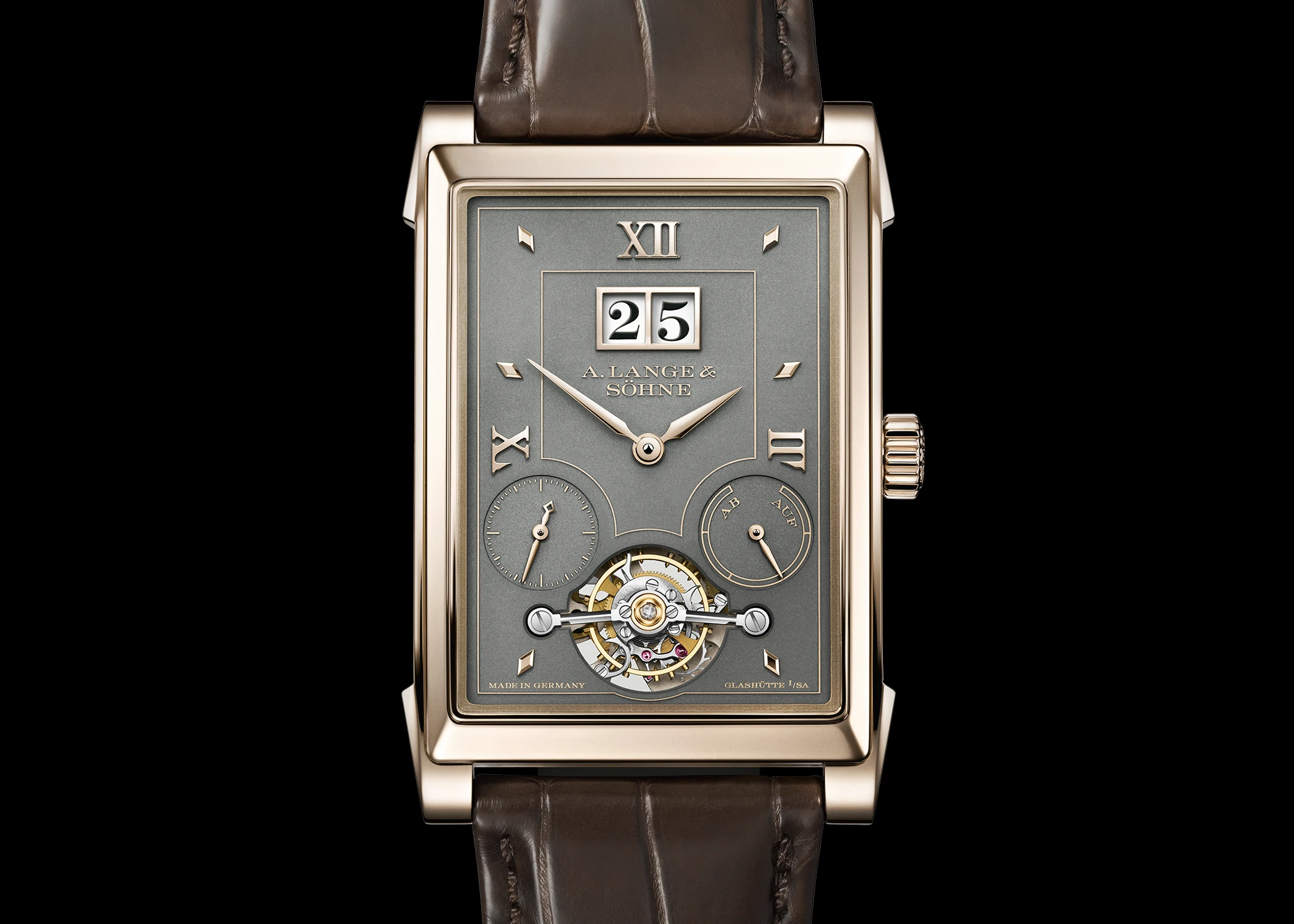
The dial of the A. Lange & Söhne Cabaret Tourbillon Honeygold is composed of three elements: the main dial, along with two separate subsidiary displays for the running seconds and the power reserve. Functional elements such as scales, frames and inscriptions are worked directly out of the base material and rise 0.15 mm above the surface. The dial is then given a black rhodium treatment, creating a dark, matt ground tone. In a further step, the relief-like raised sections are brushed by hand, allowing the warm gold tone of the Honeygold to reappear and stand out clearly against the dark background.
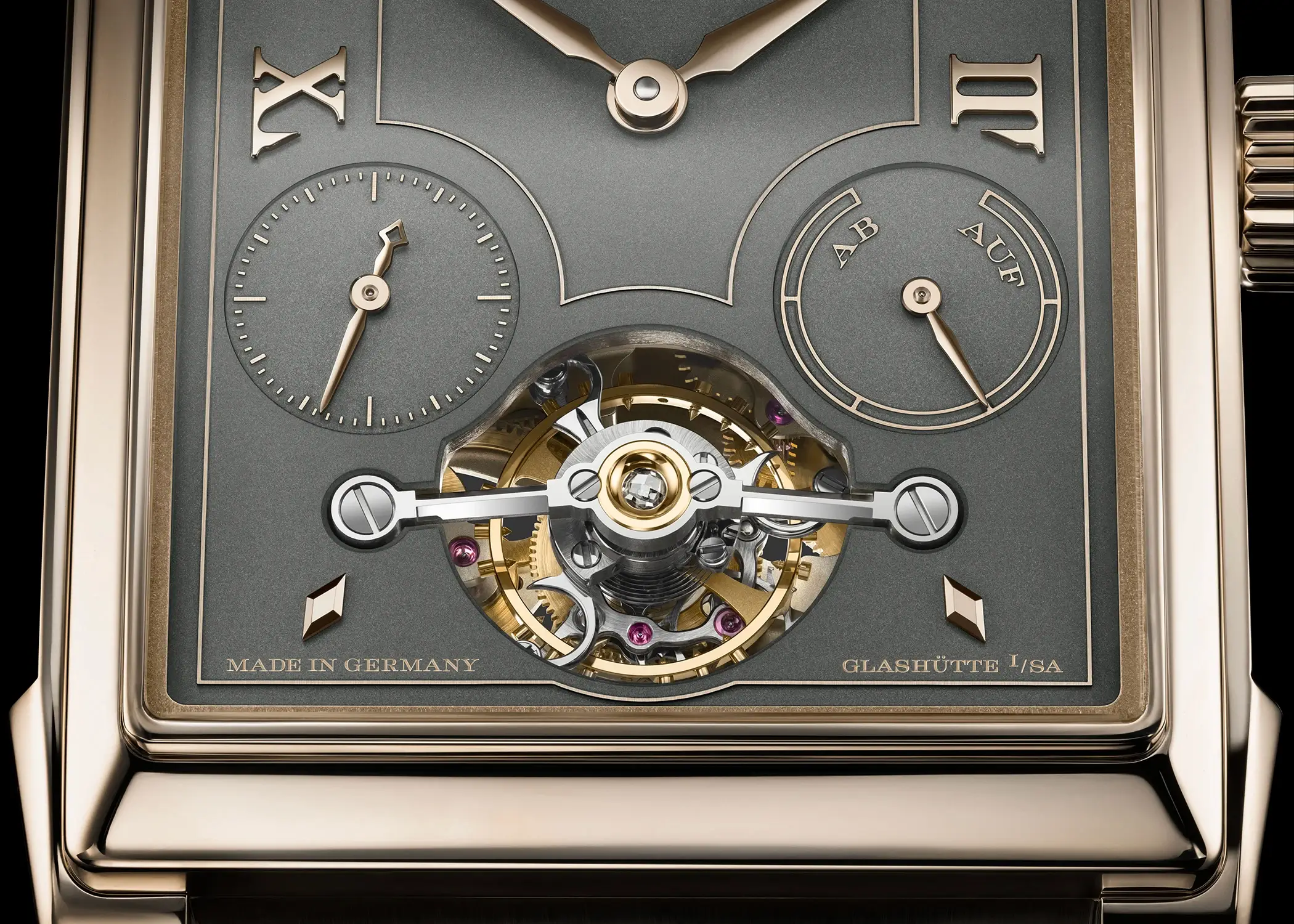
The polished Roman numerals III, IX and XII, drawn from the design vocabulary of the Lange 1, are then applied to the dial, along with the six diamond-shaped hour markers reminiscent of the first Saxonia collection and the frame for the outsize date. Finally, the subsidiary dials are attached to the main dial from the back.
The idea behind the tourbillon, the invention for which Abraham-Louis Breguet filed a patent application in 1801, was to house the rate-determining components of the watch – namely the balance and escapement – inside a rotating cage. This cage rotates around the fixed fourth wheel and was intended to compensate for the positional errors caused by gravity that were particularly relevant in pocket watches, as these were usually carried upright in the same position in a waistcoat pocket. The continuous rotation of the cage does not eliminate these positional errors, but averages them out over the course of the rotation, with the aim of improving rate accuracy.
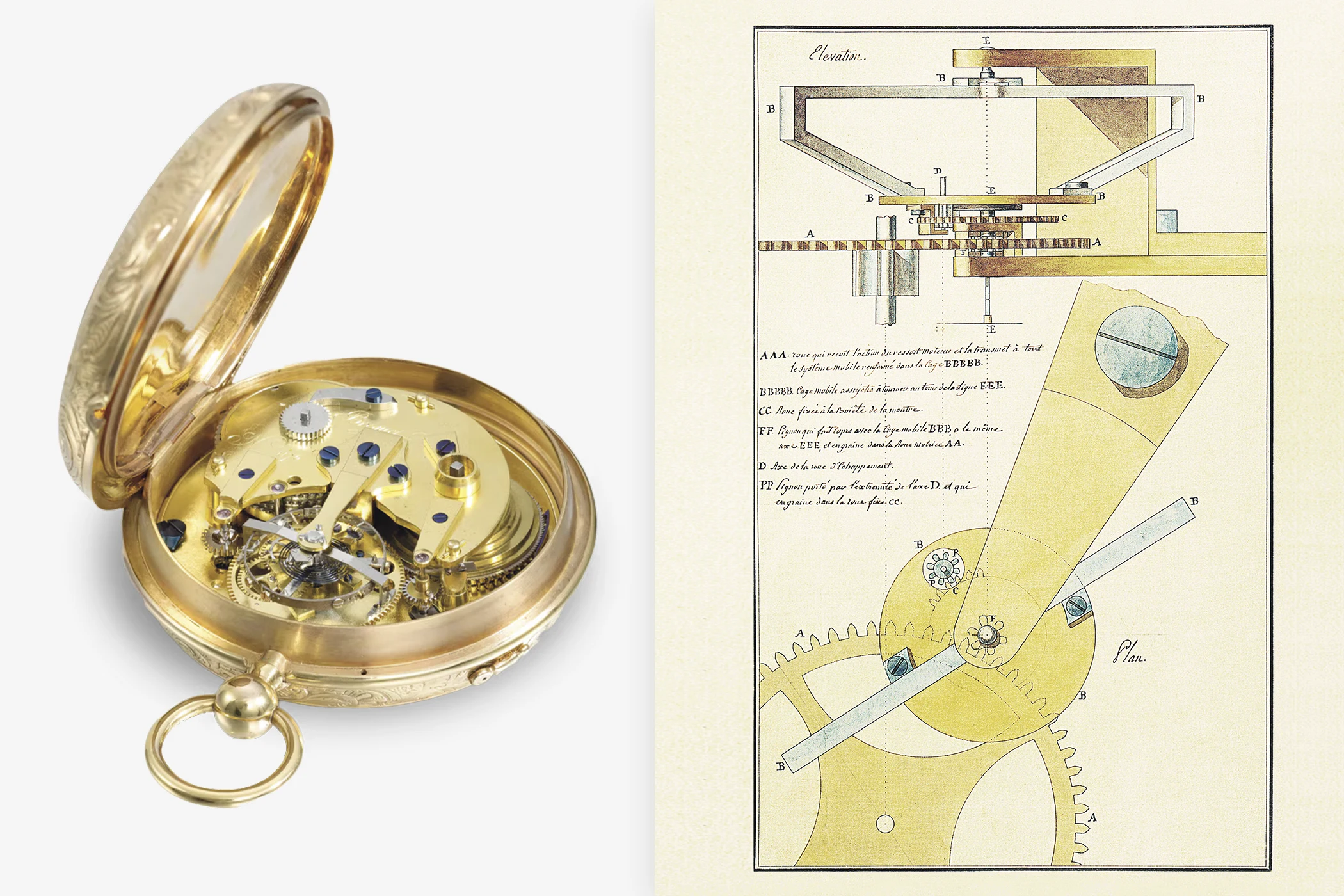
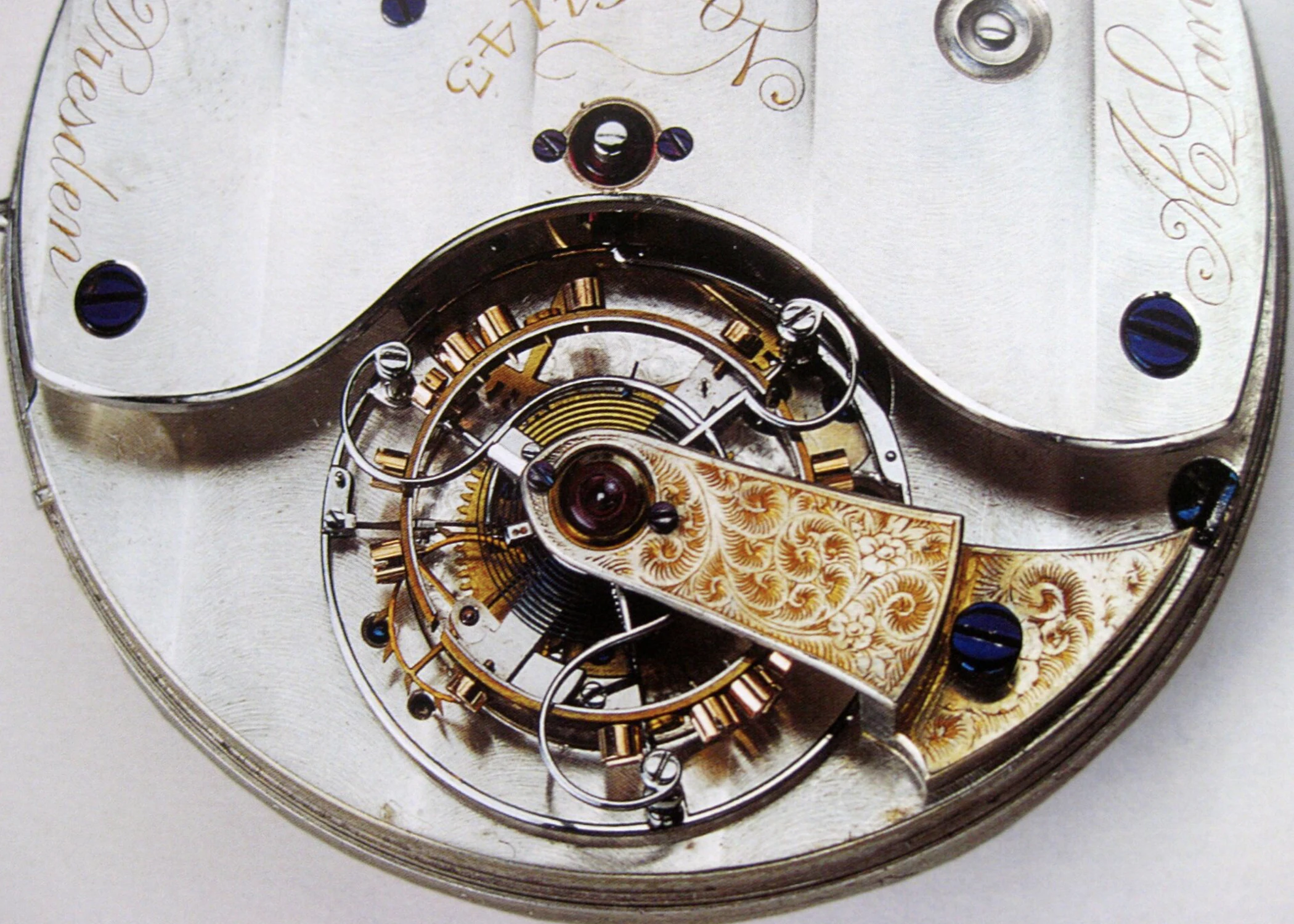
Over the centuries, the tourbillon became the subject of several technical developments: from tourbillons with chronometer escapements, as realised by Ernest Guinand in the 1880s, to Alfred Helwig’s flying tourbillon, characterised by the tourbillon cage being supported only from below and thus creating the impression that it was “flying”, through to the multi-axis constructions developed by Walter Prendel in Glashütte in 1927. Yet none of these tourbillon constructions could be stopped. The significance of the Cabaret Tourbillon and its calibre L042.1 therefore lay in the fact that it was the first movement construction with a stop-seconds tourbillon that could be halted for precise time-setting.
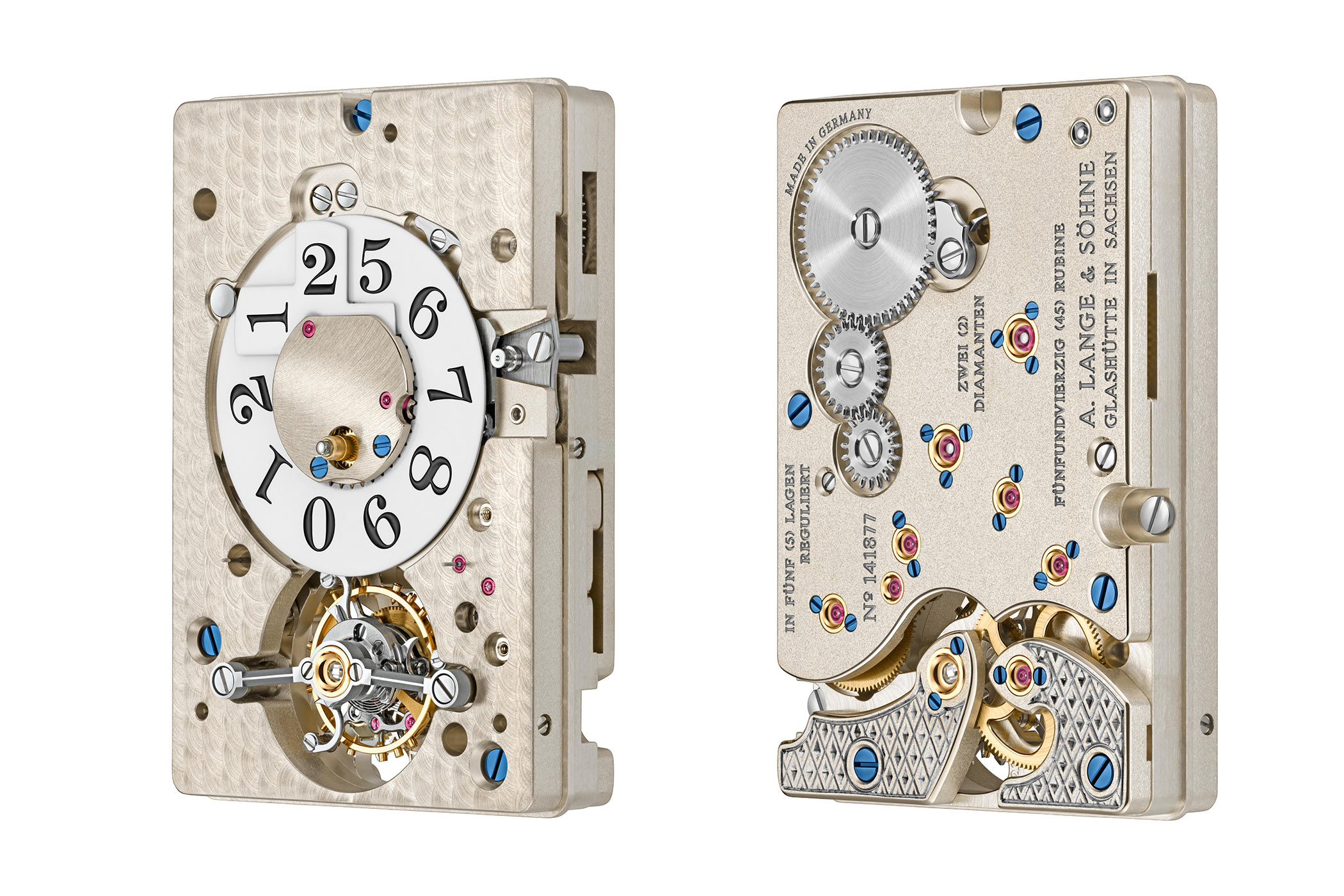
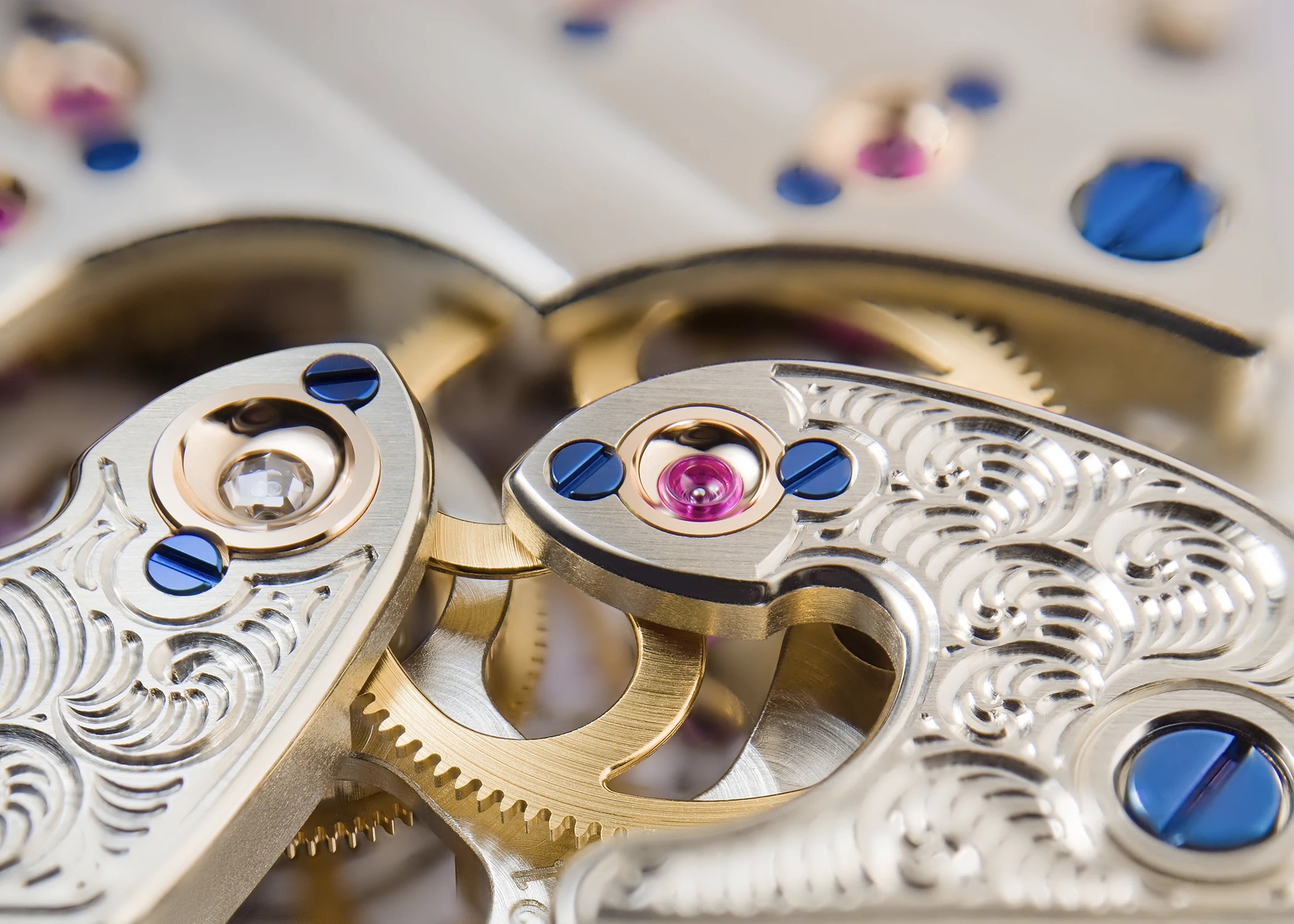
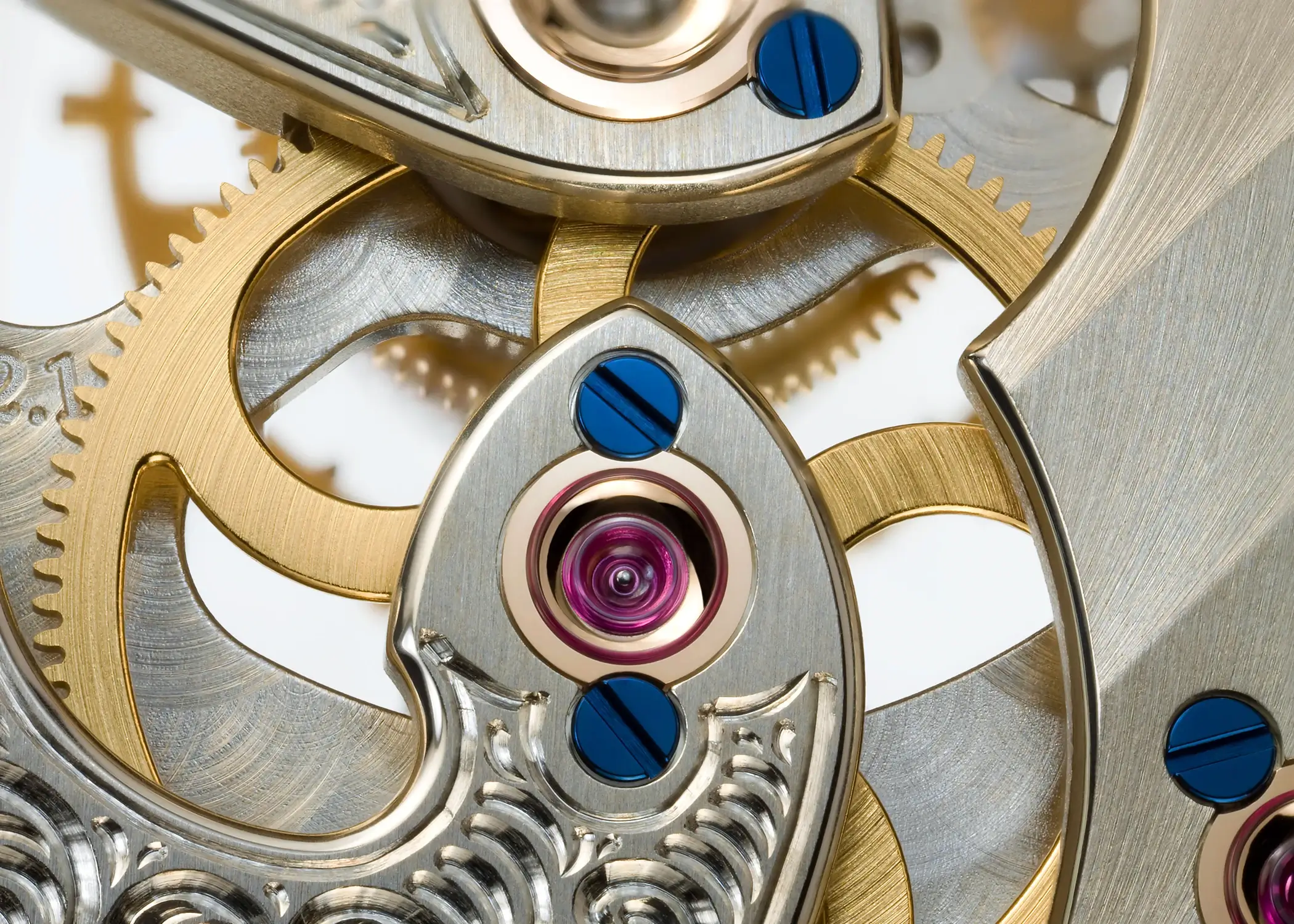
Despite its technical complexity, the rectangular form movement, measuring 22.3 by 32.6 millimetres and visible through the sapphire crystal caseback of the A. Lange & Söhne Cabaret Tourbillon Honeygold, appears comparatively restrained in aesthetic terms. Skeletonisation or additional angles are nowhere to be found here; instead, a large part of the movement is covered by a three-quarter plate made of untreated German silver. As in the manufacture’s round movements, this plate, finished with Glashütte ribbing, carries the wheel train, leaving only the ratchet wheels decorated with solarisation, the screwed gold chatons, each set with a bearing jewel, and the blued screws visible.
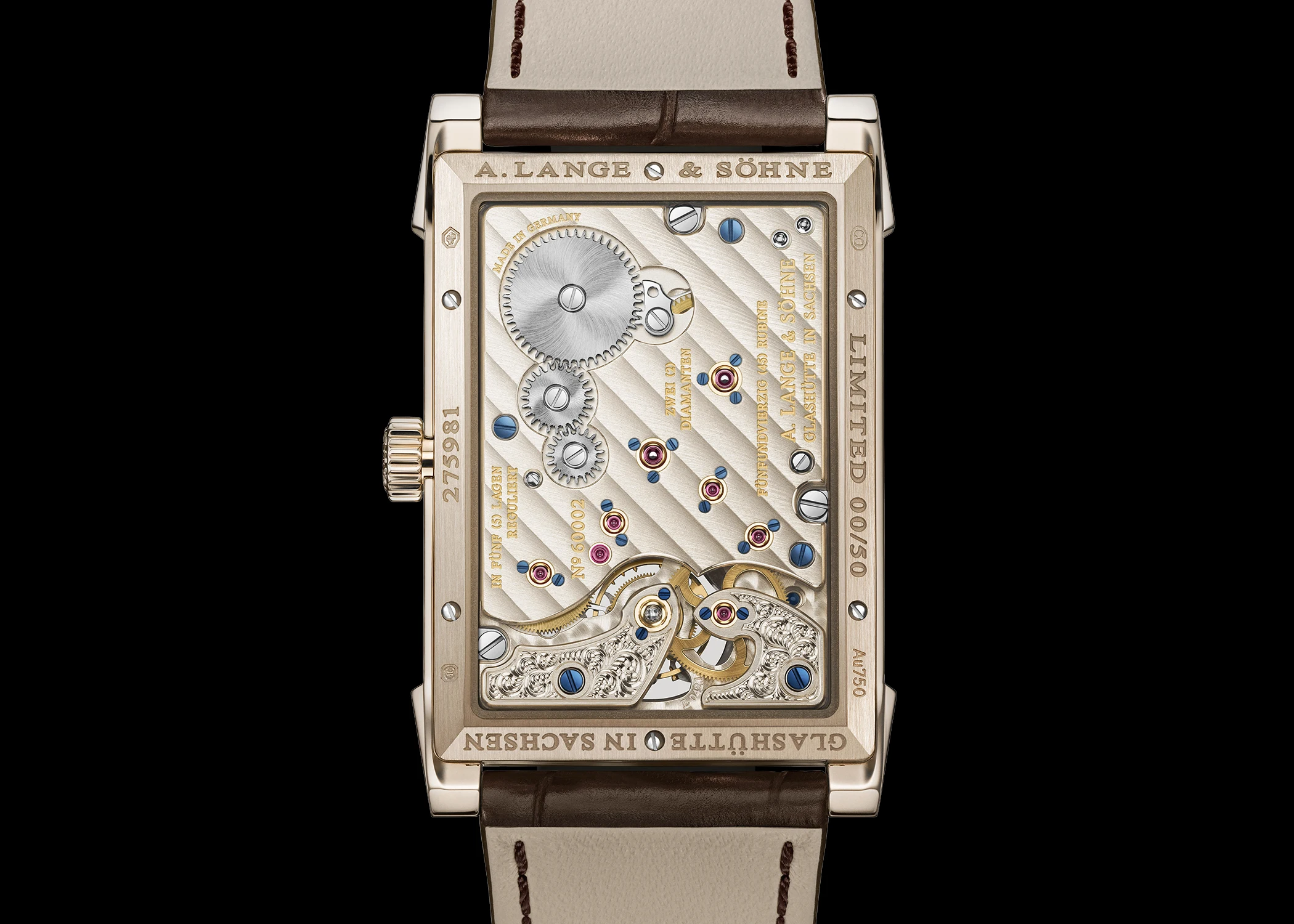
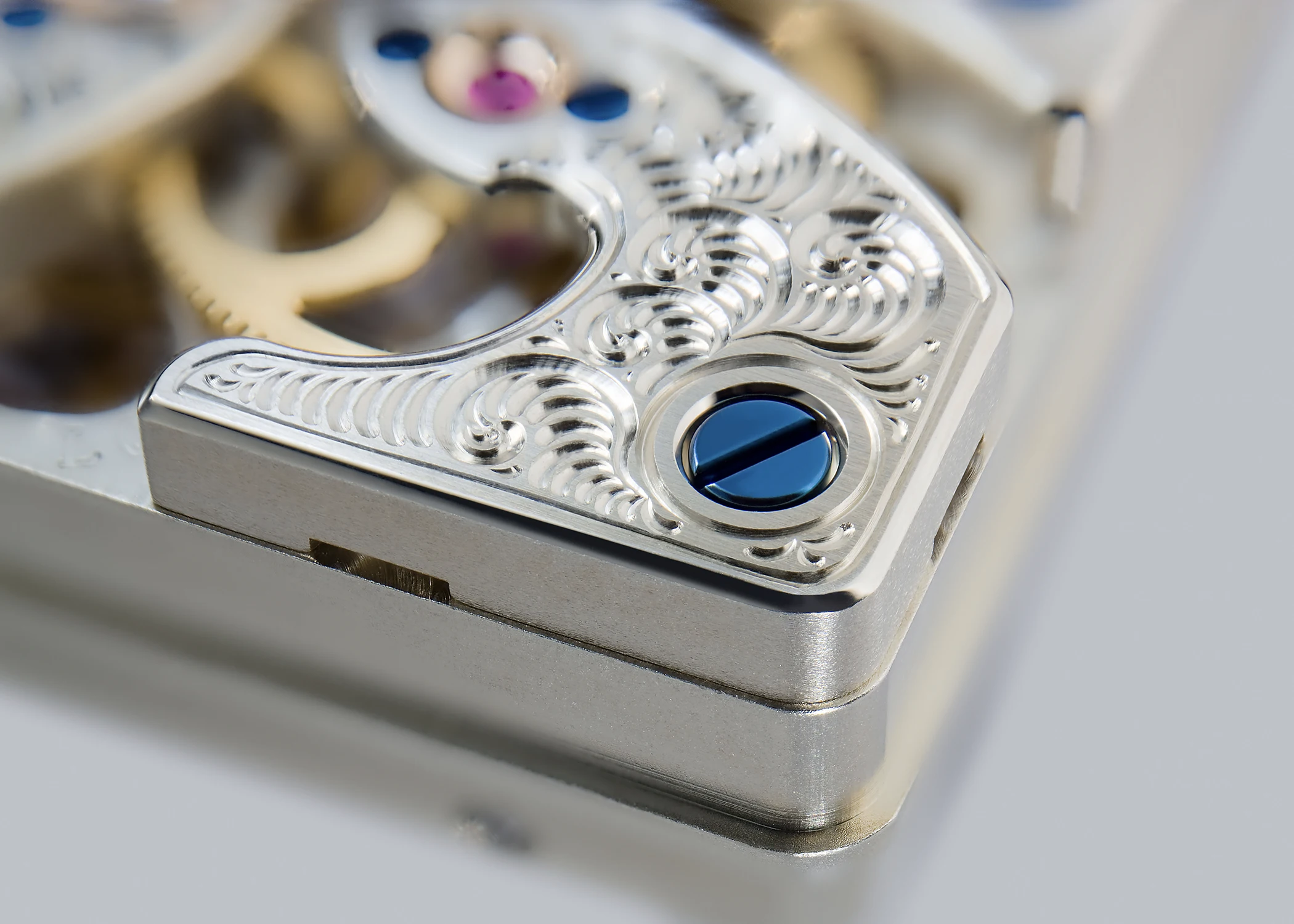
With its twin mainspring barrel, the movement offers a power reserve of 120 hours, while the balance beats at a frequency of 21,600 semi-oscillations per hour. At the lower end of the movement, one also finds the hand-engraved tourbillon and intermediate-wheel cocks.
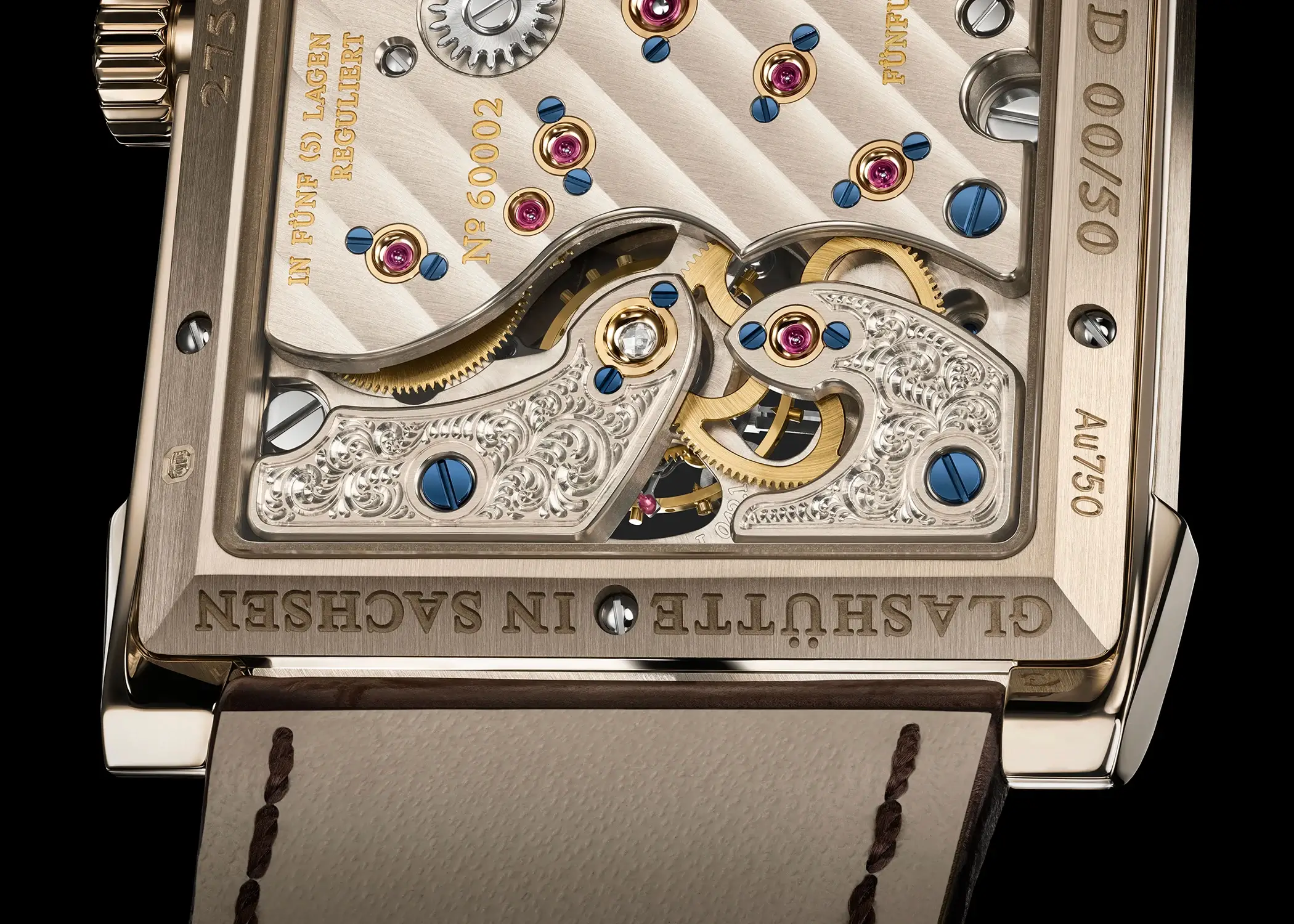
The calibre L042.1 consists of 370 components, with 84 parts devoted to the tiny tourbillon alone, together weighing only around 0.25 grams. In its design, the tourbillon cage is aesthetically closely related to the historical tourbillons used by A. Lange & Söhne during the pocket-watch era. Particular attention is given to the upper bridge and the upper section of the tourbillon cage, both of which are finished with black polishing. In this process, the component is guided by hand across a tin plate using special polishing agents and precisely controlled pressure. This procedure is repeated until, depending on the angle of view, the surface either reflects the light like a mirror or appears deep black.
The new A. Lange & Söhne Cabaret Tourbillon Honeygold is released in a limited edition of 50 pieces. In terms of price, the ref. 703.050 sits – like many previous versions of the Cabaret Tourbillon – in the mid-six-figure range, at around €300,000.