TAG Heuer Monaco Speed 12: A limited-edition Monaco in titanium, featuring twelve pistons and a time display that reimagines motorsport.
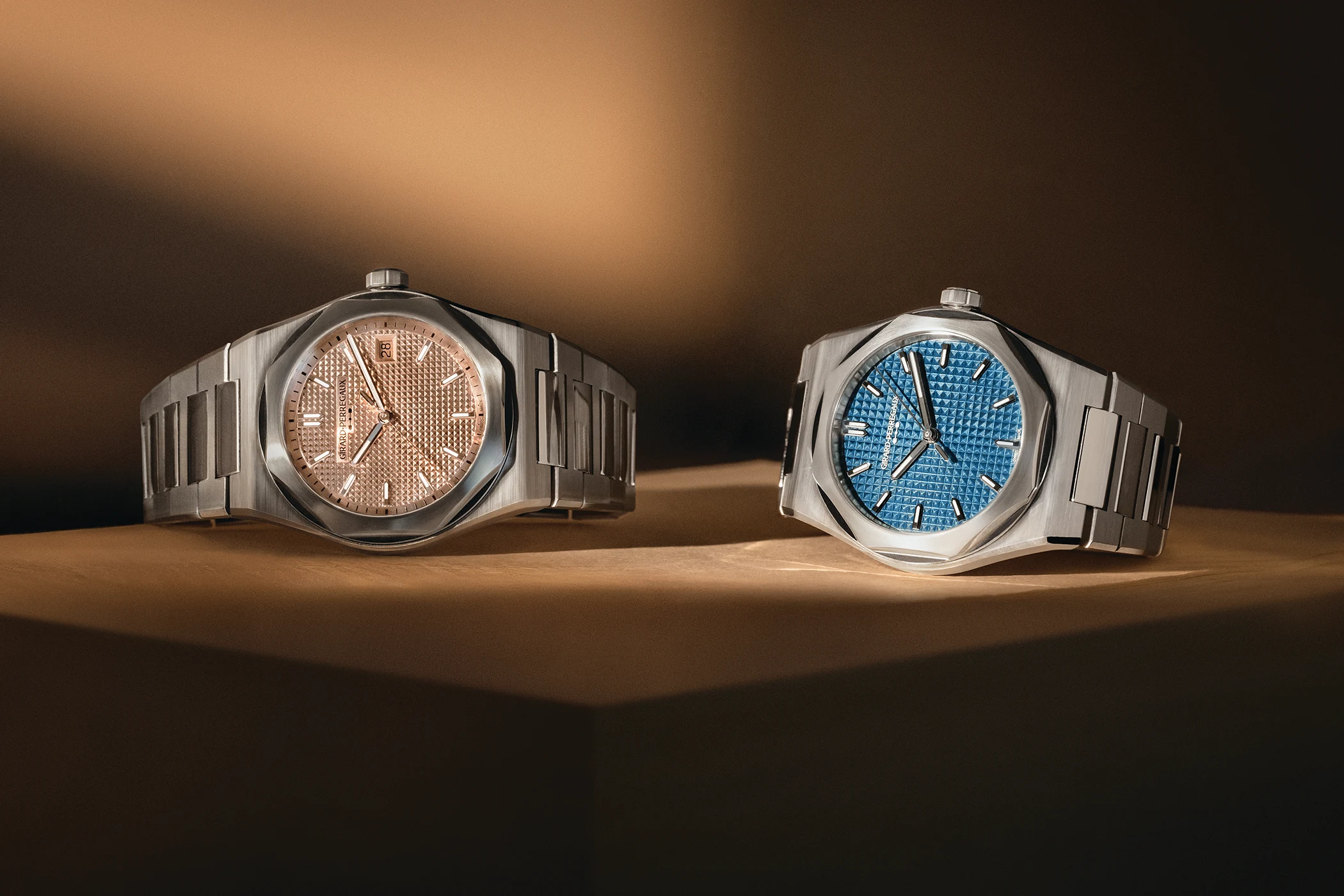
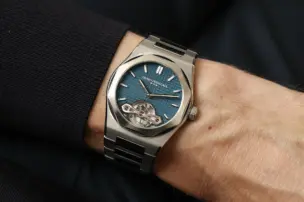
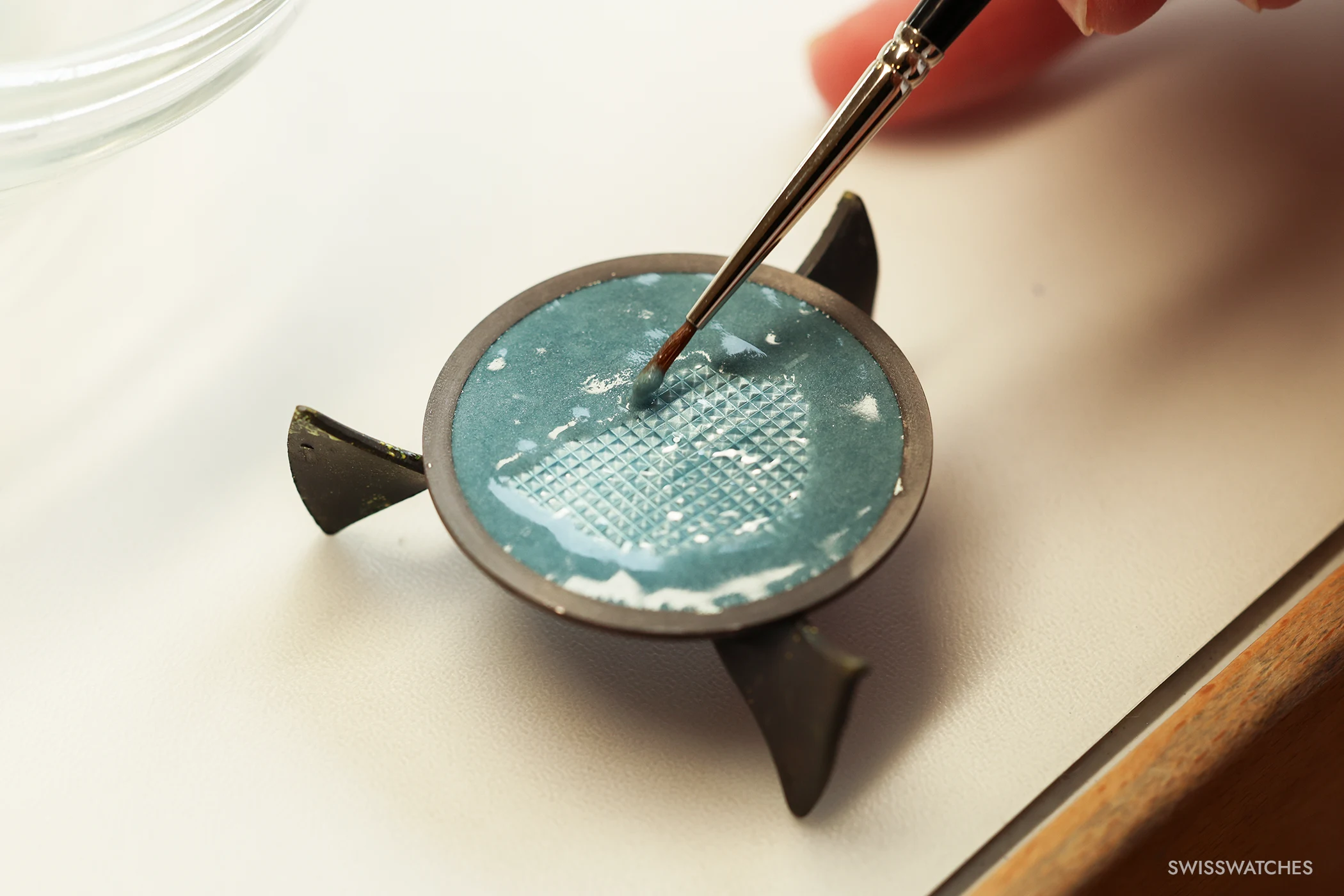
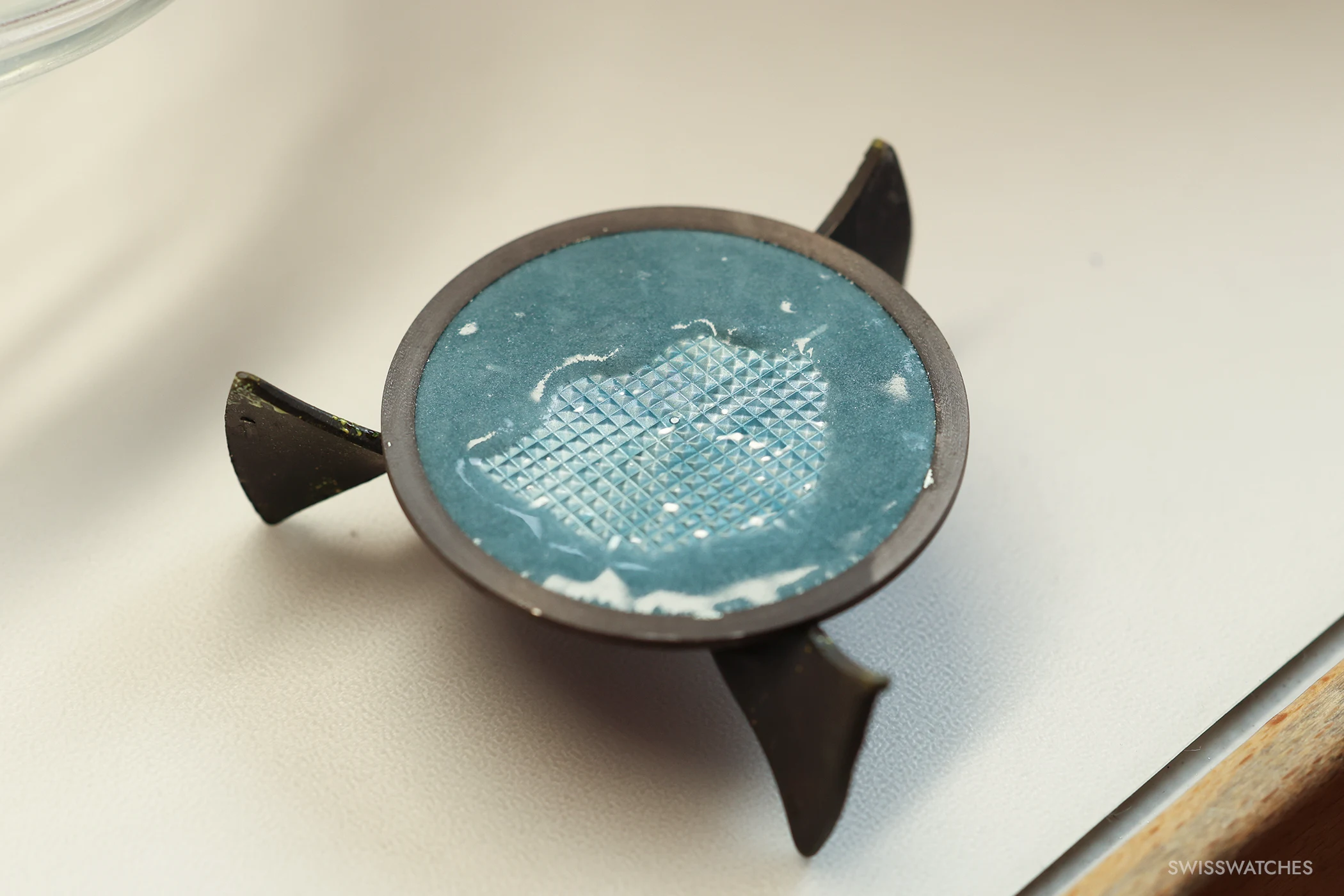
Fifty years after its debut, the Laureato has no need for a new design. The highlight of the four new Laureato Fifty models, available in 36mm and 39mm sizes, is the enamel dial, manufactured entirely in-house, beneath which the Clous de Paris pattern retains its depth.
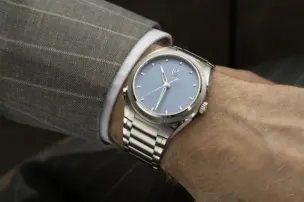
The new Laureato Fifty is defined not by a new silhouette, but by the way light plays across its familiar lines. This is particularly evident on the new blue enamel dial, where Girard-Perregaux does not simply allow the Clous de Paris motif to disappear beneath the paint, but instead uses it to create textural depth. It glides over the octagonal bezel, refracts off the round base below, and continues into the first links of the integrated steel bracelet. It is a geometry that has carried the same tension for decades: circle versus octagon, edge versus surface, sportiness versus restraint.
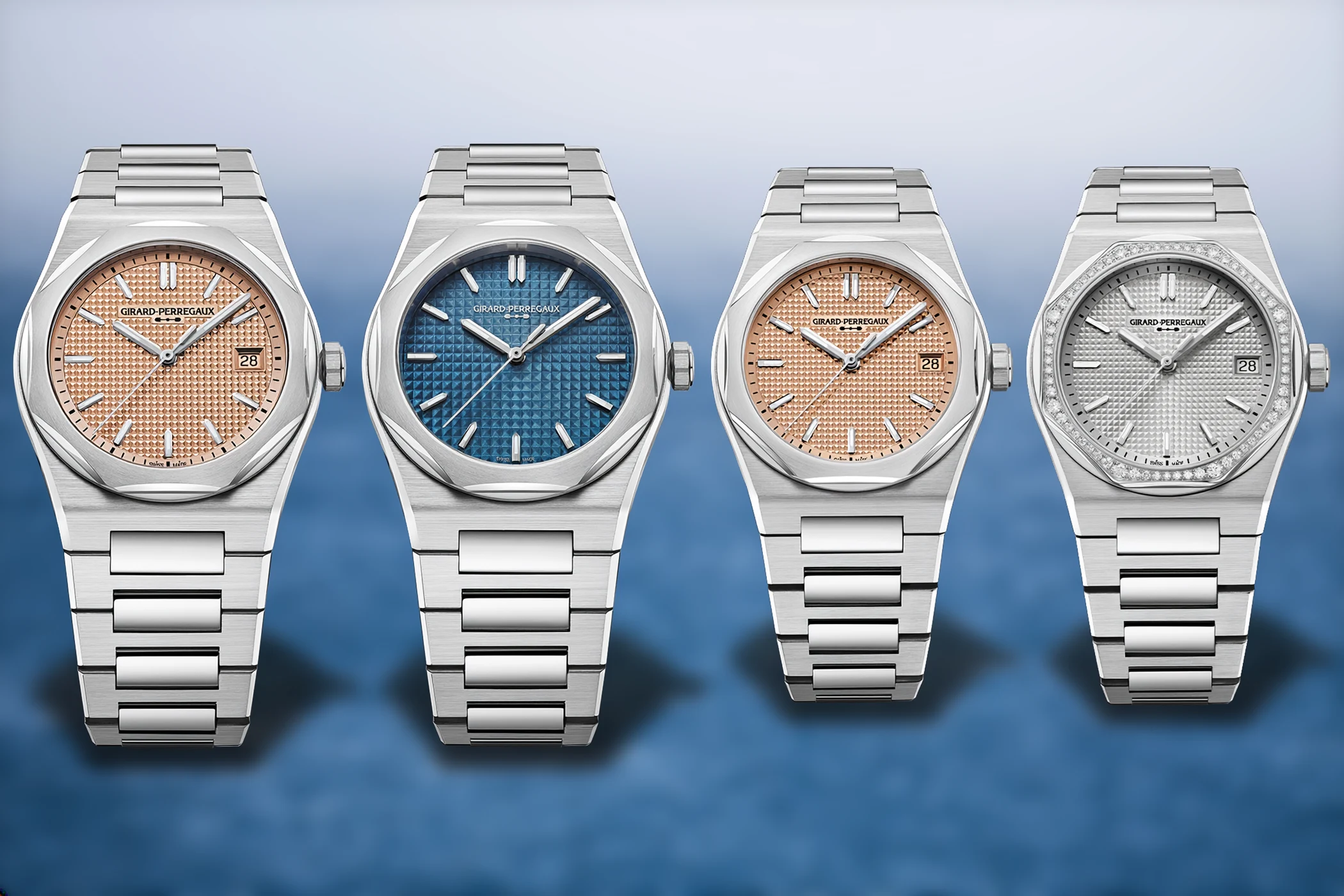
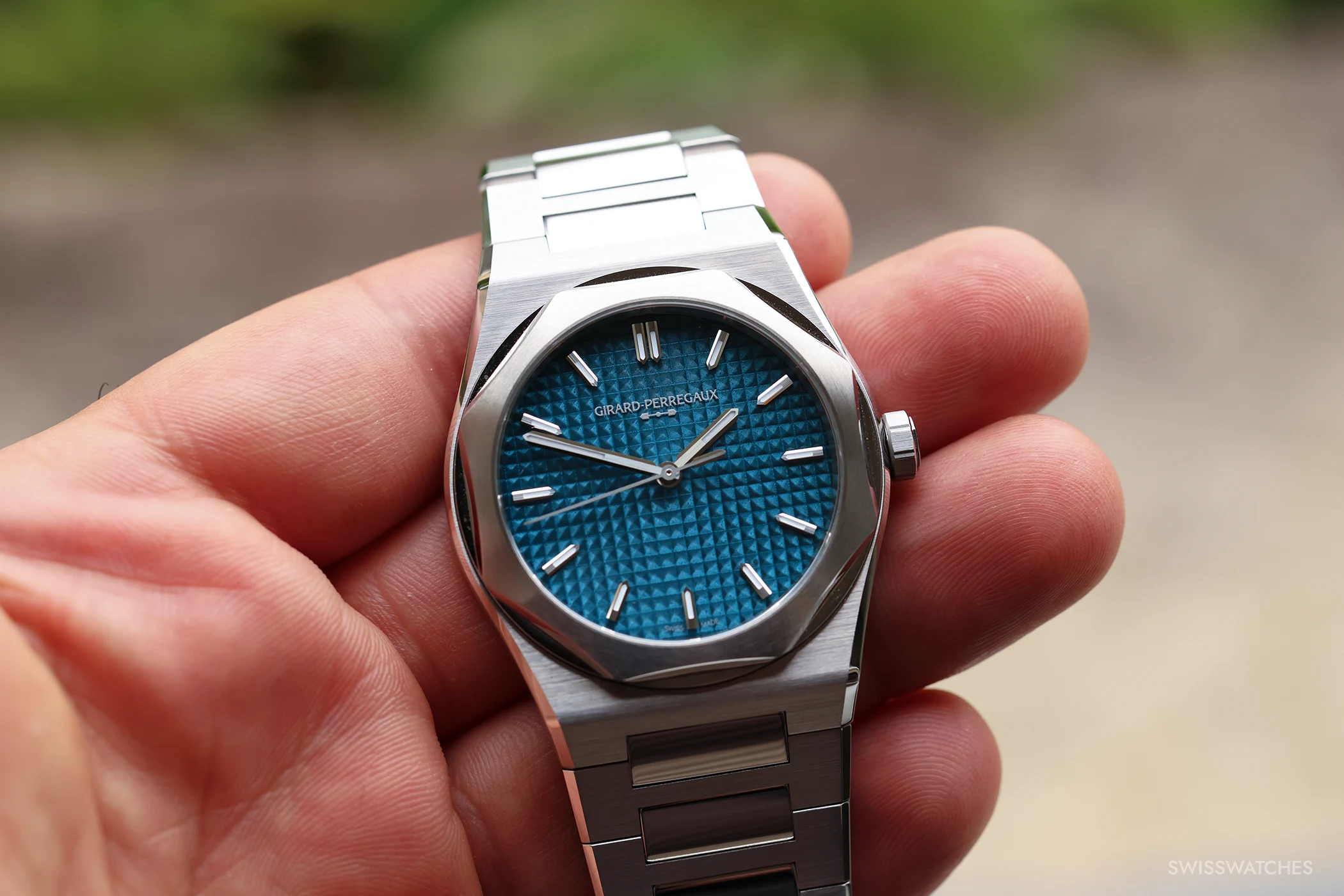
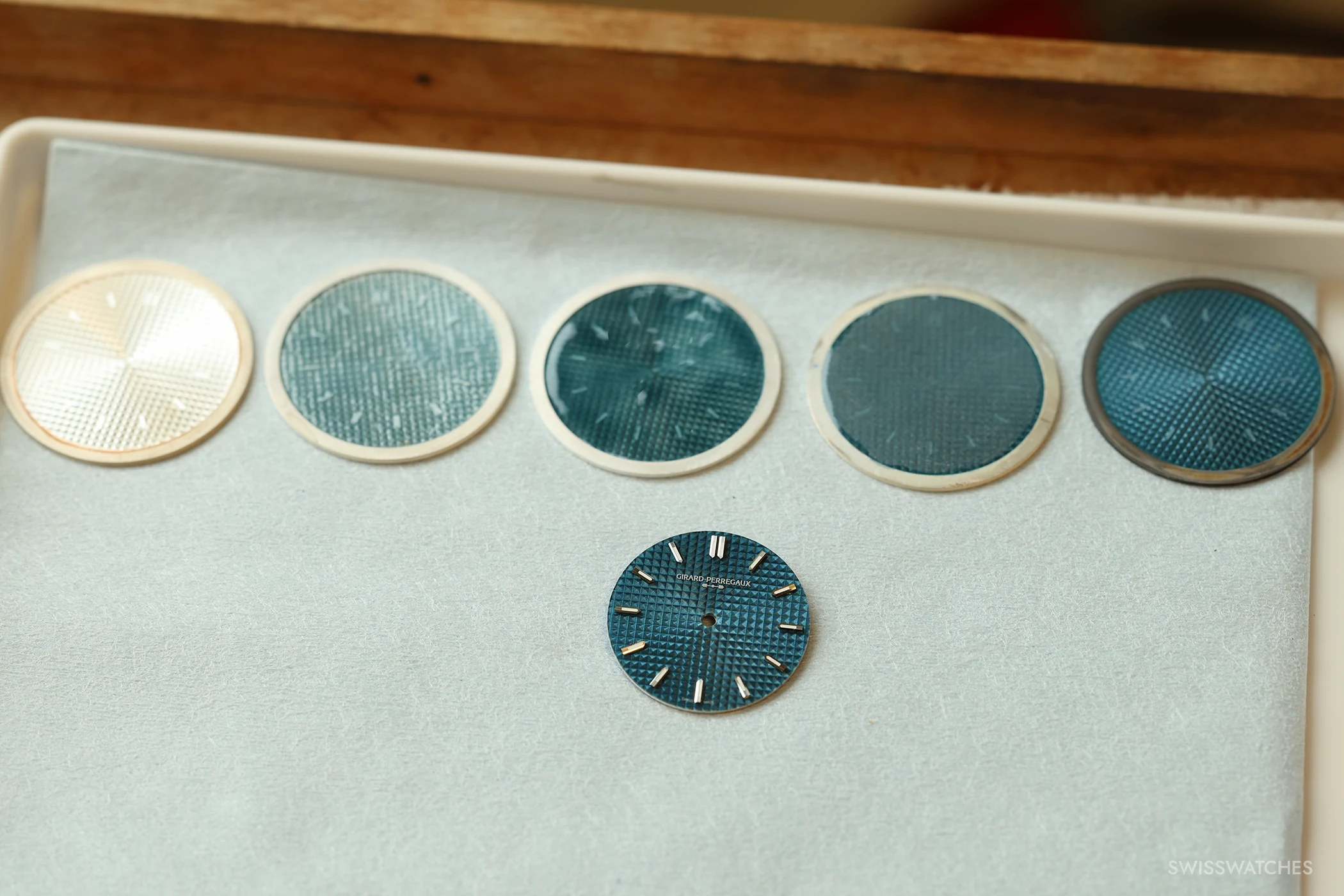
This interplay continues on the dial. From a distance, the Clous de Paris motif appears as a calm, almost solid texture. Only up close does it become clear just how dynamic this surface is: small, precisely placed pyramids that catch the light, causing it to shift and, depending on the angle, disappear again. In the blue 39 mm version, the Clous de Paris pattern is not covered over afterwards, but remains visible beneath the enamel. This creates a dial with added depth, making it significantly more complex and of a higher quality, both visually and in terms of craftsmanship. In addition to two new 39 mm models, two new versions with a 36 mm diameter are also being launched.
The Laureato was created during a period of significant change in the Swiss watch industry. In 1971, Girard-Perregaux developed a high-frequency quartz movement, thereby establishing the industry standard of 32,768 Hz. Four years later, the first Laureato was launched. This technical achievement was given a distinct external form: an octagonal bezel, a round base, a tonneau-shaped case and an integrated bracelet. This gave rise to the design that still defines the Laureato today.
The Laureato has never been defined by a single distinguishing feature, but rather by the visual interplay of its components: the octagon, the circle, the case and the strap. This has enabled Girard-Perregaux to update the watch over the years without having to redesign it from scratch each time. In 1995, the GP3100 became the first in-house automatic calibre to be introduced to the Laureato collection. The Laureato has always remained true to its design philosophy because its basic architecture has remained unchanged – even as the technology and dimensions have evolved.
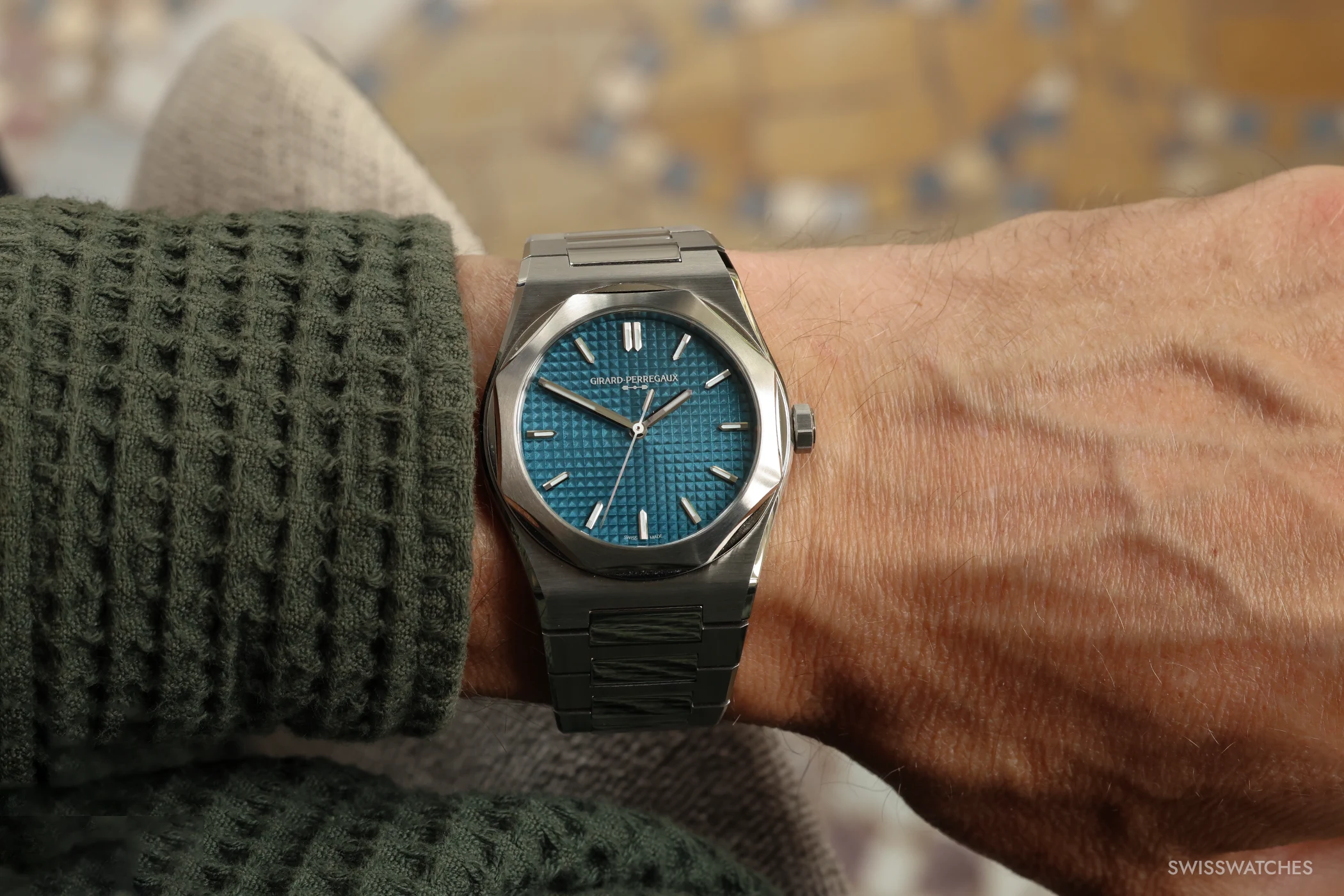
The case of the Girard-Perregaux Laureato Fifty measures 39 millimetres in diameter and 9.8 millimetres in height for the version with a rose gold “Clous de Paris” dial. The 39 mm version with a blue enamel dial is 10.2 millimetres thick. Both models are crafted from stainless steel, feature sapphire crystal on both the front and back, and are water-resistant to a depth of 150 metres. They also come with an integrated steel bracelet featuring a butterfly clasp and a tool-free extension of four millimetres.
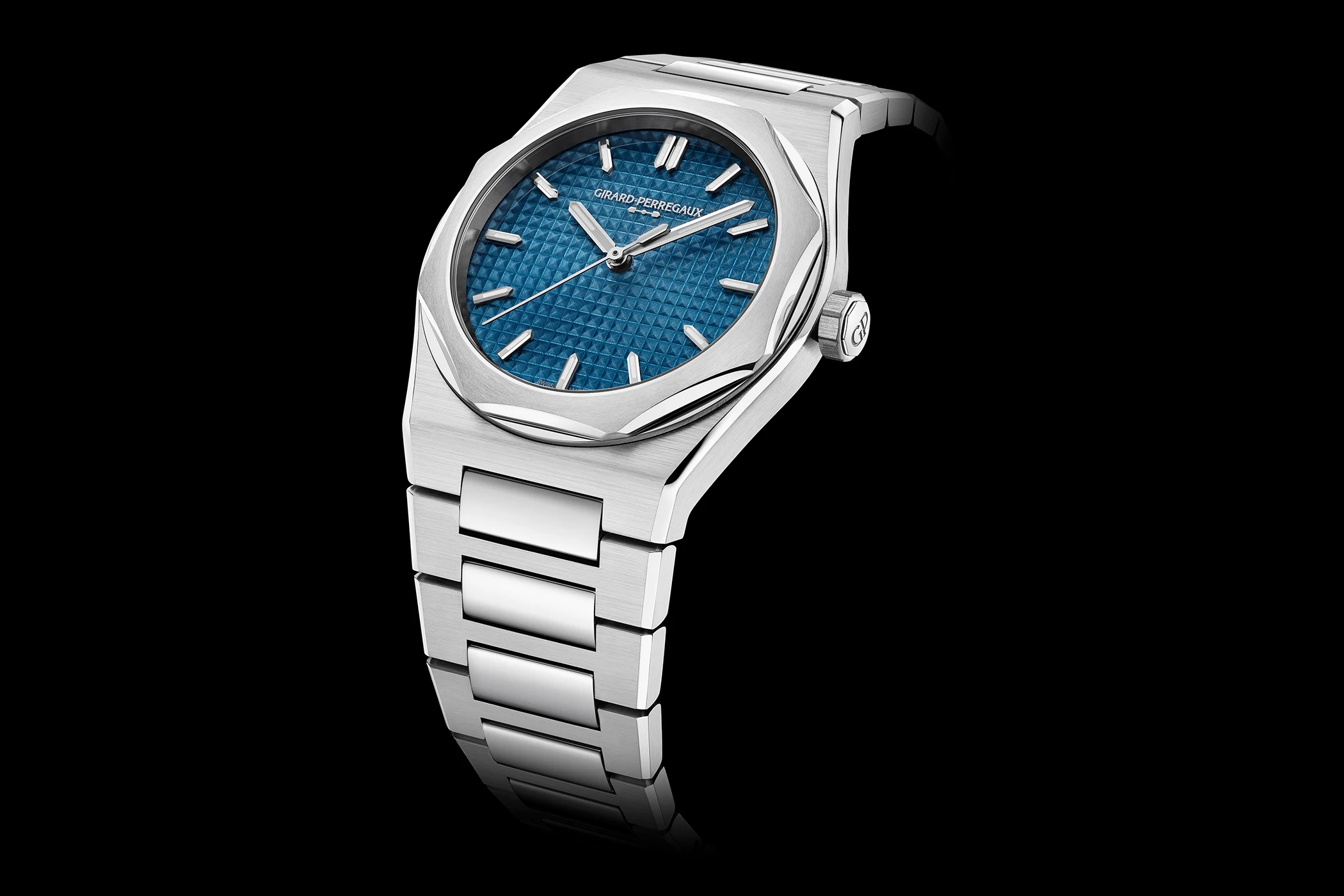
The real difference between the two 39 mm versions lies in the dial. The blue version combines enamel with an underlying Clous de Paris motif and is manufactured entirely in-house at Girard-Perregaux. With this dial, the enamel is not applied to a smooth surface, but directly onto the Clous de Paris guilloché pattern. This means the Clous de Paris pattern remains visible beneath the enamel, as the blue does not simply lie flat on the surface but gains depth: the fine raised elements of the decoration refract the light, making the blue appear deeper, lighter or more textured depending on the angle from which it is viewed.

The absence of a date display is no loss in the blue version of the Laureato Fifty. It keeps the dial uncluttered, as the Clous de Paris pattern and the enamel surface remain uninterrupted. For a model that relies so heavily on texture and light, this is the more harmonious solution.
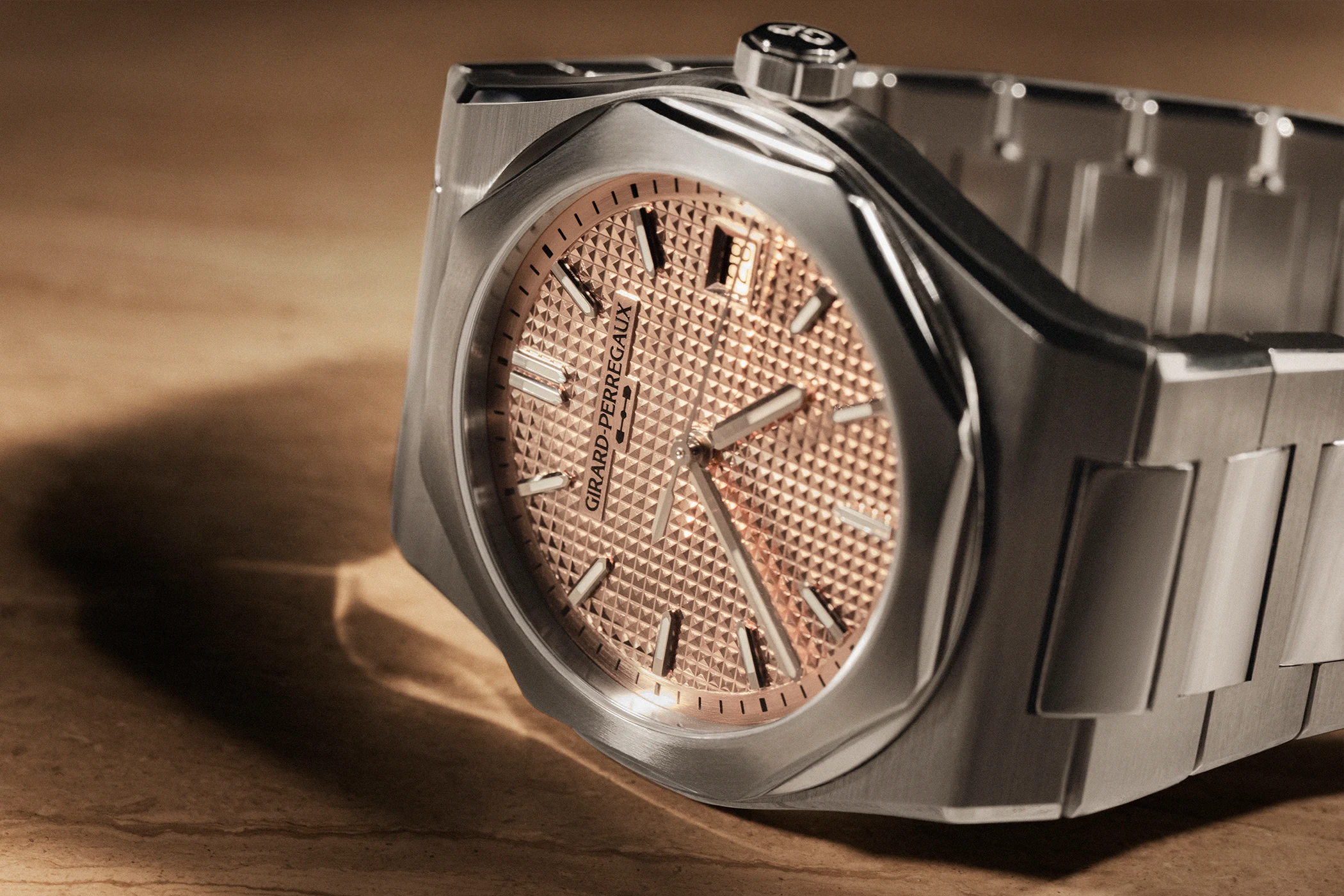
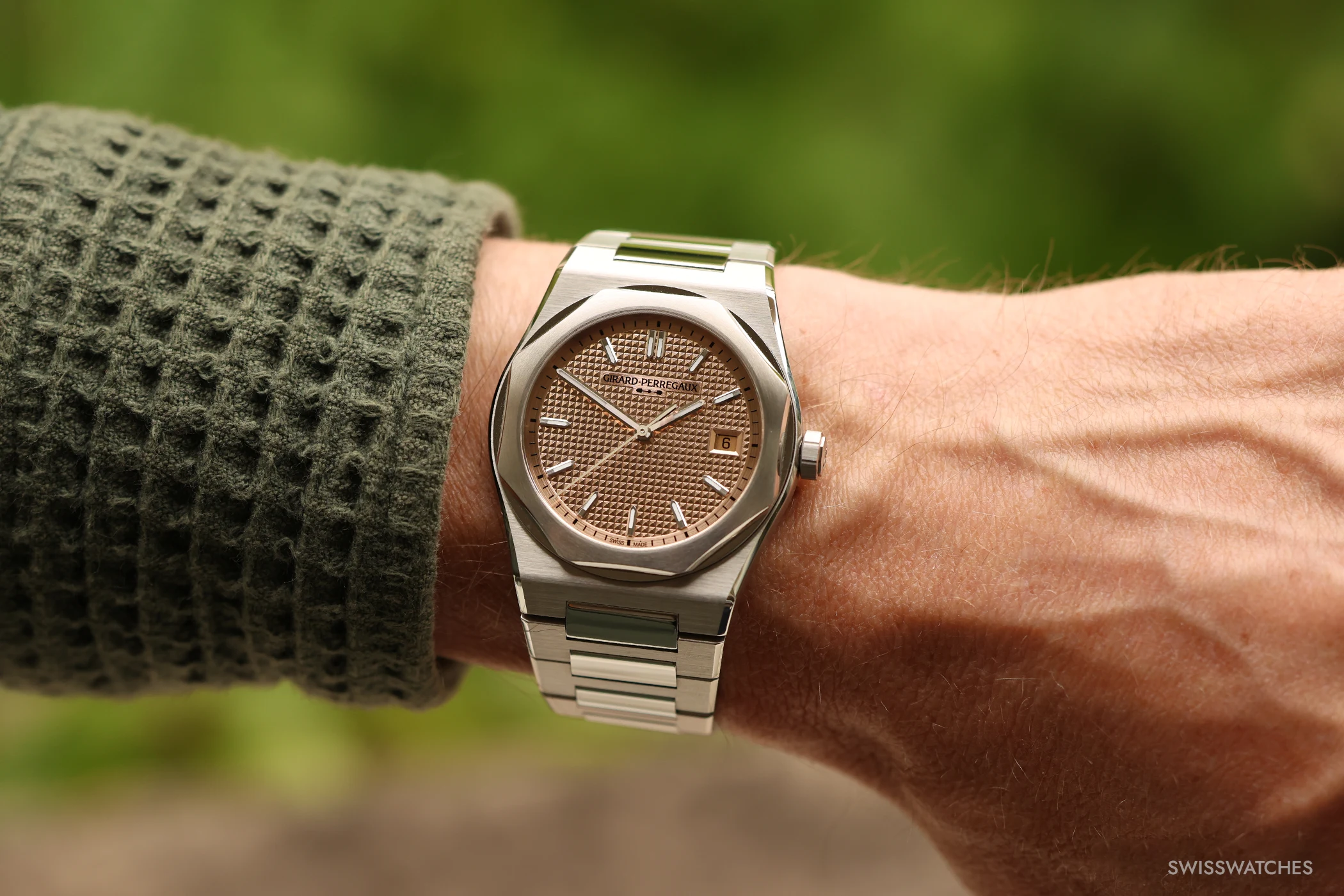
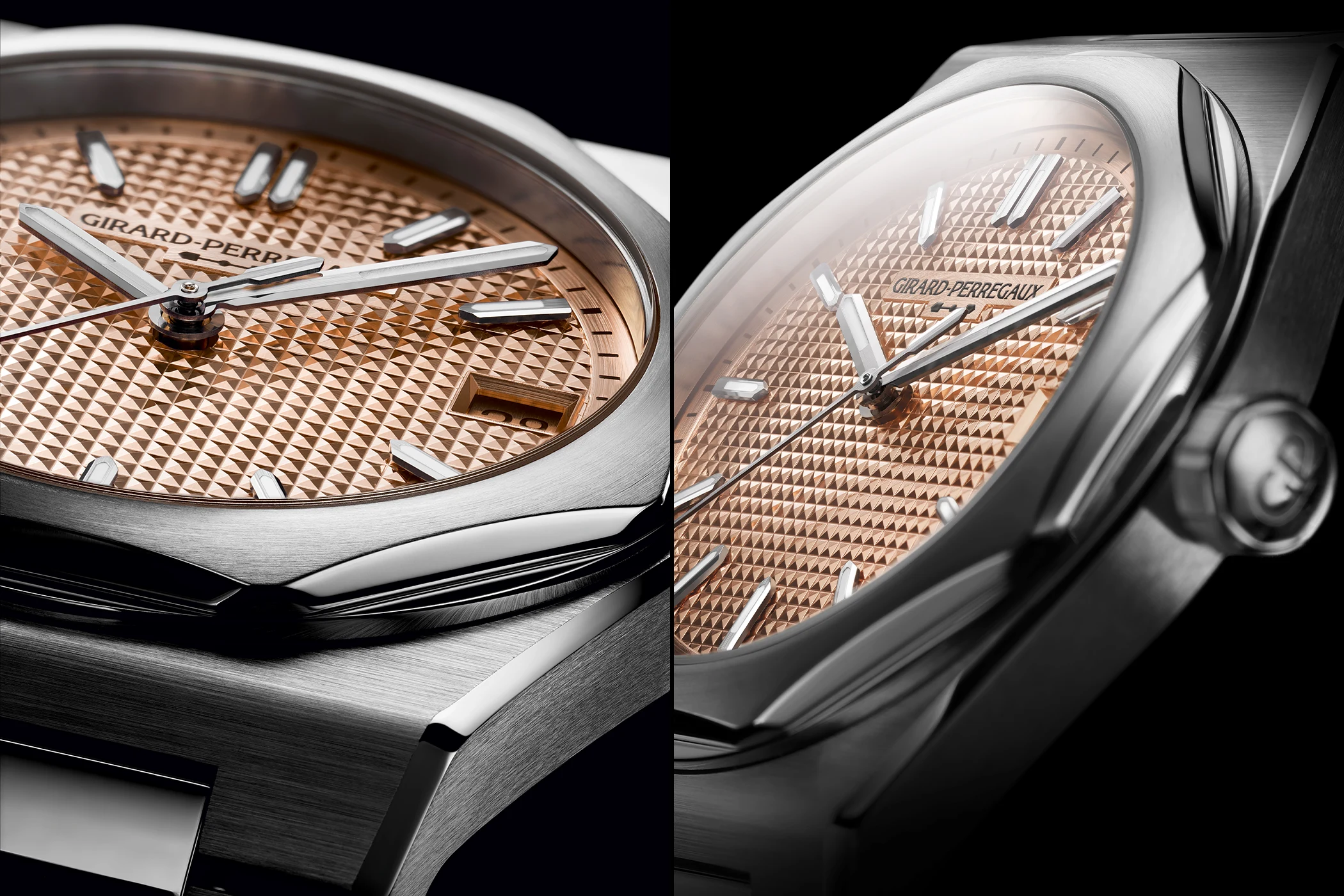
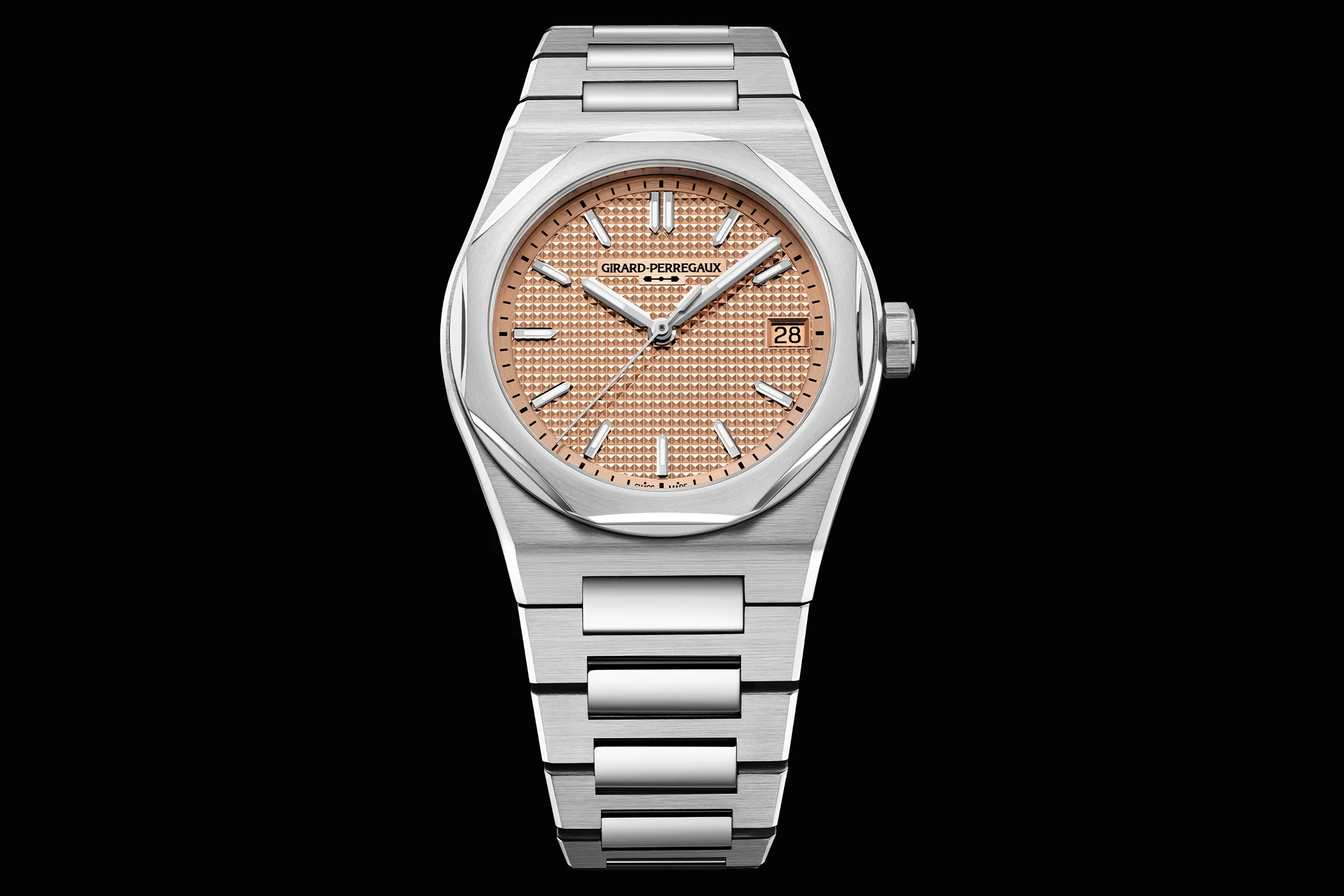
The second 39 mm version demonstrates just how different the same pattern can look when presented in a different way. Here, too, the dial features a Clous de Paris motif, but this time on solid 18-carat gold in a rose gold hue. The watch also features a date display at three o’clock. This completely transforms the watch’s appeal: less depth from the enamel, more visible material. The dial appears warmer and more metallic than the blue enamel version. Because the Clous de Paris motif is set directly into the solid rose gold, the texture appears clearer and more immediate: there is less depth of colour, but the material, edges and reflections are more pronounced. The texture is not immediately concealed beneath the colour, but is part of the surface itself.
The 36 mm models are not simply smaller versions of the 39 mm variants. In a watch with a bracelet integrated into the case, a smaller diameter immediately alters the overall visual appearance of all components: The bezel sits closer to the edge of the dial, the case appears more compact and the strap emerges from the watch in a more streamlined manner. As a result, the 36-millimetre Laureato Fifty presents a distinctly different look to the larger version: less surface area, tighter proportions and a greater focus on the basic form.
In terms of design, it is every bit as impressive as the larger models. The case is made of stainless steel, measures 36 millimetres in diameter and 9.80 millimetres in height. As with the larger version, the case back is made of sapphire crystal; it is water-resistant to 150 metres and also has a power reserve of 60 hours. Furthermore, the integrated steel bracelet with a butterfly clasp and 4-millimetre micro-adjustment remains unchanged.
Although the 36-mm models of the Laureato Fifty are smaller, they are by no means simpler in construction. They feature the same calibre, the same case design and the same bracelet construction as the larger versions.
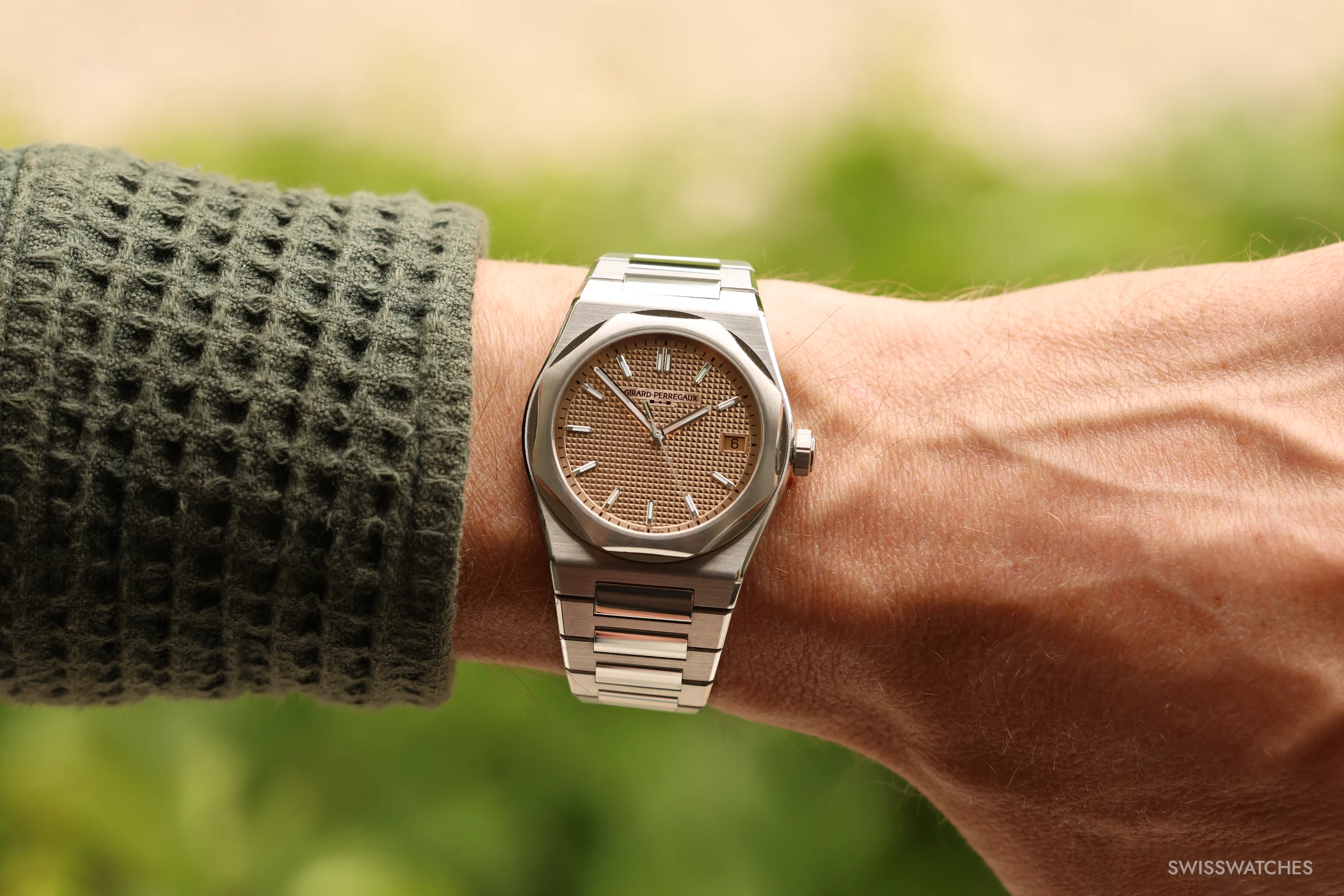
The version with a rose gold-coloured Clous de Paris dial demonstrates just how well this size suits the Laureato. The smaller case makes the overall architectural structure appear more compact. The angular bezel, its rounded base and the integrated strap sit closer together; nothing appears stretched or overemphasised. The rose gold dial adds warmth to its more compact form without making the watch appear heavy. It is the more understated of the two 36 mm interpretations.
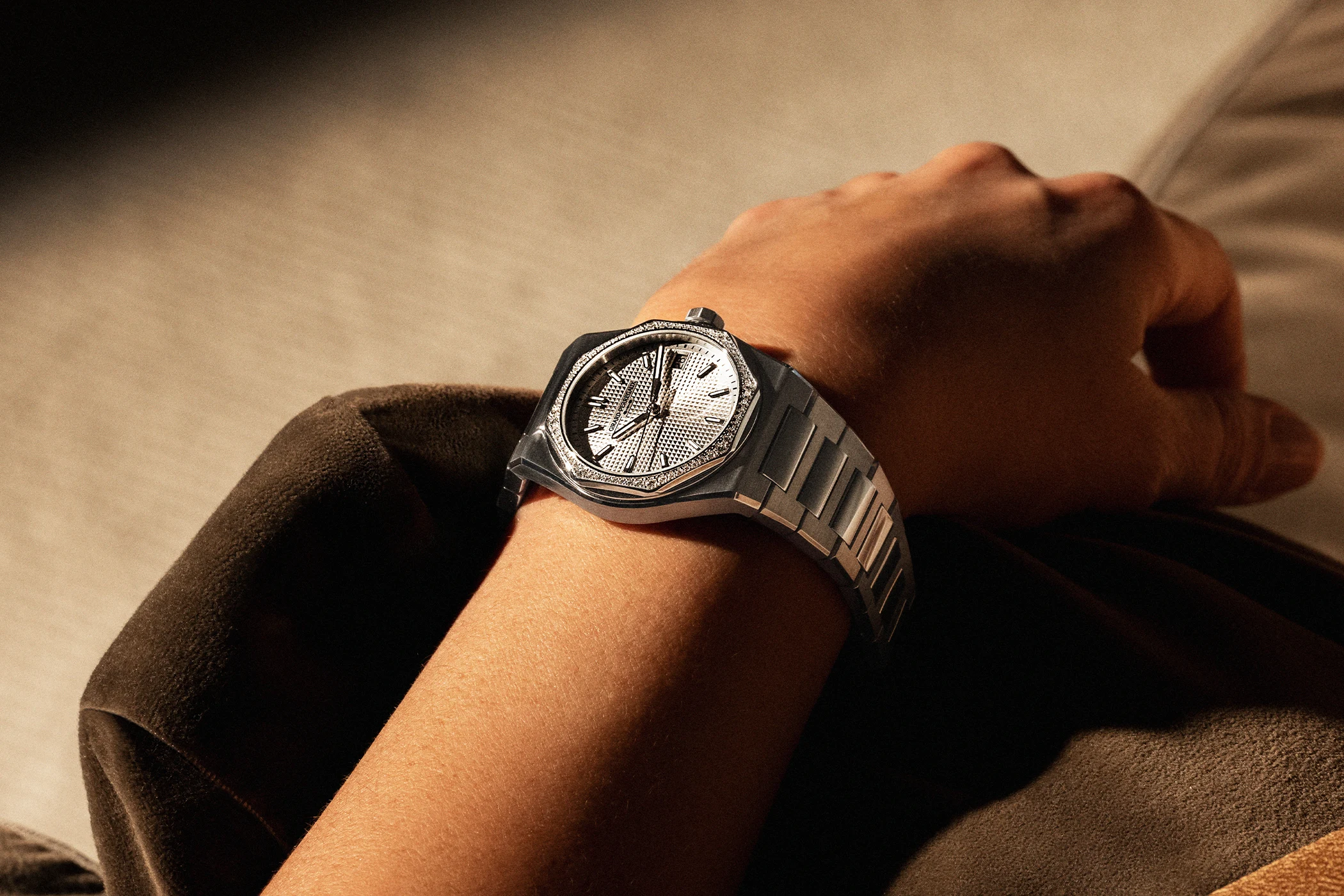
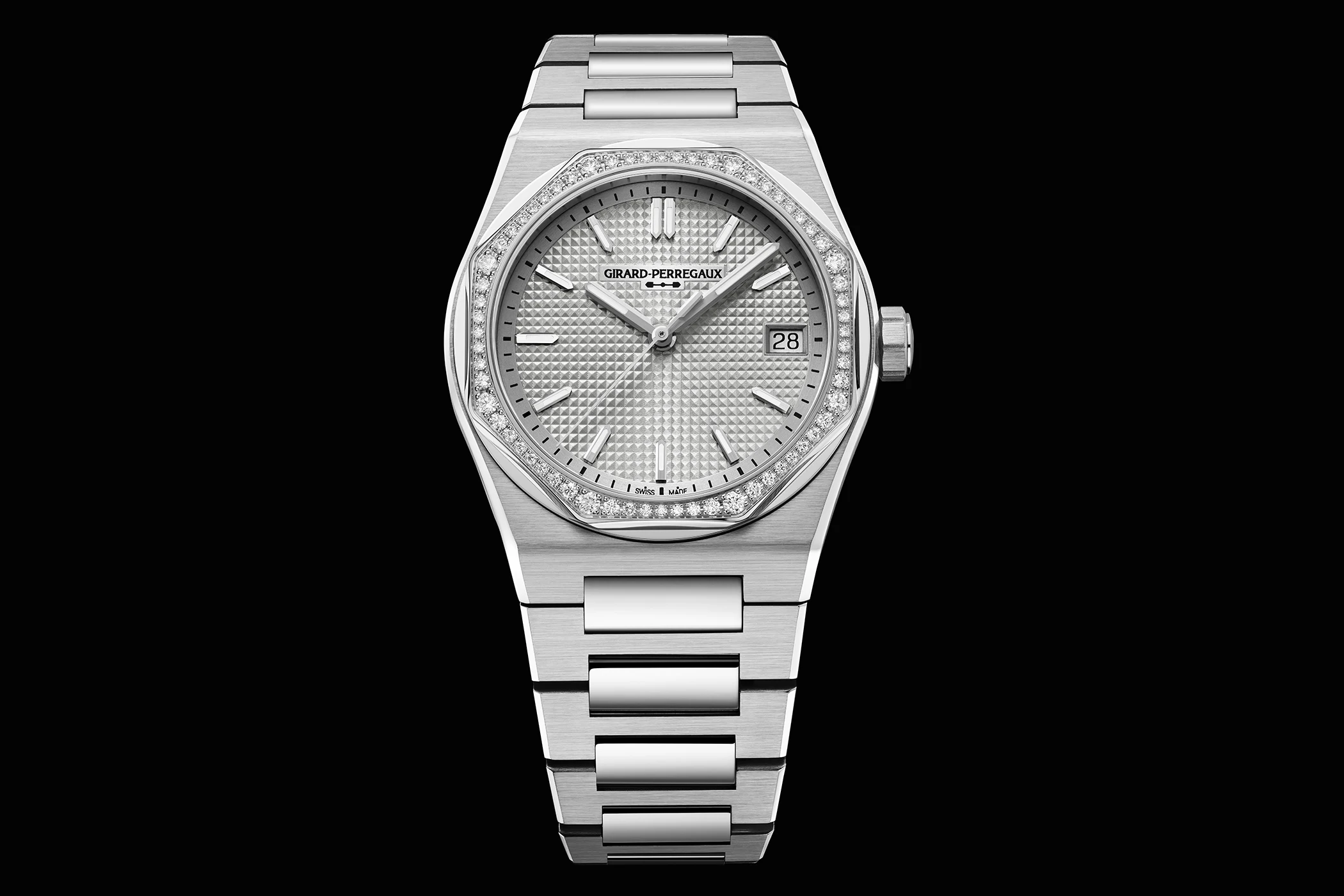
The approach was different for the version with a silver-coloured Clous de Paris dial and a diamond-set bezel: the 64 brilliant-cut diamonds, totalling around 0.55 carats, are set within the octagonal shape that has defined the Laureato since 1975. In this way, they accentuate the watch’s contours rather than obscuring them. The light is reflected by the bezel, whilst the silver-coloured dial continues the structure of the Clous de Paris pattern in a more understated manner.
These two 36-mm models in particular demonstrate that, with the Laureato Fifty, size is not merely a question of target audience. The 36-mm size does not simply make the watch a smaller version, but gives it its own distinct proportions. Here, the Laureato appears closer to the wrist, more compact in design and more focused on its characteristic features.
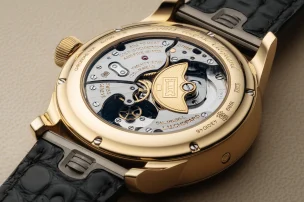
Inside the Laureato Fifty beats the new GP4800 in-house calibre with automatic winding. It is fitted in all four models of the collection and is clearly visible through the sapphire crystal case back. It measures 25.60 millimetres in diameter, is 4.28 millimetres high, beats at 28,800 vibrations per hour (4 Hz) and offers a power reserve of around 60 hours.
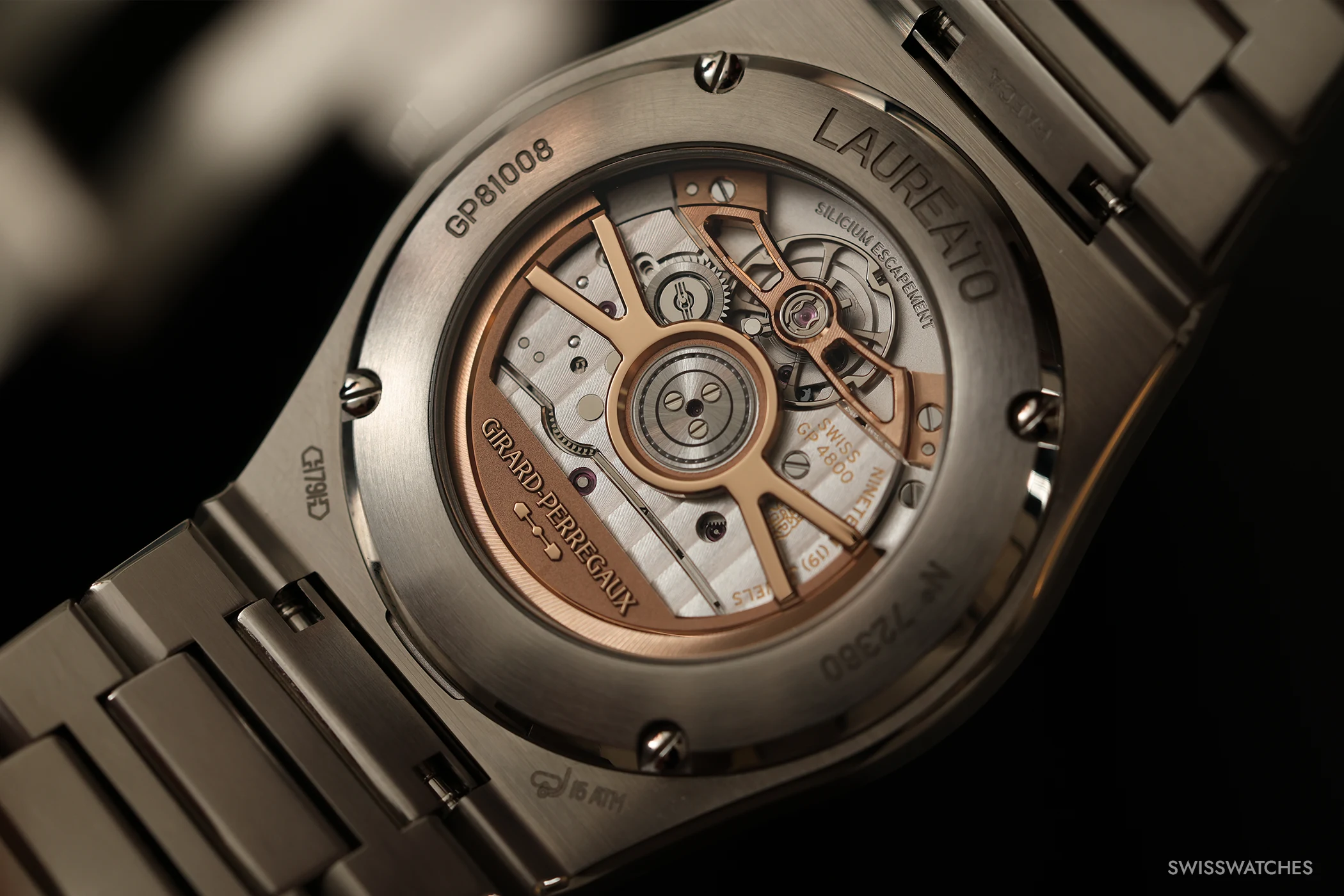
Girard-Perregaux has fitted the GP4800 with a rotor and a balance bridge crafted from 18-carat rose gold. The design draws on the manufacture’s historic three-bridge motif, yet remains technically precise and understated in its execution. Girard-Perregaux also goes to greater lengths than necessary with the finishing: bevelled edges contrast with satin-finished surfaces, Geneva stripes meet guilloché, complemented by engravings, sandblasting, snail patterns and sunburst finishes. Thus, the back of the Laureato Fifty serves as a continuation of the design standards that the watch already embodies on the front.
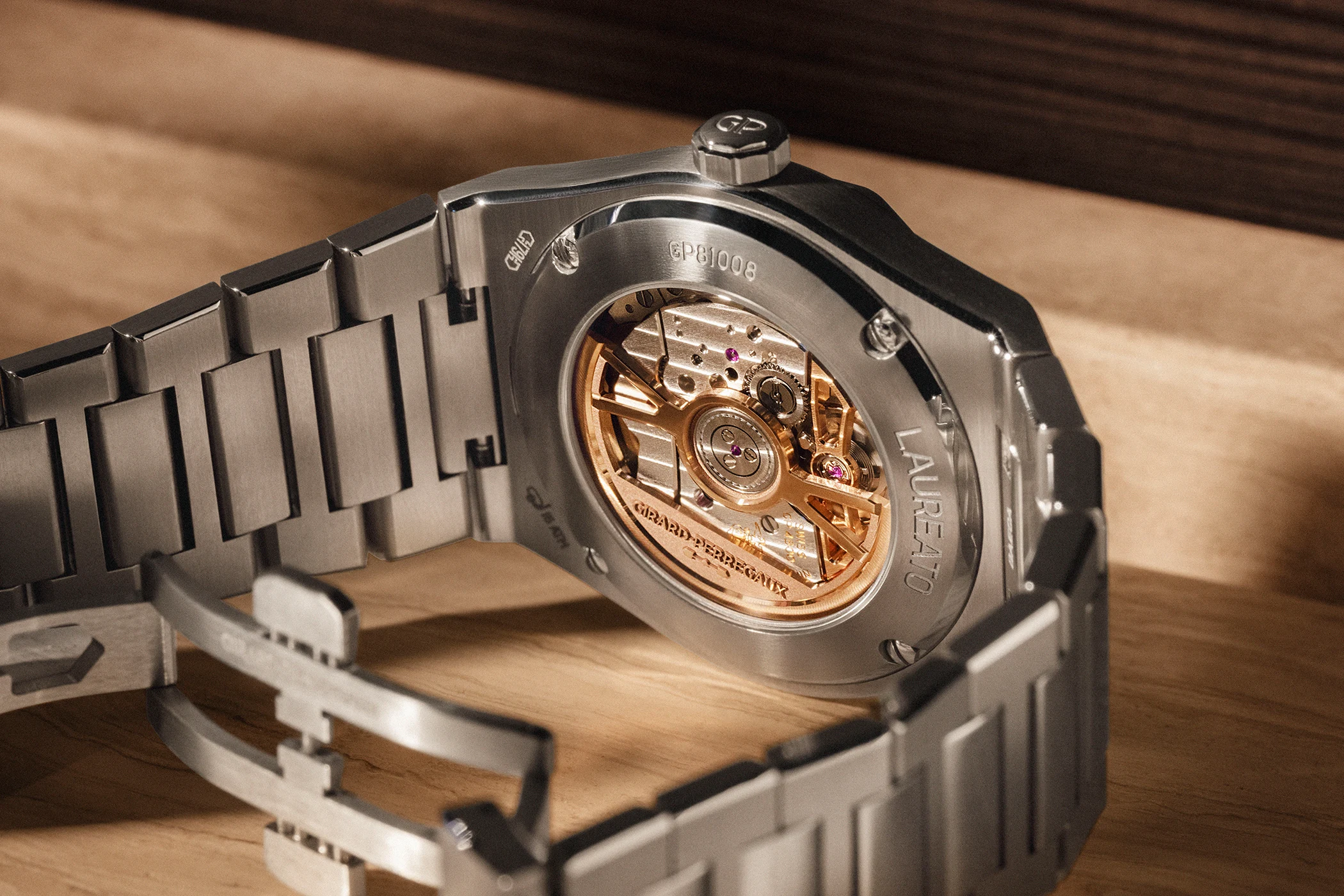
Despite all the work on the dials, proportions and movement, the Laureato Fifty remains an integrated steel watch for everyday wear: 9.8 millimetres (or 10.2 millimetres for the enamel version) case height, 150-metre water resistance and the 4-mm micro-adjustment on the steel bracelet are key to this. At the same time, Girard-Perregaux has not altered the collection’s basic design, but has refined it through more precise proportions, more elaborate dials and the visible GP4800 calibre. As a result, the Laureato Fifty feels less like an anniversary model and more like a more refined version of a familiar watch.
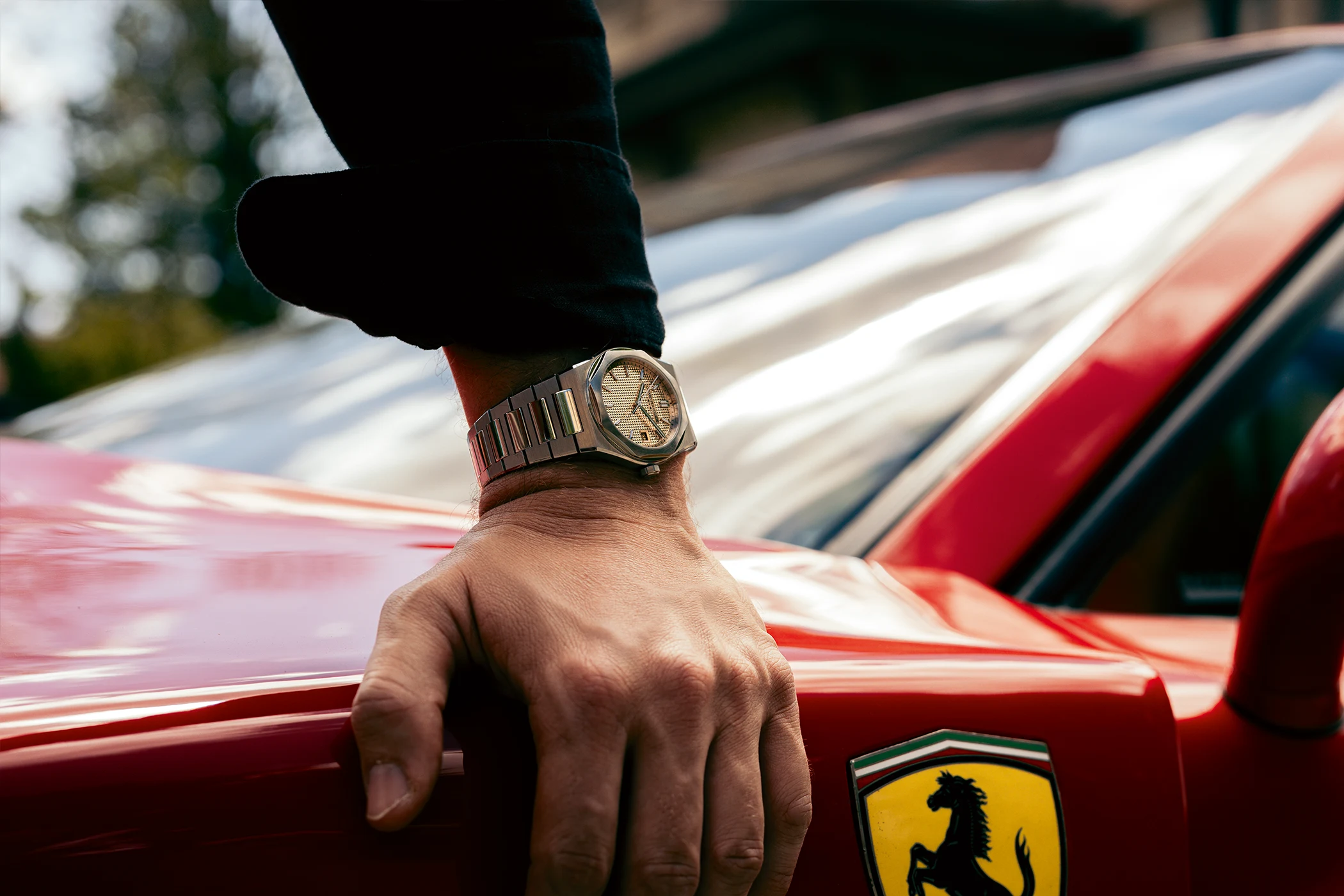
The 39mm Laureato Fifty with a blue enamel dial costs €23,800. The 39mm version with a rose-coloured dial costs €22,400. The Laureato Fifty with a 36mm case diameter and a rose-coloured dial also costs €22,400, and €23,500 with gemstones.
Girard-Perregaux
Laureato FIFTY
39 mm:
81008-11-3627-1CM (rose gold dial)
81008-11-3530-1CM (blue enamel dial)
36 mm:
81006-11-3626-1CM (rose gold dial)
81006-11S3597-1CM (silver dial)
Stainless steel
Diameter: 39/36 mm
Thickness: 9.8 mm
15 bar (150 metres)
39 mm models:
18-carat solid rose gold or blue enamel dial with a “Clous de Paris” pattern
36 mm models:
18-carat solid rose gold or silver dial with a “Clous de Paris” pattern
Steel bracelet with a three-piece butterfly clasp and 4mm micro-adjustment
In-house calibre GP480
Diameter: 25.6 mm
Thickness: 4.28 mm
Automatic movement with a rotor and balance bridge in 18-carat rose gold
60 hours
28.800 A/h (4 Hz)
Laureato FIFTY 39 mm with blue enamel dial:
Hours, minutes, central seconds
All other Laureato Fifty models:
Hours, minutes, central seconds, date
Laureato FIFTY 39 mm:
EUR 23,800 (blue dial)
EUR 22,400 (rose gold dial)
Laureato FIFTY 36 mm:
EUR 23,500 (silver dial with diamond bezel)
EUR 22,400 (rose gold dial)