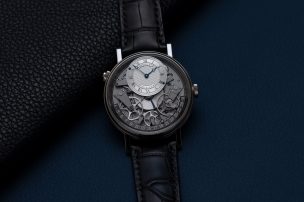
The Tutima Patria Special Edition combines rose gold, classic design and the new Calibre 626 with an open-worked movement.
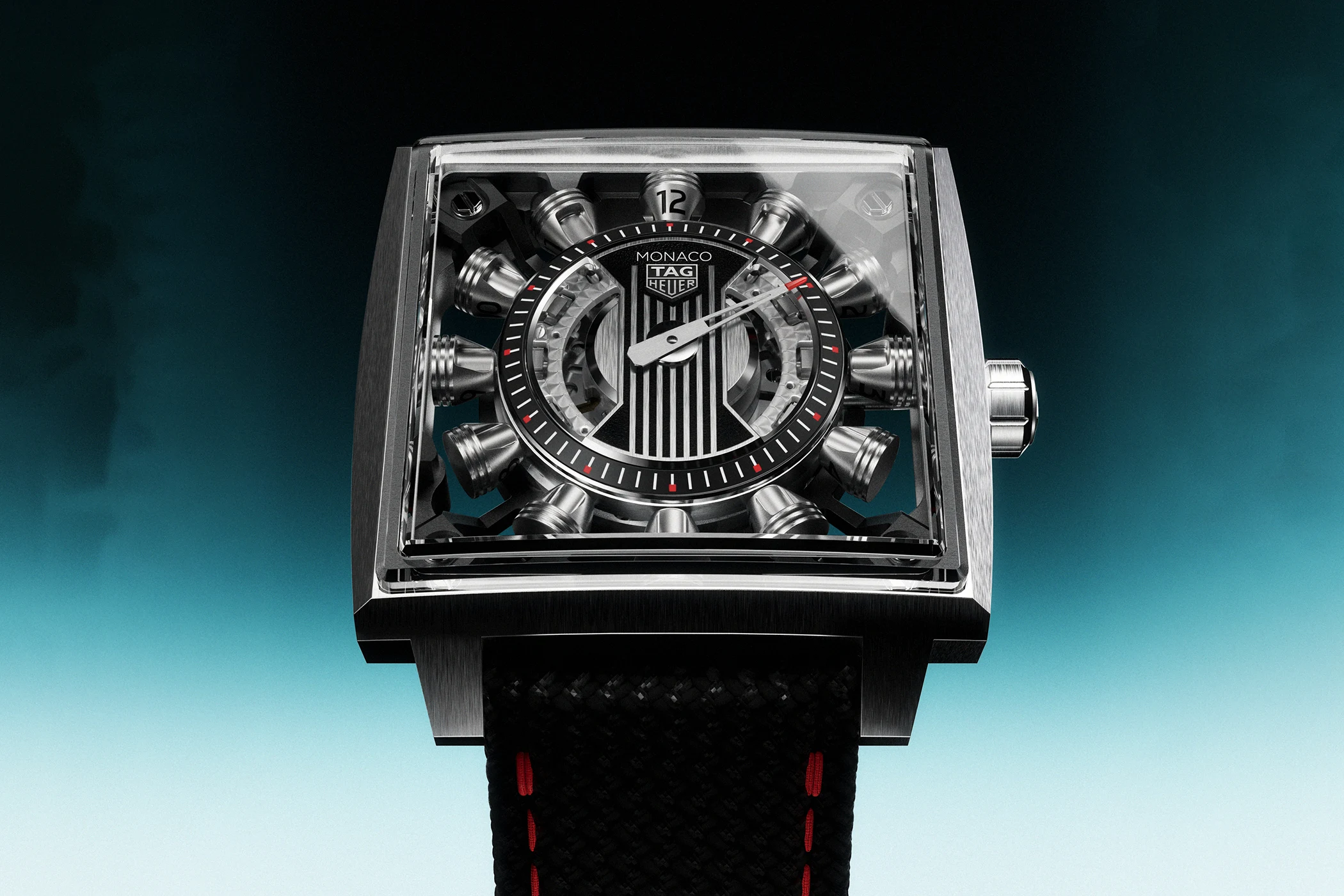
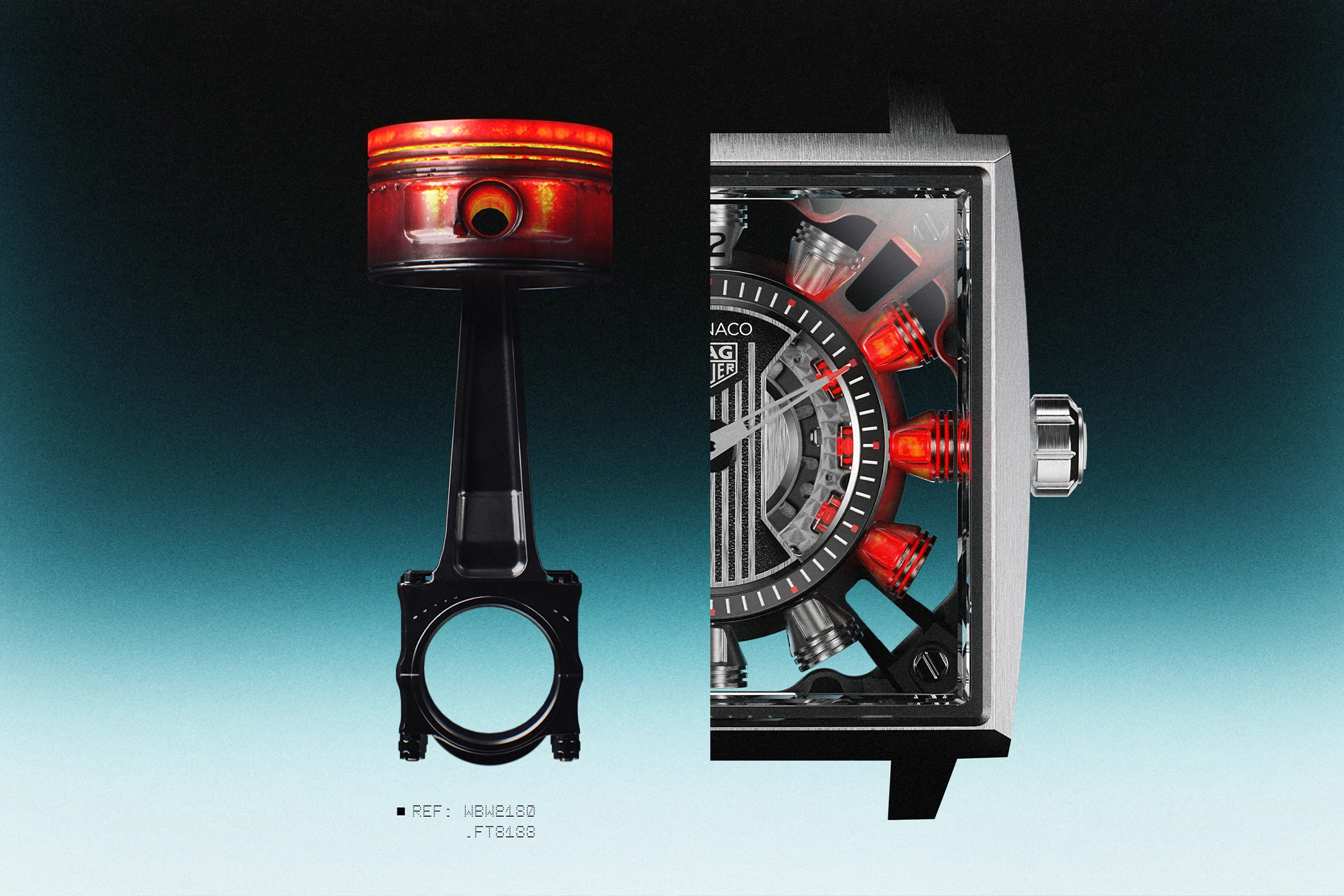
With the Monaco Speed 12, TAG Heuer combines its angular icon with the Spin-Time mechanism from La Fabrique du Temps Louis Vuitton. The jointly developed automatic Calibre TH84-00 translates the motorsport theme into a particularly striking way of displaying the time: twelve rotating pistons take the place of the hour markers, turning every hour change into a visible mechanical spectacle.
Many motorsport watches pay homage to racing without engaging with it mechanically. They feature stripes, race numbers, coloured stitching or logos on the dial, hoping that this will lend them a sense of authenticity. The new TAG Heuer Monaco Speed 12 takes a different approach. It uses the architecture of a car engine not as decoration, but as the central principle of the time display. Twelve pistons, arranged like a 12-cylinder engine, take on the role of hour markers. At first glance, this is a spectacular idea. However, it only truly comes into its own within the case of the Monaco: a watch that, since 1969, has thrived on functioning differently than expected.
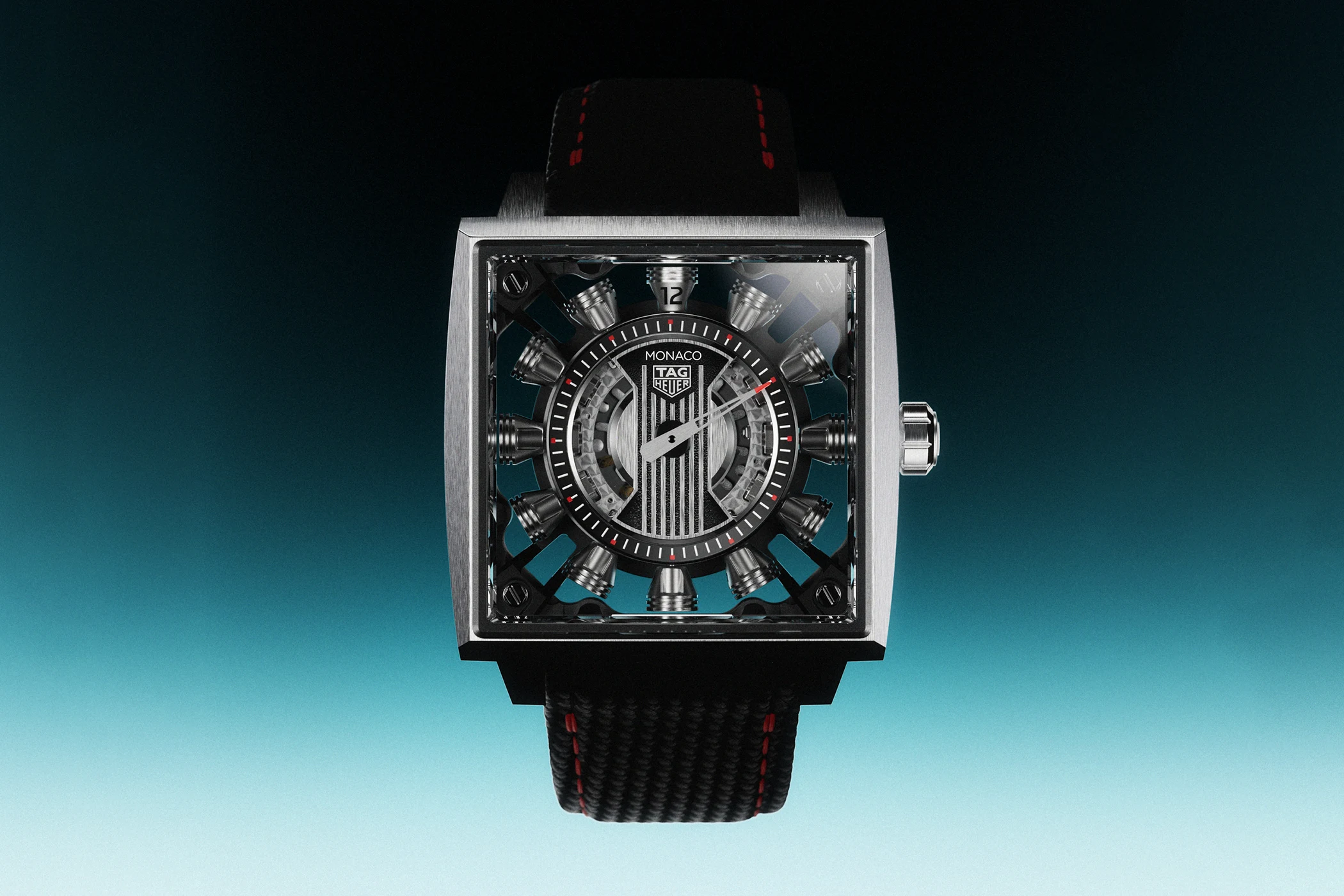
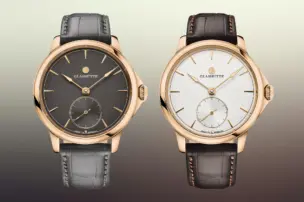
The Monaco has always been a watch that has had little patience for convention. When Heuer unveiled it in 1969, it was the first square, water-resistant chronograph and, at the same time, part of that early generation of automatic chronographs featuring the Calibre 11. Its left-hand crown, angular case and, later, its association with Steve McQueen and Le Mans made it a watch that visibly defied the norms of the time. It was not elegant in the classical sense, but deliberately graphic, technical, almost stubborn in its form. It is precisely for this reason that the Speed 12 finds the perfect setting in the Monaco. The square architecture ensures that the rotating pistons do not appear as a gimmick isolated from the rest, but rather makes them the centrepiece of a deliberately staged mechanism.
The Monaco Speed 12 is being unveiled at the 2026 Formula 1 Louis Vuitton Grand Prix de Monaco. The timing is clearly deliberate, but the watch goes beyond the obvious route of being merely a special Grand Prix edition. The fact that TAG Heuer is currently the Official Timekeeper of Formula 1 and a partner of Oracle Red Bull Racing provides the current context. However, what is decisive is not its proximity to the racetrack, but the horological translation of this into the function of a watch: for in the Speed 12, the engine is functionally integrated into the display.
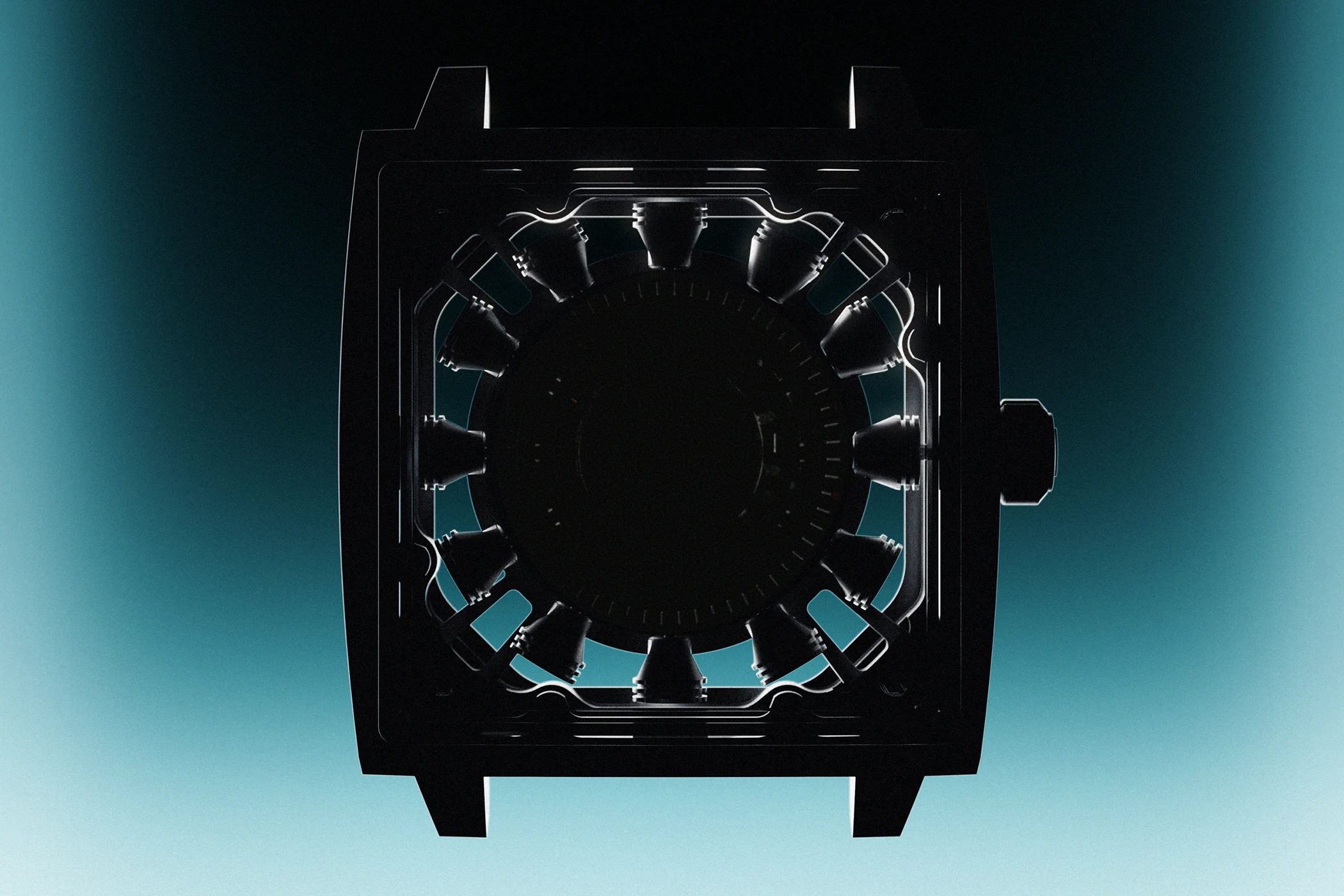
At the heart of the watch lies the automatic Calibre TH84-00, developed and produced by La Fabrique du Temps Louis Vuitton. There is more to this than just a corporate reference: La Fabrique du Temps, founded by Michel Navas and Enrico Barbasini, is one of the workshops within LVMH that not only designs complicated displays but also approaches them with a certain delight in mechanical theatre. The technical basis of the Speed 12 is the Spin Time principle: instead of displaying the hour via a hand or a window, it is revealed through rotating elements.
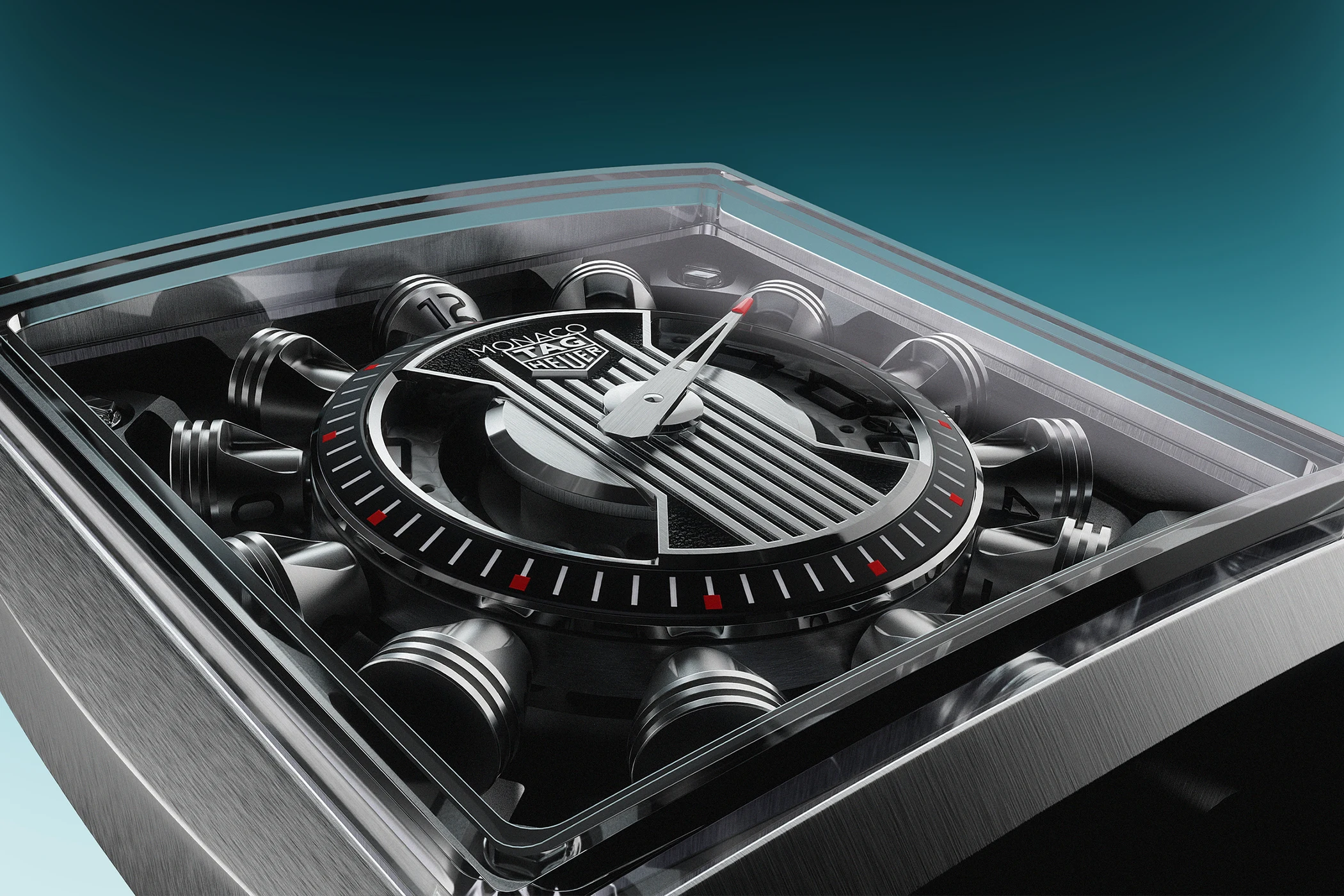
On the Monaco Speed 12, these elements take the form of twelve rhodium-plated pistons. They are arranged in a circle around the dial, which is sandblasted and features three vertically satin-finished lines and black lacquered Arabic numerals. When the central minute hand completes a full rotation, a small choreographed sequence begins: the next piston element rotates 90 degrees to indicate the new hour, whilst the previous element returns to its starting position. Essentially, this is a jumping hour mechanism. However, rather than a number jumping in a window, a mechanical component visibly tilts into position, which is why the hour appears less to be displayed and more to be triggered.
This distinguishes the watch from those motorsport models where the automotive theme ultimately manifests itself primarily on the strap or in the colour palette. Here, the engine is the architecture of time.
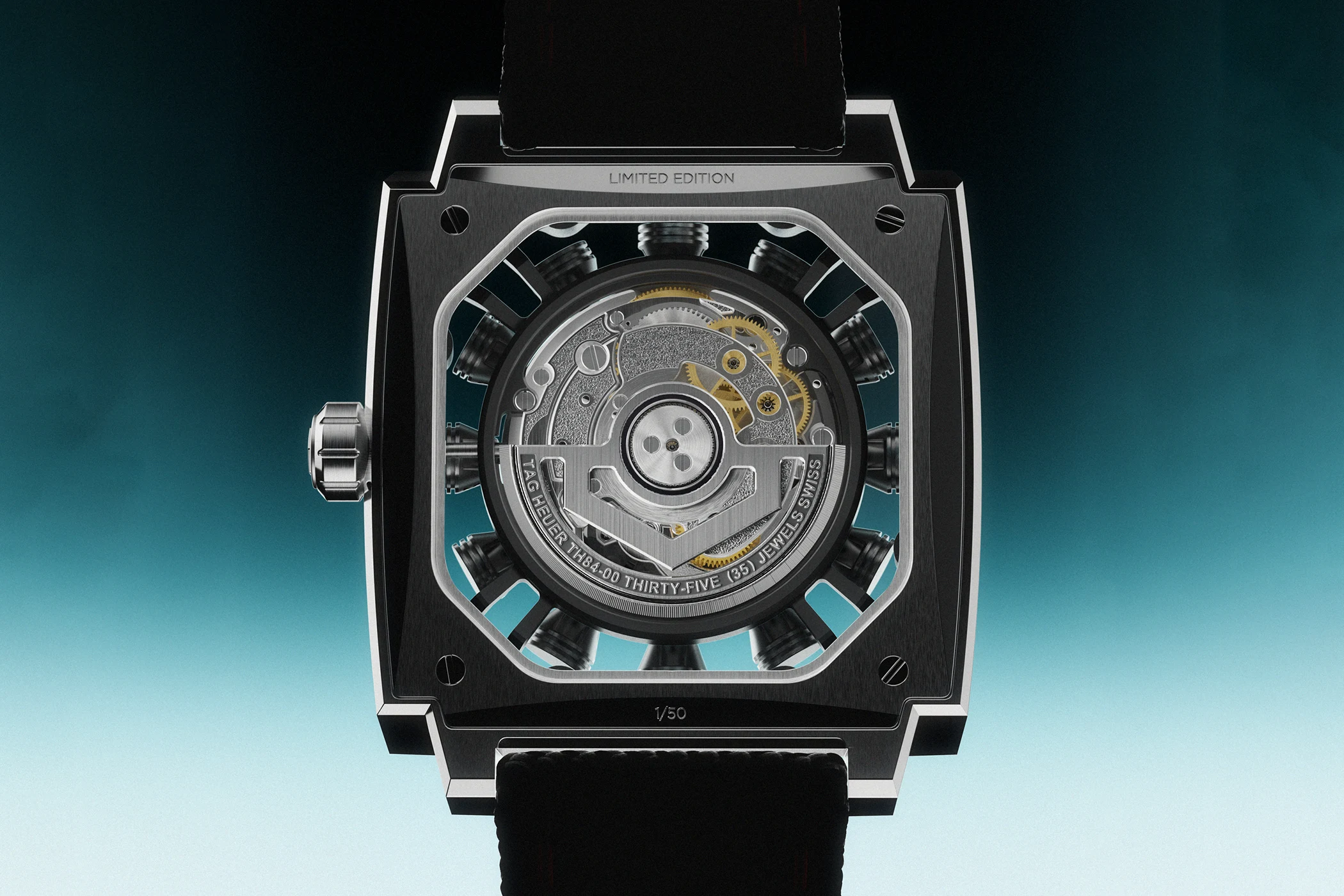
Visually, the Speed 12 thrives on a fundamental contrast that is characteristic of the Monaco: the round movement sits like a technical core within the square case architecture. The 40-millimetre case is crafted from finely brushed and polished Grade 5 titanium. Within it, the round movement sits like a technical insert within a frame. A fixed sapphire bezel and a domed sapphire crystal offer a view of the pistons, whilst the screw-down titanium sapphire crystal caseback also clearly exposes the mechanics. At the four corners, open arches coated in black DLC support the movement. These arches create depth and make the watch appear more transparent than one would expect from a classic Monaco and than has been customary to date.
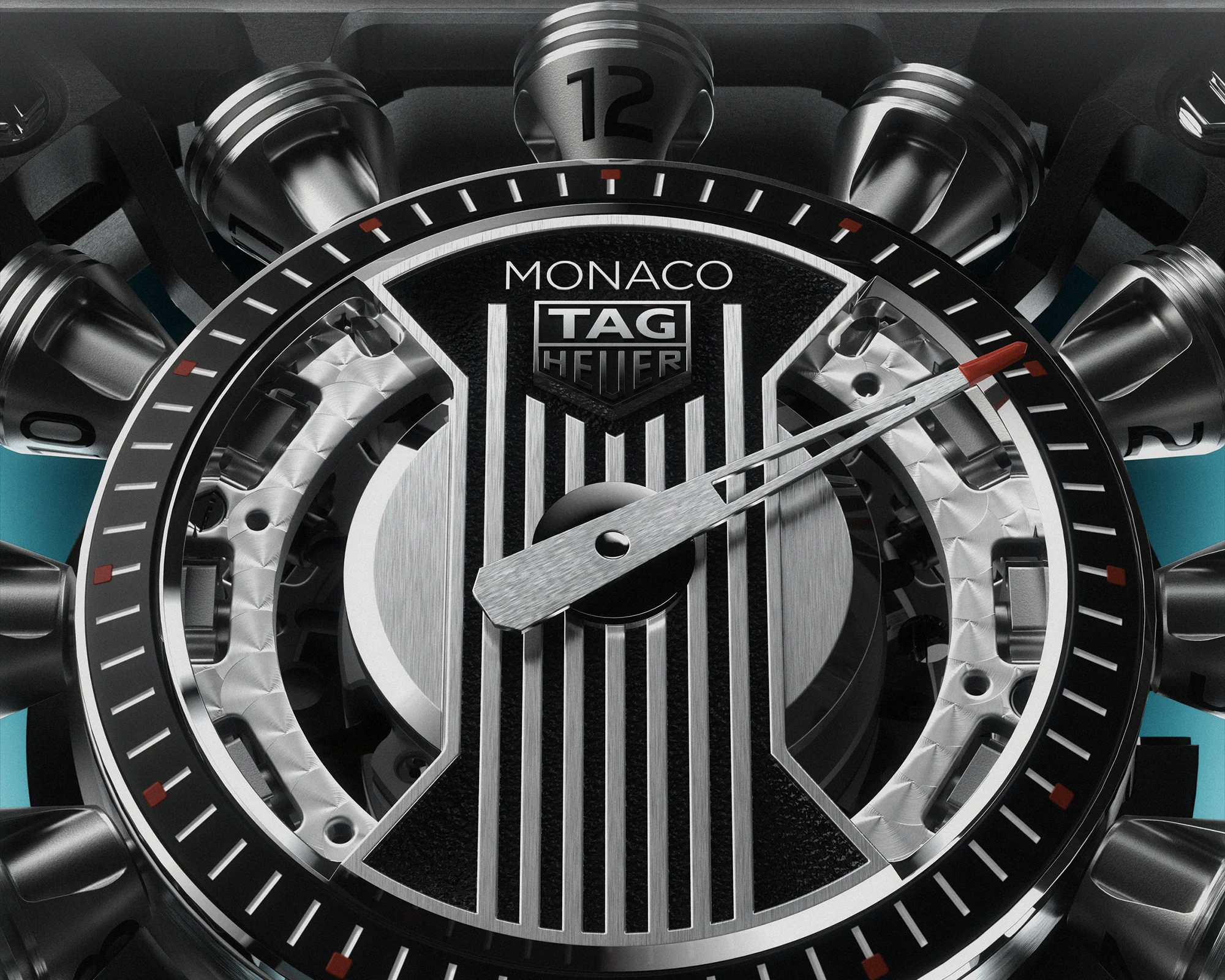
Furthermore, the dial is open-worked, but by no means haphazardly skeletonised. The central section is rhodium-plated and features vertical lines designed to evoke a sporty engine cover. A rhodium-plated central bridge with polished chamfers stabilises this composition. The black opaline minute ring, featuring white minute markings, red square hour markers and a polished rhodium-plated ring, ensures that the watch remains legible at the end of the day, despite all the mechanical activity. Moving across it is the finely brushed, open-worked minute hand with a red lacquered tip, which resembles the needle of a manual speedometer in a car cockpit.
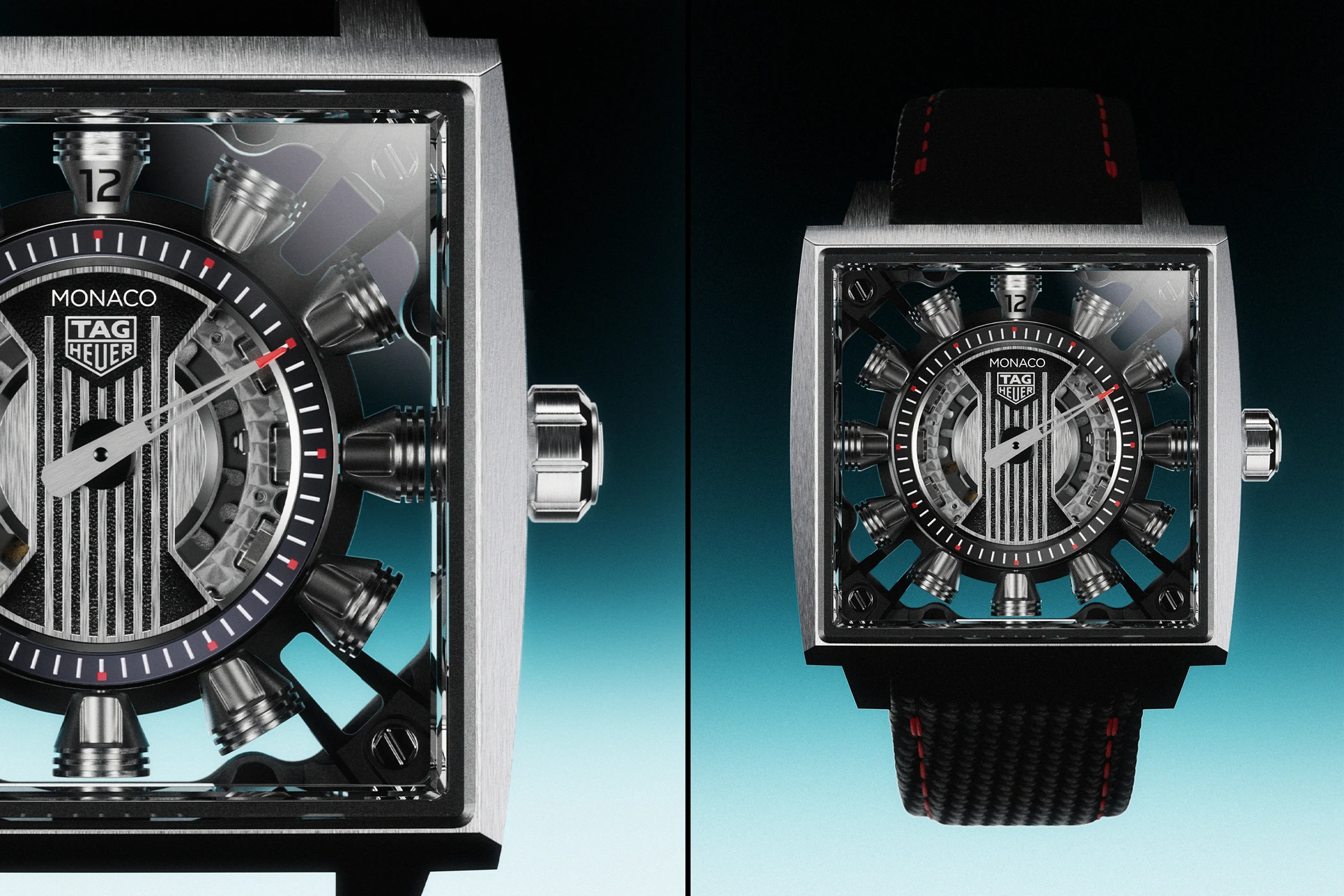
On the wrist, the Monaco Speed 12 is unlikely to be an inconspicuous companion. Whilst Grade 5 titanium helps with the weight, and 40 millimetres doesn’t sound excessive for a Monaco’s case diameter, the height of the domed crystal, the transparent construction and the moving hour markers are likely to make the watch appear very striking. The black rubber strap with a textile embossed pattern and red hand-stitching echoes the watch’s technical character without making it look like a racing driver’s outfit. The titanium folding clasp remains pleasantly understated, lending the watch a particularly serious demeanour and clearly setting it apart from superficial racing editions.
However, its water resistance of 30 meters serves as a reminder that this watch is designed more for display cabinets, collectors’ gatherings and the occasional outing than for the rigours of everyday life.
The price also makes its positioning clear: at €77,000, the Monaco Speed 12 is by no means a watch for everyone´s budget. TAG Heuer’s reference WBW2180.FT8133 is limited to 50 individually numbered pieces and will be available for purchase from December 2026.
TAG Heuer
Monaco Speed 12
WBW2180.FT8133
Grade 4 titanium
Diameter: 40 mm
3 bar (30 metres)
Openworked dial: Rhodium-plated central bridge with vertical lines and polished chamfers. Black opaline minute track with a white printed minute scale.
Black rubber strap with a textured finish and contrasting red stitching.
Folding clasp in finely brushed and polished Grade 5 titanium with double safety push-buttons.
TH84-00
Automatic
45 hours
28’800 A/h (4 Hz)
Spin-Time
EUR 77,000