The Zenith DEFY Extreme Lapis Lazuli II combines carbon, titanium and natural stone with a hundredths-of-a-second chronograph and the El Primero 9004.

With the new Wild One Skeleton, Norqain has developed a chronograph that could hardly be more comfortable to wear.
If there’s one thing I’ve learnt over the many years of my passion for watches, it’s that, without exception, you should only ever judge a watch once you’ve seen it in person and tried it on your wrist at least once. No photograph in the world can convey the feel, the comfort of wearing it, or its emotional value.
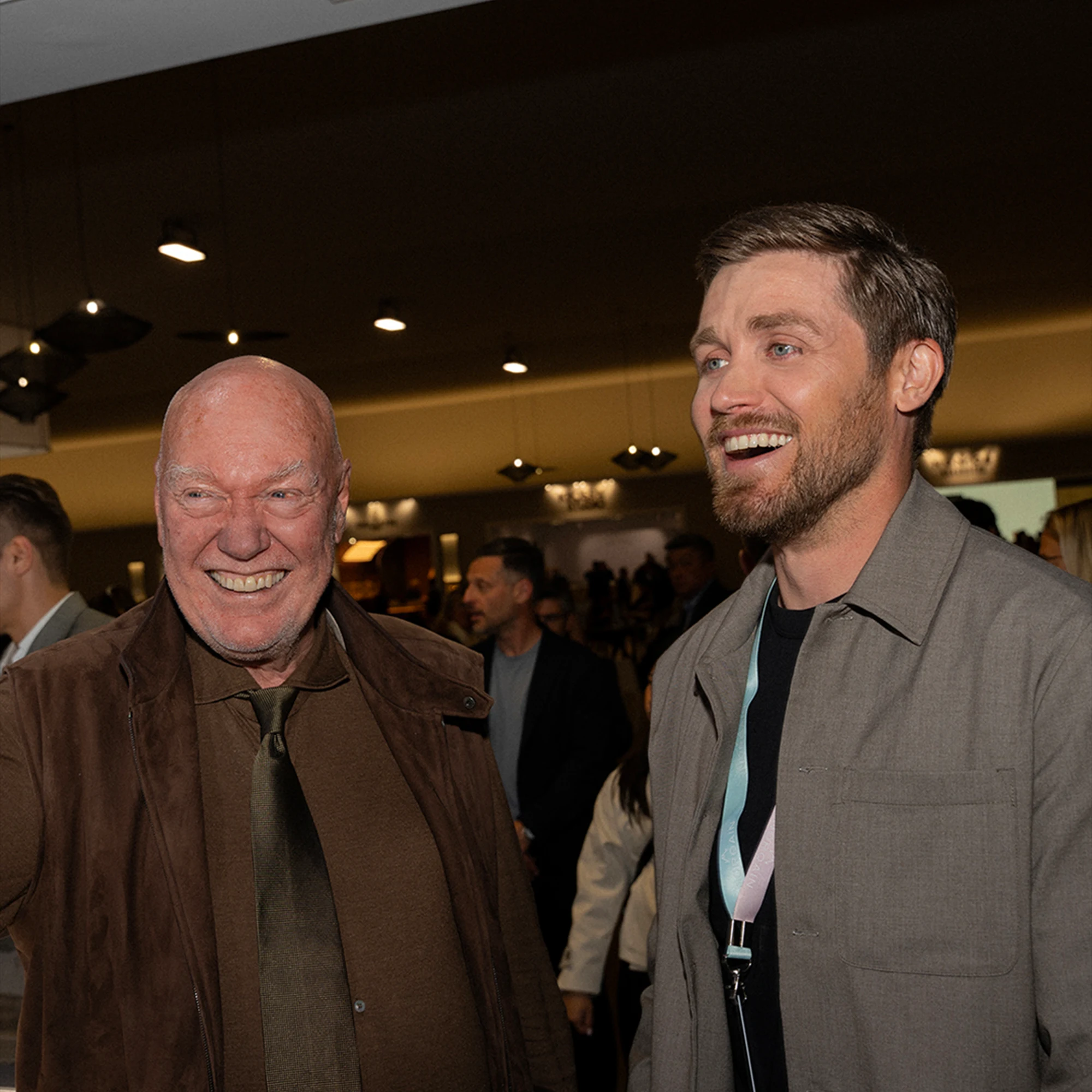
And this was brought home to me once again quite recently when I visited the Norqain stand at Watches & Wonders in April and CEO and founder Ben Küffer placed his new Wild One Skeleton Chrono in my hand. I’d already seen a few press photos, which looked nice, and the brand’s DNA was immediately recognisable, but what happened next changed my perception (yet again) in an instant.
The year before, I’d already had the new Wild One Skeleton – in 39 mm and feather-light at 64 grams – on my wrist; it looked incredible in the flesh and felt like a second skin. For the first time, Norqain has now added a chronograph to the range and also skeletonised the dial, so I was a little sceptical as to whether the significantly bulkier 42-mm case and the open view of the movement would still offer the same wearability I’d come to expect from the brand’s previous models.
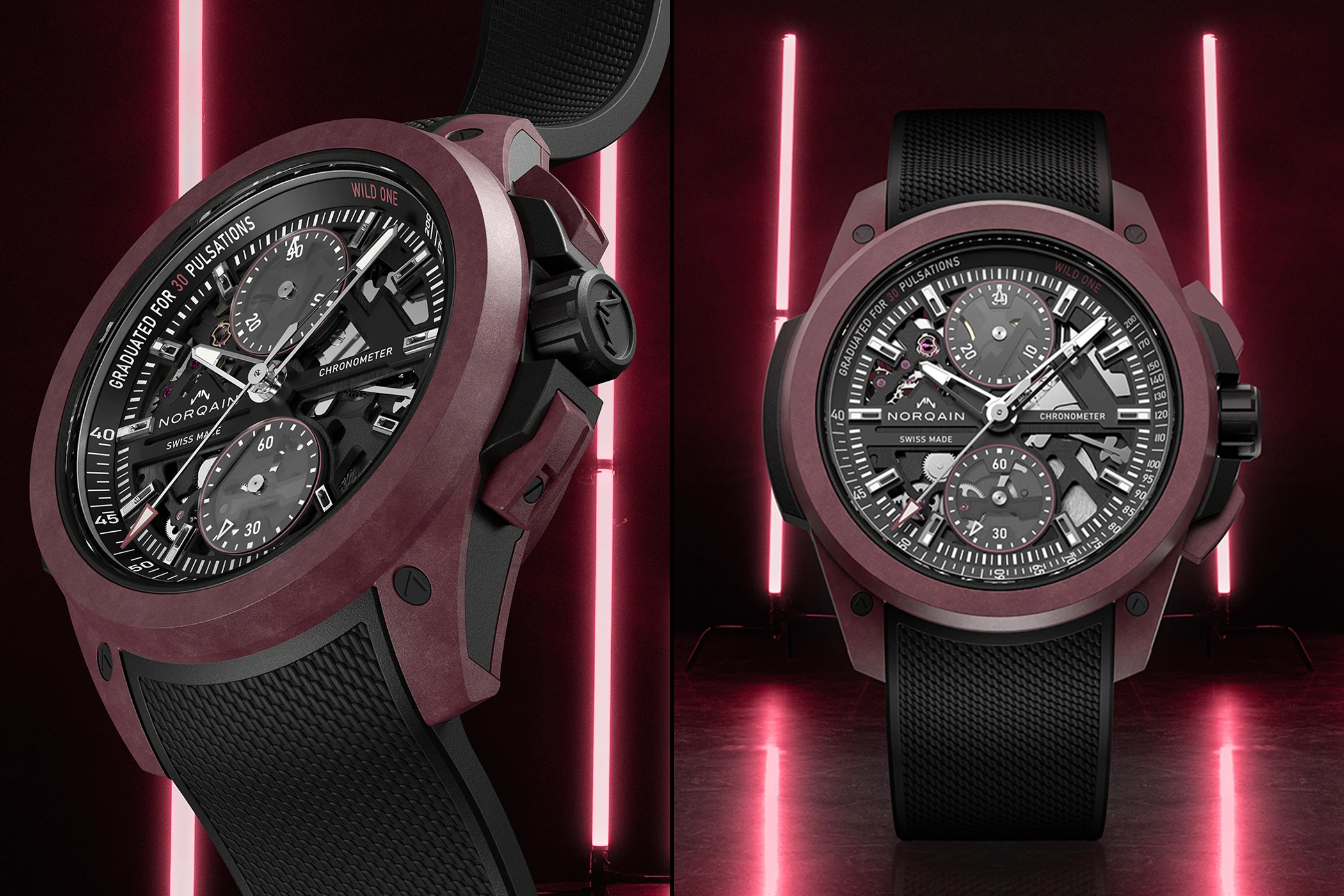
And yes, the new Wild One Skeleton Chrono also looked remarkably good on the wrist for a 42-mm watch. And not only that, but its feel and aesthetics are also striking in person – the watch appears robust, yet at the same time light and airy, and there are exciting details everywhere just waiting to be discovered, from floating discs to a pulsometer display.
But how did Norqain manage it? As you only ever get a fleeting impression of the new releases at a trade fair and usually have no more than 30 minutes per visit for greetings, small talk, the presentation and photos, I asked the Norqain team afterwards if they could lend me the new Wild One Skeleton Chrono for a few weeks. And then it arrived, and it didn’t take long before we’d become quite good friends.
The Wild One was launched in 2022 and stemmed from an idea by Swiss watchmaking legend Jean-Claude Biver, who acts as a strategic adviser to Norqain’s board of directors. He challenged Ben Küffer’s team to design a completely new, ultra-light and shock-resistant sports watch that would stand out radically from the traditional market. To this end, Ben Küffer contacted the case specialist BIWI S.A., who developed a completely new material composition called NORTEQ for Norqain.
Pascal Bourquard Jr. (CEO of BIWI S.A.) initially considered the development of a coloured carbon-polymer composite to be impossible. However, Biver persistently pushed for further research cycles – with success. The situation was similar with the distinctive case screws: whilst flat standard screws were initially preferred for cost reasons, Biver insisted on specially forged, angled screws. These follow the sloping lines of the case lugs exactly and lend the watch a level of design sophistication that is exceptional in this price range.
The challenge with classic chronographs is that, due to their delicate mechanics and the multitude of interacting levers and wheels, they are highly susceptible to shocks. Integrating such a movement into a high-performance sports watch requires a case construction that mechanically absorbs shocks before they reach the movement. The Wild One Skeleton Chrono overcomes this challenge with a patented case architecture comprising more than 33 precisely coordinated individual components.
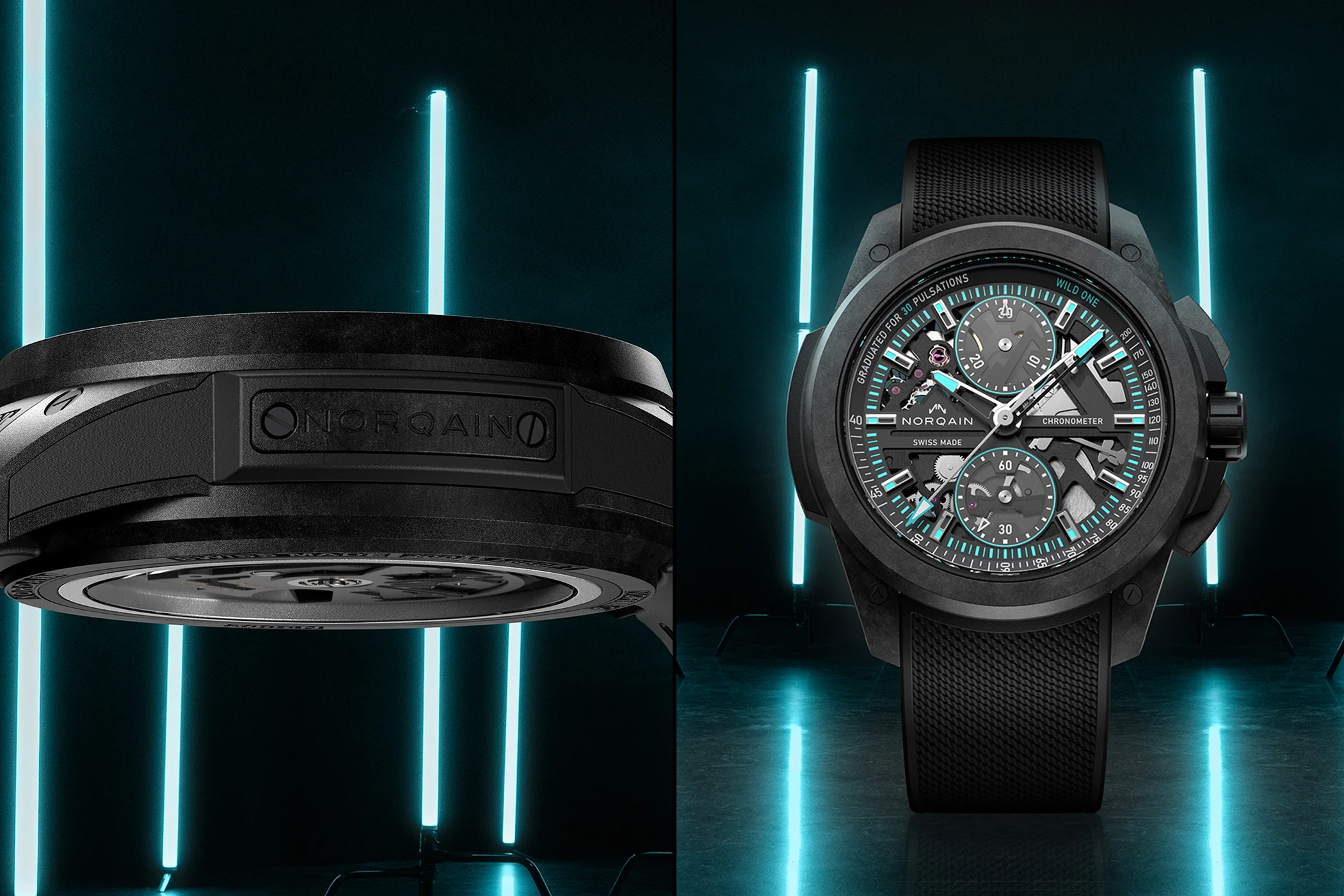
The load-bearing foundation is formed by an inner case made of sandblasted titanium, within which the mechanical movement is securely fixed. This metal case is encased in an elastic, shock-absorbing rubber damper. The rubber core, in turn, rests within a protective outer cage comprising an upper and lower case section made of black NORTEQ. NORTEQ is a highly advanced carbon fibre-polymer composite material with a special polymer matrix, which is six times lighter than steel and 3.5 times lighter than titanium.
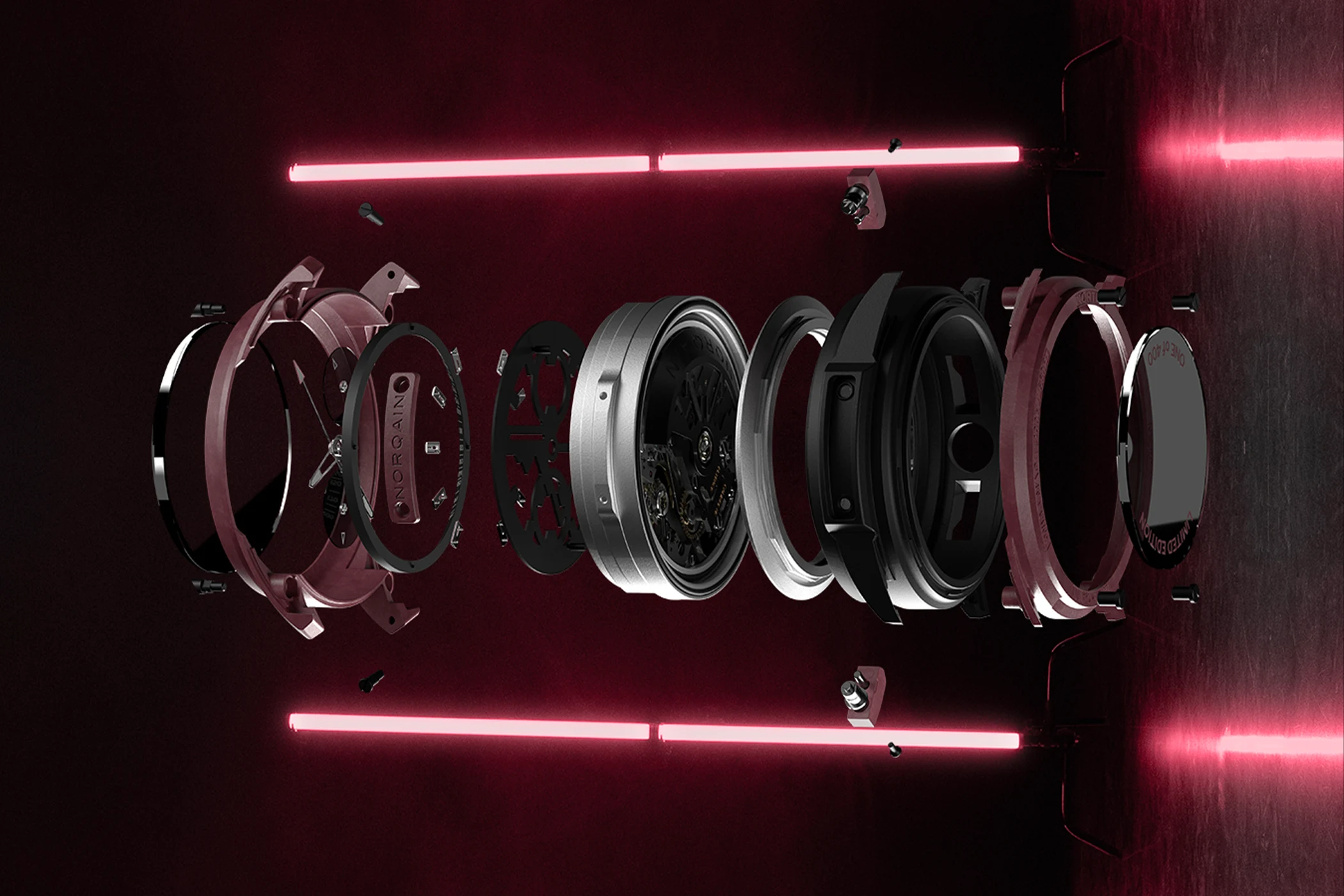
And when you put the watch on, you notice it straight away: with a diameter of 42 mm, it makes a statement, yet is as light as a feather. And it can really take a beating. This sandwich-style case can withstand shocks of up to 5,000 g. Despite this mechanically decoupled structure, the crown remains screw-down, and the watch is water-resistant to an impressive 200 metres.
The new Wild One Skeleton Chrono is powered by the exclusive NORQAIN 8K in-house calibre (NK24/1), developed in collaboration with AMT, Sellita’s division specialising in high-end complications. It is based on the tried-and-tested SW500 chronograph calibre, which has, however, undergone a thorough design overhaul for Norqain.
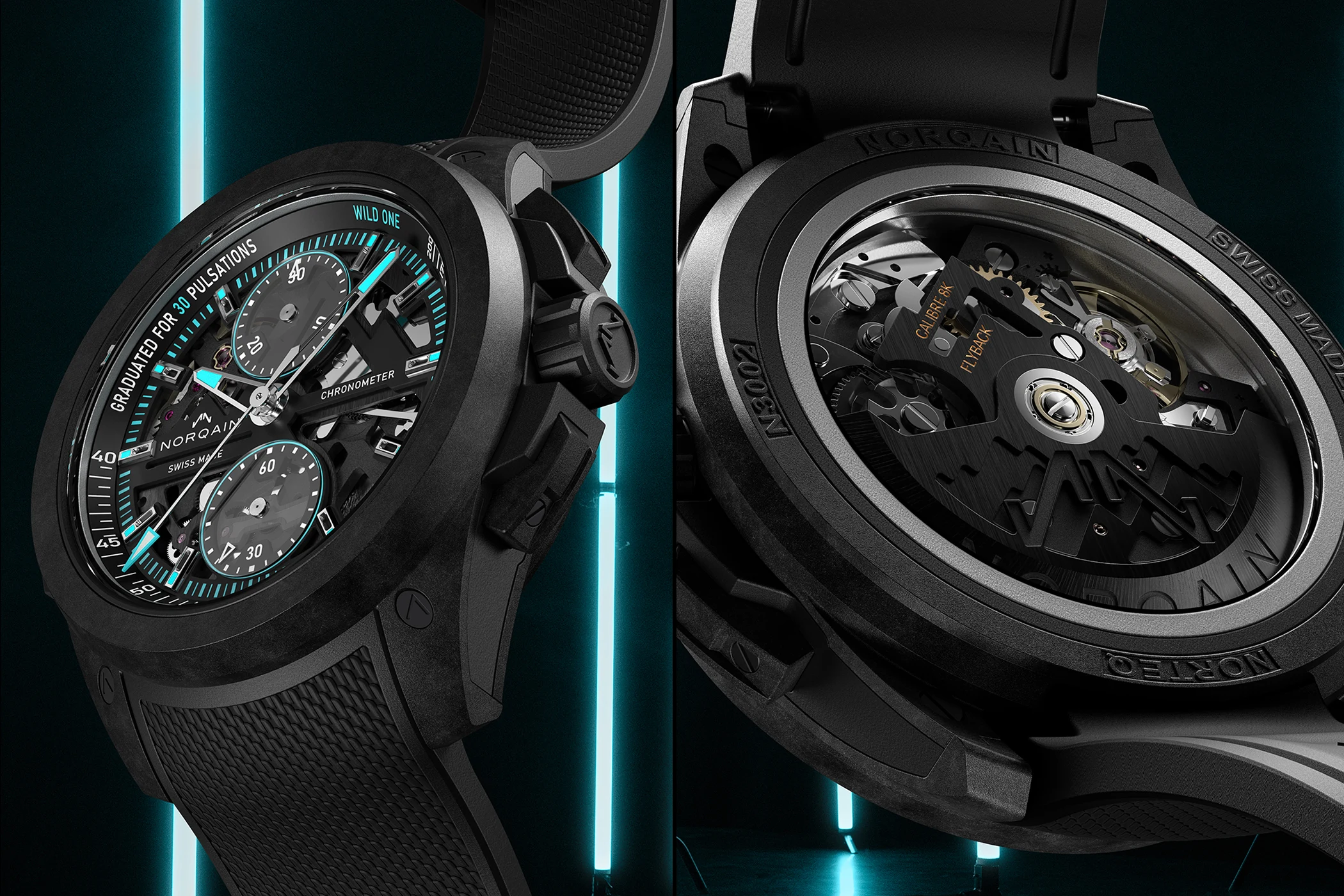
Instead of a traditional column-wheel mechanism, a precision-crafted column wheel controls the chronograph functions, resulting in a noticeably precise yet smooth feel when the pushers are operated. Added to this is the eponymous flyback function. Pressing the lower pusher at 4 o’clock allows the running chronograph seconds hand to be reset immediately and restarted synchronously, whilst the upper pusher at 2 o’clock controls the classic start-stop sequence. With a power reserve of 62 hours and official COSC chronometer certification, this is a flawless, high-quality Swiss movement.
Whilst skeletonised watches are a fantastic concept in theory, as they reveal as much of the mechanism as possible – which is, after all, what (almost) everything revolves around in mechanical watches – they often compromise the legibility of the displays, and this bothers many watch enthusiasts.
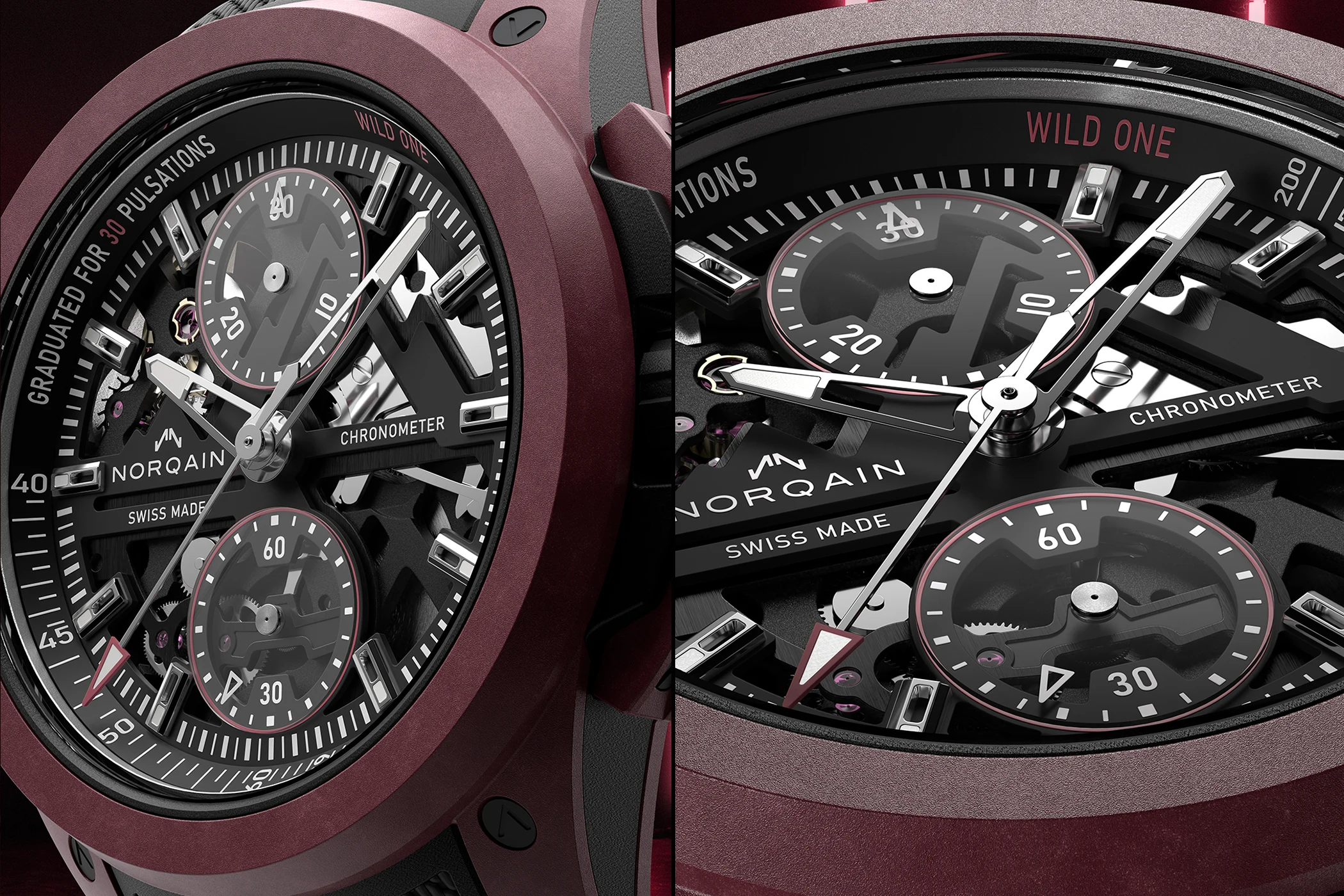
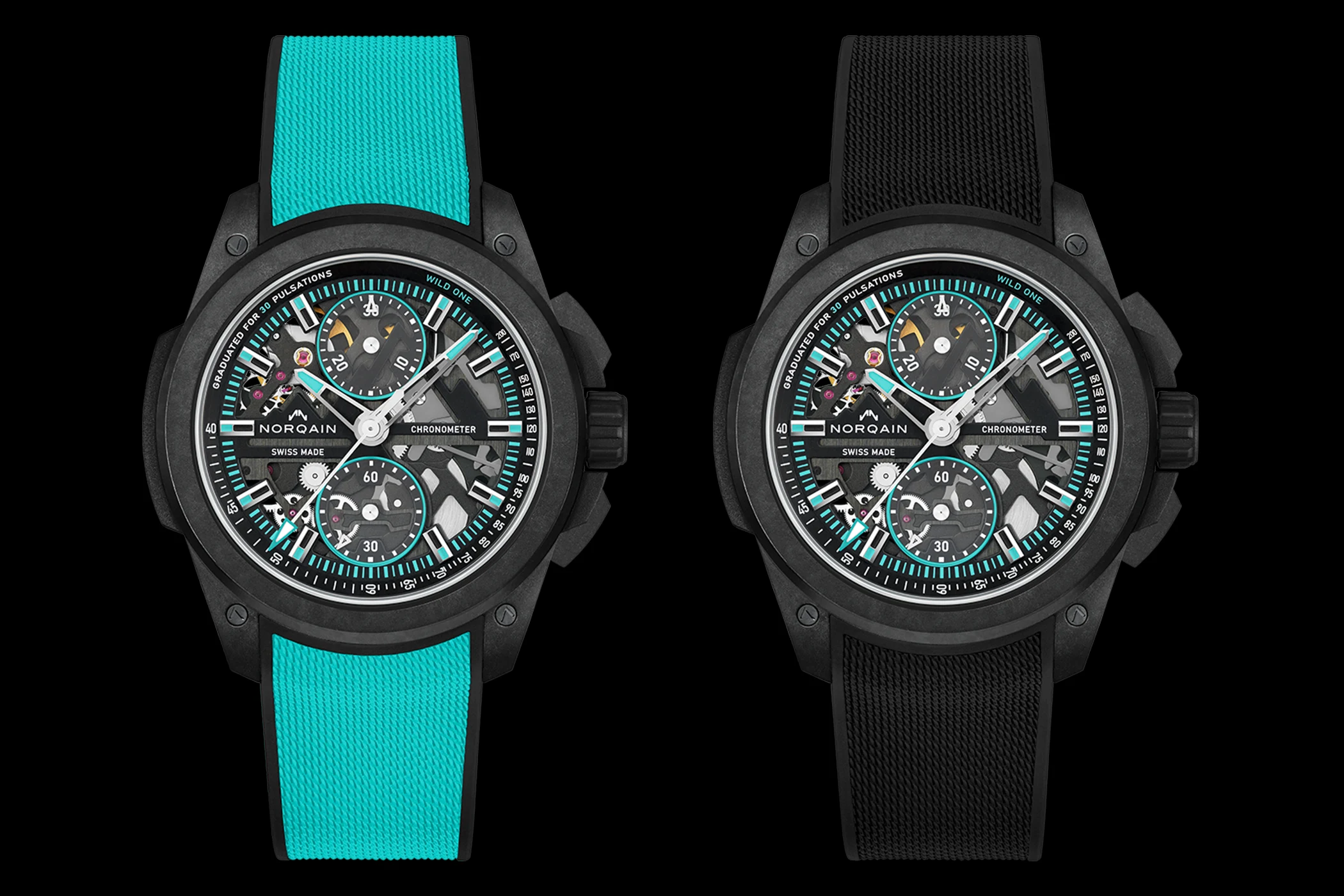
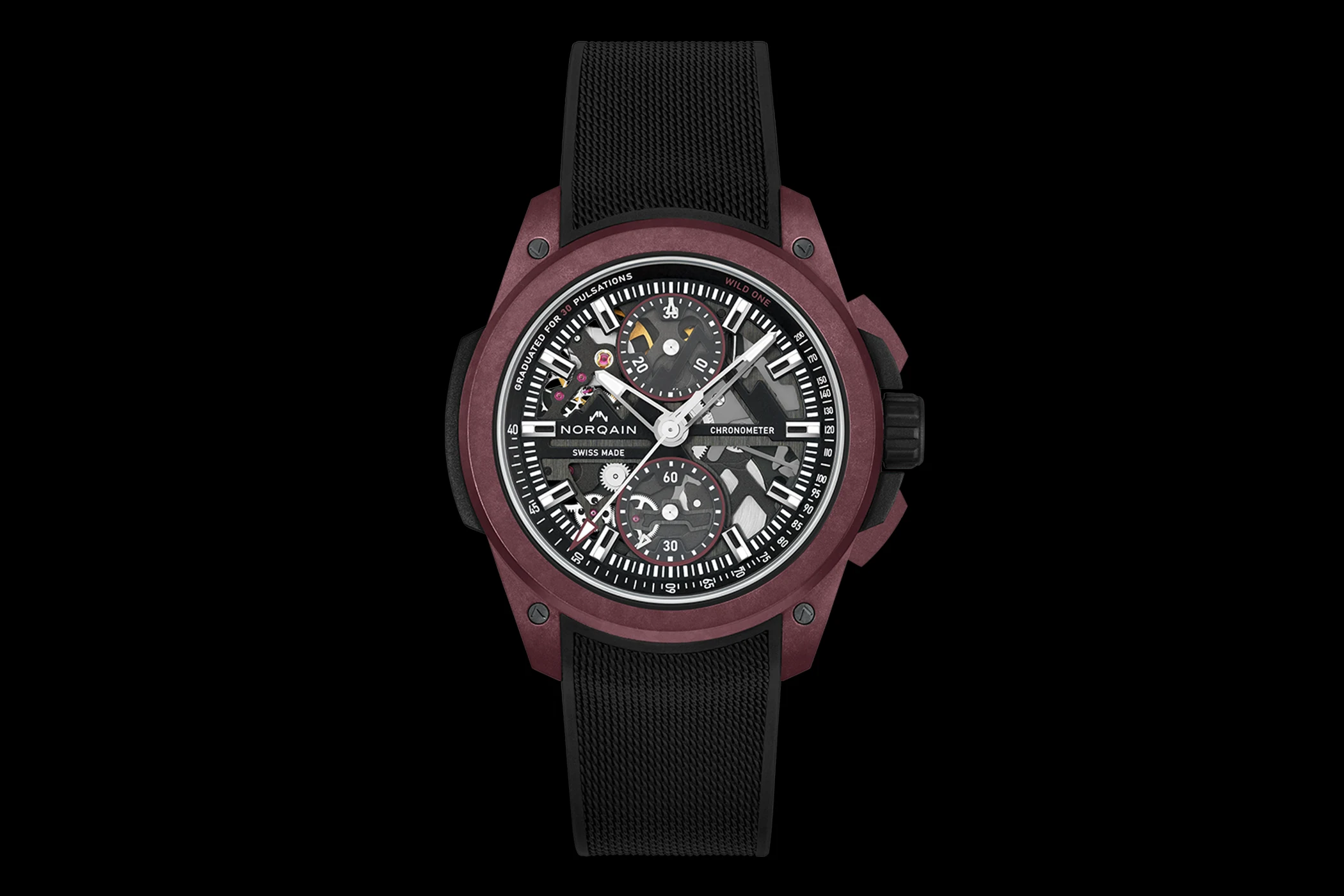
Norqain solves this with a design twist: the traditional sub-dials at 12 o’clock (30-minute counter) and 6 o’clock (running seconds) have been replaced by wafer-thin, transparent sapphire crystal discs. Only subtle white arrow-shaped hands are printed onto these rotating discs. This design preserves the visual depth of the skeletonised movement and offers a clear view of the distinctive Norqain mountain bridge, without making it difficult to read the elapsed time. The turquoise Super-LumiNova® filling on the diamond-cut hands and hour markers provides a high-contrast accent in difficult lighting conditions.
Personally, I like skeletonised designs when the movement underneath has been meticulously finished by hand. It reveals decorative details that would otherwise remain hidden. In this case, the movement is machine-made – yet I can understand Norqain’s reasoning; for many people, it is simply fascinating to see the mechanics and the moving parts. What’s more, it fits in well here with the concept of an ultra-light sports watch, designed to operate as efficiently as possible whilst minimising material use.
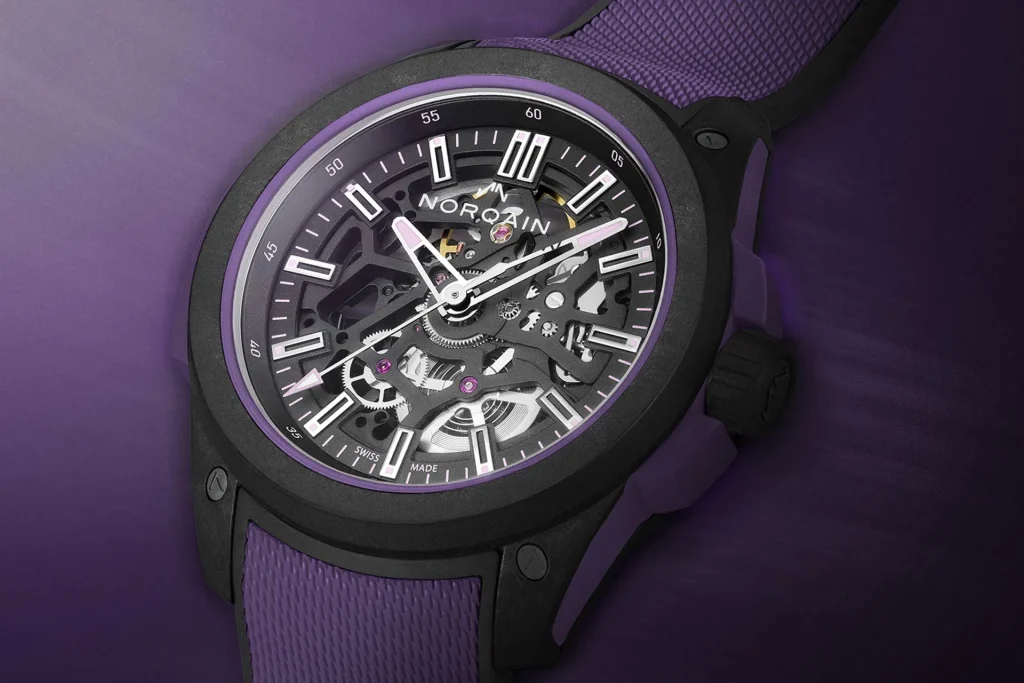
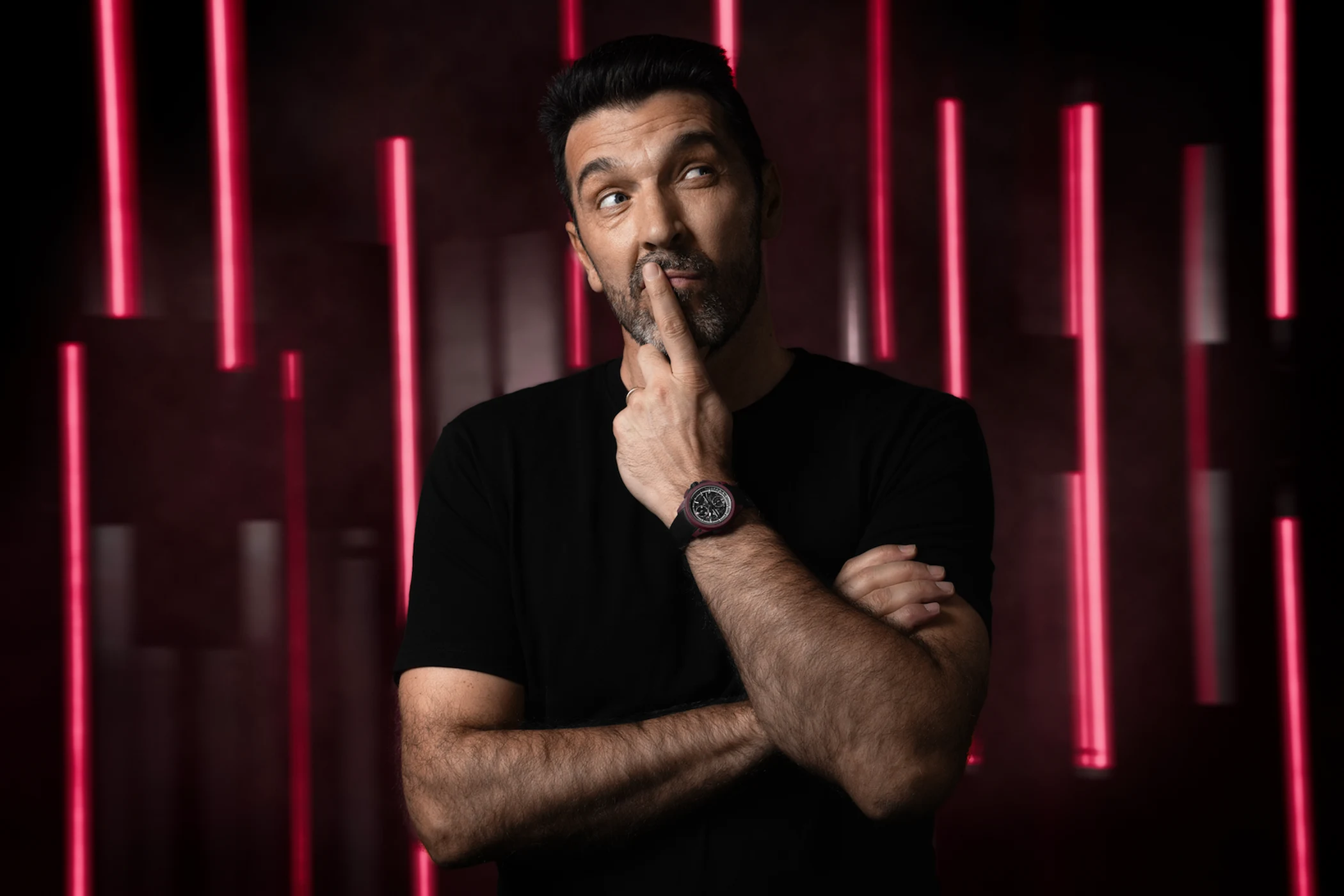
If you prefer purple, you should take a look at the limited-edition Wild One Skeleton Purple – Find out more here
Heart rate monitors as a function on a chronograph are nothing new, but they’re hardly ever used these days. Ben Küffer explained to me in conversation that his clientele are both sporty and health-conscious, and that this allows them to keep an eye on their heart rate via their favourite watch whilst they’re exercising. A lovely touch, I think.
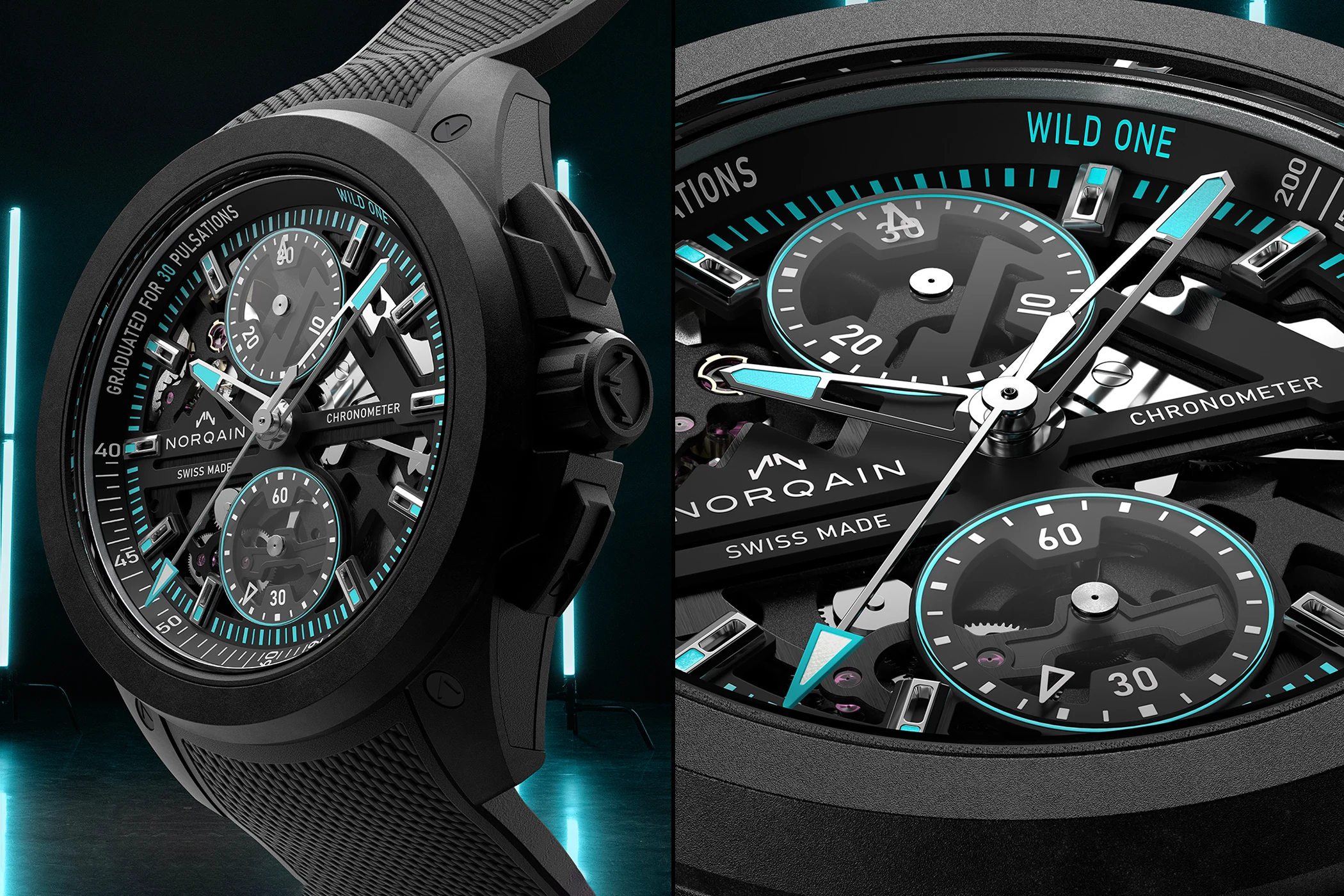
The Wild One Skeleton Chrono is available in black or turquoise, fitted with a textured rubber strap with a mesh-effect finish, available in either plain black or, to match, vibrant turquoise. Those who prefer a classic, lightweight look can opt for the NORTEQ pin buckle; for greater comfort, there is the folding clasp.
Admittedly, a starting price of just under 8,000 EUR is an ambitious positioning for a relatively new brand. However, when one considers the extent of in-house production, the consistent ‘100 per cent Swiss-made’ value creation within the Jura-Biel-Neuchâtel triangle, and the brand’s capacity for innovation, this assessment is quickly put into perspective.
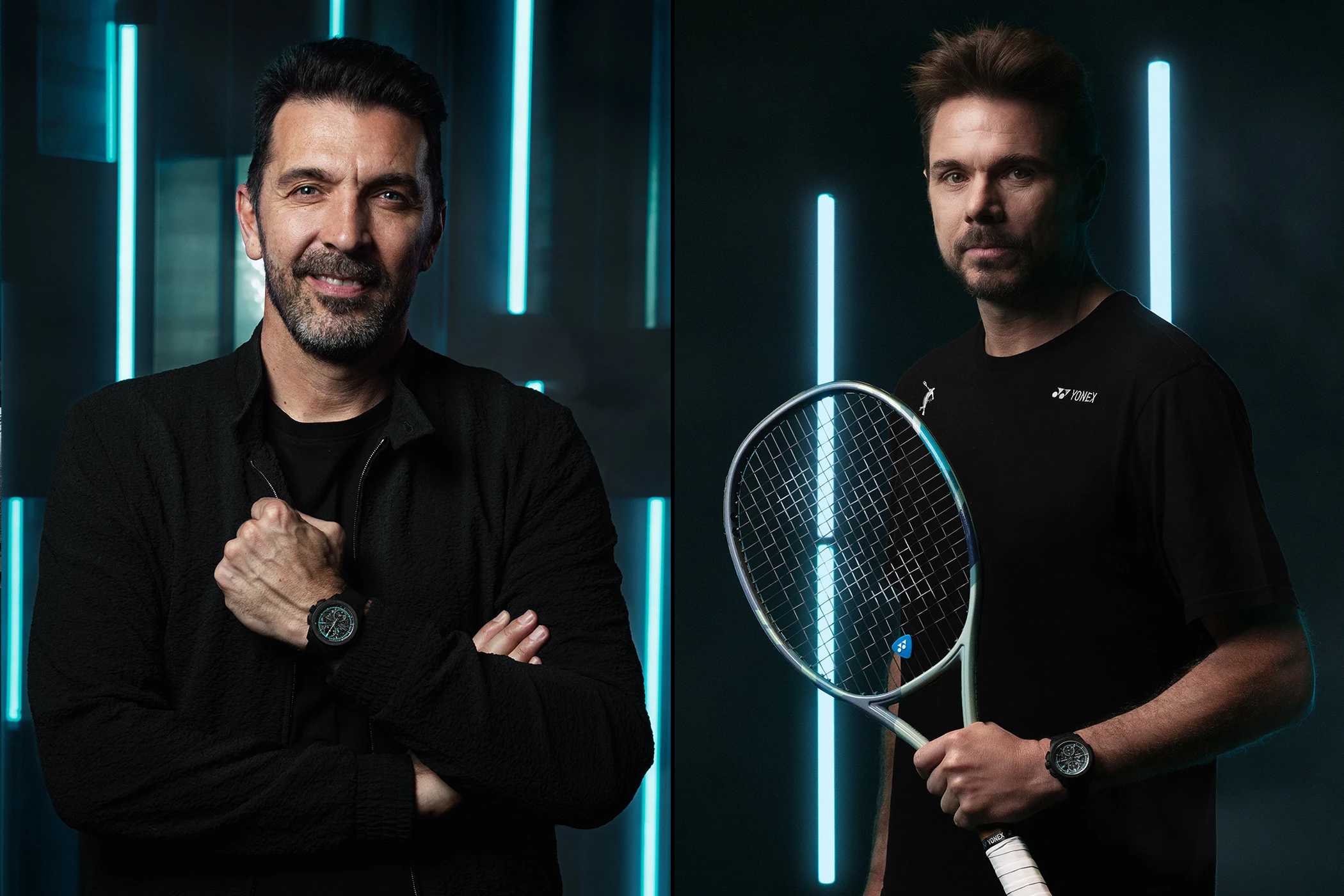
The fact that this concept stands up to the rigours of everyday life is demonstrated not least by its use on the court: professional tennis player Stan Wawrinka regularly wears the timepiece during his high-intensity professional matches – a strain that most mechanical chronographs would not be able to withstand. And even though Stan Wawrinka has a direct stake in the brand, he would certainly not put his performance at risk if the chronograph were not extremely comfortable to wear and therefore did not hinder his game. And that, for me, is precisely what makes Norqain watches so fascinating.