



Panerai introduces the Submersible GMT Navy SEALs PAM01089 in Afniotech, a new hafnium-based material engineered for extreme durability and performance.
Many collectors today know Blancpain primarily for its diving watches – yet the brand’s true comeback following the quartz crisis was a commitment to elegant mechanical wristwatches. Now the Villeret line is returning in an even slimmer form with the Ultraplate 38 mm. This is the story of what are perhaps the most underrated dress watches.
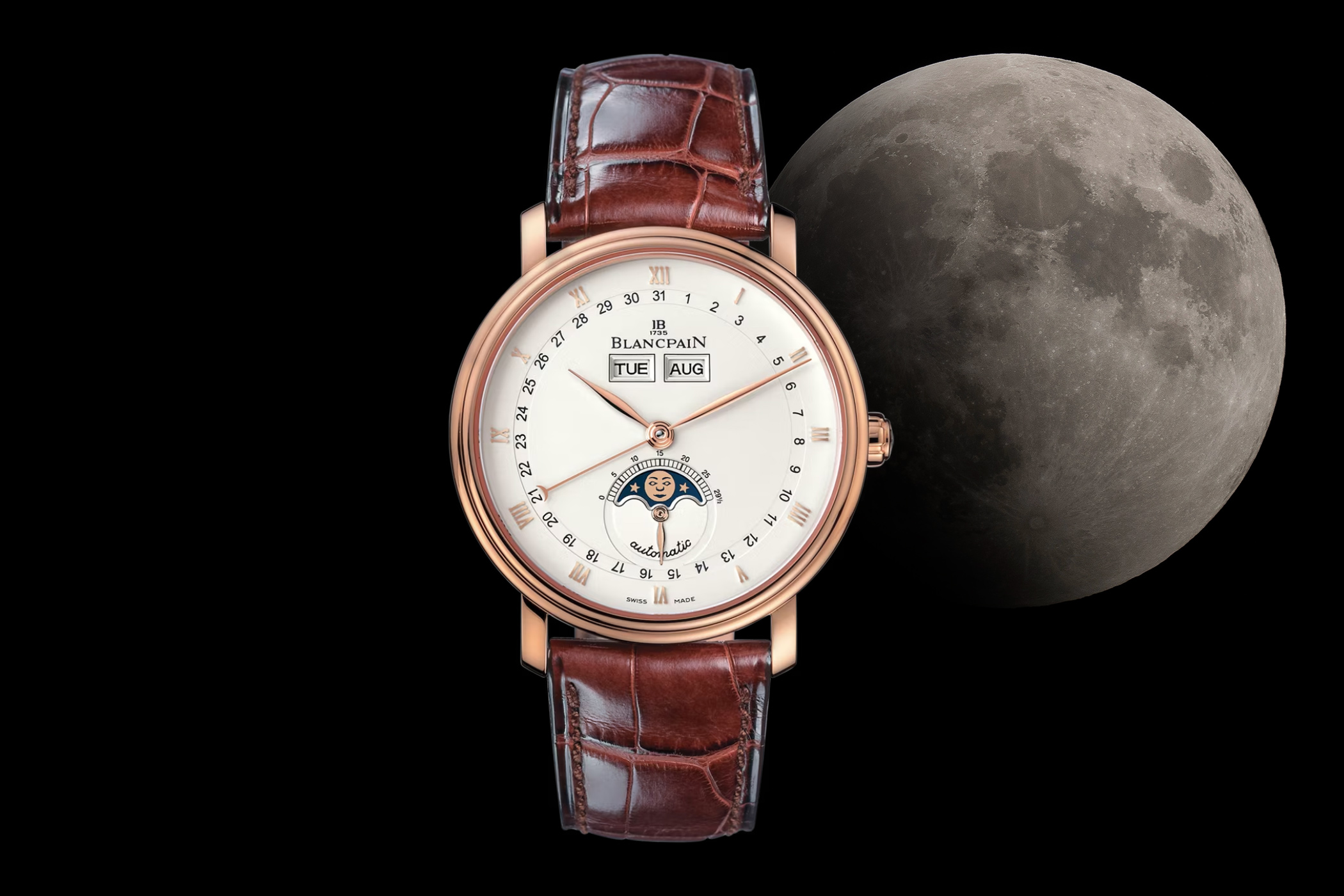
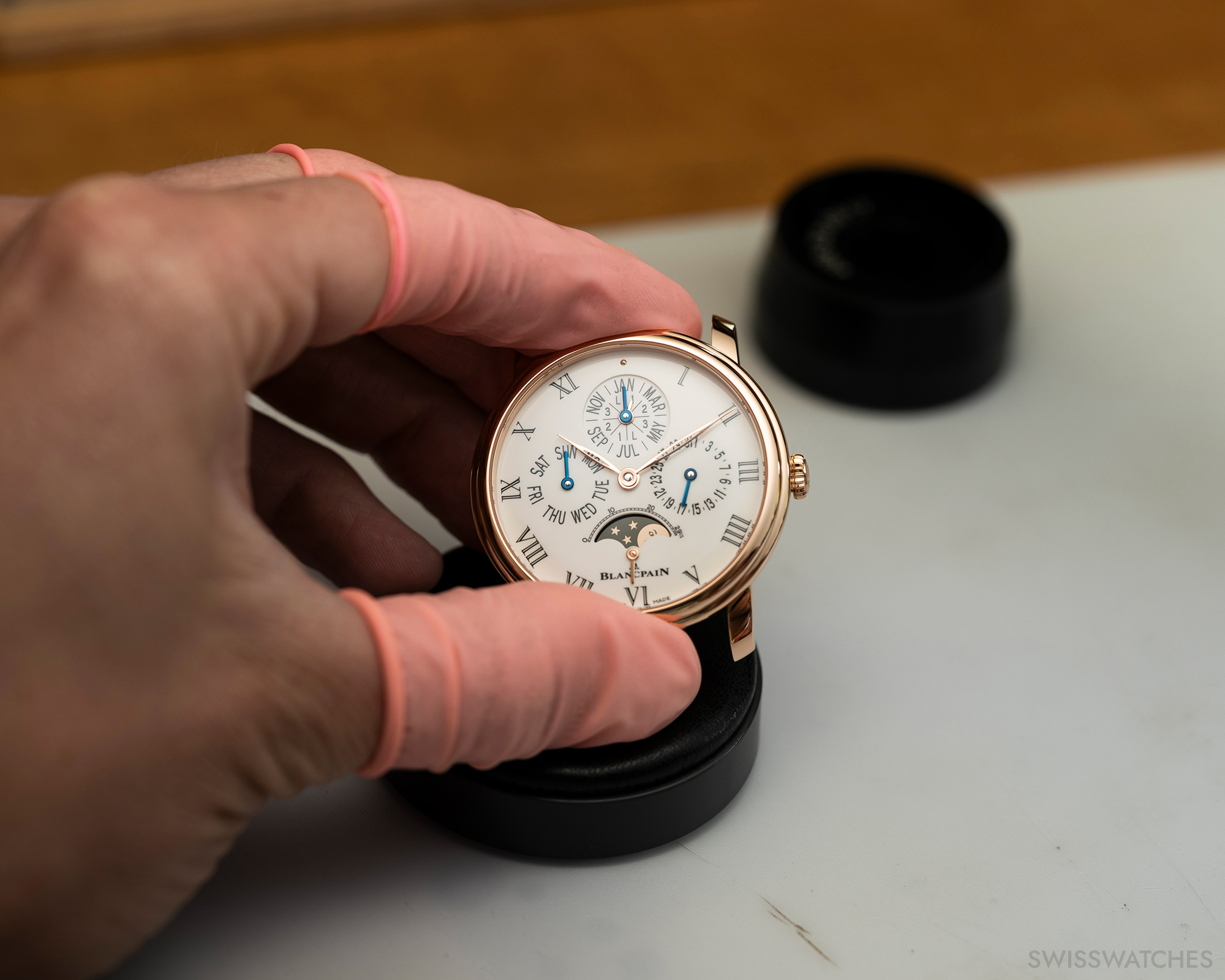
For Blancpain’s Villeret, the question of the right size is not a new one – it is the oldest. It dates back more than four decades: in 1983, when much of the industry was turning to quartz watches, Blancpain made a conscious decision to do the opposite – to return to mechanical watchmaking. They did so with the smallest full calendar with moon phase of its time, which measured just 34 millimetres in diameter.
It was a clear commitment to the art of mechanical watchmaking: proof that, even in the future, a watch can be far more than just a piece of precision electronics – an expression of craftsmanship, aesthetics and the human emotions associated with them. This single model alone embodied the hallmarks that continue to define the collection to this day: a double-stepped bezel, refined understated elegance and a moon phase display featuring a smiling face – even though the name of the line that embodied this DNA, Villeret, was not introduced until two decades later, in 2002.
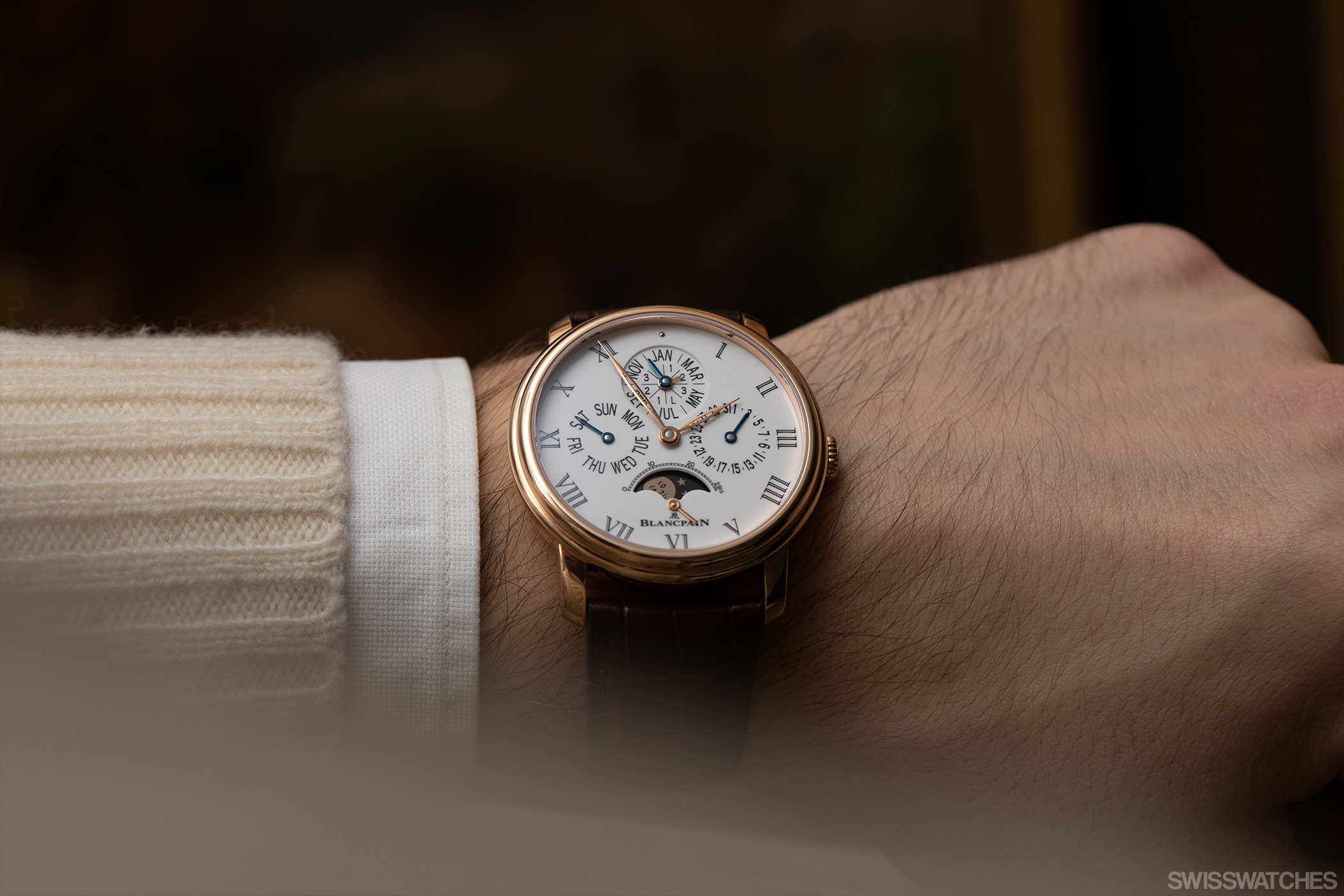
Blancpain occupies a special position in the world of watchmaking. In purely horological terms, the brand belongs in the top tier of Swiss manufacturers, alongside Patek Philippe, Vacheron Constantin and Audemars Piguet. It enjoys the highest regard amongst serious collectors. Outside these circles, however, Blancpain has not become a mainstream status symbol on a par with some of its competitors. Not yet, to be honest.
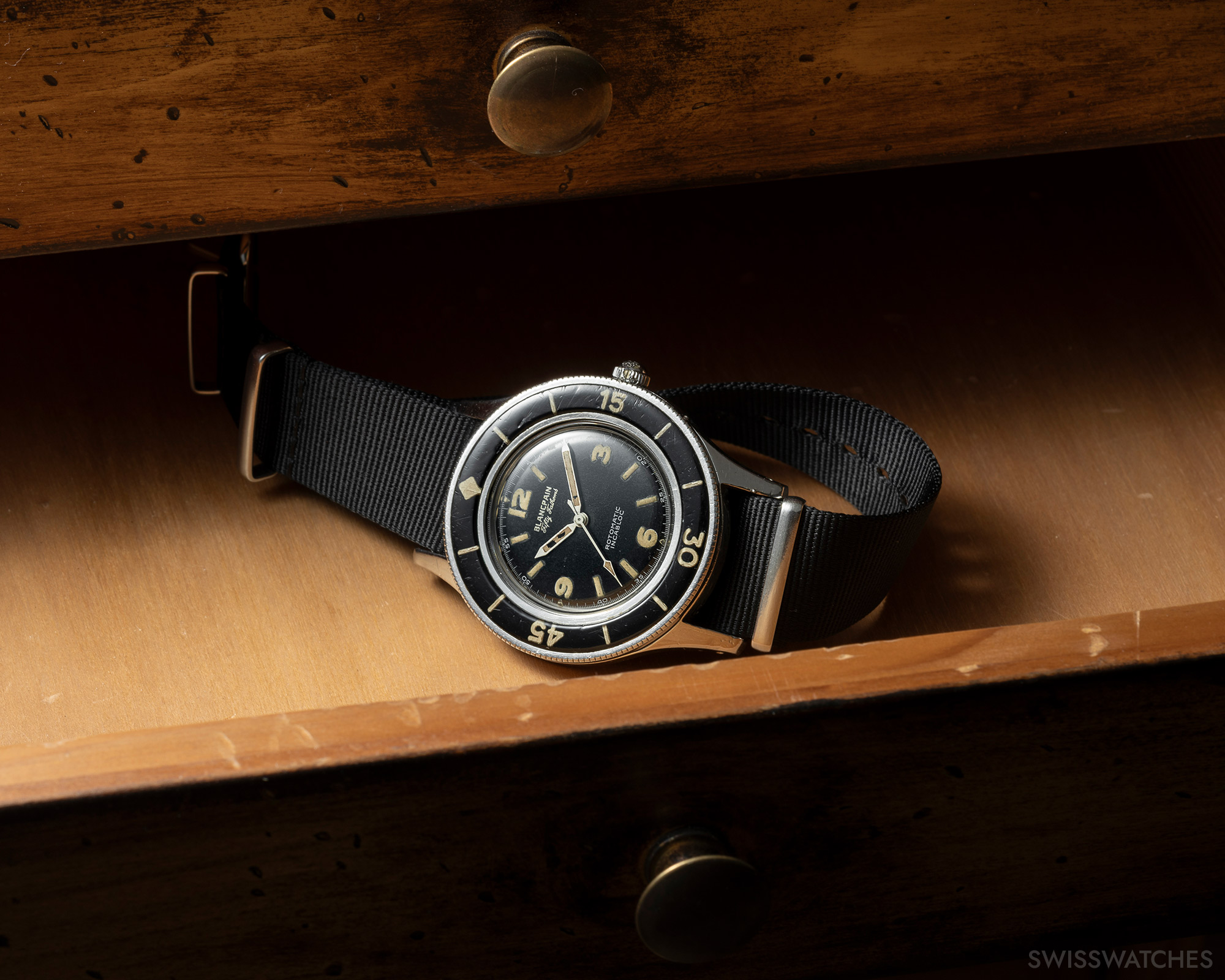
This is partly intentional. Blancpain produces relatively few watches (estimates put the figure at around 18,500 watches per year). The fact is: the brand does not chase trends and has built its reputation on serious watchmaking rather than on a general aura of luxury. Most collectors know the brand for the Fifty Fathoms: that pioneering diving watch, which is widely regarded as one of the cornerstones of the modern category. Until the launch of the mechanical Bioceramic Scuba Fifty Fathoms collaboration with Swatch in 2023, many non-specialists are unlikely to have heard of the brand at all.
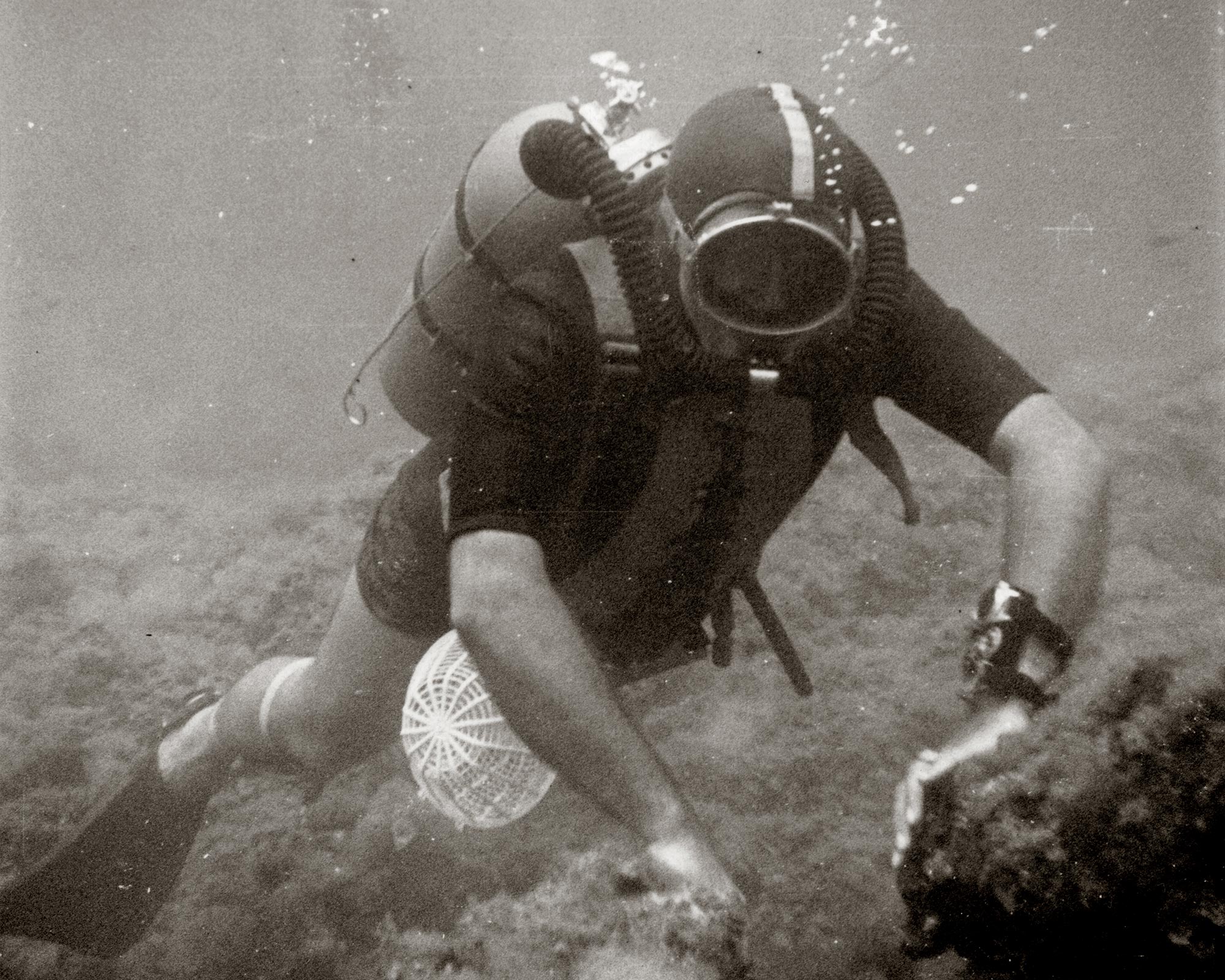
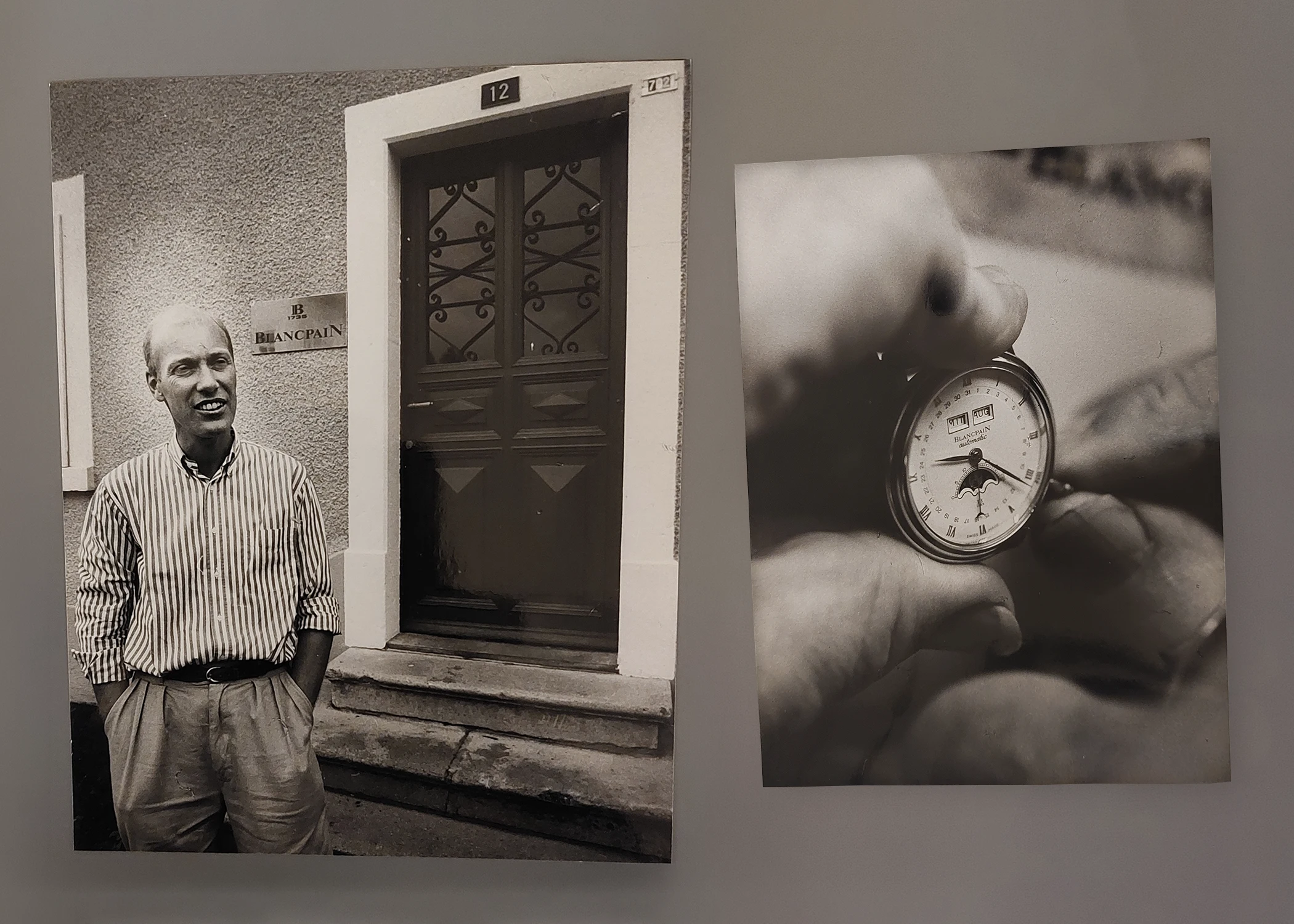
Today’s Blancpain is, at its core, a story of resurrection. Whilst the brand traces its origins back to 1735 – even if self-styled experts on the watch-watching internet are keen to debate the finer points of this chronology – the original company disappeared during the quartz crisis. Almost two-thirds of the industry did not survive those years. Blancpain was revived in 1983 by Jean-Claude Biver – who was to become one of the defining figures of the modern watch industry (and who now runs his own manufacture, which in many respects, right down to the logo, is reminiscent of Blancpain) – together with movement specialist Jacques Piguet.
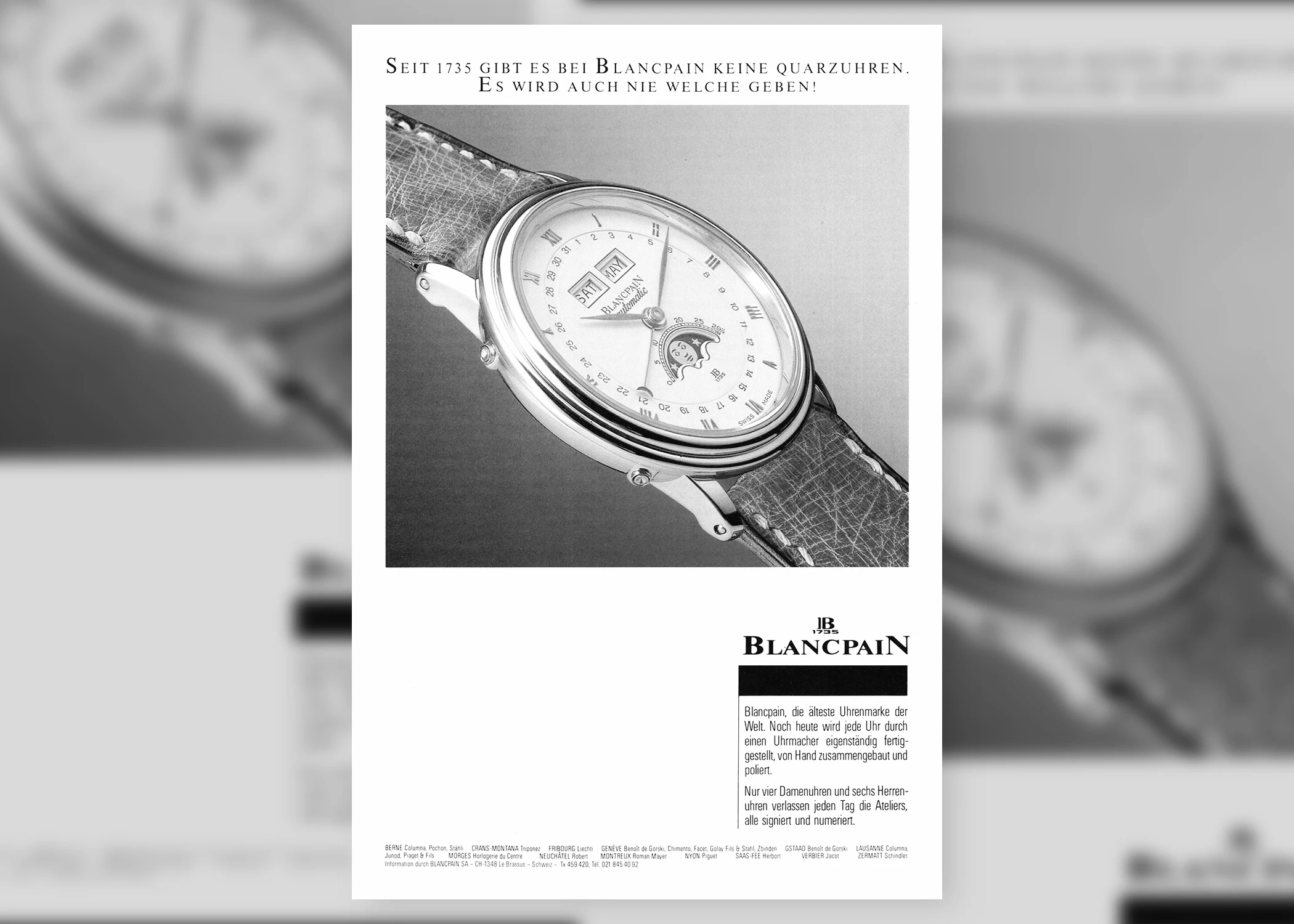
The modern Blancpain stood in stark contrast to the quartz era. Rather than following the industry’s shift towards battery-powered watches, the revived brand committed itself all the more resolutely to complex mechanical watchmaking – and later coined the slogan that became legendary: “Since 1735, there has never been a quartz watch from Blancpain, and there never will be.”
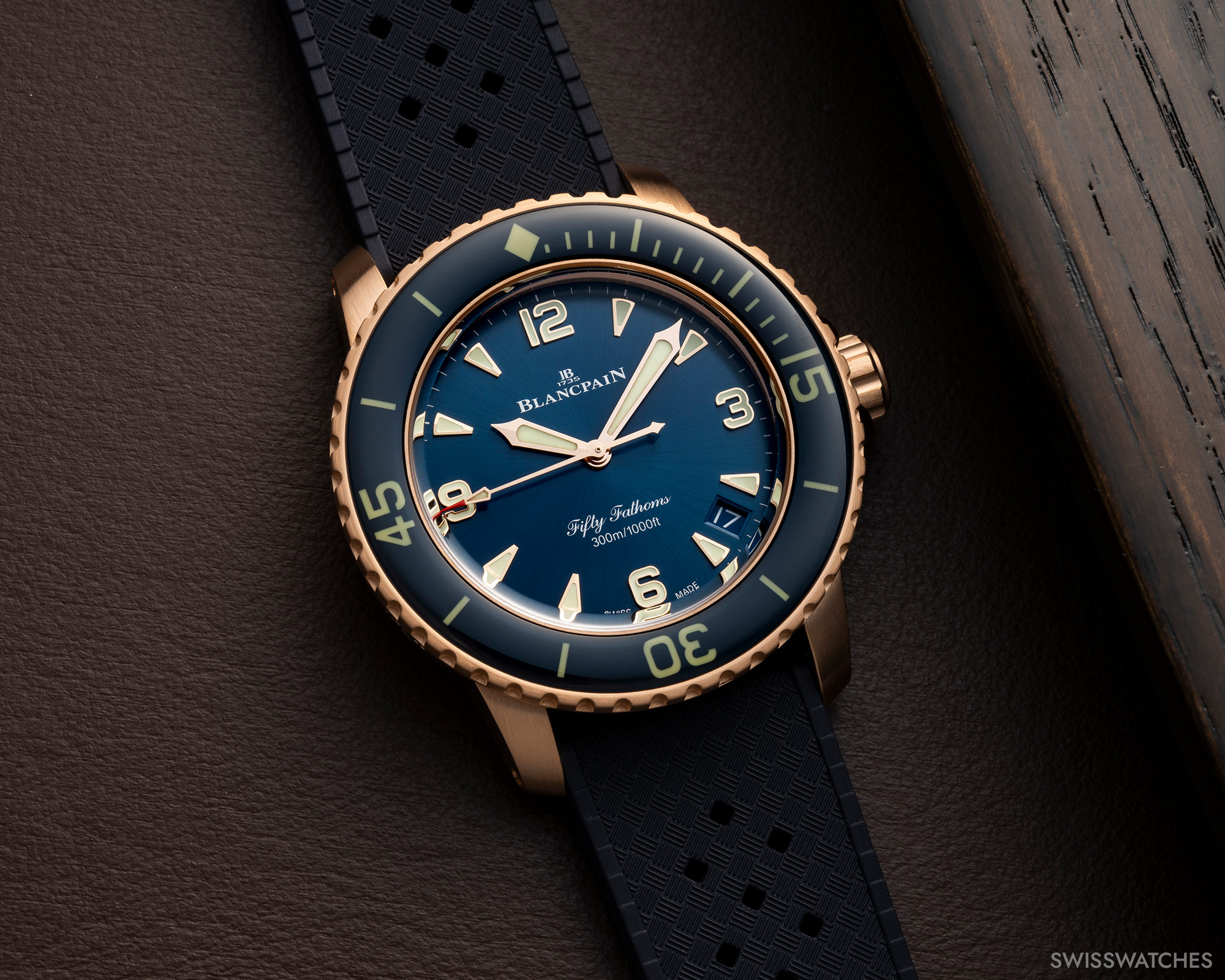
For years, however, the success of the Fifty Fathoms overshadowed this very different side of the brand – the elegant, highly complicated dress watches that were a defining feature of Blancpain in the 1980s and 1990s.
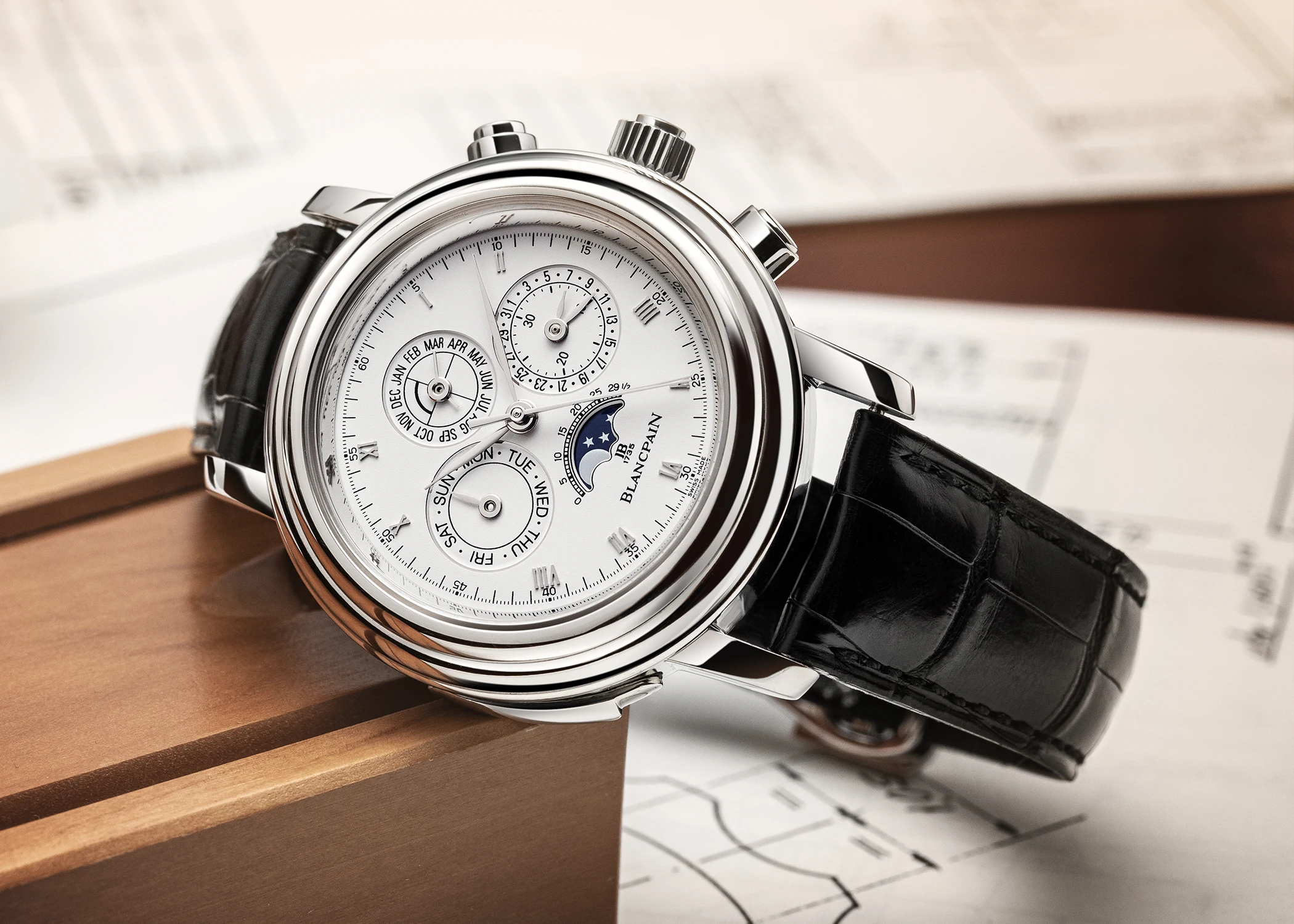
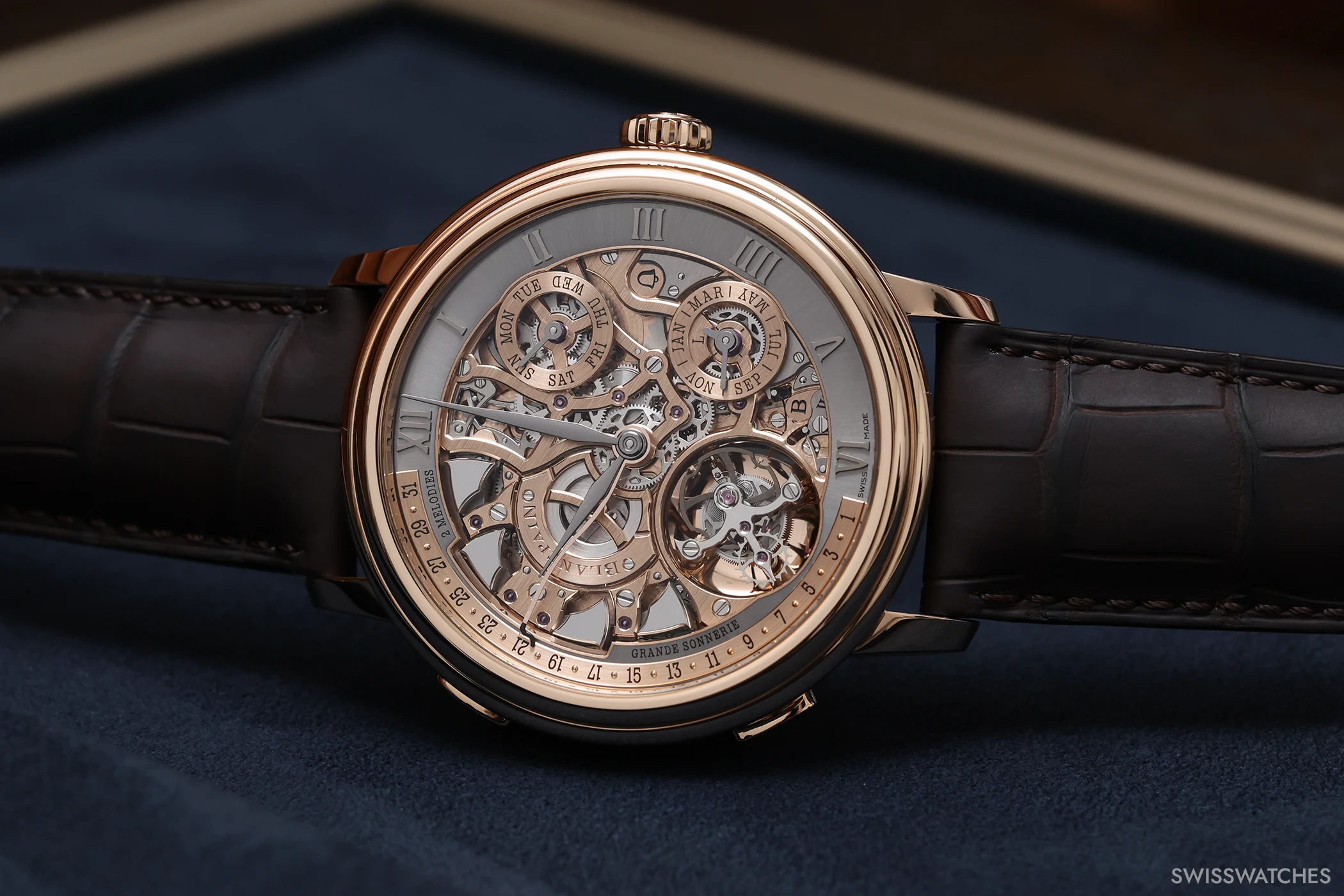
Among collectors, however, it was precisely these elegant watches that became Blancpain’s calling card. It was here that Blancpain built its reputation on genuine innovations: ultra-thin perpetual calendars, split-seconds chronographs, minute repeaters and, finally, the groundbreaking 1735, which combined six complications (read also our article on the masterpieces of the Villeret collection).
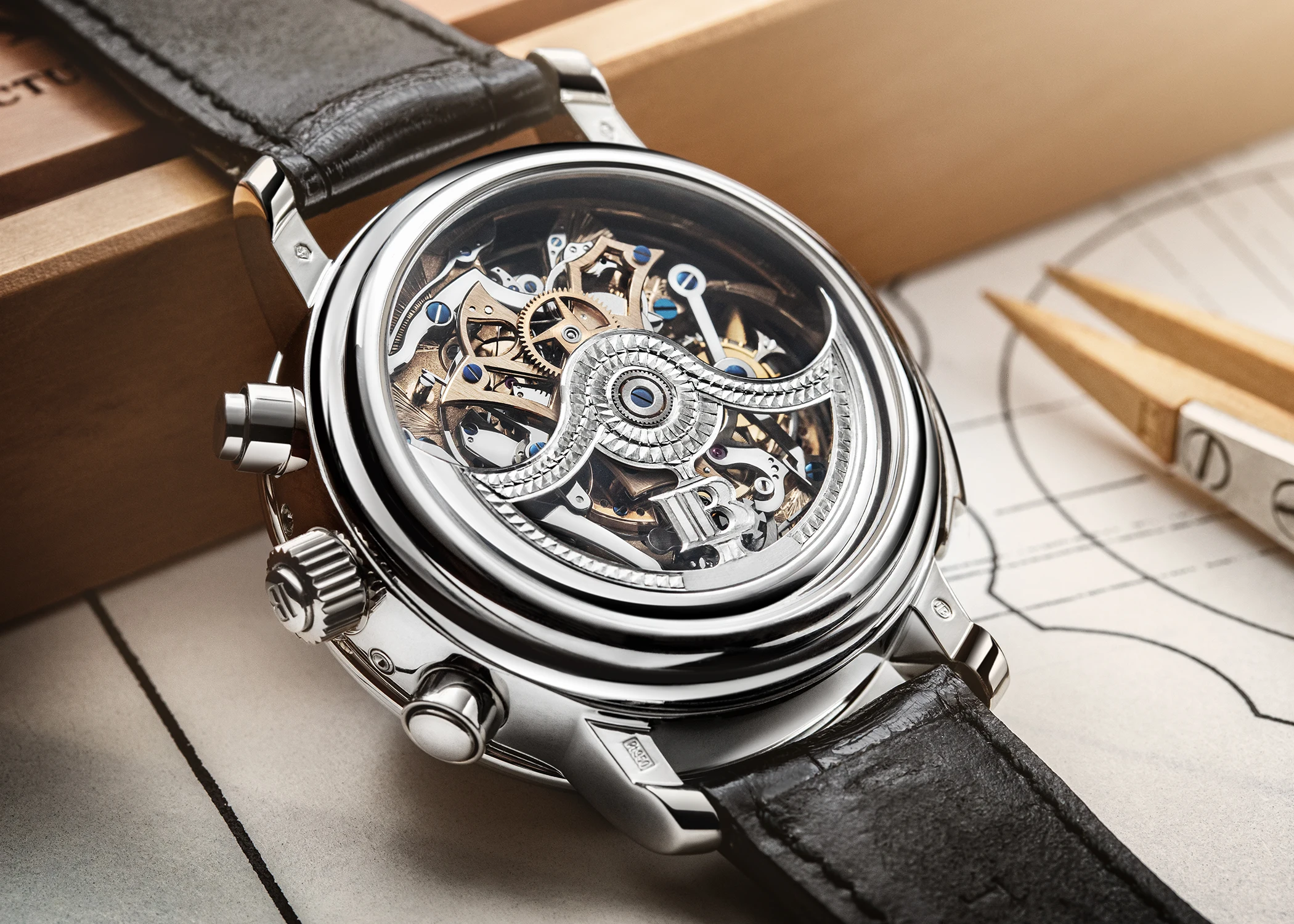
In recent years, these watches have stood at odds with mainstream watch-collecting culture. Whilst the market turned its attention to steel sports watches, oversized cases and ostentatious displays of wealth (Biver’s other former brand, Hublot, knows a thing or two about this), Blancpain’s understated, highly complicated timepieces remained the preserve of the die-hard enthusiasts.
It is not just since Cartier’s phenomenal comeback, but also – fuelled by a generation of younger collectors who no longer care as much about overt status symbols as their fathers did – that the mood seems to be shifting. Smaller watches, vintage proportions and a less ostentatious look on the wrist are back in demand, leading to the reissue of well-known vintage models, particularly for younger collectors. The watchword of the moment is: neo-vintage dress watches.
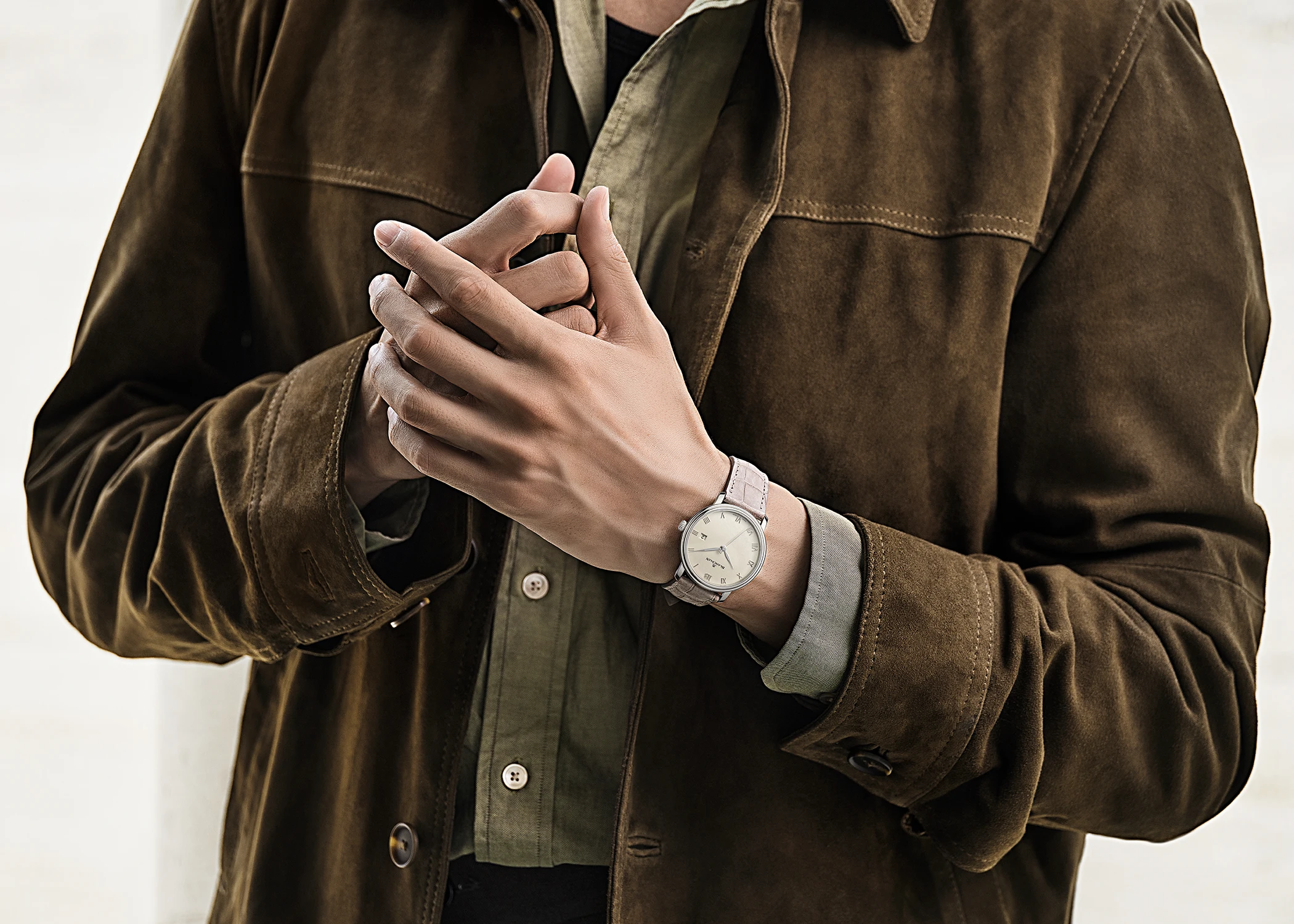
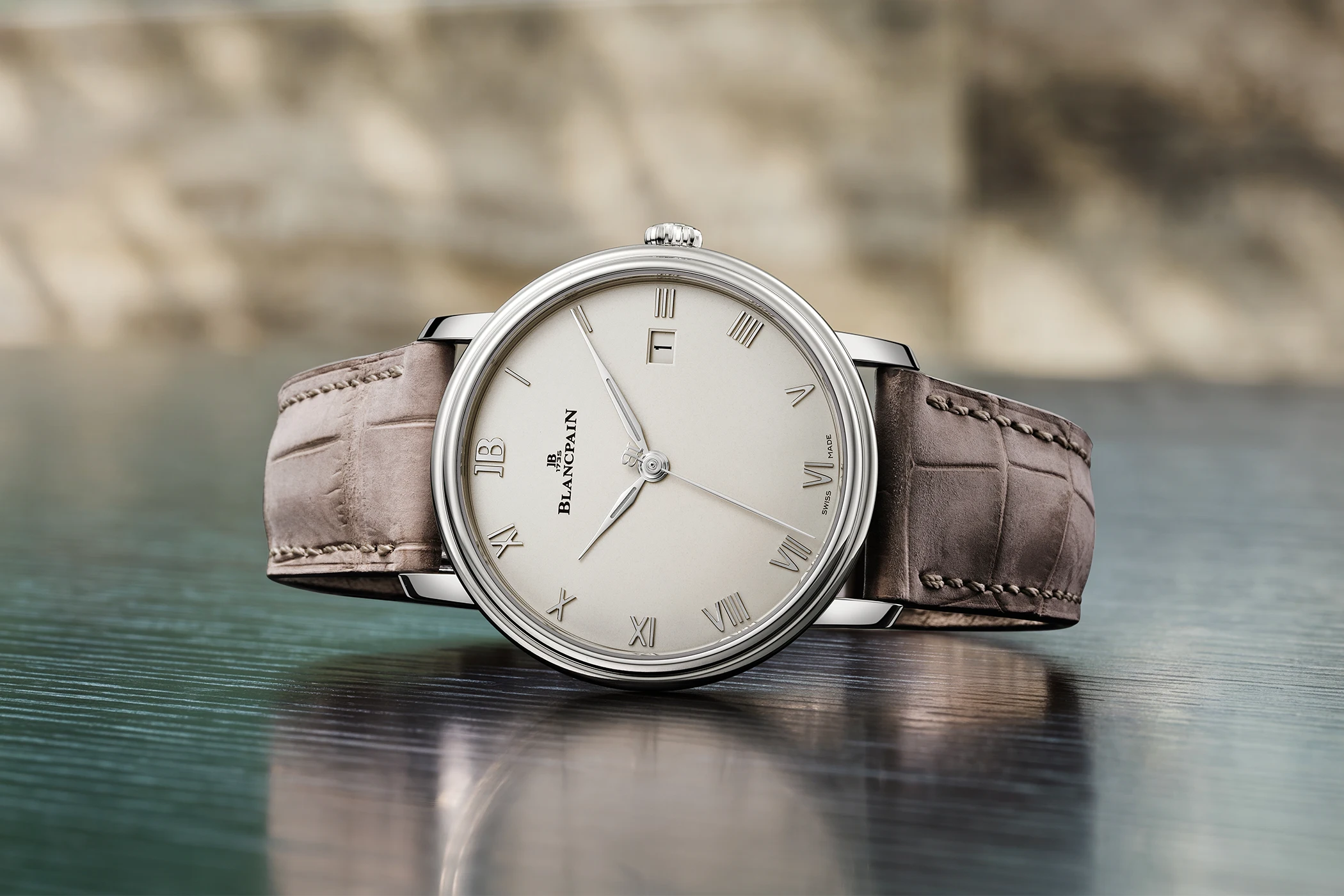
On this subject, the new 38-millimetre Villeret is perhaps a better fit than any other mechanical wristwatch from Switzerland. According to Blancpain, the most compelling dress watches are those you forget you’re wearing – for Swiss watches, the right size also means that the watch disappears beneath the cuff on the wrist. It is precisely these proportions that the Villeret Ultraplate now offers in 38 millimetres, alongside the iconic 40-millimetre model, which continues to form the heart of the collection. “The Villeret has always expressed its character through understated elegance rather than ostentatious display,” says Marc A. Hayek, President & CEO of Blancpain. The new size is the logical embodiment of this statement: with a Villeret, one is neither over- nor underdressed – regardless of which of the two sizes one chooses.
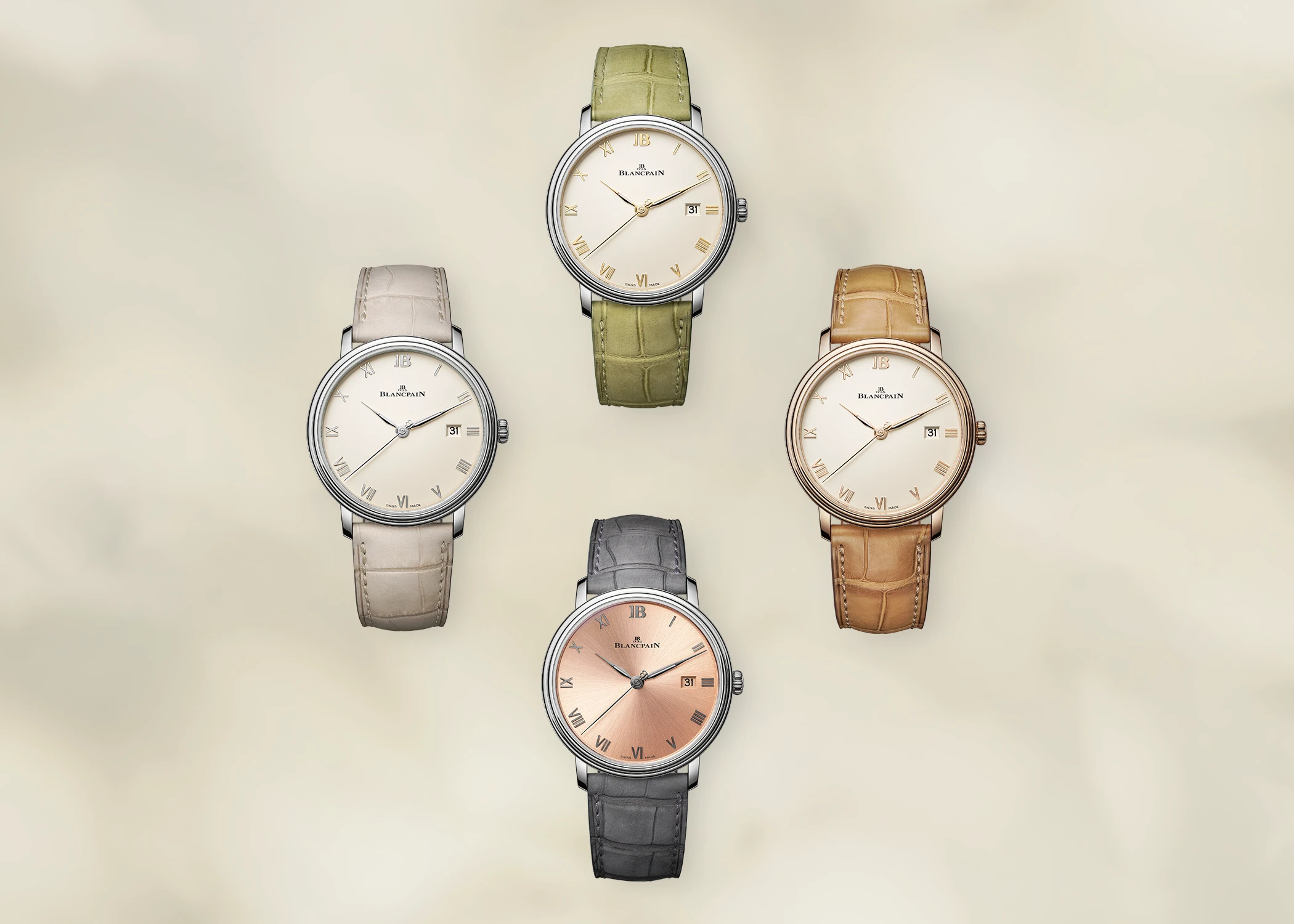
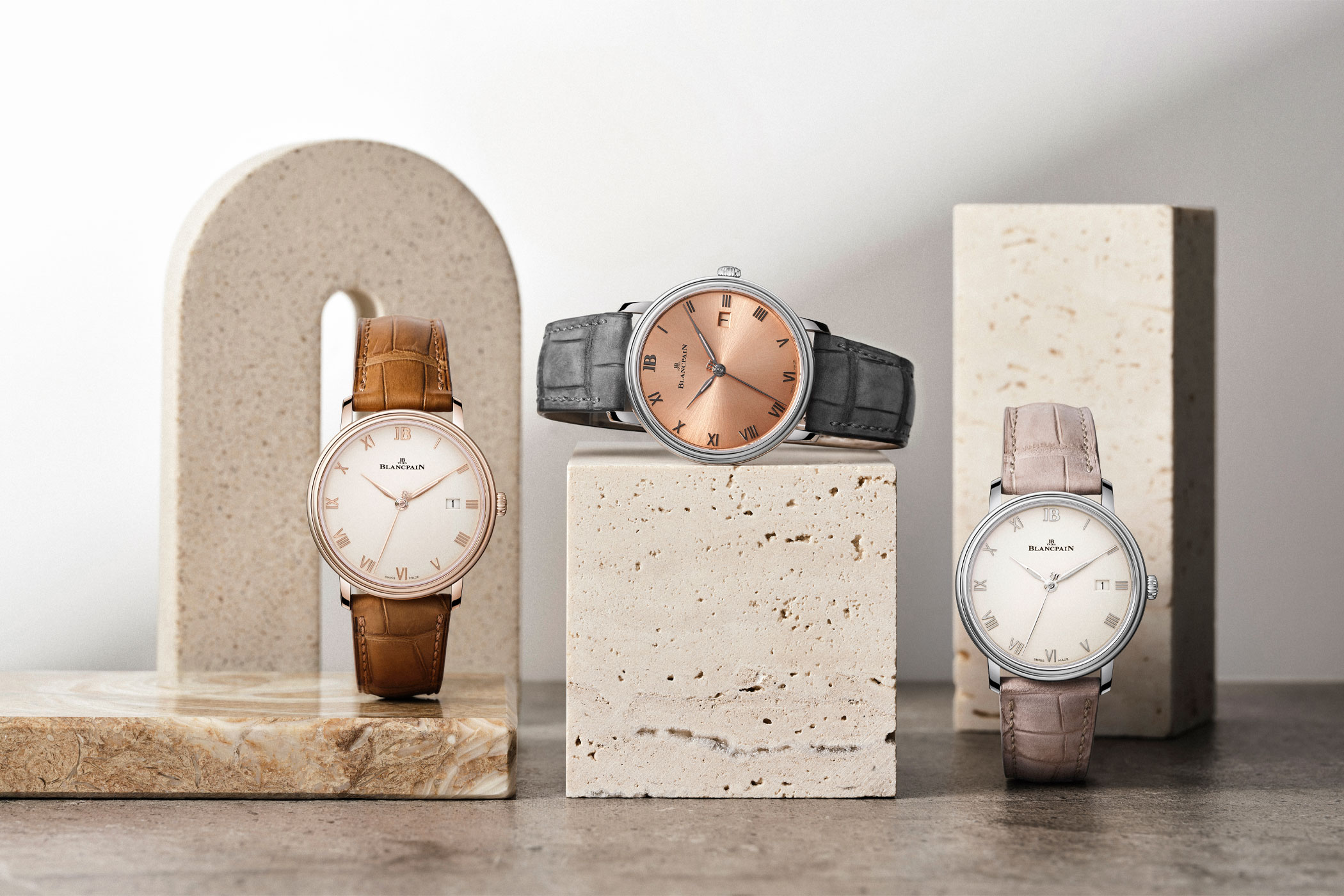
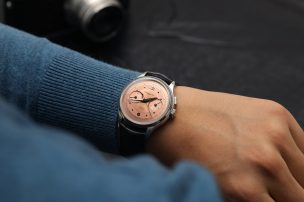
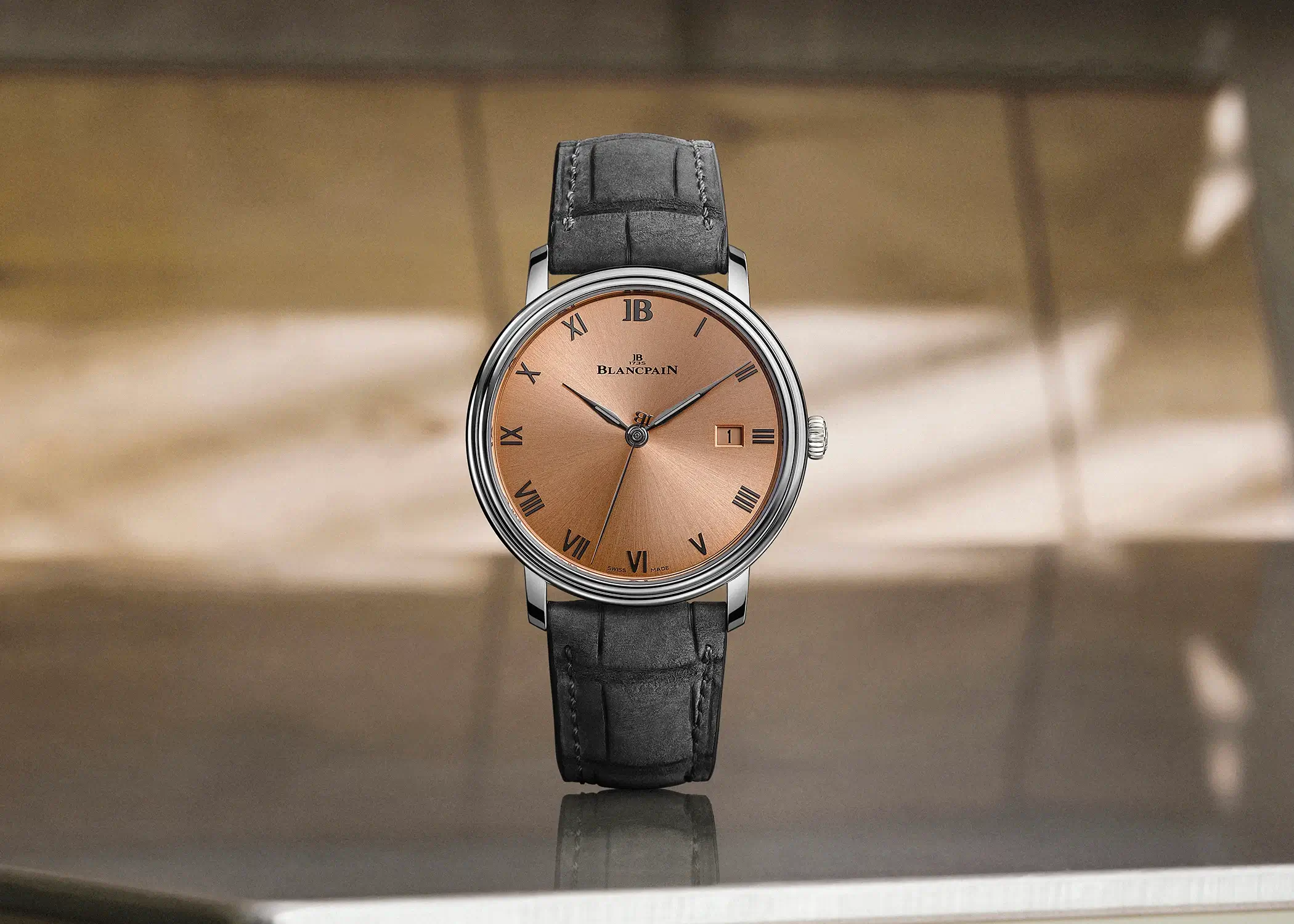
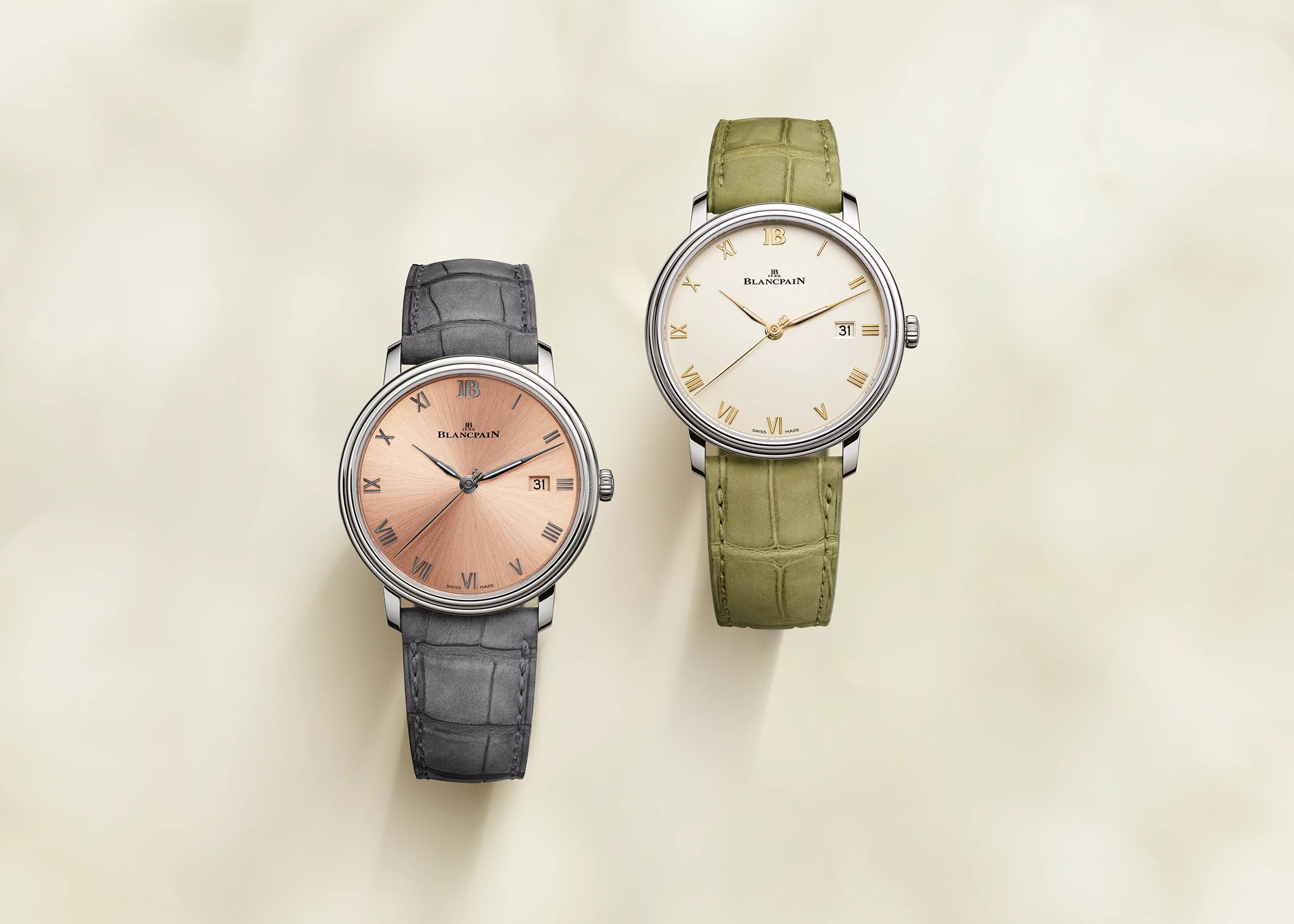
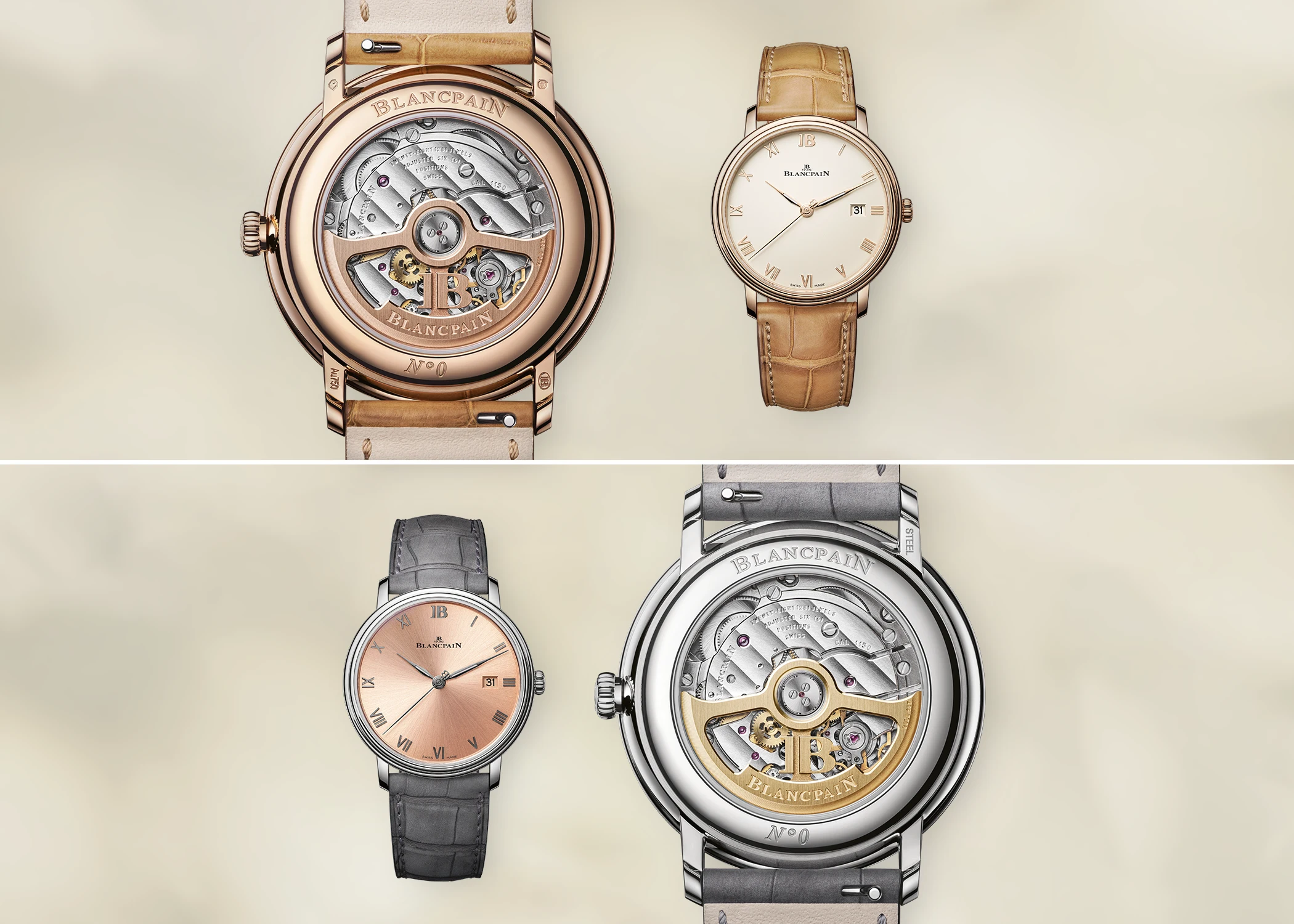
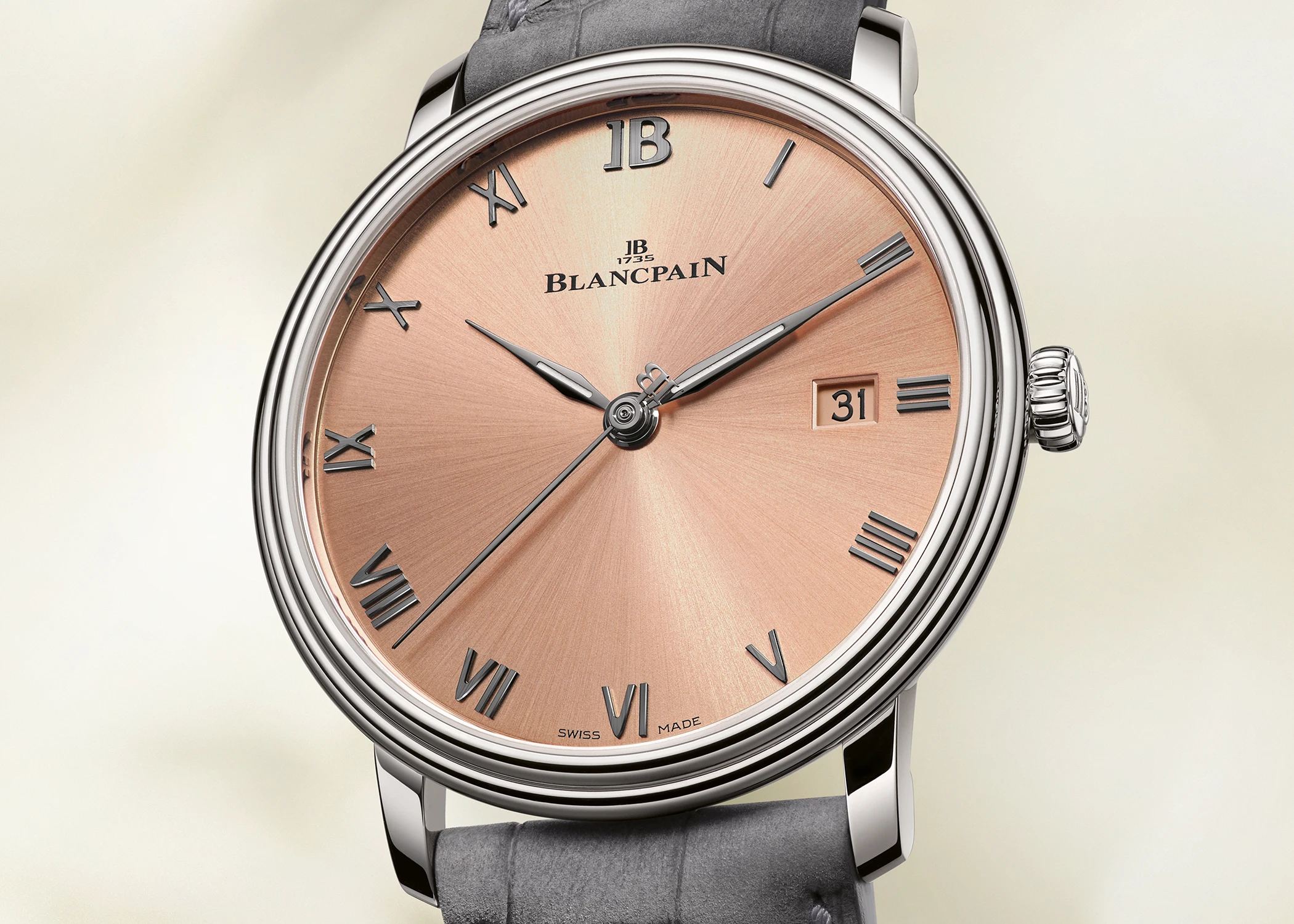
The collection kicks off with a first for the range, which is appearing in salmon tones for the first time: a sunburst dial, whose warmth shifts throughout the day between copper, rosé and gold, is housed in a stainless steel case. The applied numerals in 18-carat gold feature a new black finish and are complemented by an anthracite-coloured nubuck strap. In a collection whose palette otherwise tends towards opaline and silver tones, this colour is a real standout. Those who prefer slightly more subdued tones will feel right at home with the gold-coloured opaline dial.
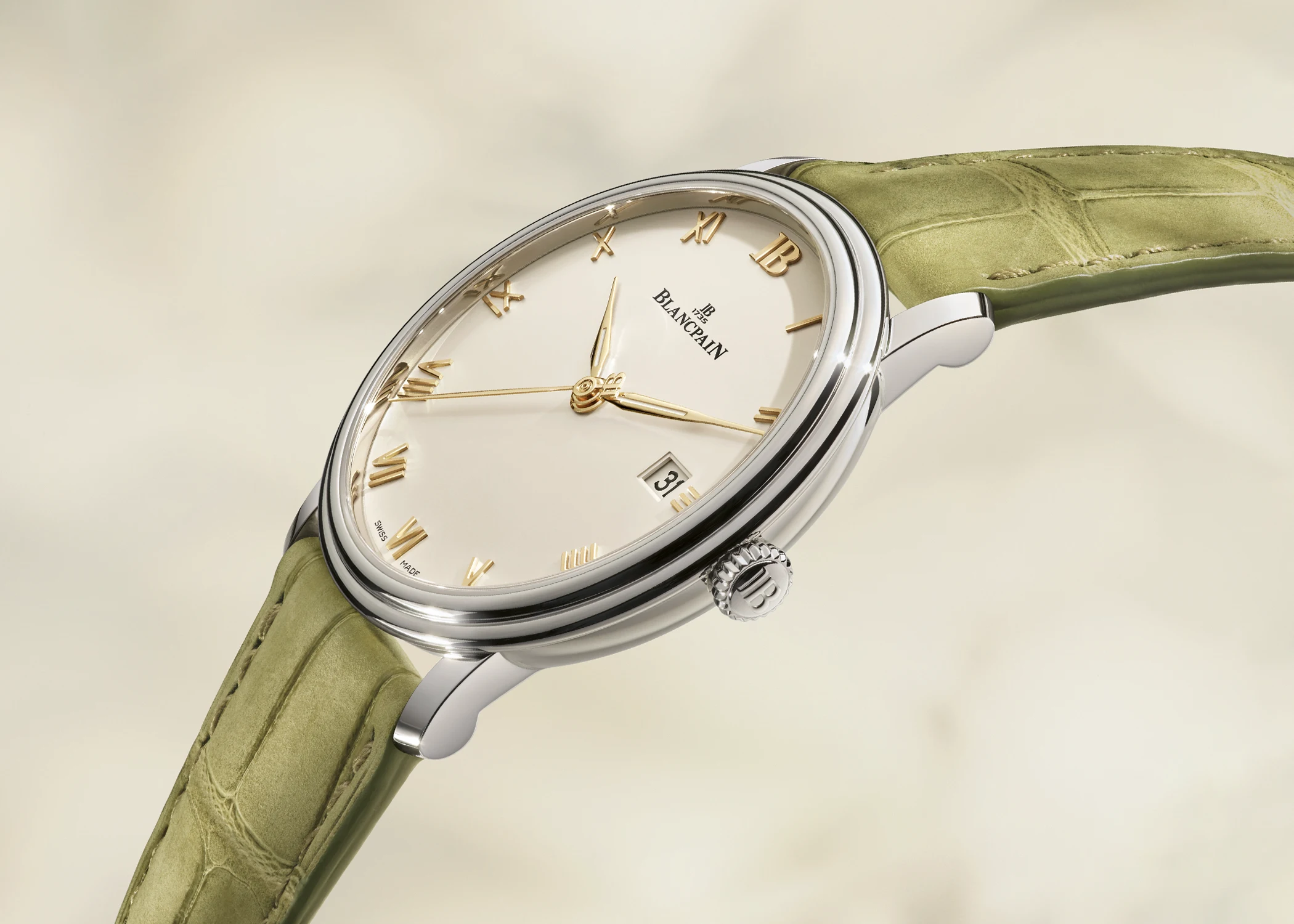
The second model makes a more understated statement and is available exclusively in Blancpain boutiques: a stainless steel case with solid 18-carat yellow gold numerals, a gold-coloured opaline dial and an olive-green nubuck alligator strap – hand-stitched, luxurious yet understated. The contrast is deliberate: steel and gold, classicism and a colour that the Villeret has scarcely worn before.
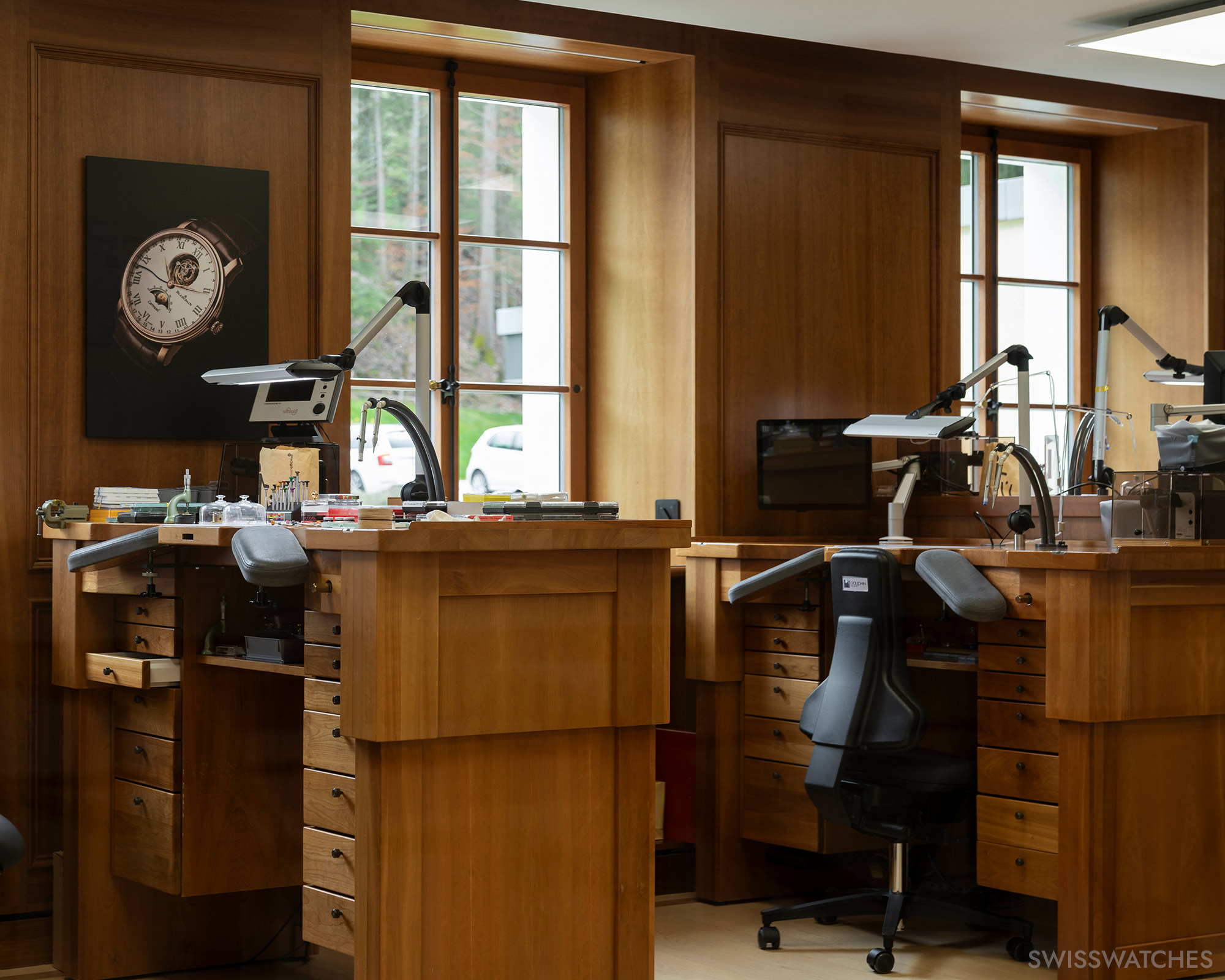
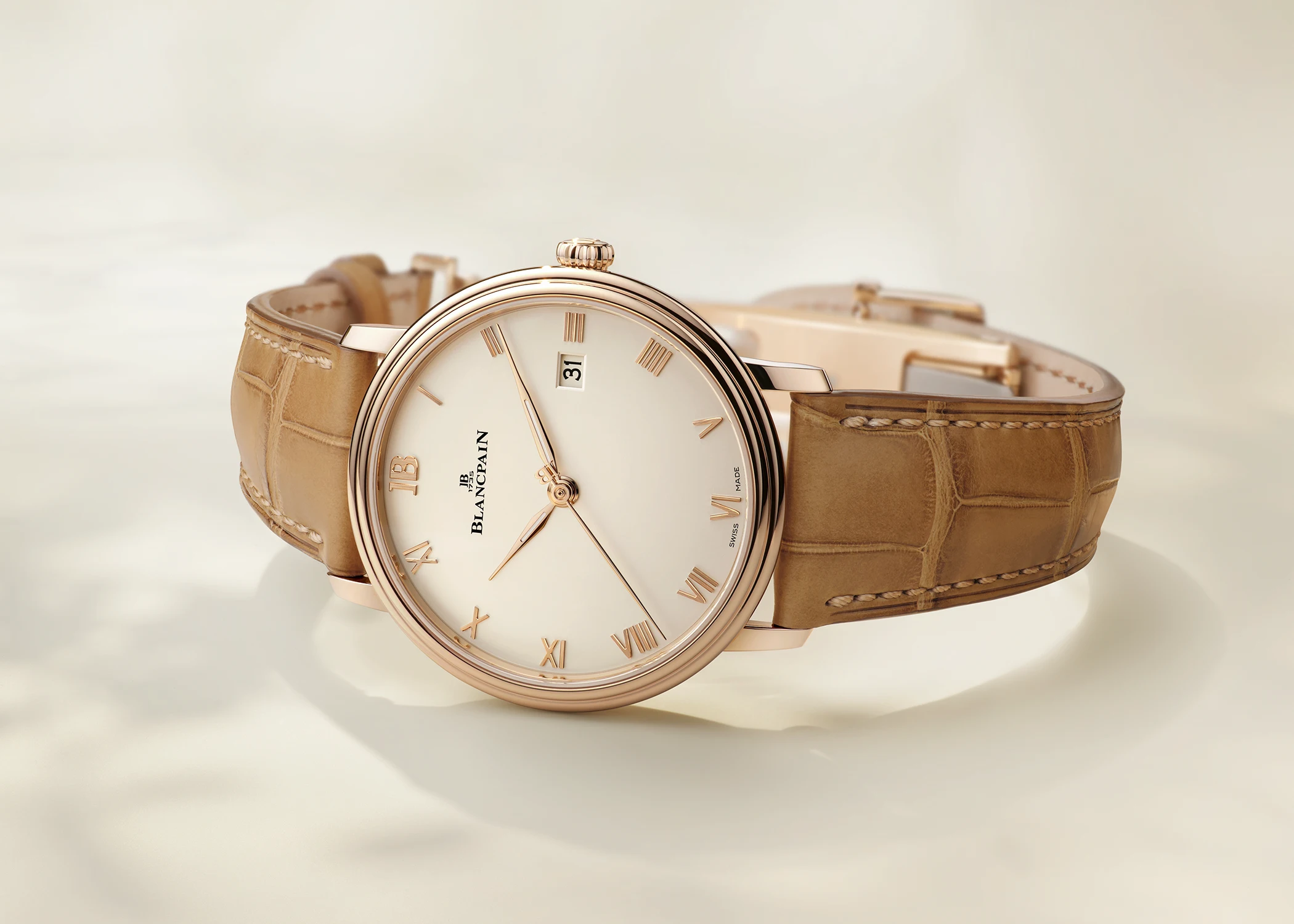
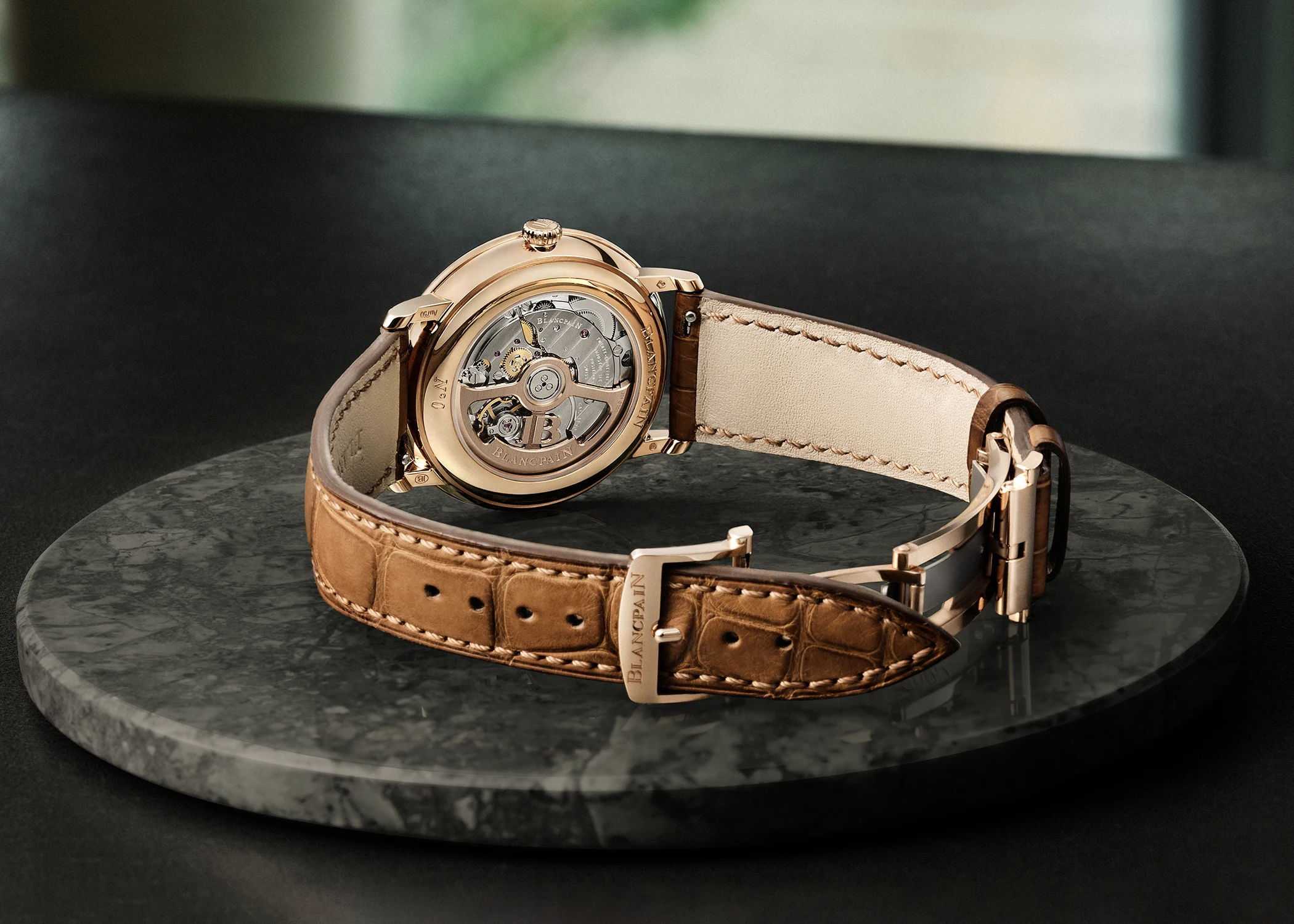
In detail, the 38-millimetre case also embodies the design language that Blancpain introduced across the entire Villeret range in autumn 2025: the Roman numerals, redesigned to suit the balance wheel, are crafted from solid 18-carat gold, with satin-finished surfaces and polished bevelled edges. In place of the traditional XII is the monogram JB – standing for the company’s founder, Jehan-Jacques Blancpain. Slender hands are coated with Super-LumiNova for legibility in the dark, whilst an enlarged date window is positioned at three o’clock. Through the sapphire crystal caseback, an openworked oscillating weight – in rose gold on the rose gold models, in yellow gold on the steel models – offers a clear view of the automatic Manufacture Calibre 1150 with its 100-hour power reserve.
In technical terms, the Ultraplate measures 38 millimetres in diameter and is just 8.35 millimetres thick, with a width of 43.35 millimetres from lug to lug. The Calibre 1150, which is just 3.25 millimetres thick, oscillates at 3 hertz, features a silicon balance spring, 28 jewels and 210 components. The case and caseback are made of sapphire crystal, and the watch is water-resistant to 3 bar. Straps and clasps can be changed without tools, simply by pressing with your fingers, and the warranty is valid for five years. The steel version is priced at 11,200 euros, whilst the 18-carat red gold version is priced at 23,000 euros.
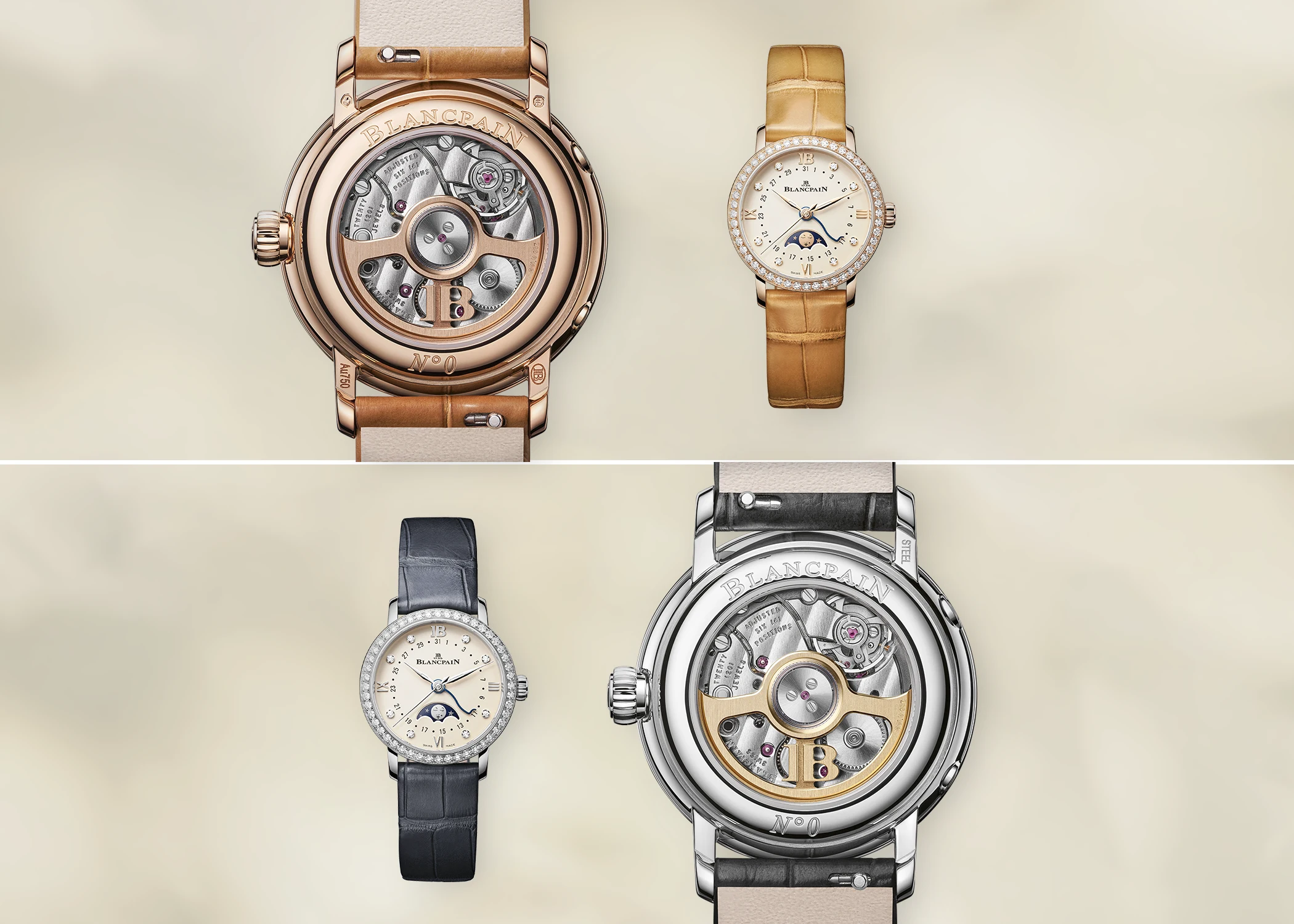
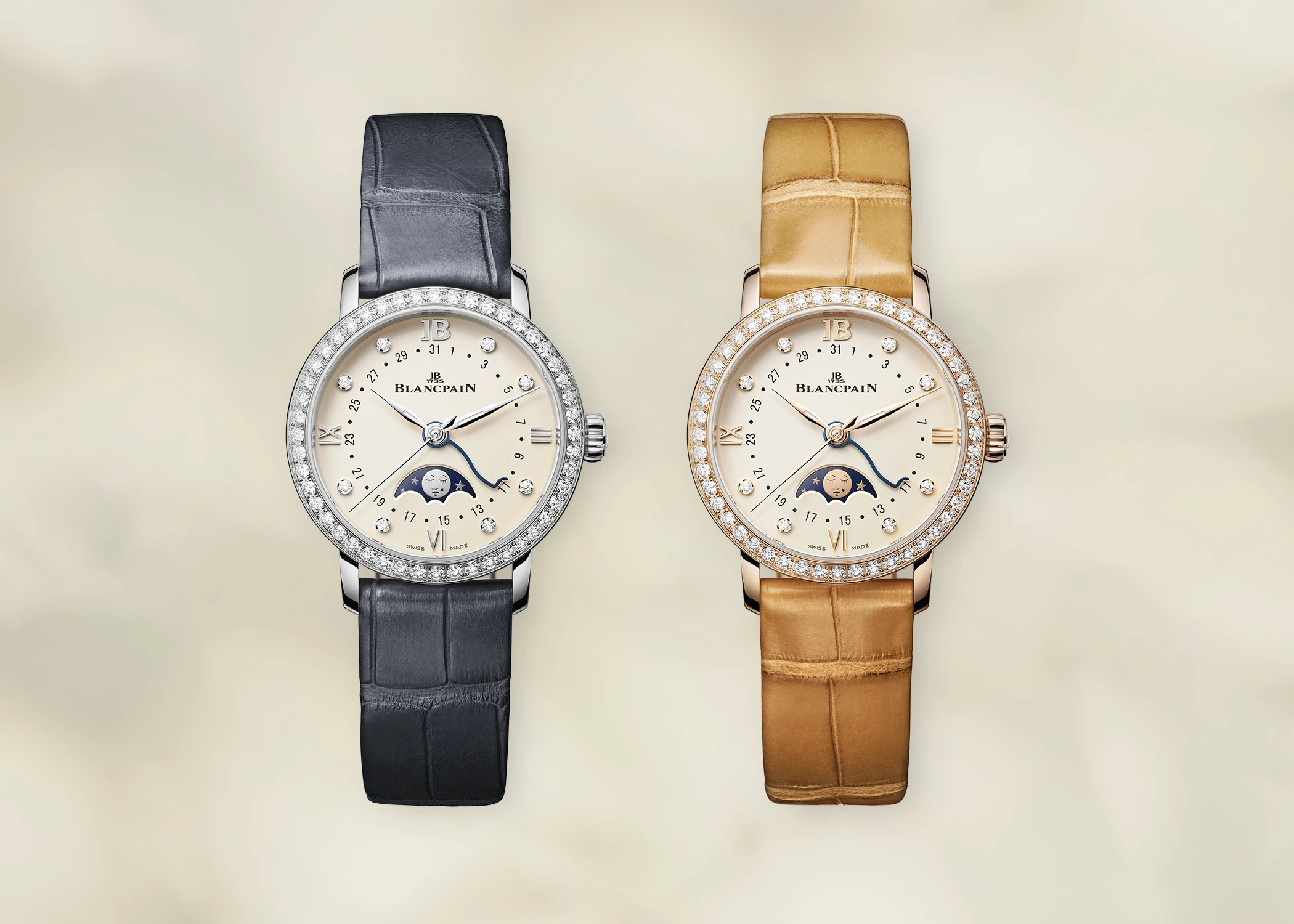
Few complications are as closely associated with a watchmaker as the moon phase is with Blancpain. In keeping with this, alongside the 38-millimetre model, the Villeret Phases de Lune is now available in a 29.2-millimetre case. Through an enlarged aperture, a blue ceramic disc showcases an applied, domed and satin-finished moon in 18-carat gold with its characteristic face; a diamond-set bezel and diamond hour markers catch the light, whilst a blue serpentine hand indicates the date. Inside, the in-house automatic calibre 913QL allows the calendar to be adjusted at any time without risk to the movement’s mechanics. The Phases de Lune costs €17,850 in steel and €25,550 in rose gold.
My colleague Antje Heepmann has described the history and anatomy of the perfect dress watch in detail on Swisswatches (read it here). In short, the classic definition of a dress watch is as follows: it has a case made of precious metal or polished steel, measures no more than 38 millimetres in diameter and nine millimetres in height; a smooth, narrow bezel defines its look, and it is fitted with a mechanical movement displaying hours and minutes, plus at most a small seconds hand – traditionally, for the sake of slimness, these watches do not even have a sapphire crystal case back. A particularly uncluttered dial, preferably with applied hour markers, goes without saying; understated colours such as white, champagne or silver, along with slender Dauphine- or baton-style hands, often characterise this elegant look. It is important to note that these criteria are, of course, not set in stone, but are merely intended to provide a rough guide. There are also larger, slightly more playful or angular watches that can certainly pass as dress watches.
If we judge the Villeret 38 by our own criteria, the verdict is clear: the geometry is perfect in both steel and 18-carat gold. At exactly 38 millimetres, it sits precisely at the classic upper limit, whilst its thickness of 8.35 millimetres keeps it below the nine-millimetre mark. The gold-coloured opaline glass complements the understated colour scheme, whilst the slender hands reflect the house’s tradition and that of the category.
What is far more impressive here are the deliberate deviations. The double-stepped bezel is part of the brand’s DNA and deliberately departs from the smooth design prescribed by orthodoxy – it is Blancpain’s most recognisable signature feature on the watch. The movement is the real highlight: automatic rather than hand-wound, yet constructed to be ultra-thin – a far more complex feat given the limited height, as the winding rotor must, after all, be accommodated. But that’s not all: The Villeret Ultraplate also features a date display and a sapphire crystal case back; both bear witness to the outstanding quality of watchmaking in Villeret, the Swiss town where the manufacture is based and after which the watch collection is named. The Roman numerals, deliberately set in place of applied hour markers, are crafted from solid gold and round off the cohesive overall design.
The Villeret 38 Ultraplate not only meets all the requirements of a modern dress watch, but also sets a new benchmark for slimness and elegance, whilst remaining true to its own design language. For Swisswatches, it is classic enough to honour the tradition of the category, yet distinctive enough to be instantly recognisable as a Blancpain.
As we recall: As early as autumn 2025, Blancpain began to shine a fresh light on this elegant facet of its history, with a renewed focus on the Villeret line: under the title ‘Subdial Curates: The Villeret’, the brand presented a curated exhibition on 22 and 23 May 2026 in collaboration with the London-based watch platform Subdial at its clubhouse in Farringdon. The exhibition brought together around 20 significant Blancpain models, ranging from perpetual calendars and moon phase watches to minute repeaters and the 1735. To organise the event, Blancpain turned to Jeffrey Kingston – a renowned collector and historian whose decades of research into the brand have made him one of the leading authorities on Blancpain’s revival era.
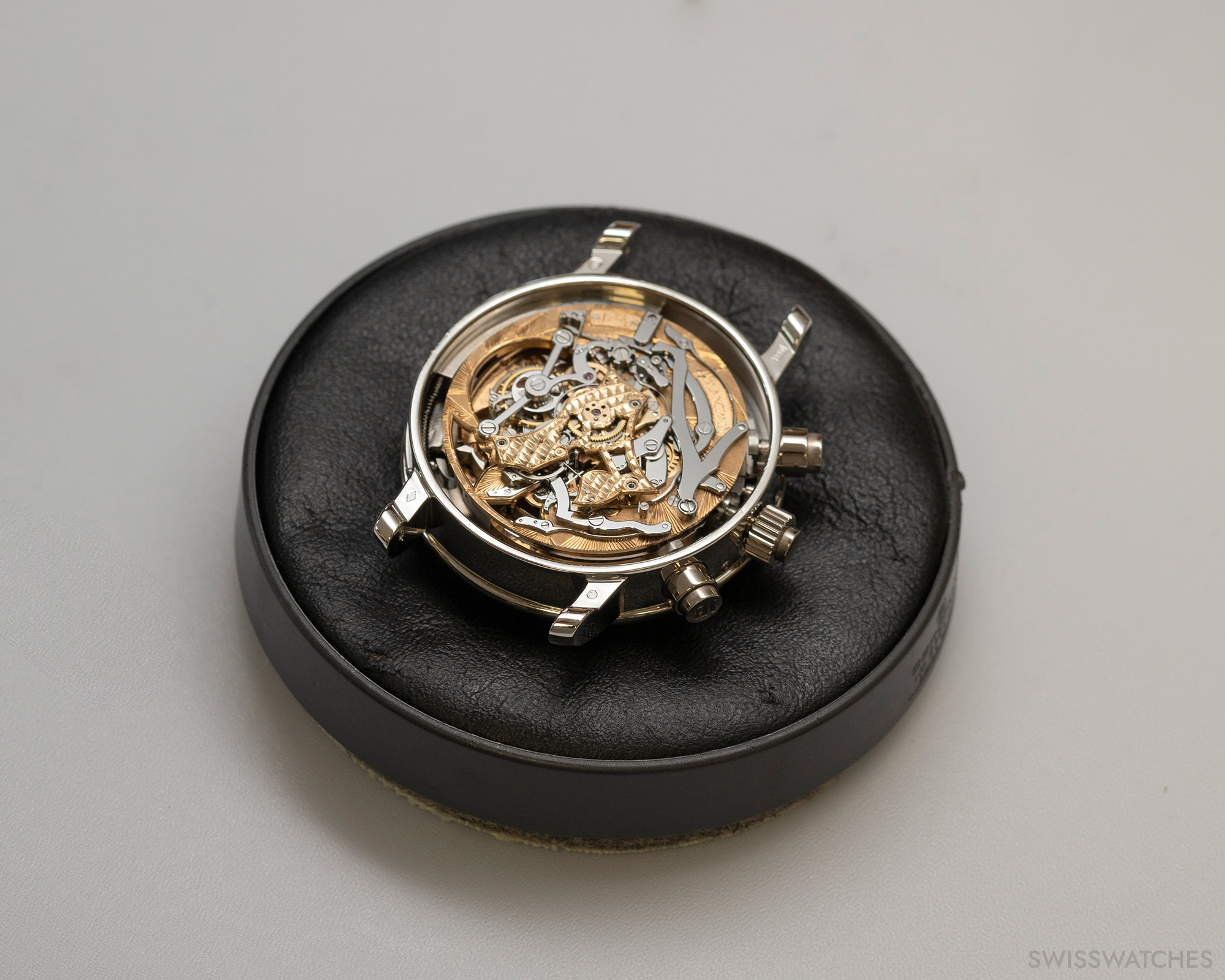
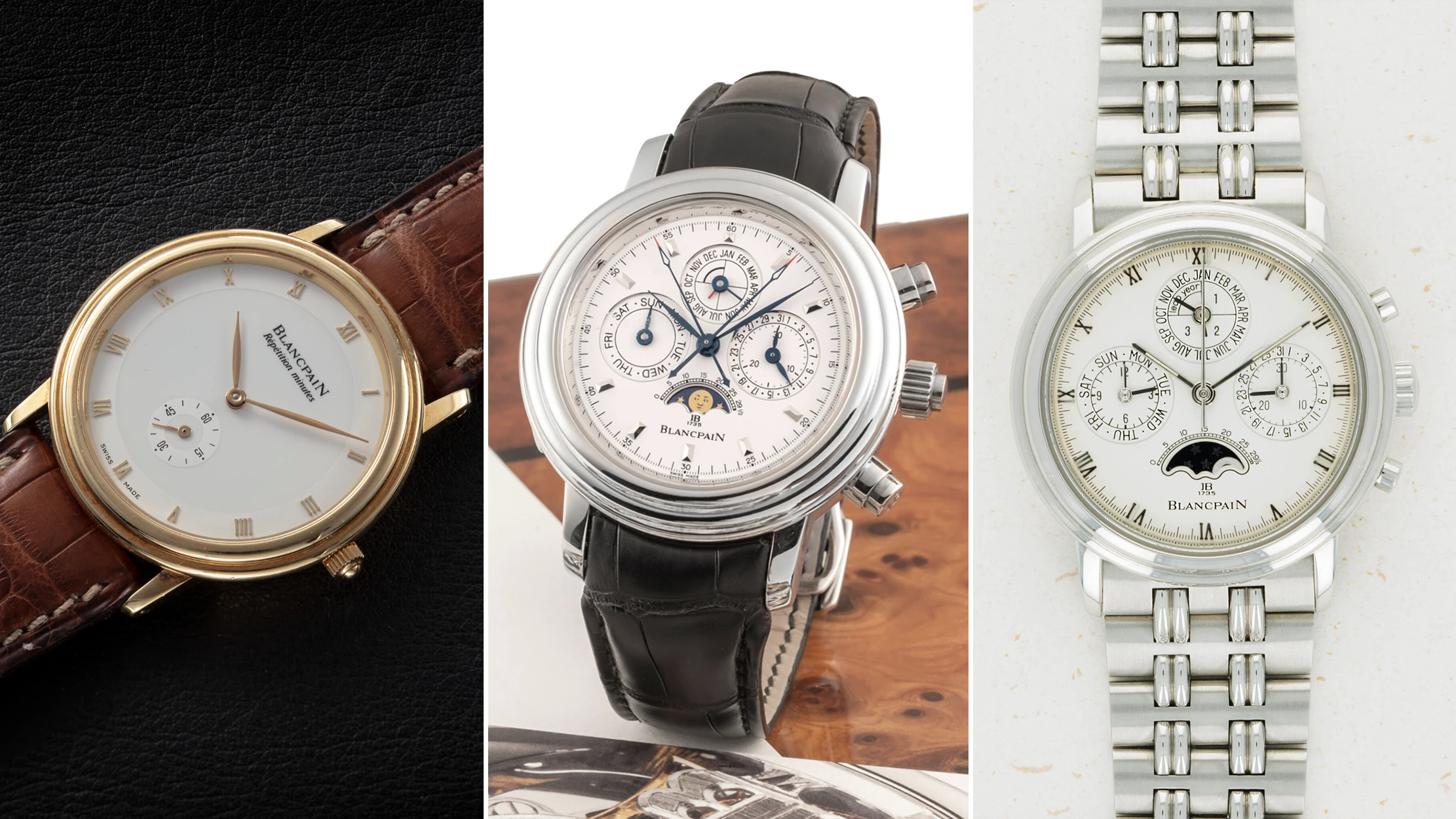
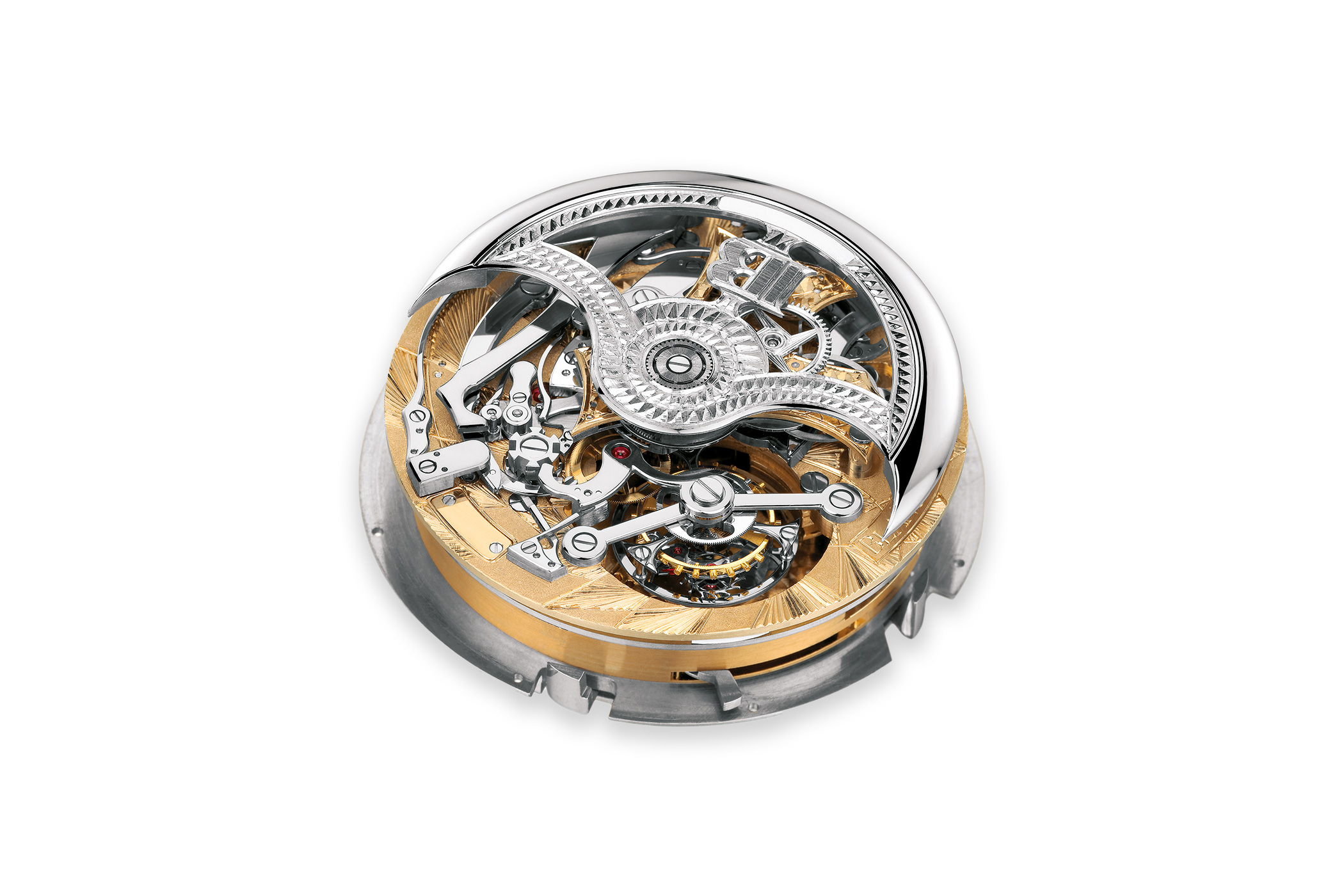
Anyone wondering whether Blancpain is perhaps capable of more than just ultra-thin, elegant dress watches is quite right: even back then, three timepieces from the line’s heyday demonstrated just how high Blancpain’s standards were. The Villeret Minute Repeater Automatic, reference 0035, concealed one of watchmaking’s most complex complications within an ultra-thin gold dress watch that still appears incredibly understated today. The 1735 Grande Complication combined a minute repeater, a tourbillon, a perpetual calendar and a split-seconds chronograph in a movement comprising some 740 components, with a single watchmaker taking almost a year to assemble a single example. And the 34-millimetre Villeret Quantième Perpétuel Chronographe, reference 5585, is perhaps the ultimate neo-vintage hidden gem: a rare triple-complication masterpiece from the 1990s, of which fewer than 400 were produced.
Credit © Christie’s | Antiquorum | Loupe This
In his newsletter “About Time”, Kingston recently discussed neo-vintage collecting, the quartz crisis and the question of why collectors are now viewing these watches in a new light. His verdict on the crisis years is unequivocal: “It was absolutely dreadful,” he says there. Independent brands had banded together during that period simply to survive – Blancpain as well as Omega and the movement manufacturer Nouvelle Lemania, all under the umbrella of the SSIH. Just how dire the situation was can be gauged from one detail: at the time, the banks had brought in Nicolas Hayek to liquidate the company. Hayek Senior then chose to turn the company around rather than wind it up – one of those moments that ensured the survival of the entire industry and not only paved the way for Blancpain’s resurgence but also marked the beginning of the Swatch Group’s rise.
Credit © RDB
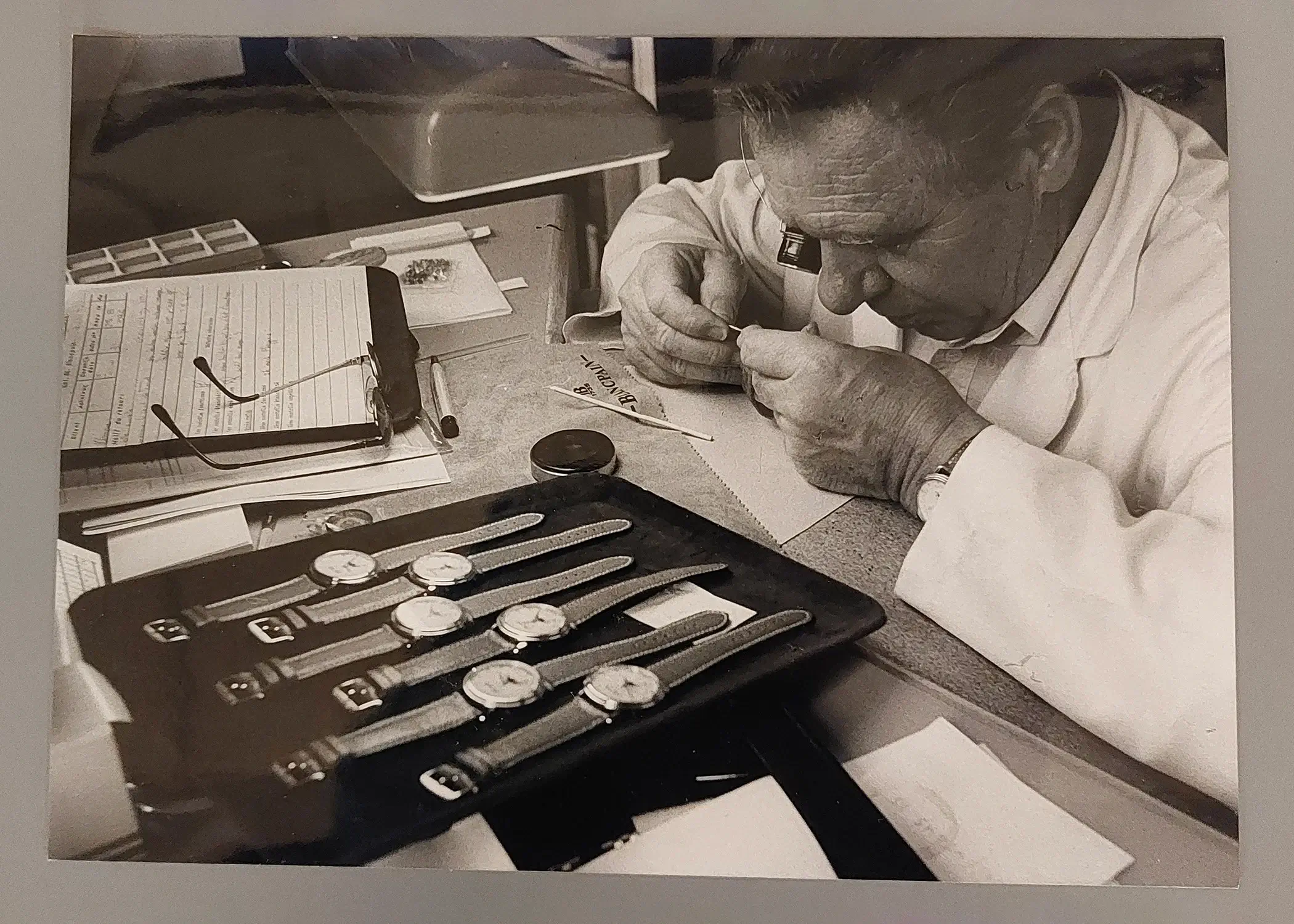
Kingston offers fascinating insights into the early years of the mechanical watch’s comeback: contrary to popular belief, the real driving force behind Blancpain was not Biver, but Jacques Piguet, owner of the Frédéric Piguet movement manufacture, famous for its ultra-thin and highly complicated calibres. His reasoning was simple: he needed a brand to sell his movements – and brought in Jean-Claude Biver as the commercial mastermind. Biver’s greatest coup was the advertising slogan mentioned at the outset: that there had never been a quartz Blancpain since 1735, and there never would be. No one here is keen to belittle Biver’s skill: myths still make up the bulk of the industry to this day. To this day, that advertising slogan is rivalled only by Patek Philippe’s dictum that one never truly owns a Patek, but merely preserves it for the next generation.
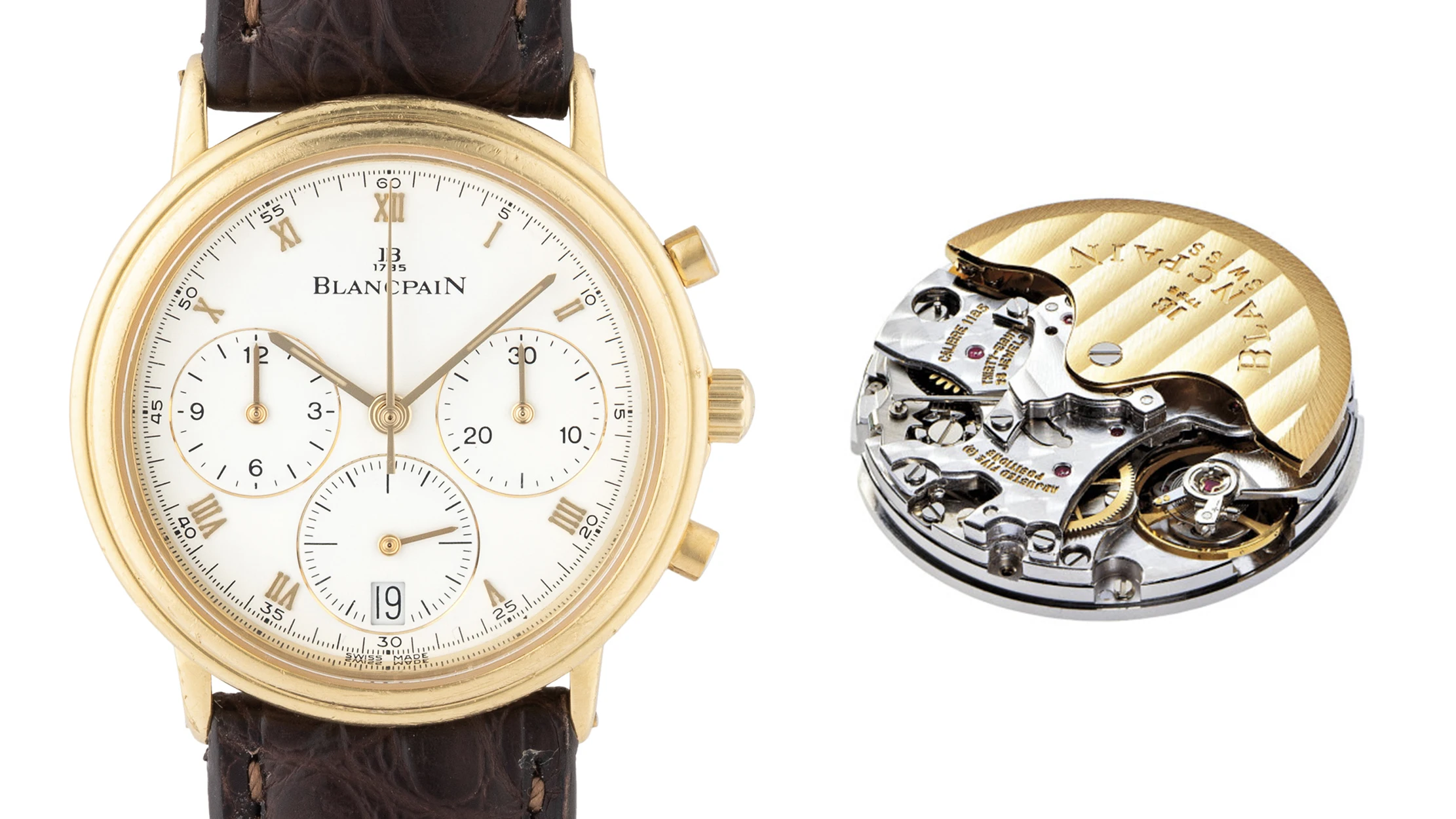
However, what was crucial to Blancpain’s resurgence – and on this point Swisswatches agrees with the author – was not marketing, but the mechanical superiority of the watches themselves: at the time, Blancpain delivered a string of genuine watchmaking firsts: with the 1185, for example, the world’s thinnest automatic chronograph, which also featured the first truly effective vertical clutch. This was complemented by the smallest and flattest minute repeater of its kind, as well as the brand’s in-house flying tourbillon.
Credit © Eppli
With the help of Frédéric Piguet, Blancpain launched such products long before the industry’s now widely recognised trend towards vertical integration. The Frédéric Piguet Calibre 1185 — the ultra-thin automatic chronograph movement — was unveiled as early as 1988. In the same year, Blancpain unveiled its first chronograph at Baselworld, featuring a flyback function and automatic winding, just 6.75 mm thick, based on the Calibre 1185. Developing new movements takes years. Rolex, one of the world’s largest manufacturers of mechanical watches, did not introduce its own chronograph movement until 2000, Patek Philippe followed in 2005 with the ultra-thin flyback calibre CHR 27-525 PS, and Vacheron Constantin unveiled its first modern in-house chronograph movement in the Harmony Chronograph, featuring the monopusher calibre 3300, to mark its 260th anniversary at the SIHH 2015. Today, at a time when full-manufacture watchmakers specialising in fine mechanics seem to be ubiquitous once again, Blancpain’s achievement is difficult for many to comprehend.
The range was launched with the 1983 full calendar model featuring a moon phase display. Rather than reviving the brand with something simple, Blancpain made a bold statement at the time. The message was: we are not merely a watchmaker with a new owner; we produce some of the most ambitious mechanical watches in the world.
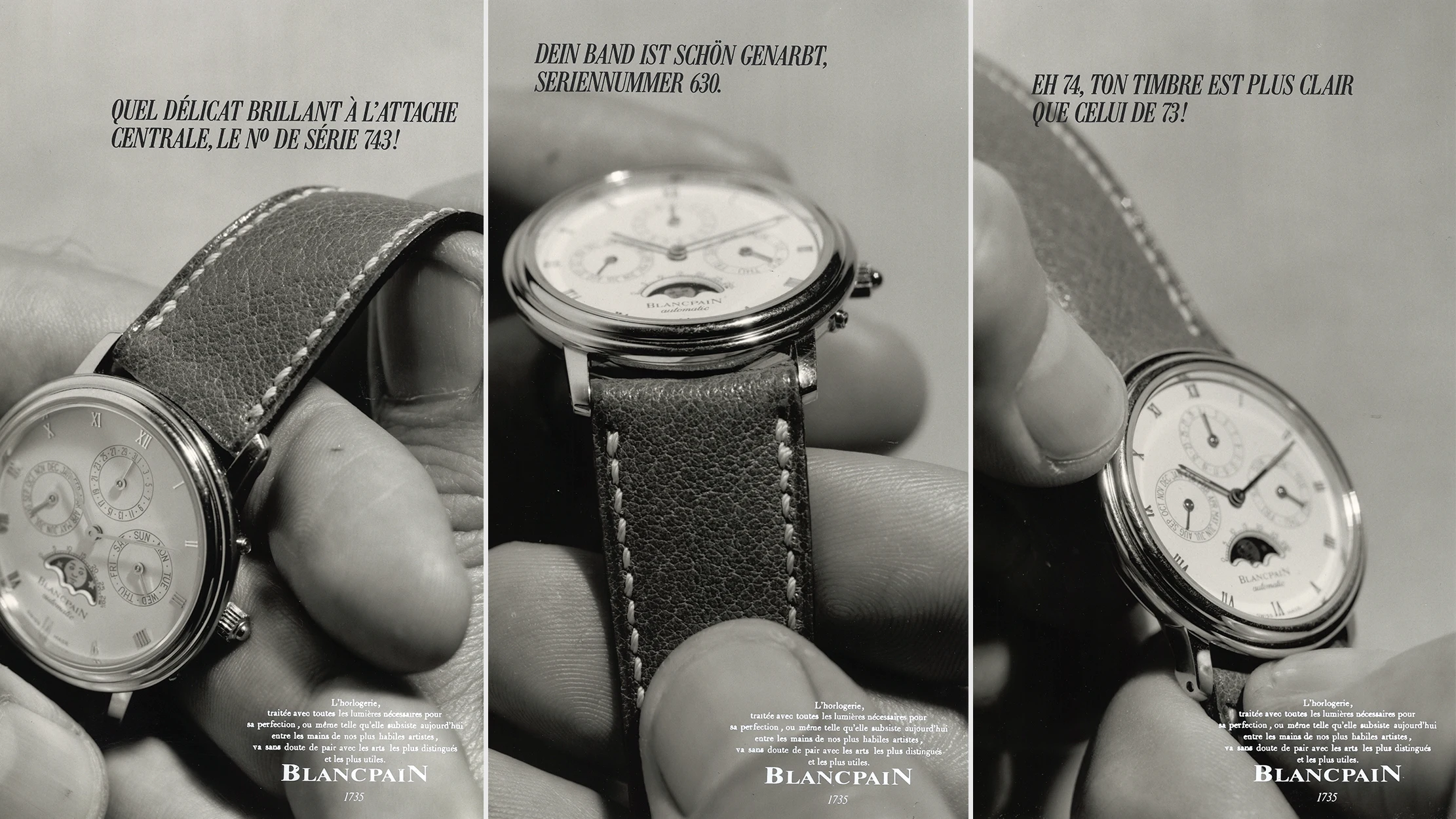
Why should collectors snap them up right now? Because, like all great designs, these are timeless and have been on the market for over forty years (and are instantly recognisable as Blancpains). The watch is also fascinating because this phase of watchmaking is, in many respects, the starting point for today’s concept of ‘neo-vintage’. And for bargain hunters: to this day, the prices of early Blancpains from that era remain significantly undervalued – not to say they are a real bargain. It is entirely possible to acquire complex 34-millimetre watches of genuine historical significance that are both elegant and affordable.
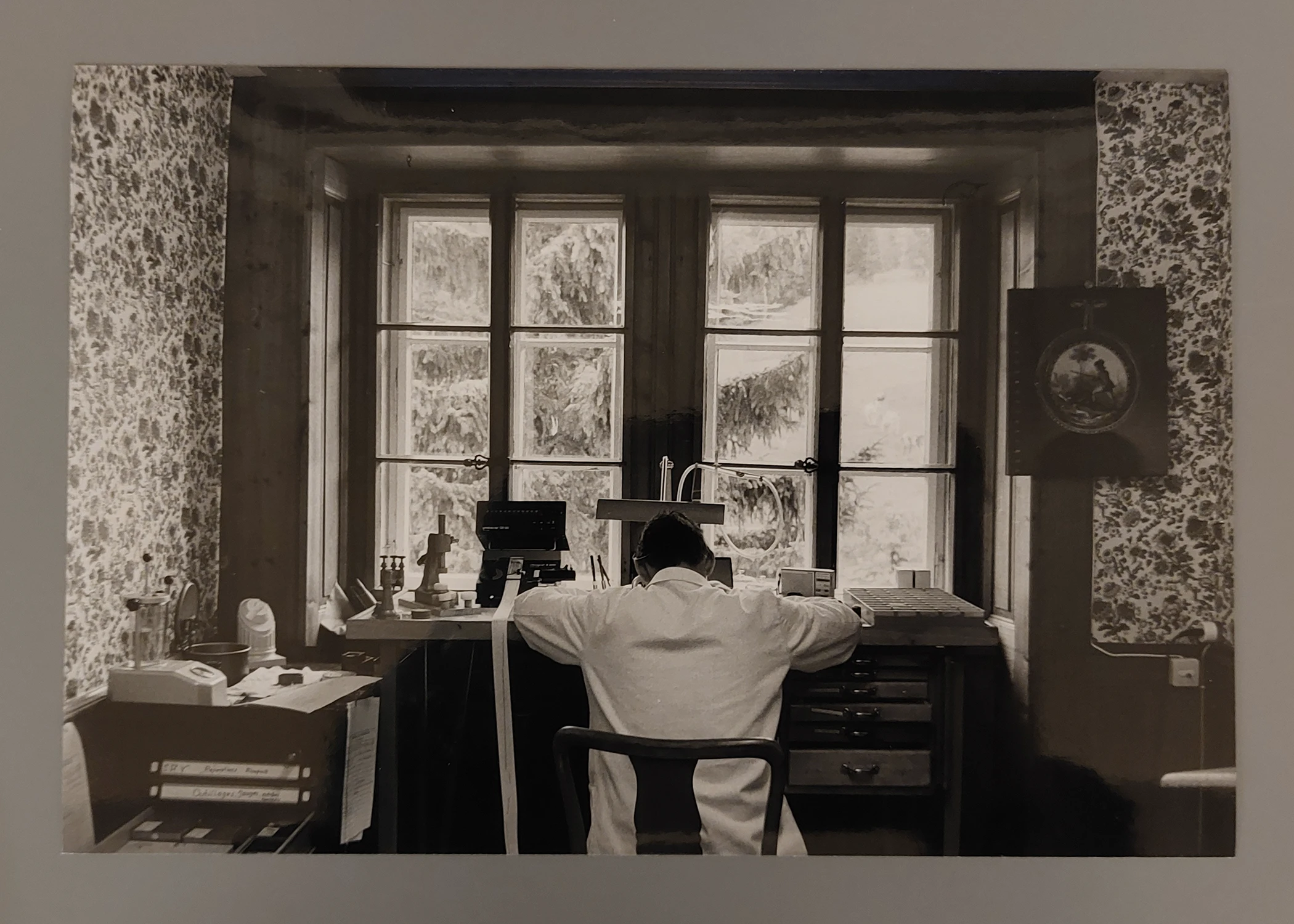
The entire philosophy of this era is encapsulated in the ‘1735’ mentioned earlier. For years, it was the most complex automatic wristwatch in the world – and, what makes it even more impressive, it was designed and built before computer-aided design of cases and movements even existed. It is classic watchmaking, pushed to the limit. During this period, Jean Claude Biver actually lived in the loft of the very farmhouse where Frédéric Piguet had begun developing movements in 1860. According to Kingston, he is said to have worked downstairs amongst the watchmakers until his wife would stamp her foot on the floor above to signal that it was time to call it a day. It was a blessing for watchmaking that he was so often late.
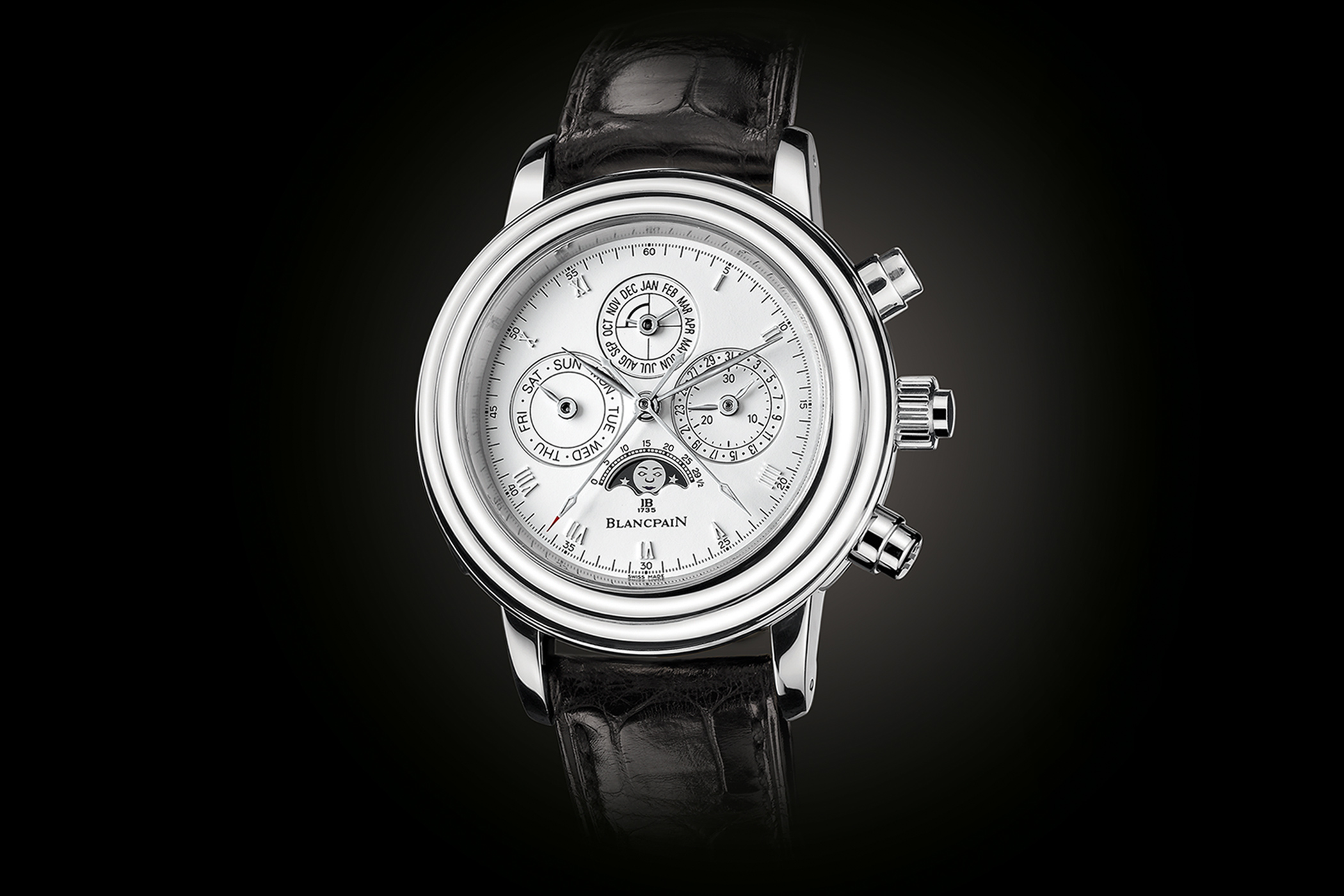
It is precisely those brands whose value has not yet been fully recognised by the collecting community that embody the true appeal of collecting and discovery – the feeling of unravelling a story before the market has priced it in. Blancpain has successfully told the story of the Fifty Fathoms’ comeback. The Villeret 40, launched in 2025, marked a return to the brand’s own high culture. With the Villeret 38 Ultraplate, the brand truly has the potential to be seen in a whole new light and, ultimately, to be re-evaluated. And it retains one advantage: given the manufacture’s maximum possible production numbers alone, this watch simply cannot become too ubiquitous in the public eye. It is the watch for anyone who wants to convince others through reasoned argument. And they know that, in the long run, the argument presented most quietly is often the most convincing.