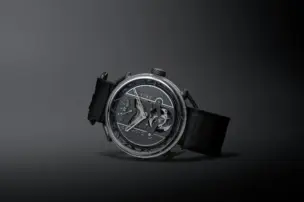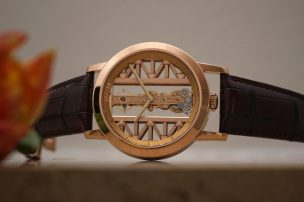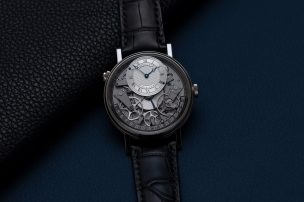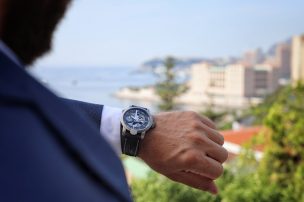
On 7 November 2026, the 26th edition of the Grand Prix d’Horlogerie de Genève (GPHG 2026) took place in Geneva. An overview of the main winners.

Andy Warhol owned more than 300 watches, seven of which were by Piaget. One of them bears his name today. With the ‘Camouflage’, Piaget is releasing its second limited edition under licence from the Warhol Foundation – showcasing how creatively the watchmaker interprets a work of art in horological terms, rather than merely copying it.
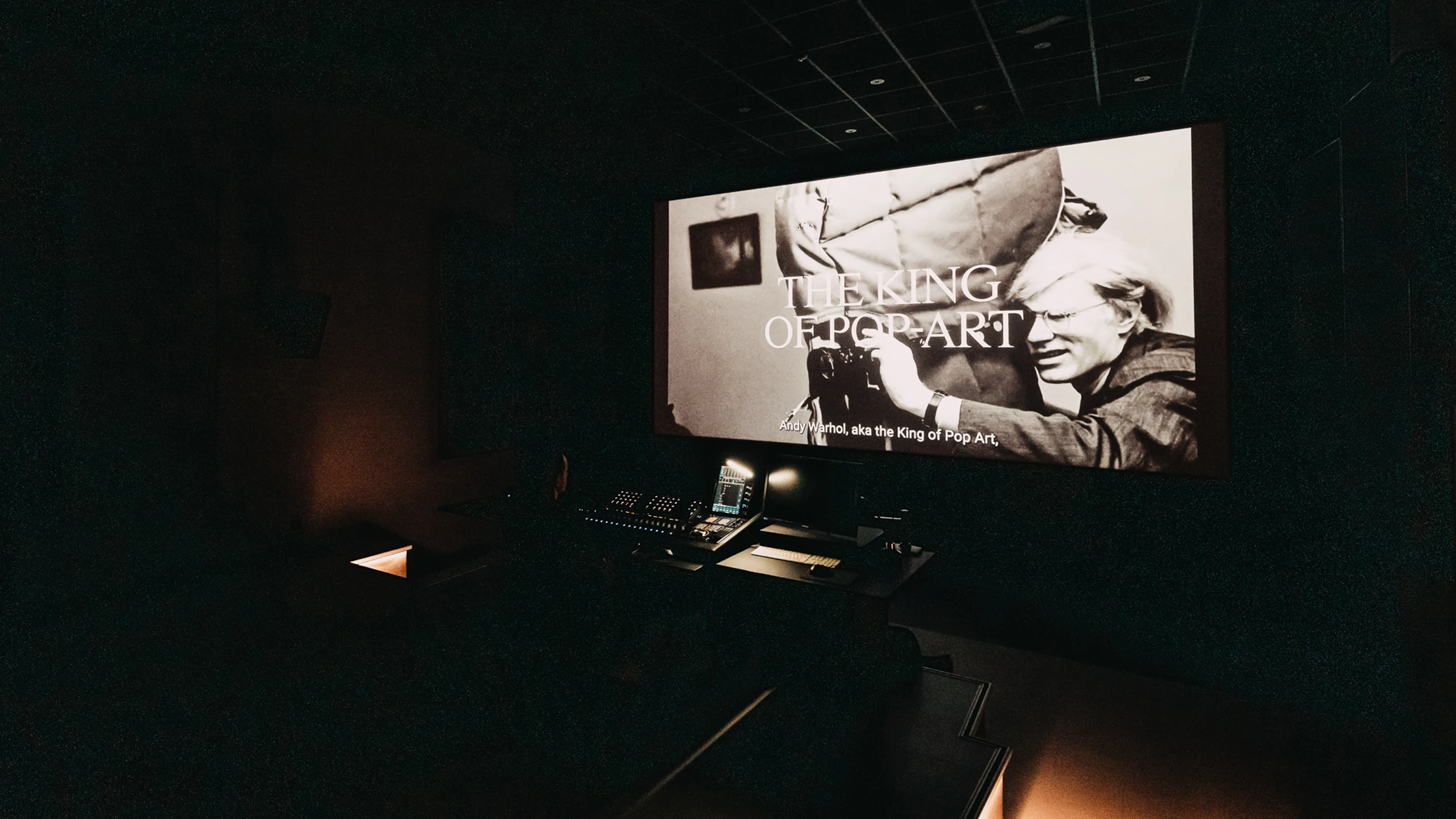
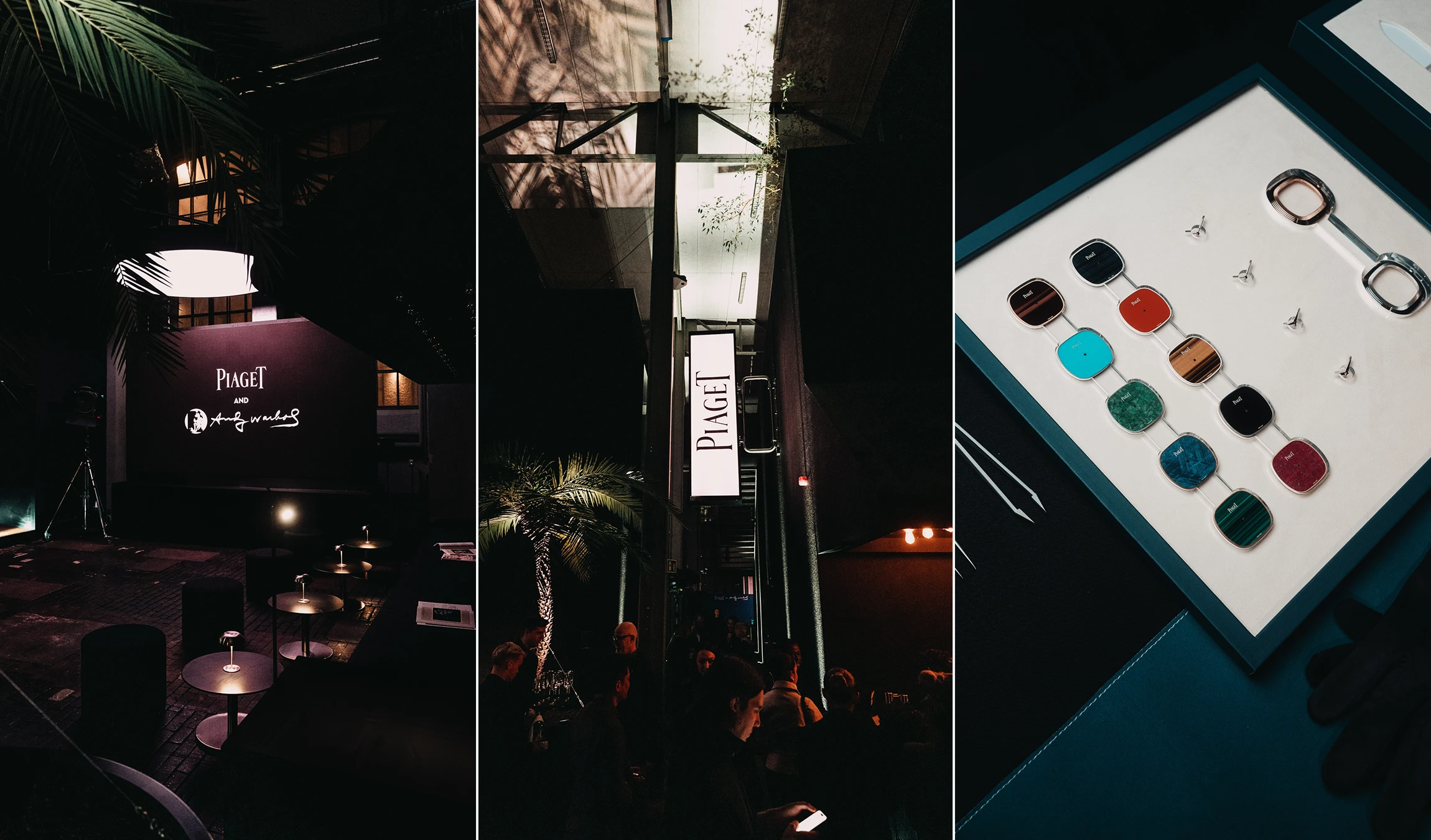
To mark the launch of the latest Andy Warhol creation, Piaget hosted an event in Geneva in early November, choosing a very special venue for the occasion. A film studio so tucked away in the heart of Geneva that even our driver took two wrong turns before we spotted a young lady at an unassuming gate, who guided the invited guests to the venue in a winding back courtyard nestled amongst several building complexes. An event venue as well-disguised as the watch itself, yet perfectly chosen for the occasion – after all, Andy Warhol was not only a Pop Art painter, but also a defining figure of American avant-garde and underground cinema in the 1960s and early 1970s. And so, to mark the launch, Piaget had specially set up a small cinema screening room within the film studio, where a documentary on Andy Warhol’s life was shown on a continuous loop.
Andy Warhol, however, had another passion: watches, not least those by Piaget. After his death, the first watches in his collection were found in the fringed fabric canopy above Warhol’s four-poster bed, explains Daryn Schnipper, who oversaw the auction of his estate at Sotheby’s in 1988. A second batch turned up months later in the false bottom of a filing drawer. In the end, there were 313 wristwatches, scattered throughout a townhouse on East 66th Street.
No one in Warhol’s circle knew exactly how many watches he owned. He wore them as he pleased – sometimes even a gold ladies’ Rolex over his shirt cuff. Among the items found were also watches by Piaget; according to the brand, there were seven of them. Just under four decades later, one of them has lent its name to a collection. The latest edition has been available since 5 November: the Andy Warhol ‘Camouflage’ watch, limited to 86 pieces.
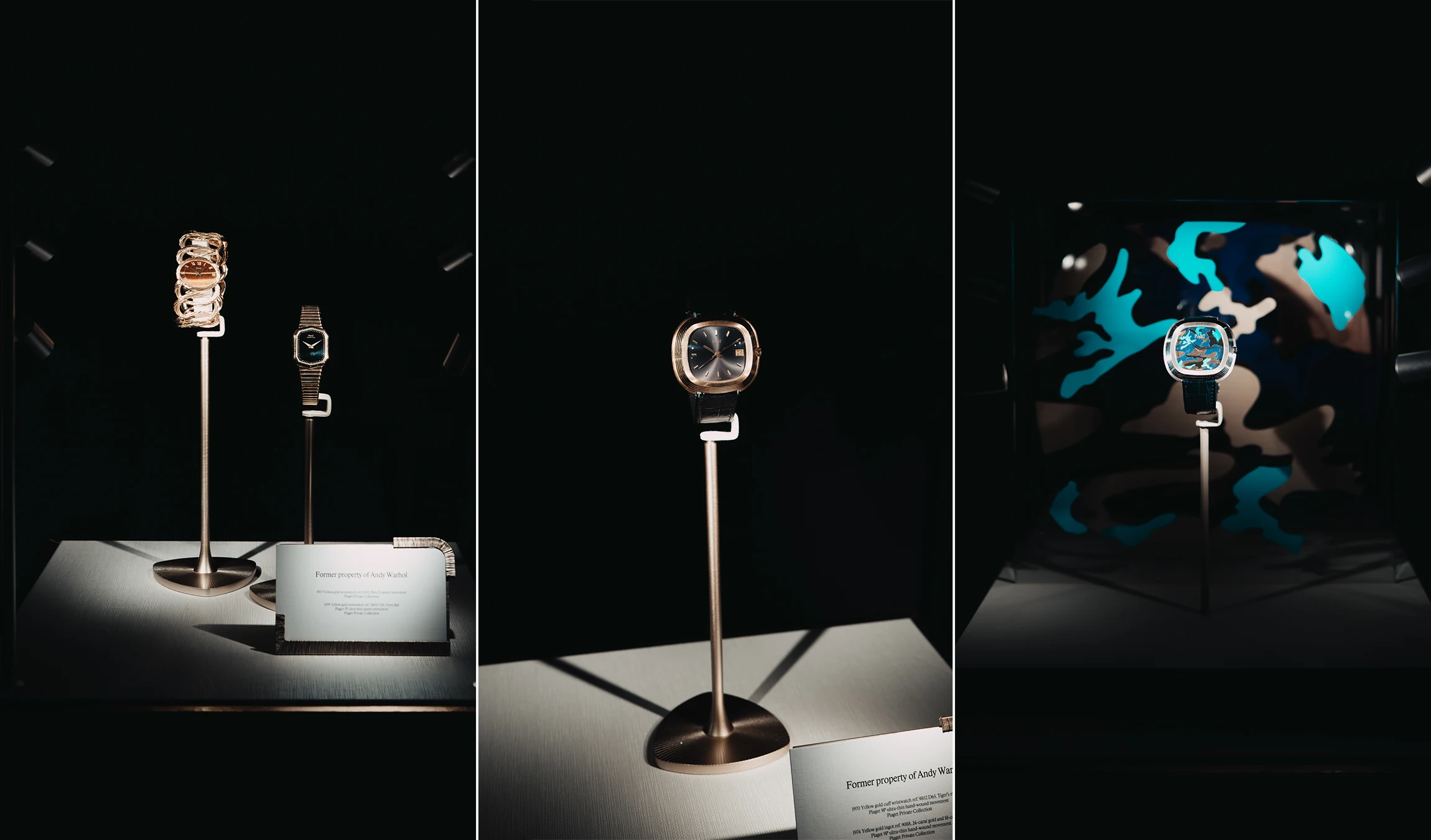
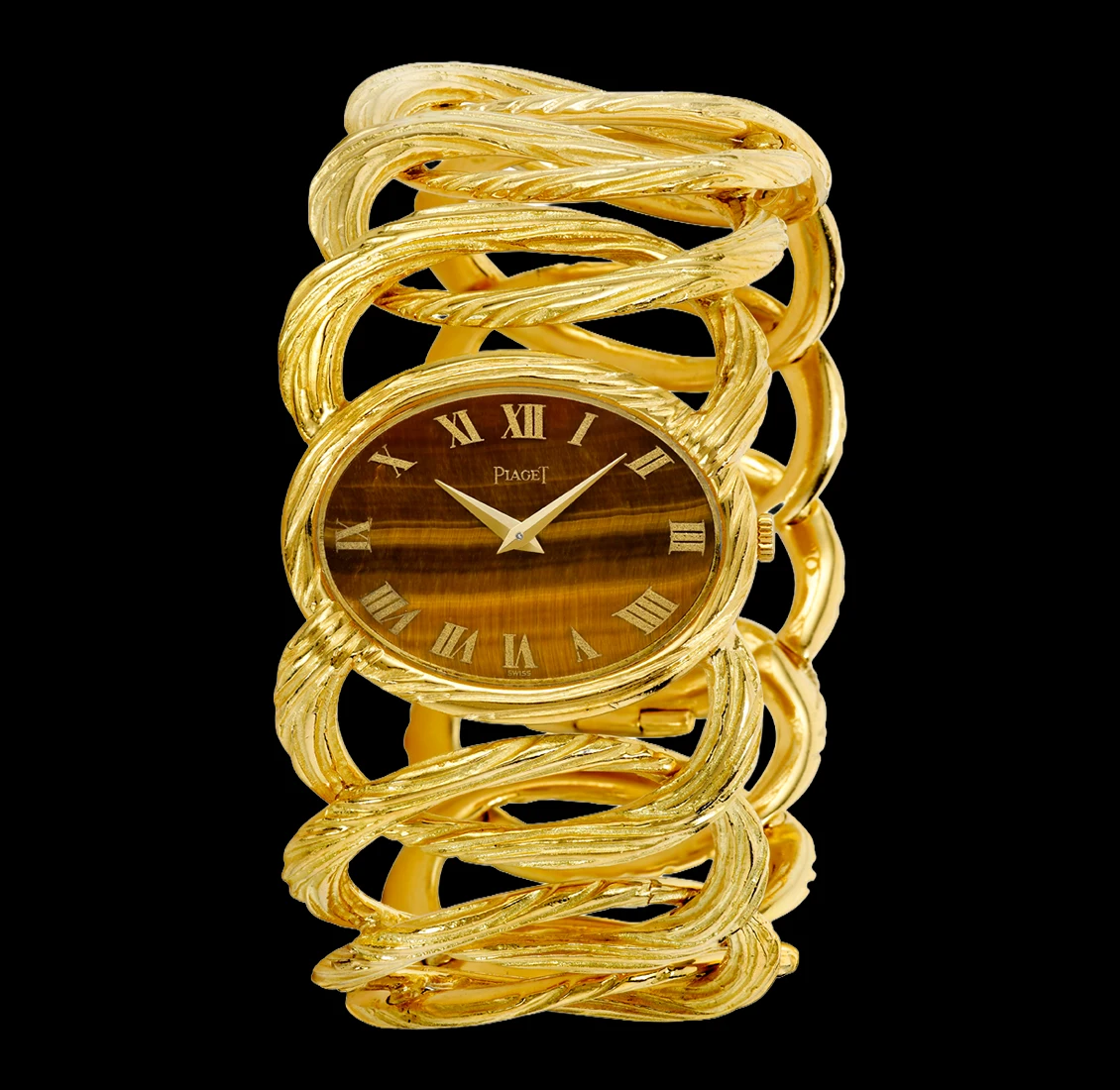
The number of watches is not entirely clear. Piaget mentions seven watches, whilst the New York Times once counted eight. One thing is certain: at the 1988 auctions, the manufacturer bought back several pieces. Four of these are now in the company’s own private collection. Warhol’s Piaget watches included cuff watches, which he liked to wear – the best known of which featured a tiger’s eye dial. These were joined by bar-shaped watches in 18- and 24-carat yellow gold from 1974, powered by the ultra-thin Calibre 9P.
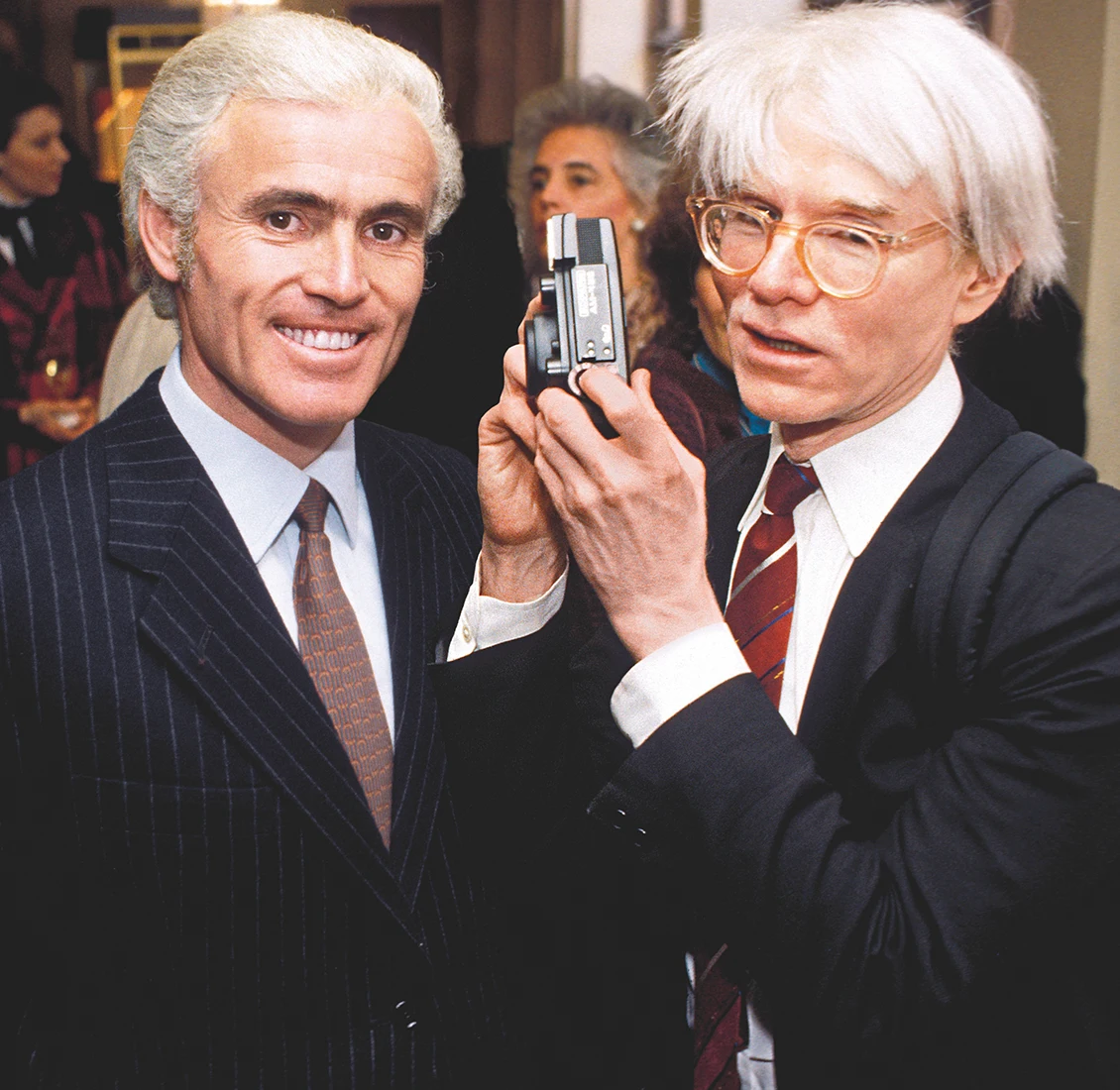
His connection to the brand was also a very personal one. Warhol was a member of the ‘Piaget Society’, the circle of artists, actors and jet-setters that Yves Piaget brought together around the brand in the 1970s. The two of them went to Studio 54 and Chez Régine together, and met up in New York and Palm Beach. According to Piaget, however, they did not meet until 1979 – years after Warhol had purchased his most important Piaget.
Warhol also collected Patek Philippe, Rolex and several Cartier Tank watches. The fact that, of all things, a Piaget bears his name today is down to a single model.
The 15102 model was created in 1972 under Piaget’s then Creative Director, Jean-Claude Gueit. For an elegant gold watch of that era, it was exceptionally striking: 45 millimetres wide, cushion-shaped, with stepped godrons around the dial.
There was a technical reason for the size. Inside was the Beta 21, the first Swiss mass-produced quartz movement and the industry’s response to competition from Japan. The movement measured 30.9 by 26.5 millimetres and was 6.2 millimetres thick, even in its flattest version. Piaget was not alone in this: Omega, Patek Philippe and Rolex also produced watches with Beta 21 movements.

The 15102 was only manufactured until 1977, after which Piaget had its own, significantly flatter quartz movements. Warhol bought his Piaget watch in 1973: in yellow gold and with an electroplated anthracite-coloured dial. And it was this particular piece that Piaget reacquired at Sotheby’s in 1988 and which can still be admired today in the company’s own archives.
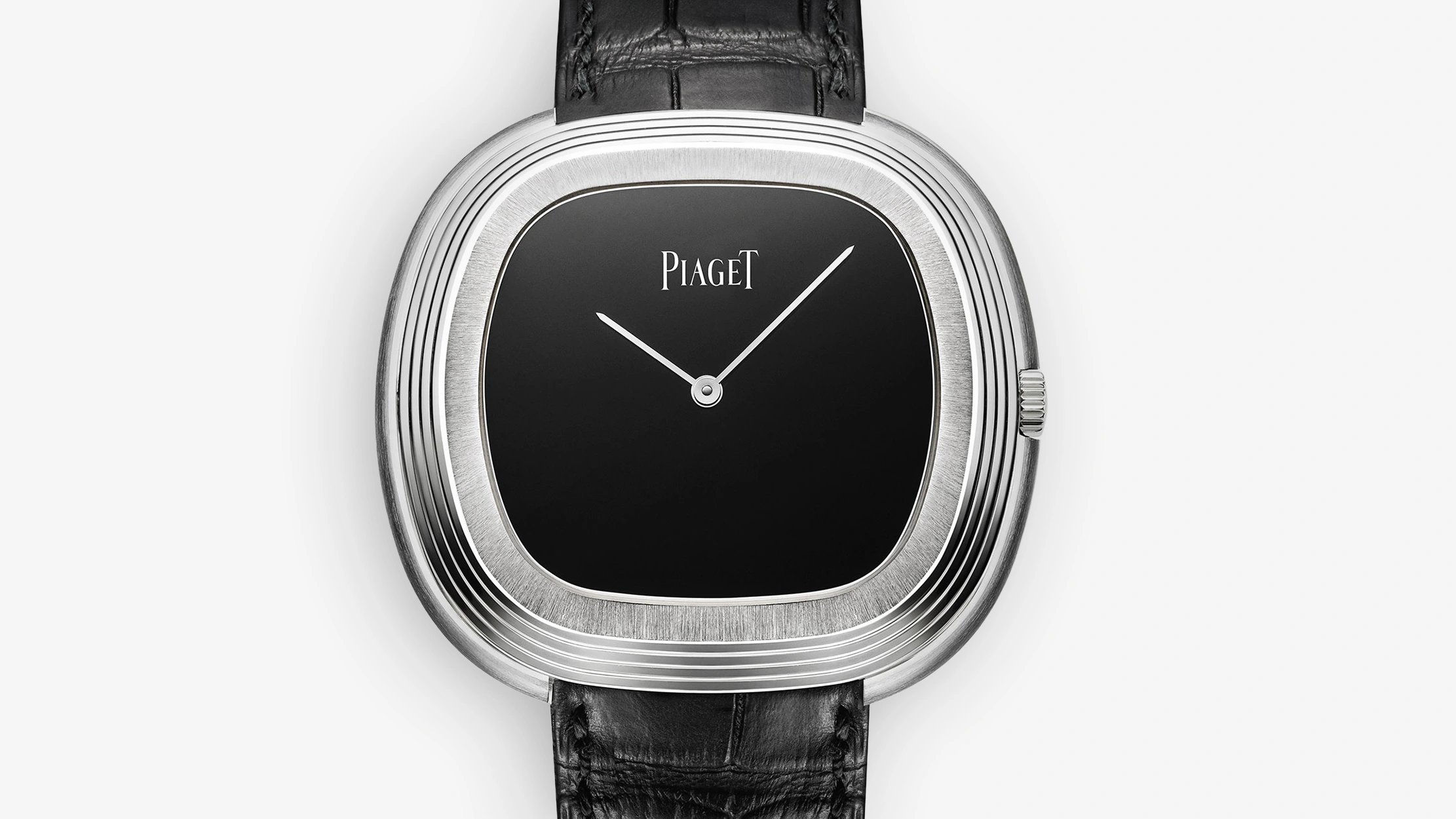
She didn’t get it until decades later. To mark the company’s 140th anniversary in 2014, Piaget revived the design as the ‘Black Tie Vintage Inspiration’, in white gold with an onyx dial and limited to 28 pieces. By then, on the secondary market, the model had long been known simply as ‘the Warhol’.
However, Piaget was not officially permitted to call it that. This changed in November 2024 following a licensing agreement with the Andy Warhol Foundation for the Visual Arts. Since then, the collection has been known as the Andy Warhol Watch, and Piaget is permitted to design a watch based on one of the artist’s works once a year. The licence fees are channelled into the Foundation’s endowment, which, according to its own figures, has so far awarded almost 300 million dollars in grants to support the arts.
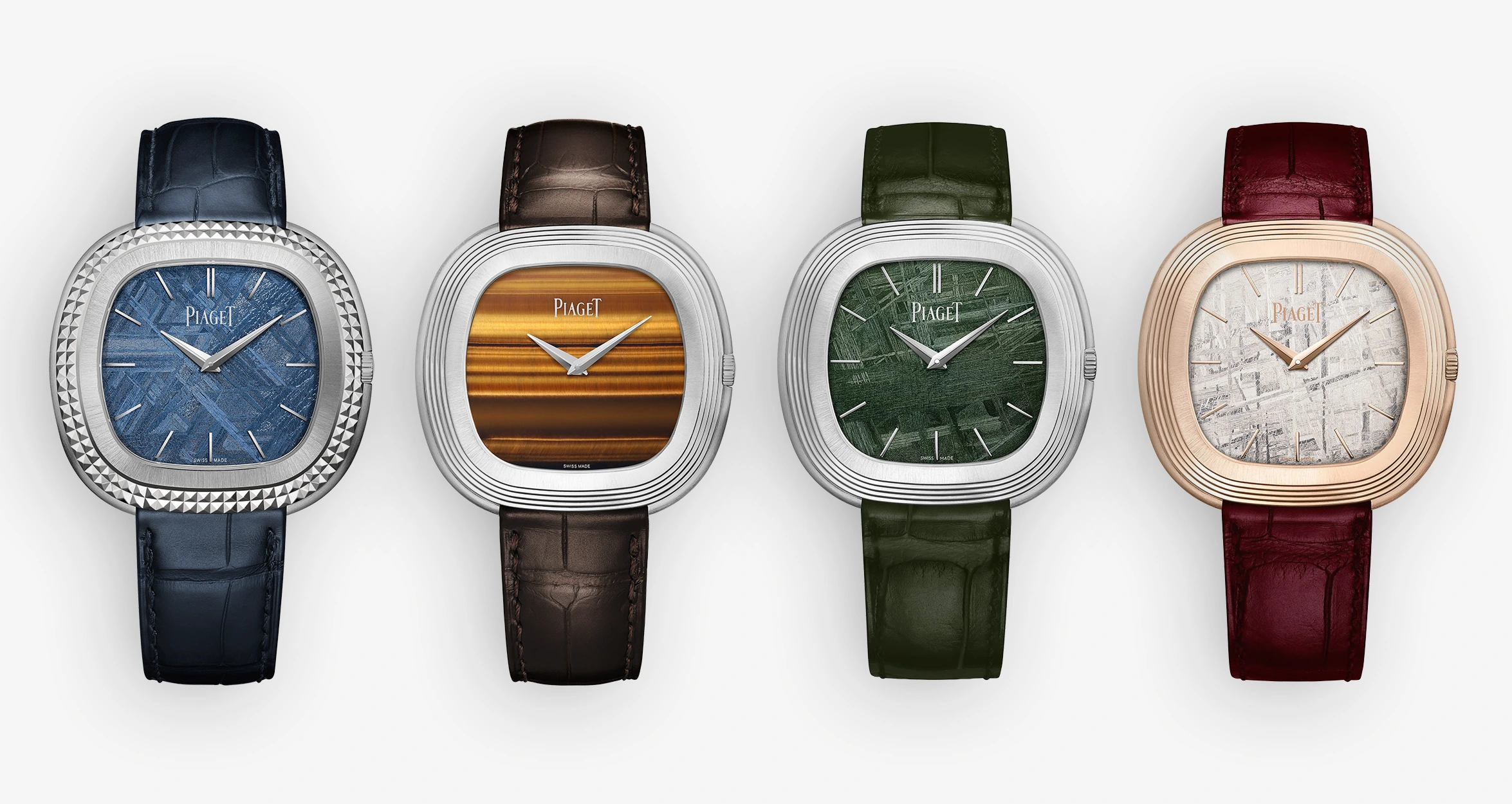
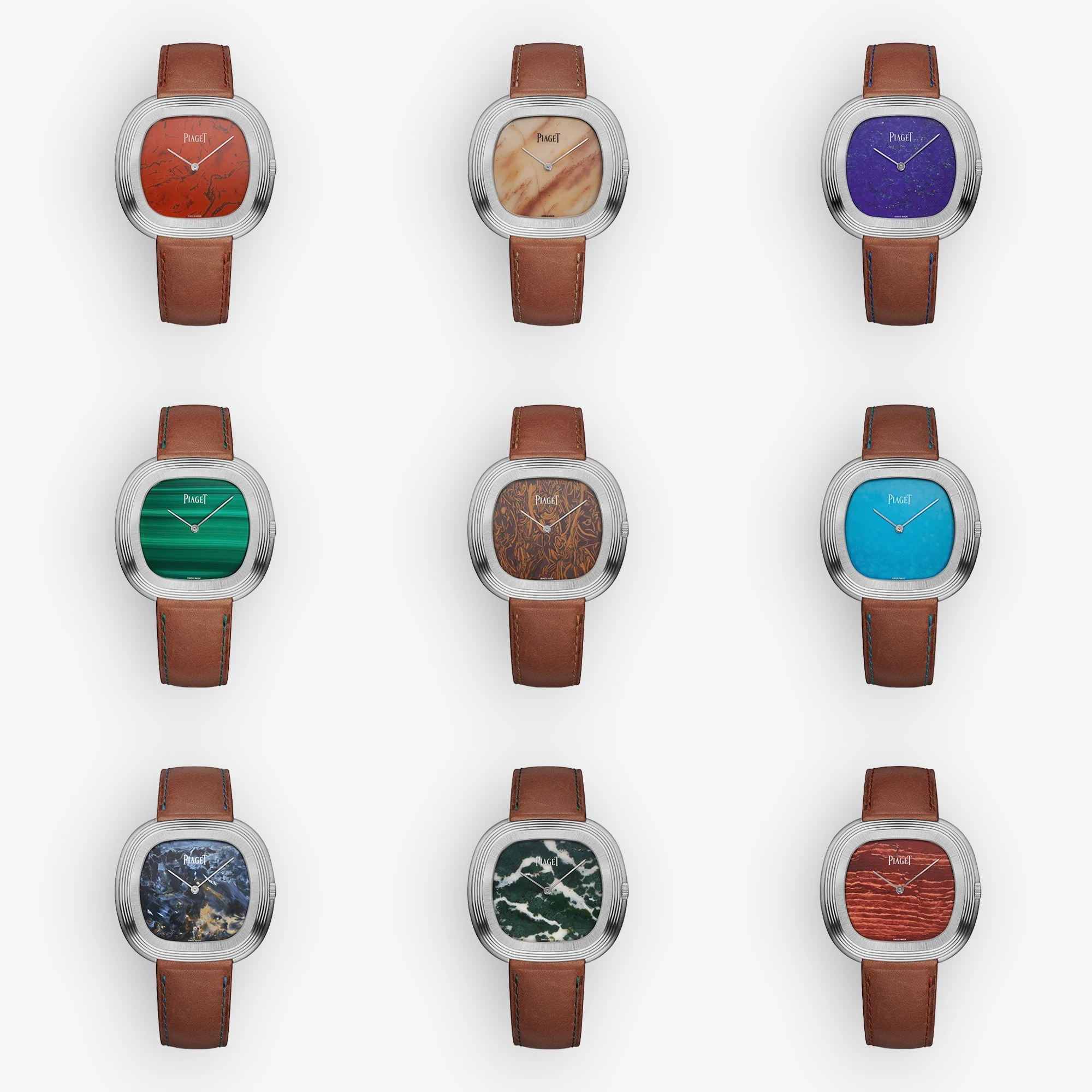
The range was launched with the ‘Clou de Paris’ (Ref. G0A49238): white gold, two rows of Clou de Paris guilloché instead of smooth steps, and a blue meteorite dial. This was complemented by a personalisation concept via Piaget’s ‘Infinitely Personal’ programme: red or white gold, around ten gemstone dials, two hand shapes, and five strap colours. At Watches and Wonders 2025, the range was expanded to include tiger’s eye, green and white meteorite, as well as a jewellery version with an opal dial and sapphire baguettes.
The first limited edition was then launched in October 2025. The ‘Collage’ (Ref. G0A50243) takes Warhol’s 1986 Polaroid self-portrait as its inspiration, but does not reproduce it. Set against a black onyx background are blocks of yellow serpentine, pink opal and green chrysoprase, each stone individually cut and fitted by hand. It is, to date, the only Andy Warhol watch in yellow gold: 50 pieces, 67,000 Swiss francs and long since sold out. Artistic Director Stéphanie Sivrière says her team spent six months researching Warhol’s work before the direction was finalised – including a trip to the Foundation’s archives in New York.
The ‘Camouflage’ series also dates back to 1986. In a series of self-portraits from that time, Warhol superimposed a camouflage pattern in bold colours over his own face. It is an image about visibility and disappearance, about the flip side of fame. Warhol died a year later.
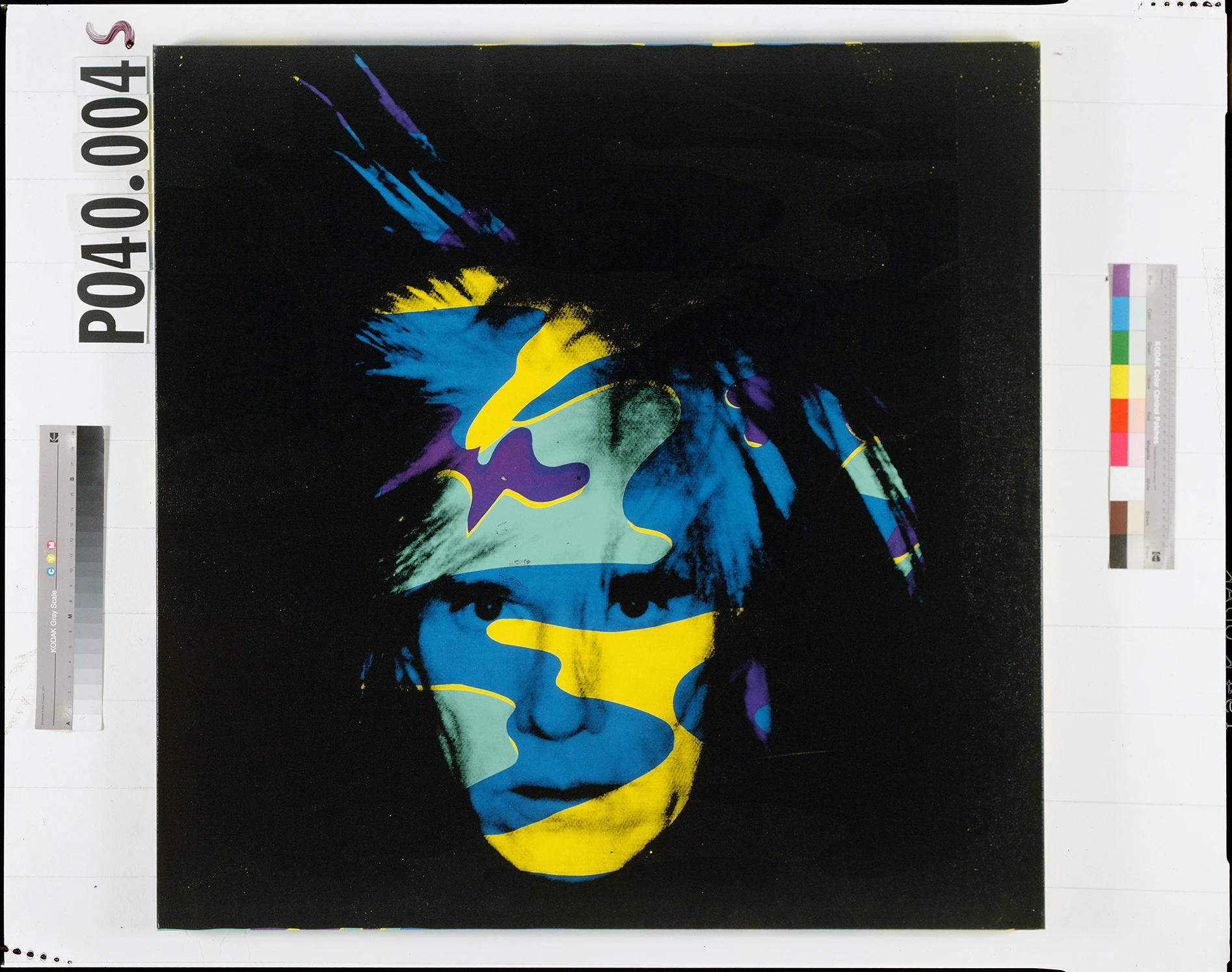
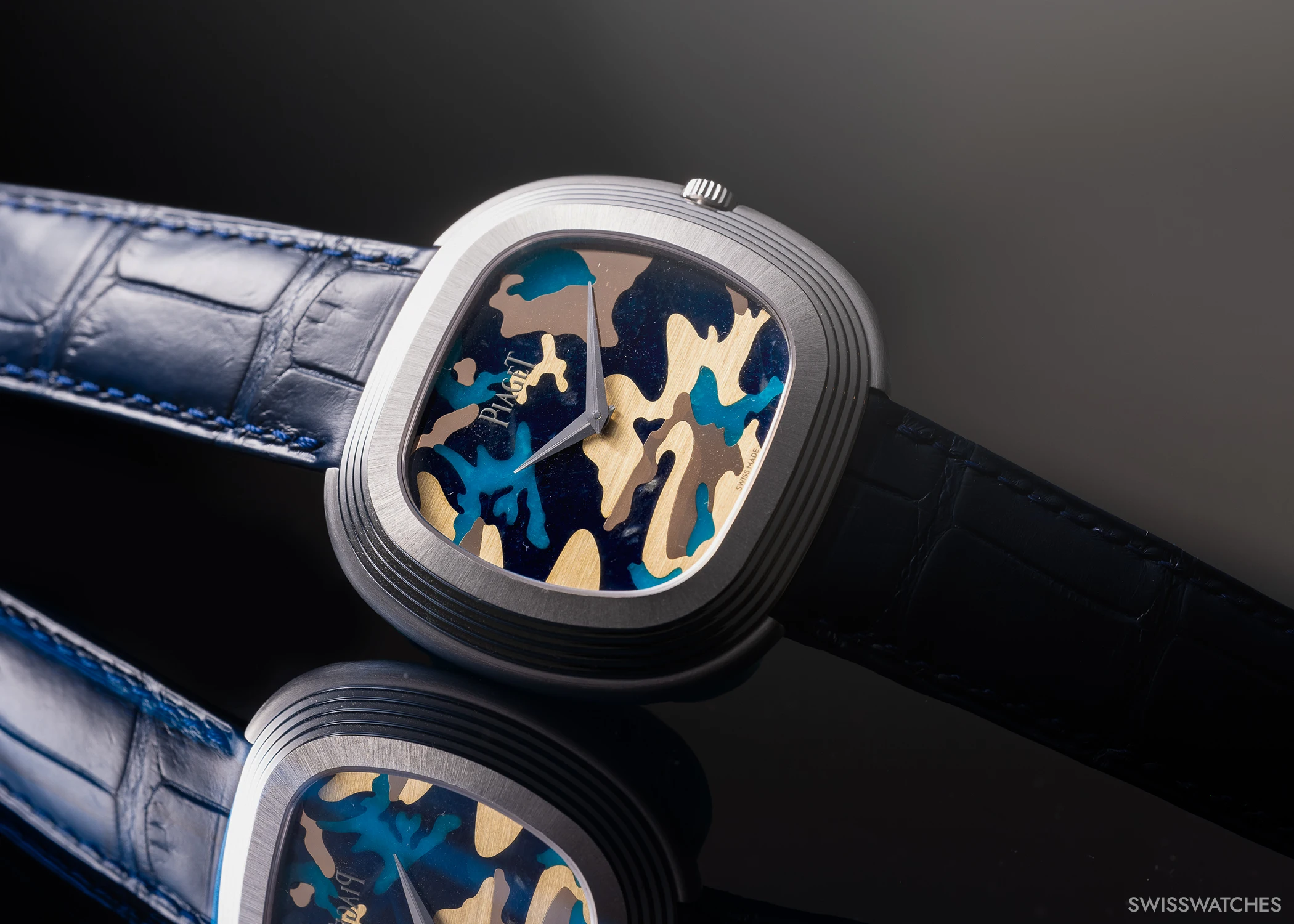
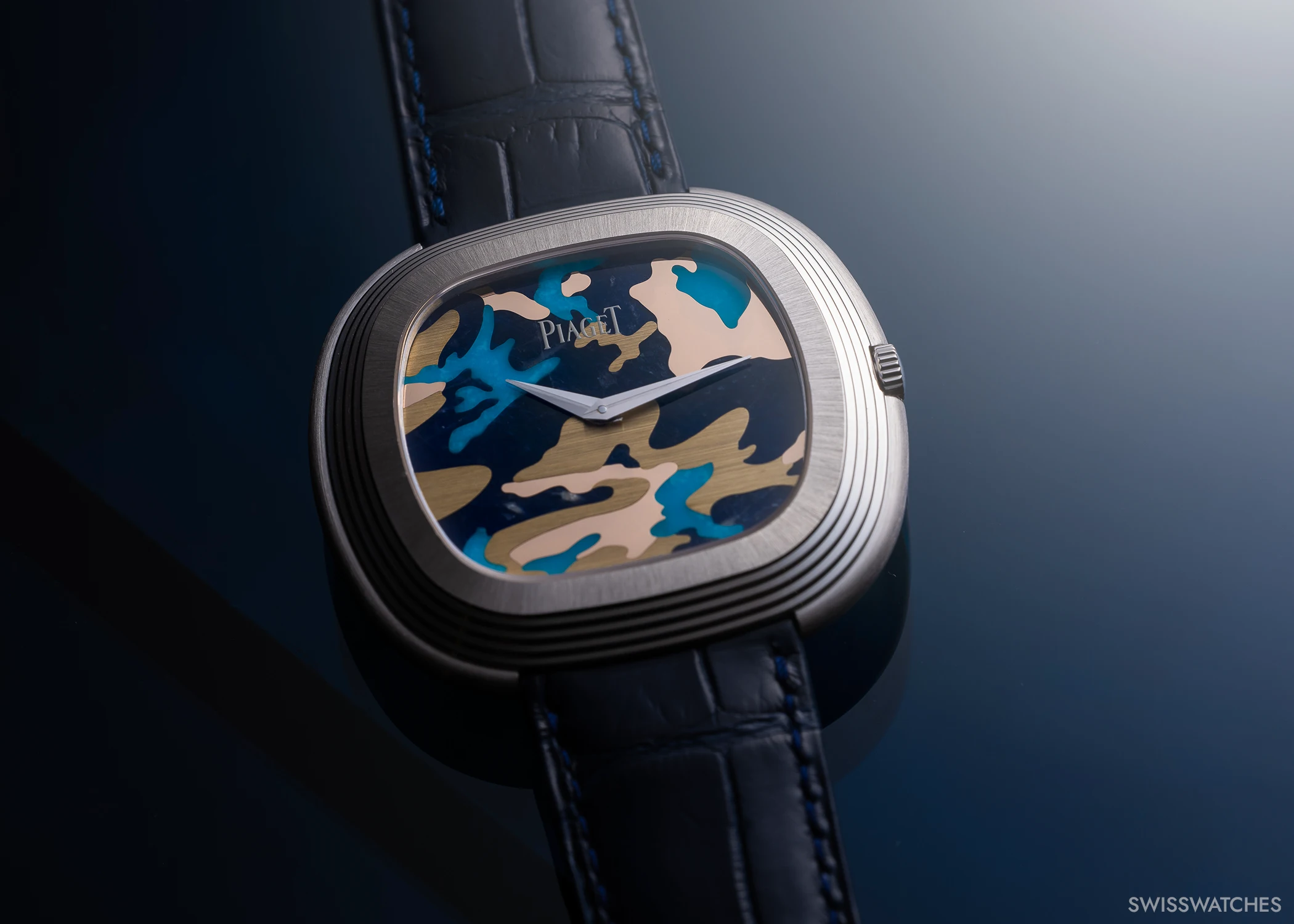
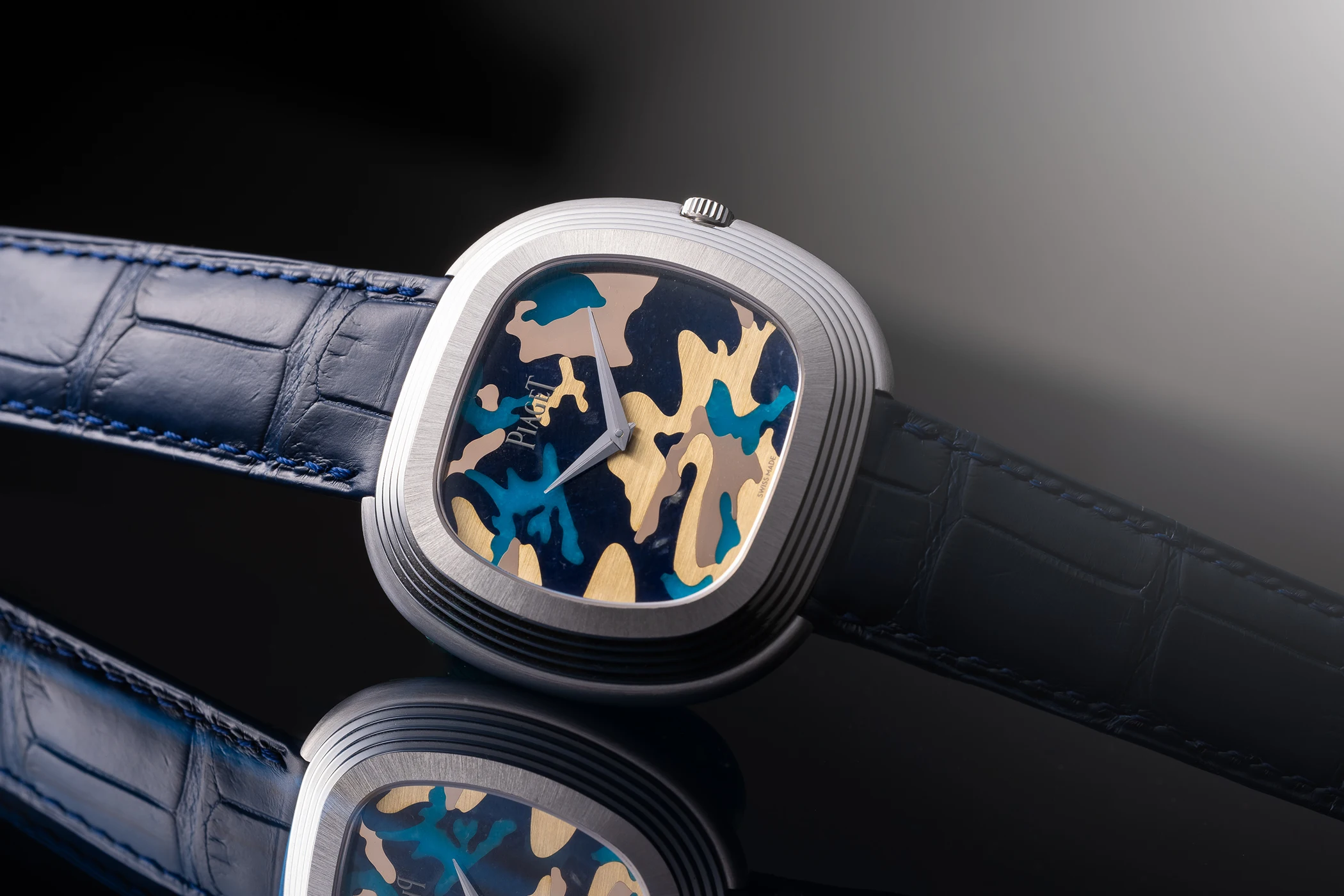
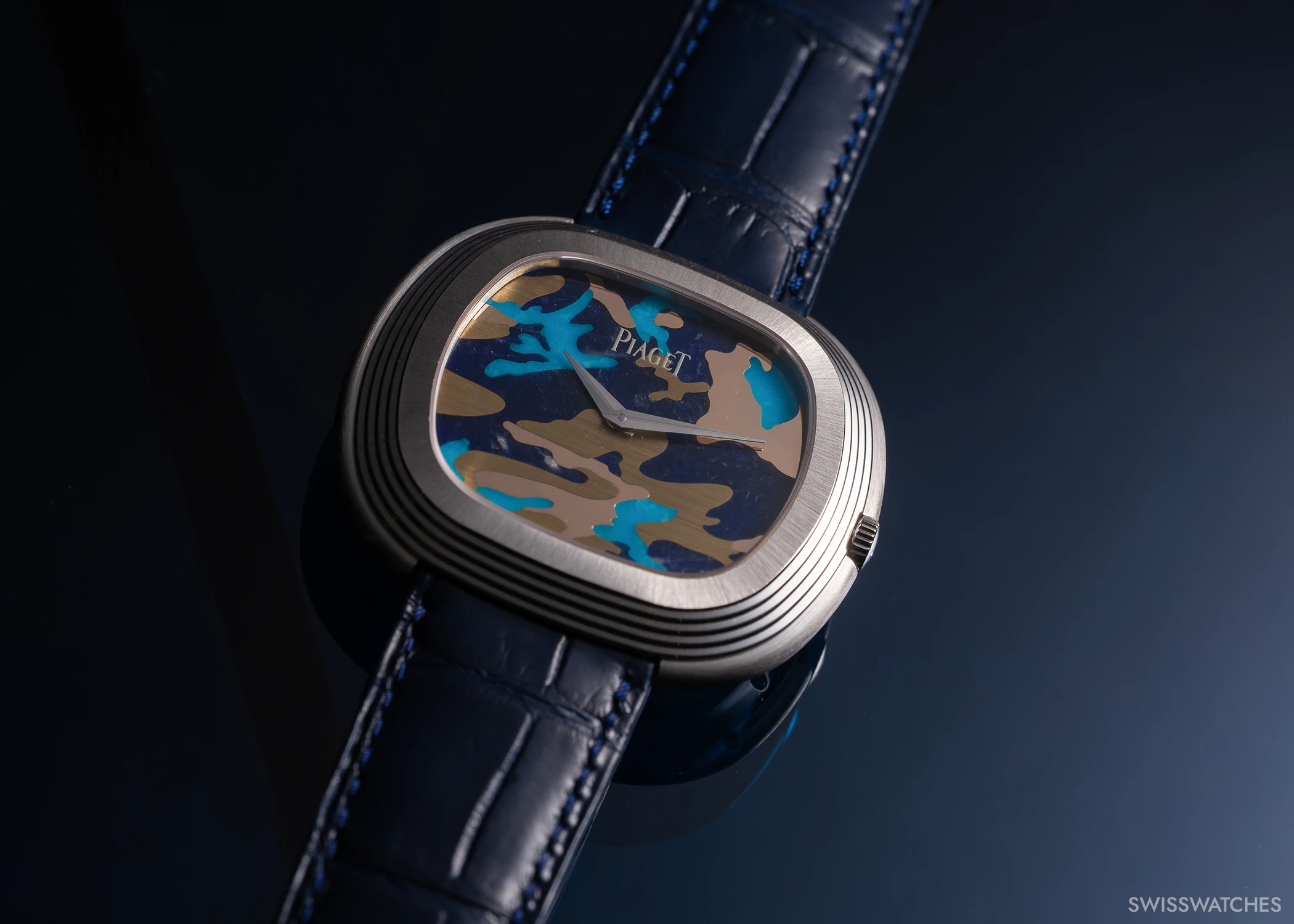
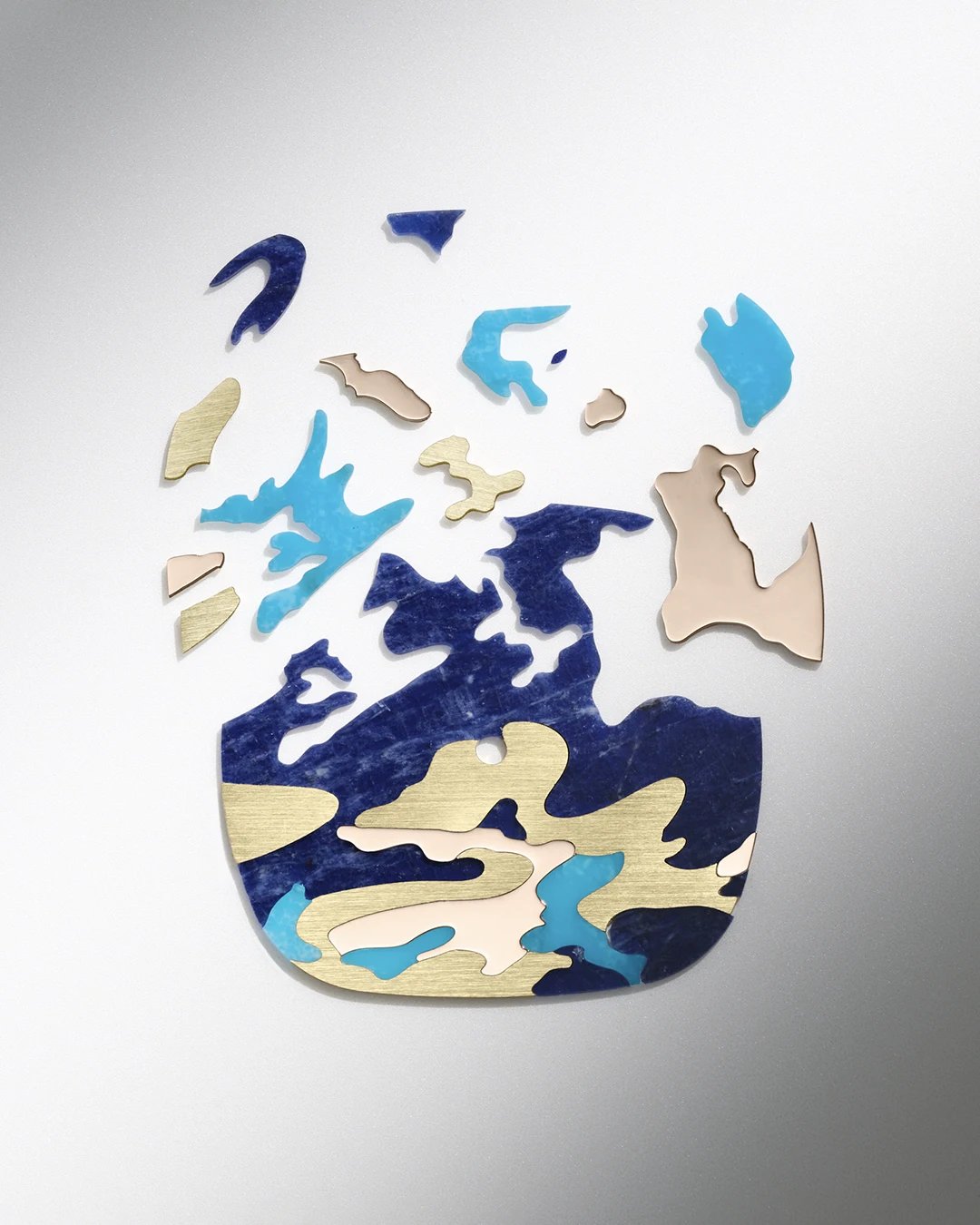
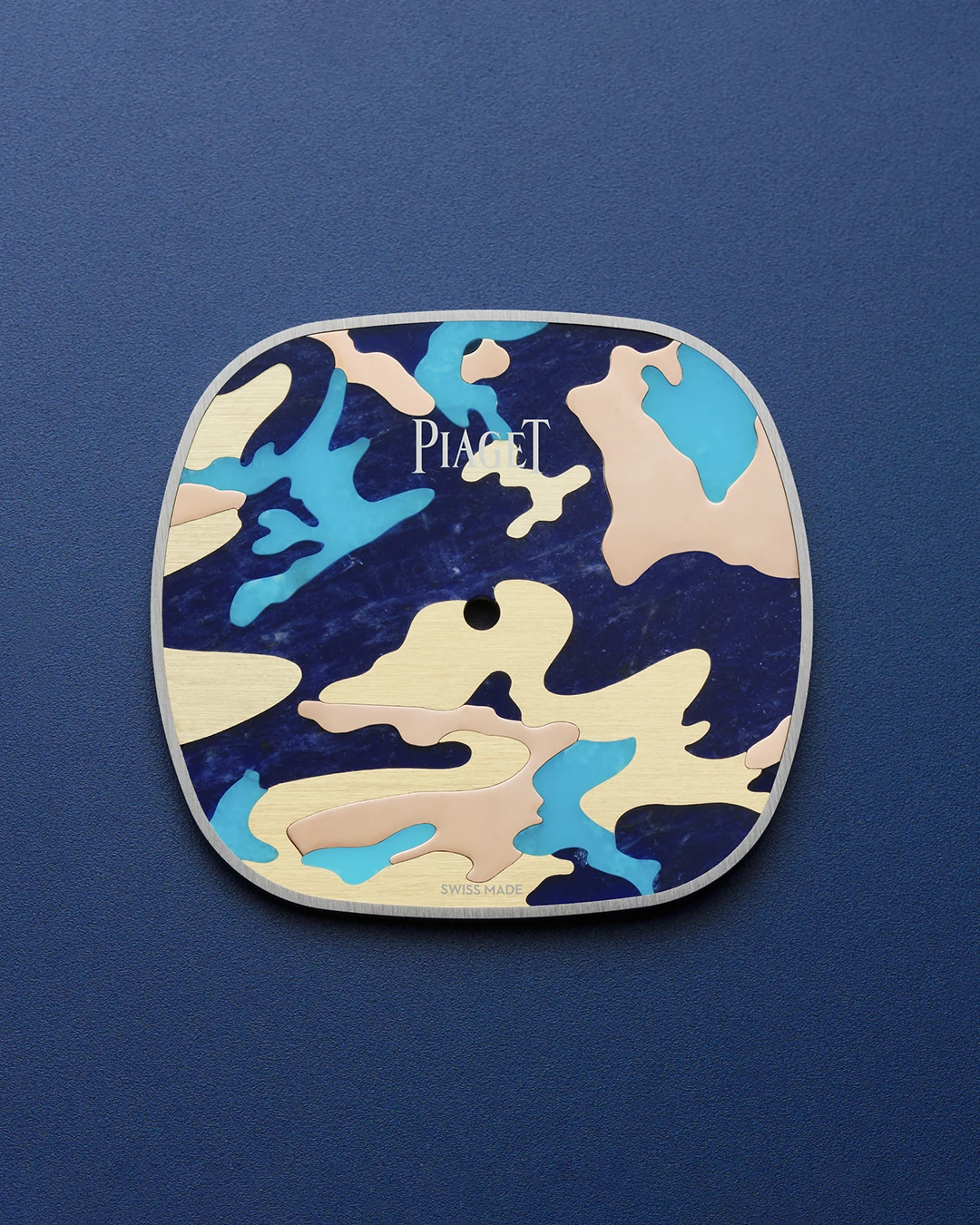
Piaget chose a design in shades of blue and yellow as its inspiration. “We have deconstructed Andy Warhol’s original work and reinterpreted it from Piaget’s contemporary perspective,” says Sivrière. In practical terms, this means: two stones, two metals. Sodalite provides the deep blue of the background, whilst turquoise creates the light patches. In between lie areas of satin-finished yellow gold and polished rose gold.
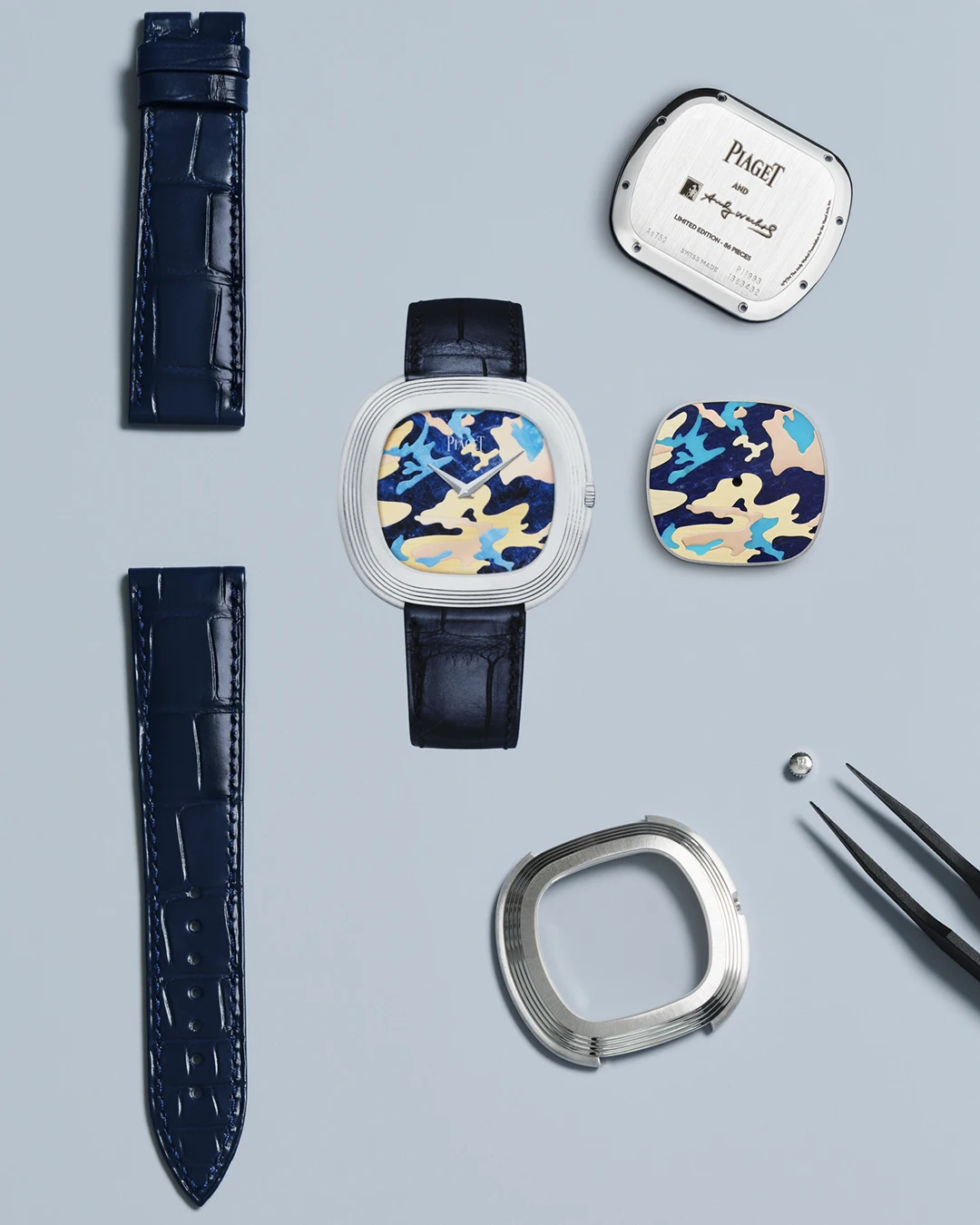
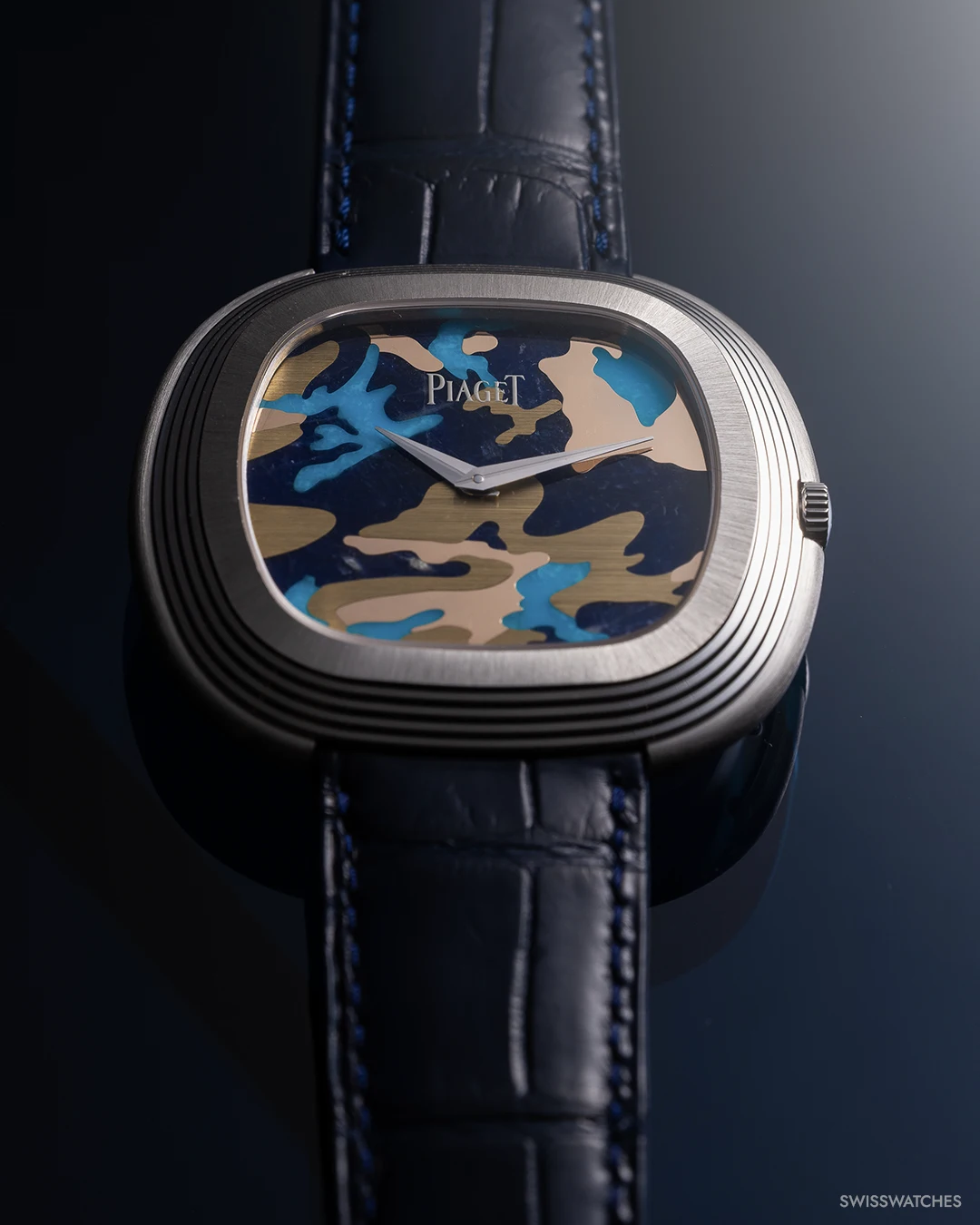
The metal parts are the real trick. They introduce a second texture into the pattern – brushed alongside polished, metal alongside stone – and take away the two-dimensional quality of a print. At the launch event, when I was able to examine the watch in person for the first time, I was struck by the many different reflections created by the light falling at various angles. One moment it seems as though the watch is glowing; the next, the gold elements suddenly appear black. Ironically, this fits in well with Warhol’s original intentions behind his ‘Camouflage’ portrait, which explored the themes of visibility and disappearance. Piaget assembles 27 individual components to form a dial; the brand states that over a hundred hours of work went into its design and manufacture.
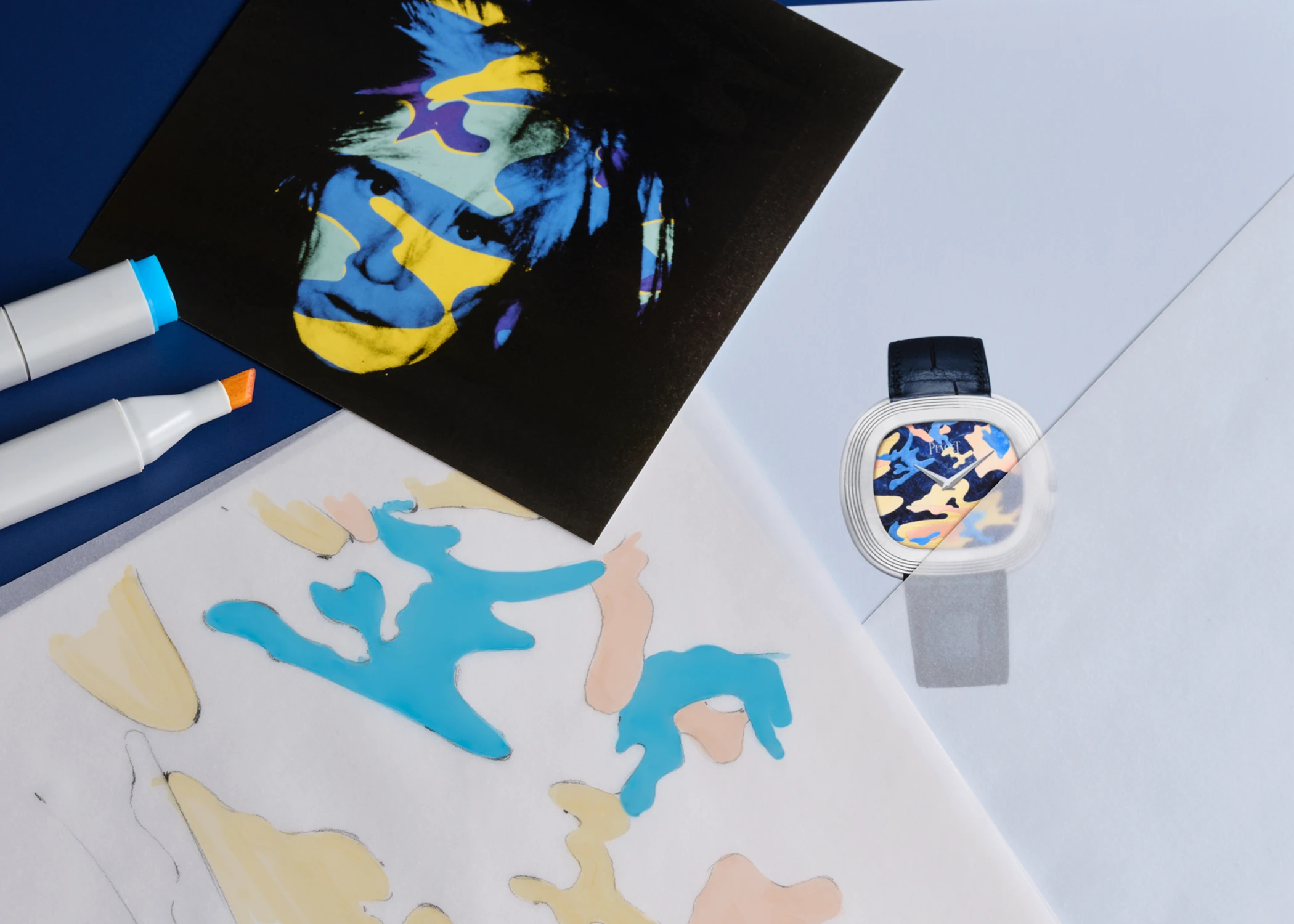
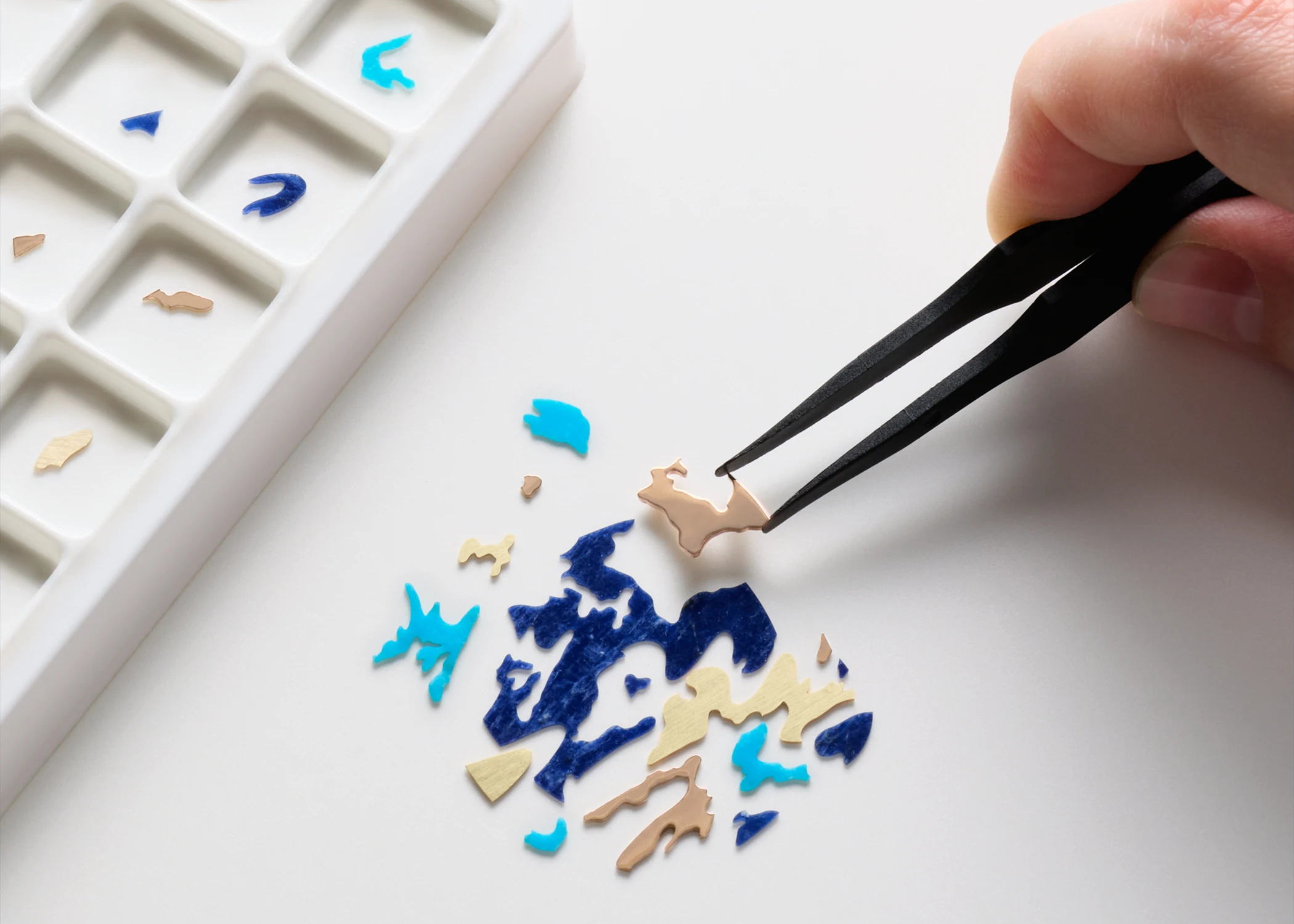
Coloured gemstones are nothing new at Piaget. Since the early 1960s, the house has used around 50 different gemstones, ranging from lapis lazuli to jade and coral. “The direct link between Andy Warhol and Piaget is colour,” says Sivrière. It is the part of the story that stands up even without a licensing agreement.
This time, the case is made of rhodium-plated white gold, 45 millimetres wide and 8.08 millimetres high, featuring the stepped godrons of the original. Warhol’s signature and the piece number are engraved on the solid caseback. The watch is worn on a blue alligator leather strap with a pin buckle.
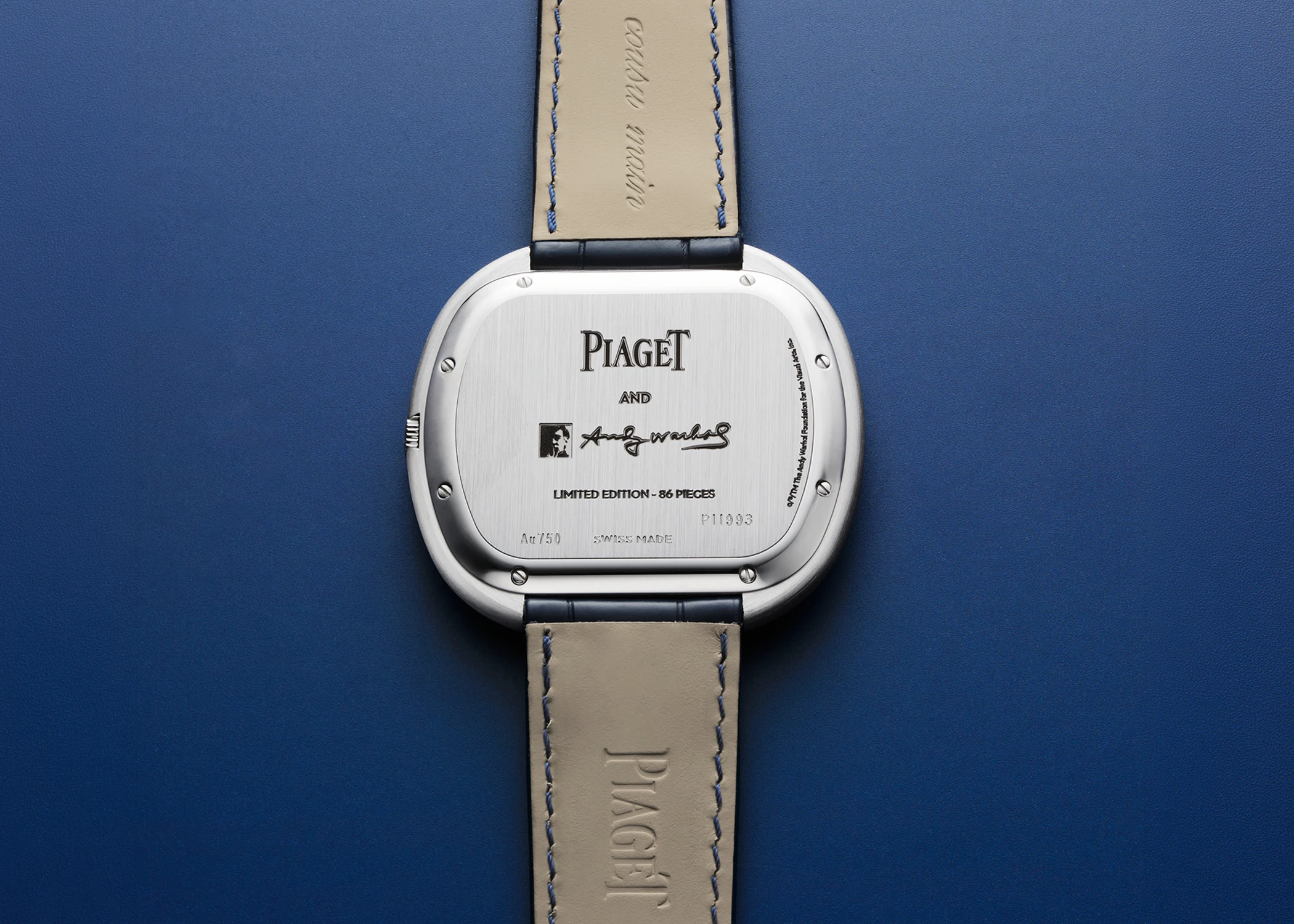
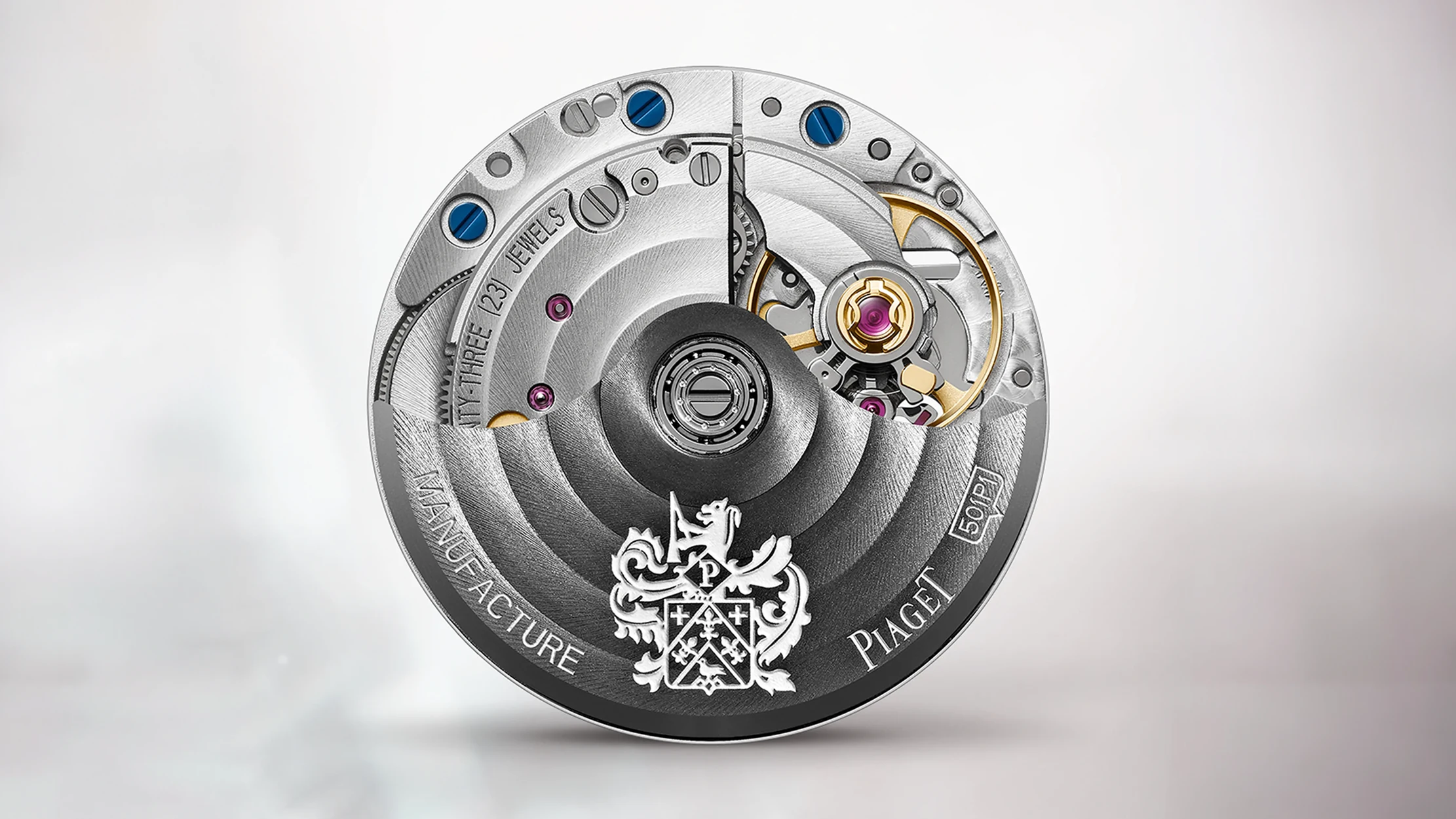
Inside, the watch is powered by the in-house automatic calibre 501P1, derived from the ultra-thin 430P: 3.63 millimetres high, 4 hertz, 40-hour power reserve. Whilst this means that the very element to which the watch owes its shape has disappeared, the battery-powered quartz movement has been replaced by a genuine mechanical movement.
In the end, we come full circle. Just as Warhol once hid his watch collection in his four-poster bed and in double-layered drawer bottoms – only to then ostentatiously display individual pieces above his shirt cuffs – so too does ‘Camouflage’ artistically bring this paradox to the fore. It conceals its essence beneath its camouflage, yet draws the eye precisely through the play of light, the colourful gemstones and, of course, the gold. The fact that Piaget does not simply copy a portrait or a painting onto the dial, but instead embodies Warhol’s concept of presence and withdrawal in the purest form of horological art, makes this timepiece an authentic homage to the Pop Art pioneer: a watch that does not camouflage itself to be invisible, but rather to elevate disappearance itself to an art form.