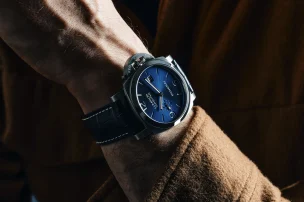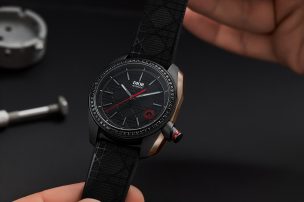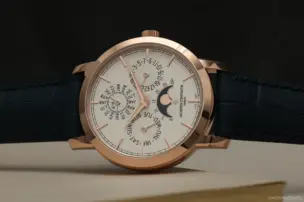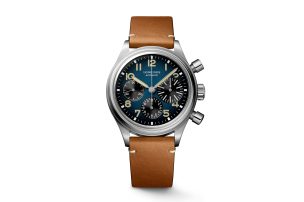
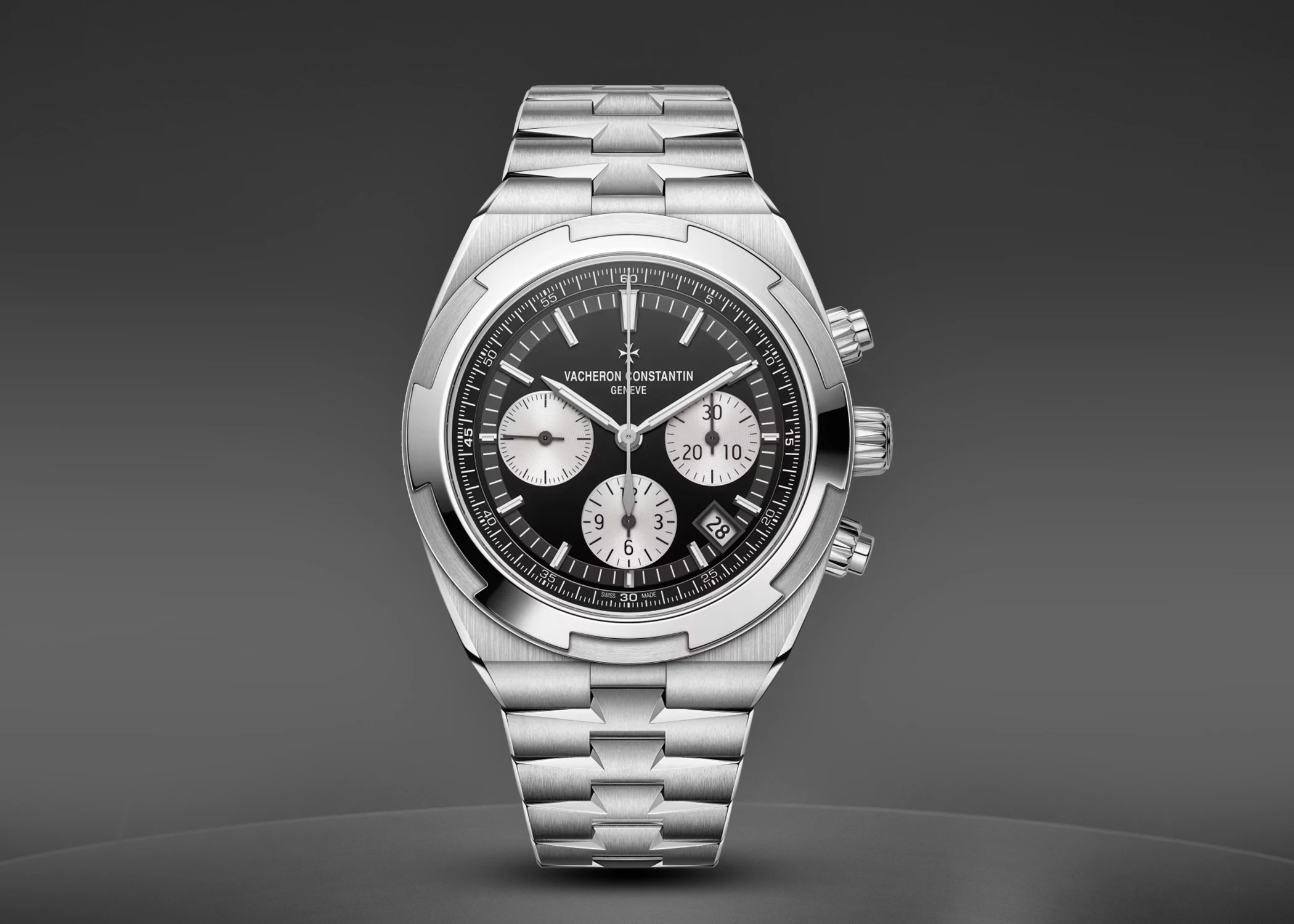
The new 39-mm Rolex Perpetual Padellone features an innovative annual calendar. We take a look at the three new references, the movement and the links to the historic Ref. 8171.
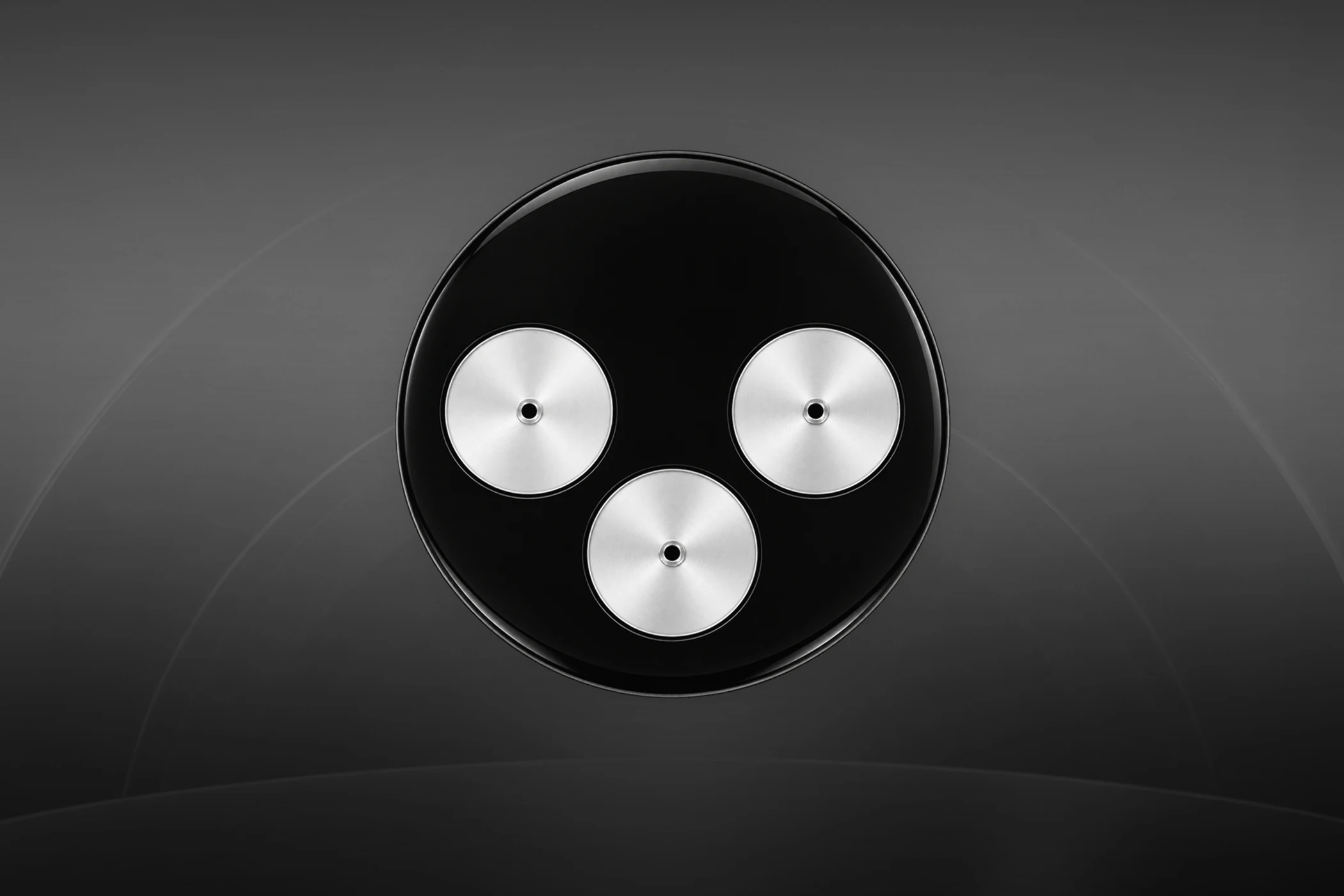
The better-known of the two chronograph faces is the lighter one: a white dial with black counters, named after the dark patches around a panda’s eyes. This article focuses on its darker counterpart – the Reverse-Panda Chronograph, with a black dial and light-coloured counters. Today, this inverted configuration of the Reverse-Panda Chronograph can be found in almost every catalogue, so the real question is no longer who offers such a dial, but rather who interprets the idea behind it most convincingly.
The term describes a specific colour scheme, and historically, the ‘Panda’ dial was the original: a light-coloured dial with dark sub-dials, the contrast of which reminded collectors of the animal’s eye patches, hence the nickname – though no brand officially uses it. The ‘Reverse Panda’ is the inverted version derived from this: a dark, usually black dial, paired with light-coloured sub-dials.
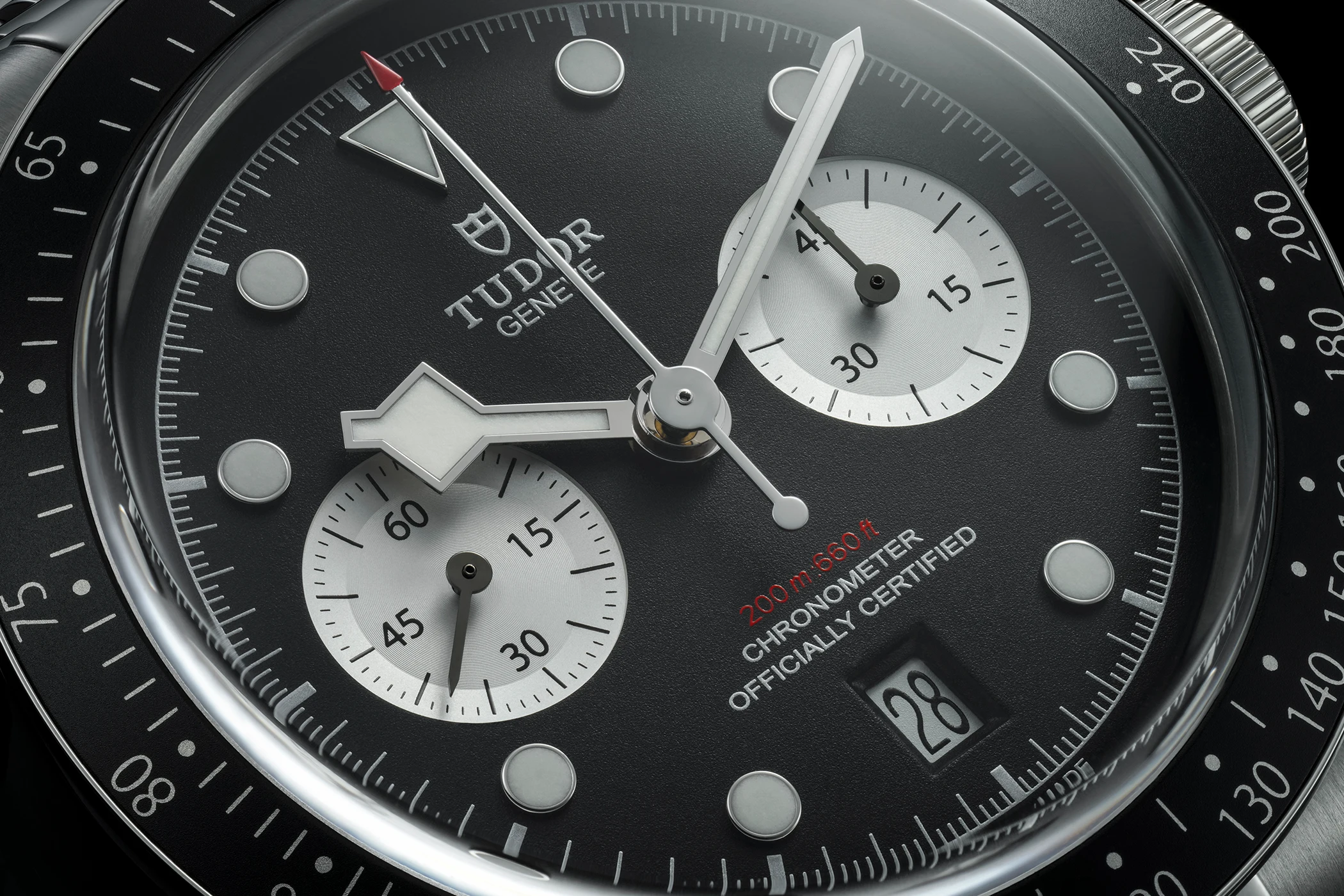
There is a functional reason why this contrast has become established in chronographs of all things. A chronograph displays two time dimensions simultaneously – the current time and the elapsed time. If the stopwatch counters are set off from the dial in colour, the eye can distinguish between the two dimensions more quickly. In the world of racing and instruments of the 1960s, where chronographs were actually used for measuring, this was a genuine advantage, not merely a stylistic device.
The principle later became firmly established in the minds of collectors, primarily through the Rolex Daytona, whose contrasting dials – light and dark – remain the benchmark to this day. The vintage boom of recent years and the visual aesthetics of social media, where the sharp light-dark contrast works particularly well, have done the rest. The Reverse Panda is therefore less a passing trend than a recurring archetype.
To ensure that the models are truly comparable, we have selected the Reverse Panda chronographs currently available in the catalogue based on three fixed criteria: a stainless steel case, a stainless steel bracelet and a black dial with contrasting sub-dials. If a brand offers several variants, the stainless steel and bracelet version is the one that counts.
The overview is organised by price range, as this best illustrates what actually increases with the price – and what does not. The design of the dial remains the same across the entire price range, from around 1,957 to 39,800 euros. What changes is everything else: the movement, the finishing and the certification. For each watch, we list the calibre, winding mechanism, diameter, thickness, power reserve, water resistance and price.
The entry-level category is dominated by vintage-inspired racing chronographs: hand-wound bicompax models with compact proportions and designs closely aligned with their 1960s predecessors.
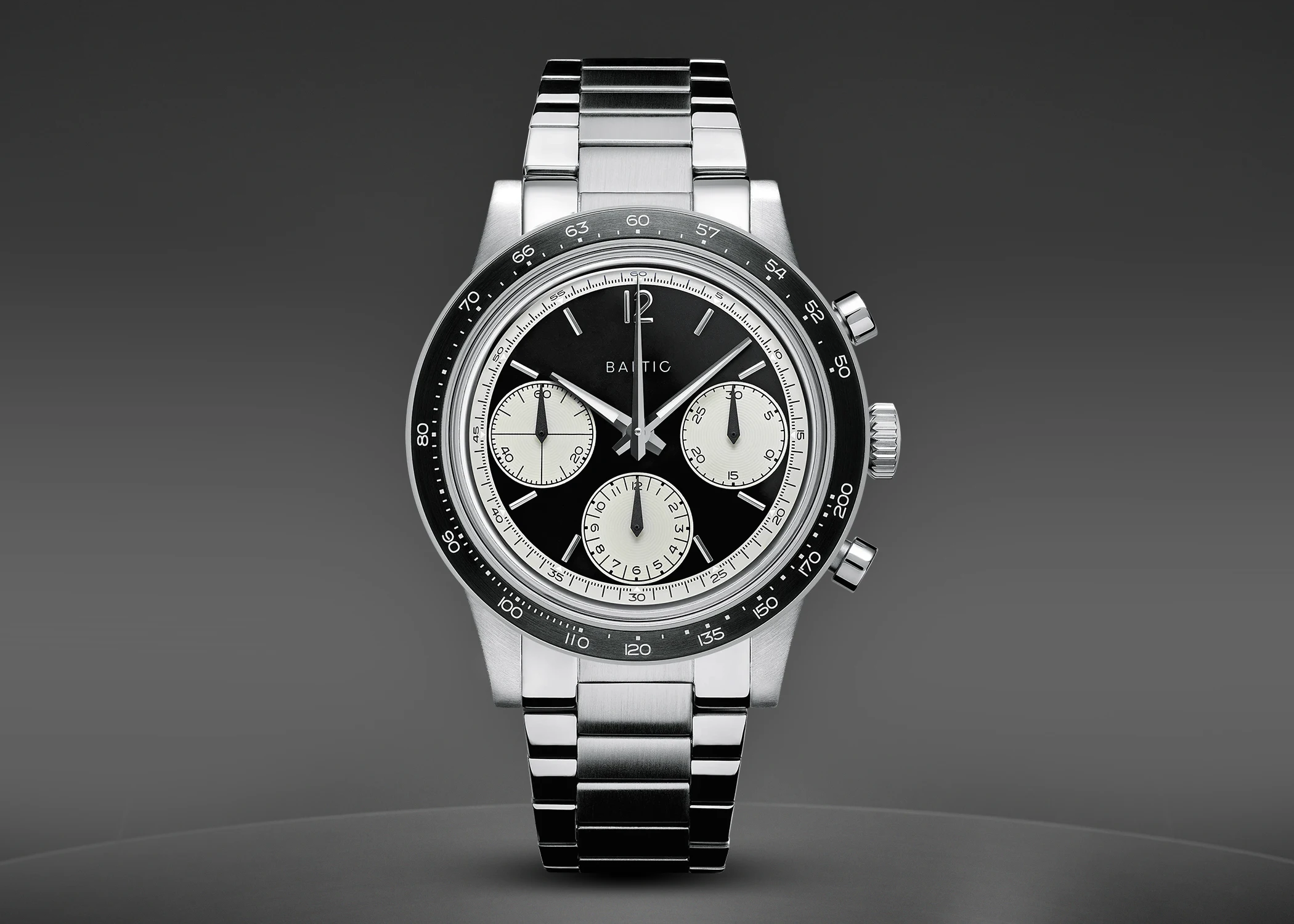
French brand Baltic offers the most affordable entry point into a genuine reverse-panda chronograph without dispensing with a fully fledged mechanical chronograph movement. Inside is the manually wound Sellita SW510-M, offering a power reserve of 63 hours. At 39.5 millimetres, the case is pleasantly compact, while the guilloché counters and 1970s-style flat-link bracelet give the watch a coherent and well-considered appearance. An aluminium bezel rather than ceramic and water resistance of 50 metres reflect its price point – yet as a first mechanical reverse-panda chronograph for under €2,000, the Scalegraph is difficult to beat.
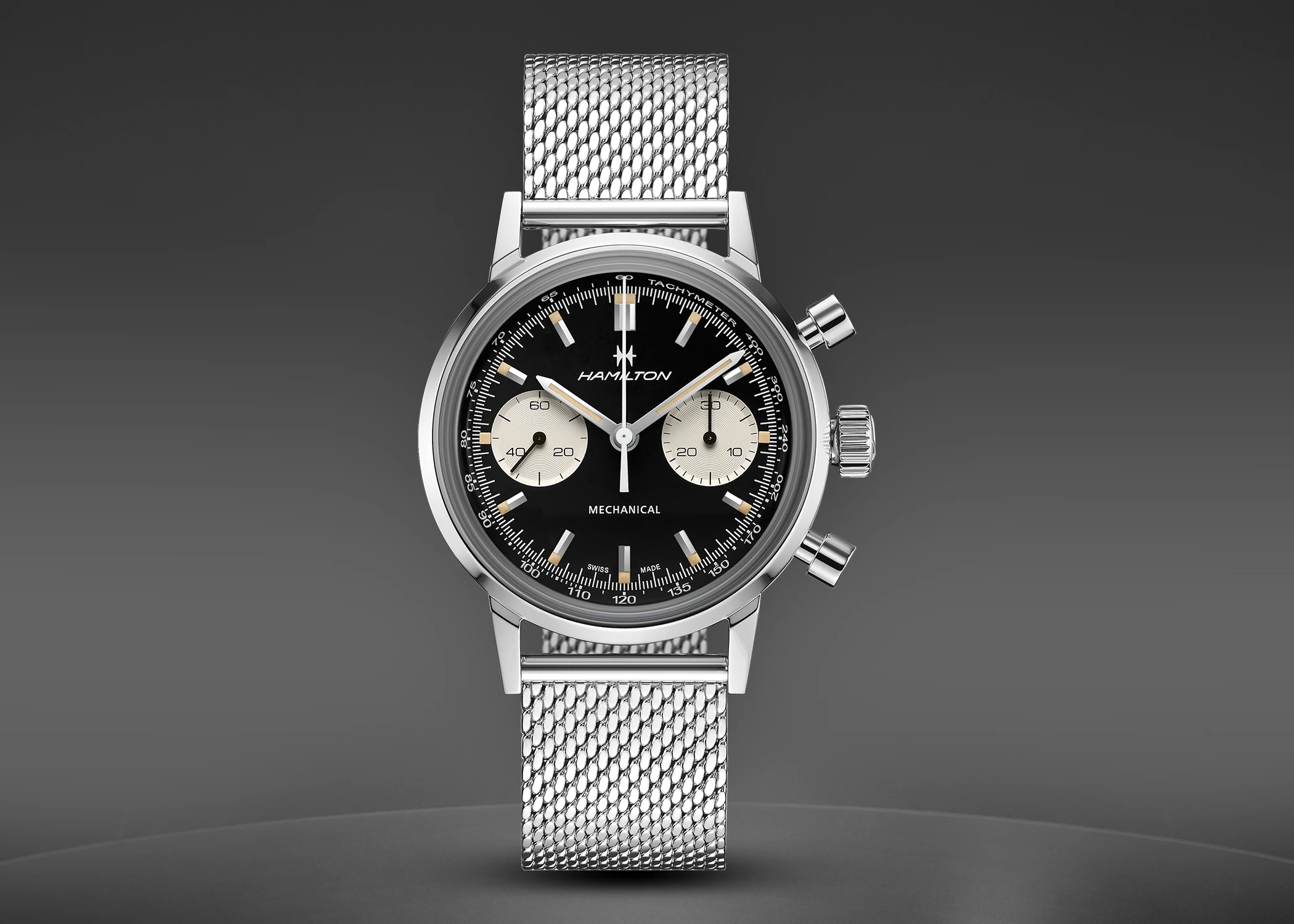
Hamilton captures the character of the late 1960s particularly well: a symmetrical, date-free bicompax dial with cream-white counters, paired with the exclusive manually wound H-51 calibre offering a 60-hour power reserve. With water resistance of 100 metres, the vintage character remains suitable for everyday wear. One distinctive feature is the bracelet: the reference listed here comes on a stainless-steel Milanese mesh bracelet rather than a link bracelet – still steel on the wrist, but a different bracelet type from the rest of the selection. At 14.35 millimetres, the 40-millimetre watch is also comparatively thick.
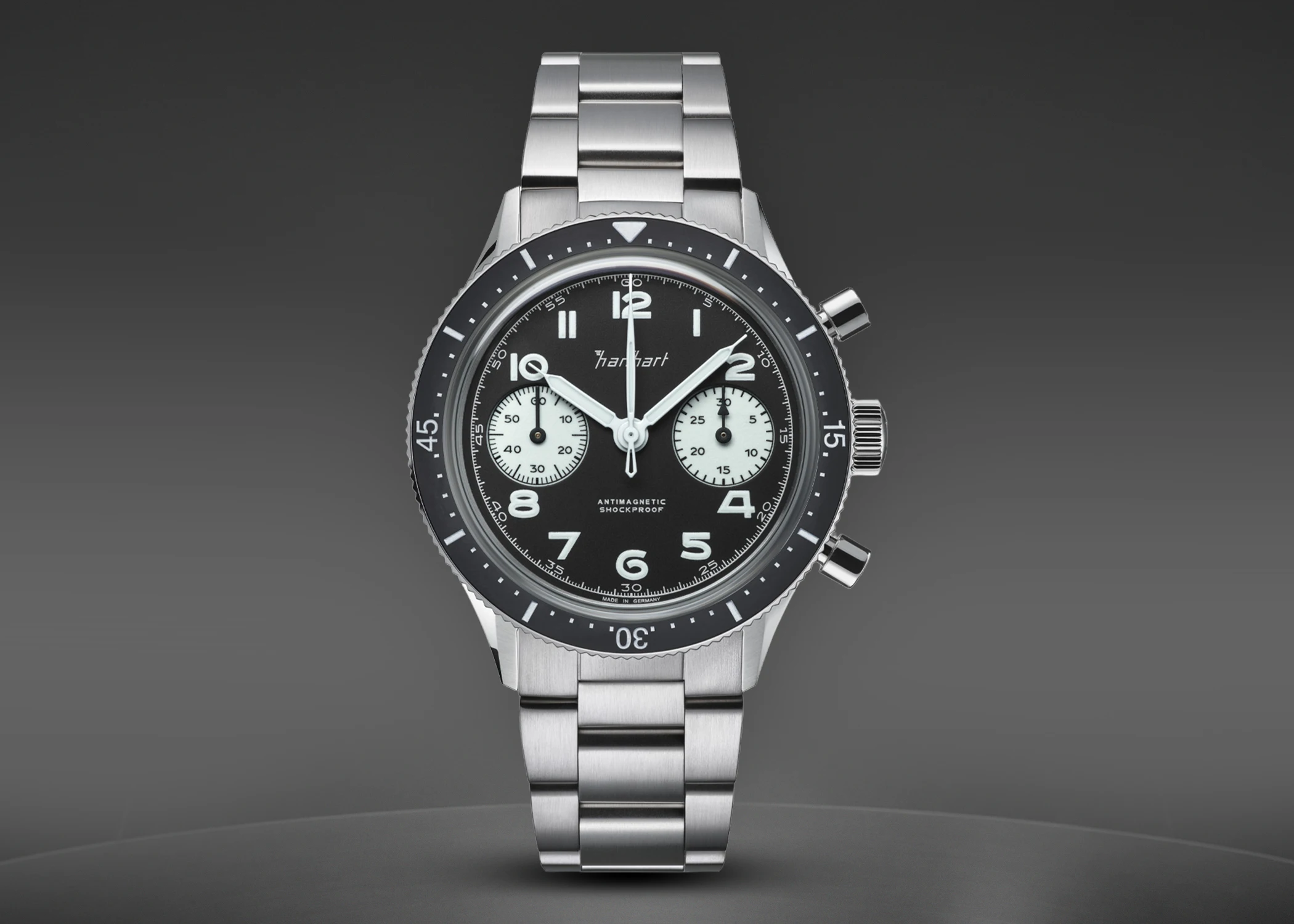
Of all the watches in this selection, the Hanhart is the only one to carry the term in its name – and it earns it. The 415 ES revives the historic motorsport chronograph of the 1960s, and does so as more than a simple retro reference. The manually wound Sellita SW510 M drives a classic two-counter layout; the black dial with two white subdials and highly luminous Arabic numerals follows the principle of legibility for which watches of this kind were originally created.
In design terms, the 415 ES remains closely aligned with the original: a 39-millimetre diameter, the historic winged logo on the dial and a bidirectional bezel with a black ceramic insert. Technically, however, it is entirely contemporary – the construction is antimagnetic and protected against shocks by Hanhart’s own damping system, while water resistance is rated to 100 metres. New since 2025 is the three-row stainless-steel bracelet with tool-free fine adjustment; only with this addition does the 415 ES meet the criteria of this selection. At 13.5 millimetres, it is not especially slim for a manually wound chronograph, and the SW510 M is reliable rather than exclusive. Nevertheless, as a credible revival of a genuine historic model, it is arguably the most convincing – precisely because it modernises the watch without diluting its character.
In the mid-range segment, the emphasis shifts from manual winding to automatic movements.
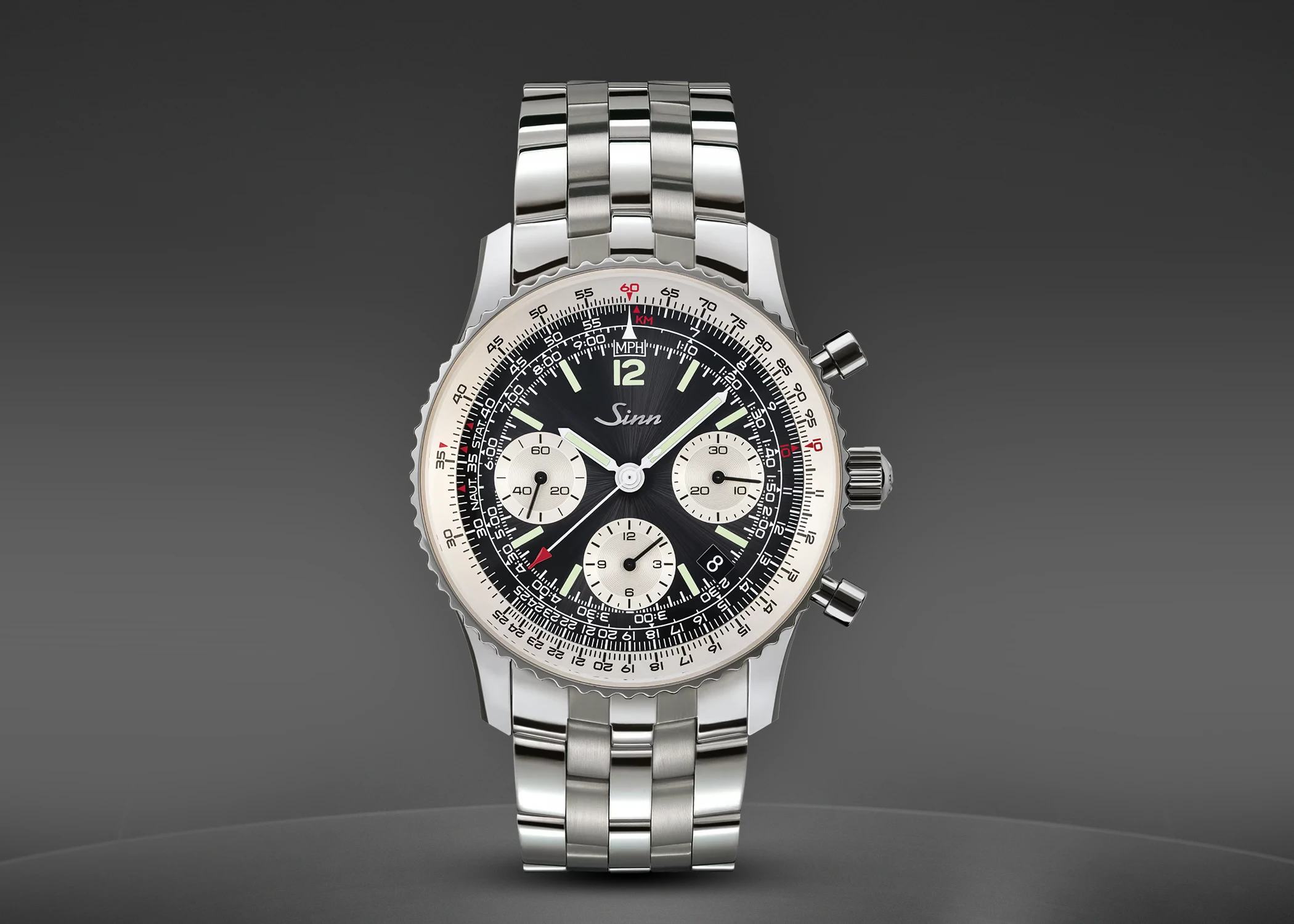
The Sinn 903 is the value benchmark in this selection. For €3,650, it offers an automatic column-wheel calibre, the La Joux-Perret L110, with a 60-hour power reserve and water resistance to 200 metres – a combination that is difficult to find in this price range. The column-wheel mechanism is the more elaborate and precise way of controlling a chronograph, making its inclusion here particularly noteworthy.
The most distinctive feature of the 903 is its slide-rule bezel, and it is functional rather than decorative. Its origins lie in the design rights to the Navitimer that Helmut Sinn acquired in 1979 – a historically legitimate connection that places the 903 in the same instrument-watch tradition as the considerably more expensive Breitling featured further below. Technically, it delivers much of the same concept at a fraction of the price. The compromise is stylistic: the dial is extremely information-dense, and the reverse-panda contrast takes a back seat to the instrument aesthetic. At 14.5 millimetres, the watch is also relatively thick. For anyone who measures value by the amount of substance a watch offers per euro, this is the strongest proposition in the selection.
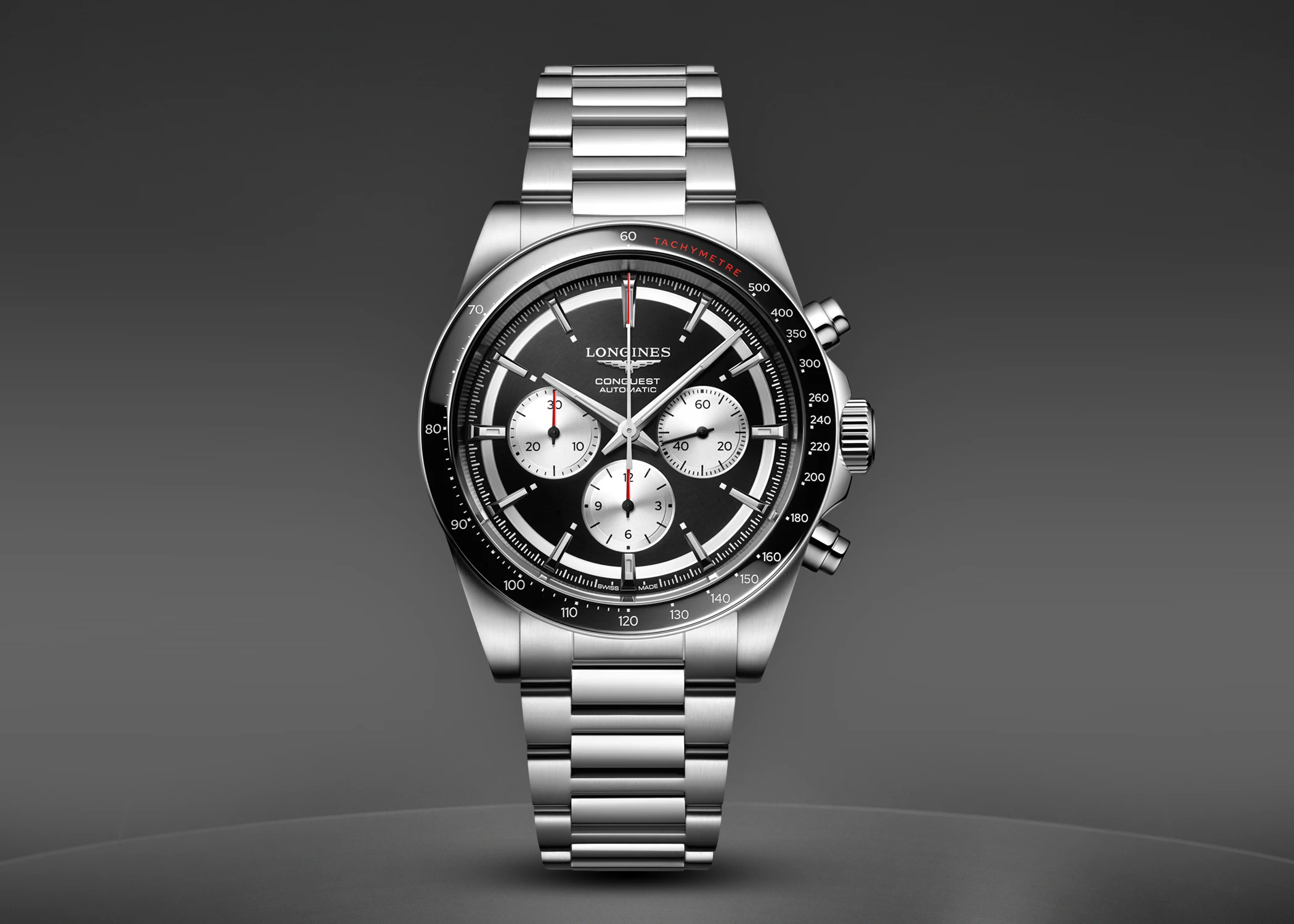
The Conquest is the most rational proposition on this list. Its Longines-exclusive L898 calibre uses a silicon balance spring, making it less susceptible to magnetism and temperature fluctuations – a technically modern approach at a comparatively attractive price. It also offers a 59-hour power reserve, 100 metres of water resistance and a robust, sporty construction. At 42 millimetres in diameter and 14.3 millimetres thick, however, it is noticeably larger than models such as the TAG Heuer, Zenith or Hanhart, while in both design and historical terms it remains more self-contained than the higher-ranked watches. A highly capable watch – and one that appeals above all to reason.
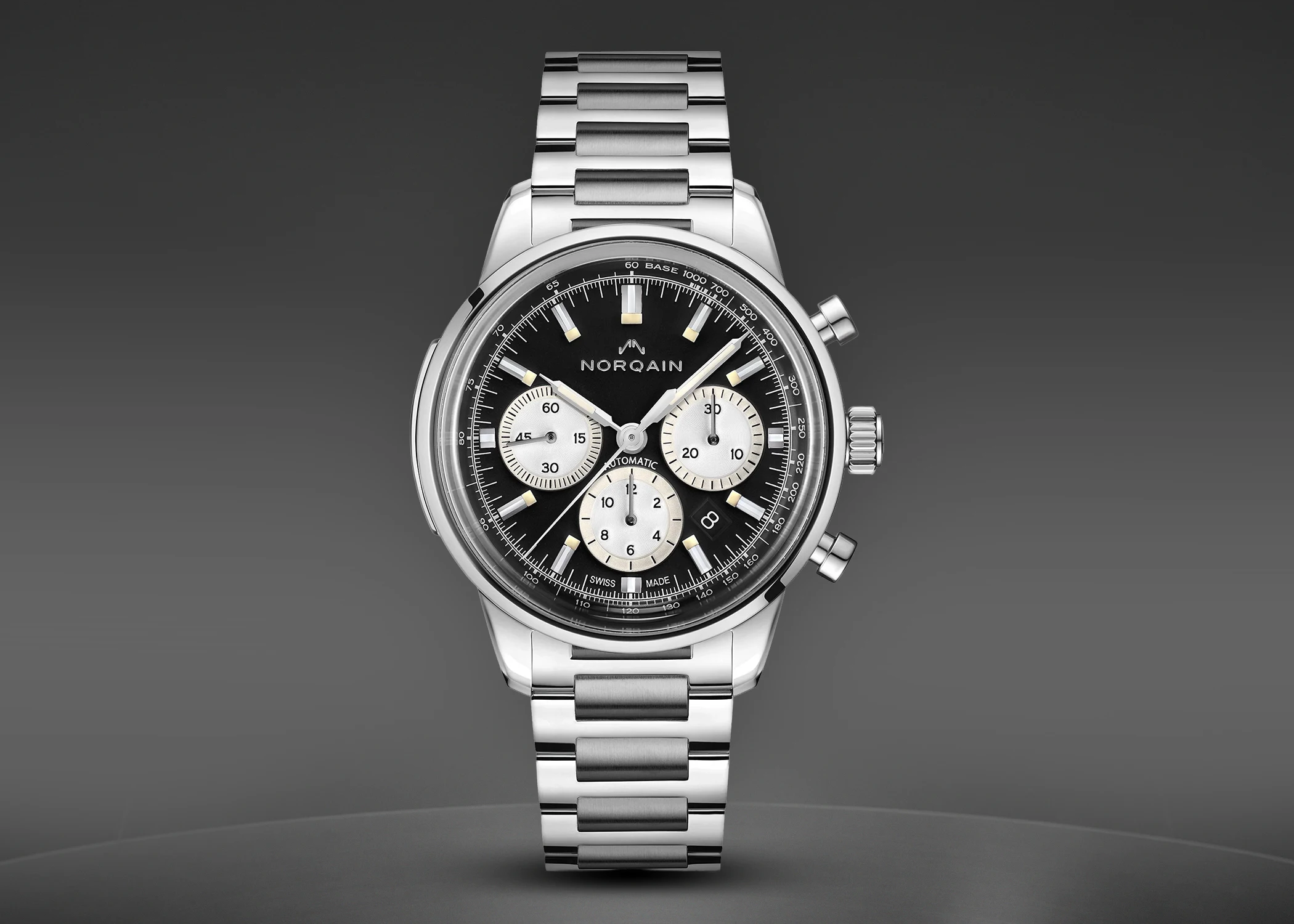
Founded in 2018, Norqain makes the boldest statement. The Freedom Chrono features a striking, assertive reverse-panda dial – a black surface with light-coloured counters – beneath a box-shaped sapphire crystal. It is powered by the N19, based on the Sellita SW510a, with a 62-hour power reserve and 100 metres of water resistance. At 43 millimetres in diameter and 15 millimetres thick, it is the most substantial watch in the selection, and in a direct price comparison Sinn, Hanhart and Longines make the stronger technical or stylistic case. Even so, the Freedom Chrono holds its own as a distinctive statement from a young independent brand.
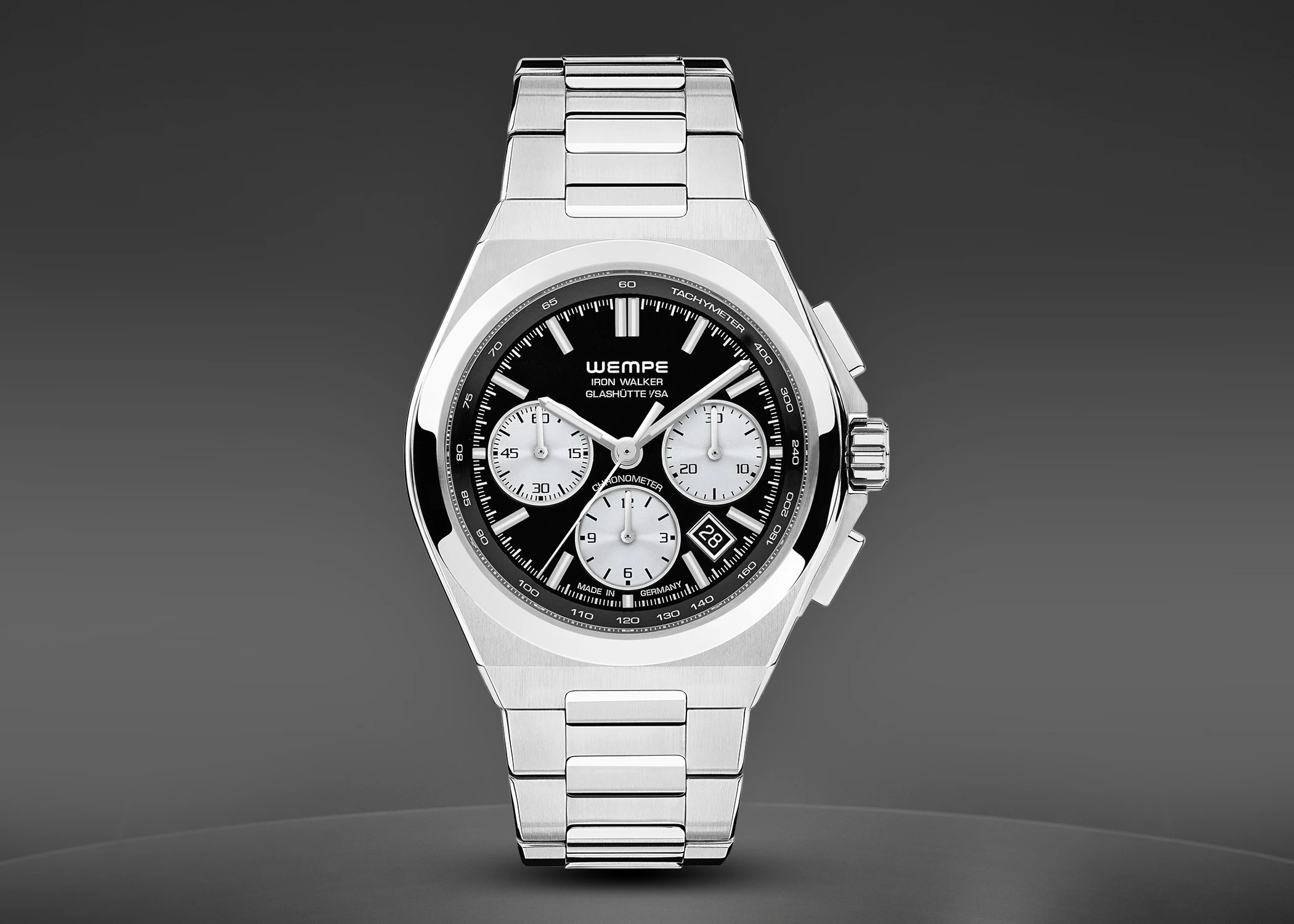
The Wempe Iron Walker is the understated alternative to the better-known names. Wempe combines a distinctive sports-watch design with a seemingly integrated stainless-steel bracelet and an ETA 7753 that is assembled in Glashütte and regulated to German chronometer standards – the real value of this watch lies in that fine regulation rather than in spectacular movement engineering. With a 48-hour power reserve, the calibre is technically less ambitious than many others in this comparison; 100 metres of water resistance and a well-executed 42-millimetre case complete the package. Its connection to the classic reverse-panda narrative is looser than that of the vintage-inspired racing chronographs – but in return, the Iron Walker offers something many others here do not: restraint.
Here, three very different characters come together: the robust everyday chronograph, the elegant outlier and the instrument watch. Prices rise, but what you are now paying for above all is the movement and the closer connection to manufacture-level watchmaking.
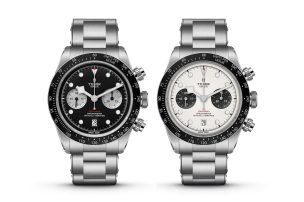
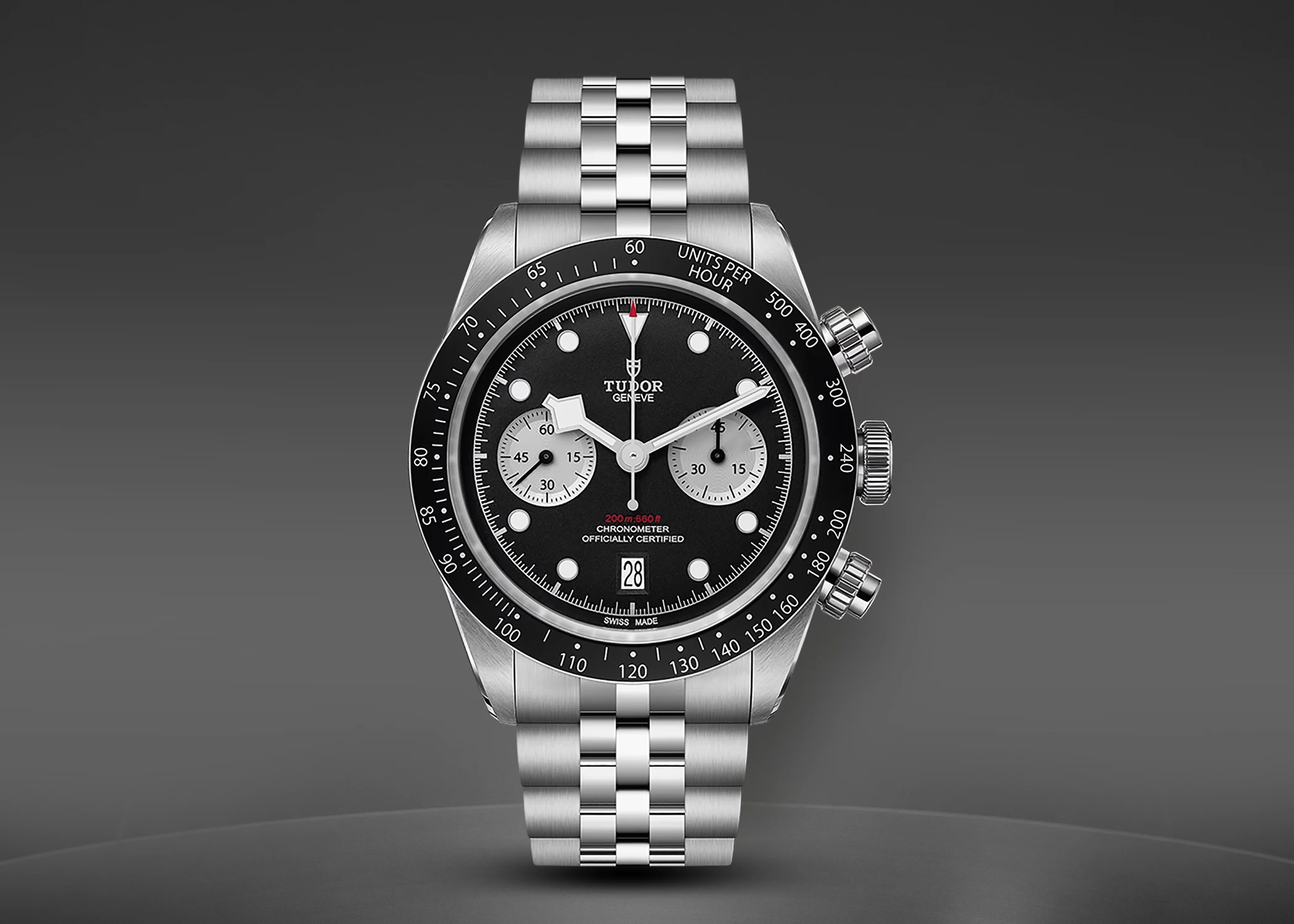
If there is one watch in this selection built for straightforward everyday use, it is this one. The MT5813 is COSC-certified, uses a column wheel and vertical clutch, and features Tudor’s own regulating organ with a silicon balance spring. Its architecture is derived from the Breitling B01 – the result of the movement partnership between the two companies – and it is therefore not an entirely in-house Tudor development; nevertheless, what sits inside the watch is one of the most robust packages in this selection.
The figures underline that point: a 70-hour power reserve, 200 metres of water resistance, a highly robust case and screw-down pushers. Those pushers are also the small price paid for that robustness – they increase security, but make spontaneous use of the chronograph less convenient. At 14.4 millimetres thick, the Black Bay Chrono also wears considerably more substantially than the TAG Heuer, Zenith or Hanhart. As a watch you can put on in the morning and barely think about for the rest of the day, it is the most complete proposition in the selection.
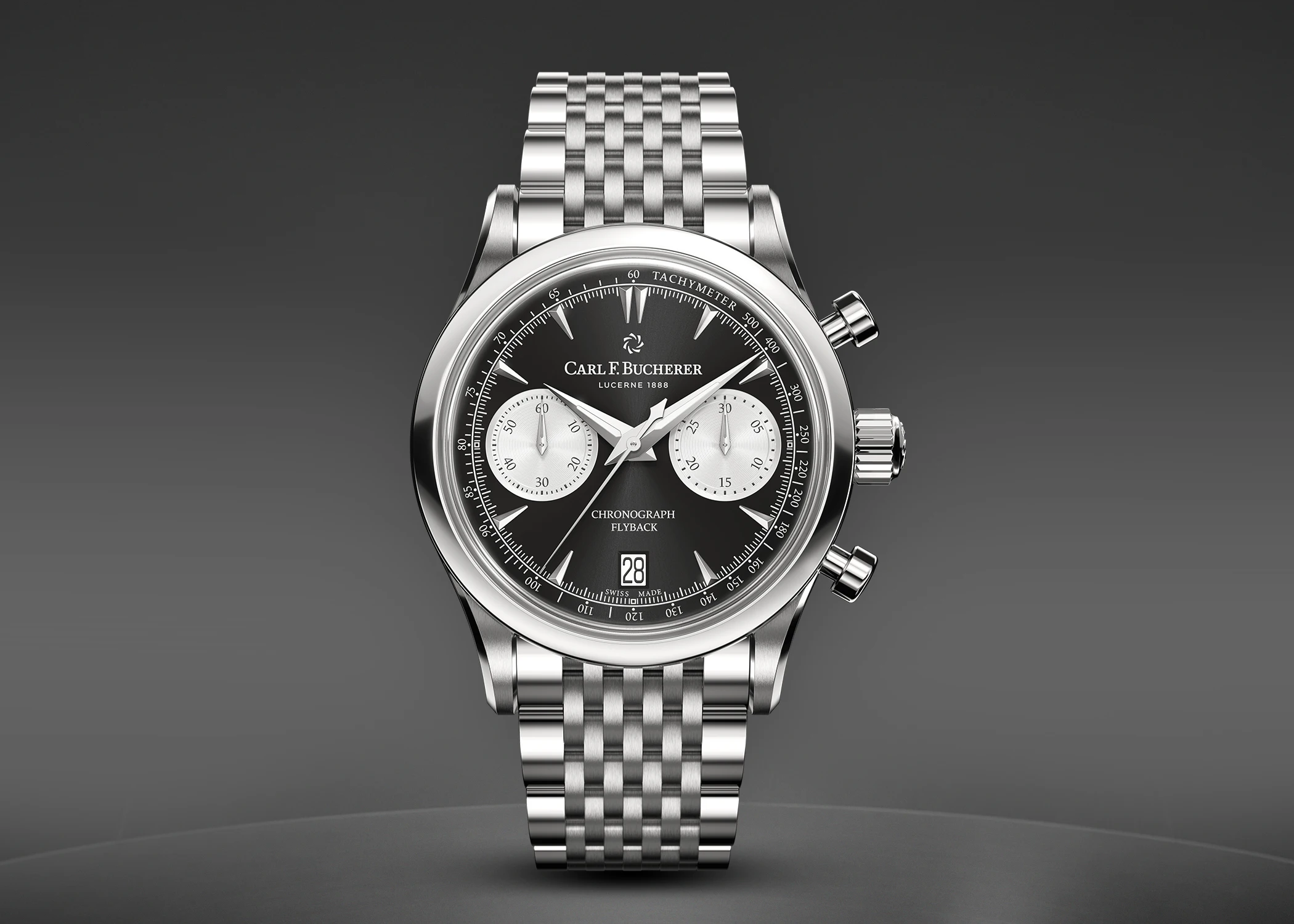
The Manero Flyback is the refined outlier in this selection. Its 40-millimetre case and restrained bicompax dial give it a dressier character than most of the strongly motorsport-oriented models, while the reverse-panda concept feels particularly mature here. At its technical core is the CFB 1973 with a genuine flyback function, allowing the chronograph to be reset and restarted immediately with a single press – a complication found nowhere else in this selection. The trade-off is water resistance of just 30 metres, which limits its versatility, while at 14.45 millimetres it is surprisingly thick for such an elegant case.
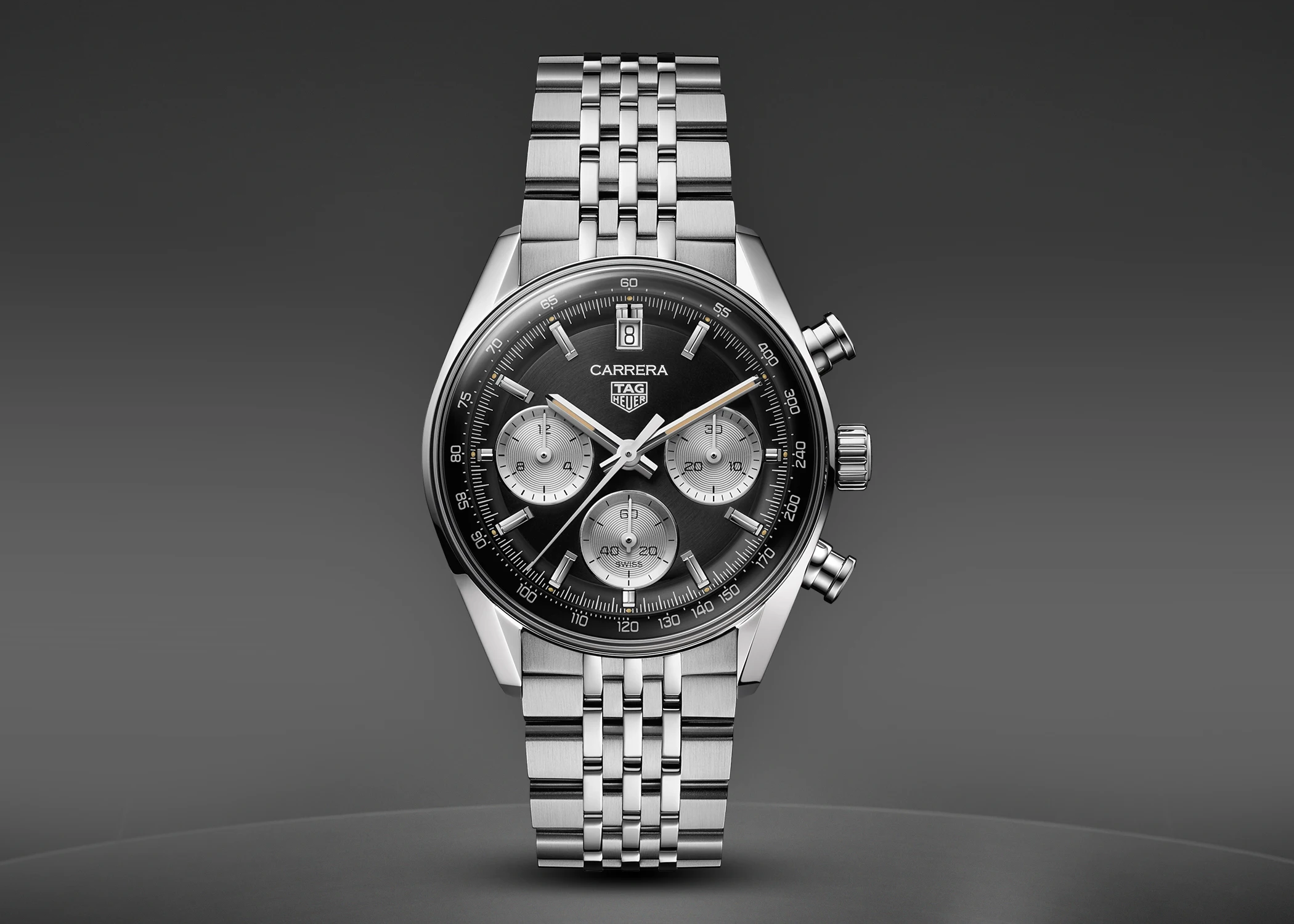
This Carrera with reverse-panda-dial is not simply a black Carrera with light-coloured counters, but a deliberate reinterpretation of the historic Carrera 2447 of the 1960s. The glassbox concept, balanced 39-millimetre proportions and beads-of-rice bracelet work together coherently, while the in-house TH20-00 with column wheel, vertical clutch and 80-hour power reserve provides the technical substance.
What matters most is that the reverse-panda design defines the entire watch rather than feeling like a colour variation added afterwards. Yet, at 13.9 millimetres, it is not especially slim for a 39-millimetre watch.
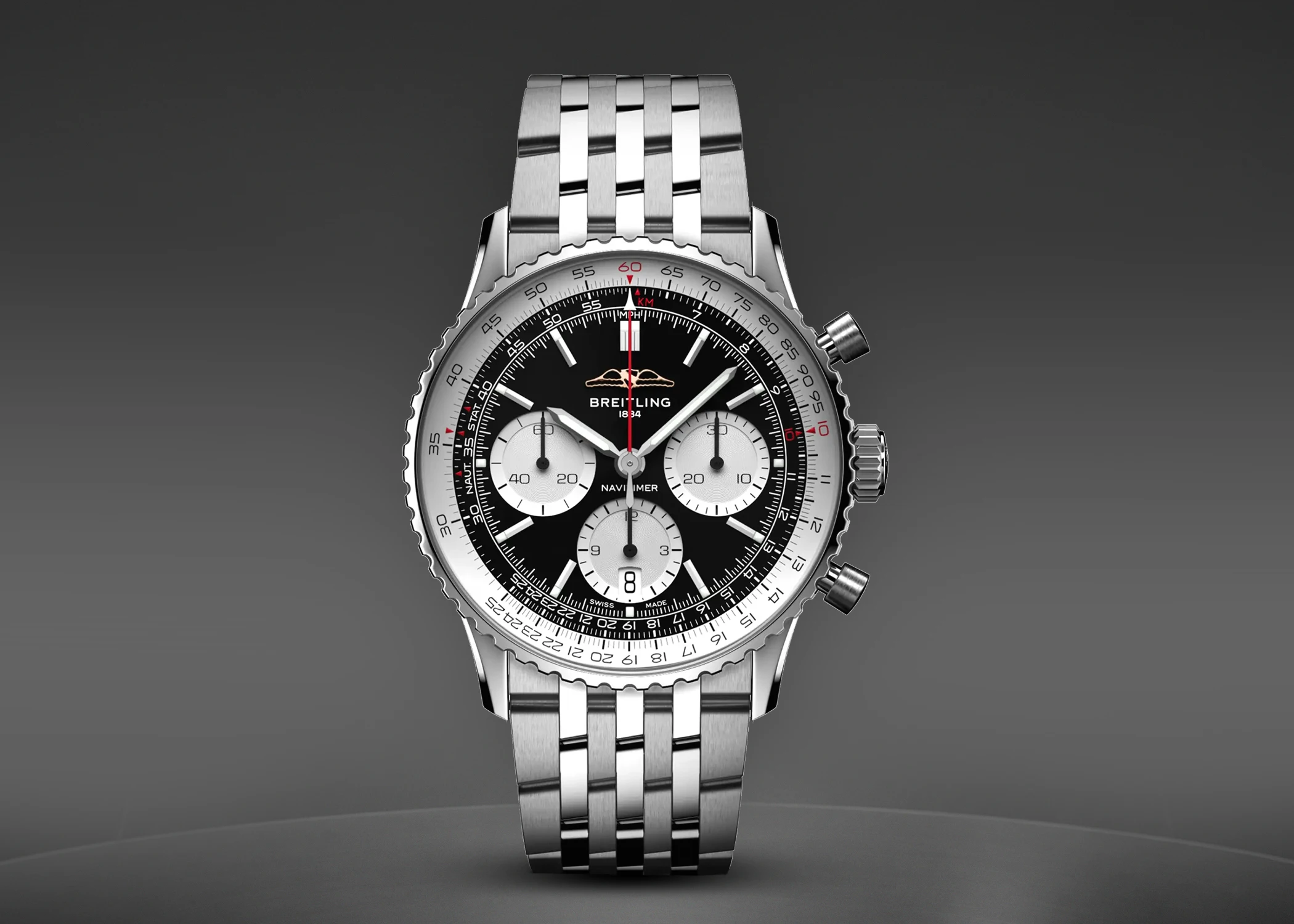
The Navitimer features one of the most recognisable chronograph architectures of all. Its in-house B01 calibre uses a column wheel and vertical clutch and delivers a 70-hour power reserve; at 41 millimetres in diameter and 13.6 millimetres thick, the current version is more balanced in proportion than many earlier Navitimers. The circular slide rule gives the watch a genuine functional identity – although the abundance of scales also reduces the immediate clarity of the reverse-panda contrast. With water resistance of just 30 metres, and considering the Sinn 903, which offers much of the same functional concept at a significantly lower price, the Navitimer’s strongest argument here is above all its status as the instrument watch with the most recognisable name.
The top tier brings together two historically significant chronographs and by far the most expensive model in the selection. The jump in price does not change the reverse-panda principle itself.
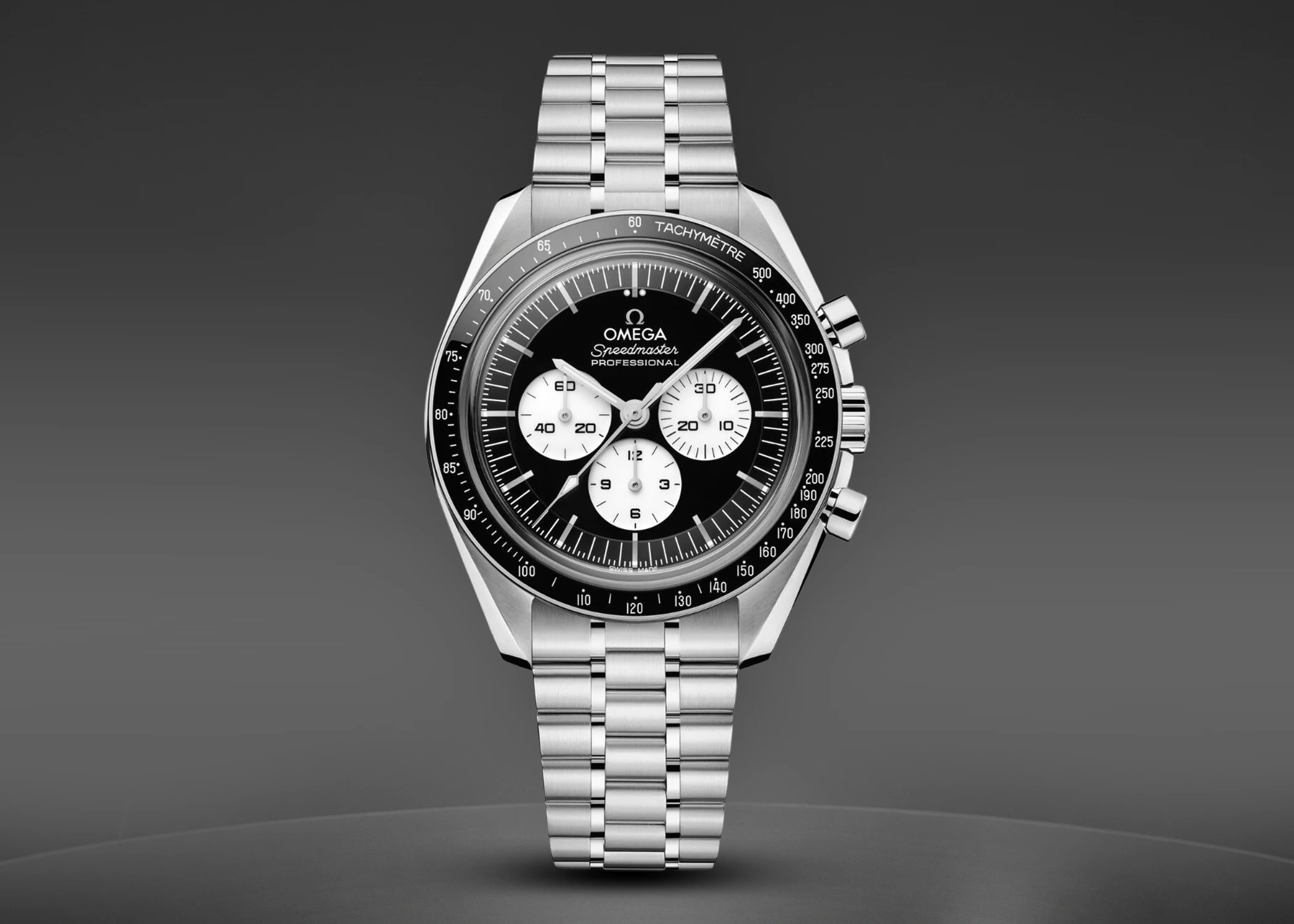
The Moonwatch architecture is historically significant – this particular colour scheme, however, is new. At the beginning of 2026, Omega gave the familiar Speedmaster face a reverse-panda configuration for the first time, and the two-layer black-and-white lacquered dial construction, with rhodium-plated surrounds framing the white counters, has a distinctly high-quality appearance. This makes it the most complete modern interpretation in the selection, but not automatically the most historically significant – the architecture carries that status, while the colour configuration itself does not yet have a long history.
Technically, the watch is built around the Master Chronometer-certified calibre 3861 with Co-Axial escapement and resistance to magnetic fields of up to 15,000 gauss – a modern movement housed within a deliberately classical case. Its limitations are rooted in history: a 50-hour power reserve, 50 metres of water resistance and manual winding, which suits the original but is less convenient in everyday use than an automatic movement. As a combination of instantly recognisable design and contemporary movement technology, the Speedmaster sets the modern benchmark.
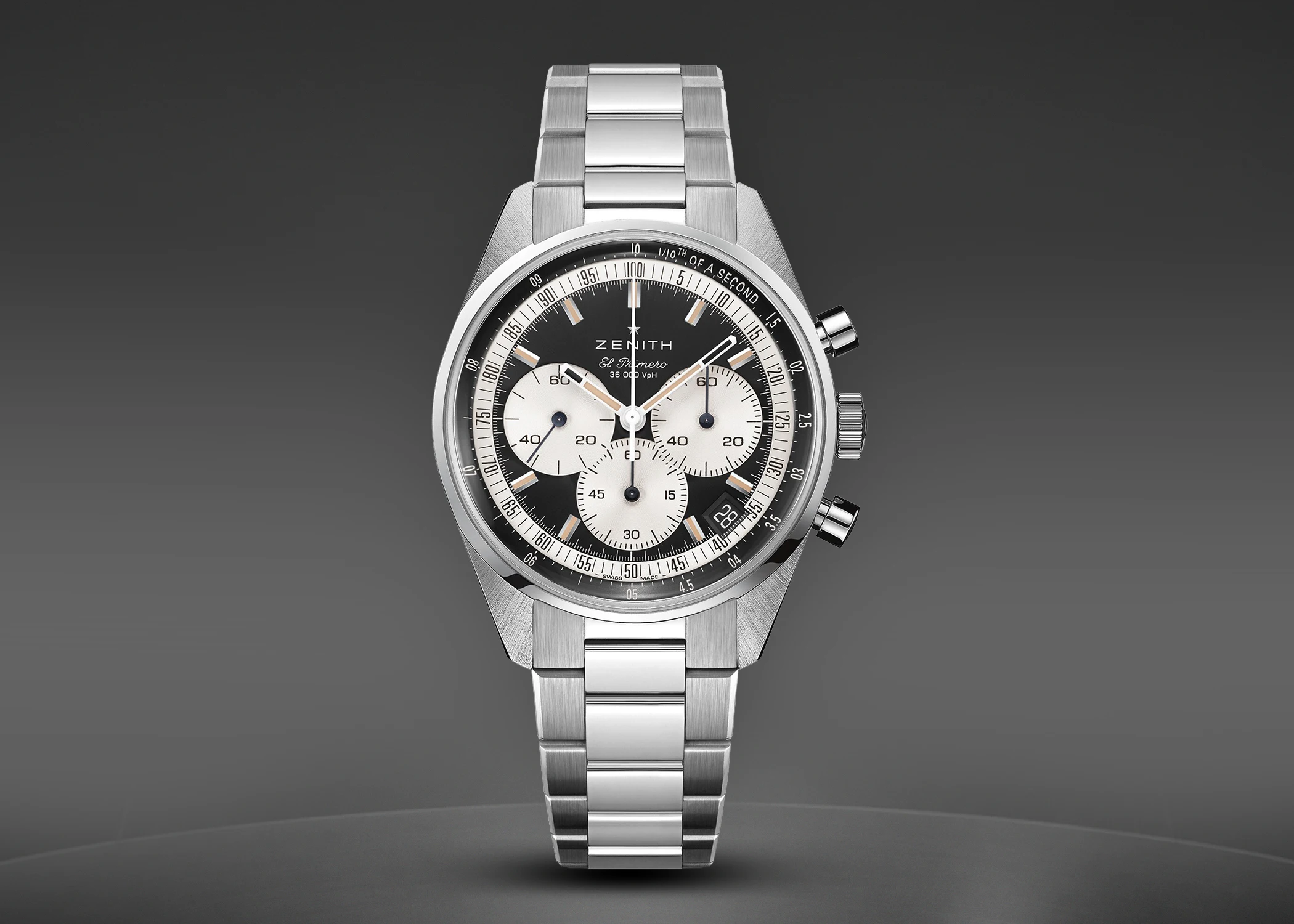
The El Primero was among the very first automatic chronographs in 1969, and the Chronomaster Original makes that heritage immediately visible. Its El Primero 3600 operates at 5 Hz and displays tenths of a second directly: the central chronograph hand completes one full revolution every ten seconds. The high frequency therefore remains more than an abstract technical specification and becomes a function that can actually be read – this is the defining feature of the watch. It is not the most historically significant model in the selection, but it is the most technically expressive.
It is also remarkably wearable: 38 millimetres in diameter and just 12.6 millimetres thick. The unusual ten-second revolution of the hand is fascinating, although less intuitive than a conventional chronograph seconds display; the date window between four and five o’clock slightly disrupts the symmetry, while water resistance remains limited to 50 metres. As a visible expression of high-frequency chronograph technology, however, the Chronomaster has no real competition in this group.
The Overseas represents the pinnacle of craftsmanship in this selection. It bears the Hallmark of Geneva, which certifies not only the movement but the finished watch as a whole, while its in-house calibre 5200 combines a column-wheel chronograph with a 22-carat gold rotor. Despite its automatic movement and high level of complexity, the watch is just 12.67 millimetres thick; 150 metres of water resistance and three interchangeable straps and bracelets that can be changed without tools make it more versatile in everyday use than its price might suggest. At 42.5 millimetres, it is the largest watch in the selection, while the date aperture between four and five o’clock interrupts the otherwise clean architecture. And at €39,800, it occupies an entirely different category from everything else here.
That price deserves a sober comparison. For the cost of one Overseas Chronograph, you could – purely in mathematical terms – buy the Omega, the Zenith, the Breitling, the TAG Heuer and the Hamilton together: €40,545, just over €700 more than the price of this single watch.
What matters is what that premium actually buys. It does not simply make the Overseas a more expensive version of the same watch, but places it in a different category: the Hallmark of Geneva with its stringent criteria for both movement and finished watch, finishing at haute horlogerie level, the gold rotor, and the association with one of the oldest continuously operating manufactures. In terms of that substance, the price can be justified.
And yet the reverse-panda principle itself – a black dial with contrasting counters – does not require €40,000 to work. That is precisely what the thirteen watches below it demonstrate. The Overseas is the finest execution of the idea; it is not a prerequisite for it. Anyone looking for the formula can find it fully intact for under €2,000. Anyone looking for haute horlogerie will find it in the Vacheron – these are two entirely different purchasing decisions.
What is a reverse-panda dial? A chronograph dial with a dark, usually black base and light-coloured, contrasting subdials. The contrast separates the running time from the elapsed time being measured and improves legibility.
What is the difference between a panda and a reverse panda? A panda dial has a light-coloured base with dark counters. With a reverse panda, the relationship is inverted: a dark dial with light-coloured counters.
Where does the term “panda” come from? From its appearance: dark subdials against a light background resemble the dark patches around a panda’s eyes. The inverted version adopted the name “reverse panda”.
Which is the most affordable model? In our selection, the Baltic Scalegraph Classic Reverse Panda at €1,957.55 is the most affordable entry point with a fully fledged mechanical chronograph movement.
Why do so many chronographs have contrasting subdials? Because the colour contrast improves legibility. It visually separates the chronograph counters from the rest of the dial – a functional legacy of the racing and instrument-watch era of the 1960s.