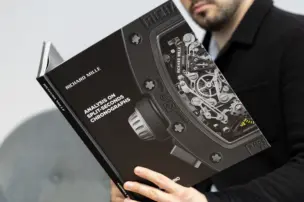
Andrea Frigerio discusses his book on the Richard Mille Split-Seconds Chronograph and the technical significance of this complication.
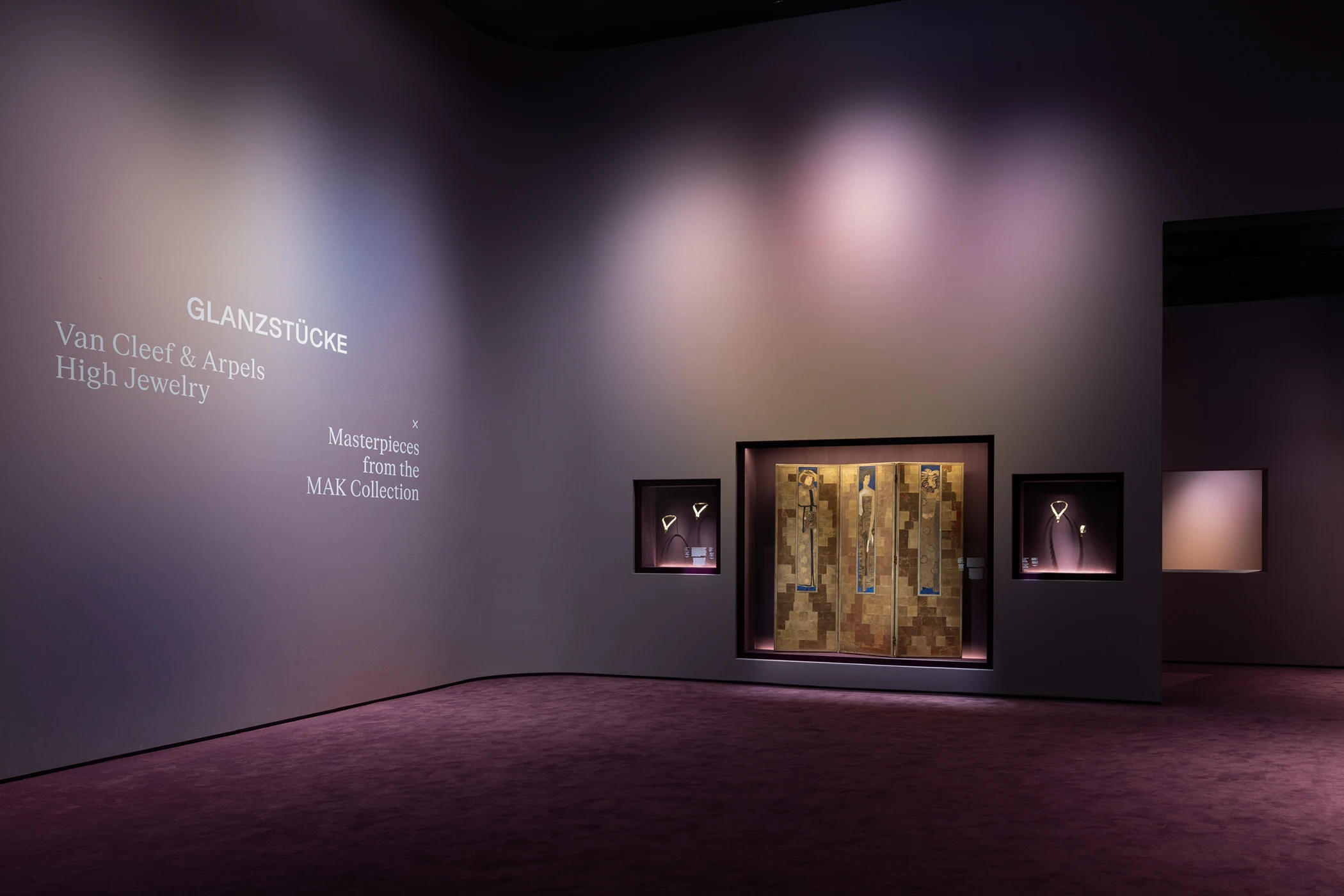
Van Cleef & Arpels and the MAK in Vienna are joining forces to showcase true treasures – perhaps the most unmissable exhibition of the summer for collectors who love craftsmanship and the most beautiful aspect of time: timelessness
These days, you no longer get lost in the city. Maps, streets, destinations – everything is always at your fingertips, at any time, on the screen in your hand. But have we really forgotten how to get lost? Or have we simply lost our wanderlust? It is with this question that Tsuyoshi Tane, the exhibition’s curator and founder of the Paris-based studio ATTA, begins his foreword to the catalogue of the Viennese exhibition ‘Glanzstücke’.
Tane has deliberately designed the exhibition’s scenography as a labyrinth – a somewhat unusual approach – conceiving the spaces as a place to wander. The aim is for everyday life to fade into the background and for the boundaries of time and space to blur. Like a child wandering through an enchanted forest, visitors are invited, until 27 September, to lose themselves in Vienna, to pause and to marvel. An exhibition, says Tane, is more than just a presentation – it is a unique moment in which time and place converge and culture takes shape. And isn’t that what we all long for sometimes: to linger in the here and now? Perhaps, in doing so, some of us will rediscover that wanderlust which, sadly, our smartphones’ navigation features all too often take away from us.
Credit © MAK
It is no coincidence that the first chapter of the exhibition is entitled ‘Wanderlust’. It is a German word that has taken the world by storm: in English, it is still used untranslated to this day to describe a longing for distant places – the desire to set off, to wander, to go with the flow. Its roots lie in the Romantic era of the late 18th and early 19th centuries: in the tradition of the Grand Tour, in the travelling years of journeymen craftsmen, in Goethe’s journey to Italy and in the singing wanderers of Schubert’s time. Wanderlust never refers merely to travel, but always also to an inner attitude – a curiosity about the unfamiliar and a willingness to be enchanted by it.
Credit © MAK
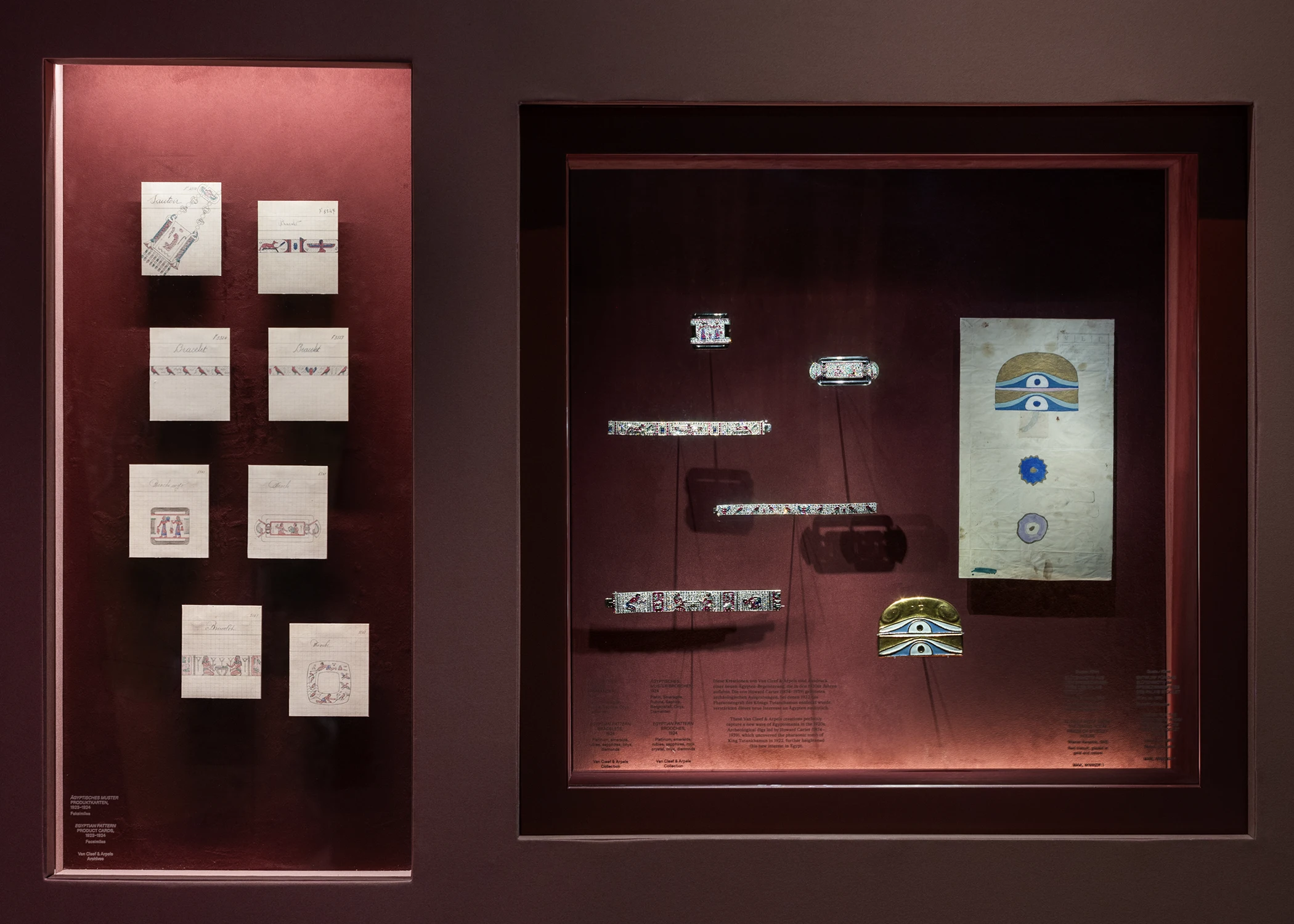
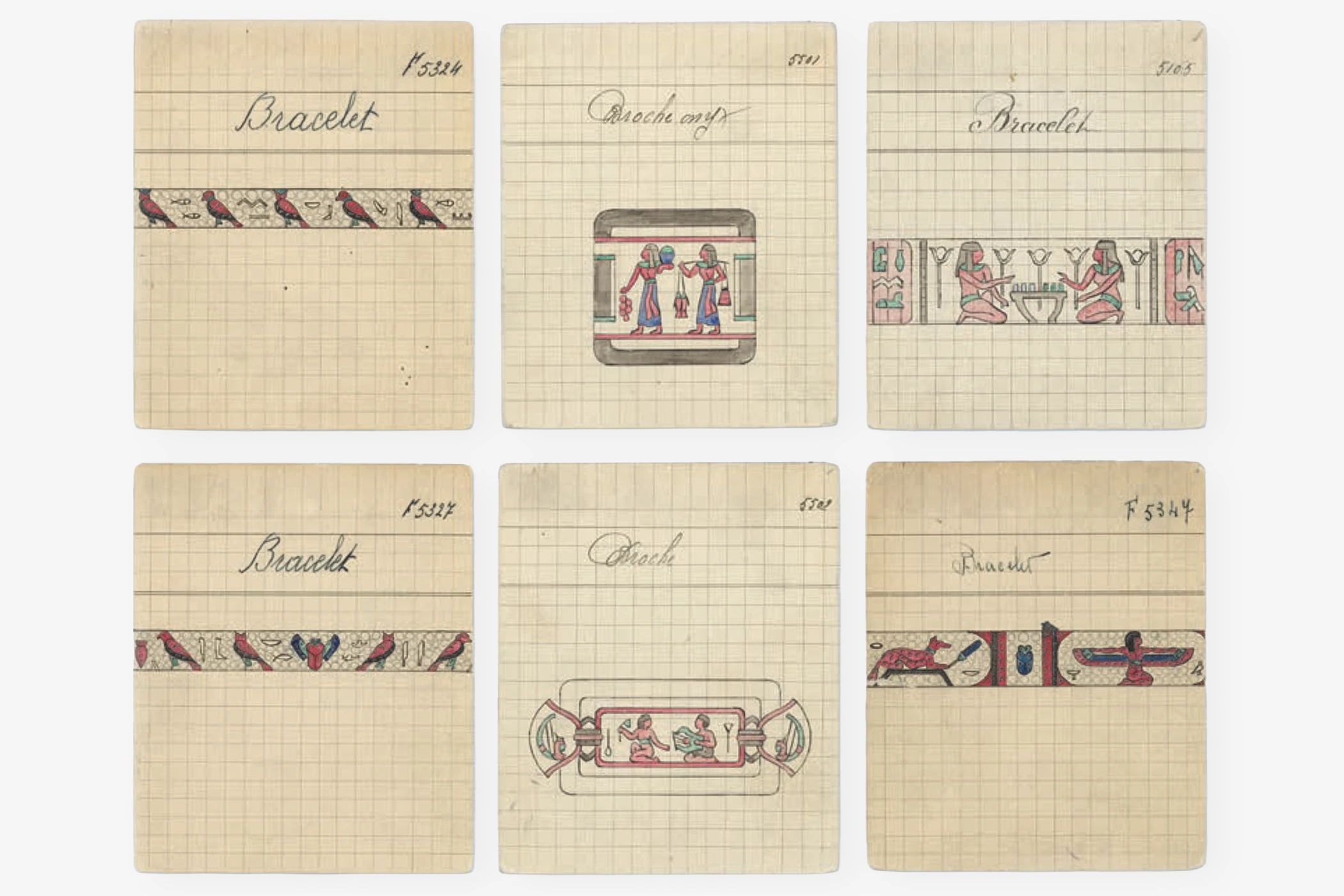
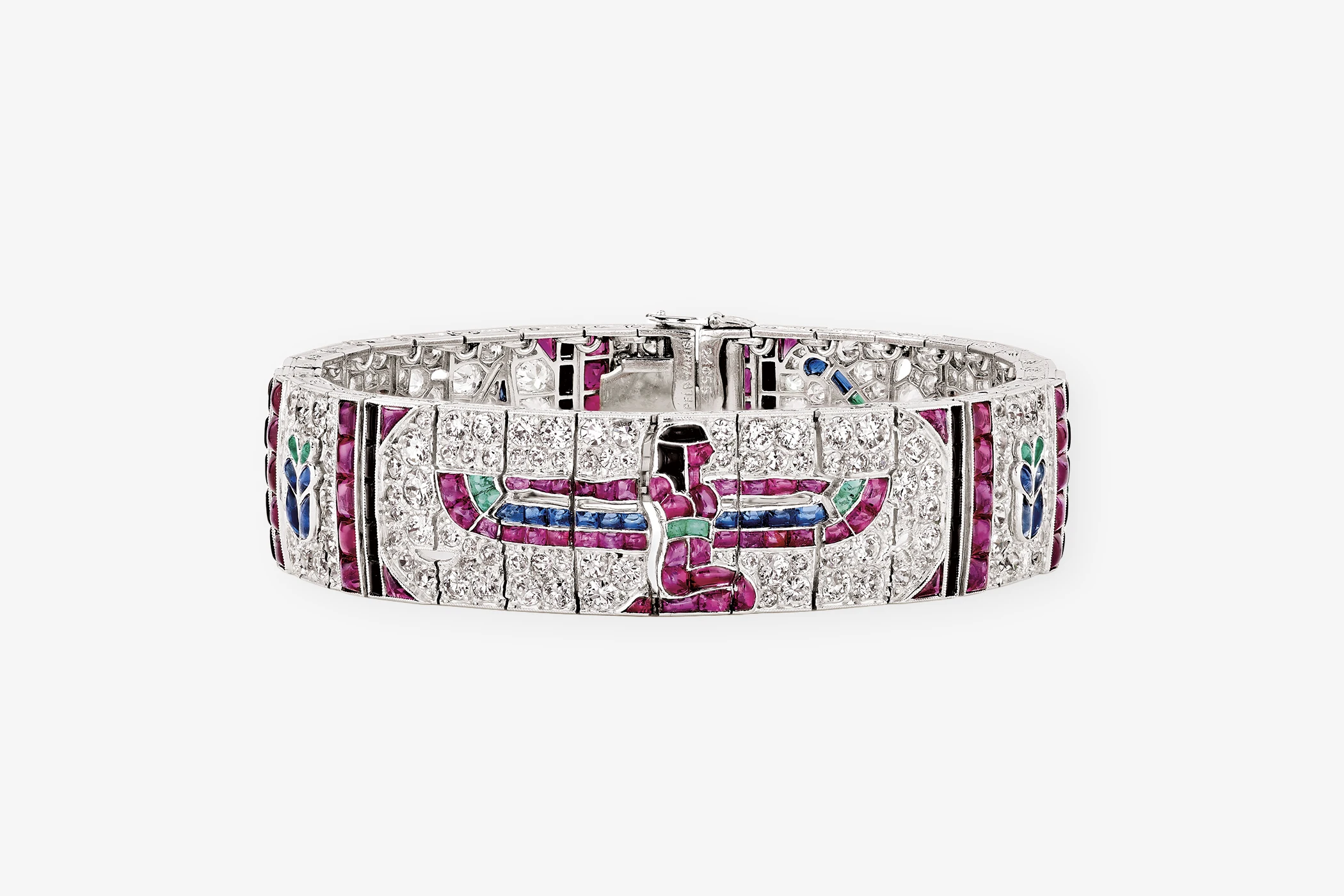
Van Cleef & Arpels has shared this longing from the very beginning. Even in its early days, the House – founded in 1906 on the Place Vendôme – set its sights on the horizon and drew inspiration from the romantic movements of its time. Japonism, the revival of the Middle Ages and 19th-century Orientalism lived on in Art Deco and shaped the Maison’s designs from the 1910s onwards; in 1923, shortly after the discovery of Tutankhamun’s tomb, jewellery featuring Egyptian motifs was created. The numerous travels of the brothers Claude, Jacques and Pierre Arpels provided names and inspiration reminiscent of Venice or Delphi. It is a wanderlust that translates into gemstones.
Credit © MAK
Credit © Van Cleef & Arpels Collection
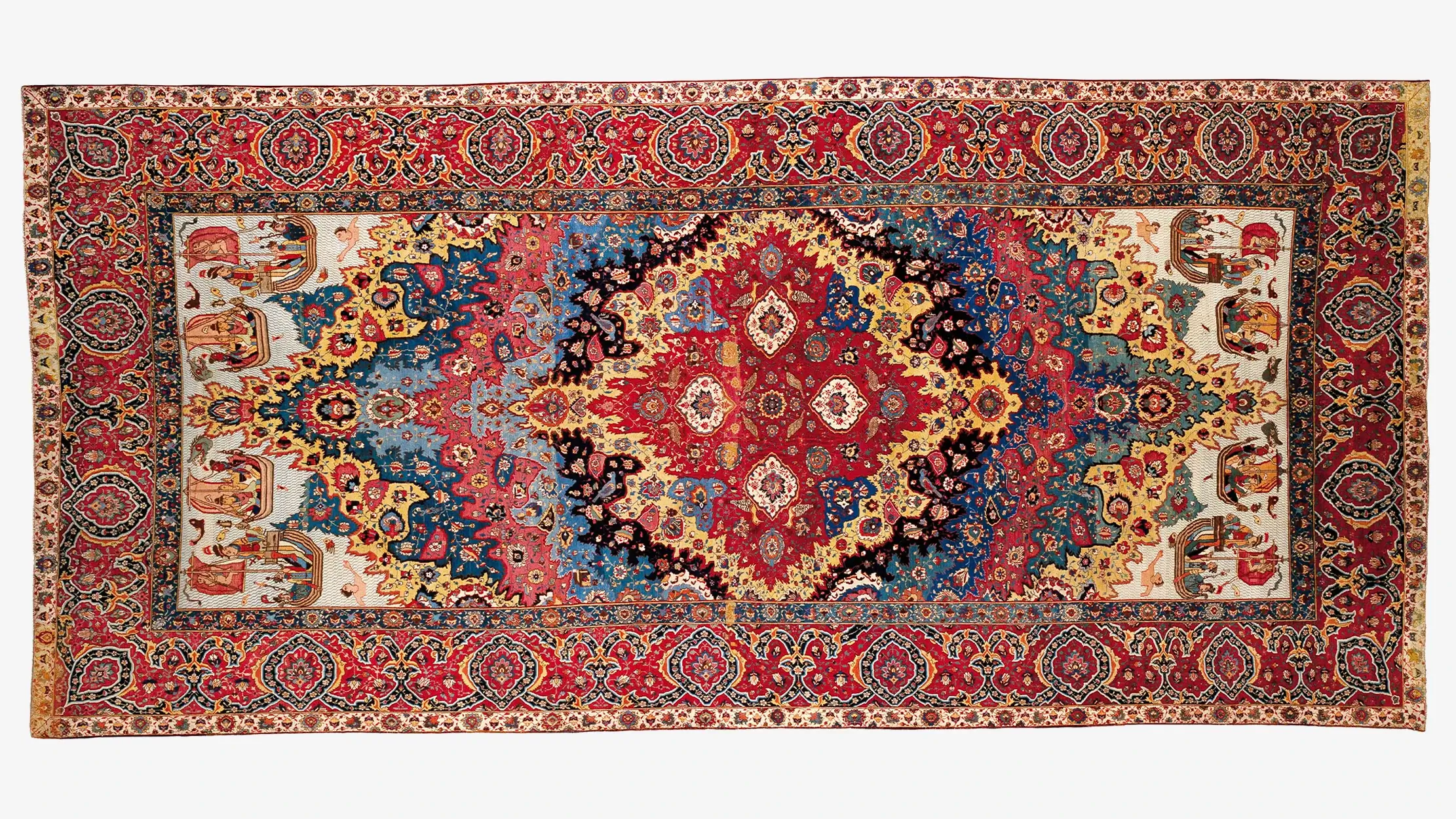
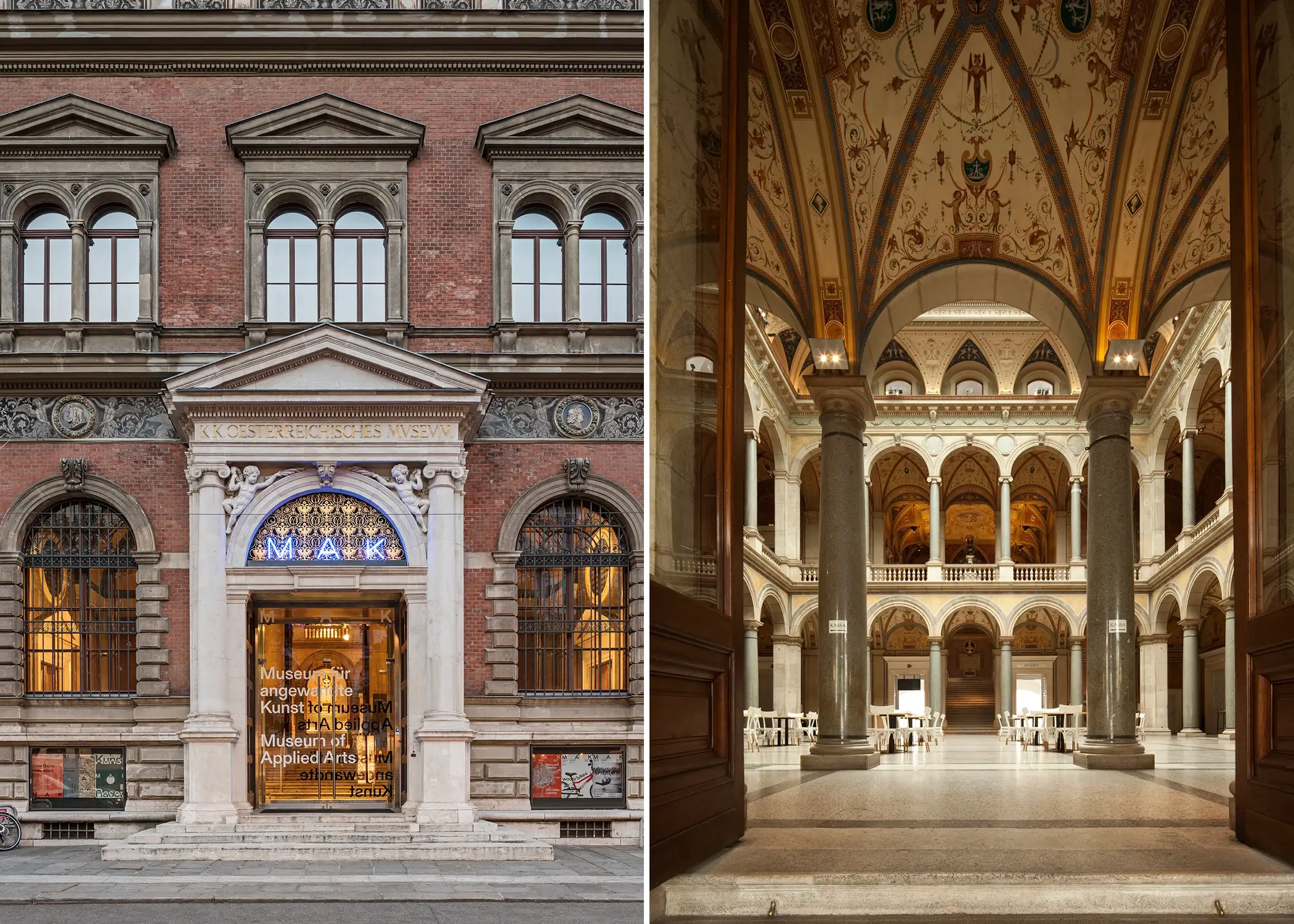
On the other hand, there is the MAK, which, right from its foundation in 1863 as the Austrian Museum of Art and Industry, had an international outlook – with a focus on the Near East and East Asia. Acquisitions made at the Vienna World Exhibition of 1873 and items formerly owned by the imperial family gave rise to one of the world’s finest collections of Oriental carpets. Two institutions, then, whose history is one of wanderlust.
Credit © MAK
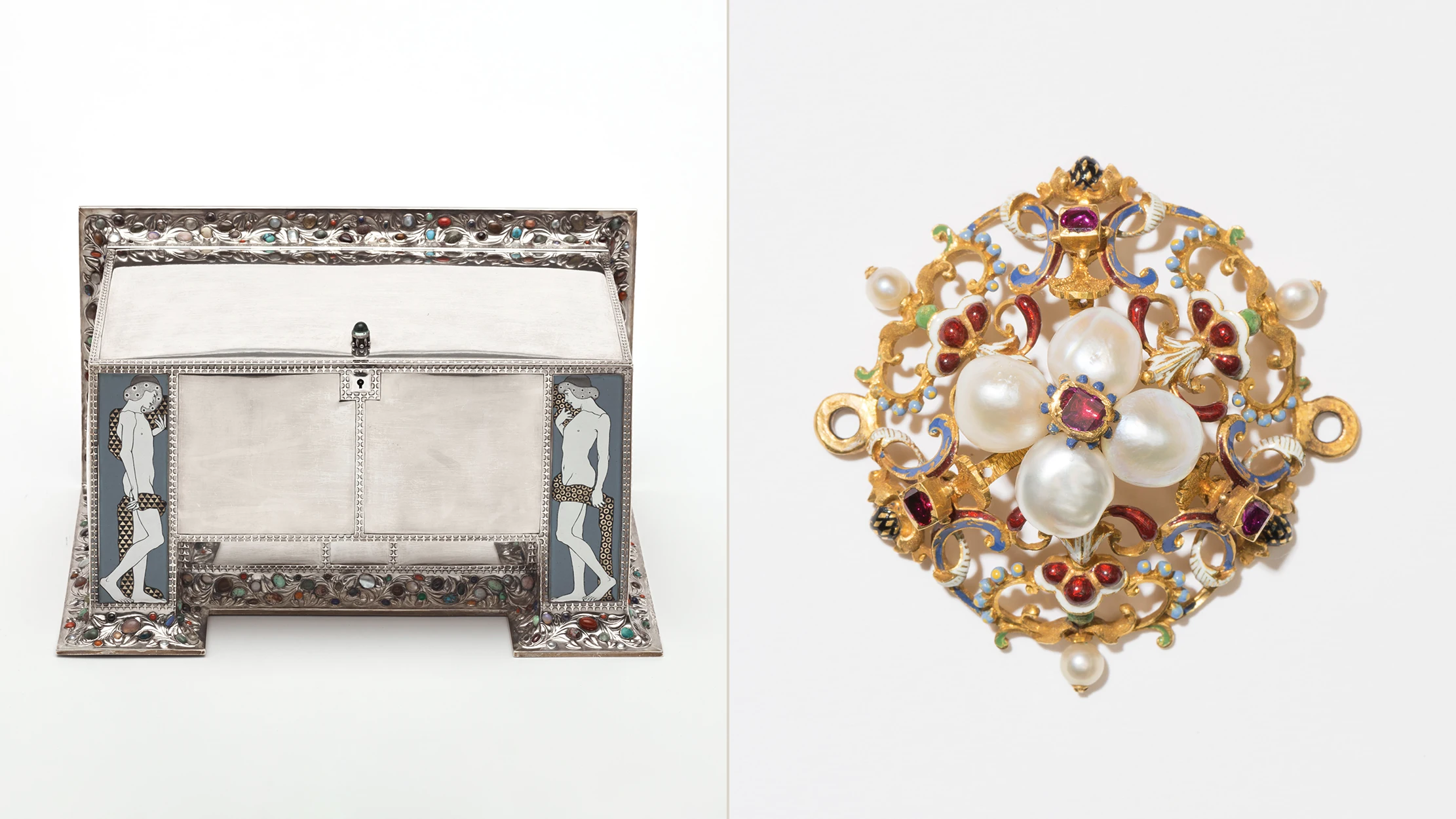
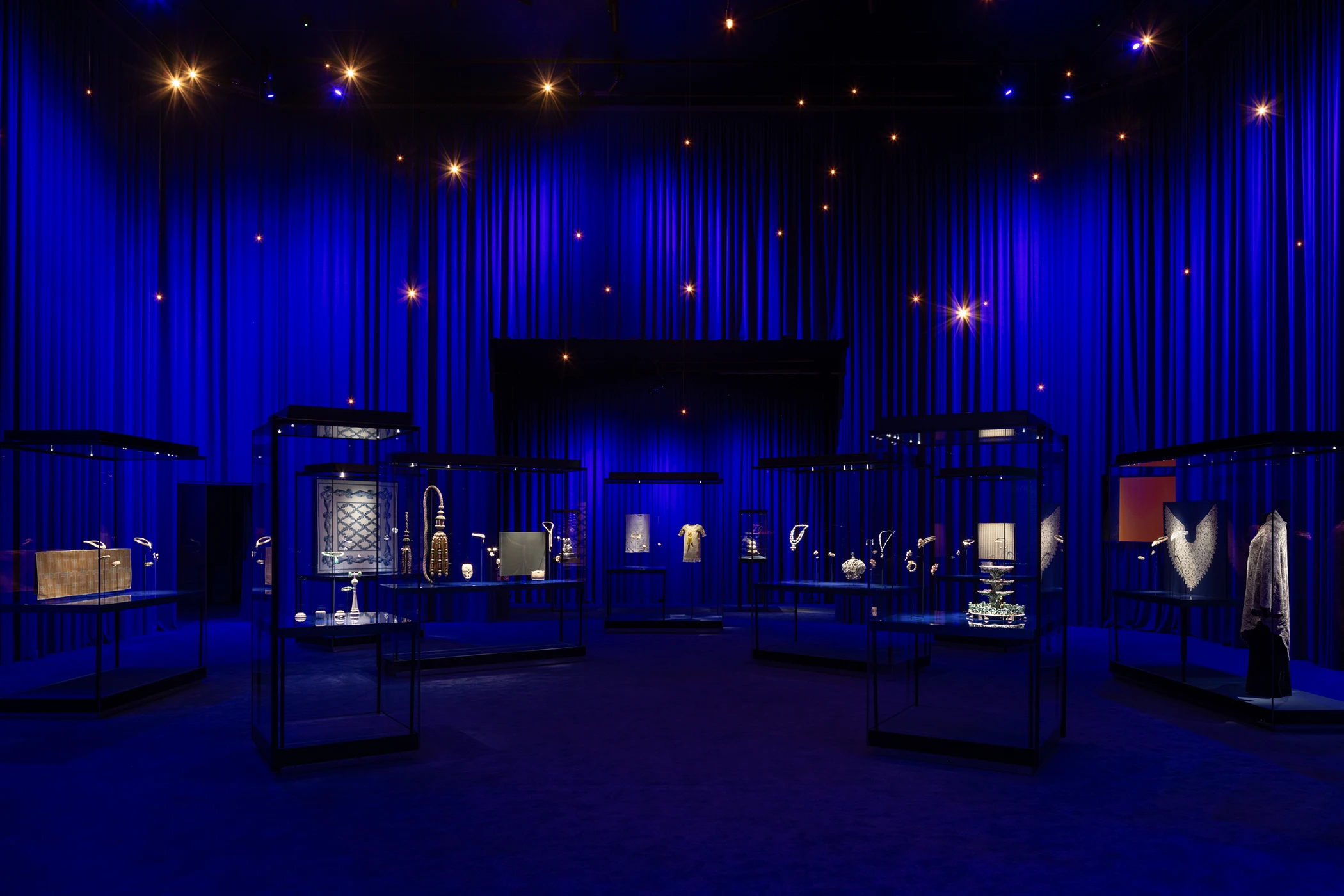
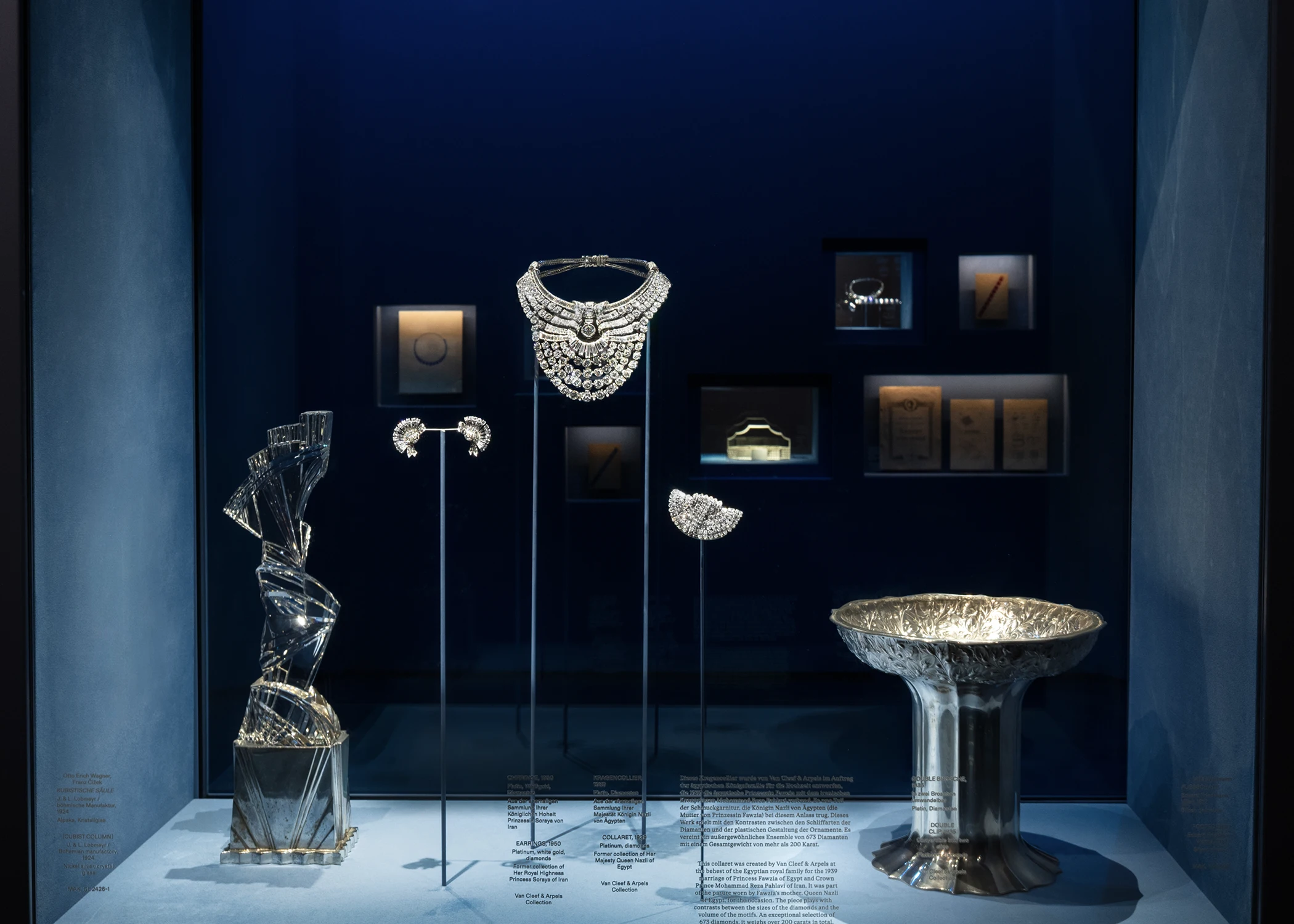
For three years, the Parisian haute joaillerie house and the Vienna museum have been sifting through their collections: 400,000 museum exhibits, some of which had not been on display for decades, were brought together with 3,000 pieces from the Van Cleef collection: The result, on display from 10 June until 27 September 2026, is a multi-layered dialogue between Van Cleef & Arpels and the MAK within the field of the decorative arts itself. Around 350 pieces of jewellery, objects of jewellery art and watchmaking from the Maison’s heritage collection are brought together with some 160 highlights from the MAK collection dating from the 13th to the 20th century – ranging from medieval textiles to designs by the Wiener Werkstätte, alongside works by Klimt, Moser and Hoffmann.
Credit © MAK
Credit © Van Cleef & Arpels Collection
The exhibition explores these connections across six thematic areas: Wanderlust, Architecture, Rhythmic Designs, On Stage, Metamorphoses and Nature & Cosmos. Visitors are guided through Tsuyoshi Tane’s labyrinth, in which eras, cultures and disciplines intertwine. The patrimonial collection, established in the 1970s by the founding couple’s nephew, Jacques Arpels, through the repurchase of historic pieces, now comprises more than 3,000 creations and documents the house’s development from 1906 to the present day. Curator Anne-Katrin Rossberg, who is responsible for the metal collection and the Wiener Werkstätte archive at the MAK, describes the essence of the exhibition as a manifesto of a shared ethos: “Together, we embody uncompromising craftsmanship and artistic invention.”
Credit © MAK
Credit © Van Cleef & Arpels Collection
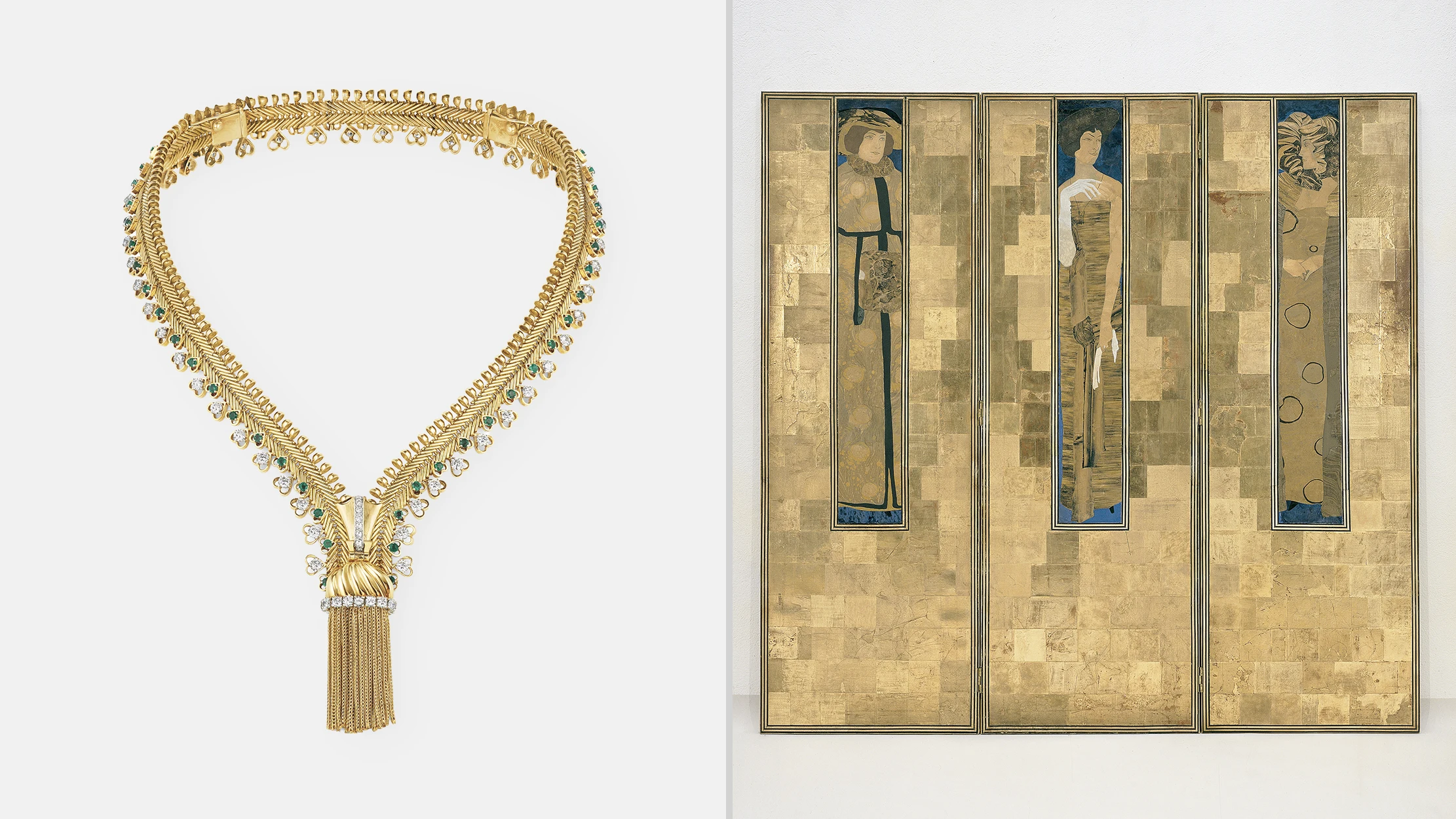
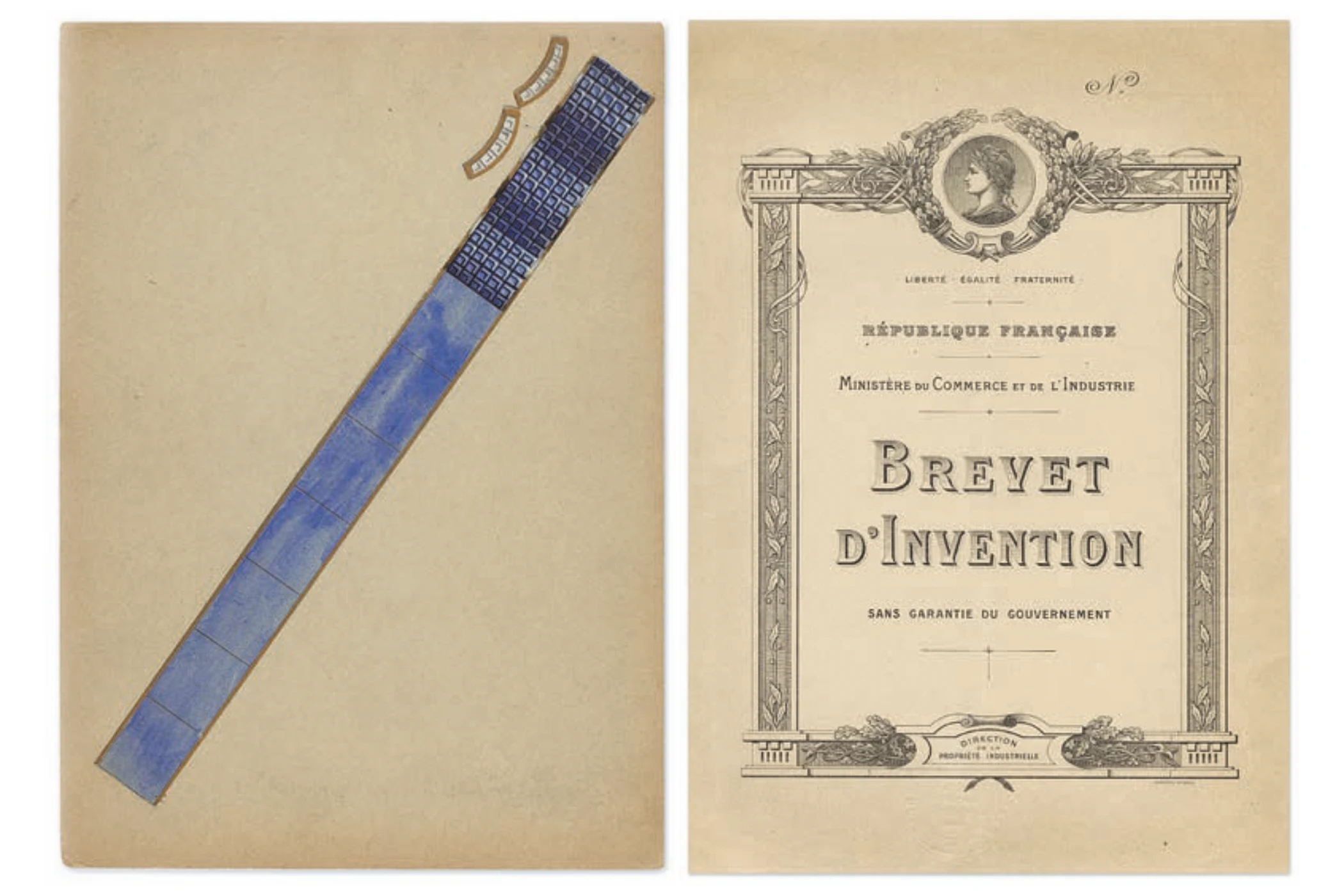
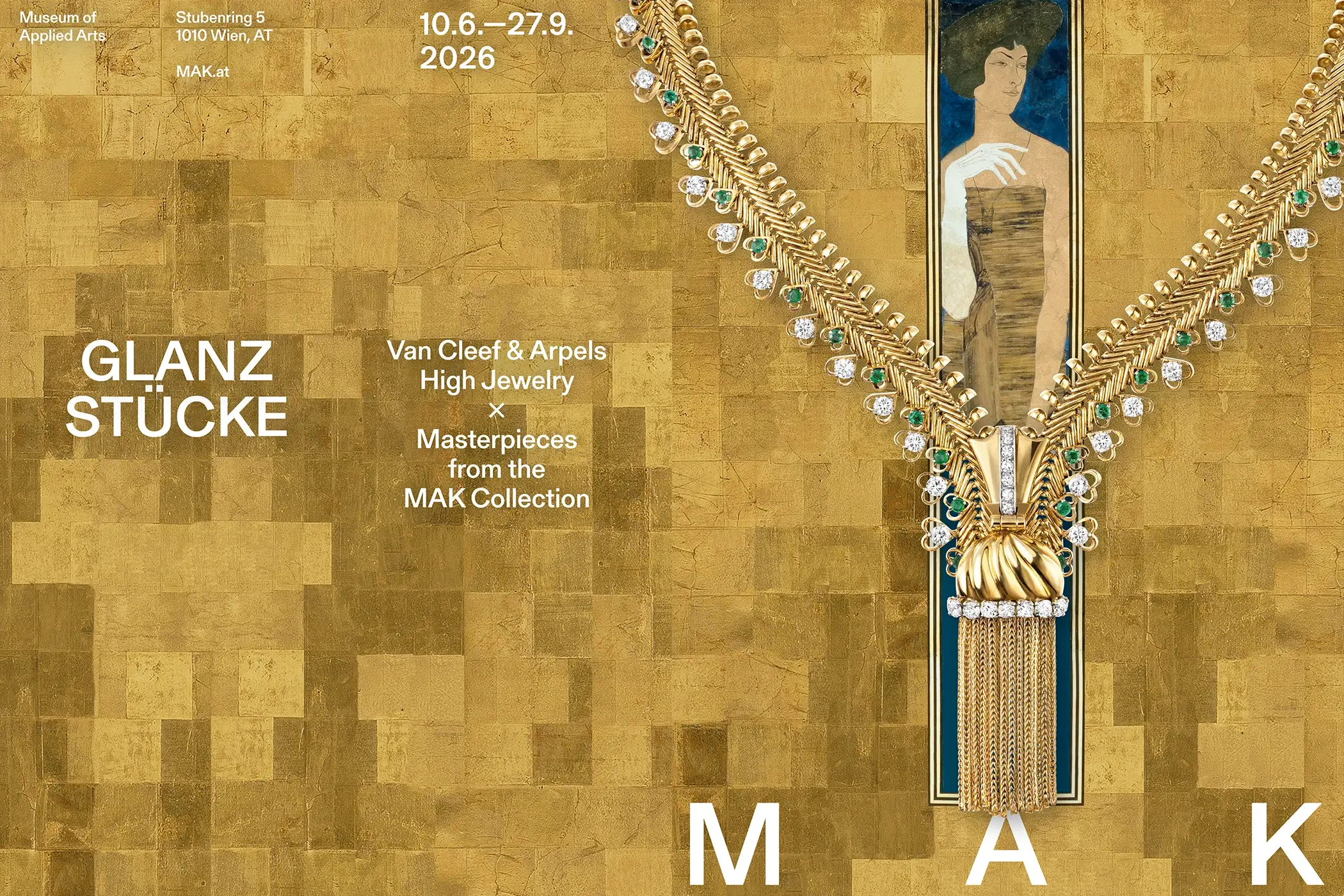
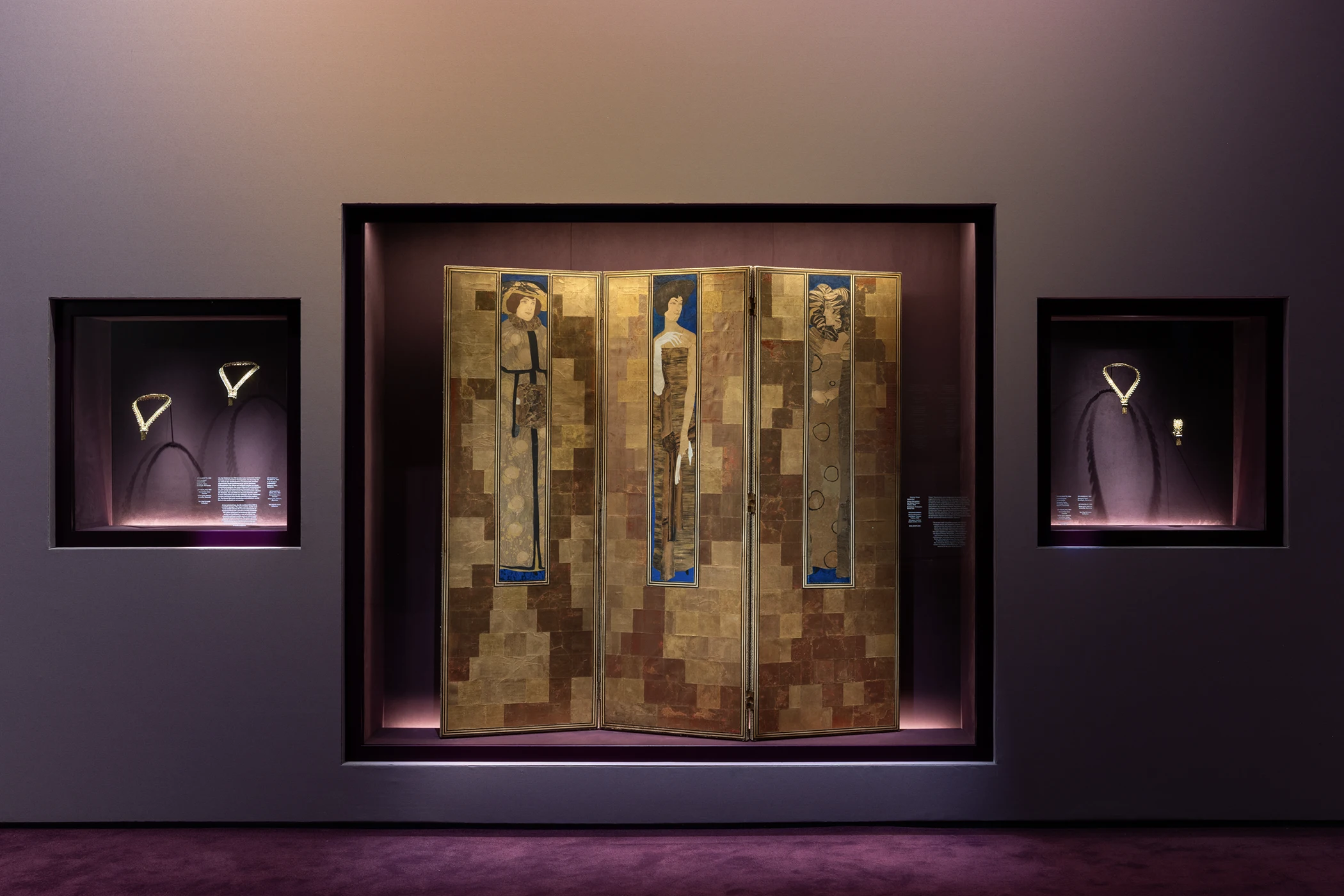
The Zip necklace (1955) stands, alongside a folding screen by the Wiener Werkstätte, right at the start of the exhibition route – and adorns the cover of the catalogue. Inspired by the zip fastenings on pilots’ suits, it transforms a purely functional principle into a precious piece of jewellery: yellow gold teeth, edged by a fabric ribbon with a ‘skin-like’ texture, interspersed with heart-shaped emeralds set in brilliant cut, alternating with round diamonds. The slider, set with brilliant-cut diamonds, ends in a yellow gold tassel – and can actually be fastened, transforming the necklace into a bracelet. The Maison filed a patent application for its first adaptation of the zip as a decorative quick-release fastening as early as 1938; this was followed in 1951 by the patent for its transformation into a necklace. To this day, the ‘Zip’ remains a source of innovation for the Parisian ateliers and, because it is produced so rarely, is extremely sought-after by the Maison’s most discerning clients.
Credit © MAK
Credit © Van Cleef & Arpels Collection | © MAK/Georg Mayer
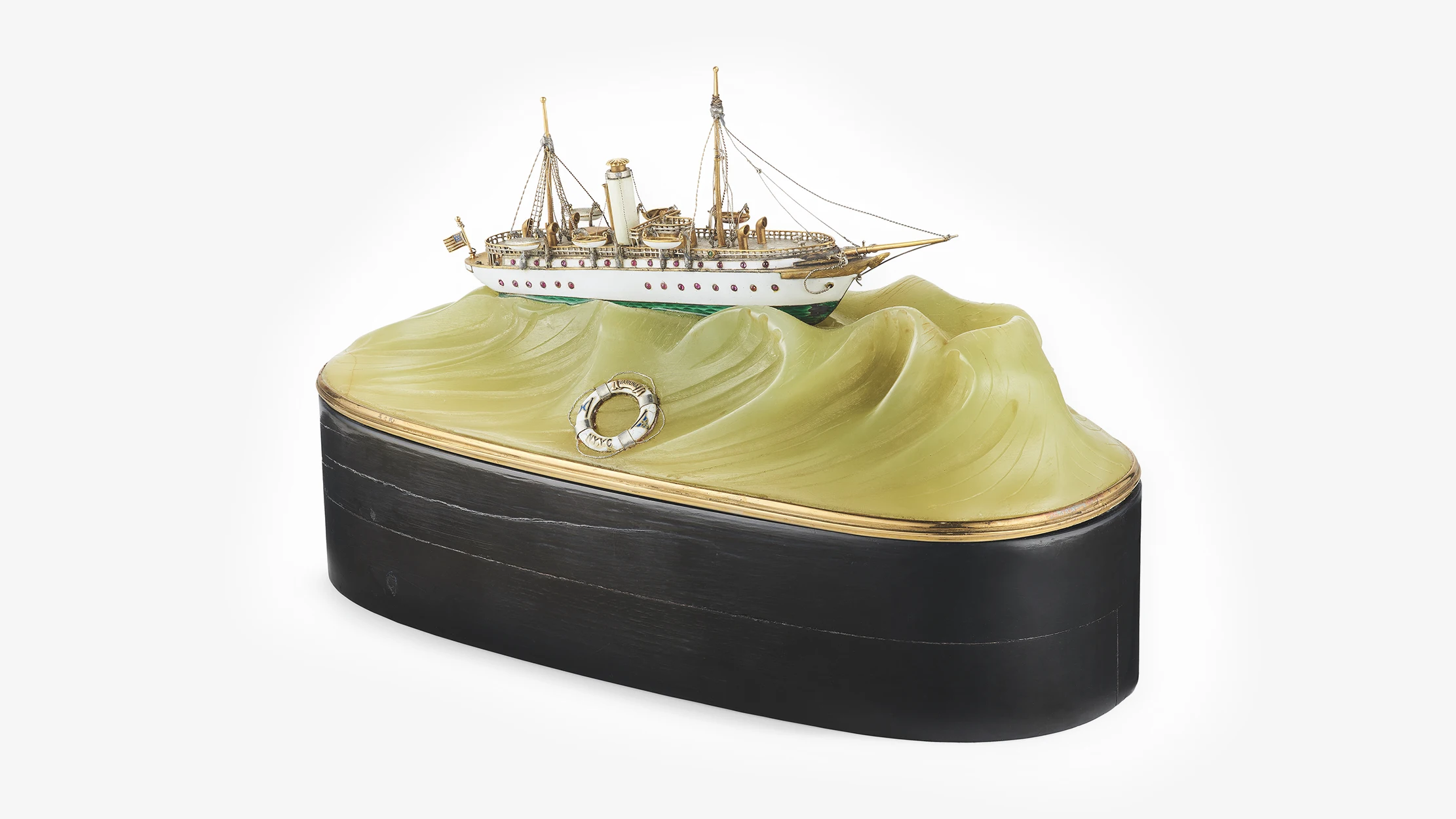
This miniature replica of the Varuna yacht from 1906 is not the oldest piece in the van Cleef & Arpels collection (it was created in the year the Maison was founded). The names of the founders are engraved on the pedestal: “A. Van-Cleef & S. Arpels. Joailliers. Paris.” Crafted in yellow gold with impressive realism, this famous vessel belonging to an American family features a hull of green and white enamel, red portholes, two masts, a funnel, six lifeboats, an engraved silver deck and an American flag at the stern. The boat sails on a choppy sea of sculpted jasper or jade, set upon an ebony plinth. And it is not merely decorative: a built-in electric bell once summoned the butler. The original belonged to Eugene Higgins, heir to a wealthy American family; the press hailed the Varuna as one of the most magnificent steam-sailers of its time. In the ‘Wanderlust’ chapter, alongside the Portuguese carpet, it symbolises an era in which railways, ocean-going steamers and the motor car made the world seem smaller.
Credit © Van Cleef & Arpels Collection
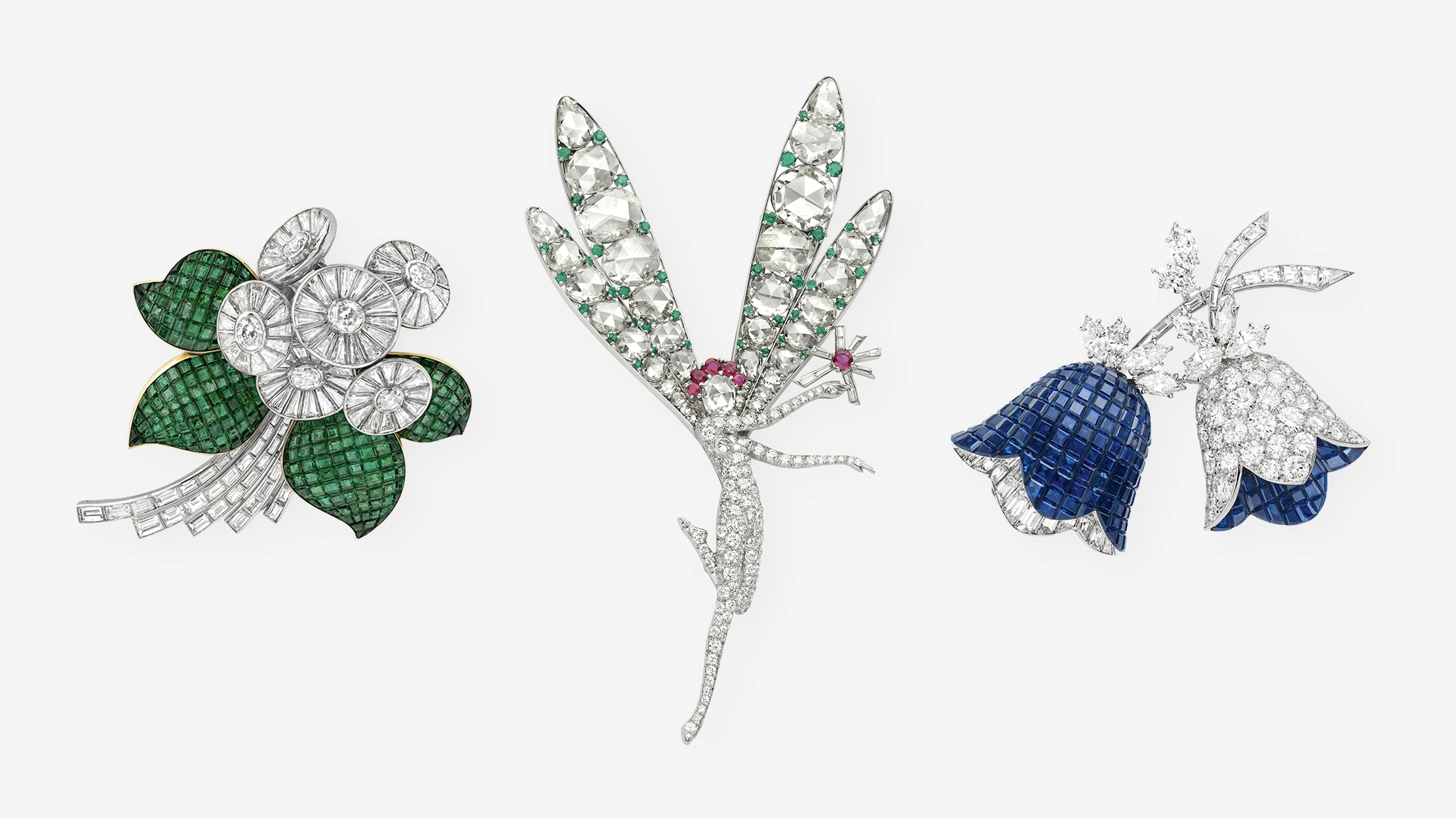
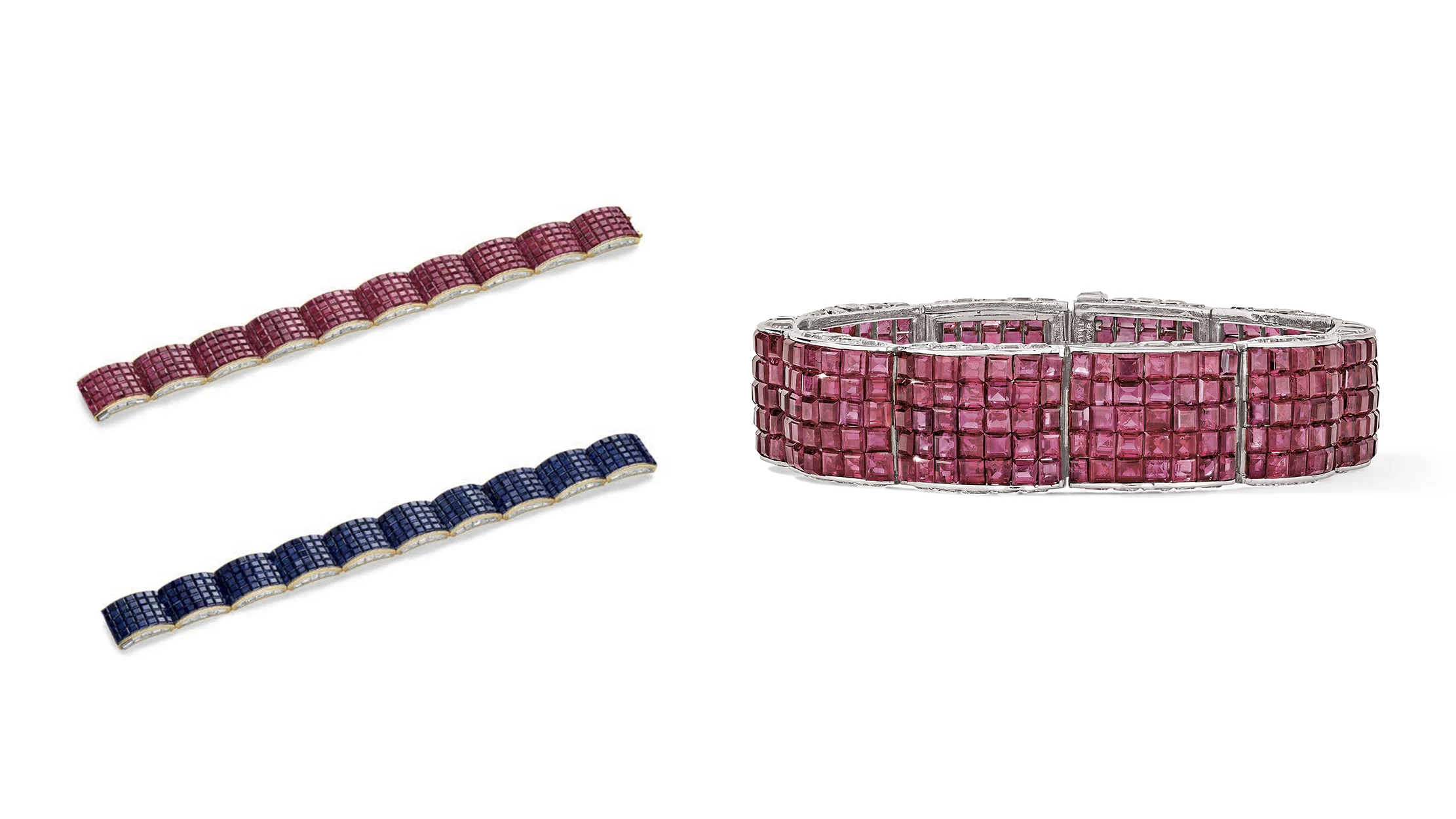
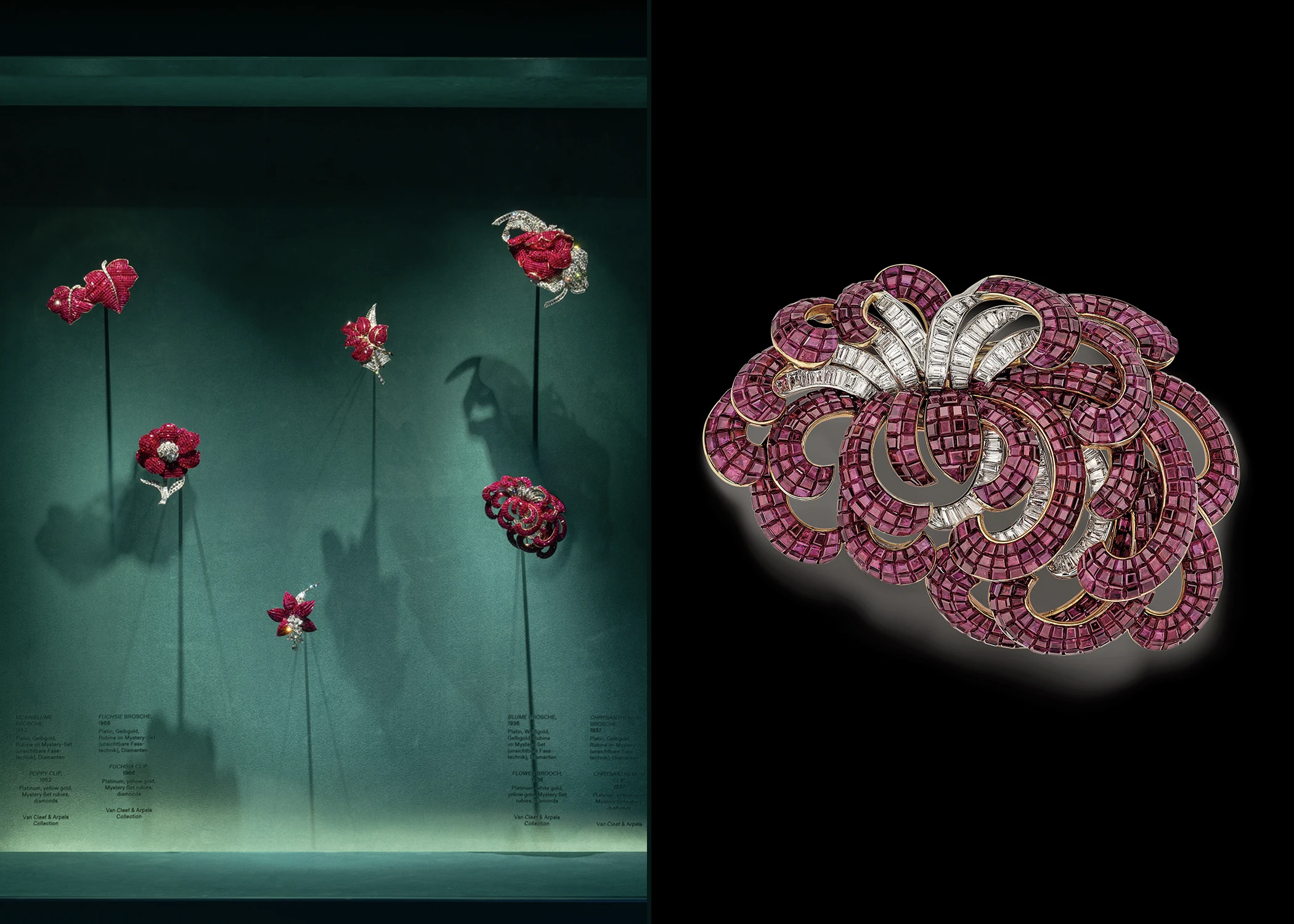
Of course, the famous bracelet with the ‘Mystery Setting’ from 1936 is a must-see: ten platinum panels were densely and evenly set with rubies – and not the slightest trace of a stone setting is visible. This invisible setting technique, the ‘Mystery Setting’, is regarded by Van Cleef & Arpels as one of the most significant advances in the art of jewellery-making in the 20th century. Van Cleef & Arpels filed its first patent on 2 December 1933; an improvement introduced in 1936 allowed for curved shapes and greater volume for the first time. The bracelet on display is one of the earliest pieces to benefit from this technique; its sides are set with calibrated diamonds whose shape precisely follows the contours. The technique was developed under the artistic direction of Renée Puissant – in the midst of the economic fallout from the 1929 stock market crash, when the Maison nevertheless gave free rein to its creativity.
Credit © Van Cleef & Arpels Collection
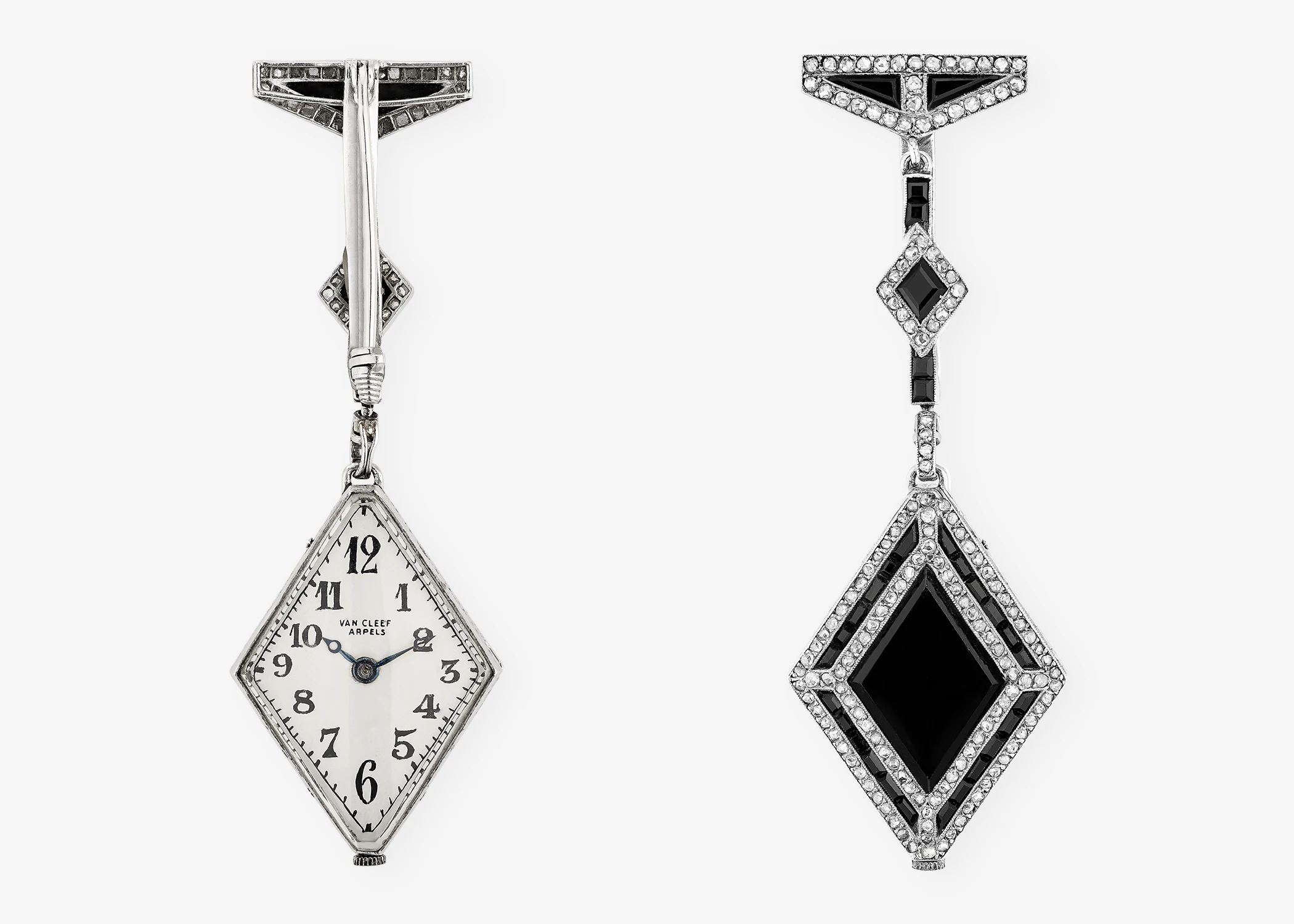
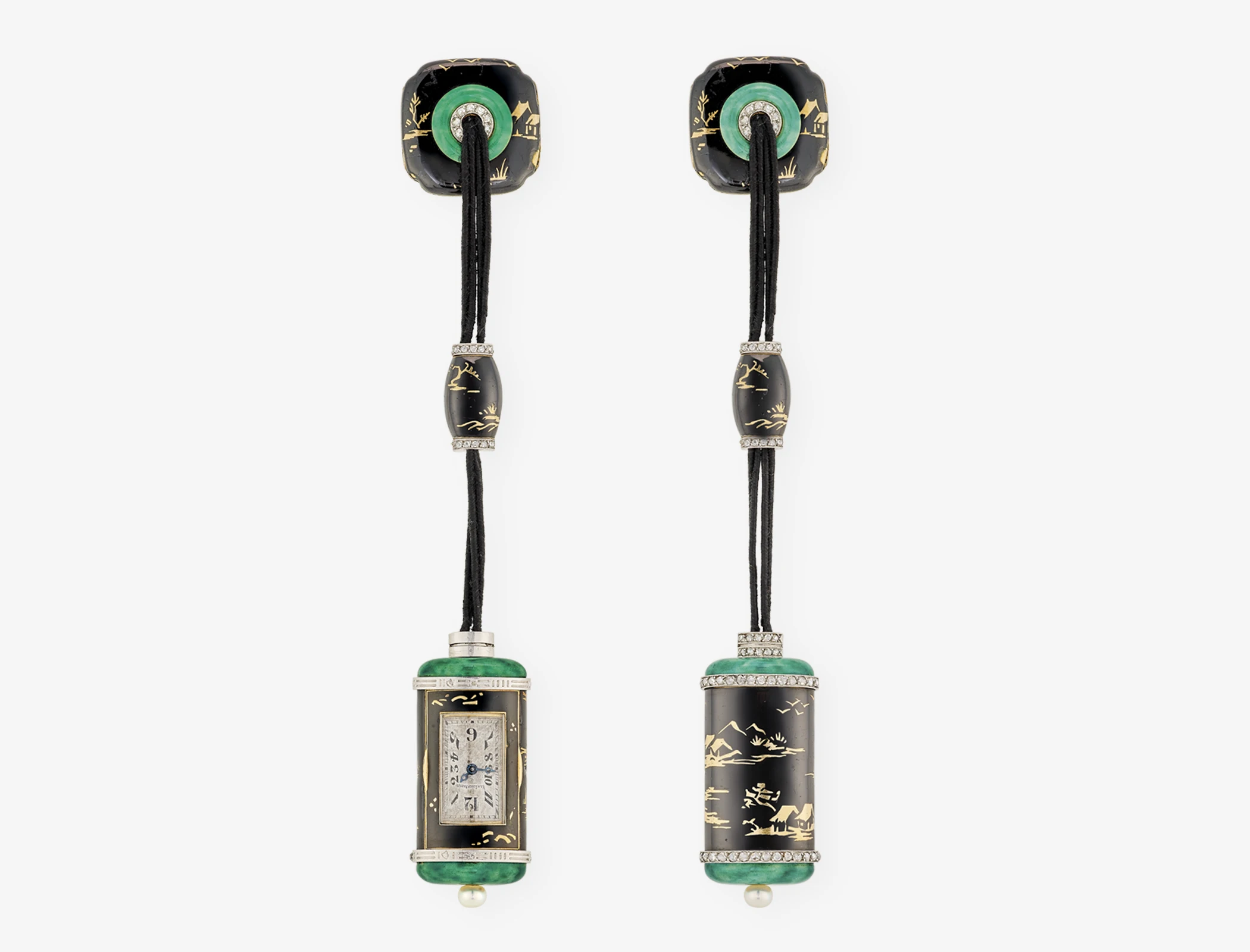
The name of the 1924 Chatelaine watch has a long history: it derives from the medieval ‘clavendier’, on which the lady of the castle carried her keys; in the 19th century, it referred to the hook on a petticoat from which pendants and watches were suspended; by around 1900, the word denoted a brooch containing a concealed watch. The 1924 model shown here is a true child of the 1920s: a rectangular, black-enamelled case, against which a landscape in the style of Chinese and Japanese lacquerwork stands out in yellow gold, framed by diamonds set in platinum and green enamel imitating jade. A black textile cord connects the watch to a decorative disc, behind which the pin is concealed; a pearl marks the winding crown. The watch reflects the fascination with China and Japan of those years – from the World’s Fairs and the 1923 Paris Opera Ball to fashion designers such as Paul Poiret.
Credit © Van Cleef & Arpels Collection
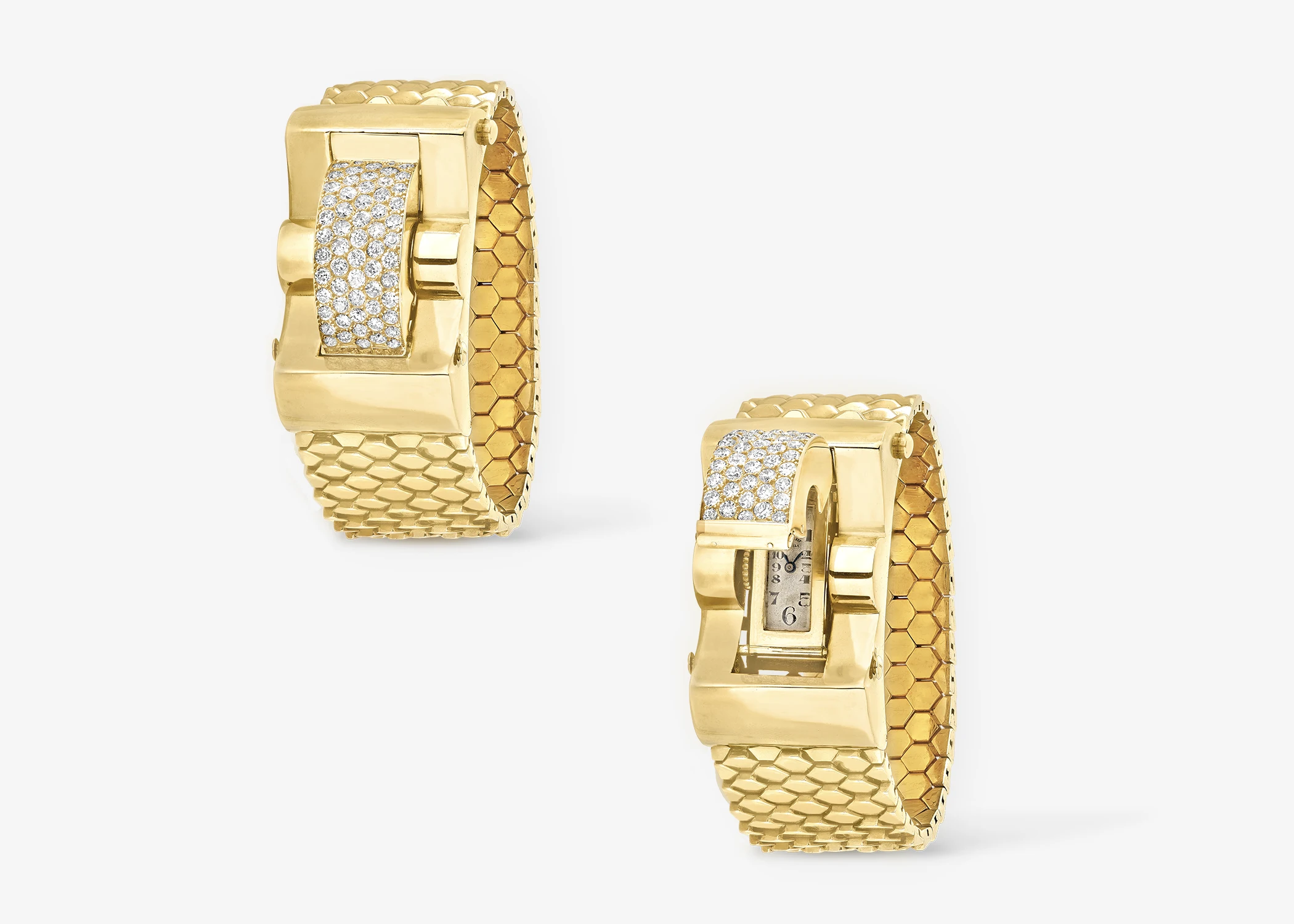
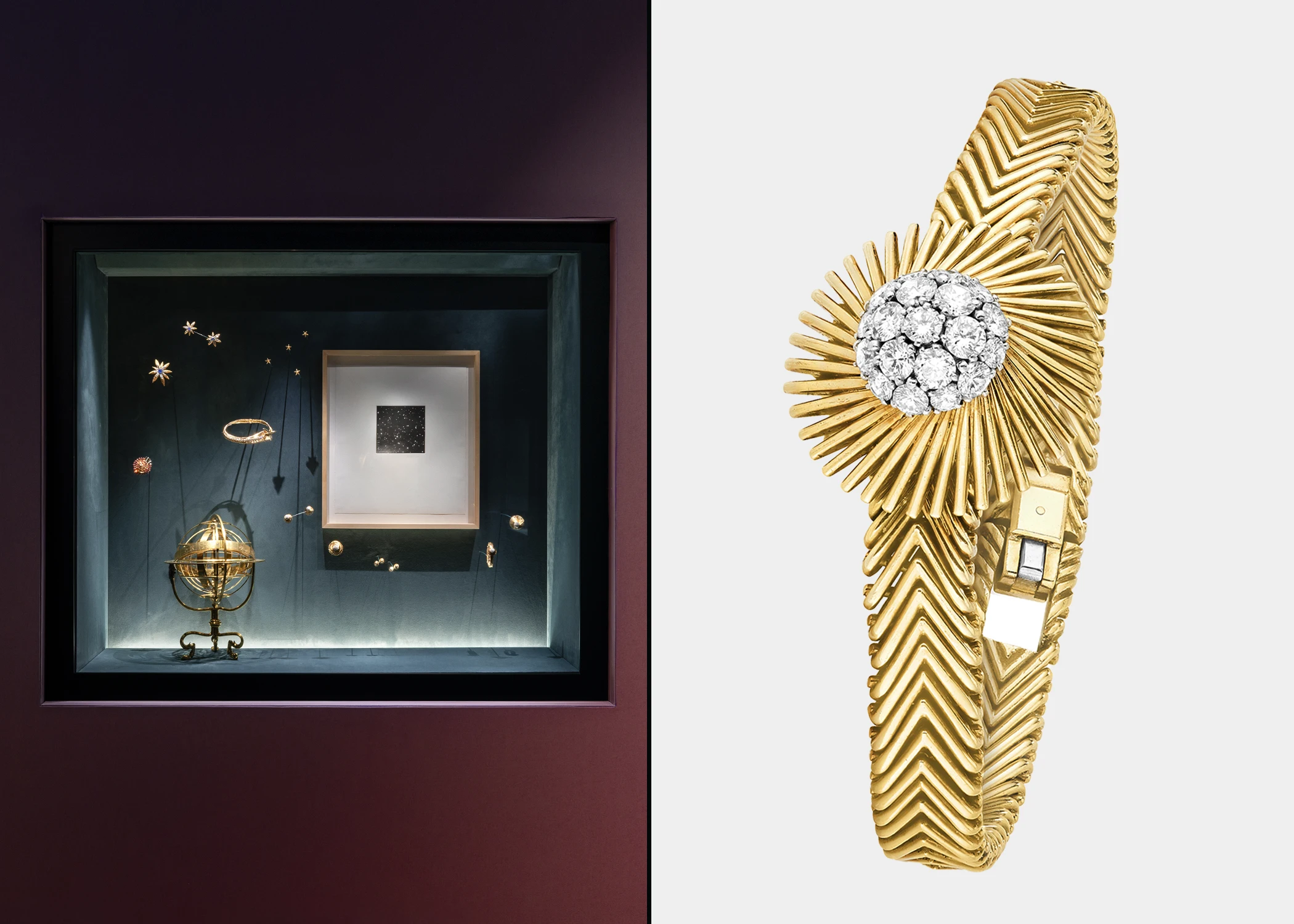
The Ludo, the so-called ‘secret’ wristwatch from 1937, is likely to remind some collectors of this year’s watch fair. A supple link bracelet made up of small, hexagonal elements in polished yellow gold, at the centre of which lies a rectangular dial – concealed behind a diamond-set clasp that only opens when the time is to be read. The first Ludo bracelet, from 1934, was crafted from polished yellow gold ‘briquettes’ arranged in a brick pattern and resembled a belt; its aesthetic found its way from rings, brooches and earrings to the watch itself. At Watches and Wonders 2026, under the theme ‘Poetry of the Heavens’, van Cleef & Arpels has revived the Ludo Secret – based on an archetype from 1949. The link bracelet in mirror-polished yellow gold is now set with sapphires that create a gentle gradient of blue; a trompe-l’œil clasp reveals, when pressed on either side, a guilloché mother-of-pearl dial, crowned by a baguette-cut sapphire at twelve o’clock. CEO Catherine Renier sees this revival as part of the house’s creative continuity: a reinterpretation and reinvention of its own design language.
Credit © Van Cleef & Arpels Collection
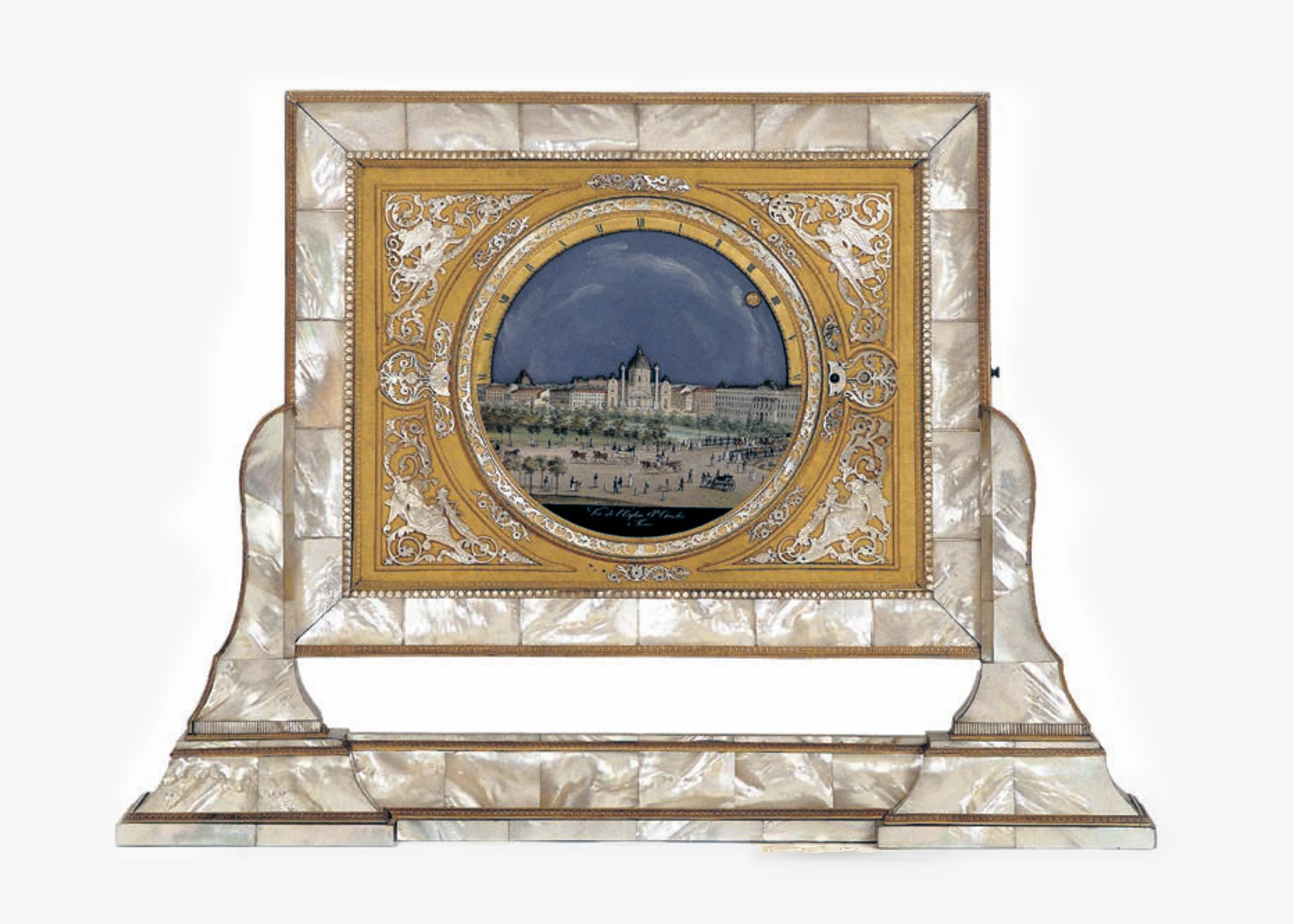
The picture clock depicting St Charles’s Church in Vienna, which was created around 1825, takes things to a whole new level. It is not merely a highlight of the MAK collection, but a total work of art combining the art of clockmaking, painting and precious materials – less an everyday timepiece than a decorative showpiece. The front is almost entirely inlaid with mother-of-pearl and richly decorated with gilded bronze; the corners feature allegorical representations of the seasons, whilst the centre depicts Karlsplatz with St Charles’s Church and the Technical University, a design attributed to Balthasar Wigand. An hour arc spans the painting, on which a movable sun indicates the time by day and a moon by night; inside, a spring-driven movement operates with a quarter-hour repeater and a musical mechanism. Such clocks were true luxury items – larger versions could cost as much as a house. An identical clock was offered for sale in 1825 by Stephan Syré’s haberdashery, located on the Kohlmarkt – the very address where van Cleef & Arpels now operates its Viennese boutique.
Credit © MAK
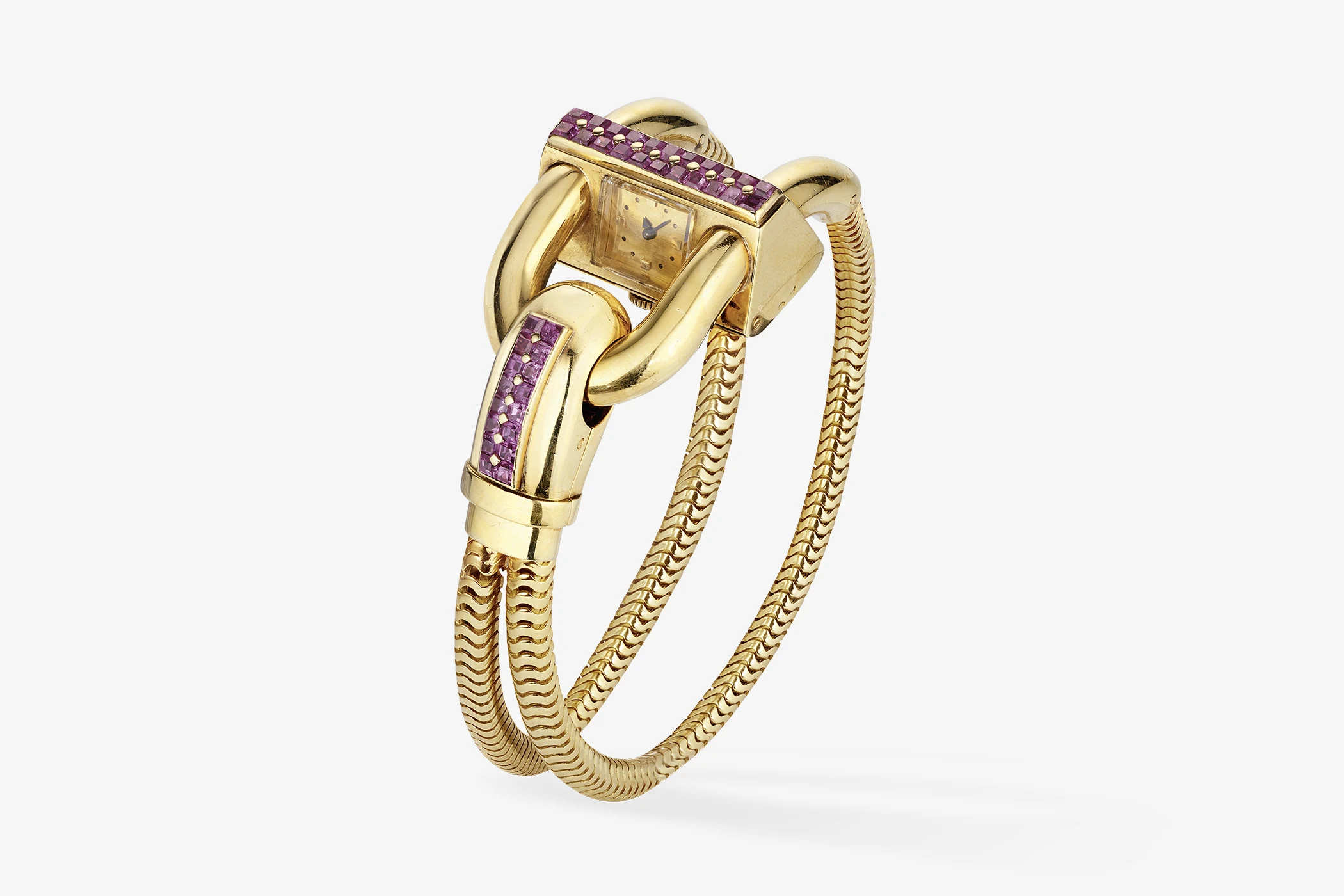
The fact that the Cadenas wristwatches from 1935 have not long since become watch classics may be down to the quartz movement that powers them today. The case is unique; once you’ve seen it, you won’t forget it: the prism-shaped case with a hexagonal base tapers into a curved clasp reminiscent of a padlock; it is encircled by the clasp of a double chain. Initially produced in yellow gold, it soon became available set with sapphires, rubies, diamonds or emeralds, and also in platinum with pavé diamonds. By transposing an everyday object onto a watch, the Cadenas is closely akin to Marcel Duchamp’s readymades and the Surrealists – one need only think of the shoe-hat designed by Elsa Schiaparelli with Salvador Dalí in 1937. Its key feature: the dial, which is turned towards the wrist, allows the wearer to “glance at the time discreetly”. To this day, the Cadenas – in ever-changing variations – remains a permanent fixture in the collection.
Credit © Van Cleef & Arpels Collection
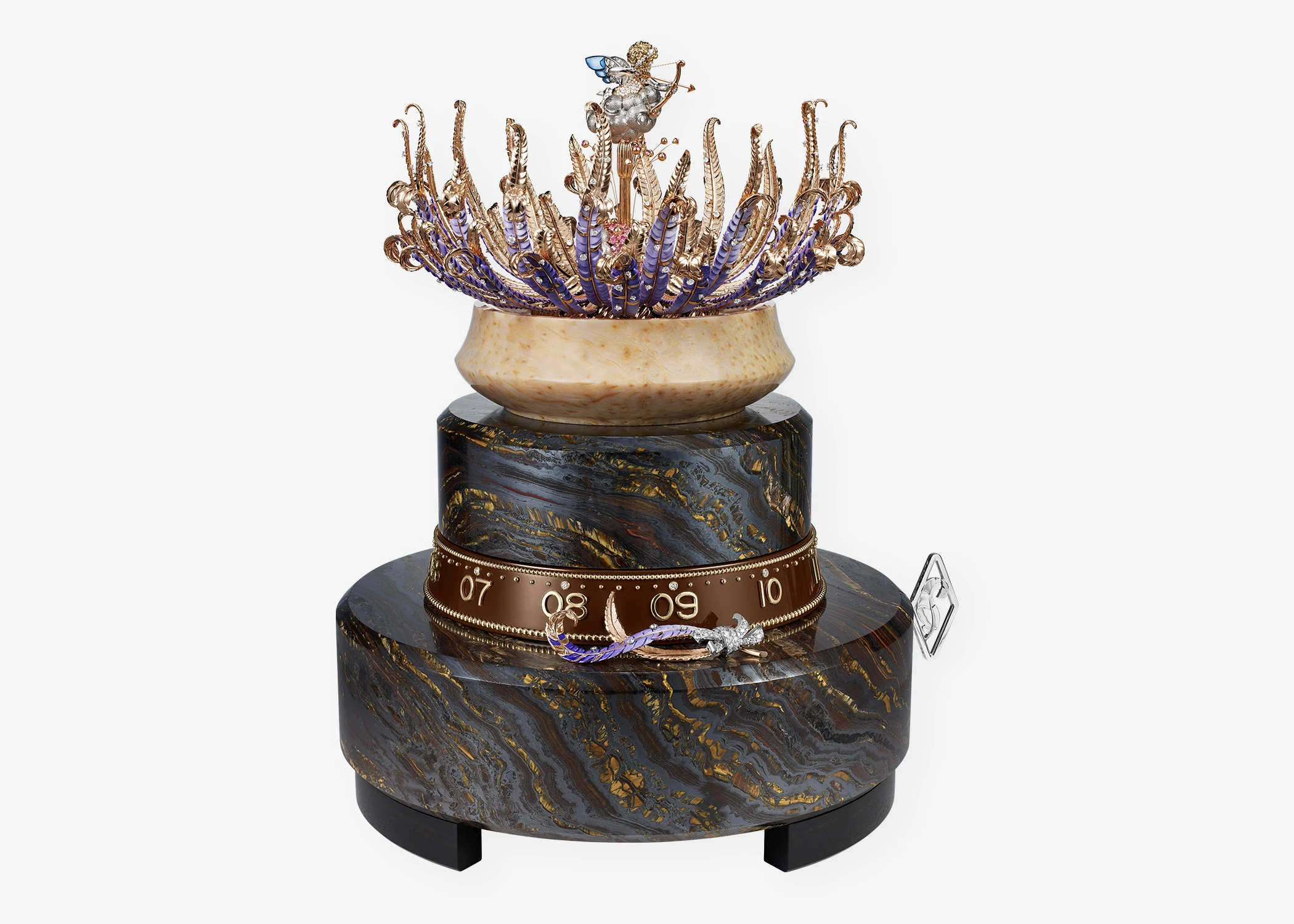
No Van Cleef & Arpels exhibition would be complete without a musical box automaton by François Junod: perhaps the spirit of the exhibition is most clearly embodied in a famous automaton created as part of a long-standing collaboration with the Swiss automaton-maker François Junod from Sainte-Croix. Junod, one of the last masters of his craft, has been working on the Maison’s Extraordinary Objects since 2017 – from the Fée Ondine to the Fontaine aux Oiseaux and the Naissance de l’Amour. The history of automata is closely intertwined with the development of the watch and the mastery of mechanics; here, in the labyrinth, it literally and audibly bridges the gap between jewellery and timekeeping.
Credit © Van Cleef & Arpels Collection
Even though this exhibition is not entirely centred on timepieces, for a true watch enthusiast it need not always – or even primarily – be about watches. Particularly in an exhibition that engages so deeply with the spirit of the times and contemporary history, it is quite clearly sufficient to focus on the most beautiful dimension of time: the question of how things manage to stand the test of time – or to epitomise their era. A Zip from 1955, a Mystery Set from 1936, a Viennese picture clock from 1825: they have all stood the test of time because craftsmanship, creativity and ethos have become an inseparable whole.
Credit © Van Cleef & Arpels Collection
Anyone who explores this question in the MAK’s labyrinth will leave the exhibition not only with a few splendid mementos to take home, but also with a keener sense of which watches they might want to take a closer look at in future. Sometimes, you rediscover your passion for collecting – or, as it’s also known, wanderlust – in the very place you least expect it.
Credit © Van Cleef & Arpels Collection
MAK – Museum of Applied Arts, Stubenring 5, 1010 Vienna. The exhibition GLANZSTÜCKE. Van Cleef & Arpels High Jewellery × Masterpieces from the MAK Collection runs until 27 September 2026.
Opening hours: Tuesday 10 am–9 pm · Wednesday to Sunday 10 am–6 pm · Closed on Mondays (open on public holidays).
Admission: standard €18 (online) or €19 (at the door); concessions €14.50 / €15.50 (including students under 27 and people aged 65 and over); Tuesdays from 6 pm to 9 pm €8.50 / €9.50; free admission for children and young people under 19. Tickets and information at mak.at.
Credit © MAK/Georg Mayer | © MAK/Nathan Murrell