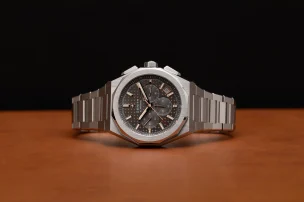
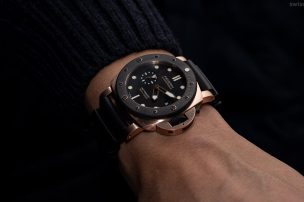
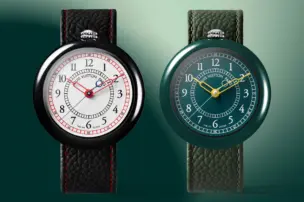
The Louis Vuitton Monterey is available in black and green ceramic. It draws on the 1988 design and is powered by the LFT MA01.02 calibre.
Ferrari and Girard-Perregaux were linked by far more than a traditional brand collaboration. From a little-known bespoke piece for Enzo Ferrari to three unique tourbillons for Michael Schumacher, Jean Todt and Gino Macaluso, they created watches that translated motorsport history into mechanics, colours and forms. A visit to the Girard-Perregaux Heritage Archive brought some of the rarest examples back into the spotlight.
The official collaboration between Girard-Perregaux and Ferrari began in 1994. However, its origins stretch back almost three decades – to an unusual commission from Enzo Ferrari himself. What followed was a partnership in which two worlds came together that share a surprising amount in common: technical precision, uncompromising performance and a keen sense of design.
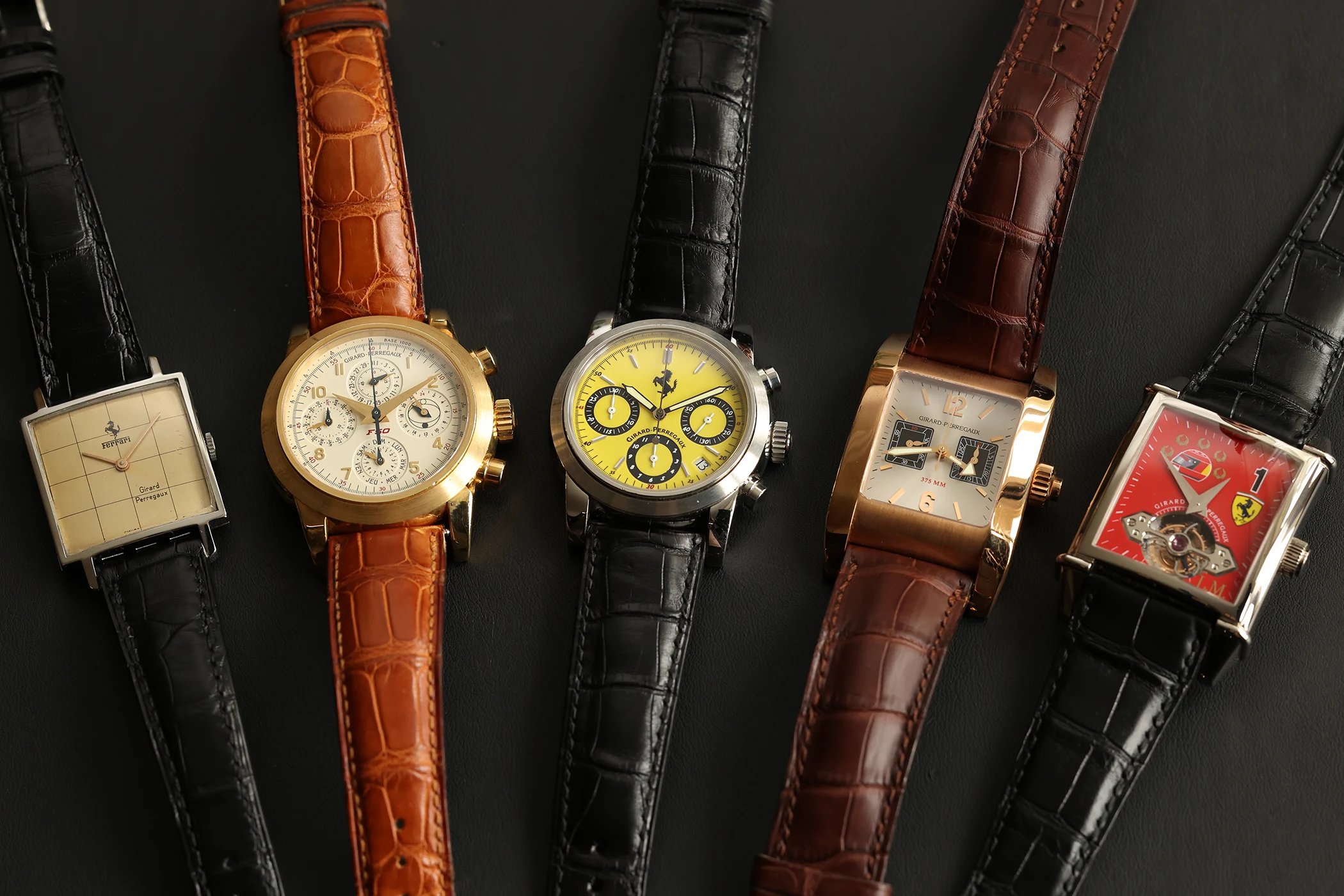
In Girard-Perregaux’s Heritage Archive in Switzerland, we were able to view some of the most extraordinary artefacts from this collaboration. Five models tell the story of almost four decades of shared history.
As early as 1965, Enzo Ferrari commissioned an exclusive small-batch run of the Girard-Perregaux ‘Damier’. There was no official link between the two companies at the time – which makes his deliberate choice of the Swiss manufacturer all the more fascinating.
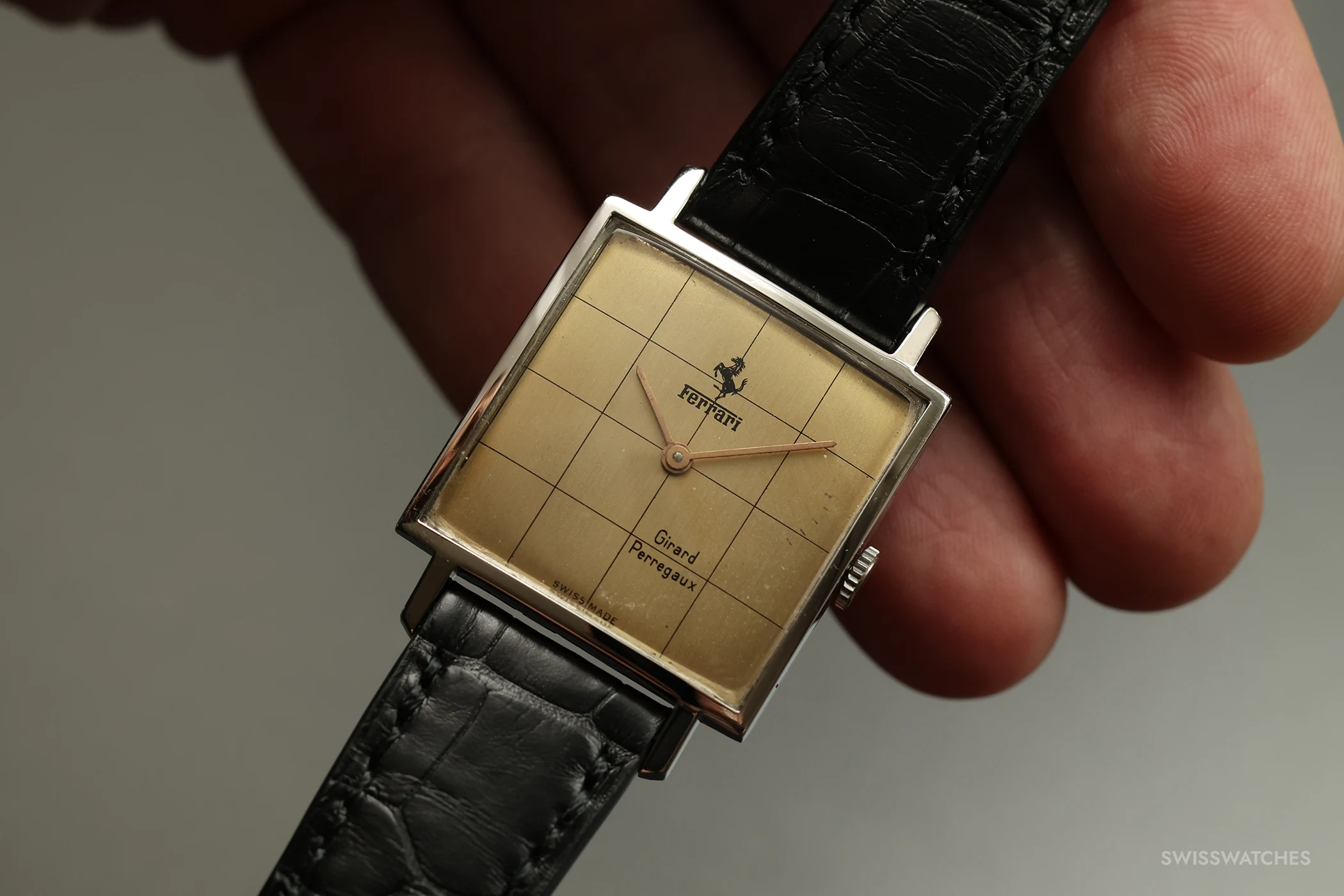
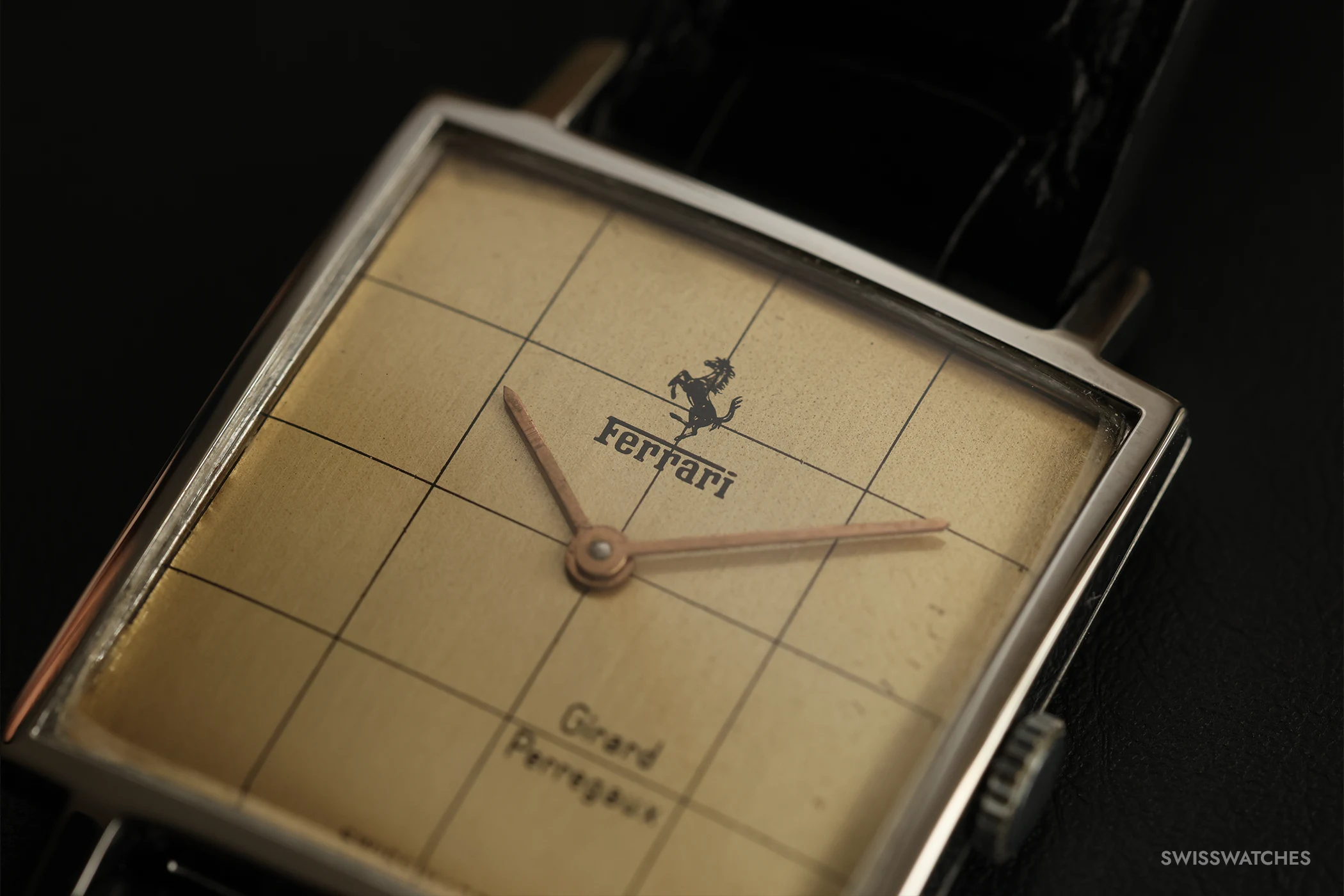
The ‘Damier’ was one of the most popular Girard-Perregaux models of the 1960s. Its distinctive, index-free dial features a geometric pattern that reminded Enzo Ferrari of the black-and-white chequered flag at a Grand Prix. Around 50 examples were personalised with the Ferrari emblem and subsequently presented as gifts to selected racing drivers and close associates.
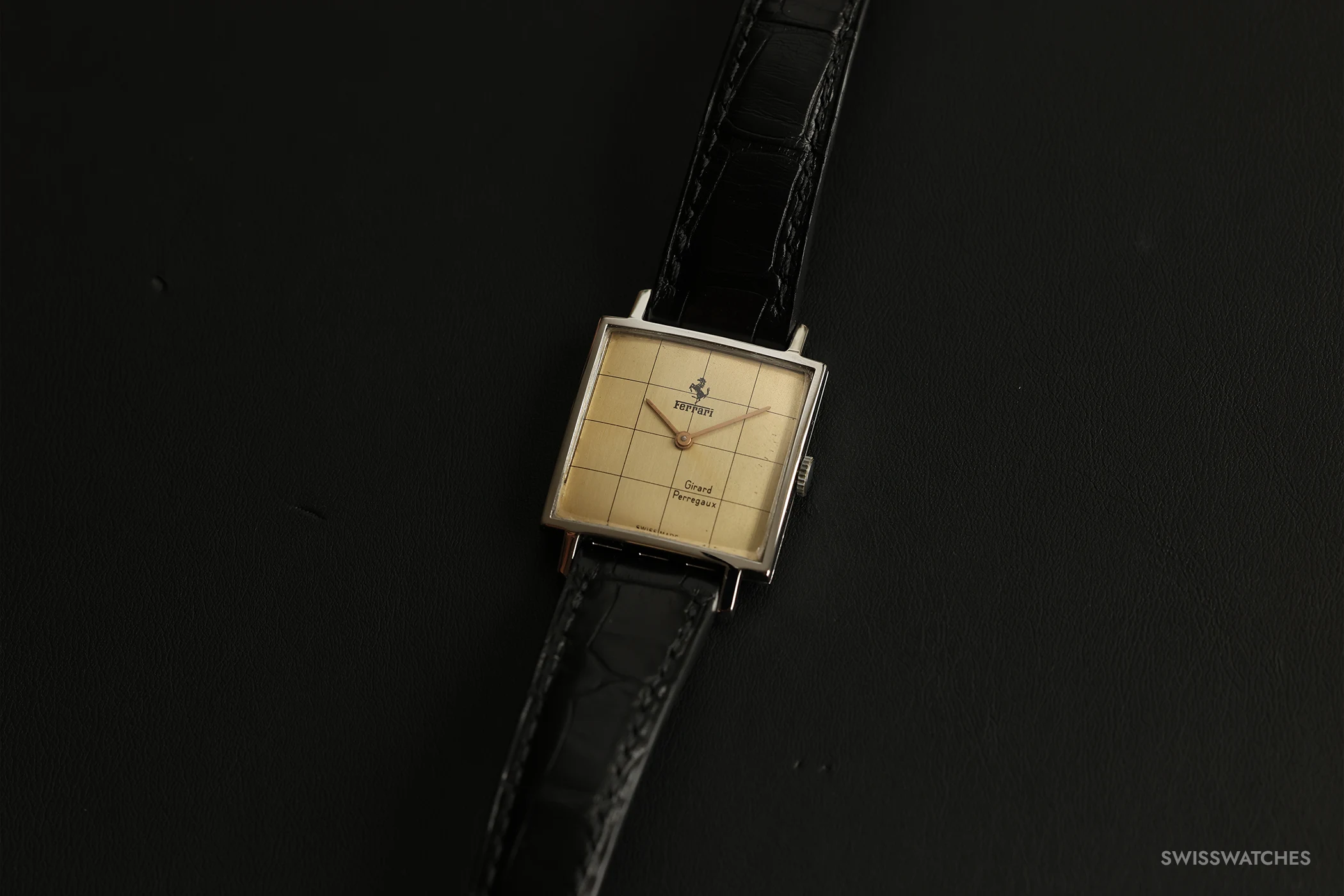
In technical terms, the rectangular steel watch remained distinctly classic. A hand-wound movement for hours and minutes, the simple leather strap and the unusual dial made it a watch of understated elegance. Today, the ‘Damier’ is not only an extremely rare collector’s item, but also the earliest result of the collaboration between Ferrari and Girard-Perregaux.
Almost three decades later, this early connection developed into an official partnership. It was driven forward in a decisive manner by Gino Macaluso, then owner and CEO of Girard-Perregaux, and Jean Todt, who led Ferrari into a new era as General Manager and Team Principal of the Scuderia.
One of the most technically sophisticated outcomes of this partnership was the ‘Girard-Perregaux pour Ferrari’ F50 chronograph, reference 9025, unveiled in 1996. With the Ferrari F50, unveiled in 1995, the brand heralded its 50th anniversary – due to take place in 1997 – two years in advance.
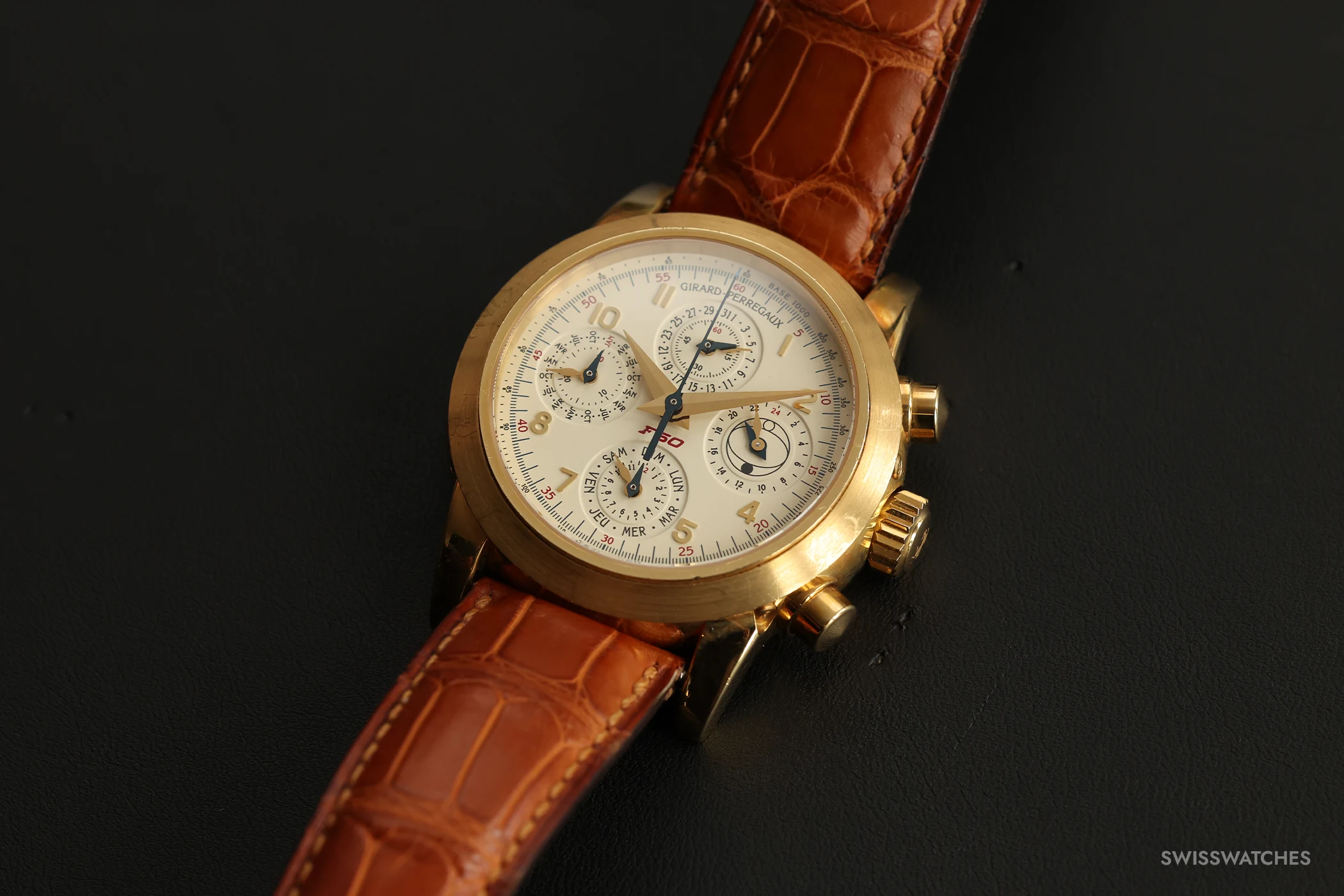
The model shown here features a 40-millimetre rose gold case and a cream-coloured dial. Inside, it is powered by the automatic Calibre 3170, which combines a chronograph with a perpetual calendar, a small seconds hand and a power reserve of at least 46 hours.
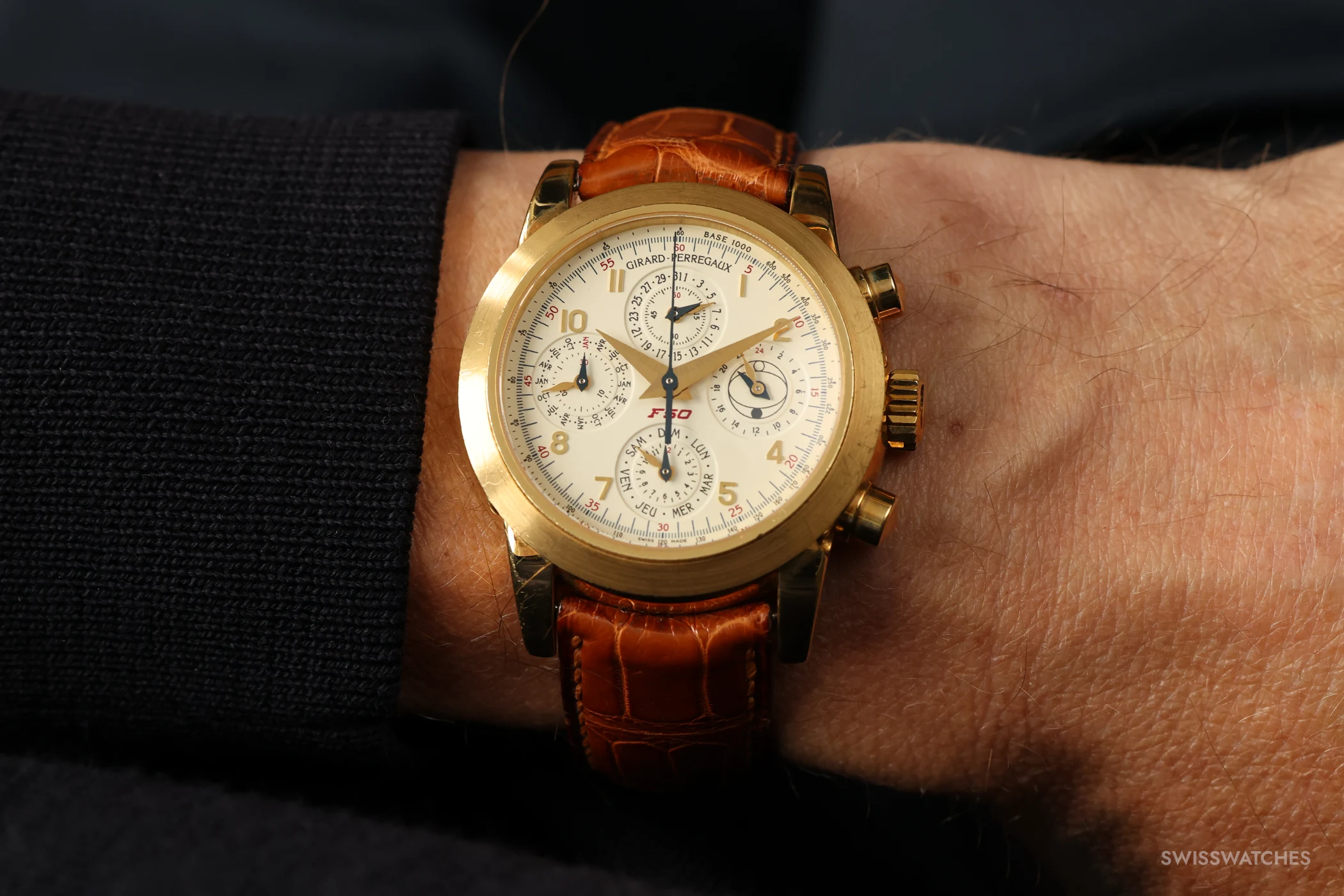
The first series comprised exactly 349 pieces – corresponding to the number of Ferrari F50s built at the time. These watches were initially reserved exclusively for owners of the supercar and were often numbered to match the chassis number of their car. Due to high demand, a further 250 pieces were eventually produced. A total of 599 pieces were thus produced in titanium, yellow and rose gold, and platinum.
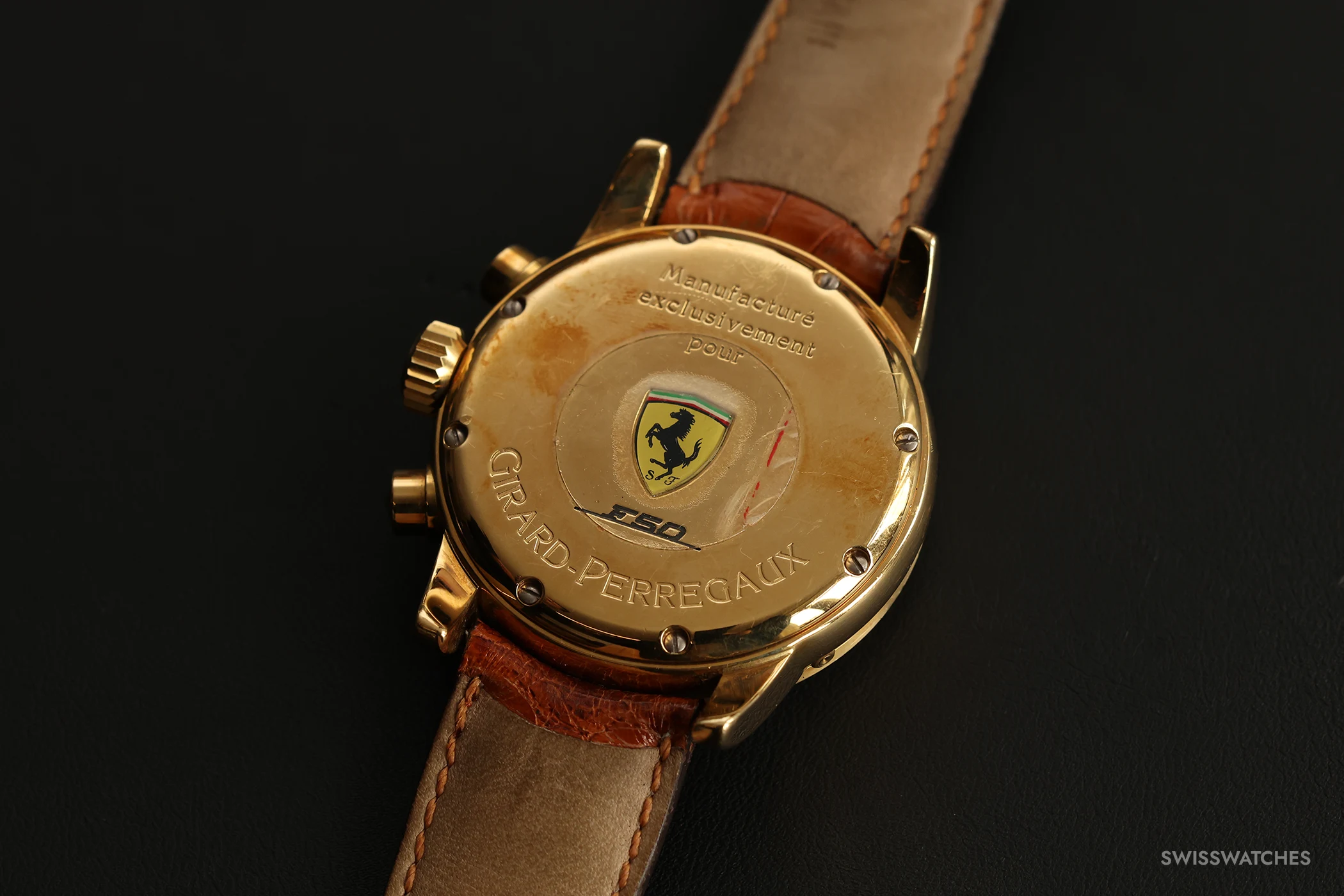
The presentation was also exceptional: each watch was delivered in a specially designed box featuring a built-in watch winder and a special pen for adjusting the recessed pushers.
Whilst the F50 remained deliberately exclusive, the 8020 chronograph, launched in 1997, went on to become the most successful model of the entire collaboration. It is estimated that around 50,000 pieces were produced.
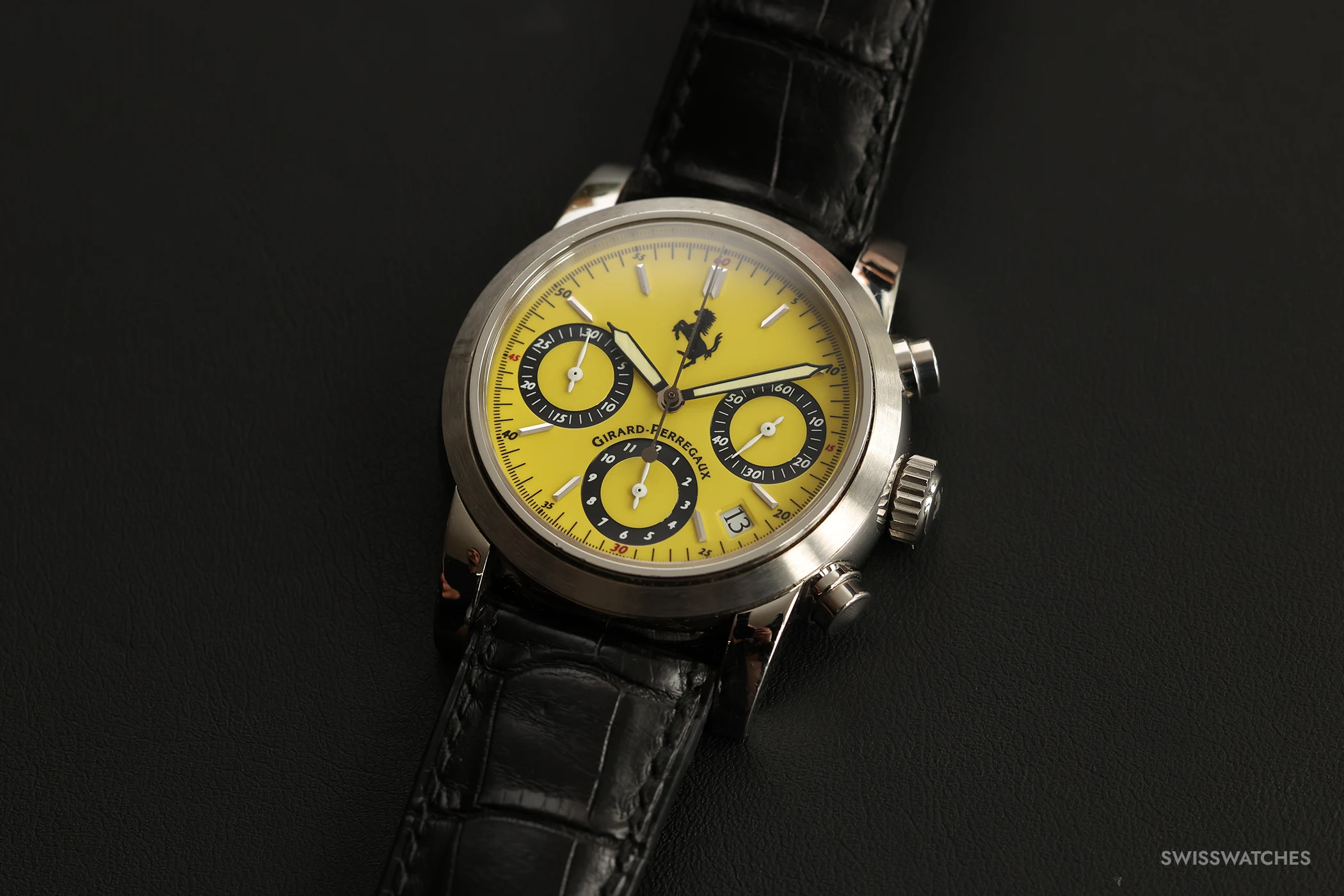
With its 38-millimetre stainless steel case and automatic Calibre 2280, the chronograph boasts proportions that are quite classic, even by today’s standards. In addition to the stopwatch function, the movement features a small seconds dial and a date window at four o’clock.
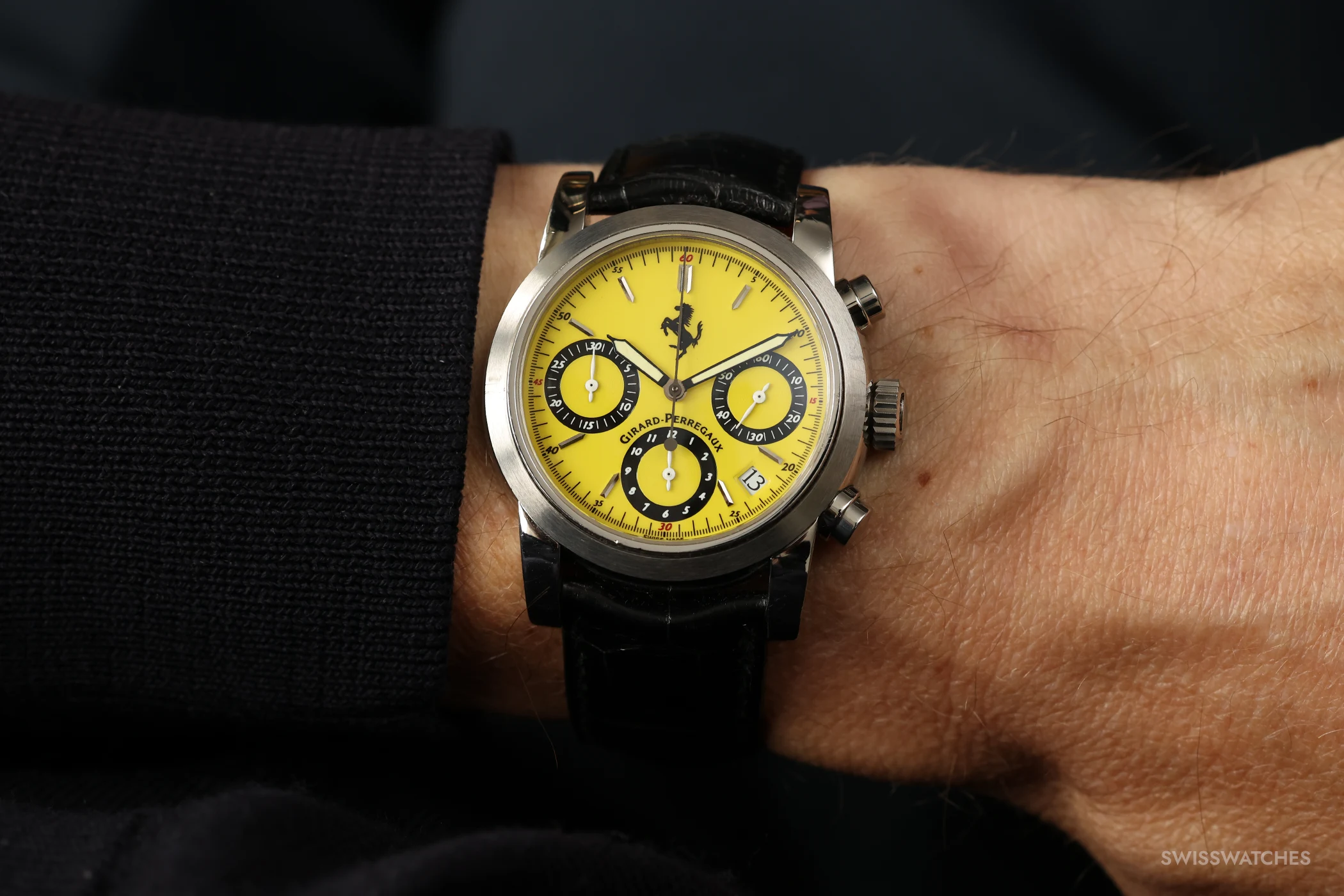
The model from the Heritage Archive features a bright yellow dial bearing the Cavallino Rampante. The shade is inspired by the ‘Giallo’ of the Ferrari emblem. Variants in red, blue, white and black were also produced. With a price at the time of 2,950 Swiss francs for the steel version, the Reference 8020 was comparatively affordable – and brought the partnership to the attention of a much wider circle of Ferrari and watch enthusiasts.
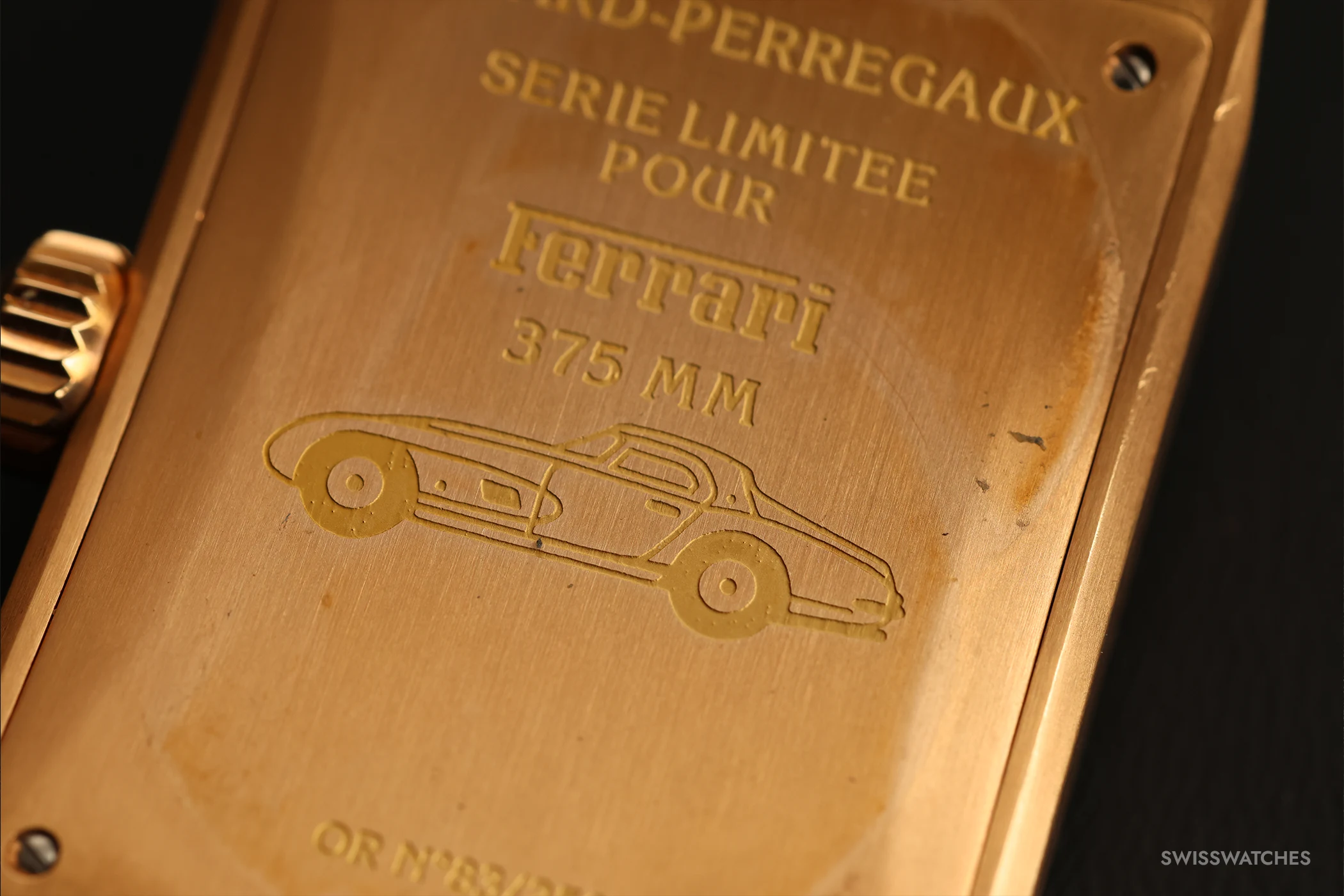
In 2002, Girard-Perregaux dedicated a watch to one of the most elegant one-off Ferraris: the 375 Mille Miglia, which Pininfarina had designed in 1954 on behalf of film director Roberto Rossellini for his wife, Ingrid Bergman. Only a single car was ever built. Its understated light-grey paintwork later became known as ‘Grigio Ingrid’.
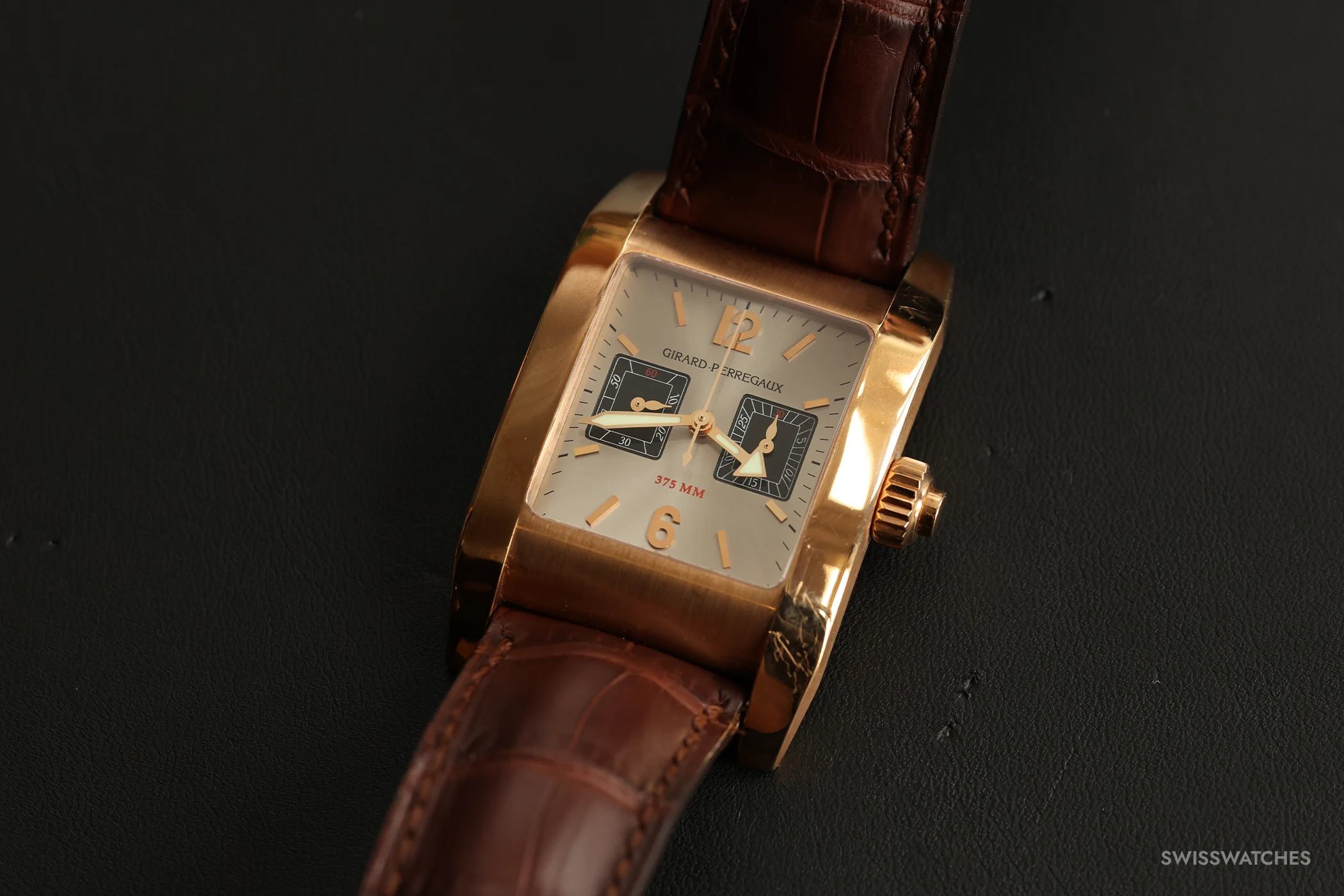
The 375 MM Mono-Pusher Chronograph, limited to 375 pieces, is accordingly fitted with a dial in this colour. Gold-plated hour markers and two anthracite-coloured sub-dials complement the subtle shade of grey. The 30 x 45-millimetre rose gold case, with its rectangular shape, echoes the elegant design language of the Vintage 1945 collection.
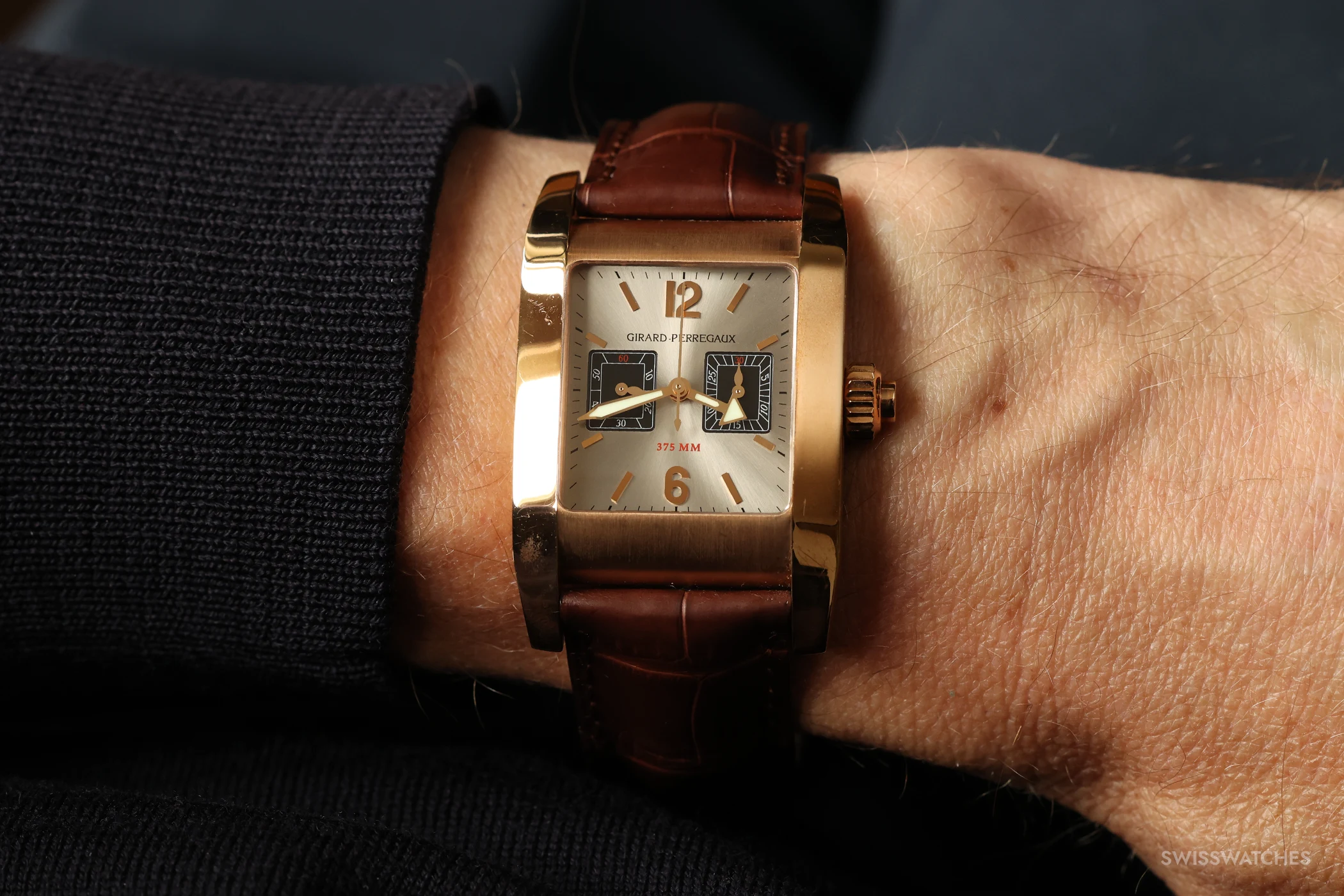
Inside, the hand-wound column-wheel calibre GP E03C0 operates with a 38-hour power reserve. All chronograph functions are operated via a single pusher integrated into the crown.
The highlight of the collaboration is the 2004 Vintage 1945 Ferrari Tourbillon, reference 99850. That year marked the tenth anniversary of the official partnership – and it was also the year Michael Schumacher had just won his fifth consecutive Formula 1 world championship title with Ferrari.
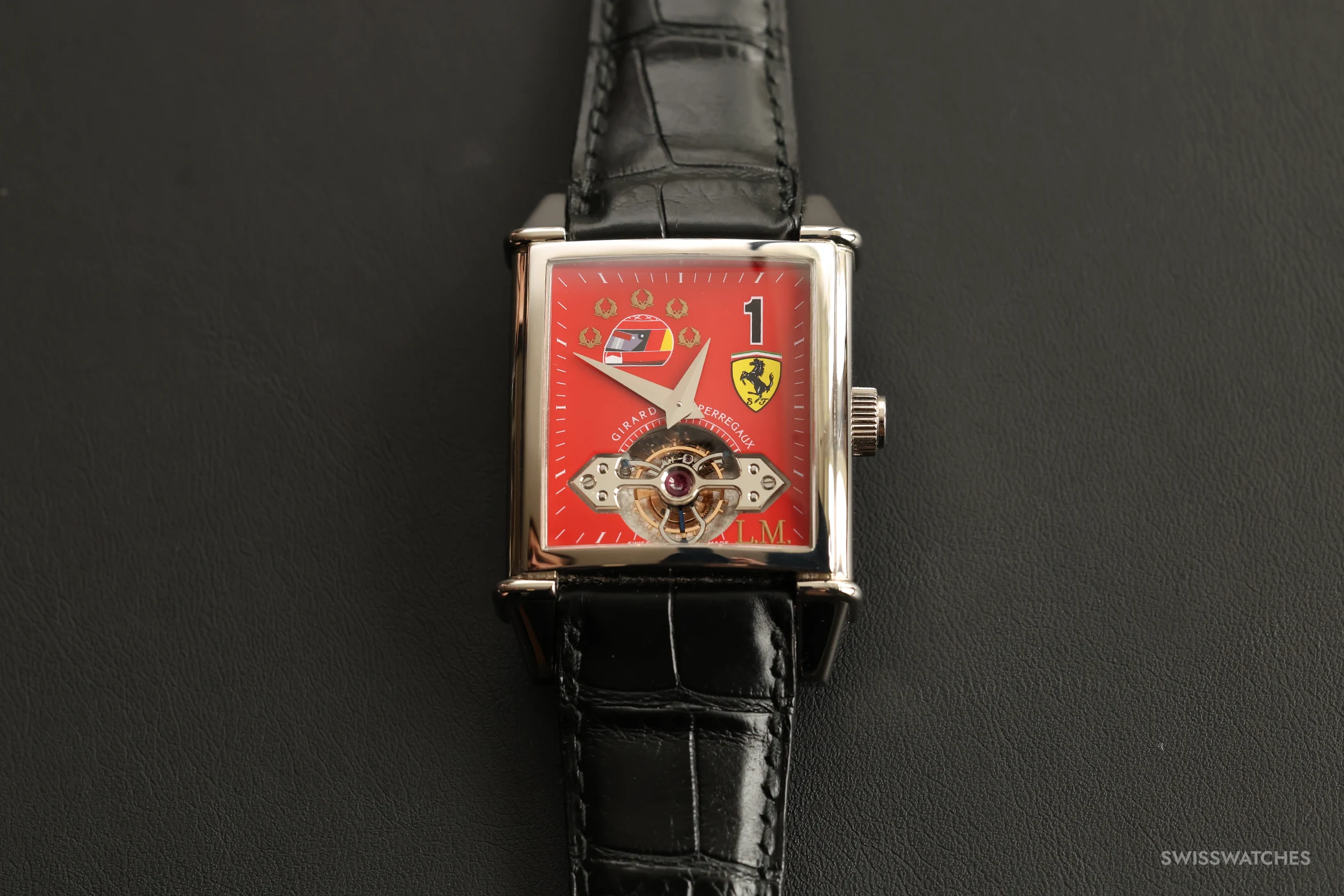
To mark the occasion, Gino Macaluso had three identical prototypes made: one for Schumacher, one for Jean Todt and one for himself. The rectangular watches feature a gold-plated brass case, an alligator leather strap and Girard-Perregaux’s signature hand-wound Gold Bridge Tourbillon.
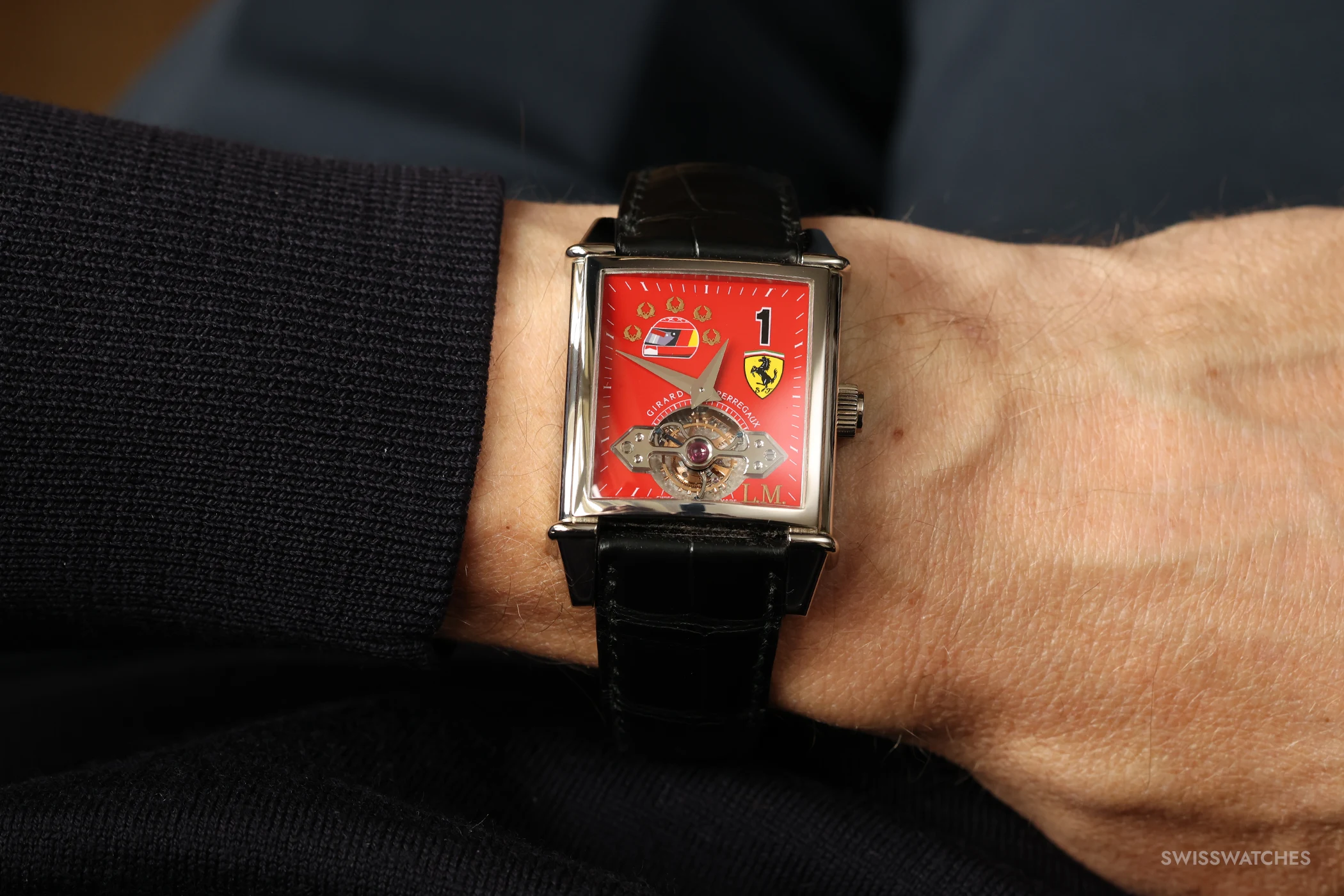
The dial in Ferrari’s ‘Rosso Corsa’ red is particularly striking. Alongside various Ferrari symbols, it features helmet motifs, each surrounded by five stars. These represent Schumacher’s five consecutive world championships between 2000 and 2004.