Ludwig Oechslin discusses the Freak, mechanical complexity, lost knowledge and why a watch is always a means of communication.

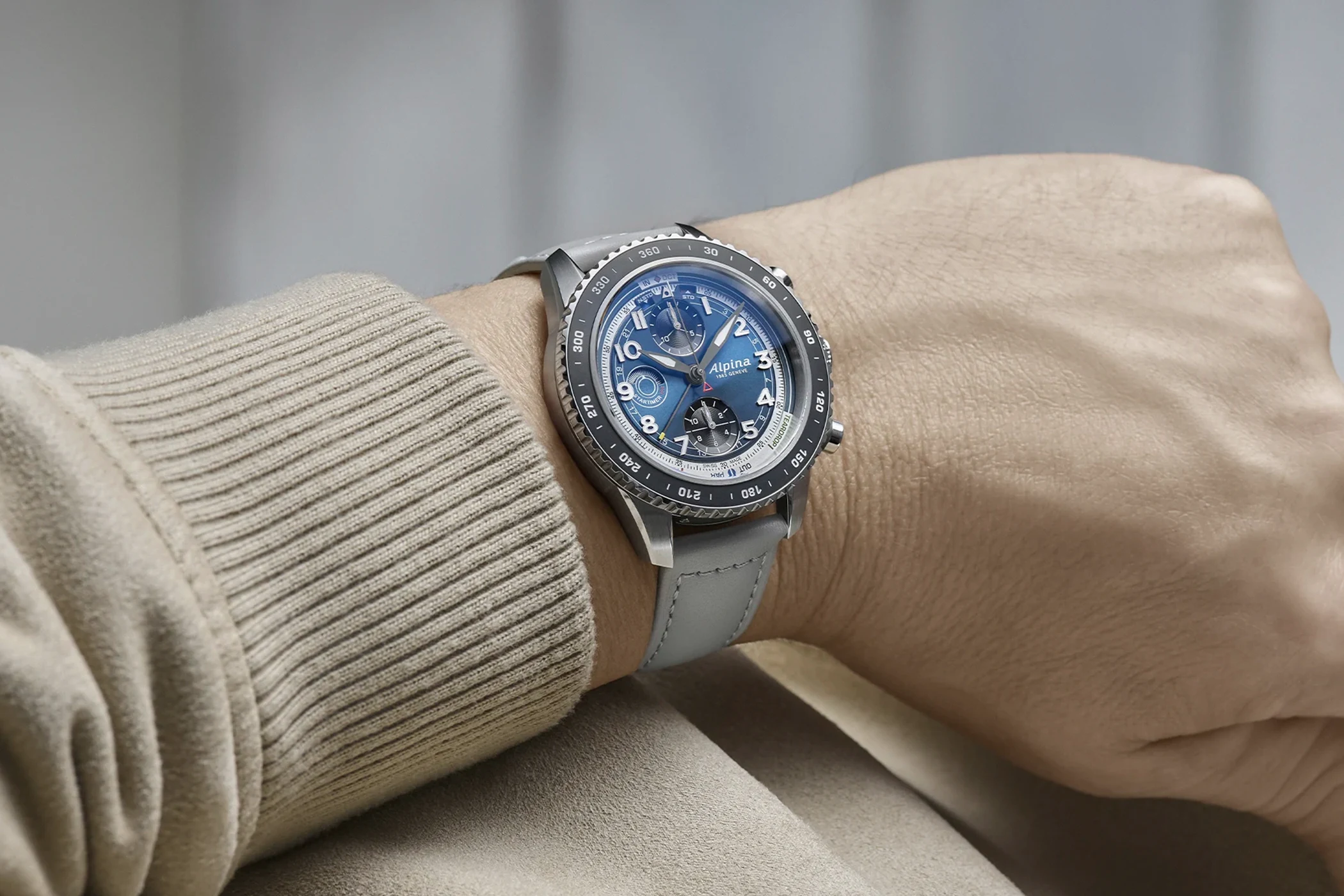
The Watch Angels x Alpina Startimer Pilot Chronograph IFR is not just another pilot’s watch content with large numerals, luminescent markings and a cockpit-inspired design. According to all currently available public information, it is the first mechanical wristwatch to use two aviation-specific indicators to show how an aircraft correctly enters an IFR holding pattern.
In this article, you can find out exactly how the watch works and what its complication entails.
An aeroplane is approaching its destination airport. In the cockpit, preparations for the approach are complete; the crew knows which route to fly and is waiting for the next clearance from air traffic control. But instead of being guided straight towards the runway, they receive a completely different instruction: the aeroplane is to enter a holding pattern first.
To passengers, this usually just feels as though the aircraft is doing a quick loop. In reality, however, the aircraft is not following just any random flight path: it is flying a precisely defined oval route, known as a holding pattern. You can think of it as a sort of roundabout in the sky: aircraft wait there in an orderly fashion until they are cleared by air traffic control. This may be necessary if there is too much traffic ahead of the airport, bad weather is causing delays, or more distance between aircraft is required at short notice.
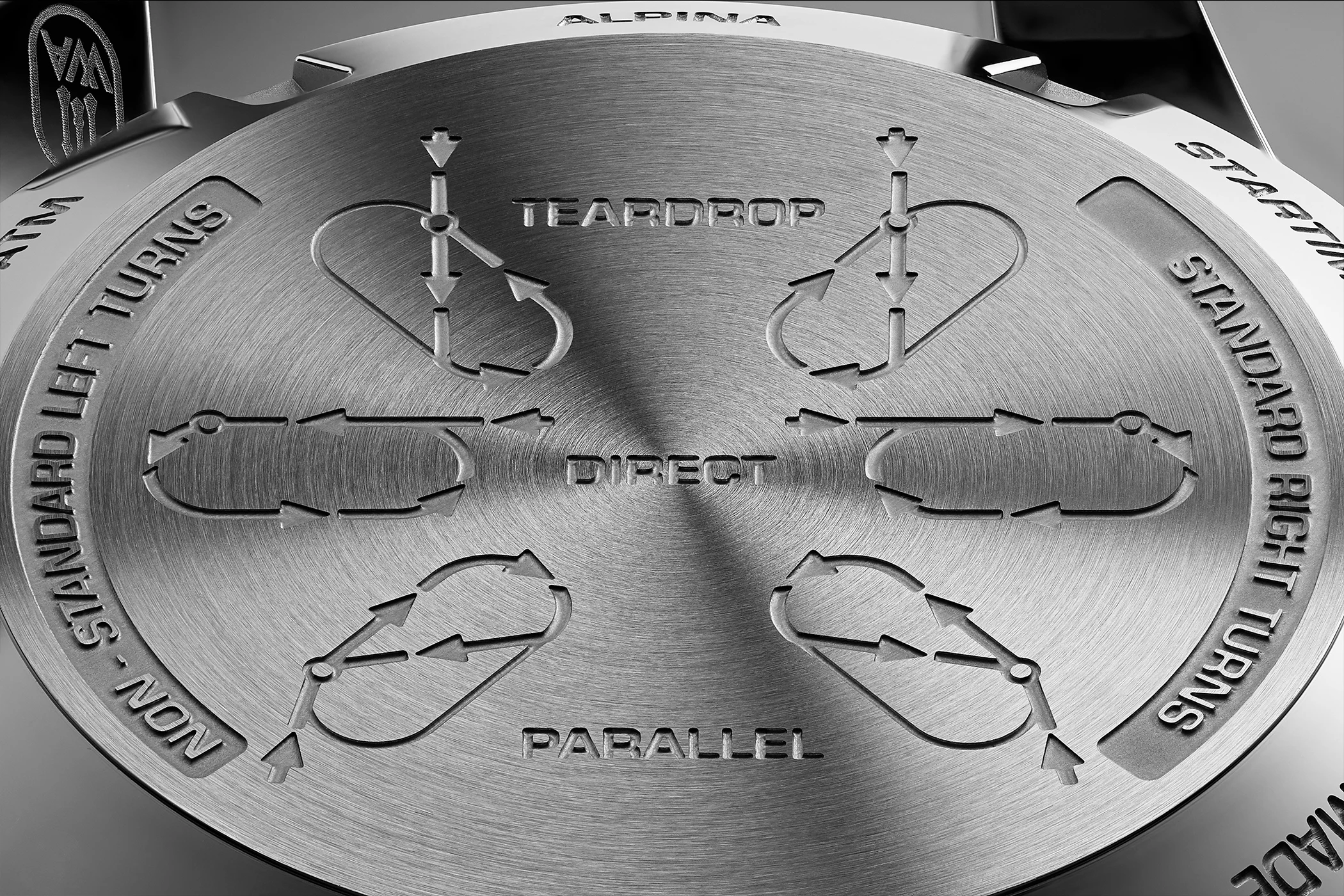
For pilots, however, the real challenge begins even before they enter the holding pattern: they must decide on the best way to fly into this oval-shaped holding pattern. An aircraft rarely arrives at the designated point, known as the ‘fix’, from the perfect direction. Depending on the approach angle, the correct path leads straight in, via a teardrop-shaped loop, or initially parallel to the subsequent route. These three recommended procedures are known as ‘Direct’, ‘Teardrop’ and ‘Parallel Entry’.
This is how the watch’s actual function stems from the initial flight situation: because the correct entry into the holding pattern depends on the direction from which the aircraft approaches it, two pieces of information are required. The prescribed heading for the holding pattern is shown on the IFR chart, whilst the pilot reads the current heading towards the waypoint from the heading indicator in the cockpit. The Watch Angels x Alpina Startimer Pilot Chronograph IFR mechanically correlates precisely these two values – and determines whether a Direct, Teardrop or Parallel Entry is the correct route into the holding pattern.
IFR stands for Instrument Flight Rules – flying using instruments, charts and clearly defined procedures, rather than relying primarily on visual reference outside the aircraft. This becomes relevant whenever weather, heavy traffic or complex approaches demand a particularly precise sequence of manoeuvres. In this system, a holding pattern is a published, oval-shaped holding circuit in the sky: the aircraft remains within a defined area until air traffic control clears the next step. It is precisely this simple, standardised logic that makes the holding pattern an interesting candidate for mechanical translation.
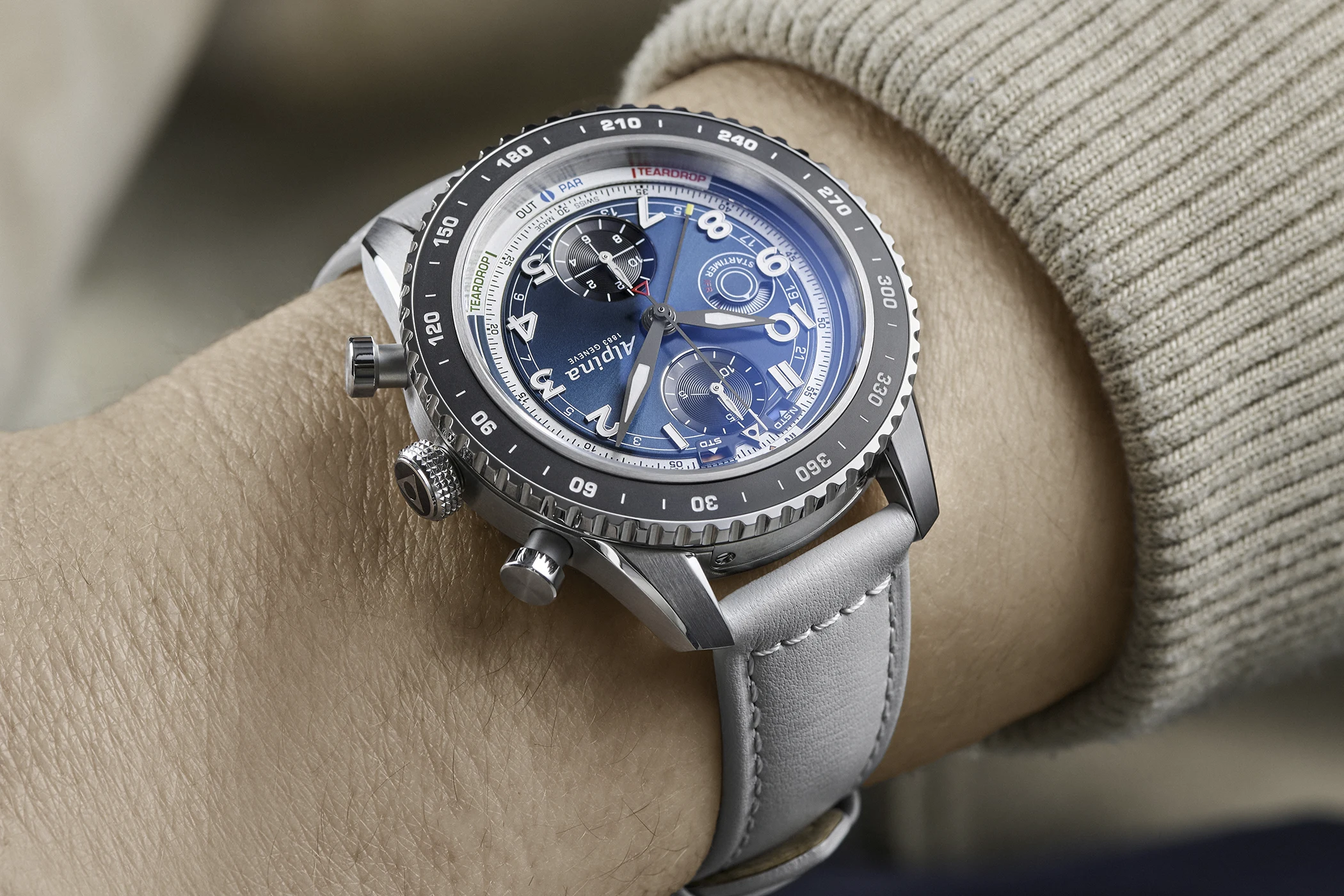
The watch was developed by Watch Angels in collaboration with Alpina and is limited to 300 pieces. This brings together two distinct roles: Watch Angels acts as a Swiss development studio for special watch projects, whilst Alpina contributes the Startimer, the ideal base model for a pilot’s watch, to the project. This limited edition is therefore not a conventional co-branding venture, but rather a joint development project: Watch Angels provides the concept and the case mechanics, whilst Alpina contributes the framework and the foundation of an established pilot’s watch range.
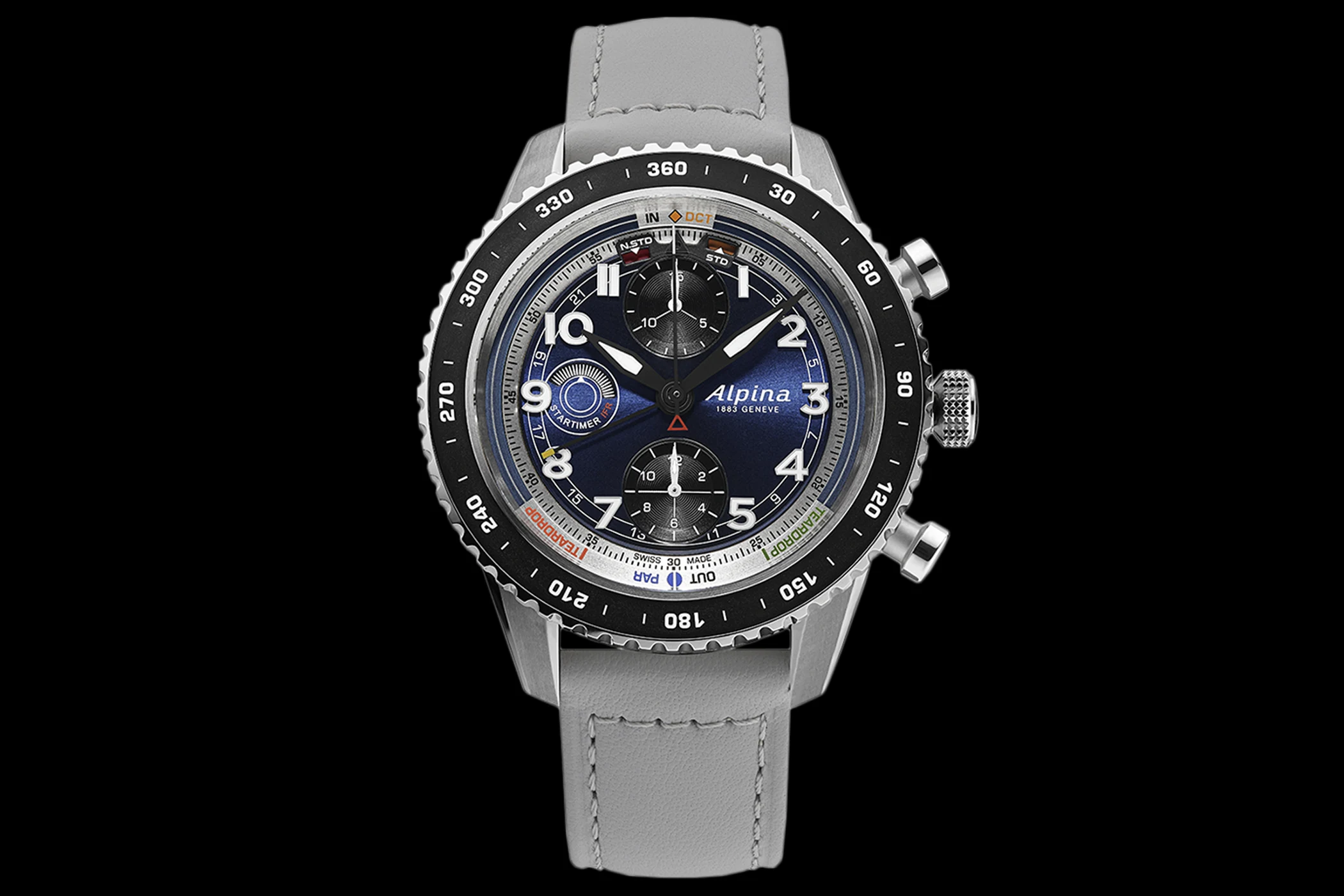
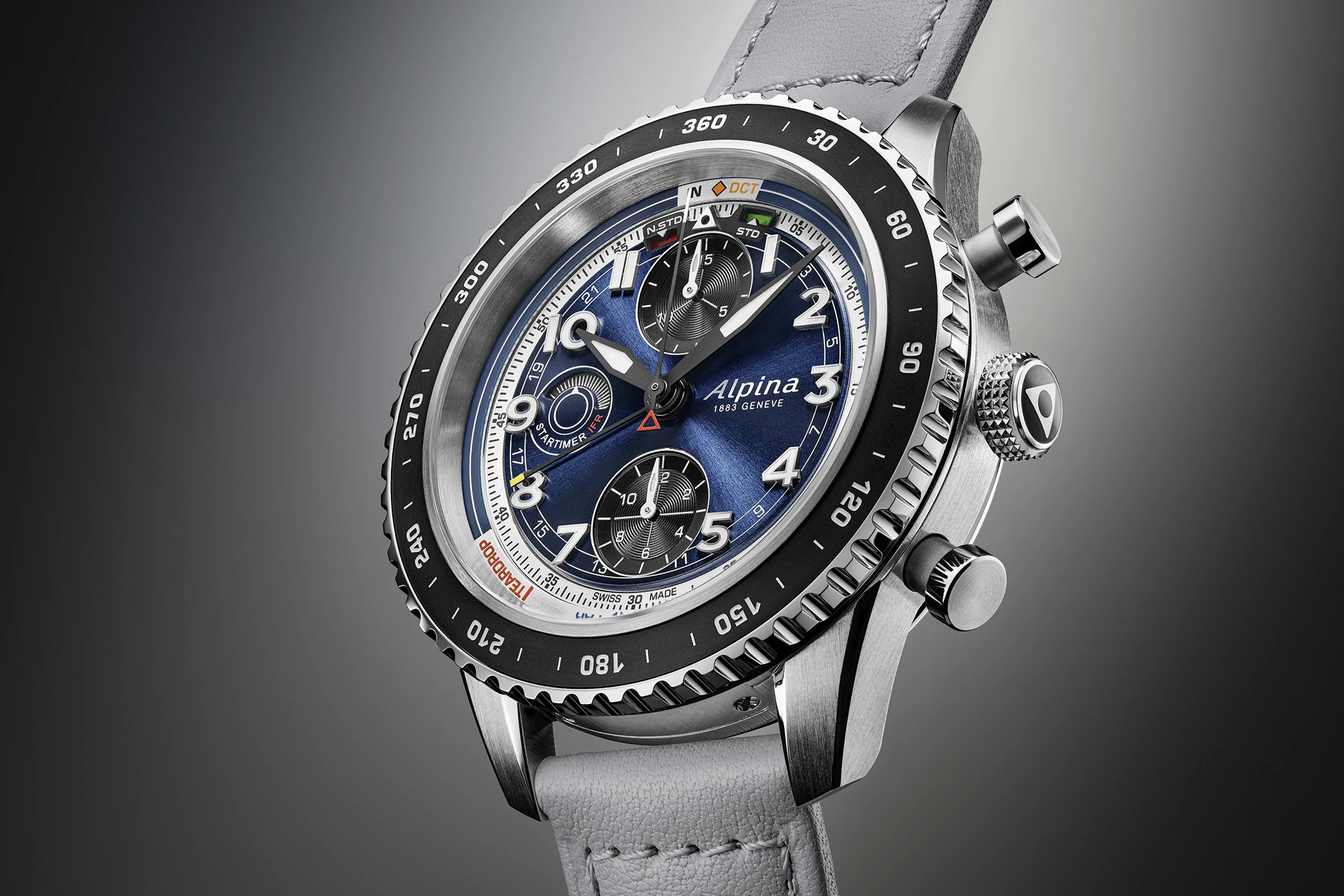
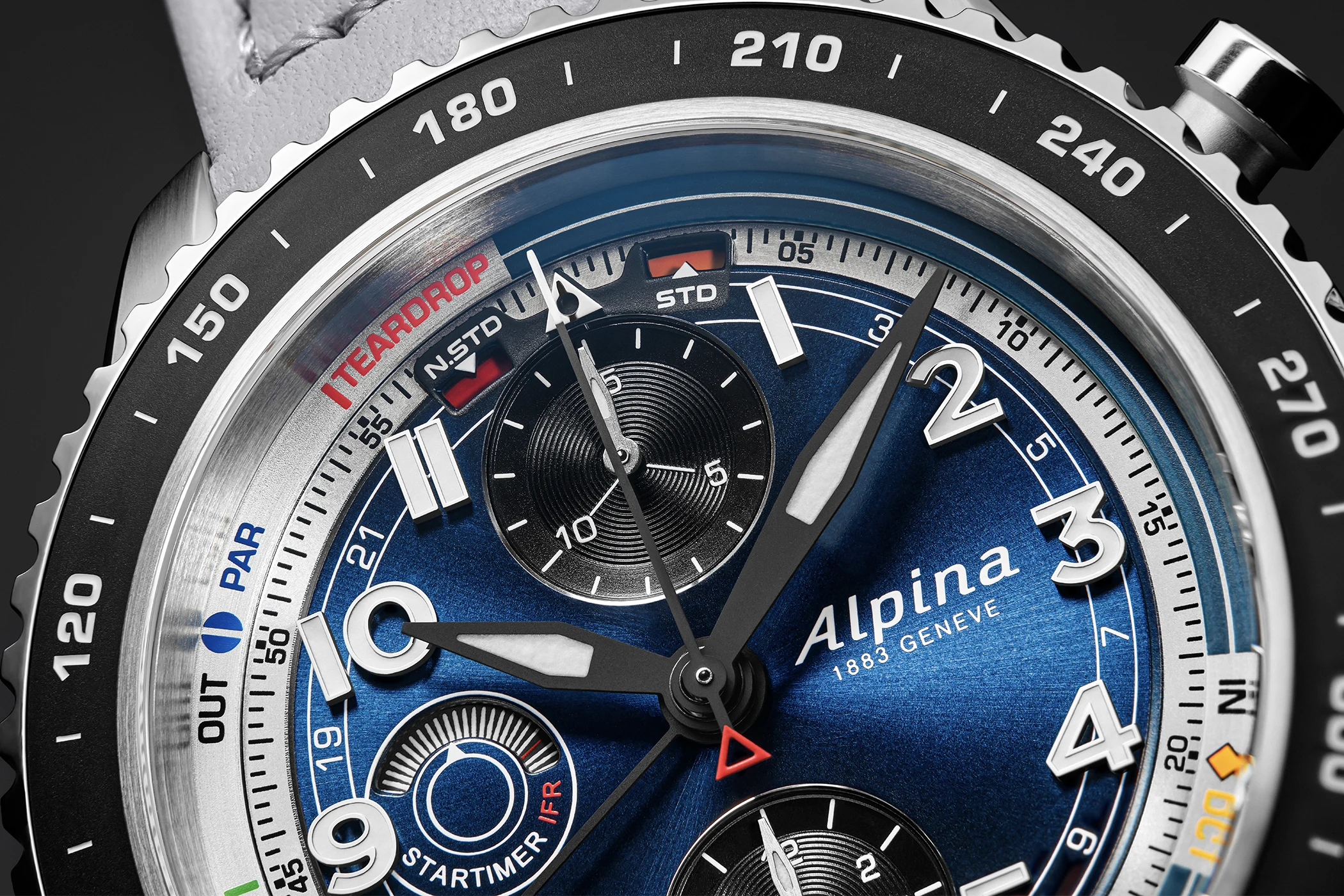
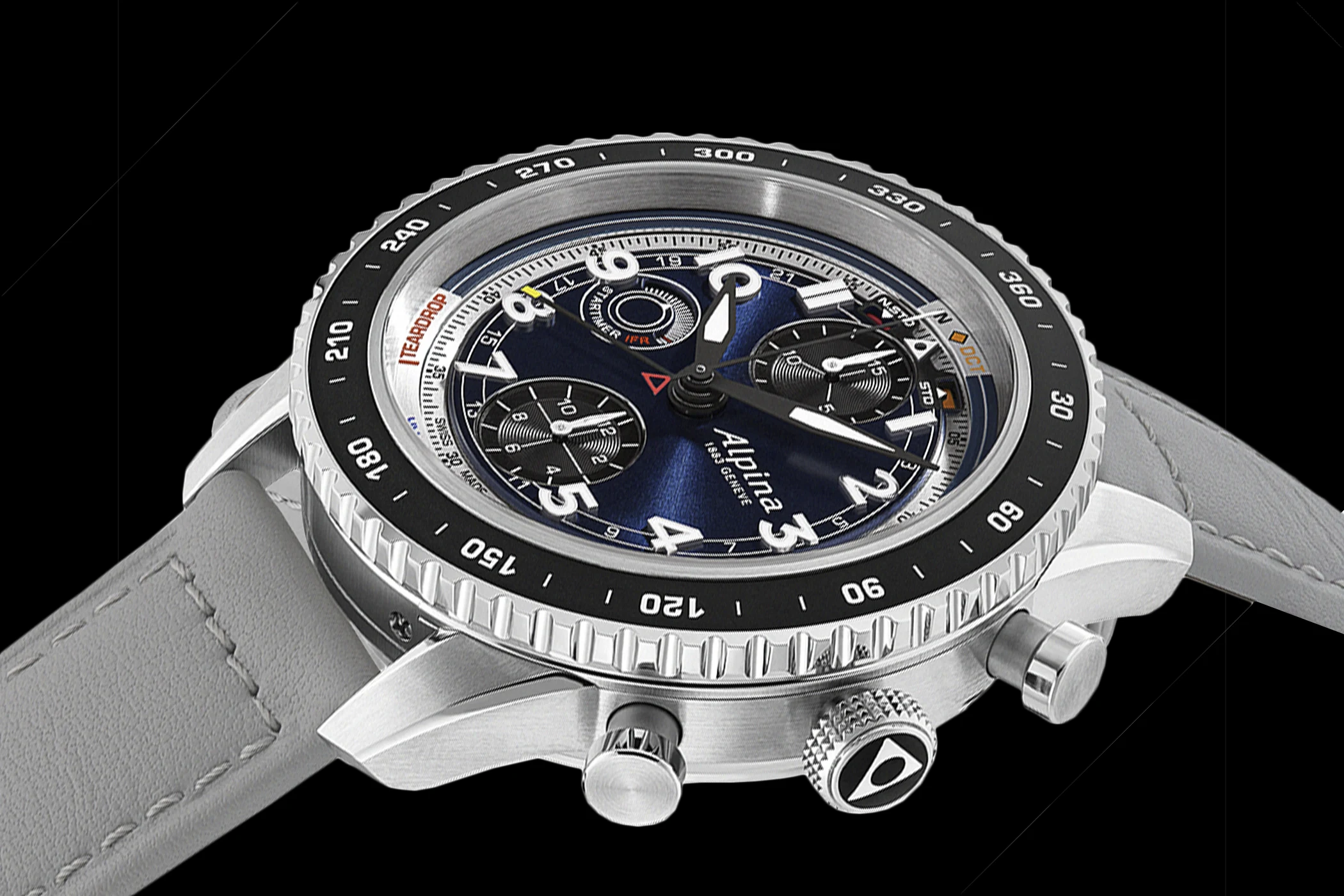
Its distinctive feature lies not in the classic movement, but in the case. It features a bidirectional 360-degree compass bezel and a specially developed internal, multi-stage, rotating rehaut element. Both components operate independently, yet function in unison.
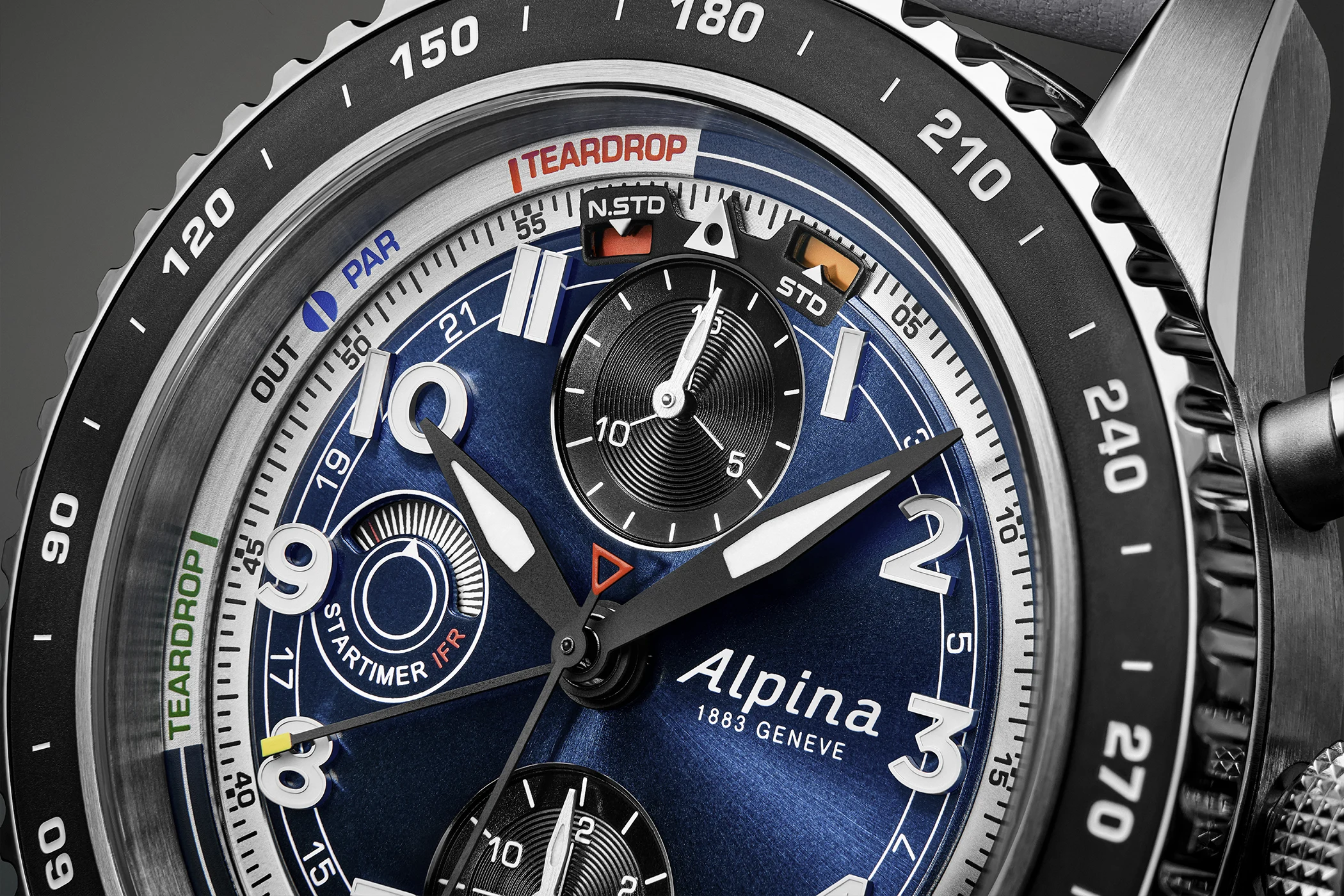
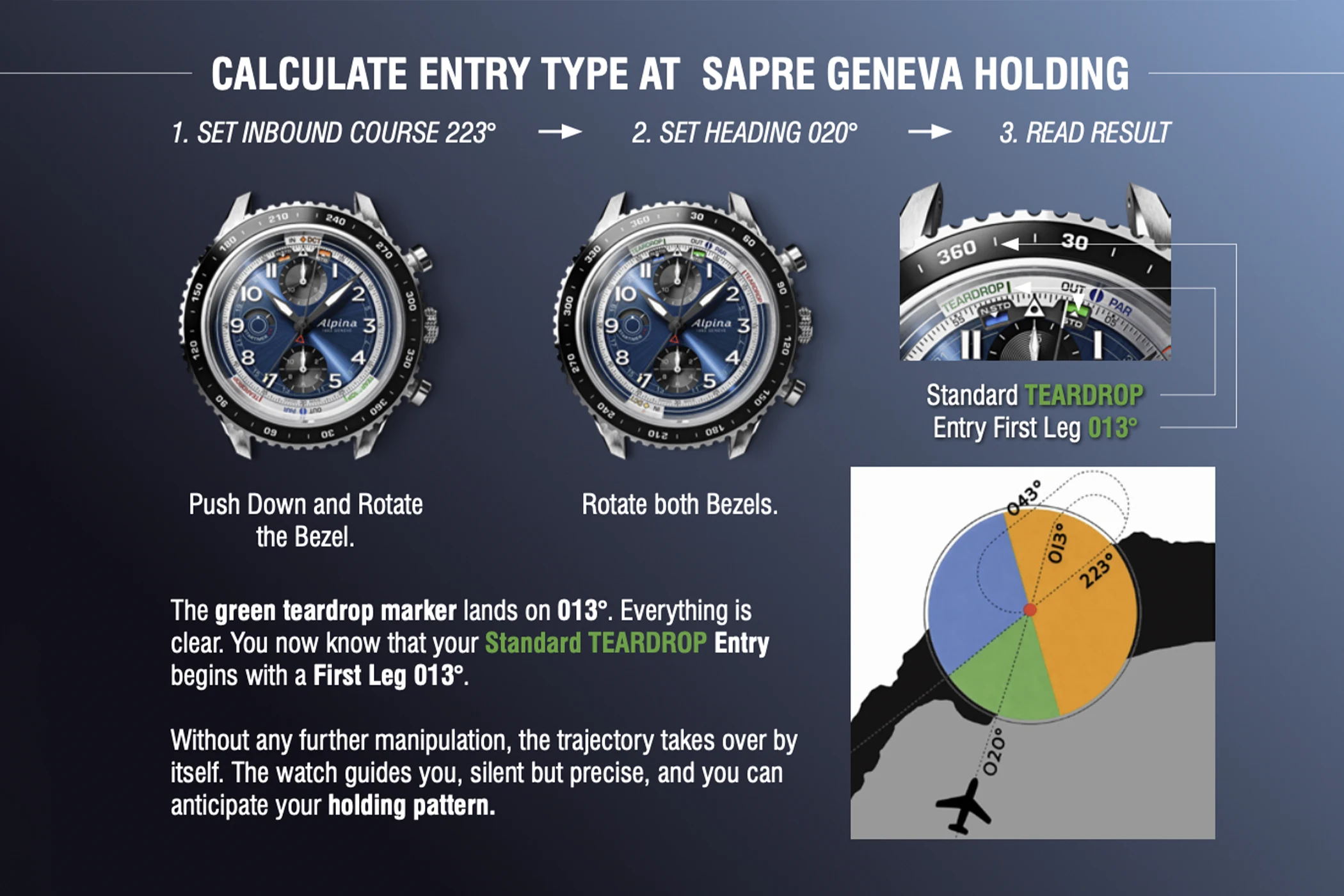
The pilot first sets the inbound course. To do this, he presses the bezel down and aligns the degree reading for the inbound course on the bezel with the orange diamond-shaped outbound indicator on the rotating inner ring. He then returns the bezel to the upper position and sets the heading to the fix by aligning the corresponding degree mark with the heading marker at 12 o’clock. During this second step, the bezel and inner ring rotate together.
The Startimer Pilot Chronograph IFR then mechanically indicates which entry type to fly. The display is shown via two windows at 12 o’clock: orange stands for Direct, red for Teardrop, blue for Parallel. In addition, the watch displays the relevant courses and headings for the holding pattern: Outbound Course, Inbound Course, Heading to Fix and First Leg Heading.
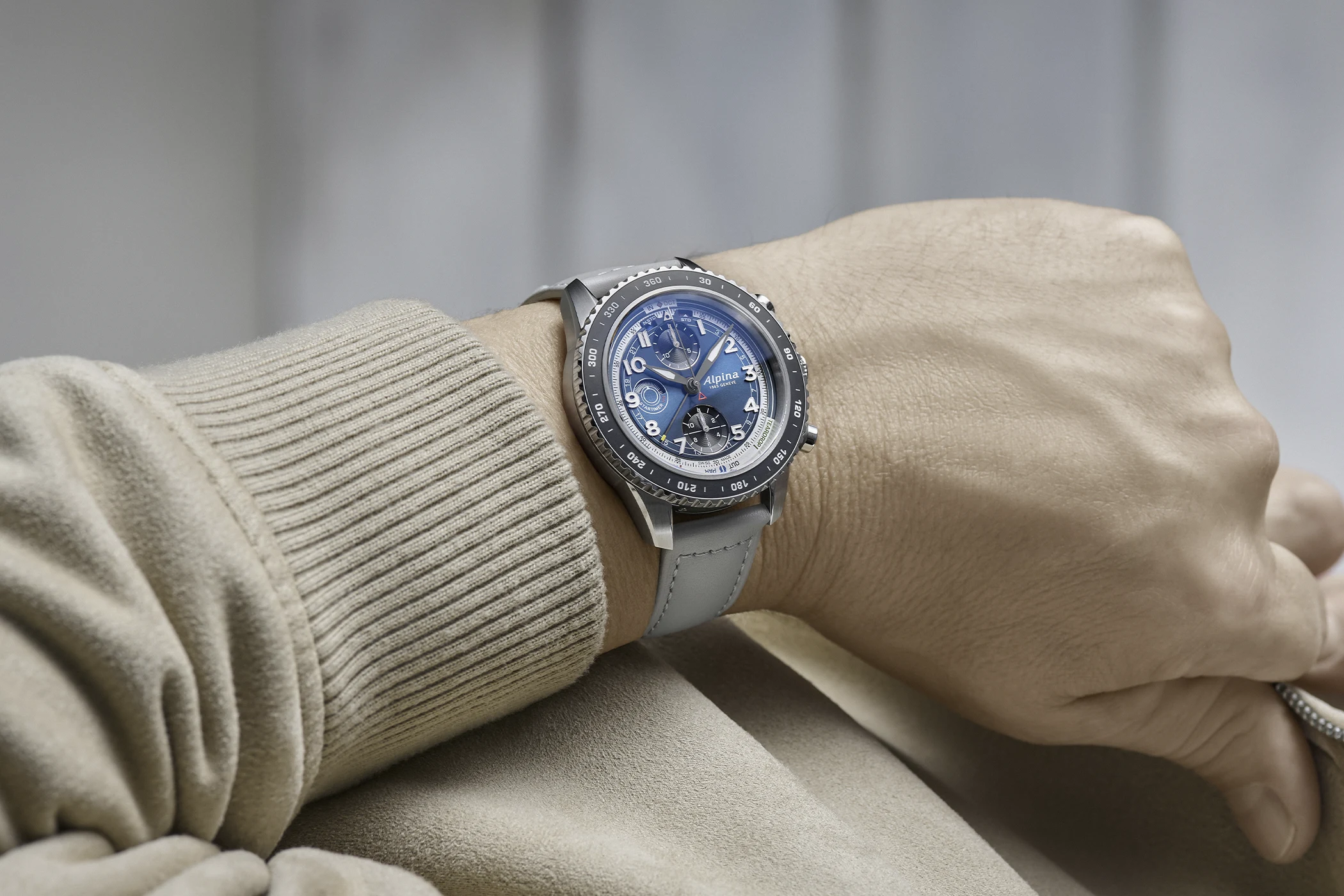
This is not a complication in the traditional sense, such as a perpetual calendar or a moon phase: the mechanism is not housed within the movement, but rather within the case. It can therefore also be understood as a ‘habillage complication’ – that is, a function created by the bezel, inner ring, case components and display elements.
The principle is particularly clear from the example in the diagram: Inbound Course 223 degrees, current heading 020 degrees. The pilot first aligns 223 degrees with the orange outbound indicator, then sets 020 degrees on the heading marker at 12 o’clock and reads the result: Standard Teardrop Entry. The first leg heading is 013 degrees.
This is not merely a display, but a mechanical decision-making aid. The Startimer Pilot Chronograph IFR processes two known values and translates them into an instruction for action. Naturally, in a real IFR cockpit, no one should rely primarily on a mechanical wristwatch. Modern avionics, charts, training, crew coordination and ATC procedures take precedence. But as a mechanical backup or training tool, the idea is remarkable.
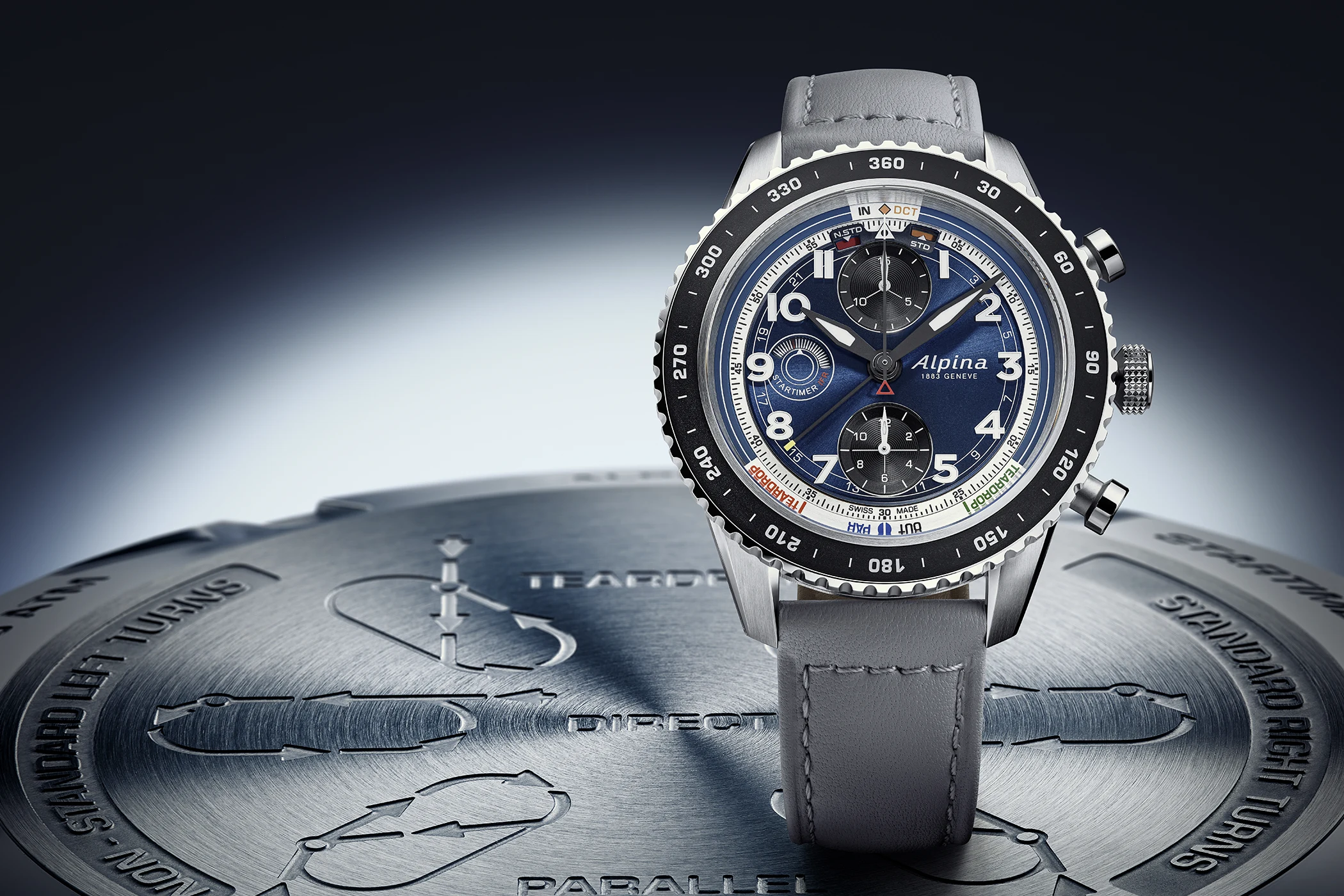
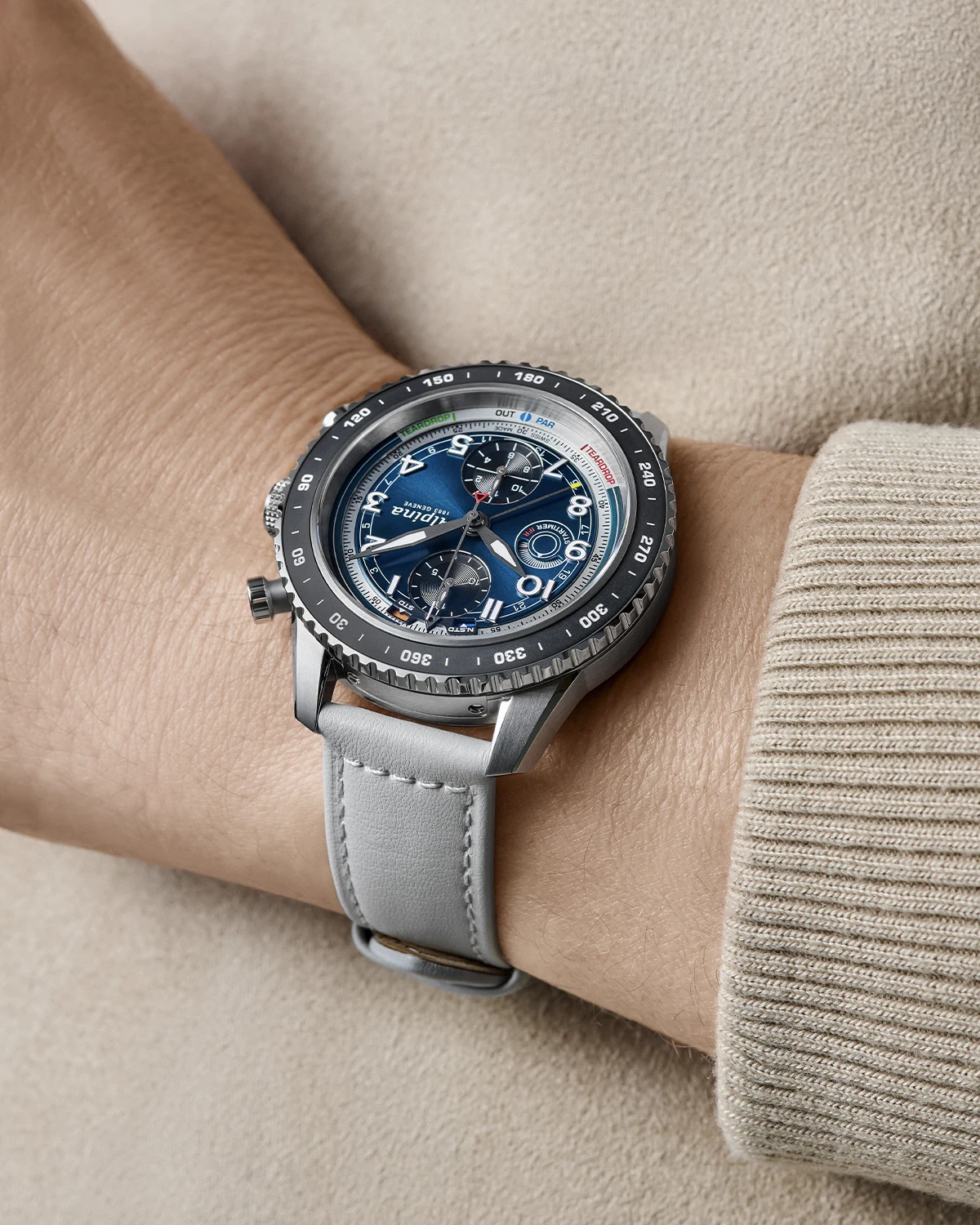
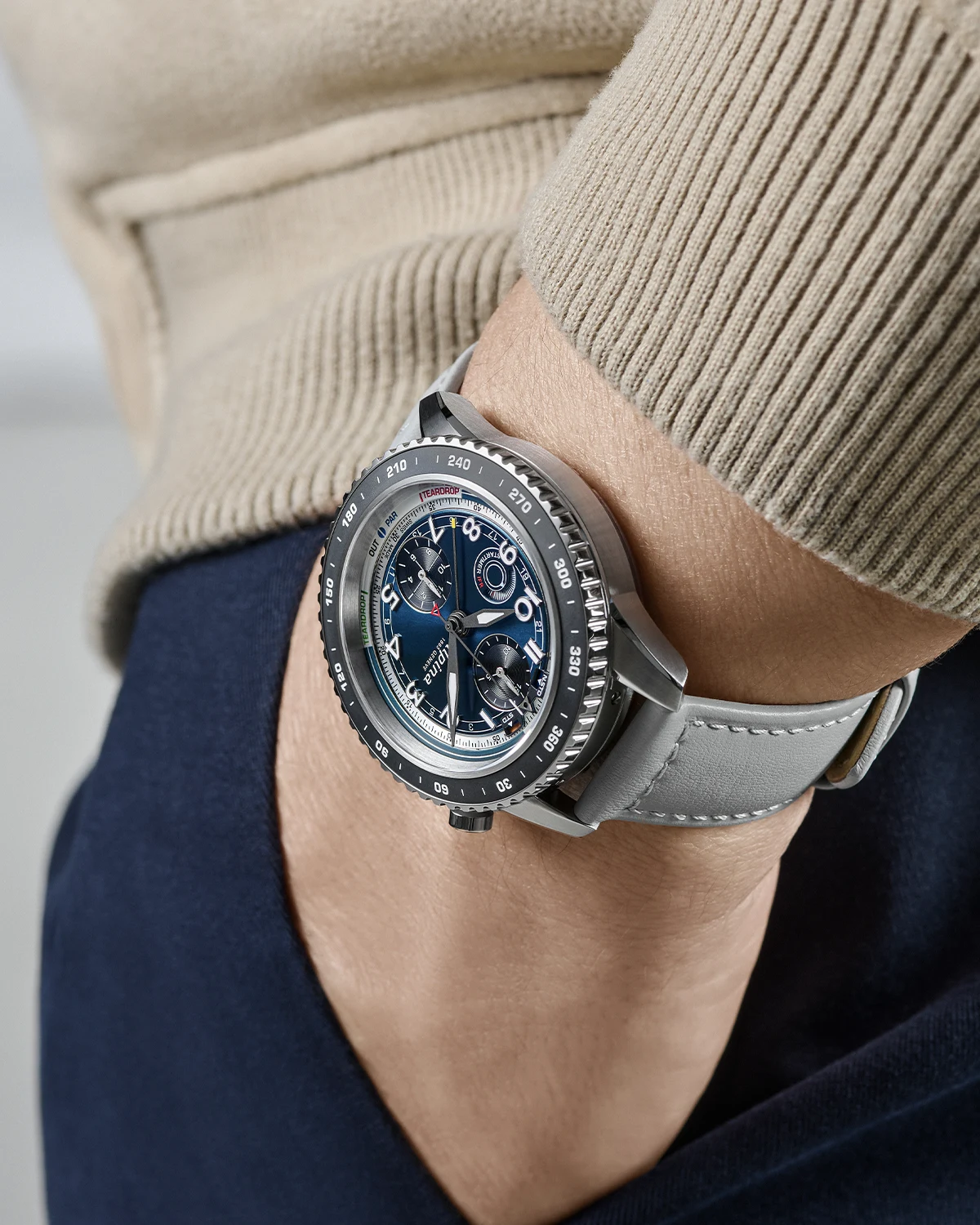
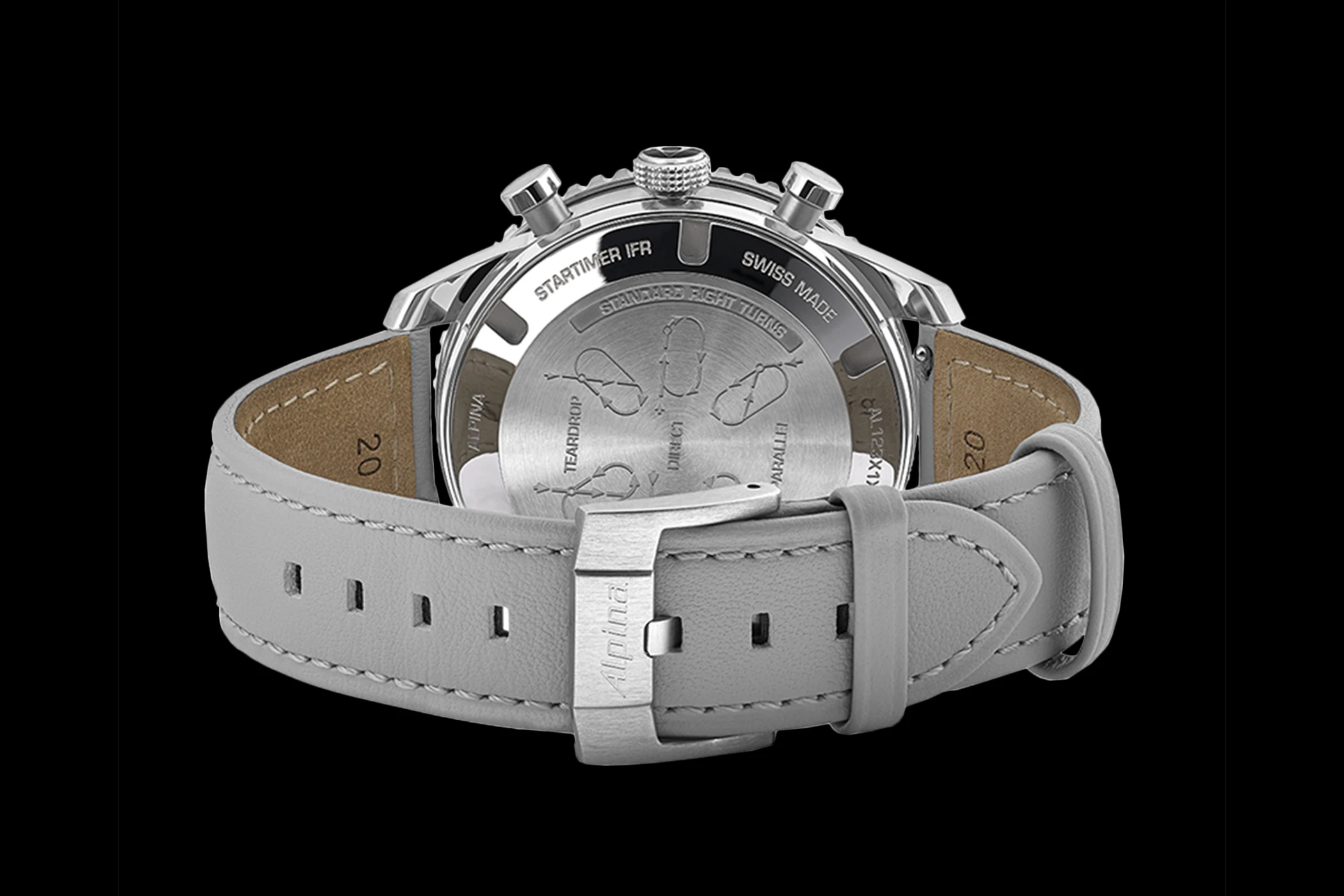
It is clear from the watch’s appearance that this function requires space. The stainless steel case measures 44.5 millimetres in diameter and 15.8 millimetres in height, of which 13.95 millimetres are visible on the wrist. The lug-to-lug measurement is 51 millimetres and the water resistance is 10 bar or 100 metres. In addition, the case back is engraved with holding pattern markings. The Startimer Pilot Chronograph IFR also comes with two leather straps: one in light grey and one in camel brown, each with a quick-release system.
The blue sunburst dial is framed by a silver outer ring and a black minute track. Applied Arabic numerals with white luminescent coating, black hour and minute hands with white luminescent coating, and a black seconds hand with a red triangle also aptly reflect the characteristic design language of functional pilot’s watches. Added to this are a 15-minute counter at 12 o’clock, a 12-hour counter at 6 o’clock, a disc-based running time indicator at 9 o’clock, and a centrally mounted hand for the second time zone.
That’s quite a lot of information packed into a relatively small space. As a result, the Startimer Pilot Chronograph IFR feels less like a simple accessory and more like a wearable instrument. Whether you find this fascinating or rather overloaded depends largely on how much you’re captivated by the logic and complexity behind it.
Inside, it is powered by the Swiss Sellita 531b, a column-wheel chronograph calibre with a 62-hour power reserve, 25 jewels and a frequency of 28,800 vibrations per hour. The chronograph complication is also logically integrated here: during the holding process, not only are courses flown, but time intervals are also measured. Together with the central hand for UTC/GMT and the mechanical holding function, the watch combines timekeeping, time reference and procedural logic.
The Watch Angels x Alpina Startimer Pilot Chronograph IFR will be priced at CHF 4,295, including delivery. Orders will open on 21 May 2026 exclusively via Watch Angels. Given the limited run of 300 pieces and the high level of complications offered at a relatively good price, it is advisable to register your interest with the manufacturer sooner rather than later.
watchangels.com I alpinawatches.com
Watch Angels x Alpina
Startimer Pilot IFR Chronograph
AL-570NW4S46
Stainless steel
Diameter: 44.5 mm
Thickness: 15.8 mm (13.95 mm visible on the wrist)
Lug-to-lug: 51 mm
10 bar (~100 m)
Blue sunburst dial with a silver outer ring and black minute track
Light grey and camel-brown leather straps, each with a stainless steel pin buckle and quick-release system
Sellita 531b column wheel chronograph caliber
Automatic
62 hours
28.800 A/h (4 Hz)
Hours, minutes, small seconds or running display, chronograph with 15-minute and 12-hour counters, central UTC/GMT display, and a mechanical IFR holding pattern entry function for determining direct, teardrop or parallel entries, including the relevant courses and headings via the rotating bezel and inner rehaut.
EUR 4.295