

The Girard-Perregaux Laureato Fifty combines new proportions, elegant dials and the GP4800 calibre to create a striking anniversary timepiece.

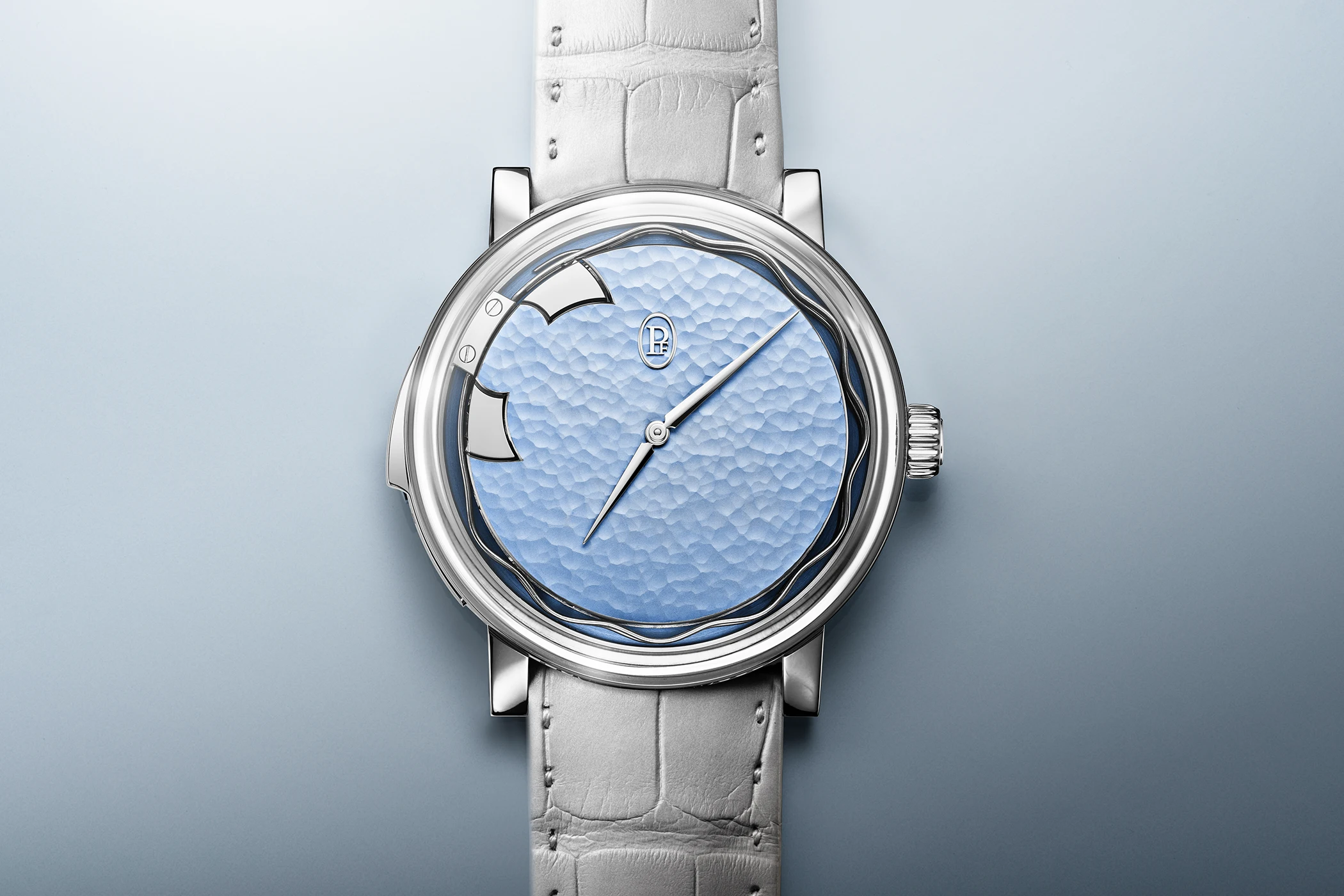
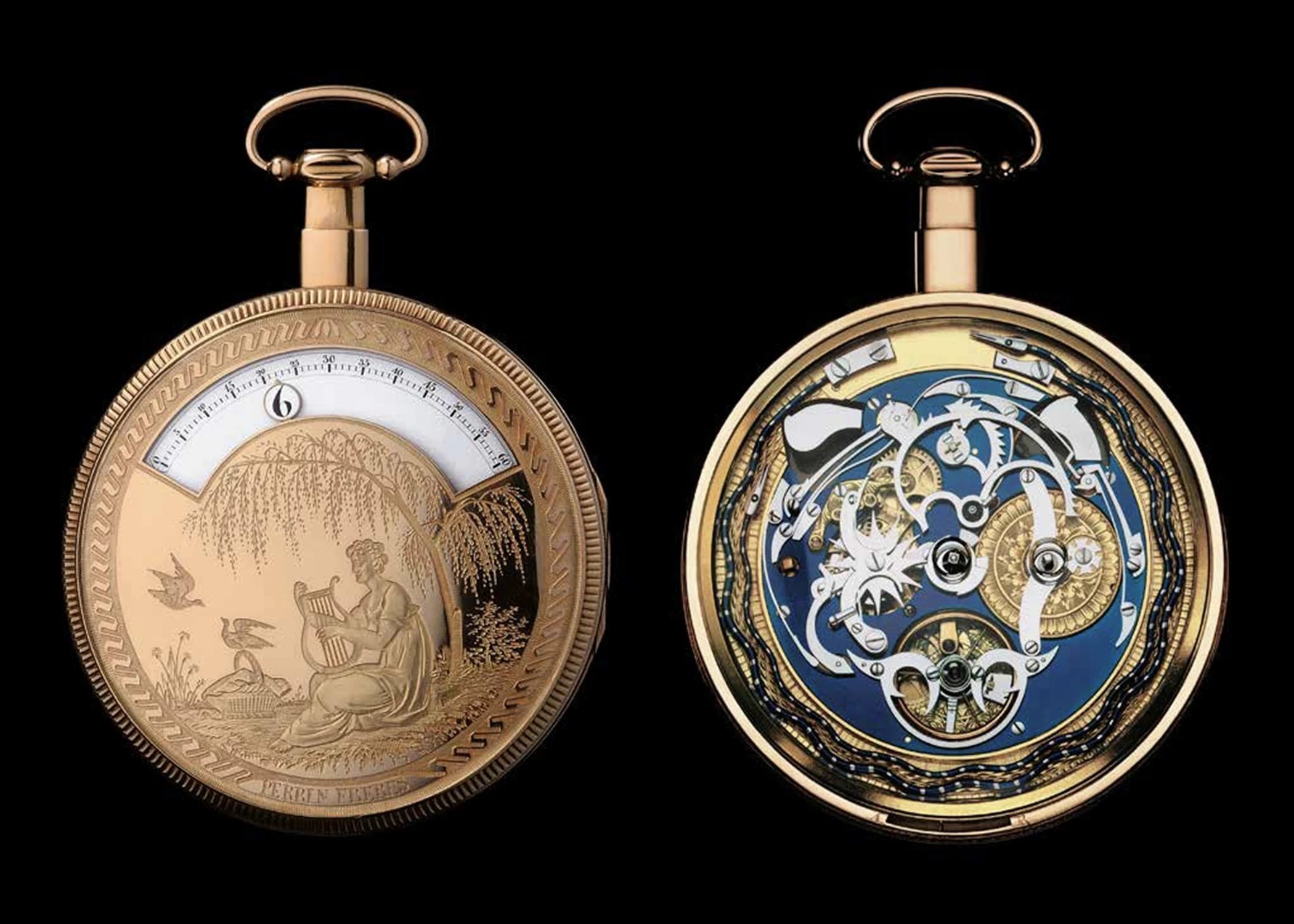
To mark its 30th anniversary, Parmigiani Fleurier presents the Carillon Tourbillon, a grande complication limited to five pieces that combines a carillon repeater with the discreet design language of the Maison. Inspired by a historic Perrin Frères pocket watch from the early 19th century, which was restored by Parmigiani Fleurier around the year 2000, the Parmigiani Fleurier Carillon Tourbillon offers a modern reinterpretation above all of its acoustic architecture and characteristic serpentine gongs. In this article, we take a closer look at the new model, its distinctive striking mechanism, and the question of how it differs from a conventional minute repeater.
Michel Parmigiani, born in the Val-de-Travers in 1950 and trained in La Chaux-de-Fonds, is one of the defining figures of modern Swiss haute horlogerie. Building on the restoration workshop “Mesure et Art du Temps”, which he founded in 1976 amid the quartz crisis, and on the reputation he established through his work on important historical timepieces, automata and mechanical works of art – particularly for the Sandoz Family Foundation and the Maurice-Yves Sandoz Collection – he founded Parmigiani Fleurier in 1996 together with the Sandoz Family Foundation as a vertically integrated haute horlogerie manufacture. This year, the brand celebrates its 30th anniversary, although its path as a company has not always been straightforward.
In February 2024, speculation arose about the future of Parmigiani Fleurier: a possible sale of the Sandoz Family Foundation’s watchmaking division was said to be under consideration. In addition to the Parmigiani Fleurier brand, this division also includes Vaucher Manufacture Fleurier – the movement manufacturer that supplies, among others, Hermès and Richard Mille – as well as other companies within the Pôle Horloger. During the bidding process, which, according to Business Insider writer Miss Tweed, was coordinated by Deloitte, LVMH, Richemont and Hermès were among the parties said to have expressed interest. It was reportedly the third time that the Sandoz Foundation had attempted to find buyers for its watchmaking division, which had long been considered unprofitable.
In June 2025, however, came the reversal: after more than a year on the market, the Sandoz Family Foundation announced that its watchmaking division, including Parmigiani Fleurier, was no longer for sale. Parmigiani, Vaucher Manufacture and the other companies had since become profitable, making a sale appear less sensible. The fact that Parmigiani Fleurier improved its profitability, increased the desirability of its watches and saw the Sandoz Family Foundation reaffirm its commitment to the brand is largely connected to Guido Terreni, who has been at the helm of the Maison since early 2021 and has driven its repositioning process.
Under his stewardship, Parmigiani Fleurier is pursuing not only a strategic realignment, but also the sharpening of a brand narrative closely tied to its own values. This is condensed in the term “Private Luxury”: an understanding of luxury based on meaning, culture and a personal relationship with the product, and rooted in the observation that luxury is currently undergoing a profound transformation. Behind this lies the recognition that clients are no longer interested solely in the external effect of a product, but also in its “why” – in technical knowledge, artisanal understanding and human identification with a Maison.
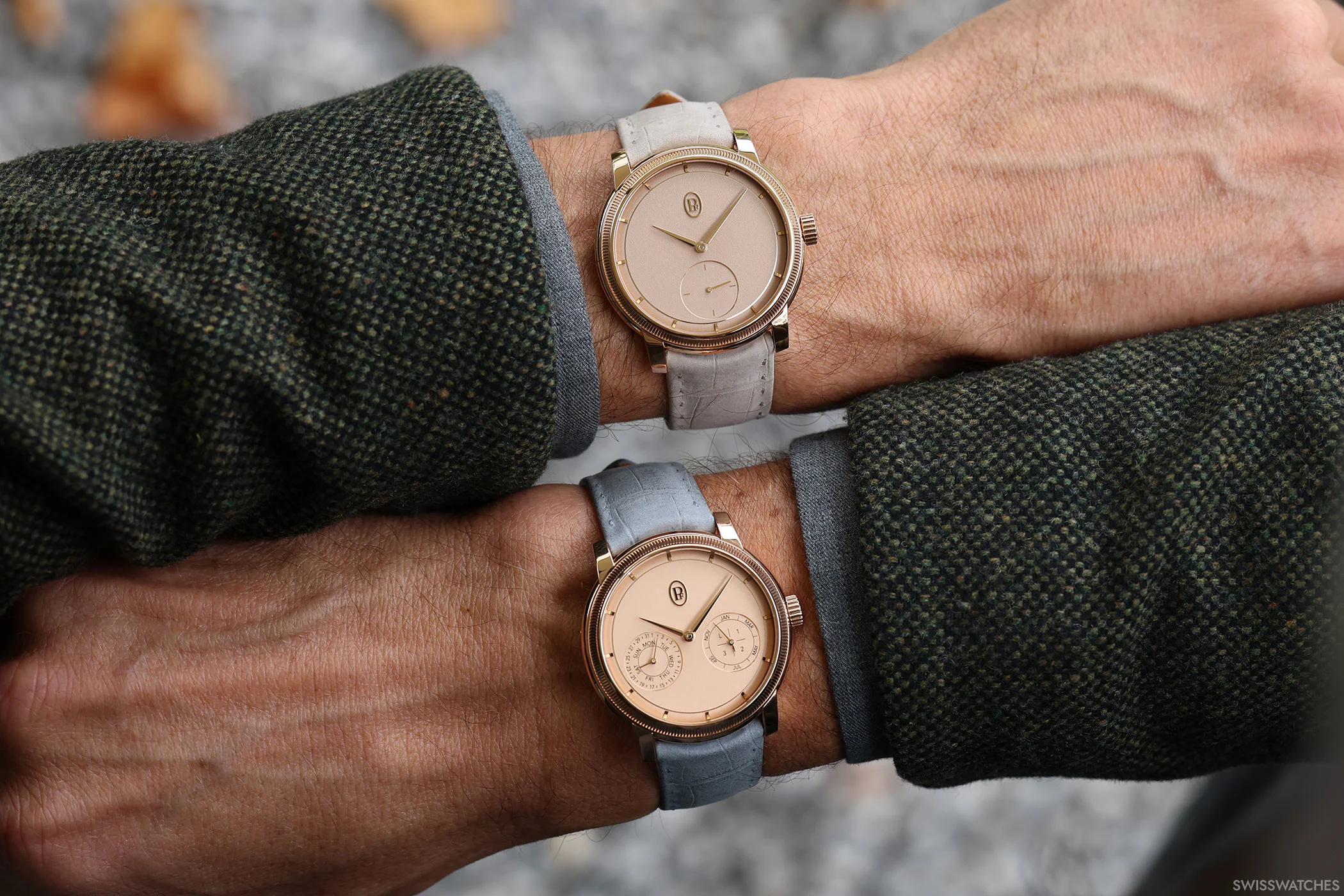
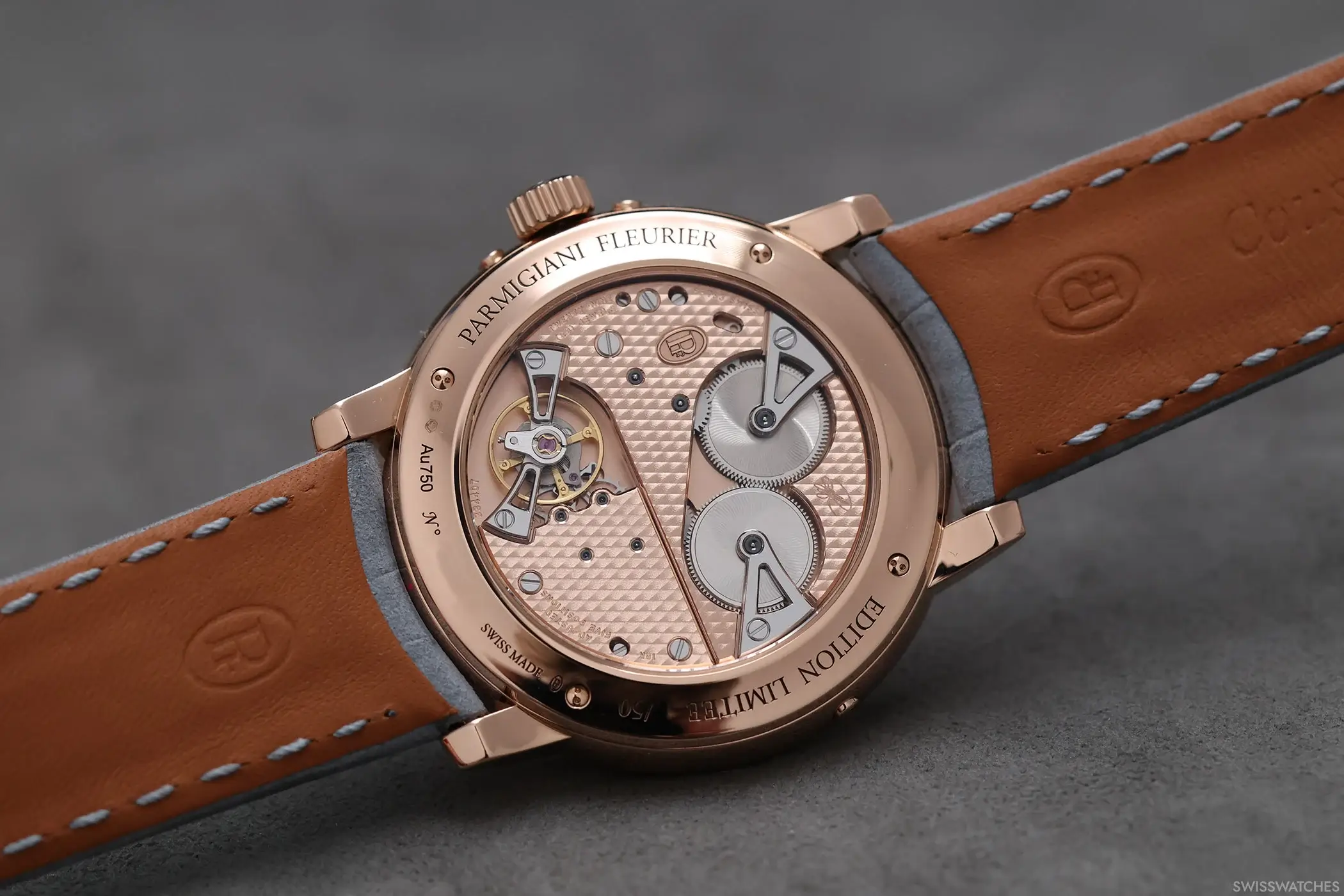
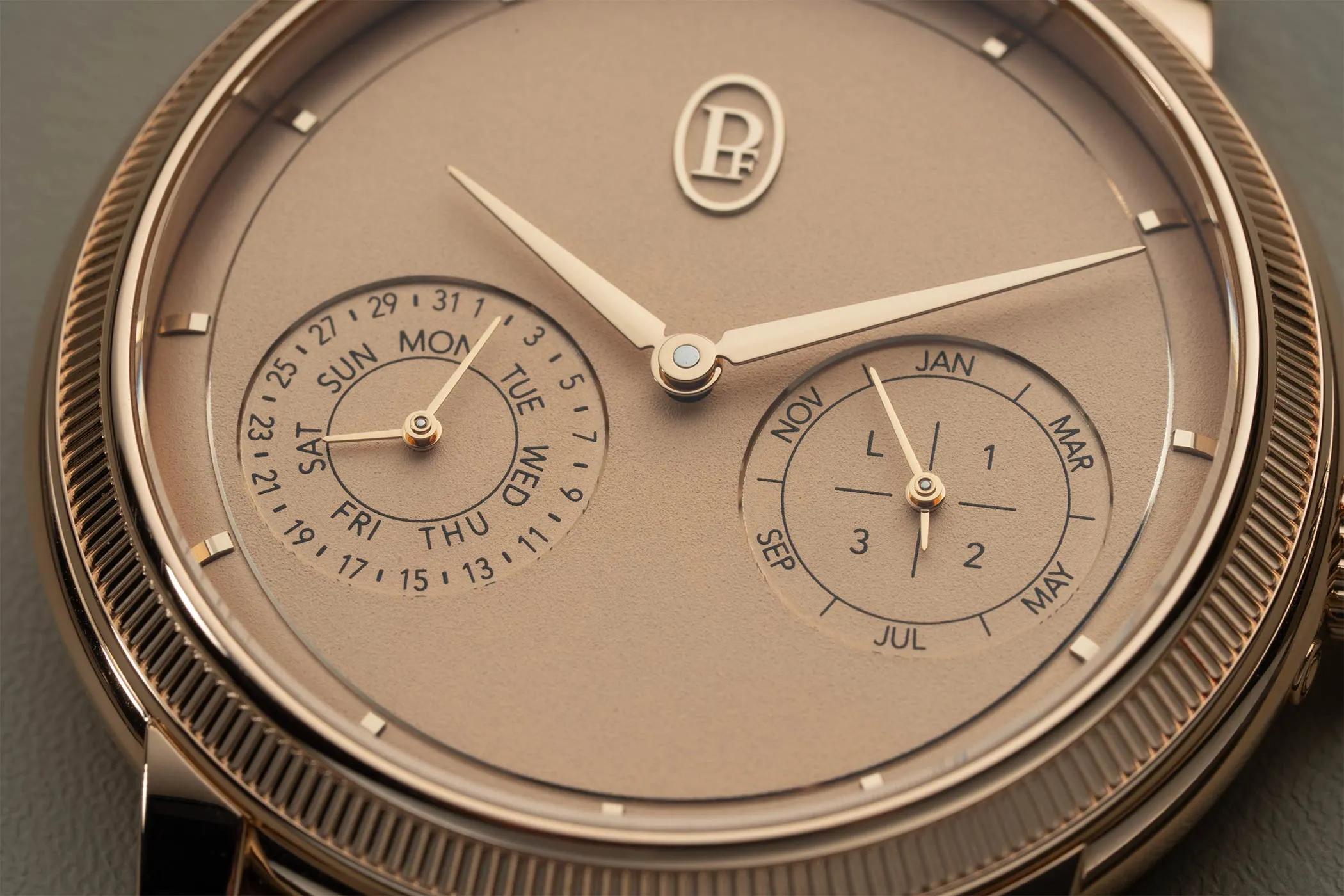
This is precisely where Parmigiani Fleurier begins, following this approach with a clear strategy: the brand has developed a coherent, minimalist design language as well as a recognisable colour palette that extends across several collections. In doing so, Parmigiani Fleurier seeks to express itself through a unified aesthetic while also exploring different forms of this design attitude.
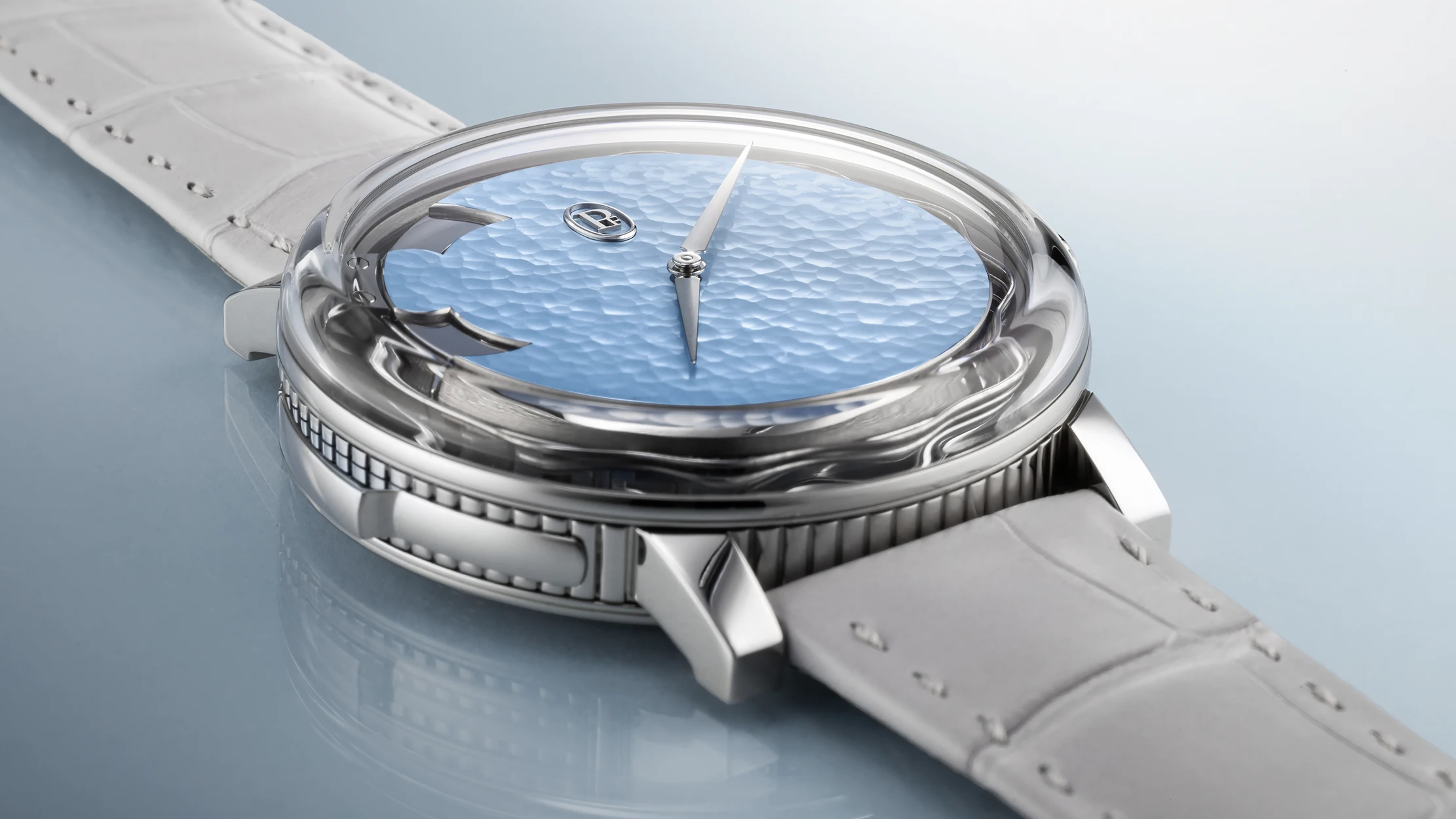
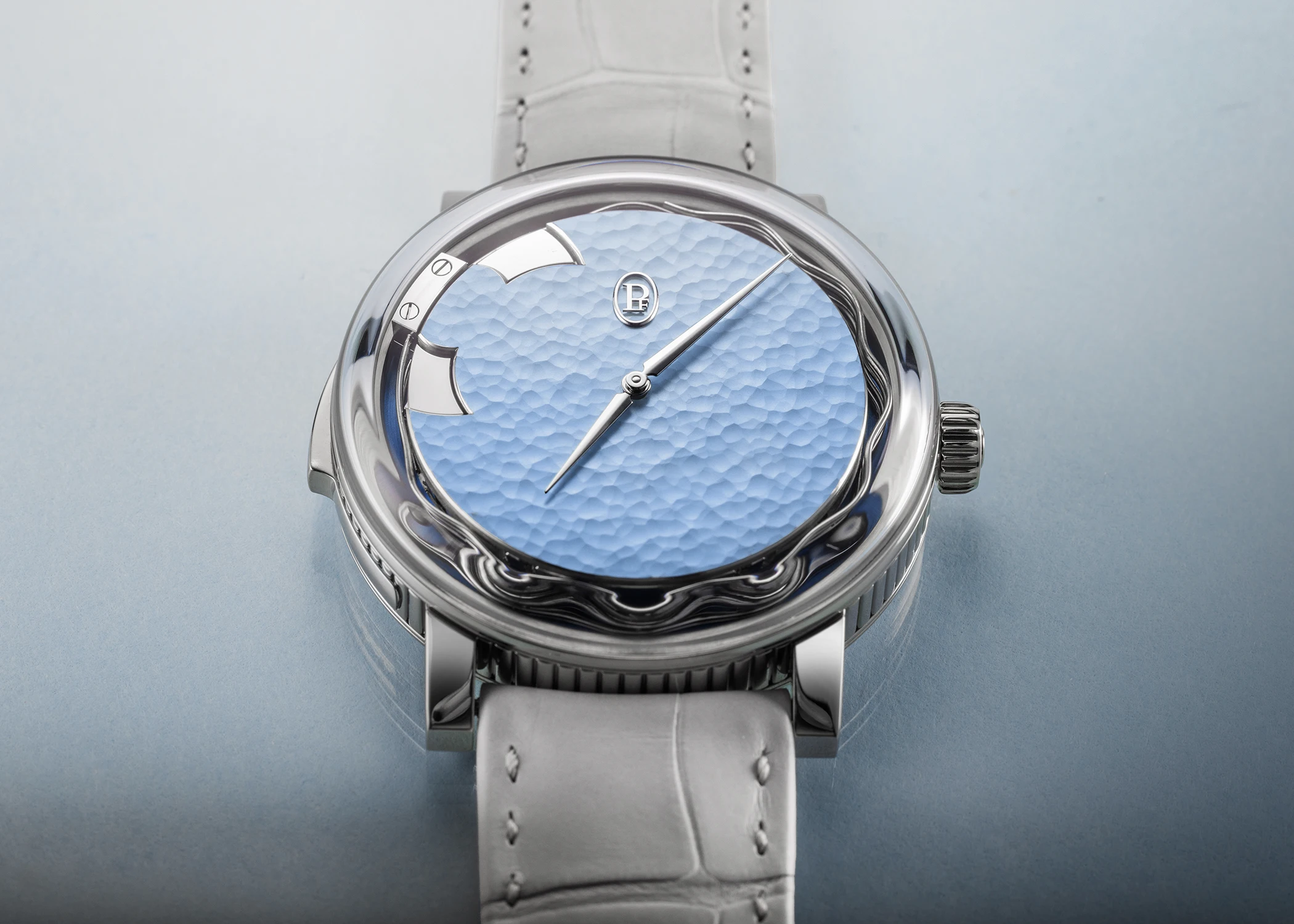
This design language now finds renewed expression in the newly presented Carillon Tourbillon, produced in a limited edition of just five pieces to mark the brand’s 30th anniversary. In this watch, Parmigiani Fleurier combines its aesthetic restraint with the striking complication of a carillon repeater. On the front, four curved gongs surround the blue inner section of the dial, while the hammers remain visible and the display is limited to hours and minutes. The tourbillon and power-reserve indicator, by contrast, are positioned on the reverse – a deliberate act of restraint, as watchmakers usually place the tourbillon prominently on the front and stage it as a central element of the dial.
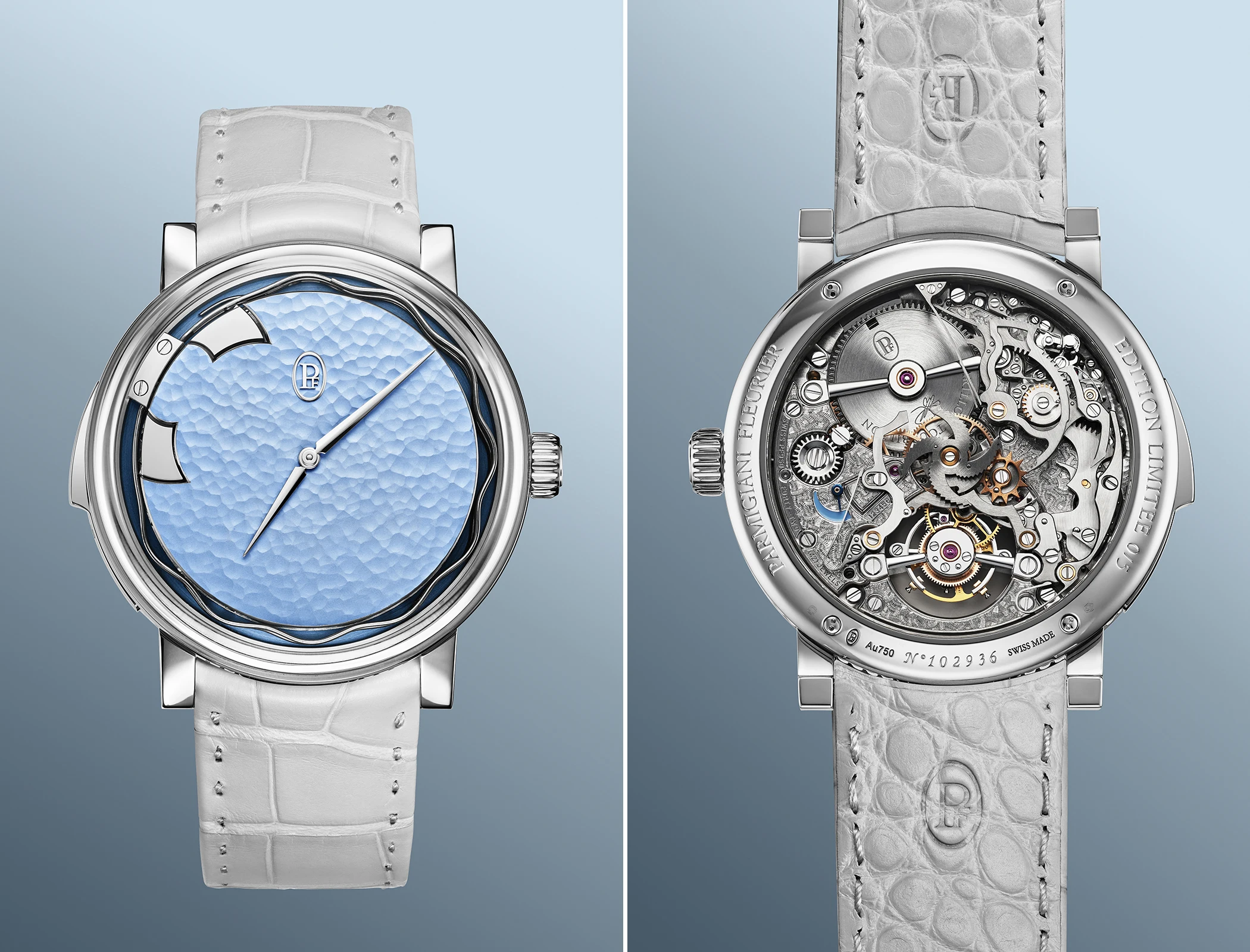
Instead, the front is centred on the hand-hammered white-gold dial in the colour “Morning Blue”. This texture was already used for three Toric anniversary models and ranks among the defining aesthetic signatures of the brand’s 30th anniversary. The curved form of the gongs, meanwhile, traces back to an early 19th-century pocket watch signed by Perrin Frères, made in Neuchâtel, now part of the Sandoz Collection and restored in Parmigiani Fleurier’s ateliers in 2000.
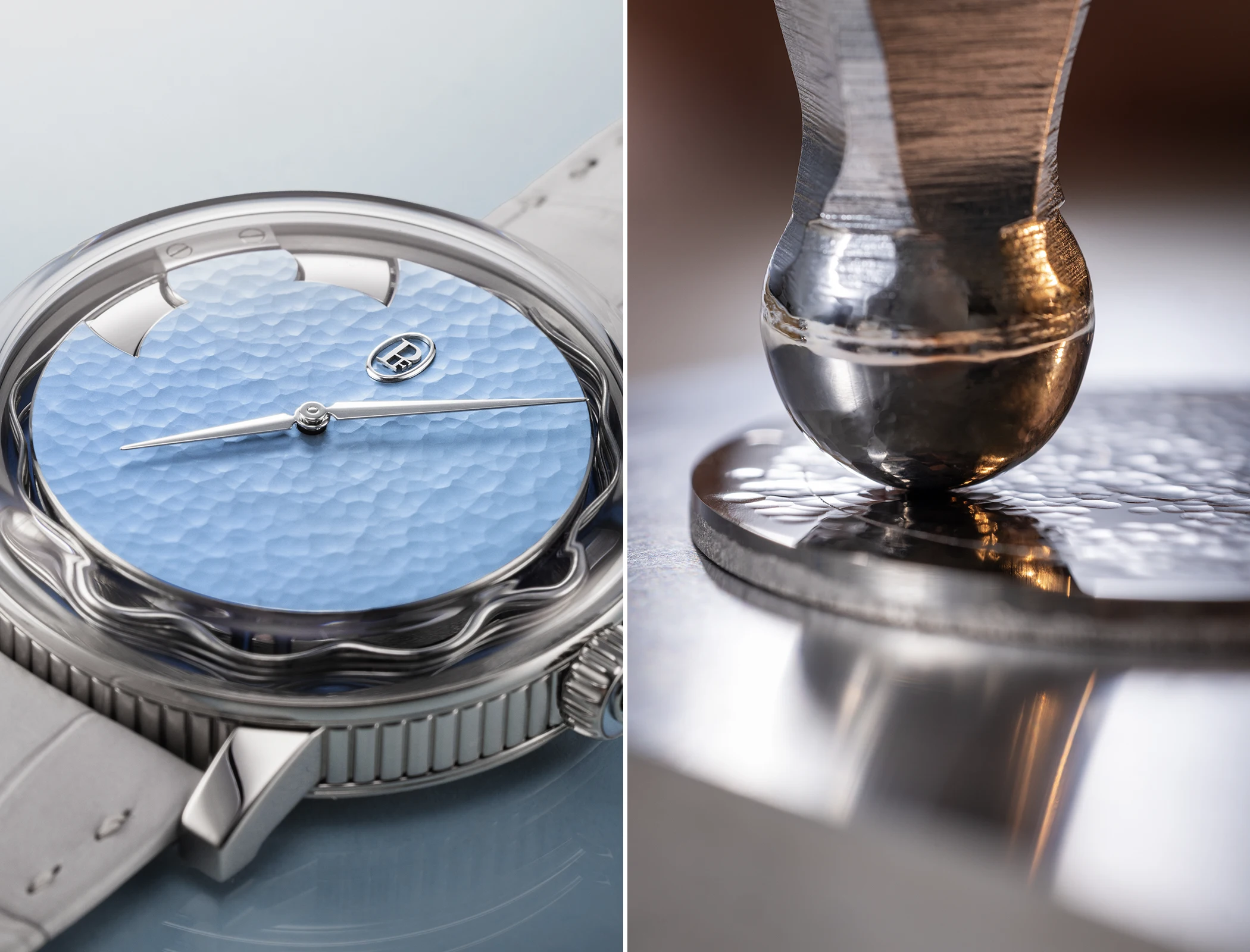
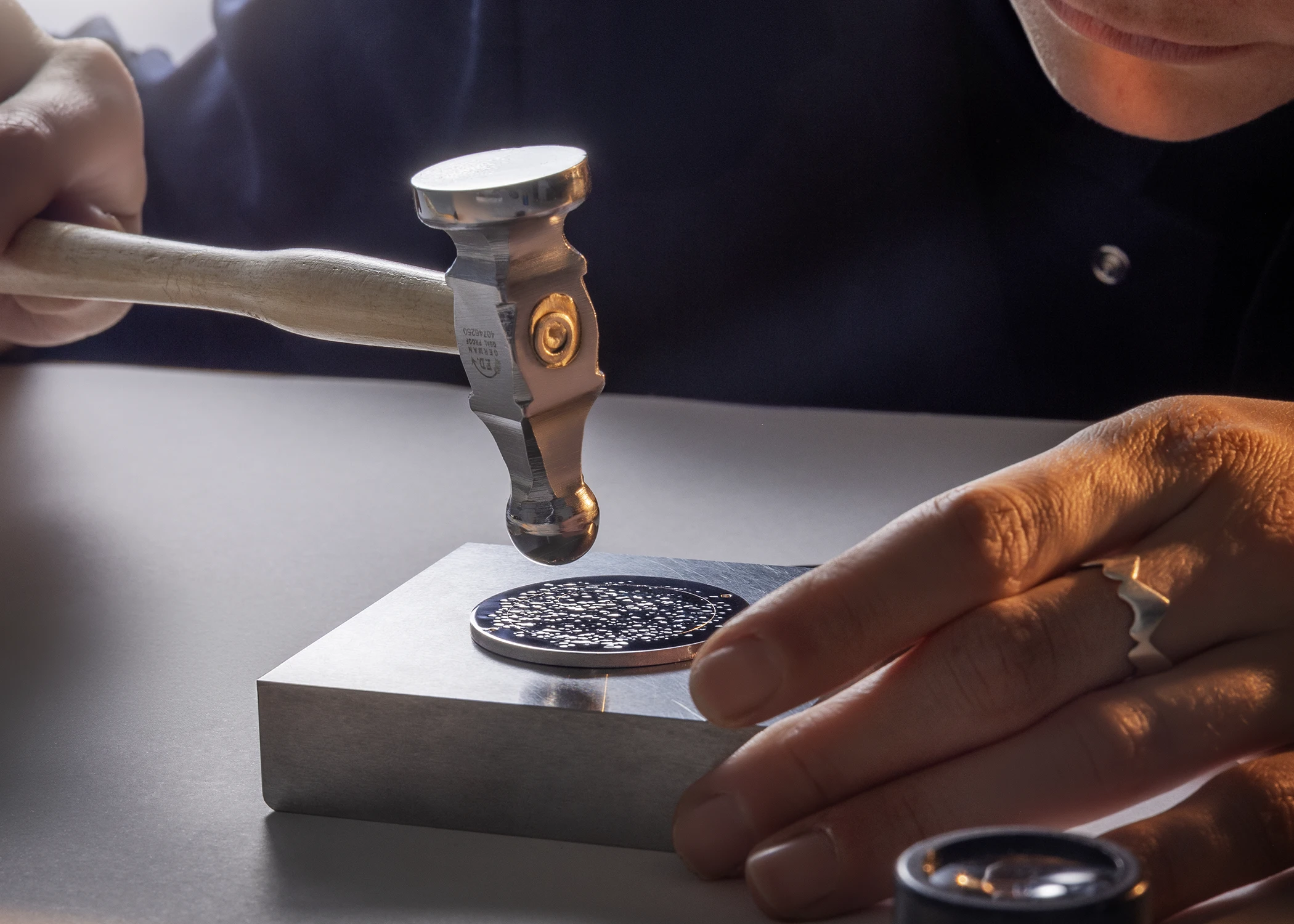
Yet however much the watch derives its effect from its design, its true significance only becomes apparent through its mechanics. To place the new Parmigiani Fleurier Carillon Tourbillon in context, it is therefore worth first considering two fundamental questions: what is a carillon repeater – and how does it differ from a classic minute repeater?
A carillon repeater is an extended form of the minute repeater in which the time is indicated not by two, but by three or four tuned gongs. While a classic minute repeater acoustically distinguishes the hours, quarters and minutes through a simple sequence of low tone, two-note sequence and high tone, the carillon allows for a more melodic sound structure. The term derives from the carillon, a tower instrument in which several bells are played in defined tonal sequences to produce recognisable melodies – a tradition rooted in the Netherlands, Belgium and northern France from at least the 16th century onwards.
A classic minute repeater strikes the hours on a low-pitched gong, the quarter-hours via a two-note sequence – for instance, first a high tone, then a low tone – and the remaining minutes solely on a high-pitched gong. If, for example, the time were 12:58, the striking sequence would sound as follows: first, twelve low strikes for the hours, then three high-low sequences for the three quarter-hours, and finally thirteen high strikes for the remaining minutes.
At its core, the carillon repeater is not a different complication from the minute repeater, but rather adds a further musical and constructive dimension to it. It still operates according to the principle of a minute repeater: the interaction of the movement’s racks, snails and cams first mechanically “reads” the hours, then the quarter-hours and finally the minutes, translating them into a precisely programmed striking sequence.
Yet while a classic minute repeater generally operates with two gongs and two hammers, a carillon repeater uses three or four gongs tuned to different pitches. This has the advantage that the quarter-hour signal – and, in particularly complex executions, even the minute signal – can be rendered not as a simple two-note sequence of a high and a low tone, but as a melodic sequence of three or four notes.
The difference from a classic minute repeater therefore lies less in the fundamental sequence than in the acoustic structure of the movement. A simple minute repeater encodes the time with a low tone, a double strike and a high tone. A carillon repeater, by contrast, can render the quarter-hours – or even the minutes – as a short melodic sequence, because three or four pitches are available. The result is that the listener can not only apprehend the passage of time acoustically, but also hear a recognisable melody.
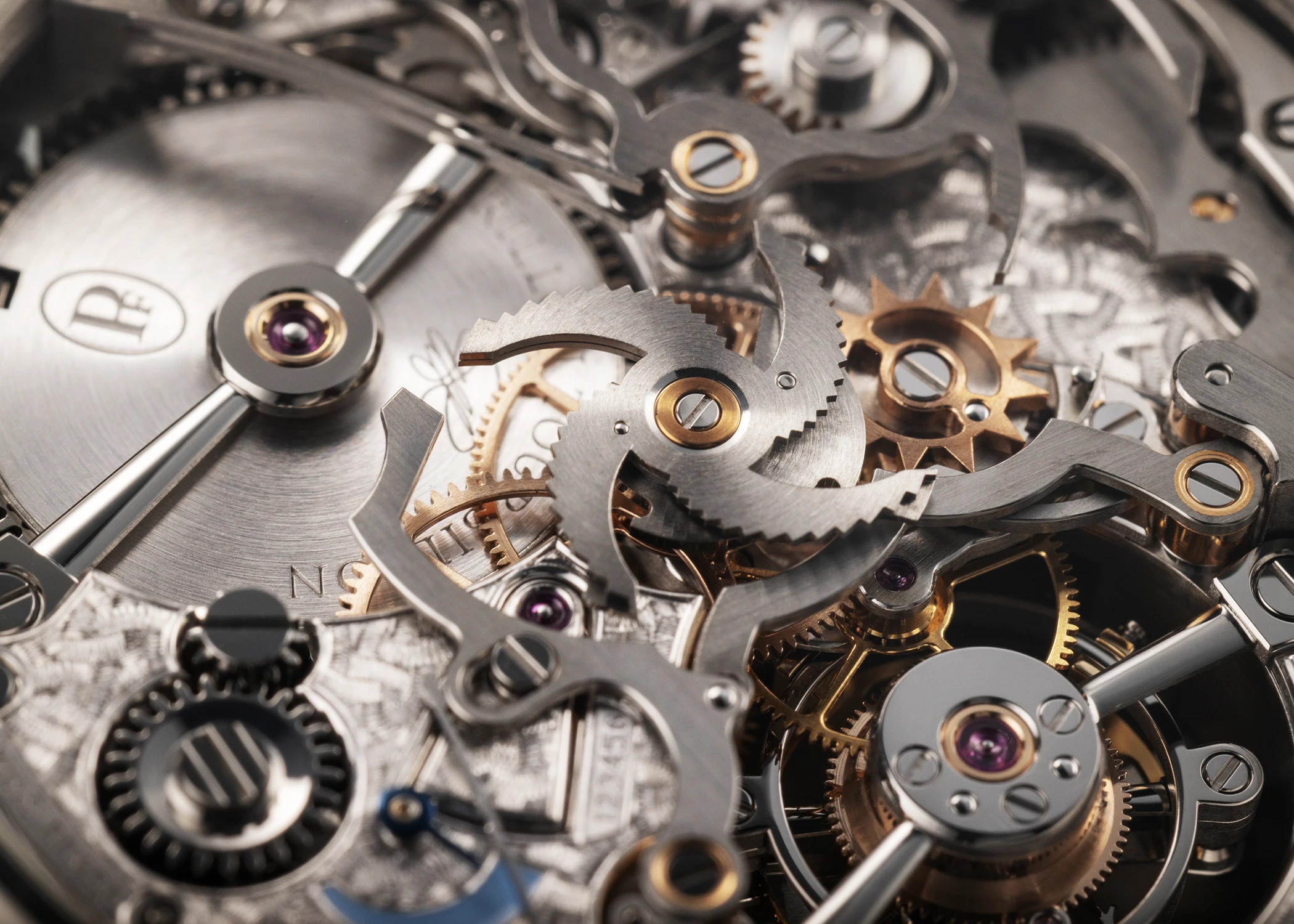
While the front of the new model conveys an impression of simplicity through its discreet aesthetic, this changes when the watch is turned over and viewed from the back. Through the sapphire crystal caseback, one can see the hand-wound manufacture calibre PF950 with four gongs and a 60-second tourbillon, which, according to the brand, was entirely designed, developed, constructed, assembled and finished in Parmigiani Fleurier’s ateliers.
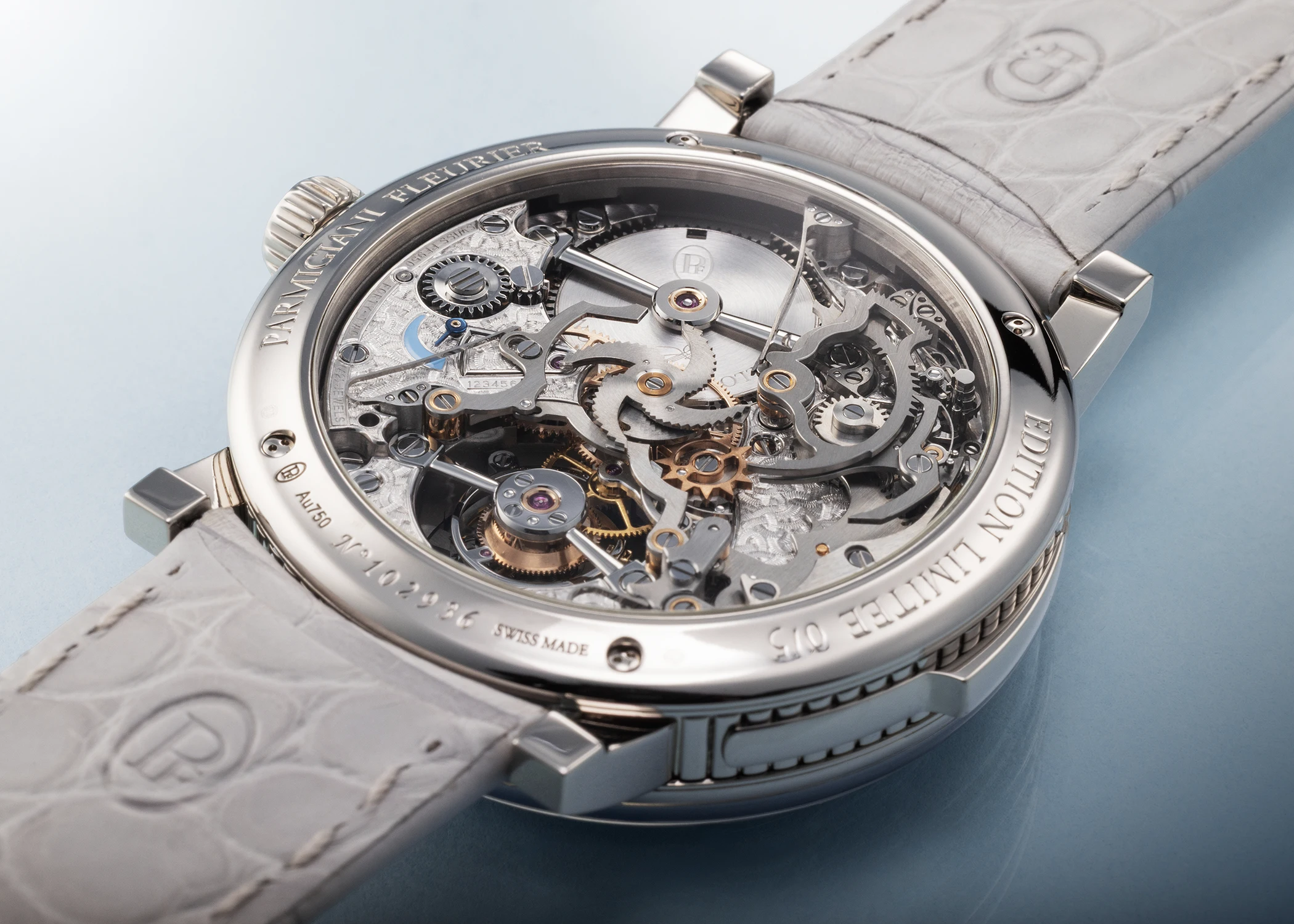
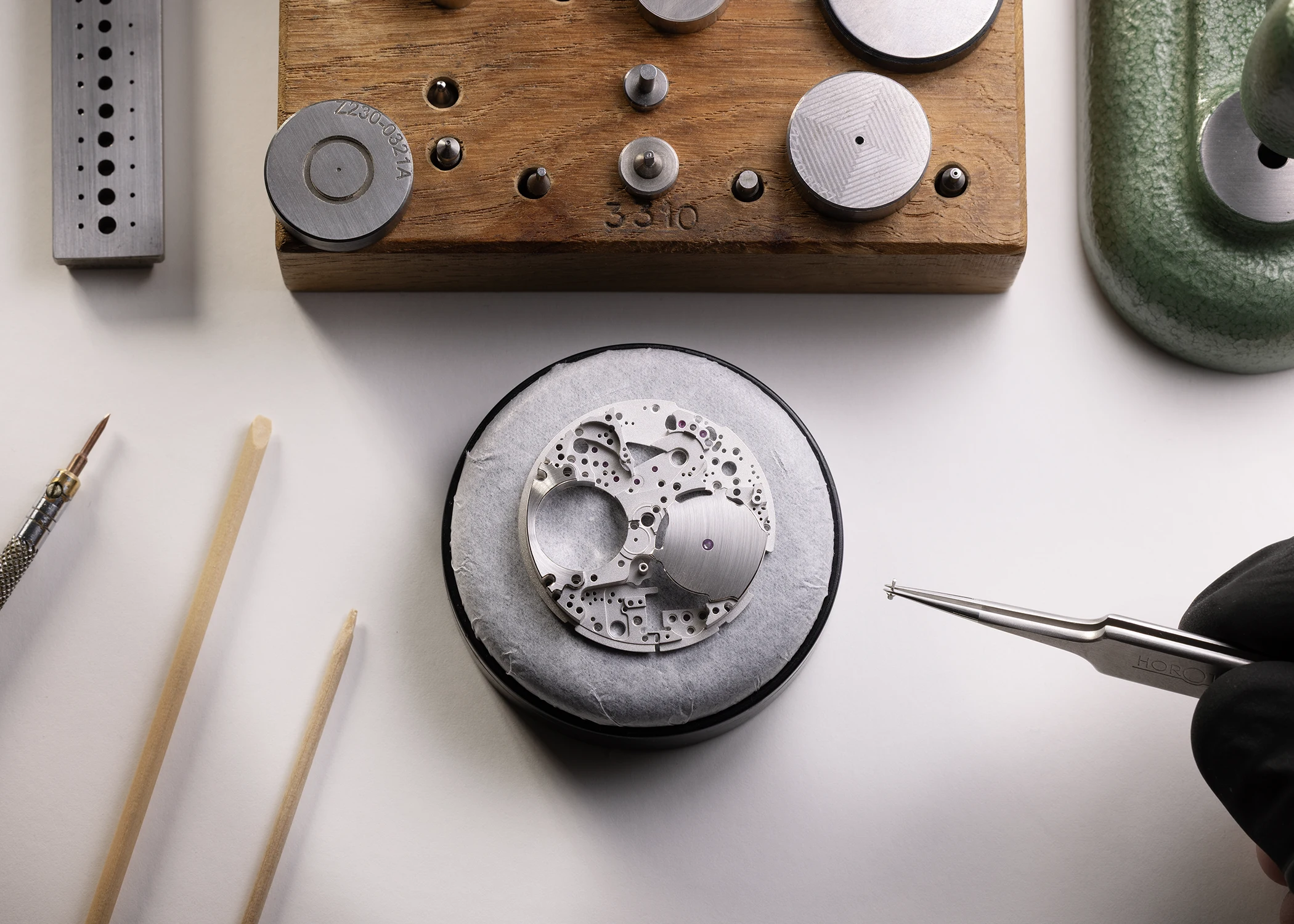
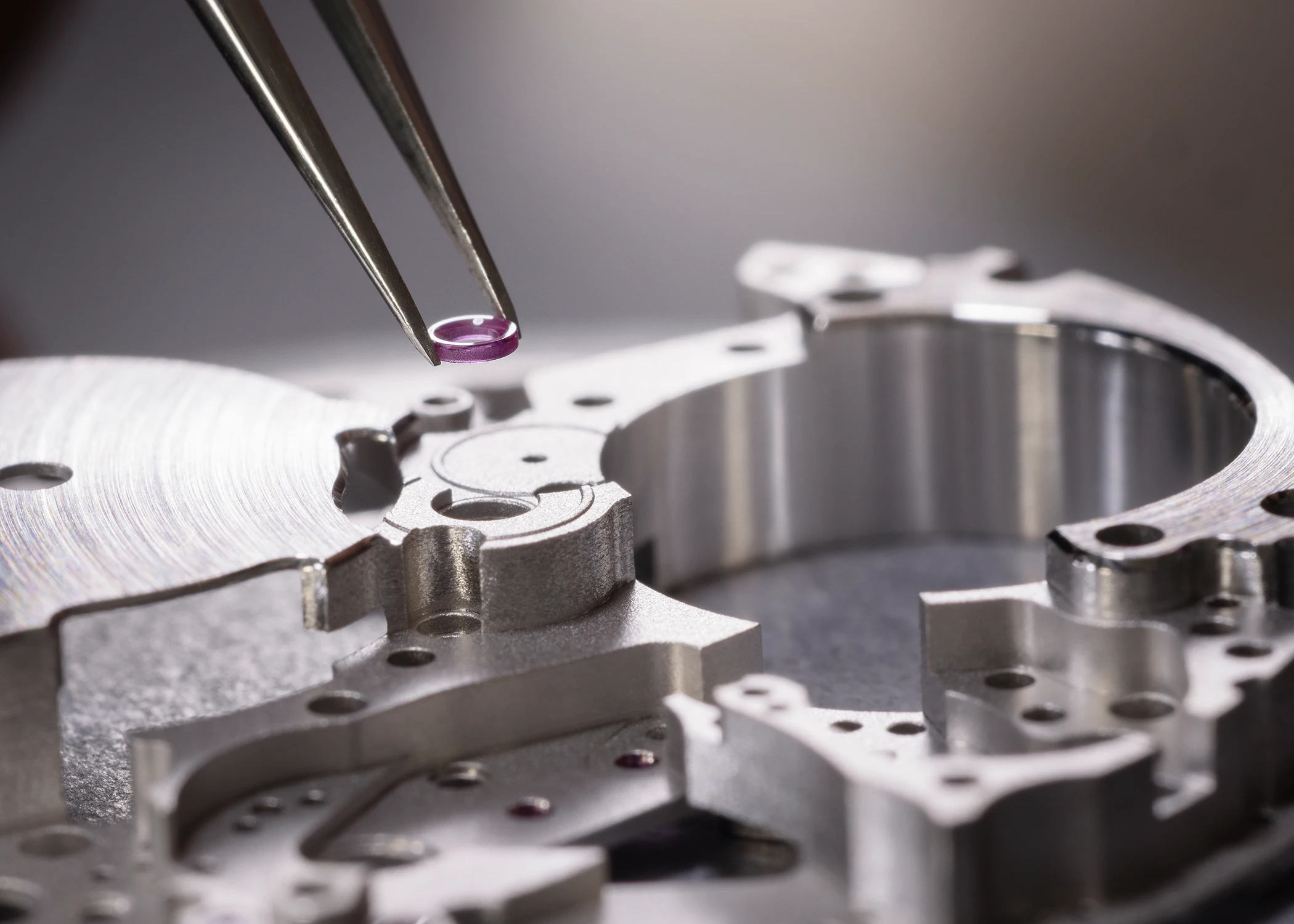
The architecture of the movement is based on two superimposed barrels, each of which performs a separate function: the first supplies energy to the going train and ensures a power reserve of at least twelve days. The second barrel is dedicated to the striking mechanism and is only supplied with energy automatically when the slide piece for the striking mechanism is activated – in other words, solely when the minute-repeater mechanism is triggered. This ensures that the energy of the main movement is preserved while guaranteeing an evenly controlled sound from the striking mechanism.
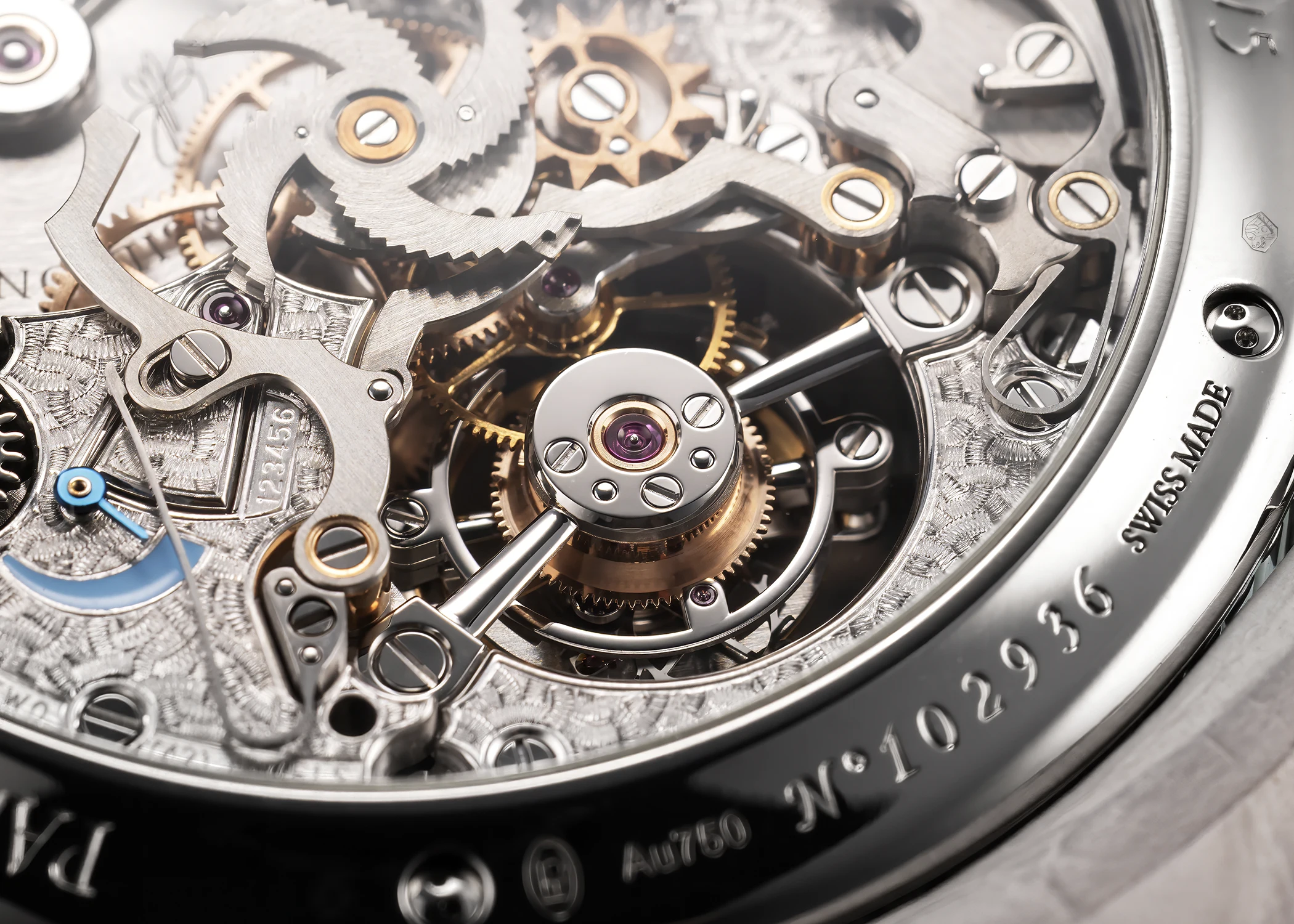
The 60-second tourbillon and the power-reserve indicator are positioned on the reverse. Oscillating at 3 Hz, the calibre measures just 7.15 mm in height, while the movement components are decorated with the Mezzo-Vibrato motif, already known from the dial of the unique piece L’Armoriale Répétition Mystérieuse and here transferred directly onto the movement.
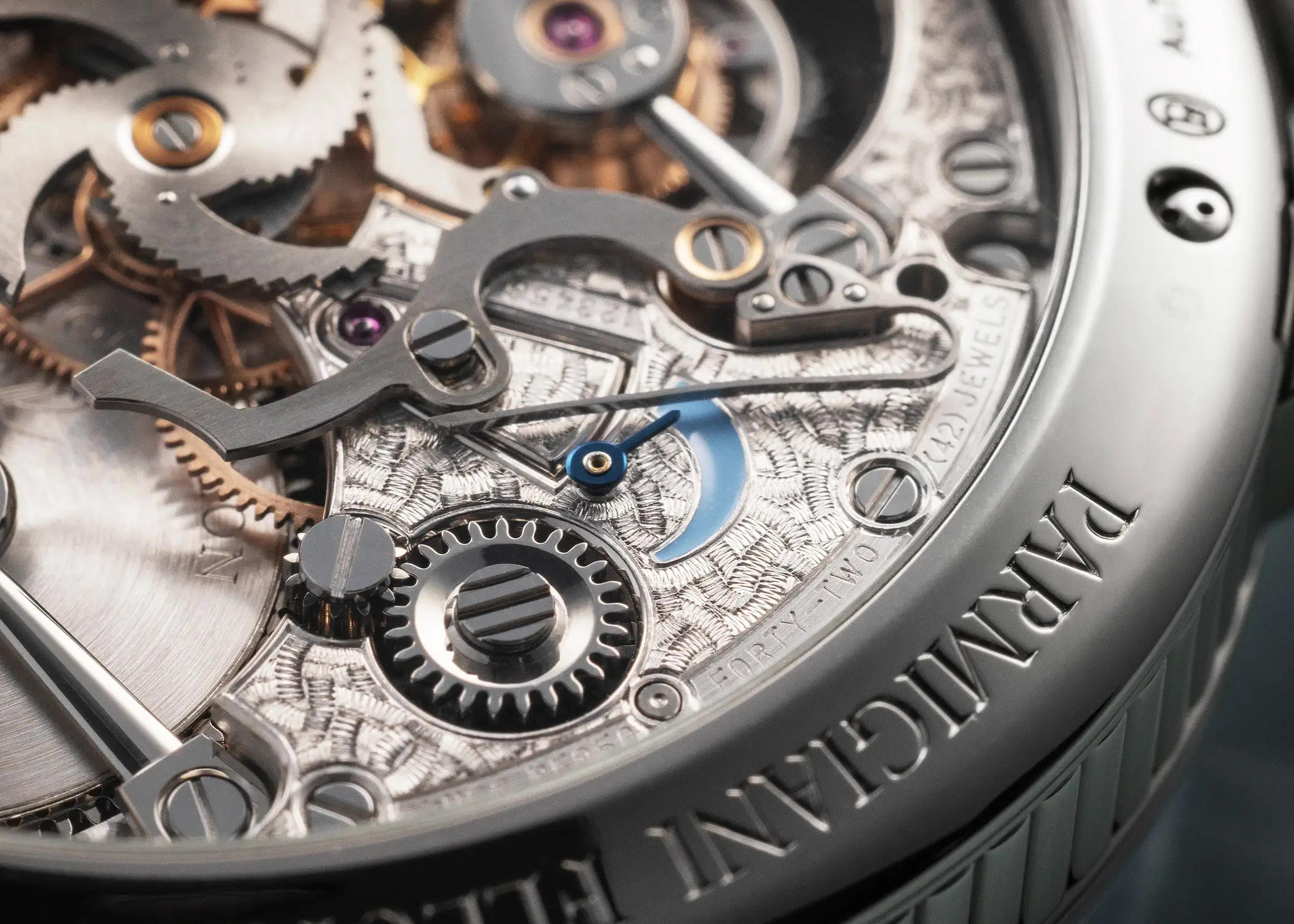
Another distinctive feature is the construction of the movement, which consists of 456 components: through its open architecture, it reveals the inner structure of the striking complication and makes the sequence of the mechanism comprehensible on the reverse.
The calibre therefore only reveals its true effect when the repeater slide integrated into the case flank is activated and the striking mechanism comes to life: when the slide is operated, the separate spring of the striking mechanism is tensioned, subsequently providing the energy for the sequence of strikes without drawing directly on the autonomy of the going train itself. The striking mechanism then “reads” the position of the hands via snails and racks: first the hours, then the quarter-hours and finally the minutes.
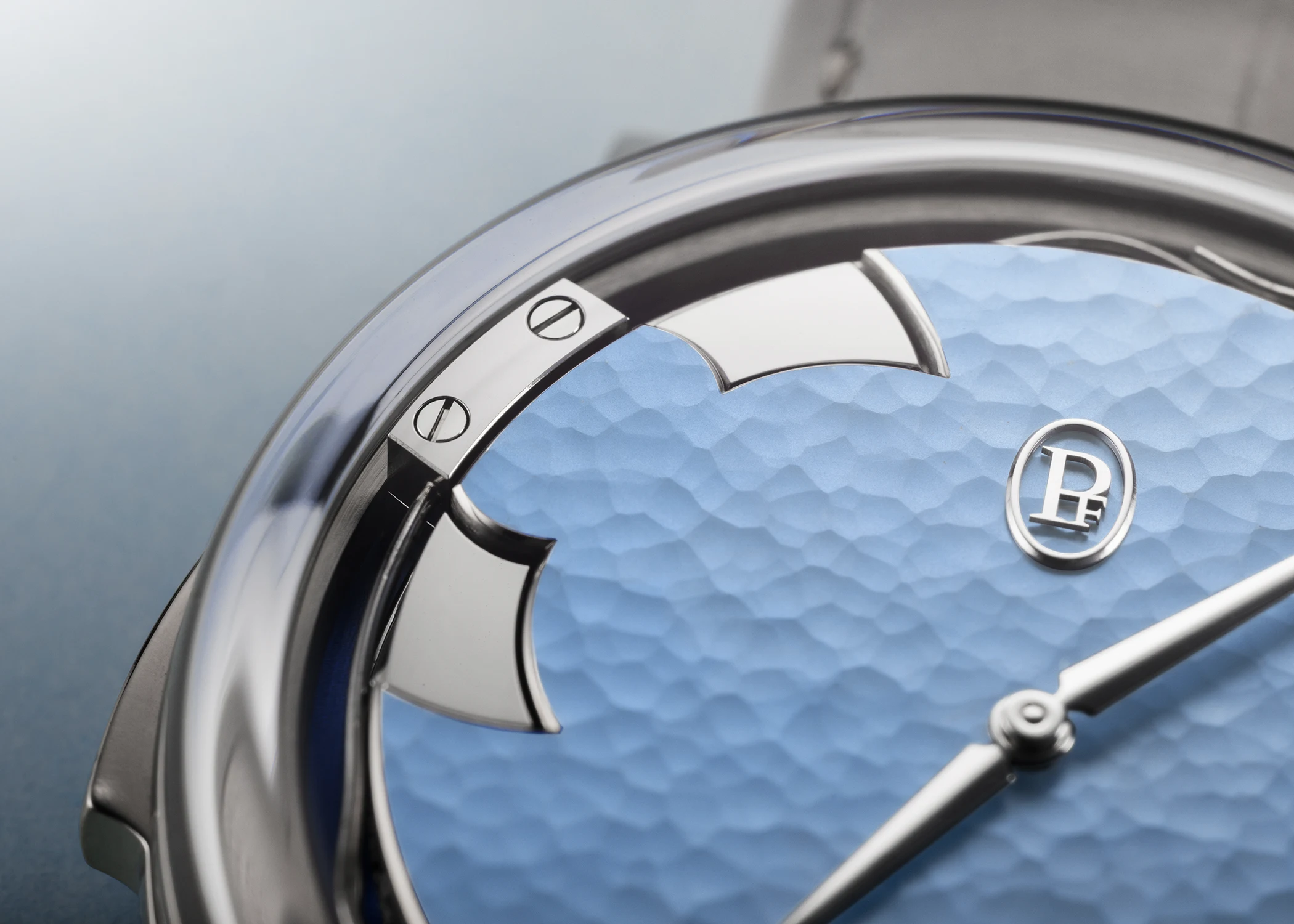
An integrated centrifugal governor controls a constant flow of energy, ensuring that the strikes are neither accelerated nor delayed, but instead proceed at an even tempo. The hammers ultimately strike the four curved gongs, of which one low-pitched gong indicates the hours, two gongs, each with its own pitch, are assigned to the quarter-hours, and one high-pitched gong sounds the minutes.
Listen: Parmigiani Fleurier Carillon Tourbillon at 12:59
If, for example, the time were 12:59, the striking sequence of the Parmigiani Fleurier Carillon Tourbillon would sound as follows: first, twelve low strikes would sound for the hours, followed by three four-note sound sequences for the quarter-hours and, finally, fourteen high strikes for the remaining minutes.
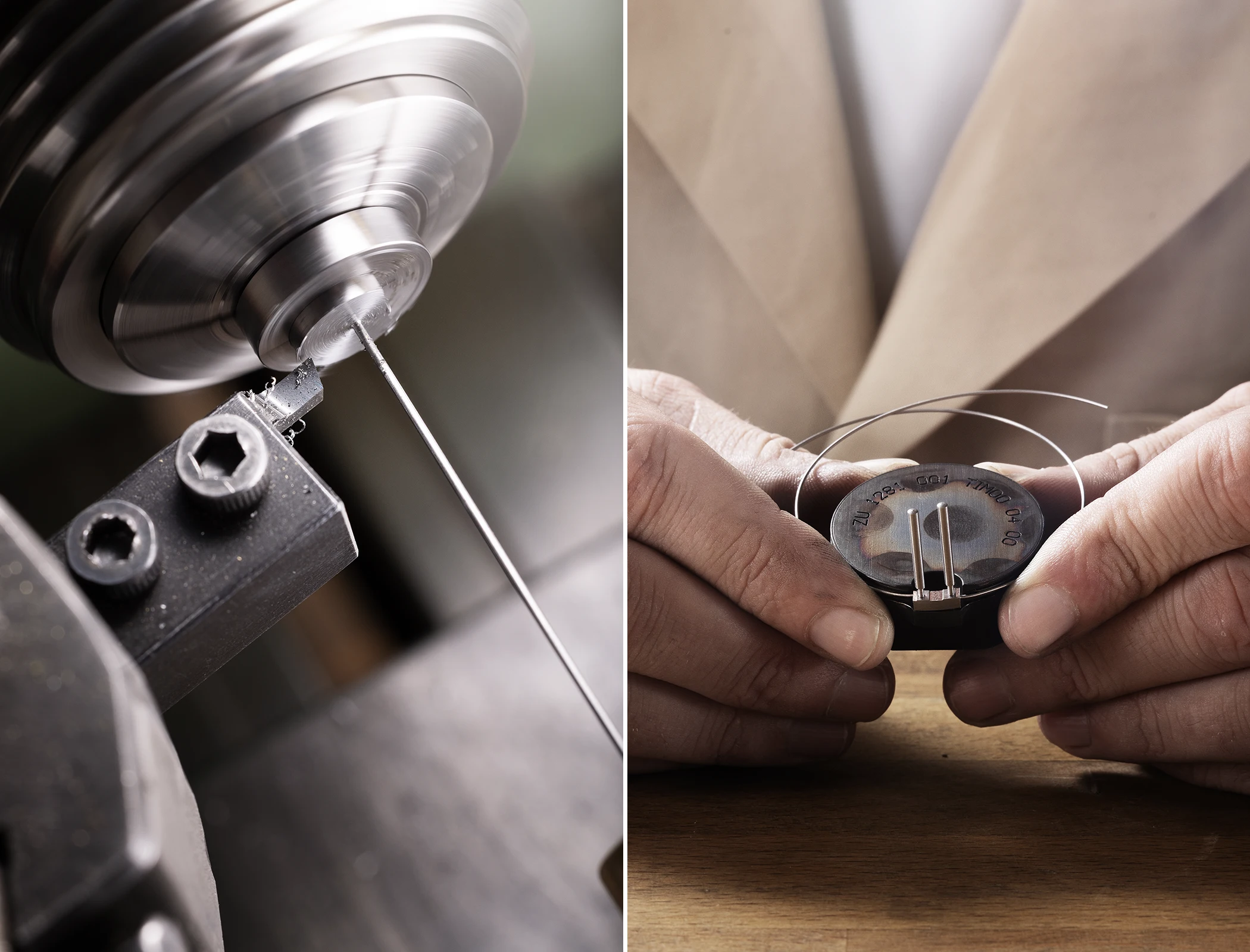
Alongside the gongs and hammers, the construction and choice of material for the case are particularly decisive for the volume, timbre and resonance of the striking mechanism, as the case functions as a kind of resonating chamber. Here, Parmigiani Fleurier uses a newly designed 18-carat white-gold case with vertical fluting, as already seen in this form on the unique piece L’Armoriale Répétition Mystérieuse. Measuring 41.60 mm in diameter and 12.60 mm in height, the case is water-resistant to 10 metres and also features a crown set with a blue sapphire.
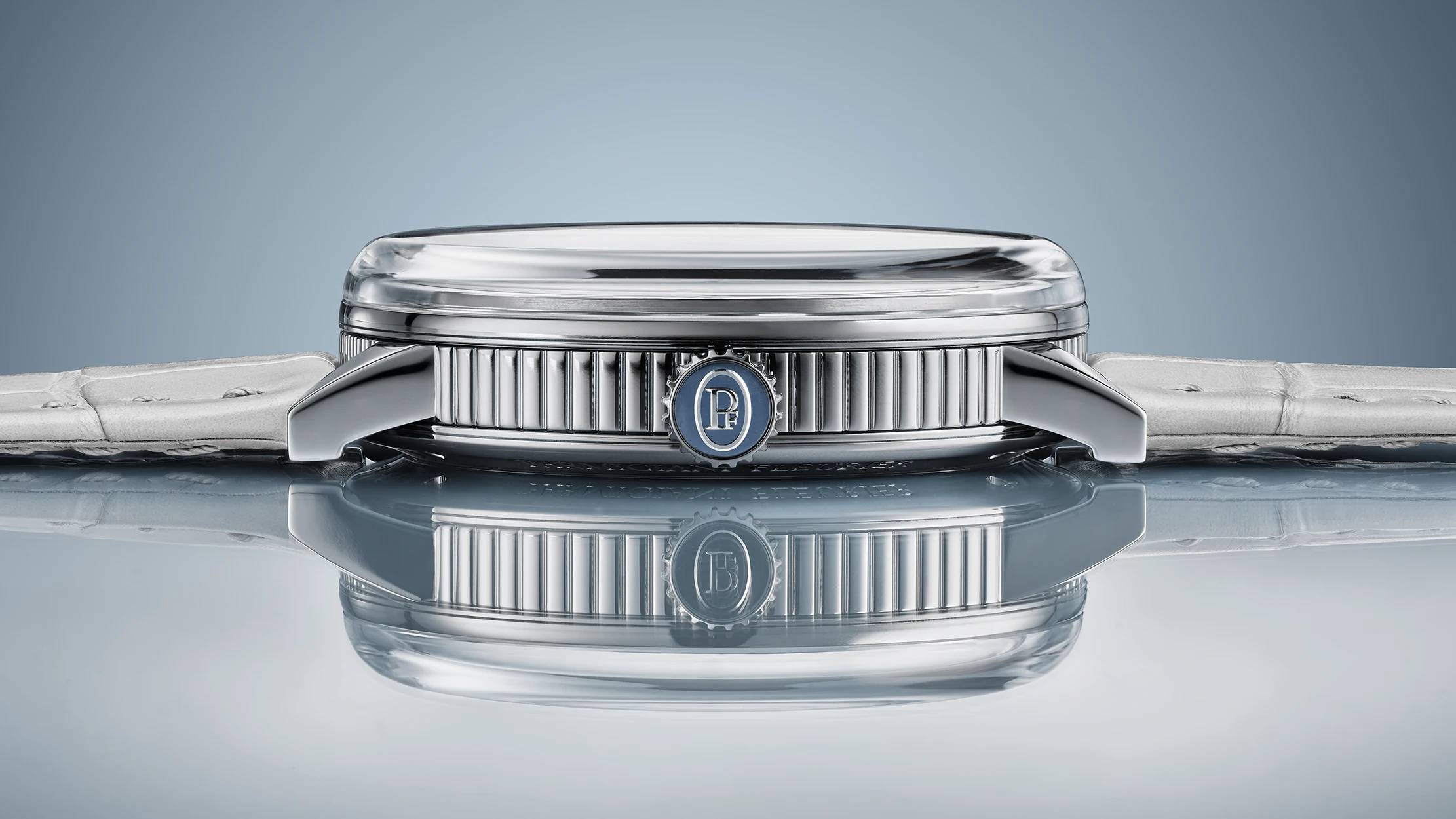
The Parmigiani Fleurier Carillon Tourbillon is produced in a limited edition of five pieces and is priced at 490,000 Swiss francs.